
DreamWorld
6.6k Posts

DreamWorld
 Square Verified+
Report
Block User

#BinanceTurns7

#BinanceTurns7 task 2

BNB Holder
High-Frequency Trader
4.9 Years
100K Following
45.8K+ Followers
21.0K+ Liked
2 Badges
Posts
All
Quotes
Videos
Live
PINNED
·
--
🚨 Binance is giving away $30,000 in $ANTHROPIC or USD! Join the Button Game, keep an eye on the timer, and try your luck to win the grand prize!
🔗 [HERE](https://www.binance.com/game/button/AnthropicButtonGame?ref=GRO_100038835_N9NQO®isterChannel=GRO-BTN-AnthropicButtonGame&utm_source=share)
{future}(ANTHROPICUSDT)
🚨 Binance is giving away $30,000 in $ANTHROPIC or USD! Join the Button Game, keep an eye on the timer, and try your luck to win the grand prize!
🔗 HERE
🔗 HERE
1
1
2
224
·
--
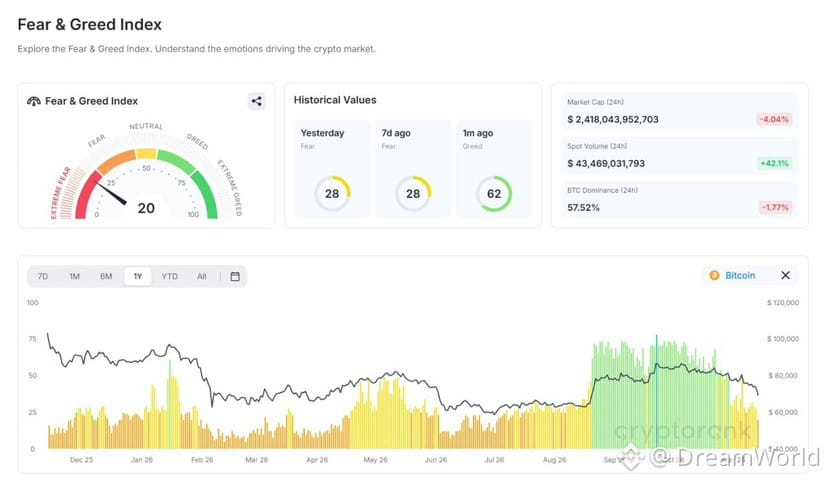
😬 The crypto market is scared again
The Fear and Greed Index has fallen into the “extreme fear” zone. This is usually where most people sell, even though historically it’s more of a time to buy, as fewer and fewer people are willing to sell.
How it played out in past episodes
After the FTX collapse in November 2022, BTC was already among the best-performing assets two months later. And after the August 2024 panic over the Japanese yen, it nearly doubled in three months.
However, the bottom rarely coincides with the first signal of fear. In the summer of 2022, Bitcoin spent six months going nowhere, and this year the market plunged into extreme fear in February, March, and June.
According to Santiment, more than $2.2 billion has flowed out of US spot Bitcoin ETFs since October 30, so it’s not just retail investors who are selling.
They got excited about the rally fast—and headed for the exit just as fast.🤷♂️
2
249
·
--
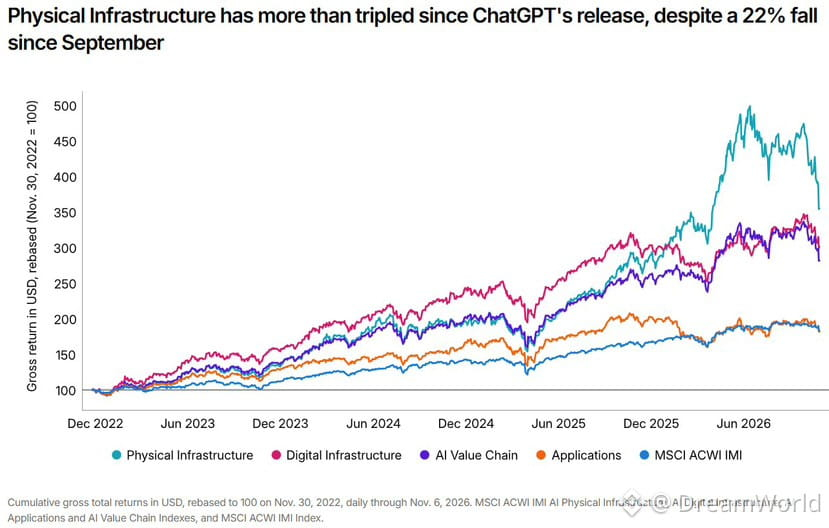
💬 If AI is a bubble, it grows and bursts in stages.
MSCI research shows that the AI rally was never a single move. By the end of 2025, digital infrastructure was leading, then physical infrastructure took over: chips and data center suppliers. Since ChatGPT’s launch, it has more than tripled, but has fallen 22% since September, and the chart looks like a classic deflating bubble.
Meanwhile, companies that make AI applications (programs and services for end users) have grown by around 85% over four years—about the same as the global market as a whole—so they haven’t delivered any extra gains for investors.
Jim Paulsen sees this as a series of “broken bulls,” where an overheated theme breaks down and a new one takes its place.
Is this how the market renews itself, or does it weaken with every break? Opinions are still divided.🤔
💡 Our idea for the coming year is that there’s no need to guess events and winners. Instead, prepare for different risks without ignoring the potential for growth.
$ANTHROPIC
#AnthropicIPO
{future}(ANTHROPICUSDT)
💬 If AI is a bubble, it grows and bursts in stages.
MSCI research shows that the AI rally was never a single move. By the end of 2025, digital infrastructure was leading, then physical infrastructure took over: chips and data center suppliers. Since ChatGPT’s launch, it has more than tripled, but has fallen 22% since September, and the chart looks like a classic deflating bubble.
Meanwhile, companies that make AI applications (programs and services for end users) have grown by around 85% over four years—about the same as the global market as a whole—so they haven’t delivered any extra gains for investors.
Jim Paulsen sees this as a series of “broken bulls,” where an overheated theme breaks down and a new one takes its place.
Is this how the market renews itself, or does it weaken with every break? Opinions are still divided.🤔
💡 Our idea for the coming year is that there’s no need to guess events and winners. Instead, prepare for different risks without ignoring the potential for growth.
$ANTHROPIC
#AnthropicIPO
1
1
236
·
--
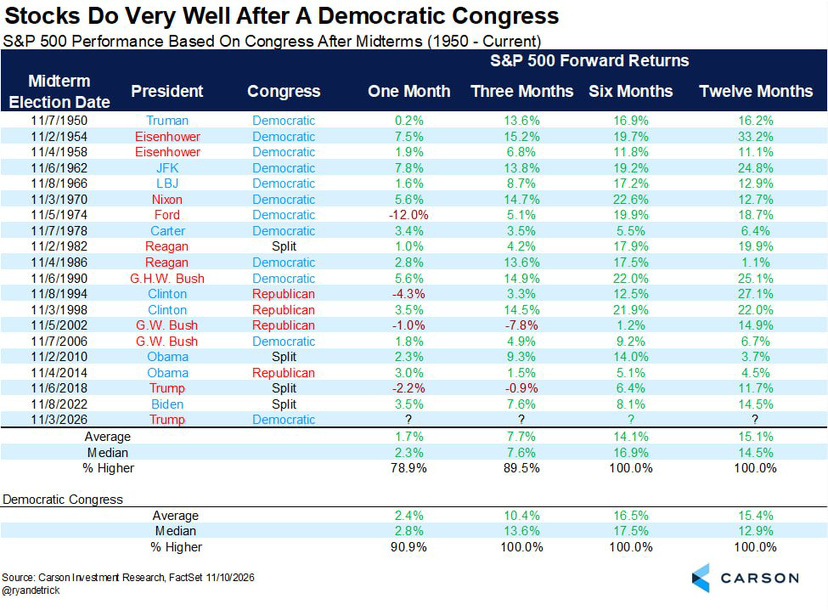
📊 Historically, the six months following U.S. midterm elections have been quite favorable for the stock market.
But when Congress comes fully under Democratic control, the S&P 500 index rises even more.
In all 11 similar cases since 1950, the market never fell over the following six months, and the average gain was 16.5%.
But when Congress comes fully under Democratic control, the S&P 500 index rises even more.
In all 11 similar cases since 1950, the market never fell over the following six months, and the average gain was 16.5%.
1
1
297
·
--
👉 “Jobs moment” for Nvidia
How much is Nvidia worth without Jensen Huang?
Wall Street spent all night running the numbers, while retail investors needed just half an hour yesterday.
After the sudden departure of its founder, who had been its CEO for 33 years, the stock opened down 12%. While 14 banks cut their ratings and price targets, individual investors, according to Vanda Research, bought $111 million worth of shares in the first 30 minutes. That’s 41 times the usual amount, with some buying on leverage, and by midday in the US the stock had recovered half its losses.
At its intraday low, NVDA was nearly 40% below its October high, just as it was during the “Liberation Day” selloff. The narrative that AI is increasingly running directly on devices is also weighing on the stock, as Nvidia could capture a smaller share of new demand than the market had anticipated.
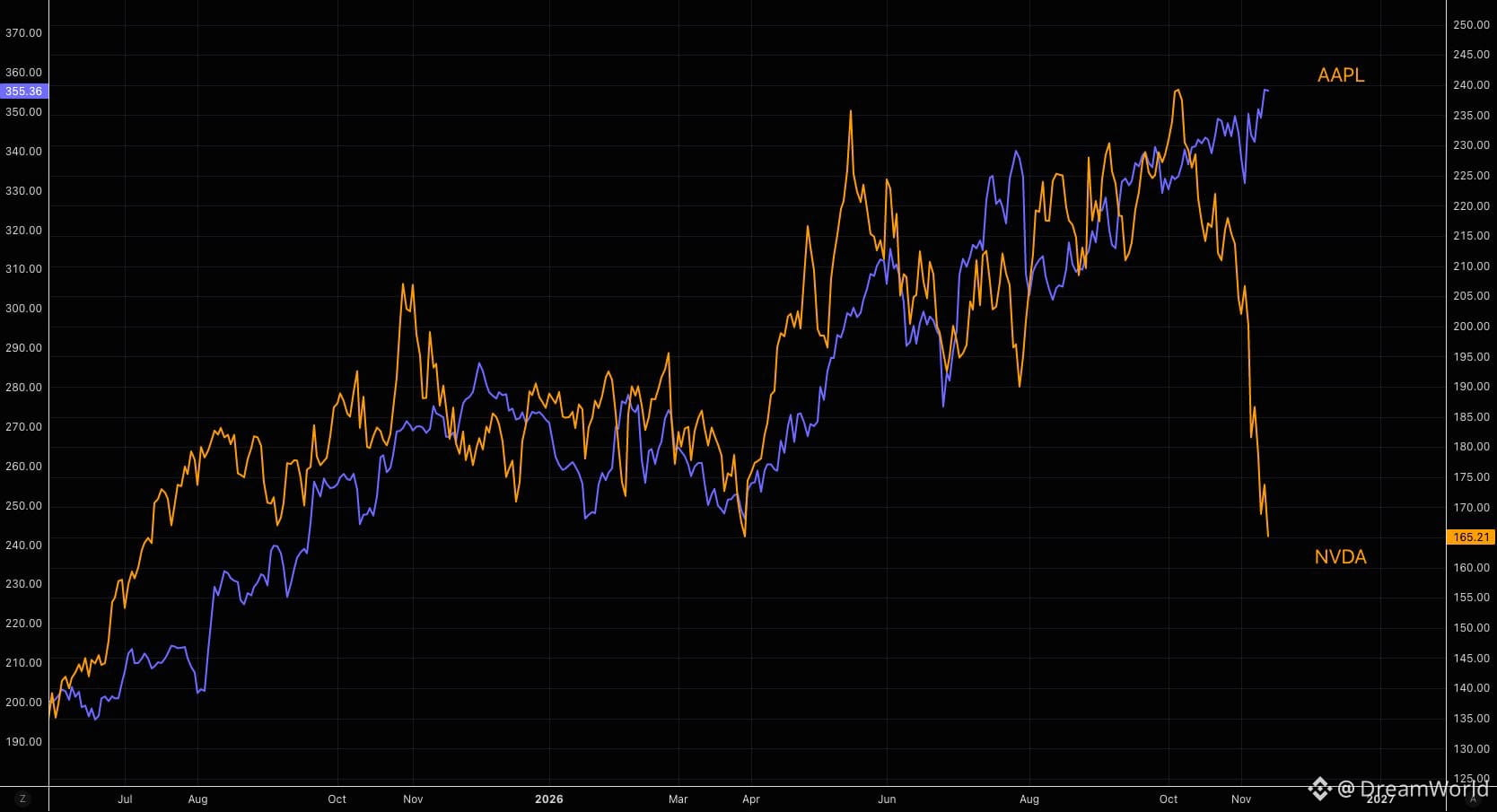
Goldman compares the situation to Apple in 2011 after Jobs left: its P/E fell from 17 to 12 and bottomed out only in 2013 at 9, as the market took time to believe the business was stronger than its leader. Analyst Jim Schneider expects a similar pause for Nvidia, but with earnings forecast to grow 80%, he considers current prices attractive.
1
1
220
·
--
Article
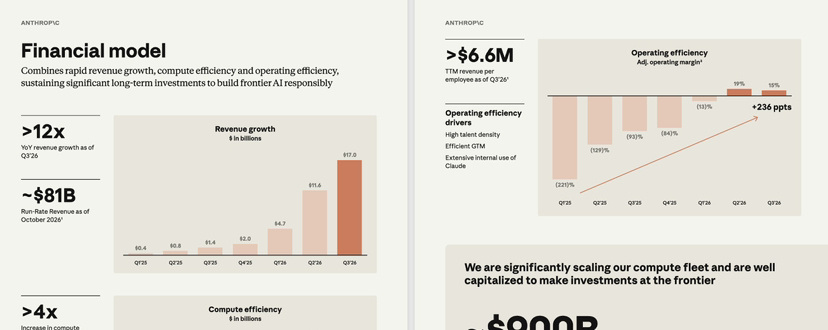
Anthropic is going public next Thursday in the largest IPO in history.According to Bloomberg, demand is several times greater than the supply. A price of $70–78 per share implies a raise of about $90 billion and a valuation of $1.4–1.5 trillion, slightly below earlier expectations.
The main beneficiaries are already known. Google (GOOGL) and Amazon (AMZN) together own roughly a quarter of the company, and Microsoft (MSFT) also has a stake. Amazon’s $18 billion investment could turn into $250 billion💪.
Anthropic is going public next Thursday in the largest IPO in history.
According to Bloomberg, demand is several times greater than the supply. A price of $70–78 per share implies a raise of about $90 billion and a valuation of $1.4–1.5 trillion, slightly below earlier expectations.
The main beneficiaries are already known. Google (GOOGL) and Amazon (AMZN) together own roughly a quarter of the company, and Microsoft (MSFT) also has a stake. Amazon’s $18 billion investment could turn into $250 billion💪.
The main beneficiaries are already known. Google (GOOGL) and Amazon (AMZN) together own roughly a quarter of the company, and Microsoft (MSFT) also has a stake. Amazon’s $18 billion investment could turn into $250 billion💪.
2
172
·
--
🤩 Huang is starting to disappoint
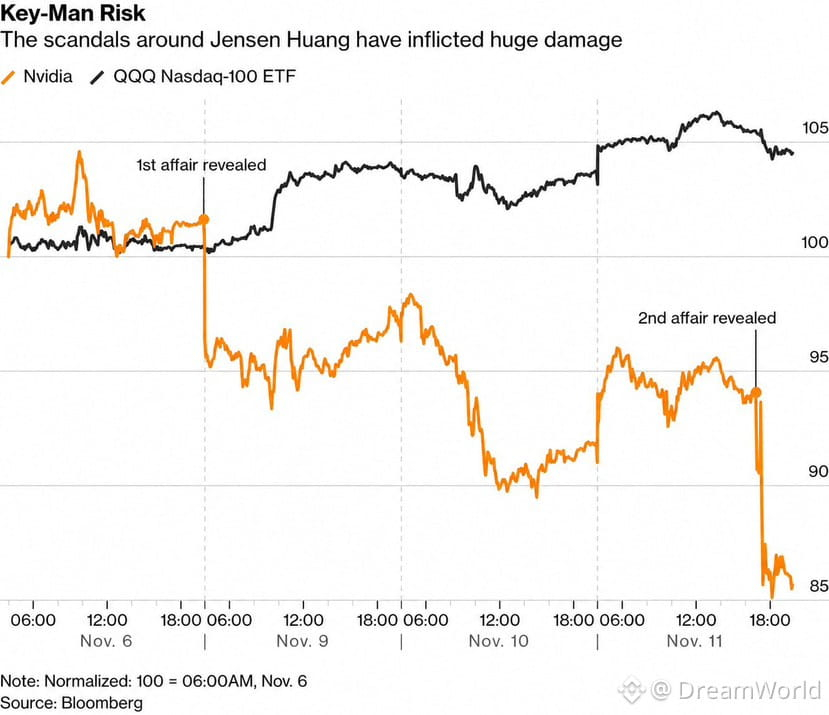
Yesterday, amid news of yet another affair, NVDA shares once again showed that investors don’t like all this drama. And this is just ahead of the quarterly report.
More importantly, the market’s recent behavior may suggest that Huang is no longer the central figure for the entire artificial intelligence industry.
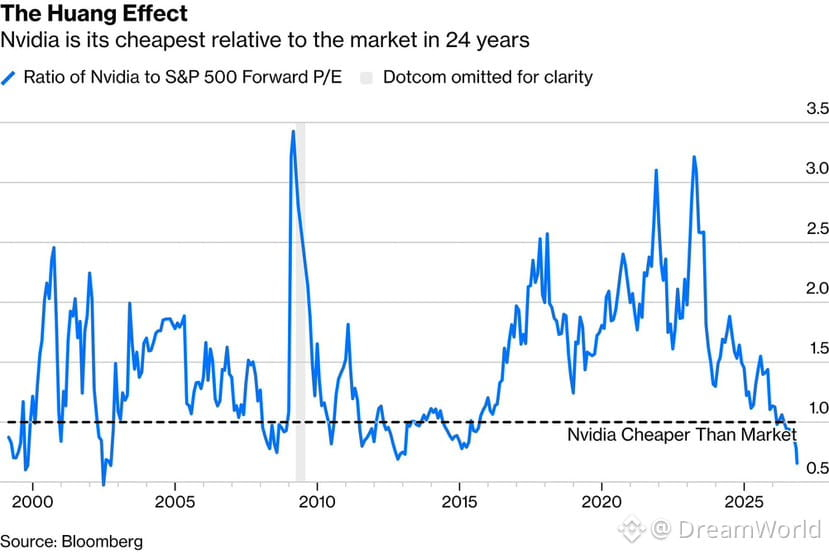
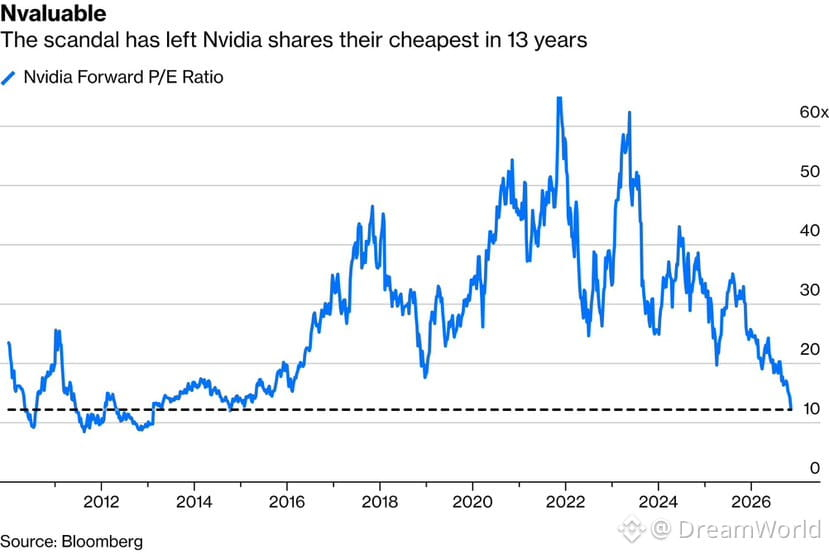
This doesn’t change the fact that Jensen Huang has been an extraordinarily successful leader. However, without a succession plan, all this is a reason to sell the stock. But even before the second affair came to light, traders had downgraded Nvidia to the point that its blended 12-month forward P/E was just 66% of the S&P 500’s overall multiple. Three years ago, it was more than 200% more expensive than the market...
Yesterday, the board met to decide his future.
The question now is who will replace him. There are no obvious internal candidates, although Nvidia could appoint an executive as interim leader.
The board may have to look outside Nvidia. AMD CEO Lisa Su and Arm CEO Rene Haas have been suggested as potential successors to Huang.
3
376
·
--
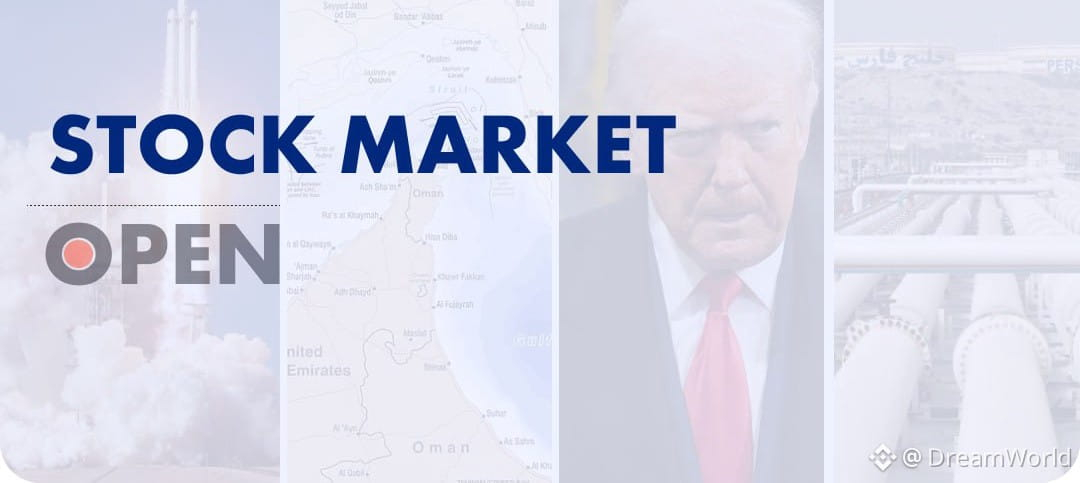
📈 Nasdaq-100 futures +1.9%, S&P 500 +0.9%.
The main driver is CoreWeave’s (CRWV) report; its shares are up 13–17% in premarket trading. Third-quarter revenue beat forecasts, and the company raised its 2026 outlook. CEO Michael Intrator says demand through the end of 2027 is 10 times greater than available capacity. Its bond yields have reached ~15%, so CoreWeave will finance itself through customer prepayments (~$9 billion over 3 months) and funds from suppliers.
▪️IREN (IREN) rose 8% and Astera Labs (ALAB) 7% in its wake. Micron (MU), Broadcom (AVGO), Intel (INTC), and AMD (AMD) are also rising, while the semiconductor ETF is up 5.2%. Nvidia (NVDA) is up 3.8% after falling 9.5% over two days amid a scandal involving its chairman.
▪️TSMC (TSM) is investing $500 million each in Anthropic and OpenAI.
Hong Kong approved the listing of Alibaba’s (BABA) chip division T-Head, which Nomura values at $85 billion.
Siemens Energy (ENR) raised its revenue growth outlook.
▪️Anthropic’s IPO is expected next week. Bets on Hyperliquid imply a market capitalization of $1.8 trillion. In the third quarter, Anthropic’s revenue was $17 billion, while OpenAI’s was $10 billion. Anthropic posted an operating loss of $567 million, while OpenAI’s was $10.9 billion.
▪️Rigetti (RGTI) fell 4% due to declining revenue.
▪️After inflation came in higher than forecast, the yield on 10-year U.S. bonds is 4.99%. The probability of a Fed rate hike in December is 86.5%; the DXY dollar index is 102.75.
🛢 Brent crude +1.4% to $92.8.
1
289
·
--
🥳 When should you sell stocks?
The October sell-off in the tech sector pushed many people toward the “sell” button. Before pressing it, experts at Fidelity and Charles Schwab recommend honestly answering three questions:
▪️Has the business changed, or just the price? According to Schwab strategist Alex Coffey, volatility creates urgency around the price, not the decision. If the company is still growing and earning money, a drop along with the sector is no reason to run. That was the case with cybersecurity: at the start of the year, those stocks were dumped along with software amid fears about AI, but later they rose significantly.
▪️Would you buy this stock today if you had cash instead? A positive answer means one bad week doesn’t change anything. A negative answer is a reason to think it over—and the price has nothing to do with it. This helps break the habit of holding on to a stock just because you already own it.
▪️Is one position taking up too much of your portfolio? When it exceeds 10% of the portfolio, Shahin recommends moving some of it into broad funds.
This is a simple, ready-to-use checklist you can run through for your own positions.
2
397
·
--
"DON'T BACK DOWN!", says BofA
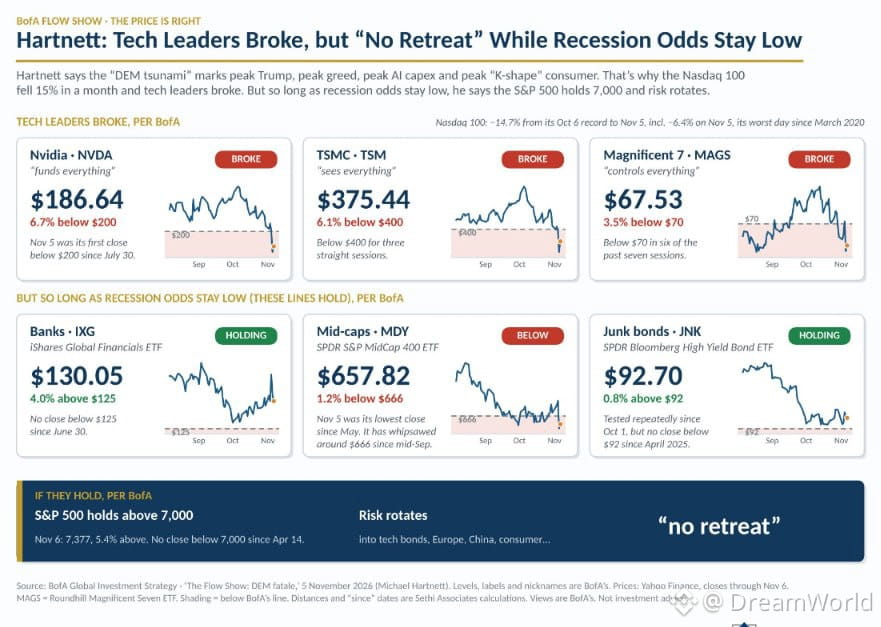
The bank believes the wave of Democratic election victories marked the peak of several trends at once: Trump's influence, market greed, AI spending, and consumption sustained solely by the wealthy. In its view, that explains both the Nasdaq 100's 15% drop in a month and the breach of key levels by market leaders: Nvidia (NVDA) fell below $200, TSMC (TSM) below $400, and the Magnificent Seven ETF (MAGS) below $70.
Hartnett, however, advises against fleeing the market as long as the risk of recession remains low. He suggests monitoring this along three lines:
▪️banks (IXG) should hold above $125,
▪️mid-cap companies (MDY) above $666,
▪️high-yield bonds (JNK) above $92.
If they do, the S&P 500 will hold at 7,000 points, and money will simply flow from tech into tech-company bonds, Europe, China, and consumer stocks.
The weakest spot is already clear. As of Friday, banks are holding 4% above their line, bonds just 0.8% above theirs, while mid-cap companies have closed below $666 for two days in a row.
If JNK and IXG follow MDY and break through their levels, that will signal that recession risk is rising. Then the decline will no longer be limited to tech, but will affect the entire market.
*author's opinion. Not investment advice
1
282
·
--
🤔 Where will the S&P 500 correction end?
Morgan Stanley has its own view on the level from which it expects a rally through year-end
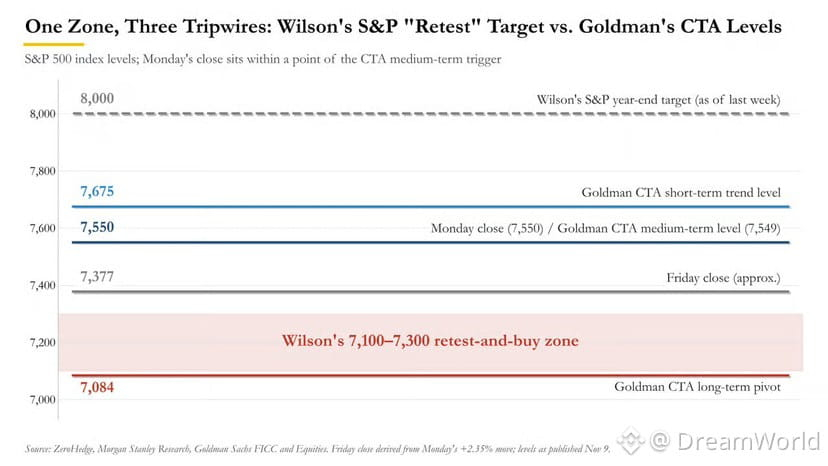
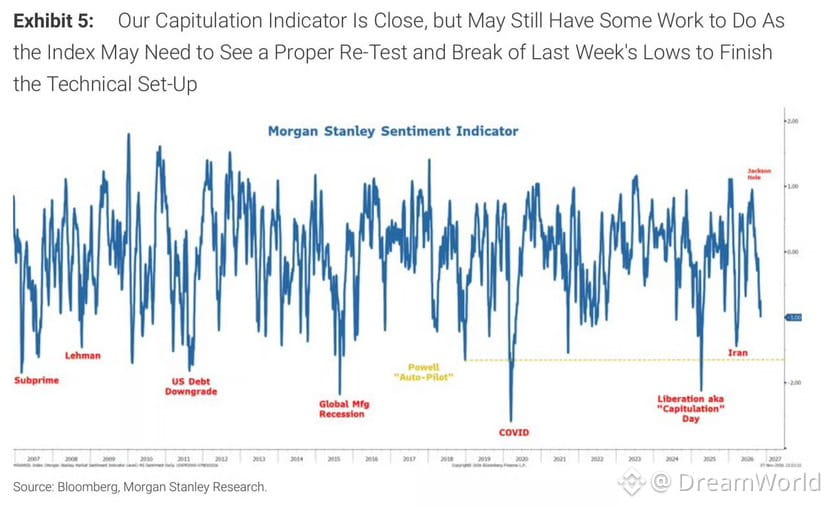
The market has yet to hit its final bottom, according to Morgan Stanley Chief Strategist Mike Wilson. The correction that has been underway since June is entering its final phase, and he expects one more move down to the 7100–7300 zone on the S&P 500, or 3–6% below the current level of 7550.
That’s where support from valuation, the trend line, and the retracement converge. It’s important that the new low comes amid less selling pressure than last Thursday. Such a retest would mean sellers have run out of steam and would pave the way for a rally into year-end and in 2027.
At almost the same level, 7084, Goldman Sachs sees the point where trend-following funds stop selling. So around 7100, both those buying on valuation and those trading on the trend would come together.
Wilson named a hawkish Fed as the main threat, and that was confirmed yesterday. Waller leaned toward a rate hike in December, while core inflation came in at 0.3% for the month. The market is now fully pricing in a hike, with a 14% probability of an immediate 0.5 percentage-point increase. In that scenario, the bottom could extend into December, as it did in 2018, when Powell’s first year in office ended with a low on December 24.
1
483
·
--
Verified
🇺🇸📊 U.S. inflation exceeded forecasts in October.
▪️CPI rose 0.4% month over month, versus expectations of 0.3% (up 0.6% in September). Core CPI rose 0.3%, against a forecast of 0.2%, for the third consecutive month.
▪️On the eve of the release, Fed Governor Christopher Waller said that, given data like this, raising rates by just 0.25 percentage points in December would put the Fed’s credibility at risk. According to CME Group, the probability of a 0.5-point hike rose to 10% (from 0% a day earlier), while the probability of a 0.25-point hike stands at 90%. Goldman Sachs Asset Management believes rate hikes could continue into 2027.
▪️Yields on 2-year bonds rose 14 basis points to 4.7%, while 10-year yields rose to 4.96%.
▪️Nasdaq 100 futures fell 1.2%, and S&P 500 futures fell 0.7%. The VIX fear index rose 7% to 21.
▪️Brent fell 3% to $89.5, dropping below $90 for the first time since late August. Trump said further strikes on Iran are unlikely.
▪️Anthropic is planning an IPO at a valuation of about $1.3 trillion, aiming to raise $61 billion. Trading is set to begin before Thanksgiving.
▪️Nvidia (NVDA) rose 1.5% in premarket trading after falling 4.3% yesterday.
Rocket Lab (RKLB) fell 6% after reporting a larger-than-expected loss.
AAON (AAON) and Sanmina (SANM) rose 20% after strong earnings and an upbeat forecast.
GFL Environmental (GFL) fell 13% after rejecting a $22 billion buyout offer.
▪️CoreWeave (CRWV) reports today.
1
239
·
--
💡 Don't fear volatility.
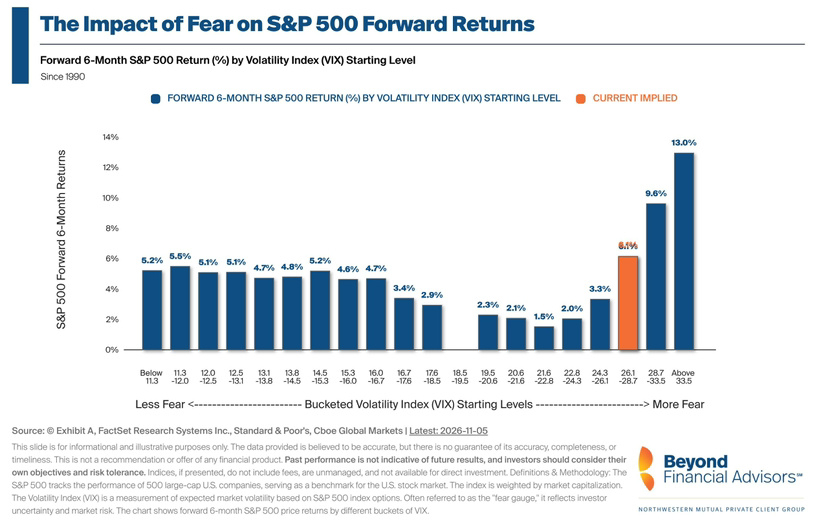
Historically, when the VIX is this high (signaling full-blown panic), the S&P 500 index has delivered better returns over the next 6 months.
...on average.
💡 Don't fear volatility.
Historically, when the VIX is this high (signaling full-blown panic), the S&P 500 index has delivered better returns over the next 6 months.
...on average.
Historically, when the VIX is this high (signaling full-blown panic), the S&P 500 index has delivered better returns over the next 6 months.
...on average.
1
178
·
--
🕯 From panic to FOMO: this kangaroo market continues.
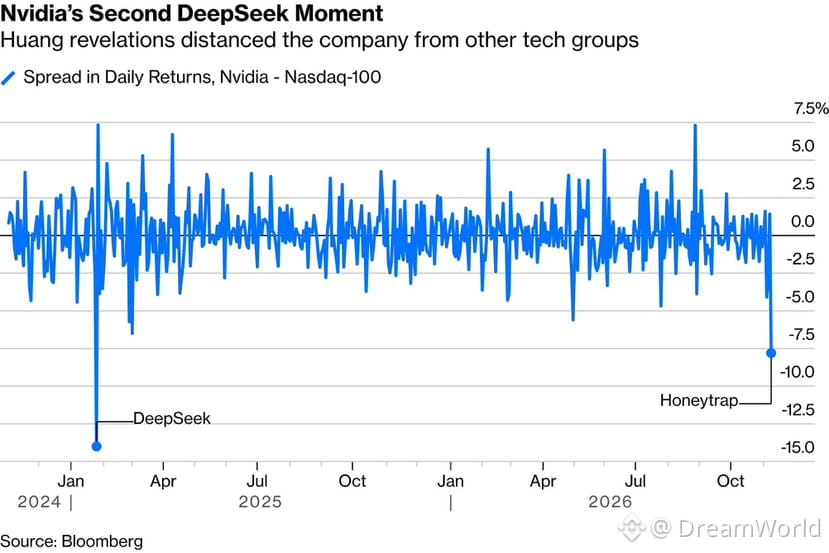
But unlike the broader Nasdaq, Nvidia had its worst day on Monday since the DeepSeek moment.
The scandal surrounding Huang has gone beyond a personal story. Nvidia’s (NVDA) board of directors has launched an independent investigation following reports that its CEO may have been targeted by foreign intelligence. Meanwhile, Congress and the FBI also have questions for him.
The market reacted immediately. On Monday, NVDA fell 4%, AMD (AMD) soared 13%, and Broadcom (AVGO) rose nearly 9%. What’s more, Google (GOOGL) unveiled a new line of AI chips together with AMD, giving competitors a double boost (surely just a coincidence?).
This highlighted a major vulnerability: Nvidia is essentially too dependent on one person. Huang is involved in almost every day-to-day decision, and there’s no obvious successor. CFO Colette Kress could serve as an interim replacement, but not a permanent one.
American commentators are already considering outside candidates. Among the unexpected names are Lisa Su of AMD, who is also Huang’s cousin, and Rene Haas of Arm (ARM), who once worked at Nvidia for seven years.
Even if the board clears Huang, the question will remain: did it do so simply because there’s no one to replace him?
1
1
450
·
--
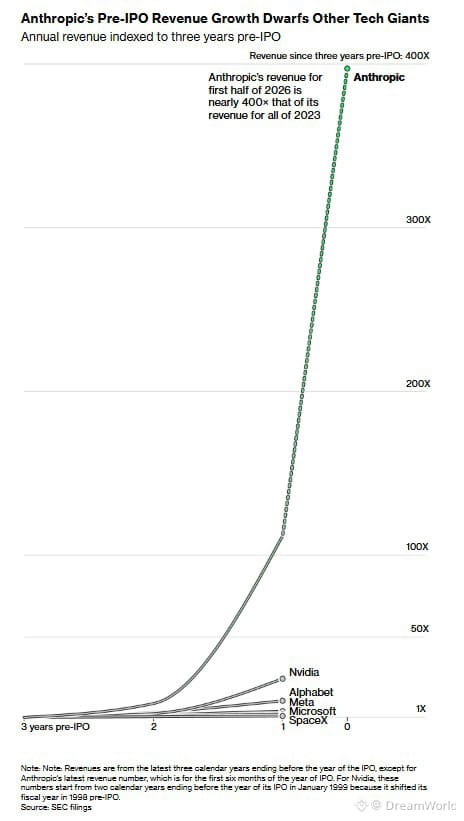
Anthropic is going public!
Anthropic could begin its roadshow as soon as Tuesday, as the 15-day waiting period after its SEC filing comes to an end. Nasdaq trading would then begin in the week of November 16.
IPOs are usually postponed in conditions like those that arose last week. After Democrats won the U.S. midterm elections, AI stocks plunged, the fear index VIX rose above 25, and the Nasdaq 100 lost 14% in a month. As a result, the valuation being discussed fell to $1.1–1.3 trillion. What’s more, according to The Information, Anthropic withdrew its updated IPO prospectus because of errors in the details...
However, in terms of size, the deal could match or surpass SpaceX’s record $86.2 billion IPO. Renaissance Capital believes an asset like this will go ahead in any market conditions—the only question is the price.
Unlike SpaceX, the offering will be priced within a range, so demand will be clear right away. Up to 20% of the shares could go to retail investors in the U.S., Britain, Japan, and Australia.
During the roadshow, the company will have to allay investors’ concerns, as revenue growth slowed at the end of the third quarter, and Democrats could turn their attention to data centers and AI regulation.
It’s no coincidence that Anthropic’s IPO is considered the most important catalyst and a genuine market-cleansing event in the coming weeks.
1
374
·
--
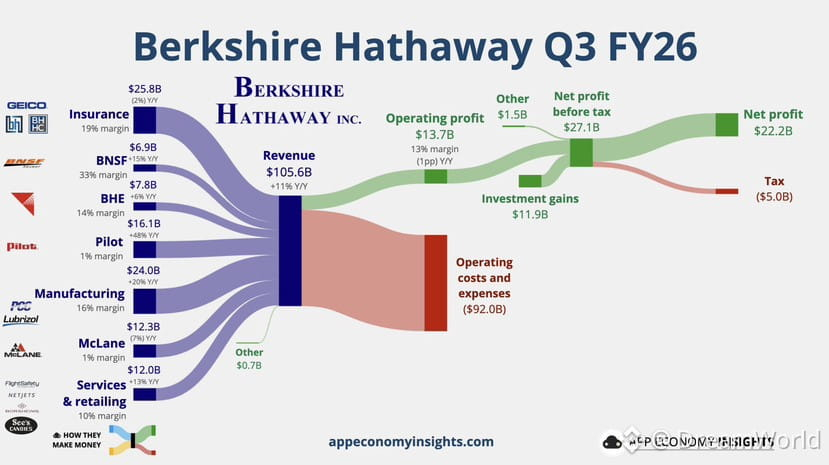
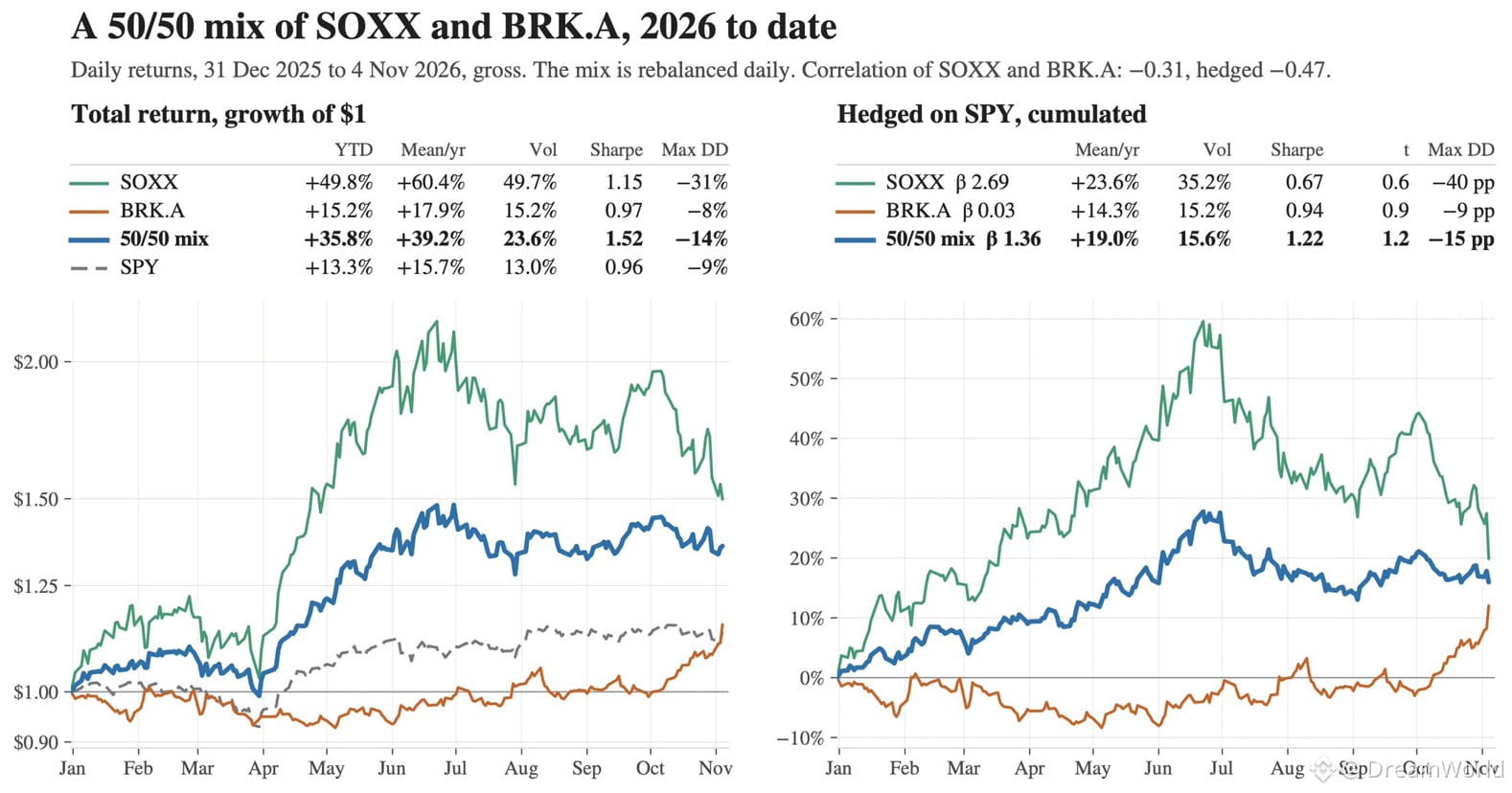
Berkshire Hathaway’s (BRK.B) first year without Warren Buffett as CEO began with a sharp turn.
New chief Greg Abel invested $10 billion in Alphabet and another $930 million in Italy’s Bending Spoons.
This was effectively the company’s first notable bet on AI, which it had avoided for years.
So far, the bets haven’t paid off. Alphabet shares have fallen more than 24% since June and dropped below the price Berkshire paid. Bending Spoons has also given back its initial gains.
Analysts are comparing this to Apple in 2016. That purchase also raised doubts at the time, but later became one of Buffett’s most profitable deals. Berkshire has plenty of cash to be patient: at the end of the second quarter, it had $365.5 billion on hand. So Abel can simply buy more shares at a lower price.
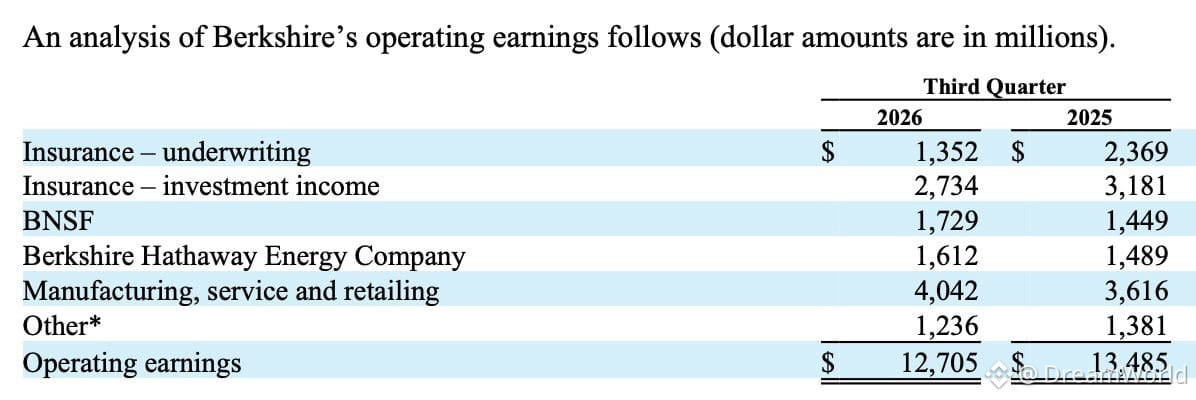
The third-quarter report added more details. Berkshire repurchased a record $9.6 billion of its own shares. Operating profit fell 5.8% to $12.7 billion due to weakness at Geico. Meanwhile, its railroad, energy, and industrial businesses grew.
We’ll know more from the 13F in mid-November. It will show whether Berkshire bought more Alphabet shares during the dip.
1
340
·
--
🙄 Uncertain and cautious
▪️S&P 500 and Nasdaq futures +1% after last week’s sell-off.
▪️Nvidia (NVDA) -5% in premarket trading as its board investigates CEO Jensen Huang’s ties to an alleged spy. Dow futures are rising thanks to other tech companies in the index: Microsoft (MSFT), Apple (AAPL), Cisco (CSCO), Salesforce (CRM), Amazon (AMZN).
▪️Chip ETFs (SOXX) +1.1%. BTIG warns that since 1995, after the SOX index fell below its 200-day moving average, it was higher 10 days later in only 47% of cases. According to BTIG, sustained growth may be possible only after a further 12–15% pullback.
▪️According to Bluekurtic Market Insights, retail traders are buying the dip. After SOXL plunged 38%, $2.2 billion flowed into the fund the following day. Analysts believe it’s too early to call a bottom while speculators are still piling in.
▪️JPMorgan sees signs of capitulation. Last week saw the biggest unwinding of momentum bets in 40 years, while the RSI for the QQQ fund fell below 30. In 9 such cases over the past three years, QQQ gained an average of 4% over five days. The bank sees this as a reset within the AI cycle, not its end.
▪️HSBC recommends increasing exposure to U.S. and Asian tech stocks again. The bank sees Anthropic’s IPO as the main catalyst, with Nvidia also reporting next week.
▪️Bitcoin -1.3% to $74.7K.
1
208
·
--
Verified
🤩 Huang “made a mess,” they say, and the market panicked a little this morning.
Though other observations of similar stories are pretty bullish.
After Sergey Brin’s affair with a Google (GOOGL) employee, the company’s shares rose 1,200%; after Jeff Bezos’s infidelity, Amazon (AMZN) gained 210%; and after the story involving Bill Gates, Microsoft (MSFT) rose 115%.
🤷♂️
But seriously, Huang is an active lobbyist for easing trade restrictions on China. His argument is that we shouldn’t motivate China to develop its own chips and build a competitive advantage over the US. So it’s easier to sell them US chips, even if that comes with restrictions.

1
373
·
--
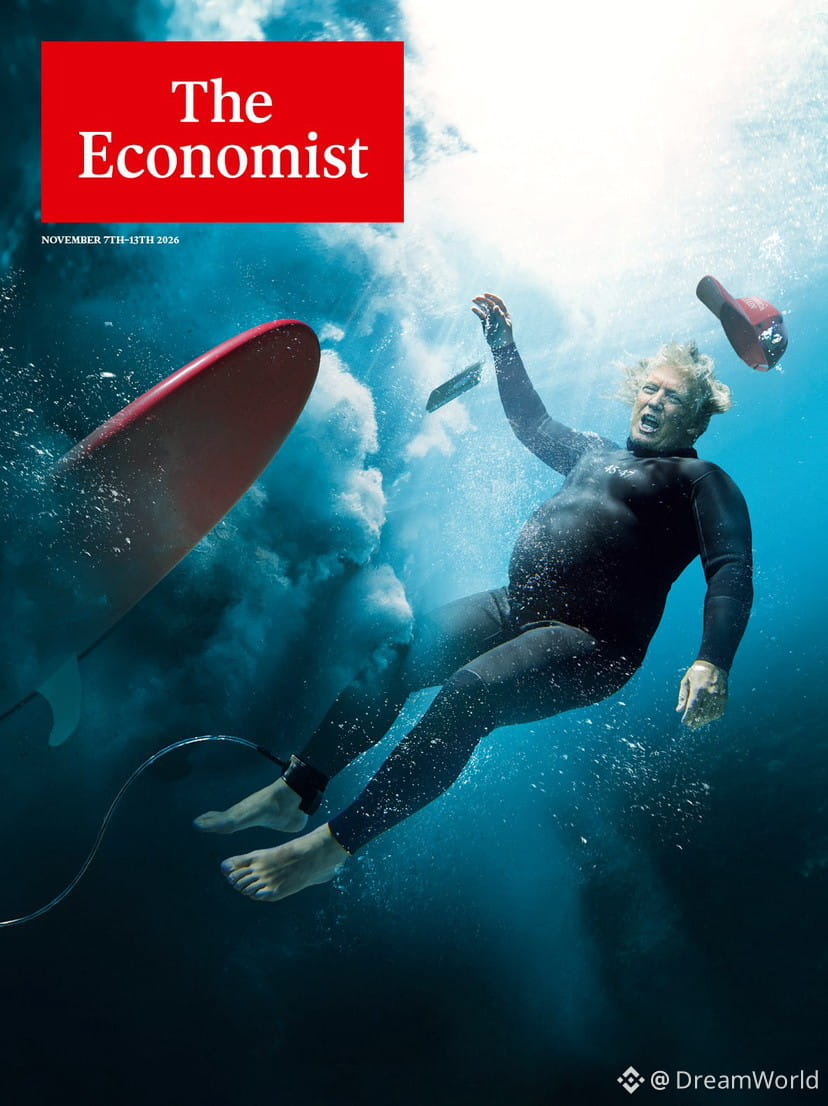
🇺🇸 The Economist: The blue wave crashed over Donald Trump this week.
Republicans suffered their biggest defeat in half a century. But the publication argues that Trump’s humiliation gives America an opportunity.
Voters are tired of the administration’s incompetence and shameless selfishness. (The share of Americans who believe corruption is widespread in their government is now roughly equal to the share in Nigeria.) They are demanding something different. Politicians should let them have it.
Democrats face a difficult balancing act. On the one hand, they want to use their new power to expose and curb corruption associated with MAGA. On the other hand, they will need to work with the president to address the core issues that frustrate voters most.
Republicans face a brutal internal struggle, as some try to preserve the Trumpist party while others seek to revive the idea that character matters in politics.
Even so, as president, Trump retains enormous powers, especially over foreign policy.
A “lame duck” could become even more unpredictable.
Turbulent times lie ahead for the world.😬
4
1.1k
·
--
Verified
🕯 Rotation following the US Congressional elections continues.
The market is pricing in a slowdown in data center construction and rotating out of AI stocks into the rest of the market.
📈 Dow futures +0.7%, Nasdaq-100 -0.9%, Kospi -5%, FTSE 100 and DAX near record highs.
▪️Qualcomm (QCOM) -10% on falling revenue; a memory shortage is hitting smartphone chips. Samsung, SK Hynix and Seagate (STX) are also down. Arm (ARM) -3% despite revenue up 27%. SoftBank -7% after China blocked its $5.4 billion acquisition of ABB’s (ABB) robotics division. Saxo believes hyperscalers with capacity already in place will benefit. Amazon (AMZN) +10% for the week.
🛢 Brent down 19.6% over three sessions on hopes the war with Iran will end.
Toyota +16.7%, its best day since 1987.
▪️Rheinmetall (RHM) -16% after cutting its forecast for the second time this year due to a delay in a Boxer order. BAE Systems (BA) -5%, Leonardo (LDO) -3%.
▪️AppLovin (APP) +19% on revenue up 55%. Zillow (Z) -15%, Dutch Bros (BROS) -14%, Cava (CAVA) -12%. Six Flags (FUN) +9% despite a weak forecast. Airbnb (ABNB) and ConocoPhillips (COP) report today.
▪️The Bank of England raised its rate to 4%. The market puts the odds of a Fed rate hike in December at 79%.
▪️According to Citadel Securities, CTA funds have been shorting stocks for 26 consecutive sessions, so a further rally will force them to buy more.
2
1.1k
Log in to explore more content
Join global crypto users on Binance Square
⚡️ Get latest and useful information about crypto.
💬 Trusted by the world’s largest crypto exchange.
👍 Discover real insights from verified creators.
Email / Phone number
Trending Topics
WhoWillSucceedJensenHuangatNvidia?
168,015 views
1,641 Discussing
Nvidia Says No CEO Talks Underway as "Stand With Jensen" Petition Tops 77,900 Signatures
Binance News
·33 Likes
·61.7k views
WhatWillDriveCryptoandStocks’NextRebound?
571,226 views
3,481 Discussing
BitcoinActiveSupplyInProfitDropsBelow45%
74,228 views
708 Discussing