
Dcprosan
15 Posts

Dcprosan
Report
Block User

BTC Holder
Occasional Trader
5.7 Years
10 Following
21 Followers
24 Liked
Posts
All
Videos
·
--
Article
5 Steps I Take to Secure My Binance Account 🛡 | #ThankYouBinanciansIn crypto, protecting your assets is just as important as knowing how to trade or invest.
We often spend hours analyzing charts, researching projects, and looking for investment opportunities. But sometimes we forget something fundamental:
How secure is the account that holds our assets?
For me, account security is not something I configure once and forget. It is a routine that needs to be maintained.
Here are five security practices I prioritize to protect my Binance account.
1. Enable Passkeys and Two-Factor Authentication (2FA)
A password alone should never be my only line of defense.
I use additional authentication to make sure that accessing my account requires more than simply knowing my password.
Binance supports several authentication methods, including passkeys and authenticator apps.
Why does this matter?
Even if someone manages to obtain my password through phishing or a data breach, additional authentication makes unauthorized access more difficult.
My recommendation: use a strong, unique password and enable a secure 2FA method. Never share verification codes or approve authentication requests that you did not initiate.
2. Set Up an Anti-Phishing Code
Phishing is one of the easiest ways for criminals to target crypto users.
Fake emails, suspicious links, and impersonated customer support accounts can look surprisingly convincing.
That's why I consider the Binance Anti-Phishing Code an important additional layer of protection.
Once configured, your personalized code appears in legitimate Binance emails and SMS messages.
I can use it to distinguish genuine communications from messages that might be attempting to impersonate Binance.
My rule is simple:
Never trust a message just because it uses the Binance logo. Check the anti-phishing code, verify the website address, and avoid clicking suspicious links.
3. Enable the Withdrawal Address Whitelist
Imagine someone gains access to your account and attempts to withdraw your crypto to an unknown wallet.
This is where the Withdrawal Address Whitelist becomes useful.
When enabled, withdrawals are restricted to addresses that you have previously approved and added to your whitelist.
I also recommend enabling the Whitelist Withdrawal Limit, which introduces a waiting period for withdrawals to newly added addresses.
Why is this important?
It creates an additional barrier against unauthorized withdrawals and gives you more time to react if someone attempts to change your withdrawal settings.
For someone who regularly transfers crypto between wallets and exchanges, this is a particularly useful security feature.
4. Regularly Review Devices and Account Activity
Security is not only about preventing someone from entering your account. It's also about recognizing when something unusual happens.
I make it a habit to review authorized devices and recent account activity.
Inside Binance, you can access Security → Devices & Activities → Device Management to review and remove devices you no longer recognize or use.
You should also review recent login activity and investigate unfamiliar IP addresses, sessions, or account changes.
If you notice suspicious activity, act immediately. Binance also provides an account-disable function that can help suspend access, trading, and withdrawals while you address a suspected compromise.
Don't wait until assets disappear before checking your account activity.
5. Verify Your Assets Through Binance Proof of Reserves
This is probably the most overlooked step among everyday crypto users.
Many people check their wallet balances regularly, but how many actually verify whether their account balances are included in Binance's Proof of Reserves?
Binance provides a self-verification mechanism using a Merkle Tree and zk-SNARK technology.
Here's how I can check:
Visit the official Binance Proof of Reserves page.
Log in to my Binance account.
Navigate to Wallet → Verification on the website.
Find my Merkle Leaf and Record ID.
Select the verification date I want to examine.
Review the covered assets and balances, then use the self-verification method to check that my account is included in the liabilities report.
Why does this matter?
Binance's Proof of Reserves is designed to provide evidence that user asset balances are backed 1:1 by assets held in custody.
The Merkle Tree allows users to check whether their individual account balances are included in the aggregate liabilities report, while zk-SNARK technology helps verify the calculation without exposing every user's private balance information.
For me, being able to independently verify my own account inclusion provides another layer of transparency and peace of mind.
Of course, Proof of Reserves is not a substitute for personal account security. It does not guarantee immunity from hacks, phishing, operational failures, or every possible financial risk.
But it gives users an additional way to check information about their holdings rather than simply relying on an account balance displayed on a screen.
Official page: [Proof of Reserve](https://www.binance.com/en/proof-of-reserves)
Final Thoughts: Security Is a Responsibility We Share
These five practices may look simple, but they address different risks:
Authentication helps protect account access.
Anti-phishing codes help identify fraudulent communications.
Withdrawal whitelists restrict where assets can be sent.
Device monitoring helps detect suspicious access.
Proof of Reserves lets users independently verify their inclusion in the published liabilities assessment.
I believe crypto security should never depend on a single feature or a single party.
Platforms must continuously improve their infrastructure, while users should take responsibility for securing their own accounts.
Don't just protect your portfolio from market volatility. Protect access to the portfolio itself.
Stay informed, stay alert, and verify your assets.
#ThankYouBinancians #BinanceSecurity #BinanceAcademyCourse
5 Steps I Take to Secure My Binance Account 🛡 | #ThankYouBinancians
In crypto, protecting your assets is just as important as knowing how to trade or invest.
We often spend hours analyzing charts, researching projects, and looking for investment opportunities. But sometimes we forget something fundamental:
How secure is the account that holds our assets?
For me, account security is not something I configure once and forget. It is a routine that needs to be maintained.
Here are five security practices I prioritize to protect my Binance account.
1. Enable Passkeys and Two-Factor Authentication (2FA)
A password alone should never be my only line of defense.
I use additional authentication to make sure that accessing my account requires more than simply knowing my password.
Binance supports several authentication methods, including passkeys and authenticator apps.
Why does this matter?
Even if someone manages to obtain my password through phishing or a data breach, additional authentication makes unauthorized access more difficult.
My recommendation: use a strong, unique password and enable a secure 2FA method. Never share verification codes or approve authentication requests that you did not initiate.
2. Set Up an Anti-Phishing Code
Phishing is one of the easiest ways for criminals to target crypto users.
Fake emails, suspicious links, and impersonated customer support accounts can look surprisingly convincing.
That's why I consider the Binance Anti-Phishing Code an important additional layer of protection.
Once configured, your personalized code appears in legitimate Binance emails and SMS messages.
I can use it to distinguish genuine communications from messages that might be attempting to impersonate Binance.
My rule is simple:
Never trust a message just because it uses the Binance logo. Check the anti-phishing code, verify the website address, and avoid clicking suspicious links.
3. Enable the Withdrawal Address Whitelist
Imagine someone gains access to your account and attempts to withdraw your crypto to an unknown wallet.
This is where the Withdrawal Address Whitelist becomes useful.
When enabled, withdrawals are restricted to addresses that you have previously approved and added to your whitelist.
I also recommend enabling the Whitelist Withdrawal Limit, which introduces a waiting period for withdrawals to newly added addresses.
Why is this important?
It creates an additional barrier against unauthorized withdrawals and gives you more time to react if someone attempts to change your withdrawal settings.
For someone who regularly transfers crypto between wallets and exchanges, this is a particularly useful security feature.
4. Regularly Review Devices and Account Activity
Security is not only about preventing someone from entering your account. It's also about recognizing when something unusual happens.
I make it a habit to review authorized devices and recent account activity.
Inside Binance, you can access Security → Devices & Activities → Device Management to review and remove devices you no longer recognize or use.
You should also review recent login activity and investigate unfamiliar IP addresses, sessions, or account changes.
If you notice suspicious activity, act immediately. Binance also provides an account-disable function that can help suspend access, trading, and withdrawals while you address a suspected compromise.
Don't wait until assets disappear before checking your account activity.
5. Verify Your Assets Through Binance Proof of Reserves
This is probably the most overlooked step among everyday crypto users.
Many people check their wallet balances regularly, but how many actually verify whether their account balances are included in Binance's Proof of Reserves?
Binance provides a self-verification mechanism using a Merkle Tree and zk-SNARK technology.
Here's how I can check:
Visit the official Binance Proof of Reserves page.
Log in to my Binance account.
Navigate to Wallet → Verification on the website.
Find my Merkle Leaf and Record ID.
Select the verification date I want to examine.
Review the covered assets and balances, then use the self-verification method to check that my account is included in the liabilities report.
Why does this matter?
Binance's Proof of Reserves is designed to provide evidence that user asset balances are backed 1:1 by assets held in custody.
The Merkle Tree allows users to check whether their individual account balances are included in the aggregate liabilities report, while zk-SNARK technology helps verify the calculation without exposing every user's private balance information.
For me, being able to independently verify my own account inclusion provides another layer of transparency and peace of mind.
Of course, Proof of Reserves is not a substitute for personal account security. It does not guarantee immunity from hacks, phishing, operational failures, or every possible financial risk.
But it gives users an additional way to check information about their holdings rather than simply relying on an account balance displayed on a screen.
Official page: Proof of Reserve
Final Thoughts: Security Is a Responsibility We Share
These five practices may look simple, but they address different risks:
Authentication helps protect account access.
Anti-phishing codes help identify fraudulent communications.
Withdrawal whitelists restrict where assets can be sent.
Device monitoring helps detect suspicious access.
Proof of Reserves lets users independently verify their inclusion in the published liabilities assessment.
I believe crypto security should never depend on a single feature or a single party.
Platforms must continuously improve their infrastructure, while users should take responsibility for securing their own accounts.
Don't just protect your portfolio from market volatility. Protect access to the portfolio itself.
Stay informed, stay alert, and verify your assets.
#ThankYouBinancians #BinanceSecurity #BinanceAcademyCourse
1
82
·
--
Thank You, Binancians: More Than Just a Campaign, It's About Trust and Community 💛The crypto industry is built on technology, liquidity, and innovation. But behind all of that, there is one thing every platform needs to survive: community trust.
Following the security incident involving Binance's hot wallets on October 29, 2026, Binance launched its Community Appreciation Campaign to thank users for their continued trust and support.
For me, this campaign is more meaningful than just another promotion. It is also an opportunity to recognize the importance of accountability, user protection, and the community that continues to grow together.
So, what exactly does Binance offer through this campaign?
1. What Is the Binance Community Appreciation Campaign?
Running from November 2 to November 21, 2026, this campaign introduces three benefits for eligible users.
Instead of offering only one type of reward, Binance combines trading fee rebates, a large trading reward pool, and promotional Earn opportunities.
Here is what users can explore:
A. 100 USDC Spot Trading Fee Rebate Voucher
Eligible users who complete identity verification by November 21, 2026, can receive a 100 USDC Spot Trading Fee Rebate Voucher.
The voucher can be claimed through:
Profile → Rewards Hub.
Remember, this is a trading fee rebate voucher, not 100 USDC in unrestricted cash.
B. Share a 20,000,000 USDC Trading Reward Pool
This is one of the campaign's biggest highlights.
Users who reach at least 10,000 USDC equivalent in cumulative effective trading volume during the campaign period can qualify for a share of the 20 million USDC reward pool.
Eligible trading activities include:
Spot, Margin, Convert, USDⓈ-M Futures, COIN-M Futures, bStocks, Stock trading pairs
The reward is calculated proportionally:
Individual Reward = Total Reward Pool × (Your Eligible Trading Volume / Total Eligible Trading Volume of All Participants).
There is also a maximum reward cap of 4,000 USDC per eligible user for this activity.
This means the reward is not automatically distributed equally. Your share depends on your eligible trading volume relative to other participants.
C. Earn Up to 10% APR
For users interested in earning opportunities rather than actively trading, Binance also offers promotional APR of up to 10% on selected products:
USDT Simple Earn Flexible
USDC Simple Earn Flexible
RWUSD
BFUSD
The actual APR depends on the product, eligibility criteria, holding requirements, and applicable reward tiers.
It is important to understand that promotional APR is not necessarily a fixed rate for every user or the entire campaign period. Always check the latest product terms before subscribing.
2. Why Does This Campaign Matter?
The timing of this campaign is important.
On October 29, Binance experienced a serious security incident involving unauthorized access to an internal wallet signing service. Multiple blockchain networks and wallet assets were affected.
This was a serious event, and Binance acknowledged that it should not have happened.
What I particularly appreciate is Binance's stated commitment to taking responsibility for the financial impact rather than passing the loss on to users.
In its November 3 security update, Binance reported that:
It had reserved more than 100% of the funds required to cover the loss.
98% of the affected token assets had been replenished as of October 31.
Approximately US$2.85 billion in assets had been frozen or intercepted, subject to reconciliation and market price volatility.
It was engaging independent cybersecurity experts to review the incident and identify further improvements.
Binance also outlined measures to rebuild affected wallet systems, improve access controls, strengthen device security, and enhance AI-based behavioral anomaly detection.
These actions matter because security is never something a platform should take for granted. It requires continuous investment, monitoring, and improvement.
The Community Appreciation Campaign does not replace security improvements or represent a guarantee that future incidents cannot happen. I see it as a separate initiative to recognize users who continue to support the ecosystem.
3. A Personal Thank You to the Binance Academy Indonesia Community
This is probably the most meaningful part for me.
As someone involved in the Binance Academy Indonesia community, I am grateful to see how fellow community members responded following the hot-wallet incident.
There was concern, which is completely understandable. However, in the community around me, I was glad to see users remain relatively calm, discuss the situation, and avoid widespread panic.
I believe this reflects something important about a community: we should not only be present when the market is bullish and everything goes smoothly.
We should also be able to learn, discuss risks, share information, and support one another when difficult situations happen.
To every fellow Binancian, thank you for your patience, trust, and support.
And to the teams working behind the scenes to investigate the incident, restore affected assets, and improve security systems, I appreciate the commitment to taking responsibility.
4. How to Participate
Here is a simple overview:
Check your account eligibility and regional availability.
Review the official Community Appreciation Campaign terms.
Explore the trading reward, fee rebate voucher, or eligible Earn opportunities.
Track the applicable activity requirements and reward conditions.
Never trade or subscribe to a product simply to chase a promotion without understanding its risks.
Campaign period: November 2, 2026, 11:30 UTC – November 21, 2026, 23:59 UTC.
You can find the official campaign details here:
[Official Campaign](https://www.binance.com/en/support/announcement/detail/dad3f7336cd343fd9752c63b21f8d52a)
Final Thoughts: Trust Is Built Through Actions
No platform is immune to security challenges. What matters is how seriously those challenges are addressed, how transparently information is communicated, and how much responsibility is taken to protect users.
For me, Binance's Community Appreciation Campaign is an opportunity to recognize the people who make this ecosystem meaningful.
To all fellow Binancians, thank you for being part of this journey.
We learn together. We improve together. We move forward together. 💛
#ThankYouBinancians #Binance #BinanceAcademy #BinanceCommunity
Disclaimer: This article is for educational and informational purposes only. Campaign participation is subject to eligibility, regional availability, and official product terms. Trading and digital asset products involve risks. Never trade solely to qualify for promotional rewards.
Thank You, Binancians: More Than Just a Campaign, It's About Trust and Community 💛
The crypto industry is built on technology, liquidity, and innovation. But behind all of that, there is one thing every platform needs to survive: community trust.
Following the security incident involving Binance's hot wallets on October 29, 2026, Binance launched its Community Appreciation Campaign to thank users for their continued trust and support.
For me, this campaign is more meaningful than just another promotion. It is also an opportunity to recognize the importance of accountability, user protection, and the community that continues to grow together.
So, what exactly does Binance offer through this campaign?
1. What Is the Binance Community Appreciation Campaign?
Running from November 2 to November 21, 2026, this campaign introduces three benefits for eligible users.
Instead of offering only one type of reward, Binance combines trading fee rebates, a large trading reward pool, and promotional Earn opportunities.
Here is what users can explore:
A. 100 USDC Spot Trading Fee Rebate Voucher
Eligible users who complete identity verification by November 21, 2026, can receive a 100 USDC Spot Trading Fee Rebate Voucher.
The voucher can be claimed through:
Profile → Rewards Hub.
Remember, this is a trading fee rebate voucher, not 100 USDC in unrestricted cash.
B. Share a 20,000,000 USDC Trading Reward Pool
This is one of the campaign's biggest highlights.
Users who reach at least 10,000 USDC equivalent in cumulative effective trading volume during the campaign period can qualify for a share of the 20 million USDC reward pool.
Eligible trading activities include:
Spot, Margin, Convert, USDⓈ-M Futures, COIN-M Futures, bStocks, Stock trading pairs
The reward is calculated proportionally:
Individual Reward = Total Reward Pool × (Your Eligible Trading Volume / Total Eligible Trading Volume of All Participants).
There is also a maximum reward cap of 4,000 USDC per eligible user for this activity.
This means the reward is not automatically distributed equally. Your share depends on your eligible trading volume relative to other participants.
C. Earn Up to 10% APR
For users interested in earning opportunities rather than actively trading, Binance also offers promotional APR of up to 10% on selected products:
USDT Simple Earn Flexible
USDC Simple Earn Flexible
RWUSD
BFUSD
The actual APR depends on the product, eligibility criteria, holding requirements, and applicable reward tiers.
It is important to understand that promotional APR is not necessarily a fixed rate for every user or the entire campaign period. Always check the latest product terms before subscribing.
2. Why Does This Campaign Matter?
The timing of this campaign is important.
On October 29, Binance experienced a serious security incident involving unauthorized access to an internal wallet signing service. Multiple blockchain networks and wallet assets were affected.
This was a serious event, and Binance acknowledged that it should not have happened.
What I particularly appreciate is Binance's stated commitment to taking responsibility for the financial impact rather than passing the loss on to users.
In its November 3 security update, Binance reported that:
It had reserved more than 100% of the funds required to cover the loss.
98% of the affected token assets had been replenished as of October 31.
Approximately US$2.85 billion in assets had been frozen or intercepted, subject to reconciliation and market price volatility.
It was engaging independent cybersecurity experts to review the incident and identify further improvements.
Binance also outlined measures to rebuild affected wallet systems, improve access controls, strengthen device security, and enhance AI-based behavioral anomaly detection.
These actions matter because security is never something a platform should take for granted. It requires continuous investment, monitoring, and improvement.
The Community Appreciation Campaign does not replace security improvements or represent a guarantee that future incidents cannot happen. I see it as a separate initiative to recognize users who continue to support the ecosystem.
3. A Personal Thank You to the Binance Academy Indonesia Community
This is probably the most meaningful part for me.
As someone involved in the Binance Academy Indonesia community, I am grateful to see how fellow community members responded following the hot-wallet incident.
There was concern, which is completely understandable. However, in the community around me, I was glad to see users remain relatively calm, discuss the situation, and avoid widespread panic.
I believe this reflects something important about a community: we should not only be present when the market is bullish and everything goes smoothly.
We should also be able to learn, discuss risks, share information, and support one another when difficult situations happen.
To every fellow Binancian, thank you for your patience, trust, and support.
And to the teams working behind the scenes to investigate the incident, restore affected assets, and improve security systems, I appreciate the commitment to taking responsibility.
4. How to Participate
Here is a simple overview:
Check your account eligibility and regional availability.
Review the official Community Appreciation Campaign terms.
Explore the trading reward, fee rebate voucher, or eligible Earn opportunities.
Track the applicable activity requirements and reward conditions.
Never trade or subscribe to a product simply to chase a promotion without understanding its risks.
Campaign period: November 2, 2026, 11:30 UTC – November 21, 2026, 23:59 UTC.
You can find the official campaign details here:
Official Campaign
Final Thoughts: Trust Is Built Through Actions
No platform is immune to security challenges. What matters is how seriously those challenges are addressed, how transparently information is communicated, and how much responsibility is taken to protect users.
For me, Binance's Community Appreciation Campaign is an opportunity to recognize the people who make this ecosystem meaningful.
To all fellow Binancians, thank you for being part of this journey.
We learn together. We improve together. We move forward together. 💛
#ThankYouBinancians #Binance #BinanceAcademy #BinanceCommunity
Disclaimer: This article is for educational and informational purposes only. Campaign participation is subject to eligibility, regional availability, and official product terms. Trading and digital asset products involve risks. Never trade solely to qualify for promotional rewards.
1
4
·
--
Binance Pumpkin Camp is coming! 🎃
Who says learning crypto has to be scary? This Halloween, we are making it a treat:
🚀10 days to Level up your XP and Knowledge
🏆Quests, Badges, and a Graduation Card waiting for you at the finish line!
🎁 A 6,000 USDC prize pool for the top 2,000 participants on the leaderboard.
No tricks - just treats! Learning with Binance daily is not scary.
🎃Stay tuned! #BinancePumpkinCamp
Campaign Period: Oct 24 - Nov 02, 2026
Disclaimer: Digital assets are volatile; you may lose some or all of your investment. NFA. See our Terms of Use and Risk Warning.
1
84
·
--
🎓 Another step in understanding financial markets.
I've completed Binance Academy's Understanding Bonds course!
One fundamental relationship explains so much financial news: when interest rates rise, bond prices generally fall. But understanding the relationship is only the beginning—bond markets can influence everything from portfolio valuations to broader market sentiment.
The more I learn about traditional finance, the better I can connect the dots across markets.
Always learning. Always improving. 📚
#BinanceAcademyCourse #BinanceAcademy
77
·
--
Is Binance Legal in Indonesia? Understanding Binance.com, Tokocrypto, and Crypto RegulationsBinance.com is a global cryptocurrency platform. Binance has a presence in Indonesia’s crypto ecosystem through Tokocrypto, a locally licensed exchange supervised by the Financial Services Authority (OJK) and part of the Binance group. However, to understand the question “Is Binance legal in Indonesia?”, it is important to distinguish between the global platform, the local entity, and the licenses applicable to each service.
Indonesia has a regulatory framework for trading digital financial assets, including crypto assets. From January 2025, the regulation and supervision of digital financial asset trading, including crypto assets, were transferred from Bappebti to OJK under the applicable rules. The transition period officially ended in January 2026.
Is Binance Legal in Indonesia? Understanding Binance.com, Tokocrypto, and Crypto Regulations
Binance.com is a global cryptocurrency platform. Binance has a presence in Indonesia’s crypto ecosystem through Tokocrypto, a locally licensed exchange supervised by the Financial Services Authority (OJK) and part of the Binance group. However, to understand the question “Is Binance legal in Indonesia?”, it is important to distinguish between the global platform, the local entity, and the licenses applicable to each service.
Indonesia has a regulatory framework for trading digital financial assets, including crypto assets. From January 2025, the regulation and supervision of digital financial asset trading, including crypto assets, were transferred from Bappebti to OJK under the applicable rules. The transition period officially ended in January 2026.
Indonesia has a regulatory framework for trading digital financial assets, including crypto assets. From January 2025, the regulation and supervision of digital financial asset trading, including crypto assets, were transferred from Bappebti to OJK under the applicable rules. The transition period officially ended in January 2026.
95
·
--
What Makes bStocks Interesting? The Market Doesn't Wait for Wall Street to OpenAs someone who follows macroeconomic developments and US equities, one thing has always stood out to me: important news doesn't necessarily arrive during regular US market hours.
A Federal Reserve announcement, a major geopolitical development, or an earnings-related update can change market expectations while traditional stock markets are closed.
That is why the 24/7 trading capability of bStocks is the use case I find most interesting.
The Market Hours Problem
Traditional US stock markets operate on a fixed schedule. For investors in Indonesia, the time difference can make it even less convenient to follow the market.
Imagine that important macroeconomic news breaks after the US session has closed. With traditional stocks, investors generally have to wait until the next session to trade.
By then, market expectations may already have changed.
bStocks offers a different approach. Eligible users can trade tokenized securities on Binance Spot around the clock, including outside regular US market hours.
This does not guarantee better execution or a profitable opportunity, but it changes when users can participate.
The Numbers Behind the Trend
According to Binance's October 15, 2026 update, bStocks surpassed $1 billion in assets under management approximately four months after launch.
The same update reported that around 62% of bStocks trading volume occurred outside regular US market hours.
That figure is interesting because it suggests that access beyond the traditional US trading session is more than just a theoretical feature. A substantial share of activity happens when the underlying US stock market is closed.
For global users, particularly those following US equities from different time zones, that flexibility can matter.
How I Would Think About This Use Case
Consider a hypothetical scenario: a company releases important news after the regular US session closes.
A trader following that company might want to reassess the position before the next session.
With eligible access to bStocks, the trader can explore whether the market is repricing that information rather than necessarily waiting for the next US market opening.
However, 24/7 availability does not mean 24/7 liquidity at the same level. Spreads, execution prices, and volatility can differ outside regular market hours. A price gap is not automatically an arbitrage opportunity, and reacting immediately is not always the best decision.
The point is flexibility, not guaranteed profit.
My Takeaway
What makes bStocks interesting to me is not simply that traditional financial exposure is becoming tokenized.
It is that the trading experience is evolving beyond the traditional market calendar.
For macro-driven traders, the ability to respond to information outside regular US market hours could be useful, provided they understand the liquidity and product risks.
The market may close on its traditional schedule, but the information influencing it never really stops.
That is the bStocks use case worth watching.
#BinanceAngels #bStocks
Educational content, not financial advice. bStocks are tokenized securities, not direct ownership of the underlying shares. Availability is restricted to eligible users in permitted jurisdictions. Check Binance's current product terms and local eligibility requirements before trading.
What Makes bStocks Interesting? The Market Doesn't Wait for Wall Street to Open
As someone who follows macroeconomic developments and US equities, one thing has always stood out to me: important news doesn't necessarily arrive during regular US market hours.
A Federal Reserve announcement, a major geopolitical development, or an earnings-related update can change market expectations while traditional stock markets are closed.
That is why the 24/7 trading capability of bStocks is the use case I find most interesting.
The Market Hours Problem
Traditional US stock markets operate on a fixed schedule. For investors in Indonesia, the time difference can make it even less convenient to follow the market.
Imagine that important macroeconomic news breaks after the US session has closed. With traditional stocks, investors generally have to wait until the next session to trade.
By then, market expectations may already have changed.
bStocks offers a different approach. Eligible users can trade tokenized securities on Binance Spot around the clock, including outside regular US market hours.
This does not guarantee better execution or a profitable opportunity, but it changes when users can participate.
The Numbers Behind the Trend
According to Binance's October 15, 2026 update, bStocks surpassed $1 billion in assets under management approximately four months after launch.
The same update reported that around 62% of bStocks trading volume occurred outside regular US market hours.
That figure is interesting because it suggests that access beyond the traditional US trading session is more than just a theoretical feature. A substantial share of activity happens when the underlying US stock market is closed.
For global users, particularly those following US equities from different time zones, that flexibility can matter.
How I Would Think About This Use Case
Consider a hypothetical scenario: a company releases important news after the regular US session closes.
A trader following that company might want to reassess the position before the next session.
With eligible access to bStocks, the trader can explore whether the market is repricing that information rather than necessarily waiting for the next US market opening.
However, 24/7 availability does not mean 24/7 liquidity at the same level. Spreads, execution prices, and volatility can differ outside regular market hours. A price gap is not automatically an arbitrage opportunity, and reacting immediately is not always the best decision.
The point is flexibility, not guaranteed profit.
My Takeaway
What makes bStocks interesting to me is not simply that traditional financial exposure is becoming tokenized.
It is that the trading experience is evolving beyond the traditional market calendar.
For macro-driven traders, the ability to respond to information outside regular US market hours could be useful, provided they understand the liquidity and product risks.
The market may close on its traditional schedule, but the information influencing it never really stops.
That is the bStocks use case worth watching.
#BinanceAngels #bStocks
Educational content, not financial advice. bStocks are tokenized securities, not direct ownership of the underlying shares. Availability is restricted to eligible users in permitted jurisdictions. Check Binance's current product terms and local eligibility requirements before trading.
1
83
·
--
Article
I Just Tested Binance AI: My Honest FeedbackI finally tried two Binance AI features that caught my attention: Master Traders and Macro Insights. Here’s what I found.
1. Master Traders: Learn from How Big Investors Allocate Capital
One feature I find genuinely interesting is Master Traders.
It gives me a way to explore portfolios associated with major investors and hedge funds. Instead of only looking at individual stocks or crypto assets, I can study how these investors allocate their capital and which holdings make up their portfolios.
For someone like me who enjoys fundamental analysis, this provides another starting point for research.
I can explore an investor’s holdings, identify companies that catch my attention, and investigate the underlying business or investment thesis myself.
Of course, a famous investor’s portfolio isn't automatically a buy signal. I still need to do my own research.
2. Macro Insights: A Quick Overview of What’s Moving the Market
The second feature I tried was Macro Insights.
I usually prefer to connect macroeconomic developments with market movements, so I was interested in seeing how Binance AI summarizes current news and develops broader market theses.
My impression is that it does a decent job of presenting macro information in an accessible format. It gives traders a starting point to understand what is happening and why it might matter.
However, there is room for improvement.
Personally, I would like to see deeper analysis supported by more numerical data, charts, and visualizations. These would help me evaluate a thesis instead of relying primarily on a written summary.
Still, for the average trader who needs a quick overview without spending hours reading research, I think Macro Insights can already be useful.
3. My Favorite Detail: TL;DR
The feature that stood out to me most was TL;DR.
Let's be honest: not everyone has the time or patience to read lengthy market reports every day.
A concise summary that gets straight to the point can make market information much easier to digest. It gives users a quick overview before they decide whether a particular topic deserves a deeper investigation.
For me, this is one of the more practical aspects of AI-powered financial research.
My Verdict
Binance AI has potential as a research companion, particularly for exploring investor portfolios and getting a quick overview of macro developments.
It's not perfect, and I would like to see more data-driven macro analysis and better visualizations. But the ability to summarize information clearly is already valuable.
My ideal workflow would be: use TL;DR to get the overview, explore the thesis, then verify it with data before making a decision.
AI can help me process information faster. The responsibility for evaluating the evidence and making investment decisions remains mine.
What matters isn't just how much information AI can give us, but how effectively it helps us understand that information.
#BinanceAI #BinanceAngels @Binance_Angels
I Just Tested Binance AI: My Honest Feedback
I finally tried two Binance AI features that caught my attention: Master Traders and Macro Insights. Here’s what I found.
1. Master Traders: Learn from How Big Investors Allocate Capital
One feature I find genuinely interesting is Master Traders.
It gives me a way to explore portfolios associated with major investors and hedge funds. Instead of only looking at individual stocks or crypto assets, I can study how these investors allocate their capital and which holdings make up their portfolios.
For someone like me who enjoys fundamental analysis, this provides another starting point for research.
I can explore an investor’s holdings, identify companies that catch my attention, and investigate the underlying business or investment thesis myself.
Of course, a famous investor’s portfolio isn't automatically a buy signal. I still need to do my own research.
2. Macro Insights: A Quick Overview of What’s Moving the Market
The second feature I tried was Macro Insights.
I usually prefer to connect macroeconomic developments with market movements, so I was interested in seeing how Binance AI summarizes current news and develops broader market theses.
My impression is that it does a decent job of presenting macro information in an accessible format. It gives traders a starting point to understand what is happening and why it might matter.
However, there is room for improvement.
Personally, I would like to see deeper analysis supported by more numerical data, charts, and visualizations. These would help me evaluate a thesis instead of relying primarily on a written summary.
Still, for the average trader who needs a quick overview without spending hours reading research, I think Macro Insights can already be useful.
3. My Favorite Detail: TL;DR
The feature that stood out to me most was TL;DR.
Let's be honest: not everyone has the time or patience to read lengthy market reports every day.
A concise summary that gets straight to the point can make market information much easier to digest. It gives users a quick overview before they decide whether a particular topic deserves a deeper investigation.
For me, this is one of the more practical aspects of AI-powered financial research.
My Verdict
Binance AI has potential as a research companion, particularly for exploring investor portfolios and getting a quick overview of macro developments.
It's not perfect, and I would like to see more data-driven macro analysis and better visualizations. But the ability to summarize information clearly is already valuable.
My ideal workflow would be: use TL;DR to get the overview, explore the thesis, then verify it with data before making a decision.
AI can help me process information faster. The responsibility for evaluating the evidence and making investment decisions remains mine.
What matters isn't just how much information AI can give us, but how effectively it helps us understand that information.
#BinanceAI #BinanceAngels @Binance Angels
1
103
·
--
From Holding to Using: Why Tokenized Stocks Are Changing On-Chain FinanceFor years, the idea of putting traditional stocks on a blockchain sounded futuristic.
You could imagine owning a digital representation of a stock, but the real question was always:
What can you actually do with it?
That question is becoming much more interesting in 2026.
According to the latest Binance Research report, tokenized stocks crossed US$3 billion in market capitalization in the fourth week of September 2026, making them the fastest-growing RWA category this year.
But the number that caught my attention is not the US$3 billion.
It is the activity behind it.
US$100B moved on-chain in Q3
On-chain transfers of tokenized stocks, including trading volume, exceeded US$100 billion in Q3 2026.
In Q1, the figure was only around US$6 billion.
That means quarterly transfer activity increased by more than 16 times in just a few months.
For me, this changes the way we should think about tokenized stocks.
This is no longer only about creating a blockchain version of an existing financial asset.
It is increasingly about using that asset on blockchain rails.
Once tokenized stocks exist on-chain, they can participate in a broader digital financial ecosystem. Binance Research highlights examples such as trading, liquidity pools and lending, including the use of tokenized stocks as collateral.
That is an important distinction.
A traditional brokerage position is primarily something you hold.
A tokenized asset can potentially become a programmable financial building block.
Why BNB Chain matters
This is where BNB Chain becomes particularly interesting.
BNB Chain currently leads the tokenized-stock market by both market capitalization and holder count.
As of mid-September, it hosted around US$1 billion of tokenized stocks, representing approximately 34% of the market.
More significantly, BNB Chain had around 1.8 million tokenized-stock holders, or approximately 45% of total holders.
Holder count matters because market capitalization can sometimes be concentrated in a relatively small number of wallets.
A larger holder base provides a different signal: more users are actually gaining exposure to tokenized equities.
Binance Research also points to BNB Chain's low transaction costs and proximity to Binance's global user base as factors supporting its role as a distribution rail for tokenized equity.
Then there is bStocks
bStocks is one of the clearest examples of how quickly this market is developing.
Launched in June 2026, bStocks reached around US$0.8 billion in market capitalization in less than four months — roughly a quarter of the tokenized-stock market.
More importantly, Binance Research identifies bStocks as the fastest-growing tokenized-stock product of 2026 and the most transferred tokenized stock on-chain.
That second point is particularly interesting to me.
It suggests that the story is not simply:
“People are putting stocks on blockchain.”
It is becoming:
“People are actually moving and using those stocks on blockchain.”
From crypto-native assets to a broader financial network
This is the bigger shift I see happening.
The infrastructure originally developed around crypto-native assets is increasingly being used for real-world financial assets.
Stablecoins, tokenized stocks and other RWAs can exist within the same broader on-chain environment.
That creates a different vision of what blockchain finance can become.
Instead of having completely separate worlds for crypto and traditional finance, we could increasingly have financial assets operating across shared, always-on digital rails.
That is why I think the US$100 billion figure matters more than the US$3 billion headline.
Market capitalization tells us how much exists.
Transfer activity tells us how much is being used.
And in 2026, the usage is starting to become impossible to ignore.
The “cyberpunk” idea of on-chain finance is becoming something much more practical:
a global financial network where traditional and digital assets can interact on the same rails.
And right now, BNB Chain is one of the clearest places where that transition is happening.
#Binance #BNBChain #bStocks #RWA #BinanceAngels
Data referenced from Binance Research, RWA.xyz and DeFiLlama, as of September 28, 2026. Tokenized securities and bStocks are subject to jurisdiction, eligibility and product restrictions. [References](https://www.binance.com/en/research/analysis/rewriting-the-on-chain-economy)
From Holding to Using: Why Tokenized Stocks Are Changing On-Chain Finance
For years, the idea of putting traditional stocks on a blockchain sounded futuristic.
You could imagine owning a digital representation of a stock, but the real question was always:
What can you actually do with it?
That question is becoming much more interesting in 2026.
According to the latest Binance Research report, tokenized stocks crossed US$3 billion in market capitalization in the fourth week of September 2026, making them the fastest-growing RWA category this year.
But the number that caught my attention is not the US$3 billion.
It is the activity behind it.
US$100B moved on-chain in Q3
On-chain transfers of tokenized stocks, including trading volume, exceeded US$100 billion in Q3 2026.
In Q1, the figure was only around US$6 billion.
That means quarterly transfer activity increased by more than 16 times in just a few months.
For me, this changes the way we should think about tokenized stocks.
This is no longer only about creating a blockchain version of an existing financial asset.
It is increasingly about using that asset on blockchain rails.
Once tokenized stocks exist on-chain, they can participate in a broader digital financial ecosystem. Binance Research highlights examples such as trading, liquidity pools and lending, including the use of tokenized stocks as collateral.
That is an important distinction.
A traditional brokerage position is primarily something you hold.
A tokenized asset can potentially become a programmable financial building block.
Why BNB Chain matters
This is where BNB Chain becomes particularly interesting.
BNB Chain currently leads the tokenized-stock market by both market capitalization and holder count.
As of mid-September, it hosted around US$1 billion of tokenized stocks, representing approximately 34% of the market.
More significantly, BNB Chain had around 1.8 million tokenized-stock holders, or approximately 45% of total holders.
Holder count matters because market capitalization can sometimes be concentrated in a relatively small number of wallets.
A larger holder base provides a different signal: more users are actually gaining exposure to tokenized equities.
Binance Research also points to BNB Chain's low transaction costs and proximity to Binance's global user base as factors supporting its role as a distribution rail for tokenized equity.
Then there is bStocks
bStocks is one of the clearest examples of how quickly this market is developing.
Launched in June 2026, bStocks reached around US$0.8 billion in market capitalization in less than four months — roughly a quarter of the tokenized-stock market.
More importantly, Binance Research identifies bStocks as the fastest-growing tokenized-stock product of 2026 and the most transferred tokenized stock on-chain.
That second point is particularly interesting to me.
It suggests that the story is not simply:
“People are putting stocks on blockchain.”
It is becoming:
“People are actually moving and using those stocks on blockchain.”
From crypto-native assets to a broader financial network
This is the bigger shift I see happening.
The infrastructure originally developed around crypto-native assets is increasingly being used for real-world financial assets.
Stablecoins, tokenized stocks and other RWAs can exist within the same broader on-chain environment.
That creates a different vision of what blockchain finance can become.
Instead of having completely separate worlds for crypto and traditional finance, we could increasingly have financial assets operating across shared, always-on digital rails.
That is why I think the US$100 billion figure matters more than the US$3 billion headline.
Market capitalization tells us how much exists.
Transfer activity tells us how much is being used.
And in 2026, the usage is starting to become impossible to ignore.
The “cyberpunk” idea of on-chain finance is becoming something much more practical:
a global financial network where traditional and digital assets can interact on the same rails.
And right now, BNB Chain is one of the clearest places where that transition is happening.
#Binance #BNBChain #bStocks #RWA #BinanceAngels
Data referenced from Binance Research, RWA.xyz and DeFiLlama, as of September 28, 2026. Tokenized securities and bStocks are subject to jurisdiction, eligibility and product restrictions. References
2
90
·
--
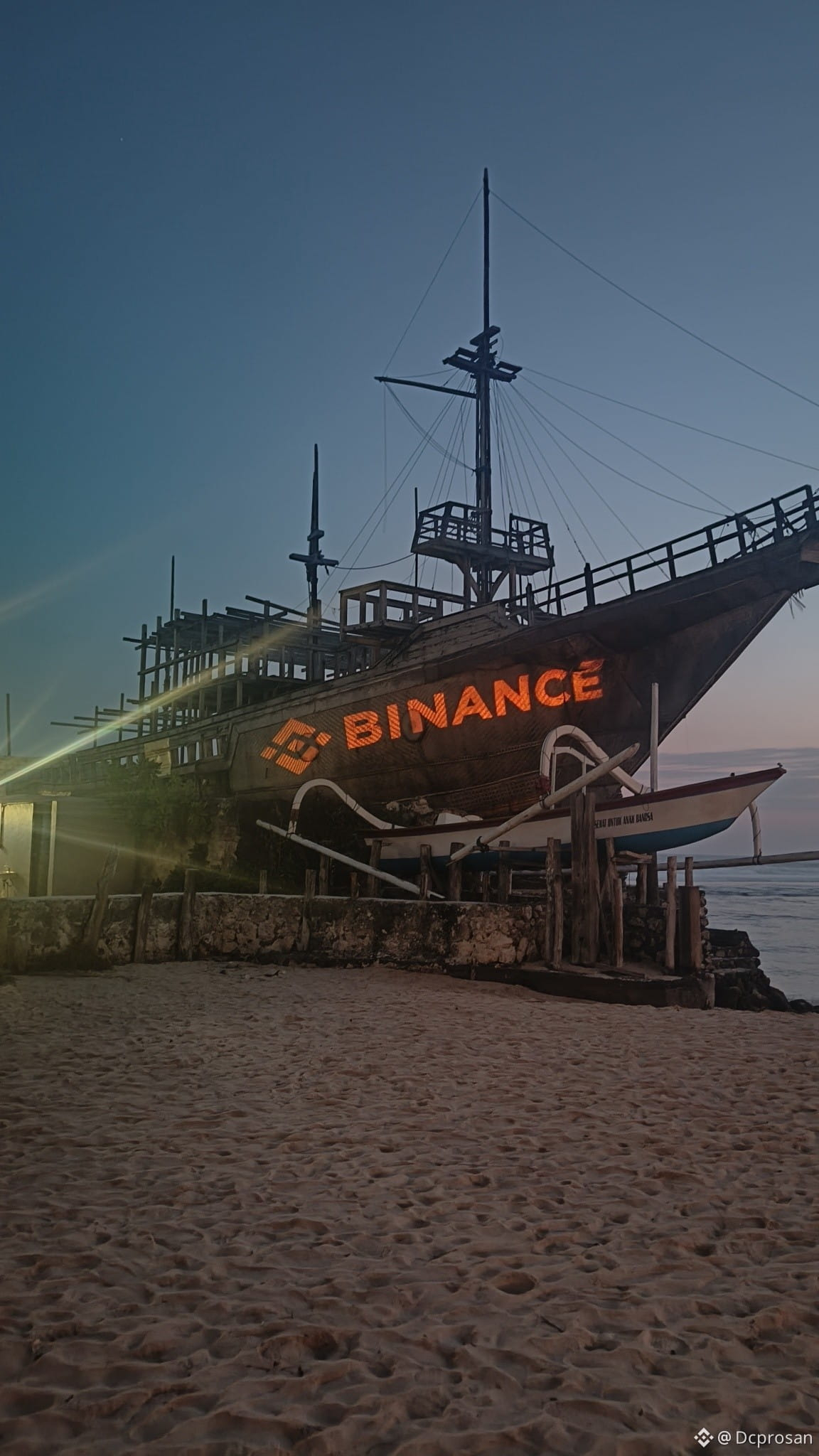
From Melasti Beach to Minoo Beach Club for #BinanceClubhouse
This year the event was on fire with all
@Binance_Angels
From Melasti Beach to Minoo Beach Club for #BinanceClubhouse
This year the event was on fire with all
@Binance Angels
This year the event was on fire with all
@Binance Angels



3
103
·
--
Verified
$500M AUM in just 7 weeks.
To me, this milestone isn't just about assets under management—it's about what it represents.
Tokenized stocks are changing how investors access traditional markets. Instead of moving between banks, brokers, and crypto exchanges, everything can now exist within a single ecosystem.
The momentum speaks for itself:
📈 Over $500M AUM in just seven weeks.
🌍 24/7 trading, so investors can react whenever news breaks—not just when Wall Street opens.
🚀 More than 41% of bStocks users gained their first exposure to traditional equities through tokenized stocks, while Gen Z accounts for 44% of trading activity.
To me, this isn't simply product growth.
It's a shift toward a more connected financial system, where access becomes easier, markets become more global, and the line between TradFi and crypto continues to fade.
Capital has always searched for the most efficient path. Tokenization may simply be the next evolution of how global capital moves.
It's connecting both.
Read more: [Binance Blog](https://www.binance.com/en/blog/markets/7525835566366636853)
#Binance #bStocks #Tokenization #FinancialInclusion
$500M AUM in just 7 weeks.
To me, this milestone isn't just about assets under management—it's about what it represents.
Tokenized stocks are changing how investors access traditional markets. Instead of moving between banks, brokers, and crypto exchanges, everything can now exist within a single ecosystem.
The momentum speaks for itself:
📈 Over $500M AUM in just seven weeks.
🌍 24/7 trading, so investors can react whenever news breaks—not just when Wall Street opens.
🚀 More than 41% of bStocks users gained their first exposure to traditional equities through tokenized stocks, while Gen Z accounts for 44% of trading activity.
To me, this isn't simply product growth.
It's a shift toward a more connected financial system, where access becomes easier, markets become more global, and the line between TradFi and crypto continues to fade.
Capital has always searched for the most efficient path. Tokenization may simply be the next evolution of how global capital moves.
It's connecting both.
Read more: Binance Blog
#Binance #bStocks #Tokenization #FinancialInclusion
5
91
·
--
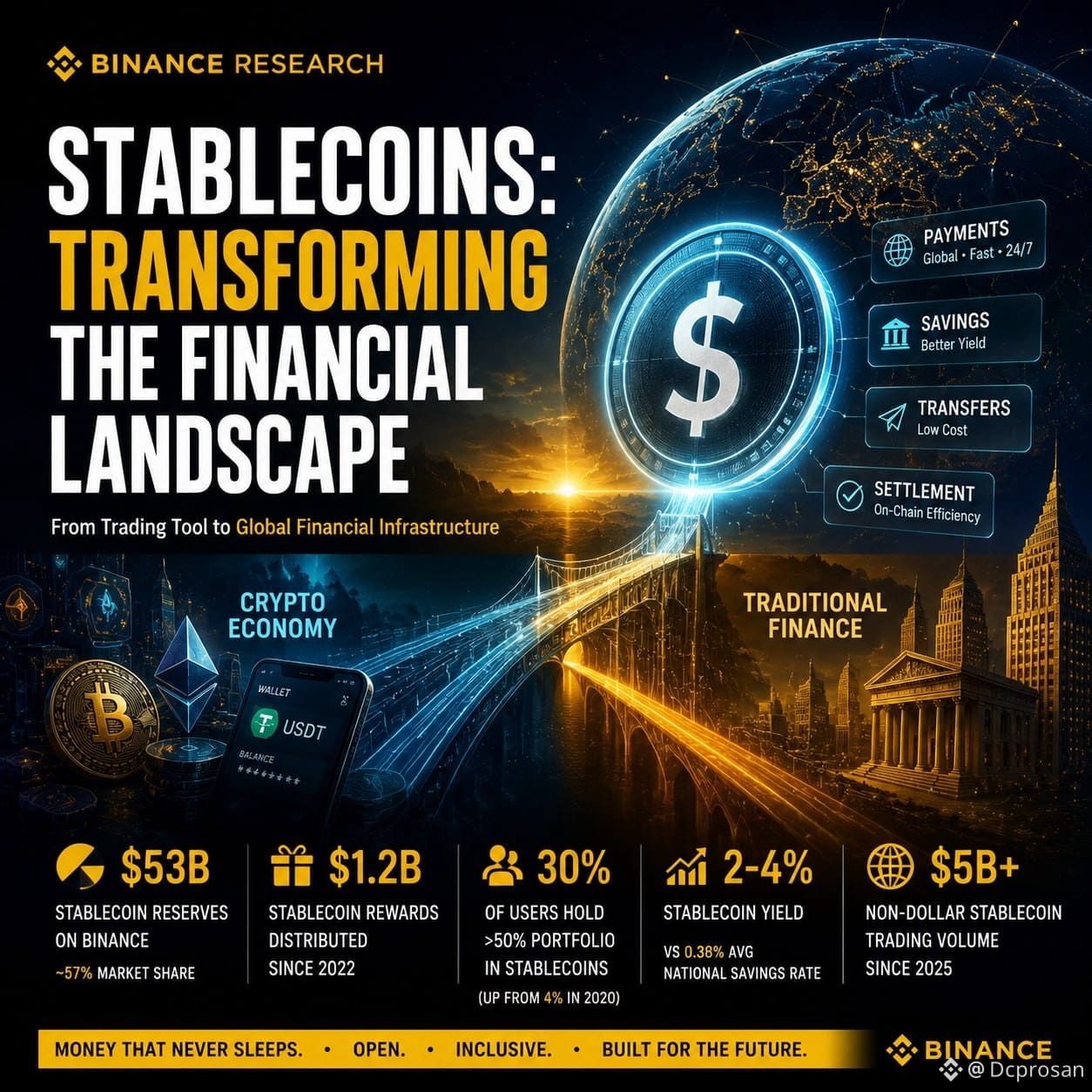
Stablecoins: The Missing Layer Between Crypto and Traditional Finance
When people hear “stablecoin”, many still think:
“Just another crypto trading pair.”
But that view is outdated.
The bigger story is that stablecoins are becoming financial infrastructure.
Money has three important functions:
- store of value
- medium of exchange
- settlement mechanism
Stablecoins are starting to fulfill all three.
Imagine a world where your capital is not trapped by banking hours.
Where you can:
- hold digital dollars
- earn yield
- transfer globally
- access financial markets
all from the same ecosystem.
That is the direction finance is moving.
Binance's role is interesting because exchanges are no longer only trading venues.
They are becoming financial infrastructure.
The report highlights Binance as a major stablecoin hub, with approximately US$53B in reserves and a 57% share of exchange stablecoin reserves.
The important point:
Stablecoins are not replacing traditional finance.
They are connecting it.
Crypto-native capital can now interact with traditional assets in a faster and more accessible way.
The future financial system may not be purely decentralized or centralized.
It may be a combination.
The next evolution of money is not about speculation.
It is about removing friction.
Faster settlement.
Global access.
24/7 financial markets.
Stablecoins may become the bridge that connects the crypto economy with the global financial system.
#BinanceAngels #StablecoinsReport
Full Binance Research : https://www.binance.com/en/research/analysis/stablecoins-transforming-the-financial-landscape
2
106
·
--
Verified
After a month stocks on Binance went live, it's already live on my region and I can see all of the list stocks.
My reaction was wild after seeing that, Binance turns out have almost complete all of the stocks and ETF that I know as a trader.
It blews my mind where I won't have to open another stocks broker overseas that are completely complicated and having trust issue due to unknown transactional succeed whether I can deposit it and withdraw it or not.
I have been using Binance for more than 3 years and I have no issue with the transaction at all, this build me a deep trust to diversified more to Binance with the stocks or ETF that I have been looking for.
Today, crypto is not just about coin or token, it's evolving into tokenized stocks. Stocks are now part of the crypto world and became one with the future financial system.
#BinanceStocks
3
120
·
--
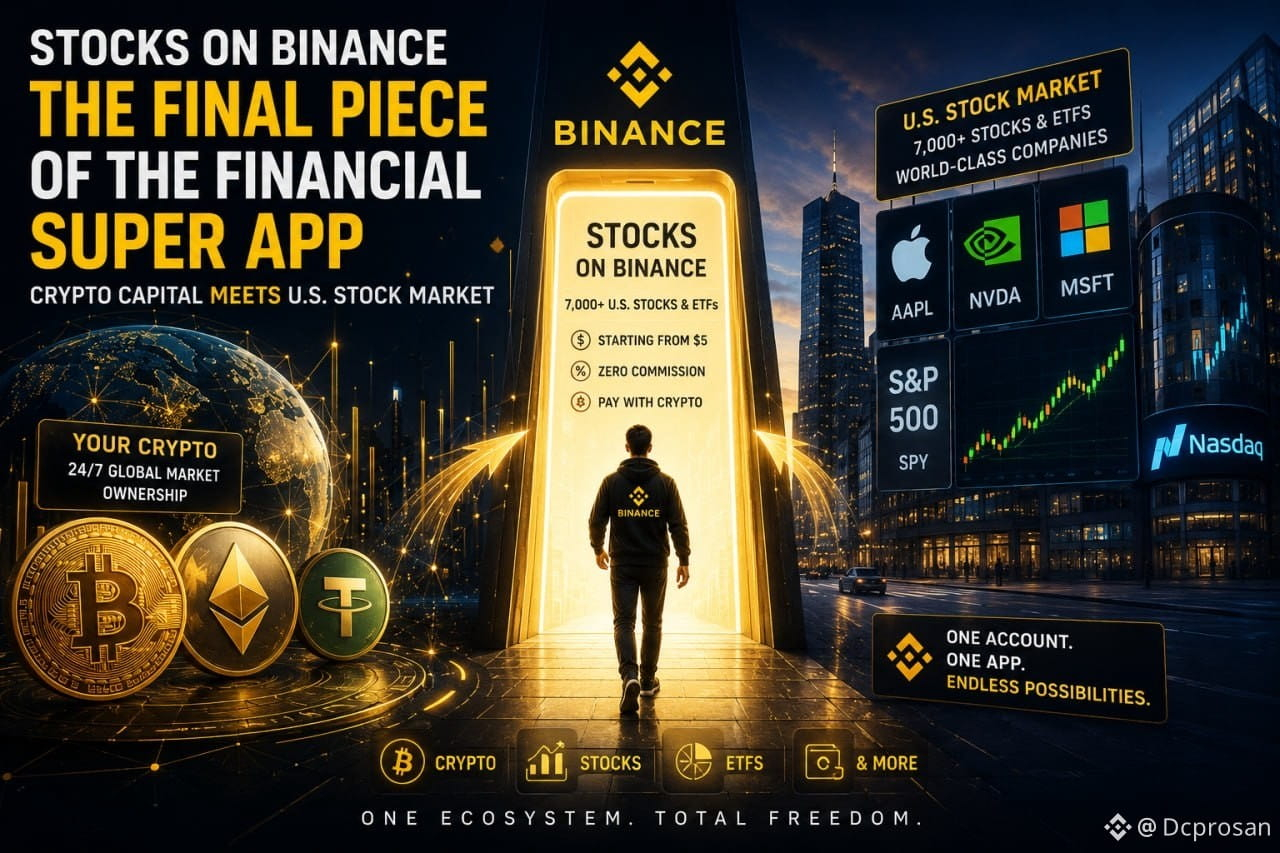
Most people see Stocks on Binance as a product launch.
I see it as a capital flow story.
For years, crypto investors and stock investors operated in separate ecosystems. Moving capital between digital assets and traditional markets required different platforms, accounts, and layers of friction.
With Stocks on Binance, users can access 7,000+ U.S. stocks and ETFs, starting from just $5, using the same ecosystem where they already hold Bitcoin, Ethereum, and stablecoins.
The real significance is not the stocks themselves.
It is the bridge.
A new generation of investors built wealth through crypto. Now they have a direct pathway into companies like Apple, NVIDIA, Microsoft, and broad-market ETFs without leaving the Binance ecosystem.
This changes accessibility.
It changes capital mobility.
And over time, it may change how global investors allocate capital across asset classes.
That is why I believe Stocks on Binance is the final piece of the Financial Super App vision.
Not because Binance added stocks.
But because it connected two financial worlds that were previously separated.
#BinanceStocks #Binance #Crypto #Stocks #Investing
3
125
·
--
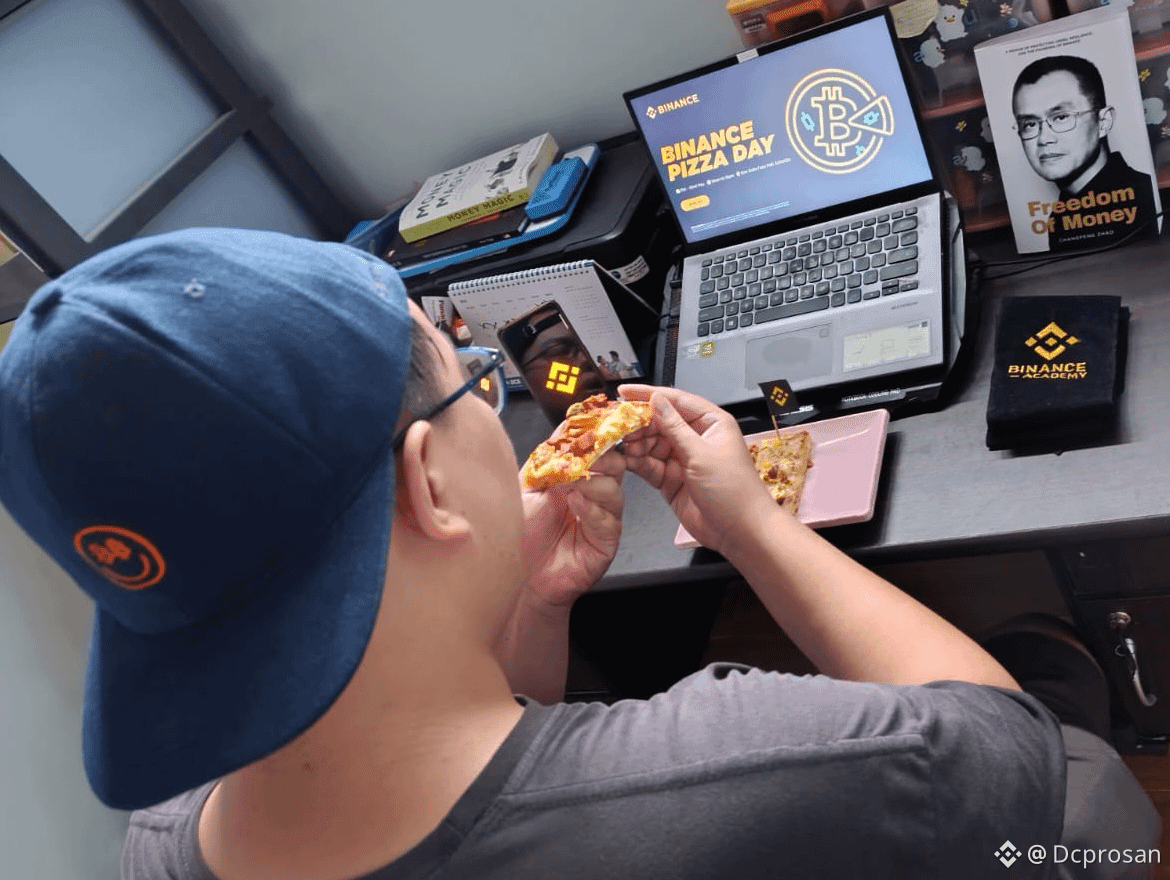
Today is Bitcoin Pizza Day, let's celebrate it with Binance and some Pizza 🍕
#BinancePizza
#TeamPineapple
@Binance_Angels
Today is Bitcoin Pizza Day, let's celebrate it with Binance and some Pizza 🍕
#BinancePizza
#TeamPineapple
@Binance Angels
#BinancePizza
#TeamPineapple
@Binance Angels

171
Log in to explore more content
Join global crypto users on Binance Square
⚡️ Get latest and useful information about crypto.
💬 Trusted by the world’s largest crypto exchange.
👍 Discover real insights from verified creators.
Email / Phone number
Trending Topics
IsAnthropic’s$1.5TMarketCapJustified?
58,164 views
292 Discussing
Anthropic Set to Open at $105 in Record Nasdaq Debut
Binance News
·16 Likes
·18.7k views
BTCBelow$62KAmidHikeFearsAndShiftToAnthropic
15,591 views
97 Discussing
NvidiaBoardReportedlySplitOverHuang’sReturn
243,558 views
1,933 Discussing