

DaveMS
275 Posts

DaveMS
Report
Block User
✍🏻We are here for learn. Choose wisely 🌐💎
22 Following
17.1K+ Followers
2.0K+ Liked
Posts
All
Quotes
PINNED
·
--
Bullish
Dear followers!
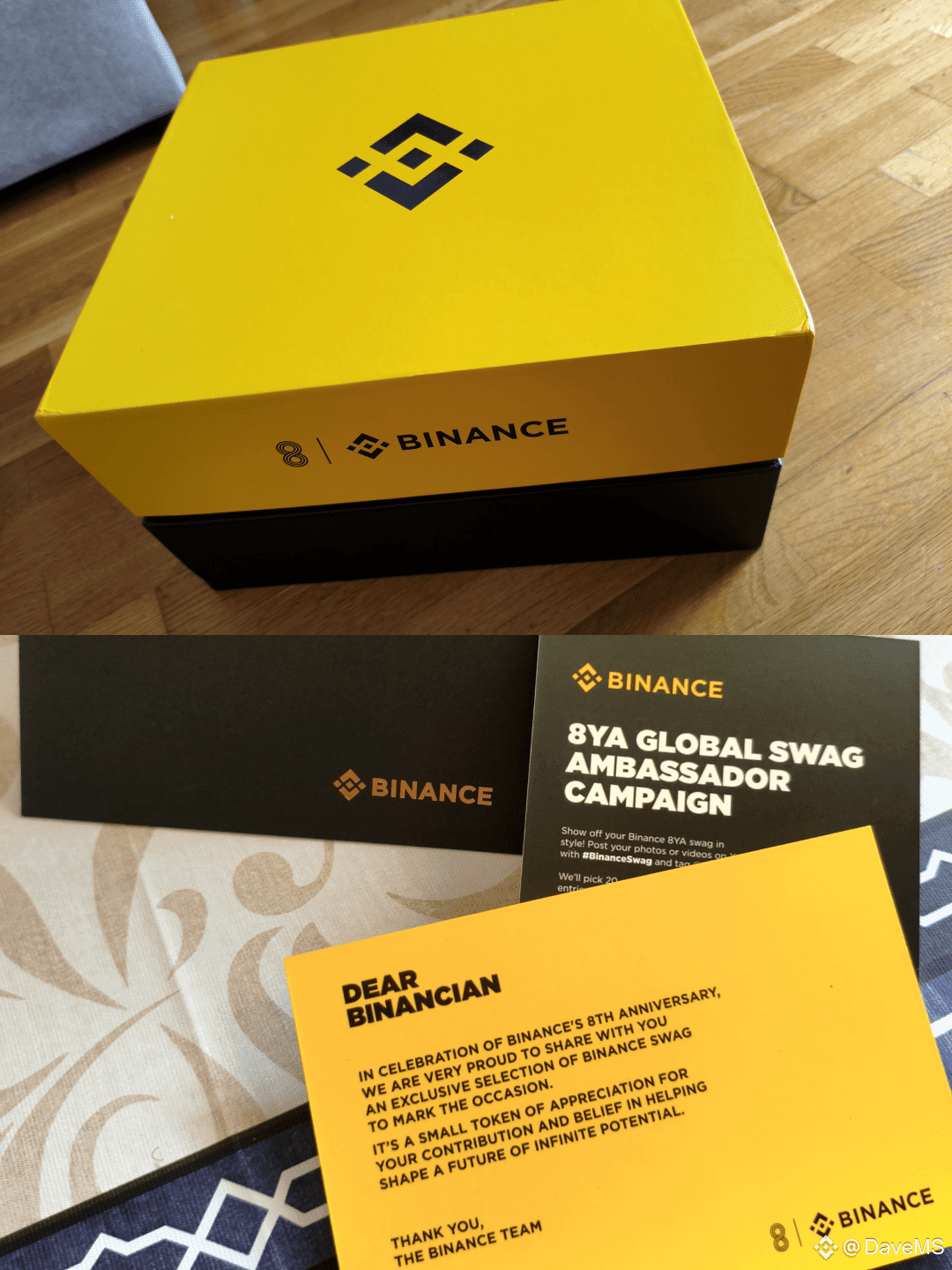
🏆 This is the first time I receive the GIFT BOX from @binance
🌐 I have been connected with Binance for
several years now and the community of over 15,000 followers speaks for itself.
🧡🖤 Binance believes in the channel because I try to bring the ecosystem closer with the best content and work on #BinanceSquare
That's why I want to say THANK YOU 🤗!
#KeepGoing #GlobalAmbassador
Dear followers!
🏆 This is the first time I receive the GIFT BOX from @binance
🌐 I have been connected with Binance for
several years now and the community of over 15,000 followers speaks for itself.
🧡🖤 Binance believes in the channel because I try to bring the ecosystem closer with the best content and work on #BinanceSquare
That's why I want to say THANK YOU 🤗!
#KeepGoing #GlobalAmbassador
🏆 This is the first time I receive the GIFT BOX from @binance
🌐 I have been connected with Binance for
several years now and the community of over 15,000 followers speaks for itself.
🧡🖤 Binance believes in the channel because I try to bring the ecosystem closer with the best content and work on #BinanceSquare
That's why I want to say THANK YOU 🤗!
#KeepGoing #GlobalAmbassador
31
12
43
6.9k
·
--
Verified
🔥 This is getting interesting. 4 big players are teaming up to launch a new stablecoin to compete with Circle and Tether 🔥
🏆 Stripe, Visa, and Mastercard are gearing up to roll out a new stablecoin platform. Coinbase is considering joining the initiative, which would establish massive infrastructure for settlements and global payments, directly competing with current giants in the sector like Circle and Tether.
Key details of this strategic move include:
🔑 Participation and Leadership: Stripe, Visa, and Mastercard are the main backers of the platform. Coinbase is contemplating joining as a strategic partner.
🔑 Market Impact: The initiative aims to tap into a stablecoin market valued at around $325 billion, which has seen massive transaction volumes that sometimes outpace traditional card networks.
🔑 Previous Industry Moves: Stripe acquired the stablecoin infrastructure firm Bridge. Meanwhile, Mastercard recently acquired BVNK, and Visa has expanded its stablecoin settlement pilot tests across several blockchain networks.
🔑 Coinbase Position: Their potential involvement is especially notable, as their revenue-sharing agreement with Circle (issuer of USDC) is set to renew in August.
While some are waiting to overturn laws that favor adoption, others are speeding ahead.
🔥 This is getting interesting. 4 big players are teaming up to launch a new stablecoin to compete with Circle and Tether 🔥
🏆 Stripe, Visa, and Mastercard are gearing up to roll out a new stablecoin platform. Coinbase is considering joining the initiative, which would establish massive infrastructure for settlements and global payments, directly competing with current giants in the sector like Circle and Tether.
Key details of this strategic move include:
🔑 Participation and Leadership: Stripe, Visa, and Mastercard are the main backers of the platform. Coinbase is contemplating joining as a strategic partner.
🔑 Market Impact: The initiative aims to tap into a stablecoin market valued at around $325 billion, which has seen massive transaction volumes that sometimes outpace traditional card networks.
🔑 Previous Industry Moves: Stripe acquired the stablecoin infrastructure firm Bridge. Meanwhile, Mastercard recently acquired BVNK, and Visa has expanded its stablecoin settlement pilot tests across several blockchain networks.
🔑 Coinbase Position: Their potential involvement is especially notable, as their revenue-sharing agreement with Circle (issuer of USDC) is set to renew in August.
While some are waiting to overturn laws that favor adoption, others are speeding ahead.
🏆 Stripe, Visa, and Mastercard are gearing up to roll out a new stablecoin platform. Coinbase is considering joining the initiative, which would establish massive infrastructure for settlements and global payments, directly competing with current giants in the sector like Circle and Tether.
Key details of this strategic move include:
🔑 Participation and Leadership: Stripe, Visa, and Mastercard are the main backers of the platform. Coinbase is contemplating joining as a strategic partner.
🔑 Market Impact: The initiative aims to tap into a stablecoin market valued at around $325 billion, which has seen massive transaction volumes that sometimes outpace traditional card networks.
🔑 Previous Industry Moves: Stripe acquired the stablecoin infrastructure firm Bridge. Meanwhile, Mastercard recently acquired BVNK, and Visa has expanded its stablecoin settlement pilot tests across several blockchain networks.
🔑 Coinbase Position: Their potential involvement is especially notable, as their revenue-sharing agreement with Circle (issuer of USDC) is set to renew in August.
While some are waiting to overturn laws that favor adoption, others are speeding ahead.
1
3
3.8k
·
--
Verified
🚨 China might be making another decisive move towards the future of digital currency.
According to various reports, the country is evaluating the creation of a national clearing house for transactions with the digital yuan (e-CNY), its central bank-issued digital currency.
The goal?
✅ Streamline settlements between financial entities.
✅ Improve interoperability of the payments ecosystem.
✅ Scale up the adoption of the digital yuan nationwide.
✅ Strengthen China's digital financial infrastructure.
And while the news may seem technical, its implications are profound.
🏦 Central Bank Digital Currencies (CBDCs) are not just about digitizing cash. Their true potential lies in building more efficient, programmable payment infrastructures capable of operating in real-time.
📶 The creation of a specific clearing house for the digital yuan would be a clear signal that China is moving from the experimental phase to the scalability phase.
💱 While much of the world is still debating regulation, privacy, and implementation models, China continues to develop the infrastructure that could define the next generation of financial systems.
The question is no longer whether CBDCs will have an impact.
The question is which countries will be ready when they reach mass adoption.
#CBDC #YuanDigital #Fintech #DigitalCurrency #MondaysArecool💎
🚨 China might be making another decisive move towards the future of digital currency.
According to various reports, the country is evaluating the creation of a national clearing house for transactions with the digital yuan (e-CNY), its central bank-issued digital currency.
The goal?
✅ Streamline settlements between financial entities.
✅ Improve interoperability of the payments ecosystem.
✅ Scale up the adoption of the digital yuan nationwide.
✅ Strengthen China's digital financial infrastructure.
And while the news may seem technical, its implications are profound.
🏦 Central Bank Digital Currencies (CBDCs) are not just about digitizing cash. Their true potential lies in building more efficient, programmable payment infrastructures capable of operating in real-time.
📶 The creation of a specific clearing house for the digital yuan would be a clear signal that China is moving from the experimental phase to the scalability phase.
💱 While much of the world is still debating regulation, privacy, and implementation models, China continues to develop the infrastructure that could define the next generation of financial systems.
The question is no longer whether CBDCs will have an impact.
The question is which countries will be ready when they reach mass adoption.
#CBDC #YuanDigital #Fintech #DigitalCurrency #MondaysArecool💎
According to various reports, the country is evaluating the creation of a national clearing house for transactions with the digital yuan (e-CNY), its central bank-issued digital currency.
The goal?
✅ Streamline settlements between financial entities.
✅ Improve interoperability of the payments ecosystem.
✅ Scale up the adoption of the digital yuan nationwide.
✅ Strengthen China's digital financial infrastructure.
And while the news may seem technical, its implications are profound.
🏦 Central Bank Digital Currencies (CBDCs) are not just about digitizing cash. Their true potential lies in building more efficient, programmable payment infrastructures capable of operating in real-time.
📶 The creation of a specific clearing house for the digital yuan would be a clear signal that China is moving from the experimental phase to the scalability phase.
💱 While much of the world is still debating regulation, privacy, and implementation models, China continues to develop the infrastructure that could define the next generation of financial systems.
The question is no longer whether CBDCs will have an impact.
The question is which countries will be ready when they reach mass adoption.
#CBDC #YuanDigital #Fintech #DigitalCurrency #MondaysArecool💎

2
909
·
--
🌐Reflections from the Ark: Project Panama🌐
The Panama Project was a secret operation of #Anthropic to acquire and scan millions of physical books and train its AI, #Claude . The program consisted of bulk buying works through distributors, destroying their spines, scanning page by page, and then discarding the material.
Key details of the project included acquiring between 500,000 to 2,000,000 books over a six-month period to feed the knowledge base of its artificial intelligence models.
A destructive scanning system was employed, which required physically dismantling the tomes to digitize them quickly and efficiently.
Following copyright infringement claims from authors and publishers, Anthropic reached a financial settlement of $1.5 billion to compensate the rights holders of the works.
According to court documents, the company focused almost exclusively on the second-hand market to control costs and maintain a low profile. It started with The Strand, a historic bookstore in New York, and then primarily turned to two specialized retailers: the American Better World Books and the British World of Books.
Some will argue that this is more "sustainable," "clean," or even "efficient." And I respect that.
But when you physically erase a civilization, you’re centralizing all knowledge into a single infrastructure. Not only that, but you also leave the information in the hands of the biases of those who aggregate it.
Something similar happened in World War II. I’ll just leave you with that thought. Critical thinking is about choosing the information and being able to draw your own conclusions, and with this approach, you wipe it all out in one fell swoop.
#Havealovelyweekend 💎
🌐Reflections from the Ark: Project Panama🌐
The Panama Project was a secret operation of #Anthropic to acquire and scan millions of physical books and train its AI, #Claude . The program consisted of bulk buying works through distributors, destroying their spines, scanning page by page, and then discarding the material.
Key details of the project included acquiring between 500,000 to 2,000,000 books over a six-month period to feed the knowledge base of its artificial intelligence models.
A destructive scanning system was employed, which required physically dismantling the tomes to digitize them quickly and efficiently.
Following copyright infringement claims from authors and publishers, Anthropic reached a financial settlement of $1.5 billion to compensate the rights holders of the works.
According to court documents, the company focused almost exclusively on the second-hand market to control costs and maintain a low profile. It started with The Strand, a historic bookstore in New York, and then primarily turned to two specialized retailers: the American Better World Books and the British World of Books.
Some will argue that this is more "sustainable," "clean," or even "efficient." And I respect that.
But when you physically erase a civilization, you’re centralizing all knowledge into a single infrastructure. Not only that, but you also leave the information in the hands of the biases of those who aggregate it.
Something similar happened in World War II. I’ll just leave you with that thought. Critical thinking is about choosing the information and being able to draw your own conclusions, and with this approach, you wipe it all out in one fell swoop.
#Havealovelyweekend 💎
The Panama Project was a secret operation of #Anthropic to acquire and scan millions of physical books and train its AI, #Claude . The program consisted of bulk buying works through distributors, destroying their spines, scanning page by page, and then discarding the material.
Key details of the project included acquiring between 500,000 to 2,000,000 books over a six-month period to feed the knowledge base of its artificial intelligence models.
A destructive scanning system was employed, which required physically dismantling the tomes to digitize them quickly and efficiently.
Following copyright infringement claims from authors and publishers, Anthropic reached a financial settlement of $1.5 billion to compensate the rights holders of the works.
According to court documents, the company focused almost exclusively on the second-hand market to control costs and maintain a low profile. It started with The Strand, a historic bookstore in New York, and then primarily turned to two specialized retailers: the American Better World Books and the British World of Books.
Some will argue that this is more "sustainable," "clean," or even "efficient." And I respect that.
But when you physically erase a civilization, you’re centralizing all knowledge into a single infrastructure. Not only that, but you also leave the information in the hands of the biases of those who aggregate it.
Something similar happened in World War II. I’ll just leave you with that thought. Critical thinking is about choosing the information and being able to draw your own conclusions, and with this approach, you wipe it all out in one fell swoop.
#Havealovelyweekend 💎

1
285
·
--
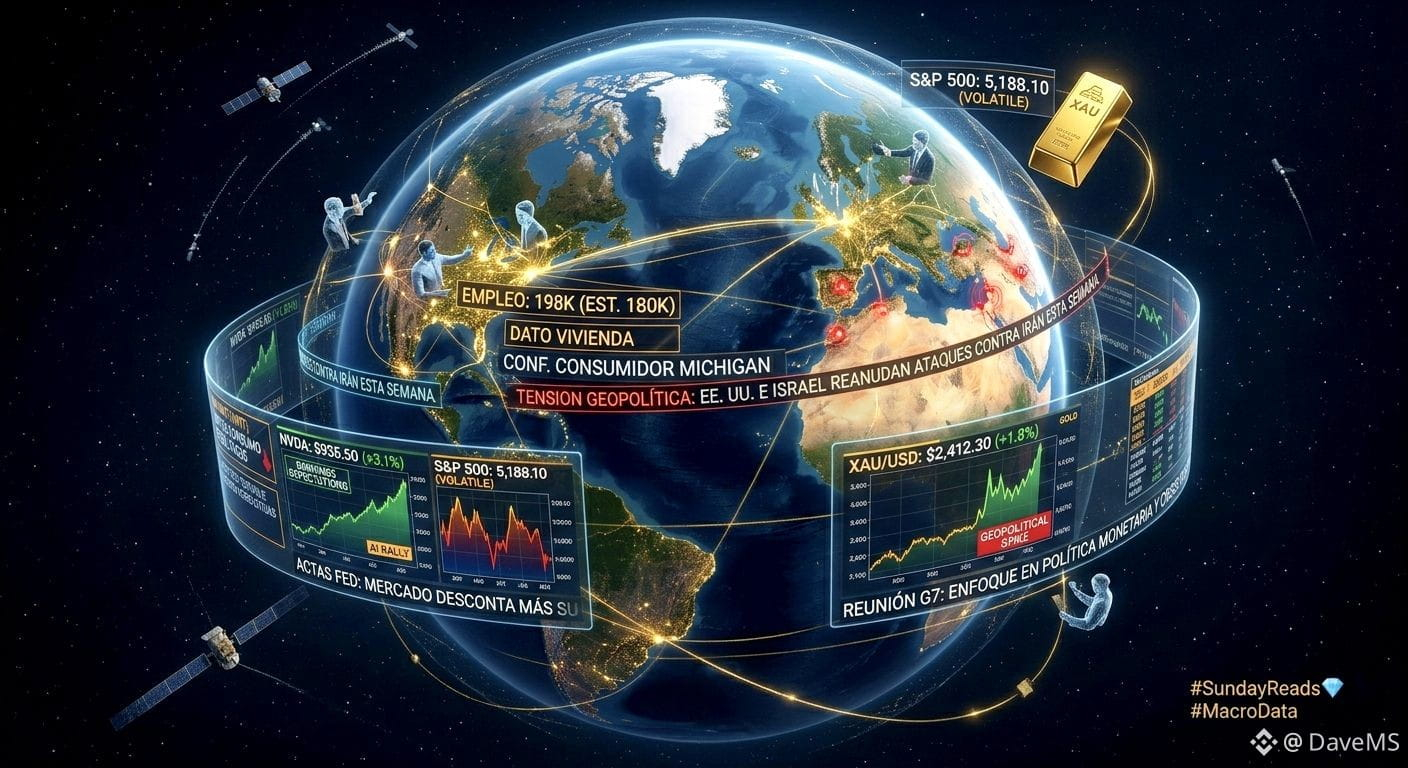
🌍📉 Key Week: More Geopolitical Tension, Increased Volatility, and a Market Eyeing Gold and AI
Next week is packed with macro signals that could move the markets in a matter of hours.
🔥 Geopolitics Heating Up.
Reports indicate that the U.S. and Israel might resume strikes against Iran as early as this week. This adds immediate risk for gold maxis, who have already been pushing the metal as a safe haven.
🏦 Central Banks in Focus.
- G7 Meeting until May 19.
- Key speeches from Waller (Fed) and Paulson (FOMC 2026).
- On Thursday, the minutes from the last "Powell Era" meeting will be released, at a time when the market is starting to price in more rate hikes.
📊 Data That Could Move the Market.
- ADP Employment.
- Unemployment Claims.
- Housing (starts and permits).
- Philadelphia Manufacturing Index.
- Michigan Consumer Sentiment and Inflation Expectations.
All this in a context where consumer spending remains under inflationary pressure.
🧠📈 AI and Consumption: The Two Pillars of the U.S. Equity Market.
The week will also be crucial for the stock market:
- Nvidia (NVDA) reports earnings, the epicenter of the AI rally.
- Walmart and other retailers release earnings, a thermometer for real consumer behavior.
Two narratives undoubtedly colliding, the AI boom vs. consumer fatigue.
#SundayReads 💎 #MacroData
🌍📉 Key Week: More Geopolitical Tension, Increased Volatility, and a Market Eyeing Gold and AI
Next week is packed with macro signals that could move the markets in a matter of hours.
🔥 Geopolitics Heating Up.
Reports indicate that the U.S. and Israel might resume strikes against Iran as early as this week. This adds immediate risk for gold maxis, who have already been pushing the metal as a safe haven.
🏦 Central Banks in Focus.
- G7 Meeting until May 19.
- Key speeches from Waller (Fed) and Paulson (FOMC 2026).
- On Thursday, the minutes from the last "Powell Era" meeting will be released, at a time when the market is starting to price in more rate hikes.
📊 Data That Could Move the Market.
- ADP Employment.
- Unemployment Claims.
- Housing (starts and permits).
- Philadelphia Manufacturing Index.
- Michigan Consumer Sentiment and Inflation Expectations.
All this in a context where consumer spending remains under inflationary pressure.
🧠📈 AI and Consumption: The Two Pillars of the U.S. Equity Market.
The week will also be crucial for the stock market:
- Nvidia (NVDA) reports earnings, the epicenter of the AI rally.
- Walmart and other retailers release earnings, a thermometer for real consumer behavior.
Two narratives undoubtedly colliding, the AI boom vs. consumer fatigue.
#SundayReads 💎 #MacroData
Next week is packed with macro signals that could move the markets in a matter of hours.
🔥 Geopolitics Heating Up.
Reports indicate that the U.S. and Israel might resume strikes against Iran as early as this week. This adds immediate risk for gold maxis, who have already been pushing the metal as a safe haven.
🏦 Central Banks in Focus.
- G7 Meeting until May 19.
- Key speeches from Waller (Fed) and Paulson (FOMC 2026).
- On Thursday, the minutes from the last "Powell Era" meeting will be released, at a time when the market is starting to price in more rate hikes.
📊 Data That Could Move the Market.
- ADP Employment.
- Unemployment Claims.
- Housing (starts and permits).
- Philadelphia Manufacturing Index.
- Michigan Consumer Sentiment and Inflation Expectations.
All this in a context where consumer spending remains under inflationary pressure.
🧠📈 AI and Consumption: The Two Pillars of the U.S. Equity Market.
The week will also be crucial for the stock market:
- Nvidia (NVDA) reports earnings, the epicenter of the AI rally.
- Walmart and other retailers release earnings, a thermometer for real consumer behavior.
Two narratives undoubtedly colliding, the AI boom vs. consumer fatigue.
#SundayReads 💎 #MacroData
3
895
·
--
Bullish
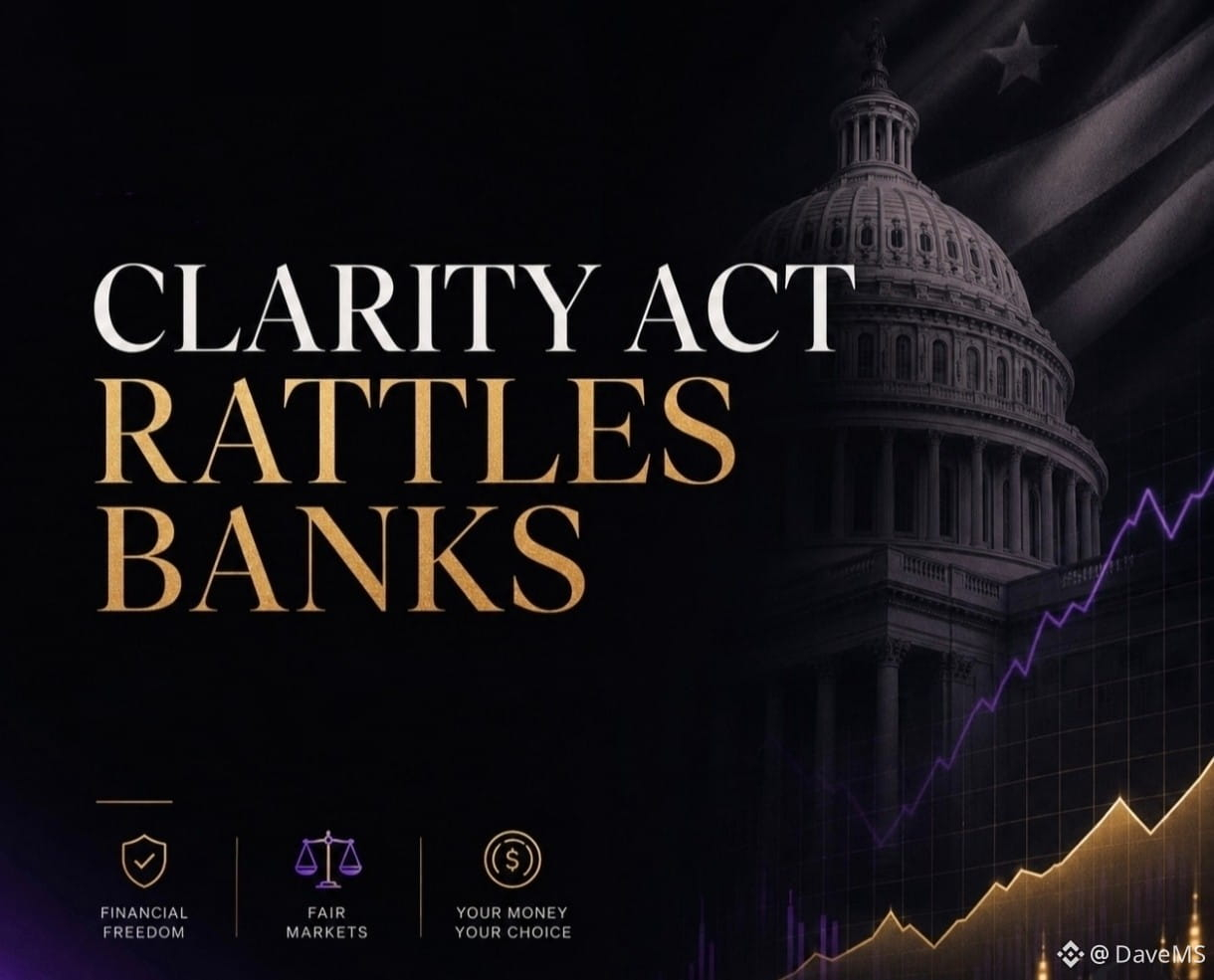
🔔 Historic Moment and turning point for the digital ecosystem.
⚖️ The CLARITY Act has just passed the Senate Banking Committee, pushing the United States toward a definitive framework for digital assets.
🔑 If it becomes law, CLARITY would mean:
→ Formal recognition of digital assets in U.S. regulation.
→ Ordering the treatment of tokenization.
→ Opening the door to massive institutional entry.
→ Closing an era of regulatory ambiguity.
→ Establishing clear competencies between the SEC and CFTC.
🏦 With over a hundred amendments, banks argue that the language doesn't go far enough. Their concern is that exchanges and other intermediaries could structure rewards around stablecoin activity in ways that divert deposits from insured banks.
🔛 The text now moves to the Senate floor, followed by reconciliation in the House, and finally, presidential signature.
For decades, the United States has set the global financial course.
If this bill succeeds, it could project that leadership into the new architecture of markets, driven by tokenization and digital assets.
#ClarityAct #Senate #DigitalAssets
🔔 Historic Moment and turning point for the digital ecosystem.
⚖️ The CLARITY Act has just passed the Senate Banking Committee, pushing the United States toward a definitive framework for digital assets.
🔑 If it becomes law, CLARITY would mean:
→ Formal recognition of digital assets in U.S. regulation.
→ Ordering the treatment of tokenization.
→ Opening the door to massive institutional entry.
→ Closing an era of regulatory ambiguity.
→ Establishing clear competencies between the SEC and CFTC.
🏦 With over a hundred amendments, banks argue that the language doesn't go far enough. Their concern is that exchanges and other intermediaries could structure rewards around stablecoin activity in ways that divert deposits from insured banks.
🔛 The text now moves to the Senate floor, followed by reconciliation in the House, and finally, presidential signature.
For decades, the United States has set the global financial course.
If this bill succeeds, it could project that leadership into the new architecture of markets, driven by tokenization and digital assets.
#ClarityAct #Senate #DigitalAssets
⚖️ The CLARITY Act has just passed the Senate Banking Committee, pushing the United States toward a definitive framework for digital assets.
🔑 If it becomes law, CLARITY would mean:
→ Formal recognition of digital assets in U.S. regulation.
→ Ordering the treatment of tokenization.
→ Opening the door to massive institutional entry.
→ Closing an era of regulatory ambiguity.
→ Establishing clear competencies between the SEC and CFTC.
🏦 With over a hundred amendments, banks argue that the language doesn't go far enough. Their concern is that exchanges and other intermediaries could structure rewards around stablecoin activity in ways that divert deposits from insured banks.
🔛 The text now moves to the Senate floor, followed by reconciliation in the House, and finally, presidential signature.
For decades, the United States has set the global financial course.
If this bill succeeds, it could project that leadership into the new architecture of markets, driven by tokenization and digital assets.
#ClarityAct #Senate #DigitalAssets
4
5.7k
·
--
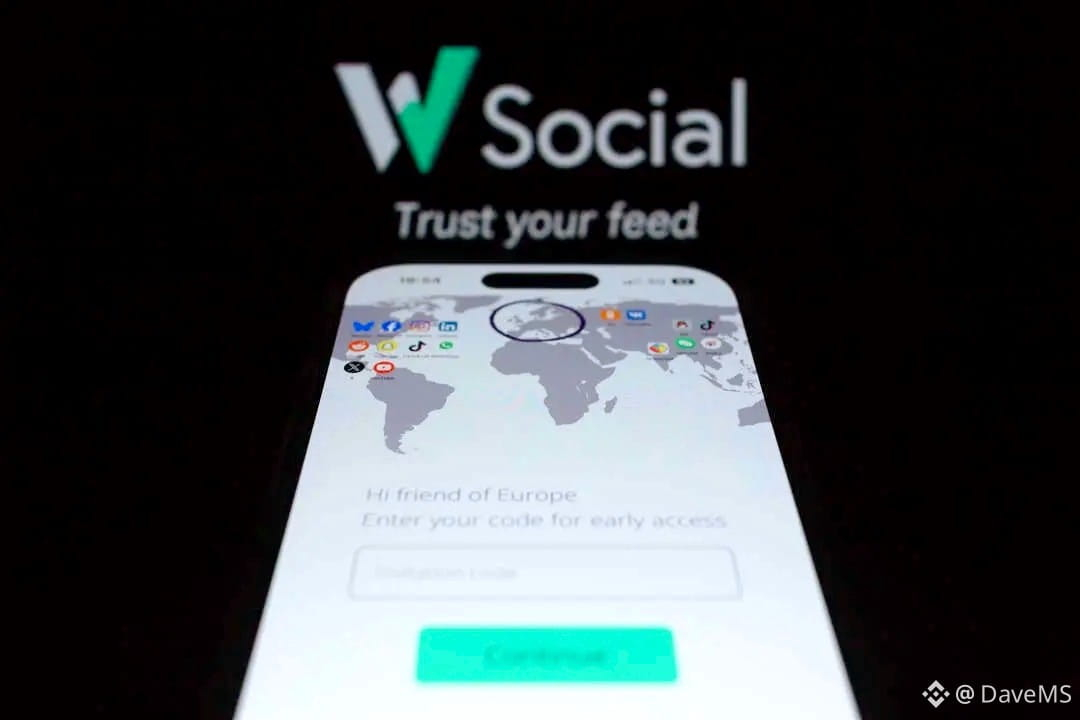
🌐 Reflections from the Ark: Hey Wsocial 🌐
Wsocial is gearing up to launch across the European Union, and while it may be wrapped in terms like interoperability, digital sovereignty, and modernization, the vibe it gives off feels like witnessing the quiet birth of a new social architecture that nobody voted for and very few understand.
The official narrative insists that its proposal introduces a paradigm shift in the European digital space: the necessity for humans to participate while eliminating bots, but it is capable of turning every digital gesture into a tradable asset.
All of this is packaged in a clean, uniform format that's extraordinarily valuable for those who thrive on anticipating, influencing, or shaping human behavior.
Privacy in this context is just for show. Anonymization is a promise that data science dismantled years ago with #Web2; with enough data points, any identity can be reconstructed, integrating more data points than any European platform has gathered before.
There isn't a clear framework for independent external audits. There's no real transparency about who accesses what data, under what criteria, and through what control mechanisms.
Oversight gets lost in technical documents and institutional statements that dodge the essential question: who watches the watcher when the watcher is the infrastructure itself?
Today Europe celebrates a technological leap. But we might want to ask what kind of society emerges when human interaction transforms into a perfectly traceable data flow, and when privacy ceases to be a right and turns into a managed illusion.
Some will say there isn't much difference from the conventional platforms we already know. Others will dig deeper and think of their pattern to serve a greater purpose.
#HaveaLovelyWeekend💎
🌐 Reflections from the Ark: Hey Wsocial 🌐
Wsocial is gearing up to launch across the European Union, and while it may be wrapped in terms like interoperability, digital sovereignty, and modernization, the vibe it gives off feels like witnessing the quiet birth of a new social architecture that nobody voted for and very few understand.
The official narrative insists that its proposal introduces a paradigm shift in the European digital space: the necessity for humans to participate while eliminating bots, but it is capable of turning every digital gesture into a tradable asset.
All of this is packaged in a clean, uniform format that's extraordinarily valuable for those who thrive on anticipating, influencing, or shaping human behavior.
Privacy in this context is just for show. Anonymization is a promise that data science dismantled years ago with #Web2; with enough data points, any identity can be reconstructed, integrating more data points than any European platform has gathered before.
There isn't a clear framework for independent external audits. There's no real transparency about who accesses what data, under what criteria, and through what control mechanisms.
Oversight gets lost in technical documents and institutional statements that dodge the essential question: who watches the watcher when the watcher is the infrastructure itself?
Today Europe celebrates a technological leap. But we might want to ask what kind of society emerges when human interaction transforms into a perfectly traceable data flow, and when privacy ceases to be a right and turns into a managed illusion.
Some will say there isn't much difference from the conventional platforms we already know. Others will dig deeper and think of their pattern to serve a greater purpose.
#HaveaLovelyWeekend💎
Wsocial is gearing up to launch across the European Union, and while it may be wrapped in terms like interoperability, digital sovereignty, and modernization, the vibe it gives off feels like witnessing the quiet birth of a new social architecture that nobody voted for and very few understand.
The official narrative insists that its proposal introduces a paradigm shift in the European digital space: the necessity for humans to participate while eliminating bots, but it is capable of turning every digital gesture into a tradable asset.
All of this is packaged in a clean, uniform format that's extraordinarily valuable for those who thrive on anticipating, influencing, or shaping human behavior.
Privacy in this context is just for show. Anonymization is a promise that data science dismantled years ago with #Web2; with enough data points, any identity can be reconstructed, integrating more data points than any European platform has gathered before.
There isn't a clear framework for independent external audits. There's no real transparency about who accesses what data, under what criteria, and through what control mechanisms.
Oversight gets lost in technical documents and institutional statements that dodge the essential question: who watches the watcher when the watcher is the infrastructure itself?
Today Europe celebrates a technological leap. But we might want to ask what kind of society emerges when human interaction transforms into a perfectly traceable data flow, and when privacy ceases to be a right and turns into a managed illusion.
Some will say there isn't much difference from the conventional platforms we already know. Others will dig deeper and think of their pattern to serve a greater purpose.
#HaveaLovelyWeekend💎
2
622
·
--
🚨 The first trade that marks the inaugural settlement of tokenized assets across borders outside of conventional hours.
🏦 Ondo, JPMorgan, Mastercard, and Ripple successfully completed the first tokenized settlement.
⚡ The pilot utilized #XRPLedger to settle tokenized Treasury bonds almost in real-time.
🌍 The trade took place outside traditional banking hours, thus powering the markets 24/7.
Nobody's stopping this now.
#DLT #blockchain
🚨 The first trade that marks the inaugural settlement of tokenized assets across borders outside of conventional hours.
🏦 Ondo, JPMorgan, Mastercard, and Ripple successfully completed the first tokenized settlement.
⚡ The pilot utilized #XRPLedger to settle tokenized Treasury bonds almost in real-time.
🌍 The trade took place outside traditional banking hours, thus powering the markets 24/7.
Nobody's stopping this now.
#DLT #blockchain
🏦 Ondo, JPMorgan, Mastercard, and Ripple successfully completed the first tokenized settlement.
⚡ The pilot utilized #XRPLedger to settle tokenized Treasury bonds almost in real-time.
🌍 The trade took place outside traditional banking hours, thus powering the markets 24/7.
Nobody's stopping this now.
#DLT #blockchain
2
1.2k
·
--
We've just taken a step towards a structural shift in on-chain privacy.
Financial privacy is back in the spotlight. Polygon has just enabled private payments with USDC and USDT directly from its wallet, hiding sender, recipient, and amount thanks to a protected Hinkal pool and zero-knowledge proofs.
This isn't just “another feature.” It's a move that addresses one of the biggest weaknesses of public blockchains: the total exposure of financial flows.
🔒 What's changing?
- Transactions are validated without revealing sensitive data.
- Users can operate with stablecoins without leaving public traces.
- Regulatory compatibility is maintained through KYT controls and audit trails.
- Operational privacy without falling into total opacity. Exactly what companies have been asking for years.
🧩 Another piece of the Open Money Stack. A global payment infrastructure based on stablecoins. This layer of privacy adds what was missing for corporate pilots to become real business processes.
🧭 No company wants its competitors to see their payments. No provider wants to expose their margins. No institutional user can operate in an environment where everything is public by default.
Privacy shouldn't be a luxury; it should be a requirement for stablecoins to scale beyond the crypto world.
🎯 Polygon has just made its move.
We've just taken a step towards a structural shift in on-chain privacy.
Financial privacy is back in the spotlight. Polygon has just enabled private payments with USDC and USDT directly from its wallet, hiding sender, recipient, and amount thanks to a protected Hinkal pool and zero-knowledge proofs.
This isn't just “another feature.” It's a move that addresses one of the biggest weaknesses of public blockchains: the total exposure of financial flows.
🔒 What's changing?
- Transactions are validated without revealing sensitive data.
- Users can operate with stablecoins without leaving public traces.
- Regulatory compatibility is maintained through KYT controls and audit trails.
- Operational privacy without falling into total opacity. Exactly what companies have been asking for years.
🧩 Another piece of the Open Money Stack. A global payment infrastructure based on stablecoins. This layer of privacy adds what was missing for corporate pilots to become real business processes.
🧭 No company wants its competitors to see their payments. No provider wants to expose their margins. No institutional user can operate in an environment where everything is public by default.
Privacy shouldn't be a luxury; it should be a requirement for stablecoins to scale beyond the crypto world.
🎯 Polygon has just made its move.
Financial privacy is back in the spotlight. Polygon has just enabled private payments with USDC and USDT directly from its wallet, hiding sender, recipient, and amount thanks to a protected Hinkal pool and zero-knowledge proofs.
This isn't just “another feature.” It's a move that addresses one of the biggest weaknesses of public blockchains: the total exposure of financial flows.
🔒 What's changing?
- Transactions are validated without revealing sensitive data.
- Users can operate with stablecoins without leaving public traces.
- Regulatory compatibility is maintained through KYT controls and audit trails.
- Operational privacy without falling into total opacity. Exactly what companies have been asking for years.
🧩 Another piece of the Open Money Stack. A global payment infrastructure based on stablecoins. This layer of privacy adds what was missing for corporate pilots to become real business processes.
🧭 No company wants its competitors to see their payments. No provider wants to expose their margins. No institutional user can operate in an environment where everything is public by default.
Privacy shouldn't be a luxury; it should be a requirement for stablecoins to scale beyond the crypto world.
🎯 Polygon has just made its move.
6
1.1k
·
--
🌐 Reflections from the Ark: DARPA and the Birth of Modern Tech 🌐
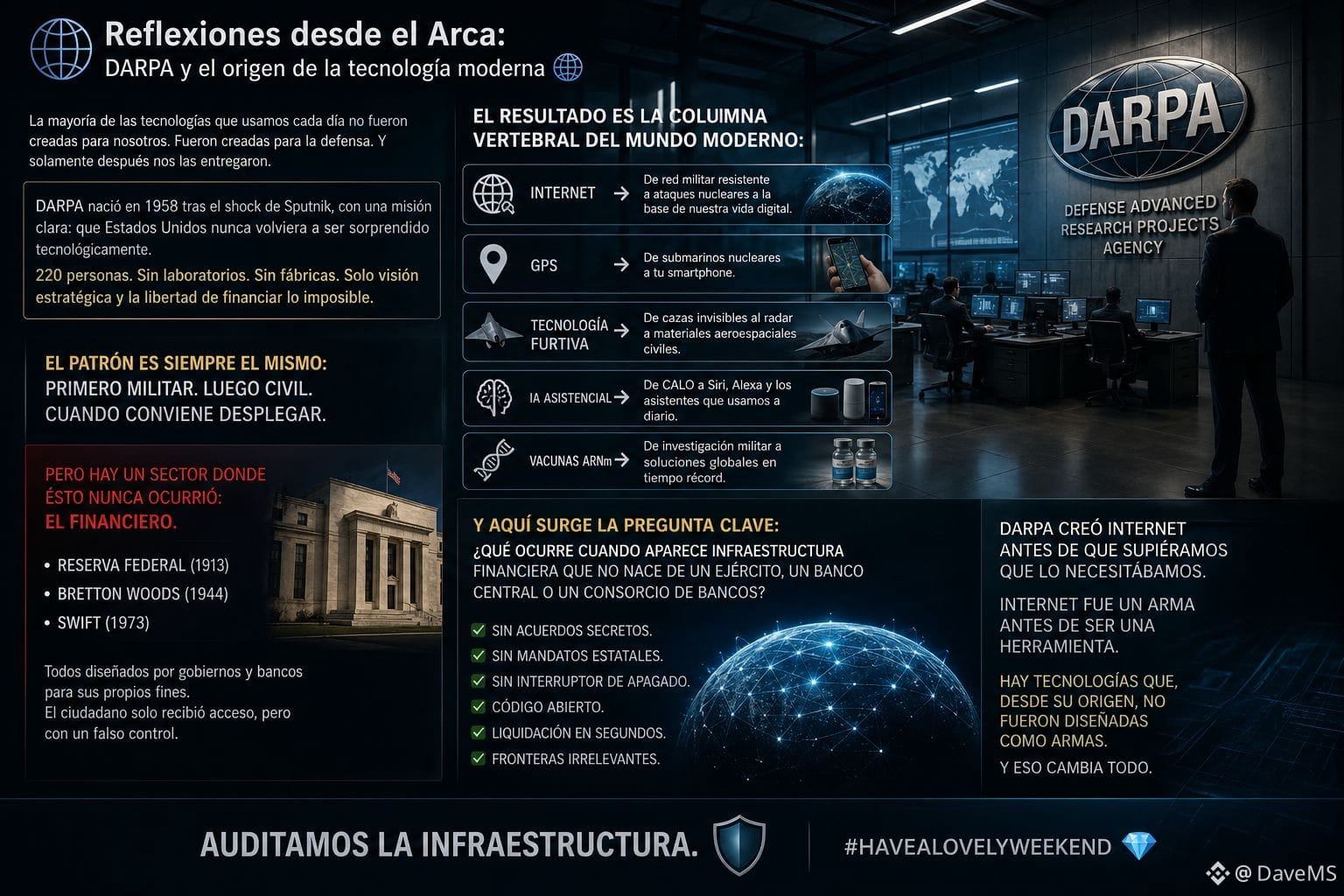
Most of the tech we use daily wasn’t created for us. It was built for defense. Only later did it get handed over to us.
DARPA was born in 1958 after the Sputnik shock, with a clear mission: to ensure the U.S. would never be caught off guard technologically.
220 people. No labs. No factories. Just strategic vision and the freedom to fund the impossible.
The result is the backbone of the modern world:
- Internet → from a military network resistant to nuclear attacks to the foundation of our digital lives.
- GPS → from nuclear submarines to your smartphone.
- Stealth tech → from radar-invisible jets to civilian aerospace materials.
- Assistive AI → from CALO to Siri, Alexa, and the assistants we use daily.
- mRNA vaccines → from military research to global solutions in record time.
The pattern is always the same:
First military. Then civilian. When it’s convenient to deploy.
But there’s one sector where this never happened: finance.
- Federal Reserve (1913).
- Bretton Woods (1944).
- SWIFT (1973).
All designed by governments and banks for their own purposes.
The citizen only got access, but with a false sense of control.
And here arises the key question:
What if a financial infrastructure emerges that doesn’t originate from an army, a central bank, or a bank consortium?
No agreements, no mandates, no switches, open-source, settlement in seconds, or irrelevant borders.
DARPA created the Internet before we even knew we needed it.
The Internet was a weapon before it became a tool.
There are technologies that, from their inception, weren’t designed as weapons. And that changes everything.
#HaveAlovelyWeekend💎
🌐 Reflections from the Ark: DARPA and the Birth of Modern Tech 🌐
Most of the tech we use daily wasn’t created for us. It was built for defense. Only later did it get handed over to us.
DARPA was born in 1958 after the Sputnik shock, with a clear mission: to ensure the U.S. would never be caught off guard technologically.
220 people. No labs. No factories. Just strategic vision and the freedom to fund the impossible.
The result is the backbone of the modern world:
- Internet → from a military network resistant to nuclear attacks to the foundation of our digital lives.
- GPS → from nuclear submarines to your smartphone.
- Stealth tech → from radar-invisible jets to civilian aerospace materials.
- Assistive AI → from CALO to Siri, Alexa, and the assistants we use daily.
- mRNA vaccines → from military research to global solutions in record time.
The pattern is always the same:
First military. Then civilian. When it’s convenient to deploy.
But there’s one sector where this never happened: finance.
- Federal Reserve (1913).
- Bretton Woods (1944).
- SWIFT (1973).
All designed by governments and banks for their own purposes.
The citizen only got access, but with a false sense of control.
And here arises the key question:
What if a financial infrastructure emerges that doesn’t originate from an army, a central bank, or a bank consortium?
No agreements, no mandates, no switches, open-source, settlement in seconds, or irrelevant borders.
DARPA created the Internet before we even knew we needed it.
The Internet was a weapon before it became a tool.
There are technologies that, from their inception, weren’t designed as weapons. And that changes everything.
#HaveAlovelyWeekend💎
Most of the tech we use daily wasn’t created for us. It was built for defense. Only later did it get handed over to us.
DARPA was born in 1958 after the Sputnik shock, with a clear mission: to ensure the U.S. would never be caught off guard technologically.
220 people. No labs. No factories. Just strategic vision and the freedom to fund the impossible.
The result is the backbone of the modern world:
- Internet → from a military network resistant to nuclear attacks to the foundation of our digital lives.
- GPS → from nuclear submarines to your smartphone.
- Stealth tech → from radar-invisible jets to civilian aerospace materials.
- Assistive AI → from CALO to Siri, Alexa, and the assistants we use daily.
- mRNA vaccines → from military research to global solutions in record time.
The pattern is always the same:
First military. Then civilian. When it’s convenient to deploy.
But there’s one sector where this never happened: finance.
- Federal Reserve (1913).
- Bretton Woods (1944).
- SWIFT (1973).
All designed by governments and banks for their own purposes.
The citizen only got access, but with a false sense of control.
And here arises the key question:
What if a financial infrastructure emerges that doesn’t originate from an army, a central bank, or a bank consortium?
No agreements, no mandates, no switches, open-source, settlement in seconds, or irrelevant borders.
DARPA created the Internet before we even knew we needed it.
The Internet was a weapon before it became a tool.
There are technologies that, from their inception, weren’t designed as weapons. And that changes everything.
#HaveAlovelyWeekend💎
2
1
2.3k
·
--
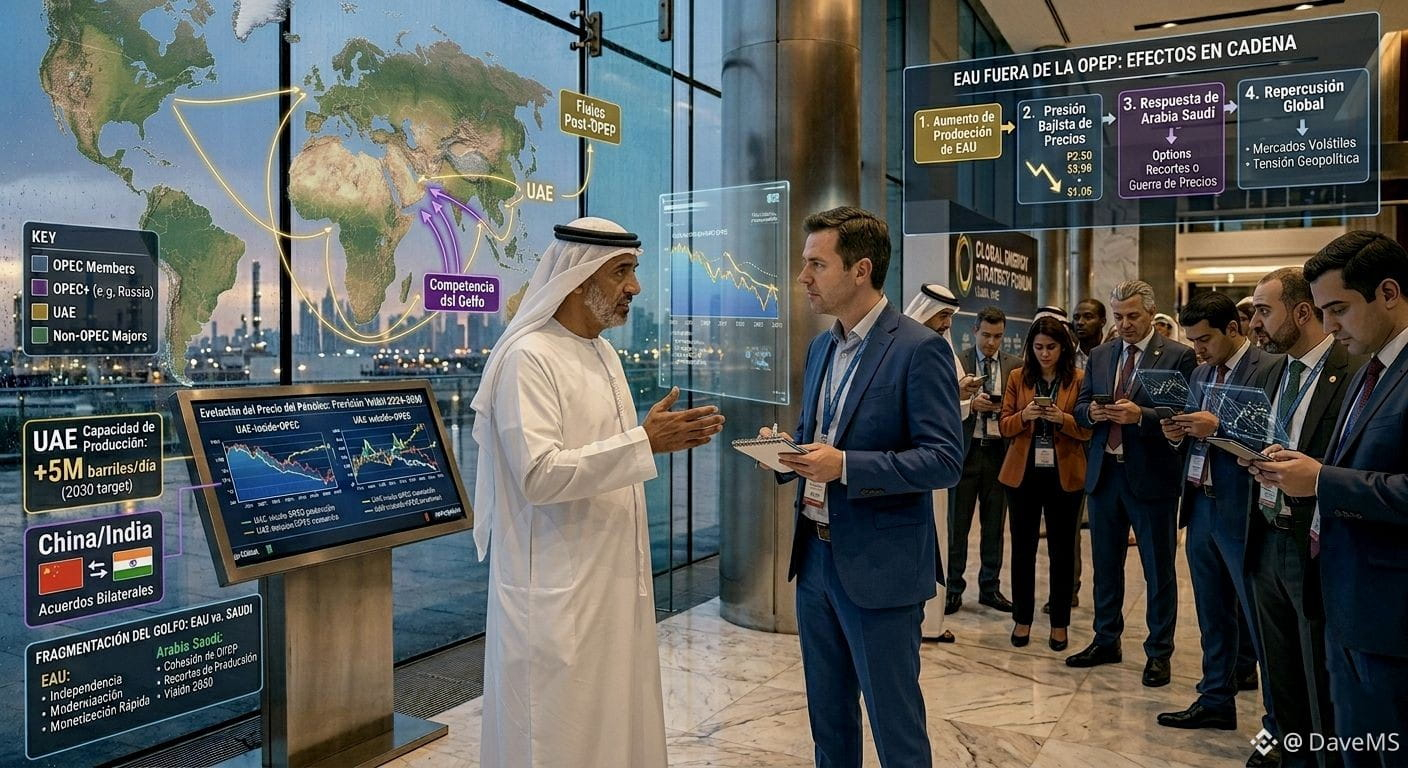
🇦🇪💥 UAE Exits OPEC: What’s Next?
The UAE's exit from OPEC is a strategic play that signals a turning point, kicking off a phase where Gulf producers will compete more fiercely with each other, leading to a decrease in organizational cohesion and ushering in a phase of strategic volatility in the oil market.
- Fracture of the Saudi Arabia-UAE axis. Disagreements over quotas and market control have moved from being internal disputes to public knowledge.
- The UAE aims to quickly monetize its expanded extraction capacity. Outside the coalition, it can ramp up production without restrictions.
- An efficient player producing without limits puts downward pressure on prices. Saudi Arabia might respond with cuts or even a price war.
- They lose one of their most modern members, equipped with capital, technology, and ties to the West. The organization becomes more dependent on Saudi Arabia and OPEC+.
- The UAE gains room for bilateral agreements with China and India, boosting its profile as an independent player, not subordinate to Riyadh.
---
📌 This move could signal the start of open competition within the Gulf, weakening cohesion and potentially speeding up the transition towards a more fragmented and volatile oil market.
🧩 It is, in essence, a symptom of an energy world that no longer revolves around a cartel, but rather around divergent national interests in a global transition.
🇦🇪💥 UAE Exits OPEC: What’s Next?
The UAE's exit from OPEC is a strategic play that signals a turning point, kicking off a phase where Gulf producers will compete more fiercely with each other, leading to a decrease in organizational cohesion and ushering in a phase of strategic volatility in the oil market.
- Fracture of the Saudi Arabia-UAE axis. Disagreements over quotas and market control have moved from being internal disputes to public knowledge.
- The UAE aims to quickly monetize its expanded extraction capacity. Outside the coalition, it can ramp up production without restrictions.
- An efficient player producing without limits puts downward pressure on prices. Saudi Arabia might respond with cuts or even a price war.
- They lose one of their most modern members, equipped with capital, technology, and ties to the West. The organization becomes more dependent on Saudi Arabia and OPEC+.
- The UAE gains room for bilateral agreements with China and India, boosting its profile as an independent player, not subordinate to Riyadh.
---
📌 This move could signal the start of open competition within the Gulf, weakening cohesion and potentially speeding up the transition towards a more fragmented and volatile oil market.
🧩 It is, in essence, a symptom of an energy world that no longer revolves around a cartel, but rather around divergent national interests in a global transition.
The UAE's exit from OPEC is a strategic play that signals a turning point, kicking off a phase where Gulf producers will compete more fiercely with each other, leading to a decrease in organizational cohesion and ushering in a phase of strategic volatility in the oil market.
- Fracture of the Saudi Arabia-UAE axis. Disagreements over quotas and market control have moved from being internal disputes to public knowledge.
- The UAE aims to quickly monetize its expanded extraction capacity. Outside the coalition, it can ramp up production without restrictions.
- An efficient player producing without limits puts downward pressure on prices. Saudi Arabia might respond with cuts or even a price war.
- They lose one of their most modern members, equipped with capital, technology, and ties to the West. The organization becomes more dependent on Saudi Arabia and OPEC+.
- The UAE gains room for bilateral agreements with China and India, boosting its profile as an independent player, not subordinate to Riyadh.
---
📌 This move could signal the start of open competition within the Gulf, weakening cohesion and potentially speeding up the transition towards a more fragmented and volatile oil market.
🧩 It is, in essence, a symptom of an energy world that no longer revolves around a cartel, but rather around divergent national interests in a global transition.
1
727
·
--
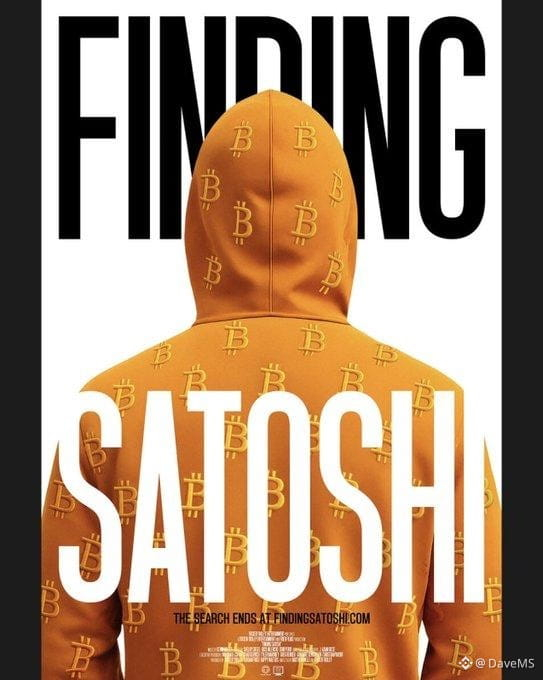
Today I'm bringing you the documentary that claims to solve the biggest financial mystery of the century.
❓ For 15 years, the crypto world has been haunted by one question: Who is really Satoshi Nakamoto?
⚡ Finding Satoshi (2026) claims to have reached a definitive conclusion after four years of research based on evidence, exclusive interviews, and direct access to key figures in the ecosystem.
🎥 What does this documentary bring to the table?
- An investigation led by William D. Cohan, a New York Times best-selling author and former Wall Street banker.
- The fieldwork of private investigator Tyler Maroney, known for high-profile cases on HBO and Amazon.
- Unseen testimonies from key voices in Bitcoin's history: Michael Saylor, Fred Ehrsam, Joseph Lubin, Brian Brooks, among others.
- A journey that blends investigative thriller with a human reading of the ideas, motivations, and philosophy that gave birth to Bitcoin.
💡 The documentary traces the birth of Bitcoin and explains how a radical idea became a global financial force, and what vision (human, technical, and philosophical) drove the anonymous creator who forever changed the architecture of digital money.
💎 The promise of the film is to confidently identify who is behind Bitcoin… and show the proof.
Are you going to miss it #Bitcoiner?
📽️🌐https://www.findingsatoshi.com/
Today I'm bringing you the documentary that claims to solve the biggest financial mystery of the century.
❓ For 15 years, the crypto world has been haunted by one question: Who is really Satoshi Nakamoto?
⚡ Finding Satoshi (2026) claims to have reached a definitive conclusion after four years of research based on evidence, exclusive interviews, and direct access to key figures in the ecosystem.
🎥 What does this documentary bring to the table?
- An investigation led by William D. Cohan, a New York Times best-selling author and former Wall Street banker.
- The fieldwork of private investigator Tyler Maroney, known for high-profile cases on HBO and Amazon.
- Unseen testimonies from key voices in Bitcoin's history: Michael Saylor, Fred Ehrsam, Joseph Lubin, Brian Brooks, among others.
- A journey that blends investigative thriller with a human reading of the ideas, motivations, and philosophy that gave birth to Bitcoin.
💡 The documentary traces the birth of Bitcoin and explains how a radical idea became a global financial force, and what vision (human, technical, and philosophical) drove the anonymous creator who forever changed the architecture of digital money.
💎 The promise of the film is to confidently identify who is behind Bitcoin… and show the proof.
Are you going to miss it #Bitcoiner?
📽️🌐https://www.findingsatoshi.com/
❓ For 15 years, the crypto world has been haunted by one question: Who is really Satoshi Nakamoto?
⚡ Finding Satoshi (2026) claims to have reached a definitive conclusion after four years of research based on evidence, exclusive interviews, and direct access to key figures in the ecosystem.
🎥 What does this documentary bring to the table?
- An investigation led by William D. Cohan, a New York Times best-selling author and former Wall Street banker.
- The fieldwork of private investigator Tyler Maroney, known for high-profile cases on HBO and Amazon.
- Unseen testimonies from key voices in Bitcoin's history: Michael Saylor, Fred Ehrsam, Joseph Lubin, Brian Brooks, among others.
- A journey that blends investigative thriller with a human reading of the ideas, motivations, and philosophy that gave birth to Bitcoin.
💡 The documentary traces the birth of Bitcoin and explains how a radical idea became a global financial force, and what vision (human, technical, and philosophical) drove the anonymous creator who forever changed the architecture of digital money.
💎 The promise of the film is to confidently identify who is behind Bitcoin… and show the proof.
Are you going to miss it #Bitcoiner?
📽️🌐https://www.findingsatoshi.com/
2
449
·
--
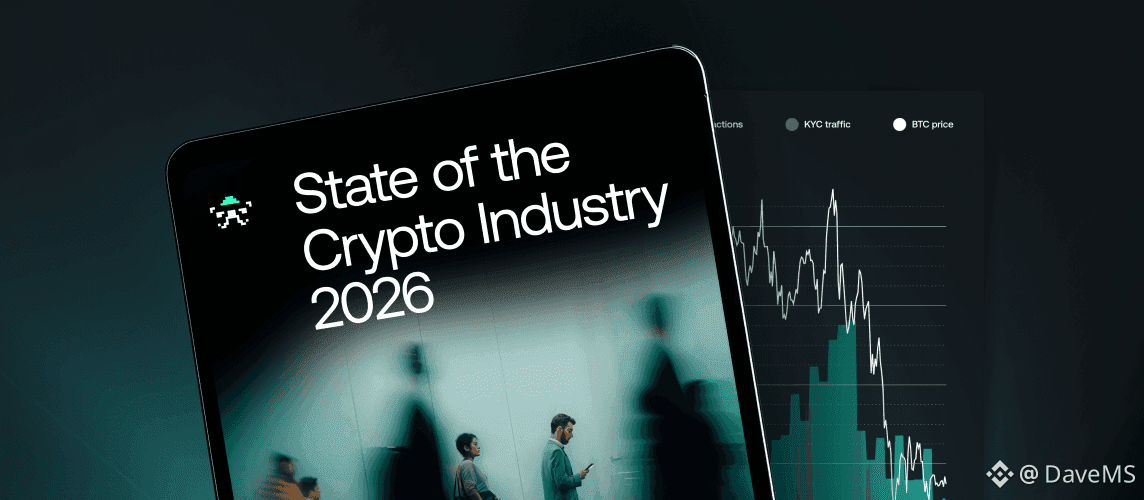
Crypto Industry Status 2026: From Explosive Growth to Operational Maturity.
The #crypto sector has moved past the "growth at any cost" phase into an era of "regulated maturity." Now, in addition to volume, businesses are measured by their ability to scale security controls without wrecking the user experience.
↪️ Here are the 5 strong points from report #Sumsub
⚜️ Accuracy > Speed: For the first time, companies are prioritizing accuracy (74%) over speed (39%) in user onboarding due to heightened regulatory scrutiny.
⚜️ Record-time Verification: Despite the focus on security, the global average verification time dropped from 22 to 19 seconds (a 14% year-on-year improvement) thanks to better flow technology.
⚜️ "Smart" Fraud: It's now systemic and automated. 57% of companies are prioritizing AI to detect complex attacks and deepfakes.
⚜️ Market Institutionalization: Companies are moving value. While in 2024 firms accounted for only 4% of transactional volume, in 2025 that figure jumped to 44%.
⚜️ "Travel Rule" Challenge: Only 23% of companies report full compliance with this regulation, making it the biggest operational challenge for this year.
💡 The platforms that will thrive are those treating "verification and compliance" as a core product capability rather than just a bureaucratic hurdle.
Link to the document 👉 https://sumsub.com/blog/guides-reports/state-of-the-crypto-industry-2026/
#4UPlayers✒️💎
Crypto Industry Status 2026: From Explosive Growth to Operational Maturity.
The #crypto sector has moved past the "growth at any cost" phase into an era of "regulated maturity." Now, in addition to volume, businesses are measured by their ability to scale security controls without wrecking the user experience.
↪️ Here are the 5 strong points from report #Sumsub
⚜️ Accuracy > Speed: For the first time, companies are prioritizing accuracy (74%) over speed (39%) in user onboarding due to heightened regulatory scrutiny.
⚜️ Record-time Verification: Despite the focus on security, the global average verification time dropped from 22 to 19 seconds (a 14% year-on-year improvement) thanks to better flow technology.
⚜️ "Smart" Fraud: It's now systemic and automated. 57% of companies are prioritizing AI to detect complex attacks and deepfakes.
⚜️ Market Institutionalization: Companies are moving value. While in 2024 firms accounted for only 4% of transactional volume, in 2025 that figure jumped to 44%.
⚜️ "Travel Rule" Challenge: Only 23% of companies report full compliance with this regulation, making it the biggest operational challenge for this year.
💡 The platforms that will thrive are those treating "verification and compliance" as a core product capability rather than just a bureaucratic hurdle.
Link to the document 👉 https://sumsub.com/blog/guides-reports/state-of-the-crypto-industry-2026/
#4UPlayers✒️💎
The #crypto sector has moved past the "growth at any cost" phase into an era of "regulated maturity." Now, in addition to volume, businesses are measured by their ability to scale security controls without wrecking the user experience.
↪️ Here are the 5 strong points from report #Sumsub
⚜️ Accuracy > Speed: For the first time, companies are prioritizing accuracy (74%) over speed (39%) in user onboarding due to heightened regulatory scrutiny.
⚜️ Record-time Verification: Despite the focus on security, the global average verification time dropped from 22 to 19 seconds (a 14% year-on-year improvement) thanks to better flow technology.
⚜️ "Smart" Fraud: It's now systemic and automated. 57% of companies are prioritizing AI to detect complex attacks and deepfakes.
⚜️ Market Institutionalization: Companies are moving value. While in 2024 firms accounted for only 4% of transactional volume, in 2025 that figure jumped to 44%.
⚜️ "Travel Rule" Challenge: Only 23% of companies report full compliance with this regulation, making it the biggest operational challenge for this year.
💡 The platforms that will thrive are those treating "verification and compliance" as a core product capability rather than just a bureaucratic hurdle.
Link to the document 👉 https://sumsub.com/blog/guides-reports/state-of-the-crypto-industry-2026/
#4UPlayers✒️💎
1
274
·
--
Are we arriving late?
Just in learning what it means.
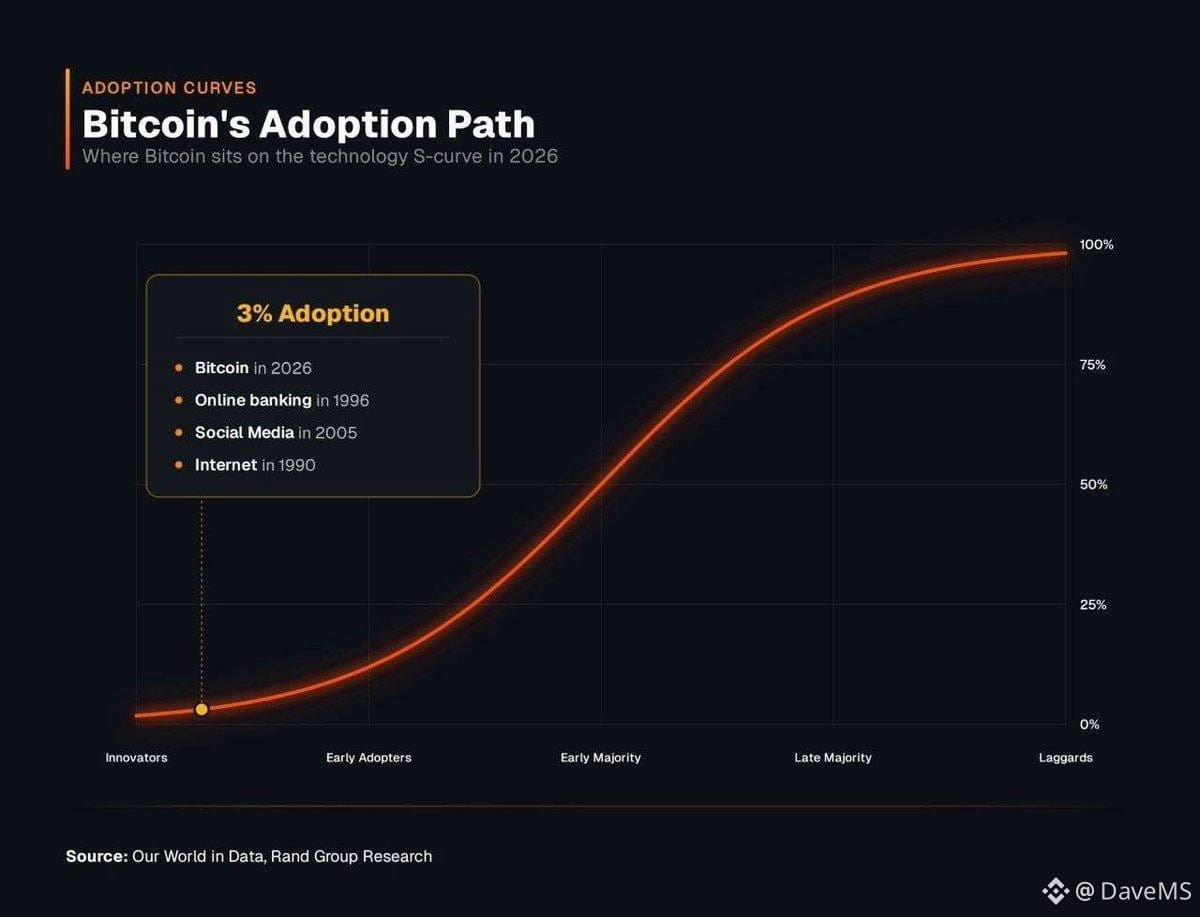
Many think the "Bitcoin train" has already left the station, but the data tells a very different story. According to the technology adoption curve developed by Rand Group Research (S-Curve), Bitcoin is currently where the Internet was back in 1990.
📊 To reach that 3% of global usage that Bitcoin is projected to have by 2026, other technologies took years to explode.
- Internet: 1990 (before modern web).
- Online banking: 1996.
- Social Networks: 2005 (before the smartphone boom).
🔍 We are in the Innovators phase, just about to enter the Early Adopters stage. If we compare this to the Internet, we haven't even seen "broadband" yet or the major applications that will define the future of the sector.
We're at the base of the mountain, watching as a new financial technology gears up for mass adoption.
I won’t tire of saying it.
#Bitcoin #Tecnologia #Web3
Are we arriving late?
Just in learning what it means.
Many think the "Bitcoin train" has already left the station, but the data tells a very different story. According to the technology adoption curve developed by Rand Group Research (S-Curve), Bitcoin is currently where the Internet was back in 1990.
📊 To reach that 3% of global usage that Bitcoin is projected to have by 2026, other technologies took years to explode.
- Internet: 1990 (before modern web).
- Online banking: 1996.
- Social Networks: 2005 (before the smartphone boom).
🔍 We are in the Innovators phase, just about to enter the Early Adopters stage. If we compare this to the Internet, we haven't even seen "broadband" yet or the major applications that will define the future of the sector.
We're at the base of the mountain, watching as a new financial technology gears up for mass adoption.
I won’t tire of saying it.
#Bitcoin #Tecnologia #Web3
Just in learning what it means.
Many think the "Bitcoin train" has already left the station, but the data tells a very different story. According to the technology adoption curve developed by Rand Group Research (S-Curve), Bitcoin is currently where the Internet was back in 1990.
📊 To reach that 3% of global usage that Bitcoin is projected to have by 2026, other technologies took years to explode.
- Internet: 1990 (before modern web).
- Online banking: 1996.
- Social Networks: 2005 (before the smartphone boom).
🔍 We are in the Innovators phase, just about to enter the Early Adopters stage. If we compare this to the Internet, we haven't even seen "broadband" yet or the major applications that will define the future of the sector.
We're at the base of the mountain, watching as a new financial technology gears up for mass adoption.
I won’t tire of saying it.
#Bitcoin #Tecnologia #Web3
2
581
·
--
If you are reading this, you will likely understand the following 5 rules.
We all need to cultivate our discernment, our ability to detect patterns in falsehood, manipulation, and deception. Once we achieve this, large and immense quantities dissipate like fog when the rays of the sun pass through it.
What are, then, the broader lessons of all this?
First, maintaining a general and critical skepticism is key, especially with content that constantly appears on social media.
Second, social media and alternative media have been quickly co-opted by the same interests that co-opted traditional media.
Third, deception can be very sophisticated and is crafted with as many layers as necessary to conceal the truth or manipulate public opinion. Still, it follows a certain logic, and that can be used to unmask it.
Fourth, identity and background often provide valuable clues about which claims are unreliable. Although general principles of argumentation usually advise us to avoid scrutinizing people and focus on their arguments, counterintelligence experts know that the opposite occurs.
Fifth and finally, sometimes all this deception brings with it an unexpected advantage: we can discover truths that would have been difficult to discern without manipulation, by observing what certain people are trying to divert us from.
The problem does not lie in falling into the proverbial rabbit hole, but in knowing when it is necessary and choosing the right hole. And, of course, avoiding unreliable guides.
#SundayReads 💎
If you are reading this, you will likely understand the following 5 rules.
We all need to cultivate our discernment, our ability to detect patterns in falsehood, manipulation, and deception. Once we achieve this, large and immense quantities dissipate like fog when the rays of the sun pass through it.
What are, then, the broader lessons of all this?
First, maintaining a general and critical skepticism is key, especially with content that constantly appears on social media.
Second, social media and alternative media have been quickly co-opted by the same interests that co-opted traditional media.
Third, deception can be very sophisticated and is crafted with as many layers as necessary to conceal the truth or manipulate public opinion. Still, it follows a certain logic, and that can be used to unmask it.
Fourth, identity and background often provide valuable clues about which claims are unreliable. Although general principles of argumentation usually advise us to avoid scrutinizing people and focus on their arguments, counterintelligence experts know that the opposite occurs.
Fifth and finally, sometimes all this deception brings with it an unexpected advantage: we can discover truths that would have been difficult to discern without manipulation, by observing what certain people are trying to divert us from.
The problem does not lie in falling into the proverbial rabbit hole, but in knowing when it is necessary and choosing the right hole. And, of course, avoiding unreliable guides.
#SundayReads 💎
We all need to cultivate our discernment, our ability to detect patterns in falsehood, manipulation, and deception. Once we achieve this, large and immense quantities dissipate like fog when the rays of the sun pass through it.
What are, then, the broader lessons of all this?
First, maintaining a general and critical skepticism is key, especially with content that constantly appears on social media.
Second, social media and alternative media have been quickly co-opted by the same interests that co-opted traditional media.
Third, deception can be very sophisticated and is crafted with as many layers as necessary to conceal the truth or manipulate public opinion. Still, it follows a certain logic, and that can be used to unmask it.
Fourth, identity and background often provide valuable clues about which claims are unreliable. Although general principles of argumentation usually advise us to avoid scrutinizing people and focus on their arguments, counterintelligence experts know that the opposite occurs.
Fifth and finally, sometimes all this deception brings with it an unexpected advantage: we can discover truths that would have been difficult to discern without manipulation, by observing what certain people are trying to divert us from.
The problem does not lie in falling into the proverbial rabbit hole, but in knowing when it is necessary and choosing the right hole. And, of course, avoiding unreliable guides.
#SundayReads 💎

3
444
·
--
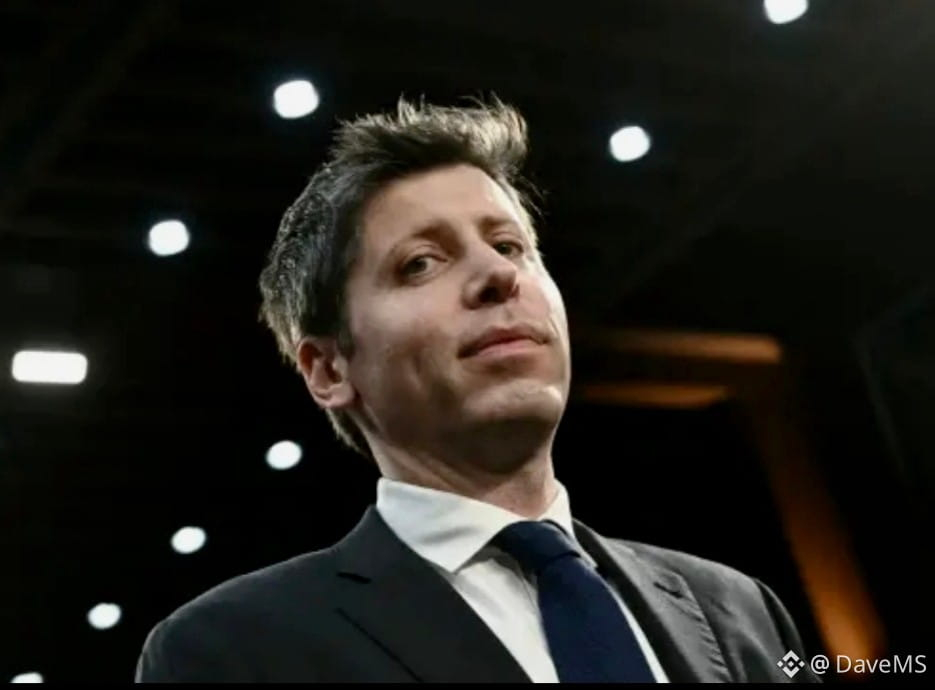
Do you know what "The Altman Manifesto" is?
Sam Altman has an enviable ability to make the future sound inevitable. His manifesto on the "Age of Intelligence" is ambitious, seductive, and, in parts, worryingly incomplete.
"We are at the dawn of an era where AI will unleash capabilities that would have seemed magical to our grandparents."
The technical foundation supporting this claim is simple but powerful: deep learning has worked, allowing for pattern recognition in enormous amounts of data and developing solutions that enhance human capabilities.
So far, solid. The problem lies in what comes next.
Altman paints a scenario of "universal prosperity" where everyone should be able to benefit from this new era, and AI would be within reach of all as a team of virtual experts available in any area of life.
It sounds beautiful. But anyone who has been observing how technological wealth is distributed knows that good declarative intentions rarely translate into real policies for equitable access.
The most honest part of the manifesto is also the most uncomfortable: It warns that AI, if developed without caution, could become a resource over which wars are fought, where access to computing power, energy, and chips would determine who can use it.
The man who leads one of the most powerful AI companies on the planet recognizes the risk of concentration without offering concrete mechanisms to prevent it.
So then, who defines the narrative of the future, the one who controls the conversation of the present? Are we facing another project of the American military intelligence under the guise of a "Silicon Valley Scholar"?
🌐https://ia.samaltman.com/
Do you know what "The Altman Manifesto" is?
Sam Altman has an enviable ability to make the future sound inevitable. His manifesto on the "Age of Intelligence" is ambitious, seductive, and, in parts, worryingly incomplete.
"We are at the dawn of an era where AI will unleash capabilities that would have seemed magical to our grandparents."
The technical foundation supporting this claim is simple but powerful: deep learning has worked, allowing for pattern recognition in enormous amounts of data and developing solutions that enhance human capabilities.
So far, solid. The problem lies in what comes next.
Altman paints a scenario of "universal prosperity" where everyone should be able to benefit from this new era, and AI would be within reach of all as a team of virtual experts available in any area of life.
It sounds beautiful. But anyone who has been observing how technological wealth is distributed knows that good declarative intentions rarely translate into real policies for equitable access.
The most honest part of the manifesto is also the most uncomfortable: It warns that AI, if developed without caution, could become a resource over which wars are fought, where access to computing power, energy, and chips would determine who can use it.
The man who leads one of the most powerful AI companies on the planet recognizes the risk of concentration without offering concrete mechanisms to prevent it.
So then, who defines the narrative of the future, the one who controls the conversation of the present? Are we facing another project of the American military intelligence under the guise of a "Silicon Valley Scholar"?
🌐https://ia.samaltman.com/
Sam Altman has an enviable ability to make the future sound inevitable. His manifesto on the "Age of Intelligence" is ambitious, seductive, and, in parts, worryingly incomplete.
"We are at the dawn of an era where AI will unleash capabilities that would have seemed magical to our grandparents."
The technical foundation supporting this claim is simple but powerful: deep learning has worked, allowing for pattern recognition in enormous amounts of data and developing solutions that enhance human capabilities.
So far, solid. The problem lies in what comes next.
Altman paints a scenario of "universal prosperity" where everyone should be able to benefit from this new era, and AI would be within reach of all as a team of virtual experts available in any area of life.
It sounds beautiful. But anyone who has been observing how technological wealth is distributed knows that good declarative intentions rarely translate into real policies for equitable access.
The most honest part of the manifesto is also the most uncomfortable: It warns that AI, if developed without caution, could become a resource over which wars are fought, where access to computing power, energy, and chips would determine who can use it.
The man who leads one of the most powerful AI companies on the planet recognizes the risk of concentration without offering concrete mechanisms to prevent it.
So then, who defines the narrative of the future, the one who controls the conversation of the present? Are we facing another project of the American military intelligence under the guise of a "Silicon Valley Scholar"?
🌐https://ia.samaltman.com/
3
603
·
--
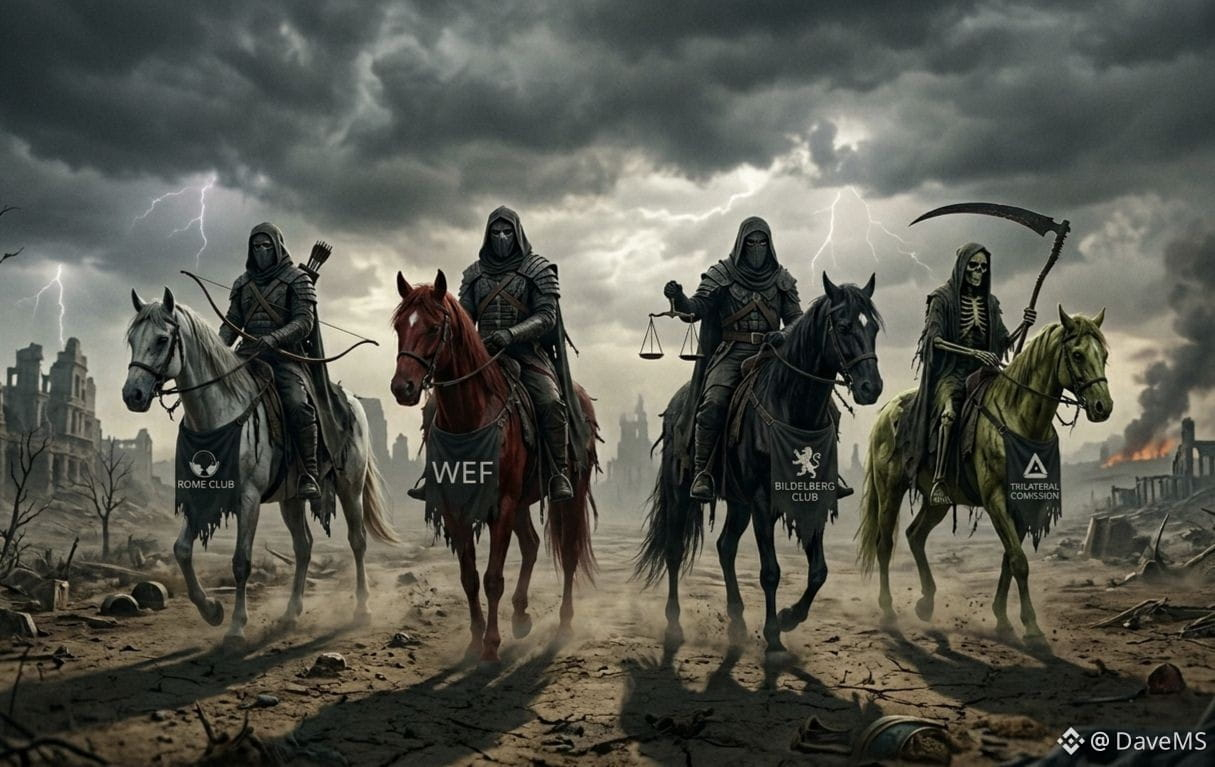
🌐Reflections from the Ark: 4X4🌐
Now the situation in Iran is set.
Everything is green. Oil is dropping. Interest rates are stable. Economic recovery.
Everything, of course, under new rules, new agreements, new interests.
Same board. Same victims. Same beneficiaries.
War.
Hunger.
Plague.
Death.
This is the order that all scenarios follow that begin with a military conflict.
Trilateral Commission.
Club of Rome.
Bilderberg Group.
World Economic Forum.
Sent to create hell on Earth.
If you think that where all the agendas, roadmaps, and new social guidelines are decided is at the polls, you are still thinking that it is "For the common good".
Remember. Digital identity. Programmable currency. Biometric control.
#HaveaLovelyWeekend 💎
🌐Reflections from the Ark: 4X4🌐
Now the situation in Iran is set.
Everything is green. Oil is dropping. Interest rates are stable. Economic recovery.
Everything, of course, under new rules, new agreements, new interests.
Same board. Same victims. Same beneficiaries.
War.
Hunger.
Plague.
Death.
This is the order that all scenarios follow that begin with a military conflict.
Trilateral Commission.
Club of Rome.
Bilderberg Group.
World Economic Forum.
Sent to create hell on Earth.
If you think that where all the agendas, roadmaps, and new social guidelines are decided is at the polls, you are still thinking that it is "For the common good".
Remember. Digital identity. Programmable currency. Biometric control.
#HaveaLovelyWeekend 💎
Now the situation in Iran is set.
Everything is green. Oil is dropping. Interest rates are stable. Economic recovery.
Everything, of course, under new rules, new agreements, new interests.
Same board. Same victims. Same beneficiaries.
War.
Hunger.
Plague.
Death.
This is the order that all scenarios follow that begin with a military conflict.
Trilateral Commission.
Club of Rome.
Bilderberg Group.
World Economic Forum.
Sent to create hell on Earth.
If you think that where all the agendas, roadmaps, and new social guidelines are decided is at the polls, you are still thinking that it is "For the common good".
Remember. Digital identity. Programmable currency. Biometric control.
#HaveaLovelyWeekend 💎
3
577
·
--
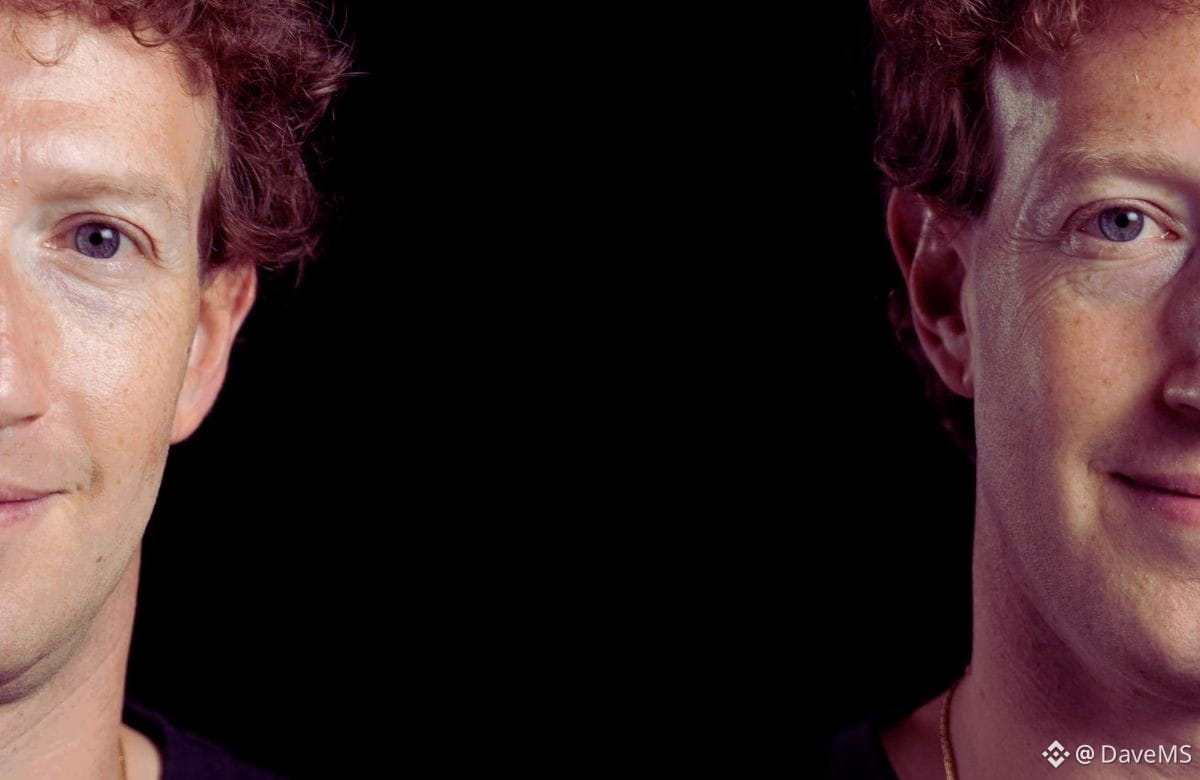
Zuckerberg 2.0: When the CEO decides that he himself is a scalability problem and creates his own Clone.
#Meta is developing a photorealistic digital clone of Mark Zuckerberg, capable of interacting in real-time with his 78,000 employees.
The avatar is trained with his image, voice, gestures, and public statements, with the aim of making the employees feel "more connected to the founder."
The irony is of notable proportions.
The man who built the largest human connection platform on the planet decided that connecting with his own employees is a problem that AI must solve. Meta is treating human leadership as a bottleneck that needs to be eliminated.
The central risk is authenticity. If the avatar answers strategic questions with his voice and face, how can an employee distinguish the real CEO from the clone?
The potential for misinformation could be a problem to solve in the short term.
The long game goes beyond: with $1.6 trillion committed to AI, if this works at an internal scale, Meta will turn it into a product for creators and influencers.
They are building the first prototype of "scalable-leadership-as-a-service."
The dystopia lies in the fact that no one seems to ask that question out loud.
Zuckerberg 2.0: When the CEO decides that he himself is a scalability problem and creates his own Clone.
#Meta is developing a photorealistic digital clone of Mark Zuckerberg, capable of interacting in real-time with his 78,000 employees.
The avatar is trained with his image, voice, gestures, and public statements, with the aim of making the employees feel "more connected to the founder."
The irony is of notable proportions.
The man who built the largest human connection platform on the planet decided that connecting with his own employees is a problem that AI must solve. Meta is treating human leadership as a bottleneck that needs to be eliminated.
The central risk is authenticity. If the avatar answers strategic questions with his voice and face, how can an employee distinguish the real CEO from the clone?
The potential for misinformation could be a problem to solve in the short term.
The long game goes beyond: with $1.6 trillion committed to AI, if this works at an internal scale, Meta will turn it into a product for creators and influencers.
They are building the first prototype of "scalable-leadership-as-a-service."
The dystopia lies in the fact that no one seems to ask that question out loud.
#Meta is developing a photorealistic digital clone of Mark Zuckerberg, capable of interacting in real-time with his 78,000 employees.
The avatar is trained with his image, voice, gestures, and public statements, with the aim of making the employees feel "more connected to the founder."
The irony is of notable proportions.
The man who built the largest human connection platform on the planet decided that connecting with his own employees is a problem that AI must solve. Meta is treating human leadership as a bottleneck that needs to be eliminated.
The central risk is authenticity. If the avatar answers strategic questions with his voice and face, how can an employee distinguish the real CEO from the clone?
The potential for misinformation could be a problem to solve in the short term.
The long game goes beyond: with $1.6 trillion committed to AI, if this works at an internal scale, Meta will turn it into a product for creators and influencers.
They are building the first prototype of "scalable-leadership-as-a-service."
The dystopia lies in the fact that no one seems to ask that question out loud.
1
465
·
--
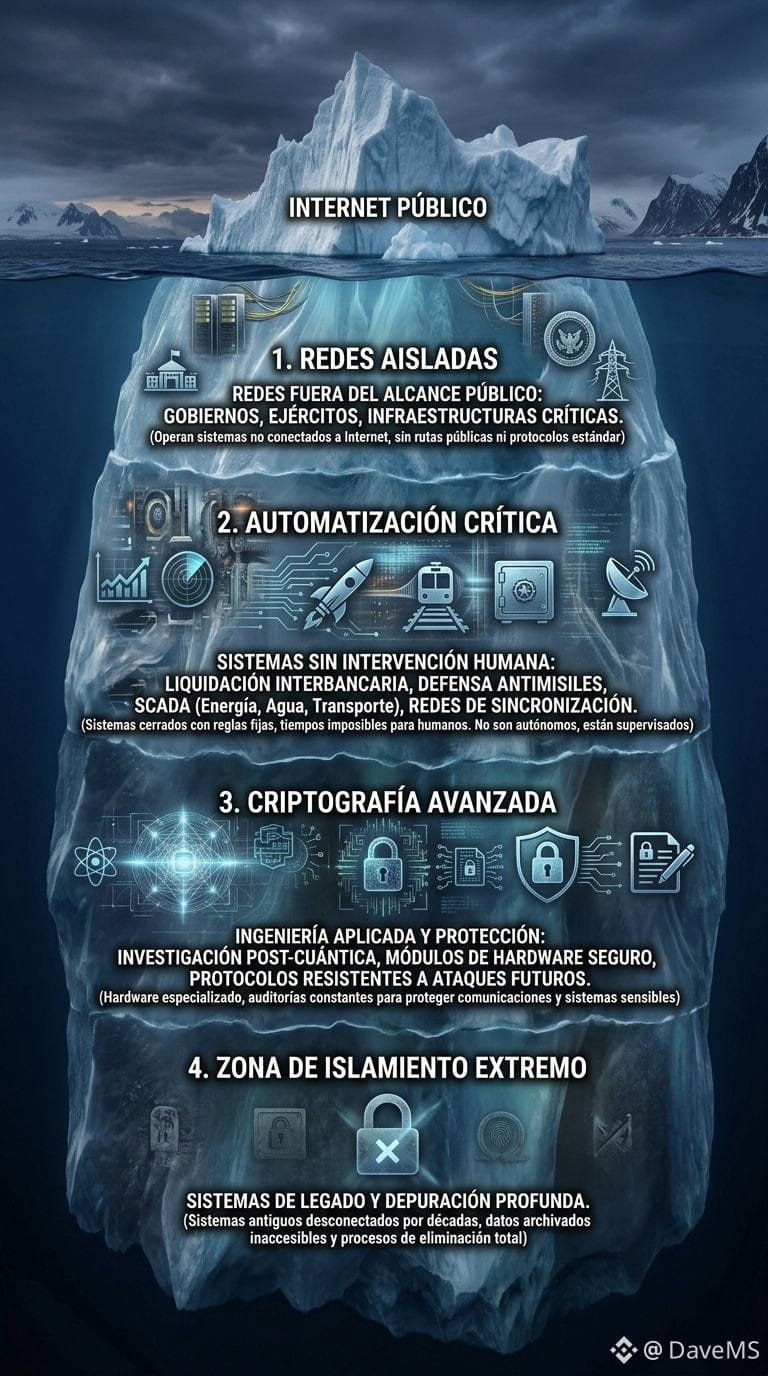
Let's demystify this very important point, please.
The authentic part behind all the fantasies about “hidden levels” of the Internet boils down to 3️⃣ technical realities that exist, function, and are documented, even though they are not part of popular imagination.
🔑 Isolated networks.
Governments, armies, and critical infrastructures operate with systems that are not connected to the Internet, nor to public routes or standard protocols. They are networks that are simply out of reach because they must be.
🔑 Critical automation.
Systems without human intervention to operate at times impossible for an operator. Interbank settlement, missile defense systems, global synchronization networks, early warning systems, and SCADA systems that control energy, water, and transport operate with strict automation.
Most confuse automation with total autonomy; they are closed systems, with fixed rules and human supervision, although not in real-time.
🔑 Advanced cryptography.
Research in post-quantum cryptography, secure hardware modules, and protocols resistant to future attacks exists and is advancing. It is applied engineering to protect communications, identities, and critical systems against growing threats.
Many require specialized hardware, constant audits, and a level of security that makes no sense outside sensitive environments.
🔎 The world's critical infrastructure is designed to be inaccessible, fast, and resilient, and there are systems out of public reach, automated and protected, but they do not form a hidden hierarchical structure or a centralized core. They are independent pieces, each with its function, its isolation, and its logic.
Let's demystify this very important point, please.
The authentic part behind all the fantasies about “hidden levels” of the Internet boils down to 3️⃣ technical realities that exist, function, and are documented, even though they are not part of popular imagination.
🔑 Isolated networks.
Governments, armies, and critical infrastructures operate with systems that are not connected to the Internet, nor to public routes or standard protocols. They are networks that are simply out of reach because they must be.
🔑 Critical automation.
Systems without human intervention to operate at times impossible for an operator. Interbank settlement, missile defense systems, global synchronization networks, early warning systems, and SCADA systems that control energy, water, and transport operate with strict automation.
Most confuse automation with total autonomy; they are closed systems, with fixed rules and human supervision, although not in real-time.
🔑 Advanced cryptography.
Research in post-quantum cryptography, secure hardware modules, and protocols resistant to future attacks exists and is advancing. It is applied engineering to protect communications, identities, and critical systems against growing threats.
Many require specialized hardware, constant audits, and a level of security that makes no sense outside sensitive environments.
🔎 The world's critical infrastructure is designed to be inaccessible, fast, and resilient, and there are systems out of public reach, automated and protected, but they do not form a hidden hierarchical structure or a centralized core. They are independent pieces, each with its function, its isolation, and its logic.
The authentic part behind all the fantasies about “hidden levels” of the Internet boils down to 3️⃣ technical realities that exist, function, and are documented, even though they are not part of popular imagination.
🔑 Isolated networks.
Governments, armies, and critical infrastructures operate with systems that are not connected to the Internet, nor to public routes or standard protocols. They are networks that are simply out of reach because they must be.
🔑 Critical automation.
Systems without human intervention to operate at times impossible for an operator. Interbank settlement, missile defense systems, global synchronization networks, early warning systems, and SCADA systems that control energy, water, and transport operate with strict automation.
Most confuse automation with total autonomy; they are closed systems, with fixed rules and human supervision, although not in real-time.
🔑 Advanced cryptography.
Research in post-quantum cryptography, secure hardware modules, and protocols resistant to future attacks exists and is advancing. It is applied engineering to protect communications, identities, and critical systems against growing threats.
Many require specialized hardware, constant audits, and a level of security that makes no sense outside sensitive environments.
🔎 The world's critical infrastructure is designed to be inaccessible, fast, and resilient, and there are systems out of public reach, automated and protected, but they do not form a hidden hierarchical structure or a centralized core. They are independent pieces, each with its function, its isolation, and its logic.
1
373
·
--
Bullish
🌐BlackRock 2026: the message that no one should ignore🌐
The Annual Letter of #BlackRock is not just another document from the financial sector. It is a strategic reading on the direction of the global economy and a clear warning for companies, investors, and decision-makers.
⚜️ The model of globalization has changed phase.
Countries no longer prioritize efficiency, but rather resilience. Energy, defense, technology, and supply chains are being reconfigured towards self-sufficiency. Larry Fink expresses it clearly: the economic framework that defined the last decades is no longer sufficient to face current challenges.
⚜️ Artificial intelligence is redefining value creation.
The #IA has become the largest driver of productivity since the digital revolution. But its impact is not neutral: wealth is concentrating in those who own assets, not in those who depend solely on wages.
The gap between capital and labor is widening, and AI will accelerate this trend.
⚜️ Private capital will be essential to finance the future.
The energy transition, industrial modernization, and technological infrastructure require investments that governments cannot undertake alone.
BlackRock emphasizes that private savings and institutional funds will be decisive to sustain growth in this new stage.
⚜️ The #tokenización will mark the next leap of the financial system.
Fink compares the current moment to the beginnings of the Internet in 1996. The digitization of assets promises more accessible, liquid, and efficient markets.
It is not a futuristic concept: it is a structural transformation that is already underway.
⚜️ Inequality is an economic and social risk.
The concentration of wealth and the unequal impact of AI may strain political and social stability.
BlackRock presents it as a systemic risk that companies, governments, and investors must address with a long-term vision.
🌐BlackRock 2026: the message that no one should ignore🌐
The Annual Letter of #BlackRock is not just another document from the financial sector. It is a strategic reading on the direction of the global economy and a clear warning for companies, investors, and decision-makers.
⚜️ The model of globalization has changed phase.
Countries no longer prioritize efficiency, but rather resilience. Energy, defense, technology, and supply chains are being reconfigured towards self-sufficiency. Larry Fink expresses it clearly: the economic framework that defined the last decades is no longer sufficient to face current challenges.
⚜️ Artificial intelligence is redefining value creation.
The #IA has become the largest driver of productivity since the digital revolution. But its impact is not neutral: wealth is concentrating in those who own assets, not in those who depend solely on wages.
The gap between capital and labor is widening, and AI will accelerate this trend.
⚜️ Private capital will be essential to finance the future.
The energy transition, industrial modernization, and technological infrastructure require investments that governments cannot undertake alone.
BlackRock emphasizes that private savings and institutional funds will be decisive to sustain growth in this new stage.
⚜️ The #tokenización will mark the next leap of the financial system.
Fink compares the current moment to the beginnings of the Internet in 1996. The digitization of assets promises more accessible, liquid, and efficient markets.
It is not a futuristic concept: it is a structural transformation that is already underway.
⚜️ Inequality is an economic and social risk.
The concentration of wealth and the unequal impact of AI may strain political and social stability.
BlackRock presents it as a systemic risk that companies, governments, and investors must address with a long-term vision.
The Annual Letter of #BlackRock is not just another document from the financial sector. It is a strategic reading on the direction of the global economy and a clear warning for companies, investors, and decision-makers.
⚜️ The model of globalization has changed phase.
Countries no longer prioritize efficiency, but rather resilience. Energy, defense, technology, and supply chains are being reconfigured towards self-sufficiency. Larry Fink expresses it clearly: the economic framework that defined the last decades is no longer sufficient to face current challenges.
⚜️ Artificial intelligence is redefining value creation.
The #IA has become the largest driver of productivity since the digital revolution. But its impact is not neutral: wealth is concentrating in those who own assets, not in those who depend solely on wages.
The gap between capital and labor is widening, and AI will accelerate this trend.
⚜️ Private capital will be essential to finance the future.
The energy transition, industrial modernization, and technological infrastructure require investments that governments cannot undertake alone.
BlackRock emphasizes that private savings and institutional funds will be decisive to sustain growth in this new stage.
⚜️ The #tokenización will mark the next leap of the financial system.
Fink compares the current moment to the beginnings of the Internet in 1996. The digitization of assets promises more accessible, liquid, and efficient markets.
It is not a futuristic concept: it is a structural transformation that is already underway.
⚜️ Inequality is an economic and social risk.
The concentration of wealth and the unequal impact of AI may strain political and social stability.
BlackRock presents it as a systemic risk that companies, governments, and investors must address with a long-term vision.

3
1k
Log in to explore more content
Join global crypto users on Binance Square
⚡️ Get latest and useful information about crypto.
💬 Trusted by the world’s largest crypto exchange.
👍 Discover real insights from verified creators.
Email / Phone number
Trending Topics
MetaMaskExitsLidoValidatorsAfterSecurityIncident
5,541 views
245 Discussing
🚨 METAMASK JUST STARTED EXITING ETH VALIDATORS AFTER A SECURITY INCIDENT.
MetaMask says an ongoing security incident hit part of its infrastructure, forcing it to proactively exit affected validators from its non-custodial staking operations. The company says it has found no immediate threat to MetaMask wallets so far.
The key detail?
These validators are tied to Lido staking, and the exit process may temporarily remove ETH from staking while the investigation continues. Lido-related reports say the full exit, withdrawal and re-entry cycle could take up to roughly 45 days.
That means the market should separate two things:
Wallet users are not currently being told they’re at immediate risk.
But validator infrastructure clearly was serious enough to trigger an emergency exit.
And when one of Ethereum’s biggest wallet brands starts pulling validators as a precaution, traders pay attention.
Security incidents don’t need stolen funds to become market-moving.
Sometimes the reaction itself is the signal. 👀
$ETH $LDO
#metamaskexitslidovalidatorsaftersecurityincident
KimHotbae
·0 Likes
·2.3k views
MicronBeatsEarningsLiftsGuidance
8,402 views
244 Discussing
CFTCSubmitsTwoEventContractRulesToWhiteHouse
8,053 views
238 Discussing