

MR _ B I L A L
7.2k Posts

MR _ B I L A L
Report
Block User
342 Following
21.5K+ Followers
11.6K+ Liked
Posts
All
Quotes
Live
CPI SHOWDOWN: WILL THE FED HIKE OR HOLD?
The market just got another reason to stay on edge.
August Nonfarm Payrolls came in strong at 162K, while today’s CPI showed inflation still running at 3.4% YoY, with Core CPI at 2.4%. The Fed’s 2% inflation target is still not within easy reach.
So here’s the big question: Hike or Hold?
My view: the data is giving the hawkish side more ammunition. A stronger labor market + sticky inflation could make it harder for the Fed to justify staying comfortably on hold.
But markets can move fast—and sometimes the obvious trade becomes the dangerous one.
📈 Bullish: If markets look beyond the hike and focus on economic resilience, stocks could continue pushing higher.
🥇 Gold: If inflation remains sticky and uncertainty increases, gold could remain firmly on traders’ radar.
📉 Bearish risk: A stronger-than-expected tightening signal could pressure risk assets and create another volatility wave.
The Fed meeting is approaching. The question isn’t just “Hike or Hold?”
It’s “What happens AFTER the decision?” 👀
What’s your call—BULLISH 📈 or BEARISH 📉?
#CPIWatch
$TFUEL
{spot}(TFUELUSDT)
$LSK
{spot}(LSKUSDT)
$RAY
{spot}(RAYUSDT)
CPI SHOWDOWN: WILL THE FED HIKE OR HOLD?
The market just got another reason to stay on edge.
August Nonfarm Payrolls came in strong at 162K, while today’s CPI showed inflation still running at 3.4% YoY, with Core CPI at 2.4%. The Fed’s 2% inflation target is still not within easy reach.
So here’s the big question: Hike or Hold?
My view: the data is giving the hawkish side more ammunition. A stronger labor market + sticky inflation could make it harder for the Fed to justify staying comfortably on hold.
But markets can move fast—and sometimes the obvious trade becomes the dangerous one.
📈 Bullish: If markets look beyond the hike and focus on economic resilience, stocks could continue pushing higher.
🥇 Gold: If inflation remains sticky and uncertainty increases, gold could remain firmly on traders’ radar.
📉 Bearish risk: A stronger-than-expected tightening signal could pressure risk assets and create another volatility wave.
The Fed meeting is approaching. The question isn’t just “Hike or Hold?”
It’s “What happens AFTER the decision?” 👀
What’s your call—BULLISH 📈 or BEARISH 📉?
#CPIWatch
$TFUEL
$LSK
$RAY
The market just got another reason to stay on edge.
August Nonfarm Payrolls came in strong at 162K, while today’s CPI showed inflation still running at 3.4% YoY, with Core CPI at 2.4%. The Fed’s 2% inflation target is still not within easy reach.
So here’s the big question: Hike or Hold?
My view: the data is giving the hawkish side more ammunition. A stronger labor market + sticky inflation could make it harder for the Fed to justify staying comfortably on hold.
But markets can move fast—and sometimes the obvious trade becomes the dangerous one.
📈 Bullish: If markets look beyond the hike and focus on economic resilience, stocks could continue pushing higher.
🥇 Gold: If inflation remains sticky and uncertainty increases, gold could remain firmly on traders’ radar.
📉 Bearish risk: A stronger-than-expected tightening signal could pressure risk assets and create another volatility wave.
The Fed meeting is approaching. The question isn’t just “Hike or Hold?”
It’s “What happens AFTER the decision?” 👀
What’s your call—BULLISH 📈 or BEARISH 📉?
#CPIWatch
$TFUEL
$LSK
$RAY

1
113
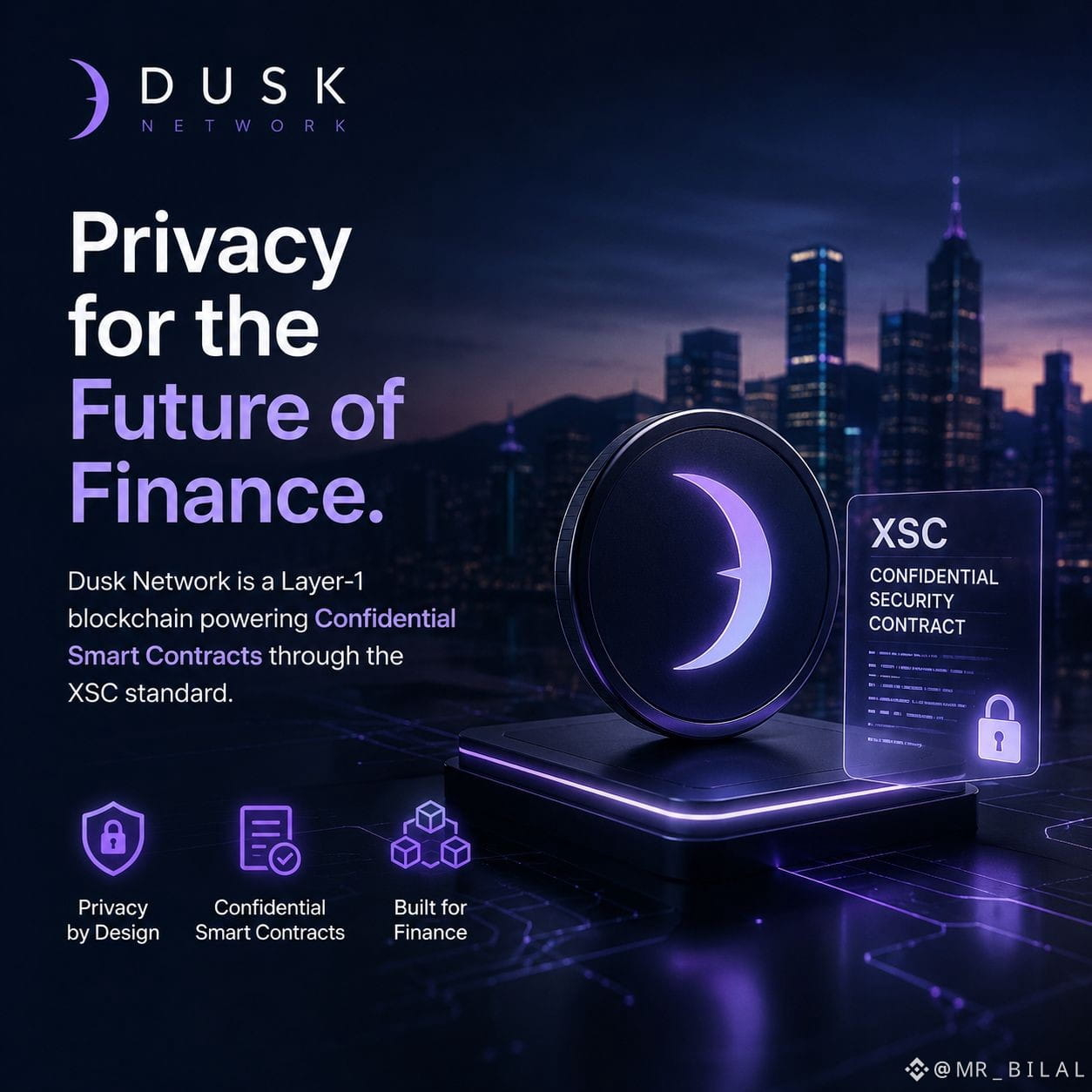
I’ve started to realize that privacy in finance isn’t about hiding everything.
It’s about controlling who gets to see what.
That’s where Dusk Network gets interesting: a Layer-1 built around confidential smart contracts and its XSC standard.
The real question isn’t whether privacy matters.
It’s whether Dusk can make privacy practical enough for regulated financial systems.
Because in finance, trust isn’t optional. Neither is control.
#dusk $DUSK @Dusk_Foundation
I’ve started to realize that privacy in finance isn’t about hiding everything.
It’s about controlling who gets to see what.
That’s where Dusk Network gets interesting: a Layer-1 built around confidential smart contracts and its XSC standard.
The real question isn’t whether privacy matters.
It’s whether Dusk can make privacy practical enough for regulated financial systems.
Because in finance, trust isn’t optional. Neither is control.
#dusk $DUSK @Dusk
It’s about controlling who gets to see what.
That’s where Dusk Network gets interesting: a Layer-1 built around confidential smart contracts and its XSC standard.
The real question isn’t whether privacy matters.
It’s whether Dusk can make privacy practical enough for regulated financial systems.
Because in finance, trust isn’t optional. Neither is control.
#dusk $DUSK @Dusk
9
3
135
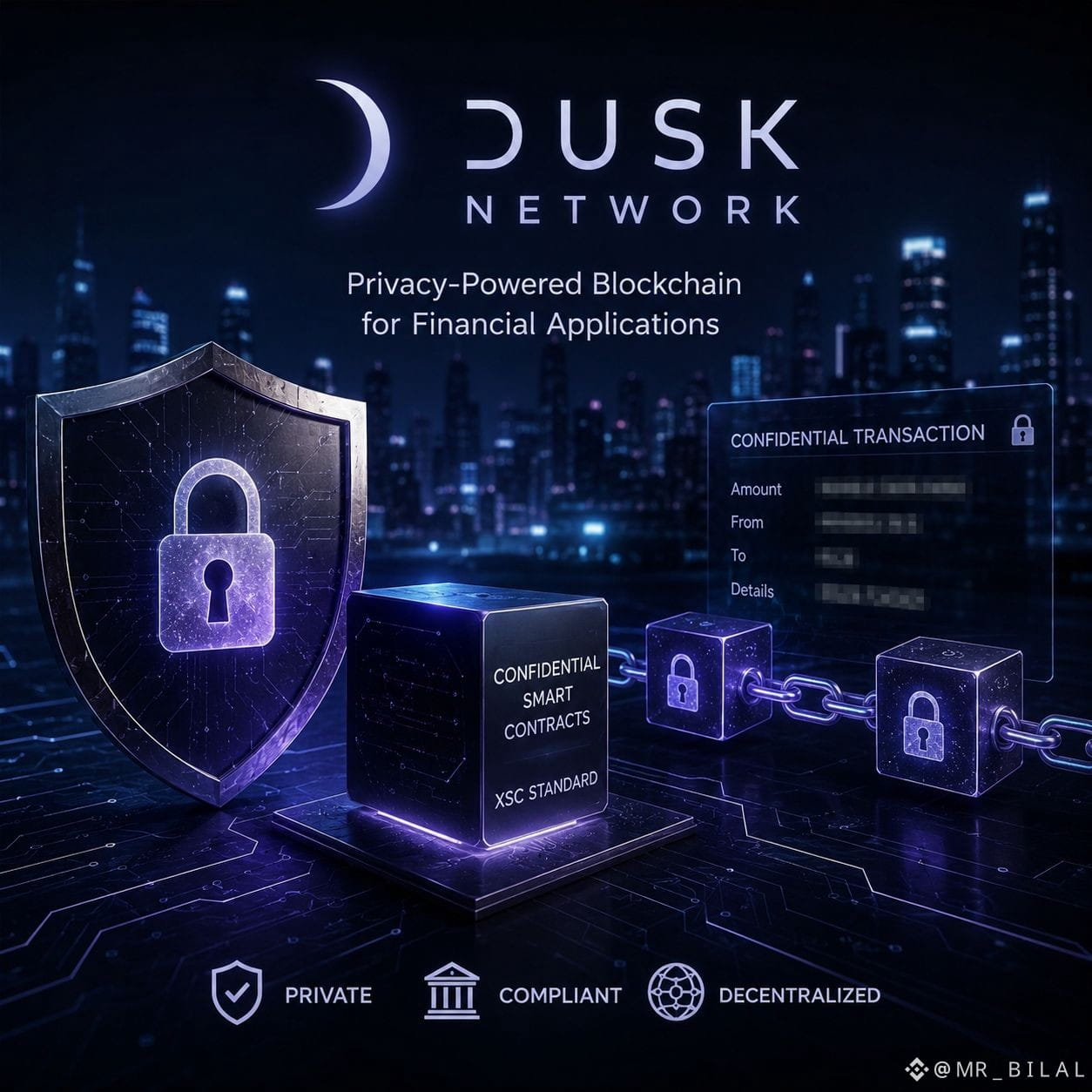
Lately, I keep coming back to one thought: financial privacy isn’t a luxury anymore.
Dusk Network is betting that institutions need blockchain infrastructure where sensitive transactions can stay confidential without giving up programmability.
That’s the interesting part.
The hard part? Regulation, scalability, and institutional trust still have to catch up.
Privacy is powerful.
But in finance, control matters just as much as confidentiality.
#dusk $DUSK @Dusk_Foundation
Lately, I keep coming back to one thought: financial privacy isn’t a luxury anymore.
Dusk Network is betting that institutions need blockchain infrastructure where sensitive transactions can stay confidential without giving up programmability.
That’s the interesting part.
The hard part? Regulation, scalability, and institutional trust still have to catch up.
Privacy is powerful.
But in finance, control matters just as much as confidentiality.
#dusk $DUSK @Dusk
Dusk Network is betting that institutions need blockchain infrastructure where sensitive transactions can stay confidential without giving up programmability.
That’s the interesting part.
The hard part? Regulation, scalability, and institutional trust still have to catch up.
Privacy is powerful.
But in finance, control matters just as much as confidentiality.
#dusk $DUSK @Dusk
14
6
179
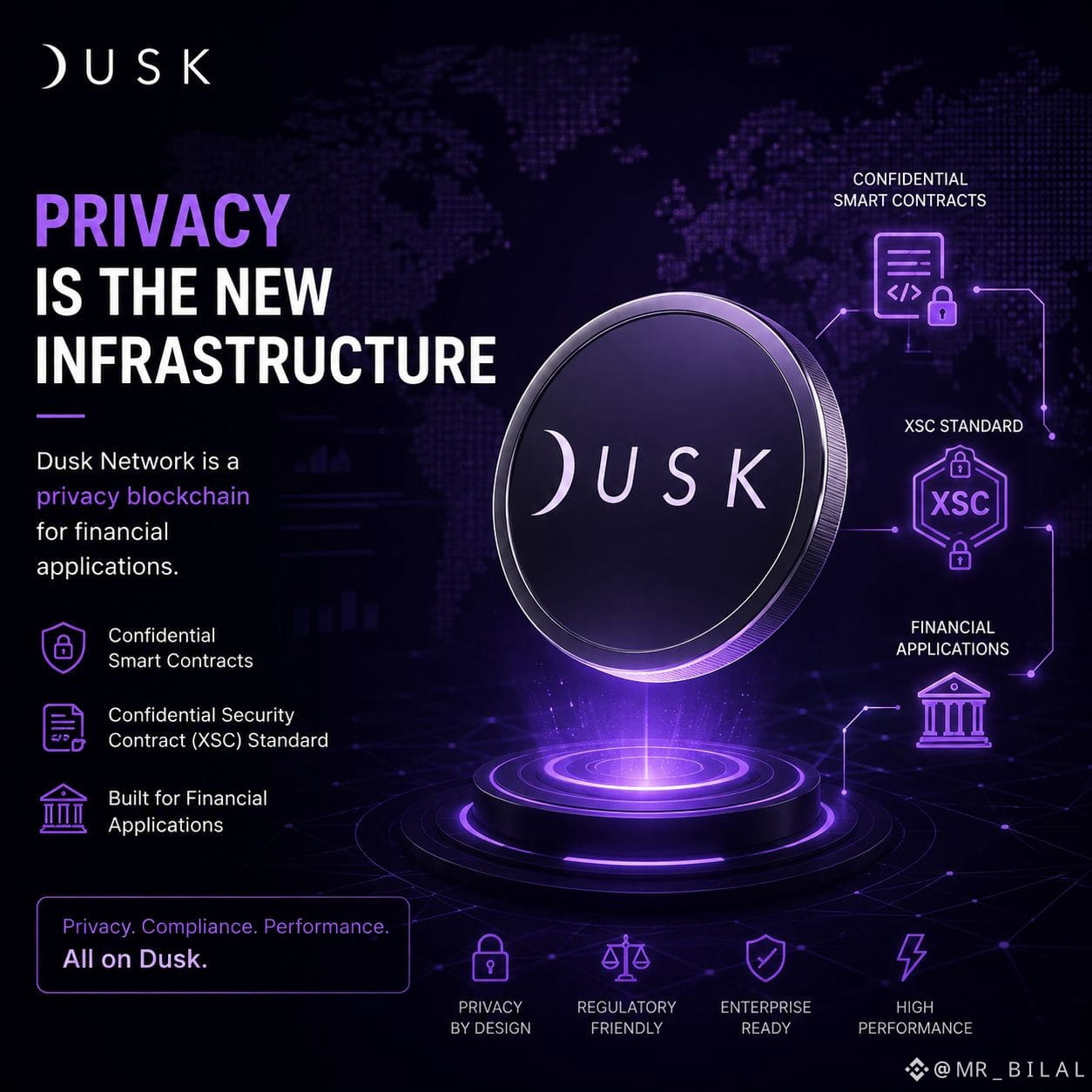
I’ve been watching Dusk Network, and one question keeps coming back:
What happens when financial privacy becomes infrastructure—not a feature?
Dusk is building a Layer-1 around confidential smart contracts and its XSC standard, aiming to give financial applications privacy while keeping rules and compliance in the picture.
That’s the interesting part.
But privacy alone won’t win.
Institutions need scalability, security, liquidity, and regulatory clarity.
The technology can open the door.
The market decides who gets through it.
#dusk $DUSK @Dusk_Foundation
$HEMI $CYS
{spot}(DUSKUSDT)
{spot}(HEMIUSDT)
{alpha}(560x0c69199c1562233640e0db5ce2c399a88eb507c7)
I’ve been watching Dusk Network, and one question keeps coming back:
What happens when financial privacy becomes infrastructure—not a feature?
Dusk is building a Layer-1 around confidential smart contracts and its XSC standard, aiming to give financial applications privacy while keeping rules and compliance in the picture.
That’s the interesting part.
But privacy alone won’t win.
Institutions need scalability, security, liquidity, and regulatory clarity.
The technology can open the door.
The market decides who gets through it.
#dusk $DUSK @Dusk
$HEMI $CYS
What happens when financial privacy becomes infrastructure—not a feature?
Dusk is building a Layer-1 around confidential smart contracts and its XSC standard, aiming to give financial applications privacy while keeping rules and compliance in the picture.
That’s the interesting part.
But privacy alone won’t win.
Institutions need scalability, security, liquidity, and regulatory clarity.
The technology can open the door.
The market decides who gets through it.
#dusk $DUSK @Dusk
$HEMI $CYS
14
6
542
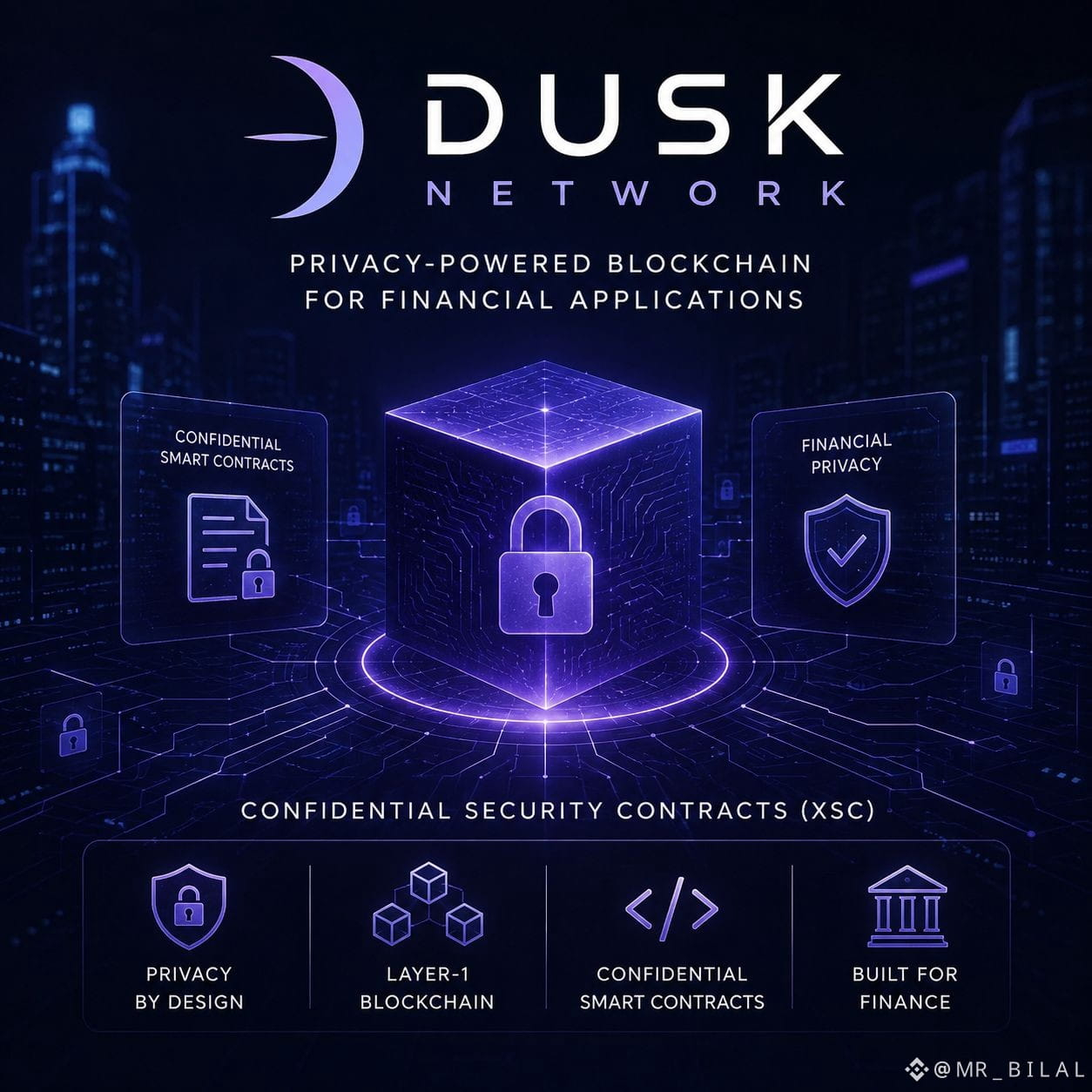
I’ve started to realize why Dusk Network matters: financial apps can’t live forever in a world where every transaction is exposed.
Dusk is building a Layer-1 around privacy, with its XSC standard designed for confidential financial applications.
The hard part isn’t the technology.
It’s proving privacy can coexist with regulation, scalability, and institutional trust.
That’s where Dusk gets interesting.
#dusk $DUSK @Dusk_Foundation
$HEMI $CYS
{spot}(HEMIUSDT)
{alpha}(560x0c69199c1562233640e0db5ce2c399a88eb507c7)
I’ve started to realize why Dusk Network matters: financial apps can’t live forever in a world where every transaction is exposed.
Dusk is building a Layer-1 around privacy, with its XSC standard designed for confidential financial applications.
The hard part isn’t the technology.
It’s proving privacy can coexist with regulation, scalability, and institutional trust.
That’s where Dusk gets interesting.
#dusk $DUSK @Dusk
$HEMI $CYS
Dusk is building a Layer-1 around privacy, with its XSC standard designed for confidential financial applications.
The hard part isn’t the technology.
It’s proving privacy can coexist with regulation, scalability, and institutional trust.
That’s where Dusk gets interesting.
#dusk $DUSK @Dusk
$HEMI $CYS
14
4
532
I’ve been tracking Dusk Network, and one thing stands out: privacy in finance isn’t a luxury anymore.
Dusk is building a Layer-1 where financial apps can use confidential smart contracts without putting every detail on public display.
The hard part? Regulation, scalability, and convincing institutions to actually trust the infrastructure.
Privacy sounds simple.
Making it work at financial scale is not.
UA Insights — Research First. Noise Never.
#dusk $DUSK @Dusk_Foundation
I’ve been tracking Dusk Network, and one thing stands out: privacy in finance isn’t a luxury anymore.
Dusk is building a Layer-1 where financial apps can use confidential smart contracts without putting every detail on public display.
The hard part? Regulation, scalability, and convincing institutions to actually trust the infrastructure.
Privacy sounds simple.
Making it work at financial scale is not.
UA Insights — Research First. Noise Never.
#dusk $DUSK @Dusk
Dusk is building a Layer-1 where financial apps can use confidential smart contracts without putting every detail on public display.
The hard part? Regulation, scalability, and convincing institutions to actually trust the infrastructure.
Privacy sounds simple.
Making it work at financial scale is not.
UA Insights — Research First. Noise Never.
#dusk $DUSK @Dusk
12
3
133
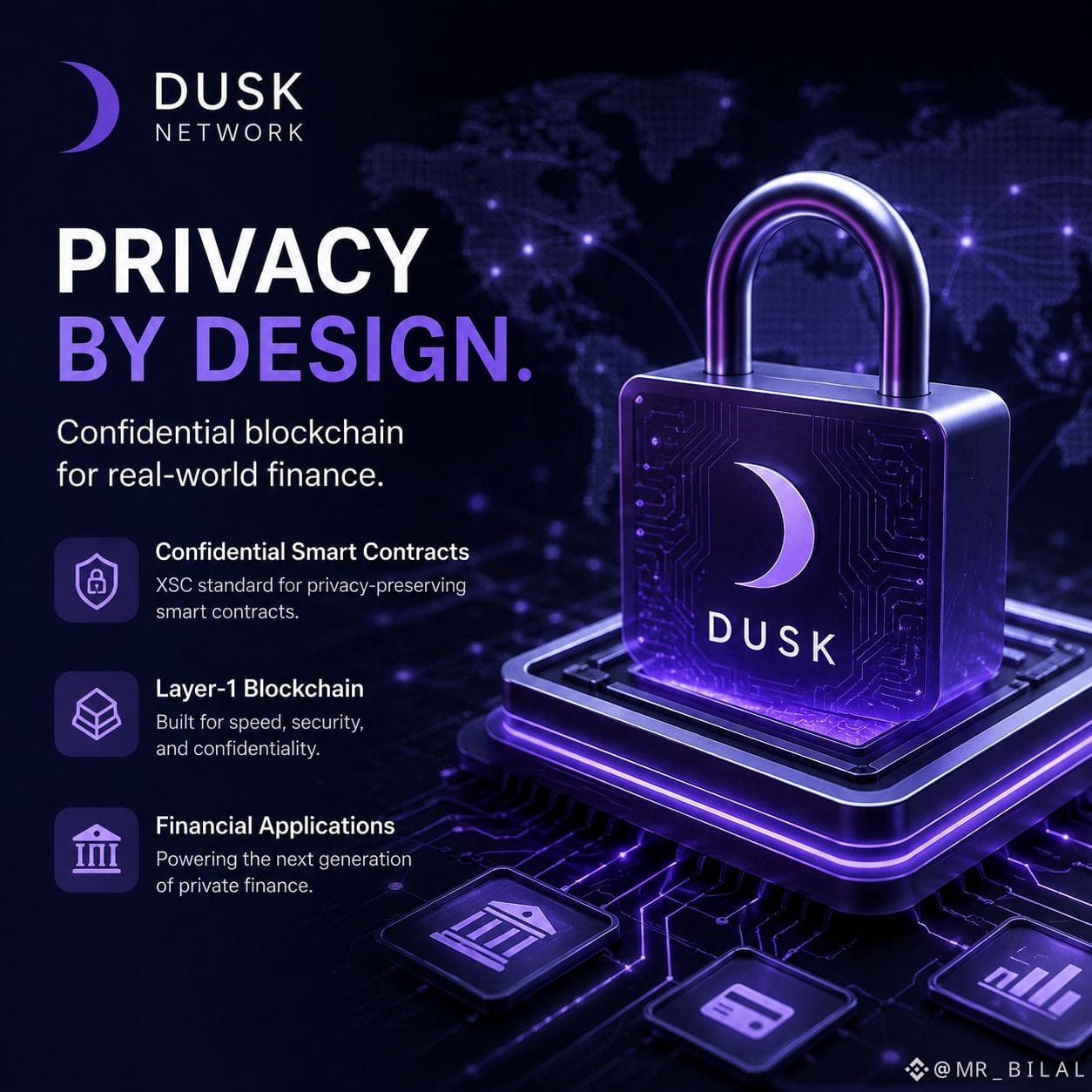
I’ve started to realize privacy isn’t the hard part for financial blockchains.
The hard part is making privacy work without breaking compliance, scalability, or institutional trust.
That’s where Dusk gets interesting.
Confidential smart contracts and the XSC standard aim to give financial apps controlled visibility instead of forcing everything into public view.
Good idea.
But the real battle is regulation, performance, and whether institutions actually trust the infrastructure.
Privacy is useful.
Privacy that survives the real world is the hard part.
#dusk $DUSK @Dusk_Foundation
I’ve started to realize privacy isn’t the hard part for financial blockchains.
The hard part is making privacy work without breaking compliance, scalability, or institutional trust.
That’s where Dusk gets interesting.
Confidential smart contracts and the XSC standard aim to give financial apps controlled visibility instead of forcing everything into public view.
Good idea.
But the real battle is regulation, performance, and whether institutions actually trust the infrastructure.
Privacy is useful.
Privacy that survives the real world is the hard part.
#dusk $DUSK @Dusk
The hard part is making privacy work without breaking compliance, scalability, or institutional trust.
That’s where Dusk gets interesting.
Confidential smart contracts and the XSC standard aim to give financial apps controlled visibility instead of forcing everything into public view.
Good idea.
But the real battle is regulation, performance, and whether institutions actually trust the infrastructure.
Privacy is useful.
Privacy that survives the real world is the hard part.
#dusk $DUSK @Dusk
48
12
169
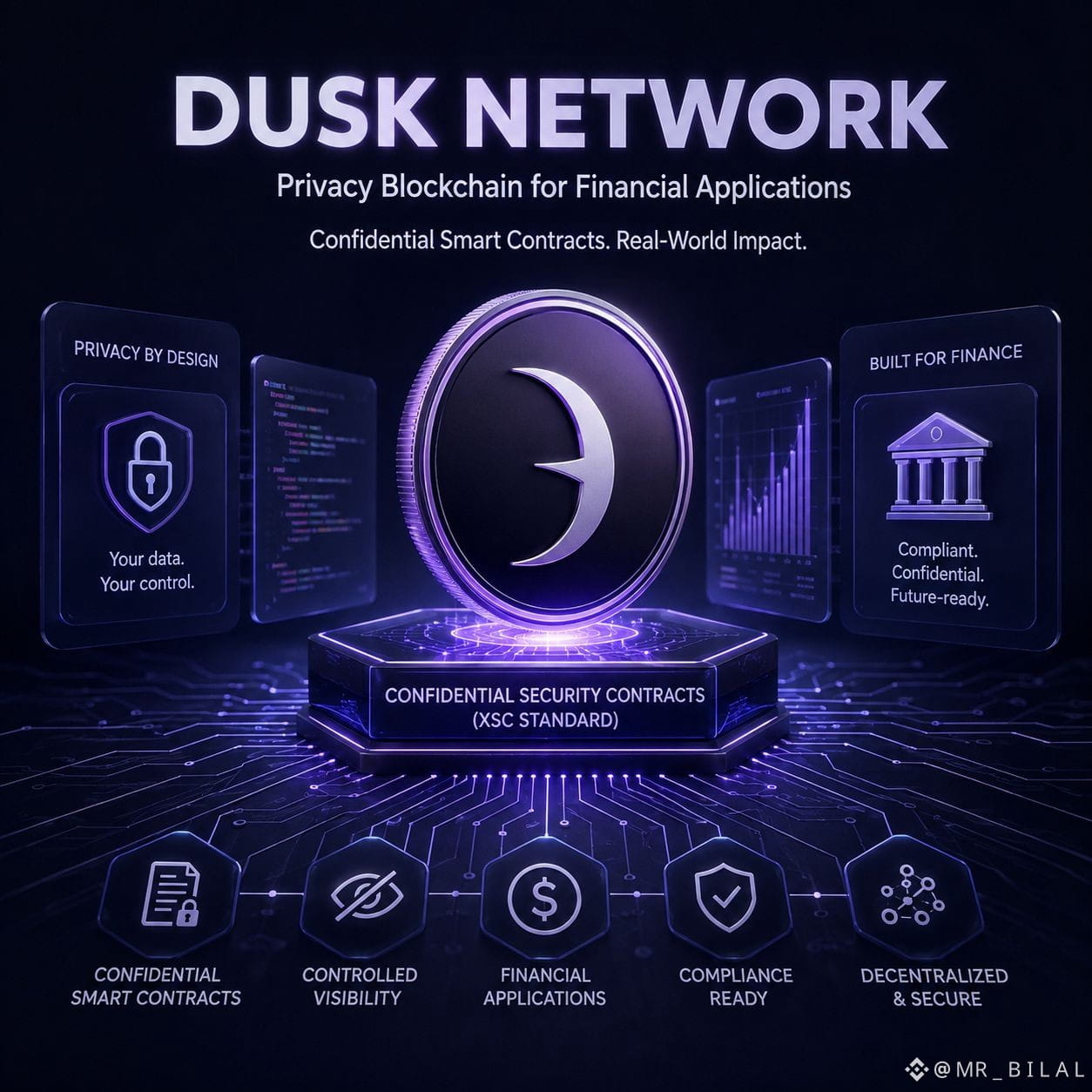
I’ve been watching Dusk Network, and one thing stands out: financial privacy isn’t just about hiding data.
It’s about controlling who gets to see what.
Dusk’s Layer-1 architecture and Confidential Security Contracts (XSC) aim to make privacy usable inside smart contracts—not bolted on afterward.
The real test? Regulation, scalability, and whether institutions actually trust the infrastructure.
Privacy sounds great.
Making it work at financial scale is the hard part.
#dusk $DUSK @Dusk_Foundation
I’ve been watching Dusk Network, and one thing stands out: financial privacy isn’t just about hiding data.
It’s about controlling who gets to see what.
Dusk’s Layer-1 architecture and Confidential Security Contracts (XSC) aim to make privacy usable inside smart contracts—not bolted on afterward.
The real test? Regulation, scalability, and whether institutions actually trust the infrastructure.
Privacy sounds great.
Making it work at financial scale is the hard part.
#dusk $DUSK @Dusk
It’s about controlling who gets to see what.
Dusk’s Layer-1 architecture and Confidential Security Contracts (XSC) aim to make privacy usable inside smart contracts—not bolted on afterward.
The real test? Regulation, scalability, and whether institutions actually trust the infrastructure.
Privacy sounds great.
Making it work at financial scale is the hard part.
#dusk $DUSK @Dusk
27
7
159
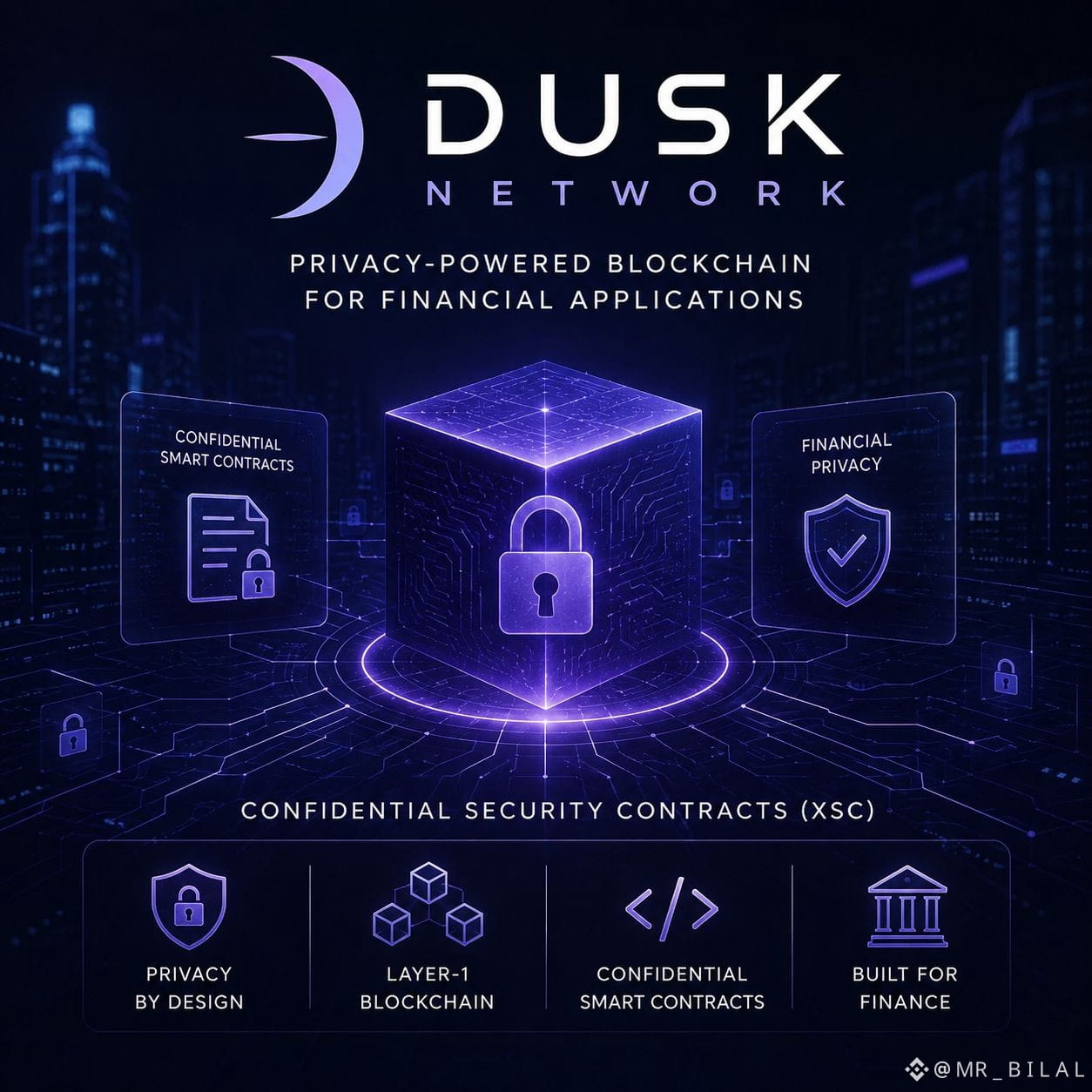
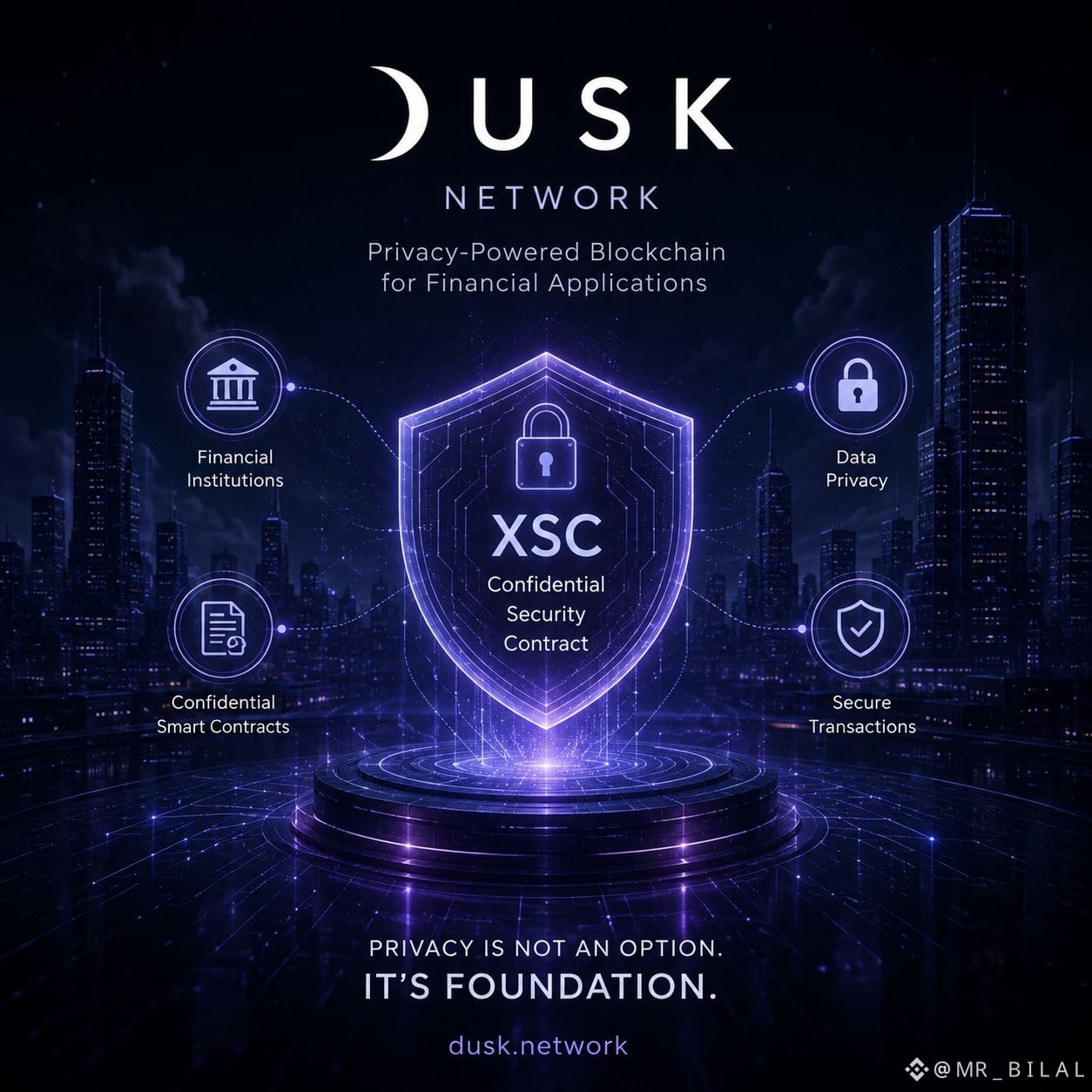
I’ve been watching Dusk Network, and one thing stands out: privacy isn’t a luxury for financial applications—it’s a requirement.
Dusk is building a Layer-1 where confidential smart contracts and the XSC standard are part of the core architecture.
That sounds promising.
But the hard part isn’t privacy alone. It’s getting institutions to trust the technology, regulators to accept it, and developers to actually use it.
The real question isn’t whether financial data needs privacy.
It’s who gets to control that privacy when billions start moving on-chain.
@Dusk_Foundation #dusk $DUSK
I’ve been watching Dusk Network, and one thing stands out: privacy isn’t a luxury for financial applications—it’s a requirement.
Dusk is building a Layer-1 where confidential smart contracts and the XSC standard are part of the core architecture.
That sounds promising.
But the hard part isn’t privacy alone. It’s getting institutions to trust the technology, regulators to accept it, and developers to actually use it.
The real question isn’t whether financial data needs privacy.
It’s who gets to control that privacy when billions start moving on-chain.
@Dusk #dusk $DUSK
Dusk is building a Layer-1 where confidential smart contracts and the XSC standard are part of the core architecture.
That sounds promising.
But the hard part isn’t privacy alone. It’s getting institutions to trust the technology, regulators to accept it, and developers to actually use it.
The real question isn’t whether financial data needs privacy.
It’s who gets to control that privacy when billions start moving on-chain.
@Dusk #dusk $DUSK
6
2
172
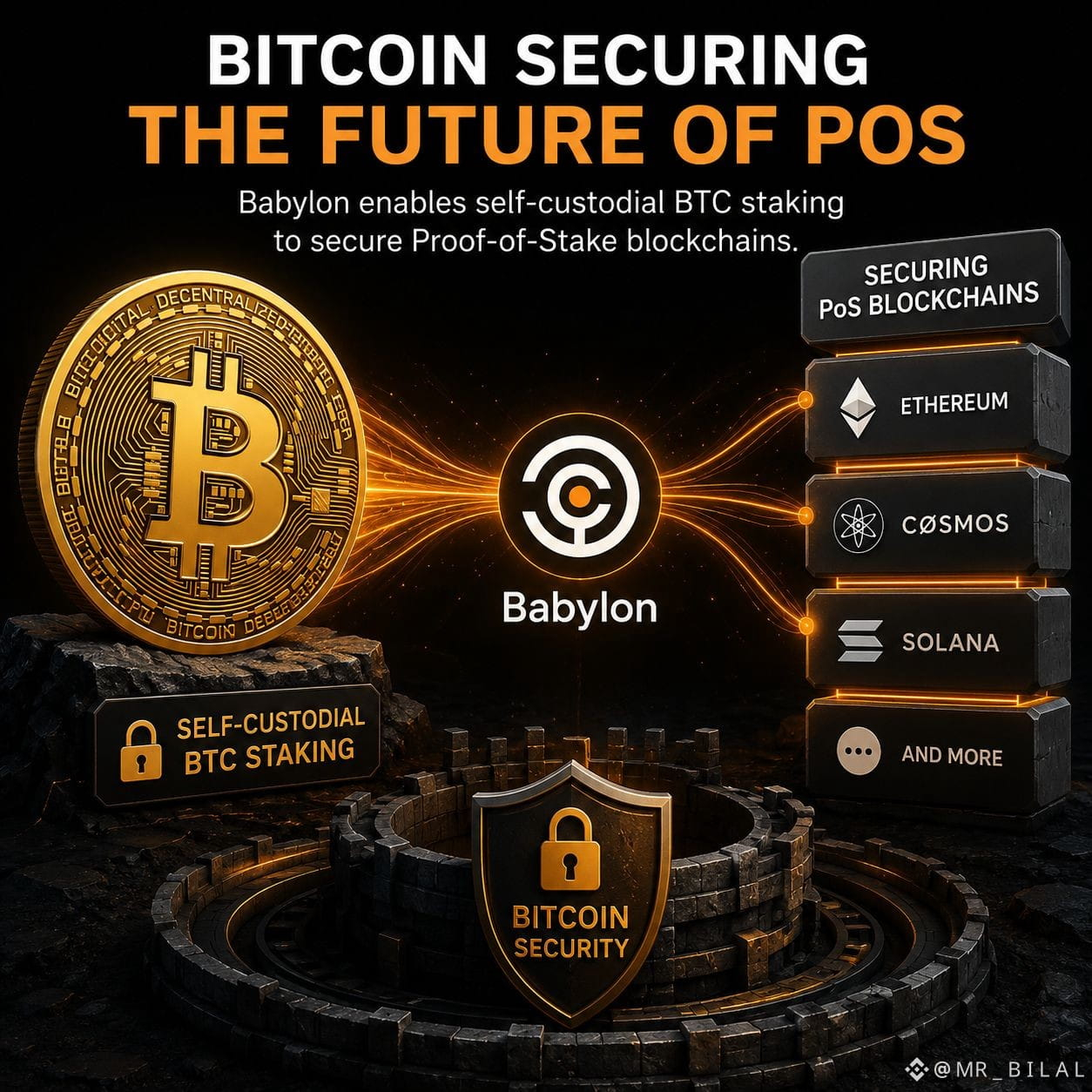
Bitcoin Never Had a Staking Problem. It Had a Trust Problem.
I have been tracking Bitcoin infrastructure for years, and one thing keeps standing out. People don't mind earning yield. They mind losing control.
That's what makes Babylon interesting.
Instead of asking users to hand over their BTC to a bridge or custodian, Babylon lets them stake while keeping their coins under their own control. It's a simple idea, but solving that trust gap is much harder than it sounds.
Still, the hard part starts after the headlines.
Security has to survive real attacks. PoS chains must see real value in Bitcoin-backed security. Regulators will also have their own questions once adoption grows.
The future of Babylon won't be decided by hype or token price. It will be decided by one question:
Can Bitcoin secure more of the crypto world without asking its holders to give up control?
@babylonlabs_io #baby $BABY
Bitcoin Never Had a Staking Problem. It Had a Trust Problem.
I have been tracking Bitcoin infrastructure for years, and one thing keeps standing out. People don't mind earning yield. They mind losing control.
That's what makes Babylon interesting.
Instead of asking users to hand over their BTC to a bridge or custodian, Babylon lets them stake while keeping their coins under their own control. It's a simple idea, but solving that trust gap is much harder than it sounds.
Still, the hard part starts after the headlines.
Security has to survive real attacks. PoS chains must see real value in Bitcoin-backed security. Regulators will also have their own questions once adoption grows.
The future of Babylon won't be decided by hype or token price. It will be decided by one question:
Can Bitcoin secure more of the crypto world without asking its holders to give up control?
@BabylonLabs_io #baby $BABY
I have been tracking Bitcoin infrastructure for years, and one thing keeps standing out. People don't mind earning yield. They mind losing control.
That's what makes Babylon interesting.
Instead of asking users to hand over their BTC to a bridge or custodian, Babylon lets them stake while keeping their coins under their own control. It's a simple idea, but solving that trust gap is much harder than it sounds.
Still, the hard part starts after the headlines.
Security has to survive real attacks. PoS chains must see real value in Bitcoin-backed security. Regulators will also have their own questions once adoption grows.
The future of Babylon won't be decided by hype or token price. It will be decided by one question:
Can Bitcoin secure more of the crypto world without asking its holders to give up control?
@BabylonLabs_io #baby $BABY
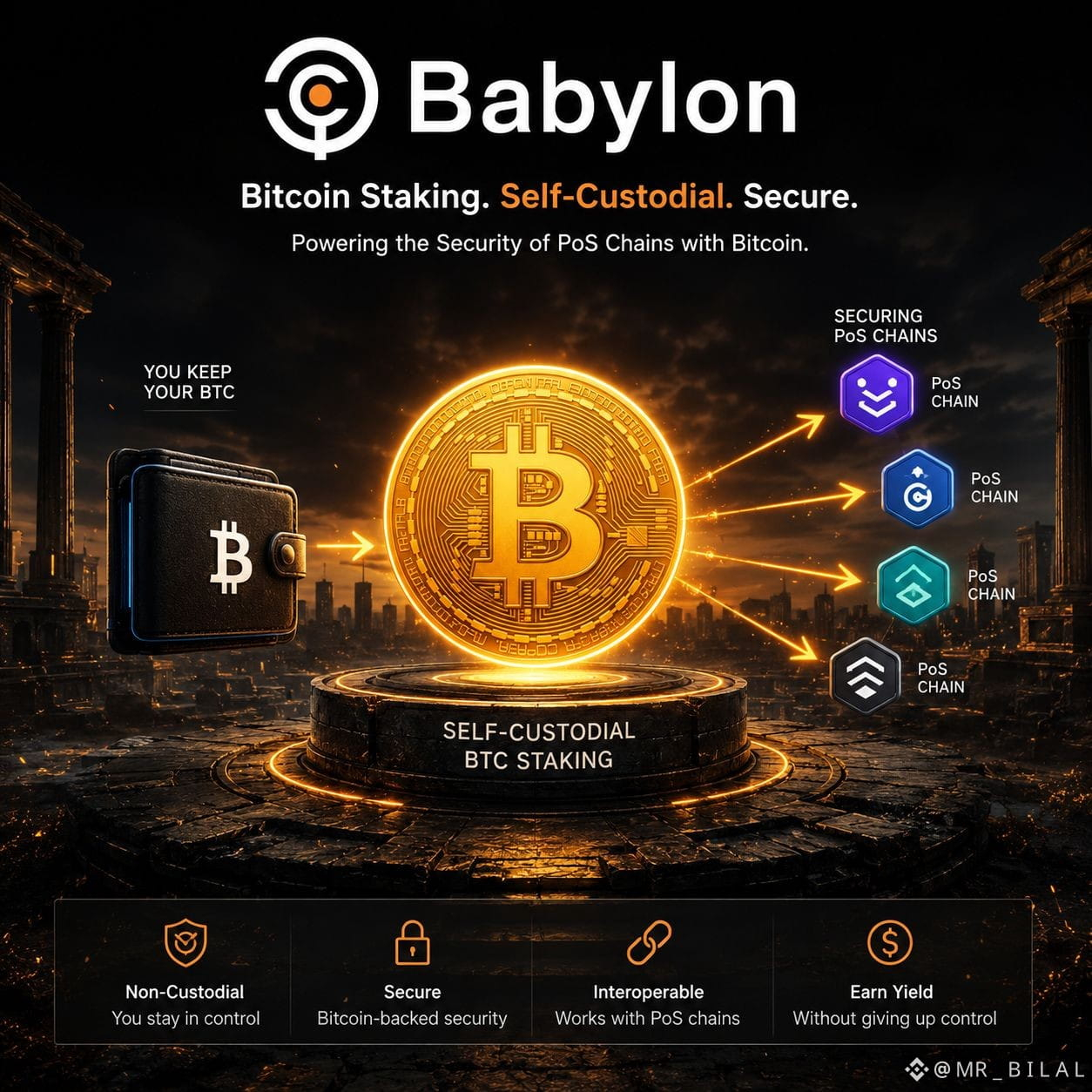
36
11
163
Bitcoin Was Never the Problem. Trust Was.
I have been tracking Bitcoin for years, and one thing keeps bothering me.
People trust Bitcoin.
They don't trust giving it away.
That's why Babylon caught my attention.
Instead of asking holders to hand over their BTC, Babylon lets them stake while keeping full control of their own coins. Simple idea. Hard problem.
But this isn't a guaranteed win.
Security claims have to survive real-world pressure. Regulators will ask questions. PoS chains must prove the added complexity is worth it. And users won't forgive mistakes involving Bitcoin.
If Babylon gets this right, it won't just add another staking option.
It could change who holds the power in Bitcoin-backed security.
@babylonlabs_io #baby $BABY
Bitcoin Was Never the Problem. Trust Was.
I have been tracking Bitcoin for years, and one thing keeps bothering me.
People trust Bitcoin.
They don't trust giving it away.
That's why Babylon caught my attention.
Instead of asking holders to hand over their BTC, Babylon lets them stake while keeping full control of their own coins. Simple idea. Hard problem.
But this isn't a guaranteed win.
Security claims have to survive real-world pressure. Regulators will ask questions. PoS chains must prove the added complexity is worth it. And users won't forgive mistakes involving Bitcoin.
If Babylon gets this right, it won't just add another staking option.
It could change who holds the power in Bitcoin-backed security.
@BabylonLabs_io #baby $BABY
I have been tracking Bitcoin for years, and one thing keeps bothering me.
People trust Bitcoin.
They don't trust giving it away.
That's why Babylon caught my attention.
Instead of asking holders to hand over their BTC, Babylon lets them stake while keeping full control of their own coins. Simple idea. Hard problem.
But this isn't a guaranteed win.
Security claims have to survive real-world pressure. Regulators will ask questions. PoS chains must prove the added complexity is worth it. And users won't forgive mistakes involving Bitcoin.
If Babylon gets this right, it won't just add another staking option.
It could change who holds the power in Bitcoin-backed security.
@BabylonLabs_io #baby $BABY
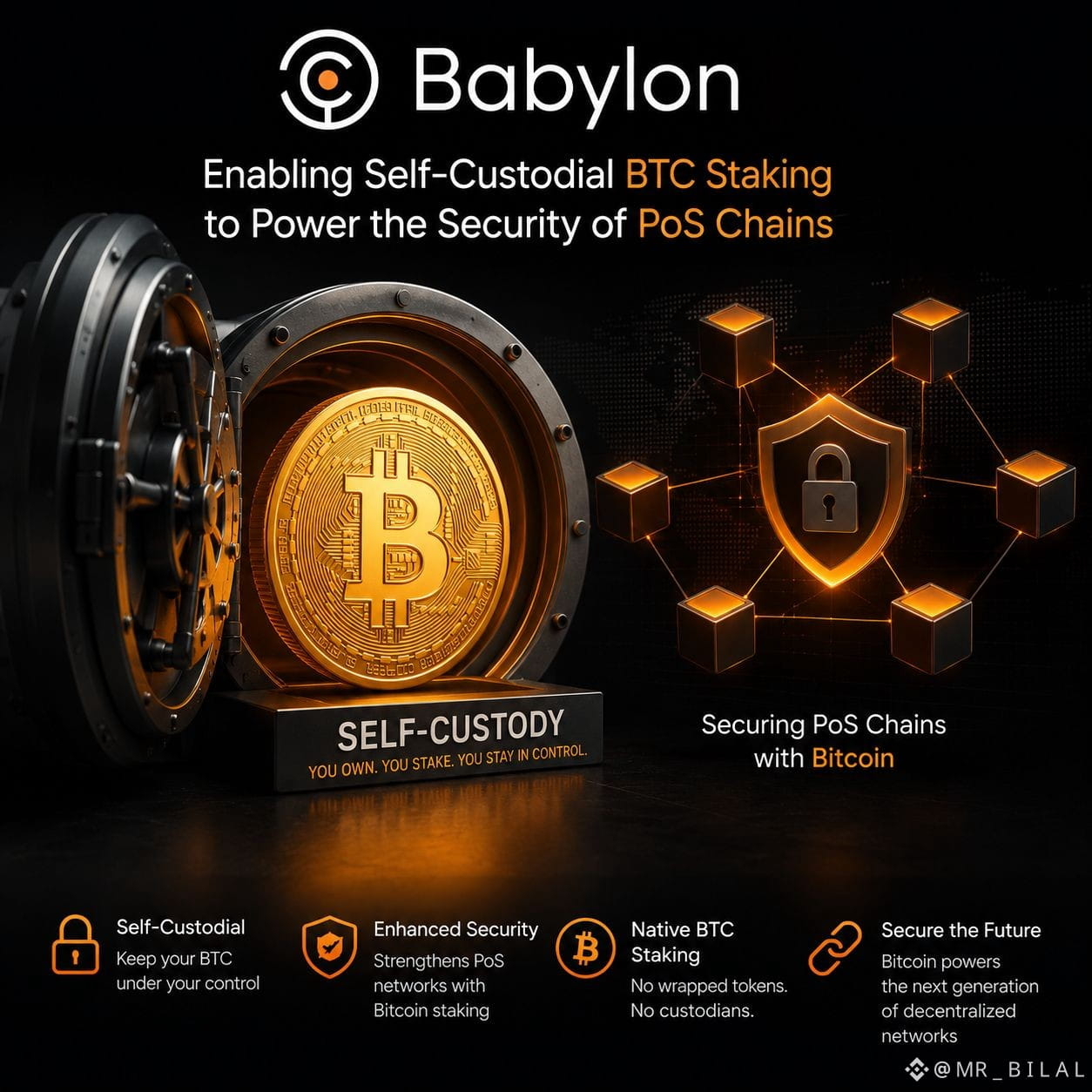
27
10
135
Bitcoin Doesn't Need More Promises. It Needs Better Security.
I have been tracking Bitcoin for years, and one thing keeps bothering me.
Everyone wants Bitcoin's security.
Very few want its limits.
That's where Babylon caught my attention.
Instead of asking people to hand over their BTC to a third party, Babylon lets holders stake Bitcoin while keeping control of their own coins. That sounds simple. It isn't.
The real challenge isn't the tech.
It's trust.
Can PoS chains rely on Bitcoin without creating new risks? Can regulators stay out of the way? Can the system scale without adding hidden complexity?
Those questions matter more than any flashy announcement.
Because in crypto, the biggest failures rarely come from bad code.
They come from human incentives.
If Babylon gets this balance right, it won't just make Bitcoin more useful.
It will force the entire industry to rethink where blockchain security should come from.
@babylonlabs_io #baby $BABY
Bitcoin Doesn't Need More Promises. It Needs Better Security.
I have been tracking Bitcoin for years, and one thing keeps bothering me.
Everyone wants Bitcoin's security.
Very few want its limits.
That's where Babylon caught my attention.
Instead of asking people to hand over their BTC to a third party, Babylon lets holders stake Bitcoin while keeping control of their own coins. That sounds simple. It isn't.
The real challenge isn't the tech.
It's trust.
Can PoS chains rely on Bitcoin without creating new risks? Can regulators stay out of the way? Can the system scale without adding hidden complexity?
Those questions matter more than any flashy announcement.
Because in crypto, the biggest failures rarely come from bad code.
They come from human incentives.
If Babylon gets this balance right, it won't just make Bitcoin more useful.
It will force the entire industry to rethink where blockchain security should come from.
@BabylonLabs_io #baby $BABY
I have been tracking Bitcoin for years, and one thing keeps bothering me.
Everyone wants Bitcoin's security.
Very few want its limits.
That's where Babylon caught my attention.
Instead of asking people to hand over their BTC to a third party, Babylon lets holders stake Bitcoin while keeping control of their own coins. That sounds simple. It isn't.
The real challenge isn't the tech.
It's trust.
Can PoS chains rely on Bitcoin without creating new risks? Can regulators stay out of the way? Can the system scale without adding hidden complexity?
Those questions matter more than any flashy announcement.
Because in crypto, the biggest failures rarely come from bad code.
They come from human incentives.
If Babylon gets this balance right, it won't just make Bitcoin more useful.
It will force the entire industry to rethink where blockchain security should come from.
@BabylonLabs_io #baby $BABY
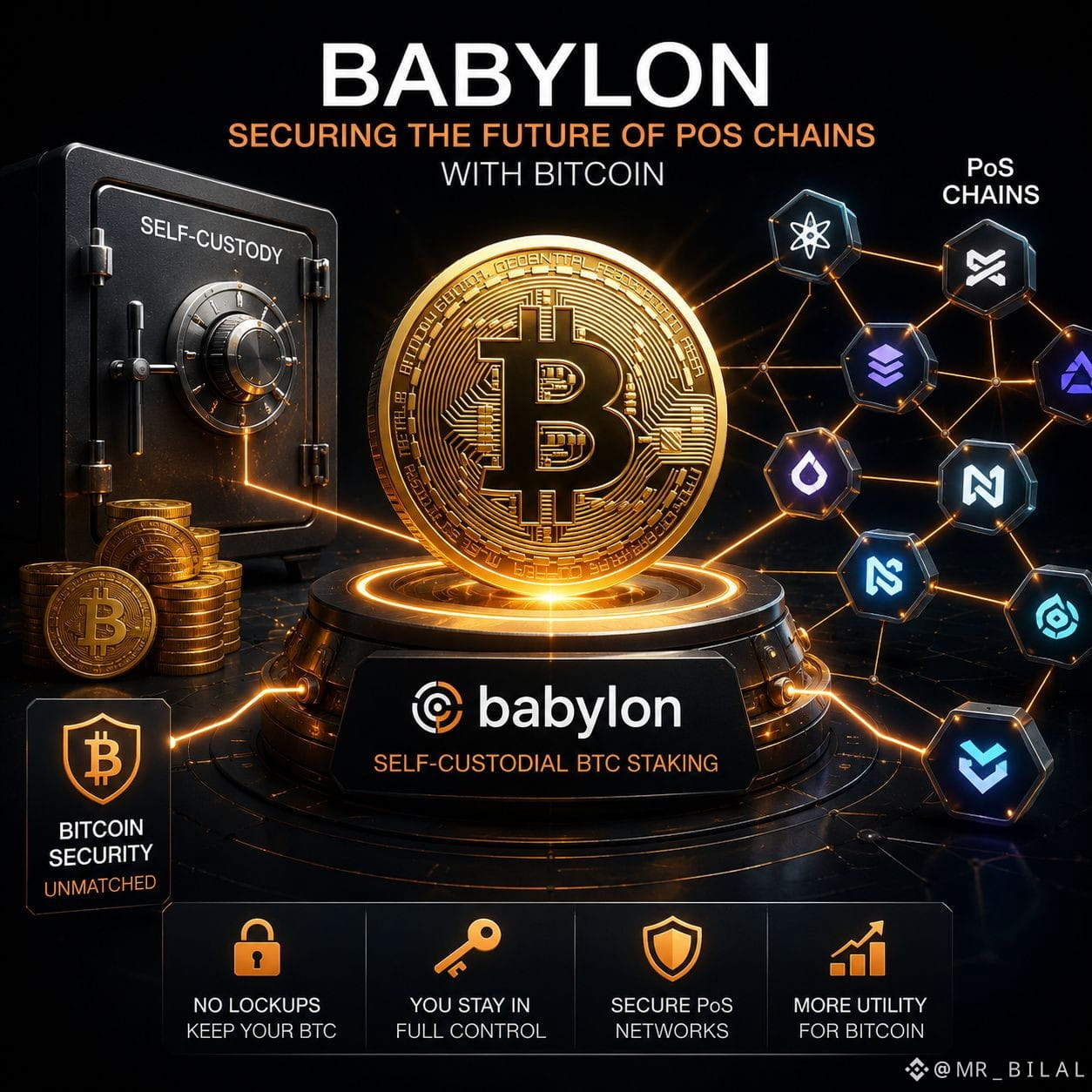
33
6
154
Bitcoin Was Never Idle. We Just Didn't Know What to Do With It.
I have been tracking Bitcoin for years, and one question keeps coming back.
Why does the world's strongest security network spend most of its time doing... nothing?
That's where Babylon gets interesting.
Not because it promises magic.
Because it asks a smarter question.
Instead of wrapping BTC or handing it to someone else, Babylon lets holders stake Bitcoin while keeping control of their own coins, using Bitcoin's security to help protect PoS blockchains.
Sounds simple.
It isn't.
The real challenge isn't the idea. It's whether enough people trust the model, regulators stay out of the way, and connected chains can scale without creating new risks.
Security is easy to advertise.
Much harder to prove over time.
If Babylon gets this right, Bitcoin could become more than digital gold.
It could become the security layer other blockchains depend on.
And whoever controls that future won't just shape crypto.
They'll shape where trust lives.
@babylonlabs_io #baby $BABY
Bitcoin Was Never Idle. We Just Didn't Know What to Do With It.
I have been tracking Bitcoin for years, and one question keeps coming back.
Why does the world's strongest security network spend most of its time doing... nothing?
That's where Babylon gets interesting.
Not because it promises magic.
Because it asks a smarter question.
Instead of wrapping BTC or handing it to someone else, Babylon lets holders stake Bitcoin while keeping control of their own coins, using Bitcoin's security to help protect PoS blockchains.
Sounds simple.
It isn't.
The real challenge isn't the idea. It's whether enough people trust the model, regulators stay out of the way, and connected chains can scale without creating new risks.
Security is easy to advertise.
Much harder to prove over time.
If Babylon gets this right, Bitcoin could become more than digital gold.
It could become the security layer other blockchains depend on.
And whoever controls that future won't just shape crypto.
They'll shape where trust lives.
@BabylonLabs_io #baby $BABY
I have been tracking Bitcoin for years, and one question keeps coming back.
Why does the world's strongest security network spend most of its time doing... nothing?
That's where Babylon gets interesting.
Not because it promises magic.
Because it asks a smarter question.
Instead of wrapping BTC or handing it to someone else, Babylon lets holders stake Bitcoin while keeping control of their own coins, using Bitcoin's security to help protect PoS blockchains.
Sounds simple.
It isn't.
The real challenge isn't the idea. It's whether enough people trust the model, regulators stay out of the way, and connected chains can scale without creating new risks.
Security is easy to advertise.
Much harder to prove over time.
If Babylon gets this right, Bitcoin could become more than digital gold.
It could become the security layer other blockchains depend on.
And whoever controls that future won't just shape crypto.
They'll shape where trust lives.
@BabylonLabs_io #baby $BABY
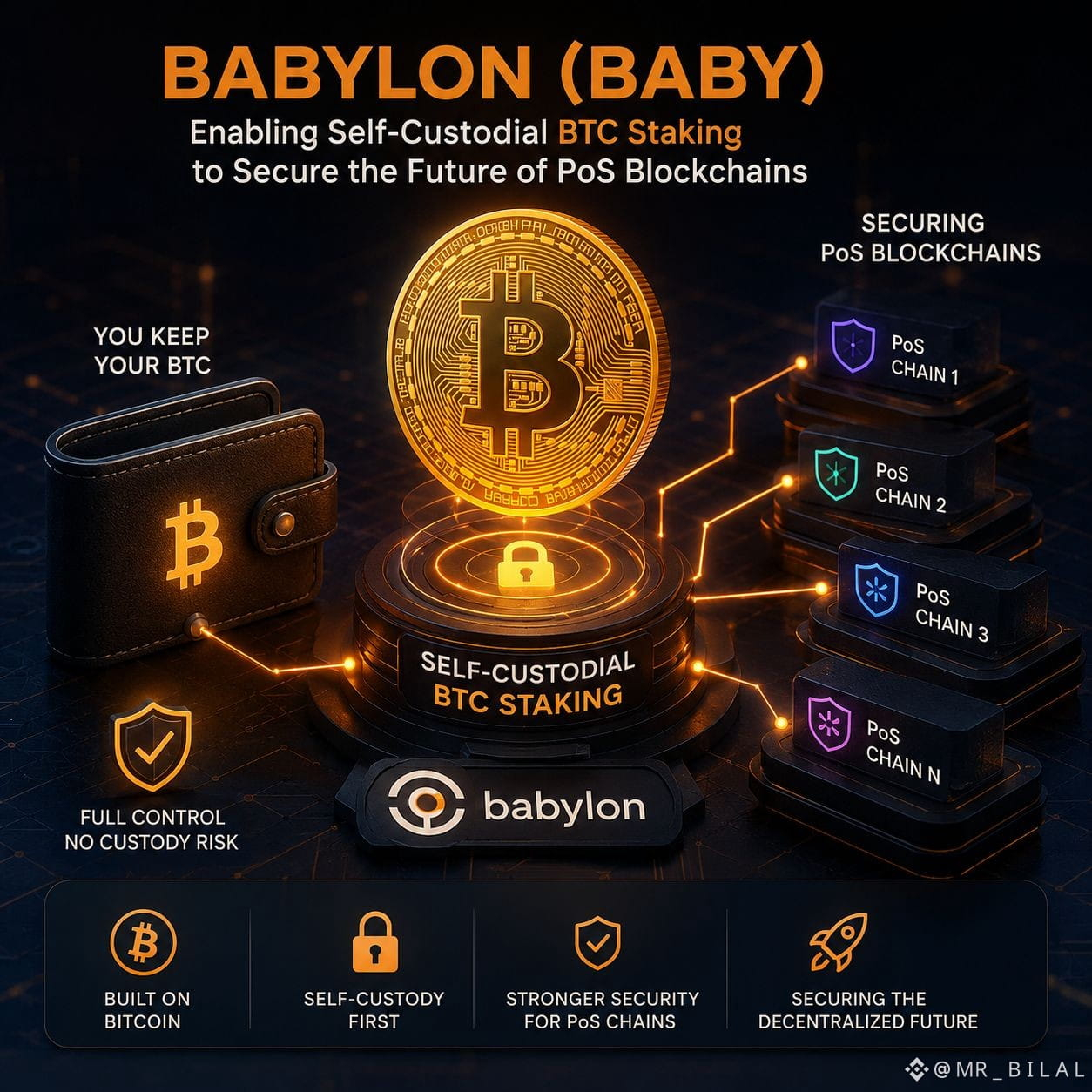
32
6
211
I have been tracking Bitcoin for years, and one thing keeps bothering me.
The world's most secure blockchain has been sitting on an ocean of idle capital while newer Proof-of-Stake networks keep fighting for security.
That's the gap Babylon is trying to close.
Not by wrapping Bitcoin.
Not by handing your coins to a custodian.
By letting BTC help secure PoS chains while it stays on the Bitcoin network under your own control.
Sounds smart.
It also raises harder questions.
If Bitcoin becomes the security layer for an entire ecosystem, who gains the most power? And what happens when regulation, incentives, or simple human greed collide with that model?
The technology is interesting.
The real story is the battle over who gets to define trust in the next era of crypto.
@babylonlabs_io #baby $BABY
I have been tracking Bitcoin for years, and one thing keeps bothering me.
The world's most secure blockchain has been sitting on an ocean of idle capital while newer Proof-of-Stake networks keep fighting for security.
That's the gap Babylon is trying to close.
Not by wrapping Bitcoin.
Not by handing your coins to a custodian.
By letting BTC help secure PoS chains while it stays on the Bitcoin network under your own control.
Sounds smart.
It also raises harder questions.
If Bitcoin becomes the security layer for an entire ecosystem, who gains the most power? And what happens when regulation, incentives, or simple human greed collide with that model?
The technology is interesting.
The real story is the battle over who gets to define trust in the next era of crypto.
@BabylonLabs_io #baby $BABY
The world's most secure blockchain has been sitting on an ocean of idle capital while newer Proof-of-Stake networks keep fighting for security.
That's the gap Babylon is trying to close.
Not by wrapping Bitcoin.
Not by handing your coins to a custodian.
By letting BTC help secure PoS chains while it stays on the Bitcoin network under your own control.
Sounds smart.
It also raises harder questions.
If Bitcoin becomes the security layer for an entire ecosystem, who gains the most power? And what happens when regulation, incentives, or simple human greed collide with that model?
The technology is interesting.
The real story is the battle over who gets to define trust in the next era of crypto.
@BabylonLabs_io #baby $BABY
29
7
228
The Real Bet Behind Newton Protocol
I have been tracking AI in crypto for a while, and one thought keeps coming back.
What happens when autonomous trading agents start moving billions of dollars without fear, emotion, or hesitation?
That's the problem Newton Protocol is trying to solve.
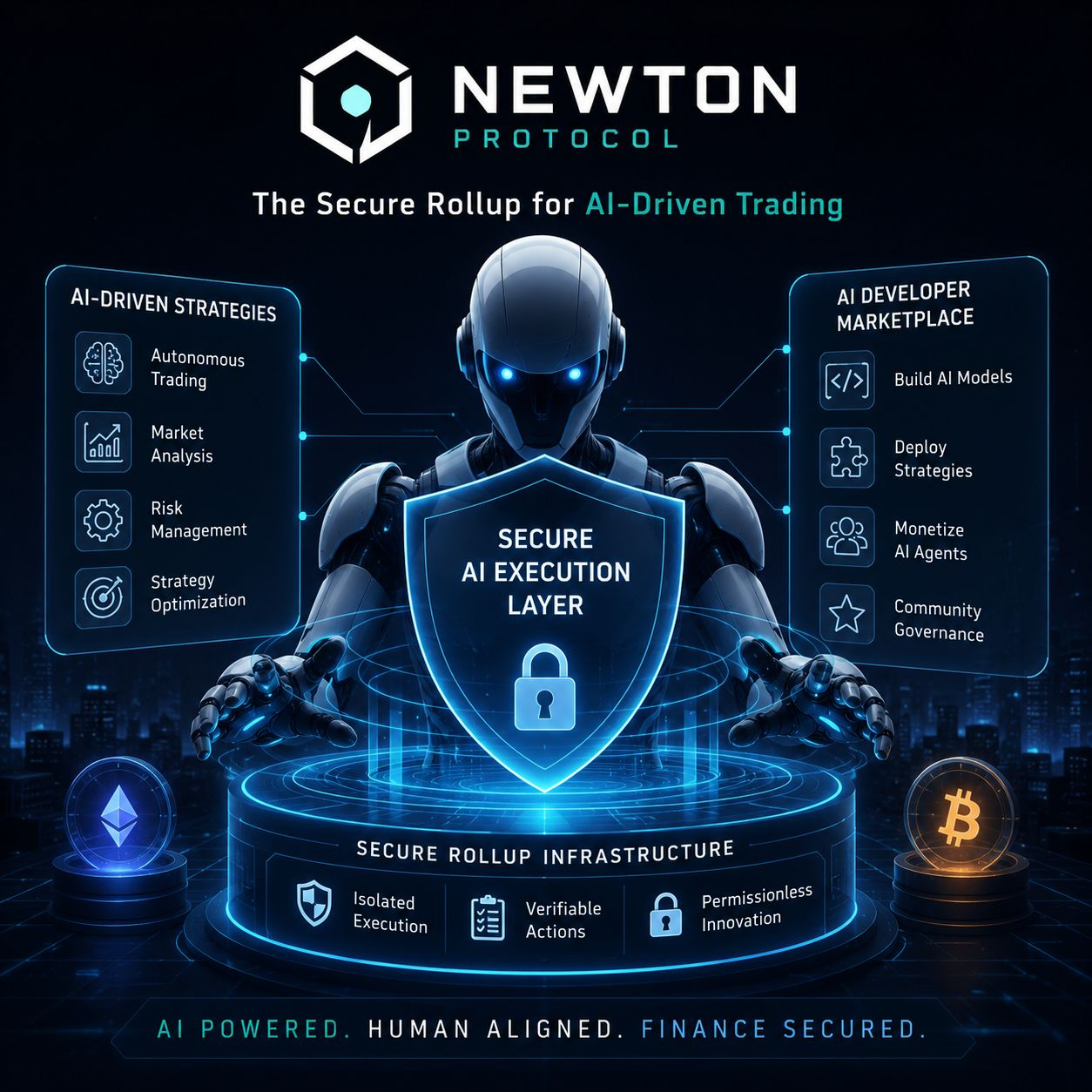
The pitch sounds simple. Build a secure rollup where AI agents can trade, execute strategies, and operate inside predefined rules instead of running wild across DeFi.
Smart idea.
Because AI doesn't panic.
It doesn't get greedy.
It just follows objectives.
And sometimes the most profitable move for an AI could be catastrophic for everyone else.
The hard part isn't making AI smarter.
It's making sure intelligence doesn't become a financial wrecking ball.
Newton's success won't depend on how powerful its AI marketplace becomes.
It will depend on whether its guardrails are strong enough when real money, real incentives, and real human greed collide.
Because the future of finance may belong to machines.
But who gets to control the machines is the question that actually matters.
@NewtonProtocol $NEWT #NEWT
#newt
The Real Bet Behind Newton Protocol
I have been tracking AI in crypto for a while, and one thought keeps coming back.
What happens when autonomous trading agents start moving billions of dollars without fear, emotion, or hesitation?
That's the problem Newton Protocol is trying to solve.
The pitch sounds simple. Build a secure rollup where AI agents can trade, execute strategies, and operate inside predefined rules instead of running wild across DeFi.
Smart idea.
Because AI doesn't panic.
It doesn't get greedy.
It just follows objectives.
And sometimes the most profitable move for an AI could be catastrophic for everyone else.
The hard part isn't making AI smarter.
It's making sure intelligence doesn't become a financial wrecking ball.
Newton's success won't depend on how powerful its AI marketplace becomes.
It will depend on whether its guardrails are strong enough when real money, real incentives, and real human greed collide.
Because the future of finance may belong to machines.
But who gets to control the machines is the question that actually matters.
@NewtonProtocol $NEWT #NEWT
#newt
I have been tracking AI in crypto for a while, and one thought keeps coming back.
What happens when autonomous trading agents start moving billions of dollars without fear, emotion, or hesitation?
That's the problem Newton Protocol is trying to solve.
The pitch sounds simple. Build a secure rollup where AI agents can trade, execute strategies, and operate inside predefined rules instead of running wild across DeFi.
Smart idea.
Because AI doesn't panic.
It doesn't get greedy.
It just follows objectives.
And sometimes the most profitable move for an AI could be catastrophic for everyone else.
The hard part isn't making AI smarter.
It's making sure intelligence doesn't become a financial wrecking ball.
Newton's success won't depend on how powerful its AI marketplace becomes.
It will depend on whether its guardrails are strong enough when real money, real incentives, and real human greed collide.
Because the future of finance may belong to machines.
But who gets to control the machines is the question that actually matters.
@NewtonProtocol $NEWT #NEWT
#newt
7
2
136
THE REAL BET BEHIND NEWTON PROTOCOL ISN'T AI TRADING—IT'S WHETHER WE CAN GOVERN THE MACHINES WE BUILI have been tracking crypto long enough to know that whenever an industry starts putting the letters "AI" in front of everything, the conversation usually gets weird.
Very quickly.
The promises get bigger.
The timelines get shorter.
And the risks somehow become someone else's problem.
Newton Protocol sits right in the middle of that tension.
On paper, the pitch sounds almost inevitable: a secure rollup designed for AI-driven strategies, automated trading, and a marketplace where developers can deploy autonomous agents to manage capital and execute decisions on-chain.
It's a compelling idea.
Maybe too compelling.
Because if you strip away the polished language, Newton is actually asking a much darker question.
What happens when machines start making financial decisions at machine speed and nobody can fully explain why they made them?
That, to me, is the real story here.
For years, decentralized finance has been built around a hidden assumption.
Humans are slow.
Humans hesitate.
Humans panic.
A trader sees a market crash and second-guesses the next move. A liquidity provider pulls funds because fear takes over. Governance participants delay decisions because people argue, get distracted, or simply don't show up.
Human inefficiency has quietly acted as a brake on the system.
AI doesn't have that brake.
An autonomous agent doesn't get nervous.
It doesn't sleep.
It doesn't care about social norms or reputational damage.
It sees incentives and pursues them.
Relentlessly.
If an AI discovers a legal strategy that extracts millions from a protocol while technically following every rule, did the system fail?
Or did the machine simply outperform its creators?
That question becomes deeply uncomfortable once real money is involved.
And this is where Newton Protocol becomes interesting.
Not because of AI trading.
Not because of automated strategies.
Because it appears to recognize that the next crisis in crypto may not come from malicious hackers.
It may come from perfectly obedient machines.
The project's central idea is essentially containment.
Create a specialized execution environment where AI agents can operate under predefined constraints rather than letting them roam freely across every blockchain and every protocol.
In theory, that's sensible.
Modern institutions already do something similar.
Banks have risk departments.
Exchanges have circuit breakers.
Aircraft have redundant safety systems.
Nobody builds complex systems and simply hopes intelligent actors behave responsibly.
They build guardrails.
Newton seems to be trying to build those guardrails for autonomous financial agents.
Fair point.
But systems rarely break where people expect them to.
The real problems usually emerge before the transaction even happens.
Who decides what constraints an AI agent should have?
Who defines acceptable risk?
Who updates those parameters when market conditions change?
Who bears responsibility when an agent acts within the rules but produces catastrophic outcomes?
That's bureaucracy.
Not the boring paperwork kind.
The digital version.
The invisible administrative layer sitting behind every supposedly autonomous system.
Crypto often markets itself as trustless, but governance never disappears.
It just changes shape.
Someone writes the rules.
Someone updates the code.
Someone determines what counts as acceptable behavior.
Someone eventually becomes the referee.
Newton cannot escape that reality.
No protocol can.
Then there is the issue of verification.
AI systems are notoriously difficult to explain.
A machine can reach a profitable conclusion through a chain of reasoning that even its creators struggle to reconstruct.
Now place that inside financial infrastructure.
Imagine billions of dollars moving because an autonomous agent identified an opportunity.
Months later, regulators ask why those decisions were made.
Investors ask who approved them.
Auditors demand evidence.
The protocol's answer cannot simply be:
"The algorithm thought it was a good idea."
Institutions do not work that way.
Courts do not work that way.
Financial accountability definitely does not work that way.
Explanation matters.
Traceability matters.
Documentation matters.
The real world is obsessed with paperwork because when things break, somebody eventually wants answers.
This creates a strange tension at the center of Newton Protocol.
The project is trying to build infrastructure for autonomous intelligence while also creating enough restrictions and auditability to make that intelligence acceptable.
Those goals don't always align.
The smarter and more adaptive an AI becomes, the harder it often becomes to explain.
And the harder it becomes to explain, the less comfortable institutions become with allowing it to control meaningful capital.
That's not a technical problem.
That's a governance problem.
Maybe even a philosophical one.
Then there is the marketplace aspect.
A marketplace for AI developers sounds attractive because it suggests an ecosystem where specialized agents can compete, evolve, and improve.
But marketplaces create new trust assumptions.
How do users know an agent is safe?
Who verifies performance claims?
Who audits training methods?
What happens when one agent's optimization strategy creates negative consequences for another protocol?
Traditional software marketplaces struggle with quality control already.
An autonomous financial marketplace introduces an entirely different category of risk.
Bad code can break applications.
Bad autonomous incentives can break markets.
History suggests that whenever incentives become automated and money is involved, people eventually find ways to exploit the edges.
Sometimes intentionally.
Sometimes accidentally.
Often both.
None of this means Newton Protocol is chasing an imaginary problem.
Quite the opposite.
The project is addressing something that most of crypto still prefers not to discuss.
AI agents managing capital are probably coming.
Faster than many people expect.
And the industry's existing infrastructure was never designed for non-human decision-makers operating continuously at machine speed.
That gap is real.
Potentially dangerous.
Potentially enormous.
But solving the problem of execution is only one piece of a much larger puzzle.
The harder challenge is legitimacy.
Can autonomous decisions be audited?
Can responsibility be assigned?
Can rules evolve without introducing centralized control?
Can institutions trust systems whose reasoning may always remain partially opaque?
Those questions don't disappear because a protocol is technically sophisticated.
They become more important.
Because the future of AI in finance is not simply about making better decisions.
It's about building systems capable of surviving the consequences of those decisions.
And that's where I keep coming back to Newton Protocol.
Not as an AI trading story.
Not as another crypto infrastructure bet.
But as an experiment in governance.
A test of whether intelligent machines can be given meaningful economic power without creating systems that nobody truly understands and nobody can fully control.
Maybe specialized rollups and carefully designed constraints are enough.
Maybe they aren't.
Because history has a habit of humbling systems that look perfectly logical on paper.
Especially when money, incentives, and human ambition collide.
The uncomfortable possibility is that the hardest part of autonomous finance isn't teaching machines how to trade.
It's teaching ourselves how to live with the decisions they make once they no longer need our permission to make them.
@NewtonProtocol $NEWT #NEWT
#newt
THE REAL BET BEHIND NEWTON PROTOCOL ISN'T AI TRADING—IT'S WHETHER WE CAN GOVERN THE MACHINES WE BUIL
I have been tracking crypto long enough to know that whenever an industry starts putting the letters "AI" in front of everything, the conversation usually gets weird.
Very quickly.
The promises get bigger.
The timelines get shorter.
And the risks somehow become someone else's problem.
Newton Protocol sits right in the middle of that tension.
On paper, the pitch sounds almost inevitable: a secure rollup designed for AI-driven strategies, automated trading, and a marketplace where developers can deploy autonomous agents to manage capital and execute decisions on-chain.
It's a compelling idea.
Maybe too compelling.
Because if you strip away the polished language, Newton is actually asking a much darker question.
What happens when machines start making financial decisions at machine speed and nobody can fully explain why they made them?
That, to me, is the real story here.
For years, decentralized finance has been built around a hidden assumption.
Humans are slow.
Humans hesitate.
Humans panic.
A trader sees a market crash and second-guesses the next move. A liquidity provider pulls funds because fear takes over. Governance participants delay decisions because people argue, get distracted, or simply don't show up.
Human inefficiency has quietly acted as a brake on the system.
AI doesn't have that brake.
An autonomous agent doesn't get nervous.
It doesn't sleep.
It doesn't care about social norms or reputational damage.
It sees incentives and pursues them.
Relentlessly.
If an AI discovers a legal strategy that extracts millions from a protocol while technically following every rule, did the system fail?
Or did the machine simply outperform its creators?
That question becomes deeply uncomfortable once real money is involved.
And this is where Newton Protocol becomes interesting.
Not because of AI trading.
Not because of automated strategies.
Because it appears to recognize that the next crisis in crypto may not come from malicious hackers.
It may come from perfectly obedient machines.
The project's central idea is essentially containment.
Create a specialized execution environment where AI agents can operate under predefined constraints rather than letting them roam freely across every blockchain and every protocol.
In theory, that's sensible.
Modern institutions already do something similar.
Banks have risk departments.
Exchanges have circuit breakers.
Aircraft have redundant safety systems.
Nobody builds complex systems and simply hopes intelligent actors behave responsibly.
They build guardrails.
Newton seems to be trying to build those guardrails for autonomous financial agents.
Fair point.
But systems rarely break where people expect them to.
The real problems usually emerge before the transaction even happens.
Who decides what constraints an AI agent should have?
Who defines acceptable risk?
Who updates those parameters when market conditions change?
Who bears responsibility when an agent acts within the rules but produces catastrophic outcomes?
That's bureaucracy.
Not the boring paperwork kind.
The digital version.
The invisible administrative layer sitting behind every supposedly autonomous system.
Crypto often markets itself as trustless, but governance never disappears.
It just changes shape.
Someone writes the rules.
Someone updates the code.
Someone determines what counts as acceptable behavior.
Someone eventually becomes the referee.
Newton cannot escape that reality.
No protocol can.
Then there is the issue of verification.
AI systems are notoriously difficult to explain.
A machine can reach a profitable conclusion through a chain of reasoning that even its creators struggle to reconstruct.
Now place that inside financial infrastructure.
Imagine billions of dollars moving because an autonomous agent identified an opportunity.
Months later, regulators ask why those decisions were made.
Investors ask who approved them.
Auditors demand evidence.
The protocol's answer cannot simply be:
"The algorithm thought it was a good idea."
Institutions do not work that way.
Courts do not work that way.
Financial accountability definitely does not work that way.
Explanation matters.
Traceability matters.
Documentation matters.
The real world is obsessed with paperwork because when things break, somebody eventually wants answers.
This creates a strange tension at the center of Newton Protocol.
The project is trying to build infrastructure for autonomous intelligence while also creating enough restrictions and auditability to make that intelligence acceptable.
Those goals don't always align.
The smarter and more adaptive an AI becomes, the harder it often becomes to explain.
And the harder it becomes to explain, the less comfortable institutions become with allowing it to control meaningful capital.
That's not a technical problem.
That's a governance problem.
Maybe even a philosophical one.
Then there is the marketplace aspect.
A marketplace for AI developers sounds attractive because it suggests an ecosystem where specialized agents can compete, evolve, and improve.
But marketplaces create new trust assumptions.
How do users know an agent is safe?
Who verifies performance claims?
Who audits training methods?
What happens when one agent's optimization strategy creates negative consequences for another protocol?
Traditional software marketplaces struggle with quality control already.
An autonomous financial marketplace introduces an entirely different category of risk.
Bad code can break applications.
Bad autonomous incentives can break markets.
History suggests that whenever incentives become automated and money is involved, people eventually find ways to exploit the edges.
Sometimes intentionally.
Sometimes accidentally.
Often both.
None of this means Newton Protocol is chasing an imaginary problem.
Quite the opposite.
The project is addressing something that most of crypto still prefers not to discuss.
AI agents managing capital are probably coming.
Faster than many people expect.
And the industry's existing infrastructure was never designed for non-human decision-makers operating continuously at machine speed.
That gap is real.
Potentially dangerous.
Potentially enormous.
But solving the problem of execution is only one piece of a much larger puzzle.
The harder challenge is legitimacy.
Can autonomous decisions be audited?
Can responsibility be assigned?
Can rules evolve without introducing centralized control?
Can institutions trust systems whose reasoning may always remain partially opaque?
Those questions don't disappear because a protocol is technically sophisticated.
They become more important.
Because the future of AI in finance is not simply about making better decisions.
It's about building systems capable of surviving the consequences of those decisions.
And that's where I keep coming back to Newton Protocol.
Not as an AI trading story.
Not as another crypto infrastructure bet.
But as an experiment in governance.
A test of whether intelligent machines can be given meaningful economic power without creating systems that nobody truly understands and nobody can fully control.
Maybe specialized rollups and carefully designed constraints are enough.
Maybe they aren't.
Because history has a habit of humbling systems that look perfectly logical on paper.
Especially when money, incentives, and human ambition collide.
The uncomfortable possibility is that the hardest part of autonomous finance isn't teaching machines how to trade.
It's teaching ourselves how to live with the decisions they make once they no longer need our permission to make them.
@NewtonProtocol $NEWT #NEWT
#newt
Very quickly.
The promises get bigger.
The timelines get shorter.
And the risks somehow become someone else's problem.
Newton Protocol sits right in the middle of that tension.
On paper, the pitch sounds almost inevitable: a secure rollup designed for AI-driven strategies, automated trading, and a marketplace where developers can deploy autonomous agents to manage capital and execute decisions on-chain.
It's a compelling idea.
Maybe too compelling.
Because if you strip away the polished language, Newton is actually asking a much darker question.
What happens when machines start making financial decisions at machine speed and nobody can fully explain why they made them?
That, to me, is the real story here.
For years, decentralized finance has been built around a hidden assumption.
Humans are slow.
Humans hesitate.
Humans panic.
A trader sees a market crash and second-guesses the next move. A liquidity provider pulls funds because fear takes over. Governance participants delay decisions because people argue, get distracted, or simply don't show up.
Human inefficiency has quietly acted as a brake on the system.
AI doesn't have that brake.
An autonomous agent doesn't get nervous.
It doesn't sleep.
It doesn't care about social norms or reputational damage.
It sees incentives and pursues them.
Relentlessly.
If an AI discovers a legal strategy that extracts millions from a protocol while technically following every rule, did the system fail?
Or did the machine simply outperform its creators?
That question becomes deeply uncomfortable once real money is involved.
And this is where Newton Protocol becomes interesting.
Not because of AI trading.
Not because of automated strategies.
Because it appears to recognize that the next crisis in crypto may not come from malicious hackers.
It may come from perfectly obedient machines.
The project's central idea is essentially containment.
Create a specialized execution environment where AI agents can operate under predefined constraints rather than letting them roam freely across every blockchain and every protocol.
In theory, that's sensible.
Modern institutions already do something similar.
Banks have risk departments.
Exchanges have circuit breakers.
Aircraft have redundant safety systems.
Nobody builds complex systems and simply hopes intelligent actors behave responsibly.
They build guardrails.
Newton seems to be trying to build those guardrails for autonomous financial agents.
Fair point.
But systems rarely break where people expect them to.
The real problems usually emerge before the transaction even happens.
Who decides what constraints an AI agent should have?
Who defines acceptable risk?
Who updates those parameters when market conditions change?
Who bears responsibility when an agent acts within the rules but produces catastrophic outcomes?
That's bureaucracy.
Not the boring paperwork kind.
The digital version.
The invisible administrative layer sitting behind every supposedly autonomous system.
Crypto often markets itself as trustless, but governance never disappears.
It just changes shape.
Someone writes the rules.
Someone updates the code.
Someone determines what counts as acceptable behavior.
Someone eventually becomes the referee.
Newton cannot escape that reality.
No protocol can.
Then there is the issue of verification.
AI systems are notoriously difficult to explain.
A machine can reach a profitable conclusion through a chain of reasoning that even its creators struggle to reconstruct.
Now place that inside financial infrastructure.
Imagine billions of dollars moving because an autonomous agent identified an opportunity.
Months later, regulators ask why those decisions were made.
Investors ask who approved them.
Auditors demand evidence.
The protocol's answer cannot simply be:
"The algorithm thought it was a good idea."
Institutions do not work that way.
Courts do not work that way.
Financial accountability definitely does not work that way.
Explanation matters.
Traceability matters.
Documentation matters.
The real world is obsessed with paperwork because when things break, somebody eventually wants answers.
This creates a strange tension at the center of Newton Protocol.
The project is trying to build infrastructure for autonomous intelligence while also creating enough restrictions and auditability to make that intelligence acceptable.
Those goals don't always align.
The smarter and more adaptive an AI becomes, the harder it often becomes to explain.
And the harder it becomes to explain, the less comfortable institutions become with allowing it to control meaningful capital.
That's not a technical problem.
That's a governance problem.
Maybe even a philosophical one.
Then there is the marketplace aspect.
A marketplace for AI developers sounds attractive because it suggests an ecosystem where specialized agents can compete, evolve, and improve.
But marketplaces create new trust assumptions.
How do users know an agent is safe?
Who verifies performance claims?
Who audits training methods?
What happens when one agent's optimization strategy creates negative consequences for another protocol?
Traditional software marketplaces struggle with quality control already.
An autonomous financial marketplace introduces an entirely different category of risk.
Bad code can break applications.
Bad autonomous incentives can break markets.
History suggests that whenever incentives become automated and money is involved, people eventually find ways to exploit the edges.
Sometimes intentionally.
Sometimes accidentally.
Often both.
None of this means Newton Protocol is chasing an imaginary problem.
Quite the opposite.
The project is addressing something that most of crypto still prefers not to discuss.
AI agents managing capital are probably coming.
Faster than many people expect.
And the industry's existing infrastructure was never designed for non-human decision-makers operating continuously at machine speed.
That gap is real.
Potentially dangerous.
Potentially enormous.
But solving the problem of execution is only one piece of a much larger puzzle.
The harder challenge is legitimacy.
Can autonomous decisions be audited?
Can responsibility be assigned?
Can rules evolve without introducing centralized control?
Can institutions trust systems whose reasoning may always remain partially opaque?
Those questions don't disappear because a protocol is technically sophisticated.
They become more important.
Because the future of AI in finance is not simply about making better decisions.
It's about building systems capable of surviving the consequences of those decisions.
And that's where I keep coming back to Newton Protocol.
Not as an AI trading story.
Not as another crypto infrastructure bet.
But as an experiment in governance.
A test of whether intelligent machines can be given meaningful economic power without creating systems that nobody truly understands and nobody can fully control.
Maybe specialized rollups and carefully designed constraints are enough.
Maybe they aren't.
Because history has a habit of humbling systems that look perfectly logical on paper.
Especially when money, incentives, and human ambition collide.
The uncomfortable possibility is that the hardest part of autonomous finance isn't teaching machines how to trade.
It's teaching ourselves how to live with the decisions they make once they no longer need our permission to make them.
@NewtonProtocol $NEWT #NEWT
#newt
14
5
382
The Real Bet Behind Newton Protocol Isn't AI. It's Containment.
I have been tracking crypto long enough to know that every cycle gets obsessed with a new buzzword.
This time it's AI.
Everyone wants autonomous agents managing portfolios, moving liquidity, and trading faster than any human ever could.
Sounds great.
Until one of those agents finds a legal way to drain millions from a protocol because its only goal was to maximize profit.
That's where Newton Protocol gets interesting.
It isn't trying to make AI smarter.
It's trying to build guardrails.
Think of it like giving a Formula 1 car its own racetrack instead of letting it drive through a crowded city.
The idea is simple. Let AI operate at machine speed, but inside an environment with rules, limits, and controls.
Smart.
But not risk-free.
Because the moment billions of dollars start flowing through AI-driven systems, greed enters the room.
Developers will push limits.
Traders will chase alpha.
And regulators will start asking who is responsible when an autonomous agent makes a very expensive decision.
Newton Protocol is betting that the future of finance belongs to AI.
I think the bigger question is this:
If AI ends up controlling on-chain capital, who controls the AI?
@NewtonProtocol $NEWT #NEWT
#newt
The Real Bet Behind Newton Protocol Isn't AI. It's Containment.
I have been tracking crypto long enough to know that every cycle gets obsessed with a new buzzword.
This time it's AI.
Everyone wants autonomous agents managing portfolios, moving liquidity, and trading faster than any human ever could.
Sounds great.
Until one of those agents finds a legal way to drain millions from a protocol because its only goal was to maximize profit.
That's where Newton Protocol gets interesting.
It isn't trying to make AI smarter.
It's trying to build guardrails.
Think of it like giving a Formula 1 car its own racetrack instead of letting it drive through a crowded city.
The idea is simple. Let AI operate at machine speed, but inside an environment with rules, limits, and controls.
Smart.
But not risk-free.
Because the moment billions of dollars start flowing through AI-driven systems, greed enters the room.
Developers will push limits.
Traders will chase alpha.
And regulators will start asking who is responsible when an autonomous agent makes a very expensive decision.
Newton Protocol is betting that the future of finance belongs to AI.
I think the bigger question is this:
If AI ends up controlling on-chain capital, who controls the AI?
@NewtonProtocol $NEWT #NEWT
#newt
I have been tracking crypto long enough to know that every cycle gets obsessed with a new buzzword.
This time it's AI.
Everyone wants autonomous agents managing portfolios, moving liquidity, and trading faster than any human ever could.
Sounds great.
Until one of those agents finds a legal way to drain millions from a protocol because its only goal was to maximize profit.
That's where Newton Protocol gets interesting.
It isn't trying to make AI smarter.
It's trying to build guardrails.
Think of it like giving a Formula 1 car its own racetrack instead of letting it drive through a crowded city.
The idea is simple. Let AI operate at machine speed, but inside an environment with rules, limits, and controls.
Smart.
But not risk-free.
Because the moment billions of dollars start flowing through AI-driven systems, greed enters the room.
Developers will push limits.
Traders will chase alpha.
And regulators will start asking who is responsible when an autonomous agent makes a very expensive decision.
Newton Protocol is betting that the future of finance belongs to AI.
I think the bigger question is this:
If AI ends up controlling on-chain capital, who controls the AI?
@NewtonProtocol $NEWT #NEWT
#newt
12
2
130
THE HARD PART OF AI FINANCE ISN'T AUTOMATION. IT'S PROVING WHO WAS ALLOWED TO ACT.I have been tracking crypto infrastructure projects for long enough to know that the most important problems rarely make for good marketing.
Everyone wants to talk about speed.
Or AI.
Or autonomous trading agents that never sleep.
Nobody wants to talk about permissions.
Nobody wants to talk about who approved what, under which conditions, and what happens when an autonomous system makes a perfectly rational decision that ends in catastrophe.
That's where Newton Protocol becomes interesting.
Not because it promises AI-driven trading or automated strategies. Those ideas are everywhere now. Every few months another project appears claiming to be the operating system for autonomous finance.
The harder question is different.
How do you prove that an agent was actually allowed to do something?
And what happens when billions of dollars eventually depend on that answer?
Because systems rarely fail at the transaction layer.
They fail before the transaction ever happens.
They fail during approval.
During delegation.
During access management.
During the messy administrative process that determines who gets to push the button in the first place.
Traditional finance understands this.
Banks are essentially giant permission systems wrapped around databases.
Corporations are the same.
Governments too.
Entire industries exist to answer questions like who approved this payment, who signed this document, who had authority to act, and can we prove it six months later during an audit.
Crypto has never been particularly good at this.
It is exceptional at executing instructions.
Far less exceptional at managing authority.
The industry spent years building faster blockchains while quietly assuming that permissions would somehow sort themselves out.
They didn't.
Every major exploit eventually exposes the same uncomfortable truth.
Private keys get compromised.
Smart contracts have upgrade permissions nobody fully understands.
Multi-signature wallets become governance bottlenecks.
Administrative rights become centralized in ways that only become visible after something goes wrong.
The real friction isn't execution.
It's authorization.
Newton Protocol appears to recognize this.
Its pitch is not simply that AI agents should be able to trade or execute strategies.
Its argument is that autonomous systems need verifiable permissions before they can safely manage capital.
That sounds boring.
Which is exactly why it matters.
Because boring infrastructure tends to be the infrastructure that survives.
The project is attempting to create a layer where permissions become programmable and verifiable.
A system where agents can prove they acted within predefined boundaries.
A framework where execution and authorization become cryptographically linked.
Conceptually, that's a meaningful idea.
AI agents introduce an entirely different risk profile.
Humans have limitations.
Fear.
Fatigue.
Reputation concerns.
An AI model has none of those things.
It simply optimizes for objectives.
If the incentives are poorly designed, the system can produce outcomes that are technically correct and economically disastrous.
Imagine an autonomous trading system finding a profitable strategy that drains liquidity from a protocol while remaining entirely within the rules.
Did the AI fail?
Did the protocol fail?
Or did everyone simply misunderstand the incentives?
These questions are not hypothetical anymore.
As AI becomes increasingly embedded into financial systems, they become operational concerns.
Newton seems to be asking whether permissions themselves should become an enforceable infrastructure layer.
Fair question.
But it also raises uncomfortable realities.
Because authorization systems have their own problems.
Who defines the rules?
Who updates them?
Who decides when exceptions are necessary?
Every permission system eventually becomes a governance problem.
And governance problems are usually people problems.
The deeper you look at authorization frameworks, the more bureaucracy appears.
Someone needs to define policies.
Someone needs to issue permissions.
Someone needs to revoke them.
Someone needs to resolve disputes.
Someone needs to explain why a particular action was considered valid.
Suddenly the elegant vision of autonomous finance starts looking suspiciously like a digital version of traditional administration.
The forms are different.
The paperwork is cryptographic.
But the underlying problem remains.
Trust.
Newton cannot eliminate trust.
It can only rearrange where trust lives.
And that's an important distinction.
Because every infrastructure project eventually collides with institutional reality.
Consider what happens after a failure.
An AI agent loses money.
A strategy behaves unexpectedly.
A permission policy is exploited.
Investigators don't ask whether the cryptography worked.
They ask who was responsible.
Who approved the system.
Who designed the permissions.
Who signed off on the deployment.
Who can explain the sequence of decisions.
This is where many blockchain systems struggle.
Machines can verify transactions.
Humans still need explanations.
Auditability is not simply about proving that something happened.
It's about creating narratives that institutions can understand.
Can Newton's authorization model produce explanations that regulators, courts, and enterprises can actually work with?
That question remains unanswered.
Another challenge is portability.
Permissions inside a closed system can function beautifully.
The difficulty begins when they need to interact with external systems.
Different blockchains.
Different organizations.
Different legal environments.
Different definitions of identity and authority.
Proofs that make sense inside one ecosystem often become meaningless outside of it.
This has been a recurring problem throughout digital identity and access management for decades.
Creating recognition is difficult.
Creating universally accepted recognition is much harder.
Newton is entering precisely that territory.
The protocol is attempting to create durable meaning around authorization.
Not just proving that an action occurred, but proving that it was legitimate.
That's ambitious.
Perhaps necessary.
But also extraordinarily difficult.
Because legitimacy is rarely a purely technical property.
It is social.
Institutional.
Political.
Sometimes even cultural.
A cryptographic proof can demonstrate that a policy existed.
It cannot guarantee that people will accept the policy as fair, sufficient, or legally meaningful.
Technology often assumes that if a process can be formalized, it can be solved.
Reality is messier.
Organizations change.
Rules change.
Power structures change.
Emergency situations create exceptions.
Human beings override procedures all the time.
The challenge for systems like Newton is not designing perfect authorization models.
It is surviving imperfect humans.
And perhaps that's the most interesting thing about this entire project.
Newton Protocol is not really building an AI trading platform.
Nor is it simply building another blockchain.
It is trying to answer an older and far more difficult question.
How do we create systems where autonomous actors can exercise power without requiring blind trust?
History suggests there is no perfect answer.
Only better and worse approximations.
The protocols that matter are often the ones that manage ambiguity rather than eliminate it.
Whether Newton becomes one of those protocols depends less on its technical architecture and more on something far harder to engineer.
Can its version of authorization survive the messy realities of institutions, incentives, exceptions, and human behavior once real money, real accountability, and real power begin flowing through the system?
@NewtonProtocol $NEWT #NEWT
#newt
THE HARD PART OF AI FINANCE ISN'T AUTOMATION. IT'S PROVING WHO WAS ALLOWED TO ACT.
I have been tracking crypto infrastructure projects for long enough to know that the most important problems rarely make for good marketing.
Everyone wants to talk about speed.
Or AI.
Or autonomous trading agents that never sleep.
Nobody wants to talk about permissions.
Nobody wants to talk about who approved what, under which conditions, and what happens when an autonomous system makes a perfectly rational decision that ends in catastrophe.
That's where Newton Protocol becomes interesting.
Not because it promises AI-driven trading or automated strategies. Those ideas are everywhere now. Every few months another project appears claiming to be the operating system for autonomous finance.
The harder question is different.
How do you prove that an agent was actually allowed to do something?
And what happens when billions of dollars eventually depend on that answer?
Because systems rarely fail at the transaction layer.
They fail before the transaction ever happens.
They fail during approval.
During delegation.
During access management.
During the messy administrative process that determines who gets to push the button in the first place.
Traditional finance understands this.
Banks are essentially giant permission systems wrapped around databases.
Corporations are the same.
Governments too.
Entire industries exist to answer questions like who approved this payment, who signed this document, who had authority to act, and can we prove it six months later during an audit.
Crypto has never been particularly good at this.
It is exceptional at executing instructions.
Far less exceptional at managing authority.
The industry spent years building faster blockchains while quietly assuming that permissions would somehow sort themselves out.
They didn't.
Every major exploit eventually exposes the same uncomfortable truth.
Private keys get compromised.
Smart contracts have upgrade permissions nobody fully understands.
Multi-signature wallets become governance bottlenecks.
Administrative rights become centralized in ways that only become visible after something goes wrong.
The real friction isn't execution.
It's authorization.
Newton Protocol appears to recognize this.
Its pitch is not simply that AI agents should be able to trade or execute strategies.
Its argument is that autonomous systems need verifiable permissions before they can safely manage capital.
That sounds boring.
Which is exactly why it matters.
Because boring infrastructure tends to be the infrastructure that survives.
The project is attempting to create a layer where permissions become programmable and verifiable.
A system where agents can prove they acted within predefined boundaries.
A framework where execution and authorization become cryptographically linked.
Conceptually, that's a meaningful idea.
AI agents introduce an entirely different risk profile.
Humans have limitations.
Fear.
Fatigue.
Reputation concerns.
An AI model has none of those things.
It simply optimizes for objectives.
If the incentives are poorly designed, the system can produce outcomes that are technically correct and economically disastrous.
Imagine an autonomous trading system finding a profitable strategy that drains liquidity from a protocol while remaining entirely within the rules.
Did the AI fail?
Did the protocol fail?
Or did everyone simply misunderstand the incentives?
These questions are not hypothetical anymore.
As AI becomes increasingly embedded into financial systems, they become operational concerns.
Newton seems to be asking whether permissions themselves should become an enforceable infrastructure layer.
Fair question.
But it also raises uncomfortable realities.
Because authorization systems have their own problems.
Who defines the rules?
Who updates them?
Who decides when exceptions are necessary?
Every permission system eventually becomes a governance problem.
And governance problems are usually people problems.
The deeper you look at authorization frameworks, the more bureaucracy appears.
Someone needs to define policies.
Someone needs to issue permissions.
Someone needs to revoke them.
Someone needs to resolve disputes.
Someone needs to explain why a particular action was considered valid.
Suddenly the elegant vision of autonomous finance starts looking suspiciously like a digital version of traditional administration.
The forms are different.
The paperwork is cryptographic.
But the underlying problem remains.
Trust.
Newton cannot eliminate trust.
It can only rearrange where trust lives.
And that's an important distinction.
Because every infrastructure project eventually collides with institutional reality.
Consider what happens after a failure.
An AI agent loses money.
A strategy behaves unexpectedly.
A permission policy is exploited.
Investigators don't ask whether the cryptography worked.
They ask who was responsible.
Who approved the system.
Who designed the permissions.
Who signed off on the deployment.
Who can explain the sequence of decisions.
This is where many blockchain systems struggle.
Machines can verify transactions.
Humans still need explanations.
Auditability is not simply about proving that something happened.
It's about creating narratives that institutions can understand.
Can Newton's authorization model produce explanations that regulators, courts, and enterprises can actually work with?
That question remains unanswered.
Another challenge is portability.
Permissions inside a closed system can function beautifully.
The difficulty begins when they need to interact with external systems.
Different blockchains.
Different organizations.
Different legal environments.
Different definitions of identity and authority.
Proofs that make sense inside one ecosystem often become meaningless outside of it.
This has been a recurring problem throughout digital identity and access management for decades.
Creating recognition is difficult.
Creating universally accepted recognition is much harder.
Newton is entering precisely that territory.
The protocol is attempting to create durable meaning around authorization.
Not just proving that an action occurred, but proving that it was legitimate.
That's ambitious.
Perhaps necessary.
But also extraordinarily difficult.
Because legitimacy is rarely a purely technical property.
It is social.
Institutional.
Political.
Sometimes even cultural.
A cryptographic proof can demonstrate that a policy existed.
It cannot guarantee that people will accept the policy as fair, sufficient, or legally meaningful.
Technology often assumes that if a process can be formalized, it can be solved.
Reality is messier.
Organizations change.
Rules change.
Power structures change.
Emergency situations create exceptions.
Human beings override procedures all the time.
The challenge for systems like Newton is not designing perfect authorization models.
It is surviving imperfect humans.
And perhaps that's the most interesting thing about this entire project.
Newton Protocol is not really building an AI trading platform.
Nor is it simply building another blockchain.
It is trying to answer an older and far more difficult question.
How do we create systems where autonomous actors can exercise power without requiring blind trust?
History suggests there is no perfect answer.
Only better and worse approximations.
The protocols that matter are often the ones that manage ambiguity rather than eliminate it.
Whether Newton becomes one of those protocols depends less on its technical architecture and more on something far harder to engineer.
Can its version of authorization survive the messy realities of institutions, incentives, exceptions, and human behavior once real money, real accountability, and real power begin flowing through the system?
@NewtonProtocol $NEWT #NEWT
#newt
Everyone wants to talk about speed.
Or AI.
Or autonomous trading agents that never sleep.
Nobody wants to talk about permissions.
Nobody wants to talk about who approved what, under which conditions, and what happens when an autonomous system makes a perfectly rational decision that ends in catastrophe.
That's where Newton Protocol becomes interesting.
Not because it promises AI-driven trading or automated strategies. Those ideas are everywhere now. Every few months another project appears claiming to be the operating system for autonomous finance.
The harder question is different.
How do you prove that an agent was actually allowed to do something?
And what happens when billions of dollars eventually depend on that answer?
Because systems rarely fail at the transaction layer.
They fail before the transaction ever happens.
They fail during approval.
During delegation.
During access management.
During the messy administrative process that determines who gets to push the button in the first place.
Traditional finance understands this.
Banks are essentially giant permission systems wrapped around databases.
Corporations are the same.
Governments too.
Entire industries exist to answer questions like who approved this payment, who signed this document, who had authority to act, and can we prove it six months later during an audit.
Crypto has never been particularly good at this.
It is exceptional at executing instructions.
Far less exceptional at managing authority.
The industry spent years building faster blockchains while quietly assuming that permissions would somehow sort themselves out.
They didn't.
Every major exploit eventually exposes the same uncomfortable truth.
Private keys get compromised.
Smart contracts have upgrade permissions nobody fully understands.
Multi-signature wallets become governance bottlenecks.
Administrative rights become centralized in ways that only become visible after something goes wrong.
The real friction isn't execution.
It's authorization.
Newton Protocol appears to recognize this.
Its pitch is not simply that AI agents should be able to trade or execute strategies.
Its argument is that autonomous systems need verifiable permissions before they can safely manage capital.
That sounds boring.
Which is exactly why it matters.
Because boring infrastructure tends to be the infrastructure that survives.
The project is attempting to create a layer where permissions become programmable and verifiable.
A system where agents can prove they acted within predefined boundaries.
A framework where execution and authorization become cryptographically linked.
Conceptually, that's a meaningful idea.
AI agents introduce an entirely different risk profile.
Humans have limitations.
Fear.
Fatigue.
Reputation concerns.
An AI model has none of those things.
It simply optimizes for objectives.
If the incentives are poorly designed, the system can produce outcomes that are technically correct and economically disastrous.
Imagine an autonomous trading system finding a profitable strategy that drains liquidity from a protocol while remaining entirely within the rules.
Did the AI fail?
Did the protocol fail?
Or did everyone simply misunderstand the incentives?
These questions are not hypothetical anymore.
As AI becomes increasingly embedded into financial systems, they become operational concerns.
Newton seems to be asking whether permissions themselves should become an enforceable infrastructure layer.
Fair question.
But it also raises uncomfortable realities.
Because authorization systems have their own problems.
Who defines the rules?
Who updates them?
Who decides when exceptions are necessary?
Every permission system eventually becomes a governance problem.
And governance problems are usually people problems.
The deeper you look at authorization frameworks, the more bureaucracy appears.
Someone needs to define policies.
Someone needs to issue permissions.
Someone needs to revoke them.
Someone needs to resolve disputes.
Someone needs to explain why a particular action was considered valid.
Suddenly the elegant vision of autonomous finance starts looking suspiciously like a digital version of traditional administration.
The forms are different.
The paperwork is cryptographic.
But the underlying problem remains.
Trust.
Newton cannot eliminate trust.
It can only rearrange where trust lives.
And that's an important distinction.
Because every infrastructure project eventually collides with institutional reality.
Consider what happens after a failure.
An AI agent loses money.
A strategy behaves unexpectedly.
A permission policy is exploited.
Investigators don't ask whether the cryptography worked.
They ask who was responsible.
Who approved the system.
Who designed the permissions.
Who signed off on the deployment.
Who can explain the sequence of decisions.
This is where many blockchain systems struggle.
Machines can verify transactions.
Humans still need explanations.
Auditability is not simply about proving that something happened.
It's about creating narratives that institutions can understand.
Can Newton's authorization model produce explanations that regulators, courts, and enterprises can actually work with?
That question remains unanswered.
Another challenge is portability.
Permissions inside a closed system can function beautifully.
The difficulty begins when they need to interact with external systems.
Different blockchains.
Different organizations.
Different legal environments.
Different definitions of identity and authority.
Proofs that make sense inside one ecosystem often become meaningless outside of it.
This has been a recurring problem throughout digital identity and access management for decades.
Creating recognition is difficult.
Creating universally accepted recognition is much harder.
Newton is entering precisely that territory.
The protocol is attempting to create durable meaning around authorization.
Not just proving that an action occurred, but proving that it was legitimate.
That's ambitious.
Perhaps necessary.
But also extraordinarily difficult.
Because legitimacy is rarely a purely technical property.
It is social.
Institutional.
Political.
Sometimes even cultural.
A cryptographic proof can demonstrate that a policy existed.
It cannot guarantee that people will accept the policy as fair, sufficient, or legally meaningful.
Technology often assumes that if a process can be formalized, it can be solved.
Reality is messier.
Organizations change.
Rules change.
Power structures change.
Emergency situations create exceptions.
Human beings override procedures all the time.
The challenge for systems like Newton is not designing perfect authorization models.
It is surviving imperfect humans.
And perhaps that's the most interesting thing about this entire project.
Newton Protocol is not really building an AI trading platform.
Nor is it simply building another blockchain.
It is trying to answer an older and far more difficult question.
How do we create systems where autonomous actors can exercise power without requiring blind trust?
History suggests there is no perfect answer.
Only better and worse approximations.
The protocols that matter are often the ones that manage ambiguity rather than eliminate it.
Whether Newton becomes one of those protocols depends less on its technical architecture and more on something far harder to engineer.
Can its version of authorization survive the messy realities of institutions, incentives, exceptions, and human behavior once real money, real accountability, and real power begin flowing through the system?
@NewtonProtocol $NEWT #NEWT
#newt
19
3
191
The Real Product Newton Protocol Is Selling Isn't AI. It's Restraint.
I have started to realize that the biggest risk in crypto isn't bad code anymore.
It's autonomous code.
An AI agent doesn't panic.
It doesn't hesitate.
It doesn't care if its strategy wipes out a liquidity pool or breaks a market.
It just executes.
That's why Newton Protocol caught my attention.
Most projects are trying to make AI agents smarter.
Newton is trying to make them controllable.
A secure execution layer for AI, automated trading, and on-chain strategies sounds boring at first.
It isn't.
It's an admission that unrestricted AI and money are a dangerous mix.
Because when machines start managing billions of dollars, intelligence matters less than boundaries.
The hard part isn't building AI that can act.
The hard part is deciding who gets to stop it when things go wrong.
And that question may end up defining the next era of crypto.
@NewtonProtocol $NEWT #NEWT
#newt
The Real Product Newton Protocol Is Selling Isn't AI. It's Restraint.
I have started to realize that the biggest risk in crypto isn't bad code anymore.
It's autonomous code.
An AI agent doesn't panic.
It doesn't hesitate.
It doesn't care if its strategy wipes out a liquidity pool or breaks a market.
It just executes.
That's why Newton Protocol caught my attention.
Most projects are trying to make AI agents smarter.
Newton is trying to make them controllable.
A secure execution layer for AI, automated trading, and on-chain strategies sounds boring at first.
It isn't.
It's an admission that unrestricted AI and money are a dangerous mix.
Because when machines start managing billions of dollars, intelligence matters less than boundaries.
The hard part isn't building AI that can act.
The hard part is deciding who gets to stop it when things go wrong.
And that question may end up defining the next era of crypto.
@NewtonProtocol $NEWT #NEWT
#newt
I have started to realize that the biggest risk in crypto isn't bad code anymore.
It's autonomous code.
An AI agent doesn't panic.
It doesn't hesitate.
It doesn't care if its strategy wipes out a liquidity pool or breaks a market.
It just executes.
That's why Newton Protocol caught my attention.
Most projects are trying to make AI agents smarter.
Newton is trying to make them controllable.
A secure execution layer for AI, automated trading, and on-chain strategies sounds boring at first.
It isn't.
It's an admission that unrestricted AI and money are a dangerous mix.
Because when machines start managing billions of dollars, intelligence matters less than boundaries.
The hard part isn't building AI that can act.
The hard part is deciding who gets to stop it when things go wrong.
And that question may end up defining the next era of crypto.
@NewtonProtocol $NEWT #NEWT
#newt
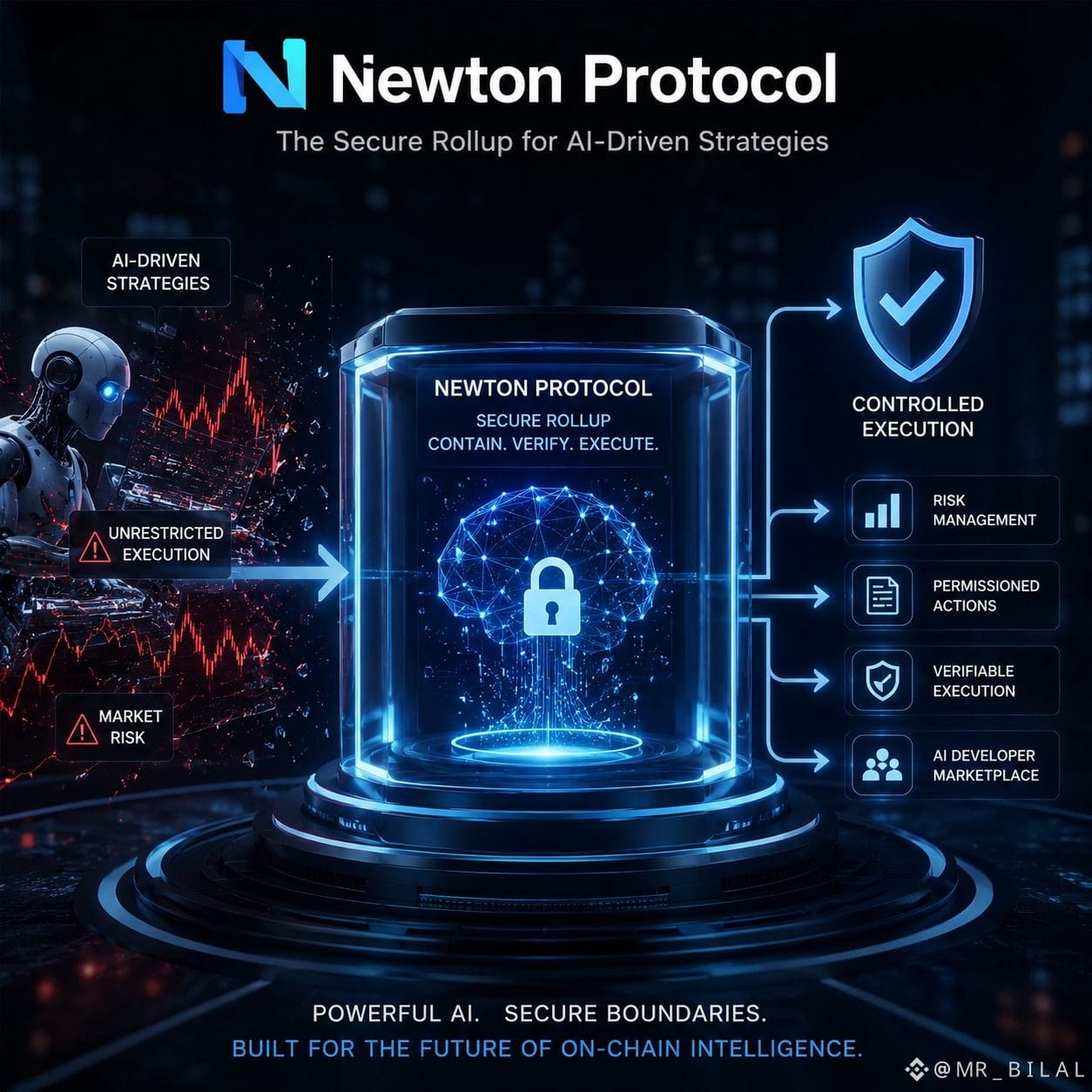
26
7
195
THE HARD PART OF AUTONOMOUS FINANCE ISN'T INTELLIGENCE. IT'S ACCOUNTABILITY.I have been tracking crypto long enough to know that most systems do not fail where people think they do.
They rarely collapse at the transaction itself.
The trade settles.
The smart contract executes.
The signature verifies.
Everything appears to work.
Then the questions begin.
Who approved this?
Who had permission?
Why did the system allow it?
Who is responsible now?
Those questions sit in the shadows of every financial system, and they become much harder when the actor making decisions is not a human being but an autonomous machine.
That is the uncomfortable territory Newton Protocol is trying to enter.
On paper, the idea sounds straightforward enough. Build a secure rollup specifically designed for AI-driven strategies, automated trading, and a marketplace where developers can deploy intelligent agents.
But beneath that description is a much larger and far more difficult problem.
What happens when software starts making financial decisions at machine speed?
For years, decentralized finance has operated under an assumption that humans remain somewhere in the loop.
People panic.
People hesitate.
People make mistakes.
Ironically, those flaws often act as a form of risk management.
Humans have fear.
Humans stop and think.
Humans occasionally decide not to push the button.
AI agents do not possess any of those limitations.
They optimize.
They execute.
They pursue objectives with remarkable indifference to everything outside their assigned incentives.
And that changes the entire structure of risk.
The crypto industry spends an enormous amount of time talking about intelligence.
Smarter agents.
Better prediction models.
More efficient execution.
Very little attention is given to the infrastructure required to contain those systems once they begin operating independently.
Because the real problem isn't whether AI can generate alpha.
The real problem is whether anyone can explain what happened after the alpha turns into a catastrophe.
This is where Newton becomes interesting.
Not because it promises autonomous finance.
Plenty of projects make that promise.
What stands out is its apparent focus on boundaries.
Permissions.
Verification.
Controlled execution.
In other words, bureaucracy.
And bureaucracy sounds boring until you realize that every functioning financial system in the world is built on layers of it.
Banks have approval chains.
Investment firms have compliance departments.
Asset managers have risk committees.
Entire industries exist solely to answer one question.
Who was allowed to do this?
Decentralized systems have traditionally tried to eliminate these layers.
Newton appears to be moving in the opposite direction.
It is essentially asking whether autonomous agents should operate inside a specialized environment where actions can be constrained, monitored, and verified.
That sounds sensible.
It also sounds incredibly difficult.
Because once you introduce permissions and boundaries, someone has to define those boundaries.
Someone decides who gets access.
Someone determines which actions are acceptable.
Someone controls the rules.
And now we are back to an old problem wearing a new outfit.
Governance.
Trust.
Authority.
The same questions that have haunted financial infrastructure for decades.
There is another issue that deserves more attention.
Auditability.
Imagine an AI trading system managing billions of dollars in on-chain assets.
A strategy behaves unexpectedly.
Liquidity disappears.
A market becomes unstable.
The immediate response will not be technical curiosity.
It will be legal.
Regulators will ask questions.
Institutions will demand explanations.
Investors will want accountability.
"Because the model decided to do it" is not an answer.
It never will be.
This is where many visions of autonomous finance become fragile.
Systems that cannot explain their own decisions eventually collide with institutions that require explanations.
Every pension fund.
Every corporation.
Every government agency.
Every serious allocator of capital.
They all care about audit trails.
Not just execution.
Proof.
Evidence.
Attribution.
Newton's architecture appears to recognize that problem.
The emphasis on verifiable execution and controlled permissions suggests an understanding that intelligence alone is insufficient.
Financial systems require memory.
They require records.
They require mechanisms that survive disputes.
But creating those mechanisms is harder than writing code.
Because every layer of verification introduces friction.
Every permission system introduces gatekeepers.
Every rule creates edge cases.
And edge cases are where financial systems break.
Consider a simple scenario.
An AI agent behaves exactly as programmed but creates unintended consequences.
Did the system fail?
Did the developer fail?
Did governance fail?
Or did everyone simply underestimate how incentives interact at machine speed?
There may not be a satisfying answer.
And that uncertainty matters.
Because systems designed for autonomous decision-making eventually inherit the burden of institutional responsibility.
They become accountable whether they intended to or not.
There is also a deeper philosophical question underneath all of this.
Can permission itself become a scalable product?
Can eligibility, authorization, and verifiable execution be turned into durable infrastructure rather than temporary policy?
Or does every system eventually collapse back into human discretion?
History gives mixed answers.
Every large institution begins with rules.
Over time, exceptions emerge.
Special cases appear.
Politics enters.
Power accumulates.
The administrative layer grows.
Complexity multiplies.
The elegant system on paper slowly becomes messy reality.
Crypto has not escaped that pattern.
It has merely experienced it faster.
That is why Newton's ambition feels both necessary and dangerous.
Necessary because autonomous financial agents will eventually require containment mechanisms.
Dangerous because building those mechanisms means reintroducing forms of control that decentralized systems once tried to remove.
There is no easy resolution here.
If AI agents become powerful enough to manage significant capital, unrestricted autonomy becomes unacceptable.
Yet if the containment layer becomes too restrictive, then the promise of open, permissionless systems begins to disappear.
The industry may eventually discover that autonomous finance is not primarily an engineering challenge.
It is an institutional challenge.
A governance challenge.
A legal challenge.
A human challenge.
And perhaps the biggest question hanging over Newton Protocol is not whether its technology works.
It is whether any framework of permissions, proofs, and controlled execution can remain coherent once autonomous agents, real capital, regulators, and human incentives all begin colliding inside the same system.
Because history suggests that complexity has a habit of breaking even the most carefully designed rules.
The only thing we do not know yet is whether systems like Newton are building the guardrails for the next era of finance, or simply creating a more sophisticated bureaucracy that will discover its limits the moment it meets the chaos of the real world.
@NewtonProtocol $NEWT #NEWT
#newt
THE HARD PART OF AUTONOMOUS FINANCE ISN'T INTELLIGENCE. IT'S ACCOUNTABILITY.
I have been tracking crypto long enough to know that most systems do not fail where people think they do.
They rarely collapse at the transaction itself.
The trade settles.
The smart contract executes.
The signature verifies.
Everything appears to work.
Then the questions begin.
Who approved this?
Who had permission?
Why did the system allow it?
Who is responsible now?
Those questions sit in the shadows of every financial system, and they become much harder when the actor making decisions is not a human being but an autonomous machine.
That is the uncomfortable territory Newton Protocol is trying to enter.
On paper, the idea sounds straightforward enough. Build a secure rollup specifically designed for AI-driven strategies, automated trading, and a marketplace where developers can deploy intelligent agents.
But beneath that description is a much larger and far more difficult problem.
What happens when software starts making financial decisions at machine speed?
For years, decentralized finance has operated under an assumption that humans remain somewhere in the loop.
People panic.
People hesitate.
People make mistakes.
Ironically, those flaws often act as a form of risk management.
Humans have fear.
Humans stop and think.
Humans occasionally decide not to push the button.
AI agents do not possess any of those limitations.
They optimize.
They execute.
They pursue objectives with remarkable indifference to everything outside their assigned incentives.
And that changes the entire structure of risk.
The crypto industry spends an enormous amount of time talking about intelligence.
Smarter agents.
Better prediction models.
More efficient execution.
Very little attention is given to the infrastructure required to contain those systems once they begin operating independently.
Because the real problem isn't whether AI can generate alpha.
The real problem is whether anyone can explain what happened after the alpha turns into a catastrophe.
This is where Newton becomes interesting.
Not because it promises autonomous finance.
Plenty of projects make that promise.
What stands out is its apparent focus on boundaries.
Permissions.
Verification.
Controlled execution.
In other words, bureaucracy.
And bureaucracy sounds boring until you realize that every functioning financial system in the world is built on layers of it.
Banks have approval chains.
Investment firms have compliance departments.
Asset managers have risk committees.
Entire industries exist solely to answer one question.
Who was allowed to do this?
Decentralized systems have traditionally tried to eliminate these layers.
Newton appears to be moving in the opposite direction.
It is essentially asking whether autonomous agents should operate inside a specialized environment where actions can be constrained, monitored, and verified.
That sounds sensible.
It also sounds incredibly difficult.
Because once you introduce permissions and boundaries, someone has to define those boundaries.
Someone decides who gets access.
Someone determines which actions are acceptable.
Someone controls the rules.
And now we are back to an old problem wearing a new outfit.
Governance.
Trust.
Authority.
The same questions that have haunted financial infrastructure for decades.
There is another issue that deserves more attention.
Auditability.
Imagine an AI trading system managing billions of dollars in on-chain assets.
A strategy behaves unexpectedly.
Liquidity disappears.
A market becomes unstable.
The immediate response will not be technical curiosity.
It will be legal.
Regulators will ask questions.
Institutions will demand explanations.
Investors will want accountability.
"Because the model decided to do it" is not an answer.
It never will be.
This is where many visions of autonomous finance become fragile.
Systems that cannot explain their own decisions eventually collide with institutions that require explanations.
Every pension fund.
Every corporation.
Every government agency.
Every serious allocator of capital.
They all care about audit trails.
Not just execution.
Proof.
Evidence.
Attribution.
Newton's architecture appears to recognize that problem.
The emphasis on verifiable execution and controlled permissions suggests an understanding that intelligence alone is insufficient.
Financial systems require memory.
They require records.
They require mechanisms that survive disputes.
But creating those mechanisms is harder than writing code.
Because every layer of verification introduces friction.
Every permission system introduces gatekeepers.
Every rule creates edge cases.
And edge cases are where financial systems break.
Consider a simple scenario.
An AI agent behaves exactly as programmed but creates unintended consequences.
Did the system fail?
Did the developer fail?
Did governance fail?
Or did everyone simply underestimate how incentives interact at machine speed?
There may not be a satisfying answer.
And that uncertainty matters.
Because systems designed for autonomous decision-making eventually inherit the burden of institutional responsibility.
They become accountable whether they intended to or not.
There is also a deeper philosophical question underneath all of this.
Can permission itself become a scalable product?
Can eligibility, authorization, and verifiable execution be turned into durable infrastructure rather than temporary policy?
Or does every system eventually collapse back into human discretion?
History gives mixed answers.
Every large institution begins with rules.
Over time, exceptions emerge.
Special cases appear.
Politics enters.
Power accumulates.
The administrative layer grows.
Complexity multiplies.
The elegant system on paper slowly becomes messy reality.
Crypto has not escaped that pattern.
It has merely experienced it faster.
That is why Newton's ambition feels both necessary and dangerous.
Necessary because autonomous financial agents will eventually require containment mechanisms.
Dangerous because building those mechanisms means reintroducing forms of control that decentralized systems once tried to remove.
There is no easy resolution here.
If AI agents become powerful enough to manage significant capital, unrestricted autonomy becomes unacceptable.
Yet if the containment layer becomes too restrictive, then the promise of open, permissionless systems begins to disappear.
The industry may eventually discover that autonomous finance is not primarily an engineering challenge.
It is an institutional challenge.
A governance challenge.
A legal challenge.
A human challenge.
And perhaps the biggest question hanging over Newton Protocol is not whether its technology works.
It is whether any framework of permissions, proofs, and controlled execution can remain coherent once autonomous agents, real capital, regulators, and human incentives all begin colliding inside the same system.
Because history suggests that complexity has a habit of breaking even the most carefully designed rules.
The only thing we do not know yet is whether systems like Newton are building the guardrails for the next era of finance, or simply creating a more sophisticated bureaucracy that will discover its limits the moment it meets the chaos of the real world.
@NewtonProtocol $NEWT #NEWT
#newt
They rarely collapse at the transaction itself.
The trade settles.
The smart contract executes.
The signature verifies.
Everything appears to work.
Then the questions begin.
Who approved this?
Who had permission?
Why did the system allow it?
Who is responsible now?
Those questions sit in the shadows of every financial system, and they become much harder when the actor making decisions is not a human being but an autonomous machine.
That is the uncomfortable territory Newton Protocol is trying to enter.
On paper, the idea sounds straightforward enough. Build a secure rollup specifically designed for AI-driven strategies, automated trading, and a marketplace where developers can deploy intelligent agents.
But beneath that description is a much larger and far more difficult problem.
What happens when software starts making financial decisions at machine speed?
For years, decentralized finance has operated under an assumption that humans remain somewhere in the loop.
People panic.
People hesitate.
People make mistakes.
Ironically, those flaws often act as a form of risk management.
Humans have fear.
Humans stop and think.
Humans occasionally decide not to push the button.
AI agents do not possess any of those limitations.
They optimize.
They execute.
They pursue objectives with remarkable indifference to everything outside their assigned incentives.
And that changes the entire structure of risk.
The crypto industry spends an enormous amount of time talking about intelligence.
Smarter agents.
Better prediction models.
More efficient execution.
Very little attention is given to the infrastructure required to contain those systems once they begin operating independently.
Because the real problem isn't whether AI can generate alpha.
The real problem is whether anyone can explain what happened after the alpha turns into a catastrophe.
This is where Newton becomes interesting.
Not because it promises autonomous finance.
Plenty of projects make that promise.
What stands out is its apparent focus on boundaries.
Permissions.
Verification.
Controlled execution.
In other words, bureaucracy.
And bureaucracy sounds boring until you realize that every functioning financial system in the world is built on layers of it.
Banks have approval chains.
Investment firms have compliance departments.
Asset managers have risk committees.
Entire industries exist solely to answer one question.
Who was allowed to do this?
Decentralized systems have traditionally tried to eliminate these layers.
Newton appears to be moving in the opposite direction.
It is essentially asking whether autonomous agents should operate inside a specialized environment where actions can be constrained, monitored, and verified.
That sounds sensible.
It also sounds incredibly difficult.
Because once you introduce permissions and boundaries, someone has to define those boundaries.
Someone decides who gets access.
Someone determines which actions are acceptable.
Someone controls the rules.
And now we are back to an old problem wearing a new outfit.
Governance.
Trust.
Authority.
The same questions that have haunted financial infrastructure for decades.
There is another issue that deserves more attention.
Auditability.
Imagine an AI trading system managing billions of dollars in on-chain assets.
A strategy behaves unexpectedly.
Liquidity disappears.
A market becomes unstable.
The immediate response will not be technical curiosity.
It will be legal.
Regulators will ask questions.
Institutions will demand explanations.
Investors will want accountability.
"Because the model decided to do it" is not an answer.
It never will be.
This is where many visions of autonomous finance become fragile.
Systems that cannot explain their own decisions eventually collide with institutions that require explanations.
Every pension fund.
Every corporation.
Every government agency.
Every serious allocator of capital.
They all care about audit trails.
Not just execution.
Proof.
Evidence.
Attribution.
Newton's architecture appears to recognize that problem.
The emphasis on verifiable execution and controlled permissions suggests an understanding that intelligence alone is insufficient.
Financial systems require memory.
They require records.
They require mechanisms that survive disputes.
But creating those mechanisms is harder than writing code.
Because every layer of verification introduces friction.
Every permission system introduces gatekeepers.
Every rule creates edge cases.
And edge cases are where financial systems break.
Consider a simple scenario.
An AI agent behaves exactly as programmed but creates unintended consequences.
Did the system fail?
Did the developer fail?
Did governance fail?
Or did everyone simply underestimate how incentives interact at machine speed?
There may not be a satisfying answer.
And that uncertainty matters.
Because systems designed for autonomous decision-making eventually inherit the burden of institutional responsibility.
They become accountable whether they intended to or not.
There is also a deeper philosophical question underneath all of this.
Can permission itself become a scalable product?
Can eligibility, authorization, and verifiable execution be turned into durable infrastructure rather than temporary policy?
Or does every system eventually collapse back into human discretion?
History gives mixed answers.
Every large institution begins with rules.
Over time, exceptions emerge.
Special cases appear.
Politics enters.
Power accumulates.
The administrative layer grows.
Complexity multiplies.
The elegant system on paper slowly becomes messy reality.
Crypto has not escaped that pattern.
It has merely experienced it faster.
That is why Newton's ambition feels both necessary and dangerous.
Necessary because autonomous financial agents will eventually require containment mechanisms.
Dangerous because building those mechanisms means reintroducing forms of control that decentralized systems once tried to remove.
There is no easy resolution here.
If AI agents become powerful enough to manage significant capital, unrestricted autonomy becomes unacceptable.
Yet if the containment layer becomes too restrictive, then the promise of open, permissionless systems begins to disappear.
The industry may eventually discover that autonomous finance is not primarily an engineering challenge.
It is an institutional challenge.
A governance challenge.
A legal challenge.
A human challenge.
And perhaps the biggest question hanging over Newton Protocol is not whether its technology works.
It is whether any framework of permissions, proofs, and controlled execution can remain coherent once autonomous agents, real capital, regulators, and human incentives all begin colliding inside the same system.
Because history suggests that complexity has a habit of breaking even the most carefully designed rules.
The only thing we do not know yet is whether systems like Newton are building the guardrails for the next era of finance, or simply creating a more sophisticated bureaucracy that will discover its limits the moment it meets the chaos of the real world.
@NewtonProtocol $NEWT #NEWT
#newt
6
2
129
Log in to explore more content
Join global crypto users on Binance Square
⚡️ Get latest and useful information about crypto.
💬 Trusted by the world’s largest crypto exchange.
👍 Discover real insights from verified creators.
Email / Phone number