

Sheemm
9.8k Posts

Sheemm
 Square Verified+
Report
Block User
Nothing to say🤗
High-Frequency Trader
5.5 Years
967 Following
44.8K+ Followers
45.7K+ Liked
Posts
All
Quotes
Live
PINNED
·
--
Verified
@Plasma
The Future of Stablecoin Payments: Plasma ($XPL) 🚀
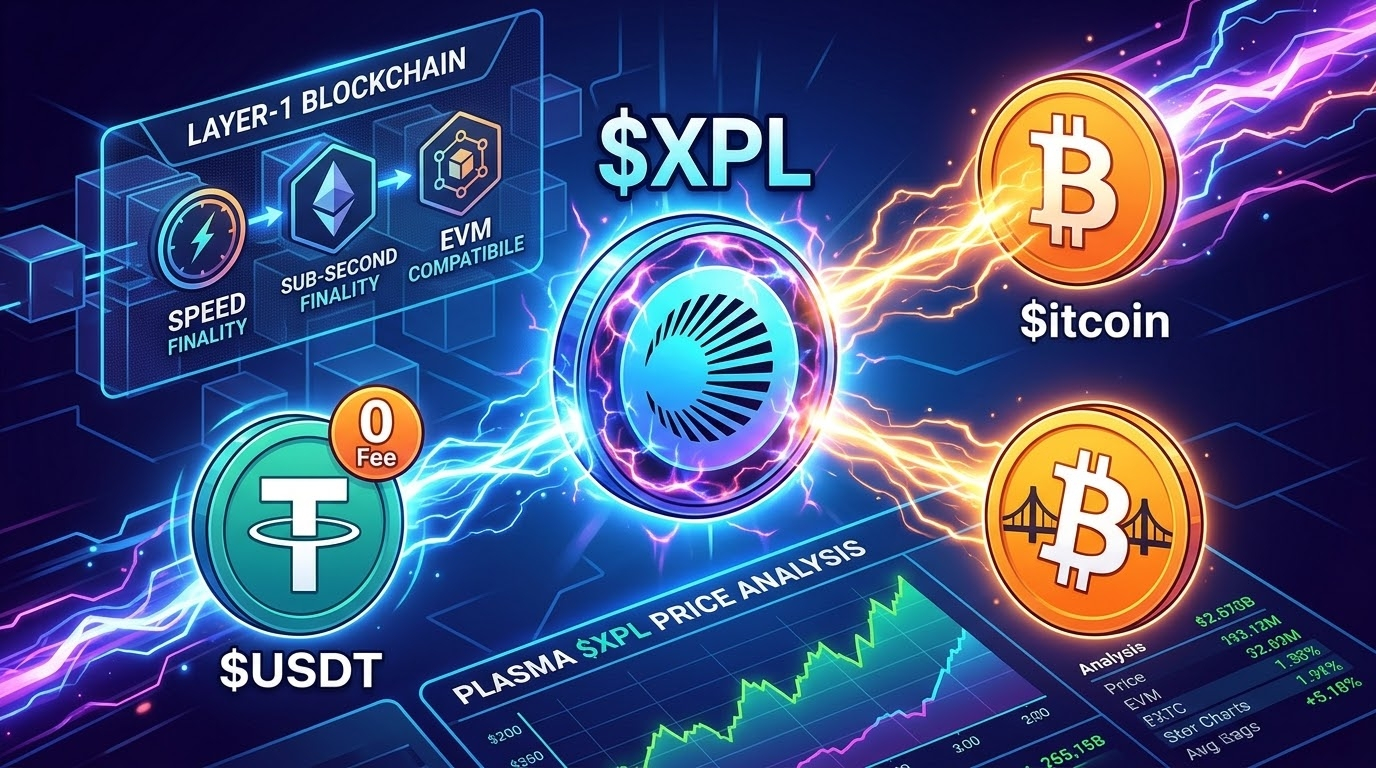
Global payments are evolving, and Plasma ($XPL) is leading the charge as a purpose-built Layer-1 blockchain engineered specifically for stablecoin settlements. By combining sub-second finality via PlasmaBFT with full EVM compatibility, Plasma eliminates the traditional friction of moving digital dollars on-chain.
Its hallmark innovation? Zero-fee $USDT transfers powered by protocol-level paymasters, alongside a trust-minimized Bitcoin bridge. The $XPL
{future}(XPLUSDT)
XPL token sits at the center of this economy—securing the Proof-of-Stake consensus, fueling complex smart contracts, and benefiting from EIP-1559 fee burns as network adoption grows. Backed by institutional giants, Plasma bridges traditional finance with Web3 speed.
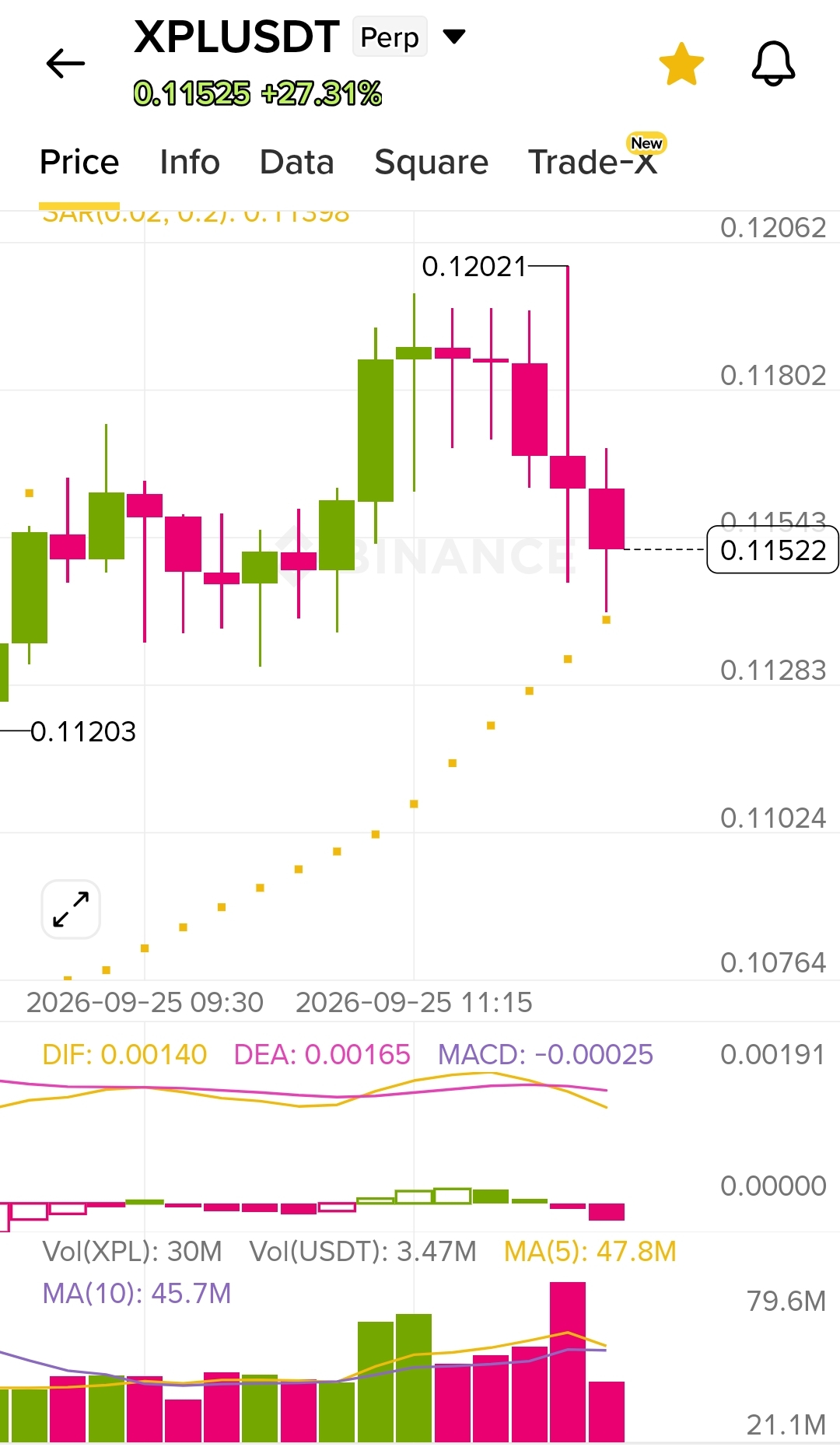
XPL/USDT Analysis
Current Price: $0.11522 (+27.31%)
Trend: Retracting from localized high of $0.12021 after a strong bullish run.
SAR: Dots below price confirm active uptrend support around $0.1130.
MACD: Bearish crossover (DIF 0.00140 < DEA 0.00165) signals short-term cooling/consolidation.
#Plasma
#Write2Earn!
#CFTCUpdatesGuidanceOnTokenizedAssets
$QNT
{future}(QNTUSDT)
$AR
{future}(ARUSDT)
#TradeHere☝️🤗
@Plasma
The Future of Stablecoin Payments: Plasma ($XPL ) 🚀
Global payments are evolving, and Plasma ($XPL ) is leading the charge as a purpose-built Layer-1 blockchain engineered specifically for stablecoin settlements. By combining sub-second finality via PlasmaBFT with full EVM compatibility, Plasma eliminates the traditional friction of moving digital dollars on-chain.
Its hallmark innovation? Zero-fee $USDT transfers powered by protocol-level paymasters, alongside a trust-minimized Bitcoin bridge. The $XPL
XPL token sits at the center of this economy—securing the Proof-of-Stake consensus, fueling complex smart contracts, and benefiting from EIP-1559 fee burns as network adoption grows. Backed by institutional giants, Plasma bridges traditional finance with Web3 speed.
XPL/USDT Analysis
Current Price: $0.11522 (+27.31%)
Trend: Retracting from localized high of $0.12021 after a strong bullish run.
SAR: Dots below price confirm active uptrend support around $0.1130.
MACD: Bearish crossover (DIF 0.00140 < DEA 0.00165) signals short-term cooling/consolidation.
#Plasma
#Write2Earn!
#CFTCUpdatesGuidanceOnTokenizedAssets
$QNT
$AR
#TradeHere☝️🤗
The Future of Stablecoin Payments: Plasma ($XPL ) 🚀
Global payments are evolving, and Plasma ($XPL ) is leading the charge as a purpose-built Layer-1 blockchain engineered specifically for stablecoin settlements. By combining sub-second finality via PlasmaBFT with full EVM compatibility, Plasma eliminates the traditional friction of moving digital dollars on-chain.
Its hallmark innovation? Zero-fee $USDT transfers powered by protocol-level paymasters, alongside a trust-minimized Bitcoin bridge. The $XPL
XPL token sits at the center of this economy—securing the Proof-of-Stake consensus, fueling complex smart contracts, and benefiting from EIP-1559 fee burns as network adoption grows. Backed by institutional giants, Plasma bridges traditional finance with Web3 speed.
XPL/USDT Analysis
Current Price: $0.11522 (+27.31%)
Trend: Retracting from localized high of $0.12021 after a strong bullish run.
SAR: Dots below price confirm active uptrend support around $0.1130.
MACD: Bearish crossover (DIF 0.00140 < DEA 0.00165) signals short-term cooling/consolidation.
#Plasma
#Write2Earn!
#CFTCUpdatesGuidanceOnTokenizedAssets
$QNT
$AR
#TradeHere☝️🤗
3
849
·
--
$XRP
{future}(XRPUSDT)
XRP is flashing 3 bullish signals despite giving back part of its weekly gains.
XRP ETFs keep drawing money in weeks when Bitcoin and Ethereum funds bleed.
Yet one exchange gauge and October's track record argue for caution.
XRP eyes short term breakout .
$XPL
$QNT
#NYAndPolymarketSueEachOther
#RippleTrends
$XRP
XRP is flashing 3 bullish signals despite giving back part of its weekly gains.
XRP ETFs keep drawing money in weeks when Bitcoin and Ethereum funds bleed.
Yet one exchange gauge and October's track record argue for caution.
XRP eyes short term breakout .
$XPL
$QNT
#NYAndPolymarketSueEachOther
#RippleTrends
XRP is flashing 3 bullish signals despite giving back part of its weekly gains.
XRP ETFs keep drawing money in weeks when Bitcoin and Ethereum funds bleed.
Yet one exchange gauge and October's track record argue for caution.
XRP eyes short term breakout .
$XPL
$QNT
#NYAndPolymarketSueEachOther
#RippleTrends
135
·
--
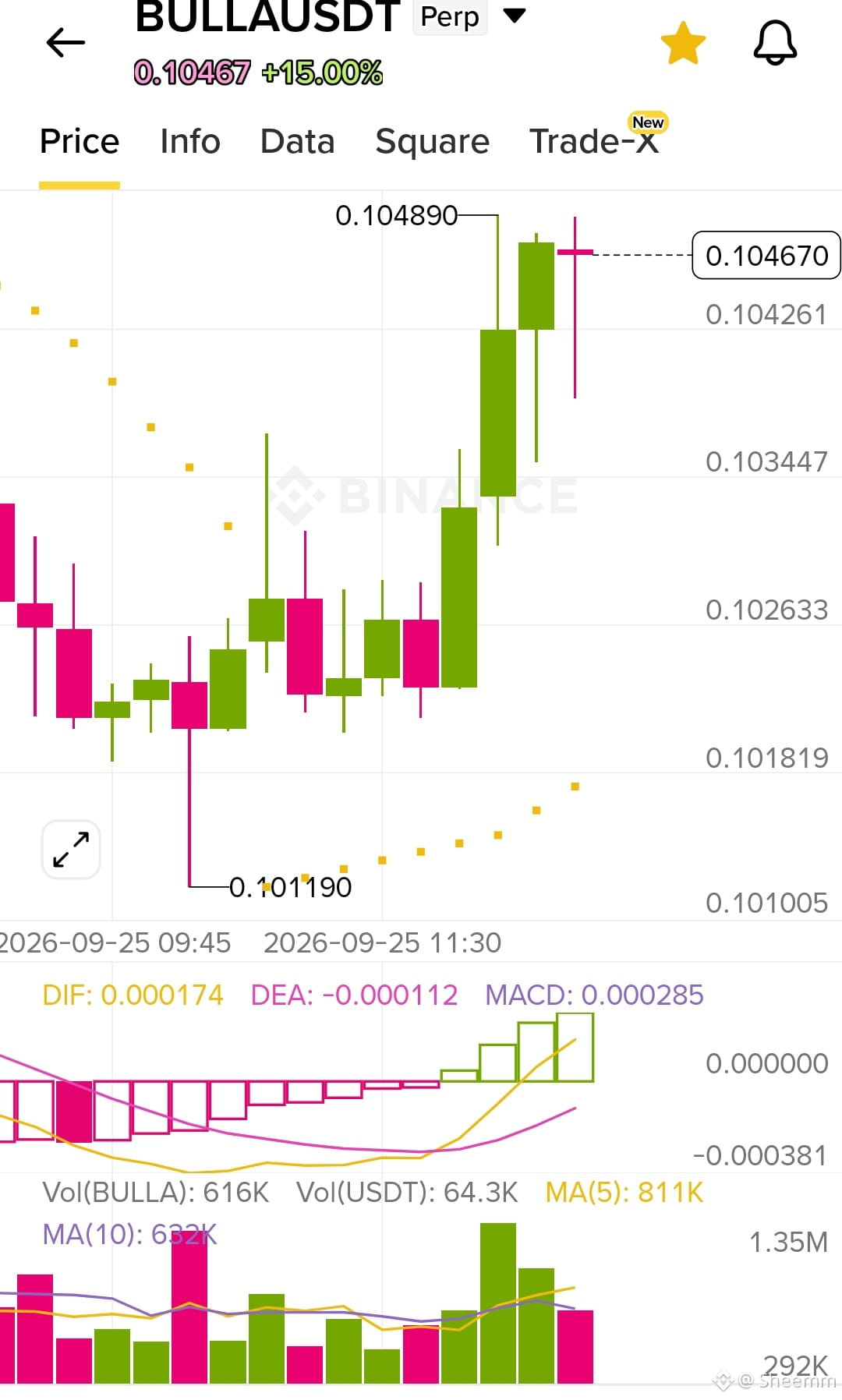
#BULLA is pumping! 🚀
$BULLA showing serious bullish momentum, breaking up +15.00% to 0.10467 USDT! 📈
With a strong MACD crossover and solid volume backing this move, are we pushing past resistance next? 🔥
$ARK
$PHA
#FedOctoberRateHikeOddsRiseTo69.7% #Write2Earn!
#BULLA is pumping! 🚀
$BULLA showing serious bullish momentum, breaking up +15.00% to 0.10467 USDT! 📈
With a strong MACD crossover and solid volume backing this move, are we pushing past resistance next? 🔥
$ARK
$PHA
#FedOctoberRateHikeOddsRiseTo69.7% #Write2Earn!
$BULLA showing serious bullish momentum, breaking up +15.00% to 0.10467 USDT! 📈
With a strong MACD crossover and solid volume backing this move, are we pushing past resistance next? 🔥
$ARK
$PHA
#FedOctoberRateHikeOddsRiseTo69.7% #Write2Earn!
3
804
·
--
🥦 $BROCCOLI714
{future}(BROCCOLI714USDT)
🥦 is on fire! 🔥
Up over +28.5% and showing massive bullish momentum with huge volume surges! MACD flipping strongly green as standard resistance gets smashed.
Are you riding this green candle wave or waiting for a pullback? 📈🚀
DYOR
$ONDO
$XPL
#BuyTheDip
🥦 $BROCCOLI714
🥦 is on fire! 🔥
Up over +28.5% and showing massive bullish momentum with huge volume surges! MACD flipping strongly green as standard resistance gets smashed.
Are you riding this green candle wave or waiting for a pullback? 📈🚀
DYOR
$ONDO
$XPL
#BuyTheDip
🥦 is on fire! 🔥
Up over +28.5% and showing massive bullish momentum with huge volume surges! MACD flipping strongly green as standard resistance gets smashed.
Are you riding this green candle wave or waiting for a pullback? 📈🚀
DYOR
$ONDO
$XPL
#BuyTheDip
2
345
·
--
$LTC
{future}(LTCUSDT)
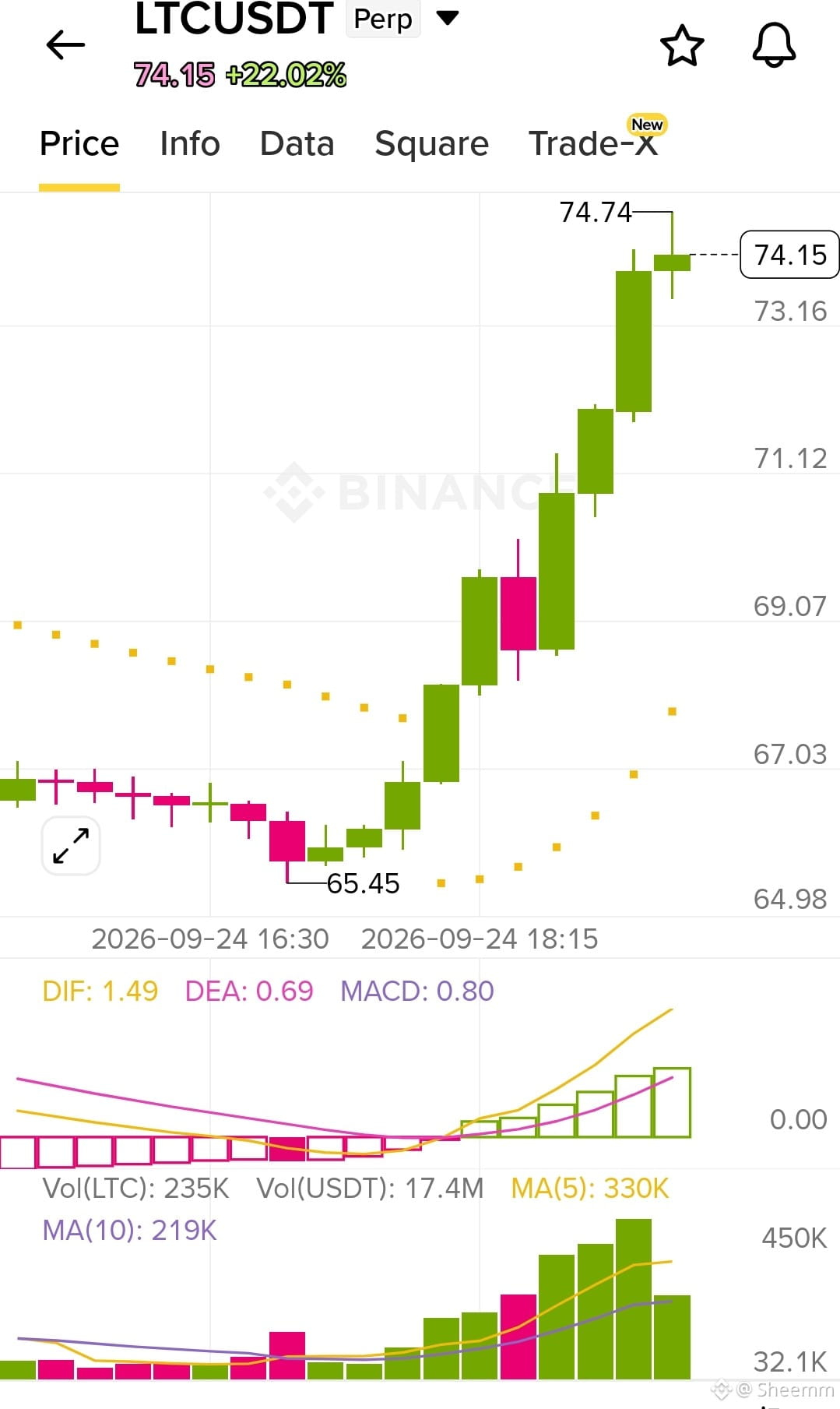
Wakes Up! Massive +22% Rally ⚡
Litecoin just staged a powerful expansion off the $65.45 low, blasting straight to a high of $74.74!
📈 Key Chart Highlights:
• MACD Bullish Crossover: Strong positive momentum with expanding green histograms.
• Volume Surge: MA(5) leading the way at 330K, showing heavy buyer conviction.
• Parabolic SAR: Trail of support trailing cleanly below the candles. Holding above $73 is crucial for the next leg toward $78+. Are you locking in profits or riding the trend? ⚡
$TST $TUT
#Write2Earn!
$LTC
Wakes Up! Massive +22% Rally ⚡
Litecoin just staged a powerful expansion off the $65.45 low, blasting straight to a high of $74.74!
📈 Key Chart Highlights:
• MACD Bullish Crossover: Strong positive momentum with expanding green histograms.
• Volume Surge: MA(5) leading the way at 330K, showing heavy buyer conviction.
• Parabolic SAR: Trail of support trailing cleanly below the candles. Holding above $73 is crucial for the next leg toward $78+. Are you locking in profits or riding the trend? ⚡
$TST $TUT
#Write2Earn!
Wakes Up! Massive +22% Rally ⚡
Litecoin just staged a powerful expansion off the $65.45 low, blasting straight to a high of $74.74!
📈 Key Chart Highlights:
• MACD Bullish Crossover: Strong positive momentum with expanding green histograms.
• Volume Surge: MA(5) leading the way at 330K, showing heavy buyer conviction.
• Parabolic SAR: Trail of support trailing cleanly below the candles. Holding above $73 is crucial for the next leg toward $78+. Are you locking in profits or riding the trend? ⚡
$TST $TUT
#Write2Earn!
2
219
·
--
#US30YearYieldHighestSince2004
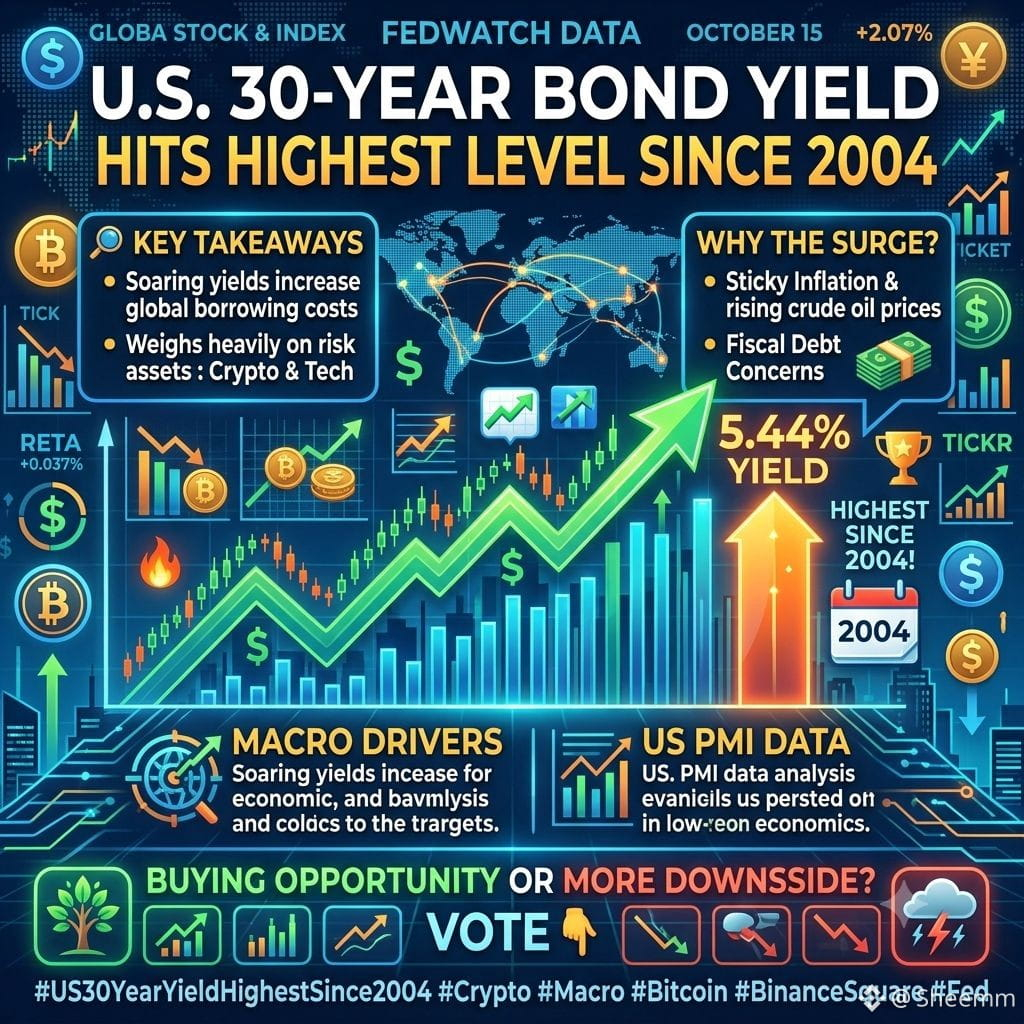
🚨 U.S. 30-Year Bond Yield Hits Highest Level Since 2004
The yield on long-dated U.S. Treasuries surged to 5.44%, marking a 22-year high amid a massive global bond selloff driven by sticky inflation, rising crude oil prices, and fiscal debt concerns.
Key Takeaways:
* Tightening Liquidity: Soaring yields increase global borrowing costs and weigh heavily on risk assets, including Crypto & Tech.
* Macro Drivers: Robust U.S. PMI data and persistent cost pressures are pushing rate-hike expectations higher.
Is this macro tightening creating a buying opportunity, or is more downside ahead? 👇
#BinanceSquare
$ETC
{future}(ETCUSDT)
$LTC
{future}(LTCUSDT)
$PLUME
{future}(PLUMEUSDT)
#write2earn🌐💹
#DYORAlways
#US30YearYieldHighestSince2004
🚨 U.S. 30-Year Bond Yield Hits Highest Level Since 2004
The yield on long-dated U.S. Treasuries surged to 5.44%, marking a 22-year high amid a massive global bond selloff driven by sticky inflation, rising crude oil prices, and fiscal debt concerns.
Key Takeaways:
* Tightening Liquidity: Soaring yields increase global borrowing costs and weigh heavily on risk assets, including Crypto & Tech.
* Macro Drivers: Robust U.S. PMI data and persistent cost pressures are pushing rate-hike expectations higher.
Is this macro tightening creating a buying opportunity, or is more downside ahead? 👇
#BinanceSquare
$ETC
$LTC
$PLUME
#write2earn🌐💹
#DYORAlways
🚨 U.S. 30-Year Bond Yield Hits Highest Level Since 2004
The yield on long-dated U.S. Treasuries surged to 5.44%, marking a 22-year high amid a massive global bond selloff driven by sticky inflation, rising crude oil prices, and fiscal debt concerns.
Key Takeaways:
* Tightening Liquidity: Soaring yields increase global borrowing costs and weigh heavily on risk assets, including Crypto & Tech.
* Macro Drivers: Robust U.S. PMI data and persistent cost pressures are pushing rate-hike expectations higher.
Is this macro tightening creating a buying opportunity, or is more downside ahead? 👇
#BinanceSquare
$ETC
$LTC
$PLUME
#write2earn🌐💹
#DYORAlways
2
256
·
--
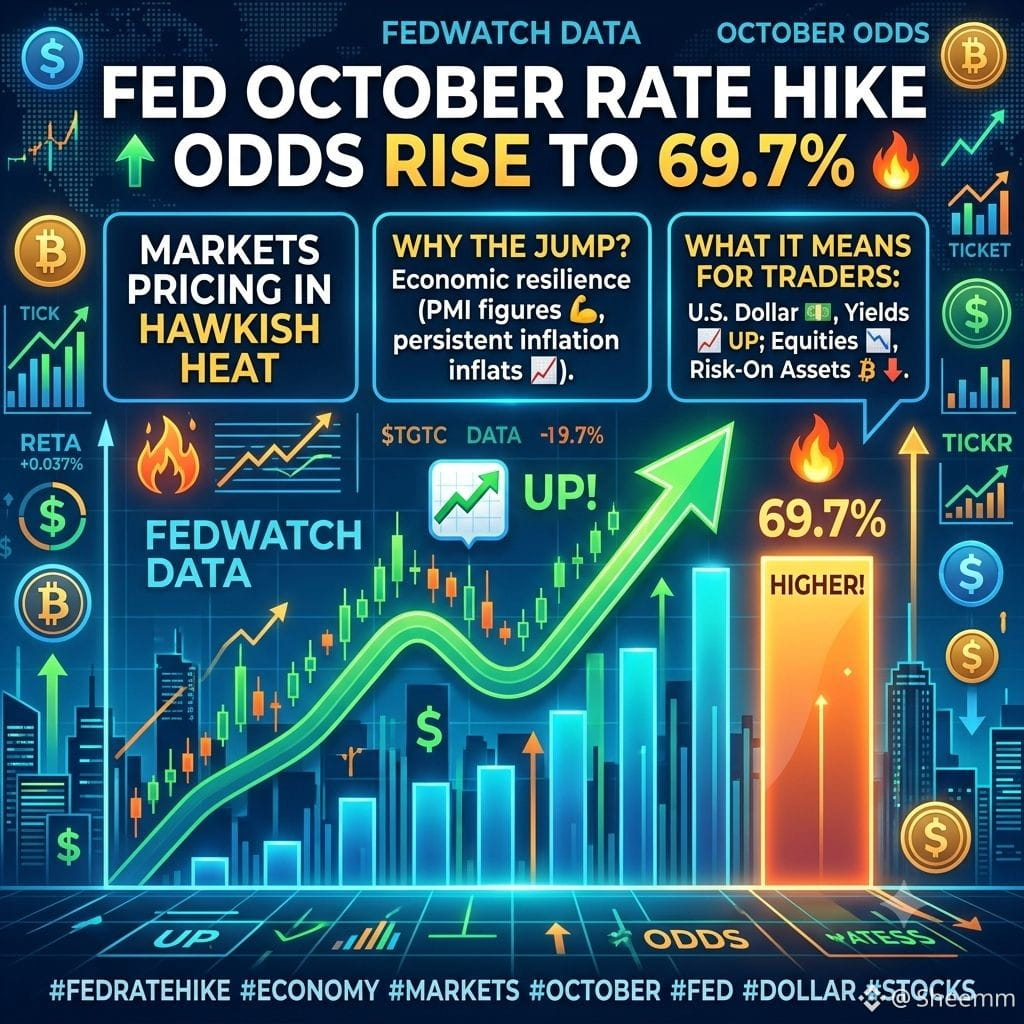
#FedOctoberRateHikeOddsRiseTo69.7% Markets are pricing in high hawkish heat. 🔥
According to the latest CME FedWatch data, the probability of a 25 bps Federal Reserve rate hike in October has surged to 69.7%.
Why the sudden jump?
A sharp uptick in economic resilience—driven by stronger-than-expected PMI figures and persistent input-cost inflation—has fueled market expectations that the Fed isn't done tightening just yet.
What this means for traders:
💵 U.S. Dollar & Yields: Upward pressure as rate expectations reset higher.
📈 Equities: Re-evaluating valuations amid tighter liquidity conditions.
₿ Risk-On Assets: Crypto and tech face headwinds as cost-of-capital fears return.
$ONDO
{future}(ONDOUSDT)
$LSK
{future}(LSKUSDT)
$BROCCOLI714
{future}(BROCCOLI714USDT)
#Write2Earn!
#MarketMoves
#TradeHere☝️🤗
#FedOctoberRateHikeOddsRiseTo69.7% Markets are pricing in high hawkish heat. 🔥
According to the latest CME FedWatch data, the probability of a 25 bps Federal Reserve rate hike in October has surged to 69.7%.
Why the sudden jump?
A sharp uptick in economic resilience—driven by stronger-than-expected PMI figures and persistent input-cost inflation—has fueled market expectations that the Fed isn't done tightening just yet.
What this means for traders:
💵 U.S. Dollar & Yields: Upward pressure as rate expectations reset higher.
📈 Equities: Re-evaluating valuations amid tighter liquidity conditions.
₿ Risk-On Assets: Crypto and tech face headwinds as cost-of-capital fears return.
$ONDO
$LSK
$BROCCOLI714
#Write2Earn!
#MarketMoves
#TradeHere☝️🤗
According to the latest CME FedWatch data, the probability of a 25 bps Federal Reserve rate hike in October has surged to 69.7%.
Why the sudden jump?
A sharp uptick in economic resilience—driven by stronger-than-expected PMI figures and persistent input-cost inflation—has fueled market expectations that the Fed isn't done tightening just yet.
What this means for traders:
💵 U.S. Dollar & Yields: Upward pressure as rate expectations reset higher.
📈 Equities: Re-evaluating valuations amid tighter liquidity conditions.
₿ Risk-On Assets: Crypto and tech face headwinds as cost-of-capital fears return.
$ONDO
$LSK
$BROCCOLI714
#Write2Earn!
#MarketMoves
#TradeHere☝️🤗
1
3
529
·
--
$LSK
{future}(LSKUSDT)
Update
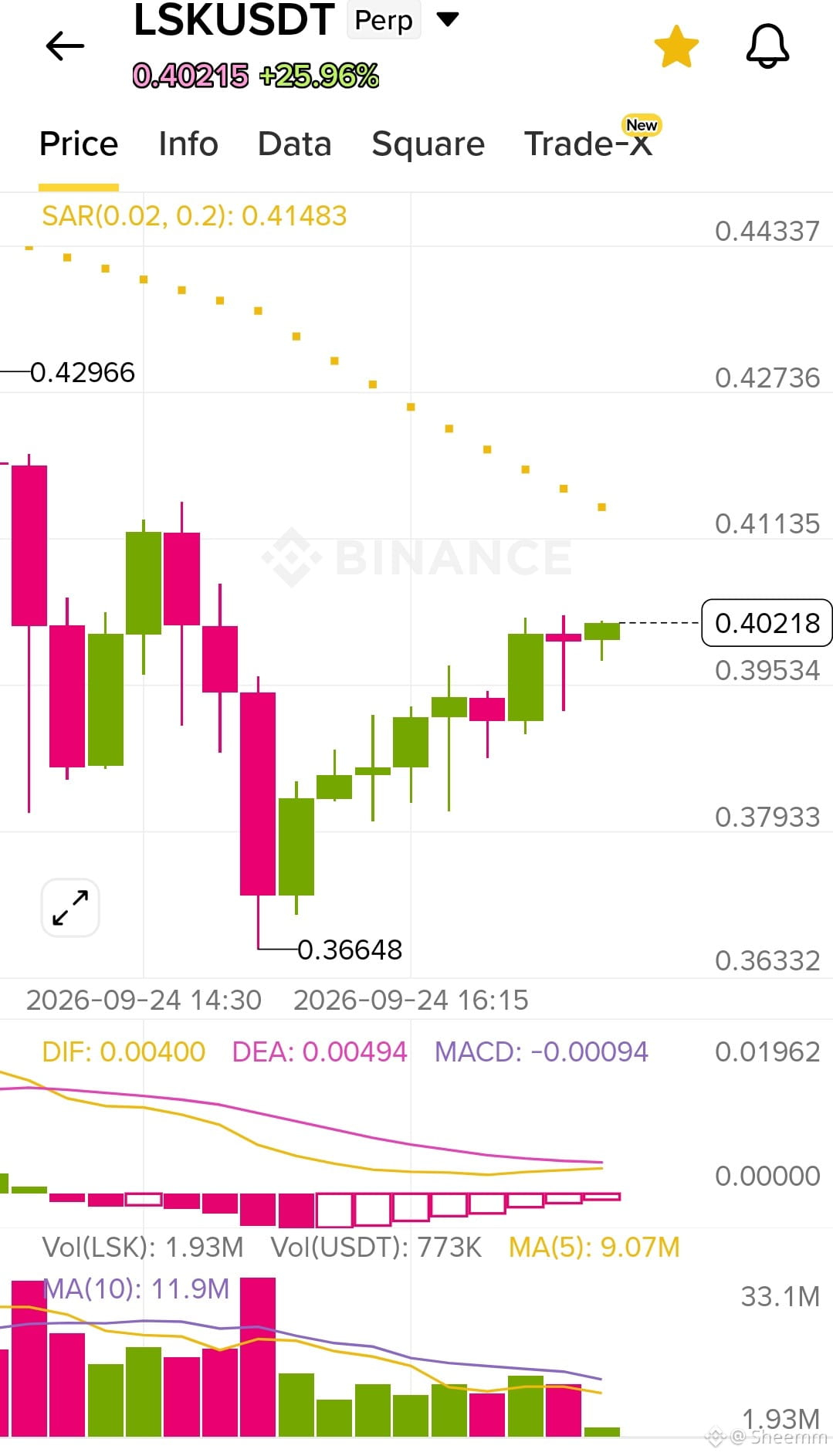
LSK is showing strong bullish momentum, up +25.96% and currently trading around $0.402! After rebounding sharp from the $0.366 low, price is pushing upward towards the SAR resistance at $0.414.
Keep an eye on volume as buyers try to extend this breakout! 📈🔥
$ARX $NIL
#CryptoPatience 😆
#write2earn🌐💹
$LSK
Update
LSK is showing strong bullish momentum, up +25.96% and currently trading around $0.402! After rebounding sharp from the $0.366 low, price is pushing upward towards the SAR resistance at $0.414.
Keep an eye on volume as buyers try to extend this breakout! 📈🔥
$ARX $NIL
#CryptoPatience 😆
#write2earn🌐💹
Update
LSK is showing strong bullish momentum, up +25.96% and currently trading around $0.402! After rebounding sharp from the $0.366 low, price is pushing upward towards the SAR resistance at $0.414.
Keep an eye on volume as buyers try to extend this breakout! 📈🔥
$ARX $NIL
#CryptoPatience 😆
#write2earn🌐💹
1
1
246
·
--
🚀 $BROCCOLI714
{future}(BROCCOLI714USDT)
Long Signal
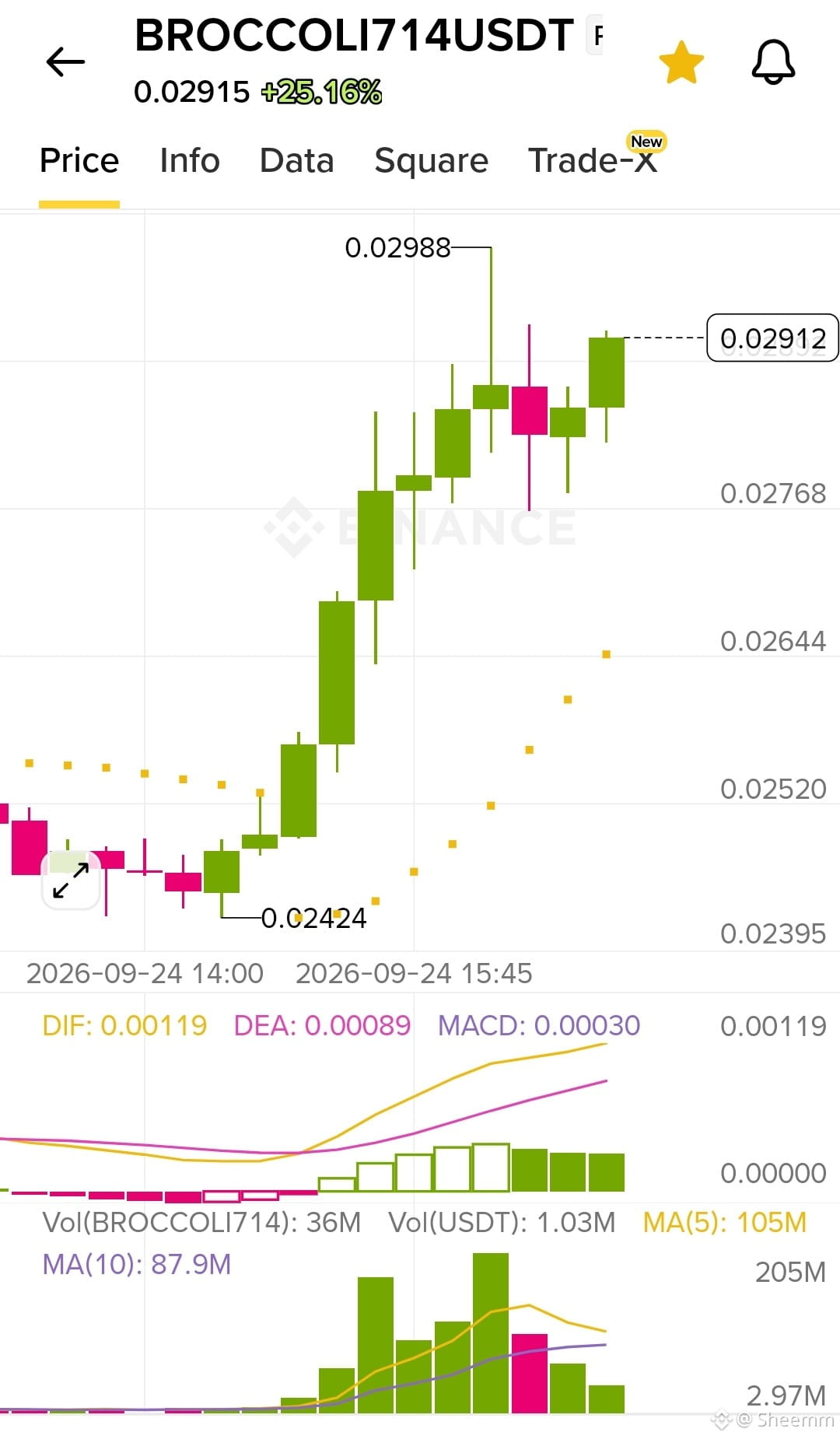
Strong bullish momentum with green candles forming above support!
📈 Entry: 0.0275 - 0.0285
🎯 TP1: 0.0298
🎯 TP2: 0.0320
🛑 SL: 0.0260
Risk/Reward ratio looks solid—manage your risk accordingly! 💎🔥
$NOM
{future}(NOMUSDT)
$NIL
{future}(NILUSDT)
#BinanceSquareFamily
#Write2Earrn
🚀 $BROCCOLI714
Long Signal
Strong bullish momentum with green candles forming above support!
📈 Entry: 0.0275 - 0.0285
🎯 TP1: 0.0298
🎯 TP2: 0.0320
🛑 SL: 0.0260
Risk/Reward ratio looks solid—manage your risk accordingly! 💎🔥
$NOM
$NIL
#BinanceSquareFamily
#Write2Earrn
Long Signal
Strong bullish momentum with green candles forming above support!
📈 Entry: 0.0275 - 0.0285
🎯 TP1: 0.0298
🎯 TP2: 0.0320
🛑 SL: 0.0260
Risk/Reward ratio looks solid—manage your risk accordingly! 💎🔥
$NOM
$NIL
#BinanceSquareFamily
#Write2Earrn
412
·
--
Article
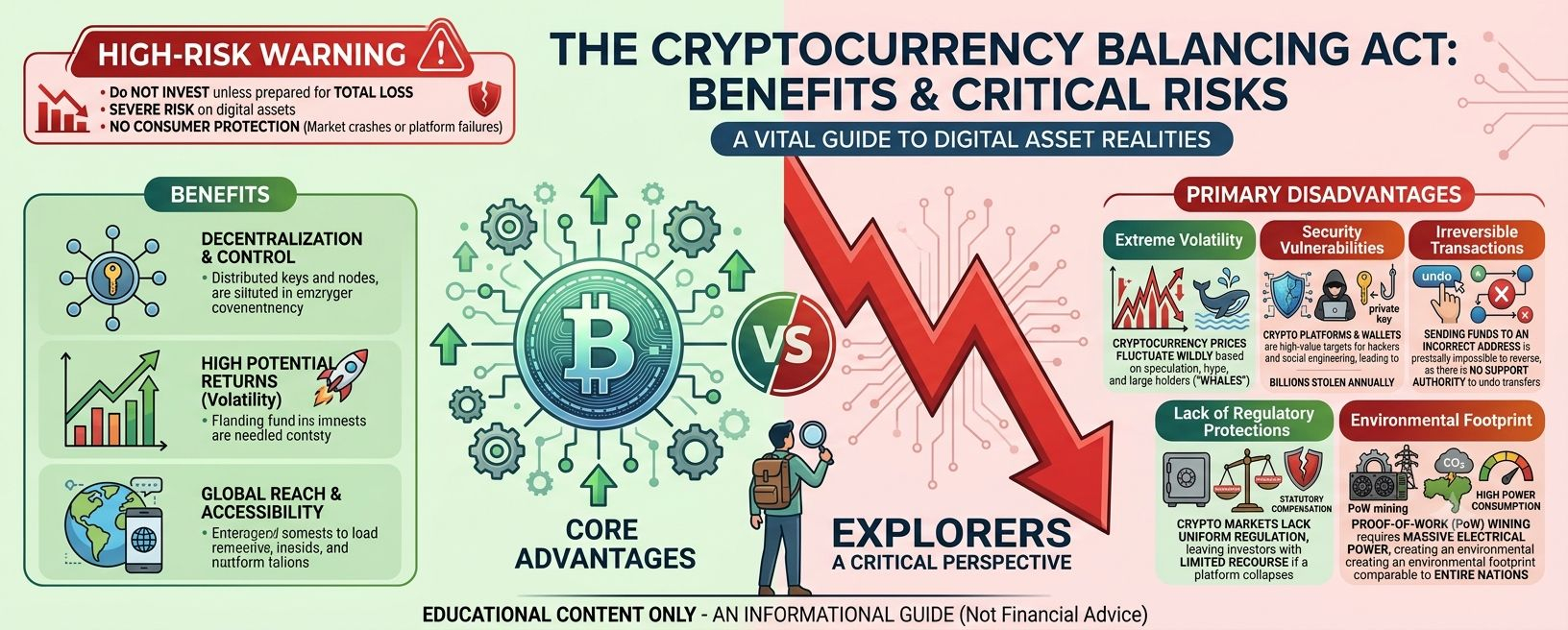
Understanding Cryptocurrency: Benefits, Drawbacks, and RealitiesHigh-Risk Warning: Do not invest unless you are prepared to lose all the money you put in. Digital assets carry severe risk, and consumer protections will not cover you if market conditions crash or a platform fails.
This article provides an overview for educational purposes and does not constitute financial advice or product endorsements.
Cryptocurrency is a form of digital money that operates independently of state-issued "fiat" currencies like the British pound or US dollar. It has no physical form, operates without bank backing, and uses cryptographic protocols to facilitate direct, peer-to-peer online transactions.
Since its inception in 2009, the digital asset ecosystem has evolved dramatically. Over fifteen years later, understanding how crypto works and balancing its potential benefits against its substantial drawbacks remains vital for anyone exploring the market.
How Cryptocurrency Works
Unlike traditional finance, which relies on central databases maintained by banks, cryptocurrency relies on decentralized, public digital ledgers known as blockchains.
Transaction records are verified across a distributed network of computers using automated consensus mechanisms:
Proof-of-Work (PoW): Participants (known as miners) run specialized hardware to solve complex cryptographic algorithms.
Block Addition: The first computer to solve the algorithm validates a bundle of recent transactions, links it as a new "block" to the existing chain, and earns a protocol reward (such as newly minted Bitcoin).
Consensus Verification: Network participants automatically confirm that the recorded ledger is accurate, preventing fraudulent double-spending.
Despite this decentralized infrastructure, the crypto market remains exceptionally volatile. Major assets including Bitcoin, Ethereum, Solana, and Tether regularly experience erratic price swings driven by speculation and market sentiment.
Potential Advantages
In-Built Scarcity: Many cryptocurrencies have fixed token caps. Speculators view this built-in limit as a potential hedge against fiat inflation caused by central bank currency creation.
Faster Cross-Border Settlement: Direct peer-to-peer routing eliminates standard intermediary delays, enabling faster global transactions.
Lower Intermediary Fees: Cutting out payment processors can drop transaction overhead, though wallet or exchange platform fees may still apply.
Public Transparency: Network ledgers are fully visible, allowing anyone to trace live transfers on public block explorers.
Primary Disadvantages
Extreme Volatility: Crypto prices fluctuate wildly based on market speculation, media hype, and trades made by large coin holders ("whales").
Security Vulnerabilities: Crypto platforms and wallet credentials are high-value targets for hackers and social engineering scams, resulting in billions stolen annually.
Irreversible Transactions: Sending funds to an incorrect address is practically impossible to undo, as no support authority exists to reverse transactions.
Lack of Regulatory Protections: Crypto markets remain largely unregulated in many regions. Investors generally lack access to statutory compensation schemes or deposit insurance if a platform collapses.
Environmental Footprint: PoW mining requires massive amounts of electrical power, generating an environmental footprint comparable to entire nations.
Summary
Deciding whether to engage with cryptocurrency depends on your personal financial goals and risk tolerance. While it offers decentralized, rapid online transactions, it remains a highly speculative market. Prioritize strong digital security, stay vigilant against fraud, and never allocate capital you cannot afford to lose completely.
#BitcoinRejectedAt$87,300Twice
#DollarIndexReclaims101 #Write2Earn
$BTC $BNB $XRP
Understanding Cryptocurrency: Benefits, Drawbacks, and Realities
High-Risk Warning: Do not invest unless you are prepared to lose all the money you put in. Digital assets carry severe risk, and consumer protections will not cover you if market conditions crash or a platform fails.
This article provides an overview for educational purposes and does not constitute financial advice or product endorsements.
Cryptocurrency is a form of digital money that operates independently of state-issued "fiat" currencies like the British pound or US dollar. It has no physical form, operates without bank backing, and uses cryptographic protocols to facilitate direct, peer-to-peer online transactions.
Since its inception in 2009, the digital asset ecosystem has evolved dramatically. Over fifteen years later, understanding how crypto works and balancing its potential benefits against its substantial drawbacks remains vital for anyone exploring the market.
How Cryptocurrency Works
Unlike traditional finance, which relies on central databases maintained by banks, cryptocurrency relies on decentralized, public digital ledgers known as blockchains.
Transaction records are verified across a distributed network of computers using automated consensus mechanisms:
Proof-of-Work (PoW): Participants (known as miners) run specialized hardware to solve complex cryptographic algorithms.
Block Addition: The first computer to solve the algorithm validates a bundle of recent transactions, links it as a new "block" to the existing chain, and earns a protocol reward (such as newly minted Bitcoin).
Consensus Verification: Network participants automatically confirm that the recorded ledger is accurate, preventing fraudulent double-spending.
Despite this decentralized infrastructure, the crypto market remains exceptionally volatile. Major assets including Bitcoin, Ethereum, Solana, and Tether regularly experience erratic price swings driven by speculation and market sentiment.
Potential Advantages
In-Built Scarcity: Many cryptocurrencies have fixed token caps. Speculators view this built-in limit as a potential hedge against fiat inflation caused by central bank currency creation.
Faster Cross-Border Settlement: Direct peer-to-peer routing eliminates standard intermediary delays, enabling faster global transactions.
Lower Intermediary Fees: Cutting out payment processors can drop transaction overhead, though wallet or exchange platform fees may still apply.
Public Transparency: Network ledgers are fully visible, allowing anyone to trace live transfers on public block explorers.
Primary Disadvantages
Extreme Volatility: Crypto prices fluctuate wildly based on market speculation, media hype, and trades made by large coin holders ("whales").
Security Vulnerabilities: Crypto platforms and wallet credentials are high-value targets for hackers and social engineering scams, resulting in billions stolen annually.
Irreversible Transactions: Sending funds to an incorrect address is practically impossible to undo, as no support authority exists to reverse transactions.
Lack of Regulatory Protections: Crypto markets remain largely unregulated in many regions. Investors generally lack access to statutory compensation schemes or deposit insurance if a platform collapses.
Environmental Footprint: PoW mining requires massive amounts of electrical power, generating an environmental footprint comparable to entire nations.
Summary
Deciding whether to engage with cryptocurrency depends on your personal financial goals and risk tolerance. While it offers decentralized, rapid online transactions, it remains a highly speculative market. Prioritize strong digital security, stay vigilant against fraud, and never allocate capital you cannot afford to lose completely.
#BitcoinRejectedAt$87,300Twice
#DollarIndexReclaims101 #Write2Earn
$BTC $BNB $XRP
This article provides an overview for educational purposes and does not constitute financial advice or product endorsements.
Cryptocurrency is a form of digital money that operates independently of state-issued "fiat" currencies like the British pound or US dollar. It has no physical form, operates without bank backing, and uses cryptographic protocols to facilitate direct, peer-to-peer online transactions.
Since its inception in 2009, the digital asset ecosystem has evolved dramatically. Over fifteen years later, understanding how crypto works and balancing its potential benefits against its substantial drawbacks remains vital for anyone exploring the market.
How Cryptocurrency Works
Unlike traditional finance, which relies on central databases maintained by banks, cryptocurrency relies on decentralized, public digital ledgers known as blockchains.
Transaction records are verified across a distributed network of computers using automated consensus mechanisms:
Proof-of-Work (PoW): Participants (known as miners) run specialized hardware to solve complex cryptographic algorithms.
Block Addition: The first computer to solve the algorithm validates a bundle of recent transactions, links it as a new "block" to the existing chain, and earns a protocol reward (such as newly minted Bitcoin).
Consensus Verification: Network participants automatically confirm that the recorded ledger is accurate, preventing fraudulent double-spending.
Despite this decentralized infrastructure, the crypto market remains exceptionally volatile. Major assets including Bitcoin, Ethereum, Solana, and Tether regularly experience erratic price swings driven by speculation and market sentiment.
Potential Advantages
In-Built Scarcity: Many cryptocurrencies have fixed token caps. Speculators view this built-in limit as a potential hedge against fiat inflation caused by central bank currency creation.
Faster Cross-Border Settlement: Direct peer-to-peer routing eliminates standard intermediary delays, enabling faster global transactions.
Lower Intermediary Fees: Cutting out payment processors can drop transaction overhead, though wallet or exchange platform fees may still apply.
Public Transparency: Network ledgers are fully visible, allowing anyone to trace live transfers on public block explorers.
Primary Disadvantages
Extreme Volatility: Crypto prices fluctuate wildly based on market speculation, media hype, and trades made by large coin holders ("whales").
Security Vulnerabilities: Crypto platforms and wallet credentials are high-value targets for hackers and social engineering scams, resulting in billions stolen annually.
Irreversible Transactions: Sending funds to an incorrect address is practically impossible to undo, as no support authority exists to reverse transactions.
Lack of Regulatory Protections: Crypto markets remain largely unregulated in many regions. Investors generally lack access to statutory compensation schemes or deposit insurance if a platform collapses.
Environmental Footprint: PoW mining requires massive amounts of electrical power, generating an environmental footprint comparable to entire nations.
Summary
Deciding whether to engage with cryptocurrency depends on your personal financial goals and risk tolerance. While it offers decentralized, rapid online transactions, it remains a highly speculative market. Prioritize strong digital security, stay vigilant against fraud, and never allocate capital you cannot afford to lose completely.
#BitcoinRejectedAt$87,300Twice
#DollarIndexReclaims101 #Write2Earn
$BTC $BNB $XRP
4
798

·
--

Prince-7³
·
--
hello friends 👋🥰
claim 🧧 Follow 🧧 Repost 🧧
$BNB
$BTC
$ETH
#GIVEAWAY🎁
claim 🧧 Follow 🧧 Repost 🧧
$BNB
$BTC
$ETH
#GIVEAWAY🎁

1
6
·
--
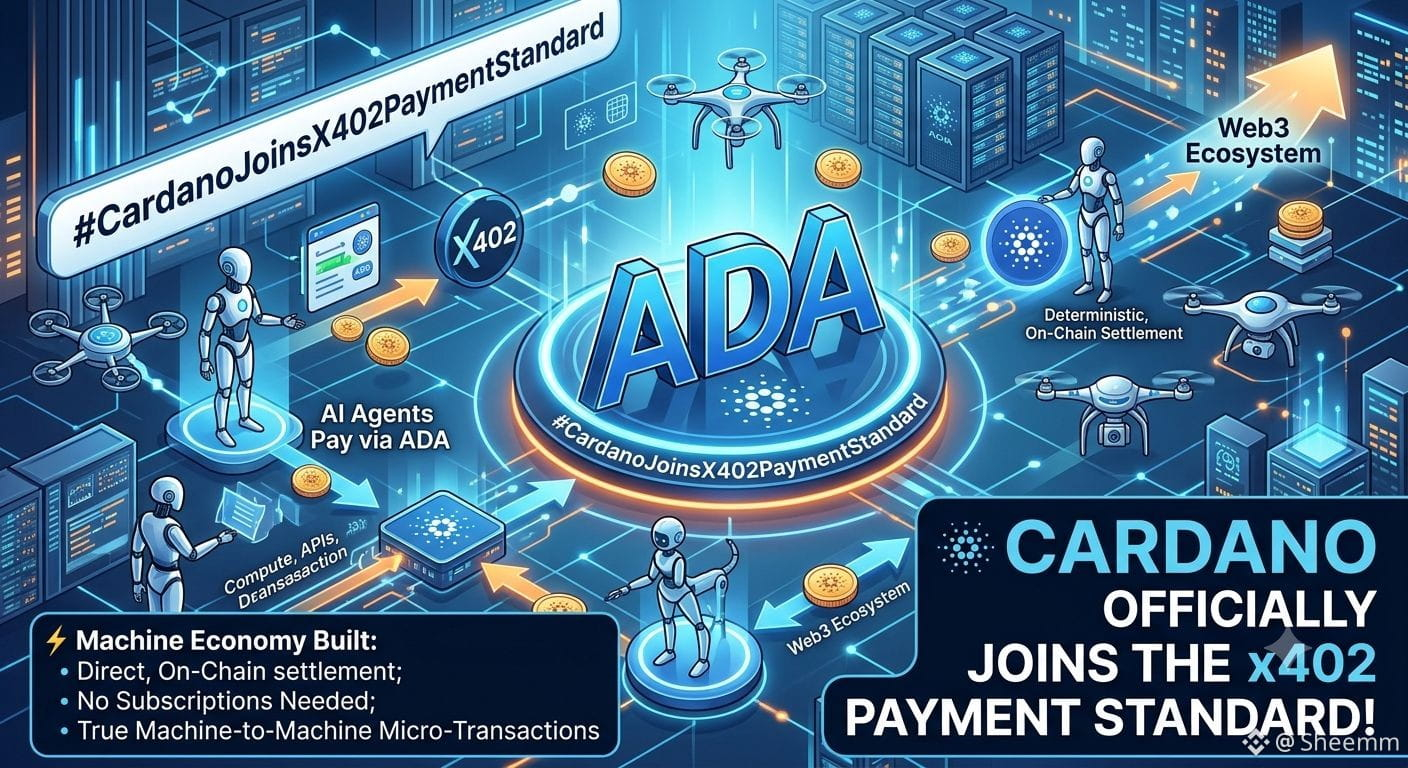
#CardanoJoinsX402PaymentStandard 🌐 Cardano officially joins the x402 payment standard!
The internet's long-dormant "HTTP 402: Payment Required" standard is finally alive, and $ADA
{future}(ADAUSDT)
is powering the next evolution of autonomous AI payments.
🤖 What this means:
AI agents can now pay for APIs, compute, data sets, and services directly on-chain using ADA or native stablecoins like USDM—no accounts, no subscriptions, and no human checkout pages needed.
⚡ Why Cardano eUTxO fits x402 perfectly:
• Direct, deterministic on-chain settlement
• Zero risk of unexpected spending allowances
• True machine-to-machine micro-transactions
The machine economy isn't coming; it's officially built. 🚀
#BinanceSquareFamily #RippleUpdate
$BONK $PEPE
#Write2Earrn
#CardanoJoinsX402PaymentStandard 🌐 Cardano officially joins the x402 payment standard!
The internet's long-dormant "HTTP 402: Payment Required" standard is finally alive, and $ADA
is powering the next evolution of autonomous AI payments.
🤖 What this means:
AI agents can now pay for APIs, compute, data sets, and services directly on-chain using ADA or native stablecoins like USDM—no accounts, no subscriptions, and no human checkout pages needed.
⚡ Why Cardano eUTxO fits x402 perfectly:
• Direct, deterministic on-chain settlement
• Zero risk of unexpected spending allowances
• True machine-to-machine micro-transactions
The machine economy isn't coming; it's officially built. 🚀
#BinanceSquareFamily #RippleUpdate
$BONK $PEPE
#Write2Earrn
The internet's long-dormant "HTTP 402: Payment Required" standard is finally alive, and $ADA
is powering the next evolution of autonomous AI payments.
🤖 What this means:
AI agents can now pay for APIs, compute, data sets, and services directly on-chain using ADA or native stablecoins like USDM—no accounts, no subscriptions, and no human checkout pages needed.
⚡ Why Cardano eUTxO fits x402 perfectly:
• Direct, deterministic on-chain settlement
• Zero risk of unexpected spending allowances
• True machine-to-machine micro-transactions
The machine economy isn't coming; it's officially built. 🚀
#BinanceSquareFamily #RippleUpdate
$BONK $PEPE
#Write2Earrn
1
2
249
·
--
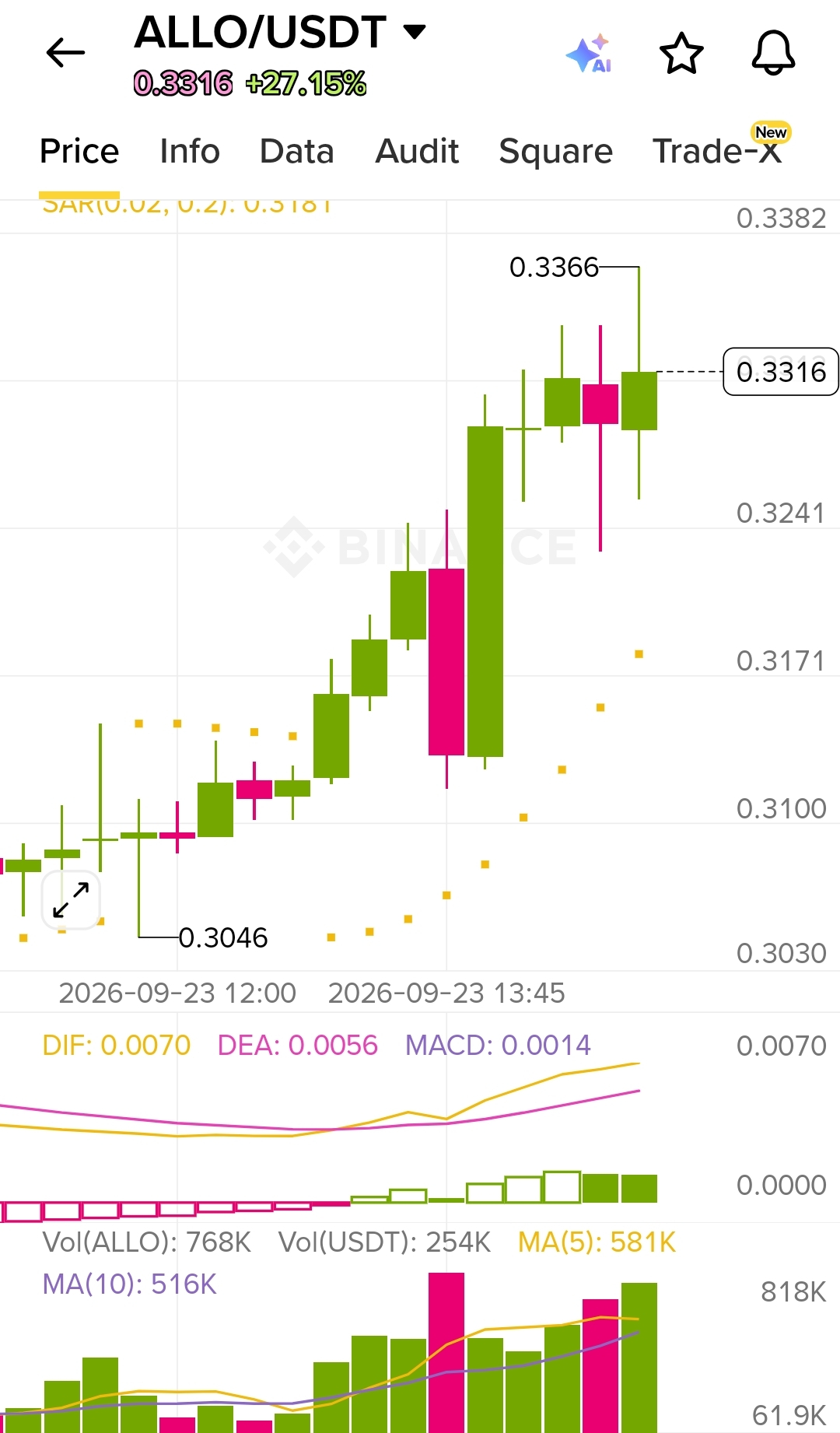
ALLO/USDT Trade Alert 🚀
Gaining traction of trades
Strong bullish momentum with a +27.15% surge, supported by MACD expansion and high volume!
📈 Position: LONG
📥 Entry: 0.3280 – 0.3316
🎯 TP 1: 0.3366
🎯 TP 2: 0.3450
🎯 TP 3: 0.3580
🛑 Stop-Loss: 0.3170 (Below SAR support)
⚡ Leverage: 3x - 5x (Use proper risk management)
$ALLO is showing active buyer control, testing local highs. Tight stops, protect profits! 💸
{future}(ALLOUSDT)
$ZRO $TIA
#MarketFluctuations
#Write2Earrn
#AIStocksWhatNext
ALLO/USDT Trade Alert 🚀
Gaining traction of trades
Strong bullish momentum with a +27.15% surge, supported by MACD expansion and high volume!
📈 Position: LONG
📥 Entry: 0.3280 – 0.3316
🎯 TP 1: 0.3366
🎯 TP 2: 0.3450
🎯 TP 3: 0.3580
🛑 Stop-Loss: 0.3170 (Below SAR support)
⚡ Leverage: 3x - 5x (Use proper risk management)
$ALLO is showing active buyer control, testing local highs. Tight stops, protect profits! 💸
$ZRO $TIA
#MarketFluctuations
#Write2Earrn
#AIStocksWhatNext
Gaining traction of trades
Strong bullish momentum with a +27.15% surge, supported by MACD expansion and high volume!
📈 Position: LONG
📥 Entry: 0.3280 – 0.3316
🎯 TP 1: 0.3366
🎯 TP 2: 0.3450
🎯 TP 3: 0.3580
🛑 Stop-Loss: 0.3170 (Below SAR support)
⚡ Leverage: 3x - 5x (Use proper risk management)
$ALLO is showing active buyer control, testing local highs. Tight stops, protect profits! 💸
$ZRO $TIA
#MarketFluctuations
#Write2Earrn
#AIStocksWhatNext
1
210
·
--
$MUBARAK / USDT Technical Update 📊
MUBARAK is showing strong bullish momentum, up +26.30% and holding around $0.06987.
• Support Zone: $0.06251 (24h Low)
• Resistance Target: $0.08706
• Key Level: Eyes on breaking $0.07208 to confirm continuation.
High volatility on the 15m chart—manage risk! 🔥
$SUPER $CHR
#AIStocksWhatNext
#write2earn🌐💹
$MUBARAK / USDT Technical Update 📊
MUBARAK is showing strong bullish momentum, up +26.30% and holding around $0.06987.
• Support Zone: $0.06251 (24h Low)
• Resistance Target: $0.08706
• Key Level: Eyes on breaking $0.07208 to confirm continuation.
High volatility on the 15m chart—manage risk! 🔥
$SUPER $CHR
#AIStocksWhatNext
#write2earn🌐💹
MUBARAK is showing strong bullish momentum, up +26.30% and holding around $0.06987.
• Support Zone: $0.06251 (24h Low)
• Resistance Target: $0.08706
• Key Level: Eyes on breaking $0.07208 to confirm continuation.
High volatility on the 15m chart—manage risk! 🔥
$SUPER $CHR
#AIStocksWhatNext
#write2earn🌐💹
2
189
·
--
$MET
{future}(METUSDT)
MET/USDT is showing strong momentum, trading around $0.3656 (+34.12%). Price is holding above $0.3628 support after testing $0.3694 resistance. 📈
🎯 Entry: $0.363–0.366
🛑 SL: $0.354
TP1: $0.374
TP2: $0.382
TP3: $0.395
Watch volume before entry. 👍
$PENGU
{future}(PENGUUSDT)
$SENT
{future}(SENTUSDT)
$MET
MET/USDT is showing strong momentum, trading around $0.3656 (+34.12%). Price is holding above $0.3628 support after testing $0.3694 resistance. 📈
🎯 Entry: $0.363–0.366
🛑 SL: $0.354
TP1: $0.374
TP2: $0.382
TP3: $0.395
Watch volume before entry. 👍
$PENGU
$SENT
MET/USDT is showing strong momentum, trading around $0.3656 (+34.12%). Price is holding above $0.3628 support after testing $0.3694 resistance. 📈
🎯 Entry: $0.363–0.366
🛑 SL: $0.354
TP1: $0.374
TP2: $0.382
TP3: $0.395
Watch volume before entry. 👍
$PENGU
$SENT
1
3
718
·
--
$BCH
{future}(BCHUSDT)
BCH is still showing strong momentum, trading around $350.1 after a sharp +30.83% move. Price rallied from $335.7 to a session high of $362.6 before pulling back. MACD remains positive, but cooling momentum suggests watching $346–35 support and $358–363 resistance closely.
$NIL
{future}(NILUSDT)
$MET
{future}(METUSDT)
#MarketMoves
#Write2Earn!
#BNBMarketCapPassesBNYMellon
$BCH
BCH is still showing strong momentum, trading around $350.1 after a sharp +30.83% move. Price rallied from $335.7 to a session high of $362.6 before pulling back. MACD remains positive, but cooling momentum suggests watching $346–35 support and $358–363 resistance closely.
$NIL
$MET
#MarketMoves
#Write2Earn!
#BNBMarketCapPassesBNYMellon
BCH is still showing strong momentum, trading around $350.1 after a sharp +30.83% move. Price rallied from $335.7 to a session high of $362.6 before pulling back. MACD remains positive, but cooling momentum suggests watching $346–35 support and $358–363 resistance closely.
$NIL
$MET
#MarketMoves
#Write2Earn!
#BNBMarketCapPassesBNYMellon
2
508
·
--
Verified
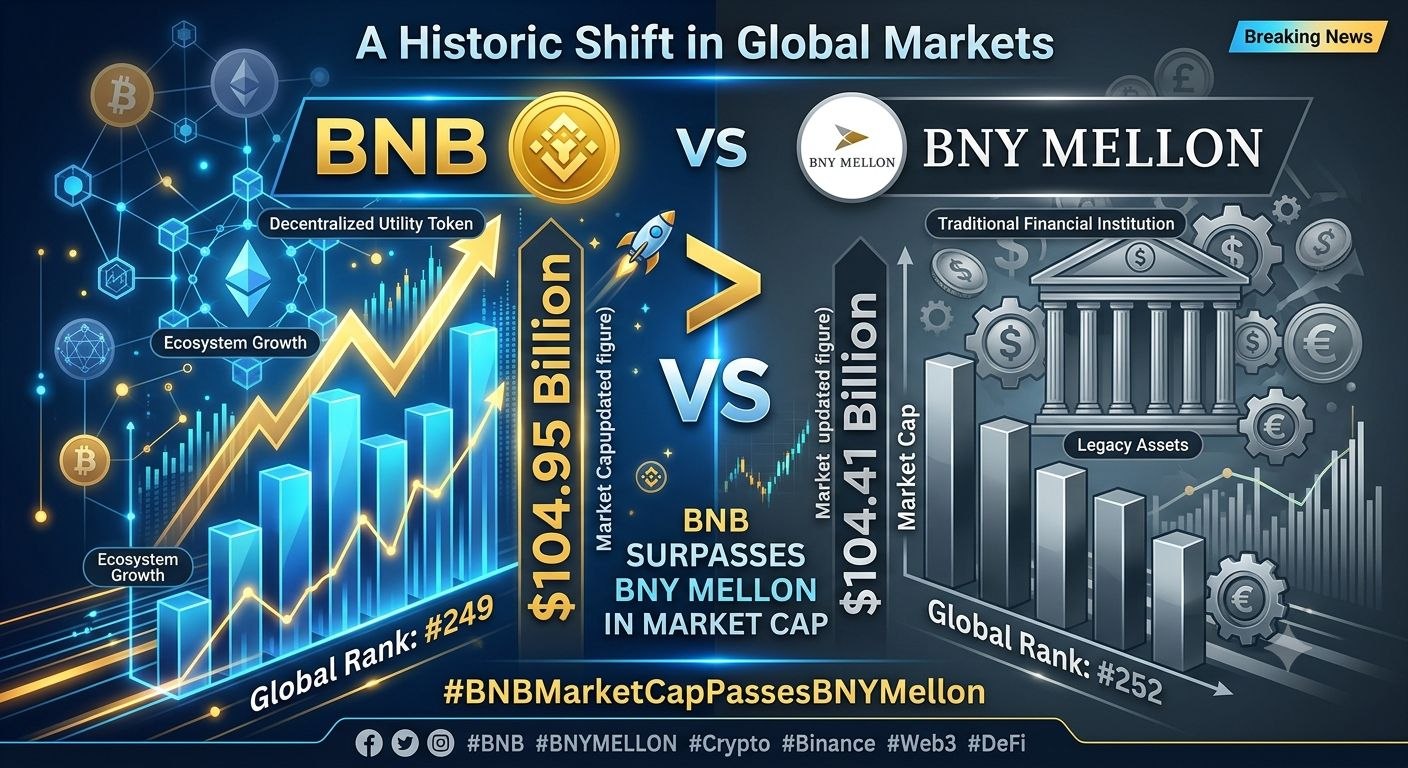
#BNBMarketCapPassesBNYMellon
Another historic milestone for crypto adoption! 🚀
#BNB has officially passed BNY Mellon (the oldest bank in America, founded in 1784) in global market capitalization.
📊 By the Numbers:
• BNB Market Cap: ~$104.95 Billion
• BNY Mellon Market Cap: ~$104.41 Billion
• BNB Global Rank: #249
Founded 240+ years ago vs. created less than a decade ago—yet a decentralized native utility token now commands a larger valuation than traditional finance’s foundational institution.
This isn't just price action; it's a structural shift showing how web3 ecosystems and tokenomics are reshaping the global financial landscape.
$BNB
{future}(BNBUSDT)
$ETH
{future}(ETHUSDT)
$SOL
{future}(SOLUSDT)
#AIStocksWhatNext
#write2earn🌐💹
#DYORAlways
#BNBMarketCapPassesBNYMellon
Another historic milestone for crypto adoption! 🚀
#BNB has officially passed BNY Mellon (the oldest bank in America, founded in 1784) in global market capitalization.
📊 By the Numbers:
• BNB Market Cap: ~$104.95 Billion
• BNY Mellon Market Cap: ~$104.41 Billion
• BNB Global Rank: #249
Founded 240+ years ago vs. created less than a decade ago—yet a decentralized native utility token now commands a larger valuation than traditional finance’s foundational institution.
This isn't just price action; it's a structural shift showing how web3 ecosystems and tokenomics are reshaping the global financial landscape.
$BNB
$ETH
$SOL
#AIStocksWhatNext
#write2earn🌐💹
#DYORAlways
Another historic milestone for crypto adoption! 🚀
#BNB has officially passed BNY Mellon (the oldest bank in America, founded in 1784) in global market capitalization.
📊 By the Numbers:
• BNB Market Cap: ~$104.95 Billion
• BNY Mellon Market Cap: ~$104.41 Billion
• BNB Global Rank: #249
Founded 240+ years ago vs. created less than a decade ago—yet a decentralized native utility token now commands a larger valuation than traditional finance’s foundational institution.
This isn't just price action; it's a structural shift showing how web3 ecosystems and tokenomics are reshaping the global financial landscape.
$BNB
$ETH
$SOL
#AIStocksWhatNext
#write2earn🌐💹
#DYORAlways
1
4
413
·
--
🚀 $AKE
{alpha}(560x2c3a8ee94ddd97244a93bc48298f97d2c412f7db)
AKE surges +20.30% to $0.05268! After holding key support at $0.05200, momentum is stabilizing with MACD signaling a slight bullish cross (DIF > DEA). Immediate resistance sits at $0.05483. A breakout above could push towards $0.0568. Watch for volume confirmation! 📈
$TST $GRASS
#AIStocksWhatNext
#MarketLiveUpdate
🚀 $AKE
AKE surges +20.30% to $0.05268! After holding key support at $0.05200, momentum is stabilizing with MACD signaling a slight bullish cross (DIF > DEA). Immediate resistance sits at $0.05483. A breakout above could push towards $0.0568. Watch for volume confirmation! 📈
$TST $GRASS
#AIStocksWhatNext
#MarketLiveUpdate
AKE surges +20.30% to $0.05268! After holding key support at $0.05200, momentum is stabilizing with MACD signaling a slight bullish cross (DIF > DEA). Immediate resistance sits at $0.05483. A breakout above could push towards $0.0568. Watch for volume confirmation! 📈
$TST $GRASS
#AIStocksWhatNext
#MarketLiveUpdate
5
688
Log in to explore more content
Join global crypto users on Binance Square
⚡️ Get latest and useful information about crypto.
💬 Trusted by the world’s largest crypto exchange.
👍 Discover real insights from verified creators.
Email / Phone number
Trending Topics
QNTRises39%
25,139 views
954 Discussing
🚨 QNT IS SURGING! 📈
$QNT is making a huge move today, climbing nearly 40% as buying pressure accelerates.
The rally has put Quant firmly back in the spotlight, with traders watching to see whether this momentum can continue or if a pullback comes next.
🔥 Key things to watch:
• Strong trading volume
• Momentum above recent highs
• The $100 psychological level
• Whether buyers can maintain control
Big moves bring big volatility. Stay alert and manage risk.
Are you watching $QNT? 👀
#QNT #altcoins #CryptoNews
#qntrises39% $QNT
The07
·4 Likes
·3.9k views
EthereumBreaksAbove$2700
2,425 views
96 Discussing
BitgetBreachForgedRequestsNotStolenKeys
22,062 views
741 Discussing