

华尔街Alex
59 Posts

华尔街Alex
Report
Block User
AI研究员|长期主义者|关注价格背后的故事,也关注市场情绪的变化
3 Following
87 Followers
248 Liked
Posts
All
Videos
·
--
Morgan Stanley’s latest report says it outright: AI’s biggest problem in 2026 isn’t demand—it’s money!!!!💰💰
They ran the numbers: The four hyperscale computing giants (Alphabet, Amazon, Meta, and Microsoft) are set to increase capital spending by another 50%+ in 2027, and these four account for over 75% of all AI capex. Their average credit rating is AA, their combined market cap is over $3 trillion, and they have a long track record of profitability.
So for these giants, higher rates and wider spreads just mean borrowing costs a bit more—but they’ll keep building anyway. As they put it: Prices adjust first; volumes won’t fall. The ones who’ll really feel the pain are those who can’t raise money—the neoclouds, small data center developers, and small chip companies. The further out you go, the higher the financing wall gets.
Looking ahead, AI infrastructure won’t slow down; it’ll just become more divided. AA-rated companies will keep piling on computing capacity, while everyone else pays increasingly expensive interest. #股票财报季 $NVDAB $AMZNB

335
·
--
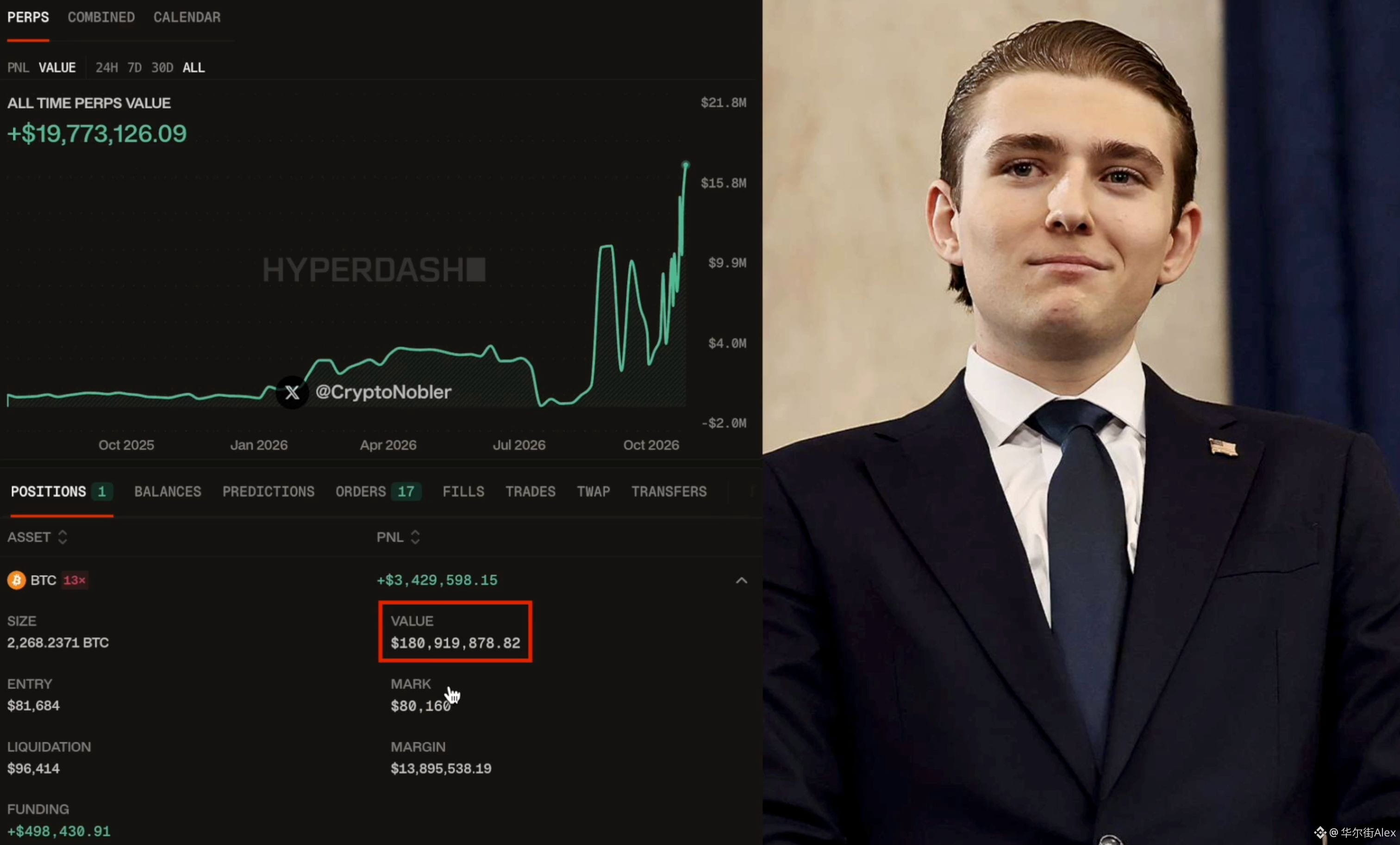
🚨 The “Trump Insider Whale” with a 100% win rate has taken another massive short position. Is the market about to plunge again this week?
A trader previously flagged as a “Trump insider” opened a BTC short worth around $181 million with roughly 13x leverage before the futures market opened yesterday.
This whale has previously predicted almost every market crash with near-perfect accuracy—and this time, they’re going all in. Before Trump announced 100% tariffs on China in October 2025, they opened large BTC and ETH short positions on Hyperliquid, reportedly making an estimated $160–200 million. Now that they’ve taken another massive short position, it’s hard not to wonder whether some major, as-yet-undisclosed bad news is on the way.$BTC #BTC #Hyperliquid #巨鲸
19
1
17
56.4k
·
--
No more a16z Crypto! The VC that’s been best at investing in crypto has removed “crypto” from its name 🤯🤯
Today, a16z crypto announced that it’s officially changing its name to a16z Frontier. It won’t just invest in crypto anymore—it’s also moving into AI, robotics, and AI agents.
How impressive has the firm’s track record in crypto been? Its early investment in Solana returned about 400x, Uniswap about 100x, and it backed Coinbase from Series B all the way through its IPO. Its $350 million fund from 2018 has already returned about 5.4x in cash to its investors.
But the $4.5 billion fund raised at the peak of the 2022 bull market made big bets on gaming and NFTs, and its returns still don’t look good. Its newly raised fifth fund this year came in at just $2.2 billion—more than half the size of the previous one.
Still, a16z says it hasn’t given up on crypto; it’s just changing its approach. Its recent investments in Phantom, Morpho, and Kalshi are focused on stablecoins, payments, and prediction markets. It’s betting on the next generation of applications: AI agents using stablecoins to pay for things on-chain by themselves.
So, is this name change a sign that crypto VCs are retreating en masse? What do you think? #a16z #A16ZCrypto #a16zcrypto改名

1
1.3k
·
--
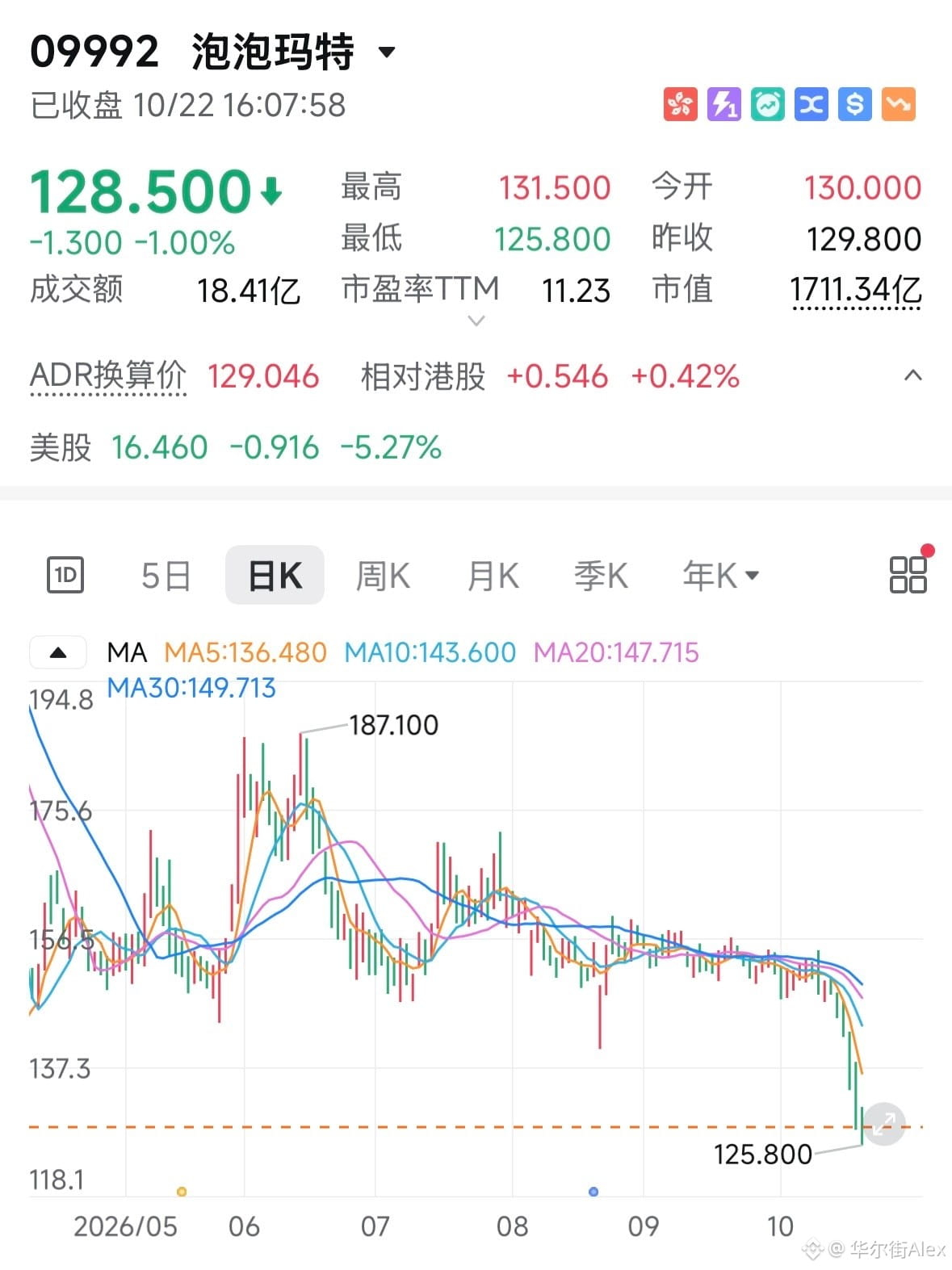
The stock hits a new low—was Duan Yongping wrong this time?
Pop Mart has fallen for five consecutive trading days, dropping more than 13% and hitting its lowest level in about a year and a half.
The reason is straightforward: Labubu isn’t as popular as it used to be.
Channel data from Goldman Sachs and other institutions show that Pop Mart’s sales on Tmall and Douyin fell about 30% year over year in the third quarter, with September alone seeing a decline of more than 40%. U.S. credit card spending data show a year-over-year drop of about 58% in the third quarter. Overseas markets were once the central part of the story supporting Pop Mart’s high valuation, but that story is now starting to lose some of its shine.
Duan Yongping, one of Pop Mart’s best-known investors, still seems fairly unfazed. Asked whether he would keep buying, he replied: “I’ve said all there is to say. We’ll know in a few years whether I was right.”
In his view, Pop Mart doesn’t sell toys—it sells “emotional value.” As long as people continue to seek that emotional fulfillment, Pop Mart’s average earning power over the next 10 to 20 years should remain strong. So, to him, Labubu cooling off is just a cyclical fluctuation, not a sign that there’s a problem with the business.


231
·
--
I wonder if you’ve ever been curious: with so many tech companies working on robots, what are robots actually being used for today?
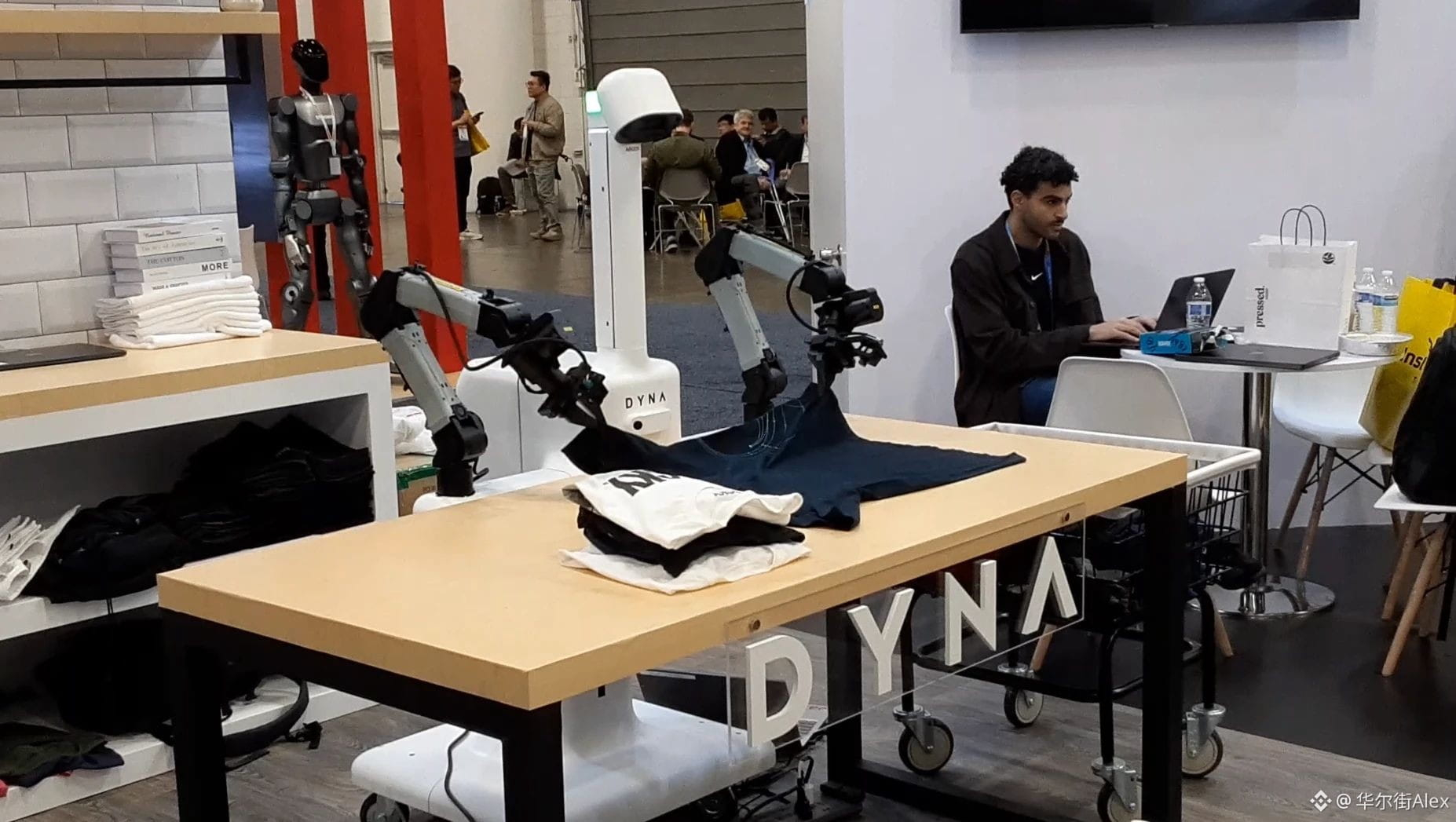
The answer might surprise you: one of Silicon Valley’s most promising robotics companies is currently best known for folding napkins. Yes, you read that right. 😂😂
The company is called Dyna Robotics, and it was founded in 2024. Last September, it raised $120 million at a valuation of over $600 million, with investors including Nvidia, Amazon, and Samsung. While other robots are dancing, boxing, and doing flips, this one spends all day in a laundry room folding towels and napkins.
For a robot, this is no simple task. Folded napkins are graded on a five-level scale, and customers only accept the top two grades. As the company puts it, “Being off by a few millimeters or a centimeter can be the difference between passing and failing.”
At first, it couldn’t keep up on speed either. When the robot first started on the job, it could fold just 35 napkins an hour, while customers needed 1,500 per shift. It eventually reached 1,590 a day, and finally caught up.
Later, the company built a semi-humanoid robot that handles the whole process: washing, drying, folding, and putting everything on the shelves.
Maybe for robotics companies, “boring” is the highest praise. Because the tasks that can truly be put to work and make money are often repetitive, tedious jobs that nobody wants to do.
1
2
10.4k
·
--
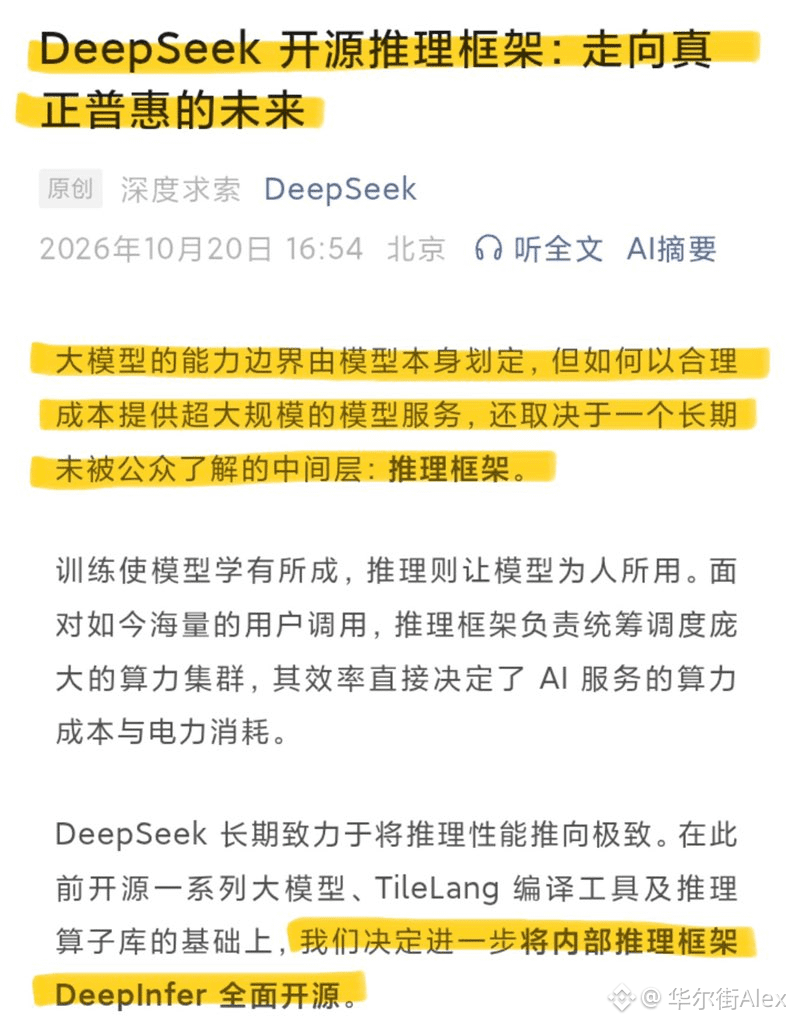
Liang Wenfeng—oh, no, Saint Liang!! He really does have a big vision. Not only has he open-sourced the model, he’s now even open-sourced the inference framework.
The inference framework determines the cost of AI services, and how many people they can serve. Open-sourcing this layer means handing the most expensive part of AI to everyone. Liang Wenfeng’s goal is to make more powerful models affordable for more people!
“Do good together with everyone, and enable everyone to do great things”—so well said!!
Compare that with Dario at Anthropic, who goes on and on about safety and responsibility, talks about making AI accessible to all, but in practice runs an elite business. The difference couldn’t be clearer. #deepseek开源推理框架

2
850
·
--
#Netflix裁员 Netflix laid off employees—including the executive in charge of the layoffs 😅😅
News that Netflix was planning layoffs surfaced two weeks ago, and its stock fell by more than 2% that day. Now the layoffs have arrived, and even the executive overseeing them wasn’t spared.
According to The Wall Street Journal, on October 14, Netflix announced it would lay off around 1,000 employees, or 6% of its global workforce. By 2 p.m. that day, the employees who had been laid off could no longer log in to their company email accounts.
A few hours later, co-CEO Ted Sarandos informed Chief Content Officer Bela Bajaria that she, too, would be leaving the company.
What makes it even more dramatic is that Bajaria had been involved in carrying out this round of layoffs—and ended up being laid off herself. She had spent nearly 10 years at Netflix, overseeing its global content business. She was behind hits like Squid Game and Stranger Things.
Who would’ve thought that wouldn’t be enough to save her job...
1
153
·
--
#AI失业潮 ⚠️Most SaaS companies may face bankruptcy or dissolution within the next year!!!!
This is just unbelievable. A while ago, someone used Claude to build the entire Adobe suite, and now someone else has made Switch games, including The Legend of Zelda!! And they run directly on your Windows, macOS, or Linux computer—no emulator needed; they’re native apps.
Things that used to take a team months to build can now potentially be prototyped quickly by one person with the help of AI. The days of getting users to pay subscription fees long-term for just a handful of features really are coming to an end 😕😕

1
123
·
--
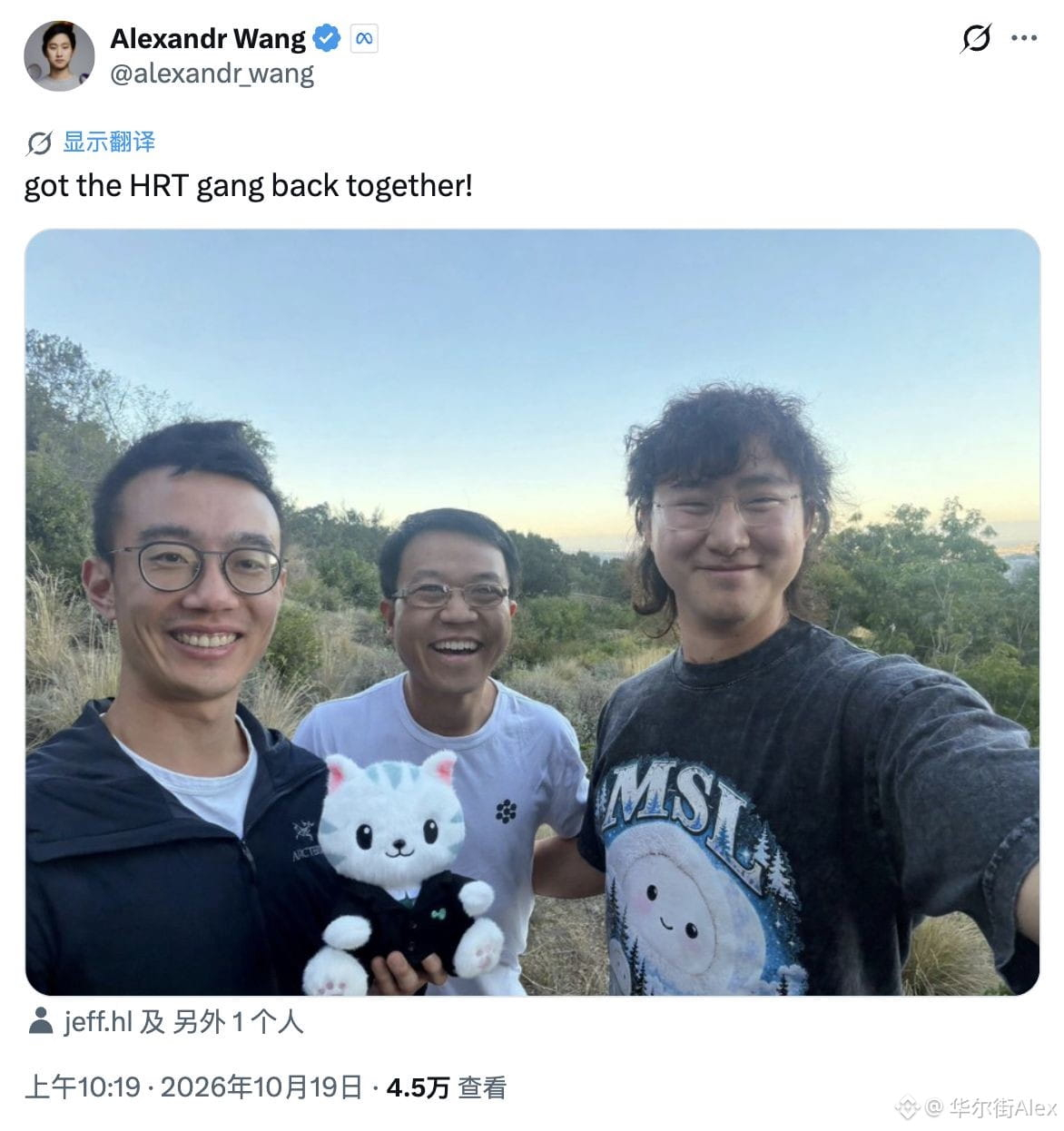
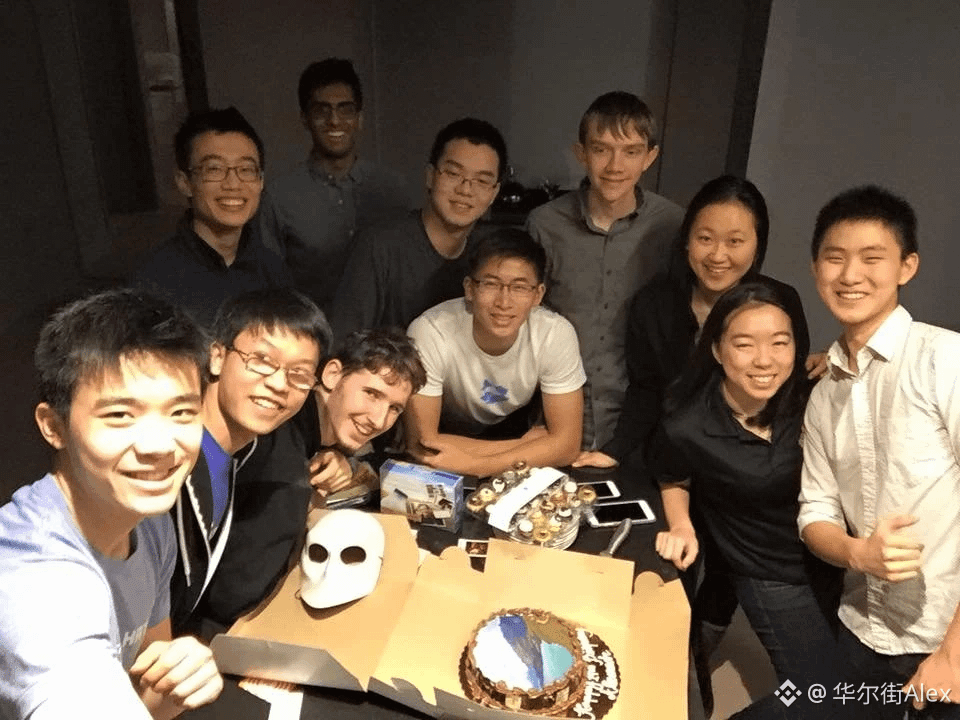
Wow!! These three friends from their student days—the ultimate humans—have joined forces!!!
From left to right: Hyperliquid founder Jeff Yan, Cognition AI CEO Scott Wu, and Meta Chief AI Officer Alexandr Wang #Hyperliquid
Wow!! These three friends from their student days—the ultimate humans—have joined forces!!!
From left to right: Hyperliquid founder Jeff Yan, Cognition AI CEO Scott Wu, and Meta Chief AI Officer Alexandr Wang #Hyperliquid
From left to right: Hyperliquid founder Jeff Yan, Cognition AI CEO Scott Wu, and Meta Chief AI Officer Alexandr Wang #Hyperliquid
1
2
1.9k
·
--
This is definitely one of the most amazing and practical uses of AI I’ve seen so far!!!
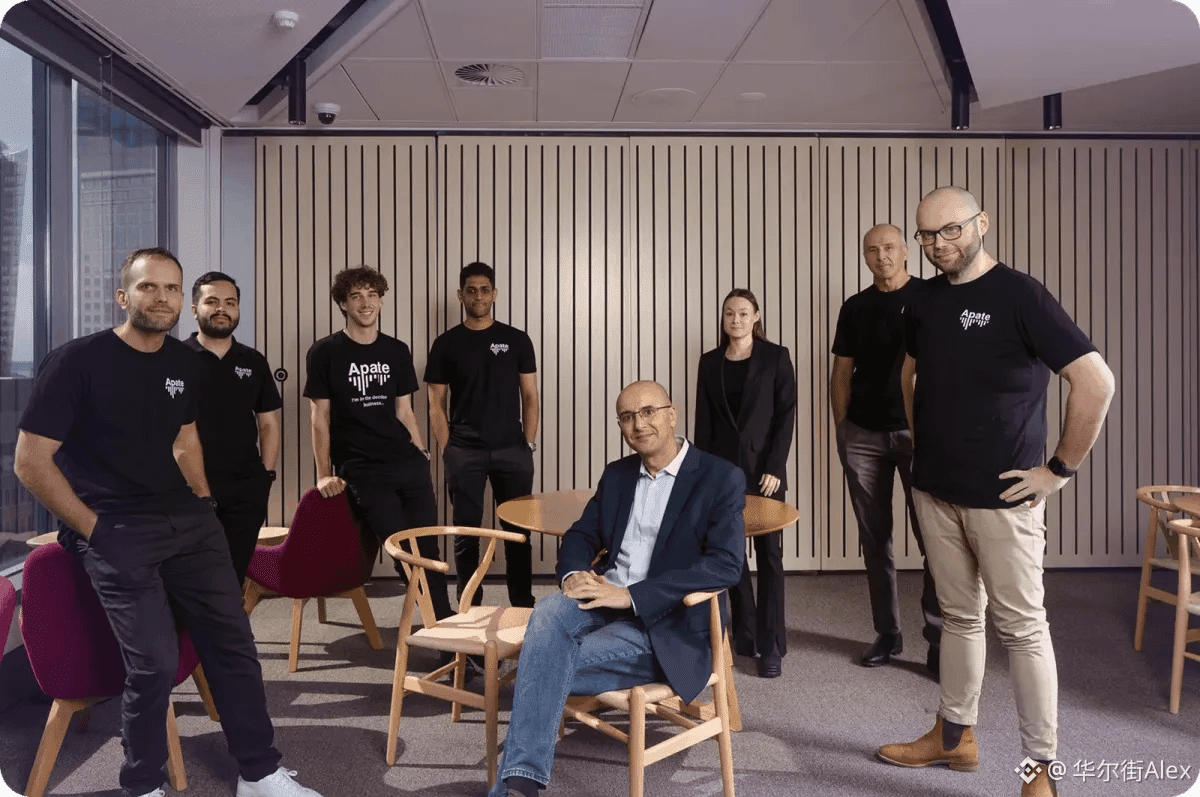
A company overseas gets tens of millions of AIs to impersonate gullible elderly people. When they receive scam calls, they don’t hang up—instead, they pretend to fall for it and gradually coax the scammers into revealing information like their payment accounts and scam websites.
The scammers think that after chatting for ages, they’re finally about to land a deal, only to find that they’ve already given away their own details... The company then bundles up the scammers’ information and sells it to banks and telecom companies to help identify and block fraud. Apparently, they’ve already raised nearly $10 million.
Seriously, that’s genius. How did someone even come up with this business model? 😂😂
338
·
--
Holy crap, holy crap, holy crap!!! This really isn't AI—the new Tesla Roadster can actually fly 🚀🚀🚀🚀 Has the era of flying cars begun?!#特斯拉发布Roadster
Holy crap, holy crap, holy crap!!! This really isn't AI—the new Tesla Roadster can actually fly 🚀🚀🚀🚀 Has the era of flying cars begun?!#特斯拉发布Roadster
2
6
3.1k
·
--
🐮Holy cow! The chairman of Media Storm has become the boss's dad.
We've heard plenty of stories about sons taking over their fathers' businesses, but this is the first time I've heard of a father taking over his son's.
🐮Holy cow! The chairman of Media Storm has become the boss's dad.
We've heard plenty of stories about sons taking over their fathers' businesses, but this is the first time I've heard of a father taking over his son's.
We've heard plenty of stories about sons taking over their fathers' businesses, but this is the first time I've heard of a father taking over his son's.


6
6
18.8k
·
--
#赚钱思维 Here’s a way to make money that’s been no secret for a long time: if you can’t find a blue ocean, look for a niche within a red ocean 🤫🤫
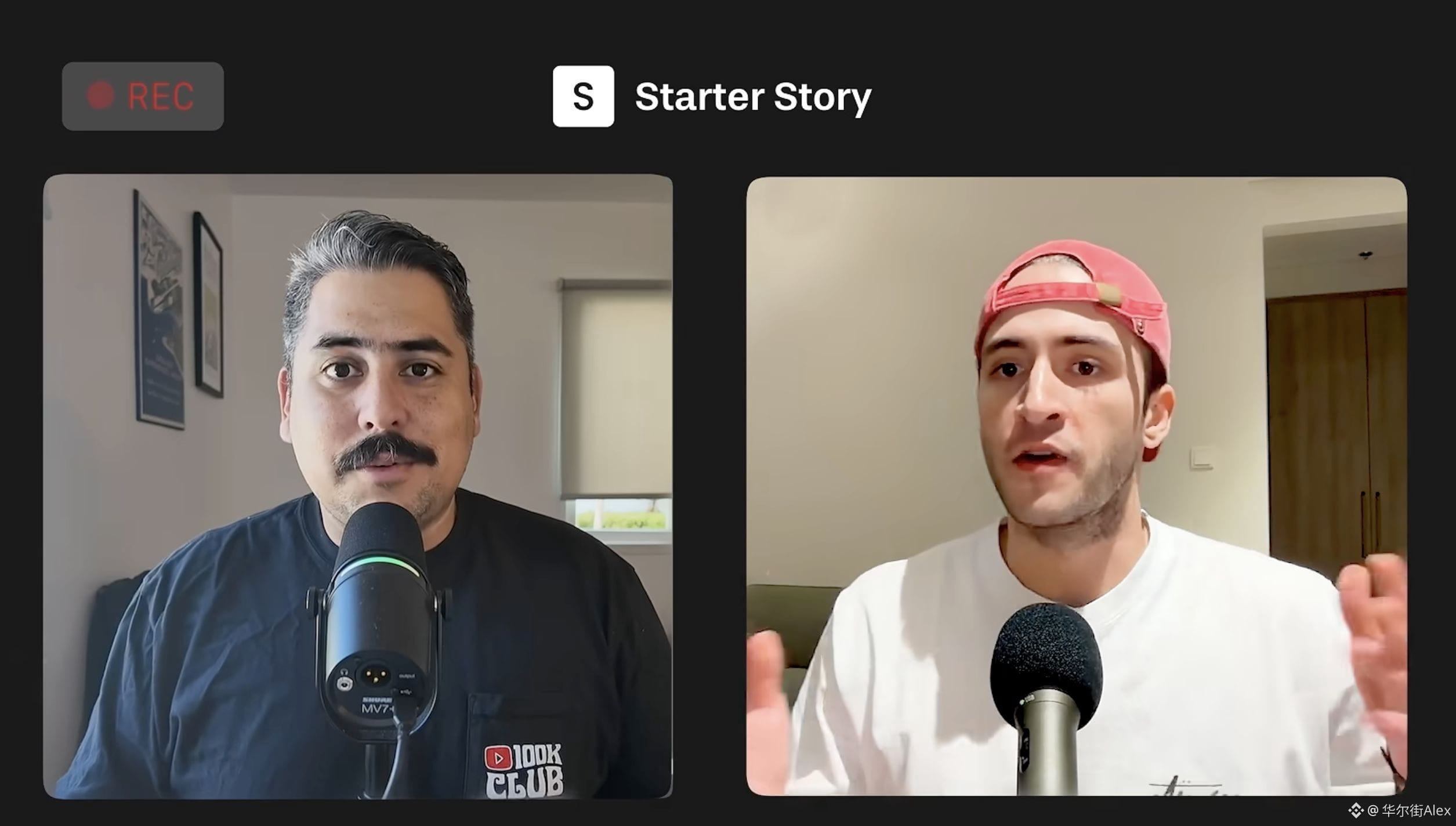
Take voice input, for example. Products like Typeless and Doubao Input are already pretty mature, so it might seem hard to find room for something new. But today I came across a case study: an indie developer built a voice input tool that brings in around $20,000 a month. That’s got to be better than working for someone else, right?
His secret was finding a more specific audience: older adults and people with disabilities.
The idea came from everyday life. While he was in the hospital, his father came to care for him. Sitting by the bed, his father typed incredibly slowly—it could take two or three days to write a single email. So he wondered: could he build a tool that would let his father simply say what he wanted to write?
After launching the product, he spoke with users one by one and discovered that 20–30% were older adults or people with disabilities—and these were exactly the people who relied on the tool the most.
So he focused the product on them and offered users with disabilities a 20% discount. At the moment, around 20% of users are using this discount.
Most of the growth comes from SEO: he wrote 200 blog posts, created 30 landing pages, and translated the website into four or five languages so people who need it can find it through search.
There’s no shortage of voice input products, but not every group of users is being well served. The opportunity for a small team is to find a group with a clear need and do a great job solving the problem they care about most.
1
710
·
--
Another major incident has rocked the AI world!! OpenAI reportedly found a listening device at its headquarters—and used AI to catch the employee who planted it.
The suspect, Abdulrahman Alfozan, is 35 and graduated from MIT with degrees in electrical engineering and computer science. He previously worked at Meta and joined OpenAI last year. According to reports, he inserted an encrypted recording device behind a TV in a confidential meeting room and disguised it by wrapping it in toilet paper. Investigators also found that an AI account linked to his wife had asked how to hide a recording device, encrypt recordings, and listen remotely… Surveillance footage later showed him entering a meeting room he wasn’t authorized to access and examining the device behind the TV.
Not long before this, he had given a public interview as an OpenAI engineer. Just a few days later, the FBI took him into custody. Reality really is more dramatic than the movies. And here’s a bold guess: could this guy have been a mole sent by Meta? #OpenAI总部发现窃听器


1
4
21.1k
·
--
#英国高院裁定钱志敏案适用中国法 Qian Zhimin really was something else—she managed to get 61,000 bitcoins through a pyramid scheme.
From 2014 to 2017, Qian Zhimin founded “Lantian Gree” in Tianjin. Using slogans such as “Give Gree three years, and Gree will give you wealth for three generations,” she illegally raised 40.2 billion yuan from more than 128,000 investors.
Qian used more than 1 billion yuan of the money to buy bitcoin, then fled to the UK.
After escaping to London, she hired an ethnic Chinese food delivery worker as an assistant to help launder money. For a time, the two rented a mansion in Hampstead for around £17,000 a month and lived an extremely lavish lifestyle. They later even planned to buy a £23.5 million villa with a swimming pool and private cinema, paying directly in bitcoin. But this move drew the attention of anti-money-laundering authorities because they could not prove the funds had come from legitimate sources. British police seized 61,000 BTC from her devices. The case went on to become the world’s largest money-laundering case, and a global sensation.
And there’s an even more astonishing twist: after her assistant was arrested, Qian—who at the time needed a wheelchair and couldn’t speak the language—managed to evade capture on her own across the UK and several other parts of Europe for a full three years!! She was finally arrested in April 2024.
In the end, the people who suffered most were the victims back in China. The UK High Court has now ruled that the assets of Chinese victims will be governed by Chinese law. That means the 16,000 victims seeking compensation will most likely only get back their original investment plus interest, and won’t benefit from bitcoin’s hundredfold rise in value over the years…


50
50
108.4k
·
--
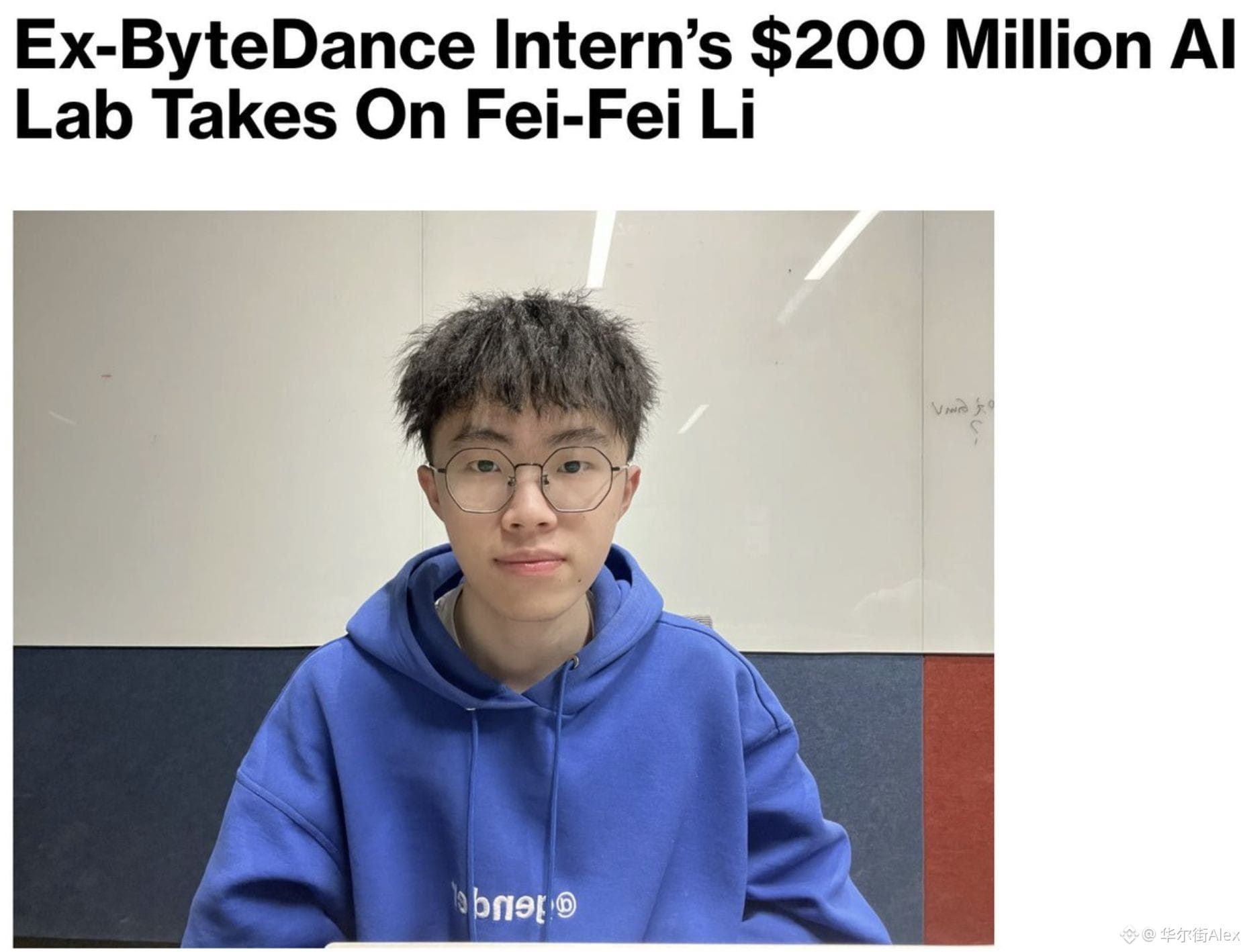
Tian Keyu, first author of NeurIPS 2024’s Best Paper, has recently gone off to start a company. The focus is world models—the same kind Li Fei-Fei is working on. The company doesn’t yet have an official name or product, but it has already raised $30 million at a post-money valuation of nearly $200 million 💰📈
Another claim to fame: he was the “ByteDance intern who poisoned the well,” whose case once rocked China’s AI community. During his product internship at ByteDance, he allegedly tampered with code and disrupted other people’s model-training jobs to grab GPU computing resources. Afterward, ByteDance sought more than 8 million yuan in damages. The court of first instance ordered Tian Keyu to pay 500,000 yuan. He accepted the ruling, but ByteDance appealed. The two sides are still locked in a legal battle. #字节跳动 #田柯宇
Another claim to fame: he was the “ByteDance intern who poisoned the well,” whose case once rocked China’s AI community. During his product internship at ByteDance, he allegedly tampered with code and disrupted other people’s model-training jobs to grab GPU computing resources. Afterward, ByteDance sought more than 8 million yuan in damages. The court of first instance ordered Tian Keyu to pay 500,000 yuan. He accepted the ruling, but ByteDance appealed. The two sides are still locked in a legal battle. #字节跳动 #田柯宇
1
526
·
--
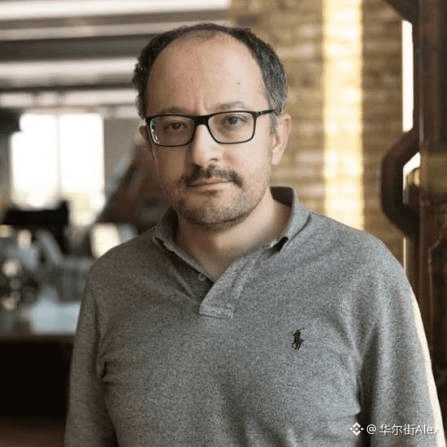
Yes, you read that right!!! It’s the person in the picture! He’s a 46-year-old mathematics PhD, and in The Times’ newly released 2026 UK Rich List, he ranked eighth, making him one of the UK’s 10 richest people.
How did he make his money? According to reports, he built his own AI trading system and actively trades stocks and makes markets, using AI algorithms to drive his trades. His average daily trading volume reaches $250 billion. His total wealth has now exceeded £16 billion 📈📈
How did he make his money? According to reports, he built his own AI trading system and actively trades stocks and makes markets, using AI algorithms to drive his trades. His average daily trading volume reaches $250 billion. His total wealth has now exceeded £16 billion 📈📈
5
5.4k
·
--
Ma Huateng made a rare public appearance yesterday, with Yao Shunyu sitting beside him. Last December, Tencent appointed Yao Shunyu chief AI scientist in the CEO’s office, and the news quickly became a major talking point in AI circles. Everyone was speculating about how astronomical a salary Tencent had offered him.
And Yao Shunyu has certainly lived up to expectations. In addition to overseeing the two departments of Foundation Models and AI Infra, he has also become head of the AI Data Department, giving him responsibility for the entire Hunyuan foundation model pipeline. He must be the most powerful young executive in Tencent’s history, right?
And Yao Shunyu has certainly lived up to expectations. In addition to overseeing the two departments of Foundation Models and AI Infra, he has also become head of the AI Data Department, giving him responsibility for the entire Hunyuan foundation model pipeline. He must be the most powerful young executive in Tencent’s history, right?

9
15
22k
·
--
👍👍 Now this is going to be quite a show!! Netflix has turned the story of FTX’s rise and fall into an eight-episode limited series, The Altruists, whose Chinese title is “The Altruists.” It premieres on November 19.
CZ also has a part in it, but doesn’t this actor look way too different from the real person? 🙉 @CZ I wonder if Netflix got permission from Big Cousin.
CZ also has a part in it, but doesn’t this actor look way too different from the real person? 🙉 @CZ I wonder if Netflix got permission from Big Cousin.

5
1
6
14.8k
·
--
#美国政府转移BTC So the market’s drop over the past two days is all the U.S. government’s fault??
On-chain data shows that addresses linked to the U.S. government transferred more than 12,000 BTC over the past two days. The market immediately interpreted this as “the U.S. government is getting ready to dump,” and sentiment weakened as a result.
I think the market may have overreacted to this drop. Besides, after such a big run-up, a moderate pullback was probably due. In fact, it’s unlikely that the U.S. government will sell its coins. If I remember correctly, the last confirmed sale was back in 2024, right?
It’s worth noting that the U.S. government’s Bitcoin holdings all come from law enforcement seizures, and the U.S. Strategic Bitcoin Reserve is primarily intended to hold seized BTC. What’s more, assets tied to victim compensation arrangements—such as those in the Bitfinex hack case—could be returned or disposed of under court orders. So this transfer looks more like a consolidation of holdings or preparation for subsequent legal proceedings. $BTC


2
3.4k
Log in to explore more content
Join global crypto users on Binance Square
⚡️ Get latest and useful information about crypto.
💬 Trusted by the world’s largest crypto exchange.
👍 Discover real insights from verified creators.
Email / Phone number
Trending Topics
BinancePick
3.3M views
164,007 Discussing
Join #EarningsSeason: Predict Earnings on Binance Pick, Share Your Take on Binance Square!
Binance Square Official
·418 Likes
·345.2k views
EarningsSeason
5.5M views
26,789 Discussing
StrategySkipsBitcoinPurchasesSpends$205MOnSTRCBuybacks
619 views
24 Discussing