
Bitcoin Day
2.4k Posts

Bitcoin Day
Report
Block User
Información de Bitcoin
6 Following
2.2K+ Followers
4.1K+ Liked
1 Badges
Posts
All
Quotes
Videos
·
--
💥Jensen Huang talks with his allies about his return as CEO of #Nvidia , days after resigning from his position. This would set stocks on fire...🔥
💥Jensen Huang talks with his allies about his return as CEO of #Nvidia , days after resigning from his position. This would set stocks on fire...🔥

1
74
·
--
Bullish
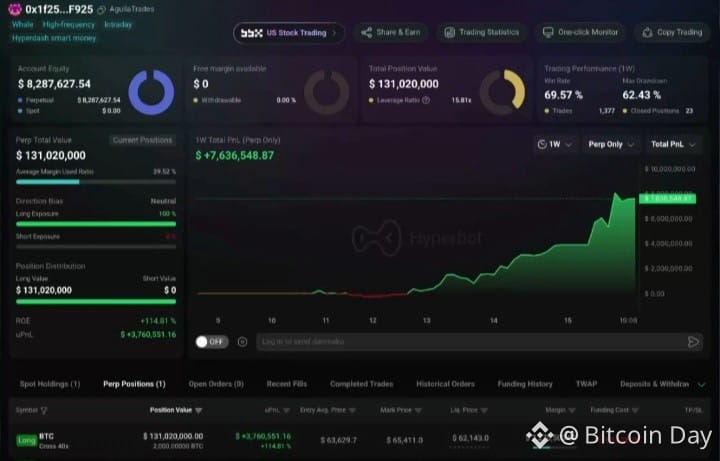
💥A whale on the Hyperliquid platform has opened a US$131,000,000 long position in #Bitcoin with 40X leverage. 🎱🎱🎱
💥A whale on the Hyperliquid platform has opened a US$131,000,000 long position in #Bitcoin with 40X leverage. 🎱🎱🎱
191
·
--
Bullish
The #Bitcoin fell to US$62,080, reaching its lowest level in four months and sitting approximately 50% below its all-time high of US$126,000. After touching that support level, the price rebounded above US$65,000, although it has fallen nearly 15% over the past seven days.
The pullback is part of a broad sell-off in the crypto market that brought the sector’s total market capitalization down to around US$2.2 trillion, also affecting other major assets such as Ethereum and Solana. The US$62,000 area is acting as the first technical floor; if it is breached again, the market’s focus would shift to US$60,000 and the annual low near US$58,500 recorded in July.
The pullback is part of a broad sell-off in the crypto market that brought the sector’s total market capitalization down to around US$2.2 trillion, also affecting other major assets such as Ethereum and Solana. The US$62,000 area is acting as the first technical floor; if it is breached again, the market’s focus would shift to US$60,000 and the annual low near US$58,500 recorded in July.
1
215
·
--
Bearish
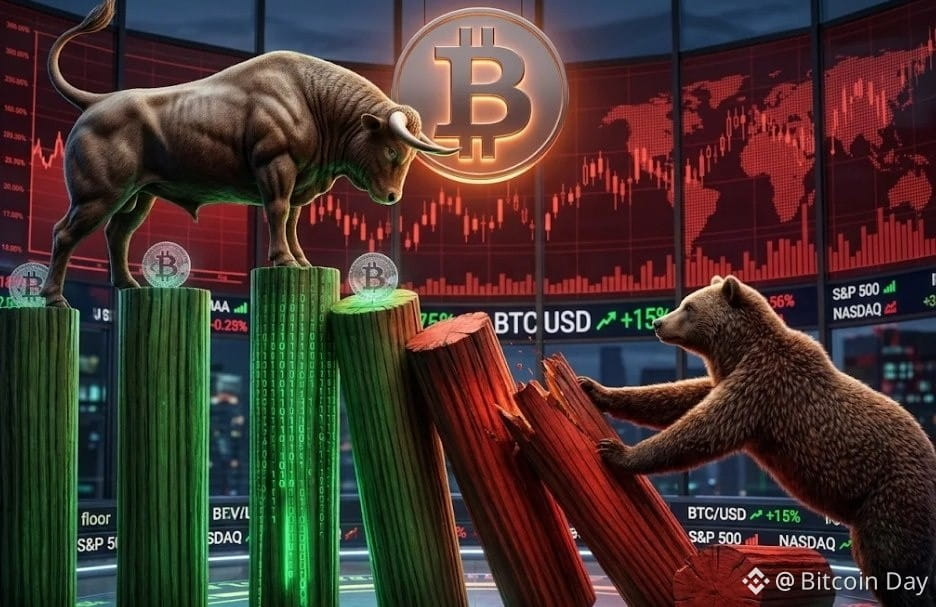
The price of #Bitcoin fell to around US$67,500, testing its 200-week simple moving average for the first time in nearly three months. The average is located at around US$67,993. This decline reignited technical warnings about a possible return to US$57,700, the cycle's yearly low, set in late June/early July 2026.
The downward pressure in recent hours coincides with a risk-off environment in global markets, including declines in Asian stocks and Nasdaq-100 futures following the announcement that Jensen Huang would step down as Nvidia CEO, as well as recent US inflation data.
The 200W SMA has historically been considered BTC's main line of macroeconomic defense. Losing this support on a weekly close often paves the way for capitulation or prolonged consolidation phases before an uptrend resumes.
171
·
--
What is the death cross?
A death cross occurs when a shorter moving average crosses below a longer moving average. For example, when the 50-day moving average falls below the 200-day moving average. This indicates that the short-term trend is much weaker than the long-term trend, and therefore the market can be considered bearish.
Once the crossover occurs—this applies to both the golden cross and the death cross—we need to confirm the new trend. One of the methods suggested by technical analysis is trading volume. Every trend reversal is supported by an increase in buying or selling volume.
224
·
--
According to Santiment, the number of wallets holding at least 10,000 tokens of token #XRP increased as its price fell 30% over seven weeks. The company interpreted this divergence as a sign of accumulation, noting that US$1 was emerging as support, or a floor to defend.
If the price manages to consolidate and hold support around US$1, and accumulation by large wallets continues alongside stabilization in the broader market, it could prompt a technical rebound toward higher resistance levels, in the US$1.10 to US$1.15 range.
If the price manages to consolidate and hold support around US$1, and accumulation by large wallets continues alongside stabilization in the broader market, it could prompt a technical rebound toward higher resistance levels, in the US$1.10 to US$1.15 range.
814
·
--
Bearish
💥The #Bitcoin on the 📉 1-day chart shows a possible death cross. If it occurs, the price could fall below US$70,000. ☠🩸🐻
💥The #Bitcoin on the 📉 1-day chart shows a possible death cross. If it occurs, the price could fall below US$70,000. ☠🩸🐻
149
·
--
💥The U.S. Consumer Price Index came in at 0.4% versus expectations of 0.3%, representing a hotter-than-expected reading. This reduces the likelihood of rapid interest rate cuts.
💥The U.S. Consumer Price Index came in at 0.4% versus expectations of 0.3%, representing a hotter-than-expected reading. This reduces the likelihood of rapid interest rate cuts.
111
·
--
💥Economist and crypto skeptic Peter Schiff said it’s time to sell the #Bitcoin before it crashes. And here I am waiting for it to crash so I can buy...😅
💥Economist and crypto skeptic Peter Schiff said it’s time to sell the #Bitcoin before it crashes. And here I am waiting for it to crash so I can buy...😅
130
·
--
💥The CEO of #Nvidia , Jensen Huang, had an affair with former Megaspeed executive Alice Huang, who has been accused of being a Chinese spy. That scandal cost the company US$270 billion...😅
💥The CEO of #Nvidia , Jensen Huang, had an affair with former Megaspeed executive Alice Huang, who has been accused of being a Chinese spy. That scandal cost the company US$270 billion...😅

113
·
--
Bearish
💥More than US$1 billion has been liquidated from the crypto market in the last 10 minutes after #Bitcoin fell back below US$74,000. 🩸🐻🍅🐻❄️
💥More than US$1 billion has been liquidated from the crypto market in the last 10 minutes after #Bitcoin fell back below US$74,000. 🩸🐻🍅🐻❄️
95
·
--
💥The open-source Lightning Network wallet and payments platform, #LNbits , issued an emergency shutdown warning after receiving multiple reports of security breaches. Operators were ordered to disconnect their servers immediately.
💥The open-source Lightning Network wallet and payments platform, #LNbits , issued an emergency shutdown warning after receiving multiple reports of security breaches. Operators were ordered to disconnect their servers immediately.
104
·
--
According to Santiment, only one wallet holding the #XRP token had a long position, while three active short traders had accumulated around 2.1 million XRP since late October. A trader on Santiment’s Score Arena test platform made a bearish forecast, projecting that the price of XRP would fall toward US$0.99. The prediction is scheduled to resolve by November 19, 2026.
In the days after the forecast was published, the price of XRP fell, giving short sellers an early advantage and prompting debate over whether this provisional success reflected an accurate reading of the market or was driven by the broader market downturn.
In the days after the forecast was published, the price of XRP fell, giving short sellers an early advantage and prompting debate over whether this provisional success reflected an accurate reading of the market or was driven by the broader market downturn.

1
2
3.9k
·
--
Bullish
💥The low-cap token #JCT rose more than 430% in a single daily candle. 🚀 🔥
💥The low-cap token #JCT rose more than 430% in a single daily candle. 🚀 🔥
171
·
--
The seven largest companies in #IA have committed to US$4.5 trillion in future data center leases and purchase agreements that do not appear as debt on their balance sheets. These trillions of dollars are not traditional bank loans that have already been disbursed, but long-term contractual obligations signed by big tech companies.
If AI growth slows or expected profitability fails to justify such a massive deployment of capital, these commitments will instantly become rigid, unavoidable fixed costs. Unlike tradable debt or discretionary capital expenditures, a 20-year lease or a commitment to purchase chips requires million-dollar cash flows regardless of whether the computing capacity can actually be sold.
If AI growth slows or expected profitability fails to justify such a massive deployment of capital, these commitments will instantly become rigid, unavoidable fixed costs. Unlike tradable debt or discretionary capital expenditures, a 20-year lease or a commitment to purchase chips requires million-dollar cash flows regardless of whether the computing capacity can actually be sold.

465
·
--
💥China's government pledges to strengthen support for its stock market and improve stability. That's a liquidity injection into the market, which could have a positive impact on #Bitcoin ...✨
💥China's government pledges to strengthen support for its stock market and improve stability. That's a liquidity injection into the market, which could have a positive impact on #Bitcoin ...✨
171
·
--
The largest cryptocurrency exchange in #Brasil , Mercado #Bitcoin , will begin restoring access to accounts next Monday after its US$46 million hack and promises to cover customers’ losses with company funds.
The cryptocurrency ecosystem managed to track and freeze more than US$15 million of the total stolen in collaboration with stablecoin issuers such as Tether and Circle. In addition, the exchange’s liquidity was bolstered by a US$20 million investment from Tether.
The cryptocurrency ecosystem managed to track and freeze more than US$15 million of the total stolen in collaboration with stablecoin issuers such as Tether and Circle. In addition, the exchange’s liquidity was bolstered by a US$20 million investment from Tether.

1
360
·
--
💥#Bitcoin surges to US$80,000 after US$320 million in short positions were liquidated in the cryptocurrency market in just 30 minutes.
💥#Bitcoin surges to US$80,000 after US$320 million in short positions were liquidated in the cryptocurrency market in just 30 minutes.
1
323
Log in to explore more content
Join global crypto users on Binance Square
⚡️ Get latest and useful information about crypto.
💬 Trusted by the world’s largest crypto exchange.
👍 Discover real insights from verified creators.
Email / Phone number
Trending Topics
A Packed Week of Earnings and Data Tests Markets
52,773 views
360 Discussing
🚨🇺🇸 BIG WEEK AHEAD FOR THE MARKETS!
Markets are pricing in a Fed rate hike in December and $BTC could see some big moves next week.
Here's what's coming:
• Monday: Fed Chair Warsh speaks
• Tuesday: US Retail Sales + $NVDA earnings
• Wednesday: FOMC Minutes
• Thursday: Jobless Claims + Philly Fed Index
• Friday: Consumer Sentiment + Fed speeches
All eyes on $BTC as another important week begins.
#bitcoin
Mookie
·14 Likes
·6.1k views
AnthropicIPOTestsInvestorAppetiteForAI
91,046 views
1,231 Discussing
BitcoinExtendsLosingStreakToSixWeeks
54,324 views
582 Discussing