

Web3姑姑
3.2k Posts

Web3姑姑
 Square Verified
Report
Block User
干活的女侠,不吵不闹,挖矿、撸毛、低吸,一天都不落,看过牛市的疯狂,也吃过熊市的灰。韭菜?不,我是割自己的手艺人,挖的是积分,炼的是心态。
639 Following
40.6K+ Followers
25.8K+ Liked
Posts
All
Quotes
Live
·
--
Verified
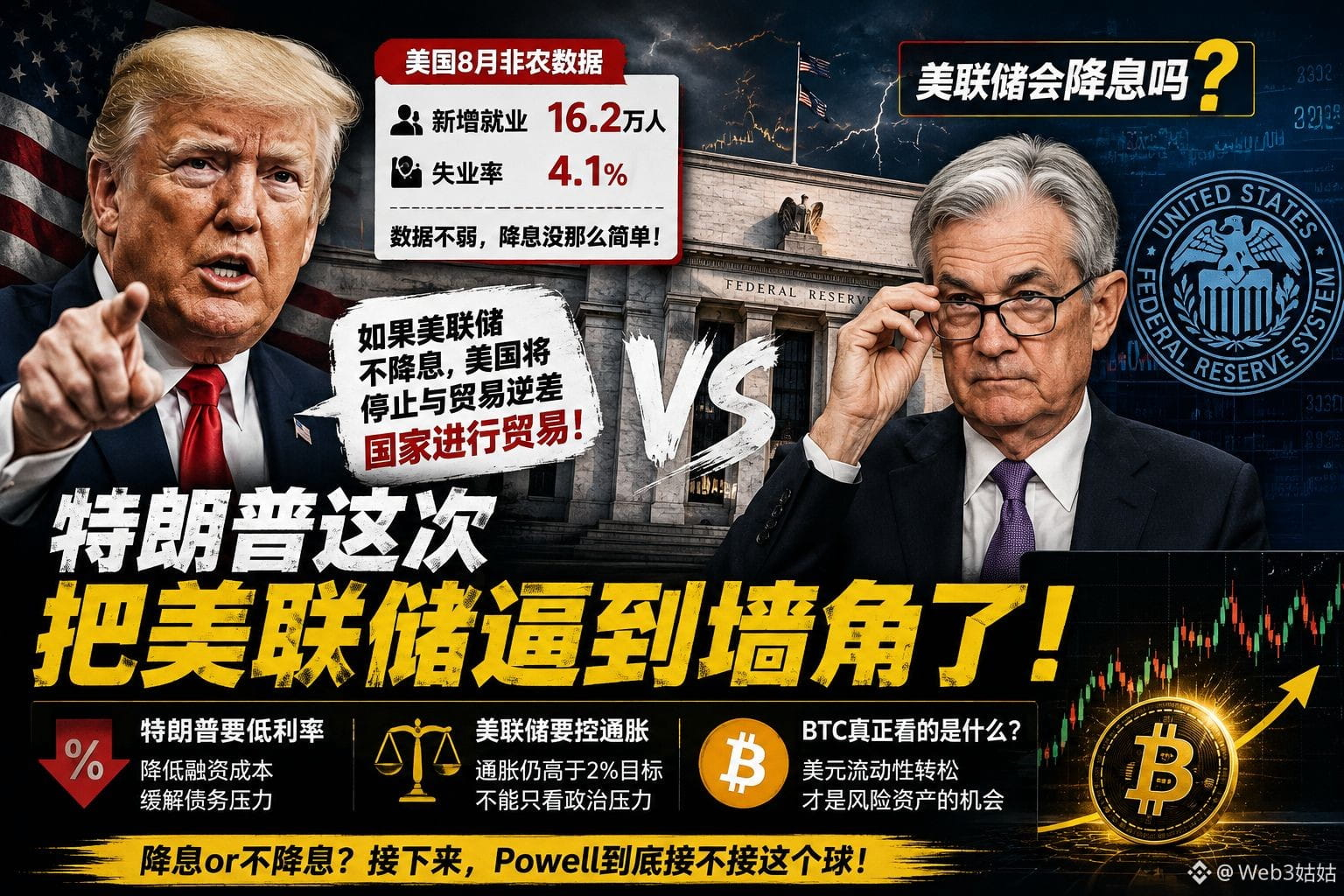
Trump has now pushed the Federal Reserve into a corner.
On September 4, Trump publicly said that if the Fed does not cut interest rates, the United States may stop trading with countries that run a trade deficit with the U.S.
This is no longer just “calling for rate cuts” — it is tying interest rates to trade policy.
What’s even more interesting is that on the same day, the U.S. August nonfarm payrolls were released: 162,000 new jobs were added, and the unemployment rate was 4.1%.
In other words: Trump is calling for rate cuts, but the economic data are not bad enough to require immediate rescue.
That is the real problem right now.
Trump wants lower interest rates to reduce financing costs and ease debt pressure; but the Fed still has to keep an eye on inflation.
At present, U.S. inflation is still above the Fed’s 2% target.
So the real game now is: the White House wants liquidity, while the Fed wants to control inflation.
And why should BTC investors care about this?
Because what crypto really feeds on is not the words “rate cuts,” but looser dollar liquidity.
If rate cuts come later and inflation cools, risk assets may enter a more comfortable environment.
But if trade tensions escalate and inflation remains sticky, and the Fed continues to keep rates high, BTC will not face little pressure either.
So don’t rush to call it a bull market just because Trump is calling for rate cuts.
What’s really worth watching next is whether the Fed will actually take the ball.
#BTC #比特币 #美联储 #特朗普
Trump has now pushed the Federal Reserve into a corner.
On September 4, Trump publicly said that if the Fed does not cut interest rates, the United States may stop trading with countries that run a trade deficit with the U.S.
This is no longer just “calling for rate cuts” — it is tying interest rates to trade policy.
What’s even more interesting is that on the same day, the U.S. August nonfarm payrolls were released: 162,000 new jobs were added, and the unemployment rate was 4.1%.
In other words: Trump is calling for rate cuts, but the economic data are not bad enough to require immediate rescue.
That is the real problem right now.
Trump wants lower interest rates to reduce financing costs and ease debt pressure; but the Fed still has to keep an eye on inflation.
At present, U.S. inflation is still above the Fed’s 2% target.
So the real game now is: the White House wants liquidity, while the Fed wants to control inflation.
And why should BTC investors care about this?
Because what crypto really feeds on is not the words “rate cuts,” but looser dollar liquidity.
If rate cuts come later and inflation cools, risk assets may enter a more comfortable environment.
But if trade tensions escalate and inflation remains sticky, and the Fed continues to keep rates high, BTC will not face little pressure either.
So don’t rush to call it a bull market just because Trump is calling for rate cuts.
What’s really worth watching next is whether the Fed will actually take the ball.
#BTC #比特币 #美联储 #特朗普
On September 4, Trump publicly said that if the Fed does not cut interest rates, the United States may stop trading with countries that run a trade deficit with the U.S.
This is no longer just “calling for rate cuts” — it is tying interest rates to trade policy.
What’s even more interesting is that on the same day, the U.S. August nonfarm payrolls were released: 162,000 new jobs were added, and the unemployment rate was 4.1%.
In other words: Trump is calling for rate cuts, but the economic data are not bad enough to require immediate rescue.
That is the real problem right now.
Trump wants lower interest rates to reduce financing costs and ease debt pressure; but the Fed still has to keep an eye on inflation.
At present, U.S. inflation is still above the Fed’s 2% target.
So the real game now is: the White House wants liquidity, while the Fed wants to control inflation.
And why should BTC investors care about this?
Because what crypto really feeds on is not the words “rate cuts,” but looser dollar liquidity.
If rate cuts come later and inflation cools, risk assets may enter a more comfortable environment.
But if trade tensions escalate and inflation remains sticky, and the Fed continues to keep rates high, BTC will not face little pressure either.
So don’t rush to call it a bull market just because Trump is calling for rate cuts.
What’s really worth watching next is whether the Fed will actually take the ball.
#BTC #比特币 #美联储 #特朗普
1
743
·
--
#XRP两周上涨40%未平仓合约下降
XRP rises nearly 40% in two weeks, but one key figure is actually falling
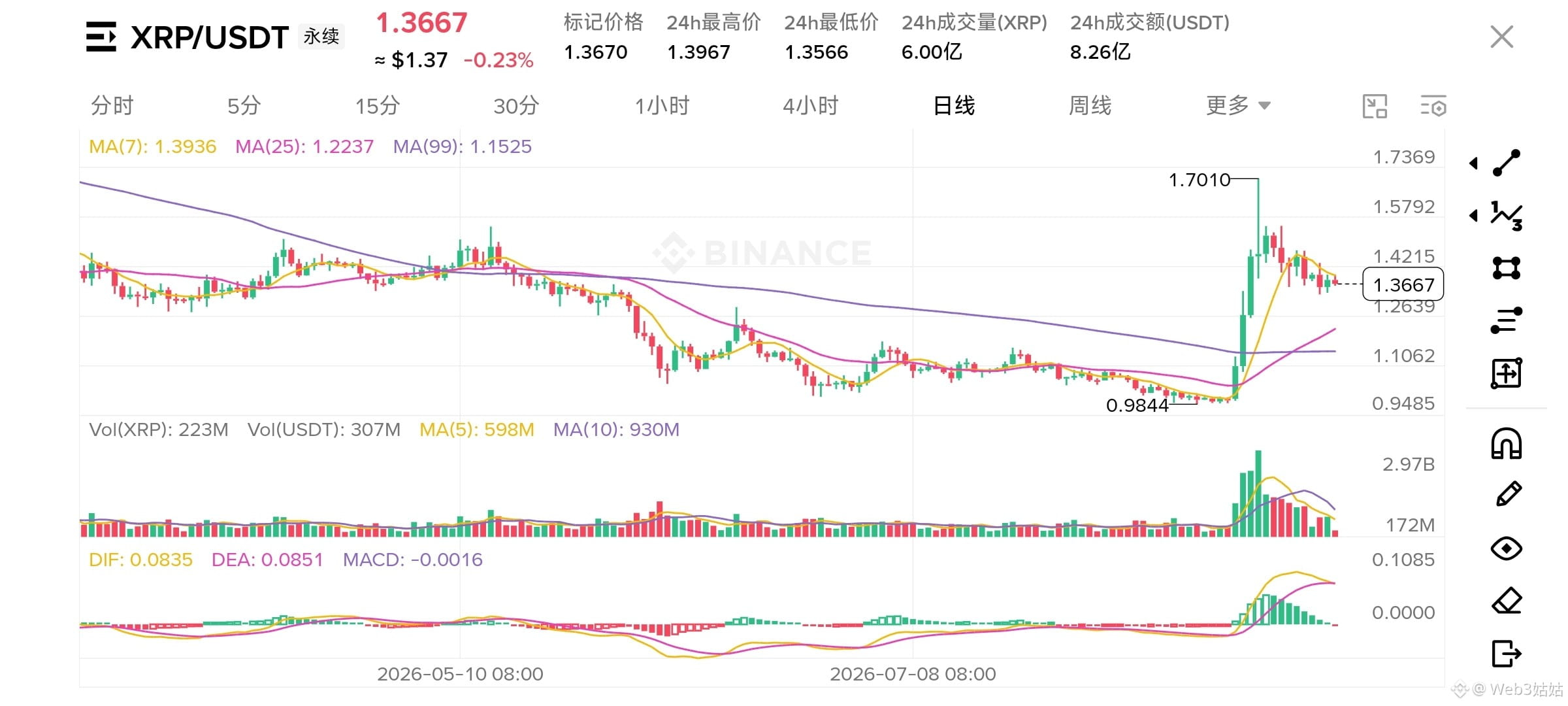
This XRP rally has been pretty wild, but what’s really interesting isn’t the return—it’s that as the price climbs, leverage is retreating.
From Aug 17 to Aug 31, XRP jumped from about $0.99 to $1.38, nearly a 40% gain. Meanwhile, open interest in futures fell 16%—from 2.77 billion XRP down to 2.34 billion.
So what does that mean?
At least one thing is clear: this upswing wasn’t simply pushed higher by the market crazily piling on leverage.
What’s even more worth watching is the CME.
During the same period, CME’s XRP futures open interest actually increased by about 36%, with its market share rising from 10% to 17%. Futures open interest at other exchanges dropped by more than 500 million XRP.
On the other side, the spot XRP ETF has recorded net inflows for 9 straight trading days, for a cumulative net inflow of roughly $1.6 billion.
But don’t jump to the conclusion that “institutions are broadly bullish” just yet.
CFTC data shows that leveraged funds’ net short positions have doubled to about 116 million XRP. However, these shorts may be hedges rather than a pure bet on a decline.
What XRP is showing is a rather interesting shift in capital—retail leverage cooling off, CME institutional positioning increasing, and ETF money continuing to flow in.
If the price keeps rising while futures leverage doesn’t noticeably expand, the character of this move may need to be re-evaluated.
The real question isn’t just how much XRP can still rise—but who is still buying.
$XRP
#XRP两周上涨40%未平仓合约下降
XRP rises nearly 40% in two weeks, but one key figure is actually falling
This XRP rally has been pretty wild, but what’s really interesting isn’t the return—it’s that as the price climbs, leverage is retreating.
From Aug 17 to Aug 31, XRP jumped from about $0.99 to $1.38, nearly a 40% gain. Meanwhile, open interest in futures fell 16%—from 2.77 billion XRP down to 2.34 billion.
So what does that mean?
At least one thing is clear: this upswing wasn’t simply pushed higher by the market crazily piling on leverage.
What’s even more worth watching is the CME.
During the same period, CME’s XRP futures open interest actually increased by about 36%, with its market share rising from 10% to 17%. Futures open interest at other exchanges dropped by more than 500 million XRP.
On the other side, the spot XRP ETF has recorded net inflows for 9 straight trading days, for a cumulative net inflow of roughly $1.6 billion.
But don’t jump to the conclusion that “institutions are broadly bullish” just yet.
CFTC data shows that leveraged funds’ net short positions have doubled to about 116 million XRP. However, these shorts may be hedges rather than a pure bet on a decline.
What XRP is showing is a rather interesting shift in capital—retail leverage cooling off, CME institutional positioning increasing, and ETF money continuing to flow in.
If the price keeps rising while futures leverage doesn’t noticeably expand, the character of this move may need to be re-evaluated.
The real question isn’t just how much XRP can still rise—but who is still buying.
$XRP
XRP rises nearly 40% in two weeks, but one key figure is actually falling
This XRP rally has been pretty wild, but what’s really interesting isn’t the return—it’s that as the price climbs, leverage is retreating.
From Aug 17 to Aug 31, XRP jumped from about $0.99 to $1.38, nearly a 40% gain. Meanwhile, open interest in futures fell 16%—from 2.77 billion XRP down to 2.34 billion.
So what does that mean?
At least one thing is clear: this upswing wasn’t simply pushed higher by the market crazily piling on leverage.
What’s even more worth watching is the CME.
During the same period, CME’s XRP futures open interest actually increased by about 36%, with its market share rising from 10% to 17%. Futures open interest at other exchanges dropped by more than 500 million XRP.
On the other side, the spot XRP ETF has recorded net inflows for 9 straight trading days, for a cumulative net inflow of roughly $1.6 billion.
But don’t jump to the conclusion that “institutions are broadly bullish” just yet.
CFTC data shows that leveraged funds’ net short positions have doubled to about 116 million XRP. However, these shorts may be hedges rather than a pure bet on a decline.
What XRP is showing is a rather interesting shift in capital—retail leverage cooling off, CME institutional positioning increasing, and ETF money continuing to flow in.
If the price keeps rising while futures leverage doesn’t noticeably expand, the character of this move may need to be re-evaluated.
The real question isn’t just how much XRP can still rise—but who is still buying.
$XRP
1
1
234
·
--
Verified
#首笔抗量子比特币交易主网完成 Quantum computers haven’t arrived yet, but BTC has already put up a “burglar-proof door” 😂
This time it wasn’t a PPT—it actually went live on the mainnet.
On August 26, StarkWare researcher Avihu Levy conducted an experimental anti-quantum bitcoin transaction, which was ultimately included in Bitcoin mainnet block number 964199.
The most interesting part: there was no soft fork, no hard fork, and no changes to Bitcoin’s consensus rules.
It uses a scheme called QSB (Quantum Safe Bitcoin). Put simply, it uses the hashing mechanism to swap BTC’s “lock” for one that will be harder for future quantum computing to break.
But don’t rush to shout that “BTC is already quantum-resistant”—not yet.
This transaction currently has high computational cost and takes a long time. It’s also a non-standard transaction, meaning miners need to provide a special pathway to complete it.
So I think what’s truly worth paying attention to isn’t: “If quantum computers arrive, will BTC go to zero?”—but rather:
For the first time, Bitcoin has proven on mainnet something: when facing quantum threats, it may not be necessary to only wait for a major protocol upgrade.
Today is just the experiment—tomorrow is the real war.
The quantum era hasn’t arrived yet, but BTC has already started reinforcing its doors.
#Bitcoin #StarkWare #量子计算
#首笔抗量子比特币交易主网完成 Quantum computers haven’t arrived yet, but BTC has already put up a “burglar-proof door” 😂
This time it wasn’t a PPT—it actually went live on the mainnet.
On August 26, StarkWare researcher Avihu Levy conducted an experimental anti-quantum bitcoin transaction, which was ultimately included in Bitcoin mainnet block number 964199.
The most interesting part: there was no soft fork, no hard fork, and no changes to Bitcoin’s consensus rules.
It uses a scheme called QSB (Quantum Safe Bitcoin). Put simply, it uses the hashing mechanism to swap BTC’s “lock” for one that will be harder for future quantum computing to break.
But don’t rush to shout that “BTC is already quantum-resistant”—not yet.
This transaction currently has high computational cost and takes a long time. It’s also a non-standard transaction, meaning miners need to provide a special pathway to complete it.
So I think what’s truly worth paying attention to isn’t: “If quantum computers arrive, will BTC go to zero?”—but rather:
For the first time, Bitcoin has proven on mainnet something: when facing quantum threats, it may not be necessary to only wait for a major protocol upgrade.
Today is just the experiment—tomorrow is the real war.
The quantum era hasn’t arrived yet, but BTC has already started reinforcing its doors.
#Bitcoin #StarkWare #量子计算
This time it wasn’t a PPT—it actually went live on the mainnet.
On August 26, StarkWare researcher Avihu Levy conducted an experimental anti-quantum bitcoin transaction, which was ultimately included in Bitcoin mainnet block number 964199.
The most interesting part: there was no soft fork, no hard fork, and no changes to Bitcoin’s consensus rules.
It uses a scheme called QSB (Quantum Safe Bitcoin). Put simply, it uses the hashing mechanism to swap BTC’s “lock” for one that will be harder for future quantum computing to break.
But don’t rush to shout that “BTC is already quantum-resistant”—not yet.
This transaction currently has high computational cost and takes a long time. It’s also a non-standard transaction, meaning miners need to provide a special pathway to complete it.
So I think what’s truly worth paying attention to isn’t: “If quantum computers arrive, will BTC go to zero?”—but rather:
For the first time, Bitcoin has proven on mainnet something: when facing quantum threats, it may not be necessary to only wait for a major protocol upgrade.
Today is just the experiment—tomorrow is the real war.
The quantum era hasn’t arrived yet, but BTC has already started reinforcing its doors.
#Bitcoin #StarkWare #量子计算
1
2
1.1k
·
--
Verified
#英伟达开盘140分钟成交335亿美元 NVIDIA swallows $33.5 billion in 140 minutes after the opening: this time, the market bought more than just a single big bullish candle
On August 27, NVIDIA once again absorbed all the attention of the US stock market.
Just 2 hours and 20 minutes after the open, trading volume already reached $33.5 billion—exceeding its usual single-day level. The stock ultimately closed up 8.74% at $227.98, with trading volume of about 286 million shares.
What’s really worth paying attention to isn’t only “how much it rose,” but why this wave of capital still had the courage to keep pushing in.
The answer is in the earnings report.
NVIDIA’s latest quarterly revenue reached $96.2 billion, up 106% year over year; data center revenue was $89 billion, up 117%. More importantly, the company expects next quarter’s revenue of about $108 billion and also provided growth expectations of roughly 70% for the next fiscal year.
That suggests the market’s biggest prior concern—whether AI capital expenditures might be topping out—has not happened, at least based on NVIDIA’s orders and guidance for now.
My personal view is that this rally looks more like the AI megatrend being repriced again, rather than pure “earnings arbitrage.”
However, don’t get carried away just because of one 8.74% big bullish candle. NVIDIA surged above $230 at the highest point of the day, so short-term profit-taking is inevitable. As for the two claims—“historically, there’s a 62% probability of first filling the gap before rising again” and “next week’s release of CoWoS capacity allocation details”—I haven’t found enough reliable public evidence, so I don’t recommend taking them as direct trading conclusions.
Next, what truly deserves attention is whether the AI industry chain can keep spreading—HBM, advanced packaging CoWoS, memory, optical communications, and server power. Whoever can genuinely convert NVIDIA’s growth into their own performance is the one most likely to take the baton next.
The $33.5 billion trading value shows that investors have cast their votes, but a price rally ending doesn’t mean opportunities are over. Going forward, what matters for this AI theme won’t be who’s shouting the loudest—it will be who actually has the orders in hand. #英伟达财报后涨8.74%
#英伟达开盘140分钟成交335亿美元 NVIDIA swallows $33.5 billion in 140 minutes after the opening: this time, the market bought more than just a single big bullish candle
On August 27, NVIDIA once again absorbed all the attention of the US stock market.
Just 2 hours and 20 minutes after the open, trading volume already reached $33.5 billion—exceeding its usual single-day level. The stock ultimately closed up 8.74% at $227.98, with trading volume of about 286 million shares.
What’s really worth paying attention to isn’t only “how much it rose,” but why this wave of capital still had the courage to keep pushing in.
The answer is in the earnings report.
NVIDIA’s latest quarterly revenue reached $96.2 billion, up 106% year over year; data center revenue was $89 billion, up 117%. More importantly, the company expects next quarter’s revenue of about $108 billion and also provided growth expectations of roughly 70% for the next fiscal year.
That suggests the market’s biggest prior concern—whether AI capital expenditures might be topping out—has not happened, at least based on NVIDIA’s orders and guidance for now.
My personal view is that this rally looks more like the AI megatrend being repriced again, rather than pure “earnings arbitrage.”
However, don’t get carried away just because of one 8.74% big bullish candle. NVIDIA surged above $230 at the highest point of the day, so short-term profit-taking is inevitable. As for the two claims—“historically, there’s a 62% probability of first filling the gap before rising again” and “next week’s release of CoWoS capacity allocation details”—I haven’t found enough reliable public evidence, so I don’t recommend taking them as direct trading conclusions.
Next, what truly deserves attention is whether the AI industry chain can keep spreading—HBM, advanced packaging CoWoS, memory, optical communications, and server power. Whoever can genuinely convert NVIDIA’s growth into their own performance is the one most likely to take the baton next.
The $33.5 billion trading value shows that investors have cast their votes, but a price rally ending doesn’t mean opportunities are over. Going forward, what matters for this AI theme won’t be who’s shouting the loudest—it will be who actually has the orders in hand. #英伟达财报后涨8.74%
On August 27, NVIDIA once again absorbed all the attention of the US stock market.
Just 2 hours and 20 minutes after the open, trading volume already reached $33.5 billion—exceeding its usual single-day level. The stock ultimately closed up 8.74% at $227.98, with trading volume of about 286 million shares.
What’s really worth paying attention to isn’t only “how much it rose,” but why this wave of capital still had the courage to keep pushing in.
The answer is in the earnings report.
NVIDIA’s latest quarterly revenue reached $96.2 billion, up 106% year over year; data center revenue was $89 billion, up 117%. More importantly, the company expects next quarter’s revenue of about $108 billion and also provided growth expectations of roughly 70% for the next fiscal year.
That suggests the market’s biggest prior concern—whether AI capital expenditures might be topping out—has not happened, at least based on NVIDIA’s orders and guidance for now.
My personal view is that this rally looks more like the AI megatrend being repriced again, rather than pure “earnings arbitrage.”
However, don’t get carried away just because of one 8.74% big bullish candle. NVIDIA surged above $230 at the highest point of the day, so short-term profit-taking is inevitable. As for the two claims—“historically, there’s a 62% probability of first filling the gap before rising again” and “next week’s release of CoWoS capacity allocation details”—I haven’t found enough reliable public evidence, so I don’t recommend taking them as direct trading conclusions.
Next, what truly deserves attention is whether the AI industry chain can keep spreading—HBM, advanced packaging CoWoS, memory, optical communications, and server power. Whoever can genuinely convert NVIDIA’s growth into their own performance is the one most likely to take the baton next.
The $33.5 billion trading value shows that investors have cast their votes, but a price rally ending doesn’t mean opportunities are over. Going forward, what matters for this AI theme won’t be who’s shouting the loudest—it will be who actually has the orders in hand. #英伟达财报后涨8.74%
2
2
1.3k
·
--
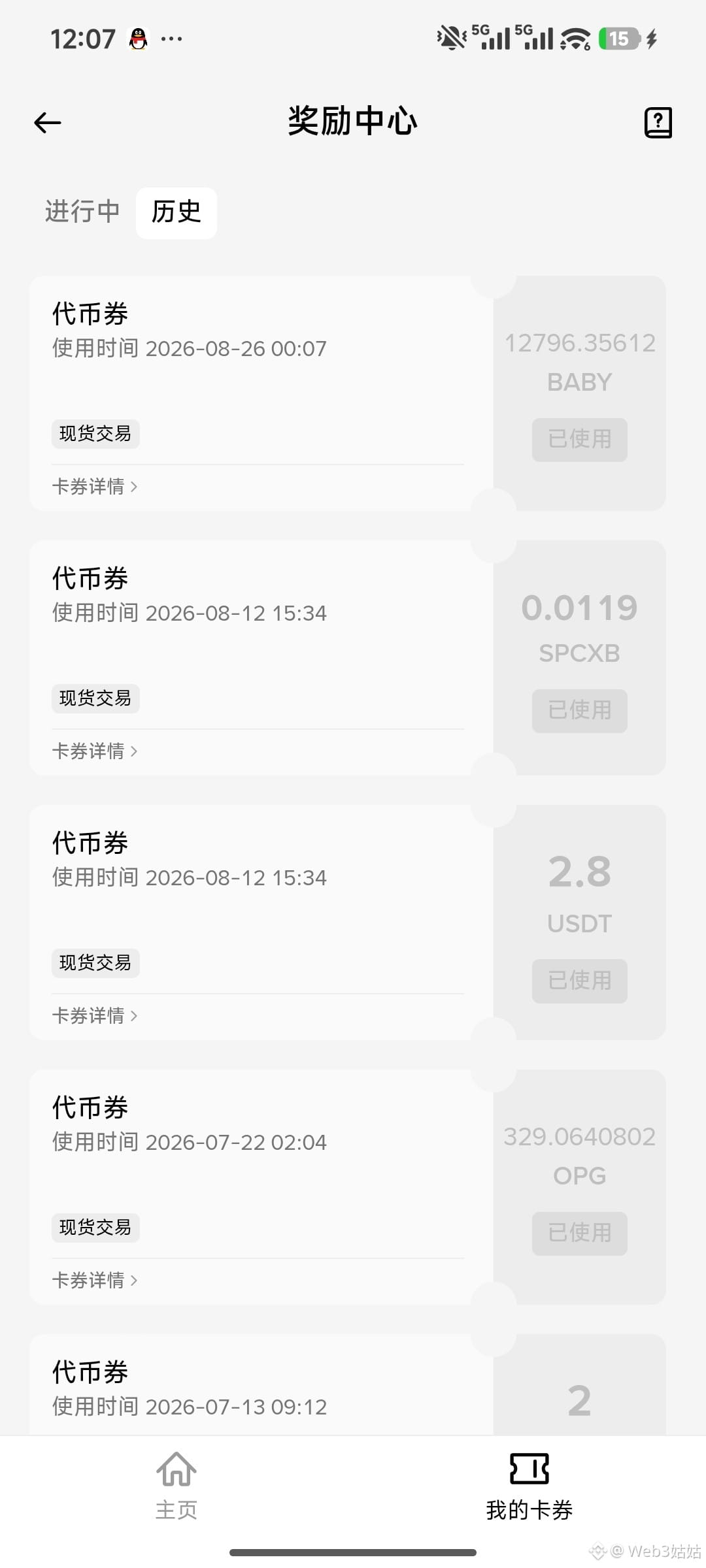
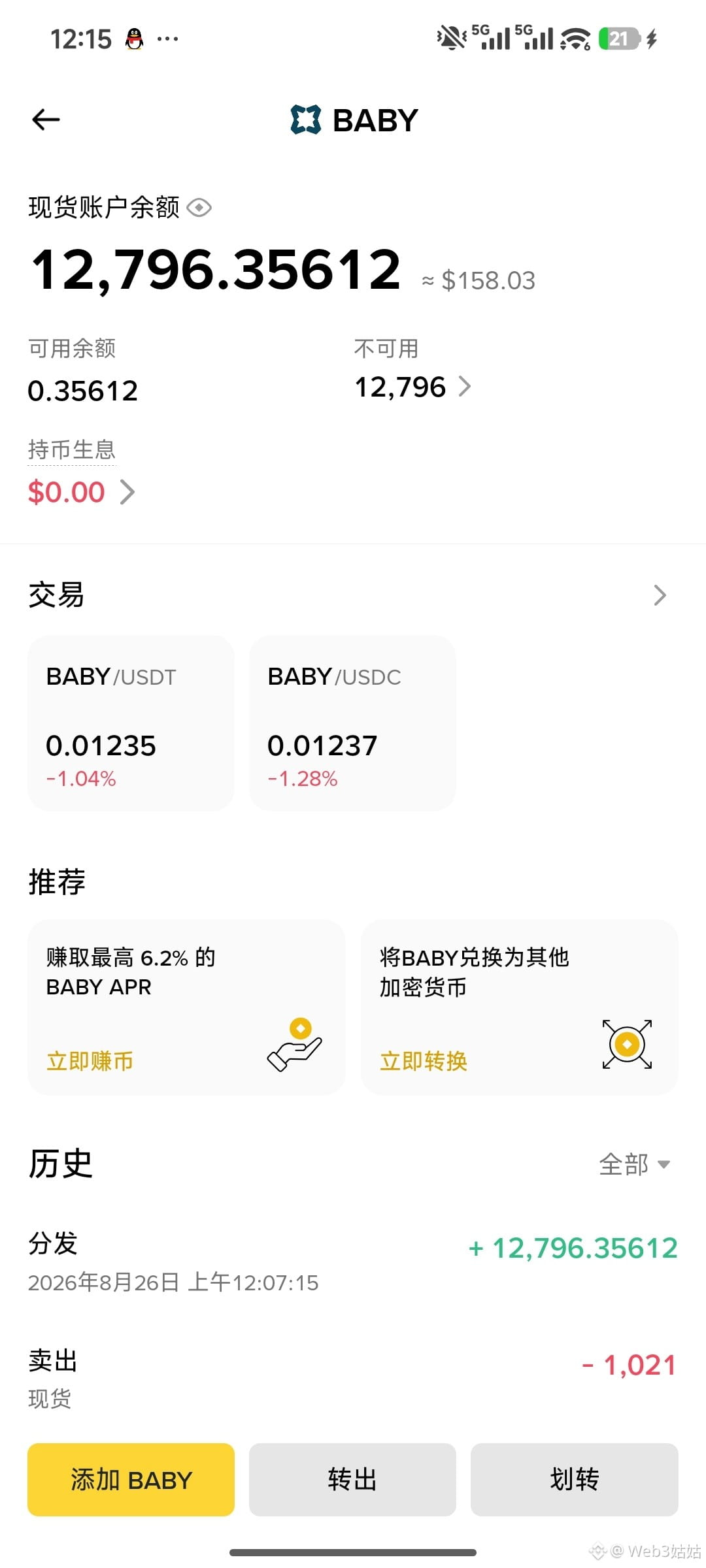
$BABY This time, we finally got to eat with an invited mouth that’s been craving over a hundred bucks. 158 bucks for two deluxe hotpot meals—got it!
$BABY This time, we finally got to eat with an invited mouth that’s been craving over a hundred bucks. 158 bucks for two deluxe hotpot meals—got it!
2
598
·
--
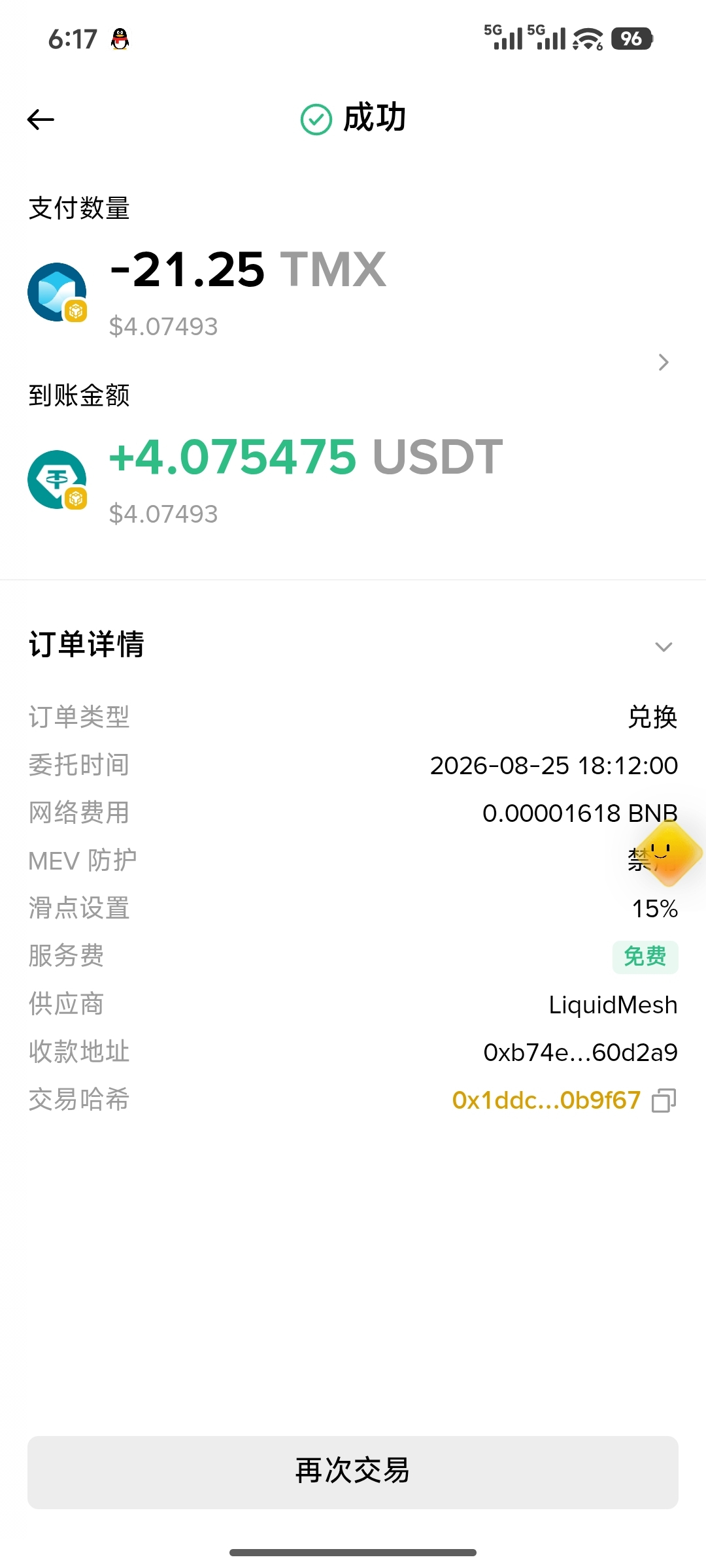
TermMax Booster wallet task rewards have been sent out, haha, sold for 4 knives! The main character meal has been obtained $TMX
TermMax Booster wallet task rewards have been sent out, haha, sold for 4 knives! The main character meal has been obtained $TMX

2
3
745
·
--
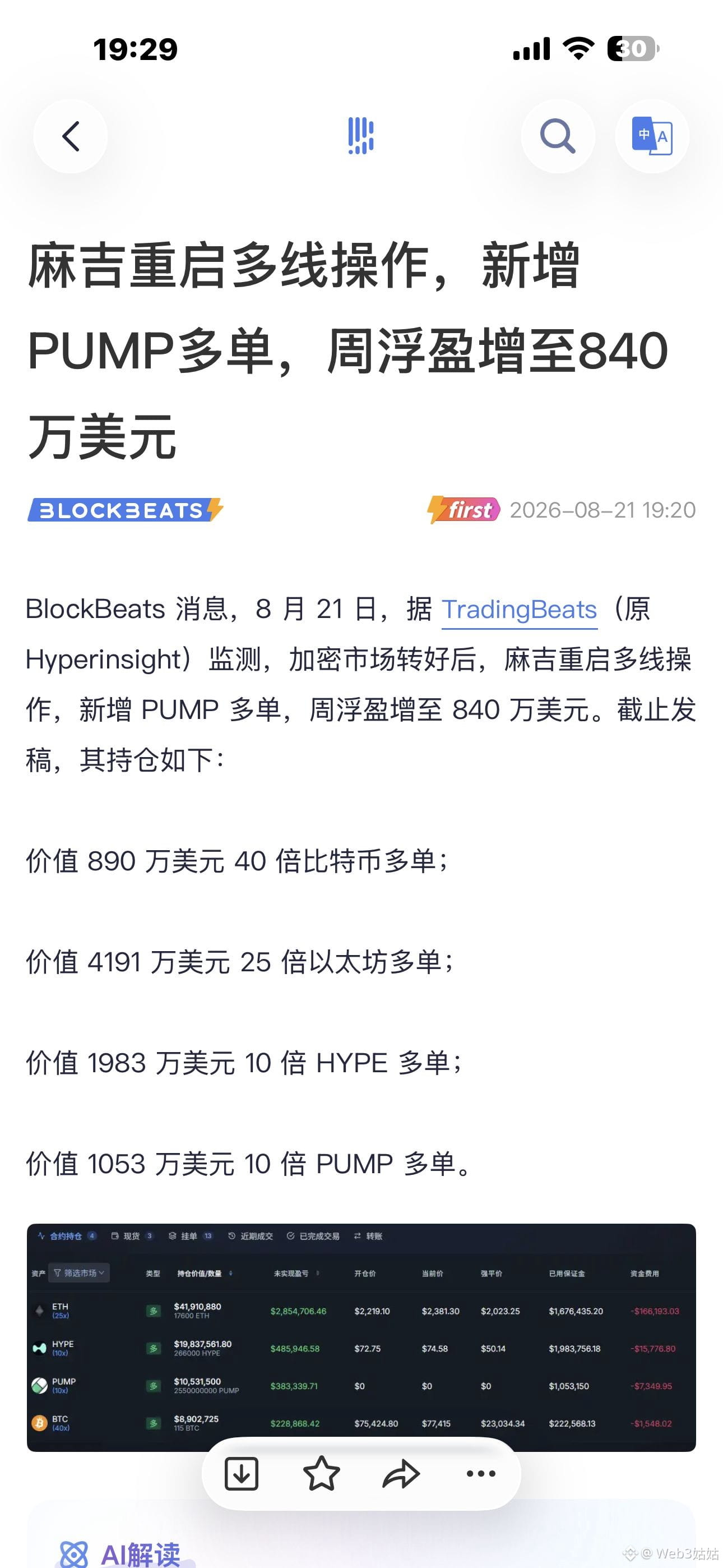
Big Brother Ma, you’re back on the rise again! $PUMP
{spot}(PUMPUSDT)
Big Brother Ma, you’re back on the rise again! $PUMP
1
462
·
--
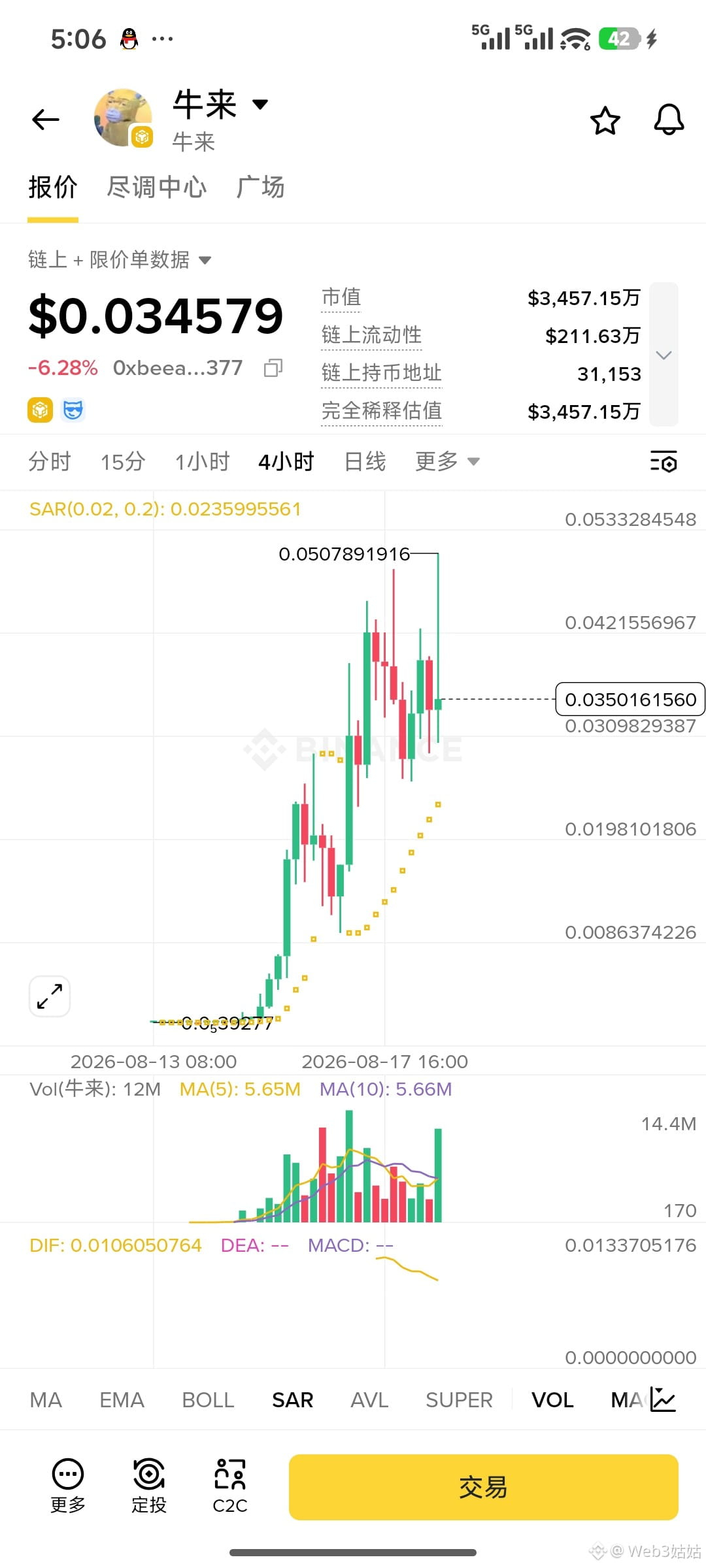
$牛来 I didn’t think a bull would really come—now that it’s reached alpha, everyone says you should top out and escape. What do you all think 😁
$牛来 I didn’t think a bull would really come—now that it’s reached alpha, everyone says you should top out and escape. What do you all think 😁
4
1
1.2k
·
--
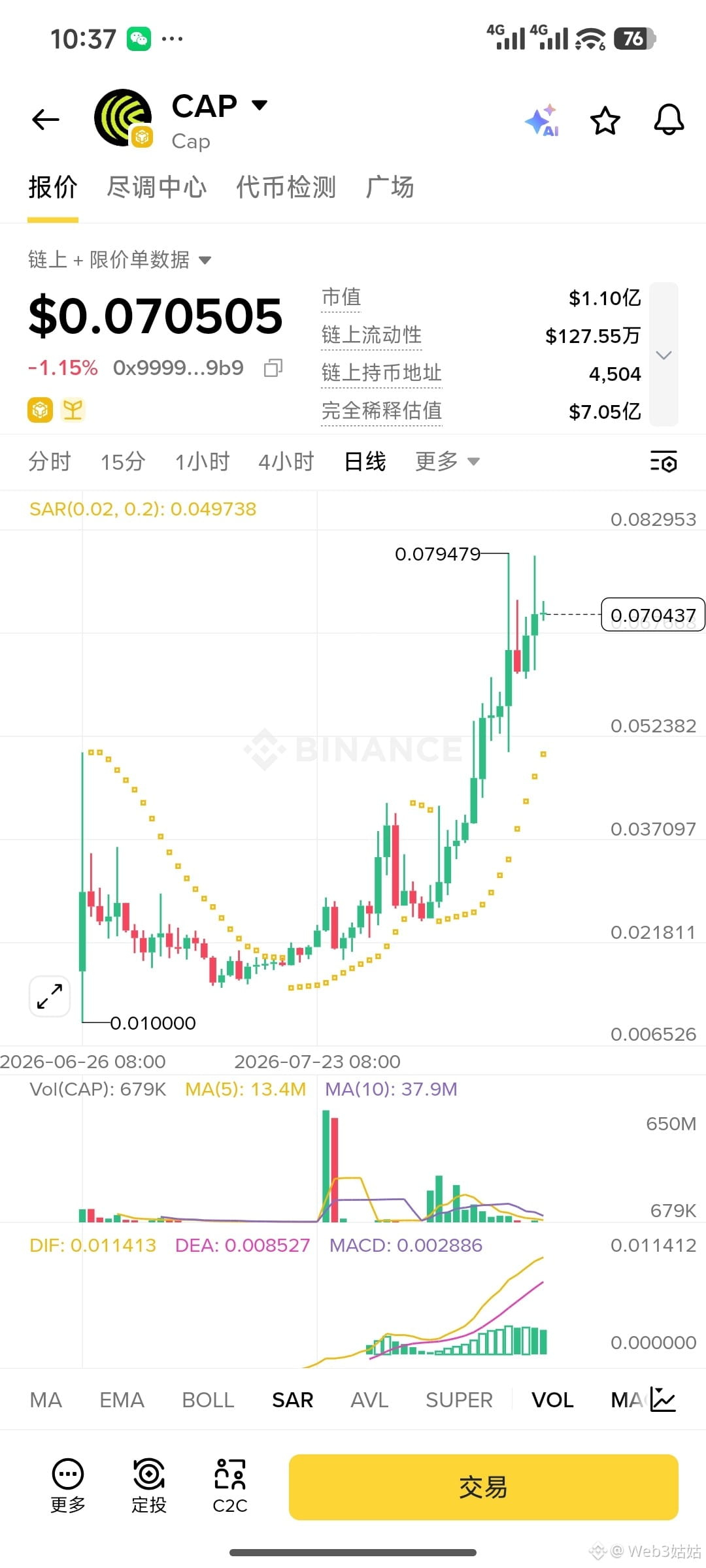
$CAP It's another coin that got away, huh! Diamond hands, selling for a miss
$CAP It's another coin that got away, huh! Diamond hands, selling for a miss
1
763
·
--
#美国7月CPI与PPI数据本周出炉 🔥 CPI cools down, but don't celebrate with champagne yet
The US July CPI is out: year-over-year 3.4%, down from June's 3.5%; core CPI year-over-year 2.5%, month-over-month 0.2%.
The data isn't explosive, but at least it doesn't give the Fed more reasons to keep tightening.
More interestingly, market expectations for a September rate hike have clearly cooled off. In the US stock market, funds are starting to rotate back into high-beta areas like AI infrastructure, chips, and optical communications. The Nasdaq is also noticeably outperforming the Dow.
In this round, what’s truly worth watching isn't just CPI—it’s tonight’s PPI.
If PPI continues to deliver moderate signals, then the chain of “inflation → rate hikes → pressure on risk assets” will loosen further, giving growth stocks, AI, and crypto assets room to breathe.
But if PPI suddenly fights back, the market may have to reprice again.
So it's not time to blindly go long yet.
CPI blows the warm wind; PPI is the second test tonight.
$BTC $SOXL $KORU #宏观 #美国7月CPI与PPI数据本周出炉
#美国7月CPI与PPI数据本周出炉 🔥 CPI cools down, but don't celebrate with champagne yet
The US July CPI is out: year-over-year 3.4%, down from June's 3.5%; core CPI year-over-year 2.5%, month-over-month 0.2%.
The data isn't explosive, but at least it doesn't give the Fed more reasons to keep tightening.
More interestingly, market expectations for a September rate hike have clearly cooled off. In the US stock market, funds are starting to rotate back into high-beta areas like AI infrastructure, chips, and optical communications. The Nasdaq is also noticeably outperforming the Dow.
In this round, what’s truly worth watching isn't just CPI—it’s tonight’s PPI.
If PPI continues to deliver moderate signals, then the chain of “inflation → rate hikes → pressure on risk assets” will loosen further, giving growth stocks, AI, and crypto assets room to breathe.
But if PPI suddenly fights back, the market may have to reprice again.
So it's not time to blindly go long yet.
CPI blows the warm wind; PPI is the second test tonight.
$BTC $SOXL $KORU #宏观 #美国7月CPI与PPI数据本周出炉
The US July CPI is out: year-over-year 3.4%, down from June's 3.5%; core CPI year-over-year 2.5%, month-over-month 0.2%.
The data isn't explosive, but at least it doesn't give the Fed more reasons to keep tightening.
More interestingly, market expectations for a September rate hike have clearly cooled off. In the US stock market, funds are starting to rotate back into high-beta areas like AI infrastructure, chips, and optical communications. The Nasdaq is also noticeably outperforming the Dow.
In this round, what’s truly worth watching isn't just CPI—it’s tonight’s PPI.
If PPI continues to deliver moderate signals, then the chain of “inflation → rate hikes → pressure on risk assets” will loosen further, giving growth stocks, AI, and crypto assets room to breathe.
But if PPI suddenly fights back, the market may have to reprice again.
So it's not time to blindly go long yet.
CPI blows the warm wind; PPI is the second test tonight.
$BTC $SOXL $KORU #宏观 #美国7月CPI与PPI数据本周出炉

1
269
·
--
Verified
#伊朗任命拉扎伊为国安会新负责人
🚨 Iran’s security leadership suddenly changes hands, and Hormuz adds another variable!
Iran has just completed a crucial personnel reshuffle: Mohsen Rezaei, the former commander of the Islamic Revolutionary Guard Corps, has been appointed as Secretary of the Supreme National Security Council, while also serving as the representative of Supreme Leader Mojtaba Khamenei on the Council.
Why does the market care?
Rezaei is not a typical official. He has long led the Revolutionary Guard, and in recent months he has repeatedly stressed in public the importance of Hormuz to Iran’s security and strategic interests—going so far as to call it an important deterrent tool for Iran.
And the key context right now is this: Hormuz has not yet fully returned to normal shipping operations. Meanwhile, Iran and the United States still have clear differences over the conditions for reopening the Strait. Iran is demanding the removal of sanctions and compensation-related conditions, and the negotiations are far less straightforward than the market previously assumed.
What does this mean?
If negotiations continue to move forward, the geopolitical premium in oil prices could gradually ease;
if tensions re-escalate, risks to crude supply and shipping could once again be priced in by the market.
Today, Brent crude has already regained the vicinity of around $85. Clearly, the market is not fully betting that “Hormuz will return to normal operations immediately.”
So don’t just focus on BTC and US stocks for now.
The real thing to watch is Hormuz.
Whether the Strait can maintain stable passage may be the key variable driving market sentiment toward risk assets next.
#美军封锁霍尔木兹拦截55艘商船 #霍尔木兹海峡 #石油
#伊朗任命拉扎伊为国安会新负责人
🚨 Iran’s security leadership suddenly changes hands, and Hormuz adds another variable!
Iran has just completed a crucial personnel reshuffle: Mohsen Rezaei, the former commander of the Islamic Revolutionary Guard Corps, has been appointed as Secretary of the Supreme National Security Council, while also serving as the representative of Supreme Leader Mojtaba Khamenei on the Council.
Why does the market care?
Rezaei is not a typical official. He has long led the Revolutionary Guard, and in recent months he has repeatedly stressed in public the importance of Hormuz to Iran’s security and strategic interests—going so far as to call it an important deterrent tool for Iran.
And the key context right now is this: Hormuz has not yet fully returned to normal shipping operations. Meanwhile, Iran and the United States still have clear differences over the conditions for reopening the Strait. Iran is demanding the removal of sanctions and compensation-related conditions, and the negotiations are far less straightforward than the market previously assumed.
What does this mean?
If negotiations continue to move forward, the geopolitical premium in oil prices could gradually ease;
if tensions re-escalate, risks to crude supply and shipping could once again be priced in by the market.
Today, Brent crude has already regained the vicinity of around $85. Clearly, the market is not fully betting that “Hormuz will return to normal operations immediately.”
So don’t just focus on BTC and US stocks for now.
The real thing to watch is Hormuz.
Whether the Strait can maintain stable passage may be the key variable driving market sentiment toward risk assets next.
#美军封锁霍尔木兹拦截55艘商船 #霍尔木兹海峡 #石油
🚨 Iran’s security leadership suddenly changes hands, and Hormuz adds another variable!
Iran has just completed a crucial personnel reshuffle: Mohsen Rezaei, the former commander of the Islamic Revolutionary Guard Corps, has been appointed as Secretary of the Supreme National Security Council, while also serving as the representative of Supreme Leader Mojtaba Khamenei on the Council.
Why does the market care?
Rezaei is not a typical official. He has long led the Revolutionary Guard, and in recent months he has repeatedly stressed in public the importance of Hormuz to Iran’s security and strategic interests—going so far as to call it an important deterrent tool for Iran.
And the key context right now is this: Hormuz has not yet fully returned to normal shipping operations. Meanwhile, Iran and the United States still have clear differences over the conditions for reopening the Strait. Iran is demanding the removal of sanctions and compensation-related conditions, and the negotiations are far less straightforward than the market previously assumed.
What does this mean?
If negotiations continue to move forward, the geopolitical premium in oil prices could gradually ease;
if tensions re-escalate, risks to crude supply and shipping could once again be priced in by the market.
Today, Brent crude has already regained the vicinity of around $85. Clearly, the market is not fully betting that “Hormuz will return to normal operations immediately.”
So don’t just focus on BTC and US stocks for now.
The real thing to watch is Hormuz.
Whether the Strait can maintain stable passage may be the key variable driving market sentiment toward risk assets next.
#美军封锁霍尔木兹拦截55艘商船 #霍尔木兹海峡 #石油
3
1.8k
·
--
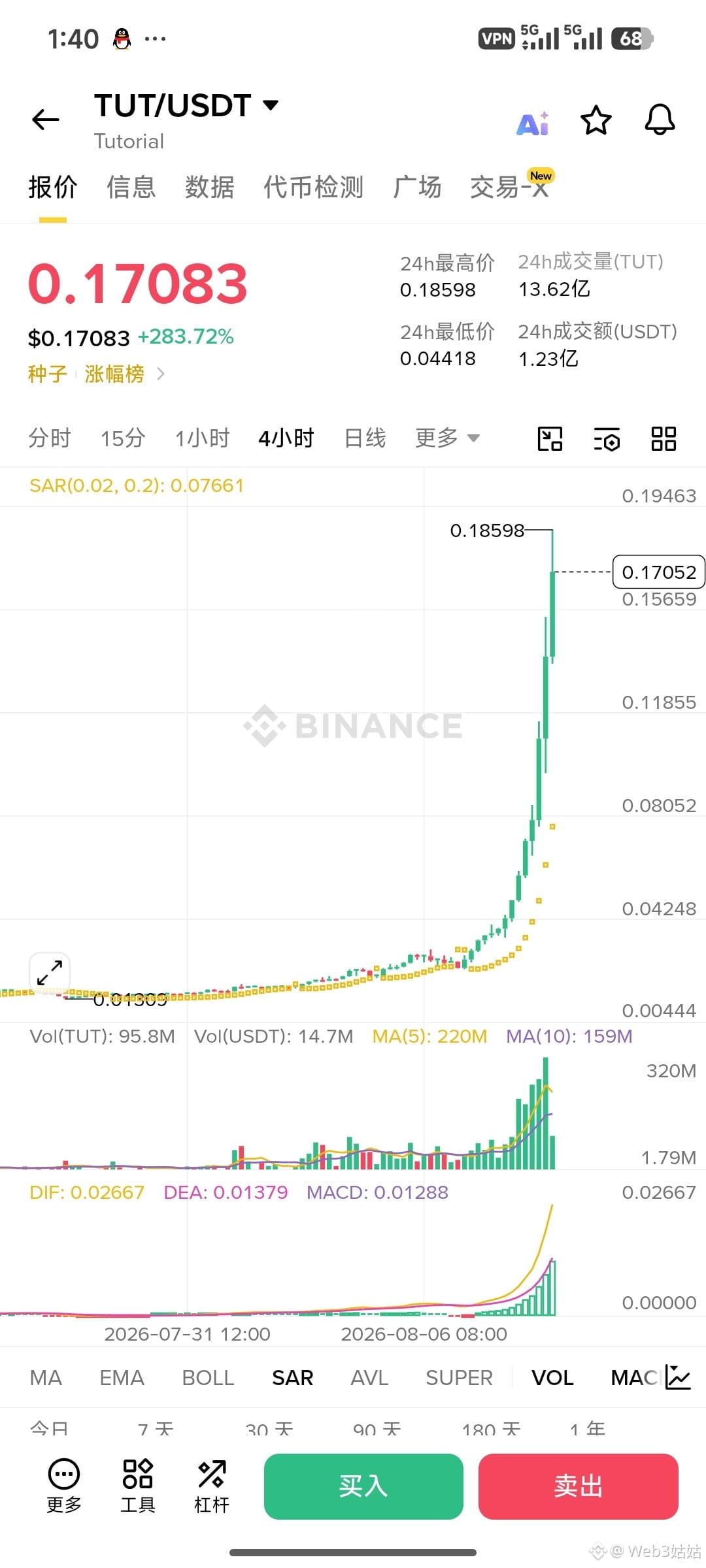
$TUT 🚨 4-hour candlestick chart—it's been pulled into a parabola directly!
This run by $TUT is definitely a bit outrageous. This wave of TUT surged to around 0.18 USDT at one point. The 24H increase is close to 300%, and the 24H trading volume exceeds 1 billion USDT—shooting straight to the top ranks on the biggest gainers list.
Even more notable is the 4-hour candlestick chart:
Price keeps accelerating upward + trading volume expands in sync + MACD rapidly broadens + the SAR remains below the price continuously.
This isn’t simply “nobody is selling, so it goes up.” Instead, short-term capital and market attention have been driven up together.
But the issue is exactly here.
TUT itself isn’t a brand-new coin that just appeared. It originally came from a tutorial project on BNB Chain, then gradually developed into an AI learning platform, and in 2025 it entered Binance spot trading. The official roadmap is still pushing forward features like AI Tutor, learning tools, and community courses.
So what’s really worth watching now isn’t “can it keep rising,” but:
After the surge, can the 4-hour timeframe hold the high level?
If it continues to consolidate at the highs after volume increases, that suggests the capital heat is still there;
If it spikes up then shows a high-volume long bearish candle, the SAR turns, and the MACD rapidly contracts, then you should be alert for a cooling of sentiment.
Especially with candlesticks that keep getting pushed up continuously, the most dangerous part isn’t that it didn’t rise—it’s that after rising too fast, the market starts scrambling for the last available liquidity.
$TUT ’s run is indeed intense.
But the most attractive place on the leaderboard is often also the riskiest.
Understanding the trend is important; understanding when the trend starts changing is even more important.
#Tutorial #加密货币 #山寨币
$TUT 🚨 4-hour candlestick chart—it's been pulled into a parabola directly!
This run by $TUT is definitely a bit outrageous. This wave of TUT surged to around 0.18 USDT at one point. The 24H increase is close to 300%, and the 24H trading volume exceeds 1 billion USDT—shooting straight to the top ranks on the biggest gainers list.
Even more notable is the 4-hour candlestick chart:
Price keeps accelerating upward + trading volume expands in sync + MACD rapidly broadens + the SAR remains below the price continuously.
This isn’t simply “nobody is selling, so it goes up.” Instead, short-term capital and market attention have been driven up together.
But the issue is exactly here.
TUT itself isn’t a brand-new coin that just appeared. It originally came from a tutorial project on BNB Chain, then gradually developed into an AI learning platform, and in 2025 it entered Binance spot trading. The official roadmap is still pushing forward features like AI Tutor, learning tools, and community courses.
So what’s really worth watching now isn’t “can it keep rising,” but:
After the surge, can the 4-hour timeframe hold the high level?
If it continues to consolidate at the highs after volume increases, that suggests the capital heat is still there;
If it spikes up then shows a high-volume long bearish candle, the SAR turns, and the MACD rapidly contracts, then you should be alert for a cooling of sentiment.
Especially with candlesticks that keep getting pushed up continuously, the most dangerous part isn’t that it didn’t rise—it’s that after rising too fast, the market starts scrambling for the last available liquidity.
$TUT ’s run is indeed intense.
But the most attractive place on the leaderboard is often also the riskiest.
Understanding the trend is important; understanding when the trend starts changing is even more important.
#Tutorial #加密货币 #山寨币
This run by $TUT is definitely a bit outrageous. This wave of TUT surged to around 0.18 USDT at one point. The 24H increase is close to 300%, and the 24H trading volume exceeds 1 billion USDT—shooting straight to the top ranks on the biggest gainers list.
Even more notable is the 4-hour candlestick chart:
Price keeps accelerating upward + trading volume expands in sync + MACD rapidly broadens + the SAR remains below the price continuously.
This isn’t simply “nobody is selling, so it goes up.” Instead, short-term capital and market attention have been driven up together.
But the issue is exactly here.
TUT itself isn’t a brand-new coin that just appeared. It originally came from a tutorial project on BNB Chain, then gradually developed into an AI learning platform, and in 2025 it entered Binance spot trading. The official roadmap is still pushing forward features like AI Tutor, learning tools, and community courses.
So what’s really worth watching now isn’t “can it keep rising,” but:
After the surge, can the 4-hour timeframe hold the high level?
If it continues to consolidate at the highs after volume increases, that suggests the capital heat is still there;
If it spikes up then shows a high-volume long bearish candle, the SAR turns, and the MACD rapidly contracts, then you should be alert for a cooling of sentiment.
Especially with candlesticks that keep getting pushed up continuously, the most dangerous part isn’t that it didn’t rise—it’s that after rising too fast, the market starts scrambling for the last available liquidity.
$TUT ’s run is indeed intense.
But the most attractive place on the leaderboard is often also the riskiest.
Understanding the trend is important; understanding when the trend starts changing is even more important.
#Tutorial #加密货币 #山寨币
2
772
·
--
Verified
#伊拉克石油出口下降75% 🚨 Iraqi oil exports plunge 75%—the real variable for oil prices has arrived!
On August 8, Iraq’s oil minister confirmed: due to the closure of the Strait of Hormuz, Iraqi oil exports have fallen by about 75% compared with pre-war levels.
Before the war, Iraq exported roughly 3.4 million barrels of crude oil per day through the Strait of Hormuz. The issue now isn’t that there’s “no oil,” but that the oil can’t be shipped out.
This is also the most worth paying attention to in the current crude oil market:
If the strait remains closed, Iraq’s production cuts and supply disruptions could expand further, and concerns over crude supply would continue to support near-month prices.
But on the other side, it’s also clear—earlier reports said the U.S. expects progress in talks between Iran and Oman regarding the reopening of the Strait of Hormuz. If navigation is truly restored afterward, Iraq has also indicated that exports could return to around 3.4 million barrels per day within about a week.
So the core of what oil prices are trading right now isn’t really “Iraq is down 75% in exports,” but rather: when will the Strait of Hormuz actually reopen for navigation?
The strait stays closed = supply risk continues to build.
Clear signs of reopening = the risk premium accumulated earlier could unwind quickly.
Negotiations have made progress, but the navigation risk hasn’t been fully removed yet.
Next, what crude oil is most worth watching isn’t simply up or down—it’s the reopening signals from the strait.
#霍尔木兹海峡 #伊拉克石油出口下降75% #原油
#伊拉克石油出口下降75% 🚨 Iraqi oil exports plunge 75%—the real variable for oil prices has arrived!
On August 8, Iraq’s oil minister confirmed: due to the closure of the Strait of Hormuz, Iraqi oil exports have fallen by about 75% compared with pre-war levels.
Before the war, Iraq exported roughly 3.4 million barrels of crude oil per day through the Strait of Hormuz. The issue now isn’t that there’s “no oil,” but that the oil can’t be shipped out.
This is also the most worth paying attention to in the current crude oil market:
If the strait remains closed, Iraq’s production cuts and supply disruptions could expand further, and concerns over crude supply would continue to support near-month prices.
But on the other side, it’s also clear—earlier reports said the U.S. expects progress in talks between Iran and Oman regarding the reopening of the Strait of Hormuz. If navigation is truly restored afterward, Iraq has also indicated that exports could return to around 3.4 million barrels per day within about a week.
So the core of what oil prices are trading right now isn’t really “Iraq is down 75% in exports,” but rather: when will the Strait of Hormuz actually reopen for navigation?
The strait stays closed = supply risk continues to build.
Clear signs of reopening = the risk premium accumulated earlier could unwind quickly.
Negotiations have made progress, but the navigation risk hasn’t been fully removed yet.
Next, what crude oil is most worth watching isn’t simply up or down—it’s the reopening signals from the strait.
#霍尔木兹海峡 #伊拉克石油出口下降75% #原油
On August 8, Iraq’s oil minister confirmed: due to the closure of the Strait of Hormuz, Iraqi oil exports have fallen by about 75% compared with pre-war levels.
Before the war, Iraq exported roughly 3.4 million barrels of crude oil per day through the Strait of Hormuz. The issue now isn’t that there’s “no oil,” but that the oil can’t be shipped out.
This is also the most worth paying attention to in the current crude oil market:
If the strait remains closed, Iraq’s production cuts and supply disruptions could expand further, and concerns over crude supply would continue to support near-month prices.
But on the other side, it’s also clear—earlier reports said the U.S. expects progress in talks between Iran and Oman regarding the reopening of the Strait of Hormuz. If navigation is truly restored afterward, Iraq has also indicated that exports could return to around 3.4 million barrels per day within about a week.
So the core of what oil prices are trading right now isn’t really “Iraq is down 75% in exports,” but rather: when will the Strait of Hormuz actually reopen for navigation?
The strait stays closed = supply risk continues to build.
Clear signs of reopening = the risk premium accumulated earlier could unwind quickly.
Negotiations have made progress, but the navigation risk hasn’t been fully removed yet.
Next, what crude oil is most worth watching isn’t simply up or down—it’s the reopening signals from the strait.
#霍尔木兹海峡 #伊拉克石油出口下降75% #原油
3
8
12.7k
·
--
#baby $BABY
This afternoon, when I was drawing Babylon’s architecture diagram, I drew one connecting line three times.
The reason is simple: I kept wondering, why does @babylonlabs_io continuously write Checkpoints to Bitcoin rather than letting each chain store its own history?
Later, I took the whole diagram apart again and realized that I had been interpreting Checkpoints as “backups.”
Actually, it’s more like a unified time ruler.
Each network can have its own consensus and execution logic, but when a fork, dispute, or history rollback happens, relying only on local records makes it hard for external participants to quickly determine which part of history is more credible.
Babylon’s Checkpoint doesn’t execute transactions for other chains and doesn’t take over consensus. It only anchors key states to Bitcoin. This way, even though different networks run independently, they all share the same time reference—one that is almost impossible to tamper with.
At first, I thought this approach adds another write cost.
Only later did I realize that Babylon isn’t optimizing for efficiency; it’s optimizing the trust boundary across networks. Because in the future there will be more and more chains—if each chain maintains its own set of history authenticity, the coordination cost across chains will keep increasing. With a unified anchor, at least the question of “when it happened” can have a common answer.
The more I think about it, the more I feel that the biggest value of Checkpoints isn’t recording the past, but reducing future disagreement costs.
If this design continues to prove successful, then in the BTCFi competition, the focus later on might not be only asset size—but rather who can provide more history anchors that are jointly accepted across networks.
What I’m paying more attention to next is whether, as more applications rely on Babylon’s Checkpoints, this lightweight security connection will become the default configuration in cross-chain infrastructure.
#baby $BABY
{spot}(BABYUSDT)
#baby $BABY
This afternoon, when I was drawing Babylon’s architecture diagram, I drew one connecting line three times.
The reason is simple: I kept wondering, why does @BabylonLabs_io continuously write Checkpoints to Bitcoin rather than letting each chain store its own history?
Later, I took the whole diagram apart again and realized that I had been interpreting Checkpoints as “backups.”
Actually, it’s more like a unified time ruler.
Each network can have its own consensus and execution logic, but when a fork, dispute, or history rollback happens, relying only on local records makes it hard for external participants to quickly determine which part of history is more credible.
Babylon’s Checkpoint doesn’t execute transactions for other chains and doesn’t take over consensus. It only anchors key states to Bitcoin. This way, even though different networks run independently, they all share the same time reference—one that is almost impossible to tamper with.
At first, I thought this approach adds another write cost.
Only later did I realize that Babylon isn’t optimizing for efficiency; it’s optimizing the trust boundary across networks. Because in the future there will be more and more chains—if each chain maintains its own set of history authenticity, the coordination cost across chains will keep increasing. With a unified anchor, at least the question of “when it happened” can have a common answer.
The more I think about it, the more I feel that the biggest value of Checkpoints isn’t recording the past, but reducing future disagreement costs.
If this design continues to prove successful, then in the BTCFi competition, the focus later on might not be only asset size—but rather who can provide more history anchors that are jointly accepted across networks.
What I’m paying more attention to next is whether, as more applications rely on Babylon’s Checkpoints, this lightweight security connection will become the default configuration in cross-chain infrastructure.
#baby $BABY
This afternoon, when I was drawing Babylon’s architecture diagram, I drew one connecting line three times.
The reason is simple: I kept wondering, why does @BabylonLabs_io continuously write Checkpoints to Bitcoin rather than letting each chain store its own history?
Later, I took the whole diagram apart again and realized that I had been interpreting Checkpoints as “backups.”
Actually, it’s more like a unified time ruler.
Each network can have its own consensus and execution logic, but when a fork, dispute, or history rollback happens, relying only on local records makes it hard for external participants to quickly determine which part of history is more credible.
Babylon’s Checkpoint doesn’t execute transactions for other chains and doesn’t take over consensus. It only anchors key states to Bitcoin. This way, even though different networks run independently, they all share the same time reference—one that is almost impossible to tamper with.
At first, I thought this approach adds another write cost.
Only later did I realize that Babylon isn’t optimizing for efficiency; it’s optimizing the trust boundary across networks. Because in the future there will be more and more chains—if each chain maintains its own set of history authenticity, the coordination cost across chains will keep increasing. With a unified anchor, at least the question of “when it happened” can have a common answer.
The more I think about it, the more I feel that the biggest value of Checkpoints isn’t recording the past, but reducing future disagreement costs.
If this design continues to prove successful, then in the BTCFi competition, the focus later on might not be only asset size—but rather who can provide more history anchors that are jointly accepted across networks.
What I’m paying more attention to next is whether, as more applications rely on Babylon’s Checkpoints, this lightweight security connection will become the default configuration in cross-chain infrastructure.
#baby $BABY

4
1
158
·
--
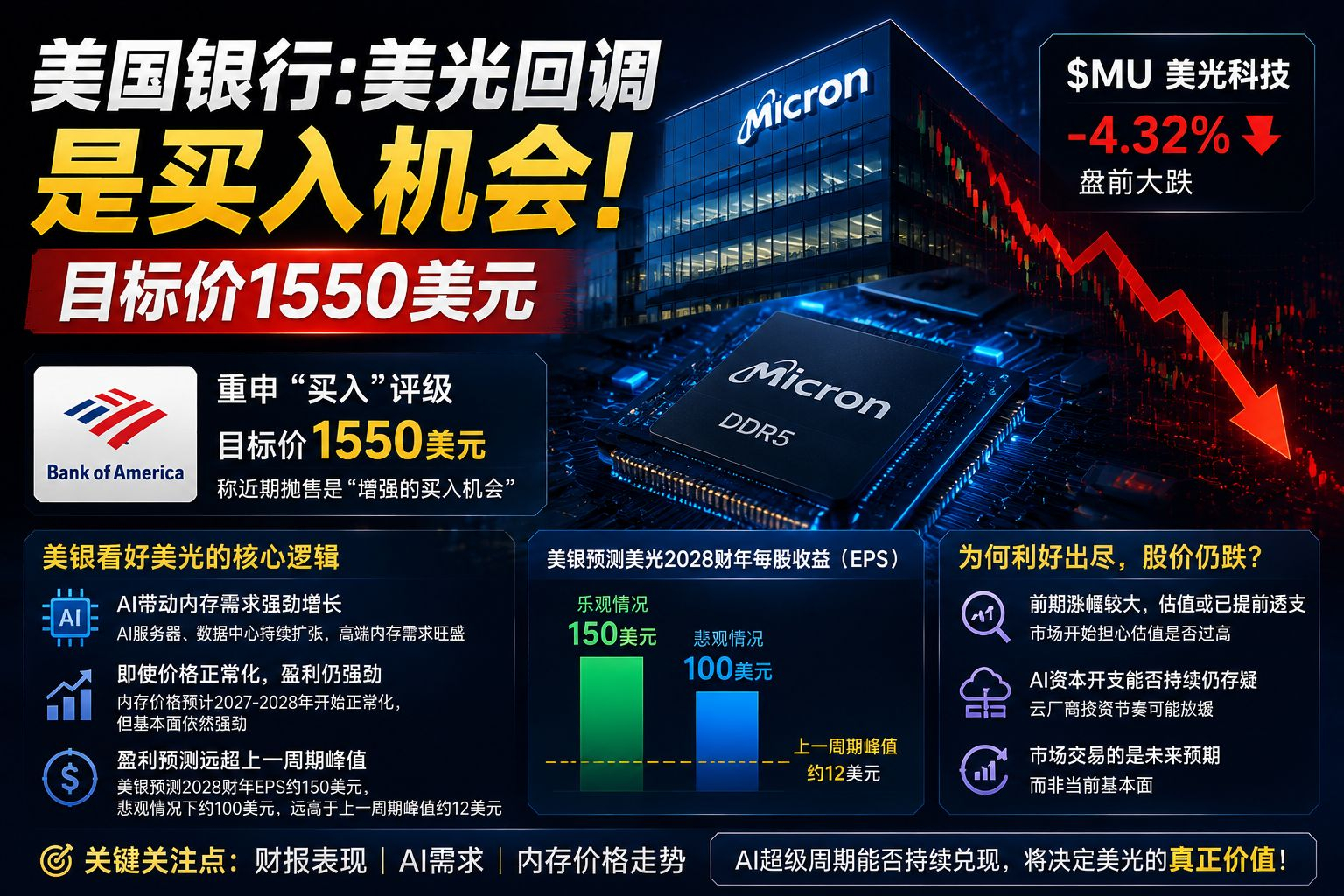
🚨BofA says “pullbacks are opportunities,” but Micron drops at the open: what is the market really worried about?
Bank of America has just reiterated its “Buy” rating on Micron (MU) and set a $1,550 price target, arguing that the recent stock pullback actually offers a better entry opportunity.
The bank’s core logic is that the memory demand cycle driven by AI could be stronger than the market expects.
It expects that as AI servers and data centers continue to expand, demand for high-end memory will keep growing. Even if memory prices gradually normalize in 2027–2028, Micron’s profitability may still be significantly higher than in the prior cycle.
BofA even predicts that Micron’s EPS in fiscal 2028 could reach around $150; in a pessimistic scenario, it could still be about $100—far above the peak of the previous cycle.
But the question is: with all this good news, why is Micron’s stock down instead?
The market isn’t trading the past—it’s trading expectations.
The AI chip and storage sectors have already rallied strongly, and investors are starting to wonder whether valuations have priced in future growth too early.
In addition, the market is reassessing another issue: how long can AI capital expenditures last?
If cloud providers keep pouring in money, storage demand could continue to benefit; but if the pace of AI investment slows, cyclical pressure in the memory industry could return.
So what Micron is facing right now is the classic “strong fundamentals, but cautious market sentiment.”
In the short term, capital may continue to focus on earnings reports, AI demand, and the trajectory of storage prices.
Over the long term, what truly determines Micron’s value isn’t Wall Street’s single word of “Buy”—it’s whether AI-era compute demand can be consistently converted into real orders.
The market isn’t saying it doesn’t believe in Micron. It’s asking: how long can this AI super-cycle really keep running?
#美光 #AI #美股 #科技股 $MU
🚨BofA says “pullbacks are opportunities,” but Micron drops at the open: what is the market really worried about?
Bank of America has just reiterated its “Buy” rating on Micron (MU) and set a $1,550 price target, arguing that the recent stock pullback actually offers a better entry opportunity.
The bank’s core logic is that the memory demand cycle driven by AI could be stronger than the market expects.
It expects that as AI servers and data centers continue to expand, demand for high-end memory will keep growing. Even if memory prices gradually normalize in 2027–2028, Micron’s profitability may still be significantly higher than in the prior cycle.
BofA even predicts that Micron’s EPS in fiscal 2028 could reach around $150; in a pessimistic scenario, it could still be about $100—far above the peak of the previous cycle.
But the question is: with all this good news, why is Micron’s stock down instead?
The market isn’t trading the past—it’s trading expectations.
The AI chip and storage sectors have already rallied strongly, and investors are starting to wonder whether valuations have priced in future growth too early.
In addition, the market is reassessing another issue: how long can AI capital expenditures last?
If cloud providers keep pouring in money, storage demand could continue to benefit; but if the pace of AI investment slows, cyclical pressure in the memory industry could return.
So what Micron is facing right now is the classic “strong fundamentals, but cautious market sentiment.”
In the short term, capital may continue to focus on earnings reports, AI demand, and the trajectory of storage prices.
Over the long term, what truly determines Micron’s value isn’t Wall Street’s single word of “Buy”—it’s whether AI-era compute demand can be consistently converted into real orders.
The market isn’t saying it doesn’t believe in Micron. It’s asking: how long can this AI super-cycle really keep running?
#美光 #AI #美股 #科技股 $MU
Bank of America has just reiterated its “Buy” rating on Micron (MU) and set a $1,550 price target, arguing that the recent stock pullback actually offers a better entry opportunity.
The bank’s core logic is that the memory demand cycle driven by AI could be stronger than the market expects.
It expects that as AI servers and data centers continue to expand, demand for high-end memory will keep growing. Even if memory prices gradually normalize in 2027–2028, Micron’s profitability may still be significantly higher than in the prior cycle.
BofA even predicts that Micron’s EPS in fiscal 2028 could reach around $150; in a pessimistic scenario, it could still be about $100—far above the peak of the previous cycle.
But the question is: with all this good news, why is Micron’s stock down instead?
The market isn’t trading the past—it’s trading expectations.
The AI chip and storage sectors have already rallied strongly, and investors are starting to wonder whether valuations have priced in future growth too early.
In addition, the market is reassessing another issue: how long can AI capital expenditures last?
If cloud providers keep pouring in money, storage demand could continue to benefit; but if the pace of AI investment slows, cyclical pressure in the memory industry could return.
So what Micron is facing right now is the classic “strong fundamentals, but cautious market sentiment.”
In the short term, capital may continue to focus on earnings reports, AI demand, and the trajectory of storage prices.
Over the long term, what truly determines Micron’s value isn’t Wall Street’s single word of “Buy”—it’s whether AI-era compute demand can be consistently converted into real orders.
The market isn’t saying it doesn’t believe in Micron. It’s asking: how long can this AI super-cycle really keep running?
#美光 #AI #美股 #科技股 $MU
1
193
·
--
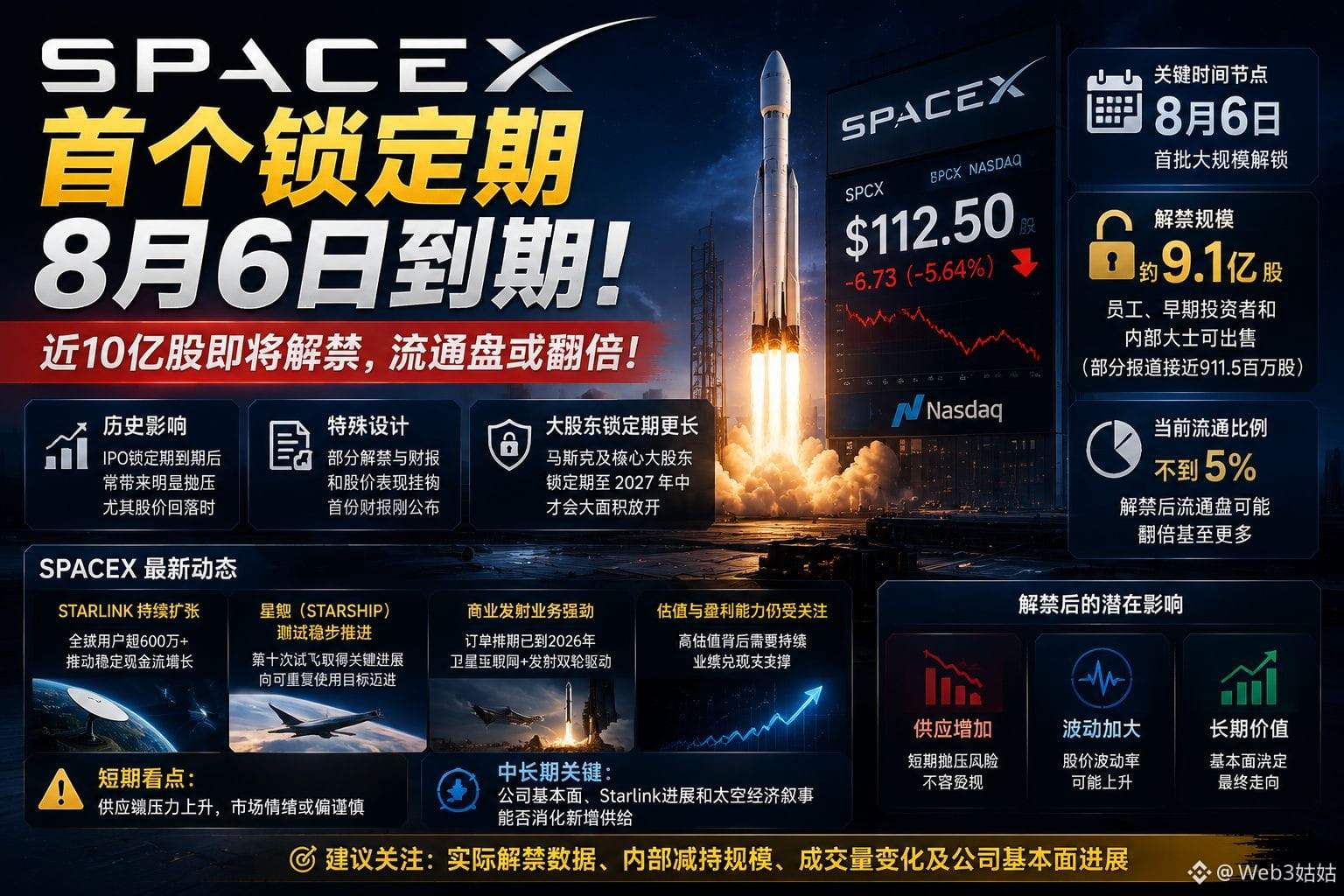
#SpaceX首个锁定期8月6日到期 🚨With SpaceX’s first release window approaching, will the pressure from 910 million shares in circulation slam into the market?
The first major milestone after SpaceX goes public is here.
On August 6, some of SpaceX’s locked-up shares will reach their first unlock, and about 910 million shares held by employees and early investors may become eligible for trading. Because the publicly available float is relatively low at the start of the IPO, this unlock size is essentially like a massive expansion of the tradable float.
That’s also why the market has been recently focusing less on SpaceX’s stock price and more on something else.
When the IPO just listed, investors were mostly trading the “space economy + Starlink + Musk narrative.” But as the lock-up period nears its end, investors are starting to refocus on a more practical issue:
Some people are willing to hold long-term, and some people definitely want to realize gains.
Unlocking does not necessarily mean there will be large-scale selling.
Many early employees and investors may believe in SpaceX’s long-term value and choose to keep holding; but on the other hand, once a large number of newly issued shares become tradeable, the supply-demand balance in the market will indeed change, and short-term volatility could rise significantly.
More importantly, SpaceX currently faces more than just unlock pressure.
The market is also waiting for its first post-listing earnings report, including Starlink growth, progress in the rocket business, and whether the company’s high valuation can match future revenue expectations. Recent coverage indicates that investors are divided over SpaceX’s valuation and profitability, and stock price fluctuations have intensified noticeably.
My take: This unlock for SpaceX looks more like a market stress test.
If the share price remains stable even after new supply appears, it suggests that capital truly recognizes its long-term value;
but if trading volume expands and the price comes under rapid pressure, it would indicate that some of the earlier upside may have been driven more by a premium from scarce tradable float.
What truly determines SpaceX’s future isn’t whether there are sell orders on August 6.
Instead, it’s whether the market will ultimately answer one key question:
Does this company represent the next generation of infrastructure—or a future story that has been prepaid?
Next, focus on three things:
The actual trading volume after the unlock;
The real scale of selling by insiders;
Whether Starlink and the commercial space business can continue to deliver.
SpaceX’s first public-market test is only just beginning.
#SpaceX #马斯克概念 #美股
#SpaceX首个锁定期8月6日到期 🚨With SpaceX’s first release window approaching, will the pressure from 910 million shares in circulation slam into the market?
The first major milestone after SpaceX goes public is here.
On August 6, some of SpaceX’s locked-up shares will reach their first unlock, and about 910 million shares held by employees and early investors may become eligible for trading. Because the publicly available float is relatively low at the start of the IPO, this unlock size is essentially like a massive expansion of the tradable float.
That’s also why the market has been recently focusing less on SpaceX’s stock price and more on something else.
When the IPO just listed, investors were mostly trading the “space economy + Starlink + Musk narrative.” But as the lock-up period nears its end, investors are starting to refocus on a more practical issue:
Some people are willing to hold long-term, and some people definitely want to realize gains.
Unlocking does not necessarily mean there will be large-scale selling.
Many early employees and investors may believe in SpaceX’s long-term value and choose to keep holding; but on the other hand, once a large number of newly issued shares become tradeable, the supply-demand balance in the market will indeed change, and short-term volatility could rise significantly.
More importantly, SpaceX currently faces more than just unlock pressure.
The market is also waiting for its first post-listing earnings report, including Starlink growth, progress in the rocket business, and whether the company’s high valuation can match future revenue expectations. Recent coverage indicates that investors are divided over SpaceX’s valuation and profitability, and stock price fluctuations have intensified noticeably.
My take: This unlock for SpaceX looks more like a market stress test.
If the share price remains stable even after new supply appears, it suggests that capital truly recognizes its long-term value;
but if trading volume expands and the price comes under rapid pressure, it would indicate that some of the earlier upside may have been driven more by a premium from scarce tradable float.
What truly determines SpaceX’s future isn’t whether there are sell orders on August 6.
Instead, it’s whether the market will ultimately answer one key question:
Does this company represent the next generation of infrastructure—or a future story that has been prepaid?
Next, focus on three things:
The actual trading volume after the unlock;
The real scale of selling by insiders;
Whether Starlink and the commercial space business can continue to deliver.
SpaceX’s first public-market test is only just beginning.
#SpaceX #马斯克概念 #美股
The first major milestone after SpaceX goes public is here.
On August 6, some of SpaceX’s locked-up shares will reach their first unlock, and about 910 million shares held by employees and early investors may become eligible for trading. Because the publicly available float is relatively low at the start of the IPO, this unlock size is essentially like a massive expansion of the tradable float.
That’s also why the market has been recently focusing less on SpaceX’s stock price and more on something else.
When the IPO just listed, investors were mostly trading the “space economy + Starlink + Musk narrative.” But as the lock-up period nears its end, investors are starting to refocus on a more practical issue:
Some people are willing to hold long-term, and some people definitely want to realize gains.
Unlocking does not necessarily mean there will be large-scale selling.
Many early employees and investors may believe in SpaceX’s long-term value and choose to keep holding; but on the other hand, once a large number of newly issued shares become tradeable, the supply-demand balance in the market will indeed change, and short-term volatility could rise significantly.
More importantly, SpaceX currently faces more than just unlock pressure.
The market is also waiting for its first post-listing earnings report, including Starlink growth, progress in the rocket business, and whether the company’s high valuation can match future revenue expectations. Recent coverage indicates that investors are divided over SpaceX’s valuation and profitability, and stock price fluctuations have intensified noticeably.
My take: This unlock for SpaceX looks more like a market stress test.
If the share price remains stable even after new supply appears, it suggests that capital truly recognizes its long-term value;
but if trading volume expands and the price comes under rapid pressure, it would indicate that some of the earlier upside may have been driven more by a premium from scarce tradable float.
What truly determines SpaceX’s future isn’t whether there are sell orders on August 6.
Instead, it’s whether the market will ultimately answer one key question:
Does this company represent the next generation of infrastructure—or a future story that has been prepaid?
Next, focus on three things:
The actual trading volume after the unlock;
The real scale of selling by insiders;
Whether Starlink and the commercial space business can continue to deliver.
SpaceX’s first public-market test is only just beginning.
#SpaceX #马斯克概念 #美股
409
·
--
#baby $BABY
Last night at midnight, I was organizing research materials on my hard drive and found that many early blockchain projects made a similar mistake: they kept improving speed, but rarely considered one question—if nobody can prove “when it happened,” does speed still matter?
That led me to revisit @babylonlabs_io ’s Bitcoin timestamping.
Before, I thought timestamps were just a supporting feature to record the time when a particular event occurred.
But after gaining a deeper understanding of Babylon, I realized it truly solves a different problem: how to make different networks share the trustworthiness of the time provided by Bitcoin.
Because many problems in decentralized systems aren’t about not knowing what happened—they’re about not being sure which event should be trusted first.
Especially in cross-chain and security-sharing scenarios, the time ordering itself is part of security.
If a network can only trust its own timeline, then when outside participants dispute it, the network can only rely on its own consensus to resolve the dispute.
Babylon’s design, however, uses Bitcoin as a stronger source of time proof.
External networks can record key states into Bitcoin’s time sequence, allowing any future participant to verify whether one event occurred earlier than another.
At first, I wondered: is this sacrificing efficiency for security?
But later I found that Babylon isn’t optimizing speed—it’s optimizing the reduction of disputes among different networks about the “authenticity of history.”
Because in a multi-chain environment, the most expensive cost is often not computation, but uncertainty.
When each system has its own time and its own interpretation of history, cross-network coordination requires more trust.
Bitcoin timestamping offers a new approach: not to make all networks into the same system, but to have them share a time reference that can’t be easily changed.
If this design holds, then the competition in BTCFi may not be only about liquidity, but about who can provide a more reliable base security layer.
Assets can move across networks, but the historical order must come from a trustworthy source.
What I’ll be watching next is whether, as more chains adopt Bitcoin as a time anchor, the market will redefine the value of security infrastructure—not just in terms of TVL and asset size.
$BABY
{spot}(BABYUSDT)
#baby $BABY
Last night at midnight, I was organizing research materials on my hard drive and found that many early blockchain projects made a similar mistake: they kept improving speed, but rarely considered one question—if nobody can prove “when it happened,” does speed still matter?
That led me to revisit @BabylonLabs_io ’s Bitcoin timestamping.
Before, I thought timestamps were just a supporting feature to record the time when a particular event occurred.
But after gaining a deeper understanding of Babylon, I realized it truly solves a different problem: how to make different networks share the trustworthiness of the time provided by Bitcoin.
Because many problems in decentralized systems aren’t about not knowing what happened—they’re about not being sure which event should be trusted first.
Especially in cross-chain and security-sharing scenarios, the time ordering itself is part of security.
If a network can only trust its own timeline, then when outside participants dispute it, the network can only rely on its own consensus to resolve the dispute.
Babylon’s design, however, uses Bitcoin as a stronger source of time proof.
External networks can record key states into Bitcoin’s time sequence, allowing any future participant to verify whether one event occurred earlier than another.
At first, I wondered: is this sacrificing efficiency for security?
But later I found that Babylon isn’t optimizing speed—it’s optimizing the reduction of disputes among different networks about the “authenticity of history.”
Because in a multi-chain environment, the most expensive cost is often not computation, but uncertainty.
When each system has its own time and its own interpretation of history, cross-network coordination requires more trust.
Bitcoin timestamping offers a new approach: not to make all networks into the same system, but to have them share a time reference that can’t be easily changed.
If this design holds, then the competition in BTCFi may not be only about liquidity, but about who can provide a more reliable base security layer.
Assets can move across networks, but the historical order must come from a trustworthy source.
What I’ll be watching next is whether, as more chains adopt Bitcoin as a time anchor, the market will redefine the value of security infrastructure—not just in terms of TVL and asset size.
$BABY
Last night at midnight, I was organizing research materials on my hard drive and found that many early blockchain projects made a similar mistake: they kept improving speed, but rarely considered one question—if nobody can prove “when it happened,” does speed still matter?
That led me to revisit @BabylonLabs_io ’s Bitcoin timestamping.
Before, I thought timestamps were just a supporting feature to record the time when a particular event occurred.
But after gaining a deeper understanding of Babylon, I realized it truly solves a different problem: how to make different networks share the trustworthiness of the time provided by Bitcoin.
Because many problems in decentralized systems aren’t about not knowing what happened—they’re about not being sure which event should be trusted first.
Especially in cross-chain and security-sharing scenarios, the time ordering itself is part of security.
If a network can only trust its own timeline, then when outside participants dispute it, the network can only rely on its own consensus to resolve the dispute.
Babylon’s design, however, uses Bitcoin as a stronger source of time proof.
External networks can record key states into Bitcoin’s time sequence, allowing any future participant to verify whether one event occurred earlier than another.
At first, I wondered: is this sacrificing efficiency for security?
But later I found that Babylon isn’t optimizing speed—it’s optimizing the reduction of disputes among different networks about the “authenticity of history.”
Because in a multi-chain environment, the most expensive cost is often not computation, but uncertainty.
When each system has its own time and its own interpretation of history, cross-network coordination requires more trust.
Bitcoin timestamping offers a new approach: not to make all networks into the same system, but to have them share a time reference that can’t be easily changed.
If this design holds, then the competition in BTCFi may not be only about liquidity, but about who can provide a more reliable base security layer.
Assets can move across networks, but the historical order must come from a trustworthy source.
What I’ll be watching next is whether, as more chains adopt Bitcoin as a time anchor, the market will redefine the value of security infrastructure—not just in terms of TVL and asset size.
$BABY

8
6
375
·
--
Verified
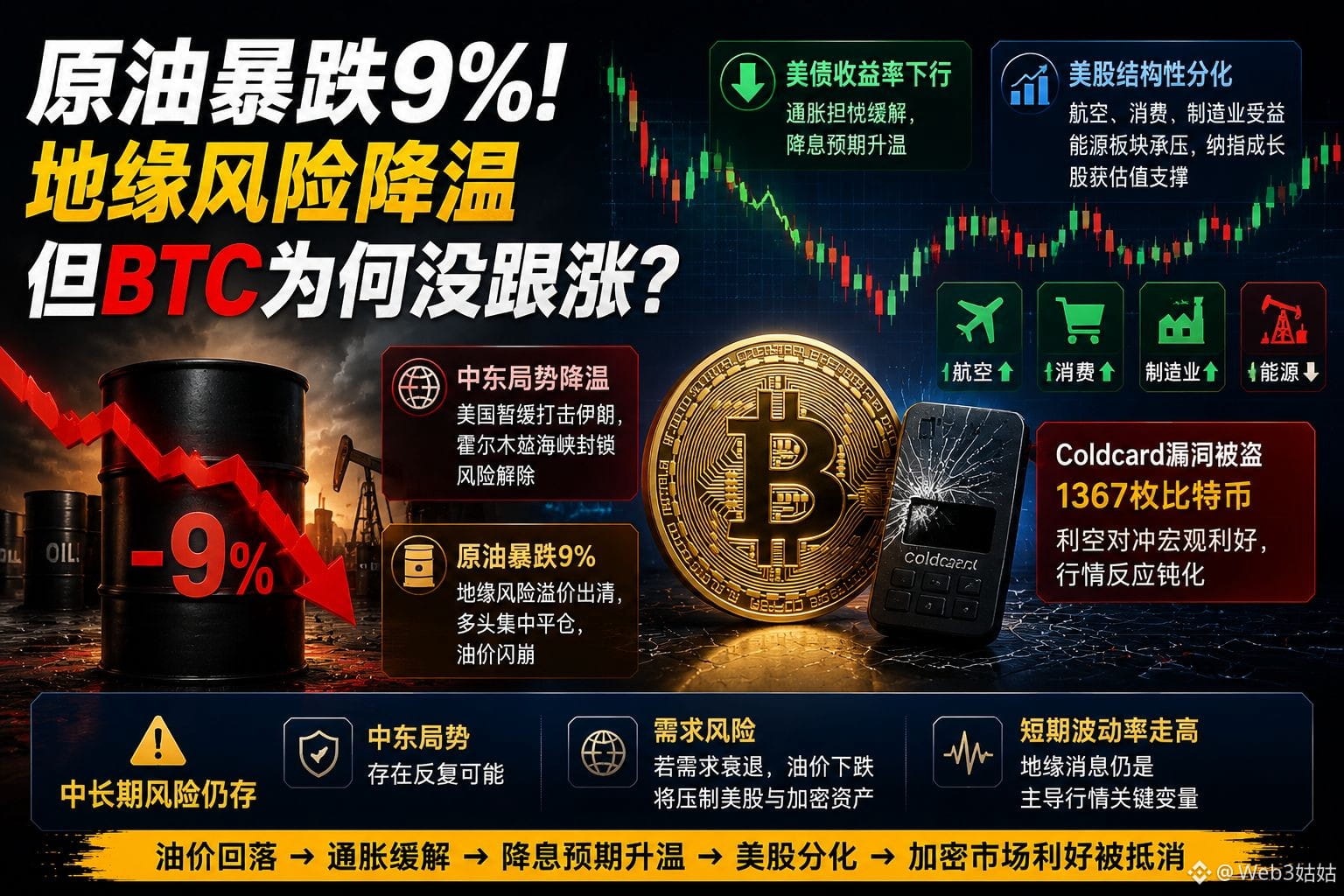
#原油暴跌9% Crude oil plunges 9% in a single day—markets breathe a sigh of relief, but why didn’t BTC follow the rally?
The biggest change in the market over the past couple of days is that expectations of Middle East risk have cooled rapidly.
As the U.S. has delayed further military action, concerns about supply disruptions in the Strait of Hormuz have eased. The geopolitical risk premium that crude oil markets had built up begins to unwind quickly, and WTI and Brent crude both fall sharply.
The pullback in oil prices sends an important signal to the market:
Inflation pressure may ease temporarily.
This is also why U.S. Treasury yields are falling, and expectations for future rate cuts have warmed.
In the U.S. stock market, there is clear divergence:
The energy sector faces pressure, but industries such as airlines, consumer sectors, and manufacturing benefit from lower energy costs. Tech growth stocks also receive some support.
However, the crypto market reaction has not been as strong as many would expect.
In theory, a drop in oil prices and easing inflation are positive for risk assets like BTC. But recently, a wallet security incident involving Coldcard has drawn market attention. Reports indicate that around 1,367 BTC were stolen, and in the short term, risk sentiment has been affected—offsetting part of the macro tailwind.
Now the market is really focused on two questions:
First, whether the situation in the Middle East is truly stable;
Second, whether the drop in oil prices is a sign that risks are being lifted, or a signal of weakening global demand.
If it’s only the geopolitical risk premium that fades, the impact on the market is generally more positive;
But if it evolves into recession trade, both U.S. stocks and crypto assets will face pressure.
At the moment, it doesn’t look like the market has entered a clear direction. Macro news remains the core variable influencing BTC’s near-term moves.
#比特币 #Coldcard暂停发货并销毁问题固件 #宏观政策
#原油暴跌9% Crude oil plunges 9% in a single day—markets breathe a sigh of relief, but why didn’t BTC follow the rally?
The biggest change in the market over the past couple of days is that expectations of Middle East risk have cooled rapidly.
As the U.S. has delayed further military action, concerns about supply disruptions in the Strait of Hormuz have eased. The geopolitical risk premium that crude oil markets had built up begins to unwind quickly, and WTI and Brent crude both fall sharply.
The pullback in oil prices sends an important signal to the market:
Inflation pressure may ease temporarily.
This is also why U.S. Treasury yields are falling, and expectations for future rate cuts have warmed.
In the U.S. stock market, there is clear divergence:
The energy sector faces pressure, but industries such as airlines, consumer sectors, and manufacturing benefit from lower energy costs. Tech growth stocks also receive some support.
However, the crypto market reaction has not been as strong as many would expect.
In theory, a drop in oil prices and easing inflation are positive for risk assets like BTC. But recently, a wallet security incident involving Coldcard has drawn market attention. Reports indicate that around 1,367 BTC were stolen, and in the short term, risk sentiment has been affected—offsetting part of the macro tailwind.
Now the market is really focused on two questions:
First, whether the situation in the Middle East is truly stable;
Second, whether the drop in oil prices is a sign that risks are being lifted, or a signal of weakening global demand.
If it’s only the geopolitical risk premium that fades, the impact on the market is generally more positive;
But if it evolves into recession trade, both U.S. stocks and crypto assets will face pressure.
At the moment, it doesn’t look like the market has entered a clear direction. Macro news remains the core variable influencing BTC’s near-term moves.
#比特币 #Coldcard暂停发货并销毁问题固件 #宏观政策
The biggest change in the market over the past couple of days is that expectations of Middle East risk have cooled rapidly.
As the U.S. has delayed further military action, concerns about supply disruptions in the Strait of Hormuz have eased. The geopolitical risk premium that crude oil markets had built up begins to unwind quickly, and WTI and Brent crude both fall sharply.
The pullback in oil prices sends an important signal to the market:
Inflation pressure may ease temporarily.
This is also why U.S. Treasury yields are falling, and expectations for future rate cuts have warmed.
In the U.S. stock market, there is clear divergence:
The energy sector faces pressure, but industries such as airlines, consumer sectors, and manufacturing benefit from lower energy costs. Tech growth stocks also receive some support.
However, the crypto market reaction has not been as strong as many would expect.
In theory, a drop in oil prices and easing inflation are positive for risk assets like BTC. But recently, a wallet security incident involving Coldcard has drawn market attention. Reports indicate that around 1,367 BTC were stolen, and in the short term, risk sentiment has been affected—offsetting part of the macro tailwind.
Now the market is really focused on two questions:
First, whether the situation in the Middle East is truly stable;
Second, whether the drop in oil prices is a sign that risks are being lifted, or a signal of weakening global demand.
If it’s only the geopolitical risk premium that fades, the impact on the market is generally more positive;
But if it evolves into recession trade, both U.S. stocks and crypto assets will face pressure.
At the moment, it doesn’t look like the market has entered a clear direction. Macro news remains the core variable influencing BTC’s near-term moves.
#比特币 #Coldcard暂停发货并销毁问题固件 #宏观政策
1
1
4k
·
--
#baby $BABY
Recently I整理 the audit notes I wrote earlier. I came across a line: “The more a system allows decisions to be made temporarily, the larger its attack surface usually is.” At first, I thought it was just an experience from secure development. Later, when I placed it on the TBV at @babylonlabs_io , I realized it almost explains the design of the entire Spend Path.
At the beginning, I always felt that since in the future BTC will correspond to more and more applications, why not let the redemption path also change dynamically along with the business? Wouldn’t that be more flexible?
Later, when I went through the TBV flow again, I realized that Babylon is precisely avoiding this kind of “temporary decision.”
When each BTC creates a Vault, several spending paths that will be allowed in the future are already written in. Normal redemption chooses which path, liquidation chooses which path, and abnormal cases choose which path—all of them are fixed in the Bitcoin Script in advance. External protocols can keep changing, but the real rules that determine whether BTC can move are not changed after the moment of creation.
Only then did I realize this is not restricting functionality—it’s restricting the boundary of trust.
Because Bitcoin has never understood what new business has been added to the host chain today. What it ultimately verifies is always only this: whether the proof submitted now matches the Spend Path that was agreed upon back then.
If the execution path were allowed to change together with the business, then Bitcoin would effectively need to keep accepting new trust assumptions.
Babylon, instead, keeps all change outside the protocol, while keeping the asset layer stable over the long term.
If this kind of design is adopted by more BTCFi infrastructure in the future, the industry may slowly form a new principle: applications can iterate quickly, but the asset validation rules should be defined once as much as possible and remain unchanged for a long time.
The next thing I want to observe is whether, as TBV integrates with more protocols, this pre-defined Spend Path can remain just as simple—and not reopen new validation entry points due to business additions.
#baby $BABY
{spot}(BABYUSDT)
#baby $BABY
Recently I整理 the audit notes I wrote earlier. I came across a line: “The more a system allows decisions to be made temporarily, the larger its attack surface usually is.” At first, I thought it was just an experience from secure development. Later, when I placed it on the TBV at @BabylonLabs_io , I realized it almost explains the design of the entire Spend Path.
At the beginning, I always felt that since in the future BTC will correspond to more and more applications, why not let the redemption path also change dynamically along with the business? Wouldn’t that be more flexible?
Later, when I went through the TBV flow again, I realized that Babylon is precisely avoiding this kind of “temporary decision.”
When each BTC creates a Vault, several spending paths that will be allowed in the future are already written in. Normal redemption chooses which path, liquidation chooses which path, and abnormal cases choose which path—all of them are fixed in the Bitcoin Script in advance. External protocols can keep changing, but the real rules that determine whether BTC can move are not changed after the moment of creation.
Only then did I realize this is not restricting functionality—it’s restricting the boundary of trust.
Because Bitcoin has never understood what new business has been added to the host chain today. What it ultimately verifies is always only this: whether the proof submitted now matches the Spend Path that was agreed upon back then.
If the execution path were allowed to change together with the business, then Bitcoin would effectively need to keep accepting new trust assumptions.
Babylon, instead, keeps all change outside the protocol, while keeping the asset layer stable over the long term.
If this kind of design is adopted by more BTCFi infrastructure in the future, the industry may slowly form a new principle: applications can iterate quickly, but the asset validation rules should be defined once as much as possible and remain unchanged for a long time.
The next thing I want to observe is whether, as TBV integrates with more protocols, this pre-defined Spend Path can remain just as simple—and not reopen new validation entry points due to business additions.
#baby $BABY
Recently I整理 the audit notes I wrote earlier. I came across a line: “The more a system allows decisions to be made temporarily, the larger its attack surface usually is.” At first, I thought it was just an experience from secure development. Later, when I placed it on the TBV at @BabylonLabs_io , I realized it almost explains the design of the entire Spend Path.
At the beginning, I always felt that since in the future BTC will correspond to more and more applications, why not let the redemption path also change dynamically along with the business? Wouldn’t that be more flexible?
Later, when I went through the TBV flow again, I realized that Babylon is precisely avoiding this kind of “temporary decision.”
When each BTC creates a Vault, several spending paths that will be allowed in the future are already written in. Normal redemption chooses which path, liquidation chooses which path, and abnormal cases choose which path—all of them are fixed in the Bitcoin Script in advance. External protocols can keep changing, but the real rules that determine whether BTC can move are not changed after the moment of creation.
Only then did I realize this is not restricting functionality—it’s restricting the boundary of trust.
Because Bitcoin has never understood what new business has been added to the host chain today. What it ultimately verifies is always only this: whether the proof submitted now matches the Spend Path that was agreed upon back then.
If the execution path were allowed to change together with the business, then Bitcoin would effectively need to keep accepting new trust assumptions.
Babylon, instead, keeps all change outside the protocol, while keeping the asset layer stable over the long term.
If this kind of design is adopted by more BTCFi infrastructure in the future, the industry may slowly form a new principle: applications can iterate quickly, but the asset validation rules should be defined once as much as possible and remain unchanged for a long time.
The next thing I want to observe is whether, as TBV integrates with more protocols, this pre-defined Spend Path can remain just as simple—and not reopen new validation entry points due to business additions.
#baby $BABY

6
4
202
·
--
#baby $BABY
Recently, I helped a friend analyze the economic model of a new chain. He asked me a question: “Why do many projects have huge amounts of staked assets, yet still fail to truly achieve security?”
This question made me revisit @babylonlabs_io . Previously, when I looked at BTC Staking, my focus was always on one number: how many BTC are locked in.
But after studying Babylon, I found that the real determinant of security value is not just the amount of BTC—it's who can represent those BTC to provide security.
This is also why Babylon designed the Finality Provider layer.
At first, I wondered: is this adding another layer of complexity? BTC is already secure—why do we need additional roles?
Later, following the logic, I realized the problem isn't whether BTC has value. The issue is that other networks don’t need “to own BTC,” but “to be able to use BTC to provide deterministic security.”
If all staked BTC were simply piled up, then the network would only see the size of the funds. It wouldn’t know what validation actions those funds correspond to, the boundaries of responsibility, or how much security they actually contribute.
Babylon’s design separates BTC assets from security service capability.
BTC provides economic weight, while the Finality Provider participates in the target network’s security process. When the two come together, BTC shifts from being a passive collateral asset to a security resource that can be called upon.
This helped me重新理解 Babylon’s direction.
It’s not simply locking more BTC. It’s an attempt to build a new security market: BTC holders provide capital, validators provide services, and other networks purchase this security capability.
If this model holds, the competitive logic behind BTCFi in the future may change.
In the past, everyone competed for liquidity: whoever had more assets looked stronger.
But in the future, competition may be about the efficiency of security allocation—who can enable the security value of BTC to be effectively utilized by more networks.
So right now, I’m paying attention to Babylon not just to the staking size, but to whether the Finality Provider layer will form stable role specialization.
The key question worth verifying is: as more networks participate, will the market develop specialized BTC security service providers.
#baby $BABY
{spot}(BABYUSDT)
#baby $BABY
Recently, I helped a friend analyze the economic model of a new chain. He asked me a question: “Why do many projects have huge amounts of staked assets, yet still fail to truly achieve security?”
This question made me revisit @BabylonLabs_io . Previously, when I looked at BTC Staking, my focus was always on one number: how many BTC are locked in.
But after studying Babylon, I found that the real determinant of security value is not just the amount of BTC—it's who can represent those BTC to provide security.
This is also why Babylon designed the Finality Provider layer.
At first, I wondered: is this adding another layer of complexity? BTC is already secure—why do we need additional roles?
Later, following the logic, I realized the problem isn't whether BTC has value. The issue is that other networks don’t need “to own BTC,” but “to be able to use BTC to provide deterministic security.”
If all staked BTC were simply piled up, then the network would only see the size of the funds. It wouldn’t know what validation actions those funds correspond to, the boundaries of responsibility, or how much security they actually contribute.
Babylon’s design separates BTC assets from security service capability.
BTC provides economic weight, while the Finality Provider participates in the target network’s security process. When the two come together, BTC shifts from being a passive collateral asset to a security resource that can be called upon.
This helped me重新理解 Babylon’s direction.
It’s not simply locking more BTC. It’s an attempt to build a new security market: BTC holders provide capital, validators provide services, and other networks purchase this security capability.
If this model holds, the competitive logic behind BTCFi in the future may change.
In the past, everyone competed for liquidity: whoever had more assets looked stronger.
But in the future, competition may be about the efficiency of security allocation—who can enable the security value of BTC to be effectively utilized by more networks.
So right now, I’m paying attention to Babylon not just to the staking size, but to whether the Finality Provider layer will form stable role specialization.
The key question worth verifying is: as more networks participate, will the market develop specialized BTC security service providers.
#baby $BABY
Recently, I helped a friend analyze the economic model of a new chain. He asked me a question: “Why do many projects have huge amounts of staked assets, yet still fail to truly achieve security?”
This question made me revisit @BabylonLabs_io . Previously, when I looked at BTC Staking, my focus was always on one number: how many BTC are locked in.
But after studying Babylon, I found that the real determinant of security value is not just the amount of BTC—it's who can represent those BTC to provide security.
This is also why Babylon designed the Finality Provider layer.
At first, I wondered: is this adding another layer of complexity? BTC is already secure—why do we need additional roles?
Later, following the logic, I realized the problem isn't whether BTC has value. The issue is that other networks don’t need “to own BTC,” but “to be able to use BTC to provide deterministic security.”
If all staked BTC were simply piled up, then the network would only see the size of the funds. It wouldn’t know what validation actions those funds correspond to, the boundaries of responsibility, or how much security they actually contribute.
Babylon’s design separates BTC assets from security service capability.
BTC provides economic weight, while the Finality Provider participates in the target network’s security process. When the two come together, BTC shifts from being a passive collateral asset to a security resource that can be called upon.
This helped me重新理解 Babylon’s direction.
It’s not simply locking more BTC. It’s an attempt to build a new security market: BTC holders provide capital, validators provide services, and other networks purchase this security capability.
If this model holds, the competitive logic behind BTCFi in the future may change.
In the past, everyone competed for liquidity: whoever had more assets looked stronger.
But in the future, competition may be about the efficiency of security allocation—who can enable the security value of BTC to be effectively utilized by more networks.
So right now, I’m paying attention to Babylon not just to the staking size, but to whether the Finality Provider layer will form stable role specialization.
The key question worth verifying is: as more networks participate, will the market develop specialized BTC security service providers.
#baby $BABY

12
5
597
Log in to explore more content
Join global crypto users on Binance Square
⚡️ Get latest and useful information about crypto.
💬 Trusted by the world’s largest crypto exchange.
👍 Discover real insights from verified creators.
Email / Phone number
Trending Topics
EtherGains70.9%InQ3
156,777 views
1,147 Discussing
One of the best third quarters in history 💰
September closed out last night, and with it, the quarter. For the quarter, BTC is up 42%—the second-best Q3 on record. ETH had a record-breaking Q3 overall, up 70%.
Looking at the chart, things are still looking good: we’re holding support, but we’re testing it more and more often. Plus, ETF momentum is weakening — inflows are gradually declining, and yesterday saw outflows for the first time in a long while.
Yes, historically, October has been a good month for crypto — it’s not called “Uptober” for nothing. But it’s also one of the most volatile months. Last year, for example, we managed to hit a new all-time high (ATH) and experience a flash crash.
🚀 High Accuracy Trades.
$BTC
$ETH
$SOL
#EtherGains70.9%InQ3 #DollarIndexHitsHighestSinceMay2025 #CFTCSubmitsTwoEventContractRulesToWhiteHouse #MicronBeatsEarningsLiftsGuidance
Knowledge is Power
·0 Likes
·240 views
TreasuryLetsStatesFileStablecoinCertificationsEarly
9,152 views
83 Discussing
US10YearYieldNears5.3%
151,803 views
1,139 Discussing