

橙子Joyce
553 Posts

橙子Joyce
 Square Verified+
Report
Block User
币安广场的每天直播北京时间晚上21:00-23:30|十年以上美股市场投研策略|WEB3项目投研|十年以上投资BTC.ETH.BNB.SOL|贵金属投资策略黄金.白银.铜|中长期价值投资者|推特X:@Joyce88AI|✨星河社区联合创始人✨

SOL Holder
Frequent Trader
8.8 Years
929 Following
39.9K+ Followers
47.4K+ Liked
Posts
All
Quotes
Videos
Live
PINNED
·
--
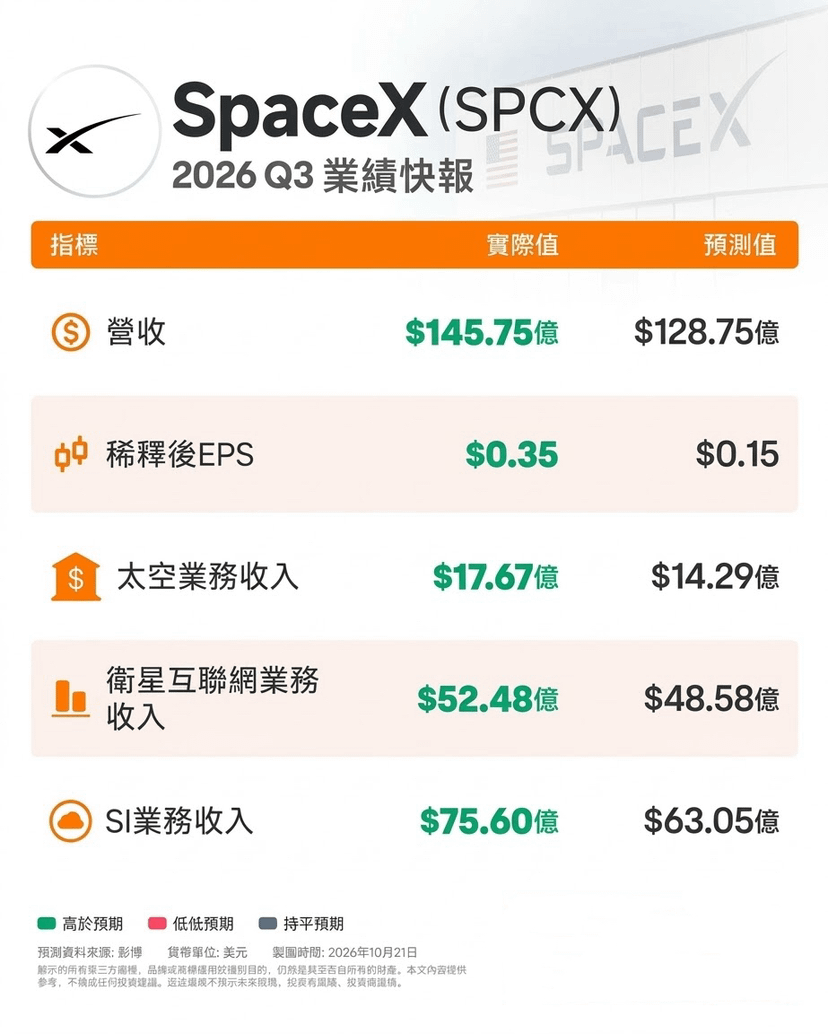
🎙️ Binance Orange Joyce livestream, 20:00–23:00: SpaceX’s AI business exploded in Q3, with revenue surging 830%, profit crushing expectations, and capital expenditures nearing $20 billion.
Preview
12:00 Oct 21
3
10
5
PINNED
·
--
Bullish
#币安神算子 [https://app.binance.com/uni-qr/prophet?from=share&seasonId=prophet_1019_s1&ref=16601015](https://app.binance.com/uni-qr/prophet?from=share&seasonId=prophet_1019_s1&ref=16601015)
According to an official Binance announcement, Binance Pick will officially launch on October 21, 2026 (UTC+8). Early-bird sign-ups open on October 19, 2026. The more people sign up, the larger the prize pool unlocked, up to 1,000,000 USDC. The sign-up period runs from October 19, 2026, to October 21, 2026, at 07:59:59 (UTC+8), and the prediction period runs from October 21, 2026, at 08:00:00, to November 16, 2026, at 07:59:59 (UTC+8). Rewards include a 500,000 USDC season leaderboard prize pool, a total weekly leaderboard prize pool of 400,000 USDC (100,000 USDC per week), and a 100,000 USDC participation prize pool. The season leaderboard closes on November 16, 2026, at 07:59:59 (UTC+8), and the weekly leaderboard closes every Monday at 07:59:59 (UTC+8).
Click now to earn points and join the prediction event. If you haven't joined yet, hop on board! 🚗
#币安神算子 https://app.binance.com/uni-qr/prophet?from=share&seasonId=prophet_1019_s1&ref=16601015
According to an official Binance announcement, Binance Pick will officially launch on October 21, 2026 (UTC+8). Early-bird sign-ups open on October 19, 2026. The more people sign up, the larger the prize pool unlocked, up to 1,000,000 USDC. The sign-up period runs from October 19, 2026, to October 21, 2026, at 07:59:59 (UTC+8), and the prediction period runs from October 21, 2026, at 08:00:00, to November 16, 2026, at 07:59:59 (UTC+8). Rewards include a 500,000 USDC season leaderboard prize pool, a total weekly leaderboard prize pool of 400,000 USDC (100,000 USDC per week), and a 100,000 USDC participation prize pool. The season leaderboard closes on November 16, 2026, at 07:59:59 (UTC+8), and the weekly leaderboard closes every Monday at 07:59:59 (UTC+8).
Click now to earn points and join the prediction event. If you haven't joined yet, hop on board! 🚗
3
634


·
--

光明社区-阿波罗-LUCiC
·
--
Projects are a mixed bag—don’t jump in on impulse.
Most people won’t quit until they’ve taken a serious loss; they have to hit a wall before they turn back.
Toiling day after day, constantly switching tracks, burning through all your chips, and running into one pitfall after another.
What you don’t realize is: there’s no need to run all over the place—LUCiC has it all!
Stop wasting time on trial and error. Pick the right target, and don’t miss this chance to build wealth—make sure you seize it with the community!
To all the folks who left the community: the New Year is just around the corner. How have you been?
1
157
·
--
go
go

Mahi_玛希BNB
·
--
🚀 **BNB (BNB): Ready for the Next Move?** 🔥
BNB remains in the spotlight as crypto traders watch market momentum and key resistance levels. 📊 Will BNB break higher or face a pullback? 👀
Stay patient, manage risk, and trade smart! 💎
$BNB $BTC $ETH
#BNB走势 #BinanceSquareFamily #CryptoMarket #BinanceSquare #cryptotrading
BNB remains in the spotlight as crypto traders watch market momentum and key resistance levels. 📊 Will BNB break higher or face a pullback? 👀
Stay patient, manage risk, and trade smart! 💎
$BNB $BTC $ETH
#BNB走势 #BinanceSquareFamily #CryptoMarket #BinanceSquare #cryptotrading
1
100
·
--

正乾--四条2
·
--
DeepSeekbug
Lately, everyone in the square has been talking about DeepSeekbug, calling it the hottest project. But to me, it feels more like a little lyric poem written for the “imperfect.”
────── The pale lamp keeps me company deep into the night; a line of red text comes calling. Who in this world is used to writing about the ordinary? What remains unfinished can still be mended; the lone moon shines as the night grows late. ──────
Everyone strives for perfection; I cherish the tiny flaws that make a piece whole. Through the seams in mountains and rivers, daylight spills from the heavens. Each time we begin again, the sparks have already set the plains ablaze. ──────
That line of “red text” is code reporting an error in the dead of night; it’s a trading plan drawn up after reviewing past trades; it’s an ordinary person’s growth after reflecting on pain; it’s an entrepreneur setting out again after setbacks. That “lone moon” is you, beginning again on your own. And that shaft of daylight slipping through the cracks—is our belief that every imperfect you still has the right to keep getting better.
346
·
--

兰汐kyL
·
--
Market analysis. $BTC is being pulled back and forth right now—what exactly is it testing? Honestly, it would be better if the market just made up its mind: if it wants to rise, push it up; if it wants to fall, knock it down decisively. All this back-and-forth is just wasting time! The price is stuck in an awkward middle ground, with resistance overhead and support below. In this kind of market, you simply can't enter casually, so all we can do is keep waiting. There's no other option.🚨
Yesterday, $BTC made a false breakout above the 82789 resistance level but failed to hold above it—a classic fakeout! In other words, it swept some liquidity above, but buyers failed to follow through, and the price fell back below 82789, even breaking through the 81823 support level. There was a rebound afterward, with an attempt to reclaim 81823, but it failed and couldn't close back above it.🚨Personal opinion. This does not constitute investment advice.#美国比特币ETF净流入5.27亿美元 #加密金库存款超100亿美元
Yesterday, $BTC made a false breakout above the 82789 resistance level but failed to hold above it—a classic fakeout! In other words, it swept some liquidity above, but buyers failed to follow through, and the price fell back below 82789, even breaking through the 81823 support level. There was a rebound afterward, with an attempt to reclaim 81823, but it failed and couldn't close back above it.🚨Personal opinion. This does not constitute investment advice.#美国比特币ETF净流入5.27亿美元 #加密金库存款超100亿美元
111
·
--

圣克斯Lucky1688
·
--
🧧🎁🌹🧧🎁🌹
$XRP xrp is likely to trade sideways with a slight bearish bias. If it holds above 1.28 and rebounds on increased volume, 1.40 may be within reach; a break below that level would increase the risk. A year-end return to 1.50 would require support from macro conditions and capital flows, so the probability is currently low.
$APT apt is likely to remain range-bound. If it holds above 0.76, a rebound to 0.85–0.90 is possible; a break below that level could lead to further declines. The medium-to-long-term outlook still depends on ecosystem adoption and interest in the public blockchain sector.
$ONDO ondo has relatively solid fundamental support. If the broader market stabilizes, its rebound potential may be stronger than that of public-chain tokens alone. Watch the 0.40 support level and whether it can break through the 0.50 resistance. The medium-to-long-term outlook for the RWA sector remains positive.
#NIL nil is high-risk and highly volatile. It is suited to small-position speculation, with strict stop-losses. A rebound depends on renewed interest in AI and privacy narratives, as well as improved overall liquidity; downside risks are also significant.
All of the above are affected by macro interest rates and weakness in the broader market, with pullbacks prevailing recently.
Relatively preferred: ONDO (a clear narrative around real-world RWA adoption) and XRP (higher liquidity and greater institutional attention).
APT and NIL have greater upside potential, but are also more prone to sharp swings alongside altcoins.
Suggested approach: A stable BTC market is a prerequisite for all of them. Manage position sizes, favor dollar-cost averaging or buying in stages, and use strict stop-losses. Watch the October 28 FOMC meeting and subsequent inflation data.
The crypto market is extremely volatile. The above is based on publicly available market data and technical analysis, for reference only, and does not constitute investment advice. Make decisions based on your own risk tolerance and continue to monitor real-time market conditions.
Follow me and reply “答案1” to claim a $SOL red envelope.
137
·
--

王婷-光明社区
·
--
If you have the courage to cross mountains and seas, the world will always shine.
#美国比特币ETF净流入5.27亿美元
#美国比特币ETF净流入5.27亿美元
78
·
--

静心1688
·
--
🎁Follow, reply, like🧧🧧🧧
#摩根大通预测比特币十年领跑 #美国比特币ETF净流入5.27亿美元
#摩根大通预测比特币十年领跑 #美国比特币ETF净流入5.27亿美元
74
·
--
Bullish
Verified
🚀 SpaceX Q3 earnings blow expectations away! AI business surges 830% to become the biggest dark horse 🌌 Expectations of a “merger” between SpaceX and Tesla have set Wall Street ablaze!
SpaceX just released its Q3 2026 earnings, smashing expectations across the board. Its share price briefly surged more than 8% after hours! Here are the key highlights 👇
📊 Key earnings figures
Total revenue: $14.58 billion (up 161% year over year), far exceeding expectations!
Net income: $4.4 billion (vs. $1.88 billion expected), more than doubling expectations!
Diluted EPS: $0.35 (vs. $0.15 expected)
🤖 AI “Superintelligence (SI)” becomes the company’s largest revenue source
SI business revenue: $7.56 billion (up a whopping 830% year over year!), surpassing Starlink for the first time to become the company’s largest revenue pillar!
Growth drivers: Strong demand for cloud services, synergies from the acquisition of Cursor, and explosive growth in applications of the Grok model.
📡 Starlink and space businesses continue steady expansion
Satellite internet: Revenue of $5.25 billion (up 69% year over year), with Starlink subscribers surpassing 13.6 million!
Space launches: Revenue of $1.77 billion. Starship’s 14th flight successfully deployed Starlink V3 satellites into orbit and contributed commercial revenue for the first time!
💡 Outlook and highlights
Accelerating computing capacity: Q3 capital expenditure was nearly $20 billion, of which 84% went toward building AI/SI infrastructure (the COLOSSUS II computing center is being expanded).
Musk’s big announcement: Executives revealed on the earnings call that next year’s annual recurring revenue (ARR) target could reach as high as $1 trillion, and confirmed that a potential merger with Tesla is under discussion!
$TSLA.US
{stock_us}(TSLA.US)
$SPCX.US
{stock_us}(SPCX.US)
$NVDA.US
{stock_us}(NVDA.US)
🚀 SpaceX Q3 earnings blow expectations away! AI business surges 830% to become the biggest dark horse 🌌 Expectations of a “merger” between SpaceX and Tesla have set Wall Street ablaze!
SpaceX just released its Q3 2026 earnings, smashing expectations across the board. Its share price briefly surged more than 8% after hours! Here are the key highlights 👇
📊 Key earnings figures
Total revenue: $14.58 billion (up 161% year over year), far exceeding expectations!
Net income: $4.4 billion (vs. $1.88 billion expected), more than doubling expectations!
Diluted EPS: $0.35 (vs. $0.15 expected)
🤖 AI “Superintelligence (SI)” becomes the company’s largest revenue source
SI business revenue: $7.56 billion (up a whopping 830% year over year!), surpassing Starlink for the first time to become the company’s largest revenue pillar!
Growth drivers: Strong demand for cloud services, synergies from the acquisition of Cursor, and explosive growth in applications of the Grok model.
📡 Starlink and space businesses continue steady expansion
Satellite internet: Revenue of $5.25 billion (up 69% year over year), with Starlink subscribers surpassing 13.6 million!
Space launches: Revenue of $1.77 billion. Starship’s 14th flight successfully deployed Starlink V3 satellites into orbit and contributed commercial revenue for the first time!
💡 Outlook and highlights
Accelerating computing capacity: Q3 capital expenditure was nearly $20 billion, of which 84% went toward building AI/SI infrastructure (the COLOSSUS II computing center is being expanded).
Musk’s big announcement: Executives revealed on the earnings call that next year’s annual recurring revenue (ARR) target could reach as high as $1 trillion, and confirmed that a potential merger with Tesla is under discussion!
$TSLA.US
$SPCX.US
$NVDA.US
TSLAUS+1.62%
NVDAUS+1.57%
SPCXUS+8.29%
1
1.2k
·
--
Bullish
🚀 Are billionaires ushering in a new era of “giving away shares”? Musk plans to give stock to every child in the U.S.—will the world’s greatest investor, Warren Buffett, follow suit?
Elon Musk, founder of Tesla and SpaceX, previously announced on social media that he plans to give one share of SpaceX stock free of charge to every child under 18 in the U.S. At a valuation of $148 per SpaceX share and with around 70 million minors across the country, the giveaway would be worth approximately $10 billion in total (more than 1% of his SpaceX stake).
💡 A new approach to philanthropy: from “setting up a foundation” to “giving everyone a stake”?
Musk’s “airdrop-style” philanthropy could offer a new solution for other ultra-wealthy individuals worth hundreds of billions, such as Buffett, Bezos, Zuckerberg, and Jensen Huang:
* Buffett’s dilemma: The 96-year-old “Oracle of Omaha” plans to give away his $150 billion fortune by 2034, but his three children have admitted that the pressure is “enormous.” They currently donate only around $500 million a year, while the amount they will need to distribute annually in the future could surge to over $15 billion.
* An alternative to consider: If Buffett followed Musk’s example and gave every child in the U.S. one Class B share of Berkshire Hathaway (worth around $532 per person), it would cost only about $37 billion in total (a quarter of his stake). This would not only directly ease the burden of distributing his wealth, but also deliver the largest financial-literacy initiative in history.
⚠️ Practical hurdles and potential impact
* Implementation challenges: Whether it’s SpaceX (a private company whose shares are not publicly traded) or Berkshire Hathaway, opening securities or custodial accounts for 70 million minors and distributing shares in compliance with regulations would still pose major technical and regulatory hurdles.
* Financial education: Berkshire Hathaway’s strong earnings prospects (with an annualized compound return of around 10% possible over the next decade) could make a powerful lesson in finance and value investing if passed directly to the next generation in the form of shares.
📌 If Web3 giants in the crypto space also adopted this “airdrop for everyone” model to give wealth to young people, what do you think would be better: giving away BTC/ETH, or shares in leading Web3 startups? Share your thoughts in the comments! 👇
#WarrenBuffett #ElonMusk $SpaceX
$SPCX.US
{stock_us}(SPCX.US)
$BRK.B.US
{stock_us}(BRK.B.US)
$AAPL.US
{stock_us}(AAPL.US)
🚀 Are billionaires ushering in a new era of “giving away shares”? Musk plans to give stock to every child in the U.S.—will the world’s greatest investor, Warren Buffett, follow suit?
Elon Musk, founder of Tesla and SpaceX, previously announced on social media that he plans to give one share of SpaceX stock free of charge to every child under 18 in the U.S. At a valuation of $148 per SpaceX share and with around 70 million minors across the country, the giveaway would be worth approximately $10 billion in total (more than 1% of his SpaceX stake).
💡 A new approach to philanthropy: from “setting up a foundation” to “giving everyone a stake”?
Musk’s “airdrop-style” philanthropy could offer a new solution for other ultra-wealthy individuals worth hundreds of billions, such as Buffett, Bezos, Zuckerberg, and Jensen Huang:
* Buffett’s dilemma: The 96-year-old “Oracle of Omaha” plans to give away his $150 billion fortune by 2034, but his three children have admitted that the pressure is “enormous.” They currently donate only around $500 million a year, while the amount they will need to distribute annually in the future could surge to over $15 billion.
* An alternative to consider: If Buffett followed Musk’s example and gave every child in the U.S. one Class B share of Berkshire Hathaway (worth around $532 per person), it would cost only about $37 billion in total (a quarter of his stake). This would not only directly ease the burden of distributing his wealth, but also deliver the largest financial-literacy initiative in history.
⚠️ Practical hurdles and potential impact
* Implementation challenges: Whether it’s SpaceX (a private company whose shares are not publicly traded) or Berkshire Hathaway, opening securities or custodial accounts for 70 million minors and distributing shares in compliance with regulations would still pose major technical and regulatory hurdles.
* Financial education: Berkshire Hathaway’s strong earnings prospects (with an annualized compound return of around 10% possible over the next decade) could make a powerful lesson in finance and value investing if passed directly to the next generation in the form of shares.
📌 If Web3 giants in the crypto space also adopted this “airdrop for everyone” model to give wealth to young people, what do you think would be better: giving away BTC/ETH, or shares in leading Web3 startups? Share your thoughts in the comments! 👇
#WarrenBuffett #ElonMusk $SpaceX
$SPCX.US
$BRK.B.US
$AAPL.US
430
·
--
Bullish
Verified
🚀 Musk to “airdrop” SpaceX shares to every child in America? The ultimate revolution in traditional philanthropy!
After Anthropic announced the creation of a “public benefit fund,” allocating 5% of its equity to traditional foundations for indirect distribution, Musk fired back boldly on X with a blockbuster plan:
> “Next year, I will give one share of SpaceX stock to every child in America. Giving the public shares that represent a stake in the economy of the future directly is the right way to go.”
>
📌 “SpaceX Airdrop for Everyone” in One Minute
* Estimated scale: Around 73 million children under the age of 18 in the United States.
* Airdrop value: Based on a post-IPO SpaceX valuation of $2 trillion and an estimated share price of about $147.96, this “massive airdrop” would have a high face value, yet account for only a tiny fraction of Musk’s personal wealth.
* Connecting the dots: The plan is expected to link up with the U.S. Treasury’s “Trump Accounts” for minors.
💡 A Clash of Two Distribution Models: Intermediary Trusts vs. Direct “Airdrops”
| Dimension | Anthropic model (traditional Web2 philanthropy) | Musk 2.0 model (direct capital distribution) |
|---|---|---|
| Approach | Contribute to a foundation ➔ board approval ➔ indirect funding | Eliminate intermediaries ➔ deliver directly to individuals ➔ share ownership for all |
| Rationale | High bureaucratic and administrative overhead; relies on intermediary organizations | Assets delivered directly to recipients, who benefit from the long-term premium of top-tier tech |
| Perspective | Passive recipients of aid | Cultivating an “ownership perspective” on the economy of the future |
⚠️ Three Major Questions and Controversies Behind the Excitement
* Will the shares actually be delivered?
Musk’s past commitments, including an OpenAI donation and a $6 billion donation to the UN World Food Programme, have been disputed. This plan lacks specific custody arrangements and legal details, so observers are still waiting to see whether it will actually happen.
* Who qualifies, and what about taxes?
Will this be limited to U.S. citizens, or include all minors living in the United States? When will recipients be able to sell their shares and cash out? How will taxes be handled?
* Can “giving shares” replace “public support”?
Critics argue that stocks are volatile assets whose value lies in the future and cannot meet people’s immediate needs. Public welfare should still be built on a transparent tax system, rather than on the “selective giving” of the wealthy.
🎯#币安交易所美股
$SPCX.US
{stock_us}(SPCX.US)
$NVDA.US
{stock_us}(NVDA.US)
$GOOG.US
{stock_us}(GOOG.US)
🚀 Musk to “airdrop” SpaceX shares to every child in America? The ultimate revolution in traditional philanthropy!
After Anthropic announced the creation of a “public benefit fund,” allocating 5% of its equity to traditional foundations for indirect distribution, Musk fired back boldly on X with a blockbuster plan:
> “Next year, I will give one share of SpaceX stock to every child in America. Giving the public shares that represent a stake in the economy of the future directly is the right way to go.”
>
📌 “SpaceX Airdrop for Everyone” in One Minute
* Estimated scale: Around 73 million children under the age of 18 in the United States.
* Airdrop value: Based on a post-IPO SpaceX valuation of $2 trillion and an estimated share price of about $147.96, this “massive airdrop” would have a high face value, yet account for only a tiny fraction of Musk’s personal wealth.
* Connecting the dots: The plan is expected to link up with the U.S. Treasury’s “Trump Accounts” for minors.
💡 A Clash of Two Distribution Models: Intermediary Trusts vs. Direct “Airdrops”
| Dimension | Anthropic model (traditional Web2 philanthropy) | Musk 2.0 model (direct capital distribution) |
|---|---|---|
| Approach | Contribute to a foundation ➔ board approval ➔ indirect funding | Eliminate intermediaries ➔ deliver directly to individuals ➔ share ownership for all |
| Rationale | High bureaucratic and administrative overhead; relies on intermediary organizations | Assets delivered directly to recipients, who benefit from the long-term premium of top-tier tech |
| Perspective | Passive recipients of aid | Cultivating an “ownership perspective” on the economy of the future |
⚠️ Three Major Questions and Controversies Behind the Excitement
* Will the shares actually be delivered?
Musk’s past commitments, including an OpenAI donation and a $6 billion donation to the UN World Food Programme, have been disputed. This plan lacks specific custody arrangements and legal details, so observers are still waiting to see whether it will actually happen.
* Who qualifies, and what about taxes?
Will this be limited to U.S. citizens, or include all minors living in the United States? When will recipients be able to sell their shares and cash out? How will taxes be handled?
* Can “giving shares” replace “public support”?
Critics argue that stocks are volatile assets whose value lies in the future and cannot meet people’s immediate needs. Public welfare should still be built on a transparent tax system, rather than on the “selective giving” of the wealthy.
🎯#币安交易所美股
$SPCX.US
$NVDA.US
$GOOG.US
NVDAUS+1.57%
GOOGUS+0.23%
SPCXUS+8.29%
4
3
1.8k
·
--
Bullish
😉Please help vote for me. 😍Many thanks.
Vote for the 2026 Annual Blockchain Top 100 Creator Award!
😉Please help vote for me. 😍Many thanks.
Vote for the 2026 Annual Blockchain Top 100 Creator Award!
Vote for the 2026 Annual Blockchain Top 100 Creator Award!
4
3
7
403
·
--
Bullish
💡 [Trump’s Balance Sheet Makes a Major Turnaround: Crypto “Money Machine” Helps Him Wipe Out Debt]
On one side, U.S. government debt has surpassed $40 trillion, setting a new all-time high; on the other, Donald Trump’s personal leverage has fallen to its lowest level in nearly a decade!
According to the latest disclosure from Forbes, in May 2026, Trump fully paid off the remaining $5.7 million mortgage on the commercial space of Trump International Hotel and Tower in New York. The ten-year loan was originally set to mature in August 2026, and the latest official documents confirm that the debt balance has dropped to zero, with no new refinancing undertaken.
📉 From “Cash Crisis” to “Deleveraging”
Rewinding to the end of Trump’s first term, he once faced a severe funding squeeze:
* Debt cliff: More than $900 million in debt was coming due, while liquid cash on hand was below 10%.
* Huge fines and lawsuits: In early 2024, he was hit by a one-two punch from the New York civil fraud case ($450 million) and the E. Jean Carroll case (nearly $90 million). Lawyers once warned he might have to “dump assets at fire-sale prices.”
However, as the fraud penalties were completely overturned on appeal, combined with a series of refinancings and asset monetizations, Trump’s cash flow reversed course.
🪙 New digital assets: the family’s “gold mine”
The biggest factor behind the transformation of Trump’s balance sheet is his cryptocurrency business:
* Meme coin: Sold to “MAGA” supporters, generating an estimated more than $600 million in pre-tax cash.
* World Liberty Financial (WLF): A crypto project co-founded with his family, contributing about $500 million in pre-tax income.
* Equity sale: Reports say capital linked to the UAE acquired a 49% stake in WLF, bringing in another $260 million.
🏢 Major real estate debt cleanup
With massive cash in hand, Trump began an ongoing debt repayment spree:
* Paid off about $114 million in debt on 40 Wall Street in cash.
* Paid off a $45 million loan on Trump Tower Chicago.
* Settled loans tied to Palm Beach, the Bedford mansion, and Trump Plaza.
* Settled the final $5.7 million balance on the commercial space of Trump International Hotel and Tower in New York.
As of September 2026, Trump’s liquid assets were estimated to be close to $1.9 billion.
$BNB
{spot}(BNBUSDT)
💡 [Trump’s Balance Sheet Makes a Major Turnaround: Crypto “Money Machine” Helps Him Wipe Out Debt]
On one side, U.S. government debt has surpassed $40 trillion, setting a new all-time high; on the other, Donald Trump’s personal leverage has fallen to its lowest level in nearly a decade!
According to the latest disclosure from Forbes, in May 2026, Trump fully paid off the remaining $5.7 million mortgage on the commercial space of Trump International Hotel and Tower in New York. The ten-year loan was originally set to mature in August 2026, and the latest official documents confirm that the debt balance has dropped to zero, with no new refinancing undertaken.
📉 From “Cash Crisis” to “Deleveraging”
Rewinding to the end of Trump’s first term, he once faced a severe funding squeeze:
* Debt cliff: More than $900 million in debt was coming due, while liquid cash on hand was below 10%.
* Huge fines and lawsuits: In early 2024, he was hit by a one-two punch from the New York civil fraud case ($450 million) and the E. Jean Carroll case (nearly $90 million). Lawyers once warned he might have to “dump assets at fire-sale prices.”
However, as the fraud penalties were completely overturned on appeal, combined with a series of refinancings and asset monetizations, Trump’s cash flow reversed course.
🪙 New digital assets: the family’s “gold mine”
The biggest factor behind the transformation of Trump’s balance sheet is his cryptocurrency business:
* Meme coin: Sold to “MAGA” supporters, generating an estimated more than $600 million in pre-tax cash.
* World Liberty Financial (WLF): A crypto project co-founded with his family, contributing about $500 million in pre-tax income.
* Equity sale: Reports say capital linked to the UAE acquired a 49% stake in WLF, bringing in another $260 million.
🏢 Major real estate debt cleanup
With massive cash in hand, Trump began an ongoing debt repayment spree:
* Paid off about $114 million in debt on 40 Wall Street in cash.
* Paid off a $45 million loan on Trump Tower Chicago.
* Settled loans tied to Palm Beach, the Bedford mansion, and Trump Plaza.
* Settled the final $5.7 million balance on the commercial space of Trump International Hotel and Tower in New York.
As of September 2026, Trump’s liquid assets were estimated to be close to $1.9 billion.
$BNB
1
452
·
--
Bullish
Partly True
🔥 Behind the chip stock sell-off: The euphoria is over, and divergence is widening! How can you pick resilient “blue chips”?
In the recent wave of sell-offs, almost no chip stocks have been spared! The iShares Semiconductor ETF (SOXX) even recorded its longest losing streak since 2006.
The market is worried about the massive debt costs associated with expanding AI infrastructure, with cloud computing company CoreWeave at the center of the panic. But beneath the sell-off, the market is sharply divided—and that makes this an ideal time for investors to identify quality stocks!
📉 1. Hardest-hit stocks: Equipment makers and highly valued names
Hardest hit: Cerebras Systems (-34%), Teradyne (-30%), Applied Materials (-27%), Lam Research (-26%), SK Hynix (-22%).
Why they fell: Equipment makers were leading winners in the AI bull market, making them especially vulnerable to profit-taking. Their revenue is also sensitive to geopolitical risks, while expectations for future capital spending remain uncertain.
🛡️ 2. Most resilient stocks: Asset-light leaders with diversified customer bases
Most resilient: Qualcomm (-4.57%), NXP (-5.12%), Analog Devices (-5.71%), Texas Instruments (-6.34%), Broadcom (-9.42%).
Why they held up: They use asset-light or outsourced business models (with lower capital intensity) and have diversified customer bases, rather than relying solely on a single AI segment.
💎 3. Golden buying opportunity? A shakeout among giants could offer long-term prospects
Mid-range decliners such as Nvidia, AMD, and TSMC have pulled back by 10% to 16%, but Wall Street analysts remain bullish over the long term:
1. Nvidia ($NVDA): 96% of analysts rate it “Buy,” with a price target of $334, implying 55% upside.
2. Broadcom ($AVGO): 94% of analysts rate it “Buy,” with a price target of $529, implying 56% upside.
3. TSMC ($TSM): 96% of analysts rate it “Buy,” with a price target of $553, leaving around one-third upside.
4. AMD ($AMD): 82% of analysts rate it “Buy,” with a price target of $654+ (an expected gain of 20%).
5. Qualcomm ($QCOM): The most resilient, with an average price target near $197 (around 14% upside).
💡 Bottom line: When the market is gripped by fear, look closely at whether a company is driven by high capital spending or operates a diversified, asset-light business. The sell-off may not be over, but quality long-term investments will ultimately outperform the broader market!
$NVDA.US
{stock_us}(NVDA.US)
$MU
🔥 Behind the chip stock sell-off: The euphoria is over, and divergence is widening! How can you pick resilient “blue chips”?
In the recent wave of sell-offs, almost no chip stocks have been spared! The iShares Semiconductor ETF (SOXX) even recorded its longest losing streak since 2006.
The market is worried about the massive debt costs associated with expanding AI infrastructure, with cloud computing company CoreWeave at the center of the panic. But beneath the sell-off, the market is sharply divided—and that makes this an ideal time for investors to identify quality stocks!
📉 1. Hardest-hit stocks: Equipment makers and highly valued names
Hardest hit: Cerebras Systems (-34%), Teradyne (-30%), Applied Materials (-27%), Lam Research (-26%), SK Hynix (-22%).
Why they fell: Equipment makers were leading winners in the AI bull market, making them especially vulnerable to profit-taking. Their revenue is also sensitive to geopolitical risks, while expectations for future capital spending remain uncertain.
🛡️ 2. Most resilient stocks: Asset-light leaders with diversified customer bases
Most resilient: Qualcomm (-4.57%), NXP (-5.12%), Analog Devices (-5.71%), Texas Instruments (-6.34%), Broadcom (-9.42%).
Why they held up: They use asset-light or outsourced business models (with lower capital intensity) and have diversified customer bases, rather than relying solely on a single AI segment.
💎 3. Golden buying opportunity? A shakeout among giants could offer long-term prospects
Mid-range decliners such as Nvidia, AMD, and TSMC have pulled back by 10% to 16%, but Wall Street analysts remain bullish over the long term:
1. Nvidia ($NVDA): 96% of analysts rate it “Buy,” with a price target of $334, implying 55% upside.
2. Broadcom ($AVGO): 94% of analysts rate it “Buy,” with a price target of $529, implying 56% upside.
3. TSMC ($TSM): 96% of analysts rate it “Buy,” with a price target of $553, leaving around one-third upside.
4. AMD ($AMD): 82% of analysts rate it “Buy,” with a price target of $654+ (an expected gain of 20%).
5. Qualcomm ($QCOM): The most resilient, with an average price target near $197 (around 14% upside).
💡 Bottom line: When the market is gripped by fear, look closely at whether a company is driven by high capital spending or operates a diversified, asset-light business. The sell-off may not be over, but quality long-term investments will ultimately outperform the broader market!
$NVDA.US
$MU
2.2k
24
148
2.2k
·
--
Bullish
Verified
🔥 A blockbuster week for U.S. stocks is here: Nvidia’s GTC joins forces with major U.S. companies as AI returns and earnings durability face a major test!
From Nvidia’s computing-power expansion in Europe to a packed schedule of earnings reports from tech giants, the commercialization of the AI industry chain and the spread of demand will face a comprehensive test.
1️⃣ Nvidia GTC kicks off in Berlin, with Jensen Huang focusing on “European sovereign AI”
* Time and topics: Nvidia’s GTC AI conference takes place in Berlin from October 20–22. Jensen Huang is scheduled to deliver the keynote on Wednesday (17:00–19:00 Beijing time). Key topics include European sovereign AI, enterprise AI infrastructure, Agentic AI, inference deployment, and robotics.
* Public- and private-sector cooperation: German Chancellor Merz plans to meet with Jensen Huang, with a focus on cooperation in computing power for Germany’s industrial AI.
* What the market is watching: Investors will be looking to see whether Nvidia discloses details about its next-generation chip architecture, as well as the scale of deployments in European data centers, sovereign computing power, and industrial AI projects.
2️⃣ Tech giants take the earnings baton: Meta and Tesla report
The S&P 500’s blended earnings growth for the third quarter is expected to reach 29%, driven primarily by the energy and technology sectors.
* Meta ($META): Investors will watch whether its advertising business can continue to support its massive AI capital expenditures, as well as progress in monetizing AI recommendation tools and Agentic AI.
* Tesla ($TSLA): Q3 deliveries exceeded 486,000 vehicles, and energy storage deployments reached 13.7 GWh. Key items in the report include automotive gross margins and cash flow, as well as updates on Robotaxi, FSD, and upcoming models (the live Q&A will be held Thursday at 05:30).
* SpaceX ($SPCX): The market will closely monitor Starlink and the cash flow and profitability of its space infrastructure business.
3️⃣ A comprehensive test of the semiconductor supply chain: Lam Research, Texas Instruments, and Western Digital
* Lam Research ($LRCX) (wafer fabrication equipment): A test of expansion plans among memory customers and demand for advanced process and packaging equipment.
* Texas Instruments ($TXN) (analog chips): Investors will assess the recovery in demand from traditional end markets such as industrial and automotive, along with the inventory cycle.
* Western Digital ($WDC) (storage): Investors will watch cloud providers’ purchases and demand for high-capacity hard drives to see whether data center expansion can continue translating into storage orders.
If Nvidia signals strong demand and tech giants’ capital expenditures and revenue growth form a virtuous cycle, recent market concerns about the “return on investment (ROI) of AI” should ease considerably.
$NVDA.US
1
1
1.2k
·
--
Bullish
Verified
SPCX Earnings Expectations:
Views of Major Financial Institutions on the Artificial Intelligence (AI) Business ⓘ
* Beat expectations: 100%
* Missed expectations: 0%
1. AI Revenue and Margin Expectations Raised Significantly
* Goldman Sachs: Expects significant revenue growth in the AI business over the next three years; ground-based computing capacity could reach approximately 2.4 gigawatts (GW) by the end of this year.
* Evercore ISI: Expressed strong confidence after third-quarter revenue and earnings before interest, taxes, depreciation, and amortization (EBITDA) exceeded expectations, and raised its price target.
* Citi: Adjusted EBITDA in the AI business exceeded expectations by nearly $1.5 billion; the timeline for achieving its revenue target has been brought forward to 2030.
2. “Starship” Technical Milestones Exceed Expectations
* Morgan Stanley: The successful deployment of V3 Starlink satellites during an orbital flight was a major achievement and a key catalyst.
* Citi: Starship’s successful 14th flight further strengthened launch capabilities and marked a turning point on the path to commercial operations.
* Pivotal Research: Highlighted growth potential from the expansion of Starlink’s mobile business and spectrum acquisition.
3. Growth Trends Across Core Business Segments Confirmed
* Deutsche Bank: Achieving the $100 billion annual recurring revenue (ARR) target by the end of this year is entirely feasible.
* Bernstein: The connectivity business lays the foundation for profitability, while the AI computing business is driving resilient revenue growth.
* BofA Securities: Maintained an optimistic outlook, highlighting the company’s differentiated strengths across its three key business segments: space, connectivity, and AI.
—————————————————————————We buy SPCX, GOOG, and NVDA on dips
$SPCX.US
{stock_us}(SPCX.US)
$GOOG.US
{stock_us}(GOOG.US)
$NVDA.US
{stock_us}(NVDA.US)
SPCX Earnings Expectations:
Views of Major Financial Institutions on the Artificial Intelligence (AI) Business ⓘ
* Beat expectations: 100%
* Missed expectations: 0%
1. AI Revenue and Margin Expectations Raised Significantly
* Goldman Sachs: Expects significant revenue growth in the AI business over the next three years; ground-based computing capacity could reach approximately 2.4 gigawatts (GW) by the end of this year.
* Evercore ISI: Expressed strong confidence after third-quarter revenue and earnings before interest, taxes, depreciation, and amortization (EBITDA) exceeded expectations, and raised its price target.
* Citi: Adjusted EBITDA in the AI business exceeded expectations by nearly $1.5 billion; the timeline for achieving its revenue target has been brought forward to 2030.
2. “Starship” Technical Milestones Exceed Expectations
* Morgan Stanley: The successful deployment of V3 Starlink satellites during an orbital flight was a major achievement and a key catalyst.
* Citi: Starship’s successful 14th flight further strengthened launch capabilities and marked a turning point on the path to commercial operations.
* Pivotal Research: Highlighted growth potential from the expansion of Starlink’s mobile business and spectrum acquisition.
3. Growth Trends Across Core Business Segments Confirmed
* Deutsche Bank: Achieving the $100 billion annual recurring revenue (ARR) target by the end of this year is entirely feasible.
* Bernstein: The connectivity business lays the foundation for profitability, while the AI computing business is driving resilient revenue growth.
* BofA Securities: Maintained an optimistic outlook, highlighting the company’s differentiated strengths across its three key business segments: space, connectivity, and AI.
—————————————————————————We buy SPCX, GOOG, and NVDA on dips
$SPCX.US
$GOOG.US
$NVDA.US
NVDAUS+1.57%
GOOGUS+0.23%
SPCXUS+8.29%
1
4
2k
·
--
Verified
On October 17, the Fed officially entered its communications blackout period ahead of its policy meeting. The latest U.S. CPI for September rose 3.7% year over year, above expectations. Fed Chair Kevin Warsh did not maintain the hawkish stance he took at the Jackson Hole meeting, and struck a noticeably more moderate tone.
Here is a summary of institutional analysis and key points:
1. Key signals from Warsh: leaning toward a pause in rate hikes?
* No advance commitment to a rate hike: Warsh stressed that the Fed would “make decisions meeting by meeting,” characterizing September’s rate hike as “removing policy accommodation” rather than the start of a tightening cycle.
* No reiteration of hawkish remarks: Despite the hotter-than-expected September CPI data, Warsh said economic performance was broadly in line with September expectations. He did not make a strong case for another rate hike in October ahead of the blackout period.
* Institutional expectations: Bloomberg Economics noted that Warsh’s “lack of a clear stance” was itself the biggest signal, suggesting the Fed would most likely hold rates steady at its October 27–28 policy meeting.
2. AI’s dual impact on inflation and monetary policy
Warsh is optimistic that AI will boost long-term productivity, but also acknowledged that AI could have a temporary impact on the economy and inflation:
* Short-term demand-side pressure: Large-scale construction and investment in the AI sector are rapidly driving up demand, which could push inflation higher in the short term.
* Medium-term supply-side benefits: AI will ultimately be a positive supply shock, significantly boosting productivity and easing inflationary pressures over the longer term.
3. Goldman Sachs’ quantitative assessment: AI hardware and computing power add 45 basis points to PCE inflation
In its latest report, Goldman Sachs broke down the specific inflationary impact of AI-related demand:
* Memory and software: Contribute about 20 basis points to Core PCE inflation, much of which is attributable to statistical distortions.
* Electronic components: Expected to contribute a cumulative 15 basis points by the end of next year.
* Data center electricity consumption: Adds a combined 10–20 basis points through corporate energy costs and household electricity bills.
* Industrial metals: Data center infrastructure demand adds about 5 basis points to core inflation.
* Goldman Sachs’ conclusion: AI is adding about 45 basis points to inflation, and its impact is nearing a peak. As hardware prices ease next year, Core PCE is expected to move back toward the 2% target.
#币安交易所股票
1
303
Log in to explore more content
Join global crypto users on Binance Square
⚡️ Get latest and useful information about crypto.
💬 Trusted by the world’s largest crypto exchange.
👍 Discover real insights from verified creators.
Email / Phone number
Trending Topics
EarningsSeason
1.5M views
7,234 Discussing
Earnings Season Session 2: Tesla & Meta Earnings — All Eyes on Magnificent 7
Binance Square Official
·630 Likes
·1.1M views
NEAROpensVoteToCutAnnualIssuanceTo1.6%
1,917 views
114 Discussing
SixBlockchainGroupsAskSECToCodifyDigitalCommodityDefinition
882 views
38 Discussing