

橙子Joyce
589 Posts

橙子Joyce
 Square Verified+
十年以上美股市场投研策略|WEB3项目投研|十年以上投资BTC.ETH.BNB.SOL|贵金属投资策略黄金.白银.铜|中长期价值投资者|推特X:@Joyce88AI|✨星河社区联合创始人✨
Frequent Trader
8.8 Years
938 Following
38.7K+ Followers
46.4K+ Liked
Posts
All
Quotes
Videos
Live
PINNED
·
--
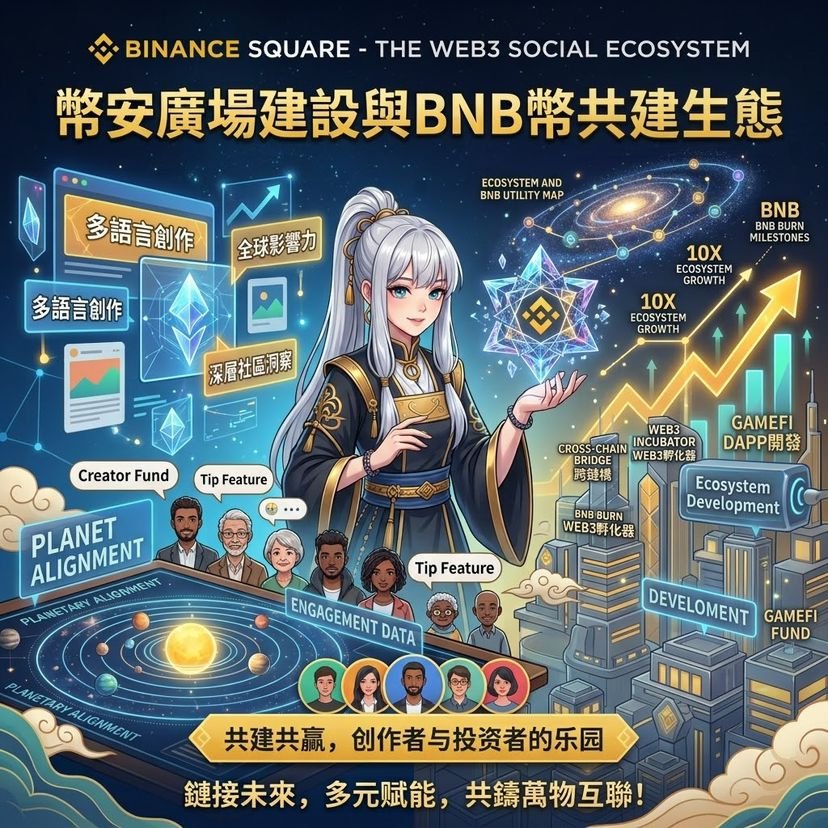
🎙️ #Building Binance Square and co-creating an ecosystem with BNB—connecting the future, empowering diverse possibilities, and bringing an interconnected world to life!
Preview
12:55 Oct 11
2
3
PINNED

@大丽7613
is speaking[LIVE] 🎙️ Live Trading Share, BNB
4.8k listens

奋斗Hustle1688
·
--
May I ask: What are the two safest places in the world for cryptocurrency?

分析师尤斯1688
·
--
🧧🧧 Trader Loses $6.6 Million In Bitcoin After Buying New Ledger Wallet
A crypto trader lost 80 Bitcoin worth about $6.6 million in a single transfer after the coins sat for 10 days on a new Ledger hardware wallet, according to BeInCrypto, with blockchain tracker Lookonchain saying he bought the device from CryptoBilis. Ledger told the Southeast Asian reseller to halt sales while it investigates, and analysts said the broader Ledger-linked drain may exceed $80 million, with MistTrack putting losses near $90 million and saying Tether froze USDT tied to the theft.
$BTC
A crypto trader lost 80 Bitcoin worth about $6.6 million in a single transfer after the coins sat for 10 days on a new Ledger hardware wallet, according to BeInCrypto, with blockchain tracker Lookonchain saying he bought the device from CryptoBilis. Ledger told the Southeast Asian reseller to halt sales while it investigates, and analysts said the broader Ledger-linked drain may exceed $80 million, with MistTrack putting losses near $90 million and saying Tether froze USDT tied to the theft.
$BTC

老和必定A8
·
--
The market is never short of opportunities; what’s scarce is the patience to wait for them.
Ups and downs are simply part of the market. Trends eventually fade, and emotions eventually settle.
Don’t chase a surge or panic over a pullback.
Protect your capital, manage your position size, and stay clear-headed.
True opportunities often go to those who can keep their cool.
Wishing everyone steady progress and lasting growth in your portfolios! 🧧
Ups and downs are simply part of the market. Trends eventually fade, and emotions eventually settle.
Don’t chase a surge or panic over a pullback.
Protect your capital, manage your position size, and stay clear-headed.
True opportunities often go to those who can keep their cool.
Wishing everyone steady progress and lasting growth in your portfolios! 🧧

Àimàn-crypto⁰⁹
·
--
🧧❤️ A KIND REQUEST TO MY CRYPTO FAMILY! ❤️🧧
Dear friends, if you’re sharing a Red Packet, please remember that a small act of kindness can bring a big smile to someone’s face. 🥰🎁
Let’s support each other, spread happiness, and grow together as one beautiful community! 🤝✨
🎁 Show some love: ❤️ Like
👥 Follow
🔄 Repost
💬 Comment “THANK YOU”
Every little gift matters. Thank you for your kindness and support! ❤️🧧
$USDT
#Binance #BinanceSquare #RedPacket #CryptoCommunity #Web3
Dear friends, if you’re sharing a Red Packet, please remember that a small act of kindness can bring a big smile to someone’s face. 🥰🎁
Let’s support each other, spread happiness, and grow together as one beautiful community! 🤝✨
🎁 Show some love: ❤️ Like
👥 Follow
🔄 Repost
💬 Comment “THANK YOU”
Every little gift matters. Thank you for your kindness and support! ❤️🧧
$USDT
#Binance #BinanceSquare #RedPacket #CryptoCommunity #Web3

圣克斯Lucky1688
·
--
Key opportunities to watch tomorrow
The key opportunities to watch on Monday, October 12, center on XRP-related events and changes in APT’s supply structure.
XRP / XRPN (Evernorth’s Nasdaq listing) — Most prominent event
Ripple-backed Evernorth (an XRP treasury company) has completed its merger with Armada Acquisition Corp. II, holding approximately 473 million XRP and around $300 million in cash. XRPN is expected to begin trading on Nasdaq on October 12 (after being postponed from its original date due to administrative delays). It is the first major publicly traded pure-play XRP treasury company, giving institutions direct stock-market exposure to the XRP ecosystem and potentially strengthening XRP’s institutional narrative and sentiment. A Nasdaq bell-ringing ceremony is also scheduled for October 14.
XRP / XRPN (Evernorth’s Nasdaq listing) — Most prominent event
Ripple-backed Evernorth (an XRP treasury company) has completed its merger with Armada Acquisition Corp. II, holding approximately 473 million XRP and around $300 million in cash. XRPN is expected to begin trading on Nasdaq on October 12 (after being postponed from its original date due to administrative delays). It is the first major publicly traded pure-play XRP treasury company, giving institutions direct stock-market exposure to the XRP ecosystem and potentially strengthening XRP’s institutional narrative and sentiment. A Nasdaq bell-ringing ceremony is also scheduled for October 14.

520龙行天下
·
--
BTC is trading in a narrow range, while XRP faces a major settlement event, drawing investor attention to related assets. Market sentiment is leaning toward greed, and some smaller coins are seeing sharp, short-lived gains. Volatility is picking up, with the risk of leveraged liquidations lurking beneath the surface. Market swings are normal—don’t get swept up in short-term moves. Manage risk, participate cautiously, and always put investment safety first.

兰汐kyL
·
--
$BTC Bitcoin plunged 8,000 points, and lots of people are saying the bull market is over? Bro, don’t rush to cut your losses. Bitcoin climbed from 60,000 to 87,000, surging 40% in one go. Now a few negative factors have knocked it back 10%. That’s a retest, not a bear market. What’s the biggest danger in a bull market? It’s not the drop—it’s getting shaken out. Sharp drops and slow climbs are just how bull markets behave. Personally, I think this looks more like the last chance to get in—not a cue to go all-in, but a reminder to stay clear-headed: buy spot in batches, avoid high-leverage contracts, add a little when it dips, and keep some skin in the game when it rises. If you really wait until everyone gets it, Bitcoin will have already taken off. What happens next? My take is simple: the harder the shakeout, the easier the rally that follows. Only those who can hold on have a shot at catching the main rally. Don’t keep asking whether the bull market is still alive. First ask yourself: would a 10% drop make you panic? If so, reduce your position; if not, stick to your plan. Remember, opportunities come from dips, and risks come from rallies. This is my personal opinion, not investment advice.#比特币反弹至8.3万美元

静姐6888
·
--
Escape the city and unwind in the mountains. Let the breeze tousle your hair as the wide-open view soothes your soul. We all get tired and lose our way sometimes, but don’t give up too easily. The path is right beneath your feet—take it one step at a time. Hold on to what you believe in and keep moving forward. Things will get better and better.

一休哥168
·
--
Bullish🌿 Walk at an unhurried pace, and let all worries fade
I only do what nourishes me, not what drains my life.
#XRP财库公司Evernorth完成SPAC合并
I only do what nourishes me, not what drains my life.
#XRP财库公司Evernorth完成SPAC合并

慢就是快Mike
·
--
$BTC Bank of America warns that U.S. stocks could face a correction of more than 10% if Democrats sweep Congress next month. According to MarketWatch, Michael Hartnett, Bank of America’s chief equity strategist, warned that if Democrats sweep both chambers of Congress in next month’s midterm elections, U.S. stocks could face a correction of more than 10%, while the dollar and U.S. Treasury yields could fall in tandem. Prediction market data cited in the report show the odds of a Democratic sweep have risen to 64%, up from less than 50% a month ago.

晚风Vesper_1688
·
--
⏰ Wednesday (the 14th) at 20:30: Major US CPI data 📊
The CPI year-over-year rate, CPI month-over-month rate, and core CPI will all be released together.
What do you think of this inflation data? Let’s discuss 🤝
The CPI year-over-year rate, CPI month-over-month rate, and core CPI will all be released together.
What do you think of this inflation data? Let’s discuss 🤝

静心1688
·
--
🎁Follow and reply to claim🧧🧧🧧
#国务院提出建设国家区块链网络
#国务院提出建设国家区块链网络

湖南交易员之家
·
--
Bullish$BTC 📢 Crypto Quick Morning Brief | October 11
1️⃣ The “Uptober” rally cools; BTC down 4.1% for the week BTC briefly fell to $80,427 on Thursday, its lowest level since early September, and is currently trading around $82,800. Prediction markets put the odds of a drop below $80,000 in October at 67%, and a fall to $77,500 at 40%.
2️⃣ $1.03 billion in profit-taking as whales sell across the board There is a massive sell wall around $83,000. Addresses of all sizes have turned net sellers for the first time since early June. QCP expects BTC to trade in a range of $80,000–$90,000.
3️⃣ ETH ETFs see $506 million in outflows over 5 days, the highest this year BlackRock’s ETHA saw $477 million in net outflows over the week. ETH fell below $2,600, with outflows continuing for 6 consecutive days. Vitalik warned that Ethereum could stagnate by 2040 if its roadmap does not incorporate AI.
4️⃣ Treasury yields at 5.32% continue to weigh on markets Risk assets are under pressure in a high-interest-rate environment. Analysts warn against treating October as a reliable bottom, with support potentially falling to the $72,000–$77,000 range.
5️⃣ Binance-Circle-OKX investment chain comes to light Cross-regional capital ties among three leading players are reshaping the stablecoin landscape, with regulatory compliance and coordination of interests emerging as the biggest variables.#以太坊突破2500USDT #XRP账本修复可增发XRP的漏洞 $SPCXB
1️⃣ The “Uptober” rally cools; BTC down 4.1% for the week BTC briefly fell to $80,427 on Thursday, its lowest level since early September, and is currently trading around $82,800. Prediction markets put the odds of a drop below $80,000 in October at 67%, and a fall to $77,500 at 40%.
2️⃣ $1.03 billion in profit-taking as whales sell across the board There is a massive sell wall around $83,000. Addresses of all sizes have turned net sellers for the first time since early June. QCP expects BTC to trade in a range of $80,000–$90,000.
3️⃣ ETH ETFs see $506 million in outflows over 5 days, the highest this year BlackRock’s ETHA saw $477 million in net outflows over the week. ETH fell below $2,600, with outflows continuing for 6 consecutive days. Vitalik warned that Ethereum could stagnate by 2040 if its roadmap does not incorporate AI.
4️⃣ Treasury yields at 5.32% continue to weigh on markets Risk assets are under pressure in a high-interest-rate environment. Analysts warn against treating October as a reliable bottom, with support potentially falling to the $72,000–$77,000 range.
5️⃣ Binance-Circle-OKX investment chain comes to light Cross-regional capital ties among three leading players are reshaping the stablecoin landscape, with regulatory compliance and coordination of interests emerging as the biggest variables.#以太坊突破2500USDT #XRP账本修复可增发XRP的漏洞 $SPCXB

Sherry长得帅不如跑的快1688
·
--
☀️ CRYPTO MORNING BRIEF|OCT 11
🚨 CAN A HARDWARE WALLET STILL BE COMPROMISED?
A major crypto security investigation is raising new questions about self-custody.
Hardware wallet maker Ledger is investigating reports of missing funds involving users in Southeast Asia.
On-chain investigators estimate:
💰 More than $86M in suspected losses
Across BTC, ETH and TRON networks.
But the amount and cause remain unconfirmed.
4 signals matter 👇
🔴 ① Affected users reportedly purchased devices through reseller CryptoBilis
⚠️ ② Ledger has requested a suspension of sales and shipments
🔐 ③ Wallet security also depends on device integrity and trusted distribution channels
🟡 ④ There is no confirmed evidence of a compromise affecting all Ledger devices
Now comes the real question:
NOT YOUR KEYS, NOT YOUR COINS.
BUT WHAT IF YOUR DEVICE IS COMPROMISED?
The lesson:
SELF-CUSTODY ≠ AUTOMATIC SAFETY.
CORE VARIABLE:
SUPPLY CHAIN SECURITY
Today I’m watching:
👀 Confirmation of any device tampering
👀 Independent verification of reported losses
👀 Further official security guidance
👀 BTC, ETH and BNB market stability
👇 Which custody model do you trust more?
🟢 SELF-CUSTODY
🔵 REGULATED CUSTODY
#BTC #ETH #BNB
🚨 CAN A HARDWARE WALLET STILL BE COMPROMISED?
A major crypto security investigation is raising new questions about self-custody.
Hardware wallet maker Ledger is investigating reports of missing funds involving users in Southeast Asia.
On-chain investigators estimate:
💰 More than $86M in suspected losses
Across BTC, ETH and TRON networks.
But the amount and cause remain unconfirmed.
4 signals matter 👇
🔴 ① Affected users reportedly purchased devices through reseller CryptoBilis
⚠️ ② Ledger has requested a suspension of sales and shipments
🔐 ③ Wallet security also depends on device integrity and trusted distribution channels
🟡 ④ There is no confirmed evidence of a compromise affecting all Ledger devices
Now comes the real question:
NOT YOUR KEYS, NOT YOUR COINS.
BUT WHAT IF YOUR DEVICE IS COMPROMISED?
The lesson:
SELF-CUSTODY ≠ AUTOMATIC SAFETY.
CORE VARIABLE:
SUPPLY CHAIN SECURITY
Today I’m watching:
👀 Confirmation of any device tampering
👀 Independent verification of reported losses
👀 Further official security guidance
👀 BTC, ETH and BNB market stability
👇 Which custody model do you trust more?
🟢 SELF-CUSTODY
🔵 REGULATED CUSTODY
#BTC #ETH #BNB
SPCXUS+1.26%
橙子Joyce
·
--
Bullish🔥 The AI wave is surging! Samsung’s Q3 operating profit skyrockets 782%, surpasses 100 trillion won to set an all-time record
Samsung Electronics, the world’s largest memory chipmaker, today released its preliminary results for the third quarter of 2026. Driven by strong demand for AI-related chips, several key financial metrics hit new all-time highs:
📊 Key highlights:
• Operating profit: 107.4 trillion won (approximately $80.17 billion), up 782% year over year and beating analysts’ expectations of 106.1 trillion won. This marks the first time Samsung’s quarterly operating profit has exceeded 100 trillion won, and its fourth consecutive quarter of record-high profits.
• Revenue: 195 trillion won, up 127% year over year (compared with 86.06 trillion won in the same period last year).
• Main growth drivers: A sharp surge in prices for high-bandwidth memory (HBM) and conventional DRAM/NAND. Analysts estimate Samsung’s HBM shipments jumped nearly 50% quarter over quarter in Q3.
⚠️ Industry signals and supply-demand dynamics:
• The memory supply-demand gap is expected to persist through 2027–2028: Demand from AI infrastructure is surging, while memory chip capacity remains severely constrained.
• Micron’s results are also soaring: Micron’s latest quarterly net profit surged more than tenfold year over year to $37.7 billion. The company said customers have already booked more than 75% of its 2027 capacity, with negotiations extending into 2028.
• Pressure on downstream supply chains: Rising memory prices are benefiting semiconductor divisions, but they are also driving up component costs for downstream products such as smartphones and consumer electronics, squeezing profit margins in related divisions.
💡 As AI infrastructure construction intensifies, memory chips have become one of the most critical “hard currencies” in the computing value chain.
$MU
$MUU.ETF
Samsung Electronics, the world’s largest memory chipmaker, today released its preliminary results for the third quarter of 2026. Driven by strong demand for AI-related chips, several key financial metrics hit new all-time highs:
📊 Key highlights:
• Operating profit: 107.4 trillion won (approximately $80.17 billion), up 782% year over year and beating analysts’ expectations of 106.1 trillion won. This marks the first time Samsung’s quarterly operating profit has exceeded 100 trillion won, and its fourth consecutive quarter of record-high profits.
• Revenue: 195 trillion won, up 127% year over year (compared with 86.06 trillion won in the same period last year).
• Main growth drivers: A sharp surge in prices for high-bandwidth memory (HBM) and conventional DRAM/NAND. Analysts estimate Samsung’s HBM shipments jumped nearly 50% quarter over quarter in Q3.
⚠️ Industry signals and supply-demand dynamics:
• The memory supply-demand gap is expected to persist through 2027–2028: Demand from AI infrastructure is surging, while memory chip capacity remains severely constrained.
• Micron’s results are also soaring: Micron’s latest quarterly net profit surged more than tenfold year over year to $37.7 billion. The company said customers have already booked more than 75% of its 2027 capacity, with negotiations extending into 2028.
• Pressure on downstream supply chains: Rising memory prices are benefiting semiconductor divisions, but they are also driving up component costs for downstream products such as smartphones and consumer electronics, squeezing profit margins in related divisions.
💡 As AI infrastructure construction intensifies, memory chips have become one of the most critical “hard currencies” in the computing value chain.
$MU
$MUU.ETF
橙子Joyce
·
--
Bullish🔥 The AI wave is surging! Samsung’s Q3 operating profit skyrockets 782%, surpasses 100 trillion won to set an all-time record
Samsung Electronics, the world’s largest memory chipmaker, today released its preliminary results for the third quarter of 2026. Driven by strong demand for AI-related chips, several key financial metrics hit new all-time highs:
📊 Key highlights:
• Operating profit: 107.4 trillion won (approximately $80.17 billion), up 782% year over year and beating analysts’ expectations of 106.1 trillion won. This marks the first time Samsung’s quarterly operating profit has exceeded 100 trillion won, and its fourth consecutive quarter of record-high profits.
• Revenue: 195 trillion won, up 127% year over year (compared with 86.06 trillion won in the same period last year).
• Main growth drivers: A sharp surge in prices for high-bandwidth memory (HBM) and conventional DRAM/NAND. Analysts estimate Samsung’s HBM shipments jumped nearly 50% quarter over quarter in Q3.
⚠️ Industry signals and supply-demand dynamics:
• The memory supply-demand gap is expected to persist through 2027–2028: Demand from AI infrastructure is surging, while memory chip capacity remains severely constrained.
• Micron’s results are also soaring: Micron’s latest quarterly net profit surged more than tenfold year over year to $37.7 billion. The company said customers have already booked more than 75% of its 2027 capacity, with negotiations extending into 2028.
• Pressure on downstream supply chains: Rising memory prices are benefiting semiconductor divisions, but they are also driving up component costs for downstream products such as smartphones and consumer electronics, squeezing profit margins in related divisions.
💡 As AI infrastructure construction intensifies, memory chips have become one of the most critical “hard currencies” in the computing value chain.
$MU
$MUU.ETF
Samsung Electronics, the world’s largest memory chipmaker, today released its preliminary results for the third quarter of 2026. Driven by strong demand for AI-related chips, several key financial metrics hit new all-time highs:
📊 Key highlights:
• Operating profit: 107.4 trillion won (approximately $80.17 billion), up 782% year over year and beating analysts’ expectations of 106.1 trillion won. This marks the first time Samsung’s quarterly operating profit has exceeded 100 trillion won, and its fourth consecutive quarter of record-high profits.
• Revenue: 195 trillion won, up 127% year over year (compared with 86.06 trillion won in the same period last year).
• Main growth drivers: A sharp surge in prices for high-bandwidth memory (HBM) and conventional DRAM/NAND. Analysts estimate Samsung’s HBM shipments jumped nearly 50% quarter over quarter in Q3.
⚠️ Industry signals and supply-demand dynamics:
• The memory supply-demand gap is expected to persist through 2027–2028: Demand from AI infrastructure is surging, while memory chip capacity remains severely constrained.
• Micron’s results are also soaring: Micron’s latest quarterly net profit surged more than tenfold year over year to $37.7 billion. The company said customers have already booked more than 75% of its 2027 capacity, with negotiations extending into 2028.
• Pressure on downstream supply chains: Rising memory prices are benefiting semiconductor divisions, but they are also driving up component costs for downstream products such as smartphones and consumer electronics, squeezing profit margins in related divisions.
💡 As AI infrastructure construction intensifies, memory chips have become one of the most critical “hard currencies” in the computing value chain.
$MU
$MUU.ETF
Log in to explore more content