


The initiative adds to other projects seeking to modify the tax treatment of transactions involving digital assets.
The IRS’s current rules would remain in effect as the bill advances.
The Treasury would update every three months the list of stablecoins that could access the benefit.
The new provisions could apply starting January 1, 2027 if they are approved.
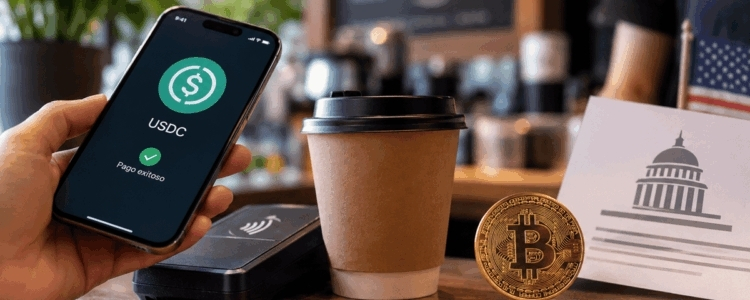
Paying for a coffee with an eligible stablecoin could have different tax treatment than doing so with bitcoin under a new project presented in the United States.
The initiative, titled the “Digital Asset Tax Alignment Act” (in Spanish), was introduced on September 30 by Senator Steve Daines, along with Cynthia Lummis, Bernie Moreno, and Tim Scott. The text proposes that certain purchases of goods and services made with dollar-pegged stablecoins would not trigger recognition of gains or losses on the asset used.
The benefit would not apply to every stablecoin. The bill stipulates that the asset would have to meet requirements related to its issuer and appear on a list that the Treasury would update at least quarterly. In addition, the taxpayer would have to have acquired the stablecoin at a price within 3% of USD 1.
Unlike other proposals that make exemptions conditional on a maximum amount, Senator Daines’s bill sets no value limit on purchases that could qualify for the benefit. However, it also provides for exclusions for certain dealers, brokers, and merchants, so not all uses of these assets would be covered.
The contrast with bitcoin would be direct. Current IRS rules treat digital assets as property and establish that using them to purchase goods or services constitutes a disposition. Therefore, the taxpayer must determine the difference between the asset’s cost basis and its value at the time it is spent.
Thus, a USD 5 purchase made with a stablecoin that meets the proposed conditions would not generate a recognizable gain or loss on the token under that regime. The same purchase made with bitcoin would still require the corresponding tax calculation.
The bill also includes a separate exception for certain transaction fees. Digital assets used to pay block, gas, or priority fees could be excluded from gain or loss recognition when their aggregate value does not exceed USD 10 and the other specified conditions are met.
That relief would be more limited than the one proposed for stablecoin purchases. The exclusions include certain dealers and taxpayers with a high volume of transactions. If the proposal were approved without changes, both provisions would begin to apply to transactions made on or after January 1, 2027.
The text joins other bills seeking to change the tax treatment of digital asset transactions. Its distinguishing feature is that it proposes an exemption for certain stablecoin purchases without setting a general monetary limit, while maintaining the principle for bitcoin that spending the asset may create a tax liability.
For now, the change is not in effect. The current IRS rules continue to apply, and any changes will depend on the proposal advancing and being approved. The bill itself also leaves several details concerning eligibility, recordkeeping, and the practical implementation of the new provisions to the Treasury.
#EEUU #TesoroEEUU #EstadosUnidos #Stablecoins #bitcoin $BTC $USD1 $USDC