

#stablecoins
stablecoins
7.5M views
27,495 Discussing
Hot
Latest

·
--
💵 $STABLE coin ecosystems are multiplying across chains as issuers push digital dollars onto more networks to widen access. More chains, more rails, more real-world usage. Which stablecoin ecosystem are you watching closest right now?Trade $STABLE here
{alpha}(560x011ebe7d75e2c9d1e0bd0be0bef5c36f0a90075f)
#Stablecoins #DeFi: #CryptoNews
💵 $STABLE coin ecosystems are multiplying across chains as issuers push digital dollars onto more networks to widen access. More chains, more rails, more real-world usage. Which stablecoin ecosystem are you watching closest right now?Trade $STABLE here
#Stablecoins #DeFi: #CryptoNews
#Stablecoins #DeFi: #CryptoNews
3
2
235

Article
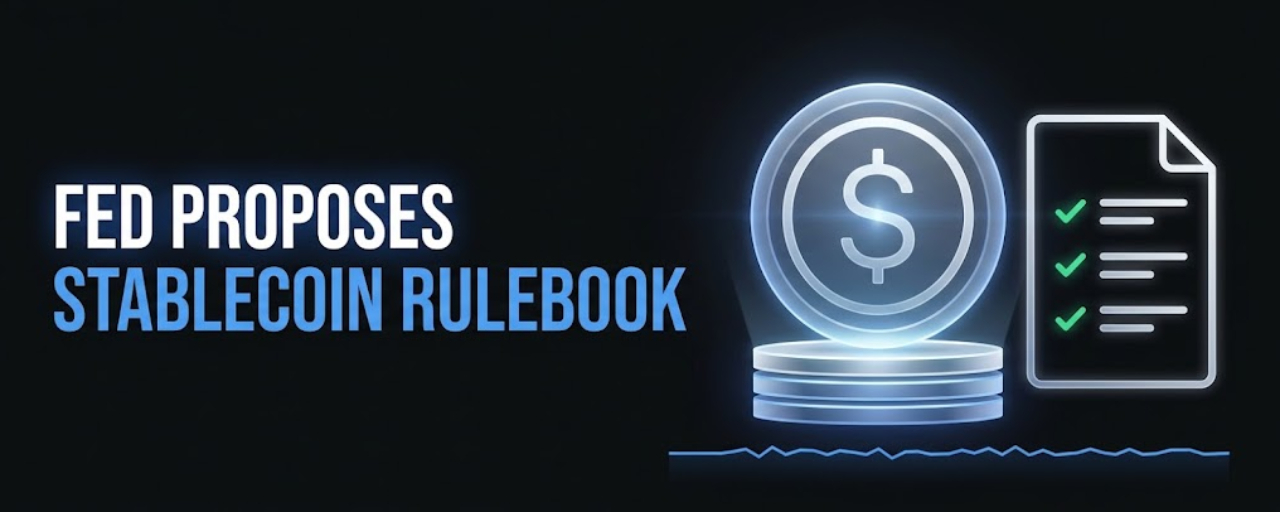
The Fed Just Proposed Its Stablecoin Rulebook: What Changes for Stablecoin HoldersFull reserve backing, capital rules and a bank approval path under the GENIUS Act. Here's what the proposal actually says, and what it doesn't.
🏛️ A stablecoin looks simple. One token, one dollar. The rulebook behind it just got a lot more detailed.
On Thursday, September 24, the Federal Reserve Board asked the public for comment on two proposals. Together they turn the GENIUS Act, the stablecoin law signed in July 2025, into specific rules for the issuers the Fed supervises.
📋 Here's what the first proposal says.
Issuers would have to back every token fully with approved reserve assets. Think short-term Treasury bills and other high-quality, liquid assets. According to the Fed's staff memo, that includes cash, balances at the Fed, insured deposits, and Treasuries maturing within 93 days. The proposal also adds standard capital requirements, risk management standards, and rules for the firms that hold the reserves.
🏦 Here's what the second proposal says.
It creates an application process for banks that want to issue payment stablecoins. Applicants would submit a business plan and financial information, and the process includes appeals and hearings. An insured state member bank would need Fed approval before a subsidiary could issue stablecoins.
⚠️ Now the part most headlines skip.
This is a proposal, not a final rule. The 60-day comment period only starts once the notices are published in the Federal Register, and the rules can still change. It also applies to issuers under the Fed's supervision, so whether a specific stablecoin is covered depends on who issues it. And a payment stablecoin under these rules would not become an insured bank deposit.
🧠 Why does it still matter?
Because it is one piece of a bigger rollout. The OCC is reportedly racing to finalize its own rules by November, ahead of a January deadline in the law. The Treasury has separately proposed rules that would bar platforms from selling noncompliant stablecoins to US customers.
Put together, the direction is clear. Stablecoins are being pulled inside the regulated financial system, and banks are being given a formal path in. It fits what you have seen elsewhere this month, from the ECB's Pontes launch to the UK bank tokenized deposit pilot and the US Clearing House network. Banks are building their own digital money.
✅ What this means for you
If you hold stablecoins like $USDC, nothing changes today. But it is worth knowing that clear reserve rules are meant to make the "is it really backed?" question easier to answer over time.
If you park funds in stablecoins on exchanges, watch which tokens end up compliant once the rules are final. Platforms may have to stop selling ones that are not, so your choice of stablecoin could matter more than it does now.
If you follow tokenization and bank adoption, this is a signal, not a trade. It shows regulators building the road that bank-issued digital money will run on.
🟢 Bullish scenario
Clear, consistent rules give banks and large institutions the confidence to enter, more compliant stablecoins launch, and the whole category grows on firmer ground.
🔴 Risk scenario
Strict requirements raise costs and push smaller issuers out, final rules from different agencies do not line up, and the timeline drags on.
👀 Three things to watch
1️⃣ Federal Register publication
When does the 60-day comment window actually open, and what do issuers and banks push back on?
2️⃣ The OCC's final rules
Does the November target hold, and do its rules match the Fed's approach?
3️⃣ First bank applications
Which banks apply first once the process is final?
💡 The key takeaway
This is not the end of the stablecoin story. It is the rulebook being written in public.
The proposal sets a high bar on reserves and opens a door for banks, but nothing is final yet. The real question is whether the finished rules make stablecoins safer and easier to use, or simply narrower and more expensive.
That is the part worth watching.
This post is for informational and educational purposes only and is not financial advice. Crypto markets are volatile. Always conduct your own research before making financial decisions.
#BinanceSquare #Stablecoins #GENIUSAct #Fed #Crypto
{spot}(USDCUSDT)
The Fed Just Proposed Its Stablecoin Rulebook: What Changes for Stablecoin Holders
Full reserve backing, capital rules and a bank approval path under the GENIUS Act. Here's what the proposal actually says, and what it doesn't.
🏛️ A stablecoin looks simple. One token, one dollar. The rulebook behind it just got a lot more detailed.
On Thursday, September 24, the Federal Reserve Board asked the public for comment on two proposals. Together they turn the GENIUS Act, the stablecoin law signed in July 2025, into specific rules for the issuers the Fed supervises.
📋 Here's what the first proposal says.
Issuers would have to back every token fully with approved reserve assets. Think short-term Treasury bills and other high-quality, liquid assets. According to the Fed's staff memo, that includes cash, balances at the Fed, insured deposits, and Treasuries maturing within 93 days. The proposal also adds standard capital requirements, risk management standards, and rules for the firms that hold the reserves.
🏦 Here's what the second proposal says.
It creates an application process for banks that want to issue payment stablecoins. Applicants would submit a business plan and financial information, and the process includes appeals and hearings. An insured state member bank would need Fed approval before a subsidiary could issue stablecoins.
⚠️ Now the part most headlines skip.
This is a proposal, not a final rule. The 60-day comment period only starts once the notices are published in the Federal Register, and the rules can still change. It also applies to issuers under the Fed's supervision, so whether a specific stablecoin is covered depends on who issues it. And a payment stablecoin under these rules would not become an insured bank deposit.
🧠 Why does it still matter?
Because it is one piece of a bigger rollout. The OCC is reportedly racing to finalize its own rules by November, ahead of a January deadline in the law. The Treasury has separately proposed rules that would bar platforms from selling noncompliant stablecoins to US customers.
Put together, the direction is clear. Stablecoins are being pulled inside the regulated financial system, and banks are being given a formal path in. It fits what you have seen elsewhere this month, from the ECB's Pontes launch to the UK bank tokenized deposit pilot and the US Clearing House network. Banks are building their own digital money.
✅ What this means for you
If you hold stablecoins like $USDC, nothing changes today. But it is worth knowing that clear reserve rules are meant to make the "is it really backed?" question easier to answer over time.
If you park funds in stablecoins on exchanges, watch which tokens end up compliant once the rules are final. Platforms may have to stop selling ones that are not, so your choice of stablecoin could matter more than it does now.
If you follow tokenization and bank adoption, this is a signal, not a trade. It shows regulators building the road that bank-issued digital money will run on.
🟢 Bullish scenario
Clear, consistent rules give banks and large institutions the confidence to enter, more compliant stablecoins launch, and the whole category grows on firmer ground.
🔴 Risk scenario
Strict requirements raise costs and push smaller issuers out, final rules from different agencies do not line up, and the timeline drags on.
👀 Three things to watch
1️⃣ Federal Register publication
When does the 60-day comment window actually open, and what do issuers and banks push back on?
2️⃣ The OCC's final rules
Does the November target hold, and do its rules match the Fed's approach?
3️⃣ First bank applications
Which banks apply first once the process is final?
💡 The key takeaway
This is not the end of the stablecoin story. It is the rulebook being written in public.
The proposal sets a high bar on reserves and opens a door for banks, but nothing is final yet. The real question is whether the finished rules make stablecoins safer and easier to use, or simply narrower and more expensive.
That is the part worth watching.
This post is for informational and educational purposes only and is not financial advice. Crypto markets are volatile. Always conduct your own research before making financial decisions.
#BinanceSquare #Stablecoins #GENIUSAct #Fed #Crypto
🏛️ A stablecoin looks simple. One token, one dollar. The rulebook behind it just got a lot more detailed.
On Thursday, September 24, the Federal Reserve Board asked the public for comment on two proposals. Together they turn the GENIUS Act, the stablecoin law signed in July 2025, into specific rules for the issuers the Fed supervises.
📋 Here's what the first proposal says.
Issuers would have to back every token fully with approved reserve assets. Think short-term Treasury bills and other high-quality, liquid assets. According to the Fed's staff memo, that includes cash, balances at the Fed, insured deposits, and Treasuries maturing within 93 days. The proposal also adds standard capital requirements, risk management standards, and rules for the firms that hold the reserves.
🏦 Here's what the second proposal says.
It creates an application process for banks that want to issue payment stablecoins. Applicants would submit a business plan and financial information, and the process includes appeals and hearings. An insured state member bank would need Fed approval before a subsidiary could issue stablecoins.
⚠️ Now the part most headlines skip.
This is a proposal, not a final rule. The 60-day comment period only starts once the notices are published in the Federal Register, and the rules can still change. It also applies to issuers under the Fed's supervision, so whether a specific stablecoin is covered depends on who issues it. And a payment stablecoin under these rules would not become an insured bank deposit.
🧠 Why does it still matter?
Because it is one piece of a bigger rollout. The OCC is reportedly racing to finalize its own rules by November, ahead of a January deadline in the law. The Treasury has separately proposed rules that would bar platforms from selling noncompliant stablecoins to US customers.
Put together, the direction is clear. Stablecoins are being pulled inside the regulated financial system, and banks are being given a formal path in. It fits what you have seen elsewhere this month, from the ECB's Pontes launch to the UK bank tokenized deposit pilot and the US Clearing House network. Banks are building their own digital money.
✅ What this means for you
If you hold stablecoins like $USDC, nothing changes today. But it is worth knowing that clear reserve rules are meant to make the "is it really backed?" question easier to answer over time.
If you park funds in stablecoins on exchanges, watch which tokens end up compliant once the rules are final. Platforms may have to stop selling ones that are not, so your choice of stablecoin could matter more than it does now.
If you follow tokenization and bank adoption, this is a signal, not a trade. It shows regulators building the road that bank-issued digital money will run on.
🟢 Bullish scenario
Clear, consistent rules give banks and large institutions the confidence to enter, more compliant stablecoins launch, and the whole category grows on firmer ground.
🔴 Risk scenario
Strict requirements raise costs and push smaller issuers out, final rules from different agencies do not line up, and the timeline drags on.
👀 Three things to watch
1️⃣ Federal Register publication
When does the 60-day comment window actually open, and what do issuers and banks push back on?
2️⃣ The OCC's final rules
Does the November target hold, and do its rules match the Fed's approach?
3️⃣ First bank applications
Which banks apply first once the process is final?
💡 The key takeaway
This is not the end of the stablecoin story. It is the rulebook being written in public.
The proposal sets a high bar on reserves and opens a door for banks, but nothing is final yet. The real question is whether the finished rules make stablecoins safer and easier to use, or simply narrower and more expensive.
That is the part worth watching.
This post is for informational and educational purposes only and is not financial advice. Crypto markets are volatile. Always conduct your own research before making financial decisions.
#BinanceSquare #Stablecoins #GENIUSAct #Fed #Crypto
1
1
29

The Fed just released its stablecoin rulebook 🏛️ On Sep 24 it proposed that issuers fully back every token with short-term Treasuries or similar liquid assets, plus a capital buffer of 2% on the first $20B outstanding.
Redemptions would have to be processed within two business days, with monthly reserve reports audited and signed off by the CEO and CFO. The proposal is now open for public comment for 60 days.
Clear rules could bring big banks into stablecoins, which may be good for USDC and USDT credibility in the long run. Do tighter rules help stablecoins or slow them down? 👇
#Stablecoins #GENIUSAct #USDC
The Fed just released its stablecoin rulebook 🏛️ On Sep 24 it proposed that issuers fully back every token with short-term Treasuries or similar liquid assets, plus a capital buffer of 2% on the first $20B outstanding.
Redemptions would have to be processed within two business days, with monthly reserve reports audited and signed off by the CEO and CFO. The proposal is now open for public comment for 60 days.
Clear rules could bring big banks into stablecoins, which may be good for USDC and USDT credibility in the long run. Do tighter rules help stablecoins or slow them down? 👇
#Stablecoins #GENIUSAct #USDC
Redemptions would have to be processed within two business days, with monthly reserve reports audited and signed off by the CEO and CFO. The proposal is now open for public comment for 60 days.
Clear rules could bring big banks into stablecoins, which may be good for USDC and USDT credibility in the long run. Do tighter rules help stablecoins or slow them down? 👇
#Stablecoins #GENIUSAct #USDC
1

·
--
Here's the uncomfortable truth about stablecoin payments: the technology solves speed and cost brilliantly — and completely fails at "undo."
A wire transfer can be recalled. A credit card transaction can be charged back. A stablecoin transfer, once confirmed, is final forever. Irreversibility is a feature for settlement and a bug for commerce.
E-commerce didn't grow because payments got faster. It grew because Visa built a dispute layer — chargebacks made strangers trust each other. Buyers click "purchase" because they know mistakes are reversible. That psychological safety net is what converts browsing into buying.
Stablecoin rails already beat cards on fees and settlement time. What they lack is the three-piece toolkit of commercial trust: reversibility for errors, escrow for disputes, and recourse for fraud. DeFi actually has the raw materials — escrow contracts, multisig arbitration, parametric insurance, permissioned refund pools — but they're not wired into the default payment experience yet.
This is where the next wave of builders is heading: not faster blockchains, but social layers on top of final settlement. "Stablecoins with consumer protection" sounds like heresy. It's actually the unlock that takes crypto from B2B settlement to the checkout button.
The rails are ready. The trust layer isn't. Whoever ships it owns the next trillion in volume.
$BTC $ETH $SOL
#Stablecoins #CryptoPayments #DeFi #Fintech #Blockchain
Here's the uncomfortable truth about stablecoin payments: the technology solves speed and cost brilliantly — and completely fails at "undo."
A wire transfer can be recalled. A credit card transaction can be charged back. A stablecoin transfer, once confirmed, is final forever. Irreversibility is a feature for settlement and a bug for commerce.
E-commerce didn't grow because payments got faster. It grew because Visa built a dispute layer — chargebacks made strangers trust each other. Buyers click "purchase" because they know mistakes are reversible. That psychological safety net is what converts browsing into buying.
Stablecoin rails already beat cards on fees and settlement time. What they lack is the three-piece toolkit of commercial trust: reversibility for errors, escrow for disputes, and recourse for fraud. DeFi actually has the raw materials — escrow contracts, multisig arbitration, parametric insurance, permissioned refund pools — but they're not wired into the default payment experience yet.
This is where the next wave of builders is heading: not faster blockchains, but social layers on top of final settlement. "Stablecoins with consumer protection" sounds like heresy. It's actually the unlock that takes crypto from B2B settlement to the checkout button.
The rails are ready. The trust layer isn't. Whoever ships it owns the next trillion in volume.
$BTC $ETH $SOL
#Stablecoins #CryptoPayments #DeFi #Fintech #Blockchain
A wire transfer can be recalled. A credit card transaction can be charged back. A stablecoin transfer, once confirmed, is final forever. Irreversibility is a feature for settlement and a bug for commerce.
E-commerce didn't grow because payments got faster. It grew because Visa built a dispute layer — chargebacks made strangers trust each other. Buyers click "purchase" because they know mistakes are reversible. That psychological safety net is what converts browsing into buying.
Stablecoin rails already beat cards on fees and settlement time. What they lack is the three-piece toolkit of commercial trust: reversibility for errors, escrow for disputes, and recourse for fraud. DeFi actually has the raw materials — escrow contracts, multisig arbitration, parametric insurance, permissioned refund pools — but they're not wired into the default payment experience yet.
This is where the next wave of builders is heading: not faster blockchains, but social layers on top of final settlement. "Stablecoins with consumer protection" sounds like heresy. It's actually the unlock that takes crypto from B2B settlement to the checkout button.
The rails are ready. The trust layer isn't. Whoever ships it owns the next trillion in volume.
$BTC $ETH $SOL
#Stablecoins #CryptoPayments #DeFi #Fintech #Blockchain
1
151

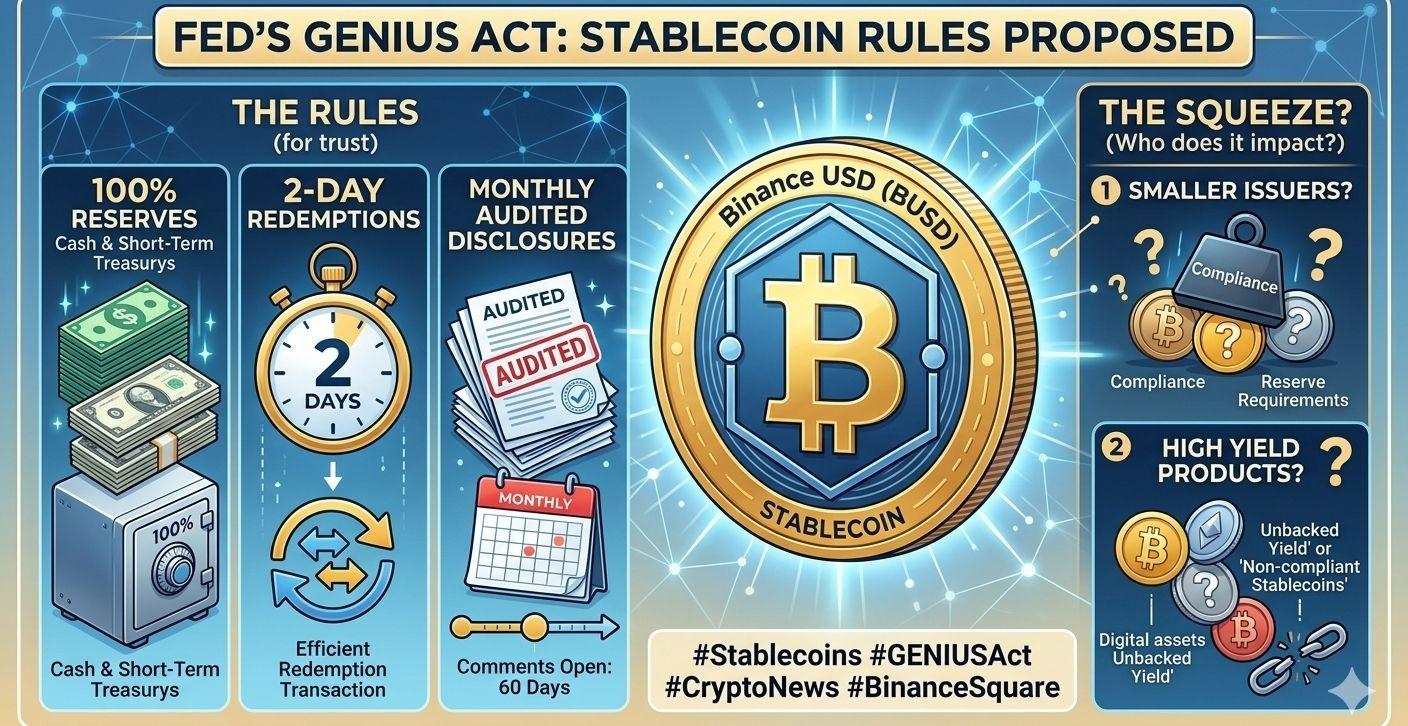
The Fed just proposed stablecoin rules under the GENIUS Act: 100% reserves in cash or short-term Treasurys, redemptions within two days, audited monthly disclosures. Comments are open for 60 days. Good for trust, but who does it squeeze?
#Stablecoins #GENIUSAct #CryptoNews #BinanceSquare
{future}(USDCUSDT)
The Fed just proposed stablecoin rules under the GENIUS Act: 100% reserves in cash or short-term Treasurys, redemptions within two days, audited monthly disclosures. Comments are open for 60 days. Good for trust, but who does it squeeze?
#Stablecoins #GENIUSAct #CryptoNews #BinanceSquare
#Stablecoins #GENIUSAct #CryptoNews #BinanceSquare
48

·
--
🚨 Visa survey shows 56% of Americans now aware of stablecoins, but many still confuse them with volatile assets like BTC. Trust remains key—bank-style safeguards could drive adoption. This highlights growing interest in regulated digital assets, potentially boosting demand for stablecoin infrastructure. Could this shift reduce BTC’s role as a store of value for new users?
#Stablecoins #BTCUSDT
$BTC #TradingSignal #CryptoAnalysis
🚨 Visa survey shows 56% of Americans now aware of stablecoins, but many still confuse them with volatile assets like BTC. Trust remains key—bank-style safeguards could drive adoption. This highlights growing interest in regulated digital assets, potentially boosting demand for stablecoin infrastructure. Could this shift reduce BTC’s role as a store of value for new users?
#Stablecoins #BTCUSDT
$BTC #TradingSignal #CryptoAnalysis
#Stablecoins #BTCUSDT
$BTC #TradingSignal #CryptoAnalysis

82

·
--
US interest in stablecoins jumps to 56% when bank‑level fraud protection is offered
Visa’s survey of 2,192 U.S. adults (Feb 24‑Mar 2) found 56% would use stablecoins with bank‑level fraud protection and deposit insurance, versus 36% without safeguards.
Built around remittances, the survey shows 64% of Americans trust the provider more than the technology, and traditional banks and global payment networks earn 61% and 60% trust for digital currency services.
Fraud concerns are high: one in four senders worldwide faced fraud, over one‑third of Americans and 40% of Indians; 44% of Americans worry about AI deepfakes, and 45% would accept a 24‑hour transfer delay for stronger protection.
Would you adopt stablecoins if banks guaranteed fraud protection and deposit insurance?
#Stablecoins #FinTech #Remittances #Crypto #Payments
US interest in stablecoins jumps to 56% when bank‑level fraud protection is offered
Visa’s survey of 2,192 U.S. adults (Feb 24‑Mar 2) found 56% would use stablecoins with bank‑level fraud protection and deposit insurance, versus 36% without safeguards.
Built around remittances, the survey shows 64% of Americans trust the provider more than the technology, and traditional banks and global payment networks earn 61% and 60% trust for digital currency services.
Fraud concerns are high: one in four senders worldwide faced fraud, over one‑third of Americans and 40% of Indians; 44% of Americans worry about AI deepfakes, and 45% would accept a 24‑hour transfer delay for stronger protection.
Would you adopt stablecoins if banks guaranteed fraud protection and deposit insurance?
#Stablecoins #FinTech #Remittances #Crypto #Payments
Visa’s survey of 2,192 U.S. adults (Feb 24‑Mar 2) found 56% would use stablecoins with bank‑level fraud protection and deposit insurance, versus 36% without safeguards.
Built around remittances, the survey shows 64% of Americans trust the provider more than the technology, and traditional banks and global payment networks earn 61% and 60% trust for digital currency services.
Fraud concerns are high: one in four senders worldwide faced fraud, over one‑third of Americans and 40% of Indians; 44% of Americans worry about AI deepfakes, and 45% would accept a 24‑hour transfer delay for stronger protection.
Would you adopt stablecoins if banks guaranteed fraud protection and deposit insurance?
#Stablecoins #FinTech #Remittances #Crypto #Payments
VUS+0.00%
15

Recent US court records revealing an $84 million asset seizure tied to Capstone have put Tether back in the spotlight. The real issue isn't just the seized funds, but the ongoing opacity regarding reserve breakdowns. When major stablecoin issuers stay silent on specific banking relationships, market anxiety inevitably spikes. Transparency remains the ultimate test for backing claims in crypto. Without clear disclosures, FUD will always fill the silence during regulatory crackdowns. $USDT #Tether #Stablecoins #CryptoRegulation
Recent US court records revealing an $84 million asset seizure tied to Capstone have put Tether back in the spotlight. The real issue isn't just the seized funds, but the ongoing opacity regarding reserve breakdowns. When major stablecoin issuers stay silent on specific banking relationships, market anxiety inevitably spikes. Transparency remains the ultimate test for backing claims in crypto. Without clear disclosures, FUD will always fill the silence during regulatory crackdowns. $USDT #Tether #Stablecoins #CryptoRegulation

Binance announced a $100 million investment in Circle and expanded its strategic partnership with Circle for another five years.
The partnership focuses on expanding USDC availability and adoption across Binance’s global platform, particularly in emerging markets.
Stablecoins continue to play an important role in the evolving digital-asset ecosystem.
#Binance #Circle #USDC #Stablecoins #Crypto
{spot}(USDCUSDT)
Binance announced a $100 million investment in Circle and expanded its strategic partnership with Circle for another five years.
The partnership focuses on expanding USDC availability and adoption across Binance’s global platform, particularly in emerging markets.
Stablecoins continue to play an important role in the evolving digital-asset ecosystem.
#Binance #Circle #USDC #Stablecoins #Crypto
The partnership focuses on expanding USDC availability and adoption across Binance’s global platform, particularly in emerging markets.
Stablecoins continue to play an important role in the evolving digital-asset ecosystem.
#Binance #Circle #USDC #Stablecoins #Crypto
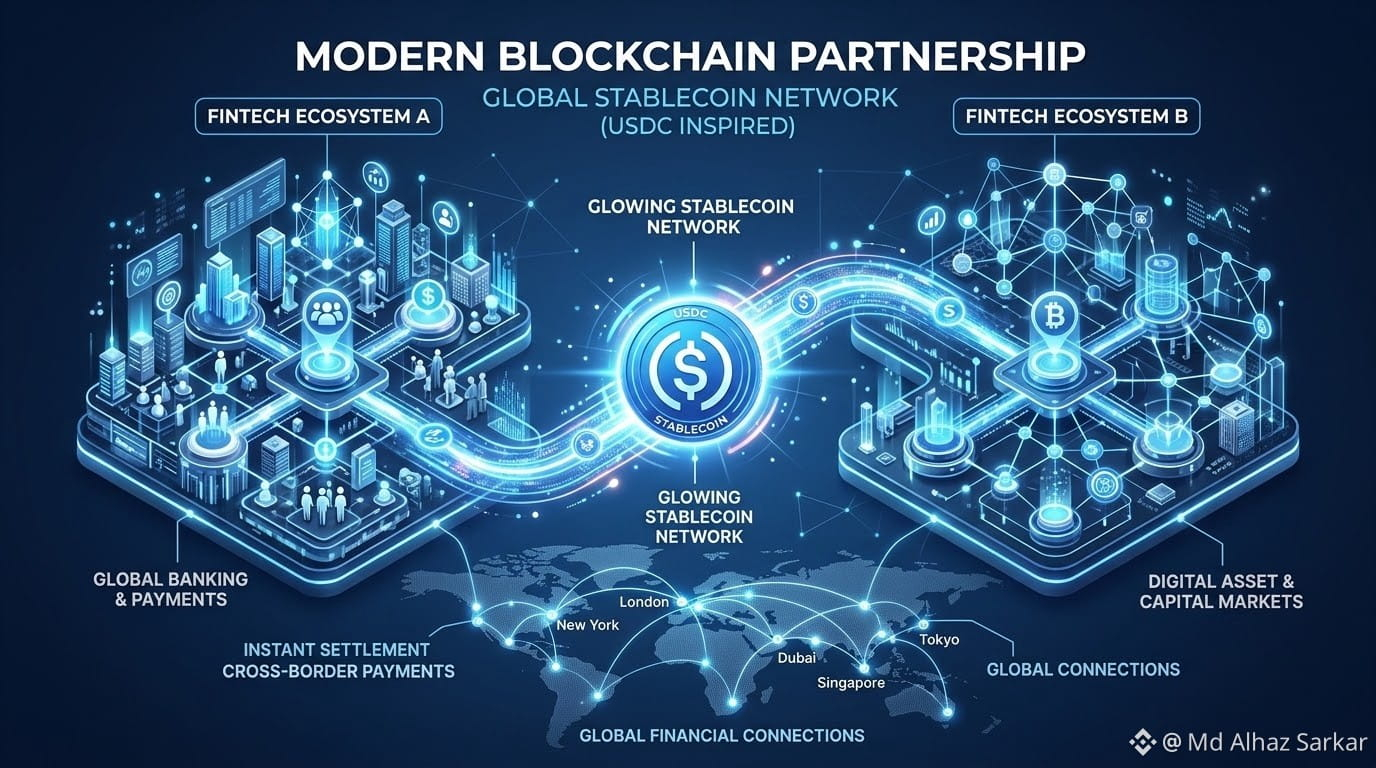
45

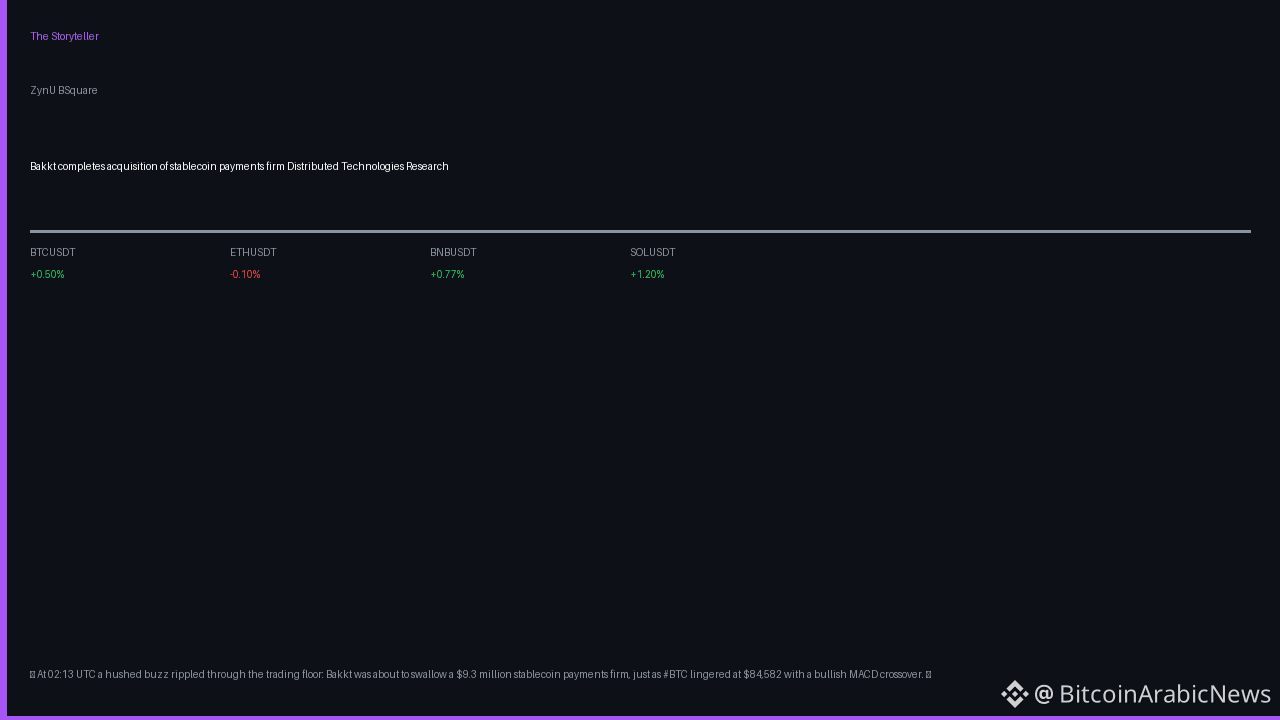
🔥 At 02:13 UTC a hushed buzz rippled through the trading floor: Bakkt was about to swallow a $9.3 million stablecoin payments firm, just as #BTC lingered at $84,582 with a bullish MACD crossover.
📊 Bakkt sealed the deal for Distributed Technologies Research, renamed itself Bakkt Inc., and instantly tightened the bridge between #BTC’s price action and the #Stablecoins ecosystem, a move that could reshape how liquidity flows into crypto.
💡 Market greed peaks at 70/100, Bitcoin’s open interest steadies at $8 billion and funding nudges bullish at +0.0029%, while daily volume swells to $849 M – a silent tide that hints institutions are already loading up on the infrastructure Bakkt now commands, amplifying the #BTC rally from behind the scenes.
🎭 The $9.3 million acquisition isn’t just a corporate shuffle; it’s the first domino in a chain that may force upcoming #ETF approvals to lean on Bakkt’s stablecoin backbone, turning a modest purchase into a market‑shaping catalyst.
❓ Will the next surge in Bitcoin’s price be powered more by stablecoin liquidity than by raw buying pressure?
🔥 At 02:13 UTC a hushed buzz rippled through the trading floor: Bakkt was about to swallow a $9.3 million stablecoin payments firm, just as #BTC lingered at $84,582 with a bullish MACD crossover.
📊 Bakkt sealed the deal for Distributed Technologies Research, renamed itself Bakkt Inc., and instantly tightened the bridge between #BTC’s price action and the #Stablecoins ecosystem, a move that could reshape how liquidity flows into crypto.
💡 Market greed peaks at 70/100, Bitcoin’s open interest steadies at $8 billion and funding nudges bullish at +0.0029%, while daily volume swells to $849 M – a silent tide that hints institutions are already loading up on the infrastructure Bakkt now commands, amplifying the #BTC rally from behind the scenes.
🎭 The $9.3 million acquisition isn’t just a corporate shuffle; it’s the first domino in a chain that may force upcoming #ETF approvals to lean on Bakkt’s stablecoin backbone, turning a modest purchase into a market‑shaping catalyst.
❓ Will the next surge in Bitcoin’s price be powered more by stablecoin liquidity than by raw buying pressure?
📊 Bakkt sealed the deal for Distributed Technologies Research, renamed itself Bakkt Inc., and instantly tightened the bridge between #BTC’s price action and the #Stablecoins ecosystem, a move that could reshape how liquidity flows into crypto.
💡 Market greed peaks at 70/100, Bitcoin’s open interest steadies at $8 billion and funding nudges bullish at +0.0029%, while daily volume swells to $849 M – a silent tide that hints institutions are already loading up on the infrastructure Bakkt now commands, amplifying the #BTC rally from behind the scenes.
🎭 The $9.3 million acquisition isn’t just a corporate shuffle; it’s the first domino in a chain that may force upcoming #ETF approvals to lean on Bakkt’s stablecoin backbone, turning a modest purchase into a market‑shaping catalyst.
❓ Will the next surge in Bitcoin’s price be powered more by stablecoin liquidity than by raw buying pressure?
20

·
--
Stablecoin Safety Is StructuralA stablecoin trading near one dollar can feel simple. Its safety is not.
The token still depends on an issuer structure, reserve assets, custody arrangements, redemption operations, banking access, compliance controls and technical permissions. Regulation can improve accountability around those layers, but it does not remove them.
Start with the issuer. Identify the legal entity behind the token and the framework under which it operates. Then inspect the reserve composition. Cash, short-dated government instruments and longer or less liquid assets do not behave the same way during heavy redemptions.
Next, check who can redeem directly at par. Many ordinary users depend on exchange or DeFi liquidity rather than the issuer’s primary redemption channel. A token can hold its peg in calm markets while spreads widen quickly when secondary-market liquidity becomes stressed.
Technical controls matter too. Freeze, burn and upgrade permissions may be part of a compliant payment system, but holders should understand who controls them and how operational mistakes or key compromise could affect funds.
Finally, separate issuer quality from user custody. Strong reserve rules cannot protect a wallet that signs a malicious transaction or stores its recovery phrase carelessly.
TokenToolHub’s guide explains the United States stablecoin framework and provides a practical checklist for reserves, redemption, issuer status, custody and user-side risk.
https://tokentoolhub.com/us-stablecoin-regulations/
#Stablecoins #USDC #CryptoRegulations #defi #CryptoSecurity
Stablecoin Safety Is Structural
A stablecoin trading near one dollar can feel simple. Its safety is not.
The token still depends on an issuer structure, reserve assets, custody arrangements, redemption operations, banking access, compliance controls and technical permissions. Regulation can improve accountability around those layers, but it does not remove them.
Start with the issuer. Identify the legal entity behind the token and the framework under which it operates. Then inspect the reserve composition. Cash, short-dated government instruments and longer or less liquid assets do not behave the same way during heavy redemptions.
Next, check who can redeem directly at par. Many ordinary users depend on exchange or DeFi liquidity rather than the issuer’s primary redemption channel. A token can hold its peg in calm markets while spreads widen quickly when secondary-market liquidity becomes stressed.
Technical controls matter too. Freeze, burn and upgrade permissions may be part of a compliant payment system, but holders should understand who controls them and how operational mistakes or key compromise could affect funds.
Finally, separate issuer quality from user custody. Strong reserve rules cannot protect a wallet that signs a malicious transaction or stores its recovery phrase carelessly.
TokenToolHub’s guide explains the United States stablecoin framework and provides a practical checklist for reserves, redemption, issuer status, custody and user-side risk.
https://tokentoolhub.com/us-stablecoin-regulations/
#Stablecoins #USDC #CryptoRegulations #defi #CryptoSecurity
The token still depends on an issuer structure, reserve assets, custody arrangements, redemption operations, banking access, compliance controls and technical permissions. Regulation can improve accountability around those layers, but it does not remove them.
Start with the issuer. Identify the legal entity behind the token and the framework under which it operates. Then inspect the reserve composition. Cash, short-dated government instruments and longer or less liquid assets do not behave the same way during heavy redemptions.
Next, check who can redeem directly at par. Many ordinary users depend on exchange or DeFi liquidity rather than the issuer’s primary redemption channel. A token can hold its peg in calm markets while spreads widen quickly when secondary-market liquidity becomes stressed.
Technical controls matter too. Freeze, burn and upgrade permissions may be part of a compliant payment system, but holders should understand who controls them and how operational mistakes or key compromise could affect funds.
Finally, separate issuer quality from user custody. Strong reserve rules cannot protect a wallet that signs a malicious transaction or stores its recovery phrase carelessly.
TokenToolHub’s guide explains the United States stablecoin framework and provides a practical checklist for reserves, redemption, issuer status, custody and user-side risk.
https://tokentoolhub.com/us-stablecoin-regulations/
#Stablecoins #USDC #CryptoRegulations #defi #CryptoSecurity
30
Recent reports claiming a massive drop in Visa's stablecoin volume are misleading. The decline is actually the result of expanded address labeling rather than an actual drop in usage. In reality, adjusted transfer counts barely budged, showing steady underlying network activity. On-chain metrics can be tricky; always look beneath the surface-level headlines to gauge true adoption trends before jumping to conclusions. $USDC $USDT #Stablecoins #CryptoNews #Blockchain
Recent reports claiming a massive drop in Visa's stablecoin volume are misleading. The decline is actually the result of expanded address labeling rather than an actual drop in usage. In reality, adjusted transfer counts barely budged, showing steady underlying network activity. On-chain metrics can be tricky; always look beneath the surface-level headlines to gauge true adoption trends before jumping to conclusions. $USDC $USDT #Stablecoins #CryptoNews #Blockchain
1

·
--
🚨📊 #Visa resets stablecoin metrics, stripping out trillions in inorganic algorithmic transactions 💳📉
🛡️⚡ Stable transfer volume underscores organic consumer utility growth, enhancing the accuracy and transparency of payment data 📈🌐
#Visa #Stablecoins #CryptoPayments #Web3 #Fintech #Blockchain #CryptoNews #DataTransparency #USDC #USDT
$USDC
{spot}(USDCUSDT)
$BTC
{spot}(BTCUSDT)
$ETH
{spot}(ETHUSDT)
🚨📊 #Visa resets stablecoin metrics, stripping out trillions in inorganic algorithmic transactions 💳📉
🛡️⚡ Stable transfer volume underscores organic consumer utility growth, enhancing the accuracy and transparency of payment data 📈🌐
#Visa #Stablecoins #CryptoPayments #Web3 #Fintech #Blockchain #CryptoNews #DataTransparency #USDC #USDT
$USDC
$BTC
$ETH
🛡️⚡ Stable transfer volume underscores organic consumer utility growth, enhancing the accuracy and transparency of payment data 📈🌐
#Visa #Stablecoins #CryptoPayments #Web3 #Fintech #Blockchain #CryptoNews #DataTransparency #USDC #USDT
$USDC
$BTC
$ETH


Good luck 🍀
From OnionSam
77

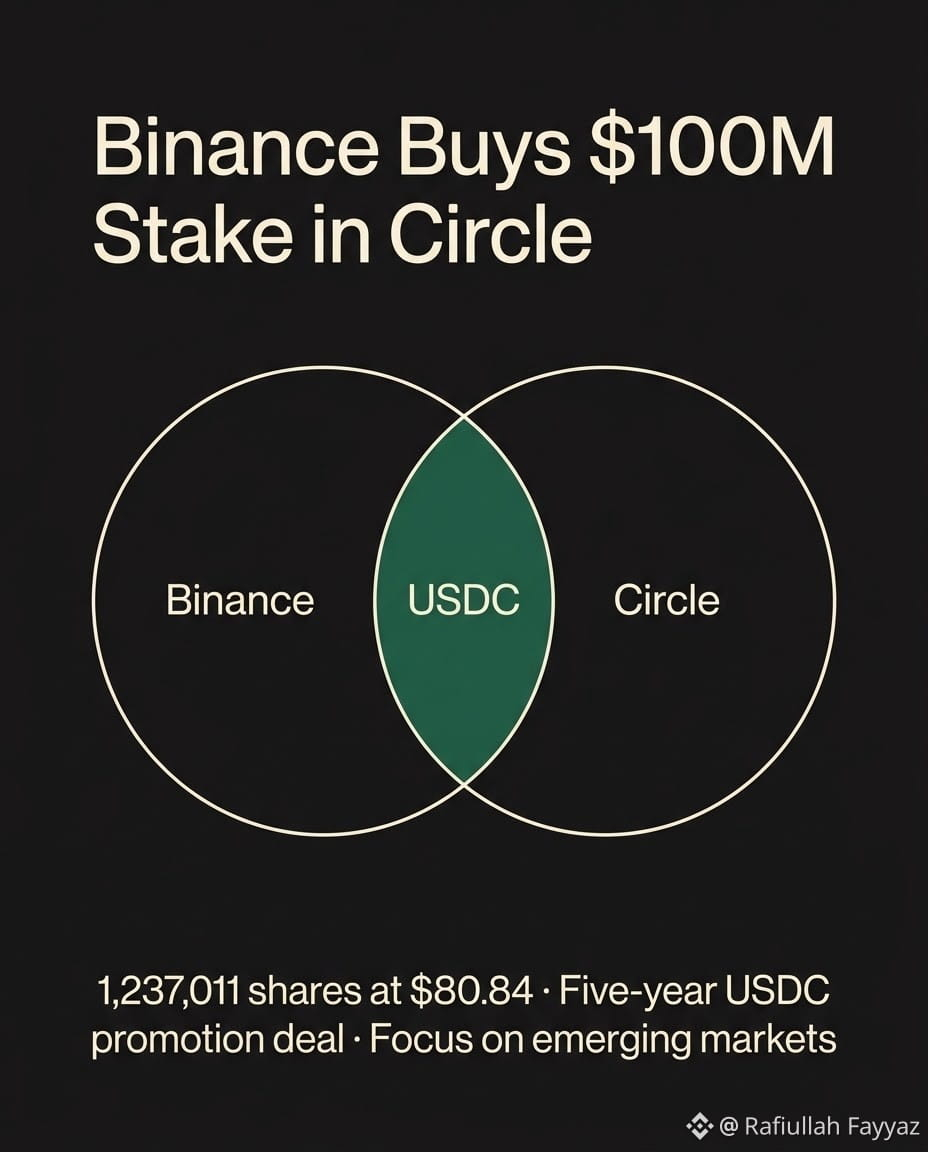
Binance bought $100 million worth of Circle stock. And signed a five-year deal to promote USDC.
The details: Binance acquired 1,237,011 shares of Circle Class A stock at $80.84 per share — a 5% discount to market price. The transaction closed on September 17 and was disclosed in an SEC filing. Binance also renewed its commercial agreement with Circle for five years, focused on expanding USDC adoption in emerging markets.
Why this matters: Circle is the company behind USDC. Binance is the largest crypto exchange. A $100 million equity stake plus a five-year partnership means Binance is betting on USDC as a core part of its stablecoin strategy.
This isn't just a marketing deal. Binance now owns a piece of Circle. That aligns their incentives.
What I'm watching: does USDC gain share on Binance against USDT? And does this deal push more stablecoin activity toward regulated, transparent issuers?
$USDC
#Binance #Circle #Stablecoins
{spot}(USDCUSDT)
Binance bought $100 million worth of Circle stock. And signed a five-year deal to promote USDC.
The details: Binance acquired 1,237,011 shares of Circle Class A stock at $80.84 per share — a 5% discount to market price. The transaction closed on September 17 and was disclosed in an SEC filing. Binance also renewed its commercial agreement with Circle for five years, focused on expanding USDC adoption in emerging markets.
Why this matters: Circle is the company behind USDC. Binance is the largest crypto exchange. A $100 million equity stake plus a five-year partnership means Binance is betting on USDC as a core part of its stablecoin strategy.
This isn't just a marketing deal. Binance now owns a piece of Circle. That aligns their incentives.
What I'm watching: does USDC gain share on Binance against USDT? And does this deal push more stablecoin activity toward regulated, transparent issuers?
$USDC
#Binance #Circle #Stablecoins
The details: Binance acquired 1,237,011 shares of Circle Class A stock at $80.84 per share — a 5% discount to market price. The transaction closed on September 17 and was disclosed in an SEC filing. Binance also renewed its commercial agreement with Circle for five years, focused on expanding USDC adoption in emerging markets.
Why this matters: Circle is the company behind USDC. Binance is the largest crypto exchange. A $100 million equity stake plus a five-year partnership means Binance is betting on USDC as a core part of its stablecoin strategy.
This isn't just a marketing deal. Binance now owns a piece of Circle. That aligns their incentives.
What I'm watching: does USDC gain share on Binance against USDT? And does this deal push more stablecoin activity toward regulated, transparent issuers?
$USDC
#Binance #Circle #Stablecoins
201
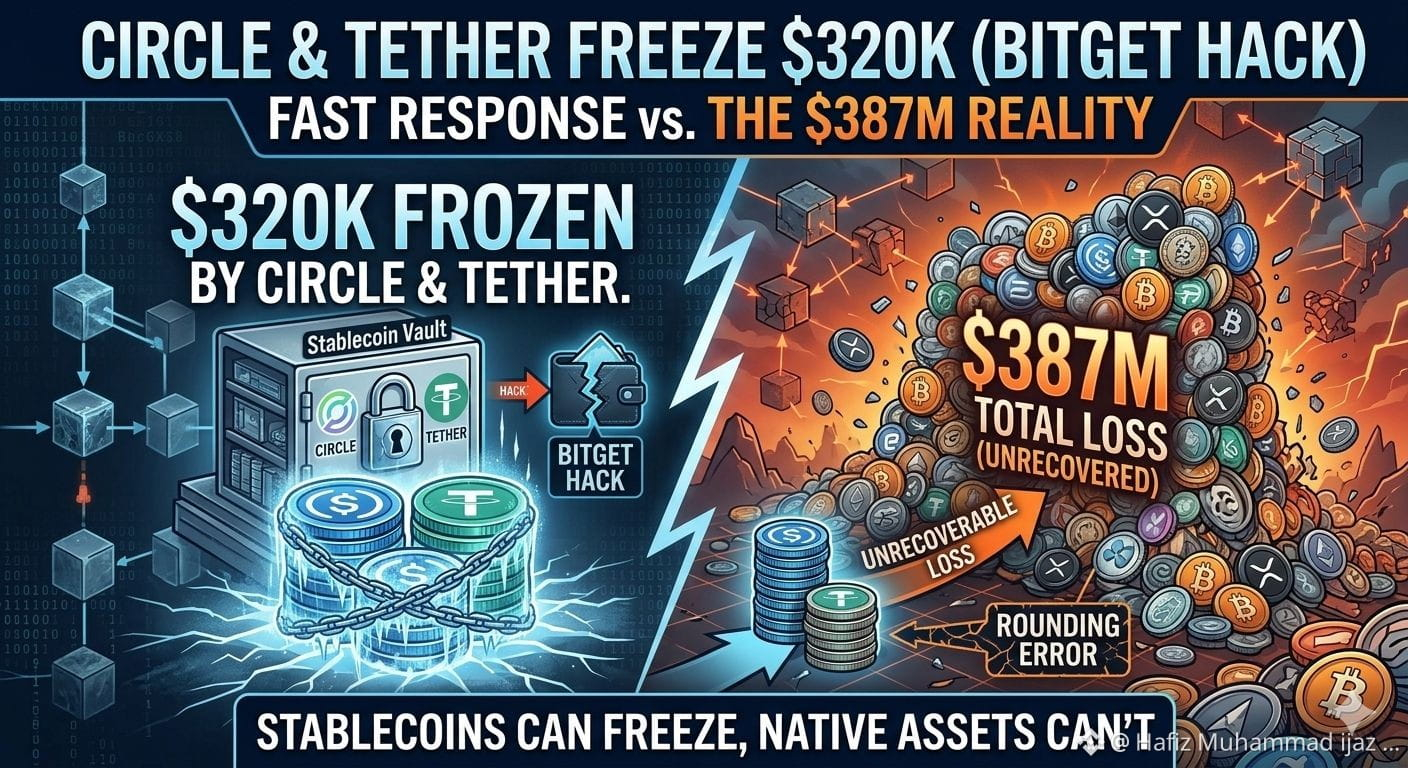
Circle and Tether froze $320K linked to the Bitget hack within a day. Fast response, but it's a rounding error against a $387M total loss. Stablecoins can freeze, native assets can't.
#Bitget #Stablecoins #CryptoNews #BinanceSquare
{future}(USDCUSDT)
Circle and Tether froze $320K linked to the Bitget hack within a day. Fast response, but it's a rounding error against a $387M total loss. Stablecoins can freeze, native assets can't.
#Bitget #Stablecoins #CryptoNews #BinanceSquare
#Bitget #Stablecoins #CryptoNews #BinanceSquare
25

·
--
Binance Invests $100M in Circle
Binance has acquired approximately 1.24 million shares of Circle $CRCLB through a private placement. Concurrently, the two entities entered into a new five-year agreement under which Binance will actively promote and expand the adoption of $USDC across its global platform, with a strategic focus on emerging markets.
This transaction moves the relationship beyond a standard partnership, making Binance an equity shareholder in the issuer of USDC.
In turn, Circle will provide the custody and transactional infrastructure for USDC, while Binance will receive monthly incentive payments tied directly to the volume of USDC routed through the designated infrastructure.
Binance + Circle + USDC - major industry players appear to be placing another significant bet on the scaling of the digital dollar.
#Circle #stocks #Stablecoins #CryptoNewss
Binance Invests $100M in Circle
Binance has acquired approximately 1.24 million shares of Circle $CRCLB through a private placement. Concurrently, the two entities entered into a new five-year agreement under which Binance will actively promote and expand the adoption of $USDC across its global platform, with a strategic focus on emerging markets.
This transaction moves the relationship beyond a standard partnership, making Binance an equity shareholder in the issuer of USDC.
In turn, Circle will provide the custody and transactional infrastructure for USDC, while Binance will receive monthly incentive payments tied directly to the volume of USDC routed through the designated infrastructure.
Binance + Circle + USDC - major industry players appear to be placing another significant bet on the scaling of the digital dollar.
#Circle #stocks #Stablecoins #CryptoNewss
Binance has acquired approximately 1.24 million shares of Circle $CRCLB through a private placement. Concurrently, the two entities entered into a new five-year agreement under which Binance will actively promote and expand the adoption of $USDC across its global platform, with a strategic focus on emerging markets.
This transaction moves the relationship beyond a standard partnership, making Binance an equity shareholder in the issuer of USDC.
In turn, Circle will provide the custody and transactional infrastructure for USDC, while Binance will receive monthly incentive payments tied directly to the volume of USDC routed through the designated infrastructure.
Binance + Circle + USDC - major industry players appear to be placing another significant bet on the scaling of the digital dollar.
#Circle #stocks #Stablecoins #CryptoNewss
75

Binance and Circle have entered a five‑year deal aimed at extending $USDC’s presence in emerging markets.
Analysts point out that Tether ($USDT)’s liquidity advantage remains strong, making the competition between the two stablecoins more pronounced.
This development could give users in underserved regions more options for stable digital payments without altering the overall market balance. What matters more for those users: broader USDC access or Tether’s deep liquidity? Binance has signed a five‑year agreement with Circle that could broaden the footprint of USDC in emerging markets.
#Stablecoins #Crypto #Emergingmarkets #Liquidity #Binance
Binance and Circle have entered a five‑year deal aimed at extending $USDC ’s presence in emerging markets.
Analysts point out that Tether ($USDT)’s liquidity advantage remains strong, making the competition between the two stablecoins more pronounced.
This development could give users in underserved regions more options for stable digital payments without altering the overall market balance. What matters more for those users: broader USDC access or Tether’s deep liquidity? Binance has signed a five‑year agreement with Circle that could broaden the footprint of USDC in emerging markets.
#Stablecoins #Crypto #Emergingmarkets #Liquidity #Binance
Analysts point out that Tether ($USDT)’s liquidity advantage remains strong, making the competition between the two stablecoins more pronounced.
This development could give users in underserved regions more options for stable digital payments without altering the overall market balance. What matters more for those users: broader USDC access or Tether’s deep liquidity? Binance has signed a five‑year agreement with Circle that could broaden the footprint of USDC in emerging markets.
#Stablecoins #Crypto #Emergingmarkets #Liquidity #Binance

79

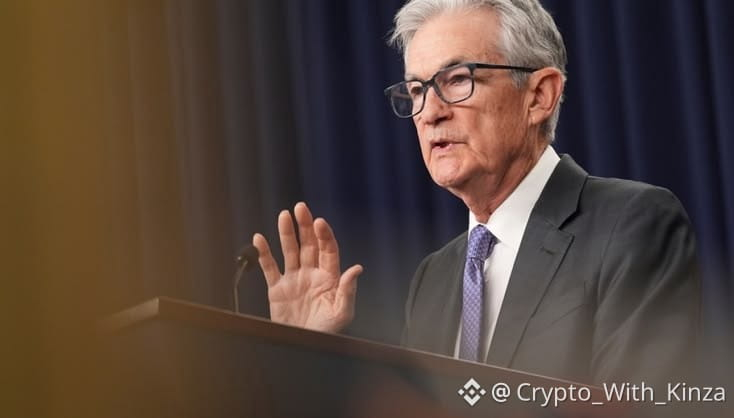
#FedProposes48HourLiquidationRuleForIssuers 🚨 FED WATCH 🚨
The Federal Reserve is reportedly proposing a 48-hour liquidation rule for issuers — a move that could bring major changes to how issuers manage liquidity and risk.
⚠️ For crypto and stablecoin markets, faster liquidation requirements could mean: • Tighter risk controls
• More liquidity discipline
• Greater transparency for issuers
• Potential impact on market stability
The key question: How will issuers and crypto markets adapt if this rule moves forward? 👀
#FedProposes48HourLiquidationRuleForIssuers #Crypto #Stablecoins #Fed $WEN
{future}(WENUSDT)
$CFG.US
{stock_us}(CFG.US)
$AR
{future}(ARUSDT)
#FedProposes48HourLiquidationRuleForIssuers 🚨 FED WATCH 🚨
The Federal Reserve is reportedly proposing a 48-hour liquidation rule for issuers — a move that could bring major changes to how issuers manage liquidity and risk.
⚠️ For crypto and stablecoin markets, faster liquidation requirements could mean: • Tighter risk controls
• More liquidity discipline
• Greater transparency for issuers
• Potential impact on market stability
The key question: How will issuers and crypto markets adapt if this rule moves forward? 👀
#FedProposes48HourLiquidationRuleForIssuers #Crypto #Stablecoins #Fed $WEN
$CFG.US
$AR
The Federal Reserve is reportedly proposing a 48-hour liquidation rule for issuers — a move that could bring major changes to how issuers manage liquidity and risk.
⚠️ For crypto and stablecoin markets, faster liquidation requirements could mean: • Tighter risk controls
• More liquidity discipline
• Greater transparency for issuers
• Potential impact on market stability
The key question: How will issuers and crypto markets adapt if this rule moves forward? 👀
#FedProposes48HourLiquidationRuleForIssuers #Crypto #Stablecoins #Fed $WEN
$CFG.US
$AR

310

·
--
⚡ $USDC LIQUIDITY SHIFT AS TOP-TIER EXCHANGE ACQUIRES $100M STAKE IN CIRCLE! 🏦
Smart money moves leave footprints across institutional stablecoin rails. A massive 100M dollar equity stake alongside a five-year USDC expansion deal locks in deep liquidity channels, positioning $USDC for aggressive market share expansion. 🦈
While order flow metrics point toward seamless liquidity integration, market veterans know heightened centralized exposure inevitably attracts regulatory scrutiny. 📊 Navigating this macro shift requires tracking how capital flows between stablecoin pairs as volatility unfolds. 💡
💬 Does this strategic stablecoin move anchor long-term ecosystem stability or create fresh systemic risk? 👇
⚠️ Not financial advice. Always manage your risk. 🛡️
🏷️ #USDC #Stablecoins #CryptoNews #Liquidity
🔥 💎
⚡ $USDC LIQUIDITY SHIFT AS TOP-TIER EXCHANGE ACQUIRES $100M STAKE IN CIRCLE! 🏦
Smart money moves leave footprints across institutional stablecoin rails. A massive 100M dollar equity stake alongside a five-year USDC expansion deal locks in deep liquidity channels, positioning $USDC for aggressive market share expansion. 🦈
While order flow metrics point toward seamless liquidity integration, market veterans know heightened centralized exposure inevitably attracts regulatory scrutiny. 📊 Navigating this macro shift requires tracking how capital flows between stablecoin pairs as volatility unfolds. 💡
💬 Does this strategic stablecoin move anchor long-term ecosystem stability or create fresh systemic risk? 👇
⚠️ Not financial advice. Always manage your risk. 🛡️
🏷️ #USDC #Stablecoins #CryptoNews #Liquidity
🔥 💎
Smart money moves leave footprints across institutional stablecoin rails. A massive 100M dollar equity stake alongside a five-year USDC expansion deal locks in deep liquidity channels, positioning $USDC for aggressive market share expansion. 🦈
While order flow metrics point toward seamless liquidity integration, market veterans know heightened centralized exposure inevitably attracts regulatory scrutiny. 📊 Navigating this macro shift requires tracking how capital flows between stablecoin pairs as volatility unfolds. 💡
💬 Does this strategic stablecoin move anchor long-term ecosystem stability or create fresh systemic risk? 👇
⚠️ Not financial advice. Always manage your risk. 🛡️
🏷️ #USDC #Stablecoins #CryptoNews #Liquidity
🔥 💎


31

·
--
Bullish
🚨 BINANCE JUST MADE A $100M MOVE! 💰
Binance has invested $100 MILLION in Circle, the company behind USDC.
The partnership could strengthen USDC's reach across global crypto markets and intensify the competition in the stablecoin sector.
💵 Binance + USDC
🌎 Global expansion
🔥 Stablecoin competition heating up
What could this mean for the future of crypto payments?
#Binance
{spot}(BTCUSDT)
#USDC #Circle #CryptoNews #Stablecoins #Crypto
🚨 BINANCE JUST MADE A $100M MOVE! 💰
Binance has invested $100 MILLION in Circle, the company behind USDC.
The partnership could strengthen USDC's reach across global crypto markets and intensify the competition in the stablecoin sector.
💵 Binance + USDC
🌎 Global expansion
🔥 Stablecoin competition heating up
What could this mean for the future of crypto payments?
#Binance
#USDC #Circle #CryptoNews #Stablecoins #Crypto
Binance has invested $100 MILLION in Circle, the company behind USDC.
The partnership could strengthen USDC's reach across global crypto markets and intensify the competition in the stablecoin sector.
💵 Binance + USDC
🌎 Global expansion
🔥 Stablecoin competition heating up
What could this mean for the future of crypto payments?
#Binance
#USDC #Circle #CryptoNews #Stablecoins #Crypto
2
Log in to explore more content
Join global crypto users on Binance Square
⚡️ Get latest and useful information about crypto.
💬 Trusted by the world’s largest crypto exchange.
👍 Discover real insights from verified creators.
Email / Phone number
Trending Topics
1
#BTCFallsBelow$83000
3 views
24 Discussing
2
#FedProposesPaymentStablecoinRules
5,522 views
157 Discussing
3
#ChinaMayLetAlibabaByteDanceBuyNvidiaChips
8,028 views
251 Discussing
4
#USChinaRelease$30BTariffCutProductLists
1,489 views
25 Discussing
5
#SKoreaFSCConsidersVirtualAssetMarketMaker
7,693 views
215 Discussing
6
#ChinaIndustrialProfitGrowthSlowsFourthMonth
8,582 views
226 Discussing
7
#BitwiseFilesFinalNEARSpotETFProspectus
121,913 views
1,767 Discussing
8
#BitgetHackerMoves$83MStolenXRP
40,444 views
178 Discussing
9
#SOLSpotETFWeeklyInflow$188M
25,419 views
141 Discussing
10
#DogecoinETFsPostBiggestWeekSinceLaunch
69,519 views
1,129 Discussing