Looking back from 2025, the evolution of China's economy and technology resembles a grand epic — from the scale expansion of traditional industries, to the connection revolution of the internet era, and then to the value reconstruction brought about by blockchain, each stage responds to a fundamental question: how to make development dividends benefit more people?
I. Traditional Industries: Growth Logic from "Scarcity" to "Surplus"
In 1978, "Developing the Economy, Ensuring Supply" was the most common slogan on the streets. In early reform and opening-up China, material scarcity was prevalent, and traditional industries focused on "scale expansion," driving manufacturing, agriculture, and retail forward. Over the past forty years, we have completed the transition from "having enough" to "is it enough."
However, the bottlenecks of traditional models are gradually becoming apparent: resources concentrate towards giants, and most value-added in the industry chain is settled in a few segments, making it difficult for ordinary people to participate in value distribution. It was not until the emergence of the Internet that new possibilities arose.
II. The Internet Era: "Connection" Reshapes Production Relations
In 1994, China fully accessed the internet. This technological wave originating from Silicon Valley evolved into a unique form in China — with e-commerce, social, and content platforms rising one after another. The core of the internet is "connection," which has reshaped the flow of information, goods, and services, allowing individuals for the first time to gain a "lever" to compete with large institutions.
But as traffic peaks and platform monopolies intensify, new problems arise: data value is controlled by a few platforms, and ordinary people remain "contributors" rather than "owners." It is against this backdrop that blockchain enters the public eye with the gene of "value belonging to individuals."
III. Blockchain: The Value Internet Beyond Currency
In 2009, the Bitcoin white paper was released, and blockchain debuted as a "decentralized currency experiment." Its development over the past decade can be summarized in three stages.
· 1.0 Currency Layer (2009–2015): Bitcoin validated the feasibility of a peer-to-peer electronic cash system;
· 2.0 Protocol Layer (2015–2020): Ethereum smart contracts opened up programmable finance, leading to the rise of DeFi;
· 3.0 Ecological Layer (2020 to Present): Multi-chain coexistence, NFT, GameFi, and SocialFi drive the integration of technology and reality.
Blockchain is not only a technological upgrade but also a restructuring of the distribution mechanism — attempting to return value ownership to participants.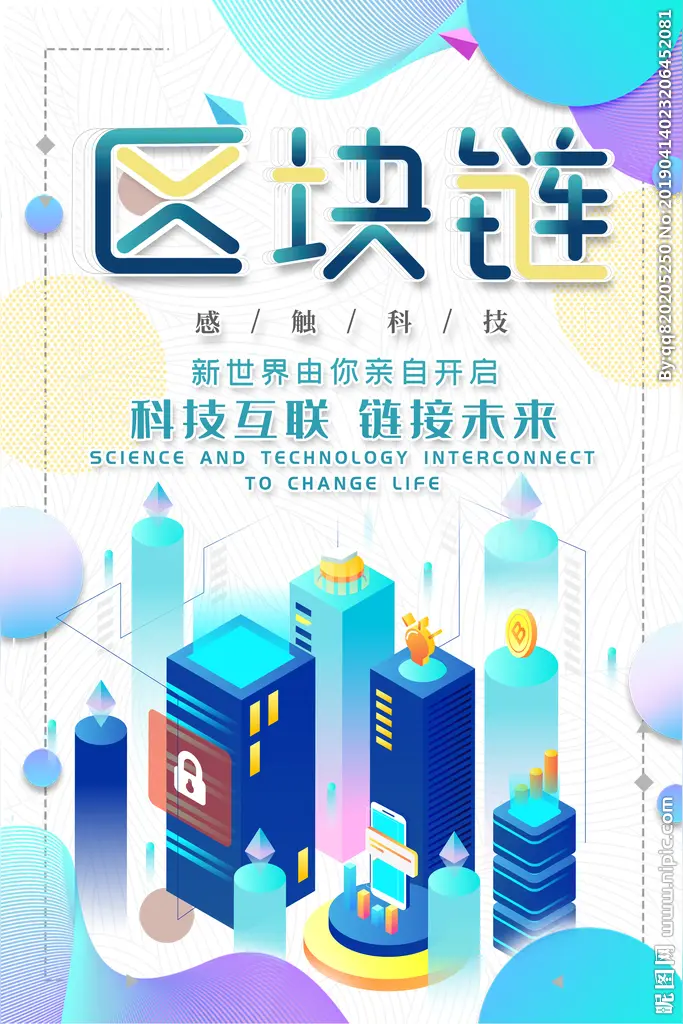
IV. How Can Ordinary People Participate? The Key Lies in DeFi
DeFi (Decentralized Finance) is becoming an important entry point for ordinary people to access blockchain dividends. It is built on smart contracts to provide financial services, with several distinct characteristics:
· Inclusive and Open: No entry barriers, anyone can participate;
· Transparent and Trustworthy: All transactions can be checked on-chain, and rules are executed by code;
· Asset Self-Holding: Users truly master asset ownership, without needing to entrust it to intermediaries.
In the DeFi world, the traditional "big player – retail investor" relationship has been rewritten. Through mechanisms such as AMM (Automated Market Maker), ordinary users can provide liquidity and share transaction fees and other profits through "joint market making," achieving "everyone becoming the market maker."
How does DeFi achieve "joint market making"?
In traditional finance, the "big player" is a well-funded institution, and retail investors passively follow. DeFi allows ordinary users to "band together to become the big player" through the AMM (Automated Market Maker) mechanism.
Each person invests a small amount into the liquidity pool, and smart contracts aggregate to form a shared fund pool, jointly providing market making and sharing profits (transaction fees, slippage rewards, etc.).
This is like "everyone pooling money to open an exchange, where everyone is a shareholder," turning high-threshold finance into a game for the masses.
3. What characteristics should true DeFi possess?
Stable and spiraling up in coin price, without violent fluctuations;
The thickness of the fund pool supports healthy growth, and "breaking up" may bring multiple times the space;
Participants shift from "caring about prices" to "caring about trading volume and liquidity," possessing the mindset of market makers.
This is the financial revolution of "redistributing land from the rich" — allowing the grassroots to become rule-makers.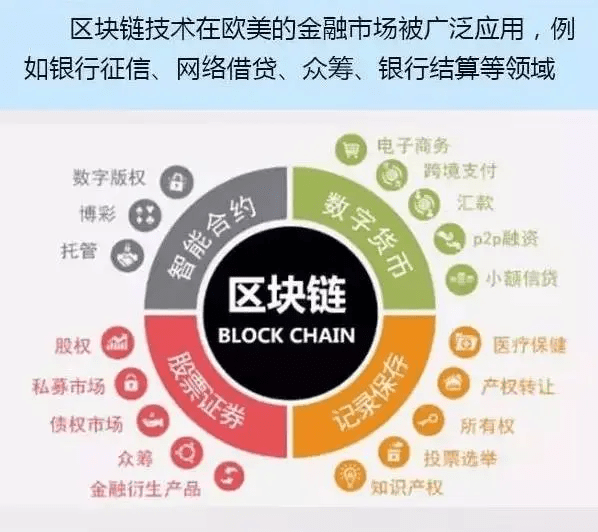
Case Study: SSS Ecology on the BSC Chain 0xca1027a3c6f7711019d85631c9264cadd795331d
The SSS ecology attempts to unite market making from a mechanism design perspective, responding to the question of "how to allow participants to benefit together":
· Deflationary Design: A total supply of 21 trillion coins continuously deflating to 21 coins, simulating Bitcoin's scarcity model;
· Co-Building and Sharing: Encouraging users to participate through LP (liquidity provider) involvement, jointly becoming the market makers and sharing ecological growth dividends;
· Long-Term Binding: Breaking the "curse" of wealth not lasting beyond three generations through a 9999-year long-term lock-in mechanism, transmitting confidence in co-construction, and reducing short-term speculative volatility; solving the issue of digital currency builders being cut off, allowing ordinary people to participate in construction without worries.
· Diverse Earnings: Earnings come not only from SSS tokens themselves but are also anchored to mainstream assets such as BNB and CAKE.
These designs aim to establish a sustainable symbiotic system, shifting participants from "chasing prices" to "focusing on ecological value," sharing growth dividends in long-term co-creation.
How can ordinary people get started?
The participation threshold is not high; for example, one can start with a small amount of funds (like 0.1 BNB) and gradually deepen their involvement after becoming familiar with the rules. Without affecting their main business, participants can engage with a mindset of learning and experimentation, focusing on understanding mechanisms, managing risks, and seeking projects that truly have co-creation value.
In Conclusion
Blockchain is not only a technological evolution but also an experiment in production relations. What DeFi and its representative projects explore is how to establish trust through code, achieve sharing through mechanisms, and make financial activities more open and equal.
As industry pioneers have said: "The future of Web3 is not a victory of technology, but a victory of people." When every individual can become a node in the value network, the way wealth is created and distributed will also be restructured.
This is not a shortcut or a gamble, but an opportunity to become a "co-builder" — capturing trends through cognitive enhancement, managing risks through understanding mechanisms, and accumulating value through ecological participation. This path may be long, but it could bring us closer to the ideal of "financial inclusivity."
#加密市场观察 $BNB $BTC $币安人生 #美联储何时降息?
$