

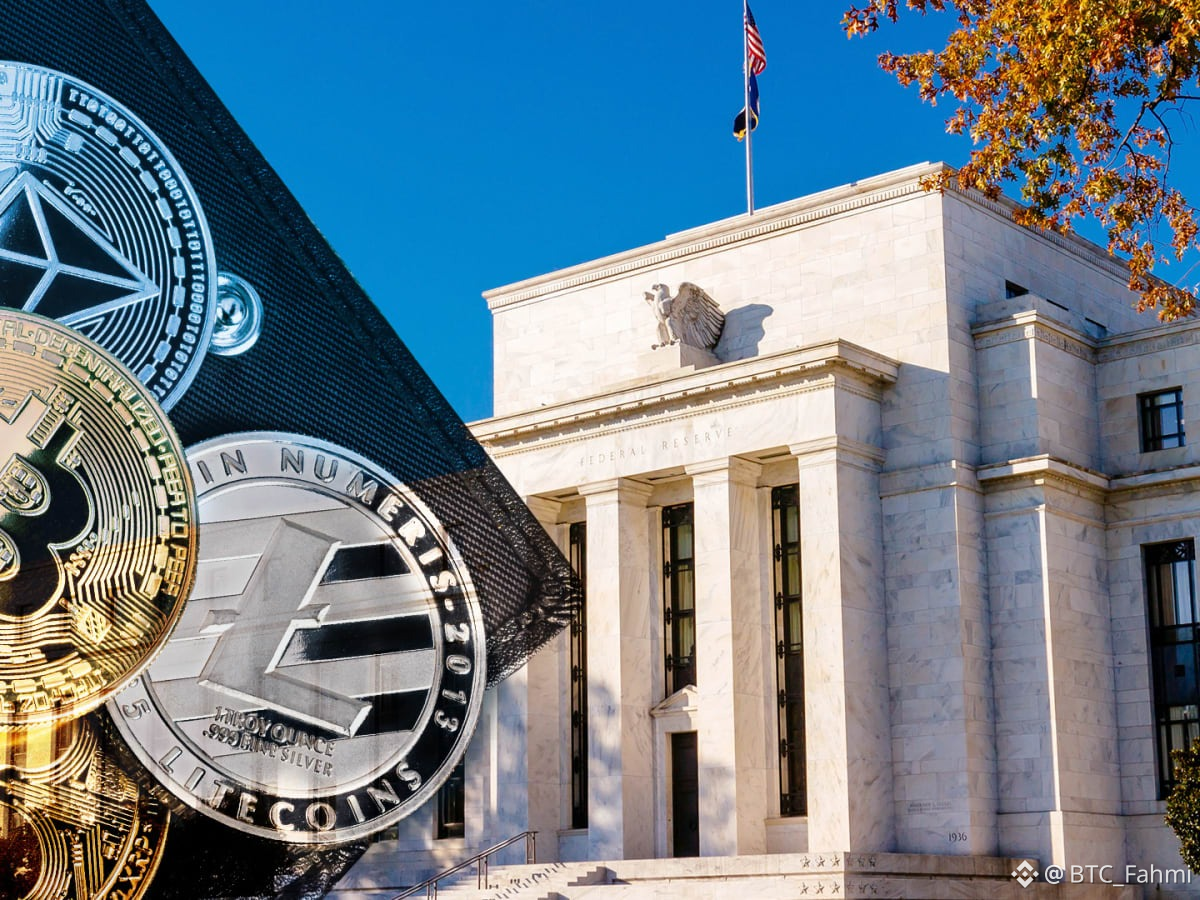
For years, banks in the United States have lived with an uncomfortable question hanging over them. They could see digital assets growing, clients asking questions, and payment systems slowly changing, but the rules were never clear enough to move with confidence. Every step toward crypto felt like walking into fog. On December 17, 2025, that fog thinned.
The Federal Reserve Board announced that it was withdrawing its restrictive 2023 policy statement under Section 9(13) of the Federal Reserve Act. In its place came a new framework, one that allows supervised state member banks, both insured and uninsured, to explore innovative activities, including those linked to cryptocurrencies and blockchain technology. The shift does not remove oversight or risk controls. What it does is change the starting position. Instead of asking banks to stay away unless proven safe beyond doubt, the Fed is now saying that innovation is possible if risks are understood, managed, and supervised.
This change matters because the 2023 policy had created a chilling effect. While it did not explicitly ban crypto-related activities, it raised the bar so high that most banks chose caution over curiosity. The message was subtle but firm. Crypto was seen as experimental, volatile, and difficult to supervise. Banks that wanted to test blockchain-based payments, digital asset custody, or tokenized settlement often found themselves stuck in long approval processes with uncertain outcomes. Many simply paused their plans.
By withdrawing that policy, the Federal Reserve is signaling a different approach. The new framework does not treat crypto as a special forbidden zone. Instead, it treats it as another area of financial activity that carries unique risks. Those risks still exist. Price swings, custody challenges, cyber threats, and legal uncertainty remain real concerns. But the Fed is now willing to let banks engage as long as they show strong governance, clear controls, and the ability to manage what could go wrong.
One reason this shift feels timely is that crypto itself has changed since 2023. The industry has gone through cycles of hype, collapse, repair, and rebuilding. Some speculative models failed loudly, while others quietly matured. Stablecoins became more regulated. Blockchain infrastructure improved. Large financial firms began testing tokenized assets and settlement systems behind closed doors. The conversation moved from quick profits to plumbing. That evolution made it harder for regulators to justify a blanket posture of caution.
Banks, meanwhile, have not stopped watching. Many have clients who already hold digital assets elsewhere. Others see efficiency gains in blockchain-based settlement, especially for cross-border payments. Some view tokenization as a way to modernize how assets like bonds or funds are issued and tracked. Until now, these ideas mostly stayed in labs and pilot programs. The Fed’s announcement opens the door to moving some of them into real operations.
It is important to understand what this decision does not do. It does not give banks a free pass to speculate with depositors’ money. It does not endorse any specific cryptocurrency or business model. It does not reduce the Fed’s role as a supervisor. In fact, supervision remains central. Banks are expected to demonstrate strong risk management, clear internal controls, and compliance with existing laws. The difference is that innovation is no longer treated as an exception that needs extraordinary justification. It is treated as a possibility that must be handled carefully.
This approach aligns with how banks already manage other complex activities. Derivatives, foreign exchange, and payment systems all carry risk, yet they exist within a framework of rules and oversight. Crypto activities are now being placed in that same category. Risky if mismanaged, useful if done well.
The decision also reflects competitive realities. Outside the United States, banks in several jurisdictions have already begun offering digital asset custody, blockchain-based payments, and tokenized products under regulatory guidance. If U.S. banks remained sidelined, innovation would continue elsewhere. The Fed’s move helps prevent a situation where American banks fall behind while still protecting the financial system.
From a market perspective, the announcement may not trigger immediate changes visible to everyday users. Banks move slowly, especially when regulation is involved. What it does change is the internal conversation. Compliance teams now have a clearer path to say yes instead of defaulting to no. Product teams can design services knowing there is a framework to work within. Boards can discuss crypto exposure as a managed strategy rather than an unacceptable risk.
There is also a broader message embedded in this shift. The Federal Reserve is acknowledging that financial innovation does not stop at the edge of regulation. When it does, it tends to move around it. By bringing crypto-related activity into a supervised environment, the Fed gains visibility and influence. That can improve safety rather than weaken it.
Still, challenges remain. Supervisors will need expertise to evaluate blockchain systems and digital asset risks. Banks will need to invest in talent, technology, and controls. Mistakes will happen, and some experiments will fail. The framework does not eliminate uncertainty. It simply provides a structured way to deal with it.
In the long run, this decision could shape how crypto integrates with the traditional financial system. Instead of existing in parallel, banks and blockchain-based services may begin to overlap in practical ways. Custody, settlement, payments, and record-keeping could slowly blend old systems with new tools. Not because crypto is fashionable, but because parts of it solve real problems.
The Federal Reserve’s announcement is not a declaration of support for digital assets. It is a recognition of reality. Innovation is happening, whether regulators like it or not. The choice is between pushing it into the shadows or guiding it in the open. By withdrawing the 2023 policy and replacing it with a more flexible framework, the Fed has chosen guidance over distance.
That choice does not guarantee success. It does, however, mark a turning point. For the first time in years, U.S. banks have a clearer signal that engaging with crypto and blockchain is not automatically off-limits. It is allowed, watched, and expected to be done responsibly. For a system built on trust and caution, that is a meaningful shift.

