

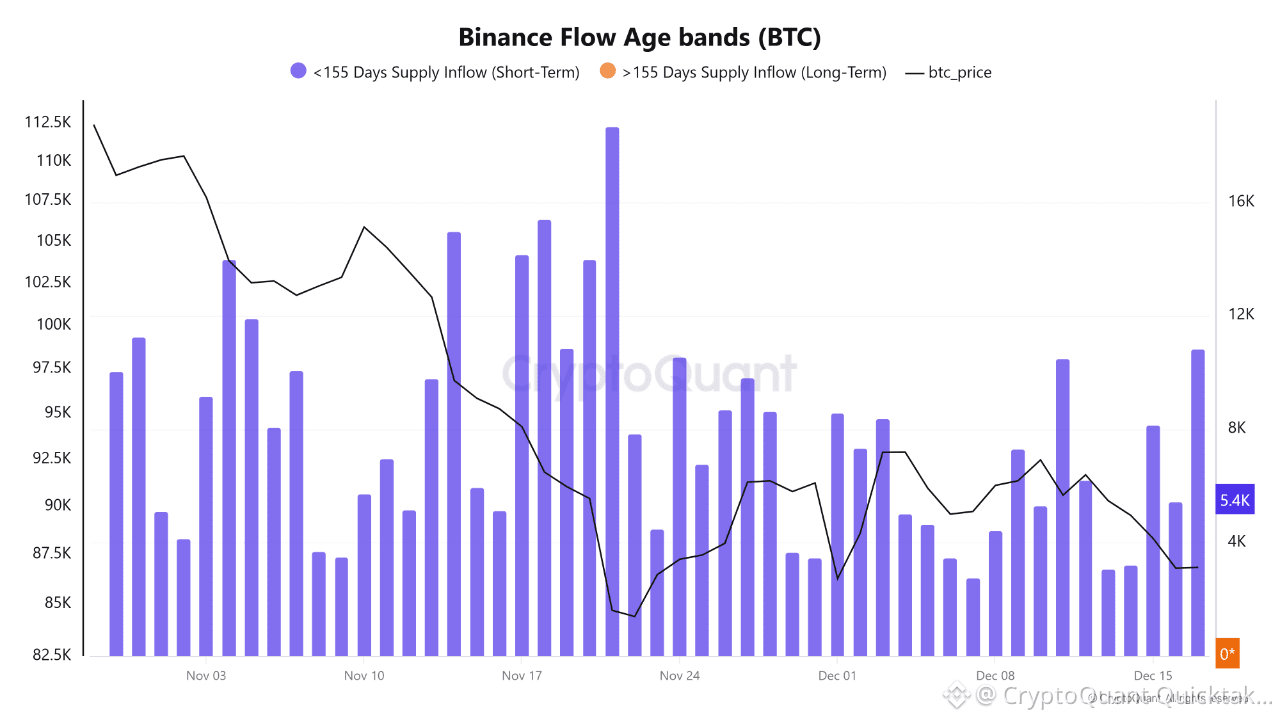
Yesterday’s Bitcoin inflows into Binance clarify an important market question: who actually sold the dip? While exchange inflows increased during the price pullback, UTXO age data shows the pressure did not come from long-term holders. Coins older than 155 days remained largely inactive, confirming that conviction holders stayed calm. The selling was dominated by short-term holders, meaning this move was driven by recent buyers reacting tactically, not by long-term distribution.
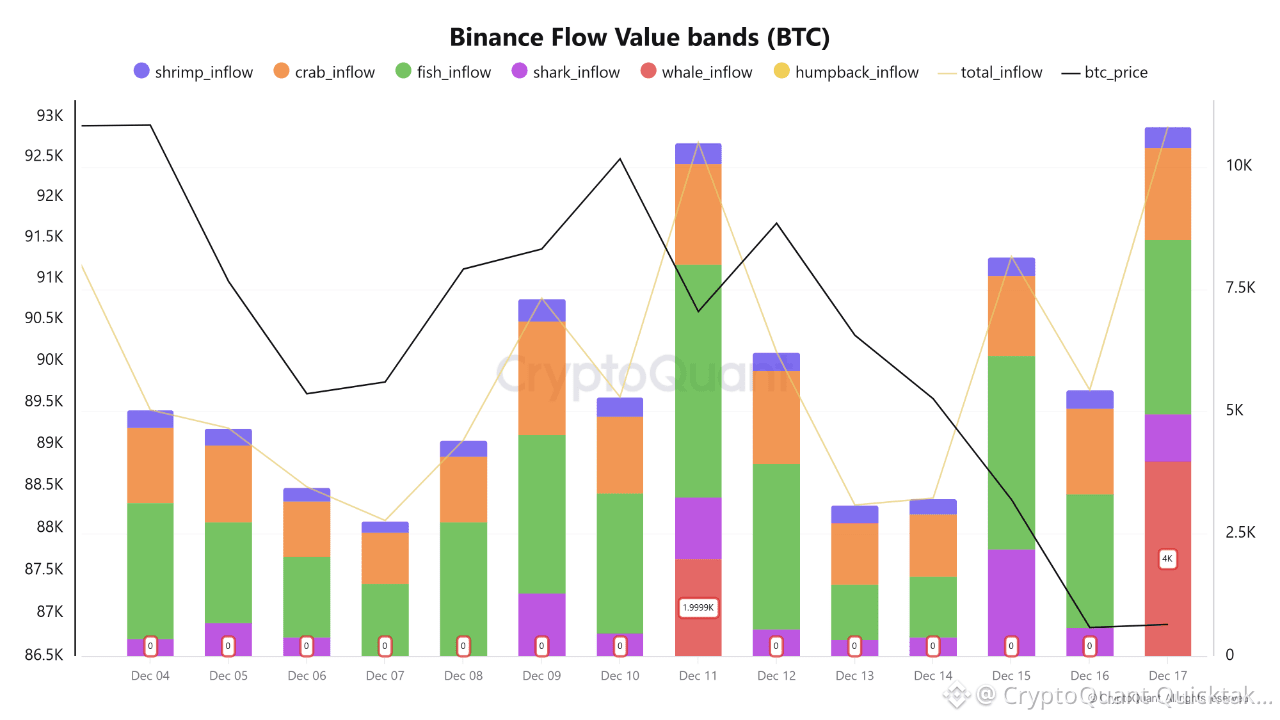
The deeper signal emerges when inflows are analyzed by value size. Despite short-term holders leading volume, roughly 37% of all BTC sent to Binance came from whale-sized wallets holding 1,000–10,000 BTC. This is a critical structural insight. It shows that large capital was active during the decline, and that Binance was the primary venue chosen for execution and liquidity.
This dynamic matters. When short-term fear intersects with whale-level capital movement on Binance, it often marks transitions in market behavior rather than trend exhaustion. Historically, Binance whale flows have provided early visibility into risk-on and risk-off shifts, volatility expansion, and local top or bottom discovery.
The key takeaway is clear: this was not long-term capitulation. It was short-term selling absorbed in an environment where whales were positioning, not panicking. For traders and analysts tracking Bitcoin market structure, Binance whale activity remains one of the clearest real-time signals for understanding where the market is headed next.
Written by Crazzyblockk
