
Most people think Bitcoin was built by one person.
That’s wrong.
Behind Satoshi Nakamoto was a second figure.
A developer who reviewed the code.
Answered the world’s first Bitcoin questions.
Ran the first exchange.
Executed the first real BTC trade.
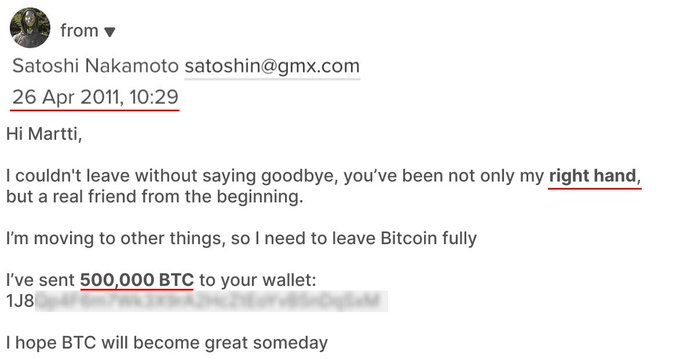
And received one of the largest early Bitcoin transfers ever directly from Satoshi.
His name is Martti Malmi.
I went through their private emails, early forum posts, and forgotten archives.
What I found completely changes how Bitcoin’s origin story is told.
This is the untold story of the man who helped Bitcoin survive its most fragile days — and why he quietly disappeared when the world finally noticed BTC.
Bitcoin Before Price, Before Hype, Before Belief
In mid-2009, Bitcoin was nothing.
No price.
No exchanges.
No market.
No media.
Just a strange piece of software running on a few computers.
Martti Malmi was a college student in Finland when he stumbled across Satoshi’s whitepaper. Not because he wanted to get rich — but because the system itself fascinated him.
He started mining Bitcoin on his personal computer.
Not to speculate.
Not to sell.
But to understand how it worked.
That curiosity would place him at the center of Bitcoin history.
Satoshi’s Only Partner
Very quickly, something unusual happened.
Martti didn’t just mine Bitcoin.
He started reviewing the code.
Line by line.
At the time, there was only one developer writing Bitcoin’s source code: Satoshi Nakamoto.
Martti became the second.
He fixed bugs.
Improved implementations.
Helped stabilize early releases.
For a period of time, Bitcoin development was effectively a two-person operation.
Satoshi relied on him.
This wasn’t symbolic. It was practical.
Bitcoin would likely not have survived its earliest phase without Malmi.
The Voice of Bitcoin
Bitcoin didn’t just need code.
It needed explanation.
Under the alias “Sirius”, Martti wrote the first Bitcoin FAQ.
He answered emails from skeptics.
Explained the system to early users.
Defended Bitcoin against accusations of being worthless, illegal, or pointless.
For many people, Martti — not Satoshi — was the first human face of Bitcoin.
Years before institutions showed interest, he already understood Bitcoin’s political meaning:
Bitcoin separated money from the state.
That idea terrified critics.
Martti defended it relentlessly.
The First Bitcoin Trade That Changed Everything
In October 2009, Bitcoin crossed a line.
Martti executed the first real Bitcoin trade.
He sold 5,000 BTC for $5.
Not because he needed the money.
But to prove something critical:
That Bitcoin could have real-world demand.
That transaction established Bitcoin’s first price.
Bitcoin was no longer just software.
It was an asset.
Building the First Exchange — With His Own BTC
In 2010, Martti took things further.
He launched one of the first Bitcoin exchanges ever created.
There were no market makers.
No liquidity providers.
No VCs.
So he used his own BTC.
Tens of thousands of coins mined when nobody cared.
This exchange onboarded hundreds of early users and helped Bitcoin spread beyond forums and mailing lists.
Satoshi actively supported this work.
The 500,000 BTC Connection
At one point, Satoshi sent Martti a massive amount of Bitcoin.
Early transactions between them included transfers that today would be worth tens of billions of dollars.
This wasn’t charity.
It was trust.
Satoshi believed Martti was building something essential — infrastructure Bitcoin needed to survive.
Few people ever received that level of access.
Cashing Out Before the World Woke Up
In 2011, Bitcoin started rising.
For the first time, it felt real.
Martti sold part of his holdings.
Not to flex.
Not to speculate.
He bought a modest apartment in Helsinki.
One of the first major real-world Bitcoin outcomes in history.
Bitcoin crossed from theory into life.
Then something strange happened.
Martti stepped back.
After Satoshi Disappeared
When Satoshi vanished, chaos followed.
Power struggles.
Narrative battles.
Ideological fights.
Martti didn’t chase influence.
He didn’t try to lead.
Instead, he appeared only when needed — explaining Bitcoin’s decentralization, defending its original principles, and pushing back against attempts to centralize control.
He understood something early most people still don’t:
Bitcoin only works if it outgrows its creators.
Why Martti Malmi Matters More Than You Think
Today, Martti works on decentralized communication systems like Nostr.
He still believes in Bitcoin — not as a leader, but as a system that no longer needs one.
Without Martti Malmi:
• Bitcoin’s early code would’ve been weaker
• Its public explanation would’ve been poorer
• Its first exchange may not have existed
• Its survival window would’ve been much narrower
Satoshi built the spark.
Martti helped keep it alive.
And then he walked away — before power, money, and politics took over.
That might be the most Bitcoin thing of all.
