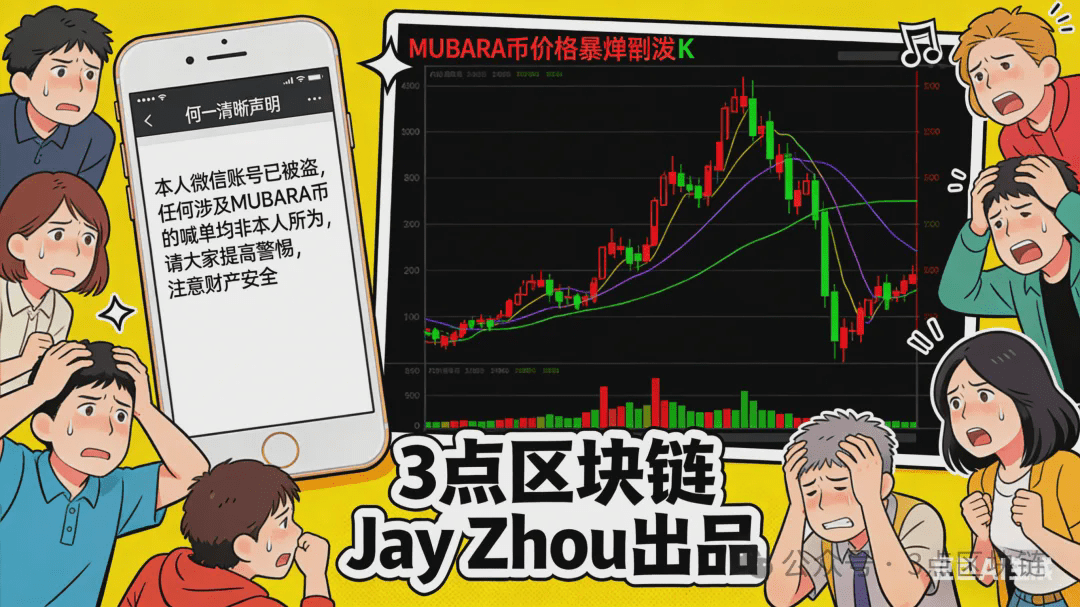
On the morning of December 10, 2025, the phones of people in the cryptocurrency circle exploded—two messages flooded the screen: Binance's co-CEO He Yi quickly issued a statement: 'My WeChat account has been hacked!' Meanwhile, a MEME coin called MUBARA surged 7 times in 4 hours and then plummeted 80%, taking a thrilling roller coaster ride.
These two things are essentially the same: a hacker stole He Yi's account to shout orders and drive up the price, waiting for retail investors to rush in and take over, and then immediately crashing the price to cash out, leaving a group of people chasing high prices staring blankly at the K-line chart.
This is really not an isolated case. Now platforms like Pump.fun that issue tokens are creating#MEME The cost has dropped to about 0.01 BNB, which is around 3 dollars. 'Hitching a ride on trends, using homophones, and issuing MEMEs' have all become new 'professions' in the crypto circle, and the frenzy of nationwide speculation is being staged.
But while the excitement is there, the harsh truth behind it is particularly cruel: over 98% of MEME coins end up being worthless, with nearly 90% of investors losing everything. Those who create and trade coins behind the trends are actually orchestrating a 'bubble party' in the crypto industry.
Part 01
One, how crazy are the 'trend hunters'? Hacking, creating gags, they dare to do anything.
The original logic of MEME coins was 'everyone agrees and there is cultural resonance,' but it has now transformed into 'hitching a ride on trends for arbitrage and relying on traffic for profit.' Those who play on trends have long figured out a fast-paced gameplay of 'creating coins in 5 minutes and giving signals in 10 minutes,' with celebrity effects and homophone gags being their cheapest promotional materials.
Celebrity accounts become 'free signal tools,' hackers lurk to steal.
The hacking of He Yi's WeChat is a typical example of the MEME coin harvesting strategy. Chain data shows that even before He Yi's account promoted MUBARA, two anonymous wallets had quietly spent 19,479 USDT to buy 21.16 million tokens just 7 hours prior.
When the news that 'the first lady of the coin circle has endorsed it' spread across various communities, retail investors rushed in frantically, pushing the market value to 8 million dollars, and the hacker immediately dumped 11.95 million coins, cashing out 43,520 USDT, netting over 5 times, a full 55,000 dollars.
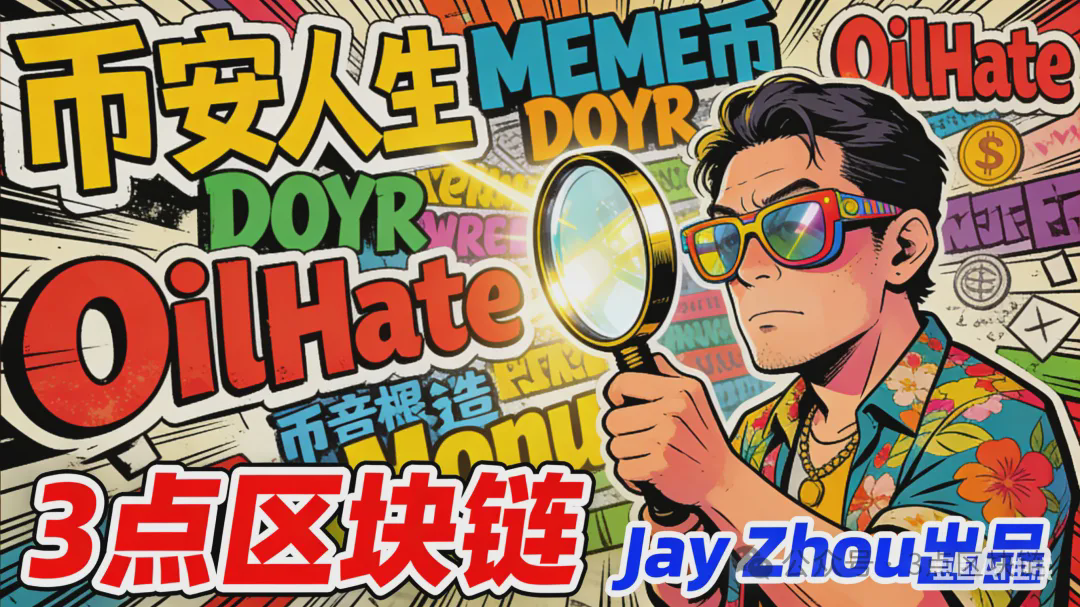
Even more absurdly, even if a celebrity says something wrong, it can become a trend. He Yi previously interacted on Twitter, mistaking 'DYOR' (meaning 'do your own research') for 'DOYR.' As a result, just three hours later, a MEME coin called DOYR appeared on the BNB Chain, based solely on the 'He Yi typo concept stock,' and it sparked a wave of hype.
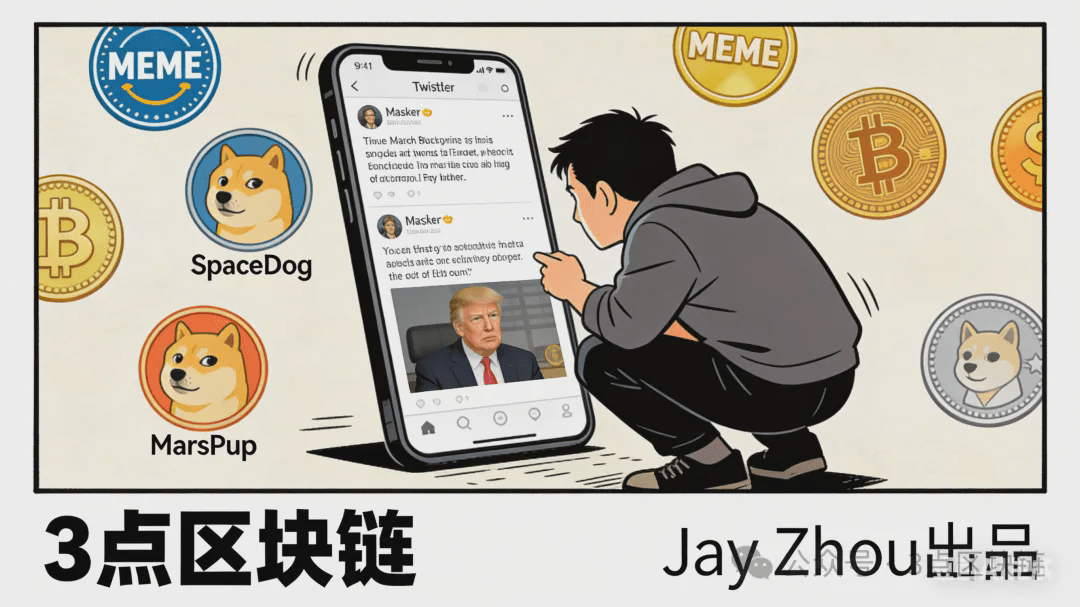
Apart from the big names in the coin circle, the traffic king of the tech circle, Musk, is also closely monitored. A group of speculators waits by his Twitter X account every day, just waiting for him to say something— as long as Musk mentions 'dog' or 'Mars,' or even just shares a funny meme, a MEME coin immediately emerges.
For example, he tweeted 'SpaceX will take dogs to space,' and that day saw the emergence of over a dozen related MEME coins like 'SpaceDog' and 'MarsPup,' with one skyrocketing 3 times in a short time, only for retail investors to be hit by whale sell-offs. Another time he complained about 'gas prices being too high,' and a MEME coin called 'OilHate' also rode the trend but turned out to be just an air coin.
That's not all; Binance founder CZ @CZ casually tweeted 'BNB meme szn' (meaning 'the season of MEME for BNB has arrived'), which directly ignited the MEME coin market on the BSC chain—over 600 new MEME coins appeared in a single day, and daily trading volume surged to 6.05 billion dollars.
These issues have clearly exposed the problems in the MEME coin market: its value no longer relies on community consensus, but rather on whether it is associated with celebrities. Hackers and speculators do not ponder the content; they focus solely on industry influencers' social media accounts, speech loopholes, and even personal privacy, treating the reputation of celebrities as a tool for profit-taking.
As CZ later warned: 'Web2 social accounts are now a hotbed of MEME scams. Who would have thought that a joke could lead to a farce of profit-taking.'
Homophone frenzy: a crypto version of 'Idiom Solitaire,' getting more absurd as it goes.
With not enough celebrity trends, those who stake out spots have started to play 'homophone coin creation,' turning MEME coins into a senseless word game. Binance co-founder He Yi once blessed with 'enjoying the Binance life,' and as a result, that day, a 'Binance Life' MEME coin appeared, reaching a market value of 524 million dollars—just based on a slogan, it transformed from a concept into a 'star coin' with a billion-level market value.
This kind of 'word creation for MEME' gameplay already has a fixed routine: hitching on the heat of mainstream exchanges or popular projects, naming them using homophones or internet buzzwords, and pairing them with a simple meme poster can spread quickly in the community.
During the US election period, MEME coins with homophones related to politics like 'MAGA' and 'People' appeared in clusters;
When AI was hot, tokens like 'GOAT' and 'ACT' also skyrocketed;
Even a banana artwork auctioned by Sotheby's could give rise to a coin called 'Ban,' which had a market value exceeding 20 million dollars.
These tokens are basically 'three-no products': no white paper, no technical team, and no practical utility; the only 'value' is that 'it sounds like a trend.' The data from the Four.Meme platform is particularly heart-wrenching: among the MEME coins launched in the fourth quarter of 2025, 68% of the names were derived from homophones or internet buzzwords, but only 1.4% completed the first round of trading, and 99% turned into unmanaged 'zombie coins' within three days.
Part 02
Two, after the carnival, all that is left is tears: the 'wealth creation myth' of MEME coins is a trap.
The MEME coin market was still quite crazy in 2024, with the index rising by 279.8%, much more than Bitcoin. But by the fourth quarter of 2025, once the hype dies down, the truth about the losses will be revealed.
The so-called 'wealth creation myths' are all backed by whale control, liquidity traps, and ridiculously low survival rates. When these three come together, it forms the 'death triangle' that harvests retail investors.
98% elimination rate: the 'road to heaven' for MEME coins is actually a dead end.
Binance launched a 'Meme Rush' platform, claiming it could help MEME coins gradually 'upgrade' to the Binance main site, but data tells you how difficult this path is. The Four.Meme platform issued a total of 534,300 MEME coins, but only 7,532 could be traded on Pancakeswap, with a 'graduation rate' of just 1.4%.
Even if you squeeze through this barrier, among the 326 projects on the Binance Alpha platform, less than 10% will actually land on the Binance main site.
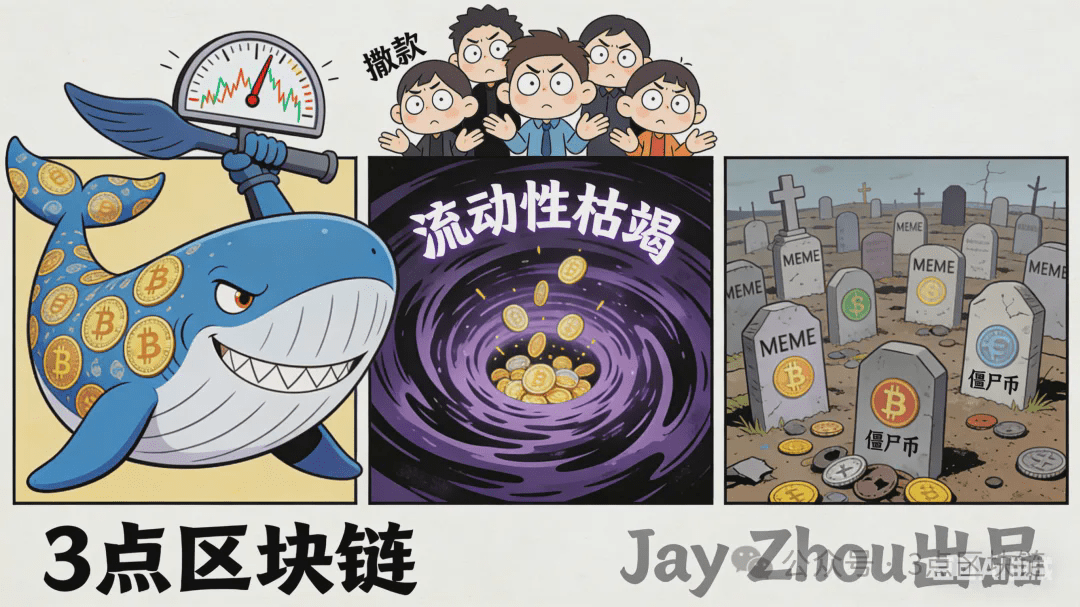
Most retail investors do not realize that this 'road to heaven' has been full of traps since the very beginning. The popular MEME coin 'Binance Life' had the top 10 holders controlling 48.2% of the chips; another 'Customer Xiao He' has over 70% of the tokens held by the top 100 holders—whether the price goes up or down entirely depends on the whales' mood.
Data tracking revealed that a whale invested 100,000 dollars just minutes before CZ mentioned the 'PALU' coin, making a floating profit of 1 million dollars in just one hour. This kind of insider operation makes retail investors' 'trend chasing' essentially a donation.
When the market cools down, the truth is revealed: floating profits are an illusion, and losses are real.
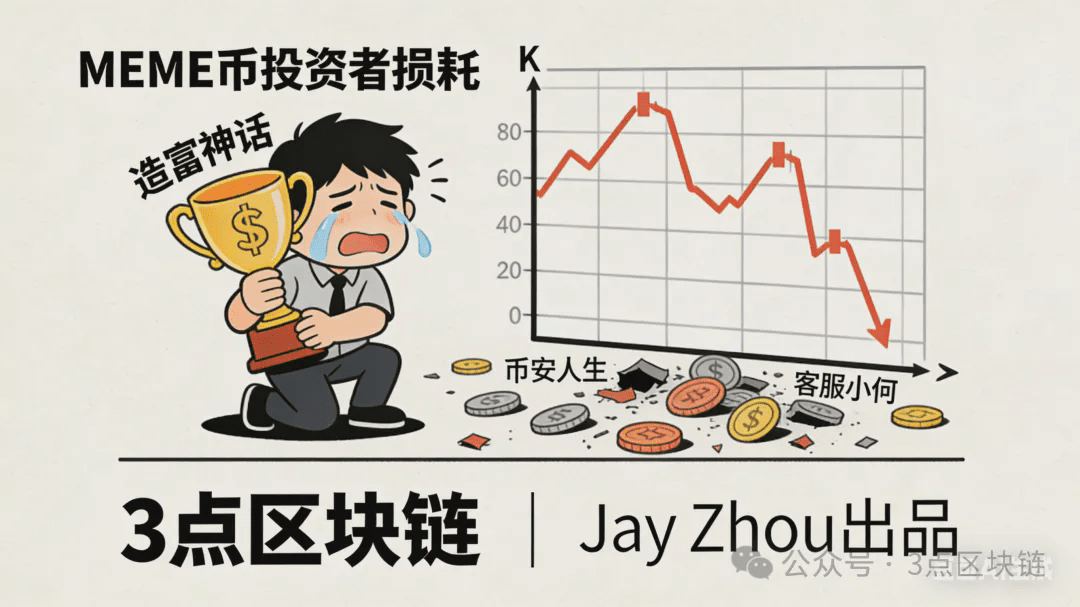
In the fourth quarter of 2025, the overall crypto market adjusted, and MEME coins became the worst-hit sector. In the past week, 87.8% of the projects on Binance Alpha have been falling, with 43% of tokens dropping over 30%, and 10% halving directly.
The former 'wealth creation myth' has now all turned into 'loss cases':
One address 0x2fcf invested 5.6 million dollars buying 'Binance Life' and 'Customer Xiao He' coins, ultimately facing a floating loss of over 3.5 million dollars;
Another trader 0x400a heavily bought BNBHolder, with a principal of 576,000 dollars ultimately bringing back only 140,000, losing 76%.
Retail investor losses are more common. Take the MUBARA scam, for example; those who chased the high had an average cost of 0.006 dollars, but after the hacker dumped it, the price fell to 0.0012 dollars, with 80% losing over 70%.
A crypto community conducted a survey, and among retail investors playing MEME coins in the fourth quarter of 2025, only 12% made a profit, 58% lost more than half of their principal, and 23% were directly 'rug-pulled' (scammed out of their funds).
The SEC stated directly in its November 2025 announcement: the value of MEME coins relies entirely on speculation and hype, having no practical utility. The price fluctuations are not value growth but merely 'a game of funds.' What's worse is that they are not considered securities and are not protected by securities laws. If investors lose money, there's no place to complain.
Part 03
Three, why is it so chaotic? Low barriers to entry, lack of regulation, traffic supremacy.
The chaos in MEME coins is not accidental. The barriers to issuing coins are getting lower, regulation is lagging behind, and the crypto circle constantly chases traffic. These three factors together have given rise to this speculative frenzy.
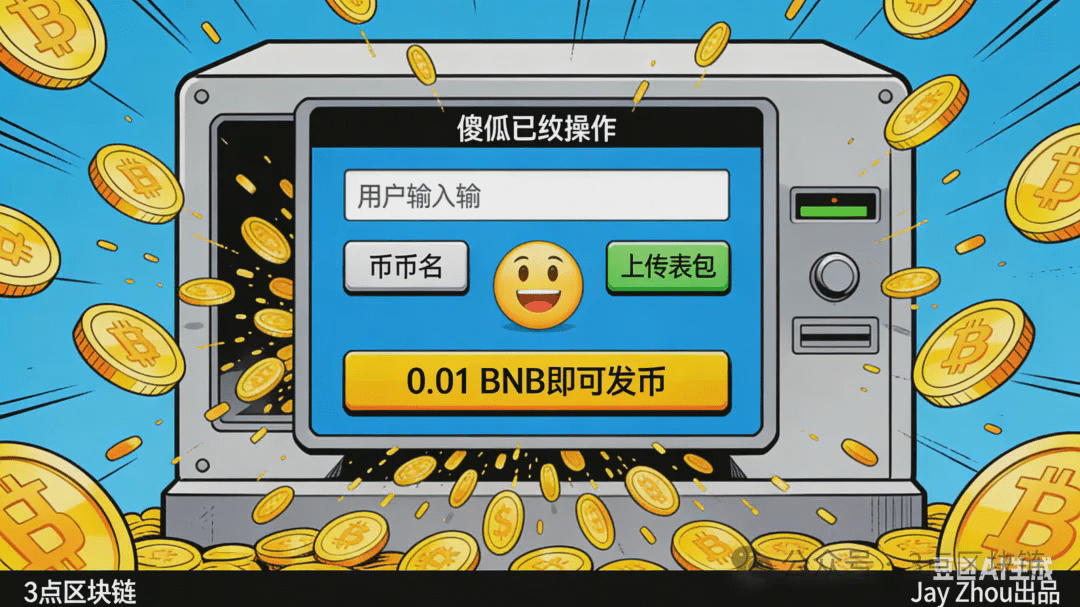
The most direct reason is that issuing coins is too easy. In the past, creating a coin required understanding of code, but now platforms like Pump.fun and Sunpump have simplified the process into 'foolproof operations'—no technical knowledge needed, just fill in a name, upload a logo, and you can create a MEME coin.
The Four.Meme platform is even more exaggerated, requiring only a margin of 0.01 BNB (about 3 dollars). Now, every day, over 100,000 MEME coins are being born on various chains, the vast majority of which are 'one-click generated' air coins.
The regulatory void has also provided opportunities for scammers. The SEC says that MEME coins are not considered securities and do not need to comply with the rules of securities issuance; coin creators can speculate freely without disclosing risks; the definitions of MEME coins by various countries are also vague, making cross-platform fraud nearly impossible to track.
Just like He Yi's WeChat hacking case, the anonymous wallet used by the hackers has yet to be traced, and there is no clear answer on who should be responsible for the stolen account.
The deeper reason is that the crypto circle is too 'idolizing traffic.' Here, 'trending = market value increase' and 'if a celebrity mentions it, you will get rich' have become a consensus; the cultural attributes of MEME coins have long been discarded, completely becoming a mere appendage of traffic.
Platforms, in order to grab users, actively fanned the flames—LBank attracted traffic by 'being the first to launch MEME coins,' while Binance launched Meme Rush to guide everyone to trade. This kind of 'platform endorsement' makes it harder for retail investors to discern risks.
Part 04
Four, stop blindly following the crowd: the essence of MEME coins is not a speculative tool.
In fact, MEME coins themselves are not scams. Early Dogecoin and Shiba Inu relied on community recognition and cultural value, becoming part of the crypto ecosystem; there was also a Giggle coin that donated 5% of transaction fees to charity, achieving social value and reaching a market value of 157 million dollars.
These examples illustrate that the true competitiveness of MEME coins lies in 'consensus and value,' not in 'hitching a ride on trends and speculation.'

For ordinary investors, the key to avoiding the pitfalls of MEME coins is not to follow the crowd blindly but to make rational judgments.
When encountering 'three-no tokens' (no white paper, no team, no application), just pass;
Don't believe in the short-term hype of 'celebrity homophones and sudden hotspots'; pay more attention to whether the community is truly active and whether there is actual utility.
If you hold digital currency, quickly transfer large assets into a cold wallet, and at most play with some spare cash in high-risk trades; do not invest your entire fortune.
To end this chaos, we need everyone to work together.
Platforms should establish review mechanisms to keep those worthless air coins out of the door;
Regulatory bodies need to clarify the legal boundaries of MEME coins and crack down on malicious speculation;
Investor education also needs to keep up—when 'DYOR (do your own research)' truly replaces 'believing everything a celebrity says,' it will become an investment creed, and MEME coins can return to their rightful state.
The K-line chart after He Yi's hacking incident has long made it clear: the market value built on hype will eventually burst like a bubble; those who speculate on trends may make short-term profits, but will eventually be 'washed up on the shore' by the rationality of the market. The crypto industry does not need the MEME myth of 'getting rich in 5 minutes,' but rather an ecological consensus that can truly carry value—this is what MEME culture should look like.