
Those who have been in the cryptocurrency circle for a few years know clearly - the importance of reviewing past trades is even higher than staring at the market for 12 hours.
Otherwise, how can one survive for 5 years and achieve stable profits in a market where BTC fluctuates wildly by 10,000 points, and altcoins double one day and then halve the next?
If we compare cryptocurrency trading to a 24-hour non-stop 'no-break competition', then reviewing past trades is like your devilish training before the race: practicing reactions, refining strategies, and filling in loopholes.
Many people often talk about 'trading systems', but they forget that the trading system in the cryptocurrency market has gone from conception to implementation, and then to withstanding the Federal Reserve's interest rate hikes, SEC regulation, and black swan events like hacker attacks from project teams, all backed by dozens or even hundreds of iterations and refinements.
But I’ve seen too many brothers: either they don’t know what reviewing is at all, or they just stare at the K-lines thinking reviewing is just going through historical data.
Today, I will use my practical experience in crypto spot and contracts over the years to break down the review into 'one goal, two concepts, three steps'—all actionable insights, whether you’re following BTC trends or trading altcoin swings, following this will help avoid detours.
One, one goal: review is not 'looking at history', it’s to 'earn future money'
First, understand the core: our review isn’t to dwell on 'if only I had closed that BTC long earlier yesterday', nor to verify 'how much my strategy could earn in the 2021 bull market'—but to enhance our sensitivity to 'specific crypto market conditions' and 'entry and exit signals' through review.
For example:
If you are using a MACD golden cross strategy on the BTC 4-hour chart, the review must clarify 'before the Federal Reserve's interest rate hike news comes out, how high is the win rate of the golden cross signal?' 'Before and after the expiry date, does the golden cross easily lead to false breakouts?'
If you are trading altcoin swings, the review must clarify 'when BTC is consolidating, which market cap altcoins are likely to produce more than 50% movements?' 'In the three days before token unlocks, should the original take-profit signals be adjusted in advance?'
The ultimate goal is just one: to let the account lose less 'money that could have been avoided' (like being stopped out by a false breakout), and to earn more 'money that should have been made' (like profits not captured in trend markets). Any review that deviates from this purpose is just a waste of time.
Two, two concepts: if you don’t understand these two points, your review is 'self-deception'
In reviewing the crypto market, there are two underlying logics that must be engraved in your mind—more important than any indicator.
1. Crypto prices have 'patterns to be found', but patterns must be combined with 'crypto characteristics'
The core premise of technical analysis 'prices move along trends' also holds in the crypto market, but you must understand that crypto's 'patterns' are different from traditional markets:
Traditional markets have 'bull and bear cycles', while the crypto market has 'halving cycles'—BTC halves every 4 years, and after the first two halvings, there were significant bull markets within 1-2 years, this is a verifiable law; although the cyclical effect is weakening, the crypto circle will also have its own cyclical trajectory.
Traditional markets are slow to be affected by macro factors, while the crypto market is a 'macro magnifying glass'—when the Federal Reserve lowers interest rates, the stock market may rise, but BTC often falls before rising; this 'expectation leads, realization follows' rhythm must be firmly grasped during review.
Livermore made money by reading price trends; in today's crypto market, you must also add 'regulatory dynamics' and 'project fundamentals'—for example, when the SEC sued Binance, many BTC 'support levels' were instantly broken, it’s not that the technicals failed, but the news broke the original patterns. The significance of the review is to find the balance between 'technical patterns' and 'crypto-specific variables'.
2. Don't be superstitious about 'naked K', 'volume + liquidity' is key
Many friends who just entered crypto see a big bullish candlestick and shout 'the bull is here', and when they see a big bearish candlestick, they panic 'it's going to zero'—this shows they don’t understand the 'liquidity trap' of the crypto market.
The liquidity in the crypto market is more extreme than in traditional markets: major coins like BTC and ETH have liquidity like '10,000-ton cruise ships', where several million dollars might only fluctuate 1%; but altcoins with a market cap below 100 million have liquidity like 'a canoe', where only a few hundred thousand U can pull a 20% bullish candlestick.
I’ve seen too many people step into pitfalls during their reviews: for instance, looking at a certain altcoin with a large bullish candlestick on the 4-hour chart, thinking it’s a breakout signal, but when following it in real trading, they get trapped—during the review, they didn’t look at the volume, that bullish candlestick was the project team 'self-pumping' during low liquidity periods, with volume only 1/5 of usual, a typical 'trap for the bulls'.

Here’s the key point:
When trading on centralized exchanges (CEX) for spot/contract, you must look at 'real volume' during review—such as Binance, OKX’s 'trading volume', 'open interest', don’t trust the volume data from small platforms;
When trading spot on decentralized exchanges (DEX), without global volume data, look only at 'slippage' and 'trading pair depth'—for example, if an altcoin on a DEX has a buy-sell price difference exceeding 5%, it indicates extremely poor liquidity, and such assets should be directly excluded during review;
Some 'crypto volume indicators' on the market (like OBV variants) are essentially calculated based on the highs, lows, opens, and closes of K-lines, not true volume—if your strategy relies on this indicator, be cautious during the review, as it is likely to distort.
I’ve repeated this point so much because too many people have fallen for 'false signals' in the crypto market—it's not that the strategy is failing, but during the review, they didn’t factor in 'volume + liquidity', equivalent to practicing shooting basketball with closed eyes, how could they be accurate?
Three, three steps: crypto review 'implementation guide', from 0 to 1 without stepping into pitfalls
Step one: set 'fixed rules' before reviewing, don’t be flexible.
The crypto market has many assets (BTC, ETH, altcoins) and varied cycles (15 minutes, 4 hours, daily), so before reviewing, you must clearly define the 'boundaries'; otherwise, it’s just blind chaos.
You need to clarify these three things:
1. Target: are you trading BTC/USDT perpetual contracts, or ETH/USDT spot? Are you only trading the top 20 market cap coins, or including altcoins ranked 50-100? (It’s recommended for beginners to start with major coins, as there are too many variables with altcoin reviews)
2. Signals: what indicators/shapes to use? For example, 'enter when the 4-hour RSI breaks 30, exit when it breaks 70', or 'enter when the daily line stabilizes above MA60, exit when it falls below MA20'? Parameters must be fixed, don't use RSI(14) today and RSI(9) tomorrow;
3. Risk rules: how to set stop-loss and take-profit? For example, 'single trade stop-loss not exceeding 2% of the principal' 'after 10% profit, move stop-loss to the entry price'—especially when doing contracts, leverage multiples (10x/20x) must also be predetermined, don’t arbitrarily increase leverage during review.
For example: I previously helped a friend optimize his strategy; during his review, he alternately looked at the BTC 1-hour chart and the ETH 4-hour chart, using MACD one moment and Bollinger Bands the next—after reviewing for a week, he didn’t even know if his strategy was profitable. Setting fixed rules is the prerequisite for reviewing.
Step two: during review 'mechanically execute', add in the 'news aspect'
Many people make a fatal mistake during their review: 'selective execution'—entering on signals that meet their expectations, skipping those that don’t. For example, during the review, seeing that BTC triggered an entry signal, but at that time there was news of a Federal Reserve interest rate hike, they comfort themselves by saying 'I definitely wouldn’t enter in real trading'—this kind of review is meaningless.
The correct approach is:
1. 100% mechanical execution: as long as the pre-defined signal is triggered, regardless of whether you think 'the market will fake a breakout', you must take note of the entry; when it reaches the stop-loss/take-profit point, you must exit, don’t get entangled in 'will holding for a while earn more';
2. Must add 'news variables': 90% of the big fluctuations in crypto markets are related to news—such as Bitcoin halving, SEC new regulations, project hack attacks, Musk's calls (yes, for Dogecoin, this must be considered). During review, you should mark these news on the K-line, for example:
Before the BTC halving in 2024, your entry signal triggered, but the market fell after the halving—at this time, you need to record: 'After the halving, the original strategy's win rate decreased by 15%, next time need to adjust the exit timing';
A certain altcoin released news of a 'hacker attack', your stop-loss signal didn't trigger, but the market directly crashed through the stop-loss—at this time, you need to optimize: 'when negative news from the project occurs, manually close your position without waiting for technical stop-loss.'
When I review myself, I’ll stick the 'crypto major events calendar' (like the Federal Reserve interest rate decisions, important token unlock times) next to me, each review transaction corresponds to the news at that time—thus, the strategies developed from this review can withstand the test of real trading.
Step three: after reviewing, 'quantitative summary', don’t just look at 'whether you made money or not'
The review is over, it’s not just about glancing at 'total profit 50%'—the core of crypto trading is 'stability', you need to find problems and make optimizations from the data.
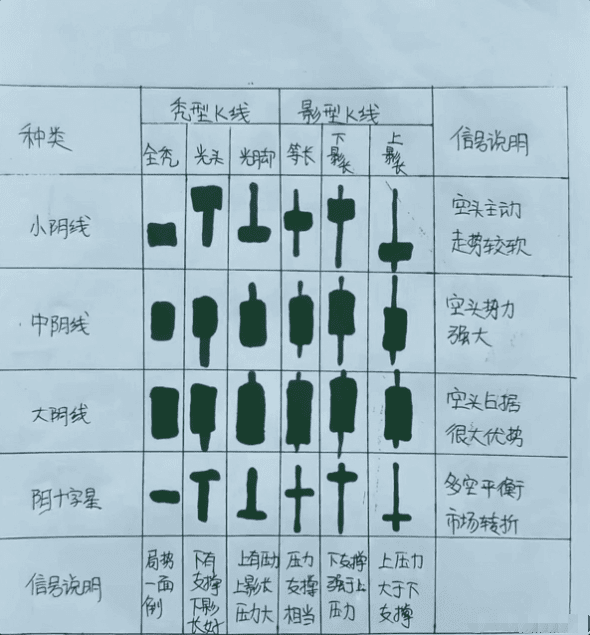
These 5 pieces of data must be looked at:
1. Win rate & win-loss ratio: a win rate of 40% but a win-loss ratio of 3:1 is more stable than a strategy with a win rate of 60% but a win-loss ratio of 1:1 (don’t pursue a high win rate in the crypto market, the win-loss ratio is more important);
2. Maximum drawdown: for example, total profit 50%, but the maximum drawdown in between is 30%—if doing contracts, it might directly lead to liquidation under 20x leverage, at this time you need to adjust the stop-loss;
3. Number of consecutive losses: if there are 5 consecutive stop-losses, is it because the market is unsuitable, or is it a problem with the signal? For example, during the FTX collapse in 2023, many trend strategies faced consecutive losses; this is a market issue, during the review, you need to note 'strategy failure under black swan events';
4. Capital curve: is it steadily rising, or is it wildly fluctuating? If the capital curve suddenly steeply rises, check if it coincides with a certain altcoin market surge, can this profit be replicated;
5. Optimization points: for example, 'during the review, found that USDT-denominated contracts have a signal win rate of only 20% before non-farm payroll data—next time, stop the strategy 2 hours before non-farm payroll'; 'for altcoins before token unlocks, take-profit should drop from 10% to 5%.'
After optimization, there must be a 'secondary review': for example, after adjusting the stop-loss ratio, use the same asset and period to review again, to see if the maximum drawdown has decreased and whether the win-loss ratio has changed—until the data meets your risk expectations.
Finally, to be honest
In the crypto market, traders who can survive for more than 5 years are not relying on 'luck'. Review is not a 'task', it’s a 'dialogue' between you and the market—through review, you will know how powerful your strategy is in a bull market, how resilient it is in a bear market, and which signals are 'real opportunities' and which are 'traps'.
I’ve seen too many brothers, just entering the space, wanting to rely on 'insider information' and 'copy trading' to make money, only to lose everything and then understand: the most reliable thing in the crypto market is always the trading system you’ve honed through review.
Today's article '123 Rule', you don’t need to grasp it all at once, but you can start from step one—first set a simple strategy, review it with the market data from the past 3 months, trust me, you will discover many details you didn’t notice before.
Trading is a marathon, and review is your 'supply station'—don’t complain, each serious review is paving the way for the next profit.
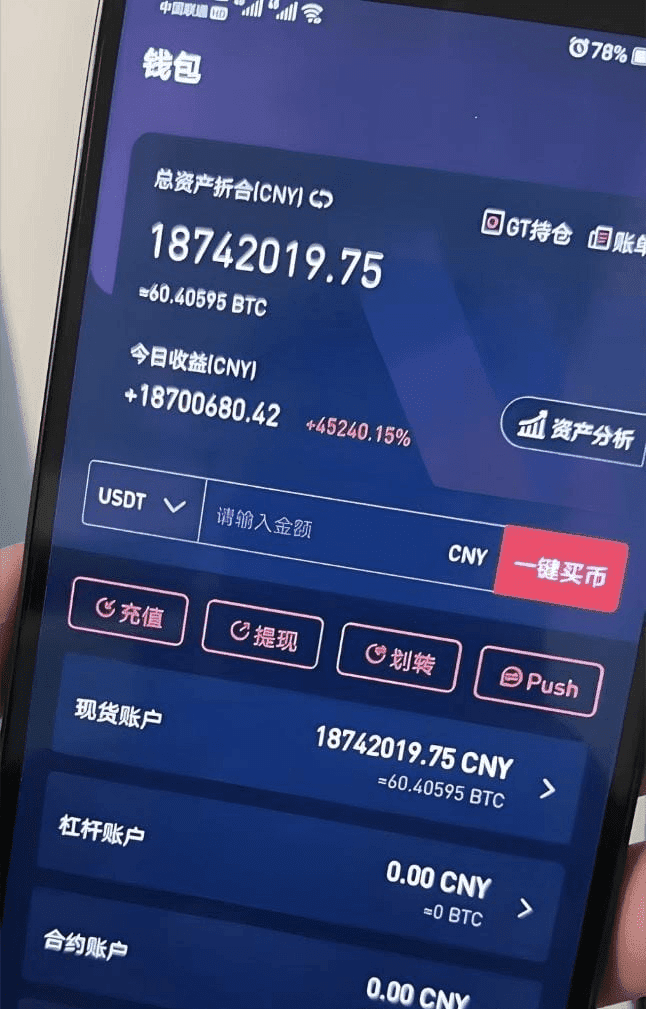
Originally, when this fan found me, he only had 2700U left in his account; previously, he followed trades and gambled recklessly, getting educated by the market, shouting every day that he was close to liquidation, and he was almost out of his mind.
I told him at that time:
Don’t rush, don’t think about getting rich overnight, first follow me to make up for the losses; surviving is the first opportunity to turn things around.
Step one: stabilize your position, first recover your losses
The first order I placed for him was a small position short on ETH, controlled within 15% of the principal, strict stop-loss. As a result, he made an 80-point profit, earning 320U. At this point, his mindset stabilized, and he no longer acted recklessly.
Step two: roll positions to magnify and earn back losses
After that, I guided him through 3 rounds of phased position rolling:
First round 2700U → 4300U
Second round 4300U → 9100U
Third round 9100U → 2.6W U
After three rounds, the funds lost previously not only returned but also doubled at a higher level
Step three: position management is the core
Many people always think that explosive rises and falls can lead to wealth, but the real secret is just one sentence:
Positions should be like bullets, always have reserves to have a chance to turn around.
I required him to use only 20% of his position for each order to test the waters; if the direction was right, then gradually increase; if wrong, the stop-loss shouldn't exceed 3% of the account. This way, even if wrong three times out of ten, he could still maintain profitability.
The change of fans
In the past, he always chased highs and lows, losing to despair. After following my operations for 37 days, he said to me for the first time:
Teacher, I finally understand, the real flipping of positions is not reckless gambling, but violent rolling under controlled risk.
Now, he has completely turned things around and is ready to withdraw profits to buy a car
This method has been distilled into 6 sentences that I stick on the side of my screen.
One sentence worth 100,000, three points that can outperform 90% of retail investors:
Rapid rise and slow fall, the market is buying groceries
Rising is like a sprint, falling is like a stroll—indicating that the market hasn’t bought enough, don’t easily exit.
Rapid falls and slow rebounds, the market is burying people
A rebound after a flash crash is soft, that’s a knife supplement, not a bottom fishing; count your fingers before catching flying knives.
No volume at high positions is the most toxic
Increased volume doesn’t necessarily mean a peak, decreased volume definitely lacks oxygen. The quieter the surface of stagnant water, the less oxygen there is below; jumping in directly leads to drowning.
A single volume spike at the bottom is mostly bait
The real bottom first shrinks volume until you cut losses, then increases volume to lift up—only then is it called building the hull.
Volume is water, K is the boat
The boat can float high depending on the water level, not the paint on the boat. In a shrinking volume market, no matter how beautiful the bullish candlestick is, it’s still made of paper.
Empty to be full
Having coins makes you anxious, seeing market trends makes you panic. First, clear your positions, only then can your heart be full. Being in cash is not resting; it’s the highest form of waiting.
The crypto market operates 24 hours, opportunities never miss.
What’s missing is adults who are willing to wait for signals, dare to miss out, and know when to stop.
Pitfalls in a bull market: don’t treat 'holding on' as a long-term strategy
1. There is no universal rise in the crypto market; chasing highs must be cautious: for coins that have previously surged and the main force has offloaded, don’t hold onto fantasies after being trapped—risk will only snowball, cutting losses sometimes is wiser than stubbornly holding on.
2. Long positions ≠ holding dead weight, value is key: truly potential coins will never be absent in a bull market; but if you chase highs based on news or buy into high positions of 'hot potatoes', hoping to rely on a bull market to break even, you will likely find that even recovering your capital is a luxury.
3. In a bull market, clarify the logic: a bull market amplifies valuable coins but acts as 'makeup remover' for worthless coins. Rather than gambling on trapped coins rebounding, it’s more important to free up energy to find truly growth-logical targets; that’s the key to making money in a bull market.
Wen Jing focuses on Ethereum contract spot ambush, the team still has positions to get in #比特币VS代币化黄金 $BTC

