This may be a signal in advance for the crypto market
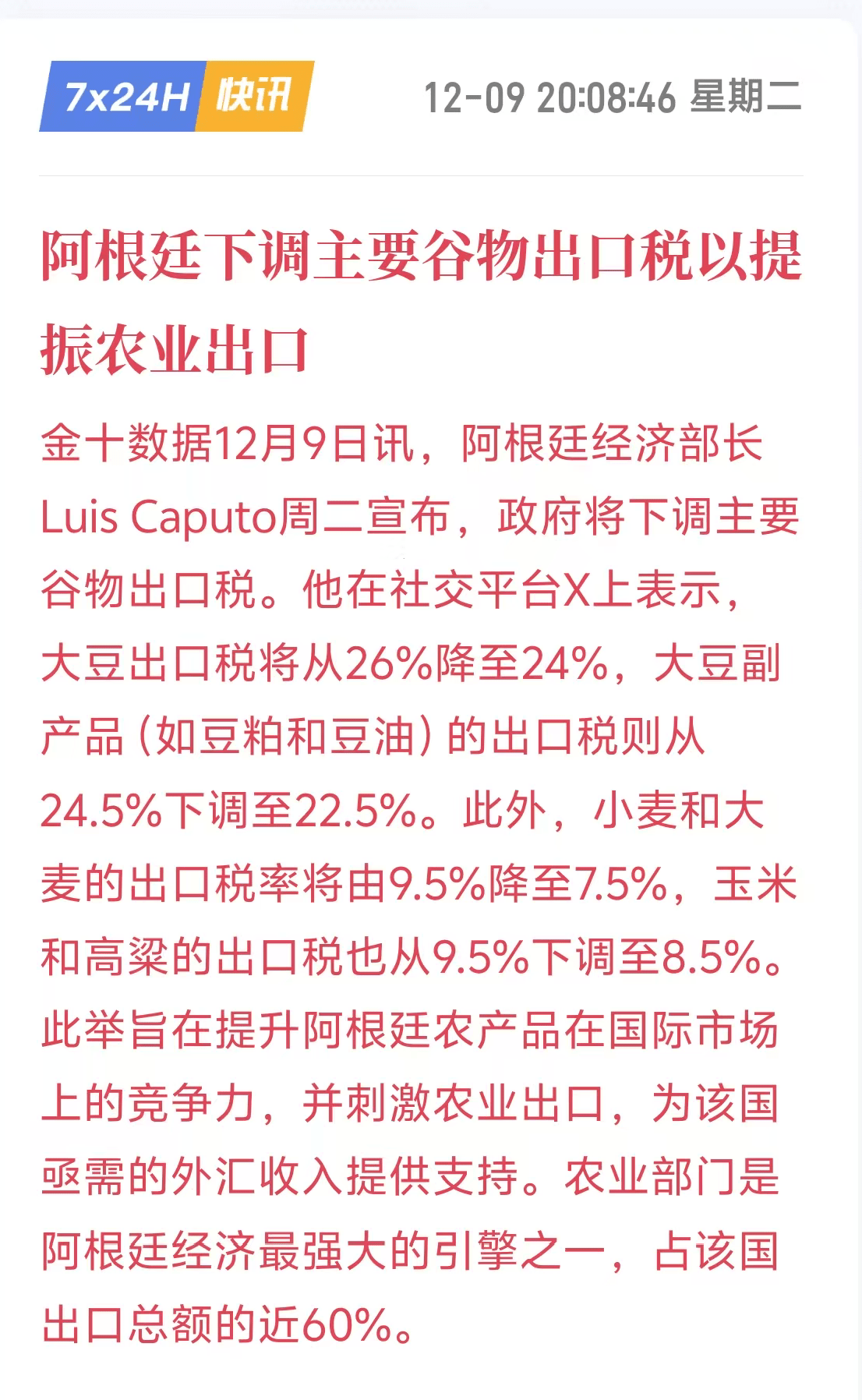
Just now, the Argentine Minister of Economy announced:
✂️ The soybean export tax has been reduced from 26% to 24%
✂️ The tax on soybean by-products has been reduced from 24.5% to 22.5%
✂️ The export taxes on wheat, corn, and sorghum have been comprehensively lowered
The goal is clear: stimulate exports to exchange for urgently needed foreign exchange income.
It should be noted that Argentina's agricultural exports account for 60% of the country's foreign exchange income, and this operation is equivalent to releasing a signal to the world:
👉 There is enormous foreign exchange pressure, and there is an urgent need for dollar liquidity.
💡 What does this have to do with the cryptocurrency sector?
When global economies start vying for liquidity and competing for dollars,
Risk assets (stocks, cryptocurrencies) often react faster than the real economy.
Now the whole world is facing the same problem:
The divergence in the Federal Reserve's interest rate cuts is intensifying.
Signs of tightening liquidity are deepening.
Countries are starting to scramble for exports, dollars, and funds.
📌 Capital anxiety = asset repricing begins.
In this context, capital is more willing to flow towards:
Assets with high volatility but potential high returns.
Assets with free trading in global markets and strong liquidity.
That is:
🔵 BTC, ETH, and other crypto assets may start risk aversion and appreciation logic in advance.
📈 My opinion (not advice, just communication)
At the macro level, entering the 'struggle for dollars phase'.
Cryptocurrency may come out of an independent market in advance.
Holding chips well and testing with a light position is more stable than blindly chasing high.
Short-term volatility, medium-term expectations, long-term trends.#加密市场观察 #AGT