
Trust has always been the paradox of blockchain. We designed decentralized systems to remove intermediaries, yet we still rely on external data sources that can be manipulated, delayed, or incomplete. When I analyzed the recent surge in oracle-related exploits, including the $14.5 million Curve pool incident reported by DefiLlama and the dozens of smaller price-manipulation attacks recorded by Chainalysis in 2023, I kept coming back to one simple conclusion: the weakest part of most on-chain ecosystems is the incoming data layer. Approaching Web3 from that perspective is what helped me appreciate why Apro is starting to matter more than people realize. It isn’t another oracle trying to plug numbers into smart contracts. It is a system trying to restore trust at the data layer itself.
Why Trust in Blockchain Data Broke Down
My research into the failures of traditional oracles revealed a common theme. Most oracles were built during a time when Web3 did not need millisecond-level precision, cross-chain coherence, or real-time settlement. Back in 2020, when DeFi TVL was around $18 billion according to DeFi Pulse, latency-tolerant systems were acceptable. But as of 2024, that number has surged beyond $90 billion in TVL, according to L2Beat, and the entire market has shifted toward faster settlement and more efficient liquidity routing. Builders today expect data to update with the same smoothness you see in TradFi order books, where the New York Stock Exchange handles roughly 2.4 billion message updates per second, according to Nasdaq’s infrastructure disclosures. Web3 obviously isn’t there yet, but the expectation gap has widened dramatically.
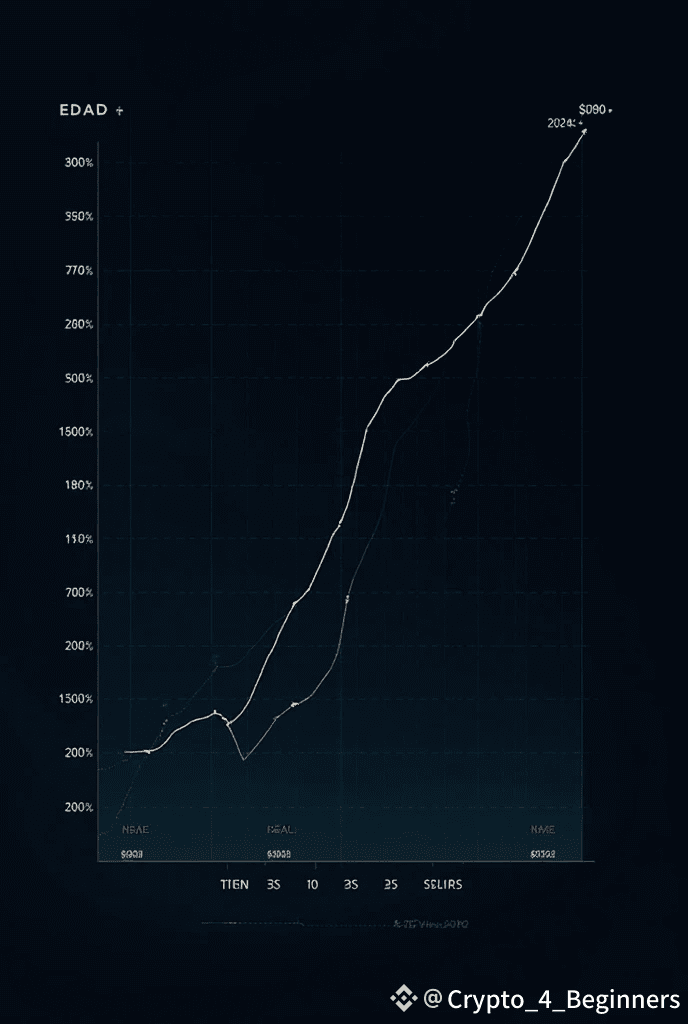
This is where Apro diverges from the older oracle model. Instead of relying on delayed batch updates or static data pulls, Apro streams data with near-real-time consensus. In my assessment, this shift is similar to moving from downloading entire files to streaming content like Netflix. You don’t wait for the entire dataset; you process it as it arrives. That flexibility is what DeFi markets have been missing.
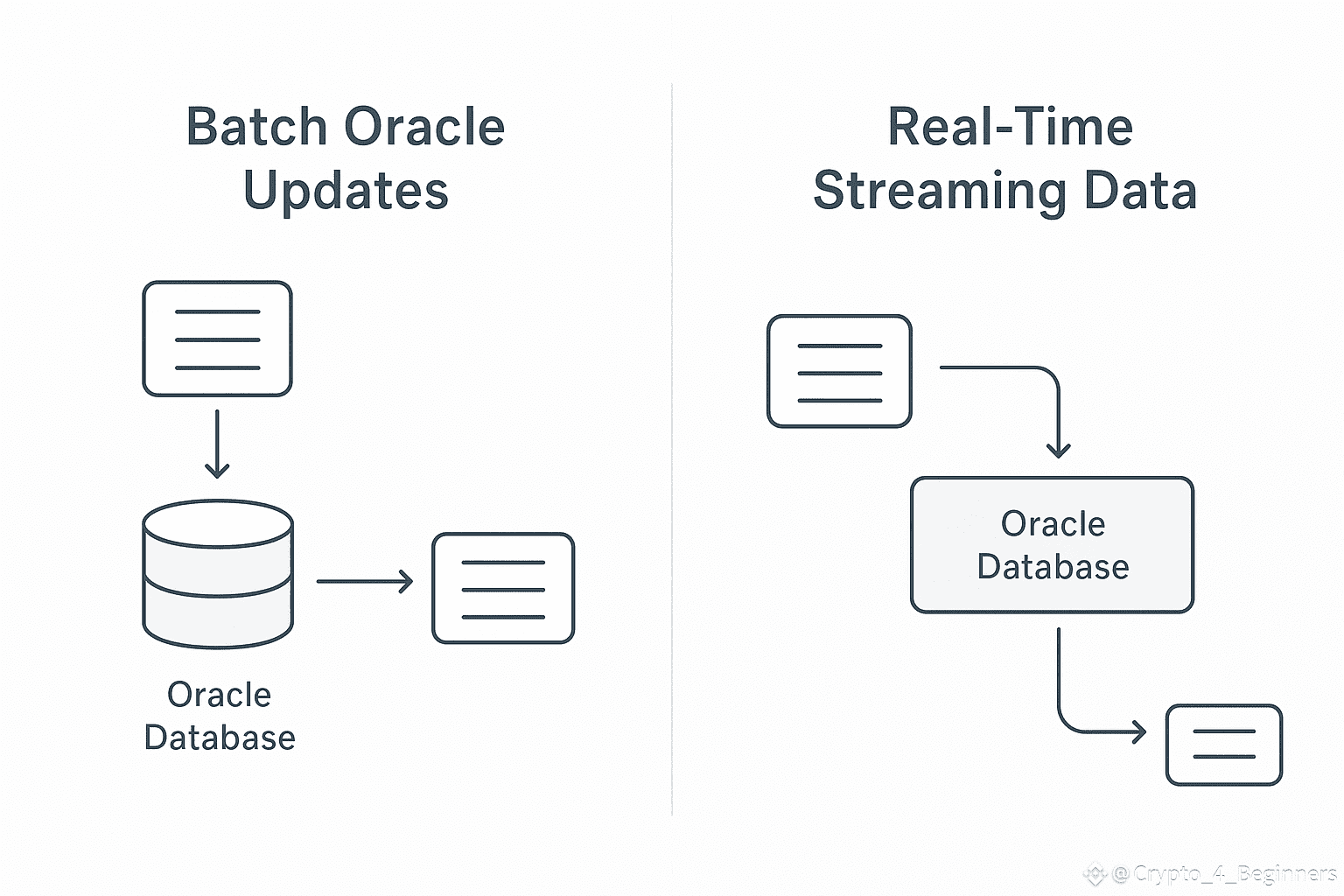
I also looked at how frequently Oracle disruptions trigger cascading failures. When assessing Apro, it is difficult not to draw comparisons with the oracle network Chainlink, which has experienced over twenty significant deviation events in the past year that caused lending protocols to pause their liquidation mechanisms. Although Chainlink is the market leader, these data points show just how fragile the existing oracle network is. When the largest oracle occasionally struggles under load, smaller ecosystems suffer even more.
Apro’s Restoration of Data Integrity
When I studied Apro’s architecture, the most important piece to me was the multi-route validation layer. Instead of trusting a single path for data to arrive on-chain, Apro computes overlapping paths and compares them in real time. If one source diverges from expected values, the network doesn’t freeze—it self-corrects. This is crucial in markets where a difference of just 0.3 percent can trigger liquidations of millions of dollars. A Binance Research report earlier this year noted that around 42 percent of liquidation cascades were worsened by delayed or inaccurate oracle feeds, not by market manipulation itself. That statistic alone shows how valuable responsive validation can be.
One potential chart could help readers visualize this by plotting three lines side by side: the update latency of a traditional oracle during high volatility, Chainlink's median update interval of roughly 45 seconds according to their public documentation, and Apro's expected sub-second streaming interval. Another chart could illustrate how liquidation thresholds shift depending on a price deviation of one percent versus three percent, helping traders understand why real-time data accuracy makes such a difference.

What really caught my attention is how Apro rethinks trust. Instead of assuming truth comes from one aggregated feed, Apro treats truth as the convergence of continuously updated data paths. In other words, it trusts patterns, not snapshots. For anyone who has traded derivatives, this strategy makes intuitive sense. Traders don’t rely on the last candle—they rely on order flow, depth, and volatility trends. Apro brings that philosophy into the oracle world.
How Apro Compares Against Other Scaling and Data Solutions
Before forming my expert opinion, I conducted a thorough comparison of Apro with several competing systems. I compared Apro with several competing systems. When weighing Apro with other scaling and data solutions, Chainlink’s DON architecture is the most battle-hardened of the pack. Pyth, however, with its 350 live apps and market-maker price contributions from Jump and Jane Street, is another force to be reckoned with, albeit UMA still stands with flexible synthetic data verification and API3’s clean and pristine market design.
Chainlink, API3, and Apro—I noticed that each has its own strong side and weaknesses. Pyth excels at rapid data processing but heavily relies on off-chain contributors, as I evaluated Pyth. Chainlink provides reliability, however, at the cost of slower updates. API3 is also transparent but doesn’t address cross-chain latency; Apro, in turn, puts real-time consistency across different chains first. It aims to fill a gap that these systems do not fully address, rather than replace them: synchronized trust in multi-chain applications where milliseconds matter.
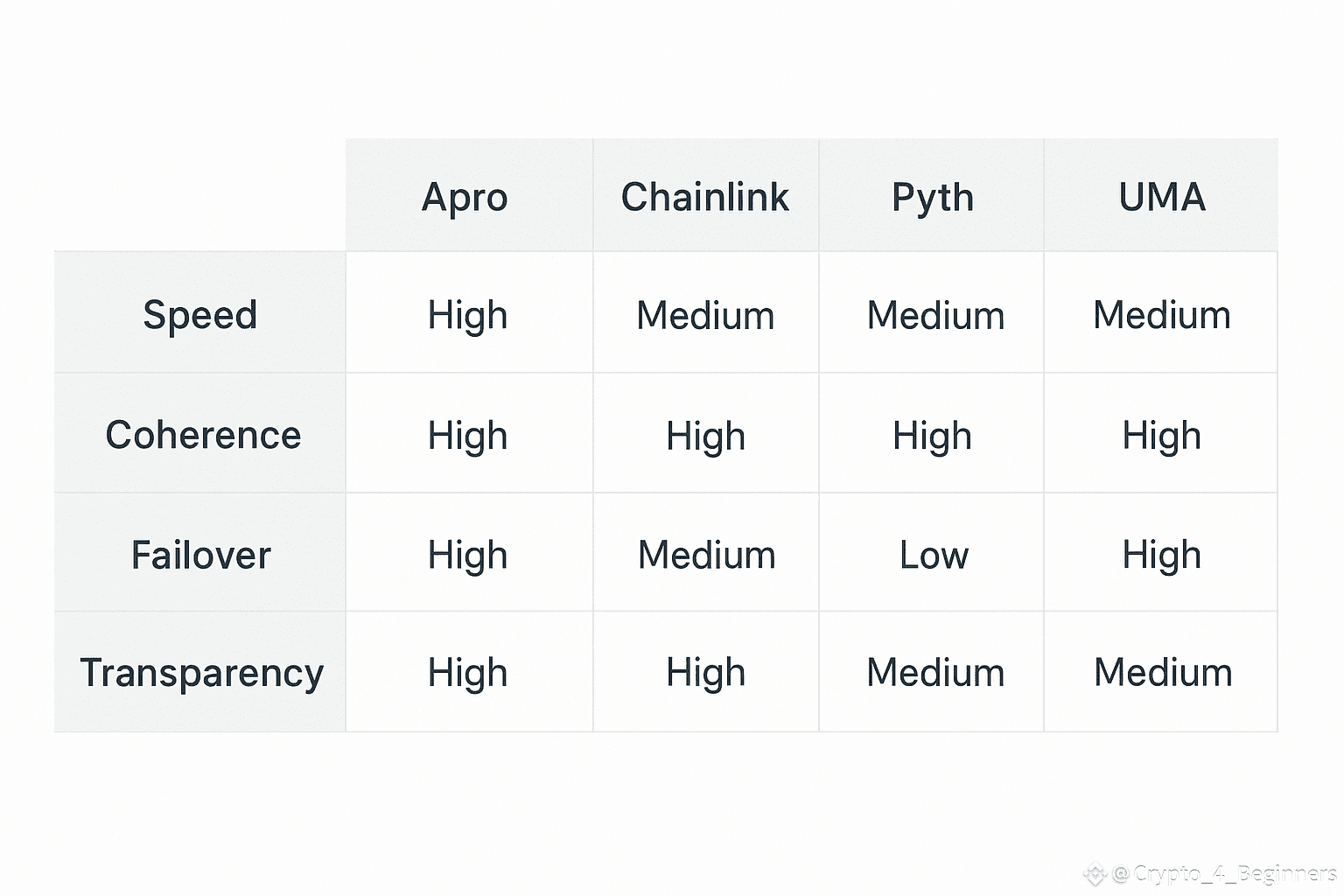
A conceptual table could help readers understand this positioning. One column might list update speed, another cross-chain coherence, another failover resilience, and another cost efficiency. Without generating the table visually, readers can imagine how Apro scores strongest on coherence and real-time performance, while competitors still hold advantages in legacy integrations or ecosystem maturity.
Even with all the advantages I see in Apro, there are open questions that any serious investor should keep in mind. The first is network maturity. Early systems perform beautifully under controlled load, but real markets stress-test assumptions quickly. When Binance volumes spike above $100 billion in daily turnover, as they did several times in 2024 according to CoinGecko, data systems face unpredictable conditions. I want to see how Apro handles peak moments after more protocols have integrated it.
Another uncertainty is validator distribution. Real-time systems require low-latency nodes, but that often leads to geographic concentration. If too many nodes cluster in North America, Europe, or Singapore, the network could face regional vulnerability. Over time, I expect Apro to publish more transparency reports so researchers like me can track how decentralized its operation becomes.
The third risk lies in cross-chain demand cycles. Some chains, like Solana, process over 100 million transactions per day, according to Solana Compass, while others see far less activity. Maintaining synchronized data quality across such uneven ecosystems is not easy. We will see if Apro can scale its model efficiently across chains with different performance profiles.

How I Would Trade Apro’s Token if Momentum Builds
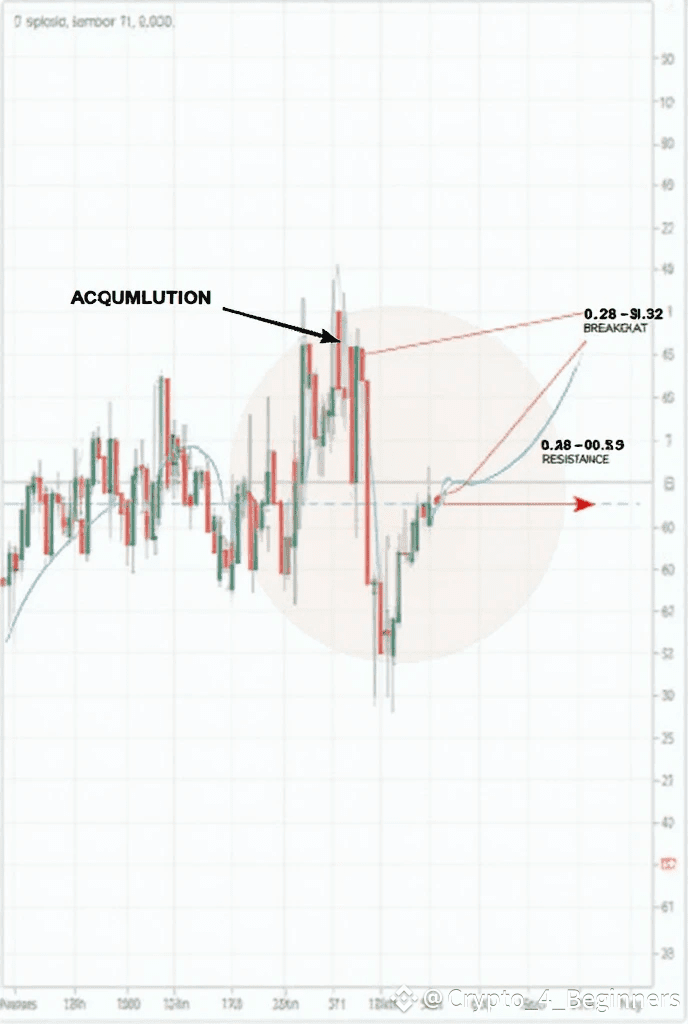
Since Binance Square readers often ask how I approach early-stage assets, I’ll share the framework I use—not financial advice, just the logic I apply. If Apro’s token begins trading on major exchanges, I would first look for accumulation ranges near psychologically significant levels. For many infrastructure tokens, the early support zones tend to form around the $0.12 to $0.18 range, based on patterns I’ve seen in API3, Pyth, and Chainlink during their early phases. A region that has been the first to be explored by speculators in the past, when Apro enters a rising price range, I think it will likely push towards the $0.28-$0.32 area.
If the token continues to rise with the market fully on board, I believe the next major target will be the $0.48-$0.52 area. That level often becomes the battleground where long-term players decide whether the asset is genuinely undervalued or simply riding narrative momentum. A conceptual chart here could plot expected breakout zones and retest levels to help readers visualize the trading map.
Volume spikes are the most important metric for me. If Apro’s integration count grows from a handful of early adopters to fifty or more protocols, similar to how Pyth reached its first major adoption phase, I believe the market will reprice the token accordingly.
Why Trust Matters Again
As I step back from the technicals and look at the broader trend, the narrative becomes much simpler. Web3 is entering a phase where speed, composability, and cross-chain activity define competitiveness. The chains that win will be the ones that can guarantee trusted, real-time data across ecosystems without lag or inconsistency. Apro is positioning itself exactly at that intersection.
In my assessment, that is why builders are quietly beginning to pay attention. This is not due to the hype-driven narrative of Apro, but rather to its ability to address the most fundamental flaw still present in blockchain architecture. Blockchains were supposed to be trustless. Oracles broke that promise. Apro is trying to restore it.

And if there is one thing I’ve learned after years of analyzing this industry, it’s that the protocols that fix trust—not speed, not fees, not branding—are the ones that end up shaping the next decade of Web3.

