
The Federal Reserve is in a quiet period, with private sector employment data and September PCE data becoming the focus before the December meeting! The Russia-Ukraine peace agreement is entering a critical phase!
This week's important highlights remain the two sectors of geopolitics and economic technology data.
Geopolitics:
On Sunday, U.S. envoy Viktor and Secretary of State Rubio met with Ukrainian officials in Florida, reaffirming the current (Russia-Ukraine peace plan).
This week, envoy Viktor is visiting Moscow, accompanied by a U.S. delegation, and both sides will negotiate based on the current version of the (Russia-Ukraine peace agreement), making amendments or additions.
This is a significant turning point in Trump's mediation of the Russia-Ukraine peace process, as the peace plan has already been recognized by the U.S., Ukraine, and Europe. Whether Russia agrees will be a major turning point for this peace agreement.
If Russia and Ukraine can truly achieve peace, or a temporary ceasefire, it would be a stabilizing benefit for the global situation.
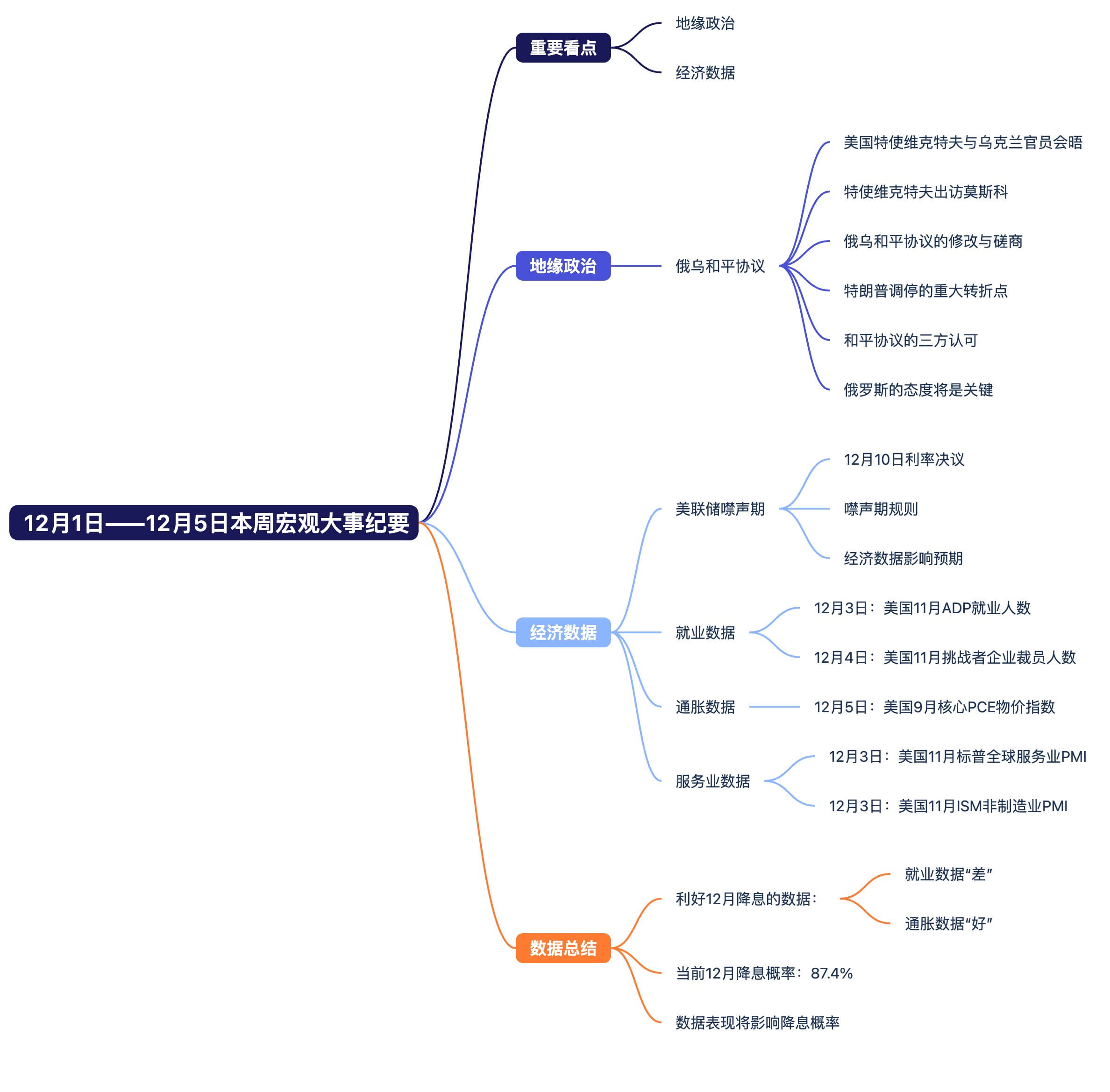
Economic Data:
December 10 is the time for the U.S. to announce the new interest rate decision. From now until the meeting, Federal Reserve officials enter a 'quiet period.'
According to the quiet period rules, 10 days before the meeting and 1 day after, Federal Reserve officials are prohibited from publicly commenting on monetary policy, interest rate outlook, economic outlook, etc., and cannot accept any interviews.
The quiet period for Federal Reserve officials has now begun, so the fluctuations in the probability of a rate cut in December can only be adjusted based on economic data.
Generally, the quiet period is seen as a 'freeze' phase for market expectations regarding the Federal Reserve's decisions. Unless there are significant changes in economic data, market expectations will not vary greatly.
Under this premise, the data to focus on this week includes private employment data and September PCE data, with secondary attention to U.S. services data.
Employment Data
On December 3, Wednesday, at 21:15, U.S. November ADP employment numbers (10,000 persons)
On December 4, Thursday, at 20:30, U.S. November Challenger Job Cuts (10,000 persons)
Due to the government shutdown, the market has lacked official data since October, and the only data released so far is the September non-farm data. Thus, unofficial data has also become a key focus for the market and major institutions, increasing the weight of short-term impact expectations.
Inflation Data
On December 5, Friday, at 23:00, U.S. September Core PCE Price Index Year-on-Year
This is the first official inflation data released after the government shutdown, and it is also one of the inflation data that Powell pays more attention to, as well as being core data for the Federal Reserve's 2% inflation target.
Services Data
On December 3, Wednesday, at 22:45, U.S. November S&P Global Services PMI Final Value, at 23:00 U.S. November ISM Non-Manufacturing PMI.
The services sector is a pillar of the U.S. economy, and the rise and fall of services data will shape market expectations about the economic situation, making it one of the effective data points for judging economic conditions, especially with a higher weight for ISM data.
Weekly Data Summary:
The favorable data for a rate cut in December is poor employment data and good inflation data. As long as the data points to a still poor employment environment, with increased unemployment risk, and stable or declining inflation data, it will be beneficial for a rate cut in December.
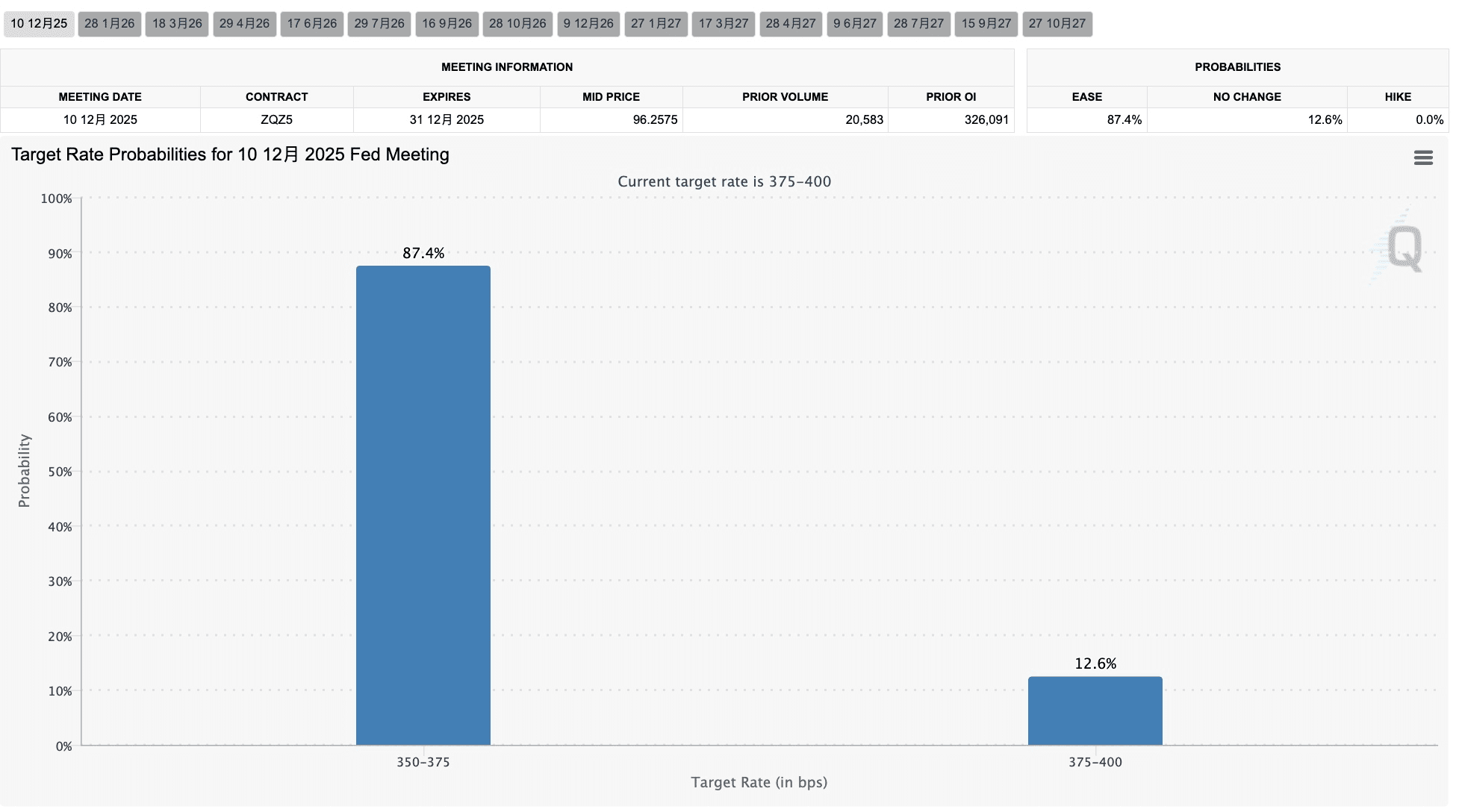
Currently, the probability of a rate cut in December is 87.4%. If this week's data continues to be favorable, it will raise the probability to over 90%.
If you currently feel helpless and confused in trading, and want to learn more knowledge and cutting-edge information, follow me so you won't get lost in the transition between bull and bear markets.#加密市场反弹 #美联储重启降息步伐 #特朗普加密新政
