
#defi
defi
58.1M views
310,590 Discussing
Hot
Latest

🚨 KAVA CRASH: HACK OR INFINITE MINT?
The KAVA crash on November 14 shocked the crypto market, but the real story is more complicated.
Here's what actually happened:
🔴 55.2 Million KAVA Drained An attacker exploited a nearly inactive BUSD market inside Kava Lend and borrowed approximately 55.2 million KAVA.
🔴 How Did It Happen? The attacker manipulated the collateral valuation, making deposits appear far more valuable than they actually were.
🔴 Why Did KAVA Crash? Around 49.2 million KAVA was transferred to BNB Chain through LayerZero. Heavy selling created enormous pressure on the token's price.
⚠️ Important Clarification: Kava stated that this was NOT an infinite mint. The incident was isolated within Kava Lend, not a failure of the entire Kava blockchain.
📊 My Take: The biggest challenge now isn't just recovering the price. It's restoring investor confidence.
Kava needs transparency, a detailed post-mortem report, and a clear recovery plan.
💬 What's your opinion? Can KAVA regain investor confidence after this incident?
#KAVA #CryptoNews #DeFi #BNBChain #KavaSaysAbnormalActivityLimitedToKavaLend
415

·
--
🎁 CRYPTO GIFT BATTLE 🎁
Two projects. Two visions. One community choice. 👀🔥
🟣 $KAVA
🏗️ DeFi Infrastructure
🌐 Layer-1 Ecosystem
⚡ Built for the long game
🔵 $EVAA
🚀 TON DeFi Narrative
📱 Telegram Ecosystem Growth
💧 Lending Revolution
🎁 If you could choose ONE coin for the next big wave…
#Crypto #DeFi #KAVA #EVAA
Two projects. Two visions. One community choice. 👀🔥
🟣 $KAVA
🏗️ DeFi Infrastructure
🌐 Layer-1 Ecosystem
⚡ Built for the long game
🔵 $EVAA
🚀 TON DeFi Narrative
📱 Telegram Ecosystem Growth
💧 Lending Revolution
🎁 If you could choose ONE coin for the next big wave…
#Crypto #DeFi #KAVA #EVAA

MaheshJBG
·
--
🔥 CRYPTO BATTLE: KAVA 🆚 EVAA
vs
🟣 $KAVA — DeFi + Layer-1 Narrative
✅ Cosmos + Ethereum compatible Layer-1
✅ DeFi infrastructure & lending ecosystem
⚠️ Recent security incident in Kava Lend created heavy selling pressure and exchange precautions.
📉 Risk: Trust recovery + liquidity concerns
🔵 $EVAA — TON DeFi Narrative
✅ TON-native lending & borrowing protocol
✅ Telegram Mini App integration narrative
✅ Exchange expansion (including EVAA/USDT listing on KuCoin) improved accessibility.
⚠️ Risk: Rally strength needs real user growth and liquidity confirmation.
🚀 Which Has Stronger Future Narrative?
🥇 AI + TON + Telegram growth → EVAA
🥈 Established DeFi infrastructure → KAVA
#KAVA #EVAA #DeFi #TON #BinanceSquare DYOR ⚠️

Follow 🎁
From MaheshJBG
Nadin_21:
Gracias 🤩🎊
5
10
2.8k

·
--
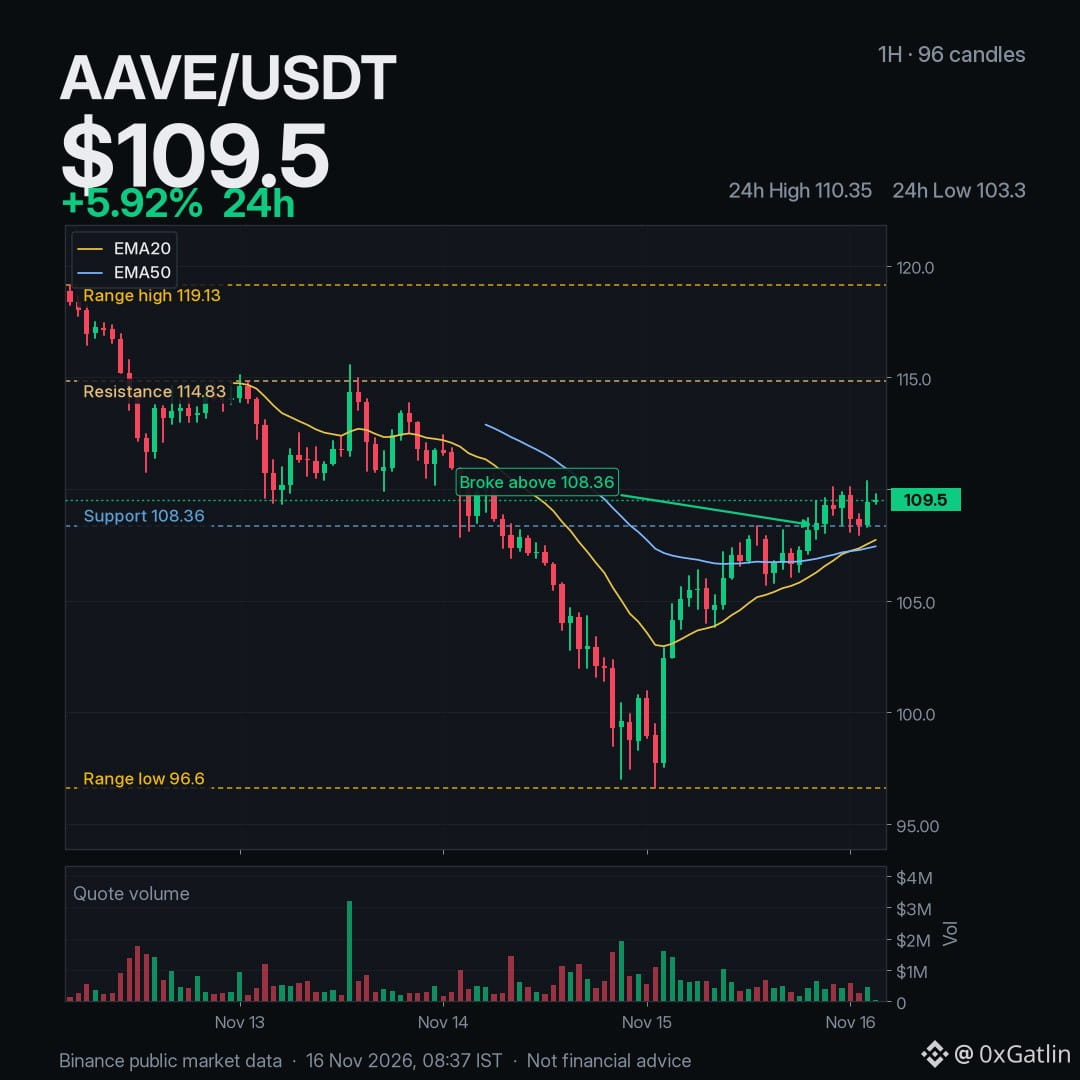
Is $AAVE quietly turning the corner? 👀
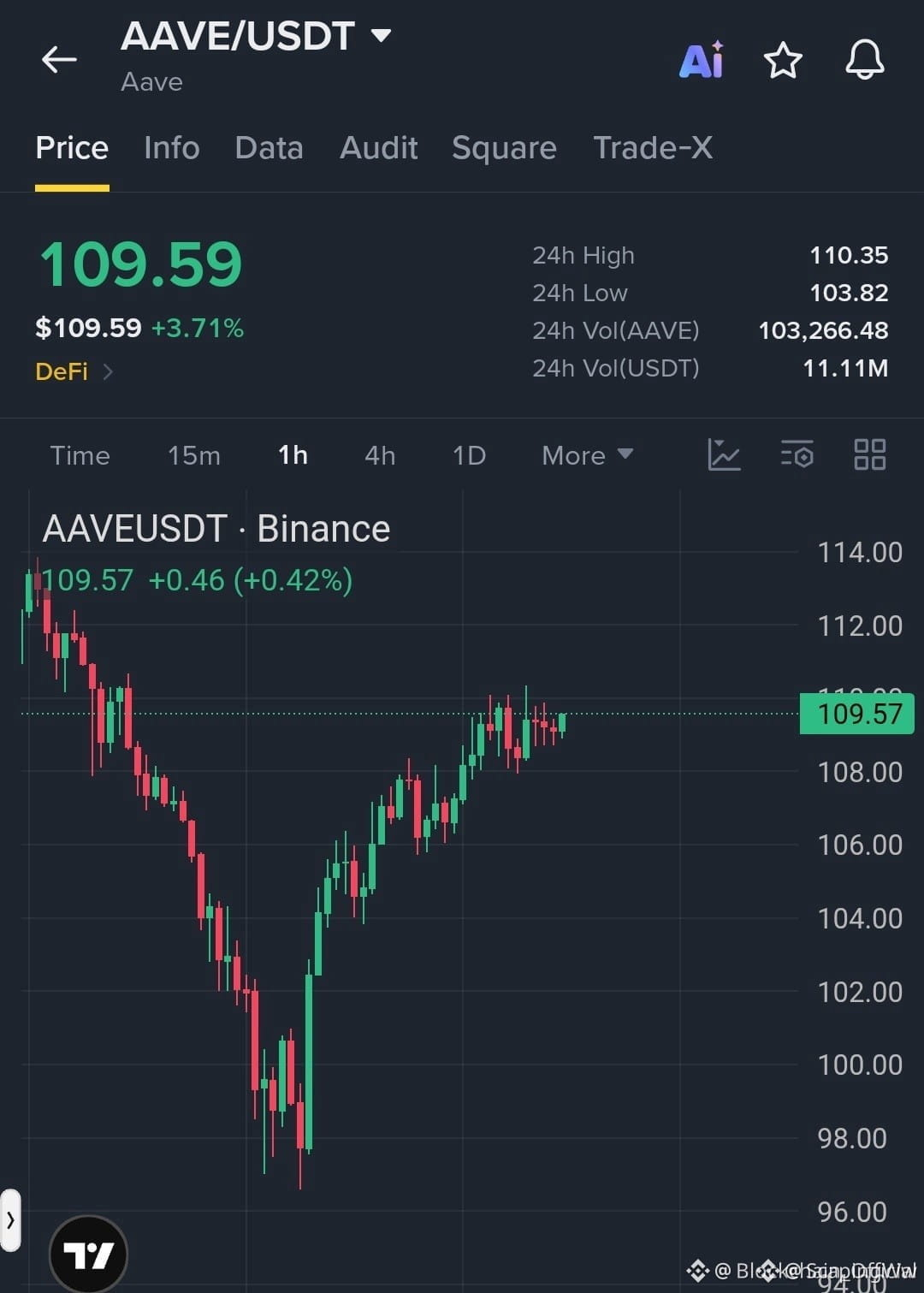
📈 ~13% off the 96.6 low, just broke above 108.36
✨ EMA20 crossing over EMA50 on the 1H for the first time this week
🗳️ DAO votes on raising reserve factors in 54 markets (~$3.5M/yr to the DAO)
💡 Funding stayed negative during the bounce, so it wasn't leveraged longs chasing
Next wall: 114.83. Hold 108 or slip back? 🤔
Tap $AAVE to see the live chart and drop your take 👇
#AAVE #DeFi
Not financial advice, DYOR.
34

·
--
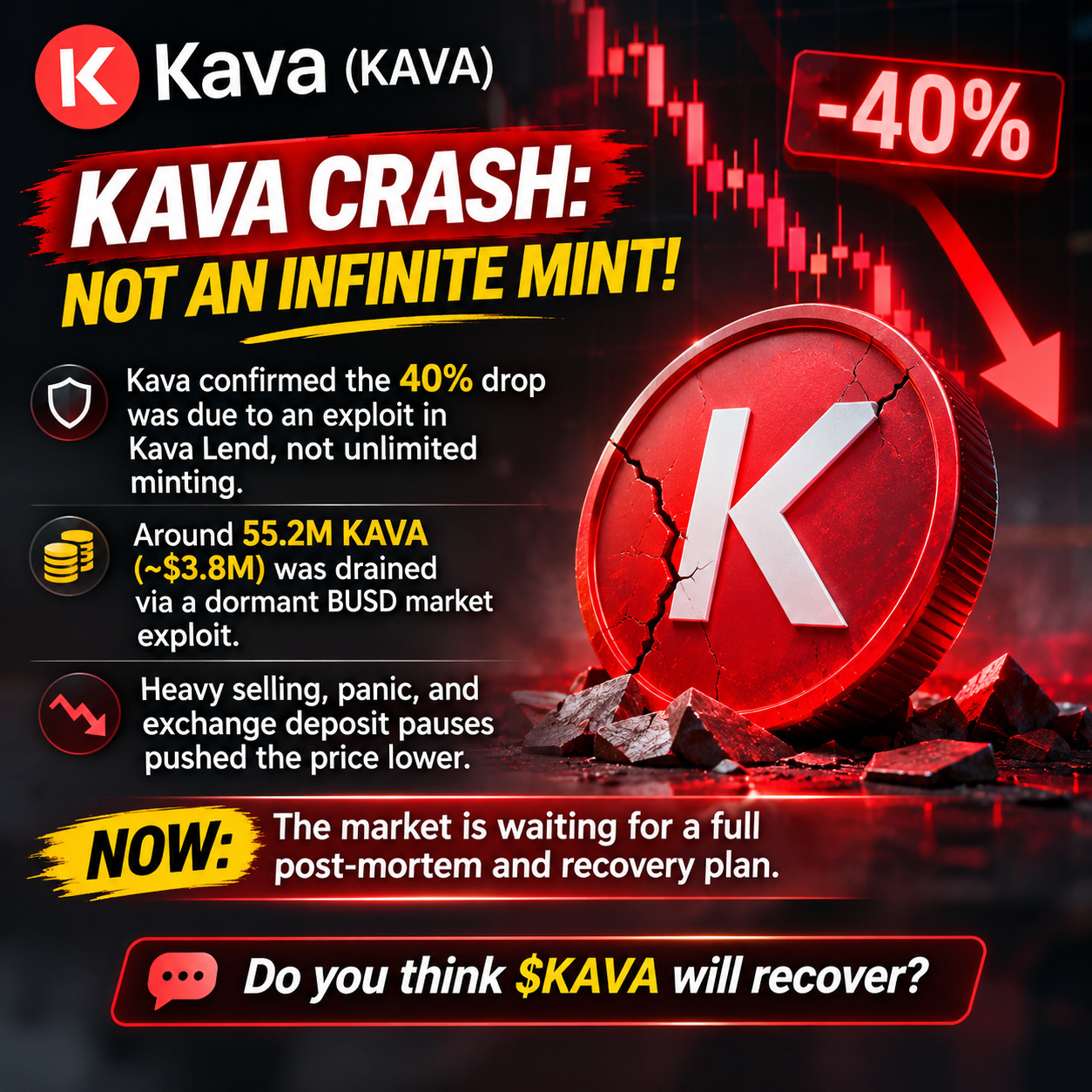
🚨 $KAVA LIQUIDATION CASCADE AFTER PROTOCOL EXPLOIT STUNS THE MARKET! 📉
Panic gripped order books when a protocol exploit drained millions in value, triggering a brutal forty percent cascade across the board. 📊 Heavy distribution followed immediately as reactionary selling tested vital historical demand zones.
Market participants are now holding their breath for a transparent post-mortem and recovery framework to restore shaken confidence. 💡 True market resilience is forged in these fires of extreme uncertainty. 💬 Can structural buyers rebuild the broken order books before fear fully takes over? 👇
⚠️ Not financial advice. Always manage your risk. 🛡️
🏷️ #KAVA #DeFi #CryptoNews #MarketUpdate
🔥 💎
7

·
--
🚀 ARBITRUM (ARB): Is It Becoming a Major Player in DeFi?
$ARB
{spot}(ARBUSDT)
Arbitrum is expanding beyond traditional DeFi with growing stablecoin and real-world asset activity.
📰 What's New?
- USDG stablecoin went live on Arbitrum One in October 2026.
- Arbitrum DAO approved a 100 million ARB incentive initiative to support USDG adoption.
- The network reported over $70 billion in average monthly stablecoin transfer volume during the first half of 2026.
Why It Matters:
- More stablecoin activity.
- Growing tokenized real-world assets.
- Stronger DeFi infrastructure.
- More opportunities for developers and users.
⚠️ Risk to Watch:
ARB token demand does not automatically increase with network activity. Token unlocks and market conditions also matter.
My Take:
Arbitrum has a growing ecosystem, but sustainable adoption will be the real test.
Do you think ARB can become one of the leading DeFi tokens?
#Arbitrum #ARB #DeFi #RWA #CryptoNews
Educational content only. Not financial advice. Always DYOR.
🚀 ARBITRUM (ARB): Is It Becoming a Major Player in DeFi?
$ARB
Arbitrum is expanding beyond traditional DeFi with growing stablecoin and real-world asset activity.
📰 What's New?
- USDG stablecoin went live on Arbitrum One in October 2026.
- Arbitrum DAO approved a 100 million ARB incentive initiative to support USDG adoption.
- The network reported over $70 billion in average monthly stablecoin transfer volume during the first half of 2026.
Why It Matters:
- More stablecoin activity.
- Growing tokenized real-world assets.
- Stronger DeFi infrastructure.
- More opportunities for developers and users.
⚠️ Risk to Watch:
ARB token demand does not automatically increase with network activity. Token unlocks and market conditions also matter.
My Take:
Arbitrum has a growing ecosystem, but sustainable adoption will be the real test.
Do you think ARB can become one of the leading DeFi tokens?
#Arbitrum #ARB #DeFi #RWA #CryptoNews
Educational content only. Not financial advice. Always DYOR.
48

·
--
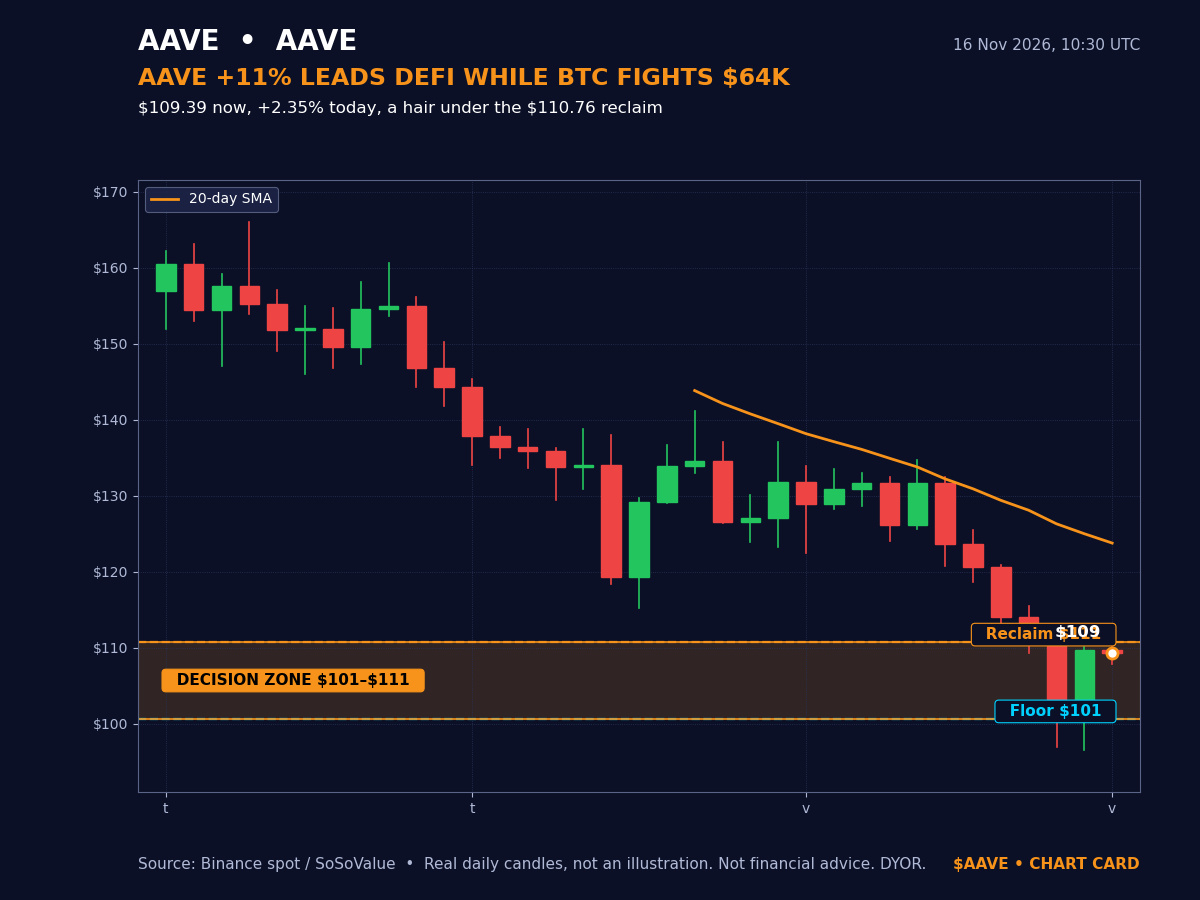
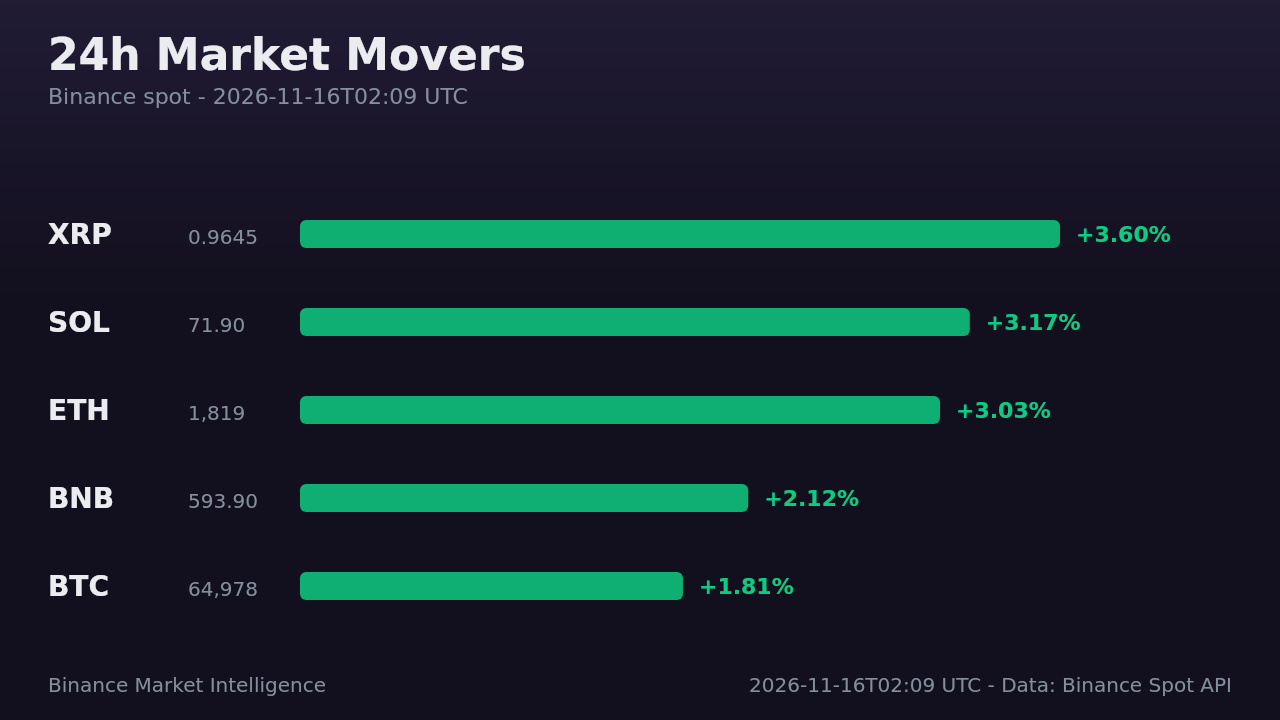
While BTC fights to hold $64K, $AAVE is up 11% and knocking on its reclaim line — DeFi's engine, not a passenger.
DeFi is the strongest sector at +5.48% in 24h, and Aave leads it: +11.29%, outrunning BTC's +3.98% and ETH's +4.65% (SoSoValue, 16 Nov).
Yesterday I watched it dip under $100 to $96.60 and run back to $108.36 — that bounce didn't die. It closed Sunday at $109.74 and it's $109.39 now, a hair under the $110.76 reclaim, the 12 Nov low that has capped every poke since.
I'm leaning cautious-bullish, not strong: the move is real, but $110.76 has rejected every try and fear is still extreme.
If $110.76 breaks on a daily close, the reclaim is confirmed and $115.55 is next. If it holds and $100.66 gives way, the bounce is dead and $96.60 retests.
$AAVE at $110.76 — reclaim or rejection, what's your call?
Not financial advice. DYOR.
#AAVE #DeFi #CryptoMarket

CoW Swap's official expansion onto Solana marks a fascinating step forward for intent-based architecture in high-speed ecosystems. By moving beyond simple cross-chain routing into native execution, it tackles MEV and slippage right at the user level. This shift highlights how intent-centric design is becoming a core standard for efficient order matching, giving traders better execution quality without altering the underlying network mechanics. A robust upgrade for DeFi infrastructure. $SOL #Solana #DeFi #Crypto
CoW Swap's official expansion onto Solana marks a fascinating step forward for intent-based architecture in high-speed ecosystems. By moving beyond simple cross-chain routing into native execution, it tackles MEV and slippage right at the user level. This shift highlights how intent-centric design is becoming a core standard for efficient order matching, giving traders better execution quality without altering the underlying network mechanics. A robust upgrade for DeFi infrastructure. $SOL #Solana #DeFi #Crypto
5

·
--
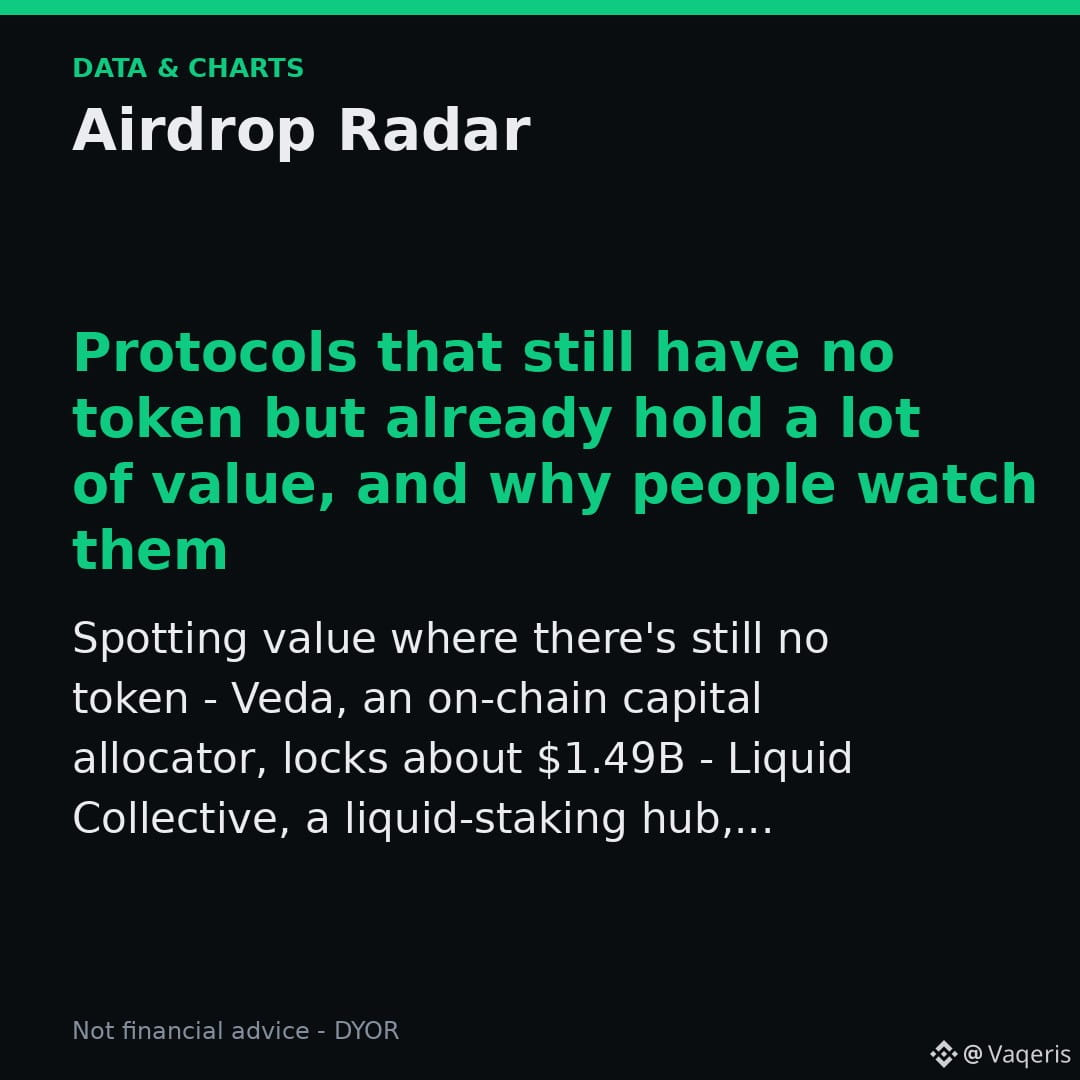
🔍 Spotting value where there's still no token
- Veda, an on-chain capital allocator, locks about $1.49B
- Liquid Collective, a liquid-staking hub, holds roughly $515.15M
- GTBTC, offering restaked BTC, secures about $224.96M
For context, $BTC $64,456 (-1.32%) and $ETH $1,806 (-0.87%) right now.
These figures show real usage, but no native token means no clear airdrop path. Always double-check the official site, never share a seed phrase, and never pay to "claim." What other token-less projects do you think deserve a closer look?
Charted out. 📊
#Airdrop #DeFi #Research
99

Verified
Article
Will $RIVER ever return to its ATH? An honest breakdown of fundamentals and bounce potential 🔍📊$RIVER
{alpha}(560xda7ad9dea9397cffddae2f8a052b82f1484252b3)
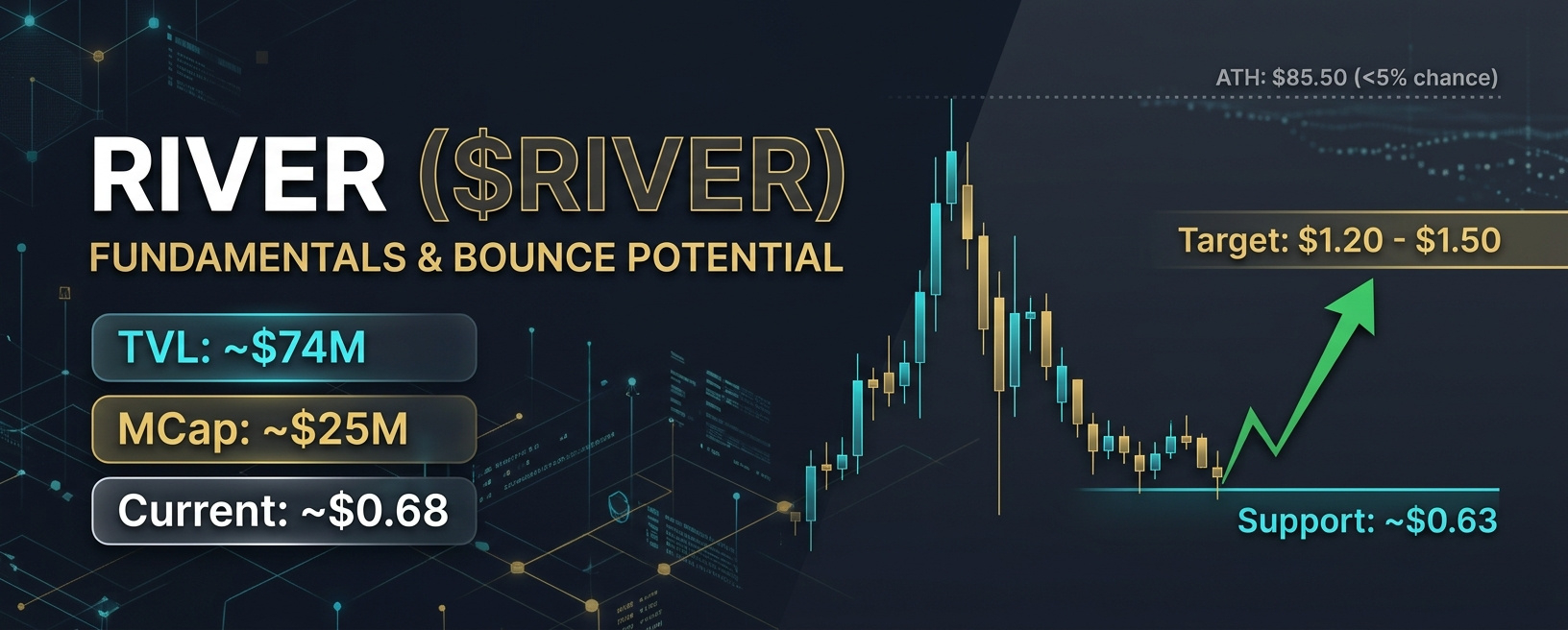
Back in January 2026, River became one of the market’s biggest sensations, surging over 1,600% to an all-time high near $85.50. Today, the token trades around $0.65 – $0.73, with its market cap compressed to $23M–$29M.
Let’s look past the hype: what is actually behind the project, and does it have the fuel for another rally?
1. Fundamentals: What is River’s real value?
River is building a chain-abstraction stablecoin system powered by LayerZero technology.
🔹 Core feature (Omni-CDP): Users can lock collateral on one blockchain and directly mint the omnichain stablecoin satUSD on another without relying on traditional bridges or wrapped tokens.
🔹 Real metrics: The protocol has a live product with roughly $74M in TVL and a yield-bearing version (satUSD+), while $RIVER’s total supply is hard-capped at 100M tokens.
2. Why did the price crash, and what is weighing on the chart?
January’s vertical rally was largely driven by low initial float, hype, and aggressive market-making. Right now, two major headwinds are holding the price down:
⚠️ Supply dilution: Only ~37–40% of the 100M max supply is currently in circulation. Linear vesting and River Points conversions continue to add steady sell pressure to the order book.
⚠️ Declining volume: Daily trading volume has cooled from tens of millions down to $2M–$6M, keeping the price pinned below key moving averages.
3. What is the probability of returning to its peak?
🔹 Back to $85+ (<5% probability): Reaching those levels again would require a multi-billion-dollar valuation against a much larger circulating supply — highly unrealistic in current market conditions.
🔹 Speculative bounce to $1.20 – $1.50 (high probability on a market reversal): A ~$25M market cap looks heavily oversold compared to $74M in TVL. Once $BTC stabilizes and liquidity flows back into DeFi, $RIVER’s low cap gives it room for a quick +80–120% relief rally from the bottom.
Bottom line: Treating $RIVER as a guaranteed ticket back to $85 is risky, but as an undervalued infrastructure play with a low cap for a technical bounce, it remains one to watch.
Are you holding $RIVER in your portfolio, or do you think its story is over? Share your thoughts in the comments! 👇
#RİVER #defi #altcoins #CryptoAnalysis
Will $RIVER ever return to its ATH? An honest breakdown of fundamentals and bounce potential 🔍📊
$RIVER
Back in January 2026, River became one of the market’s biggest sensations, surging over 1,600% to an all-time high near $85.50. Today, the token trades around $0.65 – $0.73, with its market cap compressed to $23M–$29M.
Let’s look past the hype: what is actually behind the project, and does it have the fuel for another rally?
1. Fundamentals: What is River’s real value?
River is building a chain-abstraction stablecoin system powered by LayerZero technology.
🔹 Core feature (Omni-CDP): Users can lock collateral on one blockchain and directly mint the omnichain stablecoin satUSD on another without relying on traditional bridges or wrapped tokens.
🔹 Real metrics: The protocol has a live product with roughly $74M in TVL and a yield-bearing version (satUSD+), while $RIVER ’s total supply is hard-capped at 100M tokens.
2. Why did the price crash, and what is weighing on the chart?
January’s vertical rally was largely driven by low initial float, hype, and aggressive market-making. Right now, two major headwinds are holding the price down:
⚠️ Supply dilution: Only ~37–40% of the 100M max supply is currently in circulation. Linear vesting and River Points conversions continue to add steady sell pressure to the order book.
⚠️ Declining volume: Daily trading volume has cooled from tens of millions down to $2M–$6M, keeping the price pinned below key moving averages.
3. What is the probability of returning to its peak?
🔹 Back to $85+ (<5% probability): Reaching those levels again would require a multi-billion-dollar valuation against a much larger circulating supply — highly unrealistic in current market conditions.
🔹 Speculative bounce to $1.20 – $1.50 (high probability on a market reversal): A ~$25M market cap looks heavily oversold compared to $74M in TVL. Once $BTC stabilizes and liquidity flows back into DeFi, $RIVER ’s low cap gives it room for a quick +80–120% relief rally from the bottom.
Bottom line: Treating $RIVER as a guaranteed ticket back to $85 is risky, but as an undervalued infrastructure play with a low cap for a technical bounce, it remains one to watch.
Are you holding $RIVER in your portfolio, or do you think its story is over? Share your thoughts in the comments! 👇
#RİVER #defi #altcoins #CryptoAnalysis
DopamineGLOBAL:
минус 99%, жесть. дно уже было?
3
569

·
--
🚨 $AAVE IS BATTERING THE 110 RESISTANCE AFTER A CLEAN RECOVERY OFF 97! 💥
Entry: 109 ⚡
Target: 112 🚀
Sellers tried to suffocate the bid down at the 97 demand zone, but bulls stepped in with aggressive volume to stage an impressive reclaim. Price is now pressing directly against the 110 structural ceiling, absorbing order flow like a sponge. 📊
Momentum is clearly shifting as buyers seize the steering wheel and line up the next leg toward higher liquidity pockets. ⚡
💬 Are you positioning for the breakout above resistance or waiting for a deeper retest? 👇
⚠️ Not financial advice. Always manage your risk. 🛡️
🏷️ #AAVE #DeFi #Breakout #Crypto
🔥 💎
5

·
--
#KavaSaysAbnormalActivityLimitedToKavaLend
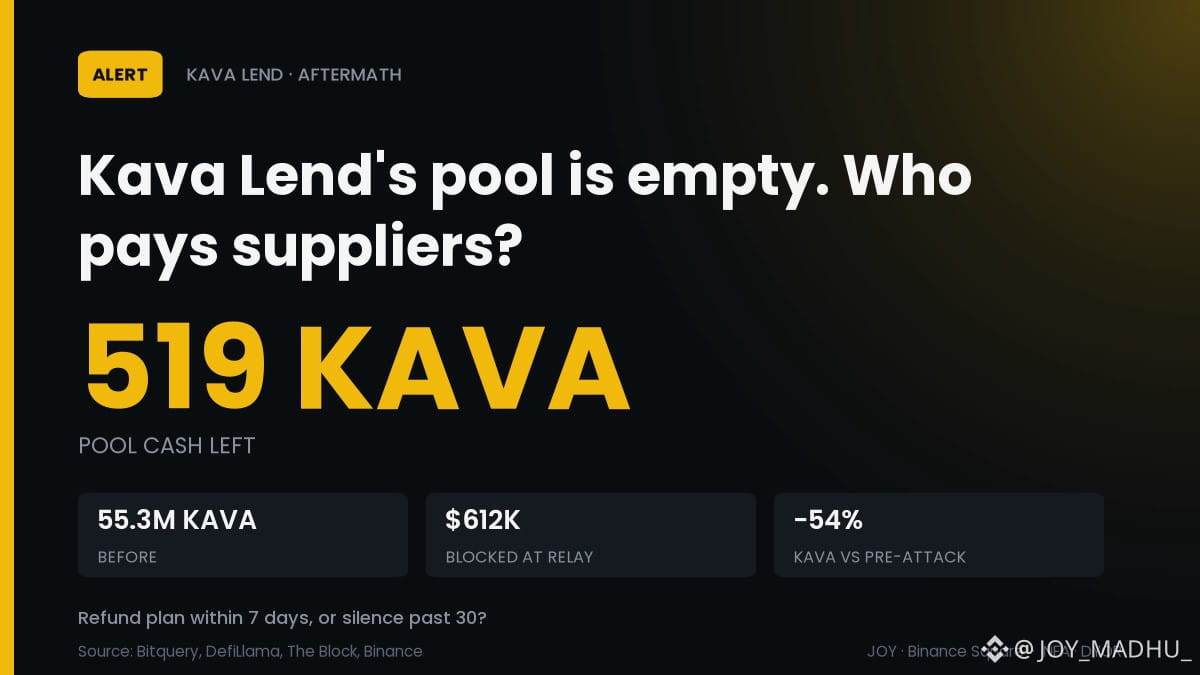
🕳️ 55.3M KAVA to 519: Who Pays Kava Lend's Suppliers?
Two days after the drain, Kava still has no post-mortem, loss figure or refund plan.
📊 Pool cash: ~55.3M KAVA down to 519 in 98 minutes (Bitquery)
🏦 ~$612K of proceeds blocked at the Relay bridge (DefiLlama)
⚠️ Bithumb and Coinone paused KAVA deposits and withdrawals
📉 KAVA ~$0.031 on Binance, ~54% below its ~$0.068 pre-attack price
Watch next: the incident report. Refund or write-off decides if lenders stay.
Refund plan within 7 days, or silence past 30? 👇
$KAVA $BNB
#KavaSaysAbnormalActivityLimitedToKavaLend #DeFi #Security
61

Article
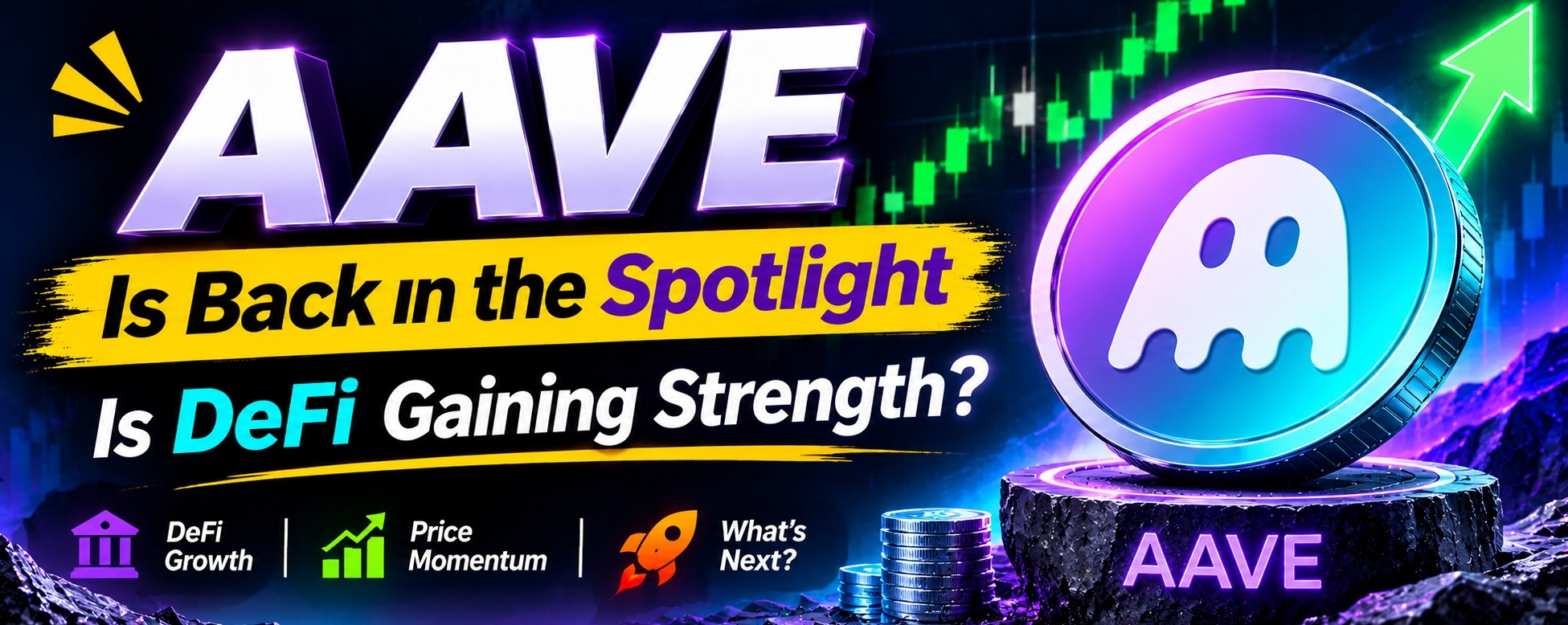
AAVE Is Back in the Spotlight — Is DeFi Gaining Strength?$AAVE is one of the coins catching my attention today.
While the crypto market is showing mixed signals, AAVE has made a noticeable move, gaining around 10.15% in the last 24 hours according to Binance's Spot market rankings.
But there's more to AAVE than just today's green candle.
Why AAVE Matters
Aave is a decentralized lending and borrowing protocol. Users can supply crypto assets to earn interest or borrow against their collateral.
Its ecosystem has continued developing. In its October 2026 update, Aave Labs reported that Aave V4 had crossed $1.5 billion in deposits, while the protocol's all-time borrowing volume reached $1.1 trillion.
These are important developments to watch as DeFi continues to evolve.
What I'm Watching Now
There are three things that matter to me:
- Price action: Can AAVE hold its recent gains?
- Trading activity: Will volume support the move?
- Ecosystem growth: Can Aave continue attracting users and liquidity?
My Honest Take
I like seeing established DeFi projects attract market attention again. But a strong daily move doesn't guarantee that the rally will continue.
For now, AAVE is worth keeping on the watchlist. I'd rather see confirmation than rush into a green candle.
What do you think — is AAVE preparing for a stronger DeFi comeback, or is this just a short-term market move?
#AAVE
{spot}(AAVEUSDT)
#defi #CryptoMarket #altcoins
AAVE Is Back in the Spotlight — Is DeFi Gaining Strength?
$AAVE is one of the coins catching my attention today.
While the crypto market is showing mixed signals, AAVE has made a noticeable move, gaining around 10.15% in the last 24 hours according to Binance's Spot market rankings.
But there's more to AAVE than just today's green candle.
Why AAVE Matters
Aave is a decentralized lending and borrowing protocol. Users can supply crypto assets to earn interest or borrow against their collateral.
Its ecosystem has continued developing. In its October 2026 update, Aave Labs reported that Aave V4 had crossed $1.5 billion in deposits, while the protocol's all-time borrowing volume reached $1.1 trillion.
These are important developments to watch as DeFi continues to evolve.
What I'm Watching Now
There are three things that matter to me:
- Price action: Can AAVE hold its recent gains?
- Trading activity: Will volume support the move?
- Ecosystem growth: Can Aave continue attracting users and liquidity?
My Honest Take
I like seeing established DeFi projects attract market attention again. But a strong daily move doesn't guarantee that the rally will continue.
For now, AAVE is worth keeping on the watchlist. I'd rather see confirmation than rush into a green candle.
What do you think — is AAVE preparing for a stronger DeFi comeback, or is this just a short-term market move?
#AAVE
#defi #CryptoMarket #altcoins
98

AAVE is the green coin in a flat market today 💚
$AAVE ~$109.30, up ~9% in 24h — the strongest mover in the top 30 — while $BTC sits flat near $64,900.
It bounced ~13% off its $96.60 weekend low, with 24h volume jumping to ~$230M. Resistance now at $110.35 (today's high), then $112.40. Support at $103.80, then $100.65.
Still down ~13% over the last 5 sessions, so this is a bounce, not a trend flip yet. A clean break above $110 could open the way to $115 — a rejection there keeps the chop going.
Spot buyers are picking up the DeFi leader while the rest of the market sleeps. Watching $110 closely.
Not financial advice. DYOR.
#AAVE #DeFi #Crypto
1

·
--
$AAVE — DOWNTREND (sharp relief bounce)
$AAVE is bouncing +9% to ~$109.50 off the $96.60 low, but the trend is still down: -15.7% over 7 days and -29.5% over 30 days. 4H and daily momentum remain bearish.
Resistance: $112.50, then $116.87. Support: $98.85, then $96.60.
A 4H close above $112.50 confirms the bounce can extend toward $117; losing $96.60 opens fresh lows.
Not financial advice.
#AAVE $AAVE #DeFi
2


·
--
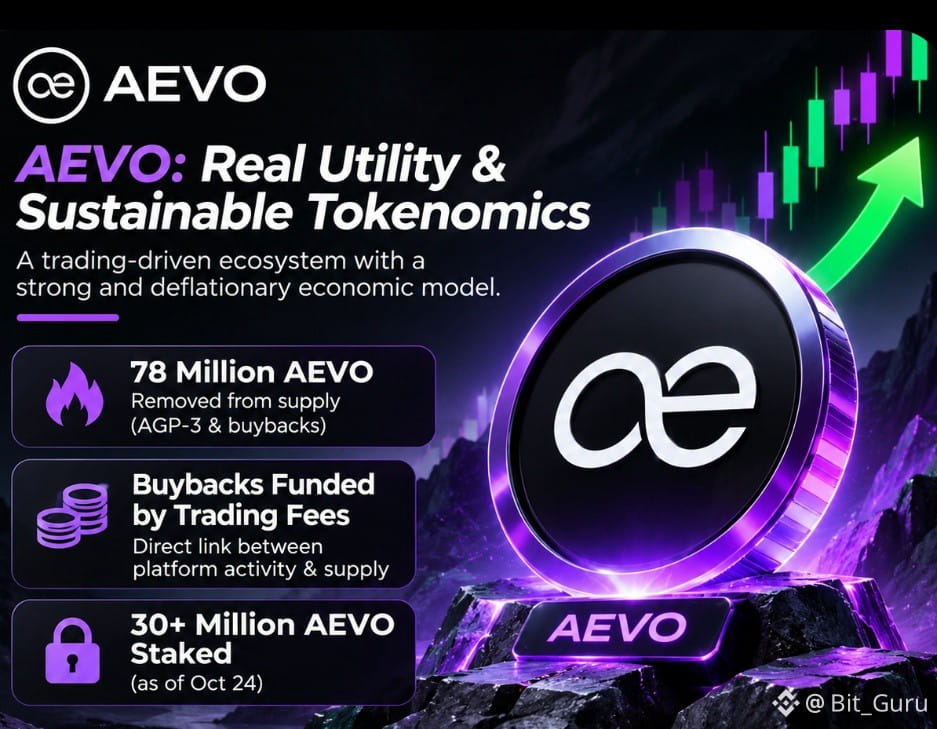
🚀 $AEVO IS FOCUSING ON REAL UTILITY AND SUSTAINABLE TOKENOMICS!
Aevo is taking a different approach by connecting token economics with actual trading activity. Through AGP-3 and ongoing buybacks, approximately 78 million AEVO tokens have been removed from supply. Monthly buybacks funded by trading fees create a direct link between platform revenue and token supply reduction.
Additionally, over 30 million AEVO were staked as of October 24, highlighting ecosystem participation.
While $HYPE, $ASTER, and $LIT have their own utility models, Aevo's supply reduction strategy makes it worth watching.
Real activity over hype. Sustainable growth over speculation.
Not financial advice. DYOR.
#AEVO #Crypto #DeFi #Tokenomics
{spot}(AEVOUSDT)
🚀 $AEVO IS FOCUSING ON REAL UTILITY AND SUSTAINABLE TOKENOMICS!
Aevo is taking a different approach by connecting token economics with actual trading activity. Through AGP-3 and ongoing buybacks, approximately 78 million AEVO tokens have been removed from supply. Monthly buybacks funded by trading fees create a direct link between platform revenue and token supply reduction.
Additionally, over 30 million AEVO were staked as of October 24, highlighting ecosystem participation.
While $HYPE, $ASTER, and $LIT have their own utility models, Aevo's supply reduction strategy makes it worth watching.
Real activity over hype. Sustainable growth over speculation.
Not financial advice. DYOR.
#AEVO #Crypto #DeFi #Tokenomics
1
329

·
--
$UNI or $AAVE for the next leg? Only one.
I’m taking $UNI in this matchup. It’s at $5.23, up 5.42% today with $35.57M traded, and the 4h move is already +3.7% 📈
But don’t get cute.
4h RSI is still 35, while volume is only 0.1x its 20d average. Price also sits below the 20d and 50d MAs, so this is a bounce attempt, not a confirmed trend flip. Even $BNB looks cleaner on structure right now.
At $5.50, I want real volume before calling $UNI stronger. Rejection there and I’m staying out ⚠️
$UNI or $AAVE? Which one wins the next leg? 👀
#Uniswap #DeFi #Crypto
$UNI or $AAVE for the next leg? Only one.
I’m taking $UNI in this matchup. It’s at $5.23, up 5.42% today with $35.57M traded, and the 4h move is already +3.7% 📈
But don’t get cute.
4h RSI is still 35, while volume is only 0.1x its 20d average. Price also sits below the 20d and 50d MAs, so this is a bounce attempt, not a confirmed trend flip. Even $BNB looks cleaner on structure right now.
At $5.50, I want real volume before calling $UNI stronger. Rejection there and I’m staying out ⚠️
$UNI or $AAVE ? Which one wins the next leg? 👀
#Uniswap #DeFi #Crypto
64

·
--
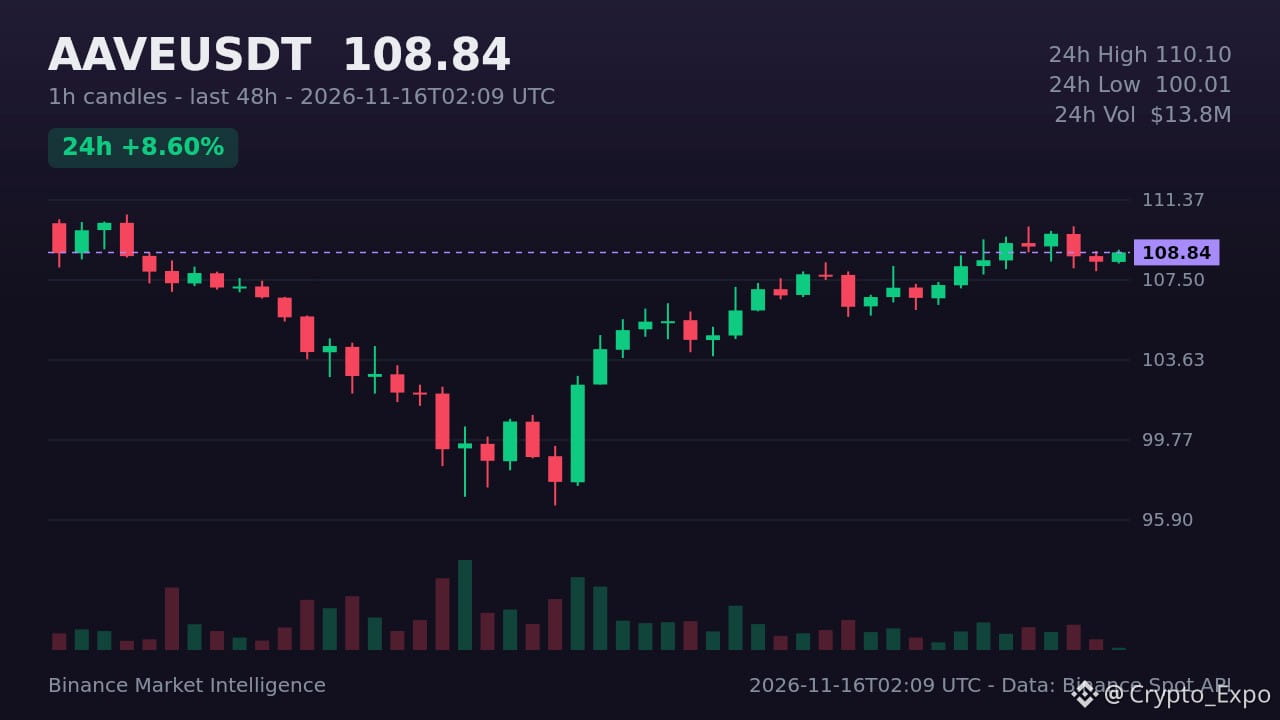
🚀 $AAVE spikes 8.6% – DeFi’s next big move?
🚀 $AAVE spikes 8.6% in 24h – is DeFi roaring back?
Aave just launched a liquidity‑mining boost on its V3 market, cutting borrowing fees for stable‑coin pools. The move aligns with the "Extreme Fear" sentiment index, nudging risk‑on traders toward high‑yield protocols.
📊 24h Key Levels:
• ⚡ Resistance: $110.10 (hourly high)
• 🛡️ Support: $100.01 (daily low)
• 📈 Current price: $108.86
Traders are debating: lock in gains now or ride the momentum?
💬 What’s your strategy – take profits today or hold for the next breakout?
$AAVE $BTC #Crypto #DeFi #AAVE
56

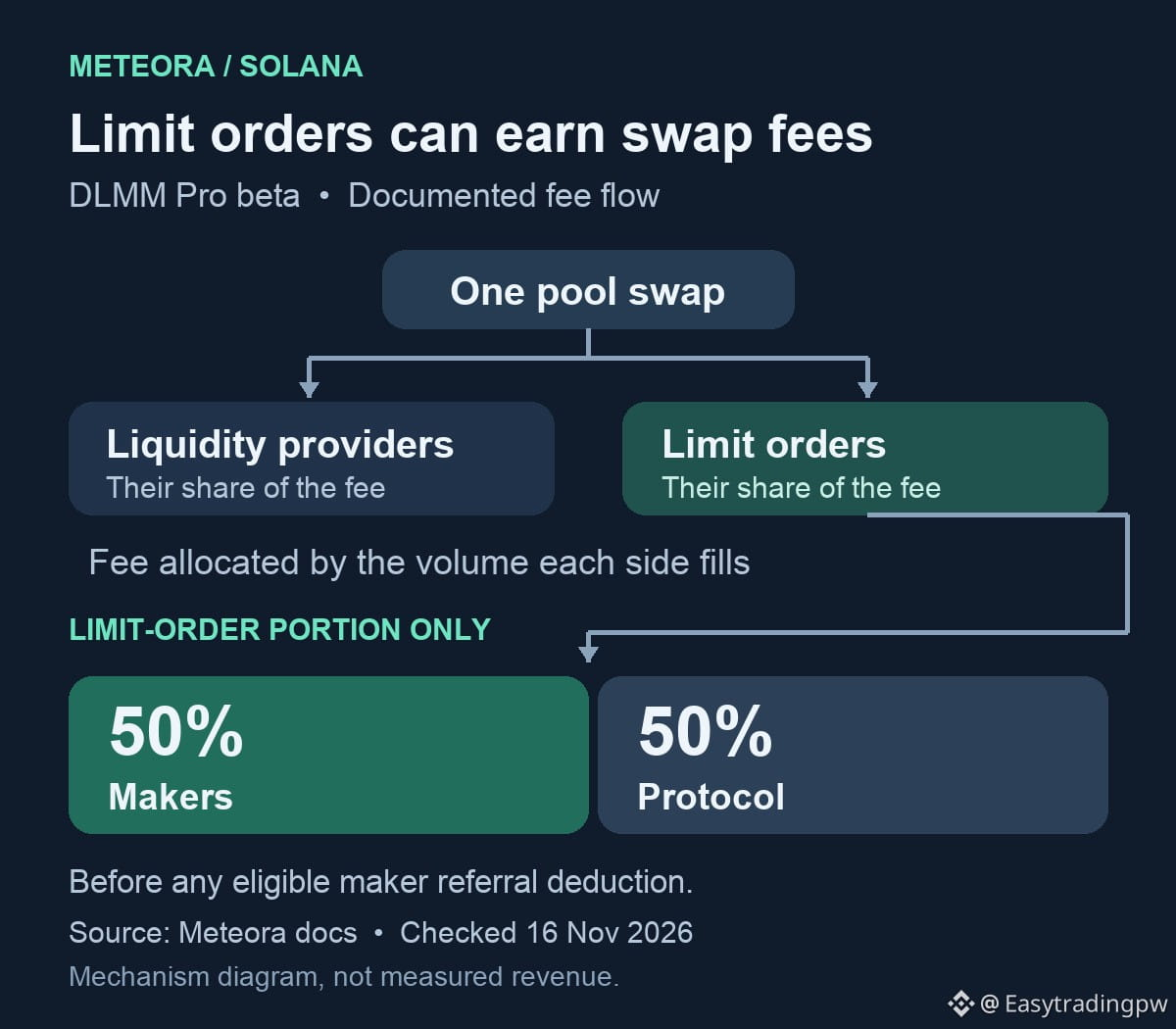
Solana traders can earn a share of swap fees from limit orders in Meteora’s DLMM Pro beta, rather than having to supply liquidity across a price range.
Meteora’s documentation lists DLMM Pro on mainnet and devnet. Buy and sell orders sit inside the same pool as liquidity-provider positions. A swap can trade against both, filling resting orders when it reaches their price.
The fee split follows the trading: fees are first divided between liquidity providers and limit orders according to the volume each fills. Half of the limit-order portion goes to makers and half to the protocol. That is not half of every fee earned by the pool. An eligible referral can also take 20% of an order’s maker-fee share.
For traders placing bids or offers, this adds fee income to the execution proceeds. Collection is a separate step: filled proceeds stay in the pool until the owner cancels the order at its price levels. This collects the proceeds without reversing completed trades. A pool’s launch rules can delay when withdrawals, including that collection, become available.
DLMM Pro is a separate program from the original DLMM, not an automatic upgrade of its pools. Meteora labels it beta and warns of breaking changes.
Sources: Meteora documentation, checked November 16, 2026.
https://docs.meteora.ag/core-products/dlmm-pro/what-is-dlmm-pro
https://docs.meteora.ag/core-products/dlmm-pro/limit-orders
#Solana #DeFi
155

·
--

Article
The Yield Equation: Every Return Has a PayerIf you are comparing yields onchain, this chapter gives you a tool for taking them apart: any return can be broken into six sources, and each has a specific payer. Find the payer and you know how long the return will last.
60% of the 6.56% Is a Gift
At the end of October 2026, DefiLlama was tracking 60 pools with positive yields on Robinhood Chain, holding about $970 million in total. Weighted by TVL, the average annual yield was 6.56%.
That is higher than U.S. Treasuries and higher than most bank savings accounts. But it comes with a catch: 60.1% of it is rewards, meaning subsidies paid on top by a project, a platform, or an issuer. In 35 of the 60 pools, more than half the yield came from rewards. Among the 52 small pools under $1 million, the median yield was 64%, almost all of it rewards.
Merkl is the main incentive-distribution platform on this chain. On November 2 it had 30 active campaigns on the chain, paying out about $100,000 in rewards a day.
Subsidies are not bad in themselves. A new chain needs them to bootstrap liquidity, just as a new shopping mall offers incentives to attract tenants. The problem is that investors often treat the subsidy as the return itself and forget to ask: who is paying for it, and until when?
The Yield Equation
Any onchain return can be broken into six parts:
Return = price exposure + trading fees + lending spread + basis and price gaps + subsidies + risk premium
Price exposure: Payer: Future buyers (and the asset's fundamentals); Durability: Depends on the asset; Example on this chain: Holding stock tokens or launchpad tokensTrading fees: Payer: Traders; Durability: Moves with volume; Example on this chain: Fee income for DEX LPsLending spread: Payer: Borrowers; Durability: Moves with borrowing demand; Example on this chain: Morpho deposit interest, Spark savingsBasis and price gaps: Payer: People willing to pay for leverage or time; Durability: Moves with market sentiment; Example on this chain: Perpetual funding, weekend premiumsSubsidies: Payer: Projects, platforms, issuers; Durability: Has an expiry date; Example on this chain: Merkl rewards, Robinhood Earn's extra 3%Risk premium: Payer: You (for carrying a risk others will not); Durability: Lasts until the risk materializes; Example on this chain: Credit spreads on yield-bearing dollars, high yields in small pools
The most important column is the third. The first four terms come from the market: as long as people trade, borrow, and lever up, someone pays. They fluctuate, but they do not stop on a schedule. The fifth term, subsidies, has an expiry date. The sixth, the risk premium, looks like a return, but it is really you being paid to bear a loss that has not happened yet.
Applying the Equation: Robinhood Earn's 7%
Robinhood Earn advertises a yield of about 7% to U.S. users. On November 2, DefiLlama read the Steakhouse USDG vault behind it at 7.17%: 4.06% base interest and 3.10% rewards.
The 3.10% reward is easy to classify. It comes from a "[Robinhood Users Only]" campaign on Merkl with a budget of $115 million, valid until July 1, 2027. The payer is Robinhood itself, distributing through Merkl. It is a subsidy.
The 4.06% base interest looks like a lending spread: the vault lends USDG to borrowers on Morpho, and the borrowers pay interest. But push one step further. Where does the borrowers' money come from?
The vault's funds sit in four markets, separated by collateral:
USDe (Ethena): Borrowed: ~$311 million; What borrowers do with the money: Buy more USDe and post it again (looping); Borrowers' source of income: The ~5% reward Ethena pays on collateral in this marketsyrupUSDG (Maple): Borrowed: ~$92 million; What borrowers do with the money: Looping; Borrowers' source of income: Interest from Maple's institutional lendingmGLO (Midas): Borrowed: ~$45 million; What borrowers do with the money: Looping; Borrowers' source of income: Fund returnsspUSDG (Spark): Borrowed: ~$10 million; What borrowers do with the money: Looping; Borrowers' source of income: Spark's savings rate
The USDe on this chain is not the yield-bearing version, so as collateral it earns nothing on its own. Borrowers in the USDe market are willing to pay about 4.4% to borrow USDG because Ethena pays an extra reward of about 5% on collateral in this market. (It is a Merkl campaign whose funding address renews it every week, without a break since July 2.) The borrowers pass most of that reward on to lenders in the form of interest.
In other words, about two-thirds of Earn's base interest is also a subsidy when traced to its source. The payer has simply changed from Robinhood to Ethena.
As a rough calculation weighted by amounts borrowed, the 7.17% breaks down into:
Robinhood's subsidy: 3.10%, or 43%;Ethena's subsidy (passed through by borrowers): about 2.7%, or about 37%;Genuine borrowing demand (credit and fund returns behind the Maple, Midas, and Spark collateral): about 1.4%, or about 19%.
Chapter 5 draws this whole chain out in full. For now, remember the equation's conclusion: a number that looks like lending interest may be two layers of subsidy stacked on top of each other.
Applying It to Other Products
The same method applied to the main yield products on the chain (readings from early November):
Spark Savings USDG: 3.8%. The yield comes from Spark's savings rate, backed by asset returns in the Sky ecosystem. There are no Merkl rewards. It is a lending spread, and one of the few numbers on this chain you can use directly as an "unsubsidized benchmark."
Midas's USDC yield product: 7.48% (6.46% 30-day average). The yield comes from the fund's portfolio. There is no subsidy, but there is a risk premium: you carry the fund's investment risk and redemption terms, not the risk of a lending protocol.
Mellow rUSDG: about 9.65%. About $1 million in size. Its yield is more than 5 percentage points above the benchmark. Read the strategy carefully before judging it; under the equation, it belongs in the "risk premium, to be confirmed" category.
Morpho markets with stock tokens as collateral: deposit rates of 18–26%. Markets that lend USDG against NVDA, GOOGL, AAPL, and SPCX are each between $200,000 and $700,000 in size, with utilization of 85–91%. The high rates come from real borrowing demand (people willing to pay 21–29% to borrow dollars and hold stock tokens on leverage), but the markets are tiny, and a single deposit of yours is enough to push the rate down. These are lending spread + risk premium.
Uniswap V4 stock-pair pools (SPY/NVDA, SPY/TSLA, and others): 6–76% headline. Rewards are paid in UNI through Merkl, a few hundred dollars per pool per day. These are trading fees + subsidies, and the fee part can only be worked out by replaying volume (Chapter 7).
Triple-digit yields in small pools: about 404% on Ekubo ETH/USDG, about 173% on Alandale's TSLA/USDG. They hold only tens of thousands of dollars, and 100% of the yield is rewards. These are subsidies, and the smallest kind, the easiest for a single person to dilute.
Lighter perpetual funding: longs pay 3.4–7.6% annualized. Shorts collect it. This is basis, and the payers are traders willing to pay for leveraged long exposure to stocks (Chapter 8).
Three Corollaries
Corollary 1: the subsidy rate is inversely proportional to size. The higher a pool's headline yield, the smaller it is and the larger the share of subsidy. This is no coincidence. The total subsidy is fixed (a few hundred dollars a day), so the smaller the pool, the more subsidy each dollar receives. The moment you enter, you are diluting it yourself.
Corollary 2: the true unsubsidized benchmark on this chain is 3.5–4%. Spark's 3.8%, the Steakhouse vault's roughly 4% after stripping out Robinhood's reward (part of which is still Ethena's indirect subsidy), and the lower bound of Lighter funding at about 3.5% (see Chapter 8): these independent numbers all fall in the same range. Anything above it is either subsidy or risk premium.
Corollary 3: every subsidy eventually tapers; the only question is how fast. Chapter 10 measures the "subsidy half-life": how quickly money and yields fall back once rewards are cut.
If You Are Comparing Yields
Break every yield into the six terms of the equation. Anything you cannot break down, treat as subsidy or risk premium for now.Use 3.5–4% as the baseline. For every percentage point above the baseline, you should be able to say who is paying for it.Put subsidy end dates on your calendar. The start and end dates of every Merkl campaign are public; the budget behind Robinhood Earn is valid until July 1, 2027.Treat high yields in small pools as a one-off bonus. They do not scale up with your money; your money dilutes them.
There is no free yield onchain, only payers you have not found yet. Find them and you will know when the yield ends.
Sources for This Chapter
DefiLlama yields API (apy, apyBase, apyReward, and tvlUsd for every yield pool on Robinhood Chain, October 29, 2026; daily history for the Steakhouse vault, Spark, and Midas through November 2, 2026)Merkl v4 API (opportunities and campaigns: campaign names, funding addresses, budgets, start and end dates; total rewards for the day, November 2, 2026)Morpho GraphQL API (amounts borrowed and rates in the four stablecoin looping markets, November 2, 2026)Lighter Robinhood instance fundings (hourly funding, June 30 to November 2, 2026)
—
This is Chapter 4 of 14 from my new book Where the Yield Comes From, serialized one chapter a day. For research only; not investment advice.
Author: Blue Lotus
#DeFi #RobinhoodChain #Stablecoins #RWA
The Yield Equation: Every Return Has a Payer
If you are comparing yields onchain, this chapter gives you a tool for taking them apart: any return can be broken into six sources, and each has a specific payer. Find the payer and you know how long the return will last.
60% of the 6.56% Is a Gift
At the end of October 2026, DefiLlama was tracking 60 pools with positive yields on Robinhood Chain, holding about $970 million in total. Weighted by TVL, the average annual yield was 6.56%.
That is higher than U.S. Treasuries and higher than most bank savings accounts. But it comes with a catch: 60.1% of it is rewards, meaning subsidies paid on top by a project, a platform, or an issuer. In 35 of the 60 pools, more than half the yield came from rewards. Among the 52 small pools under $1 million, the median yield was 64%, almost all of it rewards.
Merkl is the main incentive-distribution platform on this chain. On November 2 it had 30 active campaigns on the chain, paying out about $100,000 in rewards a day.
Subsidies are not bad in themselves. A new chain needs them to bootstrap liquidity, just as a new shopping mall offers incentives to attract tenants. The problem is that investors often treat the subsidy as the return itself and forget to ask: who is paying for it, and until when?
The Yield Equation
Any onchain return can be broken into six parts:
Return = price exposure + trading fees + lending spread + basis and price gaps + subsidies + risk premium
Price exposure: Payer: Future buyers (and the asset's fundamentals); Durability: Depends on the asset; Example on this chain: Holding stock tokens or launchpad tokensTrading fees: Payer: Traders; Durability: Moves with volume; Example on this chain: Fee income for DEX LPsLending spread: Payer: Borrowers; Durability: Moves with borrowing demand; Example on this chain: Morpho deposit interest, Spark savingsBasis and price gaps: Payer: People willing to pay for leverage or time; Durability: Moves with market sentiment; Example on this chain: Perpetual funding, weekend premiumsSubsidies: Payer: Projects, platforms, issuers; Durability: Has an expiry date; Example on this chain: Merkl rewards, Robinhood Earn's extra 3%Risk premium: Payer: You (for carrying a risk others will not); Durability: Lasts until the risk materializes; Example on this chain: Credit spreads on yield-bearing dollars, high yields in small pools
The most important column is the third. The first four terms come from the market: as long as people trade, borrow, and lever up, someone pays. They fluctuate, but they do not stop on a schedule. The fifth term, subsidies, has an expiry date. The sixth, the risk premium, looks like a return, but it is really you being paid to bear a loss that has not happened yet.
Applying the Equation: Robinhood Earn's 7%
Robinhood Earn advertises a yield of about 7% to U.S. users. On November 2, DefiLlama read the Steakhouse USDG vault behind it at 7.17%: 4.06% base interest and 3.10% rewards.
The 3.10% reward is easy to classify. It comes from a "[Robinhood Users Only]" campaign on Merkl with a budget of $115 million, valid until July 1, 2027. The payer is Robinhood itself, distributing through Merkl. It is a subsidy.
The 4.06% base interest looks like a lending spread: the vault lends USDG to borrowers on Morpho, and the borrowers pay interest. But push one step further. Where does the borrowers' money come from?
The vault's funds sit in four markets, separated by collateral:
USDe (Ethena): Borrowed: ~$311 million; What borrowers do with the money: Buy more USDe and post it again (looping); Borrowers' source of income: The ~5% reward Ethena pays on collateral in this marketsyrupUSDG (Maple): Borrowed: ~$92 million; What borrowers do with the money: Looping; Borrowers' source of income: Interest from Maple's institutional lendingmGLO (Midas): Borrowed: ~$45 million; What borrowers do with the money: Looping; Borrowers' source of income: Fund returnsspUSDG (Spark): Borrowed: ~$10 million; What borrowers do with the money: Looping; Borrowers' source of income: Spark's savings rate
The USDe on this chain is not the yield-bearing version, so as collateral it earns nothing on its own. Borrowers in the USDe market are willing to pay about 4.4% to borrow USDG because Ethena pays an extra reward of about 5% on collateral in this market. (It is a Merkl campaign whose funding address renews it every week, without a break since July 2.) The borrowers pass most of that reward on to lenders in the form of interest.
In other words, about two-thirds of Earn's base interest is also a subsidy when traced to its source. The payer has simply changed from Robinhood to Ethena.
As a rough calculation weighted by amounts borrowed, the 7.17% breaks down into:
Robinhood's subsidy: 3.10%, or 43%;Ethena's subsidy (passed through by borrowers): about 2.7%, or about 37%;Genuine borrowing demand (credit and fund returns behind the Maple, Midas, and Spark collateral): about 1.4%, or about 19%.
Chapter 5 draws this whole chain out in full. For now, remember the equation's conclusion: a number that looks like lending interest may be two layers of subsidy stacked on top of each other.
Applying It to Other Products
The same method applied to the main yield products on the chain (readings from early November):
Spark Savings USDG: 3.8%. The yield comes from Spark's savings rate, backed by asset returns in the Sky ecosystem. There are no Merkl rewards. It is a lending spread, and one of the few numbers on this chain you can use directly as an "unsubsidized benchmark."
Midas's USDC yield product: 7.48% (6.46% 30-day average). The yield comes from the fund's portfolio. There is no subsidy, but there is a risk premium: you carry the fund's investment risk and redemption terms, not the risk of a lending protocol.
Mellow rUSDG: about 9.65%. About $1 million in size. Its yield is more than 5 percentage points above the benchmark. Read the strategy carefully before judging it; under the equation, it belongs in the "risk premium, to be confirmed" category.
Morpho markets with stock tokens as collateral: deposit rates of 18–26%. Markets that lend USDG against NVDA, GOOGL, AAPL, and SPCX are each between $200,000 and $700,000 in size, with utilization of 85–91%. The high rates come from real borrowing demand (people willing to pay 21–29% to borrow dollars and hold stock tokens on leverage), but the markets are tiny, and a single deposit of yours is enough to push the rate down. These are lending spread + risk premium.
Uniswap V4 stock-pair pools (SPY/NVDA, SPY/TSLA, and others): 6–76% headline. Rewards are paid in UNI through Merkl, a few hundred dollars per pool per day. These are trading fees + subsidies, and the fee part can only be worked out by replaying volume (Chapter 7).
Triple-digit yields in small pools: about 404% on Ekubo ETH/USDG, about 173% on Alandale's TSLA/USDG. They hold only tens of thousands of dollars, and 100% of the yield is rewards. These are subsidies, and the smallest kind, the easiest for a single person to dilute.
Lighter perpetual funding: longs pay 3.4–7.6% annualized. Shorts collect it. This is basis, and the payers are traders willing to pay for leveraged long exposure to stocks (Chapter 8).
Three Corollaries
Corollary 1: the subsidy rate is inversely proportional to size. The higher a pool's headline yield, the smaller it is and the larger the share of subsidy. This is no coincidence. The total subsidy is fixed (a few hundred dollars a day), so the smaller the pool, the more subsidy each dollar receives. The moment you enter, you are diluting it yourself.
Corollary 2: the true unsubsidized benchmark on this chain is 3.5–4%. Spark's 3.8%, the Steakhouse vault's roughly 4% after stripping out Robinhood's reward (part of which is still Ethena's indirect subsidy), and the lower bound of Lighter funding at about 3.5% (see Chapter 8): these independent numbers all fall in the same range. Anything above it is either subsidy or risk premium.
Corollary 3: every subsidy eventually tapers; the only question is how fast. Chapter 10 measures the "subsidy half-life": how quickly money and yields fall back once rewards are cut.
If You Are Comparing Yields
Break every yield into the six terms of the equation. Anything you cannot break down, treat as subsidy or risk premium for now.Use 3.5–4% as the baseline. For every percentage point above the baseline, you should be able to say who is paying for it.Put subsidy end dates on your calendar. The start and end dates of every Merkl campaign are public; the budget behind Robinhood Earn is valid until July 1, 2027.Treat high yields in small pools as a one-off bonus. They do not scale up with your money; your money dilutes them.
There is no free yield onchain, only payers you have not found yet. Find them and you will know when the yield ends.
Sources for This Chapter
DefiLlama yields API (apy, apyBase, apyReward, and tvlUsd for every yield pool on Robinhood Chain, October 29, 2026; daily history for the Steakhouse vault, Spark, and Midas through November 2, 2026)Merkl v4 API (opportunities and campaigns: campaign names, funding addresses, budgets, start and end dates; total rewards for the day, November 2, 2026)Morpho GraphQL API (amounts borrowed and rates in the four stablecoin looping markets, November 2, 2026)Lighter Robinhood instance fundings (hourly funding, June 30 to November 2, 2026)
—
This is Chapter 4 of 14 from my new book Where the Yield Comes From, serialized one chapter a day. For research only; not investment advice.
Author: Blue Lotus
#DeFi #RobinhoodChain #Stablecoins #RWA
197

·
--
stUSDT is winding down after TVL fell 99%, from a 2.3 billion dollar peak to about 8.6 million. Self-service redemptions stay open until May 14, 2027. #RWA #DeFi
stUSDT is winding down after TVL fell 99%, from a 2.3 billion dollar peak to about 8.6 million. Self-service redemptions stay open until May 14, 2027. #RWA #DeFi
50
Log in to explore more content
Join global crypto users on Binance Square
⚡️ Get latest and useful information about crypto.
💬 Trusted by the world’s largest crypto exchange.
👍 Discover real insights from verified creators.
Email / Phone number
Trending Topics
1
#A Packed Week of Earnings and Data Tests Markets
32,390 views
233 Discussing
2
#AnthropicIPOTestsInvestorAppetiteForAI
36,449 views
663 Discussing
3
#BitcoinExtendsLosingStreakToSixWeeks
1,545 views
66 Discussing
4
#XRPFallsTo$0.89LowestSinceNovember2024
679 views
7 Discussing
5
#HuangReportedlyConsidersReturnToNvidia
62,843 views
772 Discussing
6
#SP500AndNasdaqFuturesHitQuarterlyLows
0 views
0 Discussing
7
#CaliforniaVotersBackProp42BarringNewCryptoTaxes
187 views
30 Discussing
8
#HKPlansDigitalAssetRegulatoryBillByYearEnd
269 views
29 Discussing
9
#MUFGSMFGMizuhoPlanYenBackedStablecoin
8,432 views
132 Discussing
10
#HKMAAndSwiftExploreTokenizedDepositInteroperability
452 views
11 Discussing