

#cryptonews
cryptonews
112M views
290,062 Discussing
Hot
Latest

·
--
🚨 SEC Approves 3x Leveraged Bitcoin & Ether ETPs!
U.S. SEC just cleared the path for 3x BTC and 3x ETH products (plus gold, silver, oil).
These track 3x the daily move of futures benchmarks.
Trading still needs final registration, but this is a major step for leveraged products in the U.S.
More tools coming for traders 👀
#Bitcoin #Ethereum m #SEC #Leverage #CryptoNews $NVDA.US
🚨 SEC Approves 3x Leveraged Bitcoin & Ether ETPs!
U.S. SEC just cleared the path for 3x BTC and 3x ETH products (plus gold, silver, oil).
These track 3x the daily move of futures benchmarks.
Trading still needs final registration, but this is a major step for leveraged products in the U.S.
More tools coming for traders 👀
#Bitcoin #Ethereum m #SEC #Leverage #CryptoNews $NVDA.US
U.S. SEC just cleared the path for 3x BTC and 3x ETH products (plus gold, silver, oil).
These track 3x the daily move of futures benchmarks.
Trading still needs final registration, but this is a major step for leveraged products in the U.S.
More tools coming for traders 👀
#Bitcoin #Ethereum m #SEC #Leverage #CryptoNews $NVDA.US
247

🚨 Chainlink ETFs Grab 2.2% of Supply in Four Days
📊 Alpha Breakdown:
The five spot Chainlink ETFs now hold 2.2% of the total LINK supply. Net inflows have continued for four consecutive days. These products generated $13.02M in gains during September. This accumulation reflects strong institutional confidence in the oracle protocol. The market cap expansion is significant for cryptocurrency holders....
🔗 Full Breakdown on YourWeb3Guy:
https://www.yourweb3guy.com/news/chainlink-etfs-grab-2-2-of-supply-in-four-days
#cryptonews #cryptocurrency #cryptoprices
🚨 Chainlink ETFs Grab 2.2% of Supply in Four Days
📊 Alpha Breakdown:
The five spot Chainlink ETFs now hold 2.2% of the total LINK supply. Net inflows have continued for four consecutive days. These products generated $13.02M in gains during September. This accumulation reflects strong institutional confidence in the oracle protocol. The market cap expansion is significant for cryptocurrency holders....
🔗 Full Breakdown on YourWeb3Guy:
https://www.yourweb3guy.com/news/chainlink-etfs-grab-2-2-of-supply-in-four-days
#cryptonews #cryptocurrency #cryptoprices
📊 Alpha Breakdown:
The five spot Chainlink ETFs now hold 2.2% of the total LINK supply. Net inflows have continued for four consecutive days. These products generated $13.02M in gains during September. This accumulation reflects strong institutional confidence in the oracle protocol. The market cap expansion is significant for cryptocurrency holders....
🔗 Full Breakdown on YourWeb3Guy:
https://www.yourweb3guy.com/news/chainlink-etfs-grab-2-2-of-supply-in-four-days
#cryptonews #cryptocurrency #cryptoprices
32

·
--
🚨 $ONDO JUST DROPPED 3 NEW SINGLE-TOKEN PORTFOLIOS
Built around strategies designed by BlackRock, while ONDO issues and manages the tokens.
🌍 Available to non-U.S. investors only.
#BlackRock #CryptoNews #ONDO $GLMR $AIN
🚨 $ONDO JUST DROPPED 3 NEW SINGLE-TOKEN PORTFOLIOS
Built around strategies designed by BlackRock, while ONDO issues and manages the tokens.
🌍 Available to non-U.S. investors only.
#BlackRock #CryptoNews #ONDO $GLMR $AIN
Built around strategies designed by BlackRock, while ONDO issues and manages the tokens.
🌍 Available to non-U.S. investors only.
#BlackRock #CryptoNews #ONDO $GLMR $AIN


Mafia Alpha:
I buy ondo
3
2
380

🚨 BREAKING NEWS: Crypto's Sisyphean struggle
Sisyphus was condemned by the gods to push a boulder uphill, only to watch it roll back down again and again. After years of pushing for regulatory clarity, crypto appears doomed to a similar fate. The latest attempt—all635 pagesof it—has rolled down the hill once more.
The Senate recentlyfailed to advancethe Digital Asset Market Clarity Act, also known as the Clarity Act, and with the midterms around the corner, there is no realistic path to reviving it before the end of the year.
The Clarity Act, as its name suggests, sought to establish a framework for market structure: the rulebook that sorts crypto tokens into legal categories, licenses the firms trading them, and determines how supervisory authority should be divided between the Securities and Exchange Commission and the Commodity Futures Trading Commission.
Ryan Chan-Wei is a research fellow at the Cato Institute's Center for Monetary and Financial Alternatives.
🔗 [Đọc toàn bộ bài viết tại bản gốc](https://www.coindesk.com/opinion/2026/10/03/crypto-s-sisyphean-struggle)
📰 Nguồn: 🪙 CoinDesk
$BTC $ETH #BinanceSquare #CryptoNews
🚨 BREAKING NEWS: Crypto's Sisyphean struggle
Sisyphus was condemned by the gods to push a boulder uphill, only to watch it roll back down again and again. After years of pushing for regulatory clarity, crypto appears doomed to a similar fate. The latest attempt—all635 pagesof it—has rolled down the hill once more.
The Senate recentlyfailed to advancethe Digital Asset Market Clarity Act, also known as the Clarity Act, and with the midterms around the corner, there is no realistic path to reviving it before the end of the year.
The Clarity Act, as its name suggests, sought to establish a framework for market structure: the rulebook that sorts crypto tokens into legal categories, licenses the firms trading them, and determines how supervisory authority should be divided between the Securities and Exchange Commission and the Commodity Futures Trading Commission.
Ryan Chan-Wei is a research fellow at the Cato Institute's Center for Monetary and Financial Alternatives.
🔗 [Đọc toàn bộ bài viết tại bản gốc](https://www.coindesk.com/opinion/2026/10/03/crypto-s-sisyphean-struggle)
📰 Nguồn: 🪙 CoinDesk
$BTC $ETH #BinanceSquare #CryptoNews
Sisyphus was condemned by the gods to push a boulder uphill, only to watch it roll back down again and again. After years of pushing for regulatory clarity, crypto appears doomed to a similar fate. The latest attempt—all635 pagesof it—has rolled down the hill once more.
The Senate recentlyfailed to advancethe Digital Asset Market Clarity Act, also known as the Clarity Act, and with the midterms around the corner, there is no realistic path to reviving it before the end of the year.
The Clarity Act, as its name suggests, sought to establish a framework for market structure: the rulebook that sorts crypto tokens into legal categories, licenses the firms trading them, and determines how supervisory authority should be divided between the Securities and Exchange Commission and the Commodity Futures Trading Commission.
Ryan Chan-Wei is a research fellow at the Cato Institute's Center for Monetary and Financial Alternatives.
🔗 [Đọc toàn bộ bài viết tại bản gốc](https://www.coindesk.com/opinion/2026/10/03/crypto-s-sisyphean-struggle)
📰 Nguồn: 🪙 CoinDesk
$BTC $ETH #BinanceSquare #CryptoNews

51

·
--
Institutional adoption is no longer a distant promise; it is the current reality. Ripple’s President has officially highlighted the next major growth phase for the XRP Ledger, driven by a massive surge in tokenized real-world assets (RWA). With projections indicating the RWA market on the ledger could reach $30 billion, this development marks a pivotal shift from speculative trading to utility-driven institutional volume. For traders, this signals a fundamental re-rating of the network’s value proposition as it becomes a primary settlement layer for global finance.
• **$30B Target:** The XRP Ledger aims to host $30 billion in tokenized real-world assets, signaling massive institutional inflows.
• **Utility Shift:** The focus is moving from pure speculation to high-frequency, low-cost settlement for banks and enterprises.
• **Leadership Clarity:** Ripple’s President has explicitly framed this as the 'next big growth phase,' aligning corporate strategy with on-chain metrics.
As the broader market consolidates—with BTC currently trading at 84,870.04 (-1.96% in 24h)—narratives around institutional utility are becoming the primary drivers for altcoin strength. The integration of RWAs provides a tangible use case that can sustain volume even during periods of macro uncertainty. If the $30 billion projection materializes, the liquidity implications for the XRP ecosystem could be transformative, potentially decoupling its price action from pure Bitcoin beta and establishing it as a standalone financial infrastructure play.
Do you believe the $30B RWA target is achievable by 2027, or is it just another hype cycle? Drop your thoughts below! 👇
XRP BTC
#BinanceSquare #CryptoNews #Bitcoin
Institutional adoption is no longer a distant promise; it is the current reality. Ripple’s President has officially highlighted the next major growth phase for the XRP Ledger, driven by a massive surge in tokenized real-world assets (RWA). With projections indicating the RWA market on the ledger could reach $30 billion, this development marks a pivotal shift from speculative trading to utility-driven institutional volume. For traders, this signals a fundamental re-rating of the network’s value proposition as it becomes a primary settlement layer for global finance.
• **$30B Target:** The XRP Ledger aims to host $30 billion in tokenized real-world assets, signaling massive institutional inflows.
• **Utility Shift:** The focus is moving from pure speculation to high-frequency, low-cost settlement for banks and enterprises.
• **Leadership Clarity:** Ripple’s President has explicitly framed this as the 'next big growth phase,' aligning corporate strategy with on-chain metrics.
As the broader market consolidates—with BTC currently trading at 84,870.04 (-1.96% in 24h)—narratives around institutional utility are becoming the primary drivers for altcoin strength. The integration of RWAs provides a tangible use case that can sustain volume even during periods of macro uncertainty. If the $30 billion projection materializes, the liquidity implications for the XRP ecosystem could be transformative, potentially decoupling its price action from pure Bitcoin beta and establishing it as a standalone financial infrastructure play.
Do you believe the $30B RWA target is achievable by 2027, or is it just another hype cycle? Drop your thoughts below! 👇
XRP BTC
#BinanceSquare #CryptoNews #Bitcoin
• **$30B Target:** The XRP Ledger aims to host $30 billion in tokenized real-world assets, signaling massive institutional inflows.
• **Utility Shift:** The focus is moving from pure speculation to high-frequency, low-cost settlement for banks and enterprises.
• **Leadership Clarity:** Ripple’s President has explicitly framed this as the 'next big growth phase,' aligning corporate strategy with on-chain metrics.
As the broader market consolidates—with BTC currently trading at 84,870.04 (-1.96% in 24h)—narratives around institutional utility are becoming the primary drivers for altcoin strength. The integration of RWAs provides a tangible use case that can sustain volume even during periods of macro uncertainty. If the $30 billion projection materializes, the liquidity implications for the XRP ecosystem could be transformative, potentially decoupling its price action from pure Bitcoin beta and establishing it as a standalone financial infrastructure play.
Do you believe the $30B RWA target is achievable by 2027, or is it just another hype cycle? Drop your thoughts below! 👇
XRP BTC
#BinanceSquare #CryptoNews #Bitcoin

55

·
--
🚨WEAK JOBS DATA WAS BULLISH… SO WHY DID BITCOIN REJECT $87K AGAIN?
U.S. jobs data came in much weaker than expected. Just 29K jobs added vs 90K expected.
That pushed expectations for further Fed tightening lower, stocks rallied, and Nvidia even hit a new record high.
And $BTC?
It initially jumped toward $87K… Then got rejected. Again. 😶
BTC is now back around $84.6K, making this the third rejection around the $87K area.
So what’s holding Bitcoin back?
#liquidity
Binance’s latest crypto report highlights that the stablecoin market cap is still around $14B below its May peak, with only about $4B recovered. That matters because a Bitcoin breakout needs more than a bullish headline. It needs fresh capital actually entering the market. And this is the part I’m watching closely:
If BTC keeps testing $87K without enough new liquidity coming in, another rejection wouldn’t surprise me. But if stablecoin liquidity starts expanding while BTC reclaims and holds $87K, that would be a very different signal. There’s also a bigger structural argument here.
CryptoQuant CEO Ki Young Ju expects this cycle to be less extreme than previous Bitcoin cycles, with institutional participation helping reduce both upside and downside extremes.
So maybe the game is changing.
Less crazy parabolic moves.
Less brutal crashes.
More capital.
More institutions.
But for now, $87K is still the level I’m watching.
BTC above $87K and holding = different story.
Another rejection = liquidity becomes even more important.
#SECProposesCryptoCustodyRules #FedOctoberRateHikeOddsFallTo17% #CryptoNews $PEPE $NVDAB $ICP
What happens next?
🚨WEAK JOBS DATA WAS BULLISH… SO WHY DID BITCOIN REJECT $87K AGAIN?
U.S. jobs data came in much weaker than expected. Just 29K jobs added vs 90K expected.
That pushed expectations for further Fed tightening lower, stocks rallied, and Nvidia even hit a new record high.
And $BTC?
It initially jumped toward $87K… Then got rejected. Again. 😶
BTC is now back around $84.6K, making this the third rejection around the $87K area.
So what’s holding Bitcoin back?
#liquidity
Binance’s latest crypto report highlights that the stablecoin market cap is still around $14B below its May peak, with only about $4B recovered. That matters because a Bitcoin breakout needs more than a bullish headline. It needs fresh capital actually entering the market. And this is the part I’m watching closely:
If BTC keeps testing $87K without enough new liquidity coming in, another rejection wouldn’t surprise me. But if stablecoin liquidity starts expanding while BTC reclaims and holds $87K, that would be a very different signal. There’s also a bigger structural argument here.
CryptoQuant CEO Ki Young Ju expects this cycle to be less extreme than previous Bitcoin cycles, with institutional participation helping reduce both upside and downside extremes.
So maybe the game is changing.
Less crazy parabolic moves.
Less brutal crashes.
More capital.
More institutions.
But for now, $87K is still the level I’m watching.
BTC above $87K and holding = different story.
Another rejection = liquidity becomes even more important.
#SECProposesCryptoCustodyRules #FedOctoberRateHikeOddsFallTo17% #CryptoNews $PEPE $NVDAB $ICP
What happens next?
U.S. jobs data came in much weaker than expected. Just 29K jobs added vs 90K expected.
That pushed expectations for further Fed tightening lower, stocks rallied, and Nvidia even hit a new record high.
And $BTC?
It initially jumped toward $87K… Then got rejected. Again. 😶
BTC is now back around $84.6K, making this the third rejection around the $87K area.
So what’s holding Bitcoin back?
#liquidity
Binance’s latest crypto report highlights that the stablecoin market cap is still around $14B below its May peak, with only about $4B recovered. That matters because a Bitcoin breakout needs more than a bullish headline. It needs fresh capital actually entering the market. And this is the part I’m watching closely:
If BTC keeps testing $87K without enough new liquidity coming in, another rejection wouldn’t surprise me. But if stablecoin liquidity starts expanding while BTC reclaims and holds $87K, that would be a very different signal. There’s also a bigger structural argument here.
CryptoQuant CEO Ki Young Ju expects this cycle to be less extreme than previous Bitcoin cycles, with institutional participation helping reduce both upside and downside extremes.
So maybe the game is changing.
Less crazy parabolic moves.
Less brutal crashes.
More capital.
More institutions.
But for now, $87K is still the level I’m watching.
BTC above $87K and holding = different story.
Another rejection = liquidity becomes even more important.
#SECProposesCryptoCustodyRules #FedOctoberRateHikeOddsFallTo17% #CryptoNews $PEPE $NVDAB $ICP
What happens next?
$87K finally breaks
Another rejection
BTC drops $82K–$83K first
Sideways until liqdty improves
16 hr(s) left
1
80
·
--
🚨 LATEST MARKET UPDATE | $BTC Hedge funds built a $1.2 trillion Treasury trade on money they have to keep borrowing ━━━━━━━━━━━━━━━━━━━━━
📌 KEY HIGHLIGHTS (TL;DR):
• Companies can own a mountain of US government debt without betting that bond prices will rise. Hedge funds buy Treasury securities and sell futures against them to collect a small pricing gap, borrowing most of the purchase money to make the return worthwhile. The government gets another buyer, whose interest lasts as long as the […] The post Hedge funds built a $1.2 trillion Treasury trade on money they have to keep borrowing appeared first on CryptoSlate .
• Institutional flow and liquidity patterns are actively reacting to this news.
• Traders should closely watch key support and resistance zones for $BTC. 📊 MARKET IMPLICATIONS:
As volatility expands across the broader digital asset space, $BTC continues to be a central focal point for market momentum. Monitor order-book depth and funding rates for confirmation before entering high-leverage positions. 💬 COMMUNITY PULSE:
How do you see this impacting the market this week? Are you Bullish 🟢 or Bearish 🔴 on $BTC? Let us know in the comments below! 👇 ━━━━━━━━━━━━━━━━━━━━━
$BTC #BinanceSquare #CryptoNews
🚨 LATEST MARKET UPDATE | $BTC Hedge funds built a $1.2 trillion Treasury trade on money they have to keep borrowing ━━━━━━━━━━━━━━━━━━━━━
📌 KEY HIGHLIGHTS (TL;DR):
• Companies can own a mountain of US government debt without betting that bond prices will rise. Hedge funds buy Treasury securities and sell futures against them to collect a small pricing gap, borrowing most of the purchase money to make the return worthwhile. The government gets another buyer, whose interest lasts as long as the […] The post Hedge funds built a $1.2 trillion Treasury trade on money they have to keep borrowing appeared first on CryptoSlate .
• Institutional flow and liquidity patterns are actively reacting to this news.
• Traders should closely watch key support and resistance zones for $BTC . 📊 MARKET IMPLICATIONS:
As volatility expands across the broader digital asset space, $BTC continues to be a central focal point for market momentum. Monitor order-book depth and funding rates for confirmation before entering high-leverage positions. 💬 COMMUNITY PULSE:
How do you see this impacting the market this week? Are you Bullish 🟢 or Bearish 🔴 on $BTC ? Let us know in the comments below! 👇 ━━━━━━━━━━━━━━━━━━━━━
$BTC #BinanceSquare #CryptoNews
📌 KEY HIGHLIGHTS (TL;DR):
• Companies can own a mountain of US government debt without betting that bond prices will rise. Hedge funds buy Treasury securities and sell futures against them to collect a small pricing gap, borrowing most of the purchase money to make the return worthwhile. The government gets another buyer, whose interest lasts as long as the […] The post Hedge funds built a $1.2 trillion Treasury trade on money they have to keep borrowing appeared first on CryptoSlate .
• Institutional flow and liquidity patterns are actively reacting to this news.
• Traders should closely watch key support and resistance zones for $BTC . 📊 MARKET IMPLICATIONS:
As volatility expands across the broader digital asset space, $BTC continues to be a central focal point for market momentum. Monitor order-book depth and funding rates for confirmation before entering high-leverage positions. 💬 COMMUNITY PULSE:
How do you see this impacting the market this week? Are you Bullish 🟢 or Bearish 🔴 on $BTC ? Let us know in the comments below! 👇 ━━━━━━━━━━━━━━━━━━━━━
$BTC #BinanceSquare #CryptoNews

7

🔥 CRYPTO HOURLY — BREAKING UPDATES 🔥
━━━━━━━━━━━━━━━━━━━━
🟢 Neutral - Hedge Funds Execute Massive Treasury Trade on Borrowed Capital
• Hedge funds used borrowed money to build a $1.2 trillion Treasury trade, demonstrating high leverage in US debt markets.
━━━━━━━━━━━━━━━━━━━━
📈 Market Sentiment: 67 (Greed)
📊 Stay ahead. Think smart. Trade safe.
#cryptonews
Disclaimer: Includes third-party opinions. No advice.
BTC: +1.09% (H: 85037.6 L: 83888) | ETH: +1.04% (H: 2690 L: 2652.28) | SOL: +1.97% (H: 120.09 L: 117.24)
🔥 CRYPTO HOURLY — BREAKING UPDATES 🔥
━━━━━━━━━━━━━━━━━━━━
🟢 Neutral - Hedge Funds Execute Massive Treasury Trade on Borrowed Capital
• Hedge funds used borrowed money to build a $1.2 trillion Treasury trade, demonstrating high leverage in US debt markets.
━━━━━━━━━━━━━━━━━━━━
📈 Market Sentiment: 67 (Greed)
📊 Stay ahead. Think smart. Trade safe.
#cryptonews
Disclaimer: Includes third-party opinions. No advice.
BTC: +1.09% (H: 85037.6 L: 83888) | ETH: +1.04% (H: 2690 L: 2652.28) | SOL: +1.97% (H: 120.09 L: 117.24)
━━━━━━━━━━━━━━━━━━━━
🟢 Neutral - Hedge Funds Execute Massive Treasury Trade on Borrowed Capital
• Hedge funds used borrowed money to build a $1.2 trillion Treasury trade, demonstrating high leverage in US debt markets.
━━━━━━━━━━━━━━━━━━━━
📈 Market Sentiment: 67 (Greed)
📊 Stay ahead. Think smart. Trade safe.
#cryptonews
Disclaimer: Includes third-party opinions. No advice.
BTC: +1.09% (H: 85037.6 L: 83888) | ETH: +1.04% (H: 2690 L: 2652.28) | SOL: +1.97% (H: 120.09 L: 117.24)
1

·
--
MARKET FLASH: INSTITUTIONAL INFUSION DRIVES CRYPTO REEVALUATION 🚀📈
Binance’s rollout of seven new bStock pairs – from Adobe to Zoom – is the year’s most aggressive token‑stock integration, signaling that institutional custodians now see crypto as a bridge to equity exposure. The BNY‑Payward infrastructure talks deepen that narrative, hinting at a finance‑on‑chain hybrid 🚀.
Cathie Wood’s call to watch AI agents’ cash flow mirrors the rise of AI‑centric tokens like Bittensor, now in CoinGecko’s top‑40. Traders are treating algorithmic spend as a proxy for real‑world demand, pulling retail focus toward machine‑driven ecosystems 📈.
Blast’s abrupt shutdown, after soaring to a $2 billion valuation, reminds us of scaling risk, yet NEAR’s ascent into the top‑20 shows resilient protocols still attract capital. Retail sentiment stays upbeat, betting on utility‑rich networks ⚡.
Institutional pipelines widening and AI token narratives gaining traction tilt the macro balance toward sustained inflows, while selective failures keep due diligence front‑of‑mind. The finance‑AI‑infrastructure triad should sustain the bullish tenor 📊
Follow for Updates
#CryptoNews #TrendingTopic #MacroBriefing #Crypto2026 #BinanceSquare
MARKET FLASH: INSTITUTIONAL INFUSION DRIVES CRYPTO REEVALUATION 🚀📈
Binance’s rollout of seven new bStock pairs – from Adobe to Zoom – is the year’s most aggressive token‑stock integration, signaling that institutional custodians now see crypto as a bridge to equity exposure. The BNY‑Payward infrastructure talks deepen that narrative, hinting at a finance‑on‑chain hybrid 🚀.
Cathie Wood’s call to watch AI agents’ cash flow mirrors the rise of AI‑centric tokens like Bittensor, now in CoinGecko’s top‑40. Traders are treating algorithmic spend as a proxy for real‑world demand, pulling retail focus toward machine‑driven ecosystems 📈.
Blast’s abrupt shutdown, after soaring to a $2 billion valuation, reminds us of scaling risk, yet NEAR’s ascent into the top‑20 shows resilient protocols still attract capital. Retail sentiment stays upbeat, betting on utility‑rich networks ⚡.
Institutional pipelines widening and AI token narratives gaining traction tilt the macro balance toward sustained inflows, while selective failures keep due diligence front‑of‑mind. The finance‑AI‑infrastructure triad should sustain the bullish tenor 📊
Follow for Updates
#CryptoNews #TrendingTopic #MacroBriefing #Crypto2026 #BinanceSquare
Binance’s rollout of seven new bStock pairs – from Adobe to Zoom – is the year’s most aggressive token‑stock integration, signaling that institutional custodians now see crypto as a bridge to equity exposure. The BNY‑Payward infrastructure talks deepen that narrative, hinting at a finance‑on‑chain hybrid 🚀.
Cathie Wood’s call to watch AI agents’ cash flow mirrors the rise of AI‑centric tokens like Bittensor, now in CoinGecko’s top‑40. Traders are treating algorithmic spend as a proxy for real‑world demand, pulling retail focus toward machine‑driven ecosystems 📈.
Blast’s abrupt shutdown, after soaring to a $2 billion valuation, reminds us of scaling risk, yet NEAR’s ascent into the top‑20 shows resilient protocols still attract capital. Retail sentiment stays upbeat, betting on utility‑rich networks ⚡.
Institutional pipelines widening and AI token narratives gaining traction tilt the macro balance toward sustained inflows, while selective failures keep due diligence front‑of‑mind. The finance‑AI‑infrastructure triad should sustain the bullish tenor 📊
Follow for Updates
#CryptoNews #TrendingTopic #MacroBriefing #Crypto2026 #BinanceSquare

Quick Crypto Overview
Market is in a mild risk-off mood today.
• BTC: ~$84.8k (−2% approx)
• ETH: ~$2.68k (−2–3%)
• Total market cap: ~$2.9T
Despite the short-term dip, Bitcoin is still up on the week and significantly higher over the past month. Institutional narratives and regulatory clarity continue to provide underlying support.
Selective altcoins are still printing green candles while majors consolidate.
What’s your take — healthy correction or deeper pullback coming?
#CryptoNews #Bitcoin #Ethereum #MarketAnalysis
Quick Crypto Overview
Market is in a mild risk-off mood today.
• BTC: ~$84.8k (−2% approx)
• ETH: ~$2.68k (−2–3%)
• Total market cap: ~$2.9T
Despite the short-term dip, Bitcoin is still up on the week and significantly higher over the past month. Institutional narratives and regulatory clarity continue to provide underlying support.
Selective altcoins are still printing green candles while majors consolidate.
What’s your take — healthy correction or deeper pullback coming?
#CryptoNews #Bitcoin #Ethereum #MarketAnalysis
Market is in a mild risk-off mood today.
• BTC: ~$84.8k (−2% approx)
• ETH: ~$2.68k (−2–3%)
• Total market cap: ~$2.9T
Despite the short-term dip, Bitcoin is still up on the week and significantly higher over the past month. Institutional narratives and regulatory clarity continue to provide underlying support.
Selective altcoins are still printing green candles while majors consolidate.
What’s your take — healthy correction or deeper pullback coming?
#CryptoNews #Bitcoin #Ethereum #MarketAnalysis
17

Chainalysis Used AI to Trace the $387M Bitget Hack Back to North Korea #Crypto #CryptoNews #CryptoverseNews
Full story: https://cryptoversenews.eu/crypto-news/chainalysis-used-ai-to-trace-the-387m-bitget-hack-back-to-no/
Chainalysis Used AI to Trace the $387M Bitget Hack Back to North Korea #Crypto #CryptoNews #CryptoverseNews
Full story: https://cryptoversenews.eu/crypto-news/chainalysis-used-ai-to-trace-the-387m-bitget-hack-back-to-no/
Full story: https://cryptoversenews.eu/crypto-news/chainalysis-used-ai-to-trace-the-387m-bitget-hack-back-to-no/
17
·
--
The digital arms race is heating up. Chainalysis has revealed that their in-house AI successfully traced the massive $387M stolen from Bitget during the September 24 breach directly back to North Korean state actors. This development is critical for the market, as it confirms that sophisticated nation-state actors are leveraging advanced AI to launder funds across multiple blockchains with unprecedented speed, posing a significant systemic risk to exchange security and investor confidence.
• 🤖 AI vs. AI: Chainalysis used proprietary AI to track stolen funds across four different blockchains in a high-speed race against the attackers.
• 📈 Record Highs: This single incident pushed North Korea's total crypto theft haul for 2026 past the $1 billion mark.
• 🛡️ Security Alert: The breach highlights the evolving threat landscape, where traditional tracing methods are no longer sufficient against state-sponsored cybercrime.
With $BTC currently trading at 85,012.00 (+0.28% in 24h), the market is showing resilience despite these security headlines. However, the normalization of billion-dollar heists by North Korea suggests that institutional investors may remain cautious regarding centralized exchange (CEX) custody risks. The ability of attackers to move assets across four chains indicates a level of sophistication that could impact liquidity and trust in the broader ecosystem. As we move deeper into 2026, the battle between forensic AI and criminal AI will be a defining factor for crypto adoption.
Do you believe AI will eventually outpace criminal hackers, or is the threat of state-sponsored theft here to stay? Drop your thoughts below! 👇
$BTC ETH
#BinanceSquare #CryptoNews #Bitcoin
The digital arms race is heating up. Chainalysis has revealed that their in-house AI successfully traced the massive $387M stolen from Bitget during the September 24 breach directly back to North Korean state actors. This development is critical for the market, as it confirms that sophisticated nation-state actors are leveraging advanced AI to launder funds across multiple blockchains with unprecedented speed, posing a significant systemic risk to exchange security and investor confidence.
• 🤖 AI vs. AI: Chainalysis used proprietary AI to track stolen funds across four different blockchains in a high-speed race against the attackers.
• 📈 Record Highs: This single incident pushed North Korea's total crypto theft haul for 2026 past the $1 billion mark.
• 🛡️ Security Alert: The breach highlights the evolving threat landscape, where traditional tracing methods are no longer sufficient against state-sponsored cybercrime.
With $BTC currently trading at 85,012.00 (+0.28% in 24h), the market is showing resilience despite these security headlines. However, the normalization of billion-dollar heists by North Korea suggests that institutional investors may remain cautious regarding centralized exchange (CEX) custody risks. The ability of attackers to move assets across four chains indicates a level of sophistication that could impact liquidity and trust in the broader ecosystem. As we move deeper into 2026, the battle between forensic AI and criminal AI will be a defining factor for crypto adoption.
Do you believe AI will eventually outpace criminal hackers, or is the threat of state-sponsored theft here to stay? Drop your thoughts below! 👇
$BTC ETH
#BinanceSquare #CryptoNews #Bitcoin
• 🤖 AI vs. AI: Chainalysis used proprietary AI to track stolen funds across four different blockchains in a high-speed race against the attackers.
• 📈 Record Highs: This single incident pushed North Korea's total crypto theft haul for 2026 past the $1 billion mark.
• 🛡️ Security Alert: The breach highlights the evolving threat landscape, where traditional tracing methods are no longer sufficient against state-sponsored cybercrime.
With $BTC currently trading at 85,012.00 (+0.28% in 24h), the market is showing resilience despite these security headlines. However, the normalization of billion-dollar heists by North Korea suggests that institutional investors may remain cautious regarding centralized exchange (CEX) custody risks. The ability of attackers to move assets across four chains indicates a level of sophistication that could impact liquidity and trust in the broader ecosystem. As we move deeper into 2026, the battle between forensic AI and criminal AI will be a defining factor for crypto adoption.
Do you believe AI will eventually outpace criminal hackers, or is the threat of state-sponsored theft here to stay? Drop your thoughts below! 👇
$BTC ETH
#BinanceSquare #CryptoNews #Bitcoin

16

·
--

Article
Visa Just Tested What Stablecoins Could Mean for Global BankingA $750,000 real-world settlement pilot could be a bigger crypto story than another short-term price move.
Crypto adoption is often measured by Bitcoin prices, ETF flows, trading volume and market capitalization.
But one of the more interesting developments this week happened somewhere else: inside the infrastructure of global payments.
On October 1, new details emerged about a live seven-day pilot between Visa and Lloyds Banking Group, one of the UK’s largest banking groups.
The experiment involved $750,000 of payment obligations settled using $USDC .
And there was one detail that immediately caught attention:
The funds reached Visa in under an hour — including during the weekend.
From crypto speculation to financial infrastructure
The important part of this story is that this was not simply a crypto company experimenting with another token.
Lloyds purchased $USDC through Archax, a UK-regulated digital asset exchange, and used it to settle U.S.-dollar obligations with Visa.
According to Visa, the pilot was designed to test the settlement process between financial institutions rather than consumer payments.
That distinction matters.
Traditional cross-border settlement can be slowed by banking hours, weekends and holidays. A blockchain-based system can potentially operate continuously, allowing institutions to move and reconcile funds outside traditional banking windows.
The Lloyds-Visa pilot put that concept into a real transaction.
Why the weekend detail matters
Imagine a business needs to move money internationally on a Saturday.
With traditional financial infrastructure, some parts of the process may have to wait until normal banking operations resume.
In the pilot, however, the settlement reached Visa in under an hour even over the weekend.
That does not mean every international payment can suddenly settle in an hour.
It does show something more specific:
Stablecoin-based settlement can potentially operate around the clock.
For financial institutions managing large amounts of liquidity, that could become an important feature.
Faster settlement can mean less money sitting idle while transactions are being completed and greater visibility into when funds have actually arrived.
It wasn’t just about one blockchain
There is another interesting layer to the experiment.
Lloyds used its own node on the Canton Network, while Visa supported settlement on a separate public blockchain.
In other words, the pilot wasn’t simply testing whether one blockchain could transfer $USDC.
It was also exploring how different blockchain environments could work together.
That could become increasingly important as financial institutions experiment with tokenized deposits, stablecoins and other forms of digital money across multiple networks.
If the future of institutional crypto is multi-chain, interoperability could become just as important as transaction speed.
Why crypto users should pay attention
For crypto traders, stablecoins are already familiar.
They are used for trading, moving liquidity between exchanges and accessing different parts of the digital-asset ecosystem.
But the Visa-Lloyds experiment highlights another possible role:
stablecoins as financial infrastructure.
That is a very different narrative from simply using crypto as a speculative asset.
Visa has also been expanding its stablecoin-related infrastructure. The company said its stablecoin settlement volume had surpassed a $20 billion annualized run rate in September.
Separately, Visa reported that approximately 17% of its fiscal 2026 stablecoin-linked card volume came from business and commercial programs, showing that stablecoin activity is moving beyond purely retail crypto use.
The bigger question is therefore no longer just:
“Will people use stablecoins to buy crypto?”
It is also:
“Will banks and businesses use stablecoins to move money?”
The bigger picture
The crypto industry has spent years discussing mainstream adoption.
This week’s development offers a very concrete example of what that adoption could look like.
It may not always involve someone buying Bitcoin through an exchange.
Sometimes it could happen quietly in the background:
A bank needs to settle an obligation.
A payment network needs to receive funds.
A business needs liquidity outside normal banking hours.
And a stablecoin becomes one piece of the settlement infrastructure.
The $750,000 Lloyds-Visa pilot is obviously only one experiment. It does not prove that stablecoins will replace traditional settlement systems, nor does it mean every financial institution is ready to move its operations onto blockchains.
But it does demonstrate that major financial institutions are testing the technology with real money and real settlement obligations.
And that is worth watching.
**Crypto’s next major chapter may not only be about what people trade.
It may be about how the world’s financial system moves money.**
What do you think — will stablecoins become a normal part of global banking infrastructure, or will traditional payment systems remain dominant?
#Stablecoin #USDC #Crypto #Blockchain #CryptoNews #Binance
Visa Just Tested What Stablecoins Could Mean for Global Banking
A $750,000 real-world settlement pilot could be a bigger crypto story than another short-term price move.
Crypto adoption is often measured by Bitcoin prices, ETF flows, trading volume and market capitalization.
But one of the more interesting developments this week happened somewhere else: inside the infrastructure of global payments.
On October 1, new details emerged about a live seven-day pilot between Visa and Lloyds Banking Group, one of the UK’s largest banking groups.
The experiment involved $750,000 of payment obligations settled using $USDC .
And there was one detail that immediately caught attention:
The funds reached Visa in under an hour — including during the weekend.
From crypto speculation to financial infrastructure
The important part of this story is that this was not simply a crypto company experimenting with another token.
Lloyds purchased $USDC through Archax, a UK-regulated digital asset exchange, and used it to settle U.S.-dollar obligations with Visa.
According to Visa, the pilot was designed to test the settlement process between financial institutions rather than consumer payments.
That distinction matters.
Traditional cross-border settlement can be slowed by banking hours, weekends and holidays. A blockchain-based system can potentially operate continuously, allowing institutions to move and reconcile funds outside traditional banking windows.
The Lloyds-Visa pilot put that concept into a real transaction.
Why the weekend detail matters
Imagine a business needs to move money internationally on a Saturday.
With traditional financial infrastructure, some parts of the process may have to wait until normal banking operations resume.
In the pilot, however, the settlement reached Visa in under an hour even over the weekend.
That does not mean every international payment can suddenly settle in an hour.
It does show something more specific:
Stablecoin-based settlement can potentially operate around the clock.
For financial institutions managing large amounts of liquidity, that could become an important feature.
Faster settlement can mean less money sitting idle while transactions are being completed and greater visibility into when funds have actually arrived.
It wasn’t just about one blockchain
There is another interesting layer to the experiment.
Lloyds used its own node on the Canton Network, while Visa supported settlement on a separate public blockchain.
In other words, the pilot wasn’t simply testing whether one blockchain could transfer $USDC .
It was also exploring how different blockchain environments could work together.
That could become increasingly important as financial institutions experiment with tokenized deposits, stablecoins and other forms of digital money across multiple networks.
If the future of institutional crypto is multi-chain, interoperability could become just as important as transaction speed.
Why crypto users should pay attention
For crypto traders, stablecoins are already familiar.
They are used for trading, moving liquidity between exchanges and accessing different parts of the digital-asset ecosystem.
But the Visa-Lloyds experiment highlights another possible role:
stablecoins as financial infrastructure.
That is a very different narrative from simply using crypto as a speculative asset.
Visa has also been expanding its stablecoin-related infrastructure. The company said its stablecoin settlement volume had surpassed a $20 billion annualized run rate in September.
Separately, Visa reported that approximately 17% of its fiscal 2026 stablecoin-linked card volume came from business and commercial programs, showing that stablecoin activity is moving beyond purely retail crypto use.
The bigger question is therefore no longer just:
“Will people use stablecoins to buy crypto?”
It is also:
“Will banks and businesses use stablecoins to move money?”
The bigger picture
The crypto industry has spent years discussing mainstream adoption.
This week’s development offers a very concrete example of what that adoption could look like.
It may not always involve someone buying Bitcoin through an exchange.
Sometimes it could happen quietly in the background:
A bank needs to settle an obligation.
A payment network needs to receive funds.
A business needs liquidity outside normal banking hours.
And a stablecoin becomes one piece of the settlement infrastructure.
The $750,000 Lloyds-Visa pilot is obviously only one experiment. It does not prove that stablecoins will replace traditional settlement systems, nor does it mean every financial institution is ready to move its operations onto blockchains.
But it does demonstrate that major financial institutions are testing the technology with real money and real settlement obligations.
And that is worth watching.
**Crypto’s next major chapter may not only be about what people trade.
It may be about how the world’s financial system moves money.**
What do you think — will stablecoins become a normal part of global banking infrastructure, or will traditional payment systems remain dominant?
#Stablecoin #USDC #Crypto #Blockchain #CryptoNews #Binance
Crypto adoption is often measured by Bitcoin prices, ETF flows, trading volume and market capitalization.
But one of the more interesting developments this week happened somewhere else: inside the infrastructure of global payments.
On October 1, new details emerged about a live seven-day pilot between Visa and Lloyds Banking Group, one of the UK’s largest banking groups.
The experiment involved $750,000 of payment obligations settled using $USDC .
And there was one detail that immediately caught attention:
The funds reached Visa in under an hour — including during the weekend.
From crypto speculation to financial infrastructure
The important part of this story is that this was not simply a crypto company experimenting with another token.
Lloyds purchased $USDC through Archax, a UK-regulated digital asset exchange, and used it to settle U.S.-dollar obligations with Visa.
According to Visa, the pilot was designed to test the settlement process between financial institutions rather than consumer payments.
That distinction matters.
Traditional cross-border settlement can be slowed by banking hours, weekends and holidays. A blockchain-based system can potentially operate continuously, allowing institutions to move and reconcile funds outside traditional banking windows.
The Lloyds-Visa pilot put that concept into a real transaction.
Why the weekend detail matters
Imagine a business needs to move money internationally on a Saturday.
With traditional financial infrastructure, some parts of the process may have to wait until normal banking operations resume.
In the pilot, however, the settlement reached Visa in under an hour even over the weekend.
That does not mean every international payment can suddenly settle in an hour.
It does show something more specific:
Stablecoin-based settlement can potentially operate around the clock.
For financial institutions managing large amounts of liquidity, that could become an important feature.
Faster settlement can mean less money sitting idle while transactions are being completed and greater visibility into when funds have actually arrived.
It wasn’t just about one blockchain
There is another interesting layer to the experiment.
Lloyds used its own node on the Canton Network, while Visa supported settlement on a separate public blockchain.
In other words, the pilot wasn’t simply testing whether one blockchain could transfer $USDC .
It was also exploring how different blockchain environments could work together.
That could become increasingly important as financial institutions experiment with tokenized deposits, stablecoins and other forms of digital money across multiple networks.
If the future of institutional crypto is multi-chain, interoperability could become just as important as transaction speed.
Why crypto users should pay attention
For crypto traders, stablecoins are already familiar.
They are used for trading, moving liquidity between exchanges and accessing different parts of the digital-asset ecosystem.
But the Visa-Lloyds experiment highlights another possible role:
stablecoins as financial infrastructure.
That is a very different narrative from simply using crypto as a speculative asset.
Visa has also been expanding its stablecoin-related infrastructure. The company said its stablecoin settlement volume had surpassed a $20 billion annualized run rate in September.
Separately, Visa reported that approximately 17% of its fiscal 2026 stablecoin-linked card volume came from business and commercial programs, showing that stablecoin activity is moving beyond purely retail crypto use.
The bigger question is therefore no longer just:
“Will people use stablecoins to buy crypto?”
It is also:
“Will banks and businesses use stablecoins to move money?”
The bigger picture
The crypto industry has spent years discussing mainstream adoption.
This week’s development offers a very concrete example of what that adoption could look like.
It may not always involve someone buying Bitcoin through an exchange.
Sometimes it could happen quietly in the background:
A bank needs to settle an obligation.
A payment network needs to receive funds.
A business needs liquidity outside normal banking hours.
And a stablecoin becomes one piece of the settlement infrastructure.
The $750,000 Lloyds-Visa pilot is obviously only one experiment. It does not prove that stablecoins will replace traditional settlement systems, nor does it mean every financial institution is ready to move its operations onto blockchains.
But it does demonstrate that major financial institutions are testing the technology with real money and real settlement obligations.
And that is worth watching.
**Crypto’s next major chapter may not only be about what people trade.
It may be about how the world’s financial system moves money.**
What do you think — will stablecoins become a normal part of global banking infrastructure, or will traditional payment systems remain dominant?
#Stablecoin #USDC #Crypto #Blockchain #CryptoNews #Binance
3

·
--
🚨 *BREAKING CRYPTO NEWS* 🤖
🔥 *Chainalysis Used AI to Trace the $387M Bitget Hack Back to North Korea*
📄 *Key Takeaways:*
The firm says the Sept. 24 breach pushed North Korea's 2026 crypto haul past $1 billion, and detailed how it used in-house AI to trace the stolen funds across four blockchains in a race against the at
📊 *AI Market Intelligence:*
• *Severity:* High Volatility Expected ⚡
• *Sentiment:* Shifted to Dynamic/Uncertain 📈
• *Liquidity:* Order book imbalances detected near key levels.
💡 *Trader Action Plan:*
Adjust stop-loss parameters and avoid unconfirmed breakouts on high leverage.
$BTC $ETH$BNB #CryptoNews #MarketScanner #CamboAI
🚨 *BREAKING CRYPTO NEWS* 🤖
🔥 *Chainalysis Used AI to Trace the $387M Bitget Hack Back to North Korea*
📄 *Key Takeaways:*
The firm says the Sept. 24 breach pushed North Korea's 2026 crypto haul past $1 billion, and detailed how it used in-house AI to trace the stolen funds across four blockchains in a race against the at
📊 *AI Market Intelligence:*
• *Severity:* High Volatility Expected ⚡
• *Sentiment:* Shifted to Dynamic/Uncertain 📈
• *Liquidity:* Order book imbalances detected near key levels.
💡 *Trader Action Plan:*
Adjust stop-loss parameters and avoid unconfirmed breakouts on high leverage.
$BTC $ETH $BNB #CryptoNews #MarketScanner #CamboAI
🔥 *Chainalysis Used AI to Trace the $387M Bitget Hack Back to North Korea*
📄 *Key Takeaways:*
The firm says the Sept. 24 breach pushed North Korea's 2026 crypto haul past $1 billion, and detailed how it used in-house AI to trace the stolen funds across four blockchains in a race against the at
📊 *AI Market Intelligence:*
• *Severity:* High Volatility Expected ⚡
• *Sentiment:* Shifted to Dynamic/Uncertain 📈
• *Liquidity:* Order book imbalances detected near key levels.
💡 *Trader Action Plan:*
Adjust stop-loss parameters and avoid unconfirmed breakouts on high leverage.
$BTC $ETH $BNB #CryptoNews #MarketScanner #CamboAI
22

·
--
Bullish
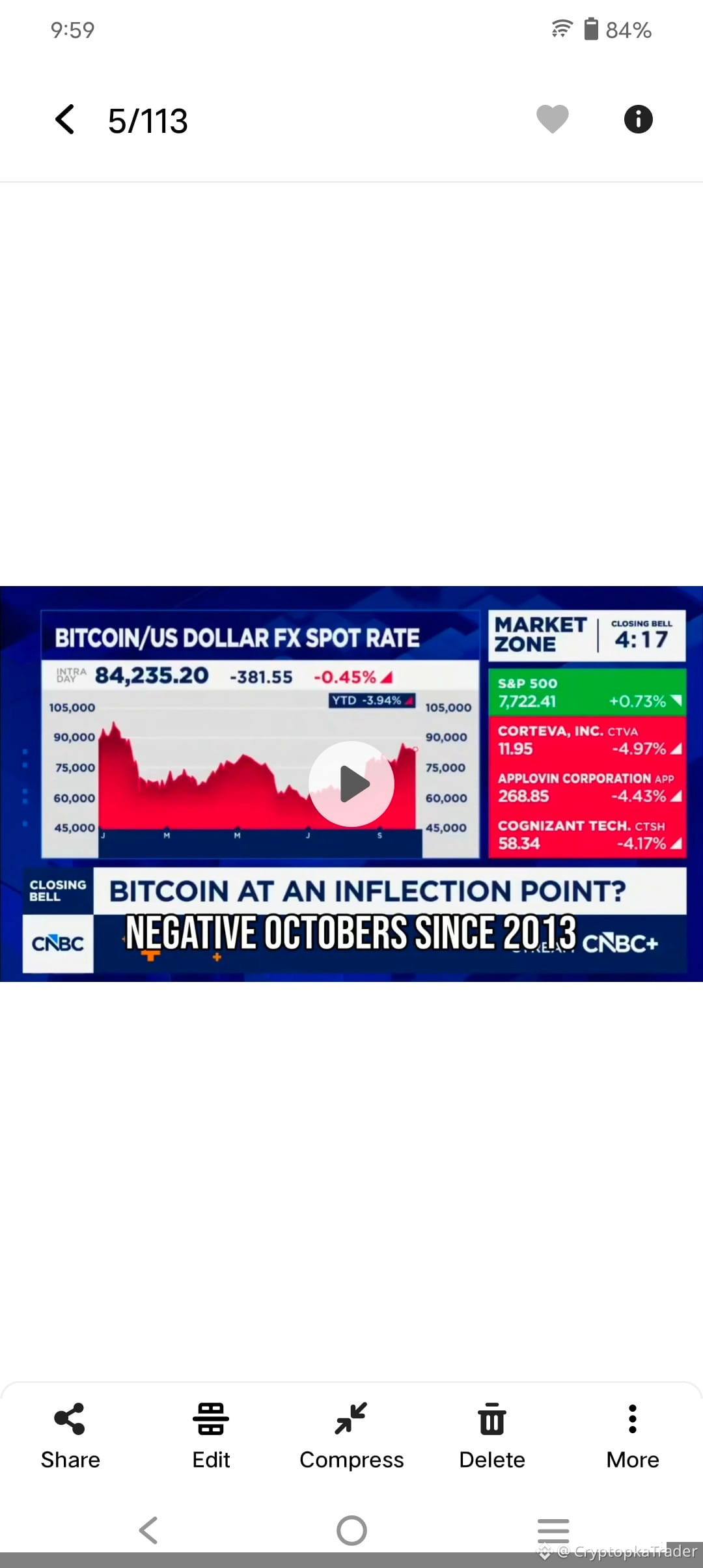
🚨 BITCOIN INFLECTION POINT? 🐋
October has historically been a strong month for $BTC — only 3 negative Octobers since 2013.
🐋 Whale signal: Stablecoin inflows to Binance reportedly surged ~40%, reaching around $30B.
📈 ETF inflows are returning
🏦 Rate-cut hopes support risk assets
🔥 BTC watching the $84K breakout
If liquidity keeps flowing in, October could get interesting. 👀
Bullish October? 👇
$BTC #Bitcoin #Uptober #CryptoNews #WhaleAlert
🚨 BITCOIN INFLECTION POINT? 🐋
October has historically been a strong month for $BTC — only 3 negative Octobers since 2013.
🐋 Whale signal: Stablecoin inflows to Binance reportedly surged ~40%, reaching around $30B.
📈 ETF inflows are returning
🏦 Rate-cut hopes support risk assets
🔥 BTC watching the $84K breakout
If liquidity keeps flowing in, October could get interesting. 👀
Bullish October? 👇
$BTC #Bitcoin #Uptober #CryptoNews #WhaleAlert
October has historically been a strong month for $BTC — only 3 negative Octobers since 2013.
🐋 Whale signal: Stablecoin inflows to Binance reportedly surged ~40%, reaching around $30B.
📈 ETF inflows are returning
🏦 Rate-cut hopes support risk assets
🔥 BTC watching the $84K breakout
If liquidity keeps flowing in, October could get interesting. 👀
Bullish October? 👇
$BTC #Bitcoin #Uptober #CryptoNews #WhaleAlert
1
32

·
--
🔥 BITCOIN MAXI vs. ALTCOIN DEGEN: Which Trader Are You? 🚨
Bitcoin Dominance is flirting with 58.6%, but liquidity is quietly leaking into high-beta altcoins. Every trader in October 2026 is caught between two completely different market playbooks.
Option 1: The "Risk-Managed" Bitcoin Maxi 🛡️
The Goal: Capital preservation & steady institutional growth.
The Thesis: $BTC consolidation near $85K with ETF inflows absorbing massive sell pressure.
Strategy: HODL blue-chip assets ($BTC,$ETH ) and stake for yields while letting macro sentiment play out.
Option 2: The "Parabolic" Altseason Degen 🚀
The Goal: 10x to 100x wealth accumulation before the cycle matures.
The Thesis: $SOL breaking out, RENDER riding the AI super-cycle, and low-cap Layer-1s likeSUI pumping on ecosystem upgrades.
Strategy: Rotating profits out of $BTC into high-beta alts the moment BTC dominance tops out.
⚠️ The Big Question:
Are you playing it safe with blue chips, or rotation-hunting alts for life-changing gains?
👇 COMMENT YOUR PLAYBOOK BELOW:
Are you #TeamMaxi or #TeamAltseason?
#Altseason2026 #CryptoStrategy #CryptoNews
🔥 BITCOIN MAXI vs. ALTCOIN DEGEN: Which Trader Are You? 🚨
Bitcoin Dominance is flirting with 58.6%, but liquidity is quietly leaking into high-beta altcoins. Every trader in October 2026 is caught between two completely different market playbooks.
Option 1: The "Risk-Managed" Bitcoin Maxi 🛡️
The Goal: Capital preservation & steady institutional growth.
The Thesis: $BTC consolidation near $85K with ETF inflows absorbing massive sell pressure.
Strategy: HODL blue-chip assets ($BTC ,$ETH ) and stake for yields while letting macro sentiment play out.
Option 2: The "Parabolic" Altseason Degen 🚀
The Goal: 10x to 100x wealth accumulation before the cycle matures.
The Thesis: $SOL breaking out, RENDER riding the AI super-cycle, and low-cap Layer-1s likeSUI pumping on ecosystem upgrades.
Strategy: Rotating profits out of $BTC into high-beta alts the moment BTC dominance tops out.
⚠️ The Big Question:
Are you playing it safe with blue chips, or rotation-hunting alts for life-changing gains?
👇 COMMENT YOUR PLAYBOOK BELOW:
Are you #TeamMaxi or #TeamAltseason?
#Altseason2026 #CryptoStrategy #CryptoNews
Bitcoin Dominance is flirting with 58.6%, but liquidity is quietly leaking into high-beta altcoins. Every trader in October 2026 is caught between two completely different market playbooks.
Option 1: The "Risk-Managed" Bitcoin Maxi 🛡️
The Goal: Capital preservation & steady institutional growth.
The Thesis: $BTC consolidation near $85K with ETF inflows absorbing massive sell pressure.
Strategy: HODL blue-chip assets ($BTC ,$ETH ) and stake for yields while letting macro sentiment play out.
Option 2: The "Parabolic" Altseason Degen 🚀
The Goal: 10x to 100x wealth accumulation before the cycle matures.
The Thesis: $SOL breaking out, RENDER riding the AI super-cycle, and low-cap Layer-1s likeSUI pumping on ecosystem upgrades.
Strategy: Rotating profits out of $BTC into high-beta alts the moment BTC dominance tops out.
⚠️ The Big Question:
Are you playing it safe with blue chips, or rotation-hunting alts for life-changing gains?
👇 COMMENT YOUR PLAYBOOK BELOW:
Are you #TeamMaxi or #TeamAltseason?
#Altseason2026 #CryptoStrategy #CryptoNews

1
1
200
·
--
🚨 VISA JUST PUT STABLECOINS TO A REAL-WORLD TEST
Visa and UK banking giant Lloyds just completed a $750,000 cross-border settlement pilot using $USDC.
The surprising part? 👀
💰 Funds reached Visa in under 1 hour
🌍 The transfer worked across borders
🕐 Settlement also worked over the weekend
⛓️ Lloyds and Visa used different blockchain environments
This wasn’t a crypto exchange trade or a DeFi experiment.
It was bank-to-payment-network settlement.
And Visa says ~17% of its FY2026 stablecoin-linked card volume already came from business and commercial programs, with that payment volume growing nearly 200% YoY. (Lloyds Banking Group)
The bigger story may not be $BTC moving 2% today.
It may be stablecoins quietly becoming part of the plumbing of global finance. 🌎
Would you trust stablecoins for everyday cross-border business payments?
#Stablecoin #USDC #Crypto #Binance #blockchain #CryptoNews
🚨 VISA JUST PUT STABLECOINS TO A REAL-WORLD TEST
Visa and UK banking giant Lloyds just completed a $750,000 cross-border settlement pilot using $USDC.
The surprising part? 👀
💰 Funds reached Visa in under 1 hour
🌍 The transfer worked across borders
🕐 Settlement also worked over the weekend
⛓️ Lloyds and Visa used different blockchain environments
This wasn’t a crypto exchange trade or a DeFi experiment.
It was bank-to-payment-network settlement.
And Visa says ~17% of its FY2026 stablecoin-linked card volume already came from business and commercial programs, with that payment volume growing nearly 200% YoY. (Lloyds Banking Group)
The bigger story may not be $BTC moving 2% today.
It may be stablecoins quietly becoming part of the plumbing of global finance. 🌎
Would you trust stablecoins for everyday cross-border business payments?
#Stablecoin #USDC #Crypto #Binance #blockchain #CryptoNews
Visa and UK banking giant Lloyds just completed a $750,000 cross-border settlement pilot using $USDC.
The surprising part? 👀
💰 Funds reached Visa in under 1 hour
🌍 The transfer worked across borders
🕐 Settlement also worked over the weekend
⛓️ Lloyds and Visa used different blockchain environments
This wasn’t a crypto exchange trade or a DeFi experiment.
It was bank-to-payment-network settlement.
And Visa says ~17% of its FY2026 stablecoin-linked card volume already came from business and commercial programs, with that payment volume growing nearly 200% YoY. (Lloyds Banking Group)
The bigger story may not be $BTC moving 2% today.
It may be stablecoins quietly becoming part of the plumbing of global finance. 🌎
Would you trust stablecoins for everyday cross-border business payments?
#Stablecoin #USDC #Crypto #Binance #blockchain #CryptoNews
5
🚨 Ethereum Still Owns 55% of TVL While Price Lags in 2026
📊 Alpha Breakdown:
Ethereum maintains 55% of industry TVL and hosts nearly 50% of all stablecoins. This dominance persists despite poor ETH price performance in 2026. Competing chains are currently fragmenting the remaining market share rather than challenging Ethereum's position. The data suggests fundamental strength regardless of short-term price action. Investors should focus on on-chain metrics over price charts for long-term positioning....
🔗 Full Breakdown on YourWeb3Guy:
https://www.yourweb3guy.com/news/ethereum-still-owns-55-of-tvl-while-price-lags-in-2026
#cryptonews #cryptocurrency #cryptoprices
🚨 Ethereum Still Owns 55% of TVL While Price Lags in 2026
📊 Alpha Breakdown:
Ethereum maintains 55% of industry TVL and hosts nearly 50% of all stablecoins. This dominance persists despite poor ETH price performance in 2026. Competing chains are currently fragmenting the remaining market share rather than challenging Ethereum's position. The data suggests fundamental strength regardless of short-term price action. Investors should focus on on-chain metrics over price charts for long-term positioning....
🔗 Full Breakdown on YourWeb3Guy:
https://www.yourweb3guy.com/news/ethereum-still-owns-55-of-tvl-while-price-lags-in-2026
#cryptonews #cryptocurrency #cryptoprices
📊 Alpha Breakdown:
Ethereum maintains 55% of industry TVL and hosts nearly 50% of all stablecoins. This dominance persists despite poor ETH price performance in 2026. Competing chains are currently fragmenting the remaining market share rather than challenging Ethereum's position. The data suggests fundamental strength regardless of short-term price action. Investors should focus on on-chain metrics over price charts for long-term positioning....
🔗 Full Breakdown on YourWeb3Guy:
https://www.yourweb3guy.com/news/ethereum-still-owns-55-of-tvl-while-price-lags-in-2026
#cryptonews #cryptocurrency #cryptoprices
7
🚨 Vitalik Claims Ethereum Is the Economic Layer for AI Agents
📊 Alpha Breakdown:
Vitalik Buterin stated in an OKX interview that Ethereum serves as the foundational economic layer for AI. He argues that permissionless settlement allows autonomous agents to transact across organizations without relying on centralized platforms, creating a trustless infrastructure for future machine economies....
🔗 Full Breakdown on YourWeb3Guy:
https://www.yourweb3guy.com/news/vitalik-claims-ethereum-is-the-economic-layer-for-ai-agents
#cryptonews #cryptocurrency #ethereumnews
🚨 Vitalik Claims Ethereum Is the Economic Layer for AI Agents
📊 Alpha Breakdown:
Vitalik Buterin stated in an OKX interview that Ethereum serves as the foundational economic layer for AI. He argues that permissionless settlement allows autonomous agents to transact across organizations without relying on centralized platforms, creating a trustless infrastructure for future machine economies....
🔗 Full Breakdown on YourWeb3Guy:
https://www.yourweb3guy.com/news/vitalik-claims-ethereum-is-the-economic-layer-for-ai-agents
#cryptonews #cryptocurrency #ethereumnews
📊 Alpha Breakdown:
Vitalik Buterin stated in an OKX interview that Ethereum serves as the foundational economic layer for AI. He argues that permissionless settlement allows autonomous agents to transact across organizations without relying on centralized platforms, creating a trustless infrastructure for future machine economies....
🔗 Full Breakdown on YourWeb3Guy:
https://www.yourweb3guy.com/news/vitalik-claims-ethereum-is-the-economic-layer-for-ai-agents
#cryptonews #cryptocurrency #ethereumnews
5

·
--

Article
🇺🇸 THE NEXT U.S. CRYPTO WAR MAY NOT BE ABOUT BITCOIN — IT’S ABOUT WHO CONTROLS THE RAILS 👀For years, the crypto battle in America looked pretty simple:
Crypto vs regulators.
But something different is happening now.
And I think traders focusing only on Bitcoin candles may be missing the bigger story.
On October 1, the U.S. SEC proposed a new framework addressing how registered investment advisers and regulated funds can custody crypto assets.
This isn’t a final rule yet. It still has to go through the regulatory process.
But the direction is interesting.
The conversation is increasingly moving away from:
“Should traditional finance touch crypto?”
toward:
“How should traditional finance hold and use crypto?”
That’s a very different conversation.
Then, one day later, the banks entered the picture.
On October 2, the Independent Community Bankers of America sued the Office of the Comptroller of the Currency over its approach to national trust-bank charters being used by crypto companies.
The banking group argues that the OCC has gone beyond its legal authority and that these firms shouldn’t receive access to the federal banking system without comparable regulatory requirements.
Those are allegations in an ongoing legal challenge—not a court finding.
But forget the legal argument for a second.
Look at what the fight itself tells us.
Crypto companies aren’t just building exchanges anymore.
They’re moving toward:
Custody.
Payments.
Stablecoins.
Settlement.
Institutional infrastructure.
In other words…
the rails.
And this is where the Trump story gets more interesting. 🇺🇸
The Trump administration has explicitly pushed toward making the United States a major global center for digital assets and integrating crypto more deeply into the existing financial system.
That sounds bullish when reduced to a headline.
But actually rebuilding financial infrastructure around digital assets is much more complicated.
Because once crypto companies start operating in areas traditionally occupied by banks and other regulated financial institutions, the question changes.
It’s no longer simply:
“Will America allow crypto?”
It becomes:
“Who gets to control the infrastructure?”
Banks?
Crypto-native companies?
Asset managers?
Fintechs?
Or some combination of all four?
And that could become one of the most important U.S. crypto stories to watch.
This isn’t necessarily a Bitcoin-pumps-tomorrow story.
That’s important.
A regulatory proposal doesn’t guarantee institutional money suddenly enters crypto.
A lawsuit doesn’t automatically hurt crypto.
And political support doesn’t remove regulatory, legal or market risk.
I’m looking at something longer term.
If digital assets genuinely become part of America’s mainstream financial system, enormous businesses could eventually compete over:
who holds the assets,
who issues the stablecoins,
who processes the payments,
who settles the transactions,
and who owns the relationship with the customer.
That’s much bigger than another green candle.
For years everyone asked:
“Will Wall Street enter crypto?”
Maybe we’re approaching a more interesting question:
What happens when crypto starts entering Wall Street’s territory? 👀
Because the next major U.S. crypto battle might not be about the price of Bitcoin.
It might be about something much more valuable:
Who controls the rails.
— Master CX
#CryptoNews
#CryptoRegulation #USCrypto
🇺🇸 THE NEXT U.S. CRYPTO WAR MAY NOT BE ABOUT BITCOIN — IT’S ABOUT WHO CONTROLS THE RAILS 👀
For years, the crypto battle in America looked pretty simple:
Crypto vs regulators.
But something different is happening now.
And I think traders focusing only on Bitcoin candles may be missing the bigger story.
On October 1, the U.S. SEC proposed a new framework addressing how registered investment advisers and regulated funds can custody crypto assets.
This isn’t a final rule yet. It still has to go through the regulatory process.
But the direction is interesting.
The conversation is increasingly moving away from:
“Should traditional finance touch crypto?”
toward:
“How should traditional finance hold and use crypto?”
That’s a very different conversation.
Then, one day later, the banks entered the picture.
On October 2, the Independent Community Bankers of America sued the Office of the Comptroller of the Currency over its approach to national trust-bank charters being used by crypto companies.
The banking group argues that the OCC has gone beyond its legal authority and that these firms shouldn’t receive access to the federal banking system without comparable regulatory requirements.
Those are allegations in an ongoing legal challenge—not a court finding.
But forget the legal argument for a second.
Look at what the fight itself tells us.
Crypto companies aren’t just building exchanges anymore.
They’re moving toward:
Custody.
Payments.
Stablecoins.
Settlement.
Institutional infrastructure.
In other words…
the rails.
And this is where the Trump story gets more interesting. 🇺🇸
The Trump administration has explicitly pushed toward making the United States a major global center for digital assets and integrating crypto more deeply into the existing financial system.
That sounds bullish when reduced to a headline.
But actually rebuilding financial infrastructure around digital assets is much more complicated.
Because once crypto companies start operating in areas traditionally occupied by banks and other regulated financial institutions, the question changes.
It’s no longer simply:
“Will America allow crypto?”
It becomes:
“Who gets to control the infrastructure?”
Banks?
Crypto-native companies?
Asset managers?
Fintechs?
Or some combination of all four?
And that could become one of the most important U.S. crypto stories to watch.
This isn’t necessarily a Bitcoin-pumps-tomorrow story.
That’s important.
A regulatory proposal doesn’t guarantee institutional money suddenly enters crypto.
A lawsuit doesn’t automatically hurt crypto.
And political support doesn’t remove regulatory, legal or market risk.
I’m looking at something longer term.
If digital assets genuinely become part of America’s mainstream financial system, enormous businesses could eventually compete over:
who holds the assets,
who issues the stablecoins,
who processes the payments,
who settles the transactions,
and who owns the relationship with the customer.
That’s much bigger than another green candle.
For years everyone asked:
“Will Wall Street enter crypto?”
Maybe we’re approaching a more interesting question:
What happens when crypto starts entering Wall Street’s territory? 👀
Because the next major U.S. crypto battle might not be about the price of Bitcoin.
It might be about something much more valuable:
Who controls the rails.
— Master CX
#CryptoNews
#CryptoRegulation #USCrypto
Crypto vs regulators.
But something different is happening now.
And I think traders focusing only on Bitcoin candles may be missing the bigger story.
On October 1, the U.S. SEC proposed a new framework addressing how registered investment advisers and regulated funds can custody crypto assets.
This isn’t a final rule yet. It still has to go through the regulatory process.
But the direction is interesting.
The conversation is increasingly moving away from:
“Should traditional finance touch crypto?”
toward:
“How should traditional finance hold and use crypto?”
That’s a very different conversation.
Then, one day later, the banks entered the picture.
On October 2, the Independent Community Bankers of America sued the Office of the Comptroller of the Currency over its approach to national trust-bank charters being used by crypto companies.
The banking group argues that the OCC has gone beyond its legal authority and that these firms shouldn’t receive access to the federal banking system without comparable regulatory requirements.
Those are allegations in an ongoing legal challenge—not a court finding.
But forget the legal argument for a second.
Look at what the fight itself tells us.
Crypto companies aren’t just building exchanges anymore.
They’re moving toward:
Custody.
Payments.
Stablecoins.
Settlement.
Institutional infrastructure.
In other words…
the rails.
And this is where the Trump story gets more interesting. 🇺🇸
The Trump administration has explicitly pushed toward making the United States a major global center for digital assets and integrating crypto more deeply into the existing financial system.
That sounds bullish when reduced to a headline.
But actually rebuilding financial infrastructure around digital assets is much more complicated.
Because once crypto companies start operating in areas traditionally occupied by banks and other regulated financial institutions, the question changes.
It’s no longer simply:
“Will America allow crypto?”
It becomes:
“Who gets to control the infrastructure?”
Banks?
Crypto-native companies?
Asset managers?
Fintechs?
Or some combination of all four?
And that could become one of the most important U.S. crypto stories to watch.
This isn’t necessarily a Bitcoin-pumps-tomorrow story.
That’s important.
A regulatory proposal doesn’t guarantee institutional money suddenly enters crypto.
A lawsuit doesn’t automatically hurt crypto.
And political support doesn’t remove regulatory, legal or market risk.
I’m looking at something longer term.
If digital assets genuinely become part of America’s mainstream financial system, enormous businesses could eventually compete over:
who holds the assets,
who issues the stablecoins,
who processes the payments,
who settles the transactions,
and who owns the relationship with the customer.
That’s much bigger than another green candle.
For years everyone asked:
“Will Wall Street enter crypto?”
Maybe we’re approaching a more interesting question:
What happens when crypto starts entering Wall Street’s territory? 👀
Because the next major U.S. crypto battle might not be about the price of Bitcoin.
It might be about something much more valuable:
Who controls the rails.
— Master CX
#CryptoNews
#CryptoRegulation #USCrypto
42
Log in to explore more content
Join global crypto users on Binance Square
⚡️ Get latest and useful information about crypto.
💬 Trusted by the world’s largest crypto exchange.
👍 Discover real insights from verified creators.
Email / Phone number
Trending Topics
1
#ZcashETFPostsFirstWeeklyOutflow$93.6M
29,664 views
86 Discussing
2
#GreekPoliceBustCryptoScamRingArrest17
51,061 views
519 Discussing
3
#BitcoinRejectedAt$87K
110,689 views
144 Discussing
4
#FedOctoberRateHikeOddsFallTo17%
81,855 views
834 Discussing
5
#NvidiaHitsRecordHighUp2.4%
52,291 views
590 Discussing
6
#CanaryFilesAmendedS1ForPEPEETF
15,274 views
403 Discussing
7
#USRussiaUkraineTalksReportedlyIncludeLukoilOilDeal
25,224 views
406 Discussing
8
#BitcoinParesGainsAfterRallyTo$86.5K
45,517 views
159 Discussing
9
#CerebrasSinksNearly20%OnReportNvidiaToPowerOpenAI
108,694 views
1,053 Discussing
10
#SECProposesCryptoCustodyRules
146,122 views
1,324 Discussing