

#walrus
walrus
8.9M views
363,724 Discussing
Hot
Latest


·
--
🚨 Is WAL preparing for a new wave? 🐋🔥
$WAL is currently consolidating around ~$0.0345.
📈 WAL/USDT — LONG PLAN
🟢 Entry: 0.0338 – 0.0346
🎯 TP1: 0.0365
🎯 TP2: 0.0390
🎯 TP3: 0.0420
🛑 SL: 0.0324
🔥 If a strong breakout above $0.035 comes with volume, the TP2/TP3 scenario could activate.
On the other hand, a move below $0.0324 invalidates the plan.
Do you think WAL will first hit $0.040, or will it return to $0.032? 👇
🐋 LONG 🔻 SHORT
⚠️ Futures are high-risk. Use stop-loss. This post is not financial advice.
#WAL #Walrus #SUI @WalrusProtocol
🚨 Is WAL preparing for a new wave? 🐋🔥
$WAL is currently consolidating around ~$0.0345.
📈 WAL/USDT — LONG PLAN
🟢 Entry: 0.0338 – 0.0346
🎯 TP1: 0.0365
🎯 TP2: 0.0390
🎯 TP3: 0.0420
🛑 SL: 0.0324
🔥 If a strong breakout above $0.035 comes with volume, the TP2/TP3 scenario could activate.
On the other hand, a move below $0.0324 invalidates the plan.
Do you think WAL will first hit $0.040, or will it return to $0.032? 👇
🐋 LONG 🔻 SHORT
⚠️ Futures are high-risk. Use stop-loss. This post is not financial advice.
#WAL #Walrus #SUI @Walrus 🦭/acc
$WAL is currently consolidating around ~$0.0345.
📈 WAL/USDT — LONG PLAN
🟢 Entry: 0.0338 – 0.0346
🎯 TP1: 0.0365
🎯 TP2: 0.0390
🎯 TP3: 0.0420
🛑 SL: 0.0324
🔥 If a strong breakout above $0.035 comes with volume, the TP2/TP3 scenario could activate.
On the other hand, a move below $0.0324 invalidates the plan.
Do you think WAL will first hit $0.040, or will it return to $0.032? 👇
🐋 LONG 🔻 SHORT
⚠️ Futures are high-risk. Use stop-loss. This post is not financial advice.
#WAL #Walrus #SUI @Walrus 🦭/acc
62
·
--
🚨 WAL HAS ENTERED THE TRADING ARENA AGAIN! 🦭🔥
Walrus ($WAL) isn’t just a “storage” project — it focuses on memory solutions for a decentralized data infrastructure and AI agents built on Sui. Binance also presents WAL as a data-storage/data-availability protocol for blockchain applications and autonomous agents.
🔥 The most interesting catalyst: Walrus plans a new presentation at the Sui Basecamp event on 7–8 October, about data connectivity between AI applications and agents.
📊 Currently, WAL is around $0.034. In the short term, the $0.033 zone looks like support, while $0.035 is the resistance to watch.
👀 A break above $0.035 + volume could increase momentum.
⚠️ But entering with FOMO before the breakout is confirmed is risky.
Do you think WAL could reach $0.05? 👇
#WAL #Walrus @WalrusProtocol
🚨 WAL HAS ENTERED THE TRADING ARENA AGAIN! 🦭🔥
Walrus ($WAL) isn’t just a “storage” project — it focuses on memory solutions for a decentralized data infrastructure and AI agents built on Sui. Binance also presents WAL as a data-storage/data-availability protocol for blockchain applications and autonomous agents.
🔥 The most interesting catalyst: Walrus plans a new presentation at the Sui Basecamp event on 7–8 October, about data connectivity between AI applications and agents.
📊 Currently, WAL is around $0.034. In the short term, the $0.033 zone looks like support, while $0.035 is the resistance to watch.
👀 A break above $0.035 + volume could increase momentum.
⚠️ But entering with FOMO before the breakout is confirmed is risky.
Do you think WAL could reach $0.05? 👇
#WAL #Walrus @Walrus 🦭/acc
Walrus ($WAL) isn’t just a “storage” project — it focuses on memory solutions for a decentralized data infrastructure and AI agents built on Sui. Binance also presents WAL as a data-storage/data-availability protocol for blockchain applications and autonomous agents.
🔥 The most interesting catalyst: Walrus plans a new presentation at the Sui Basecamp event on 7–8 October, about data connectivity between AI applications and agents.
📊 Currently, WAL is around $0.034. In the short term, the $0.033 zone looks like support, while $0.035 is the resistance to watch.
👀 A break above $0.035 + volume could increase momentum.
⚠️ But entering with FOMO before the breakout is confirmed is risky.
Do you think WAL could reach $0.05? 👇
#WAL #Walrus @Walrus 🦭/acc
1
170

·
--
Partly True
{spot}(WALUSDT)
$WAL tokenomics looks solid, staking APY ∼12% on Sui. The team raised $140M and mainnet live. Chart showing accumulation around $0.45-$0.50.
I think storage will be next rotation after AI. Keeping small bag of $WAL for Q4.
Anyone else staking $WAL? #Walrus $WAL @WalrusProtocol
#walrus #WalrusProtocol #zimbabwe #Binance
$WAL tokenomics looks solid, staking APY ∼12% on Sui. The team raised $140M and mainnet live. Chart showing accumulation around $0.45-$0.50.
I think storage will be next rotation after AI. Keeping small bag of $WAL for Q4.
Anyone else staking $WAL ? #Walrus $WAL @Walrus 🦭/acc
#walrus #WalrusProtocol #zimbabwe #Binance
I think storage will be next rotation after AI. Keeping small bag of $WAL for Q4.
Anyone else staking $WAL ? #Walrus $WAL @Walrus 🦭/acc
#walrus #WalrusProtocol #zimbabwe #Binance
300

·
--
[Binance $WAL USDT](https://www.binance.com/en/trade/WAL_USDT?utm_source=chatgpt.com)
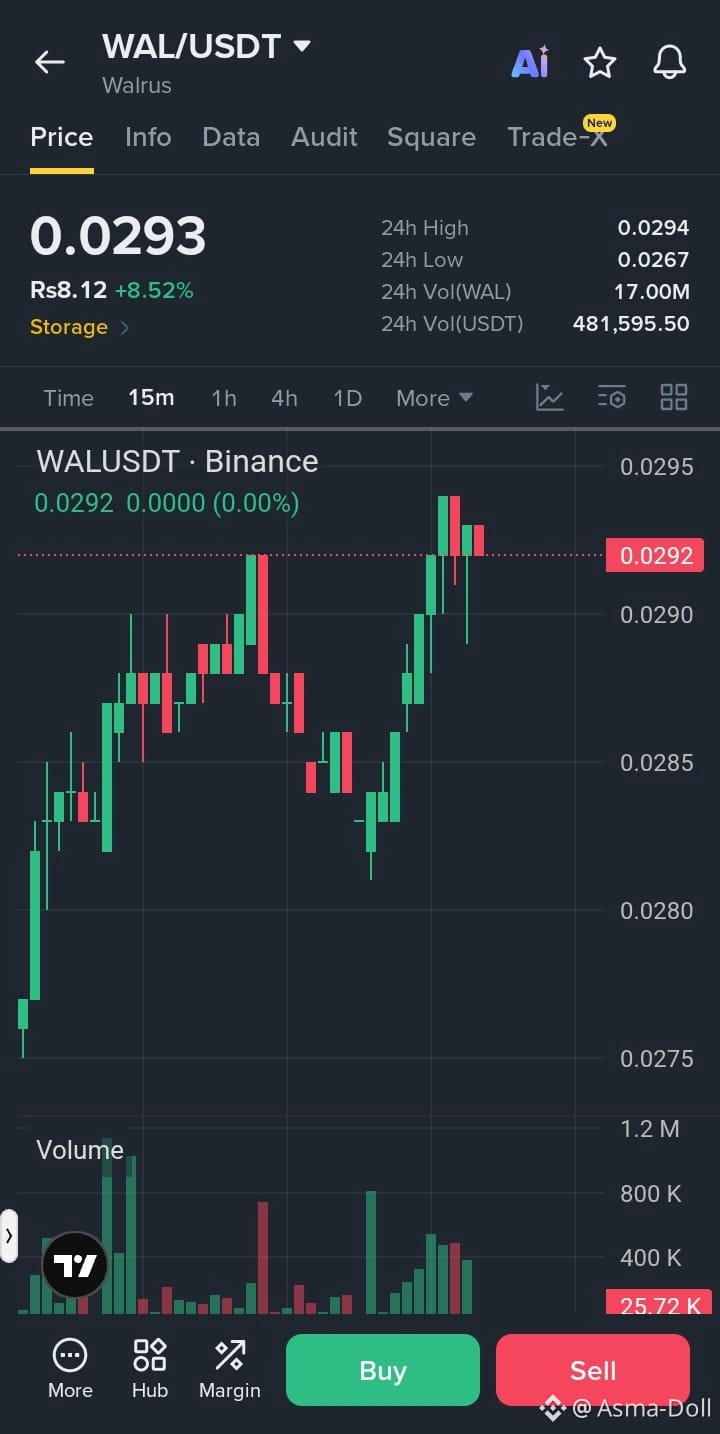
WAL/USDT — SHORT 📉
Entry: 0.0290 – 0.0294
Stop Loss: 0.0302
TP1: 0.0282
TP2: 0.0275
TP3: 0.0268
Trade here $WAL
{future}(WALUSDT)
Analysis:
Price is near the 24h high 0.0294, showing resistance.
+8.52% move makes a short-term pullback possible.
0.0294 rejection strengthens the short setup.
Break below 0.0290 can accelerate selling toward 0.0282/0.0275.
Current market data also shows WAL around $0.0293 with elevated volatility.
Confirmation: Clean break below 0.0290 with increasing sell volume.
⚠️ If price breaks and holds above 0.0302, cancel the short setup.
#WAL #Walrus #WALUSDT #Crypto #ShortSignal
[Binance $WAL USDT](https://www.binance.com/en/trade/WAL_USDT?utm_source=chatgpt.com)
WAL/USDT — SHORT 📉
Entry: 0.0290 – 0.0294
Stop Loss: 0.0302
TP1: 0.0282
TP2: 0.0275
TP3: 0.0268
Trade here $WAL
Analysis:
Price is near the 24h high 0.0294, showing resistance.
+8.52% move makes a short-term pullback possible.
0.0294 rejection strengthens the short setup.
Break below 0.0290 can accelerate selling toward 0.0282/0.0275.
Current market data also shows WAL around $0.0293 with elevated volatility.
Confirmation: Clean break below 0.0290 with increasing sell volume.
⚠️ If price breaks and holds above 0.0302, cancel the short setup.
#WAL #Walrus #WALUSDT #Crypto #ShortSignal
WAL/USDT — SHORT 📉
Entry: 0.0290 – 0.0294
Stop Loss: 0.0302
TP1: 0.0282
TP2: 0.0275
TP3: 0.0268
Trade here $WAL
Analysis:
Price is near the 24h high 0.0294, showing resistance.
+8.52% move makes a short-term pullback possible.
0.0294 rejection strengthens the short setup.
Break below 0.0290 can accelerate selling toward 0.0282/0.0275.
Current market data also shows WAL around $0.0293 with elevated volatility.
Confirmation: Clean break below 0.0290 with increasing sell volume.
⚠️ If price breaks and holds above 0.0302, cancel the short setup.
#WAL #Walrus #WALUSDT #Crypto #ShortSignal
48

·
--
$WAL
{future}(WALUSDT)
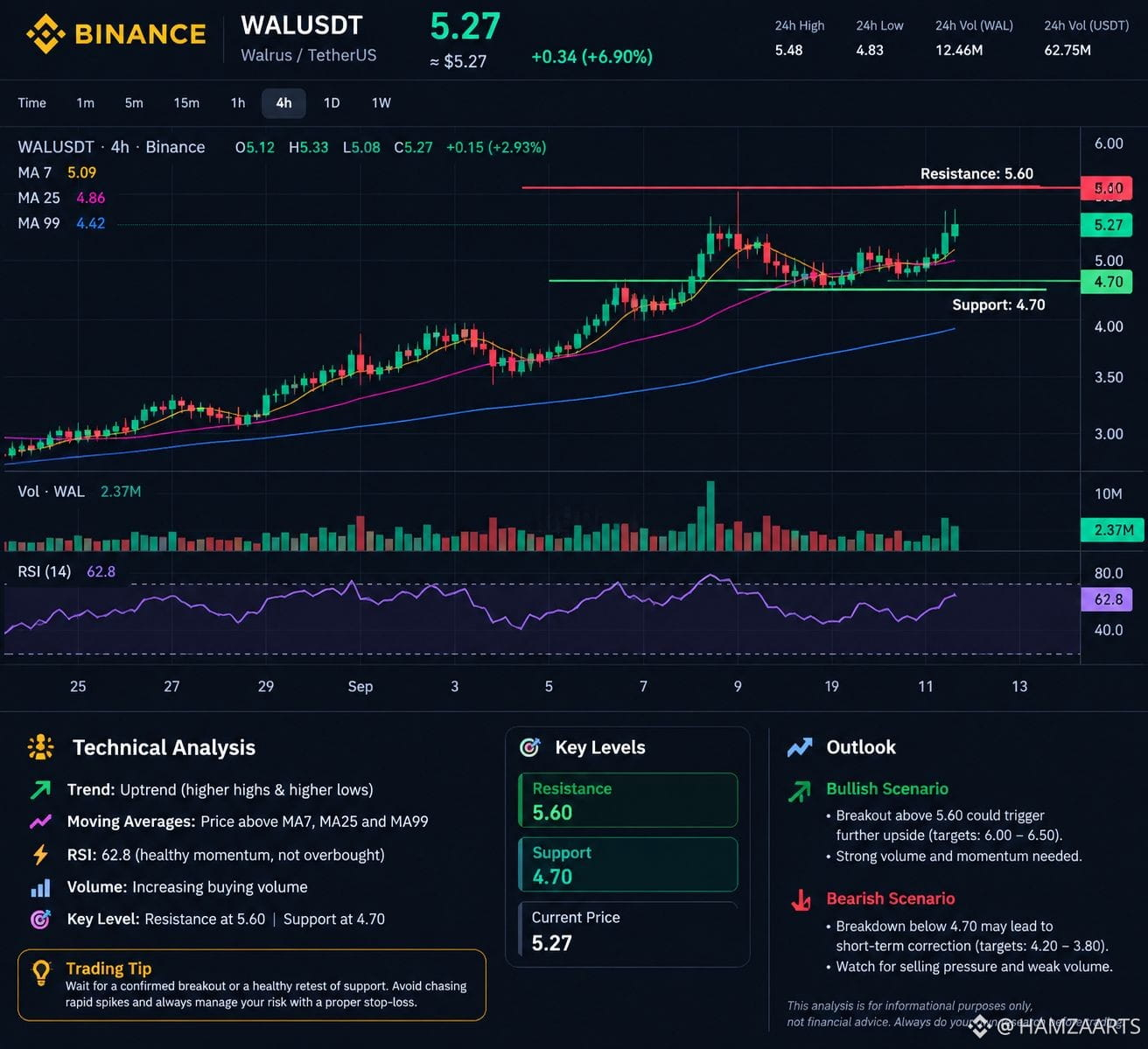
🐋 WALRUS (WALUUSDT) — Market Analysis
WALUUSDT is attracting attention as traders monitor momentum, liquidity, and potential breakout opportunities. The next major move will depend on whether buyers can sustain demand and push price above key resistance levels.
📊 Technical Outlook:
• Bullish Scenario: A strong breakout above resistance, supported by rising volume, could signal further upside.
• Bearish Scenario: Failure to hold key support may trigger profit-taking and renewed selling pressure.
• Momentum: Traders should watch volume, RSI, and candlestick confirmations before entering a position.
• Market Sentiment: Sustained buying pressure could strengthen the bullish structure, while weak liquidity may increase volatility.
🎯 Trading Strategy: Wait for a confirmed breakout or a reliable support retest. Avoid chasing sudden price spikes and manage risk with disciplined stop-loss levels.
⚠️ Disclaimer: This is market commentary, not financial advice.#walrus #Ethereum #BTC🔥🔥🔥🔥🔥 #Write2Earn #viralpost
$WAL
🐋 WALRUS (WALUUSDT) — Market Analysis
WALUUSDT is attracting attention as traders monitor momentum, liquidity, and potential breakout opportunities. The next major move will depend on whether buyers can sustain demand and push price above key resistance levels.
📊 Technical Outlook:
• Bullish Scenario: A strong breakout above resistance, supported by rising volume, could signal further upside.
• Bearish Scenario: Failure to hold key support may trigger profit-taking and renewed selling pressure.
• Momentum: Traders should watch volume, RSI, and candlestick confirmations before entering a position.
• Market Sentiment: Sustained buying pressure could strengthen the bullish structure, while weak liquidity may increase volatility.
🎯 Trading Strategy: Wait for a confirmed breakout or a reliable support retest. Avoid chasing sudden price spikes and manage risk with disciplined stop-loss levels.
⚠️ Disclaimer: This is market commentary, not financial advice.#walrus #Ethereum #BTC🔥🔥🔥🔥🔥 #Write2Earn #viralpost
🐋 WALRUS (WALUUSDT) — Market Analysis
WALUUSDT is attracting attention as traders monitor momentum, liquidity, and potential breakout opportunities. The next major move will depend on whether buyers can sustain demand and push price above key resistance levels.
📊 Technical Outlook:
• Bullish Scenario: A strong breakout above resistance, supported by rising volume, could signal further upside.
• Bearish Scenario: Failure to hold key support may trigger profit-taking and renewed selling pressure.
• Momentum: Traders should watch volume, RSI, and candlestick confirmations before entering a position.
• Market Sentiment: Sustained buying pressure could strengthen the bullish structure, while weak liquidity may increase volatility.
🎯 Trading Strategy: Wait for a confirmed breakout or a reliable support retest. Avoid chasing sudden price spikes and manage risk with disciplined stop-loss levels.
⚠️ Disclaimer: This is market commentary, not financial advice.#walrus #Ethereum #BTC🔥🔥🔥🔥🔥 #Write2Earn #viralpost
118

·
--
Bullish
$WAL
{future}(WALUSDT)
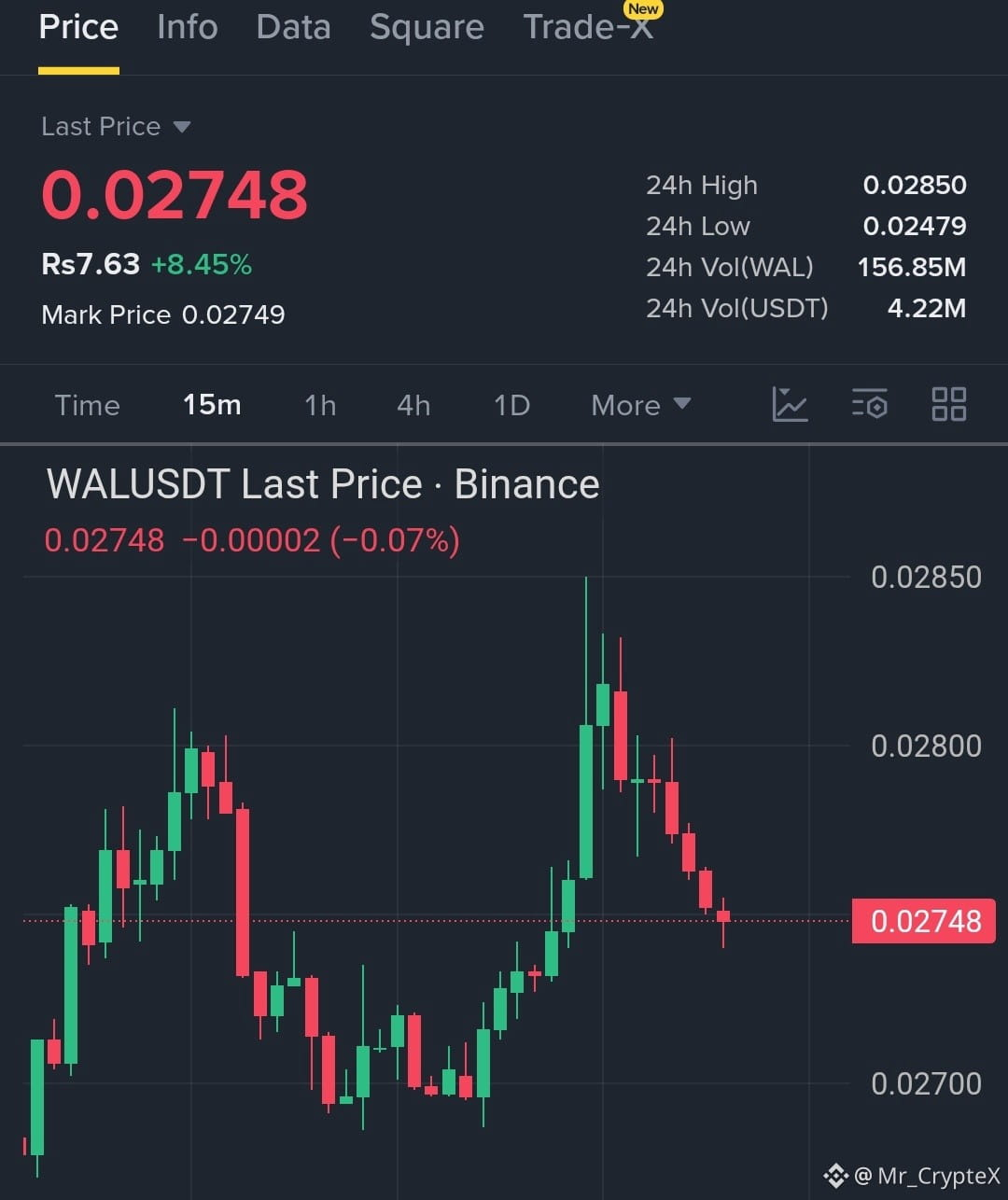
LONG TRADE SIGNAL
$WAL is restoring its position with buyers stepping back in after the recent pullback. The candles are showing a stronger recovery, and price is pushing back toward the upper zone. If buyers keep the pressure, $WAL looks ready for a big game and a fresh bullish move.
Entry: 0.02720–0.02750
TP1: 0.02850
TP2: 0.02950
#WAL #Walrus
$WAL
LONG TRADE SIGNAL
$WAL is restoring its position with buyers stepping back in after the recent pullback. The candles are showing a stronger recovery, and price is pushing back toward the upper zone. If buyers keep the pressure, $WAL looks ready for a big game and a fresh bullish move.
Entry: 0.02720–0.02750
TP1: 0.02850
TP2: 0.02950
#WAL #Walrus
LONG TRADE SIGNAL
$WAL is restoring its position with buyers stepping back in after the recent pullback. The candles are showing a stronger recovery, and price is pushing back toward the upper zone. If buyers keep the pressure, $WAL looks ready for a big game and a fresh bullish move.
Entry: 0.02720–0.02750
TP1: 0.02850
TP2: 0.02950
#WAL #Walrus
1
63

·
--
$WAL has plummeted 95% from its peak, but the project isn't just sitting idle.
Walrus Memory has launched, and several integrations are already in play. The core issue is: **the market isn't buying it**.
The narrative around AI Agent's memory layer and decentralized storage hasn't gained consensus, compounded by skepticism over the tokenomics, putting continuous pressure on the price.
This isn't a "zeroing out" story, but a classic case of **narrative mismatch**—the product exists, yet the market is unwilling to price in this story.
Is it undervalued or is there a structural issue? Time will tell.
#Walrus
$WAL has plummeted 95% from its peak, but the project isn't just sitting idle.
Walrus Memory has launched, and several integrations are already in play. The core issue is: **the market isn't buying it**.
The narrative around AI Agent's memory layer and decentralized storage hasn't gained consensus, compounded by skepticism over the tokenomics, putting continuous pressure on the price.
This isn't a "zeroing out" story, but a classic case of **narrative mismatch**—the product exists, yet the market is unwilling to price in this story.
Is it undervalued or is there a structural issue? Time will tell.
#Walrus
Walrus Memory has launched, and several integrations are already in play. The core issue is: **the market isn't buying it**.
The narrative around AI Agent's memory layer and decentralized storage hasn't gained consensus, compounded by skepticism over the tokenomics, putting continuous pressure on the price.
This isn't a "zeroing out" story, but a classic case of **narrative mismatch**—the product exists, yet the market is unwilling to price in this story.
Is it undervalued or is there a structural issue? Time will tell.
#Walrus
211

·
--
$WAL has plummeted 95% from its all-time high, currently trading at just $0.034, with a market cap shrunk to $82.54 million and a 24-hour trading volume of $5.9 million.
Interestingly, Walrus's core product, Walrus Memory, has officially launched and completed several ecosystem integrations, yet the market still hasn't reached a consensus on the narrative of 'AI Agent memory + decentralized storage'. Coupled with the controversies surrounding the tokenomics and incentive mechanisms, it's no surprise that the price remains under pressure.
The crypto market has never followed the logic of "having a product means having a price"; widespread acceptance of the narrative is key. The current downturn is essentially the market voting with its feet.
#Crypto #Walrus
$WAL has plummeted 95% from its all-time high, currently trading at just $0.034, with a market cap shrunk to $82.54 million and a 24-hour trading volume of $5.9 million.
Interestingly, Walrus's core product, Walrus Memory, has officially launched and completed several ecosystem integrations, yet the market still hasn't reached a consensus on the narrative of 'AI Agent memory + decentralized storage'. Coupled with the controversies surrounding the tokenomics and incentive mechanisms, it's no surprise that the price remains under pressure.
The crypto market has never followed the logic of "having a product means having a price"; widespread acceptance of the narrative is key. The current downturn is essentially the market voting with its feet.
#Crypto #Walrus
Interestingly, Walrus's core product, Walrus Memory, has officially launched and completed several ecosystem integrations, yet the market still hasn't reached a consensus on the narrative of 'AI Agent memory + decentralized storage'. Coupled with the controversies surrounding the tokenomics and incentive mechanisms, it's no surprise that the price remains under pressure.
The crypto market has never followed the logic of "having a product means having a price"; widespread acceptance of the narrative is key. The current downturn is essentially the market voting with its feet.
#Crypto #Walrus
105

·
--
💾 Data Storage Is Becoming a Core Blockchain Utility
As decentralized applications grow, reliable data storage becomes increasingly important.
Projects like Walrus are exploring scalable decentralized storage solutions that support Web3 applications, AI, and digital content.
Strong ecosystems are built on dependable infrastructure.
Storage may become one of blockchain's most valuable services.
$WAL $SUI
#Walrus #DecentralizedStorage #Web3 #Blockchain #Innovation
💾 Data Storage Is Becoming a Core Blockchain Utility
As decentralized applications grow, reliable data storage becomes increasingly important.
Projects like Walrus are exploring scalable decentralized storage solutions that support Web3 applications, AI, and digital content.
Strong ecosystems are built on dependable infrastructure.
Storage may become one of blockchain's most valuable services.
$WAL $SUI
#Walrus #DecentralizedStorage #Web3 #Blockchain #Innovation
As decentralized applications grow, reliable data storage becomes increasingly important.
Projects like Walrus are exploring scalable decentralized storage solutions that support Web3 applications, AI, and digital content.
Strong ecosystems are built on dependable infrastructure.
Storage may become one of blockchain's most valuable services.
$WAL $SUI
#Walrus #DecentralizedStorage #Web3 #Blockchain #Innovation

183
·
--
💾 Data Is the New Digital Oil
Every AI model, blockchain application, and decentralized network depends on one thing—data.
As Web3 grows, decentralized storage solutions are becoming increasingly valuable.
Projects like Walrus are building infrastructure designed to store massive amounts of decentralized data efficiently and securely.
The future won't belong only to the fastest blockchains.
It will belong to the strongest infrastructure.
$WAL $SUI
#Walrus #WAL #DecentralizedStorage #Web3 #Blockchain
💾 Data Is the New Digital Oil
Every AI model, blockchain application, and decentralized network depends on one thing—data.
As Web3 grows, decentralized storage solutions are becoming increasingly valuable.
Projects like Walrus are building infrastructure designed to store massive amounts of decentralized data efficiently and securely.
The future won't belong only to the fastest blockchains.
It will belong to the strongest infrastructure.
$WAL $SUI
#Walrus #WAL #DecentralizedStorage #Web3 #Blockchain
Every AI model, blockchain application, and decentralized network depends on one thing—data.
As Web3 grows, decentralized storage solutions are becoming increasingly valuable.
Projects like Walrus are building infrastructure designed to store massive amounts of decentralized data efficiently and securely.
The future won't belong only to the fastest blockchains.
It will belong to the strongest infrastructure.
$WAL $SUI
#Walrus #WAL #DecentralizedStorage #Web3 #Blockchain

194

·
--
Bullish
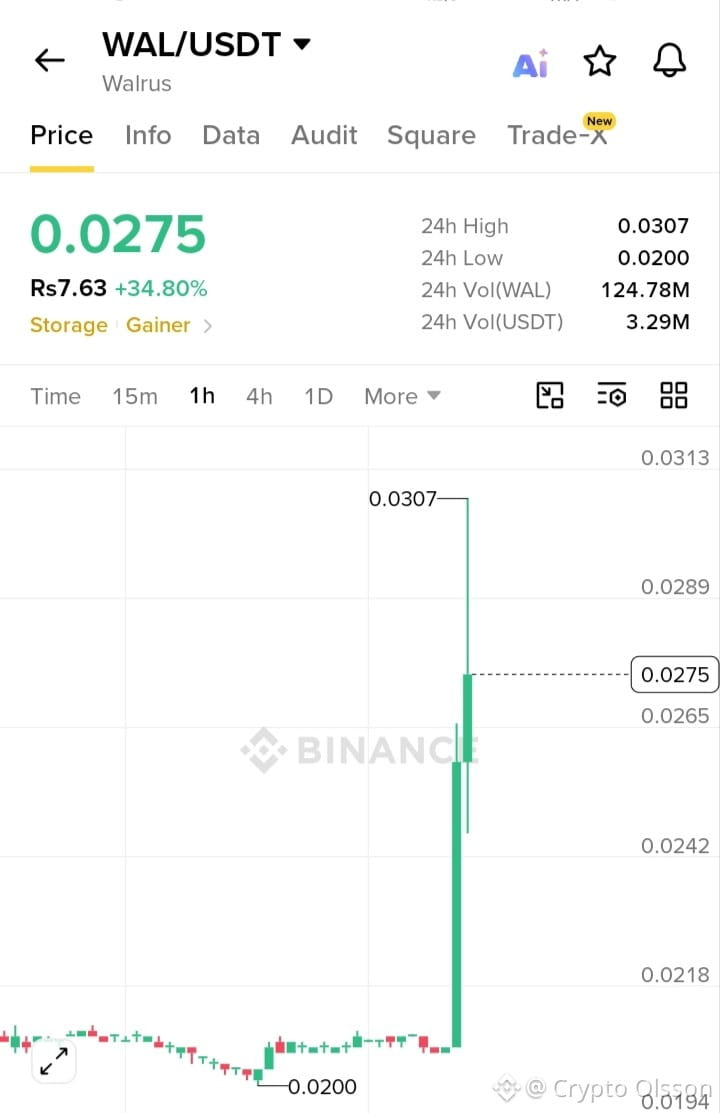
🔥 $WAL USDT — Strong Momentum Setup!
$WAL
{future}(WALUSDT)
is up +34.80% and trading around 0.0275. Momentum is strong, but wait for a clean hold/retest before entry.
🎯 Entry: 0.0265 – 0.0275 ✅ TP1: 0.0289 ✅ TP2: 0.0307 🚀 TP3: 0.0313 🛑 SL: 0.0242
Risk manage karo — pump ko chase mat karo. 📈
#WAL #Walrus #Crypto #Binance
🔥 $WAL USDT — Strong Momentum Setup!
$WAL
is up +34.80% and trading around 0.0275. Momentum is strong, but wait for a clean hold/retest before entry.
🎯 Entry: 0.0265 – 0.0275 ✅ TP1: 0.0289 ✅ TP2: 0.0307 🚀 TP3: 0.0313 🛑 SL: 0.0242
Risk manage karo — pump ko chase mat karo. 📈
#WAL #Walrus #Crypto #Binance
$WAL
is up +34.80% and trading around 0.0275. Momentum is strong, but wait for a clean hold/retest before entry.
🎯 Entry: 0.0265 – 0.0275 ✅ TP1: 0.0289 ✅ TP2: 0.0307 🚀 TP3: 0.0313 🛑 SL: 0.0242
Risk manage karo — pump ko chase mat karo. 📈
#WAL #Walrus #Crypto #Binance
1
207

·
--
Bullish
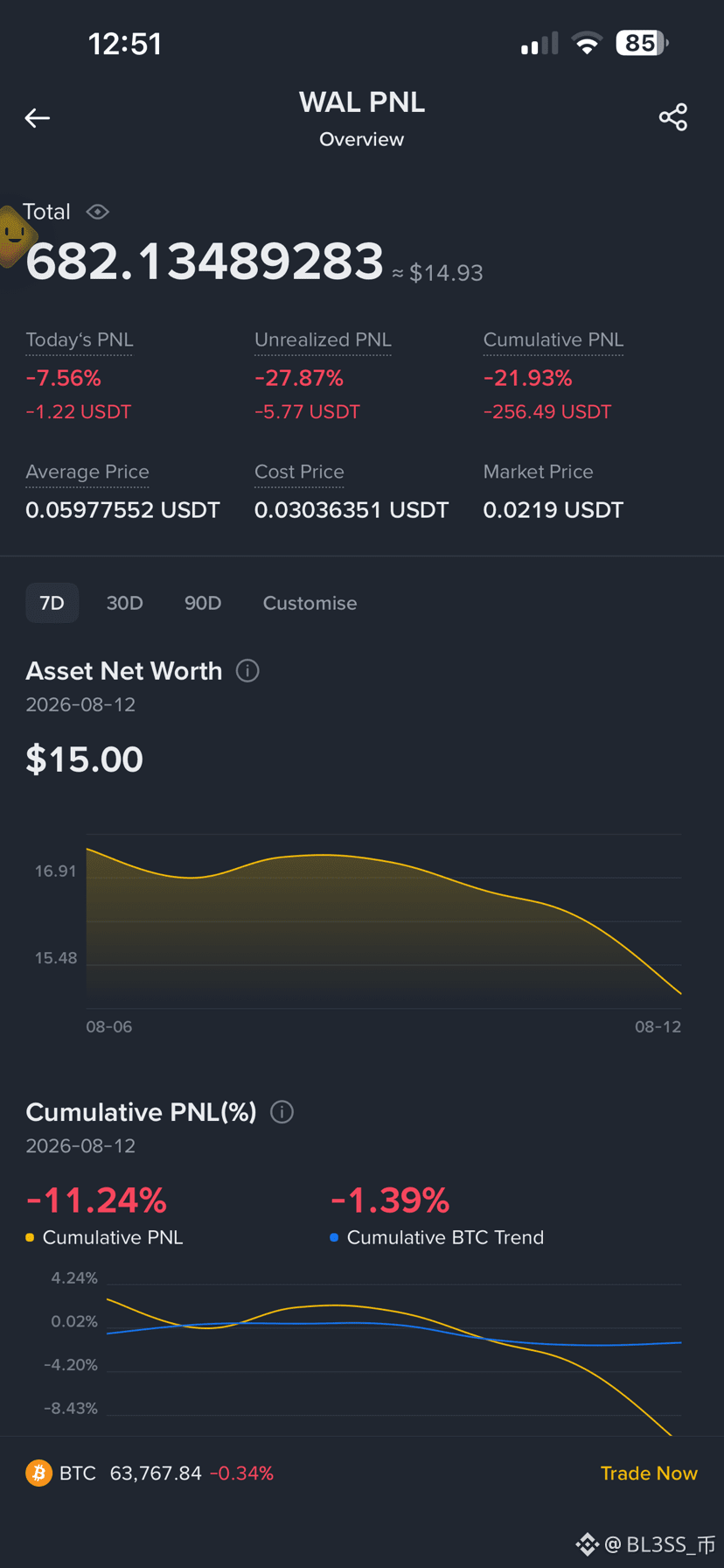
The hell happend to this coin why is it not rising 😭 $WAL bought it with my $200 now it cost $15
Why is it going down only?
#walrus #iamrigged
The hell happend to this coin why is it not rising 😭 $WAL bought it with my $200 now it cost $15
Why is it going down only?
#walrus #iamrigged
Why is it going down only?
#walrus #iamrigged
1
2
288

Article
Binance🚀 #WALRUS : The currency that will build the next generation of decentralized internet
Honestly… when I heard about the listing of ($WAL) on Binance, I didn’t imagine that this project would carry all this weight. I’m not talking about a brand-new coin that just launched — I’m talking about a whole infrastructure that could change how we store and transfer data on the blockchain.
Everyone suffers from one problem: data grows day by day, and centralized platforms fully control it — they delete it, sell it, or suddenly shut their doors. That’s where Walrus came in to say: no one owns your data except you.
Binance
🚀 #WALRUS : The currency that will build the next generation of decentralized internet
Honestly… when I heard about the listing of ($WAL) on Binance, I didn’t imagine that this project would carry all this weight. I’m not talking about a brand-new coin that just launched — I’m talking about a whole infrastructure that could change how we store and transfer data on the blockchain.
Everyone suffers from one problem: data grows day by day, and centralized platforms fully control it — they delete it, sell it, or suddenly shut their doors. That’s where Walrus came in to say: no one owns your data except you.
Honestly… when I heard about the listing of ($WAL) on Binance, I didn’t imagine that this project would carry all this weight. I’m not talking about a brand-new coin that just launched — I’m talking about a whole infrastructure that could change how we store and transfer data on the blockchain.
Everyone suffers from one problem: data grows day by day, and centralized platforms fully control it — they delete it, sell it, or suddenly shut their doors. That’s where Walrus came in to say: no one owns your data except you.
118

·
--
Bullish
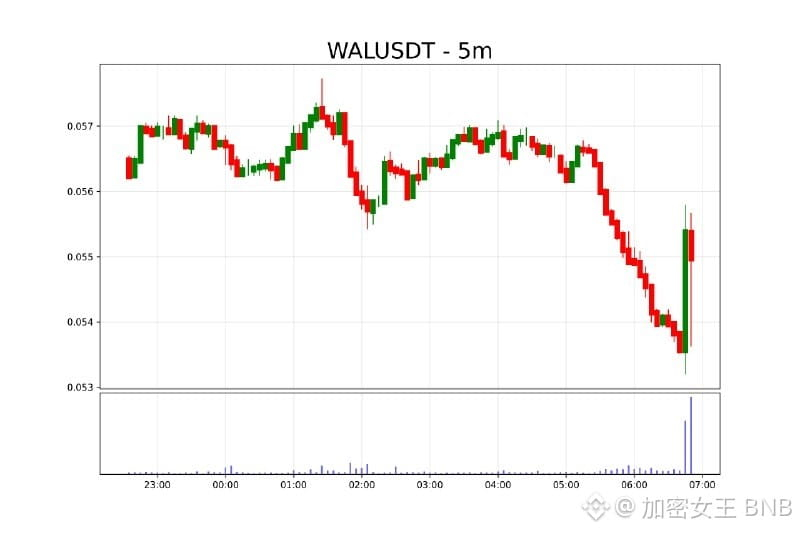
The $WAL ticker is putting on an absolute clinic in liquidity absorption right now, and the tape demands immediate attention. We are looking at a massive 971% explosion in 24-hour volume, pushing nearly nine million dollars through the system, while the price remains trapped down 4% on the day. When volume scales by nearly 10x but the price refuses to capitulate further, it means an immense wall of passive buy orders is sitting underneath the market, vacuuming up every single piece of floating supply without letting the price run away just yet.
This is classic institutional churn where heavy supply is met by an equally aggressive counterparty. If this were a standard, uninhibited dump, a volume spike of this magnitude would have sent the chart off a cliff. Instead, we are seeing localized bounces off the low, signaling that smart money might be building a massive position at these exact coordinates. The order book is working overtime, and this level of structural compression usually acts as a coiled spring before a massive volatility expansion. I am closely watching whether these local lows hold, because if this buy wall is real, the sell-side is about to run completely out of fuel.#walrus
{future}(WALUSDT)
The $WAL ticker is putting on an absolute clinic in liquidity absorption right now, and the tape demands immediate attention. We are looking at a massive 971% explosion in 24-hour volume, pushing nearly nine million dollars through the system, while the price remains trapped down 4% on the day. When volume scales by nearly 10x but the price refuses to capitulate further, it means an immense wall of passive buy orders is sitting underneath the market, vacuuming up every single piece of floating supply without letting the price run away just yet.
This is classic institutional churn where heavy supply is met by an equally aggressive counterparty. If this were a standard, uninhibited dump, a volume spike of this magnitude would have sent the chart off a cliff. Instead, we are seeing localized bounces off the low, signaling that smart money might be building a massive position at these exact coordinates. The order book is working overtime, and this level of structural compression usually acts as a coiled spring before a massive volatility expansion. I am closely watching whether these local lows hold, because if this buy wall is real, the sell-side is about to run completely out of fuel.#walrus
This is classic institutional churn where heavy supply is met by an equally aggressive counterparty. If this were a standard, uninhibited dump, a volume spike of this magnitude would have sent the chart off a cliff. Instead, we are seeing localized bounces off the low, signaling that smart money might be building a massive position at these exact coordinates. The order book is working overtime, and this level of structural compression usually acts as a coiled spring before a massive volatility expansion. I am closely watching whether these local lows hold, because if this buy wall is real, the sell-side is about to run completely out of fuel.#walrus
1
379


·
--
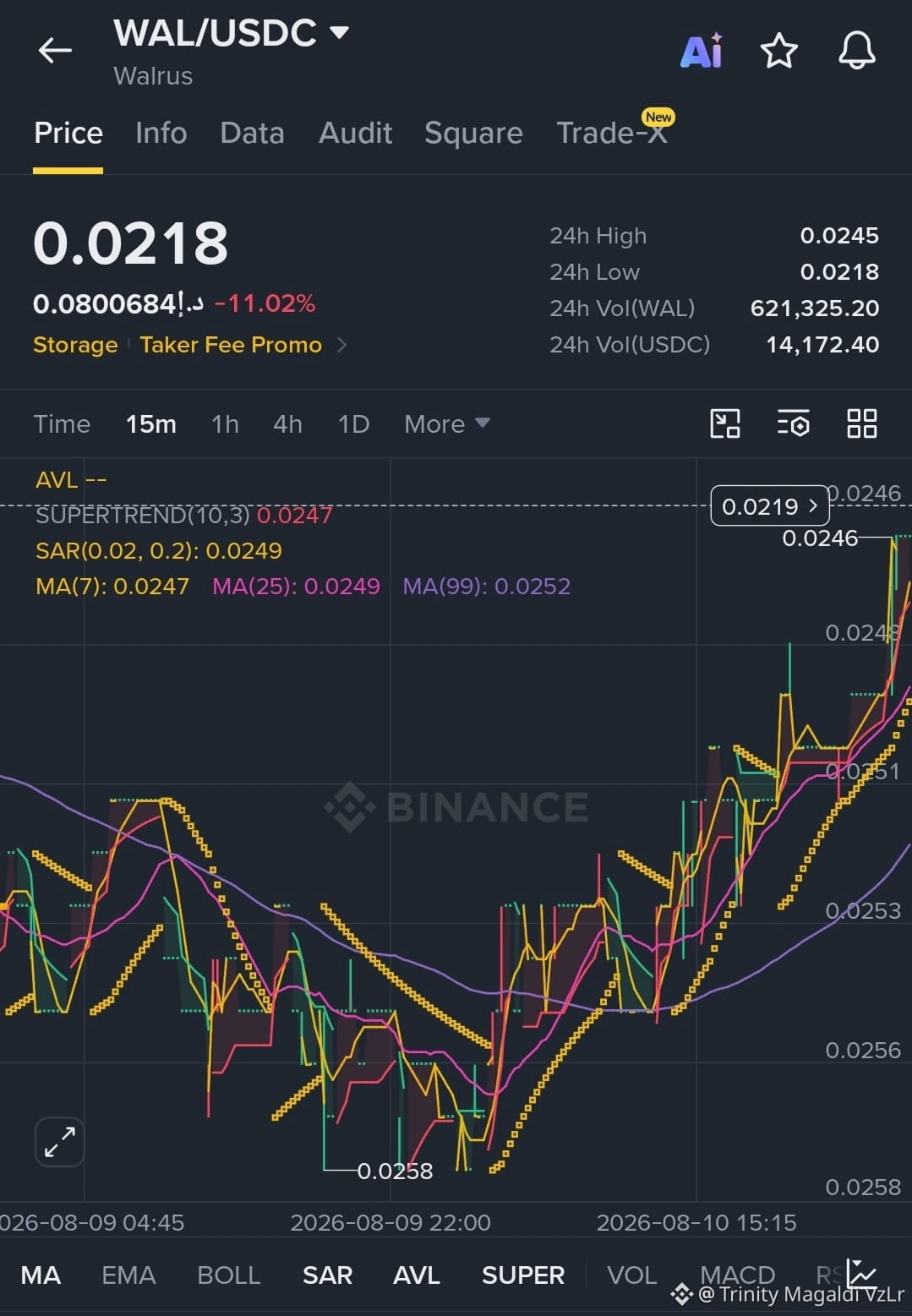
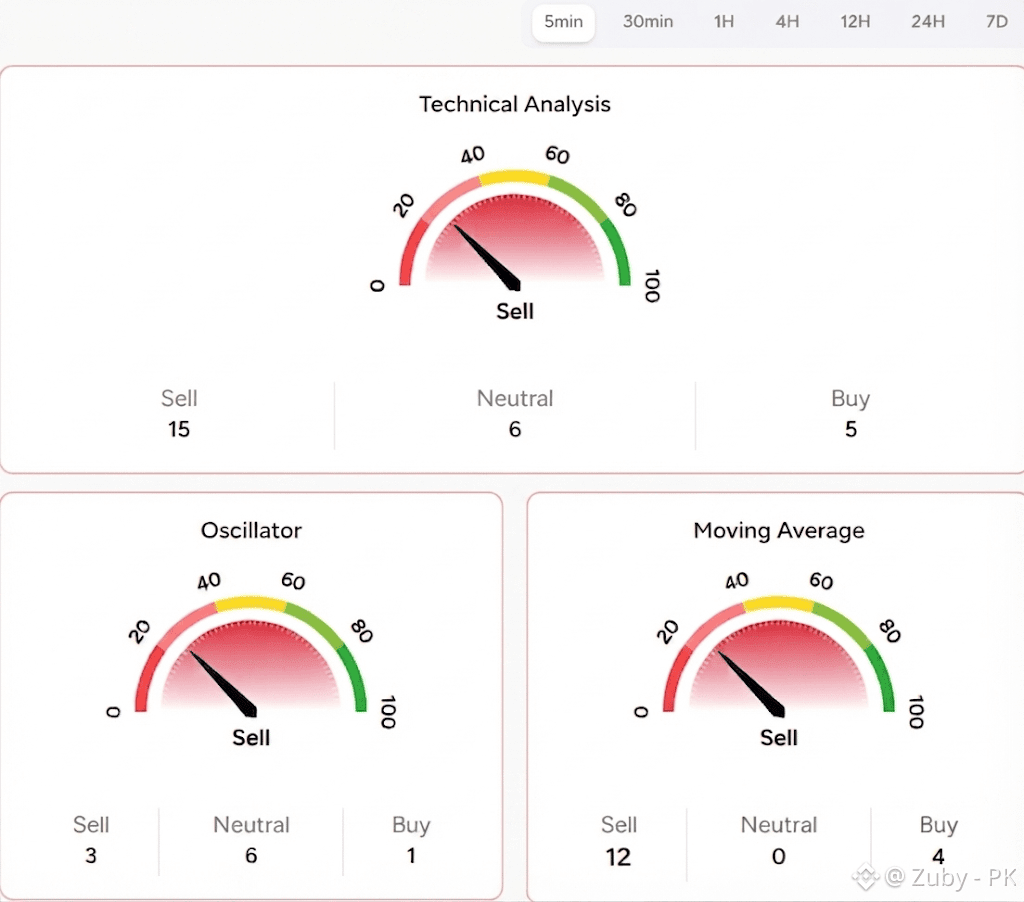
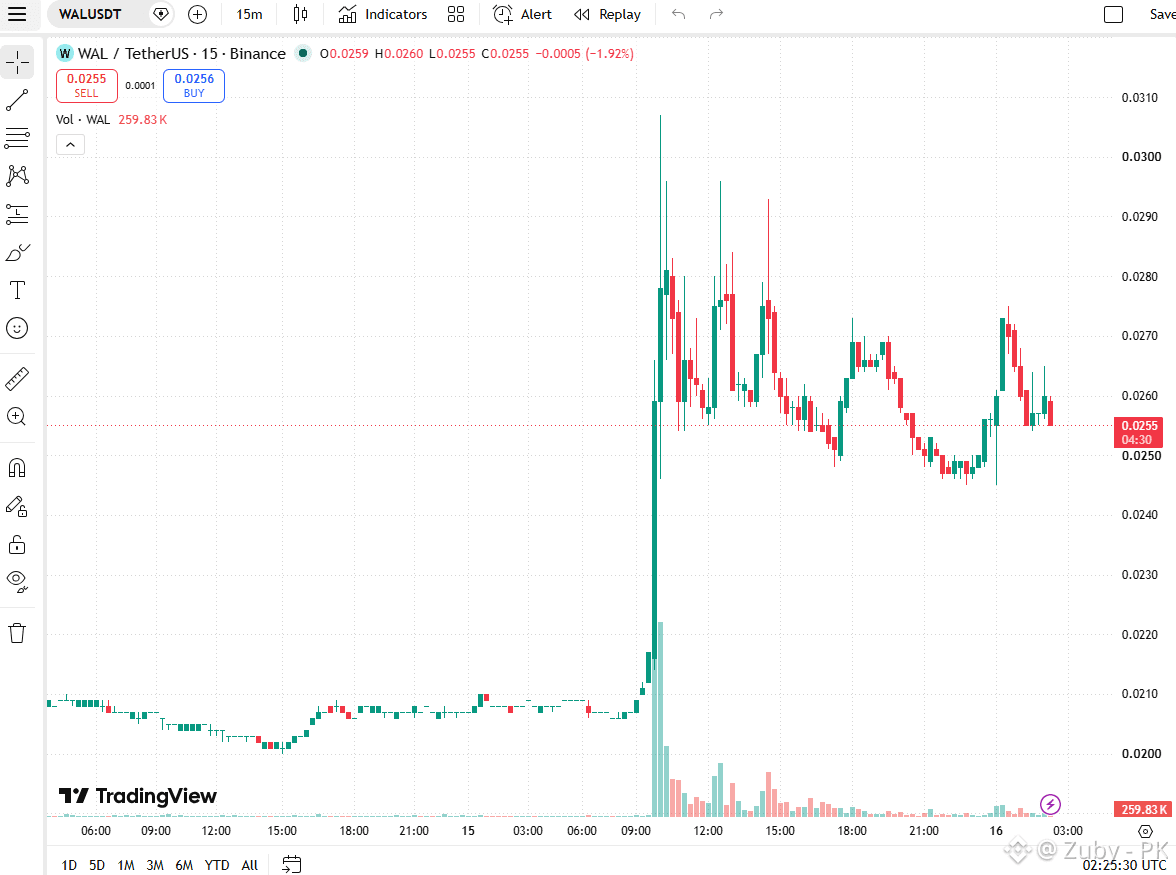
📈 Today's Trending Altcoin Analysis: 🐘 Walrus At A Glance
Price: $0.02295
🔻 -6.80% 1h
📈 +10.42% 24h
🔸24h Volume: $70.55M
Supply: 2.51B circulating / 5B max (Deflationary)
📉 Price Extremes
🔸ATH: $0.8742 (Mar 27, 2025) | -97.37% down
🔸ATL: $0.06917 (Mar 28, 2026) | -66.81% change
📊 Technicals & Indicators
🔸Trends: Bearish crossovers across short, medium, and long-term 🔸SMAs (50-day SMA: $0.02842 | 200-day SMA: $0.05924)
🔸Momentum: Volatility 4.85% (Neutral)
🔸RSI 47.09 (Neutral)
🔸MACD -0.0020 (Downward pressure)
🔸Signals: Stochastic K 21.32 (Bull zone)
🔸ROC -7.93 | MFI 79.68 (High participation)
🔊 Not financial advice. High volatility. Trade with risk management. DYOR ⚠️
#Walrus #WALToken #TechnicalAnalys
$WAL
{spot}(WALUSDT)
📈 Today's Trending Altcoin Analysis: 🐘 Walrus At A Glance
Price: $0.02295
🔻 -6.80% 1h
📈 +10.42% 24h
🔸24h Volume: $70.55M
Supply: 2.51B circulating / 5B max (Deflationary)
📉 Price Extremes
🔸ATH: $0.8742 (Mar 27, 2025) | -97.37% down
🔸ATL: $0.06917 (Mar 28, 2026) | -66.81% change
📊 Technicals & Indicators
🔸Trends: Bearish crossovers across short, medium, and long-term 🔸SMAs (50-day SMA: $0.02842 | 200-day SMA: $0.05924)
🔸Momentum: Volatility 4.85% (Neutral)
🔸RSI 47.09 (Neutral)
🔸MACD -0.0020 (Downward pressure)
🔸Signals: Stochastic K 21.32 (Bull zone)
🔸ROC -7.93 | MFI 79.68 (High participation)
🔊 Not financial advice. High volatility. Trade with risk management. DYOR ⚠️
#Walrus #WALToken #TechnicalAnalys
$WAL
Price: $0.02295
🔻 -6.80% 1h
📈 +10.42% 24h
🔸24h Volume: $70.55M
Supply: 2.51B circulating / 5B max (Deflationary)
📉 Price Extremes
🔸ATH: $0.8742 (Mar 27, 2025) | -97.37% down
🔸ATL: $0.06917 (Mar 28, 2026) | -66.81% change
📊 Technicals & Indicators
🔸Trends: Bearish crossovers across short, medium, and long-term 🔸SMAs (50-day SMA: $0.02842 | 200-day SMA: $0.05924)
🔸Momentum: Volatility 4.85% (Neutral)
🔸RSI 47.09 (Neutral)
🔸MACD -0.0020 (Downward pressure)
🔸Signals: Stochastic K 21.32 (Bull zone)
🔸ROC -7.93 | MFI 79.68 (High participation)
🔊 Not financial advice. High volatility. Trade with risk management. DYOR ⚠️
#Walrus #WALToken #TechnicalAnalys
$WAL
2
188


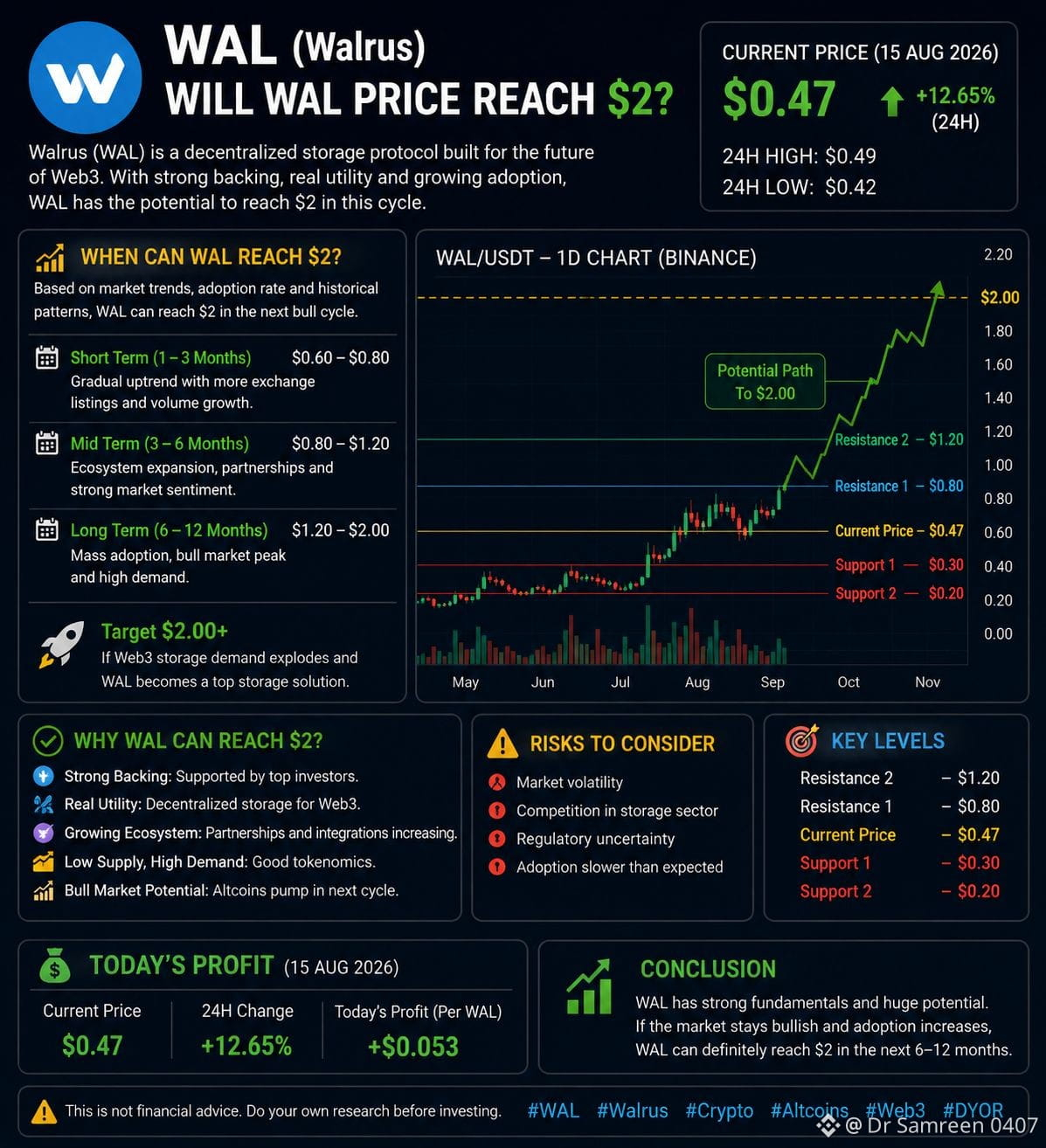
🔵 WAL (Walrus) — $2 Target Analysis 🚀
$WAL is a decentralized Web3 storage project with real utility and an expanding ecosystem. If the crypto market remains bullish, trading volume and adoption increase, and WAL breaks key resistance levels, $2 could become a long-term target—but it is not guaranteed.
📌 Key levels:
• Current area: ~$0.47
• Resistance: ~$0.80 → $1.20
• Major target: $2.00
• Support: ~$0.30 → $0.20
⏳ Possible timeline: A move toward $2 could take 6–12 months or longer depending on Bitcoin, altcoin momentum, adoption, and overall market conditions.
⚠️ WAL is highly volatile. Do your own research and use proper risk management. Not financial advice.
#wallet🔥 #walrus #WALusdt🚀🔥
🔵 WAL (Walrus) — $2 Target Analysis 🚀
$WAL is a decentralized Web3 storage project with real utility and an expanding ecosystem. If the crypto market remains bullish, trading volume and adoption increase, and WAL breaks key resistance levels, $2 could become a long-term target—but it is not guaranteed.
📌 Key levels:
• Current area: ~$0.47
• Resistance: ~$0.80 → $1.20
• Major target: $2.00
• Support: ~$0.30 → $0.20
⏳ Possible timeline: A move toward $2 could take 6–12 months or longer depending on Bitcoin, altcoin momentum, adoption, and overall market conditions.
⚠️ WAL is highly volatile. Do your own research and use proper risk management. Not financial advice.
#wallet🔥 #walrus #WALusdt🚀🔥
$WAL is a decentralized Web3 storage project with real utility and an expanding ecosystem. If the crypto market remains bullish, trading volume and adoption increase, and WAL breaks key resistance levels, $2 could become a long-term target—but it is not guaranteed.
📌 Key levels:
• Current area: ~$0.47
• Resistance: ~$0.80 → $1.20
• Major target: $2.00
• Support: ~$0.30 → $0.20
⏳ Possible timeline: A move toward $2 could take 6–12 months or longer depending on Bitcoin, altcoin momentum, adoption, and overall market conditions.
⚠️ WAL is highly volatile. Do your own research and use proper risk management. Not financial advice.
#wallet🔥 #walrus #WALusdt🚀🔥
102

·
--
$WAL 📊 growth analysis!
What is Walrus? Walrus is a next-generation decentralized data storage network built on Sui. The project focuses on scalability, low cost, and high performance for Web3 applications.
Current situation: price $0.0276** (+35.29%) has broken through all the EMAs — **bullish trend**. But **RSI 80.2** is strong overbought! Resistance **$0.0307, support $0.0221. Volume is huge — 113M in 24h.
Conclusion: enter only on a pullback to $0.024–0.025 with a short stop-loss. Overheating is obvious.
👉 Subscribe to the analyses!
#Walrus #DePIN #Trade 👇
{future}(WALUSDT)
$WAL 📊 growth analysis!
What is Walrus? Walrus is a next-generation decentralized data storage network built on Sui. The project focuses on scalability, low cost, and high performance for Web3 applications.
Current situation: price $0.0276** (+35.29%) has broken through all the EMAs — **bullish trend**. But **RSI 80.2** is strong overbought! Resistance **$0.0307, support $0.0221. Volume is huge — 113M in 24h.
Conclusion: enter only on a pullback to $0.024–0.025 with a short stop-loss. Overheating is obvious.
👉 Subscribe to the analyses!
#Walrus #DePIN #Trade 👇
What is Walrus? Walrus is a next-generation decentralized data storage network built on Sui. The project focuses on scalability, low cost, and high performance for Web3 applications.
Current situation: price $0.0276** (+35.29%) has broken through all the EMAs — **bullish trend**. But **RSI 80.2** is strong overbought! Resistance **$0.0307, support $0.0221. Volume is huge — 113M in 24h.
Conclusion: enter only on a pullback to $0.024–0.025 with a short stop-loss. Overheating is obvious.
👉 Subscribe to the analyses!
#Walrus #DePIN #Trade 👇
222
Log in to explore more content
Join global crypto users on Binance Square
⚡️ Get latest and useful information about crypto.
💬 Trusted by the world’s largest crypto exchange.
👍 Discover real insights from verified creators.
Email / Phone number
Trending Topics
1
#NFPWatch
10.7M views
18,681 Discussing
2
#BitcoinFundingRateTriplesTo10%
72,159 views
780 Discussing
3
#BitcoinSurpasses$86KUp2.99%
20,848 views
81 Discussing
4
#ZcashFalls21%FromSeptemberPeak
46,892 views
616 Discussing
5
#USSeptemberPayrollsAdd29KUnemploymentRises4.2%
38,655 views
388 Discussing
6
#XRPPostsFirstThreeGreenMonthsInQ3
33,477 views
564 Discussing
7
#BNBChainTokenizedStocksTop$1BAt30%Share
10,919 views
29 Discussing
8
#BitcoinRisesToward$85K
82,911 views
139 Discussing
9
#AmazonPlansToSell$8BNvidiaChips
6,869 views
85 Discussing
10
#NEARFallsToAround$4.70Down14%
44,622 views
111 Discussing