
#trump
trump
225.8M views
170,996 Discussing
Hot
Latest


Article
🚨 Top Trump Administration Officials Reportedly Relocated to Military BasesAccording to reports from Fox News, several senior $Trump administration officials have reportedly been moved to military bases along with their families.
The officials reportedly include Defense Secretary Pete Hegseth, Secretary of State Marco Rubio, Treasury Secretary Scott Bessent, Attorney General Todd Blanche, and Stephen Miller.
The reported move has attracted attention amid growing security concerns in the United States. However, the specific reasons behind the relocations have not been independently confirmed.
This development raises important questions about government security and the current political climate.
🌍 The world is watching closely as further details emerge.
What could this mean for U.S. security and global politics?
#Trump #USGovernment #FoxNews #WorldNews #Politics #BreakingNews $TRUMP
🚨 Top Trump Administration Officials Reportedly Relocated to Military Bases
According to reports from Fox News, several senior $Trump administration officials have reportedly been moved to military bases along with their families.
The officials reportedly include Defense Secretary Pete Hegseth, Secretary of State Marco Rubio, Treasury Secretary Scott Bessent, Attorney General Todd Blanche, and Stephen Miller.
The reported move has attracted attention amid growing security concerns in the United States. However, the specific reasons behind the relocations have not been independently confirmed.
This development raises important questions about government security and the current political climate.
🌍 The world is watching closely as further details emerge.
What could this mean for U.S. security and global politics?
#Trump #USGovernment #FoxNews #WorldNews #Politics #BreakingNews $TRUMP
1.1k

·
--
Bullish
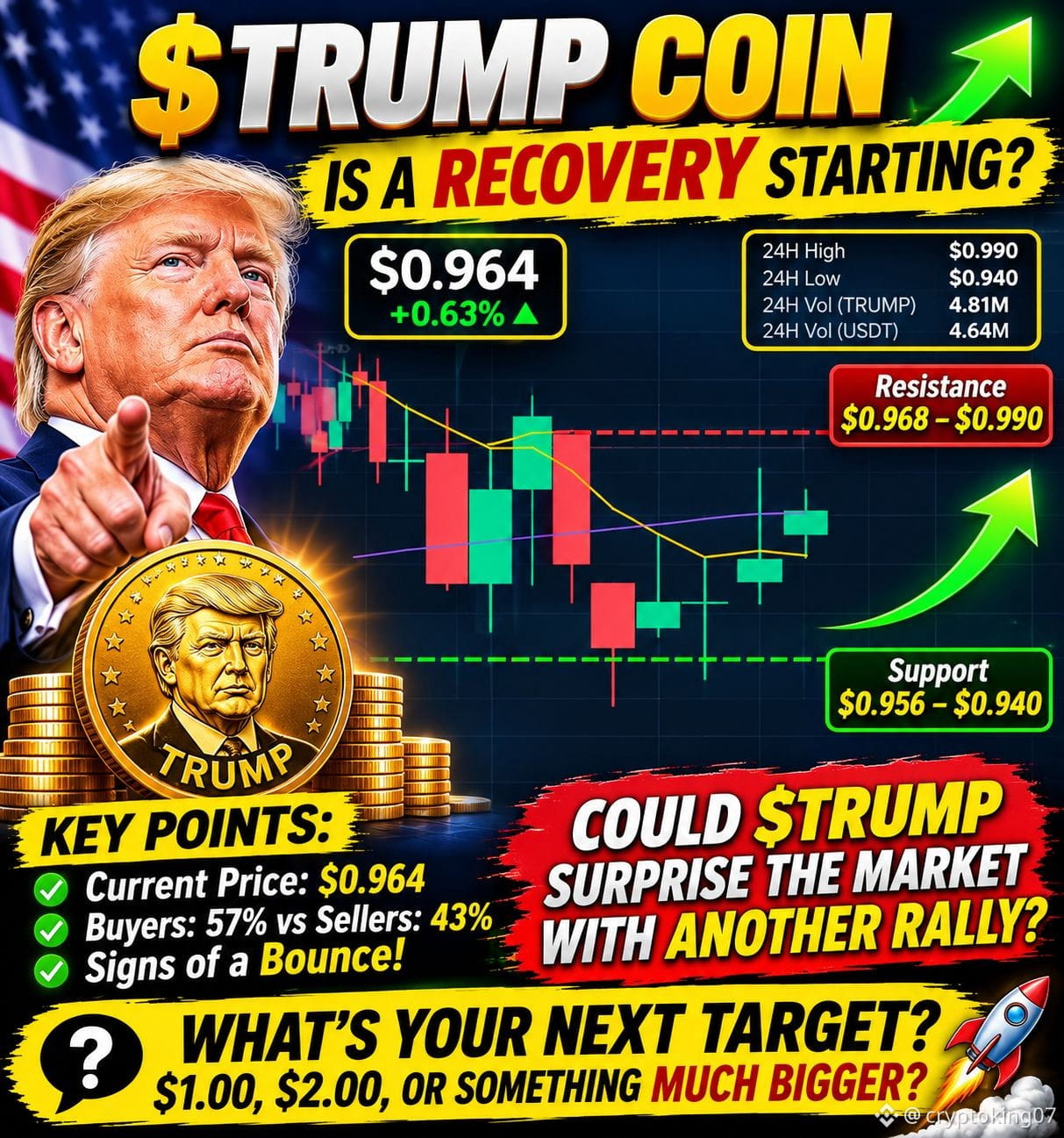
🚨 $TRUMP COIN: IS A RECOVERY STARTING? 🐂
Something interesting is happening with $TRUMP! 👀
After facing selling pressure, $TRUMP is showing signs of a short-term bounce. Could buyers be preparing for another move higher?
📊 Current Market Snapshot:
💰 Price: $0.964
🟢 24H Change: +0.63%
📈 24H High: $0.990
📉 24H Low: $0.940
🔥 Order Book: 57% Buyers vs 43% Sellers
Key Levels to Watch:
🟢 Support: $0.956 – $0.940
🔴 Resistance: $0.968 – $0.990
Buyers currently have a slight advantage in the order book, but TRUMP needs stronger volume and a breakout above resistance to confirm bullish momentum.
Could $TRUMP surprise the market with a bigger comeback? Or will sellers take control again?
🎯 What's your next target for TRUMP?
$1.00, $2.00, or something much bigger? 👇
#TRUMP #TrumpCoin #Crypto #BinanceSquare #CryptoTrading
{future}(TRUMPUSDT)
🚨 $TRUMP COIN: IS A RECOVERY STARTING? 🐂
Something interesting is happening with $TRUMP ! 👀
After facing selling pressure, $TRUMP is showing signs of a short-term bounce. Could buyers be preparing for another move higher?
📊 Current Market Snapshot:
💰 Price: $0.964
🟢 24H Change: +0.63%
📈 24H High: $0.990
📉 24H Low: $0.940
🔥 Order Book: 57% Buyers vs 43% Sellers
Key Levels to Watch:
🟢 Support: $0.956 – $0.940
🔴 Resistance: $0.968 – $0.990
Buyers currently have a slight advantage in the order book, but TRUMP needs stronger volume and a breakout above resistance to confirm bullish momentum.
Could $TRUMP surprise the market with a bigger comeback? Or will sellers take control again?
🎯 What's your next target for TRUMP?
$1.00, $2.00, or something much bigger? 👇
#TRUMP #TrumpCoin #Crypto #BinanceSquare #CryptoTrading
1
819


Article
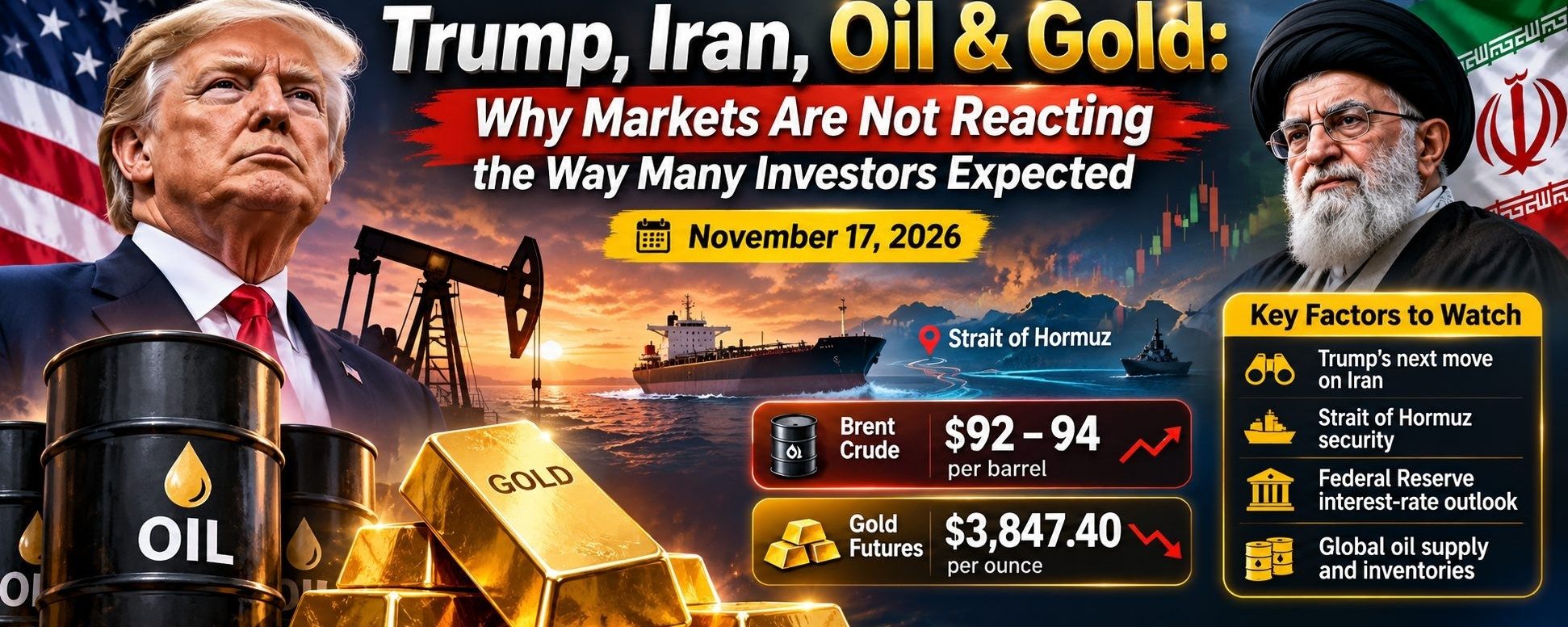
Trump, Iran, Oil & Gold: Why Markets Are Not Reacting the Way Many Investors Expected | November 17,Sometimes the biggest market moves happen when reality does not match expectations.
That is exactly what we are seeing in the relationship between Donald Trump, Iran, crude oil, and gold.
At first glance, rising tensions in the Middle East should normally support oil and push investors towards gold. But the current market is telling a more complicated story.
Let's look at what is really happening.
🇺🇸 Trump's Iran Strategy Is Keeping Markets Uncertain
Trump's approach towards Iran remains one of the biggest geopolitical factors influencing financial markets.
Washington is maintaining economic and military pressure, while diplomatic efforts have struggled to produce a lasting agreement.
Recent Iranian drone attacks in Bahrain and continuing threats to commercial shipping have reminded investors that the situation is far from settled.
However, markets are not reacting to headlines alone. Investors are also trying to understand whether the situation will escalate further or gradually move towards stability.
That difference matters enormously for oil prices.
🛢️ Why Oil Is Not Rising Despite Middle East Tensions
Here is something many market participants might overlook.
The Strait of Hormuz is one of the world's most important energy shipping routes. Any serious disruption can affect global oil supply and increase transportation costs.
Yet geopolitical risk is only one part of the oil equation.
On November 17, Brent crude was trading around the $92–94 range, depending on the market snapshot.
Why isn't oil showing a stronger sustained rally?
Because expectations of recovering Middle Eastern exports and a possible global supply surplus are balancing the geopolitical risk premium.
In simple terms, traders are weighing two competing possibilities:
- Military escalation could disrupt shipments and push oil higher.
- Recovering supply and weaker demand could keep prices under pressure.
This is why an alarming geopolitical headline does not automatically translate into a lasting oil rally.
🥇 Gold: A Safe-Haven Asset Facing Its Own Pressure
Gold is presenting another interesting picture.
On November 16, gold futures settled at approximately $3,847.40 per ounce, marking a new 52-week settlement low.
That is particularly interesting because geopolitical uncertainty usually increases demand for safe-haven assets.
So why has gold struggled?
The US dollar, Treasury yields, and expectations surrounding Federal Reserve interest rates are important factors.
When investors expect interest rates to remain high or potentially increase, holding gold becomes less attractive because gold does not pay interest.
This creates a situation where geopolitical uncertainty supports gold, but monetary policy expectations work in the opposite direction.
That is an important distinction for anyone following the precious metals market.
🔍 What Should Investors Watch Next?
Rather than reacting to every breaking headline, I believe there are four important developments worth monitoring:
1. Trump's next move: Any change in US policy towards Iran could quickly influence market sentiment.
2. Strait of Hormuz: Shipping activity and any further attacks could change the outlook for crude oil.
3. Federal Reserve expectations: Interest-rate expectations and the US dollar could remain major drivers for gold.
4. Global oil inventories: Actual supply and demand data will help determine whether the expected surplus becomes reality.
My Market Take
The most interesting lesson from today's market is that geopolitical risk and asset prices do not always move in the same direction.
Oil can struggle despite regional tensions when supply expectations improve.
Gold can decline despite geopolitical uncertainty when the dollar and interest-rate outlook become stronger forces.
For me, the key is to understand the bigger picture instead of trading every headline.
The next major move in oil and gold may depend less on what politicians say and more on what actually happens to global supply, shipping routes, interest rates, and investor confidence.
Markets reward patience and understanding, not emotional reactions.
What do you think will have the bigger influence on the next market move: Trump's Iran policy, crude oil supply, or the Federal Reserve's interest-rate decisions?
#Trump #Iran #CrudeOil #Gold #MarketAnalysis
Trump, Iran, Oil & Gold: Why Markets Are Not Reacting the Way Many Investors Expected | November 17,
Sometimes the biggest market moves happen when reality does not match expectations.
That is exactly what we are seeing in the relationship between Donald Trump, Iran, crude oil, and gold.
At first glance, rising tensions in the Middle East should normally support oil and push investors towards gold. But the current market is telling a more complicated story.
Let's look at what is really happening.
🇺🇸 Trump's Iran Strategy Is Keeping Markets Uncertain
Trump's approach towards Iran remains one of the biggest geopolitical factors influencing financial markets.
Washington is maintaining economic and military pressure, while diplomatic efforts have struggled to produce a lasting agreement.
Recent Iranian drone attacks in Bahrain and continuing threats to commercial shipping have reminded investors that the situation is far from settled.
However, markets are not reacting to headlines alone. Investors are also trying to understand whether the situation will escalate further or gradually move towards stability.
That difference matters enormously for oil prices.
🛢️ Why Oil Is Not Rising Despite Middle East Tensions
Here is something many market participants might overlook.
The Strait of Hormuz is one of the world's most important energy shipping routes. Any serious disruption can affect global oil supply and increase transportation costs.
Yet geopolitical risk is only one part of the oil equation.
On November 17, Brent crude was trading around the $92–94 range, depending on the market snapshot.
Why isn't oil showing a stronger sustained rally?
Because expectations of recovering Middle Eastern exports and a possible global supply surplus are balancing the geopolitical risk premium.
In simple terms, traders are weighing two competing possibilities:
- Military escalation could disrupt shipments and push oil higher.
- Recovering supply and weaker demand could keep prices under pressure.
This is why an alarming geopolitical headline does not automatically translate into a lasting oil rally.
🥇 Gold: A Safe-Haven Asset Facing Its Own Pressure
Gold is presenting another interesting picture.
On November 16, gold futures settled at approximately $3,847.40 per ounce, marking a new 52-week settlement low.
That is particularly interesting because geopolitical uncertainty usually increases demand for safe-haven assets.
So why has gold struggled?
The US dollar, Treasury yields, and expectations surrounding Federal Reserve interest rates are important factors.
When investors expect interest rates to remain high or potentially increase, holding gold becomes less attractive because gold does not pay interest.
This creates a situation where geopolitical uncertainty supports gold, but monetary policy expectations work in the opposite direction.
That is an important distinction for anyone following the precious metals market.
🔍 What Should Investors Watch Next?
Rather than reacting to every breaking headline, I believe there are four important developments worth monitoring:
1. Trump's next move: Any change in US policy towards Iran could quickly influence market sentiment.
2. Strait of Hormuz: Shipping activity and any further attacks could change the outlook for crude oil.
3. Federal Reserve expectations: Interest-rate expectations and the US dollar could remain major drivers for gold.
4. Global oil inventories: Actual supply and demand data will help determine whether the expected surplus becomes reality.
My Market Take
The most interesting lesson from today's market is that geopolitical risk and asset prices do not always move in the same direction.
Oil can struggle despite regional tensions when supply expectations improve.
Gold can decline despite geopolitical uncertainty when the dollar and interest-rate outlook become stronger forces.
For me, the key is to understand the bigger picture instead of trading every headline.
The next major move in oil and gold may depend less on what politicians say and more on what actually happens to global supply, shipping routes, interest rates, and investor confidence.
Markets reward patience and understanding, not emotional reactions.
What do you think will have the bigger influence on the next market move: Trump's Iran policy, crude oil supply, or the Federal Reserve's interest-rate decisions?
#Trump #Iran #CrudeOil #Gold #MarketAnalysis
1
1.4k

·
--
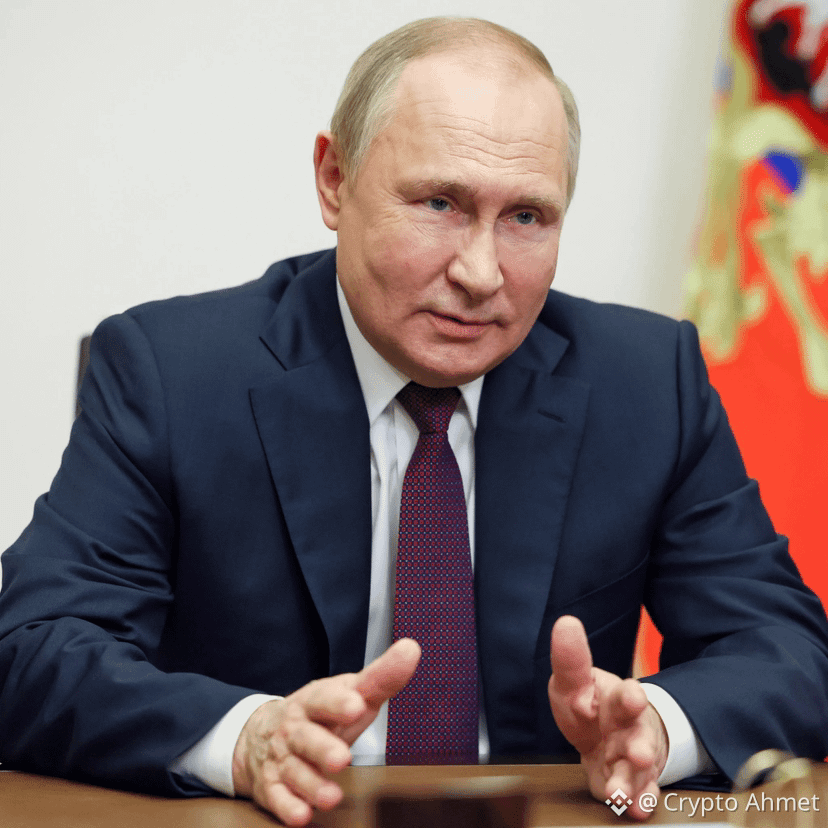
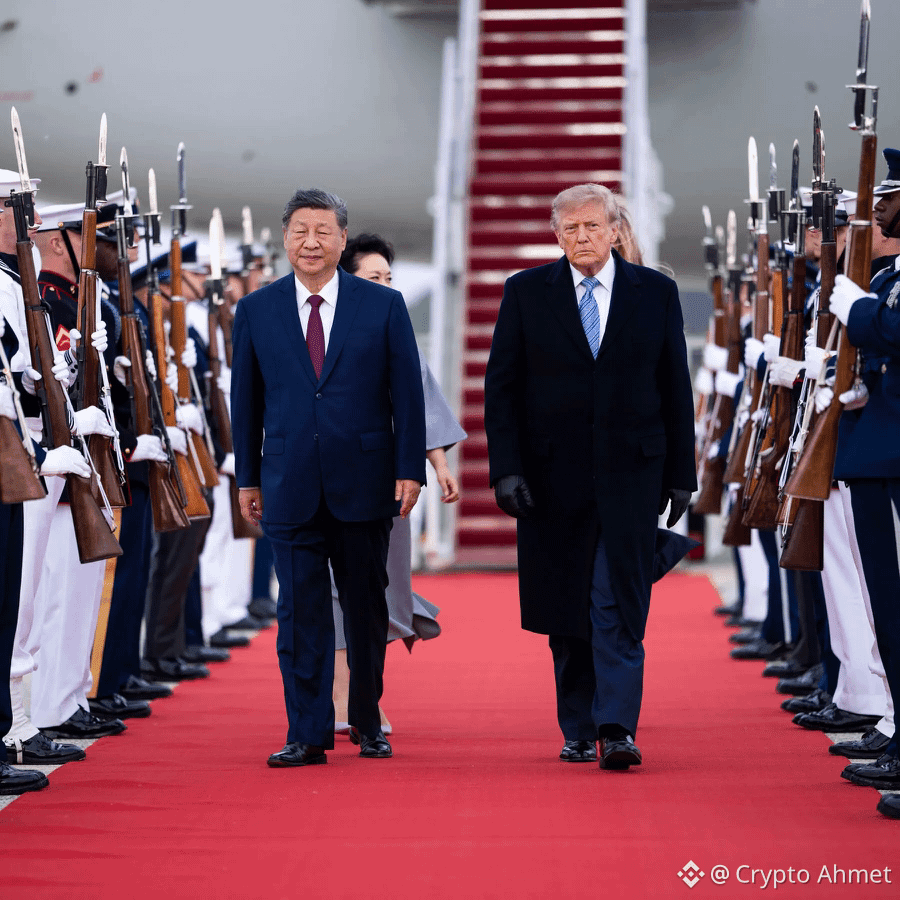
🚨 BREAKING: PUTIN SIGNALS A HISTORIC TRILATERAL SUMMIT WITH TRUMP AND XI!
Russian President Vladimir Putin says a three-way summit with Donald #TRUMP and Xi Jinping would be extremely beneficial.
$TRUMP $SOL $BNB
#CanNvidia’sDataCenterGrowthContinue? #CanadaAndUSLaunchOperationNiagaraAgainstApprovalPhishing #NvidiaBeatsEstimatesWith$130BQ4Outlook #LedgerHardwareImplantReportsExtendToDubai
Trong_Hatachi:
Putin calling a trilateral summit “extremely beneficial” is a notable signal—curious whether Trump and Xi respond. Follow me back if you enjoy these updates!
5
18
5.8k

Article
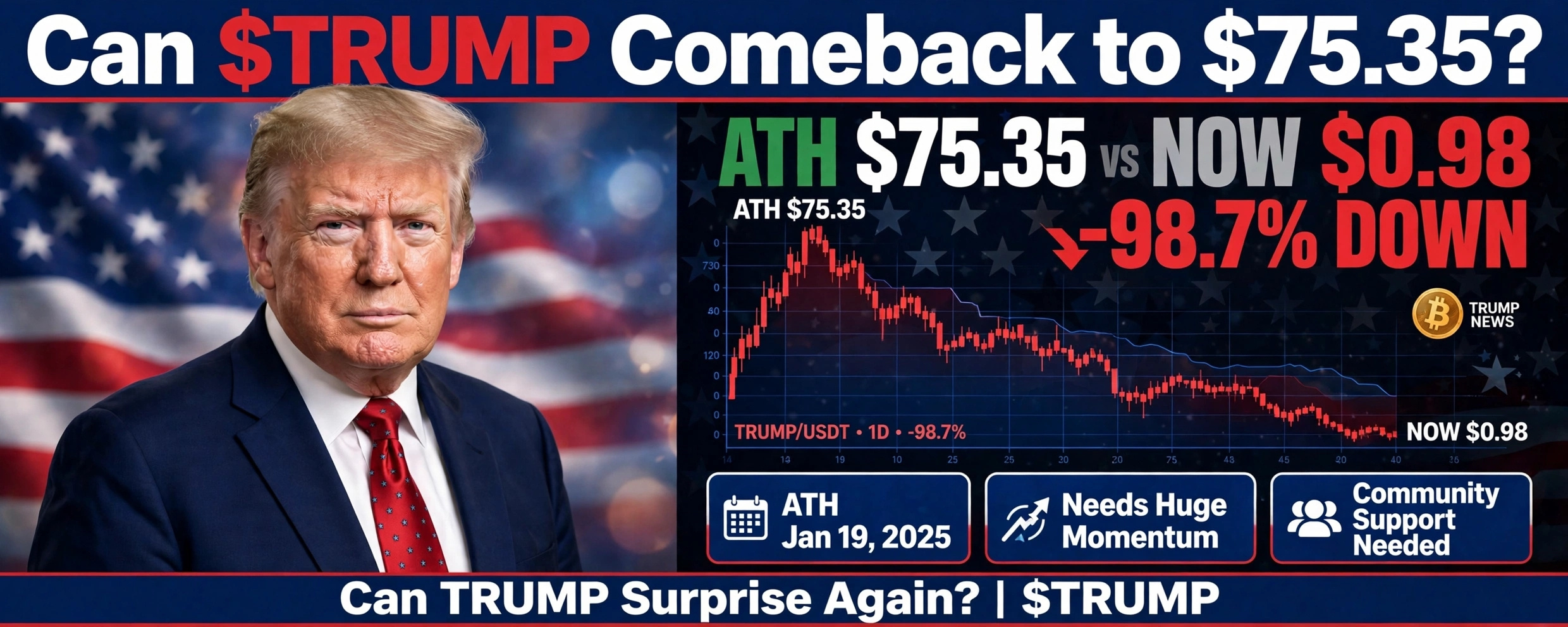
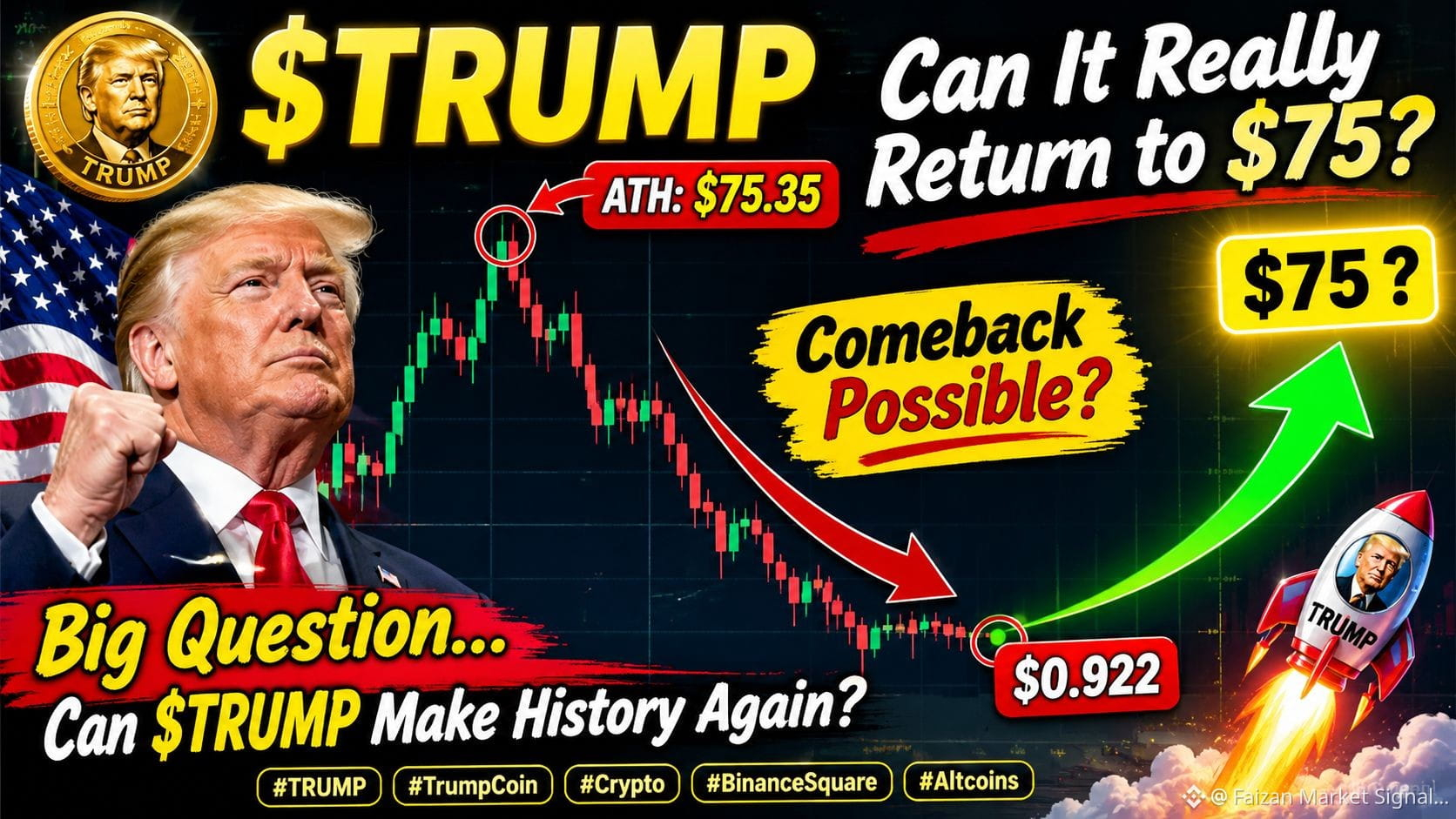
🚨 $TRUMP COIN: IS A RETURN TO $75 POSSIBLE?Could $TRUMP Coin ever make a comeback and revisit its previous All-Time High of $75.35? 🚀
The token has experienced a significant decline from its January 19, 2025 peak, raising questions about its long-term potential.
📉 Previous ATH: $75.35
💰 Price in the shared screenshot: $0.922
A recovery to previous highs would require substantial market momentum, renewed investor interest, and strong community support.
However, reaching $75 again would be an extremely ambitious move, and there is no guarantee of such a recovery.
{spot}(TRUMPUSDT)
🔥 Is another major rally possible, or will $TRUMP remain far below its previous peak?
💬 What do you think? Can $TRUMP surprise the market again?
$TRUMP was trading near $0.98, while remaining approximately 98.7% below its ATH. This confirms that the comeback question is still a major challenge for the token.
#TRUMP #TrumpCoin #CryptoNews #BinanceSquare
🚨 $TRUMP COIN: IS A RETURN TO $75 POSSIBLE?
Could $TRUMP Coin ever make a comeback and revisit its previous All-Time High of $75.35? 🚀
The token has experienced a significant decline from its January 19, 2025 peak, raising questions about its long-term potential.
📉 Previous ATH: $75.35
💰 Price in the shared screenshot: $0.922
A recovery to previous highs would require substantial market momentum, renewed investor interest, and strong community support.
However, reaching $75 again would be an extremely ambitious move, and there is no guarantee of such a recovery.
🔥 Is another major rally possible, or will $TRUMP remain far below its previous peak?
💬 What do you think? Can $TRUMP surprise the market again?
$TRUMP was trading near $0.98, while remaining approximately 98.7% below its ATH. This confirms that the comeback question is still a major challenge for the token.
#TRUMP #TrumpCoin #CryptoNews #BinanceSquare
GrantJM:
lol . no . sorry . pump n dump .
3
4
3.4k

🚀 $TRUMP — CAN IT MAKE A MASSIVE COMEBACK TO $75❓ 🇺🇸
$TRUMP
{spot}(TRUMPUSDT)
has experienced a massive decline from its previous all-time high of $75.35, with the shared chart showing a price around $0.922. 📉 The big question is whether this memecoin can regain its former momentum and surprise the market once again. 👀🔥
✳️A recovery would require more than just hype. 💥 Strong investor interest, increasing trading volume, improved liquidity, and sustained buying pressure would all play an important role. 📊 However, reaching $75 again would demand an extraordinary rally. We also need to consider circulating supply, market capitalization, and potential selling pressure. ⚠️
🚀 Can $TRUMP make another historic comeback, or is $75 now an unrealistic target❓
👇 What's your prediction? Bullish or bearish❓
#TRUMP
#NvidiaBoardNotConsideringHuang’sReturnasCEO #CanNvidia’sDataCenterGrowthContinue?
#KOSPIFalls2.59%ToLowestCloseSinceFebruary #AnthropicClearedToListOnNasdaqAsANT
🚀 $TRUMP — CAN IT MAKE A MASSIVE COMEBACK TO $75❓ 🇺🇸
$TRUMP
has experienced a massive decline from its previous all-time high of $75.35, with the shared chart showing a price around $0.922. 📉 The big question is whether this memecoin can regain its former momentum and surprise the market once again. 👀🔥
✳️A recovery would require more than just hype. 💥 Strong investor interest, increasing trading volume, improved liquidity, and sustained buying pressure would all play an important role. 📊 However, reaching $75 again would demand an extraordinary rally. We also need to consider circulating supply, market capitalization, and potential selling pressure. ⚠️
🚀 Can $TRUMP make another historic comeback, or is $75 now an unrealistic target❓
👇 What's your prediction? Bullish or bearish❓
#TRUMP
#NvidiaBoardNotConsideringHuang’sReturnasCEO #CanNvidia’sDataCenterGrowthContinue?
#KOSPIFalls2.59%ToLowestCloseSinceFebruary #AnthropicClearedToListOnNasdaqAsANT
1KrAsAv4iK2:
Резкое падение пережили все.Ненужно акцентировать на одном Трампе, все будет Ок.
1
1.1k

Article
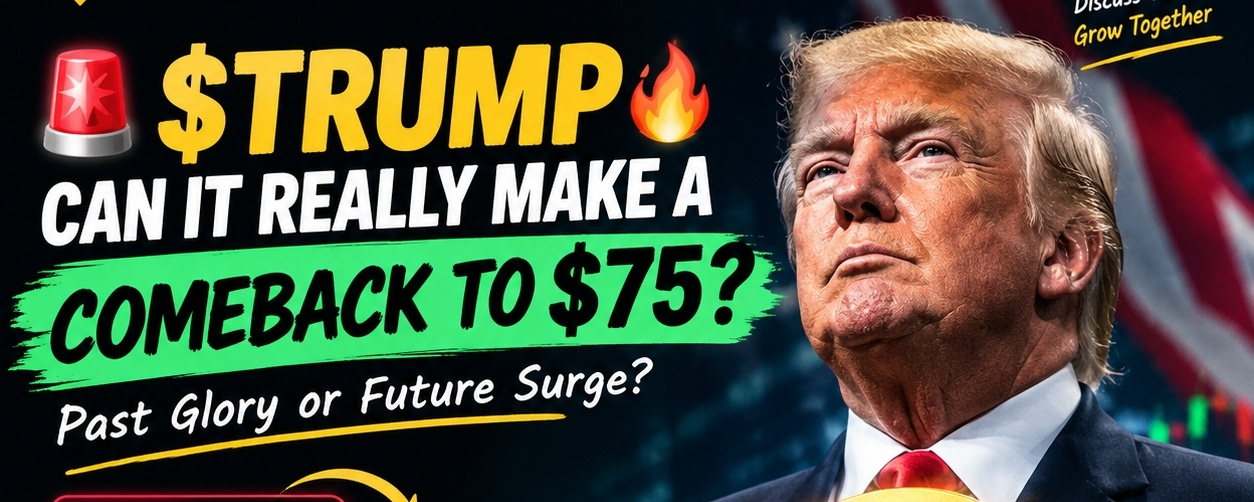
🚨🔥 $TRUMP: Can It Really Make a Comeback to $75🚨🔥 $TRUMP: Can It Really Make a Comeback to $75?
I've been looking at $TRUMP, and honestly, the difference between its previous peak and its current price is incredible.
This coin once reached an all-time high of $75.35, while the shared screenshot shows a price of around $0.922.
That's a huge drop, but it also raises an interesting question: Could $TRUMP surprise the market with another massive comeback? 👀
Personally, I believe nothing is guaranteed in crypto. A return to $75 would be extremely ambitious, but renewed market interest could potentially change its direction.
However, hype alone won't do the job. $TRUMP would need strong buying pressure, increasing trading volume, fresh investor interest, and sustained market momentum.
For now, I'm keeping an eye on its next move. The real question is whether this coin still has another big rally ahead or whether its best days are already behind it.
🔥 What's your opinion? Can $TRUMP ever reach $75 again, or is that target too ambitious?
#TRUMP #TrumpCoin #crypto #Binance #altcoins
🚨🔥 $TRUMP: Can It Really Make a Comeback to $75
🚨🔥 $TRUMP: Can It Really Make a Comeback to $75?
I've been looking at $TRUMP, and honestly, the difference between its previous peak and its current price is incredible.
This coin once reached an all-time high of $75.35, while the shared screenshot shows a price of around $0.922.
That's a huge drop, but it also raises an interesting question: Could $TRUMP surprise the market with another massive comeback? 👀
Personally, I believe nothing is guaranteed in crypto. A return to $75 would be extremely ambitious, but renewed market interest could potentially change its direction.
However, hype alone won't do the job. $TRUMP would need strong buying pressure, increasing trading volume, fresh investor interest, and sustained market momentum.
For now, I'm keeping an eye on its next move. The real question is whether this coin still has another big rally ahead or whether its best days are already behind it.
🔥 What's your opinion? Can $TRUMP ever reach $75 again, or is that target too ambitious?
#TRUMP #TrumpCoin #crypto #Binance #altcoins
1
1.2k

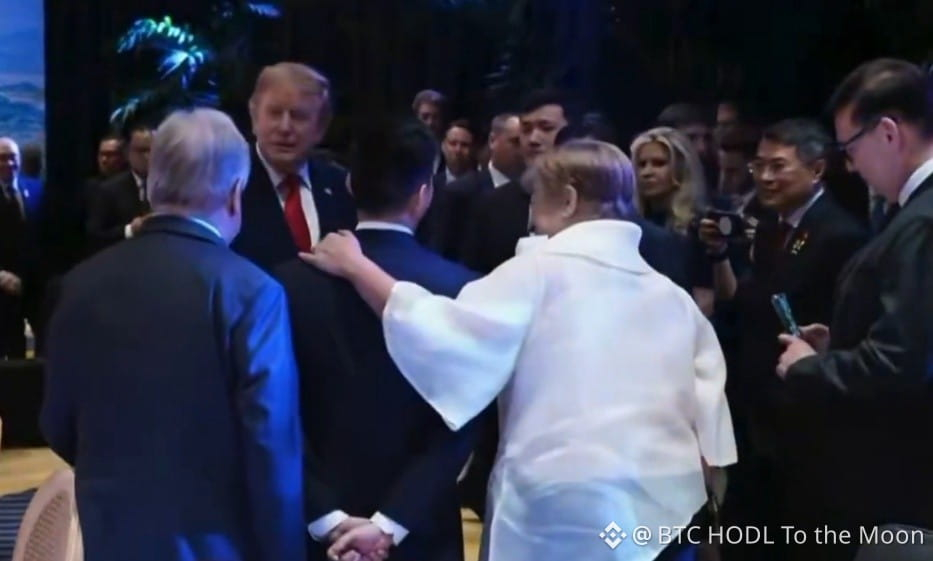
💥 Oh my God, #TRUMP personal charisma is undeniable, causing other presidents to flock around him.
🚨🚨🚨🤯🤯🤯
* President Trump is completely surrounded by global leaders desperate to get a word with him at the dinner!
* They aren't just leaders anymore—they are fans. Trump is a TRUE ROCKSTAR on the world stage! 🌠
🔥 Is anyone else commanding global power like this?
$BTC $TRUMP $BREV
{future}(BTCUSDT)
{future}(TRUMPUSDT)
{future}(BREVUSDT)
💥 Oh my God, #TRUMP personal charisma is undeniable, causing other presidents to flock around him.
🚨🚨🚨🤯🤯🤯
* President Trump is completely surrounded by global leaders desperate to get a word with him at the dinner!
* They aren't just leaders anymore—they are fans. Trump is a TRUE ROCKSTAR on the world stage! 🌠
🔥 Is anyone else commanding global power like this?
$BTC $TRUMP $BREV
🚨🚨🚨🤯🤯🤯
* President Trump is completely surrounded by global leaders desperate to get a word with him at the dinner!
* They aren't just leaders anymore—they are fans. Trump is a TRUE ROCKSTAR on the world stage! 🌠
🔥 Is anyone else commanding global power like this?
$BTC $TRUMP $BREV
1.1k

🚨🔥 $TRUMP — CAN IT REALLY RETURN TO $75?
From an ATH of $75.35 to around $0.922… that's a massive fall! 😳
But is the comeback story over? 👀
Crypto can surprise everyone. If strong buying pressure, fresh liquidity, and market hype return, $TRUMP could get another chance.
⚠️ But let's be realistic: $75 is a huge target, and it would require extraordinary demand. Nothing is guaranteed.
🔥 One big question for the community:
Can $TRUMP make history again, or was $75 its biggest moment?
👇 Drop your prediction
#TRUMP #TrumpCoin #Crypto #BinanceSquare #Write2Earn
665

Article
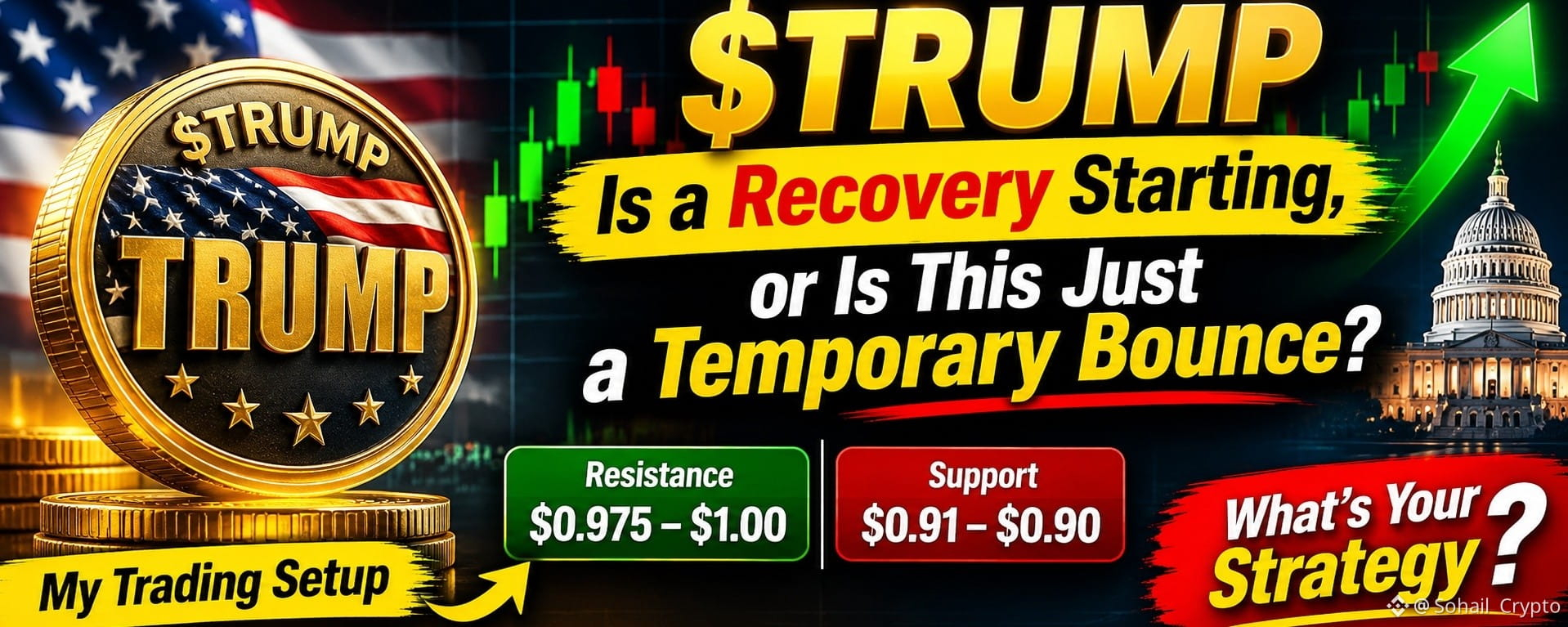
🚨 $TRUMP: Is a Recovery Starting, or Is This Just a Temporary Bounce?$TRUMP is showing signs of a short-term recovery, but the bigger picture still needs attention.
The token is trading around $0.96, with buyers attempting to regain momentum after a difficult week. However, one green candle is not enough to confirm a trend reversal.
Key Levels to Watch:
Resistance: $0.975 – $1.00
Support: $0.91 – $0.90
Trading Setup:
LONG: Only after a confirmed breakout above $0.975 with strong volume.
SHORT: If price faces rejection and loses the $0.91 support.
Invalidation: Reassess the setup if price breaks the opposite key level.
My View: I'm watching volume and price confirmation rather than chasing sudden pumps. The next move could be important for short-term traders.
💬 What's your strategy for $TRUMP ?
Are you accumulating at these levels, waiting for a breakout, or staying on the sidelines?
Let's discuss below! 👇
⚠️ Trading Disclaimer: This is for educational purposes only, not financial advice. Always do your own research and manage risk before trading.
#TRUMP
{spot}(TRUMPUSDT)
#Crypto #BinanceSquare
🚨 $TRUMP: Is a Recovery Starting, or Is This Just a Temporary Bounce?
$TRUMP is showing signs of a short-term recovery, but the bigger picture still needs attention.
The token is trading around $0.96, with buyers attempting to regain momentum after a difficult week. However, one green candle is not enough to confirm a trend reversal.
Key Levels to Watch:
Resistance: $0.975 – $1.00
Support: $0.91 – $0.90
Trading Setup:
LONG: Only after a confirmed breakout above $0.975 with strong volume.
SHORT: If price faces rejection and loses the $0.91 support.
Invalidation: Reassess the setup if price breaks the opposite key level.
My View: I'm watching volume and price confirmation rather than chasing sudden pumps. The next move could be important for short-term traders.
💬 What's your strategy for $TRUMP ?
Are you accumulating at these levels, waiting for a breakout, or staying on the sidelines?
Let's discuss below! 👇
⚠️ Trading Disclaimer: This is for educational purposes only, not financial advice. Always do your own research and manage risk before trading.
#TRUMP
#Crypto #BinanceSquare
3
1k

·
--
Bullish
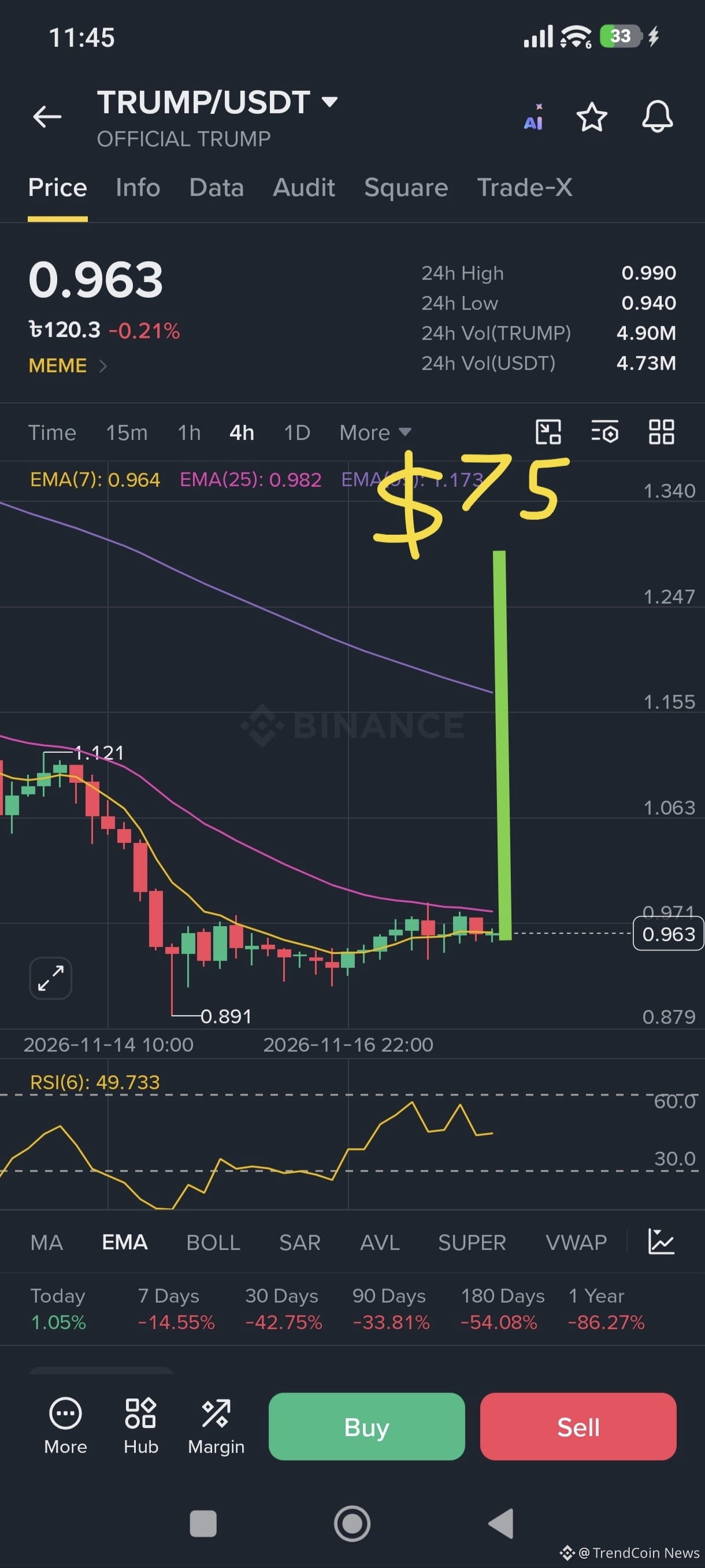
$10,000 in $TRUMP at the top is worth about $130 today 😳
read that again 👀
it hit $73, everyone screamed "to $100," and the crowd poured in 🚀
now it sits at $0.96, and the ones who bought the hype are still holding 🔻
the launch made headlines, but only 20% of the supply was out at the start 😏
so while retail was cheering, most of the coin was still locked 🤑
now every bounce hits resistance and gets sold 💰
a pump needs fresh buyers, and right now I don't see them 🔻
I'm bearish, selling the bounces until it breaks that zone with real strength 🎯
Trade here👇
{future}(TRUMPUSDT)
#TRUMP #trumpusdt #TrumpCrypto #CanNvidia’sDataCenterGrowthContinue? #LedgerHardwareImplantReportsExtendToDubai
$10,000 in $TRUMP at the top is worth about $130 today 😳
read that again 👀
it hit $73, everyone screamed "to $100," and the crowd poured in 🚀
now it sits at $0.96, and the ones who bought the hype are still holding 🔻
the launch made headlines, but only 20% of the supply was out at the start 😏
so while retail was cheering, most of the coin was still locked 🤑
now every bounce hits resistance and gets sold 💰
a pump needs fresh buyers, and right now I don't see them 🔻
I'm bearish, selling the bounces until it breaks that zone with real strength 🎯
Trade here👇
#TRUMP #trumpusdt #TrumpCrypto #CanNvidia’sDataCenterGrowthContinue? #LedgerHardwareImplantReportsExtendToDubai
1
73

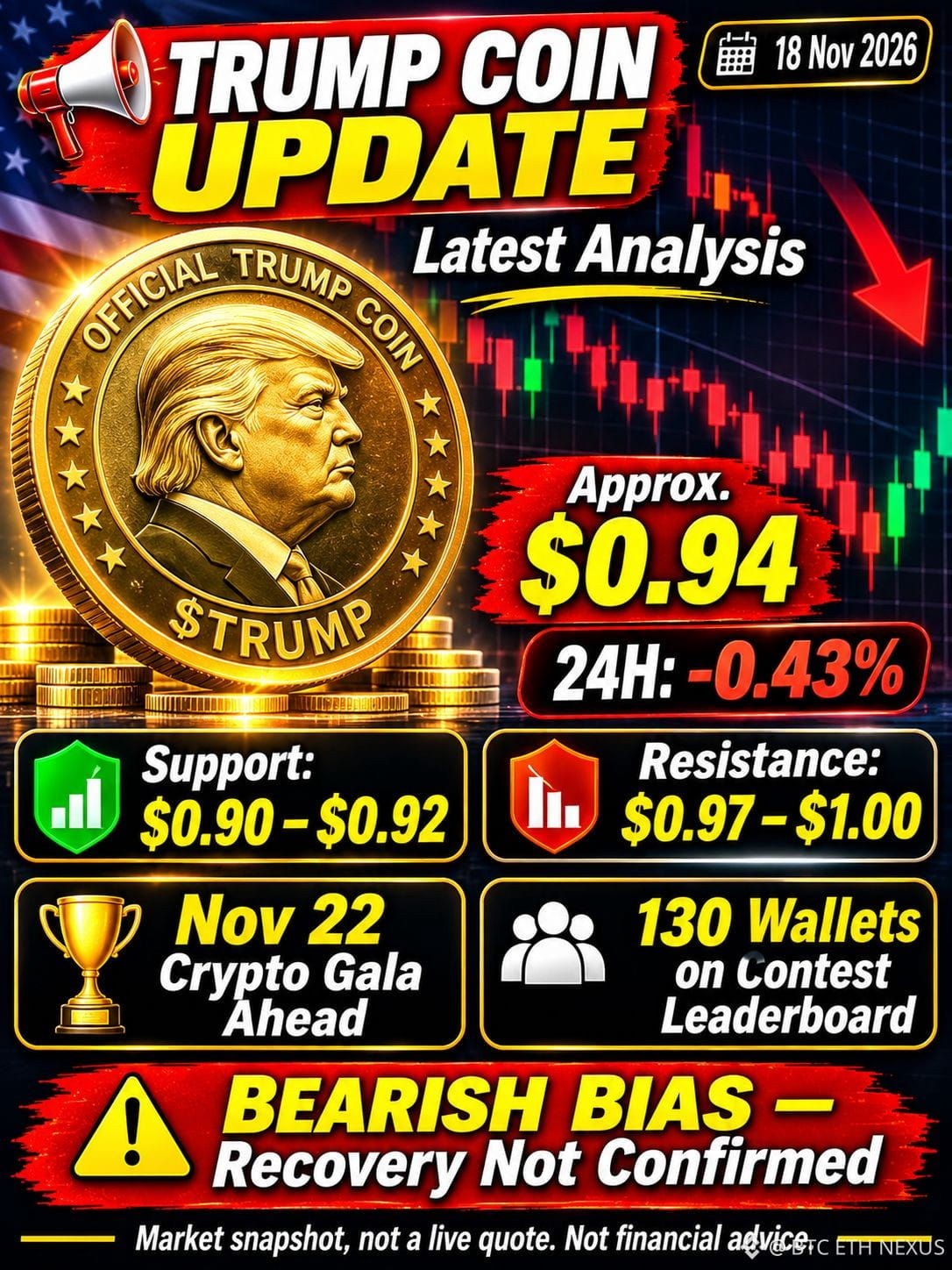
🚨🇺🇸 $TRUMP COIN UNDER PRESSURE!
The Official $TRUMP meme coin is trading near $0.94, while investor interest in its upcoming November 22 crypto gala appears much weaker.
📊 MARKET WATCH
🔴 Support: $0.90–$0.92
🟡 Resistance: $0.97–$1.00
📉 Trend: Bearish
🏛️ Upcoming event: November 22
🔥 Can TRUMP COIN recover above $1, or will sellers push it lower?
🐂 BULLISH or 🐻 BEARISH? Share your prediction!
#TRUMP #trumpcoin #CryptoNews #MemeCoin #BinanceSquare
{future}(TRUMPUSDT)
🚨🇺🇸 $TRUMP COIN UNDER PRESSURE!
The Official $TRUMP meme coin is trading near $0.94, while investor interest in its upcoming November 22 crypto gala appears much weaker.
📊 MARKET WATCH
🔴 Support: $0.90–$0.92
🟡 Resistance: $0.97–$1.00
📉 Trend: Bearish
🏛️ Upcoming event: November 22
🔥 Can TRUMP COIN recover above $1, or will sellers push it lower?
🐂 BULLISH or 🐻 BEARISH? Share your prediction!
#TRUMP #trumpcoin #CryptoNews #MemeCoin #BinanceSquare
116

·
--
Bullish
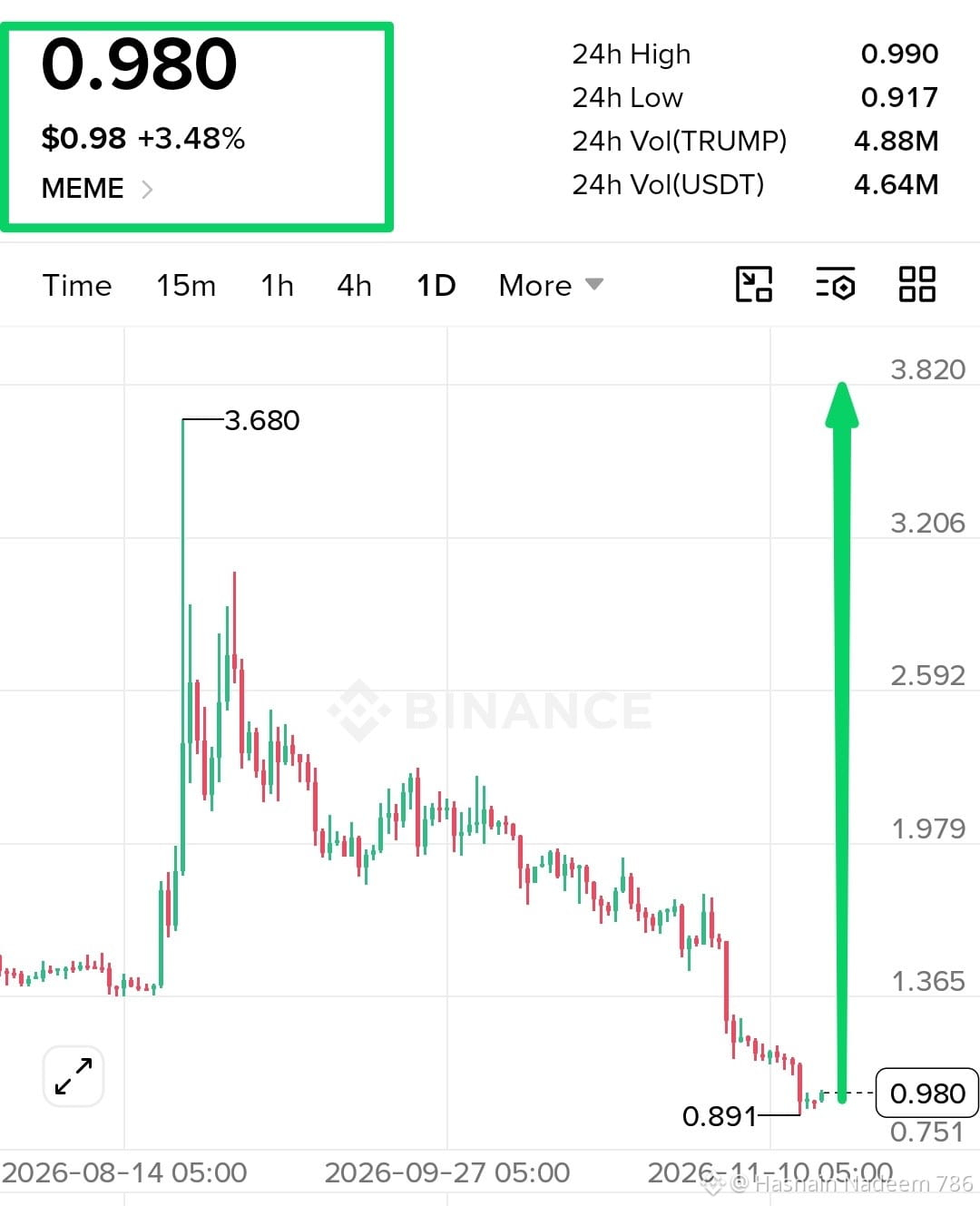
GUYS $TRUMP LOOKING JUICY FOR SHORT-TERM NEXT BIG MOVE IS $3+ DOLLAR💰
BUY IN SPOT FOR 2 TO 3 MONTH .
TARGET'S $1.30 $1.70 $2.00 $3.00+
WHAT DO YOU THINK WILL $TRUMP COIN HIT $5+ DOLLAR IN 3 MONTH'S?
FOLLOW ME FOR DAILY UPDATES.
TRADE HERE DYOR 👉$TRUMP 👇
{spot}(TRUMPUSDT)
#TRUMP #HASNAINNADEEM786 #Write2Earn #Binance
GUYS $TRUMP LOOKING JUICY FOR SHORT-TERM NEXT BIG MOVE IS $3+ DOLLAR💰
BUY IN SPOT FOR 2 TO 3 MONTH .
TARGET'S $1.30 $1.70 $2.00 $3.00+
WHAT DO YOU THINK WILL $TRUMP COIN HIT $5+ DOLLAR IN 3 MONTH'S?
FOLLOW ME FOR DAILY UPDATES.
TRADE HERE DYOR 👉$TRUMP 👇
#TRUMP #HASNAINNADEEM786 #Write2Earn #Binance
BUY IN SPOT FOR 2 TO 3 MONTH .
TARGET'S $1.30 $1.70 $2.00 $3.00+
WHAT DO YOU THINK WILL $TRUMP COIN HIT $5+ DOLLAR IN 3 MONTH'S?
FOLLOW ME FOR DAILY UPDATES.
TRADE HERE DYOR 👉$TRUMP 👇
#TRUMP #HASNAINNADEEM786 #Write2Earn #Binance
Crypto_Profit_Hub:
👍🏿
7
11
6.6k

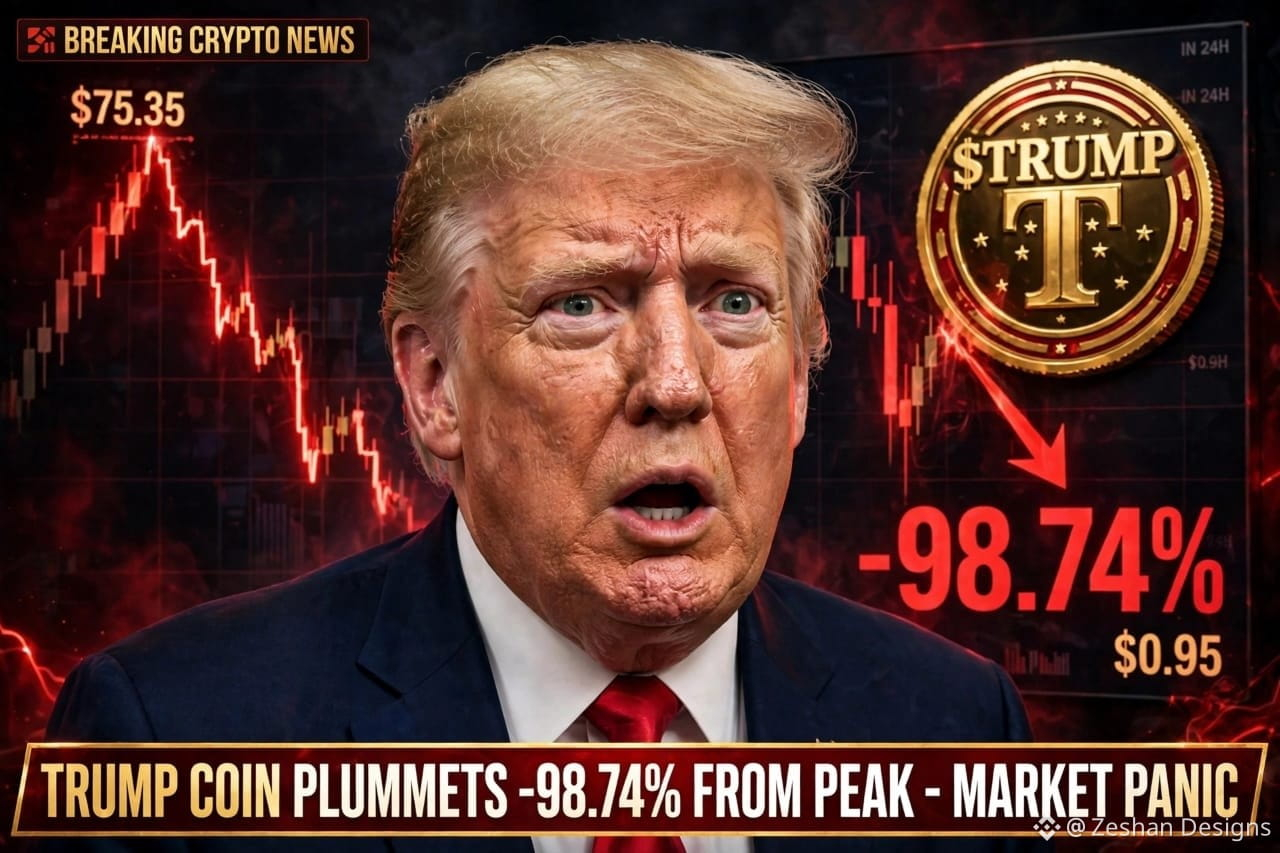
🇺🇸 DONALD TRUMP'S COIN CRASHED -98%! INVESTORS LOST 5 BILLION DOLLARSTRUMP coin was at 75.35 USD, today it's only 0.95 USD - down 98.74%!THE BIGGEST SHOCK:
According to Reuters, outside investors lost over 5 BILLION dollars across 5 Trump family crypto projects.
And the Trump family made at least 635 MILLION dollars from just the TRUMP coin alone.DINNER CONTEST ALSO FLOPPED:
The 3rd Dinner is on 22 November at Trump's golf club.
For the 1st Dinner, people spent 148 MILLION dollars to compete for a seat.
This time only 130 wallets made it, holding just 8.6 MILLION dollars total - 94% DOWN!For the first dinner, you needed 59,000 to 18.5 MILLION dollars to qualify, now a 41,000 dollar holder is in Top 29.AND ON THE OTHER SIDE:
Trump Media is also down 43% this month, at 4.08 USD.
On 30 November, there's a 1 BILLION dollar debt deadline - the company may have to sell its crypto reserves.This is what happens when a coin has no use-case, only a name.Did you ever buy TRUMP coin? Tell the truth 👇#Trump #CryptoNews
864
·
--
Bullish
{spot}(TRUMPUSDT)
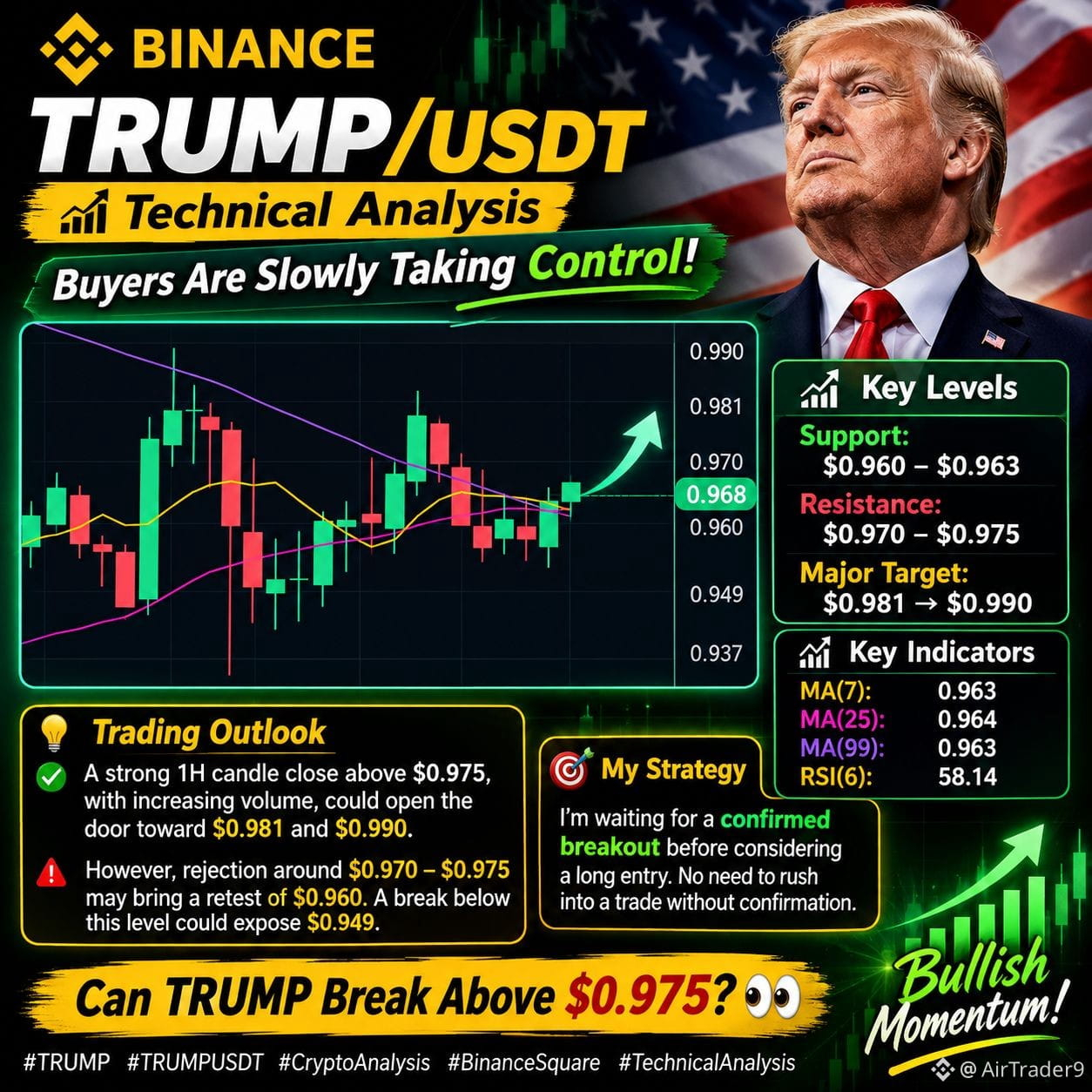
🚀 $TRUMP : Buyers Are Slowly Taking Control!**
$TRUMP is currently trading around **$0.968**, showing a gradual recovery after bouncing from the $0.940 support level.
Looking at the 1-hour chart, the price is holding above MA(7), MA(25), and MA(99). RSI is around 58, indicating improving bullish momentum.
📊 **Key Levels to Watch:**
🟢 Support: $0.960–$0.963
🔴 Resistance: $0.970–$0.975
🎯 Upside Targets: $0.981 → $0.990
If buyers manage to break above $0.975 with strong volume, we could see another upward move.
However, a rejection near resistance could push the price back toward $0.960.
**My Strategy:** I'm watching for a confirmed breakout before considering a long entry. No need to rush into a trade without confirmation.
What do you think? Can TRUMP break above $0.975? 👀
do you research
#TRUMP #trumpusdt #CryptoAnalysis #CanNvidia’sDataCenterGrowthContinue? #CryptoAnalysis"
137
💥 Those who think the #TRUMP era is over should see the following...!!!
🔥🔥🔥🤯🤯🤯
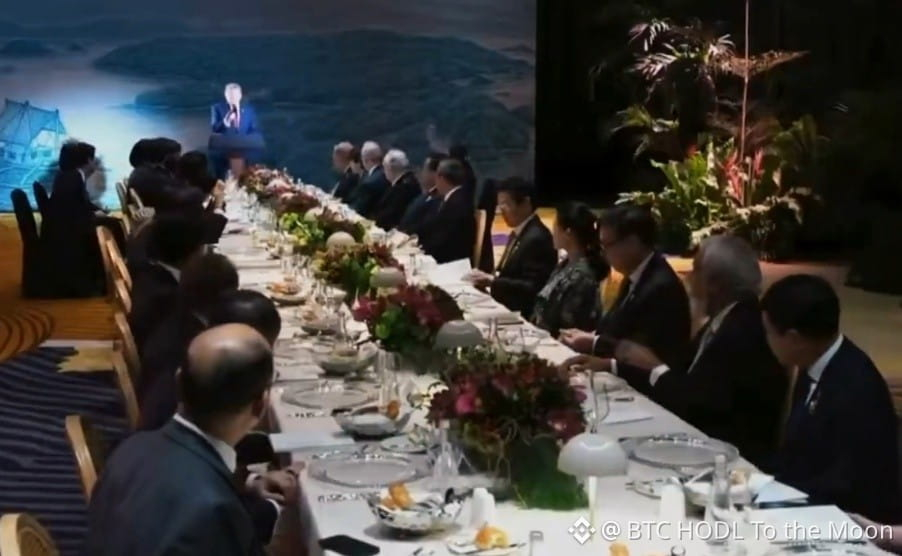
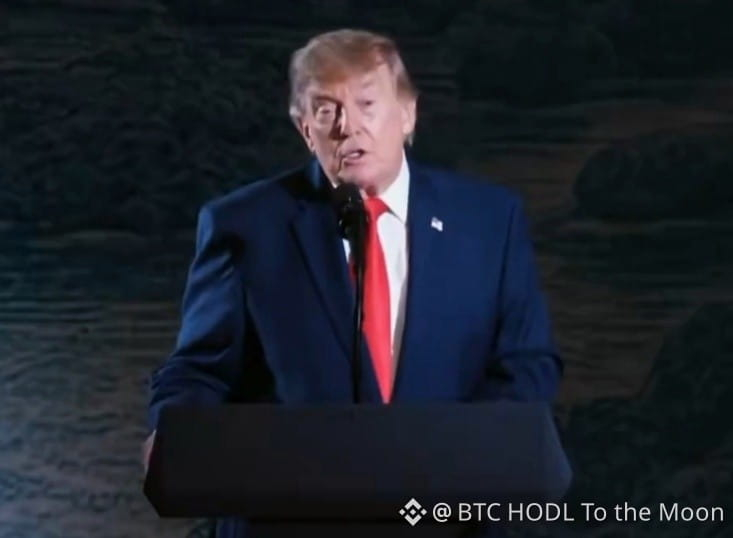
* President Trump just stepped up to the podium at the world leaders' dinner in Manila!
* The room instantly went silent. Every single leader at the table stopped what they were doing and listened.
* "You've done an incredible job running your country," he commanded the room.
* The most powerful nation on Earth, led by the most powerful leader in history 🇺🇸!
✨ Is anyone else commanding the global stage like this?
$BTC $TRUMP $BREV
{future}(BTCUSDT)
{future}(TRUMPUSDT)
{future}(BREVUSDT)
💥 Those who think the #TRUMP era is over should see the following...!!!
🔥🔥🔥🤯🤯🤯
* President Trump just stepped up to the podium at the world leaders' dinner in Manila!
* The room instantly went silent. Every single leader at the table stopped what they were doing and listened.
* "You've done an incredible job running your country," he commanded the room.
* The most powerful nation on Earth, led by the most powerful leader in history 🇺🇸!
✨ Is anyone else commanding the global stage like this?
$BTC $TRUMP $BREV
1
493

·
--
Bullish
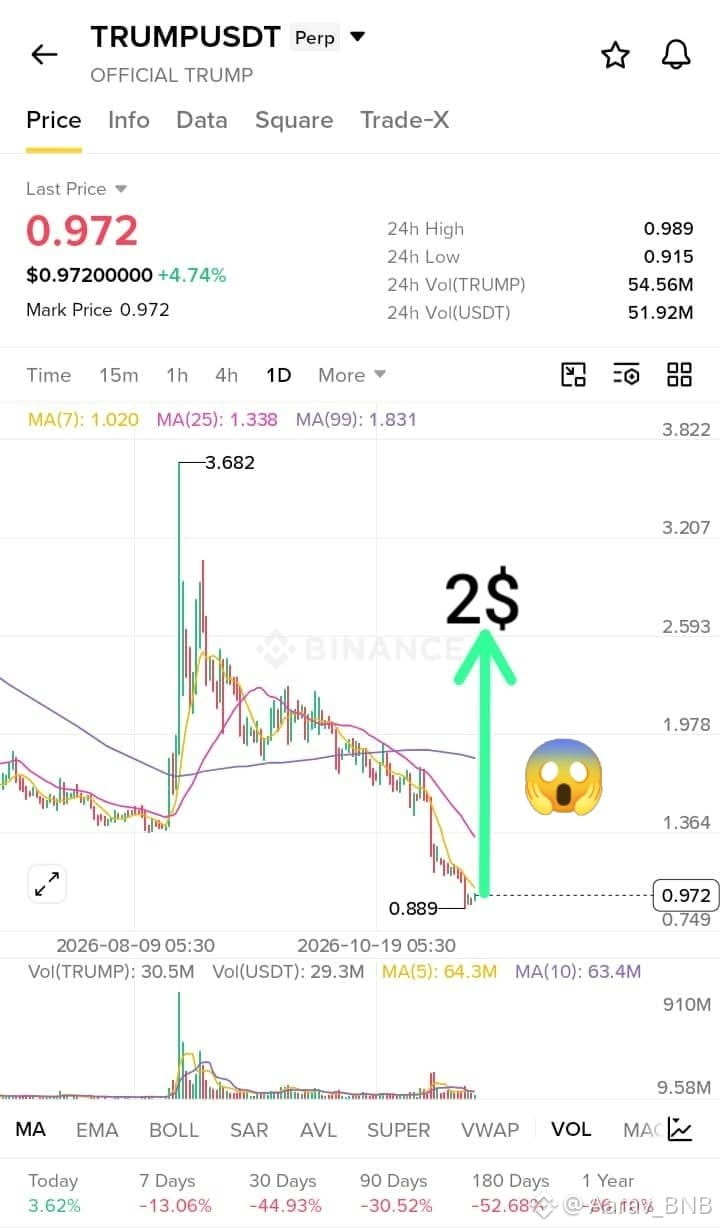
$TRUMP — From $0.88 → $0.97... Is This Meme King Ready For $2? 😱
Speculative Target: $2.00 🚀
#TRUMP #BinanceSquareTalks #Crypto #MemeCoin #Bullish
{future}(TRUMPUSDT)
$TRUMP — From $0.88 → $0.97... Is This Meme King Ready For $2? 😱
Speculative Target: $2.00 🚀
#TRUMP #BinanceSquareTalks #Crypto #MemeCoin #Bullish
Speculative Target: $2.00 🚀
#TRUMP #BinanceSquareTalks #Crypto #MemeCoin #Bullish
5
2.7k

·
--
Bullish
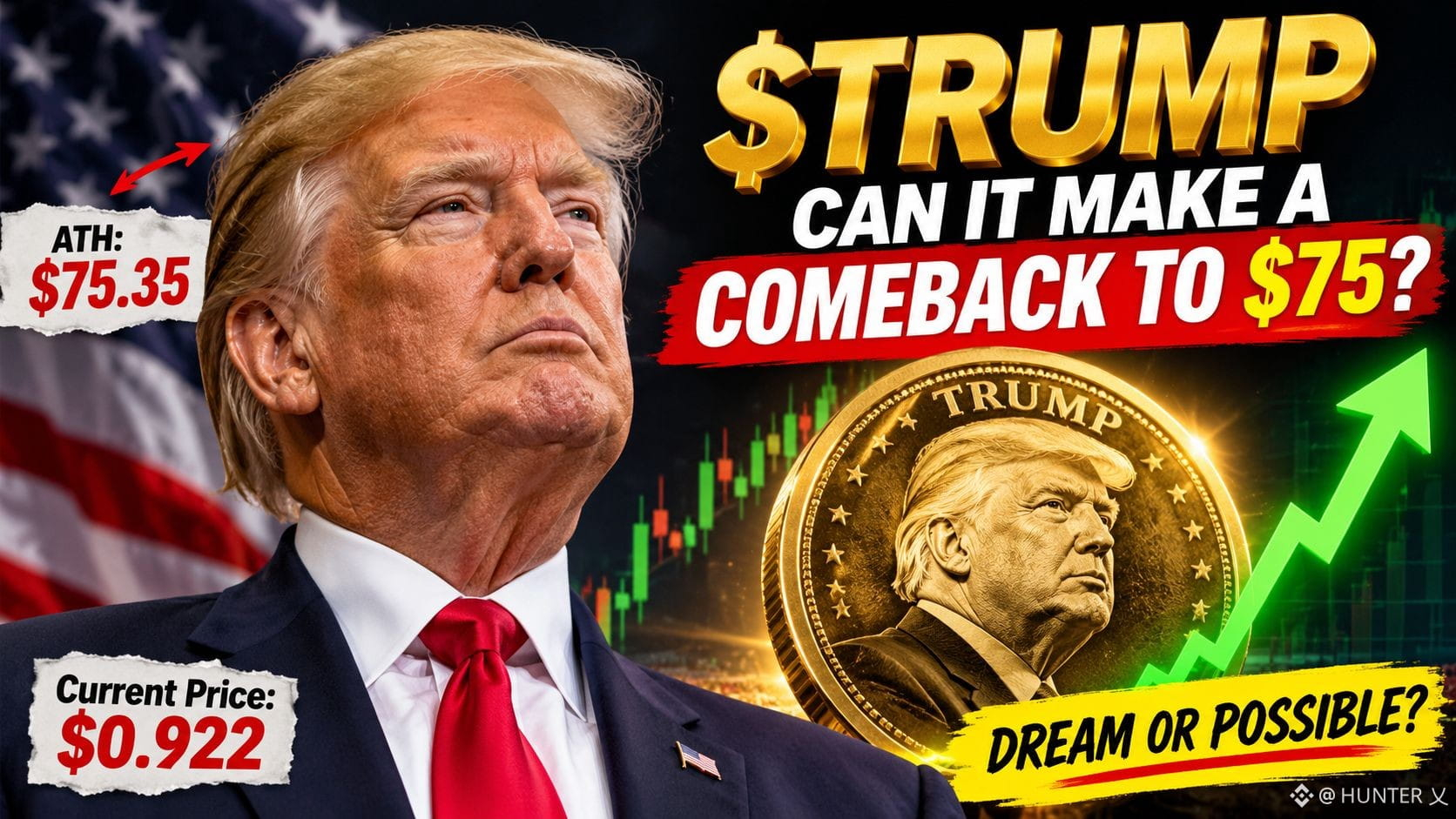
🚨🔥 $TRUMP COIN: CAN IT REALLY MAKE A COMEBACK TO $75??
From a previous all-time high of $75.35 to a reported price of just $0.922 — $TRUMP has a massive mountain to climb! 📉
But in crypto, can hype, political headlines, renewed investor interest, and massive buying pressure spark another unexpected rally?
{spot}(TRUMPUSDT)
A return to $75 would require an extraordinary surge in market value. While nothing is impossible in the volatile crypto market, the road ahead would be extremely challenging.
👀 THE BIG QUESTION: Is $TRUMP preparing for an unbelievable comeback, or has its biggest rally already happened?
💬 What's your realistic price target for $TRUMP? Could it surprise everyone again?
#TRUMP #TrumpCoin #crypto #BinanceSquare #altcoins
🚨🔥 $TRUMP COIN: CAN IT REALLY MAKE A COMEBACK TO $75??
From a previous all-time high of $75.35 to a reported price of just $0.922 — $TRUMP has a massive mountain to climb! 📉
But in crypto, can hype, political headlines, renewed investor interest, and massive buying pressure spark another unexpected rally?
A return to $75 would require an extraordinary surge in market value. While nothing is impossible in the volatile crypto market, the road ahead would be extremely challenging.
👀 THE BIG QUESTION: Is $TRUMP preparing for an unbelievable comeback, or has its biggest rally already happened?
💬 What's your realistic price target for $TRUMP ? Could it surprise everyone again?
#TRUMP #TrumpCoin #crypto #BinanceSquare #altcoins
1
991

{future}(TRUMPUSDT)
{future}(MELANIAUSDT)
{future}(BREVUSDT)
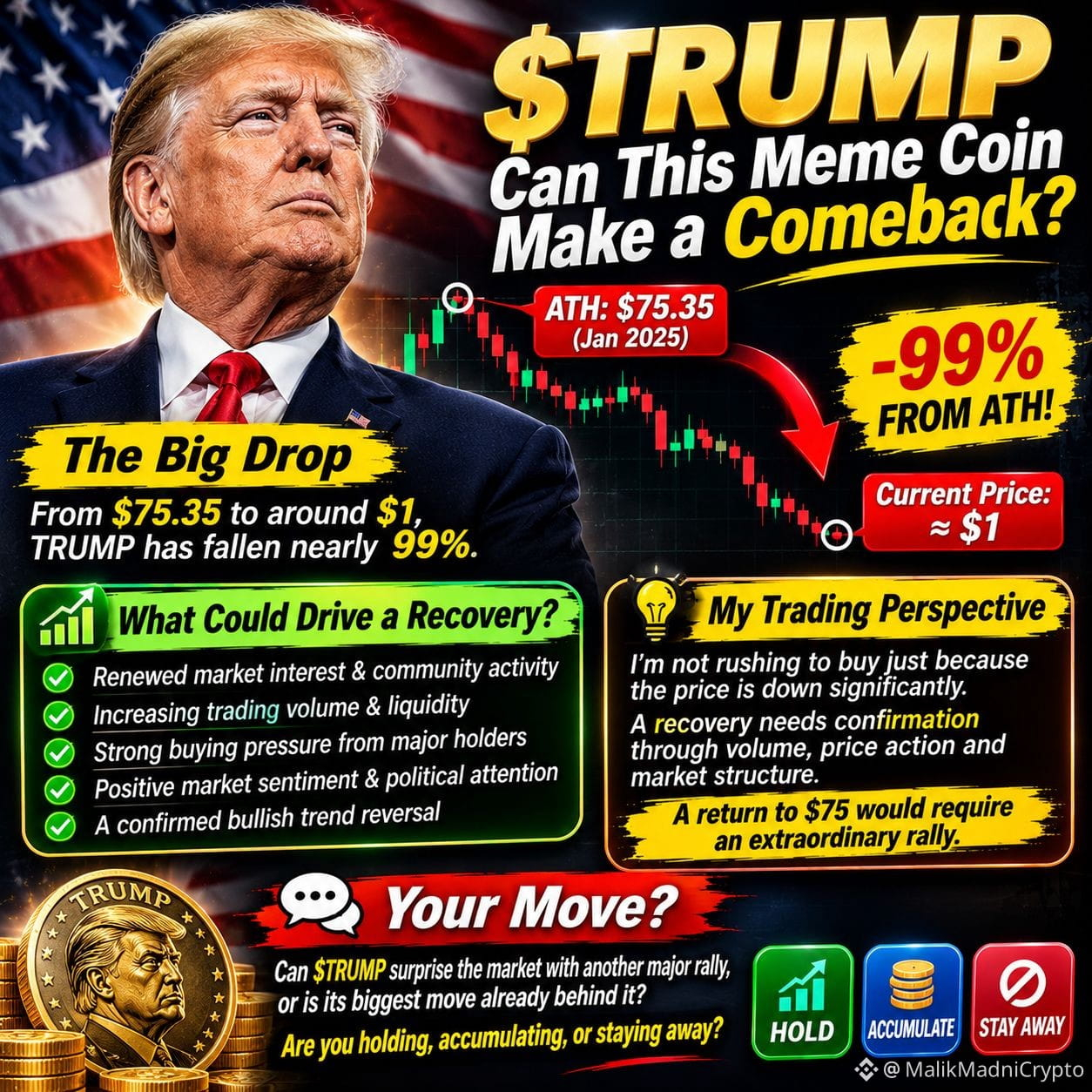
🚨 $TRUMP 🚨 $TRUMP: Is a Major Comeback Still Possible?
From its January 2025 ATH of $75.35 to around $1, TRUMP has experienced a massive decline.
But does a huge correction mean the opportunity is gone?
📊 What Could Drive a Recovery?
🔹 Renewed market interest and community activity.
🔹 Increasing trading volume and liquidity.
🔹 Strong buying pressure from major holders.
🔹 Positive market sentiment and political attention.
🔹 A confirmed bullish trend reversal.
💡 My Trading Perspective:
I'm not rushing to buy just because the price is down significantly. A recovery needs confirmation through volume, price action and market structure.
A return to $75 would require an extraordinary rally, so risk management is essential.
🔥 Let's Discuss:
Can Trump surprise the market with another major rally, or is its biggest move already behind it?
Are you holding, accumulating, or staying away?
#TRUMP #TrumpCoin #MemeCoins #CryptoTrading #MarketAnalysis #BinanceSquare: Is a Major Comeback Still Possible?
@MalikMadniCrypto
$MELANIA $BREV
🚨 $TRUMP 🚨 $TRUMP : Is a Major Comeback Still Possible?
From its January 2025 ATH of $75.35 to around $1, TRUMP has experienced a massive decline.
But does a huge correction mean the opportunity is gone?
📊 What Could Drive a Recovery?
🔹 Renewed market interest and community activity.
🔹 Increasing trading volume and liquidity.
🔹 Strong buying pressure from major holders.
🔹 Positive market sentiment and political attention.
🔹 A confirmed bullish trend reversal.
💡 My Trading Perspective:
I'm not rushing to buy just because the price is down significantly. A recovery needs confirmation through volume, price action and market structure.
A return to $75 would require an extraordinary rally, so risk management is essential.
🔥 Let's Discuss:
Can Trump surprise the market with another major rally, or is its biggest move already behind it?
Are you holding, accumulating, or staying away?
#TRUMP #TrumpCoin #MemeCoins #CryptoTrading #MarketAnalysis #BinanceSquare: Is a Major Comeback Still Possible?
@MalikMadniCrypto
$MELANIA $BREV
2
989

$TRUMP IS DOWN 98% FROM ITS ATH, BUT WHALES ARE STILL BUYING.
That's where things get interesting.
📉 Current price: Around $0.95
🔻 Recent ATL: $0.8964
🐋 Whale activity: Top 100 wallets increased their holdings by 1.27% over the past 30 days.
But there's a catch.
The November 22 Trump gala is approaching. The holding incentives tied to the contest are ending, which could trigger profit-taking and additional selling pressure afterward.
Key levels I'm watching:
$0.90 — Recent low and immediate support zone
$1.00 — Psychological resistance
Above $1.00 — Watch for confirmation before calling a recovery
Whales accumulating doesn't guarantee a reversal. The next few days could be crucial.
Are whales positioning for a bounce, or could the post-gala sell-off push $TRUMP to new lows? 👀
#TRUMP #Crypto #Whales #Binance
1
584
Log in to explore more content
Join global crypto users on Binance Square
⚡️ Get latest and useful information about crypto.
💬 Trusted by the world’s largest crypto exchange.
👍 Discover real insights from verified creators.
Email / Phone number
Trending Topics
1
#NvidiaBeatsEstimatesWith$130BQ4Outlook
12,141 views
166 Discussing
2
#AnthropicIPOPriceCouldExceed$80
18,087 views
146 Discussing
3
#CanNvidia’sDataCenterGrowthContinue?
53,975 views
725 Discussing
4
#CanadaAndUSLaunchOperationNiagaraAgainstApprovalPhishing
2,607 views
33 Discussing
5
#BankOfEnglandUnveilsClearingHousePathwayCoveringDLTFirms
2,051 views
48 Discussing
6
#DBSAndCirclePartnerToExpandAsianInstitutionsUSDCAccess
3,349 views
55 Discussing
7
#LedgerHardwareImplantReportsExtendToDubai
21,577 views
297 Discussing
8
#NvidiaBoardNotConsideringHuang’sReturnasCEO
216,410 views
1,558 Discussing
9
#KOSPIFalls2.59%ToLowestCloseSinceFebruary
66,001 views
739 Discussing
10
#AnthropicClearedToListOnNasdaqAsANT
57,444 views
607 Discussing