
#soph
soph
2.3M views
9,274 Discussing
Hot
Latest

·
--
$SOPH looks too bearish to short here.
Down 7% at $0.000930, below both the 20d and 50d MAs. Ugly chart.
But RSI is 40, 4h is only down 3.1%, and funding is -0.008% with shorts paying. That matters. Volume is $1.47M, yet barely 0.0x the 20d average. This feels more like ignored selling than a clean breakdown. Even $BNB has better attention right now.
At $0.001, I’d watch for a reclaim, not chase the short. 🧐
Watching how $SOPH reacts at $0.001? 👀
#SOPH #Binance
$SOPH looks too bearish to short here.
Down 7% at $0.000930, below both the 20d and 50d MAs. Ugly chart.
But RSI is 40, 4h is only down 3.1%, and funding is -0.008% with shorts paying. That matters. Volume is $1.47M, yet barely 0.0x the 20d average. This feels more like ignored selling than a clean breakdown. Even $BNB has better attention right now.
At $0.001, I’d watch for a reclaim, not chase the short. 🧐
Watching how $SOPH reacts at $0.001? 👀
#SOPH #Binance
Down 7% at $0.000930, below both the 20d and 50d MAs. Ugly chart.
But RSI is 40, 4h is only down 3.1%, and funding is -0.008% with shorts paying. That matters. Volume is $1.47M, yet barely 0.0x the 20d average. This feels more like ignored selling than a clean breakdown. Even $BNB has better attention right now.
At $0.001, I’d watch for a reclaim, not chase the short. 🧐
Watching how $SOPH reacts at $0.001? 👀
#SOPH #Binance
362


🎮 $SOPH /USDT — 🔴 SHORT · Conf 85%
━━━━━━━━━━━━━━
📍 Entry: 0.0009172 – 0.0009228
🛑 SL: 0.0010005
🎯 TP1: 0.0008740
✅ TP2: 0.0008372
🏆 TP3: 0.0007820
━━━━━━━━━━━━━━
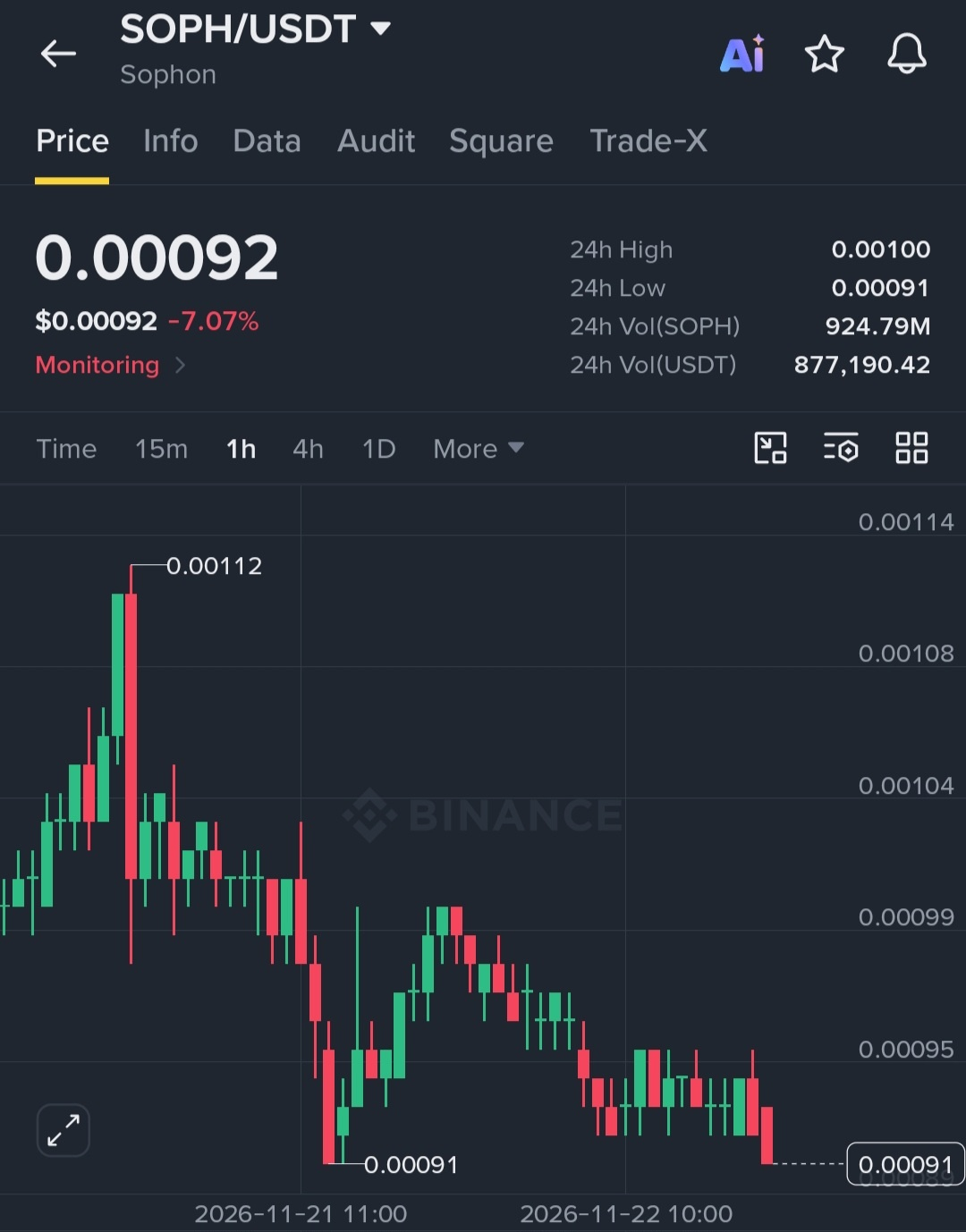
🔎 Price is at the 24h low (0.00091) with lower highs every bounce since the 0.00112 spike.
🧠 $SOPH : ZK-based L2 aimed at consumer and entertainment apps; risk is the Binance Monitoring tag and a 1Y of -94.44%.
💬 Does an app-focused L2 need real apps first, or does cheap blockspace come first?
⚠️ Not financial advice. Manage your risk.
#SOPH #Sophon #Zkproofs #Layer2 #entertainment
{future}(SOPHUSDT)
🎮 $SOPH /USDT — 🔴 SHORT · Conf 85%
━━━━━━━━━━━━━━
📍 Entry: 0.0009172 – 0.0009228
🛑 SL: 0.0010005
🎯 TP1: 0.0008740
✅ TP2: 0.0008372
🏆 TP3: 0.0007820
━━━━━━━━━━━━━━
🔎 Price is at the 24h low (0.00091) with lower highs every bounce since the 0.00112 spike.
🧠 $SOPH : ZK-based L2 aimed at consumer and entertainment apps; risk is the Binance Monitoring tag and a 1Y of -94.44%.
💬 Does an app-focused L2 need real apps first, or does cheap blockspace come first?
⚠️ Not financial advice. Manage your risk.
#SOPH #Sophon #Zkproofs #Layer2 #entertainment
━━━━━━━━━━━━━━
📍 Entry: 0.0009172 – 0.0009228
🛑 SL: 0.0010005
🎯 TP1: 0.0008740
✅ TP2: 0.0008372
🏆 TP3: 0.0007820
━━━━━━━━━━━━━━
🔎 Price is at the 24h low (0.00091) with lower highs every bounce since the 0.00112 spike.
🧠 $SOPH : ZK-based L2 aimed at consumer and entertainment apps; risk is the Binance Monitoring tag and a 1Y of -94.44%.
💬 Does an app-focused L2 need real apps first, or does cheap blockspace come first?
⚠️ Not financial advice. Manage your risk.
#SOPH #Sophon #Zkproofs #Layer2 #entertainment

1
111
🚨 CRITICAL STRUCTURAL SHIFT: SOPHON L2 SHUTDOWN DEMANDS IMMEDIATE ASSET REPOSITIONING FOR $SOPH ⚡
Institutional capital preservation requires relentless attention to infrastructure lifecycles, especially as the Sophon L2 winds down operations ahead of its November 30 mainnet sunset. While the $SOPH ecosystem pivots toward consumer application layers, unmanaged liquid capital sitting on the chain faces absolute containment risks after the November 25 withdrawal cutoff. 📊
Automated migration protocols will secure staked positions and Guardian NFTs, but manual oversight is non-negotiable for liquid token inventories. Reading the operational shift correctly means separating network infrastructure from asset survival, ensuring structural integrity across your portfolio holdings. 🔍
💬 Are your liquid assets cleared from the L2 before the deadline, or are you waiting until the final hours? 👇
⚠️ Not financial advice. Always manage your risk. 🛡️
🏷️ #SOPH #ETH #BlockchainSecurity #RiskManagement #Crypto
🦈 ⚖️
🚨 CRITICAL STRUCTURAL SHIFT: SOPHON L2 SHUTDOWN DEMANDS IMMEDIATE ASSET REPOSITIONING FOR $SOPH ⚡
Institutional capital preservation requires relentless attention to infrastructure lifecycles, especially as the Sophon L2 winds down operations ahead of its November 30 mainnet sunset. While the $SOPH ecosystem pivots toward consumer application layers, unmanaged liquid capital sitting on the chain faces absolute containment risks after the November 25 withdrawal cutoff. 📊
Automated migration protocols will secure staked positions and Guardian NFTs, but manual oversight is non-negotiable for liquid token inventories. Reading the operational shift correctly means separating network infrastructure from asset survival, ensuring structural integrity across your portfolio holdings. 🔍
💬 Are your liquid assets cleared from the L2 before the deadline, or are you waiting until the final hours? 👇
⚠️ Not financial advice. Always manage your risk. 🛡️
🏷️ #SOPH #ETH #BlockchainSecurity #RiskManagement #Crypto
🦈 ⚖️
Institutional capital preservation requires relentless attention to infrastructure lifecycles, especially as the Sophon L2 winds down operations ahead of its November 30 mainnet sunset. While the $SOPH ecosystem pivots toward consumer application layers, unmanaged liquid capital sitting on the chain faces absolute containment risks after the November 25 withdrawal cutoff. 📊
Automated migration protocols will secure staked positions and Guardian NFTs, but manual oversight is non-negotiable for liquid token inventories. Reading the operational shift correctly means separating network infrastructure from asset survival, ensuring structural integrity across your portfolio holdings. 🔍
💬 Are your liquid assets cleared from the L2 before the deadline, or are you waiting until the final hours? 👇
⚠️ Not financial advice. Always manage your risk. 🛡️
🏷️ #SOPH #ETH #BlockchainSecurity #RiskManagement #Crypto
🦈 ⚖️

27

·
--
📊 $SOPH Technical Analysis & Setup
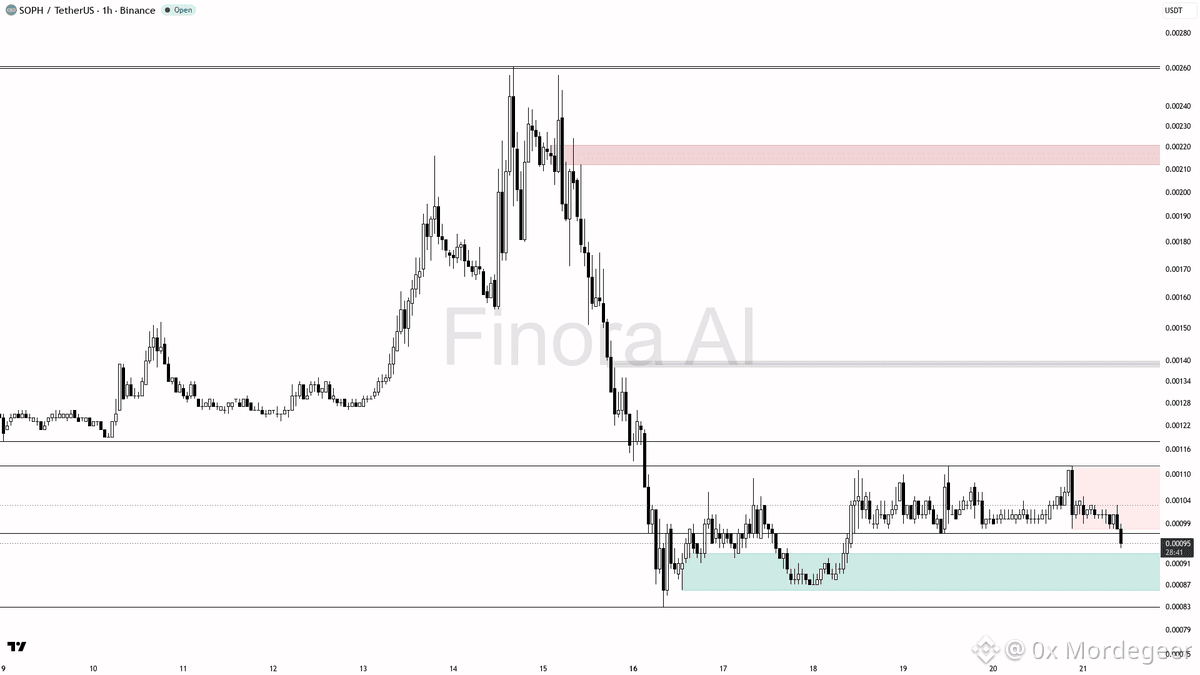
The $SOPH token recently swept the 0.00098 swing low on massive 13.5x volume, dropping to 0.00095. Current market structure suggests this is distribution rather than a panic bottom, as daily and weekly trends remain bearish while aligning with broader market volatility.
• Key Support / Demand: 0.00087 and 0.00085. If sellers maintain control after a bounce, the ultimate liquidity target sits at 0.00081.
• Resistance / Supply Targets: The immediate resistance zone is identified between 0.00097 and 0.00101.
• Trigger / Confirmation: Confirmation for downside continuation requires a weak reclaim failure or a bearish engulfing rejection in the resistance zone. Watch for the 1h close to stay heavy while Open Interest continues to bleed.
• Risk / Invalidation: The bearish bias is invalidated if $SOPH achieves a 1h candle close above 0.00112. Position protection should be placed beyond that swing high.
• Market Execution: Monitoring cross-chain volatility and asset liquidity routing via standard market depth analysis.
Current Stats:
• Open Interest: $4.6M (Down 19.8% in 24h)
• Funding Rate: -0.0129%
• Taker Ratio: 0.94x
DYOR — Educational setup, not financial advice.
#BinanceSquare #Crypto #SOPH #Trading
📊 $SOPH Technical Analysis & Setup
The $SOPH token recently swept the 0.00098 swing low on massive 13.5x volume, dropping to 0.00095. Current market structure suggests this is distribution rather than a panic bottom, as daily and weekly trends remain bearish while aligning with broader market volatility.
• Key Support / Demand: 0.00087 and 0.00085. If sellers maintain control after a bounce, the ultimate liquidity target sits at 0.00081.
• Resistance / Supply Targets: The immediate resistance zone is identified between 0.00097 and 0.00101.
• Trigger / Confirmation: Confirmation for downside continuation requires a weak reclaim failure or a bearish engulfing rejection in the resistance zone. Watch for the 1h close to stay heavy while Open Interest continues to bleed.
• Risk / Invalidation: The bearish bias is invalidated if $SOPH achieves a 1h candle close above 0.00112. Position protection should be placed beyond that swing high.
• Market Execution: Monitoring cross-chain volatility and asset liquidity routing via standard market depth analysis.
Current Stats:
• Open Interest: $4.6M (Down 19.8% in 24h)
• Funding Rate: -0.0129%
• Taker Ratio: 0.94x
DYOR — Educational setup, not financial advice.
#BinanceSquare #Crypto #SOPH #Trading
The $SOPH token recently swept the 0.00098 swing low on massive 13.5x volume, dropping to 0.00095. Current market structure suggests this is distribution rather than a panic bottom, as daily and weekly trends remain bearish while aligning with broader market volatility.
• Key Support / Demand: 0.00087 and 0.00085. If sellers maintain control after a bounce, the ultimate liquidity target sits at 0.00081.
• Resistance / Supply Targets: The immediate resistance zone is identified between 0.00097 and 0.00101.
• Trigger / Confirmation: Confirmation for downside continuation requires a weak reclaim failure or a bearish engulfing rejection in the resistance zone. Watch for the 1h close to stay heavy while Open Interest continues to bleed.
• Risk / Invalidation: The bearish bias is invalidated if $SOPH achieves a 1h candle close above 0.00112. Position protection should be placed beyond that swing high.
• Market Execution: Monitoring cross-chain volatility and asset liquidity routing via standard market depth analysis.
Current Stats:
• Open Interest: $4.6M (Down 19.8% in 24h)
• Funding Rate: -0.0129%
• Taker Ratio: 0.94x
DYOR — Educational setup, not financial advice.
#BinanceSquare #Crypto #SOPH #Trading
16

·
--
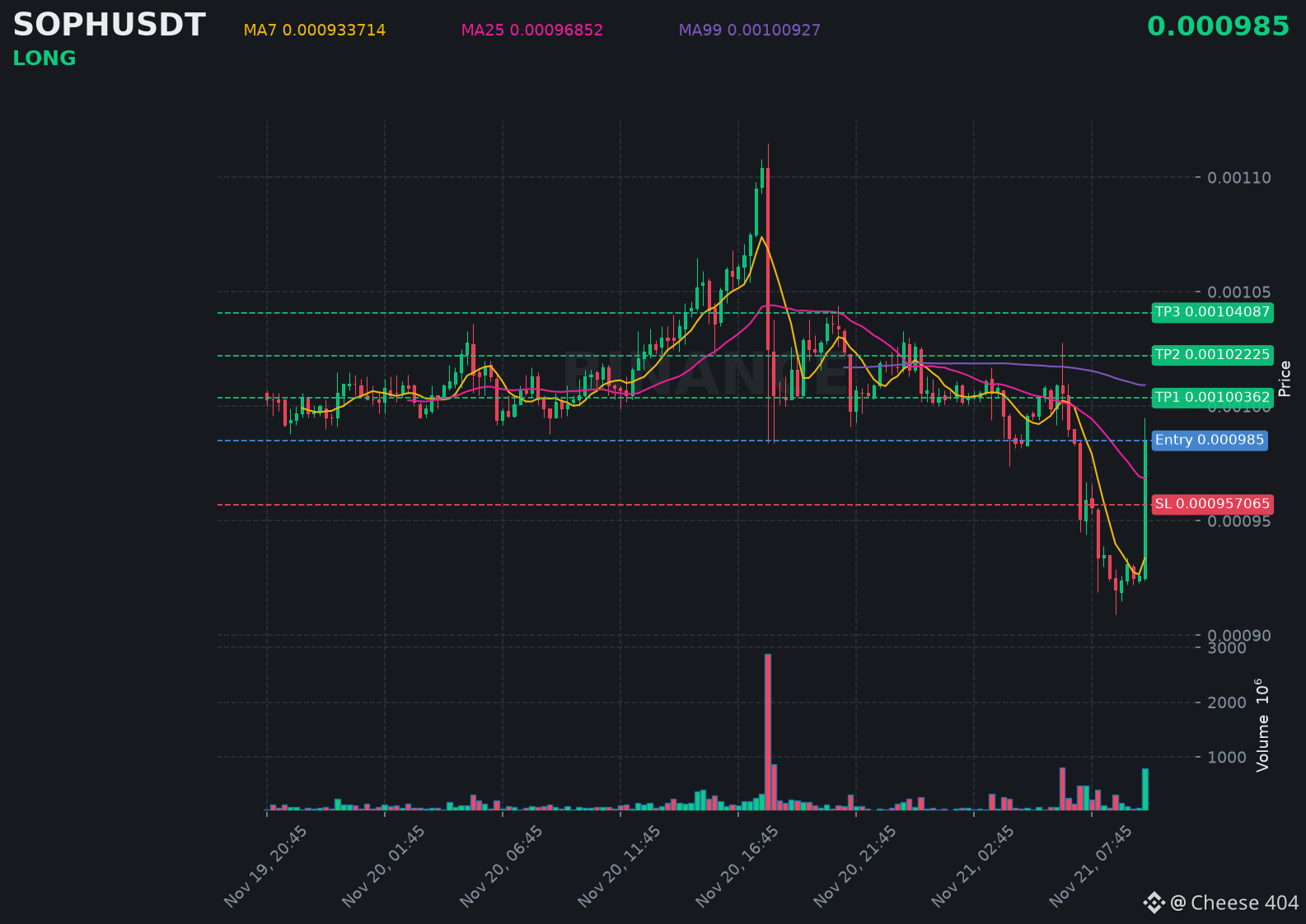
$SOPH is gaining strong bullish momentum as volume rises and price breaks key resistance.
📍 @ 0.000985 | Volume: 0.78M USD
RSI 57 | EMA20: 0.000957467 USD
📈 Trade Plan:
📈 Entry: 0.000979413 – 0.000990587
🛑 Stop Loss: 0.000957065
🎯 TP1: 0.00100362
🎯 TP2: 0.00102225
🎯 TP3: 0.00104087
Waiting for a retest, then riding the uptrend.
👉 $SOPH 👈 Catch it
#SOPH
$SOPH is gaining strong bullish momentum as volume rises and price breaks key resistance.
📍 @ 0.000985 | Volume: 0.78M USD
RSI 57 | EMA20: 0.000957467 USD
📈 Trade Plan:
📈 Entry: 0.000979413 – 0.000990587
🛑 Stop Loss: 0.000957065
🎯 TP1: 0.00100362
🎯 TP2: 0.00102225
🎯 TP3: 0.00104087
Waiting for a retest, then riding the uptrend.
👉 $SOPH 👈 Catch it
#SOPH
📍 @ 0.000985 | Volume: 0.78M USD
RSI 57 | EMA20: 0.000957467 USD
📈 Trade Plan:
📈 Entry: 0.000979413 – 0.000990587
🛑 Stop Loss: 0.000957065
🎯 TP1: 0.00100362
🎯 TP2: 0.00102225
🎯 TP3: 0.00104087
Waiting for a retest, then riding the uptrend.
👉 $SOPH 👈 Catch it
#SOPH
134

·
--
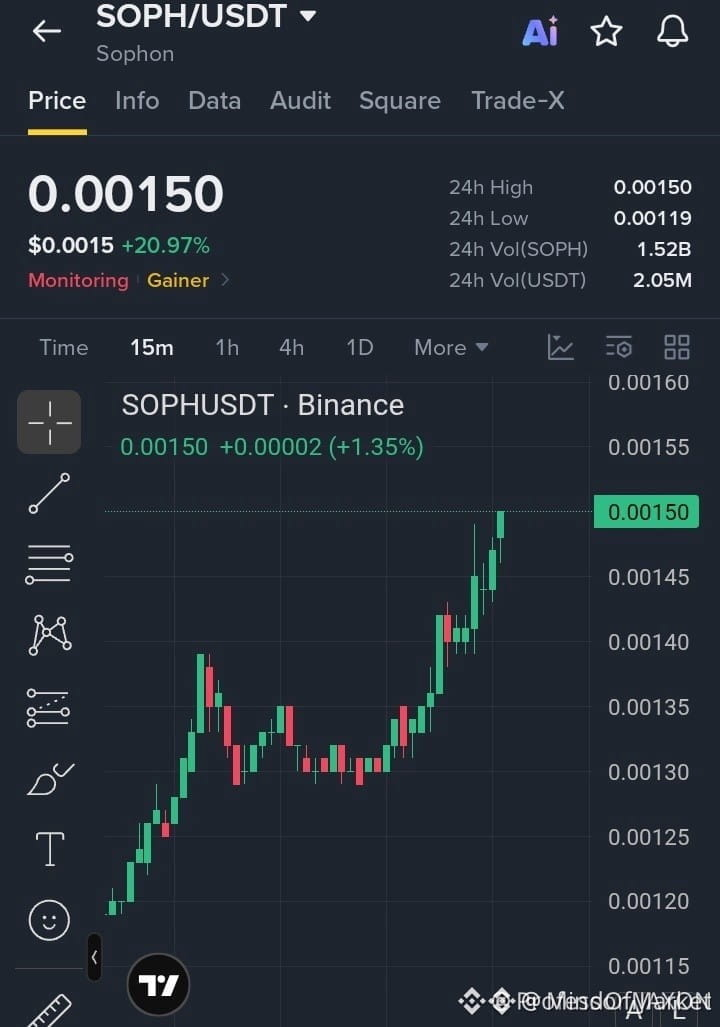
🚨 $SOPH PRESSING HARD AGAINST LOCAL RESISTANCE AS MOMENTUM ACCELERATES! 💥
Entry: 0.00147-0.00150 ⚡
Target: 0.00162 🚀
Stop Loss: 0.00143 ⚠️
Institutional order flow on $SOPH shows aggressive absorption right below the 0.00150 resistance zone as buyers build a clean structural base. 📊 Volume expansion across the current session confirms that market participants are stepping in to position ahead of a potential supply sweep. ⚡
We are waiting for a confirmed candle close above this psychological barrier before scaling higher into the upper liquidity tiers. 💡 Are you positioned for the breakout continuation or waiting for a retest of the demand zone below? 👇
⚠️ Not financial advice. Always manage your risk. 🛡️
🏷️ #SOPH #BreakoutSetup #OrderFlow #CryptoTrading
🔥 🦈
🚨 $SOPH PRESSING HARD AGAINST LOCAL RESISTANCE AS MOMENTUM ACCELERATES! 💥
Entry: 0.00147-0.00150 ⚡
Target: 0.00162 🚀
Stop Loss: 0.00143 ⚠️
Institutional order flow on $SOPH shows aggressive absorption right below the 0.00150 resistance zone as buyers build a clean structural base. 📊 Volume expansion across the current session confirms that market participants are stepping in to position ahead of a potential supply sweep. ⚡
We are waiting for a confirmed candle close above this psychological barrier before scaling higher into the upper liquidity tiers. 💡 Are you positioned for the breakout continuation or waiting for a retest of the demand zone below? 👇
⚠️ Not financial advice. Always manage your risk. 🛡️
🏷️ #SOPH #BreakoutSetup #OrderFlow #CryptoTrading
🔥 🦈
Entry: 0.00147-0.00150 ⚡
Target: 0.00162 🚀
Stop Loss: 0.00143 ⚠️
Institutional order flow on $SOPH shows aggressive absorption right below the 0.00150 resistance zone as buyers build a clean structural base. 📊 Volume expansion across the current session confirms that market participants are stepping in to position ahead of a potential supply sweep. ⚡
We are waiting for a confirmed candle close above this psychological barrier before scaling higher into the upper liquidity tiers. 💡 Are you positioned for the breakout continuation or waiting for a retest of the demand zone below? 👇
⚠️ Not financial advice. Always manage your risk. 🛡️
🏷️ #SOPH #BreakoutSetup #OrderFlow #CryptoTrading
🔥 🦈
12

·
--
$SOPH
I dont really understand what the hell is happening here when both the crypto and stock market keep going risk-off on high volume. Even gold has been sliding hard.
#soph is probably one of a few that is not dumping right now, not because it s strong but because it s already dumped 99% from top😂
$SOPH
I dont really understand what the hell is happening here when both the crypto and stock market keep going risk-off on high volume. Even gold has been sliding hard.
#soph is probably one of a few that is not dumping right now, not because it s strong but because it s already dumped 99% from top😂
I dont really understand what the hell is happening here when both the crypto and stock market keep going risk-off on high volume. Even gold has been sliding hard.
#soph is probably one of a few that is not dumping right now, not because it s strong but because it s already dumped 99% from top😂
1
1.3k

·
--
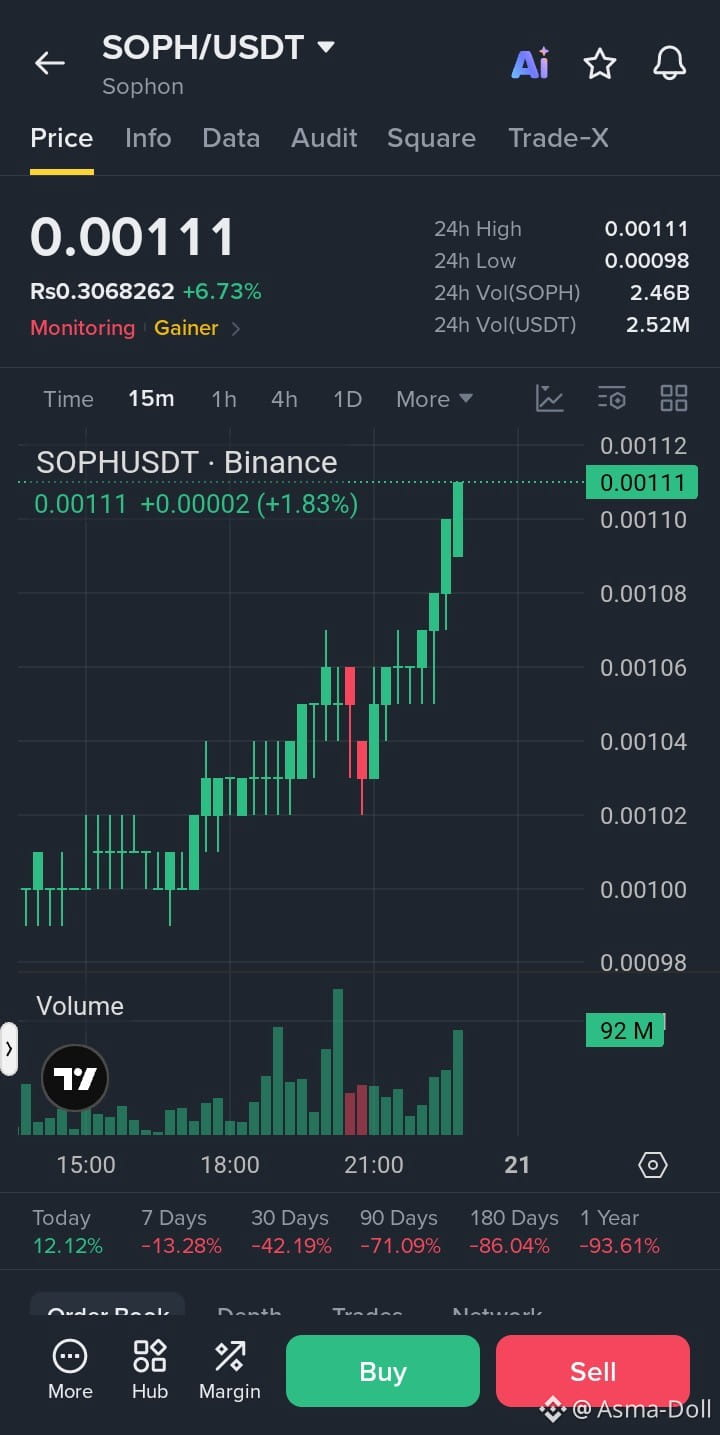
🚨 **ASMA DOLL PREMIUM SIGNAL** 🚨
🔴 **$SOPH /USDT – SHORT**
**Current Price:** $0.00111
**Entry Zone:** $0.00110 – $0.00112
**Stop Loss (SL):** $0.00117
🎯 **Take Profit Targets:**
- TP1: $0.00106
- TP2: $0.00102
- TP3: $0.00098
Trade here $SOPH
{future}(SOPHUSDT)
📊 **Market Analysis:**
SOPH is showing a short-term recovery of +6.73%, but the broader trend remains strongly bearish.
- 24H high at $0.00111 indicates immediate resistance.
- Price has recovered from $0.00098 support.
- Buyers are showing some strength, but the larger trend remains weak.
- 7-day performance: -13.28%.
- 30-day performance: -42.19%.
- 90-day performance: -71.09%.
**Bearish Outlook:** The current bounce could face selling pressure near $0.00111–$0.00112. A rejection from this zone may create another downward move.
**Confirmation:** A clean breakdown below $0.00108 could strengthen bearish momentum toward $0.00106 and $0.00102.
⚠️ Wait for rejection confirmation before entering. A breakout above $0.00112 weakens this short setup.
**Trade smart. Manage your risk!** ⚡
#SOPH #SOPHUSDT #CryptoSignals #BinanceSquare #ShortTrading
🚨 **ASMA DOLL PREMIUM SIGNAL** 🚨
🔴 **$SOPH /USDT – SHORT**
**Current Price:** $0.00111
**Entry Zone:** $0.00110 – $0.00112
**Stop Loss (SL):** $0.00117
🎯 **Take Profit Targets:**
- TP1: $0.00106
- TP2: $0.00102
- TP3: $0.00098
Trade here $SOPH
📊 **Market Analysis:**
SOPH is showing a short-term recovery of +6.73%, but the broader trend remains strongly bearish.
- 24H high at $0.00111 indicates immediate resistance.
- Price has recovered from $0.00098 support.
- Buyers are showing some strength, but the larger trend remains weak.
- 7-day performance: -13.28%.
- 30-day performance: -42.19%.
- 90-day performance: -71.09%.
**Bearish Outlook:** The current bounce could face selling pressure near $0.00111–$0.00112. A rejection from this zone may create another downward move.
**Confirmation:** A clean breakdown below $0.00108 could strengthen bearish momentum toward $0.00106 and $0.00102.
⚠️ Wait for rejection confirmation before entering. A breakout above $0.00112 weakens this short setup.
**Trade smart. Manage your risk!** ⚡
#SOPH #SOPHUSDT #CryptoSignals #BinanceSquare #ShortTrading
🔴 **$SOPH /USDT – SHORT**
**Current Price:** $0.00111
**Entry Zone:** $0.00110 – $0.00112
**Stop Loss (SL):** $0.00117
🎯 **Take Profit Targets:**
- TP1: $0.00106
- TP2: $0.00102
- TP3: $0.00098
Trade here $SOPH
📊 **Market Analysis:**
SOPH is showing a short-term recovery of +6.73%, but the broader trend remains strongly bearish.
- 24H high at $0.00111 indicates immediate resistance.
- Price has recovered from $0.00098 support.
- Buyers are showing some strength, but the larger trend remains weak.
- 7-day performance: -13.28%.
- 30-day performance: -42.19%.
- 90-day performance: -71.09%.
**Bearish Outlook:** The current bounce could face selling pressure near $0.00111–$0.00112. A rejection from this zone may create another downward move.
**Confirmation:** A clean breakdown below $0.00108 could strengthen bearish momentum toward $0.00106 and $0.00102.
⚠️ Wait for rejection confirmation before entering. A breakout above $0.00112 weakens this short setup.
**Trade smart. Manage your risk!** ⚡
#SOPH #SOPHUSDT #CryptoSignals #BinanceSquare #ShortTrading
1
27

·
--
$SOPH +0.00% | $BFUSD +0.00% | $RLUSD -0.01%
#SOPH is holding at $0.00099000 with essentially flat movement. Despite the zero‑point change, $3.3 M of volume suggests traders are still probing the platform’s entertainment‑driven niche.
#BFUSD stays near parity at $0.9994, unchanged on the tick. The $3.0 M turnover is modest, reflecting its role as a stable‑coin bridge rather than a speculative play.
#RLUSD slipped marginally to $1.00, down 0.01% on a hefty $89.3 M of volume. The large flow hints at broader stable‑coin repositioning, though the price dip is barely perceptible.
🔎 Watching how the contrasting volumes among these near‑stable assets play out could reveal early shifts in liquidity preferences.
#Write2Earn #Binance
$SOPH +0.00% | $BFUSD +0.00% | $RLUSD -0.01%
#SOPH is holding at $0.00099000 with essentially flat movement. Despite the zero‑point change, $3.3 M of volume suggests traders are still probing the platform’s entertainment‑driven niche.
#BFUSD stays near parity at $0.9994, unchanged on the tick. The $3.0 M turnover is modest, reflecting its role as a stable‑coin bridge rather than a speculative play.
#RLUSD slipped marginally to $1.00, down 0.01% on a hefty $89.3 M of volume. The large flow hints at broader stable‑coin repositioning, though the price dip is barely perceptible.
🔎 Watching how the contrasting volumes among these near‑stable assets play out could reveal early shifts in liquidity preferences.
#Write2Earn #Binance
#SOPH is holding at $0.00099000 with essentially flat movement. Despite the zero‑point change, $3.3 M of volume suggests traders are still probing the platform’s entertainment‑driven niche.
#BFUSD stays near parity at $0.9994, unchanged on the tick. The $3.0 M turnover is modest, reflecting its role as a stable‑coin bridge rather than a speculative play.
#RLUSD slipped marginally to $1.00, down 0.01% on a hefty $89.3 M of volume. The large flow hints at broader stable‑coin repositioning, though the price dip is barely perceptible.
🔎 Watching how the contrasting volumes among these near‑stable assets play out could reveal early shifts in liquidity preferences.
#Write2Earn #Binance
10
·
--
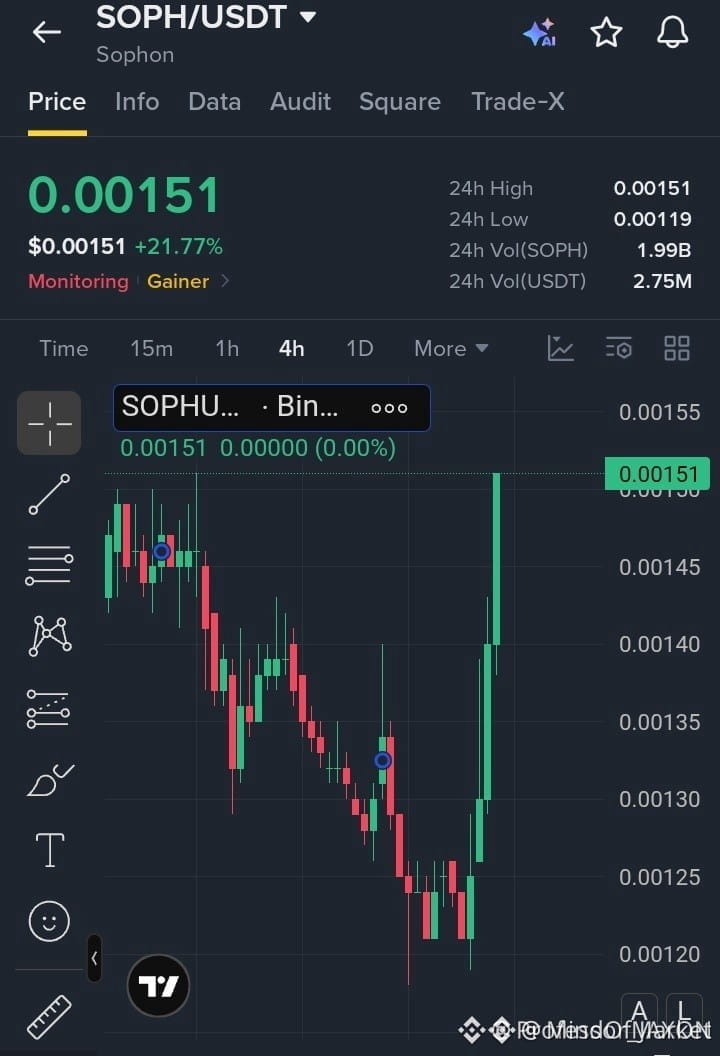
🚀 $SOPH DEFENDING KEY SUPPORT AS INSTITUTIONAL MOMENTUM BUILDS FOR A CLEAN BREAKOUT! 💥
Entry: 0.00145–0.00148 ⚡
Target: 0.00166 🚀
Stop Loss: 0.00140 ⚠️
Following a decisive sweep of institutional liquidity down at the 0.00120 demand zone, aggressive buyers have stepped in with consecutive impulsive candles. 📊 Price is now consolidating right above the 0.00145 structural floor, absorbing lingering sell-side pressure.
A sustained hold of this current accumulation band paves the way for an aggressive liquidity hunt toward higher resistance blocks. 💡 Watch for a shallow intraday pullback to secure optimal execution before the next expansion phase.
💬 Are you positioning ahead of the breakout or waiting for a retest of the baseline? 👇
⚠️ Not financial advice. Always manage your risk. 🛡️
🏷️ #SOPH #BreakoutSetup #OrderFlow #Crypto
🔥 🦈
🚀 $SOPH DEFENDING KEY SUPPORT AS INSTITUTIONAL MOMENTUM BUILDS FOR A CLEAN BREAKOUT! 💥
Entry: 0.00145–0.00148 ⚡
Target: 0.00166 🚀
Stop Loss: 0.00140 ⚠️
Following a decisive sweep of institutional liquidity down at the 0.00120 demand zone, aggressive buyers have stepped in with consecutive impulsive candles. 📊 Price is now consolidating right above the 0.00145 structural floor, absorbing lingering sell-side pressure.
A sustained hold of this current accumulation band paves the way for an aggressive liquidity hunt toward higher resistance blocks. 💡 Watch for a shallow intraday pullback to secure optimal execution before the next expansion phase.
💬 Are you positioning ahead of the breakout or waiting for a retest of the baseline? 👇
⚠️ Not financial advice. Always manage your risk. 🛡️
🏷️ #SOPH #BreakoutSetup #OrderFlow #Crypto
🔥 🦈
Entry: 0.00145–0.00148 ⚡
Target: 0.00166 🚀
Stop Loss: 0.00140 ⚠️
Following a decisive sweep of institutional liquidity down at the 0.00120 demand zone, aggressive buyers have stepped in with consecutive impulsive candles. 📊 Price is now consolidating right above the 0.00145 structural floor, absorbing lingering sell-side pressure.
A sustained hold of this current accumulation band paves the way for an aggressive liquidity hunt toward higher resistance blocks. 💡 Watch for a shallow intraday pullback to secure optimal execution before the next expansion phase.
💬 Are you positioning ahead of the breakout or waiting for a retest of the baseline? 👇
⚠️ Not financial advice. Always manage your risk. 🛡️
🏷️ #SOPH #BreakoutSetup #OrderFlow #Crypto
🔥 🦈
11

·
--
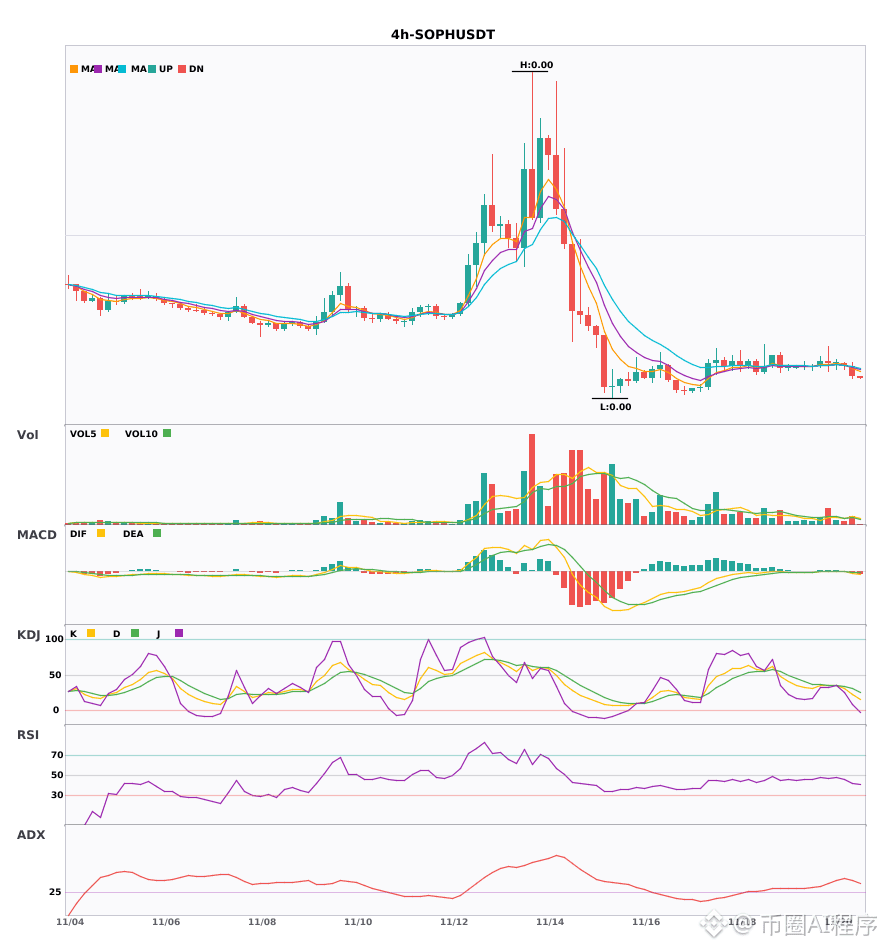
$SOPH / $JELLYJELLY 4-hour weakness; daily bearish alignment 🔥
════════════════════
🟢 $SOPH 4-hour bearish signal
⚠️ Technicals: Multi-timeframe confluence favors shorts: 4-hour MACD bearish crossover with expanding green bars, bearish moving-average alignment, and weak KDJ without being oversold. Daily bearish confluence confirmed; volume is normal.
════════════════════
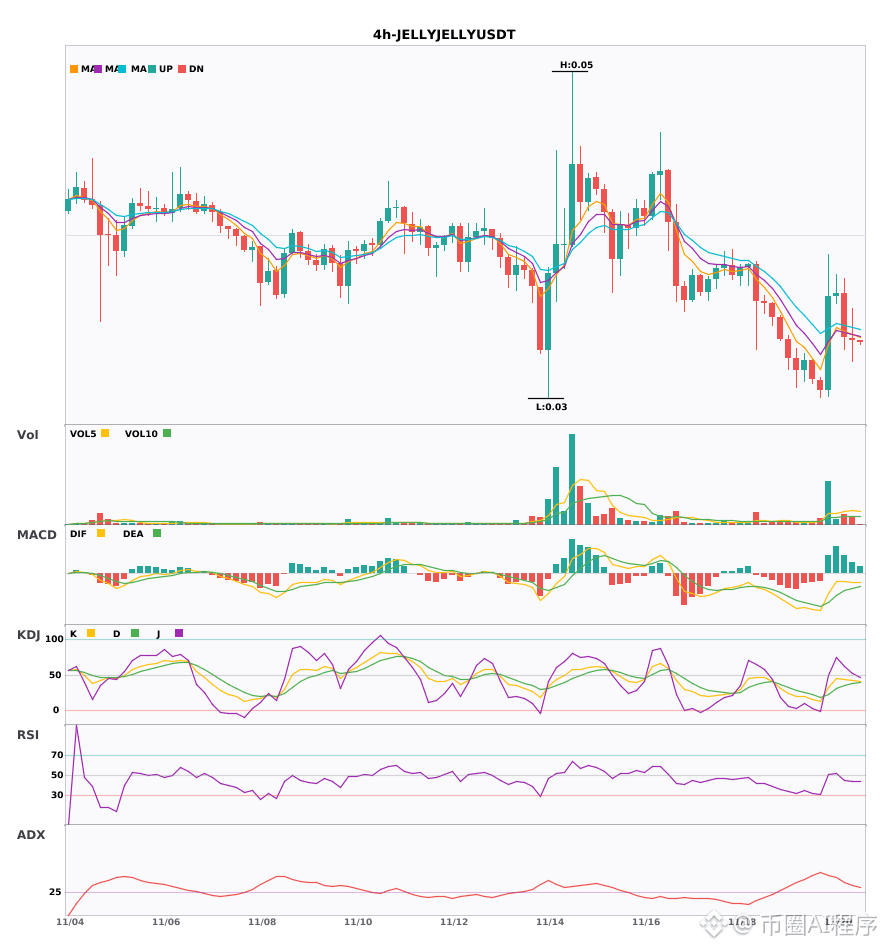
🟢 $JELLYJELLY 4-hour bearish signal
⚠️ Technicals: Daily bearish confluence confirmed. 4-hour EMA5 has just crossed below EMA8, forming a bearish alignment. KDJ bearish crossover without being oversold; bears have the upper hand. Volume is moderately higher (1.4x).
════════════════════
🔔 Follow for firsthand market updates 🔔
#多周期共振 #SOPH #JELLYJELLY
📌 When trading, pay attention to whether the candlestick pattern confirms the setup.
$SOPH / $JELLYJELLY 4-hour weakness; daily bearish alignment 🔥
════════════════════
🟢 $SOPH 4-hour bearish signal
⚠️ Technicals: Multi-timeframe confluence favors shorts: 4-hour MACD bearish crossover with expanding green bars, bearish moving-average alignment, and weak KDJ without being oversold. Daily bearish confluence confirmed; volume is normal.
════════════════════
🟢 $JELLYJELLY 4-hour bearish signal
⚠️ Technicals: Daily bearish confluence confirmed. 4-hour EMA5 has just crossed below EMA8, forming a bearish alignment. KDJ bearish crossover without being oversold; bears have the upper hand. Volume is moderately higher (1.4x).
════════════════════
🔔 Follow for firsthand market updates 🔔
#多周期共振 #SOPH #JELLYJELLY
📌 When trading, pay attention to whether the candlestick pattern confirms the setup.
════════════════════
🟢 $SOPH 4-hour bearish signal
⚠️ Technicals: Multi-timeframe confluence favors shorts: 4-hour MACD bearish crossover with expanding green bars, bearish moving-average alignment, and weak KDJ without being oversold. Daily bearish confluence confirmed; volume is normal.
════════════════════
🟢 $JELLYJELLY 4-hour bearish signal
⚠️ Technicals: Daily bearish confluence confirmed. 4-hour EMA5 has just crossed below EMA8, forming a bearish alignment. KDJ bearish crossover without being oversold; bears have the upper hand. Volume is moderately higher (1.4x).
════════════════════
🔔 Follow for firsthand market updates 🔔
#多周期共振 #SOPH #JELLYJELLY
📌 When trading, pay attention to whether the candlestick pattern confirms the setup.
15
·
--
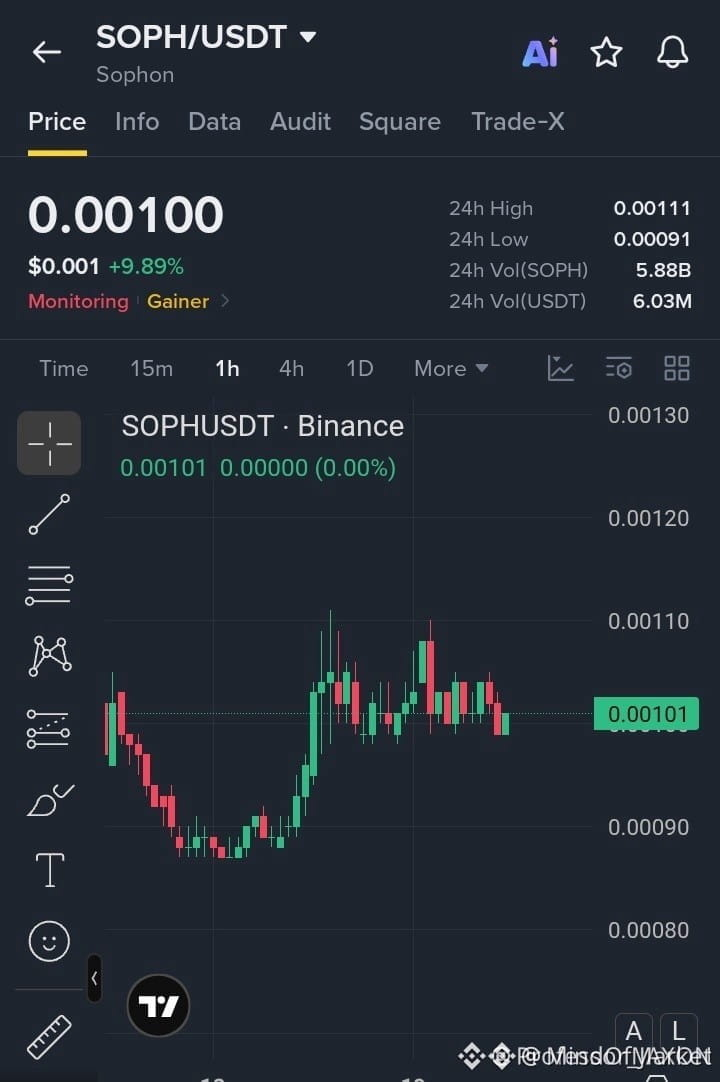
🦈 $SOPH DEFENDING KEY SUPPORT WITH INSTITUTIONAL ACCUMULATION IN PLAY 💥
Entry: 0.00099–0.00101 ⚡
Target: 0.00110 🚀
Stop Loss: 0.00097 ⚠️
Price action on $SOPH is currently compressing tightly above the pivotal 0.00100 structural support following an impulsive bullish recovery. Smart money is absorbing available liquidity in this tight base, setting the stage for an expansion toward overhead resistance clusters at 0.00105 and 0.00110. 📊
A decisive acceptance and volume expansion above the 0.00105 threshold would invalidate current range constraints and accelerate upward momentum. ⚡ Maintaining risk parameters below the recent structural low ensures we protect capital while riding the next institutional markup phase. 💡
Are you positioning ahead of the breakout or waiting for a confirmed reclaim of the 0.00105 level? 👇
⚠️ Not financial advice. Always manage your risk. 🛡️
🏷️ #SOPH #SupportDefense #BreakoutSetup #Crypto
🔥 💎
🦈 $SOPH DEFENDING KEY SUPPORT WITH INSTITUTIONAL ACCUMULATION IN PLAY 💥
Entry: 0.00099–0.00101 ⚡
Target: 0.00110 🚀
Stop Loss: 0.00097 ⚠️
Price action on $SOPH is currently compressing tightly above the pivotal 0.00100 structural support following an impulsive bullish recovery. Smart money is absorbing available liquidity in this tight base, setting the stage for an expansion toward overhead resistance clusters at 0.00105 and 0.00110. 📊
A decisive acceptance and volume expansion above the 0.00105 threshold would invalidate current range constraints and accelerate upward momentum. ⚡ Maintaining risk parameters below the recent structural low ensures we protect capital while riding the next institutional markup phase. 💡
Are you positioning ahead of the breakout or waiting for a confirmed reclaim of the 0.00105 level? 👇
⚠️ Not financial advice. Always manage your risk. 🛡️
🏷️ #SOPH #SupportDefense #BreakoutSetup #Crypto
🔥 💎
Entry: 0.00099–0.00101 ⚡
Target: 0.00110 🚀
Stop Loss: 0.00097 ⚠️
Price action on $SOPH is currently compressing tightly above the pivotal 0.00100 structural support following an impulsive bullish recovery. Smart money is absorbing available liquidity in this tight base, setting the stage for an expansion toward overhead resistance clusters at 0.00105 and 0.00110. 📊
A decisive acceptance and volume expansion above the 0.00105 threshold would invalidate current range constraints and accelerate upward momentum. ⚡ Maintaining risk parameters below the recent structural low ensures we protect capital while riding the next institutional markup phase. 💡
Are you positioning ahead of the breakout or waiting for a confirmed reclaim of the 0.00105 level? 👇
⚠️ Not financial advice. Always manage your risk. 🛡️
🏷️ #SOPH #SupportDefense #BreakoutSetup #Crypto
🔥 💎
4

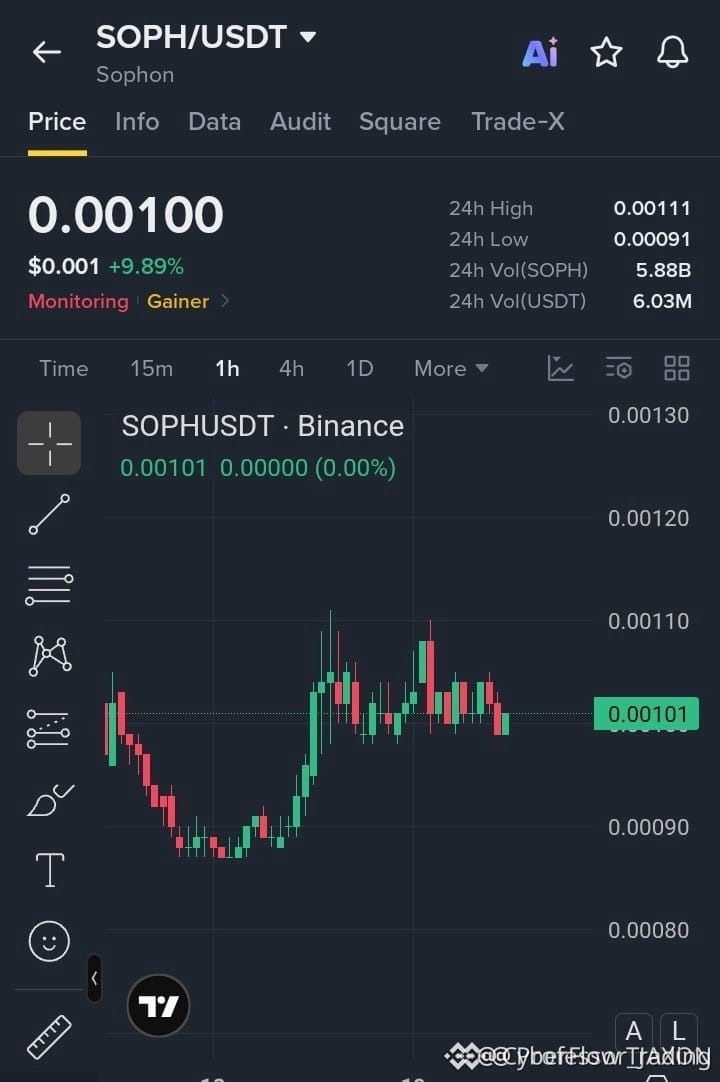
🚨 $SOPH TIGHTENING ABOVE SUPPORT WHILE BULLS LOAD UP FOR THE NEXT LEGS! 💥
Entry: 0.00099–0.00101 ⚡
Target: 0.00105 / 0.00108 / 0.00110 🚀
Stop Loss: 0.00097 ⚠️
$SOPH is carving out a clean consolidation base right above the 0.00100 psychological floor following a fierce impulsive bounce. 📊 Buyers are defending every minor dip, building the necessary kinetic energy to challenge overhead supply zones. ⚡
If volume expands past the 0.00105 threshold, watch for a swift expansion toward the upper targets as late shorts get squeezed. 💡 Are you positioned inside this base yet, or waiting for confirmation above resistance? 👇
⚠️ Not financial advice. Always manage your risk. 🛡️
🏷️ #SOPH #LongSetup #Momentum #Breakout #Crypto
🔥 💎
🚨 $SOPH TIGHTENING ABOVE SUPPORT WHILE BULLS LOAD UP FOR THE NEXT LEGS! 💥
Entry: 0.00099–0.00101 ⚡
Target: 0.00105 / 0.00108 / 0.00110 🚀
Stop Loss: 0.00097 ⚠️
$SOPH is carving out a clean consolidation base right above the 0.00100 psychological floor following a fierce impulsive bounce. 📊 Buyers are defending every minor dip, building the necessary kinetic energy to challenge overhead supply zones. ⚡
If volume expands past the 0.00105 threshold, watch for a swift expansion toward the upper targets as late shorts get squeezed. 💡 Are you positioned inside this base yet, or waiting for confirmation above resistance? 👇
⚠️ Not financial advice. Always manage your risk. 🛡️
🏷️ #SOPH #LongSetup #Momentum #Breakout #Crypto
🔥 💎
Entry: 0.00099–0.00101 ⚡
Target: 0.00105 / 0.00108 / 0.00110 🚀
Stop Loss: 0.00097 ⚠️
$SOPH is carving out a clean consolidation base right above the 0.00100 psychological floor following a fierce impulsive bounce. 📊 Buyers are defending every minor dip, building the necessary kinetic energy to challenge overhead supply zones. ⚡
If volume expands past the 0.00105 threshold, watch for a swift expansion toward the upper targets as late shorts get squeezed. 💡 Are you positioned inside this base yet, or waiting for confirmation above resistance? 👇
⚠️ Not financial advice. Always manage your risk. 🛡️
🏷️ #SOPH #LongSetup #Momentum #Breakout #Crypto
🔥 💎
18

·
--
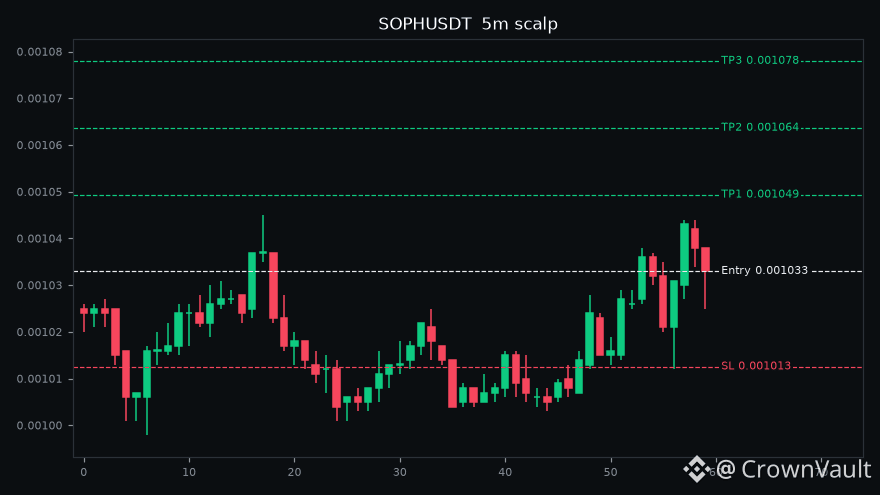
$SOPH has one level that matters today at $0.001110
We sit 12.1 percent below that high right now
An hourly close above it flips the short term momentum back to the bulls
Fail to clear and we drift down toward $0.000910 support
Break or reject? 👀
Do not take my word for it, tap $SOPH and look at the candles
#SOPH #PriceAction
$SOPH has one level that matters today at $0.001110
We sit 12.1 percent below that high right now
An hourly close above it flips the short term momentum back to the bulls
Fail to clear and we drift down toward $0.000910 support
Break or reject? 👀
Do not take my word for it, tap $SOPH and look at the candles
#SOPH #PriceAction
We sit 12.1 percent below that high right now
An hourly close above it flips the short term momentum back to the bulls
Fail to clear and we drift down toward $0.000910 support
Break or reject? 👀
Do not take my word for it, tap $SOPH and look at the candles
#SOPH #PriceAction
10


A 0.20% intraday gain paired with a -0.0139%/4h funding rate is a combination worth pausing to look at.
First, let’s work out the numbers. SOPH is currently at 0.001004. Funding is settled every 4 hours, or 6 times a day. A rate of -0.0139% means that at every settlement, shorts are putting money into longs’ pockets. That adds up to roughly 0.083% a day, or a little over 30% annualized. Based on the $4.87 million in open interest, a rough estimate puts the daily flow from shorts to longs at around $4,000. The absolute amount isn’t huge, but the direction is unmistakable: a group of traders is paying the cost of holding a position in advance of a decline that hasn’t happened yet. The usual logic of shorting is that profits from a price drop cover the costs. But right now, the price is going sideways while those costs bleed away every day.
Now look at the position structure. There’s an imbalance here that’s easy to overlook. Long accounts make up 52.2%—on paper, retail traders are slightly net long—but the funding rate is negative. Account count and position size aren’t the same thing. By notional value, the short side is carrying more weight, enough to be willing to keep paying to hold its positions. Either some traders are holding spot and hedging with perpetuals, paying the funding cost as an insurance premium, or they have a clear expectation about a particular time horizon and believe the drop will outweigh this 30%-plus annualized holding cost. Either way, these positions are deliberate, not shorts placed on a whim.
The ratio of trading volume to open interest also tells us what kind of market this is. Twenty-four-hour trading volume is $16.4 million, while open interest is only $4.87 million—more than 3x turnover. That means most of the trading is round trips within the day, with few positions willing to stay open overnight. The tokens are in the hands of fast in-and-out traders, rather than locked up in trend-following positions. That’s good for small traders, who can get in and out without much trouble. But it’s a trap for anyone trying to build a large position: with a pool of just $4.87 million, a single somewhat larger order can push the price several percentage points. Slippage is more likely to cost you money than getting the direction wrong.
The denominator matters too. This is an asset with a tiny market cap and very thin liquidity. A negative funding rate in a market like this may simply be a structural result of a few market makers and arbitrage traders, and doesn’t imply any macro view. The rate can turn positive within hours, stay negative for a month, or be wiped out in an instant by a single rally. Going long solely because “shorts are paying to hold” doesn’t hold up logically. It only means the cost of holding short positions is rising; it doesn’t mean the price has to go up. The real catalyst has to be buying on the spot market, not the funding rate on the derivatives market. ⚠️ In a thin market, one wick can trigger stop-losses on both sides. Position size will always matter more than your directional call when it comes to how long you survive.
My take: negative funding + high turnover at these price levels + more long accounts but more short exposure by notional value—that’s a classic stalemate where “shorts are paying to wait for a drop.” The odds favor the patient side, but time is on the longs’ side only if the price doesn’t break down first. The signal to watch is simple: if the rate converges toward 0 from -0.0139% while the price starts to climb, that suggests shorts are backing off. If funding stays negative, open interest keeps rising, and the price still doesn’t move, then someone is making a bigger bet—don’t try to guess by standing in their way.
#Crypto #SOPH
A 0.20% intraday gain paired with a -0.0139%/4h funding rate is a combination worth pausing to look at.
First, let’s work out the numbers. SOPH is currently at 0.001004. Funding is settled every 4 hours, or 6 times a day. A rate of -0.0139% means that at every settlement, shorts are putting money into longs’ pockets. That adds up to roughly 0.083% a day, or a little over 30% annualized. Based on the $4.87 million in open interest, a rough estimate puts the daily flow from shorts to longs at around $4,000. The absolute amount isn’t huge, but the direction is unmistakable: a group of traders is paying the cost of holding a position in advance of a decline that hasn’t happened yet. The usual logic of shorting is that profits from a price drop cover the costs. But right now, the price is going sideways while those costs bleed away every day.
Now look at the position structure. There’s an imbalance here that’s easy to overlook. Long accounts make up 52.2%—on paper, retail traders are slightly net long—but the funding rate is negative. Account count and position size aren’t the same thing. By notional value, the short side is carrying more weight, enough to be willing to keep paying to hold its positions. Either some traders are holding spot and hedging with perpetuals, paying the funding cost as an insurance premium, or they have a clear expectation about a particular time horizon and believe the drop will outweigh this 30%-plus annualized holding cost. Either way, these positions are deliberate, not shorts placed on a whim.
The ratio of trading volume to open interest also tells us what kind of market this is. Twenty-four-hour trading volume is $16.4 million, while open interest is only $4.87 million—more than 3x turnover. That means most of the trading is round trips within the day, with few positions willing to stay open overnight. The tokens are in the hands of fast in-and-out traders, rather than locked up in trend-following positions. That’s good for small traders, who can get in and out without much trouble. But it’s a trap for anyone trying to build a large position: with a pool of just $4.87 million, a single somewhat larger order can push the price several percentage points. Slippage is more likely to cost you money than getting the direction wrong.
The denominator matters too. This is an asset with a tiny market cap and very thin liquidity. A negative funding rate in a market like this may simply be a structural result of a few market makers and arbitrage traders, and doesn’t imply any macro view. The rate can turn positive within hours, stay negative for a month, or be wiped out in an instant by a single rally. Going long solely because “shorts are paying to hold” doesn’t hold up logically. It only means the cost of holding short positions is rising; it doesn’t mean the price has to go up. The real catalyst has to be buying on the spot market, not the funding rate on the derivatives market. ⚠️ In a thin market, one wick can trigger stop-losses on both sides. Position size will always matter more than your directional call when it comes to how long you survive.
My take: negative funding + high turnover at these price levels + more long accounts but more short exposure by notional value—that’s a classic stalemate where “shorts are paying to wait for a drop.” The odds favor the patient side, but time is on the longs’ side only if the price doesn’t break down first. The signal to watch is simple: if the rate converges toward 0 from -0.0139% while the price starts to climb, that suggests shorts are backing off. If funding stays negative, open interest keeps rising, and the price still doesn’t move, then someone is making a bigger bet—don’t try to guess by standing in their way.
#Crypto #SOPH
First, let’s work out the numbers. SOPH is currently at 0.001004. Funding is settled every 4 hours, or 6 times a day. A rate of -0.0139% means that at every settlement, shorts are putting money into longs’ pockets. That adds up to roughly 0.083% a day, or a little over 30% annualized. Based on the $4.87 million in open interest, a rough estimate puts the daily flow from shorts to longs at around $4,000. The absolute amount isn’t huge, but the direction is unmistakable: a group of traders is paying the cost of holding a position in advance of a decline that hasn’t happened yet. The usual logic of shorting is that profits from a price drop cover the costs. But right now, the price is going sideways while those costs bleed away every day.
Now look at the position structure. There’s an imbalance here that’s easy to overlook. Long accounts make up 52.2%—on paper, retail traders are slightly net long—but the funding rate is negative. Account count and position size aren’t the same thing. By notional value, the short side is carrying more weight, enough to be willing to keep paying to hold its positions. Either some traders are holding spot and hedging with perpetuals, paying the funding cost as an insurance premium, or they have a clear expectation about a particular time horizon and believe the drop will outweigh this 30%-plus annualized holding cost. Either way, these positions are deliberate, not shorts placed on a whim.
The ratio of trading volume to open interest also tells us what kind of market this is. Twenty-four-hour trading volume is $16.4 million, while open interest is only $4.87 million—more than 3x turnover. That means most of the trading is round trips within the day, with few positions willing to stay open overnight. The tokens are in the hands of fast in-and-out traders, rather than locked up in trend-following positions. That’s good for small traders, who can get in and out without much trouble. But it’s a trap for anyone trying to build a large position: with a pool of just $4.87 million, a single somewhat larger order can push the price several percentage points. Slippage is more likely to cost you money than getting the direction wrong.
The denominator matters too. This is an asset with a tiny market cap and very thin liquidity. A negative funding rate in a market like this may simply be a structural result of a few market makers and arbitrage traders, and doesn’t imply any macro view. The rate can turn positive within hours, stay negative for a month, or be wiped out in an instant by a single rally. Going long solely because “shorts are paying to hold” doesn’t hold up logically. It only means the cost of holding short positions is rising; it doesn’t mean the price has to go up. The real catalyst has to be buying on the spot market, not the funding rate on the derivatives market. ⚠️ In a thin market, one wick can trigger stop-losses on both sides. Position size will always matter more than your directional call when it comes to how long you survive.
My take: negative funding + high turnover at these price levels + more long accounts but more short exposure by notional value—that’s a classic stalemate where “shorts are paying to wait for a drop.” The odds favor the patient side, but time is on the longs’ side only if the price doesn’t break down first. The signal to watch is simple: if the rate converges toward 0 from -0.0139% while the price starts to climb, that suggests shorts are backing off. If funding stays negative, open interest keeps rising, and the price still doesn’t move, then someone is making a bigger bet—don’t try to guess by standing in their way.
#Crypto #SOPH
901
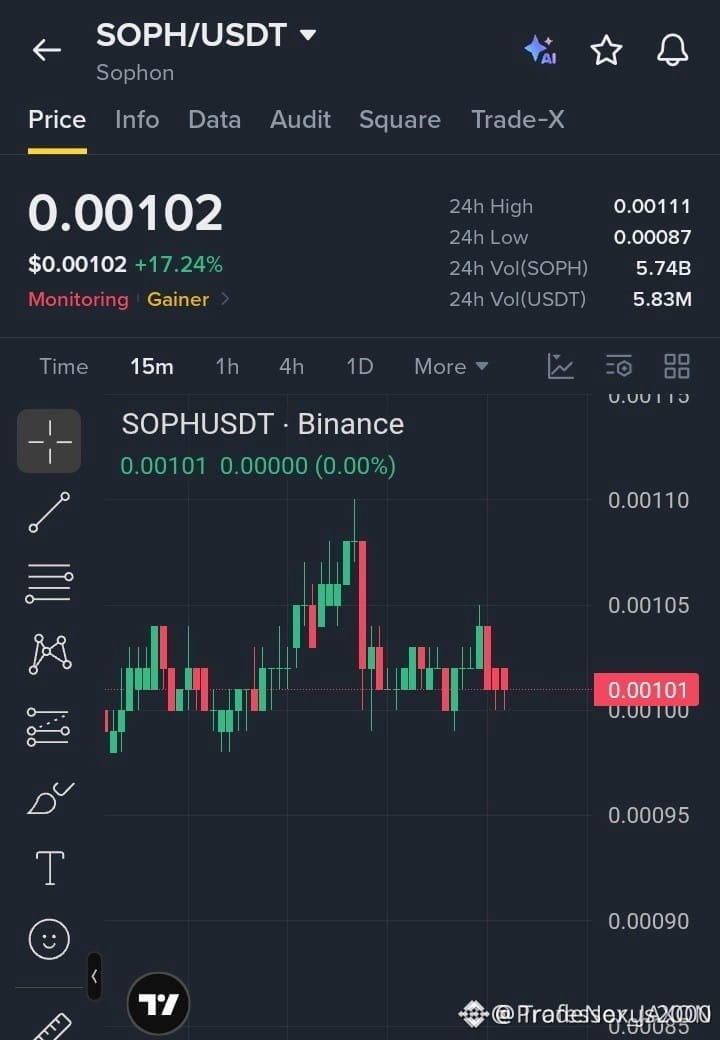
🚨 $SOPH REJECTS INSTITUTIONAL RESISTANCE AT 0.00105 AS SELLER MOMENTUM ACCELERATES 📉
Entry: 0.00101-0.00103 ⚡
Target: 0.00095-0.00099 🚀
Stop Loss: 0.00106 ⚠️
Price action on $SOPH reveals heavy institutional supply sitting right at the 0.00105 liquidity pool, completely stalling upside continuation. 📊 With buyers failing to defend the 0.00100 psychological floor, order flow has shifted in favor of aggressive distribution. ⚡
A decisive breakdown beneath current local support opens a clean path toward our lower targets as liquidity gets swept below the range. 🔍 Are you looking to scale into this short setup now or waiting for a confirmed retest of breakdown levels? 🤔
⚠️ Not financial advice. Always manage your risk. 🛡️
🏷️ #SOPH #ShortSetup #Crypto #Trading
🦈 📉
🚨 $SOPH REJECTS INSTITUTIONAL RESISTANCE AT 0.00105 AS SELLER MOMENTUM ACCELERATES 📉
Entry: 0.00101-0.00103 ⚡
Target: 0.00095-0.00099 🚀
Stop Loss: 0.00106 ⚠️
Price action on $SOPH reveals heavy institutional supply sitting right at the 0.00105 liquidity pool, completely stalling upside continuation. 📊 With buyers failing to defend the 0.00100 psychological floor, order flow has shifted in favor of aggressive distribution. ⚡
A decisive breakdown beneath current local support opens a clean path toward our lower targets as liquidity gets swept below the range. 🔍 Are you looking to scale into this short setup now or waiting for a confirmed retest of breakdown levels? 🤔
⚠️ Not financial advice. Always manage your risk. 🛡️
🏷️ #SOPH #ShortSetup #Crypto #Trading
🦈 📉
Entry: 0.00101-0.00103 ⚡
Target: 0.00095-0.00099 🚀
Stop Loss: 0.00106 ⚠️
Price action on $SOPH reveals heavy institutional supply sitting right at the 0.00105 liquidity pool, completely stalling upside continuation. 📊 With buyers failing to defend the 0.00100 psychological floor, order flow has shifted in favor of aggressive distribution. ⚡
A decisive breakdown beneath current local support opens a clean path toward our lower targets as liquidity gets swept below the range. 🔍 Are you looking to scale into this short setup now or waiting for a confirmed retest of breakdown levels? 🤔
⚠️ Not financial advice. Always manage your risk. 🛡️
🏷️ #SOPH #ShortSetup #Crypto #Trading
🦈 📉
15

·
--
What is $SOPH actually trying to prove at $0.001?
It’s up 13.33% today with $5.94M volume, and the 4h move is already +14.6%. Looks strong on the surface. But RSI is only 44, price is still below the 20d and 50d averages, and longs are paying 0.005% funding. That’s not clean trend confirmation yet. 👀
At $0.001, I’d want to see it hold instead of chasing a green candle. $SOL strength could help, but $SOPH needs its own buyers. The 30d high is still 61% away, so this bounce has plenty to prove. Volume is the real tell here. 🔥
#SOPH #Crypto #Binance
What is $SOPH actually trying to prove at $0.001?
It’s up 13.33% today with $5.94M volume, and the 4h move is already +14.6%. Looks strong on the surface. But RSI is only 44, price is still below the 20d and 50d averages, and longs are paying 0.005% funding. That’s not clean trend confirmation yet. 👀
At $0.001, I’d want to see it hold instead of chasing a green candle. $SOL strength could help, but $SOPH needs its own buyers. The 30d high is still 61% away, so this bounce has plenty to prove. Volume is the real tell here. 🔥
#SOPH #Crypto #Binance
It’s up 13.33% today with $5.94M volume, and the 4h move is already +14.6%. Looks strong on the surface. But RSI is only 44, price is still below the 20d and 50d averages, and longs are paying 0.005% funding. That’s not clean trend confirmation yet. 👀
At $0.001, I’d want to see it hold instead of chasing a green candle. $SOL strength could help, but $SOPH needs its own buyers. The 30d high is still 61% away, so this bounce has plenty to prove. Volume is the real tell here. 🔥
#SOPH #Crypto #Binance
72

·
--
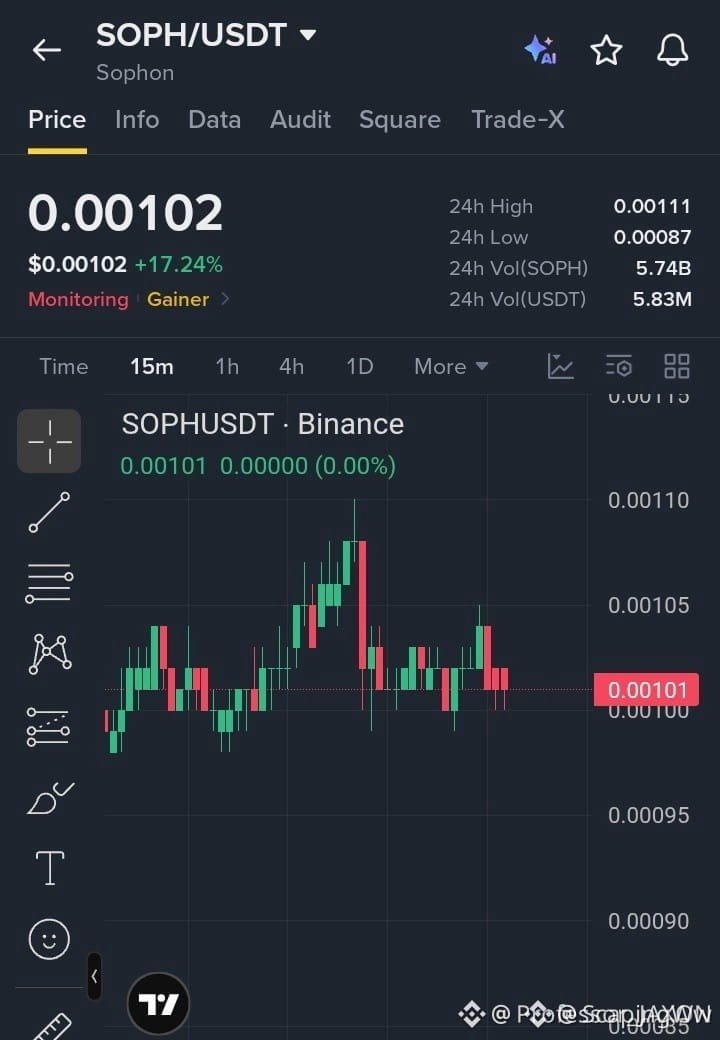
🔴 $SOPH STALLS AT RESISTANCE AS SELLERS STEP IN FOR A POTENTIAL DROP 📉
Entry: 0.00101-0.00103 ⚡
Target: 0.00099, 0.00097, 0.00095 🚀
Stop Loss: 0.00106 ⚠️
Sellers are firmly defending the 0.00105 overhead ceiling, leaving buyers stranded with fading momentum. Price action continues to lean heavily on the 0.00100 psychological floor as overhead supply suffocates any upside continuation. 📊
If this fragile support gives way under sustained distribution, expect a swift liquidity slide toward lower support tiers. Momentum indicators point straight south as bearish volume builds up across the order books. 📉
Are you shorting this breakdown attempt or waiting for a deeper flush before entering? 🤔
⚠️ Not financial advice. Always manage your risk. 🛡️
🏷️ #SOPH #ShortSetup #Bearish #Crypto
🐻 📉
🔴 $SOPH STALLS AT RESISTANCE AS SELLERS STEP IN FOR A POTENTIAL DROP 📉
Entry: 0.00101-0.00103 ⚡
Target: 0.00099, 0.00097, 0.00095 🚀
Stop Loss: 0.00106 ⚠️
Sellers are firmly defending the 0.00105 overhead ceiling, leaving buyers stranded with fading momentum. Price action continues to lean heavily on the 0.00100 psychological floor as overhead supply suffocates any upside continuation. 📊
If this fragile support gives way under sustained distribution, expect a swift liquidity slide toward lower support tiers. Momentum indicators point straight south as bearish volume builds up across the order books. 📉
Are you shorting this breakdown attempt or waiting for a deeper flush before entering? 🤔
⚠️ Not financial advice. Always manage your risk. 🛡️
🏷️ #SOPH #ShortSetup #Bearish #Crypto
🐻 📉
Entry: 0.00101-0.00103 ⚡
Target: 0.00099, 0.00097, 0.00095 🚀
Stop Loss: 0.00106 ⚠️
Sellers are firmly defending the 0.00105 overhead ceiling, leaving buyers stranded with fading momentum. Price action continues to lean heavily on the 0.00100 psychological floor as overhead supply suffocates any upside continuation. 📊
If this fragile support gives way under sustained distribution, expect a swift liquidity slide toward lower support tiers. Momentum indicators point straight south as bearish volume builds up across the order books. 📉
Are you shorting this breakdown attempt or waiting for a deeper flush before entering? 🤔
⚠️ Not financial advice. Always manage your risk. 🛡️
🏷️ #SOPH #ShortSetup #Bearish #Crypto
🐻 📉
24
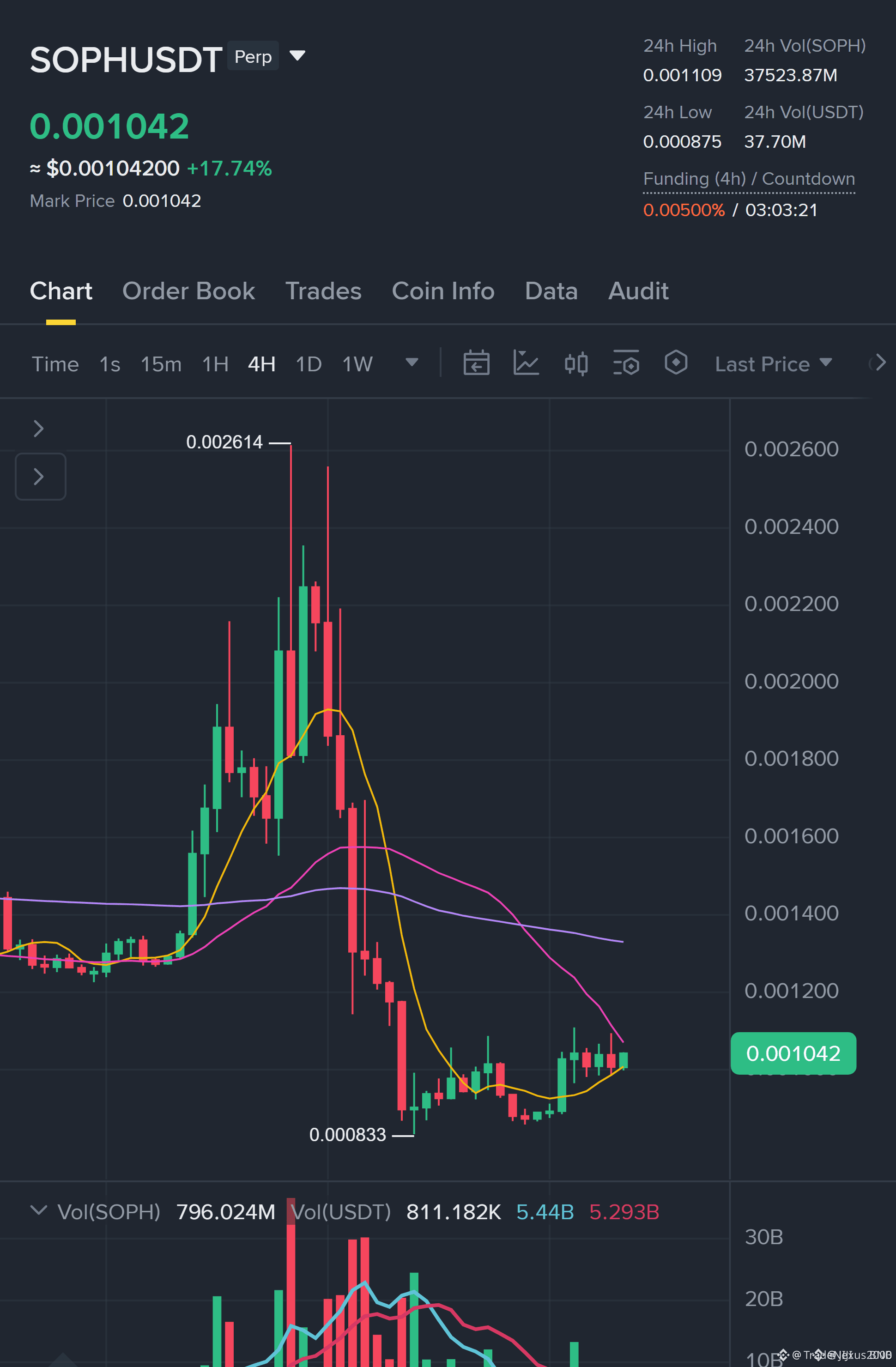
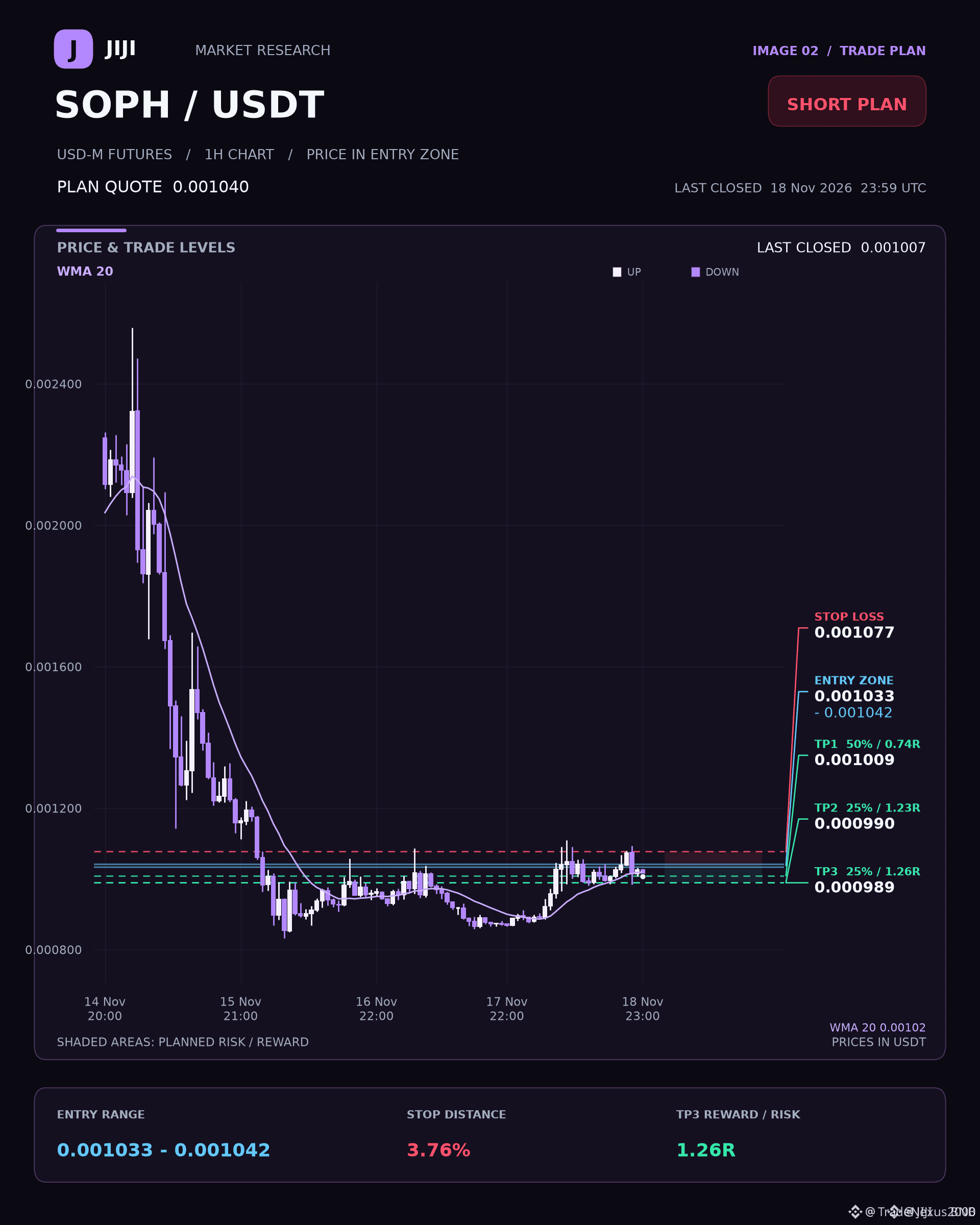
🚨 $SOPH TESTING LOWER TIMEFRAME RESISTANCE AS BEARISH EMA STACK PRESSURES SELLERS 📉
Entry: 0.001033 - 0.001042 ⚡
Target: 0.001009 🚀
Stop Loss: 0.001077 ⚠️
The macro structure on the four-hour timeframe remains firmly under a defensive bearish EMA stack, keeping institutional seller momentum favored across lower intraday intervals. 📊
While the technical bias leans short, execution requires strict patience for a confirmed reclaim of the local supply zone before committing capital given frictional fee drag. 💡
Are you waiting for a confirmed fifteen-minute candle close to validate the structural shift or looking elsewhere? 👇
⚠️ Not financial advice. Always manage your risk. 🛡️
🏷️ #SOPH #ShortSetup #CryptoFutures #PriceAction
🦈 ⚖️
🚨 $SOPH TESTING LOWER TIMEFRAME RESISTANCE AS BEARISH EMA STACK PRESSURES SELLERS 📉
Entry: 0.001033 - 0.001042 ⚡
Target: 0.001009 🚀
Stop Loss: 0.001077 ⚠️
The macro structure on the four-hour timeframe remains firmly under a defensive bearish EMA stack, keeping institutional seller momentum favored across lower intraday intervals. 📊
While the technical bias leans short, execution requires strict patience for a confirmed reclaim of the local supply zone before committing capital given frictional fee drag. 💡
Are you waiting for a confirmed fifteen-minute candle close to validate the structural shift or looking elsewhere? 👇
⚠️ Not financial advice. Always manage your risk. 🛡️
🏷️ #SOPH #ShortSetup #CryptoFutures #PriceAction
🦈 ⚖️
Entry: 0.001033 - 0.001042 ⚡
Target: 0.001009 🚀
Stop Loss: 0.001077 ⚠️
The macro structure on the four-hour timeframe remains firmly under a defensive bearish EMA stack, keeping institutional seller momentum favored across lower intraday intervals. 📊
While the technical bias leans short, execution requires strict patience for a confirmed reclaim of the local supply zone before committing capital given frictional fee drag. 💡
Are you waiting for a confirmed fifteen-minute candle close to validate the structural shift or looking elsewhere? 👇
⚠️ Not financial advice. Always manage your risk. 🛡️
🏷️ #SOPH #ShortSetup #CryptoFutures #PriceAction
🦈 ⚖️
14
Log in to explore more content
Join global crypto users on Binance Square
⚡️ Get latest and useful information about crypto.
💬 Trusted by the world’s largest crypto exchange.
👍 Discover real insights from verified creators.
Email / Phone number
Trending Topics
1
#BTCReboundsAbove$60KAmidWhaleDipBuying
59,234 views
298 Discussing
2
#SolanaSets2027RoadmapToDoubleComputeCapacity
43,825 views
850 Discussing
3
#CaliforniaNvidiaProbeExaminesPotentialCriminalViolations
11,583 views
108 Discussing
4
#BlackRockLaunchesHKDollarDigitalLiquidityFund
36,443 views
658 Discussing
5
#NvidiaLoses$2.7TrillionInMonthAndAHalf
72,325 views
293 Discussing
6
#GlobalStocksFaceLongestLosingStreakSince2023
542,341 views
3,390 Discussing
7
#BlackRockIBITPostsRecord$541MSingleDayOutflow
88,978 views
177 Discussing
8
#AnthropicPlungesTowardIPOPriceonDay2
298,370 views
2,271 Discussing
9
#TwentyOneCapitalAdds172.25BTC
155,658 views
1,592 Discussing
10
#HKBillWouldExcludeTokenizedDepositsFromVirtualAssets
17,491 views
102 Discussing