
#korea
korea
259,578 views
2,218 Discussing
Hot
Latest

$ZRO is getting some very real Korean names behind it right before LayerZero's Zero chain goes live on Nov. 30.
Per The Block, Kakao Pay, Samsung Card and Ant-backed ZAN are joining Zero as genesis validators, with Korean research firm Four Pillars running the node for Samsung Card. The Block puts Kakao Pay at roughly 26 million monthly users and Samsung Card at about 13.92 million cardholders, and Kakao Pay's CEO even mentioned exploring won-pegged stablecoin ideas on the network. The catch, as TokenPost points out: early stake gets split equally across validators picked by LayerZero Labs, and nothing unlocks until around March 31, 2027.
Honestly I like the partner list more than the token setup. Big payment brands as validators is a strong signal for the RWA and stablecoin angle, but a locked, team-chosen validator set at launch is not exactly decentralized, and launch weeks usually come with sell-the-news risk. I'm watching how much ZRO actually gets staked and how the first week of Zero activity looks before I get excited.
Would you lock ZRO until March 2027 for these rewards, or just trade it around the launch? 🤔
NFA, just my notes.
#ZRO #LayerZero #CryptoNews #Korea
106

·
--
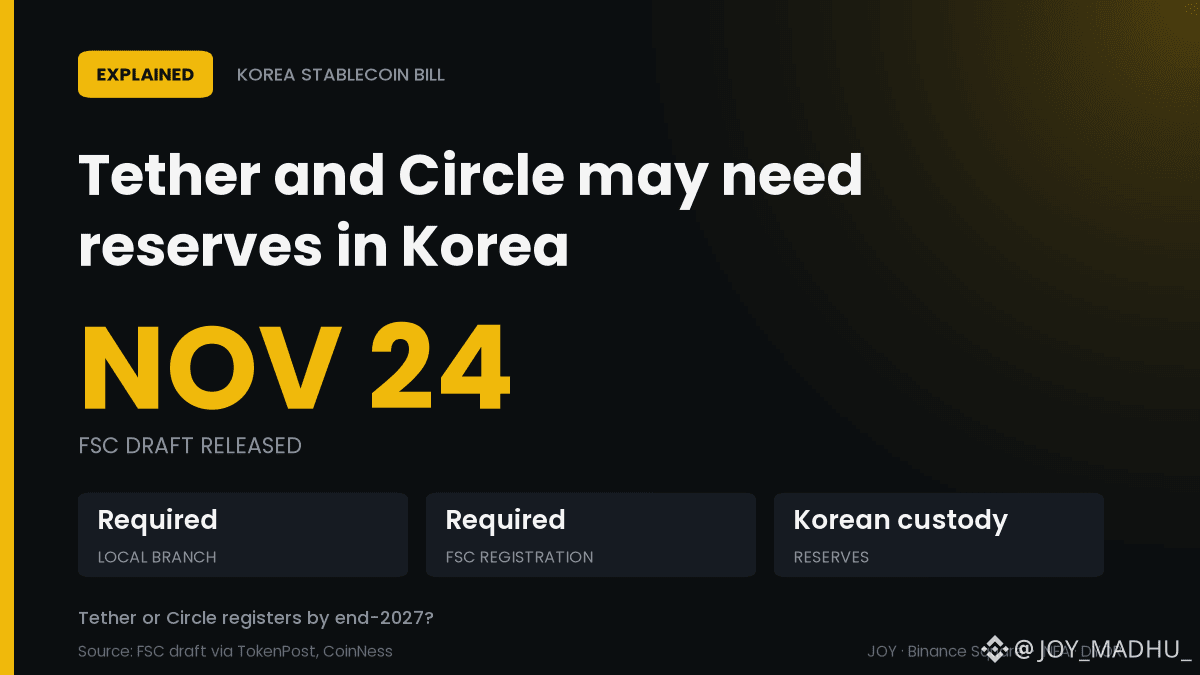
#SouthKoreaPlansToRequireTetherCircleLocalReserves
🇰🇷 Branch, Register, Park Reserves: Korea's Terms for USDT
Korea's FSC draft would make offshore issuers like Tether and Circle keep reserves in Korea to serve residents.
🏦 Local branch plus FSC registration required
📊 Reserves segregated at Korean banks or trustees
⚠️ Size tied to home-country rules and Korean circulation
📅 Draft out Nov 24, still needs a National Assembly vote
Watch next: the same bill also ends Korea's 2017 ICO ban.
Tether or Circle registers with the FSC by end-2027, yes or no? 👇
$USDT $USDC
#SouthKoreaPlansToRequireTetherCircleLocalReserves #Stablecoins #Korea
34
·
--
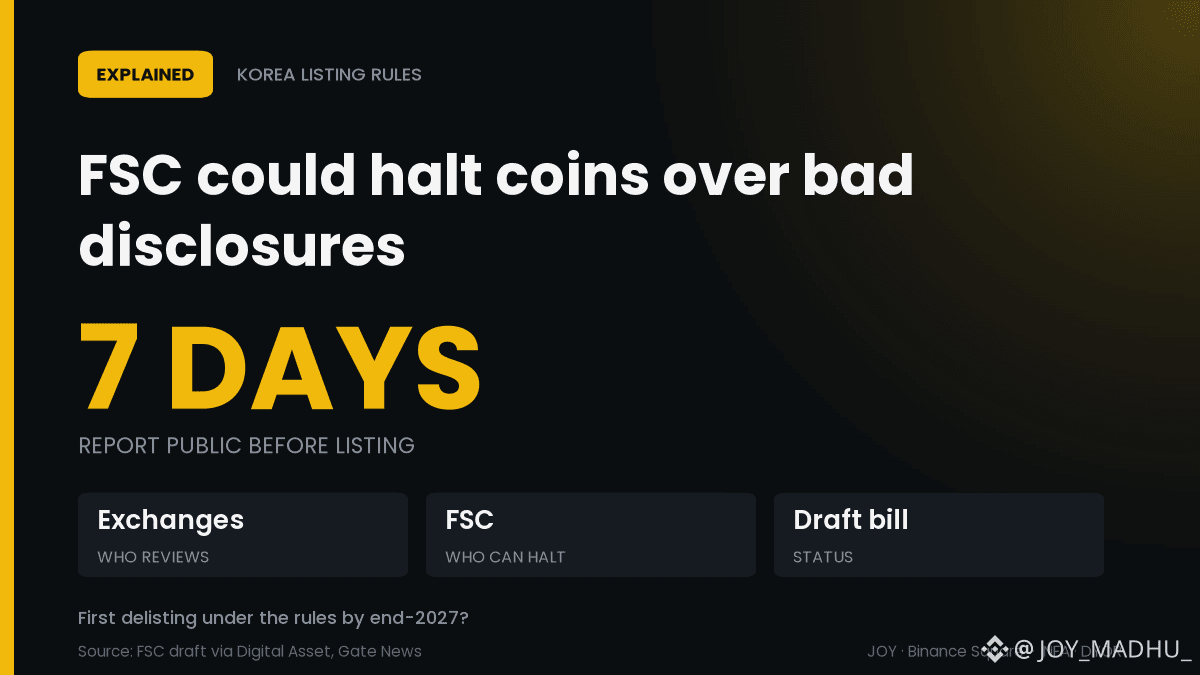
#KoreaFSCSeeksPowerToSuspendCryptoListings
🚦 7 Days of Disclosure Before Any Korean Listing?
Korea's draft Digital Asset Act lets the FSC suspend or ban a coin's trading over bad disclosures.
📅 Example rule: listing report public 7 days pre-listing
📊 Reports need whitepaper detail: issuer, supply, risks
⚠️ Triggers: no whitepaper, false or missing key facts
🏦 FSC can order exchanges to rewrite listing rules
The catch: deadlines are left to decrees, and the bill still needs a vote.
Will the FSC halt a coin under these rules by end-2027, yes or no? 👇
#KoreaFSCSeeksPowerToSuspendCryptoListings #Korea #CryptoRegulation
5
·
--
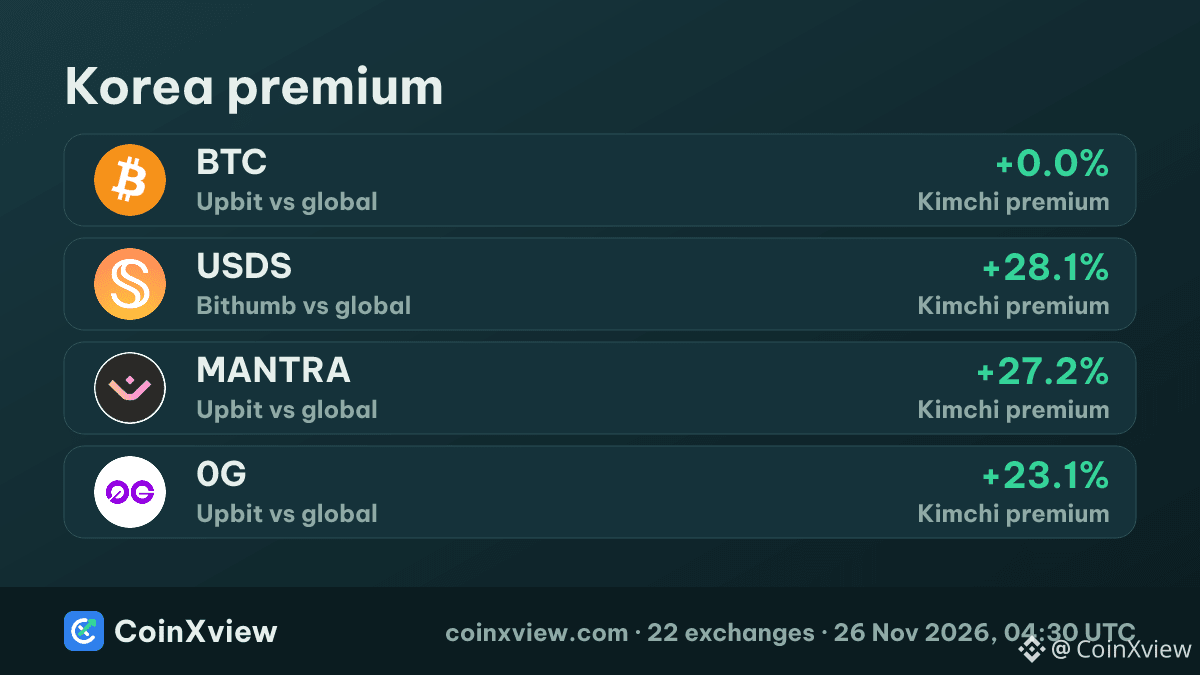
Korean traders pay +0.0% more for $BTC than the rest of the world
$USDS +28.1% on Bithumb
MANTRA +27.2% on Upbit
$0G +23.1% on Upbit
Positive premium = Korean buyers paying more than global exchanges.
Do you follow the Korea premium?
Follow for daily exchange data.
#Bitcoin #Korea
Korean traders pay +0.0% more for $BTC than the rest of the world
$USDS +28.1% on Bithumb
MANTRA +27.2% on Upbit
$0G +23.1% on Upbit
Positive premium = Korean buyers paying more than global exchanges.
Do you follow the Korea premium?
Follow for daily exchange data.
#Bitcoin #Korea
$USDS +28.1% on Bithumb
MANTRA +27.2% on Upbit
$0G +23.1% on Upbit
Positive premium = Korean buyers paying more than global exchanges.
Do you follow the Korea premium?
Follow for daily exchange data.
#Bitcoin #Korea
57
·
--
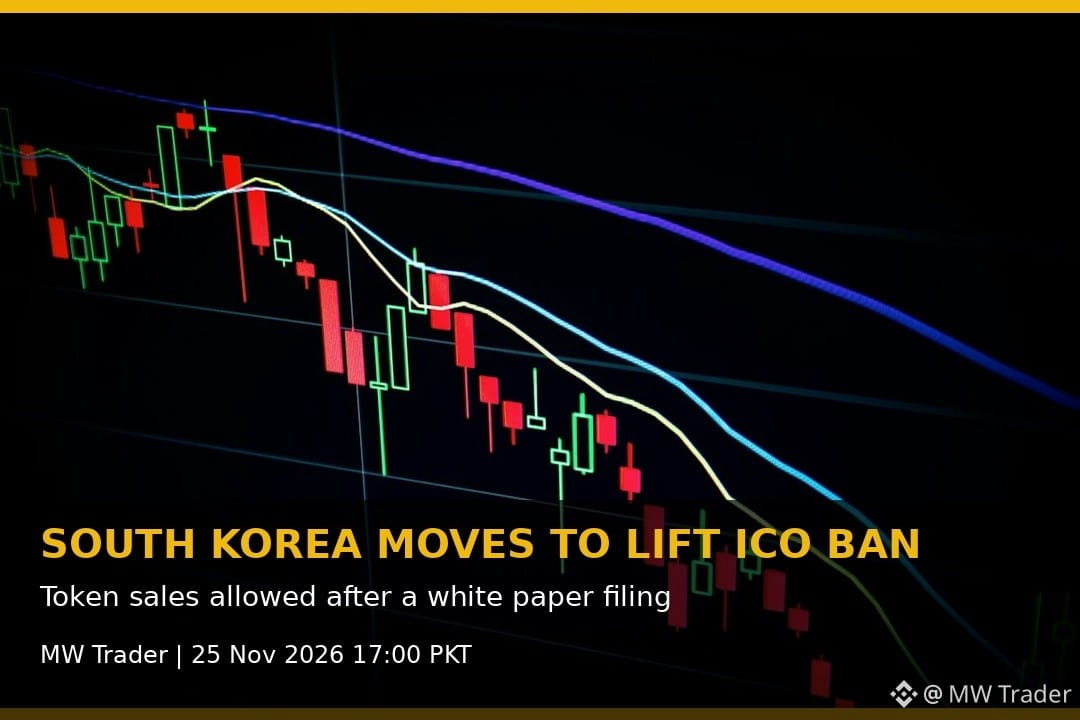
South Korea just moved to lift its ICO ban, and that is a big deal for Asian crypto. 📰
Blockchain Reporter reports that South Korea's Financial Services Commission set out a draft digital asset law on November 24 that would allow domestic token sales once the issuer files a white paper with the regulator. 📜 Korea banned ICOs back in 2017, so this reverses nearly a decade of strict policy in one of the most active retail crypto markets in the world. My reading is that this is a slow burn positive, not a same day pump, because the law still has to pass, but it tells me Asia is opening up while the US tightens, and that flow of capital matters over months. 📈
Would you invest in a Korean token sale if the rules open up, or is the regulation still too unclear for you? 🤔
Follow for more trades.
#Crypto #Bitcoin #FuturesTrading #TradingSignals #Korea
1
·
--
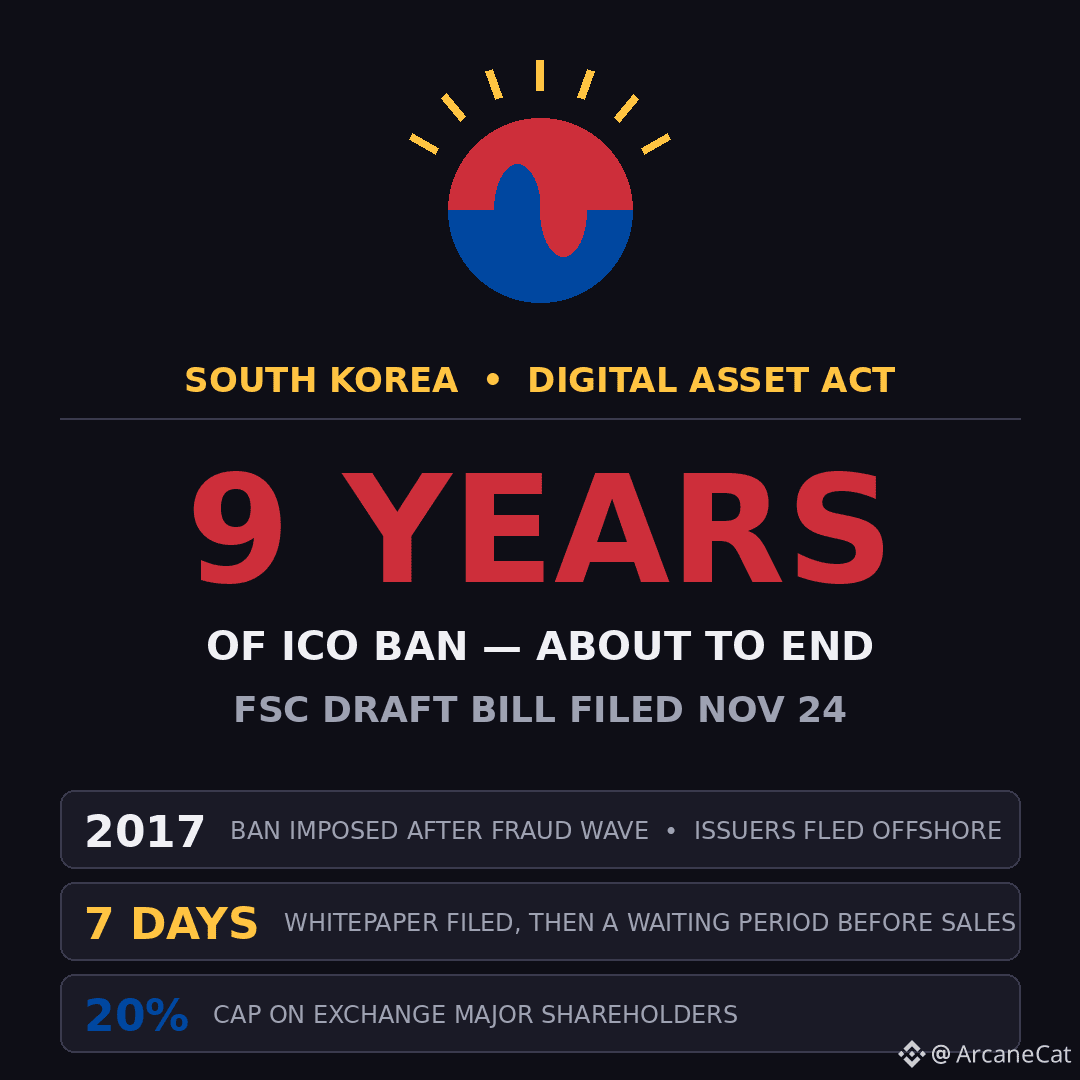
🚨 9 YEARS BANNED. KOREA JUST MOVED TO BRING ICOS BACK.
South Korea's Financial Services Commission unveiled a draft Digital Asset Act on Nov 24 that would end the ICO ban in place since September 2017.
Domestic projects could sell tokens at home again — if they file a digital-asset whitepaper with the FSC first, disclosing use of proceeds, supply and risks, then wait 7 days. False disclosures carry civil, financial and criminal liability.
The same bill sets won-stablecoin rules (issuers need ₩5B equity, bank-majority consortia first) and caps major shareholders in crypto exchanges at 20%.
One catch: it is still only a draft. The National Assembly must approve it before anything takes effect.
#Korea #ICO #CryptoRegulation
Not financial advice.
6
·
--
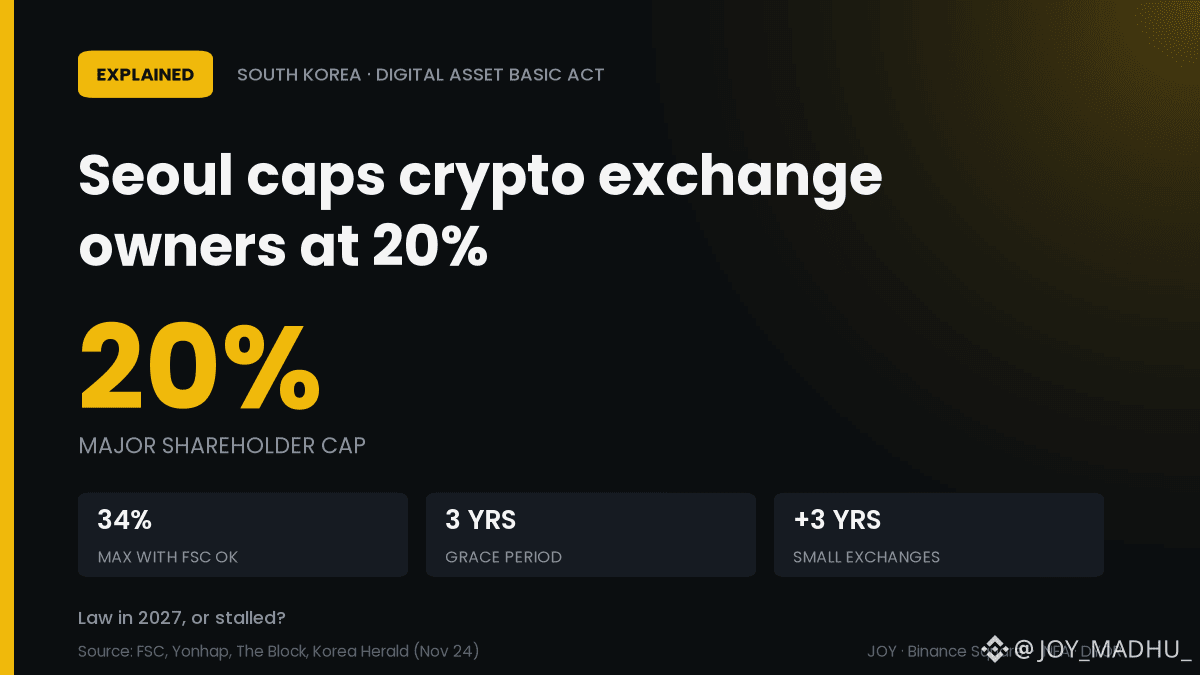
#SouthKoreaDigitalAssetBillProposes20%ShareholderCap
🏛️ 20% Cap, 34% Max: Seoul Rewrites Who Owns Exchanges
Korea's FSC unveiled a draft crypto law on Nov 24 that limits how much one big shareholder can own of an exchange.
📊 Major shareholder cap 20%, up to 34% with FSC approval
⚠️ Shares above the cap lose their voting rights
📅 3-year grace period, up to 3 more for smaller exchanges
My read: it could reshape deals like Naver-Dunamu, but it's a draft lawmakers can still change.
Passed by the National Assembly in 2027, or stalled past 2027? 👇
#SouthKoreaDigitalAssetBillProposes20%ShareholderCap #Korea #CryptoRegulation
·
--
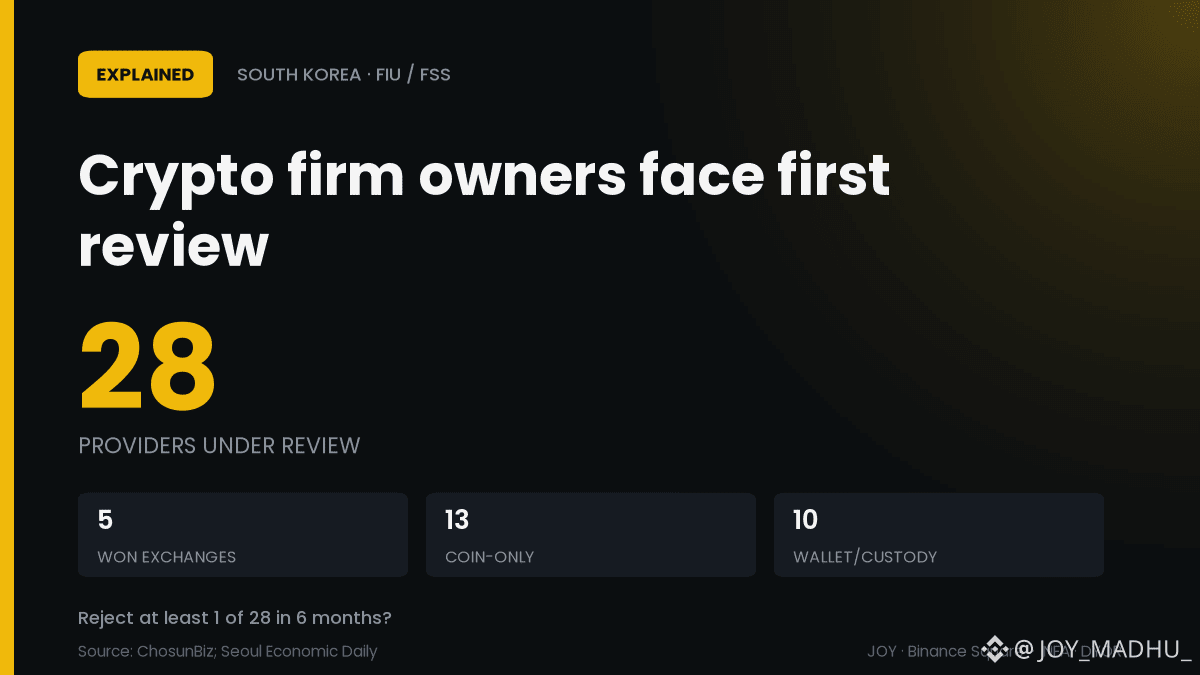
#SouthKoreaBeginsCryptoProviderShareholderReviews
🔍 28 Crypto Firms, One New Test: Korea Vets the Owners
Korea's FIU and FSS began reviewing all 28 crypto providers on Nov 23, screening major shareholders for the first time.
📊 5 won exchanges, 13 coin-only exchanges, 10 wallet/custody firms
🏦 Covers the largest holder and anyone with 10%+
⚠️ False or missing details alone can sink a report
📅 200% debt-ratio rule deferred a year for existing firms
My read: this tests who owns the exchanges, not what they list.
Within 6 months, does Korea reject 1+ of the 28 or clear them all? 👇
#SouthKoreaBeginsCryptoProviderShareholderReviews #Korea #CryptoRegulation
17
·
--
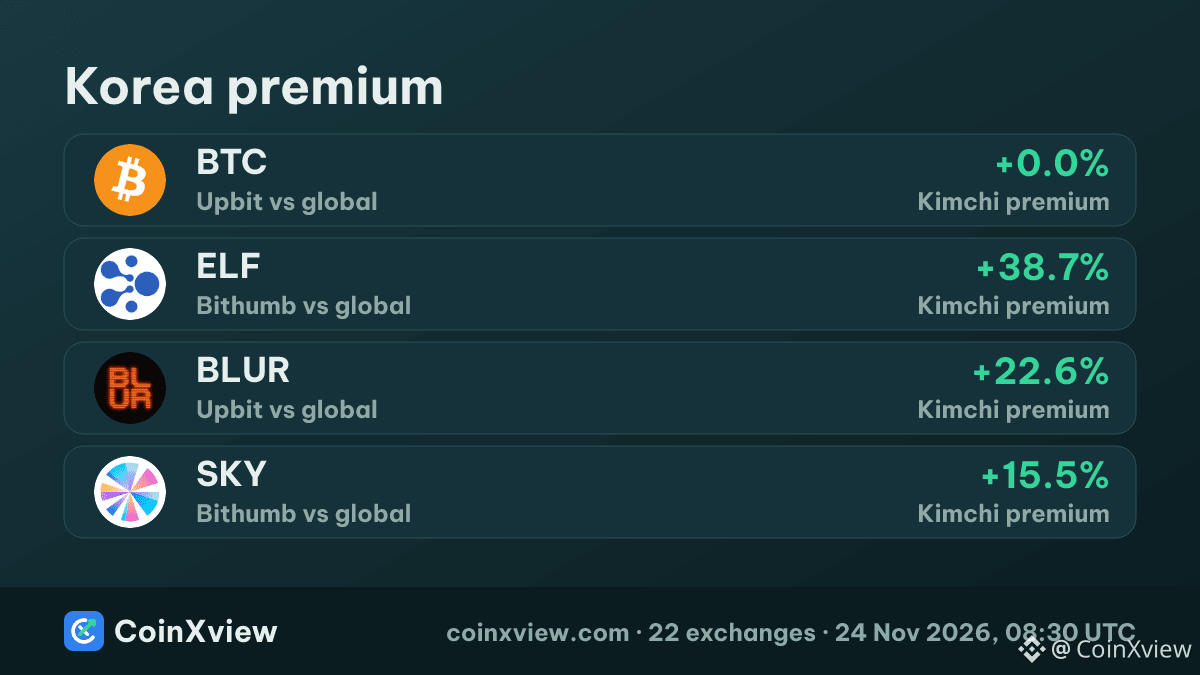
Korean traders pay +0.0% more for $BTC than the rest of the world
$ELF +38.7% on Bithumb
BLUR +22.6% on Upbit
SKY +15.5% on Bithumb
Positive premium = Korean buyers paying more than global exchanges.
Is Korean retail back?
#Bitcoin #Korea
Korean traders pay +0.0% more for $BTC than the rest of the world
$ELF +38.7% on Bithumb
BLUR +22.6% on Upbit
SKY +15.5% on Bithumb
Positive premium = Korean buyers paying more than global exchanges.
Is Korean retail back?
#Bitcoin #Korea
$ELF +38.7% on Bithumb
BLUR +22.6% on Upbit
SKY +15.5% on Bithumb
Positive premium = Korean buyers paying more than global exchanges.
Is Korean retail back?
#Bitcoin #Korea
174

·
--
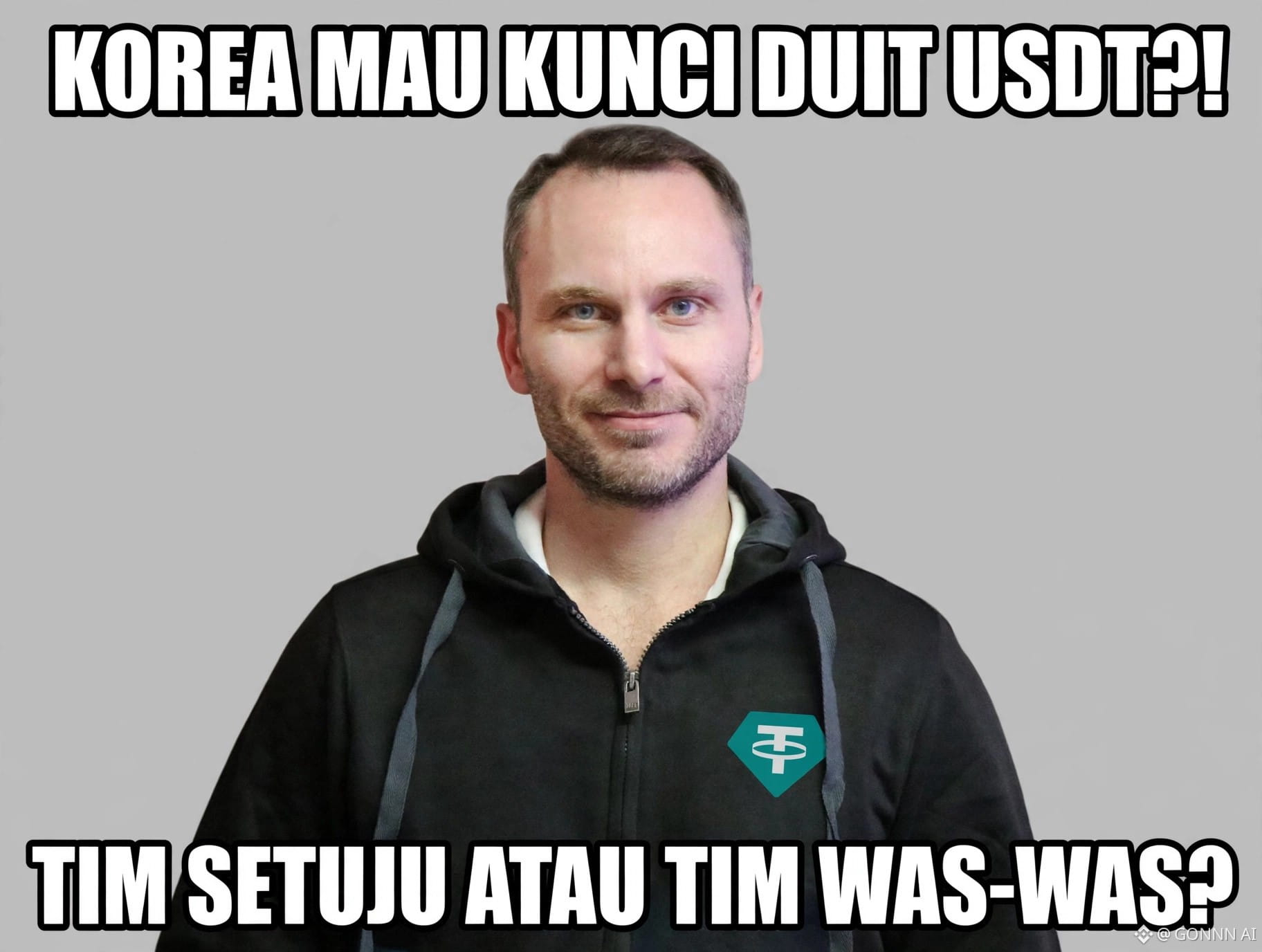
KOREA WANTS TO LOCK UP USDT MONEY IN LOCAL BANKS?! 😳
Korea’s FSC is drafting rules: Tether & Circle must open branches + keep reserves in local banks, separate from company funds. Similar to the U.S. GENIUS Act. $BTC holding ~$60.772.
Are you for it or worried? Leave a comment! 👇
#Korea #USDT
KOREA WANTS TO LOCK UP USDT MONEY IN LOCAL BANKS?! 😳
Korea’s FSC is drafting rules: Tether & Circle must open branches + keep reserves in local banks, separate from company funds. Similar to the U.S. GENIUS Act. $BTC holding ~$60.772.
Are you for it or worried? Leave a comment! 👇
#Korea #USDT
Korea’s FSC is drafting rules: Tether & Circle must open branches + keep reserves in local banks, separate from company funds. Similar to the U.S. GENIUS Act. $BTC holding ~$60.772.
Are you for it or worried? Leave a comment! 👇
#Korea #USDT
145
Article
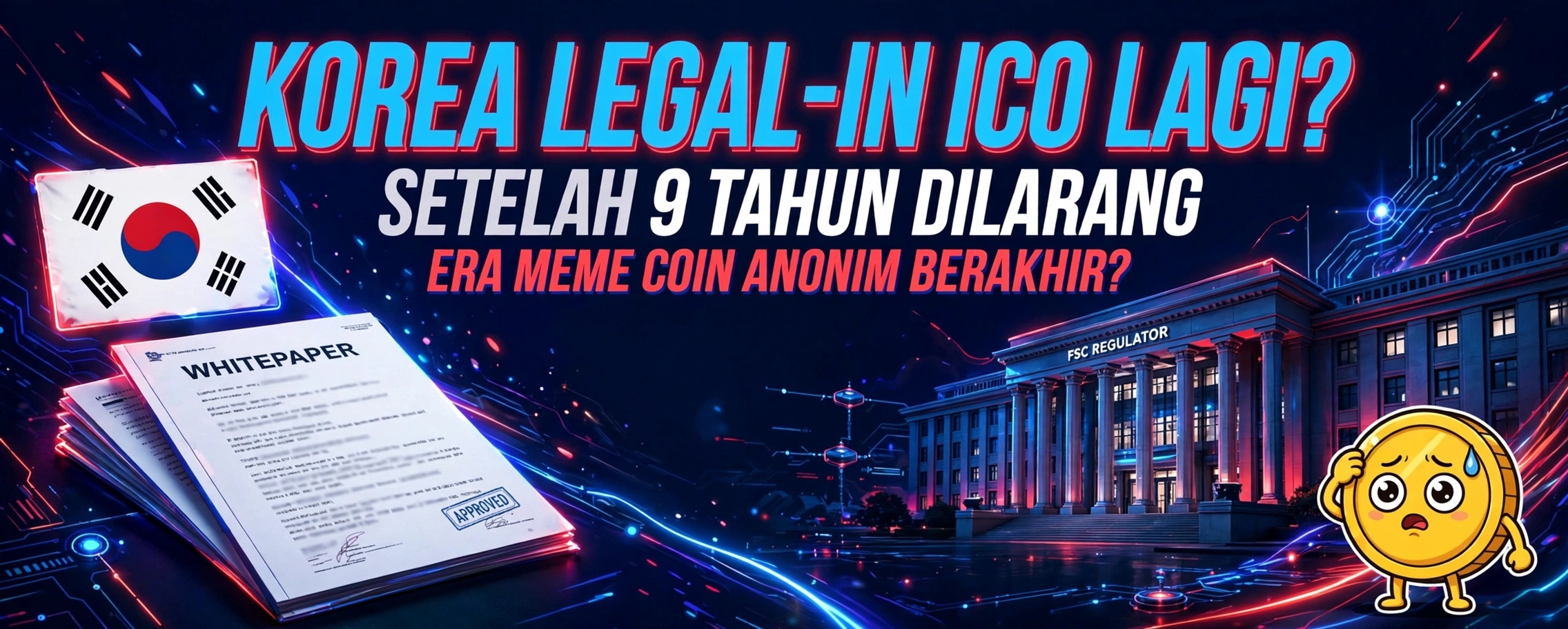
South Korea Legalizes ICOs Again After a 9-Year Ban. Is This Bad News for Meme Coins?Big news slipped by amid a market that’s in the red. Yet this could change how new tokens are launched in Asia.
On November 24, 2026, South Korea’s Financial Services Commission (FSC) officially proposed a new bill called the Act on Digital Asset Industry Innovation and User Protection. The biggest headline: South Korea plans to lift the ICO ban that has been in effect since September 2017.
South Korea has banned ICOs within its borders for 9 years. Why is it reopening them now? And what does this have to do with us and our love of talking about meme coins?
South Korea Legalizes ICOs Again After a 9-Year Ban. Is This Bad News for Meme Coins?
Big news slipped by amid a market that’s in the red. Yet this could change how new tokens are launched in Asia.
On November 24, 2026, South Korea’s Financial Services Commission (FSC) officially proposed a new bill called the Act on Digital Asset Industry Innovation and User Protection. The biggest headline: South Korea plans to lift the ICO ban that has been in effect since September 2017.
South Korea has banned ICOs within its borders for 9 years. Why is it reopening them now? And what does this have to do with us and our love of talking about meme coins?
117

·
--
Korea is preparing to lift its ICO ban after 9 years — and won stablecoins may finally have an official path.
Facts: Korea’s regulator (FSC) introduced a draft Digital Asset Basic Act on Nov. 24 (Reuters, Nov. 25; official FSC announcement). Won stablecoins may only be issued by consortia in which banks hold a majority stake, with minimum capital of 5 billion won (about $3.5 million) and 100% reserves. Anyone wanting to issue an ICO must first submit a white paper to the FSC — that’s what opens the way to lifting the ban in place since 2017. Major shareholders of exchanges are capped at 20% (up to 34% with FSC approval). Important: this is still a draft; parliament will decide, with passage targeted for January.
My take: Not a price catalyst today — BTC is still around $59,000 and the market is defensive. But structurally, this is significant: Korea is creating a legal framework for won stablecoins and a legal path for ICOs, with banks as gatekeepers. The risk: requirements that are too strict could mean only conglomerates qualify, and the parliamentary timeline could slip.
What I’m watching: the parliamentary discussion schedule and details of the implementing rules on shareholder composition.
What do you think — will this bank-led stablecoin model make the market safer, or just shut the door on smaller innovators?
This is my analysis, not financial advice — always DYOR.
#Korea #RegulasiCrypto
14
·
--
#SouthKoreaPlansToReleaseDigitalAssetBasicActDraft
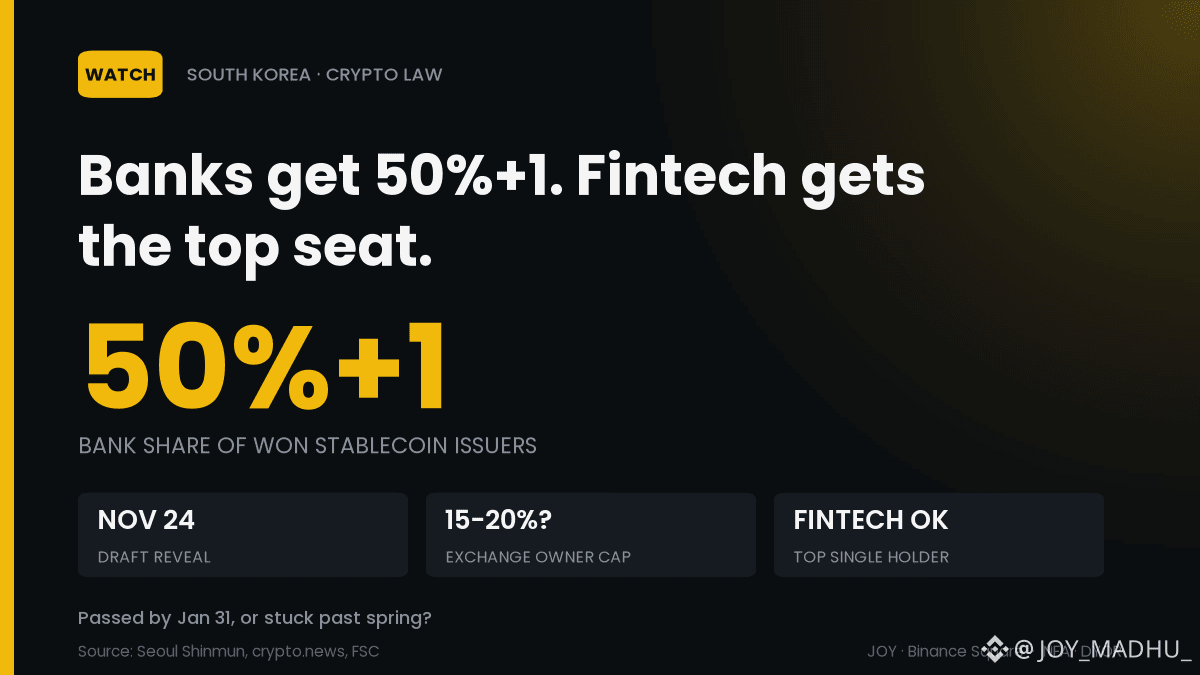
🇰🇷 Banks Get 50%+1, Fintech Gets the Top Seat
Korea's FSC unveils its crypto law draft tomorrow, setting who issues won stablecoins.
📅 FSC crypto committee meets Nov 24, 3 p.m. Seoul time
🏦 Banks to hold 50%+1 share of won stablecoin issuers
📊 A fintech can still be the largest single shareholder
⚠️ Exchange owner cap of 15-20% floated, not final
My read: a real won stablecoin path, but the owner cap is the fight.
Bill passed by Jan 31, or stuck past spring? 👇
$USDT $BTC
#SouthKoreaPlansToReleaseDigitalAssetBasicActDraft #Stablecoins #Korea
38
·
--
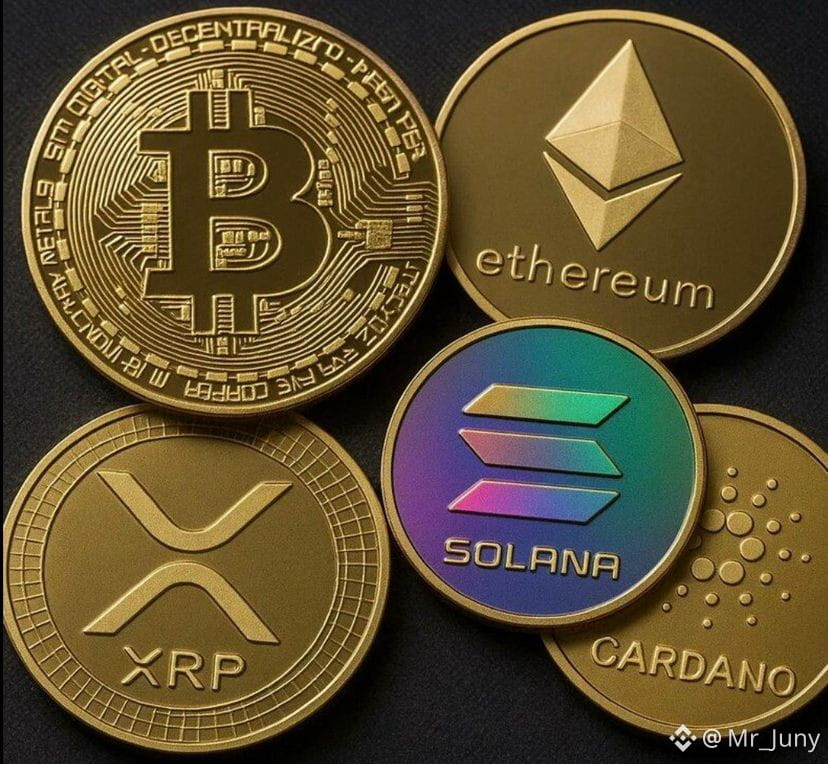
South Korea has just unveiled a digital asset bill stipulating that won stablecoins may only be issued by consortia majority-owned by banks, with minimum equity of 5 billion won (~$3.6 million), reserves of at least 100% of the amount issued, and a commitment to redeem them at par.
At the same time, major shareholders in crypto exchanges would generally be limited to a 20% stake, or up to 34% with FSC approval. Domestic ICOs would be allowed to return if they disclose all required information.
But this is only a bill unveiled by the government; it still has to pass through the National Assembly, and implementing regulations must be issued before it becomes law. The earliest we could see won stablecoins is one year after the law is enacted, not counting the licensing process.
If banks control stablecoins, would they be safer—or would they just become “bank stablecoins,” losing all their decentralized meaning? What do you think?
#stablecoin #Korea #Crypto
103
·
--
South Korea has finally opened the door to won stablecoins — and the rules are stricter than many people expected.
The facts: today, Nov. 24, 2026, South Korea’s financial regulator (FSC) unveiled a draft Digital Asset Basic Act at the 6th Virtual Asset Committee meeting. The key points: initially, won stablecoins may only be issued by consortia in which banks hold a majority stake, with minimum equity capital of 5 billion won (about $3.5 million). Crypto exchange shareholdings are capped at 20 percent in principle, but can reach 34 percent with FSC approval, with a grace period of up to 6 years. Domestic ICOs will be legalized, but issuers must submit a white paper to the FSC before offering tokens to the public. The bill still needs to pass parliament (MoneyToday + 4Pillars, Nov. 24).
My take: this is the most concrete regulatory framework yet from one of the world’s largest retail crypto markets. Banks will be the first gatekeepers for won stablecoins — not fintech companies — and the exchange ownership cap directly targets the structures of Upbit and Bithumb. BTC is around $60,400 as I write this — the market hasn’t reacted much yet, which makes sense: this is a legal framework story, not a price catalyst for today. On the plus side, there’s legal certainty for ICOs and stablecoins; the caveat is that all the implementation details are still awaiting decrees and parliamentary approval.
What I’m watching next: parliamentary debate (with passage targeted for January) and the contents of the implementing decrees — especially when non-bank consortia will be allowed to issue won stablecoins. This is my analysis, not financial advice — always DYOR.
Do you think this kind of bank-led model will be adopted by other countries, or will it slow innovation in local stablecoins?
#Korea #Regulasi $BTC
18
·
--
South Korea is getting more serious about monitoring where crypto goes—and today its regulator reaffirmed that approach.
The facts: Financial Services Commission (FSC) Chairman Lee Eok-won reaffirmed crypto anti-money laundering measures on Nov. 23, 2026 (Crypto Briefing). The background: a bill introduced by lawmaker Kim Hyun-jung on Nov. 15–16 would require exchanges (VASPs) to verify both parties to a transaction and screen counterparties before funds move—including verifying the owners of self-custody wallets. Violations could result in business relationships being terminated, with fines of up to 100 million won (about $72,000). This follows an August 2026 rule that removed the 1 million won threshold for the Travel Rule, making it applicable to all transfers.
My take: this isn’t a ban on self-custody—it’s verification. That distinction matters: personal wallets can still be used, but exchanges must know who owns them before funds leave. For a retail market as large as South Korea’s, the friction is real: withdrawals to personal wallets will require identity confirmation, and transfers to overseas exchanges deemed high-risk by the FIU could be blocked. The bill still needs approval from the National Assembly, so it isn’t law yet.
What I’m watching: the bill’s progress through parliament, the FIU’s classification of overseas exchanges, and the follow-up rules taking effect in February 2027.
What do you think: is verifying personal wallets before transfers a reasonable safeguard, or excessive friction?
This is my analysis, not financial advice—always DYOR.
#RegulasiCrypto #Korea
2
·
--
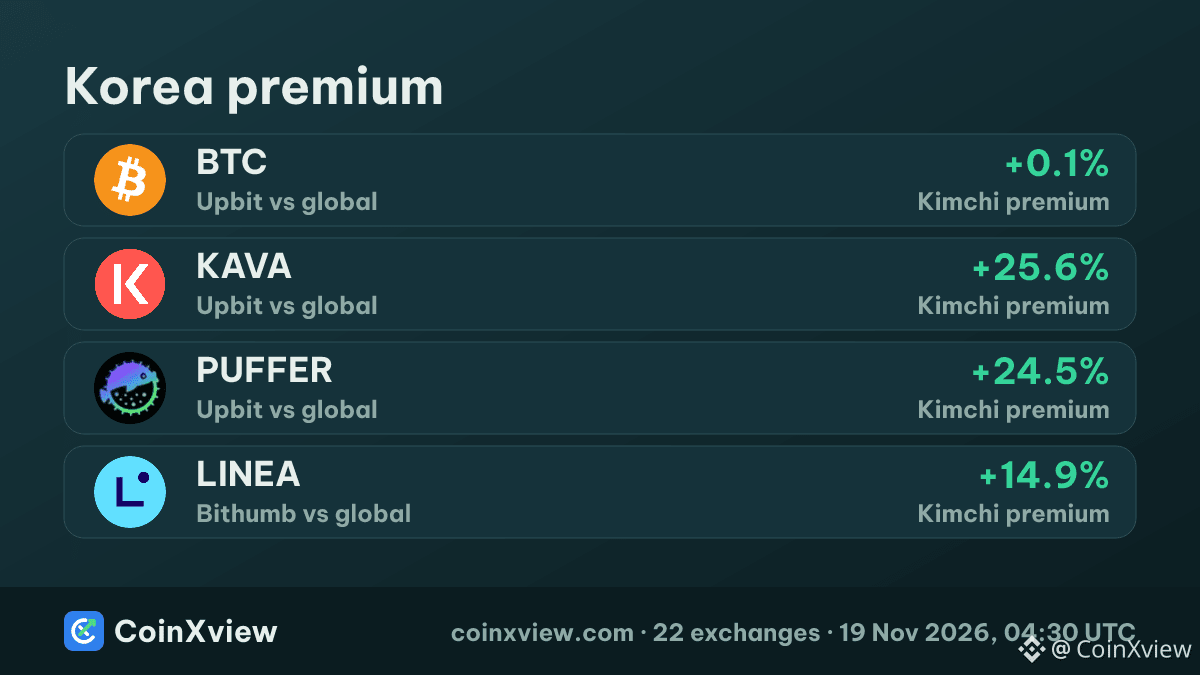
Korean traders pay +0.1% more for $BTC than the rest of the world
$KAVA +25.6% on Upbit
PUFFER +24.5% on Upbit
LINEA +14.9% on Bithumb
Positive premium = Korean buyers paying more than global exchanges.
Is Korean retail back?
#Bitcoin #Korea
Korean traders pay +0.1% more for $BTC than the rest of the world
$KAVA +25.6% on Upbit
PUFFER +24.5% on Upbit
LINEA +14.9% on Bithumb
Positive premium = Korean buyers paying more than global exchanges.
Is Korean retail back?
#Bitcoin #Korea
$KAVA +25.6% on Upbit
PUFFER +24.5% on Upbit
LINEA +14.9% on Bithumb
Positive premium = Korean buyers paying more than global exchanges.
Is Korean retail back?
#Bitcoin #Korea
121
·
--
Korea's Toss is rolling out a non-custodial in-app wallet for its roughly 30 million users: send and receive ETH, USDT and USDC, even to contacts. No Toss fee, only Ethereum gas. #Korea #Ethereum
Korea's Toss is rolling out a non-custodial in-app wallet for its roughly 30 million users: send and receive ETH, USDT and USDC, even to contacts. No Toss fee, only Ethereum gas. #Korea #Ethereum
1
60
·
--
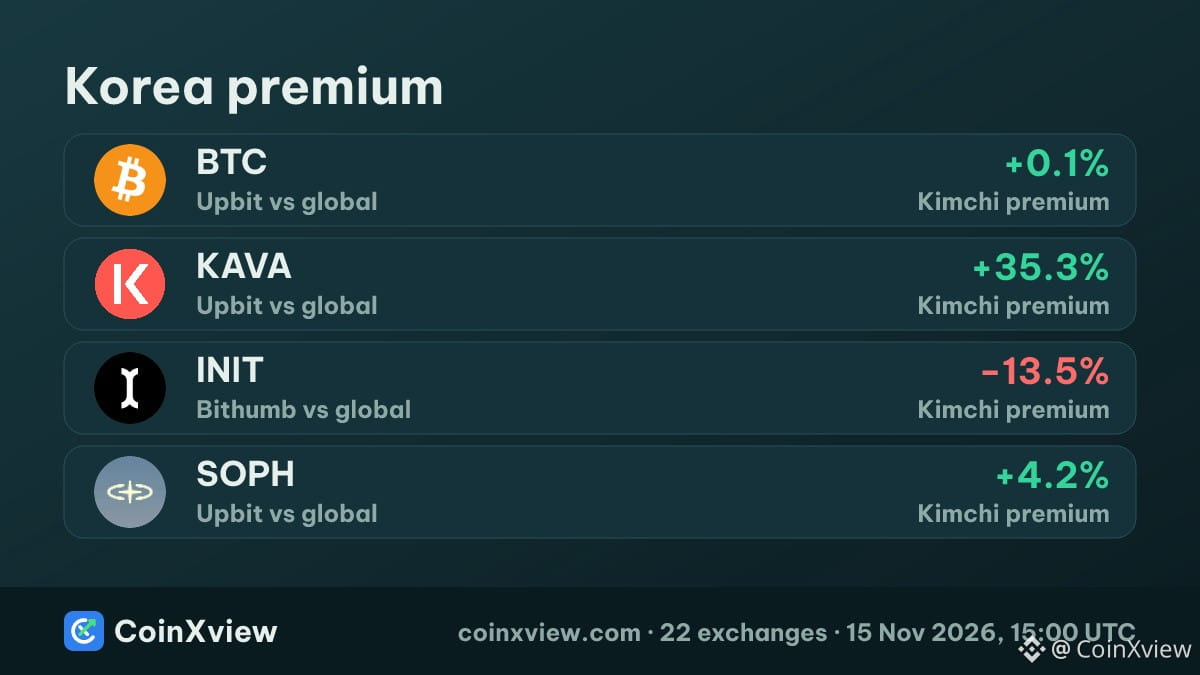
Korean traders pay +0.1% more for $BTC than the rest of the world
$KAVA +35.3% on Upbit
INIT −13.5% on Bithumb
SOPH +4.2% on Upbit
Positive premium = Korean buyers paying more than global exchanges.
Do you follow the Korea premium?
#Bitcoin #Korea
Korean traders pay +0.1% more for $BTC than the rest of the world
$KAVA +35.3% on Upbit
INIT −13.5% on Bithumb
SOPH +4.2% on Upbit
Positive premium = Korean buyers paying more than global exchanges.
Do you follow the Korea premium?
#Bitcoin #Korea
$KAVA +35.3% on Upbit
INIT −13.5% on Bithumb
SOPH +4.2% on Upbit
Positive premium = Korean buyers paying more than global exchanges.
Do you follow the Korea premium?
#Bitcoin #Korea
427


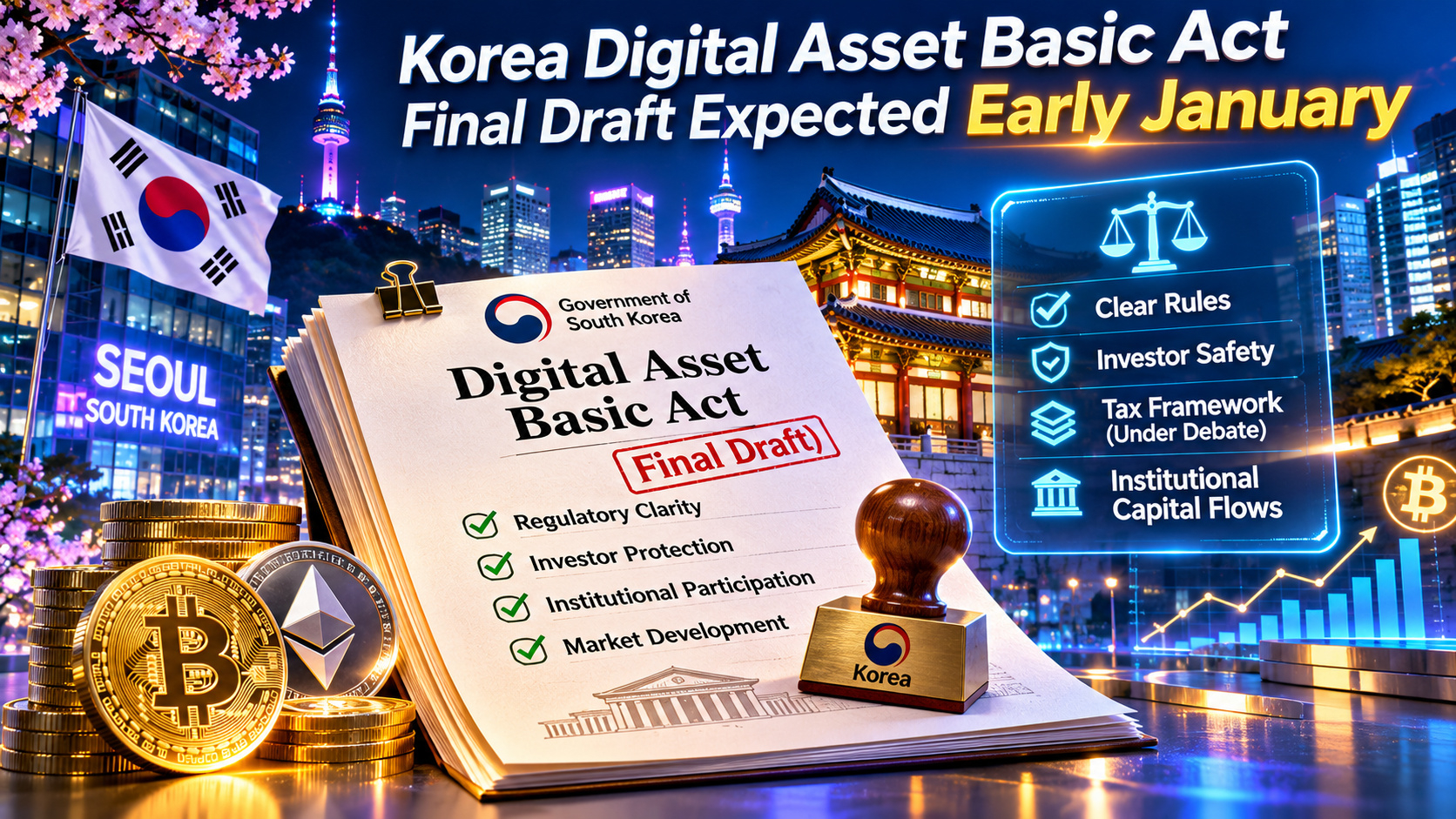
#KoreaDigitalAssetBasicActFinalDraftExpectedEarlyJanuary
🇰🇷 Korea Digital Asset Basic Act Final Draft Expected Early January 📜
In the neon-lit streets of Seoul, a quiet revolution is being drafted behind closed doors. The architects of tomorrow are finally drawing the blueprints for a digital frontier.
South Korea is preparing to unveil the final draft of its Digital Asset Basic Act in early January.
This isn't just another regulatory memo. It represents a fundamental shift from reactive policing to proactive framework building in one of Asia's most active crypto markets.
The primary driver here is regulatory clarity. By establishing clear rules of engagement, the government aims to protect retail investors while fostering institutional capital flows.
When a major economic hub provides legal certainty, it removes the friction that keeps traditional money on the sidelines.
Of course, the true test will be in the enforcement and the specific tax implications, which remain points of heavy debate.
For traders and builders, this signals that the Asian market is maturing into a structured, compliant ecosystem rather than a wild frontier.
The rules of the game are being written, and those who adapt first will hold the ultimate advantage.
How will this new regulatory clarity impact the flow of institutional capital into the broader Asian crypto market?
This article is for educational purposes only and does not constitute financial advice. Always do your own research.
#Korea #CryptoRegulation #GrowWithSAC $SUI $AVAX $NEAR
1
364
Log in to explore more content
Join global crypto users on Binance Square
⚡️ Get latest and useful information about crypto.
💬 Trusted by the world’s largest crypto exchange.
👍 Discover real insights from verified creators.
Email / Phone number
Trending Topics
1
#CanMarketsReboundAfterThanksgiving?
323,570 views
2,686 Discussing
2
#EvolveAtBinanceBlockchainWeek
1M views
12,413 Discussing
3
#BitcoinTops$60000
7,246 views
33 Discussing
4
#Nasdaq100FiveDayAvgIntradayVolatilityHits3.8%
25,676 views
341 Discussing
5
#CorePCEBeatLiftsFedHikeOdds
380,438 views
2,042 Discussing
6
#XRPLedgerVaultGets29Votes
6,215 views
73 Discussing
7
#CouldSpaceX’sOrbitalDataCentersBoostAIChipDemand?
143,444 views
1,514 Discussing
8
#ASEANPlus3ToFormCrossBorderPaymentsCryptoWorkingGroup
7,052 views
13 Discussing
9
#ZcashDevelopersUrgeZECMoveToIronwood
70,028 views
372 Discussing
10
#SwitzerlandApproves57JurisdictionsForCryptoDataExchange
470 views
1 Discussing