
#gold
gold
24.9M views
64,979 Discussing
Hot
Latest

·
--
Verified

Article
🚨 Is Gold About to Repeat One of the Biggest Crashes in History?People believe gold is the safest asset during a crisis and that it can only go up. But many are ignoring what happened the last time history repeated a similar pattern.
In 1979, amid Iran tensions and the oil crisis, gold prices skyrocketed. Everyone thought the rally was just getting started.
But within the following years, gold suffered a massive decline of nearly 70%, wiping out enormous amounts of investor wealth.
What triggered the crash?
As inflation spiraled out of control, the US Federal Reserve aggressively raised interest rates, eventually pushing them close to 20%.
Higher interest rates tightened financial conditions, drained liquidity from markets, and put enormous pressure on gold prices.
Now, look at the situation in 2026. Are we seeing a similar setup?
- Middle East and Iran tensions continue.
- Oil and energy market uncertainty remains.
- Supply chains face disruption.
- Inflationary pressures are building.
- Pressure for higher interest rates is increasing.
This is where ordinary traders often make their biggest mistake: assuming that war or a global crisis automatically means gold will keep rising.
Here's the bigger picture:
Gold doesn't necessarily crash when peace returns. It can come under serious pressure when central banks aggressively raise interest rates to fight inflation and tighten liquidity.
The 1979 gold rally didn't end simply because the crisis disappeared. Monetary policy changed the entire game.
The real question isn't how high gold can go. It's how far central banks are willing to push interest rates to bring inflation under control.
Could history repeat itself in 2026? 👀
What do you think? Bullish on Gold or preparing for another major correction?
#Gold #FederalReserve #Inflationdata #InterestRates #marketanalysis.
🚨 Is Gold About to Repeat One of the Biggest Crashes in History?
People believe gold is the safest asset during a crisis and that it can only go up. But many are ignoring what happened the last time history repeated a similar pattern.
In 1979, amid Iran tensions and the oil crisis, gold prices skyrocketed. Everyone thought the rally was just getting started.
But within the following years, gold suffered a massive decline of nearly 70%, wiping out enormous amounts of investor wealth.
What triggered the crash?
As inflation spiraled out of control, the US Federal Reserve aggressively raised interest rates, eventually pushing them close to 20%.
Higher interest rates tightened financial conditions, drained liquidity from markets, and put enormous pressure on gold prices.
Now, look at the situation in 2026. Are we seeing a similar setup?
- Middle East and Iran tensions continue.
- Oil and energy market uncertainty remains.
- Supply chains face disruption.
- Inflationary pressures are building.
- Pressure for higher interest rates is increasing.
This is where ordinary traders often make their biggest mistake: assuming that war or a global crisis automatically means gold will keep rising.
Here's the bigger picture:
Gold doesn't necessarily crash when peace returns. It can come under serious pressure when central banks aggressively raise interest rates to fight inflation and tighten liquidity.
The 1979 gold rally didn't end simply because the crisis disappeared. Monetary policy changed the entire game.
The real question isn't how high gold can go. It's how far central banks are willing to push interest rates to bring inflation under control.
Could history repeat itself in 2026? 👀
What do you think? Bullish on Gold or preparing for another major correction?
#Gold #FederalReserve #Inflationdata #InterestRates #marketanalysis.
1
730


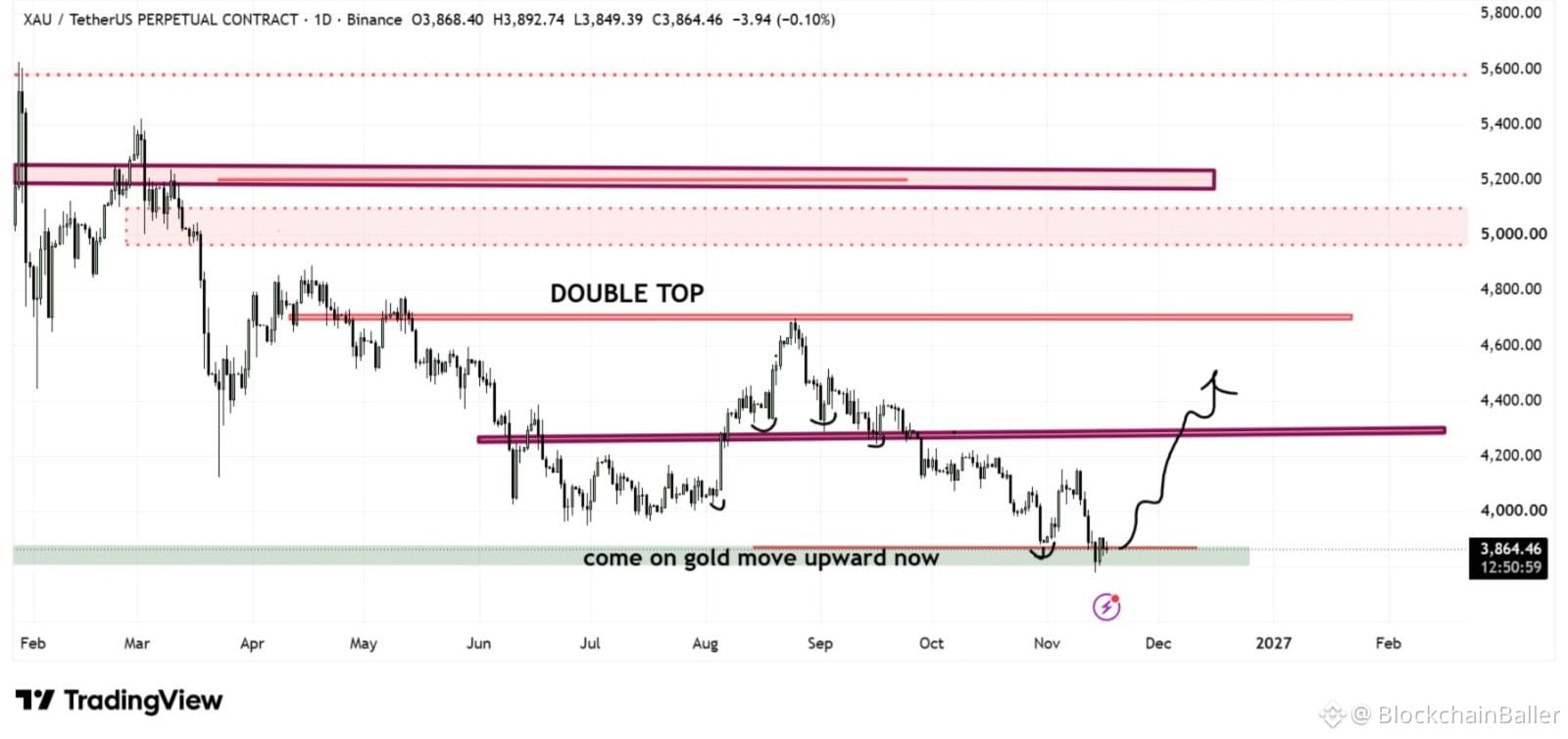
Many of you are wondering can #GOLD recover towards $4,300 or even reach $4,500 ❓
I believe $XAU is now testing an important support zone around $3,800–$3,900.
If buyers defend this area, I expect a move towards $4,200, followed by $4,300 and potentially $4,500.
Holding this support could start the next big upward move.
I believe $XAU is now testing an important support zone around $3,800–$3,900.
If buyers defend this area, I expect a move towards $4,200, followed by $4,300 and potentially $4,500.
Holding this support could start the next big upward move.
3
2.8k


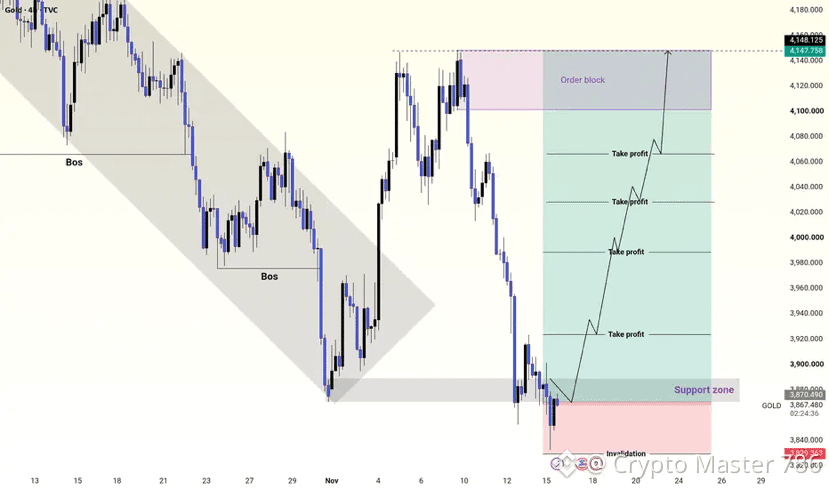
#GOLD H4 – Bullish Reversal Ahead? $4,147 in Focus!
Attention Traders‼️ $XAU is trading near $3,867, testing the crucial $3,870 support zone after a sharp decline.
If buyers defend this area, Gold could recover toward $3,920, $4,000 and $4,147. However, a break below $3,829 could trigger further downside.
What do you think, Fam? Is Gold preparing for a strong comeback or another drop???
4
4k

·
--
Bearish
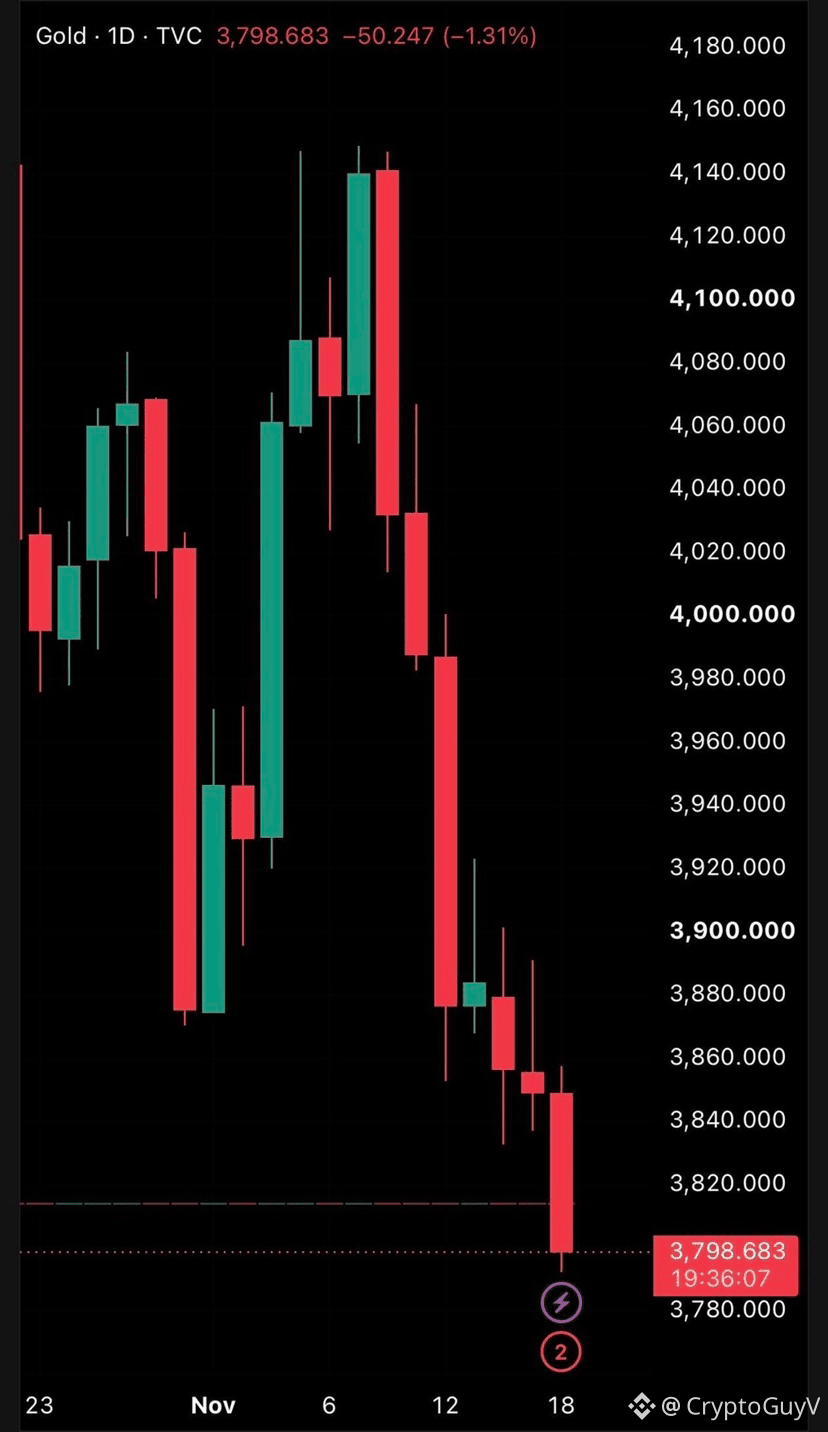
Gold falls below $3,800 for the first time since September 2025 and is now down more than 30% from its January all-time high.
#gold
Gold falls below $3,800 for the first time since September 2025 and is now down more than 30% from its January all-time high.
#gold
#gold
489

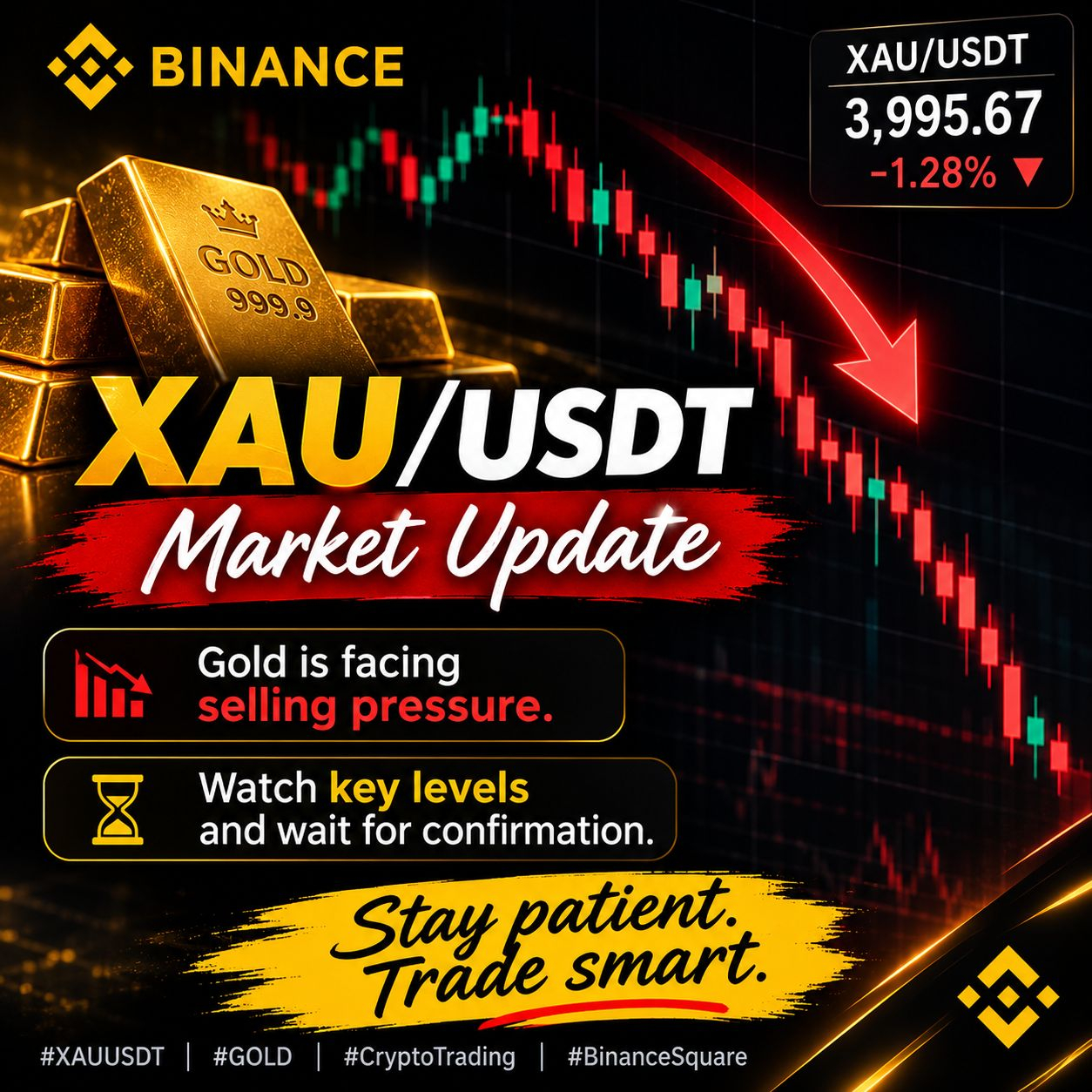
📊 $XAUT /USDT Market Update
Gold is facing selling pressure, but a recovery is still possible. Watch key levels and wait for confirmation.
Stay patient. Trade smart. 📈
#XAUUSDT #GOLD #BinanceSquare
📊 $XAUT /USDT Market Update
Gold is facing selling pressure, but a recovery is still possible. Watch key levels and wait for confirmation.
Stay patient. Trade smart. 📈
#XAUUSDT #GOLD #BinanceSquare
Gold is facing selling pressure, but a recovery is still possible. Watch key levels and wait for confirmation.
Stay patient. Trade smart. 📈
#XAUUSDT #GOLD #BinanceSquare
1
1
621

·
--
Bearish
Partly True
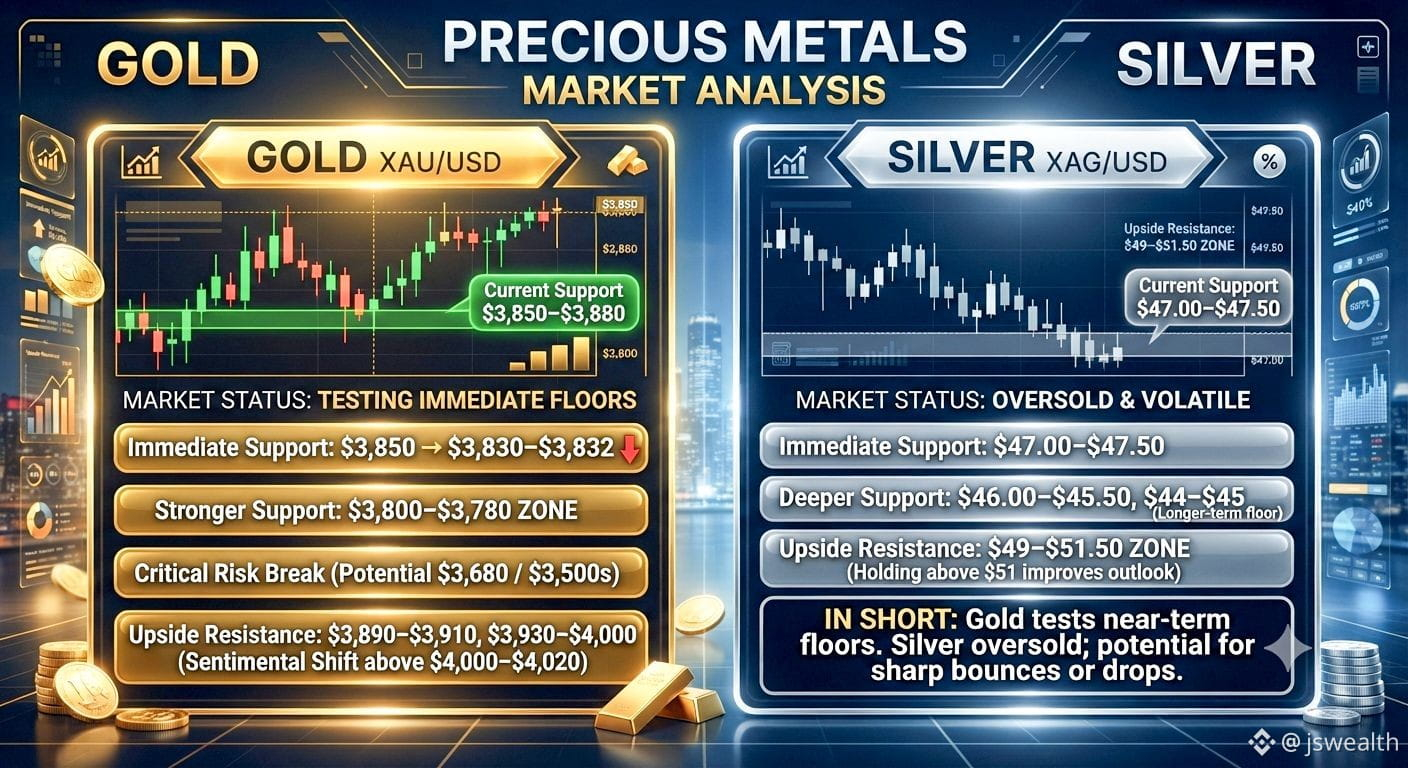
Precious metals are at a critical technical inflection point. 📉📈
While Gold ($3,850–$3,880) is actively testing its immediate structural floors, Silver (~$47) has already absorbed heavier selling pressure and sits in oversold territory—setting the stage for heightened volatility in either direction.
Here are the key levels institutional desks and market participants are watching right now:
🟡 GOLD (XAU/USD) • Immediate Support: $3,850 → $3,830–$3,832 • Major Support Zone: $3,800–$3,780 (A clean breakdown risks opening $3,680 or the mid-$3,500s) • Upside Resistance: $3,890–$3,910, followed by $3,930–$4,000 (A sustained reclaim above $4,020 shifts momentum back to the bulls)
⚪ SILVER (XAG/USD) • Immediate Support: $47.00–$47.50 • Deeper Support: $46.00–$45.50 (Long-term structural floor at $44–$45) • Upside Resistance: $49.00–$51.50 (Holding above $51 is essential to stabilize the short-term trend)
The Takeaway: Gold’s defense of the $3,800 zone will dictate broader safe-haven sentiment. Meanwhile, Silver’s oversold posture makes it ripe for sharp relief bounces—or accelerated downside if support gives way. Risk management is paramount in this tape.
How are you positioning across precious metals at these levels—buying the dip at support or waiting for a confirmed breakout? 👇
#NvidiaBeatsEstimatesWith$130BQ4Outlook #GOLD #silver #Binance #XAUUSD
1
1
1.1k

·
--
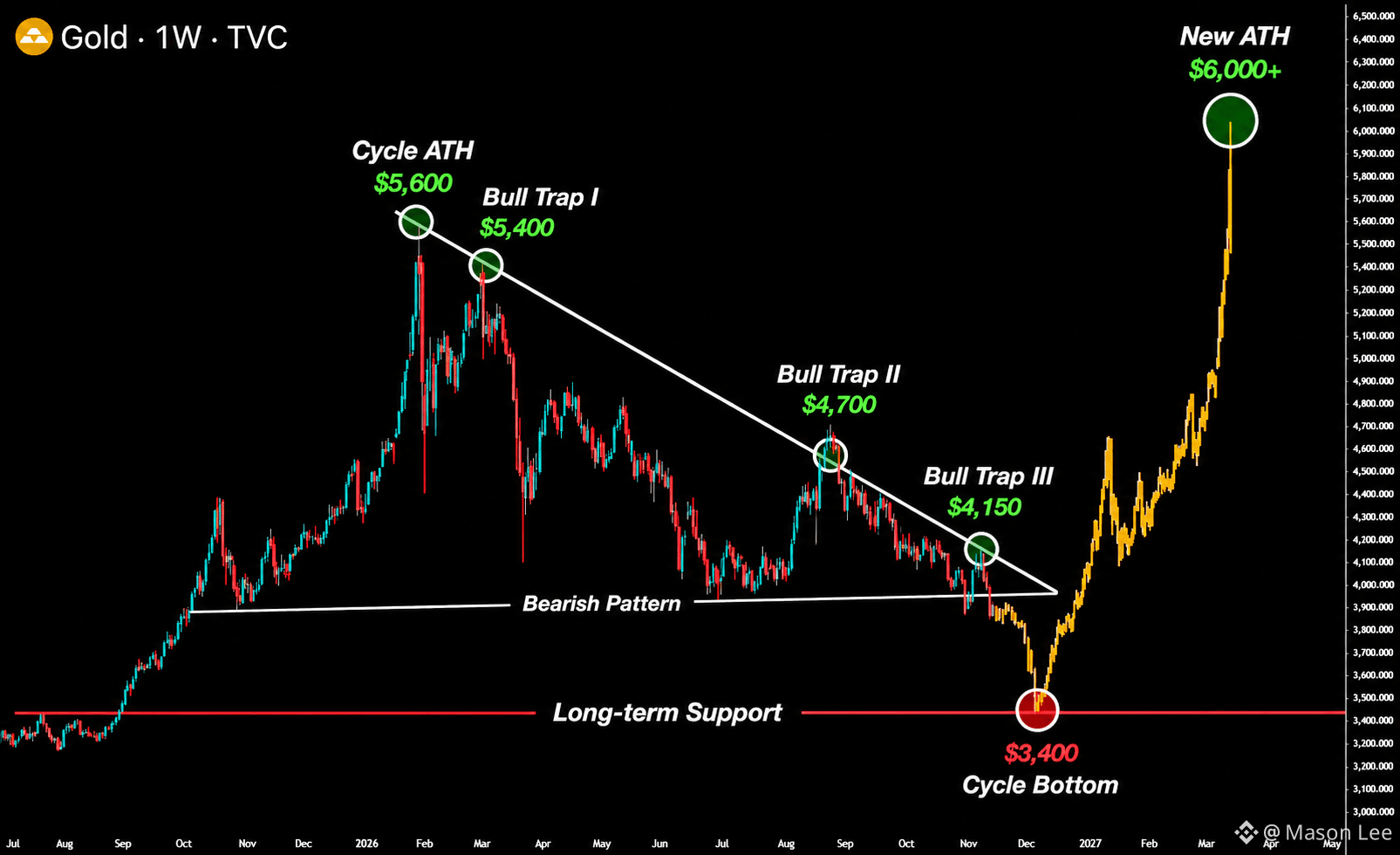
GOLD'S CORRECTION IS FAR FROM OVER.
While the crowd was buying the dip near $5,000, the bigger downside picture was already taking shape.
The levels to watch next:
➜ $3,800
➜ $3,750
➜ $3,550
➜ $3,400 — Potential Cycle Bottom
Markets reward patience, not blind optimism.
The key now is to watch price action at each level rather than rush into a position.
Stay disciplined. DYOR.
#Gold #XAUUSD #GoldPrice #MarketAnalysis #Write2Earn
Faheem khokhar :
I’m watching $3,400 closely, but that’s still a big drop from here. Let’s see how price reacts at the next support levels
1
1
625

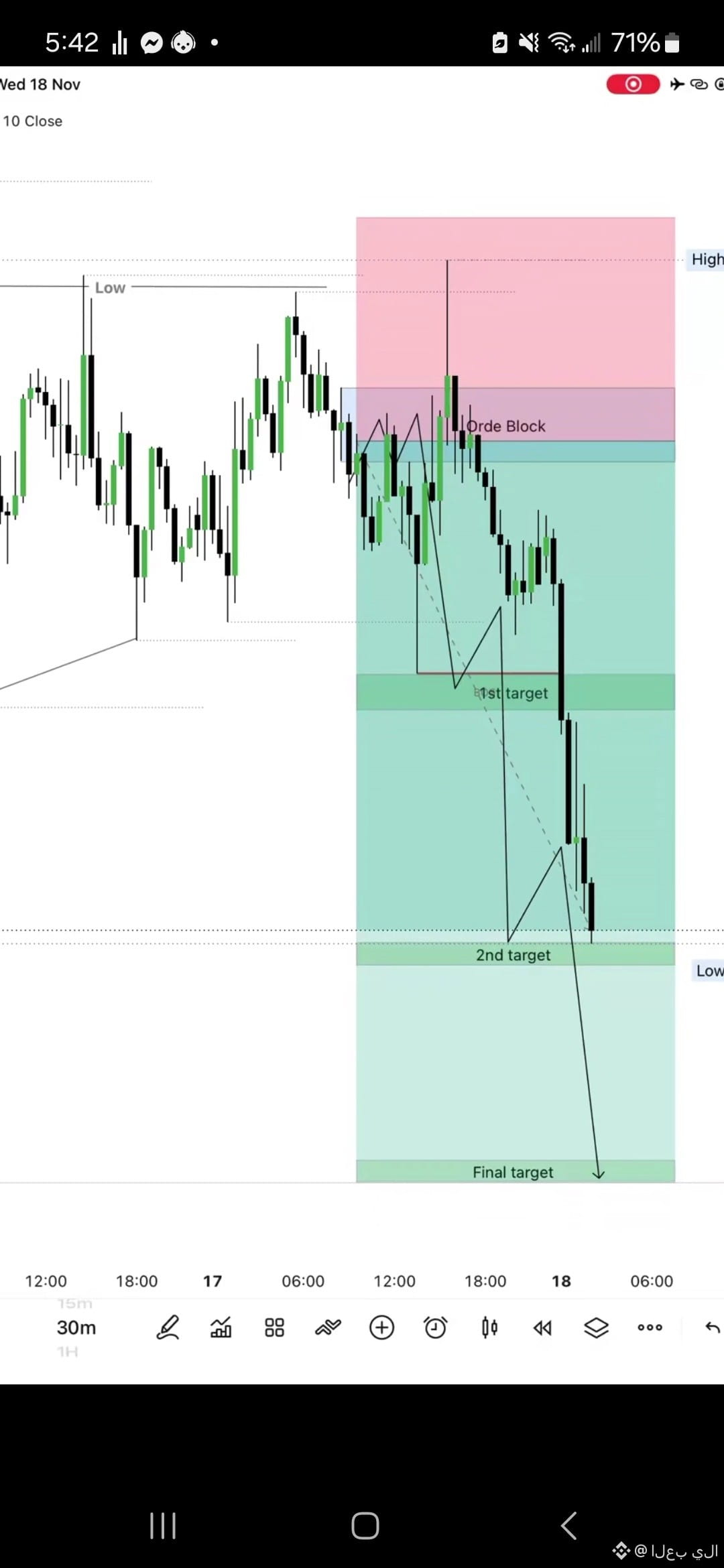
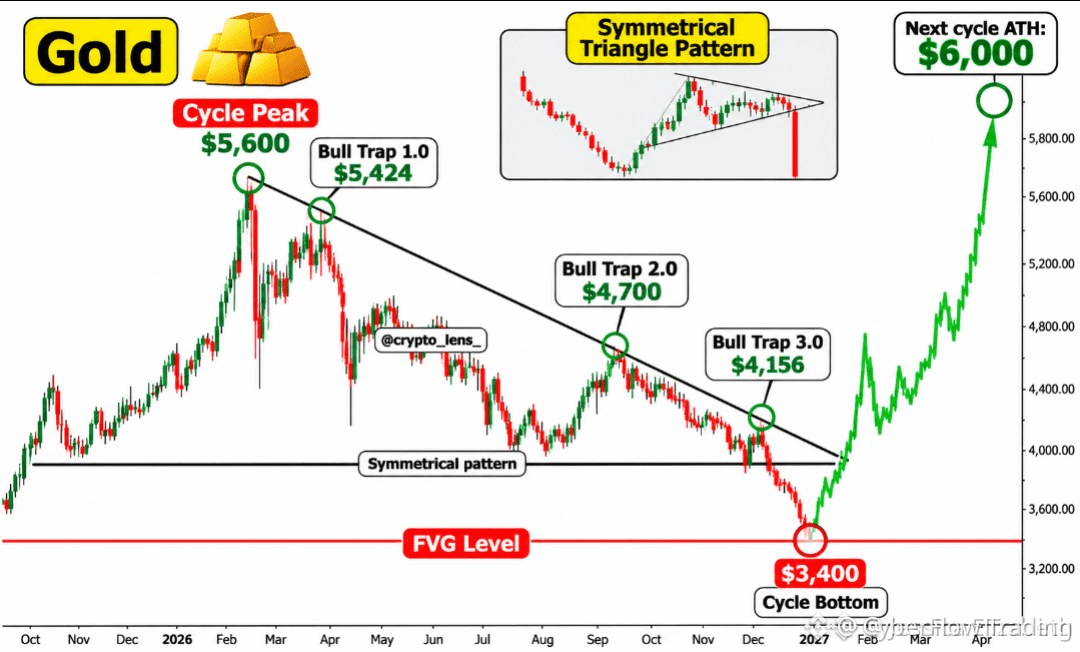
🚨 $XAU BEARING DOWN ON KEY LIQUIDITY LEVELS AS THE ROADMAP PLAYS OUT!
Entry: 3,880 ⚡
Target: 3,400 🚀
The structural breakdown below 3,880 is unfolding precisely as mapped, flushing out late longs into active liquidity pools. Sellers are dictating short-term order flow while we navigate this final liquidation phase before the next macro expansion wave. 📊
Protecting capital is priority number one while price tests these descending milestones step by step. Are you positioning for the ultimate flush into deep support or waiting for confirmation signs? 👇
⚠️ Not financial advice. Always manage your risk. 🛡️
🏷️ #XAU #LiquiditySweep #Gold #Trading
🔥 💎
4

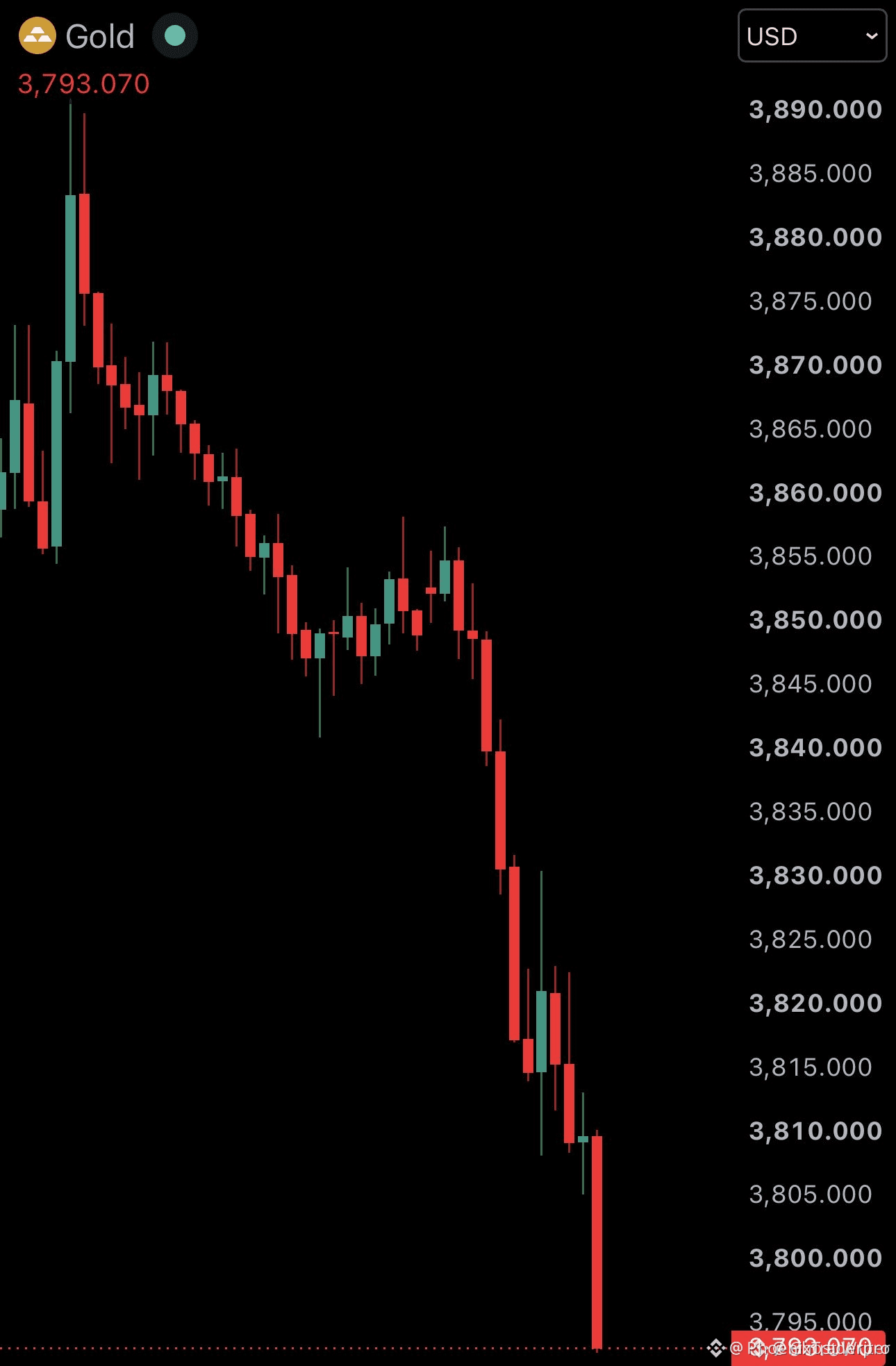
🔴 $XAUT SHATTERS KEY SUPPORT AS PRECIOUS METALS PLUNGE BELOW $3,800! 📉
Liquidity is draining fast from hard assets as sellers completely overwhelm the order books. This sudden breakdown beneath the psychological threshold signals aggressive institutional repositioning across traditional safe havens. 📊
When momentum shifts this violently, short-term volatility dictates the tape while weak hands get flushed out completely. ⚡
🔍 Are safe-haven assets bleeding out into risk-on digital markets, or is this a deep value reaccumulation zone? 👇
⚠️ Not financial advice. Always manage your risk. 🛡️
🏷️ #XAUT #XAU #XAG #Gold
📉 💎
10

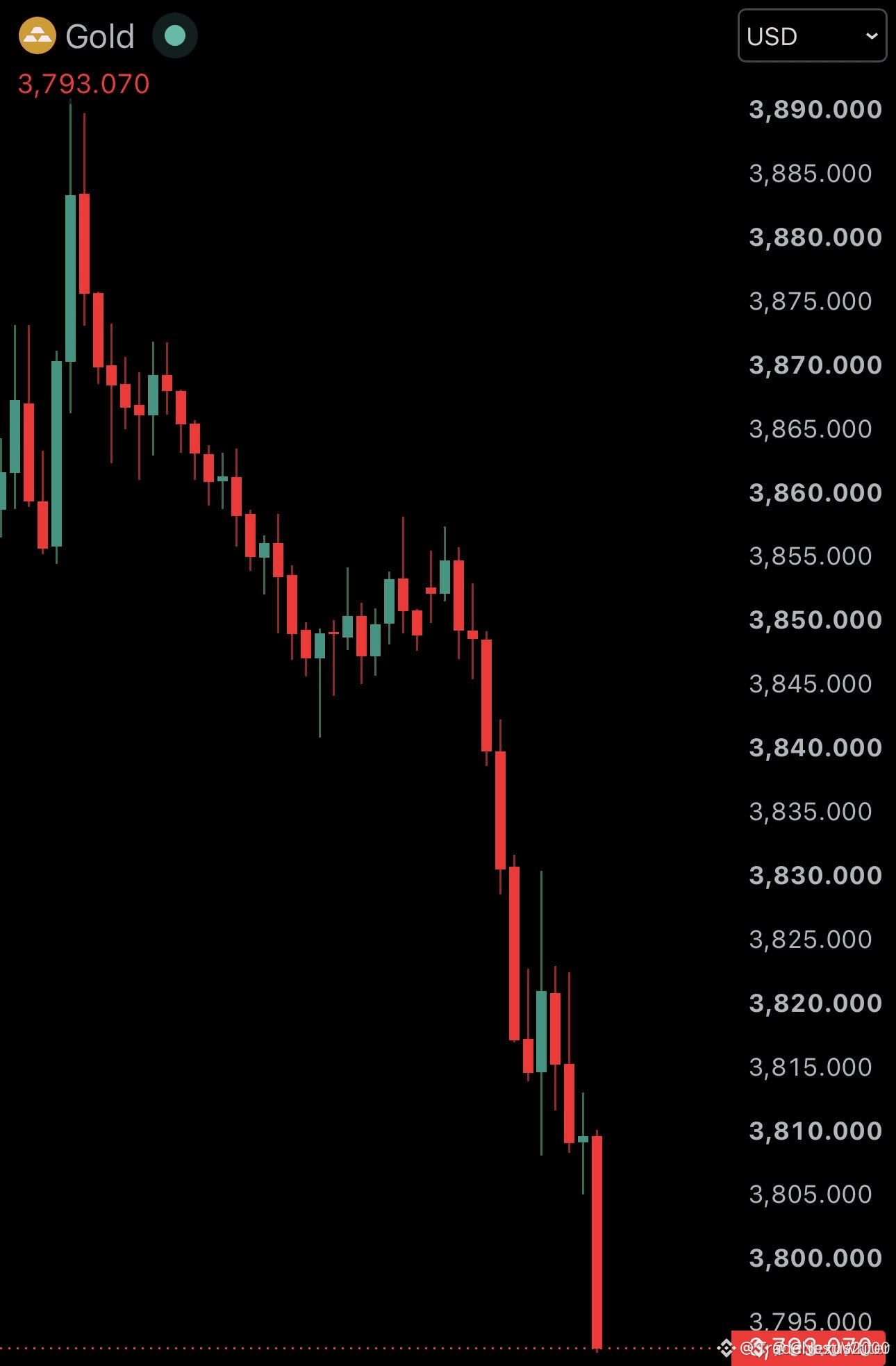
🚨 $XAUT BREAKS KEY STRUCTURAL SUPPORT AS LIQUIDITY EVAPORATES UNDER 3,800
Entry: 3,800 🔴
Institutional order flow on $XAUT shows aggressive distribution as smart money capital shifts away from precious metals following this structural breakdown. The loss of the 3,800 handle invalidates previous accumulation blocks, triggering cascading stop-losses across major market participants. 📊
Liquidity pools below this psychological threshold are now fully exposed to algorithmic sweep tactics. We are tracking whether institutional bid walls materialize lower down or if this distribution phase extends deeper into historical discount zones.
💬 Are you positioning for a swift range reclaim or bracing for further institutional sell-side pressure? 👇
⚠️ Not financial advice. Always manage your risk. 🛡️
#XAUT #Gold #MarketStructure #LiquiditySweep
🦈
5

·
--
🚨 $GOLD SHATTERS $3,800 AS FORCED LIQUIDITY SWEEPS THE MACRO ORDER BLOCK! 💥
Entry: 3,800 ⚡
Target: 3,880 🚀
Stop Loss: 3,700 ⚠️
Institutional capital is treating precious metals as an immediate liquidity source, flushing leveraged positions while Treasury yields hold above 5% and the U.S. dollar surges near multi-month highs. 📊 This aggressive sweep below former structural support has triggered algorithmic stop-loss cascades across the paper markets. ⚡
With the macro order block now under heavy retest at key psychological thresholds, market participants are watching to see if dip buyers can absorb the supply or if deeper inefficiencies await. 🔍 Are you scaling into this sweep or waiting for a confirmed range reclaim? 🤔
⚠️ Not financial advice. Always manage your risk. 🛡️
🏷️ #GOLD #SmartMoney #LiquiditySweep #MarketStructure
🦈 ⚖️
6
🚨 $GOLD SHATTERS $3,800 SUPPORT AS LIQUIDITY FORCES A BRUTAL FLUSH ACROSS MARKETS! 💥
Entry: 3,800 ⚡
Target: 3,700 📉
Macro gravity just caught up with precious metals as surging Treasury yields above 5% and a dominant U.S. dollar force institutional capital to liquidate profitable positions for immediate cash. 🌊 Technical algorithms accelerated the pain once key psychological supports gave way without a single positive headline in sight to cushion the blow. 📊
Silver is bearing the brunt of the industrial growth fear, with the gold-to-silver ratio expanding rapidly as manufacturing demand hits a wall. ⚡ Are you treating this violent flush as a generational discount or waiting for the dust to settle entirely? 🤔
⚠️ Not financial advice. Always manage your risk. 🛡️
🏷️ #GOLD #Silver #Macro #Commodities
🔥 💎
15

·
--
Verified
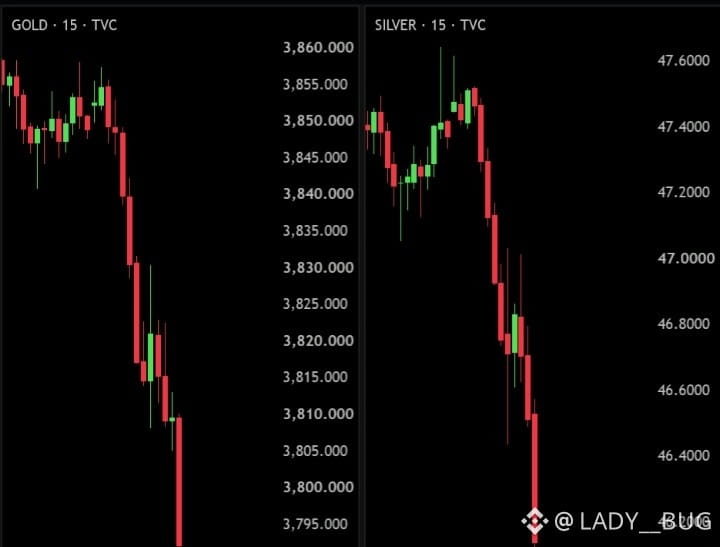
🚨 $500 BILLION WIPED OUT FROM GOLD & SILVER — METALS SHAKE-UP! 💥🥇🥈
Massive move in the metals market, guys — $500,000,000,000 just vanished from Gold and Silver in a brutal sell-off 📉🔥
🟡 $XAUT (Gold) — heavy pressure, momentum flipped
⚪ $XAG (Silver) — sharp drop, volatility exploding
Here’s what’s happening 👇
🔻 Billions wiped out in a single move — panic or opportunity?
📊 Metals are at a critical junction — watch key support levels closely
⚠️ Sharp drops can trigger bounce plays, but catching a falling knife is risky 🛡️
👁️ Eyes on the charts — the next move could be huge 🚀
{future}(XAUTUSDT)
{future}(XAGUSDT)
Not financial advice — always DYOR and manage your risk! ✅📊
#Gold #Silver #XAU #XA #Metals 🚨🔥
🚨 $500 BILLION WIPED OUT FROM GOLD & SILVER — METALS SHAKE-UP! 💥🥇🥈
Massive move in the metals market, guys — $500,000,000,000 just vanished from Gold and Silver in a brutal sell-off 📉🔥
🟡 $XAUT (Gold) — heavy pressure, momentum flipped
⚪ $XAG (Silver) — sharp drop, volatility exploding
Here’s what’s happening 👇
🔻 Billions wiped out in a single move — panic or opportunity?
📊 Metals are at a critical junction — watch key support levels closely
⚠️ Sharp drops can trigger bounce plays, but catching a falling knife is risky 🛡️
👁️ Eyes on the charts — the next move could be huge 🚀
Not financial advice — always DYOR and manage your risk! ✅📊
#Gold #Silver #XAU #XA #Metals 🚨🔥
428

·
--
🔴 GOLD NEWS UPDATE | XAU/USD 📉
🚨 Gold Crashes Below $3,800! 🚨
Gold has dropped to its lowest level since September 2025, facing strong selling pressure from a hawkish Fed outlook and a stronger US Dollar.
📌 Key Market Drivers:
🇺🇸 Hot US inflation is increasing expectations of further Fed rate hikes.
📈 Strong US Retail Sales (October: +0.2%) support the USD.
💵 US Dollar remains near its April 2025 highs.
🌍 Middle East tensions are adding safe-haven support to the USD.
🎯 Gold Impact: Fundamental pressure remains bearish for Gold as higher interest-rate expectations and USD strength weigh on prices.
📊 Watch: Upcoming FOMC Meeting Minutes for fresh market direction.
⚠️ Disclaimer: For educational purposes only, not financial advice. Always follow proper risk management.
#Gold #XAU #GOLD_UPDATE #TradingCommunity
150
·
--
Bearish
🔻 GOLD BEARISH BREAKDOWN: 3750 IS THE LINE IN THE SAND — NEXT STOP 3500! 🥇📉
Bears are circling Gold, and the setup is looking heavy 👀🐻
A clean break below 3750 could open the floodgates toward 3500 🎯💥
Here’s the plan 👇
🟡 GOLD ($XAUT ) — BEARISH
🔴 Key level: 3750
📉 A decisive breakdown below 3750 → target 3500
⚠️ If bulls defend 3750, expect a bounce — watch for confirmation
Momentum is shifting, and the bears are testing their strength 💪
But don’t chase blindly — wait for the break and manage risk tightly 🛡️
👁️ Watch 3750 like a hawk. The next move decides the trend.
{future}(XAUTUSDT)
Not financial advice — always DYOR and manage your risk! ✅📊
#Gold #XAU #Bearish #Breakdown #Crypto 🚨🔥
🔻 GOLD BEARISH BREAKDOWN: 3750 IS THE LINE IN THE SAND — NEXT STOP 3500! 🥇📉
Bears are circling Gold, and the setup is looking heavy 👀🐻
A clean break below 3750 could open the floodgates toward 3500 🎯💥
Here’s the plan 👇
🟡 GOLD ($XAUT ) — BEARISH
🔴 Key level: 3750
📉 A decisive breakdown below 3750 → target 3500
⚠️ If bulls defend 3750, expect a bounce — watch for confirmation
Momentum is shifting, and the bears are testing their strength 💪
But don’t chase blindly — wait for the break and manage risk tightly 🛡️
👁️ Watch 3750 like a hawk. The next move decides the trend.
Not financial advice — always DYOR and manage your risk! ✅📊
#Gold #XAU #Bearish #Breakdown #Crypto 🚨🔥
69

·
--
Bearish
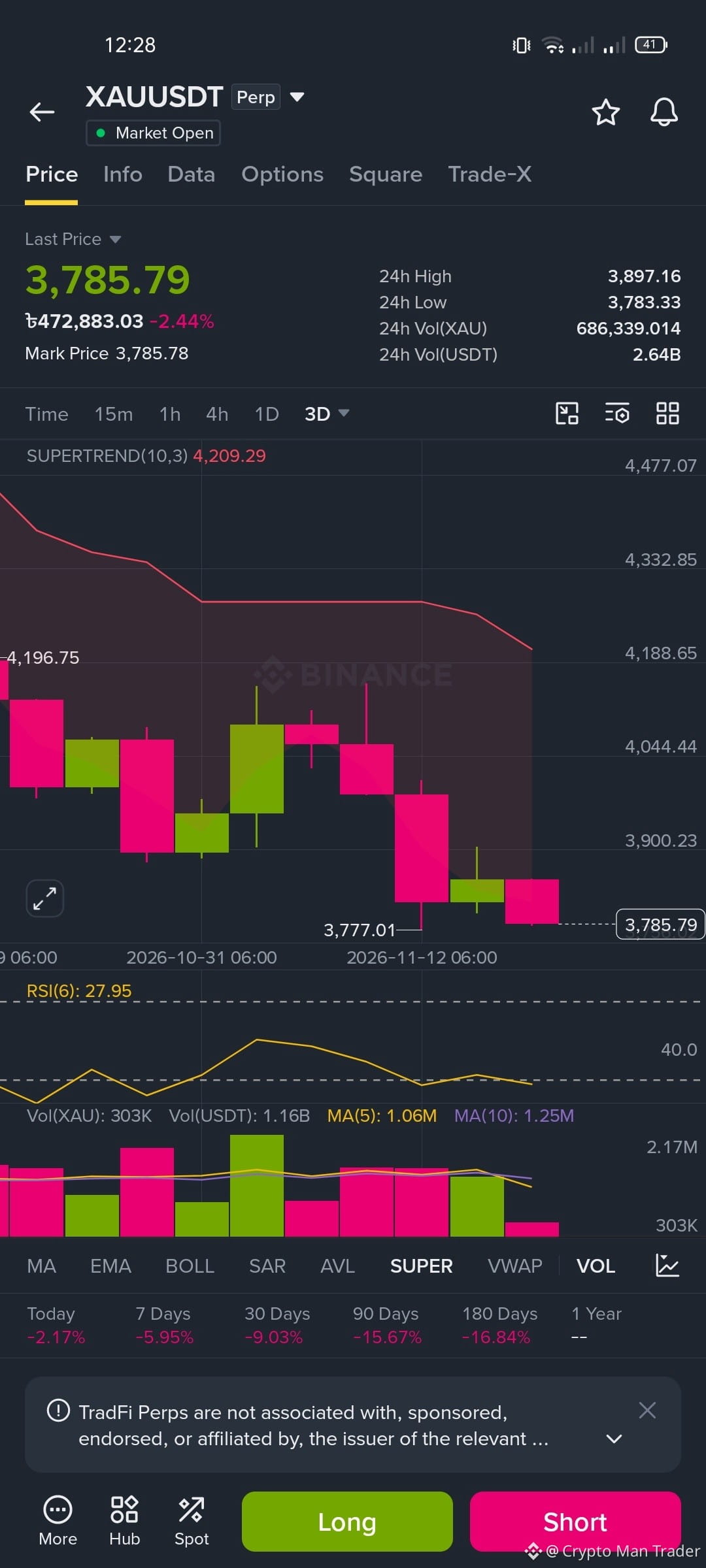
🚨 GOLD SELL-OFF — THE NEXT BIG MOVE COULD BE COMING!
Just 4 days ago, I highlighted the possibility of Gold breaking below $3,880 and moving lower. Now, downside pressure is increasing, and the market may be entering another major liquidation phase.
📉 MY GOLD ROADMAP
$3,785 — First downside target
$3,700 — Next support zone
$3,600 — Deeper correction target
$3,400 — Potential final downside zone
🔥 WHAT COMES NEXT?
After a possible correction, Gold could eventually prepare for a new bullish cycle. However, confirmation is essential before assuming the next direction.
Save this roadmap and keep an eye on the key levels.
Follow me and turn on notifications for the next market update!
Do you think Gold will reach $3,400 before its next major rally?
#Gold #XAUUSD #GoldAnalysis #TradingStrategy #MarketUpdate
DYOR | NFA — These are speculative levels, not guaranteed targets. Protect your capital and manage risk.
$XAUT
{spot}(XAUTUSDT)
🚨 GOLD SELL-OFF — THE NEXT BIG MOVE COULD BE COMING!
Just 4 days ago, I highlighted the possibility of Gold breaking below $3,880 and moving lower. Now, downside pressure is increasing, and the market may be entering another major liquidation phase.
📉 MY GOLD ROADMAP
$3,785 — First downside target
$3,700 — Next support zone
$3,600 — Deeper correction target
$3,400 — Potential final downside zone
🔥 WHAT COMES NEXT?
After a possible correction, Gold could eventually prepare for a new bullish cycle. However, confirmation is essential before assuming the next direction.
Save this roadmap and keep an eye on the key levels.
Follow me and turn on notifications for the next market update!
Do you think Gold will reach $3,400 before its next major rally?
#Gold #XAUUSD #GoldAnalysis #TradingStrategy #MarketUpdate
DYOR | NFA — These are speculative levels, not guaranteed targets. Protect your capital and manage risk.
$XAUT
306

·
--
Bearish
#XAUUSD Technical Update: Bearish Retracement or Next Big Move? 🟡📉
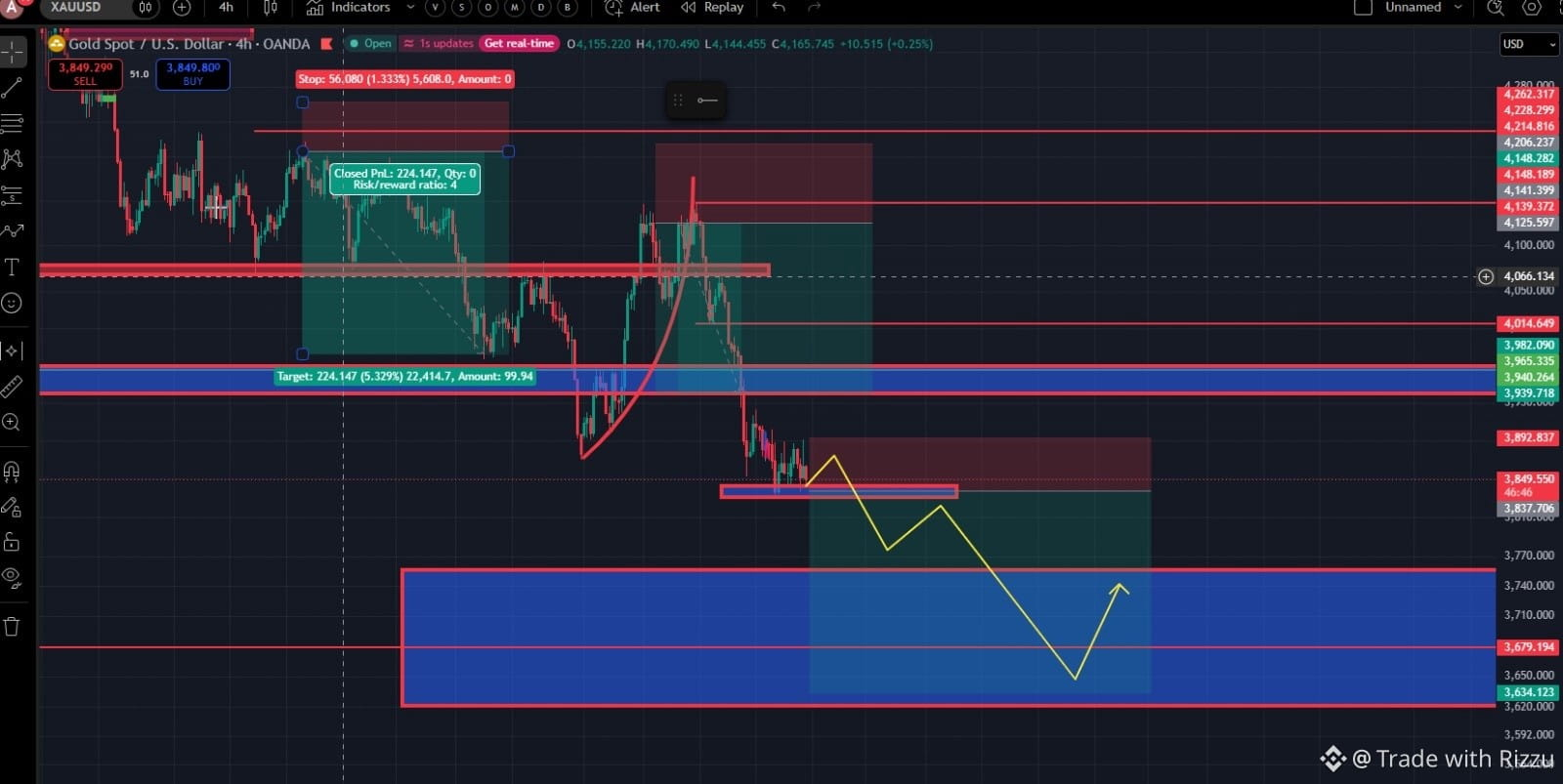
Gold traders, pay close attention to the charts! 📊Looking at the current price action, #XAUUSD has swept key liquidity levels and is respecting the resistance zones nicely. As mapped out in the chart layout, we could see a continued downward correction toward the major demand/support zone before any strong bullish reversal kicks in. 💡 Trading Plan:Short-term: Watching for bearish continuation setups from resistance.Key Focus: Waiting for price to test the lower demand zone for high-probability long entries.Always manage your risk tightly—Gold volatility can trap both bulls and bears in seconds! 🛡️What’s your bias today? Are you holding Buy or Sell? Let me know in the comments! #Gold #XAUUSD #forex #TradingAnalysis #BinanceSquare #SmartMoney
Gold traders, pay close attention to the charts! 📊Looking at the current price action, #XAUUSD has swept key liquidity levels and is respecting the resistance zones nicely. As mapped out in the chart layout, we could see a continued downward correction toward the major demand/support zone before any strong bullish reversal kicks in. 💡 Trading Plan:Short-term: Watching for bearish continuation setups from resistance.Key Focus: Waiting for price to test the lower demand zone for high-probability long entries.Always manage your risk tightly—Gold volatility can trap both bulls and bears in seconds! 🛡️What’s your bias today? Are you holding Buy or Sell? Let me know in the comments! #Gold #XAUUSD #forex #TradingAnalysis #BinanceSquare #SmartMoney
201
🚨 SPOT GOLD HITTING 3787.8 WHILE SMART MONEY ROTATES INTO $PAXG 🦈
When macro turbulence shakes out high-beta plays, smart capital does not run to cash. Professional desks are quietly parking wealth into on-chain hard assets, driving massive volume into $PAXG as a clean safety valve. 🌊
This tokenized gold rotation lets major players keep collateral active on-chain while bypassing the systemic friction hitting $BTC and $ETH . 📊 It is a textbook liquidity shift away from speculative froth into one-to-one backed stability. 💡
Are you treating this volatility as a cue to rotate into hard assets, or holding your ground? 👇
⚠️ Not financial advice. Always manage your risk. 🛡️
🏷️ #PAXG #Gold #Crypto #MarketShift
🔥 💎

Crypto_Town_JS:
Very helpful post.
1
7

📉 GOLD UNDER HEAVY SELLING PRESSURE | XAU/USD ANALYSIS
Gold is facing strong bearish pressure as the US Dollar strengthens and expectations of higher interest rates increase.
🔴 Why Is Gold Falling?
A stronger US Dollar is putting pressure on Gold.
Rising US Treasury yields are reducing Gold's attractiveness.
Federal Reserve policy expectations are increasing market uncertainty.
Investors are waiting for important US economic data.
📊 Market Outlook
🔻 Bearish Scenario: If selling pressure continues, Gold may move further downward.
🟢 Bullish Scenario: If the US Dollar weakens and Treasury yields decline, Gold could recover.
Key Things to Watch:
US Dollar Index (DXY)
US Treasury Yields
Federal Reserve Updates
Key Support & Resistance Levels
⚠️ My View: Gold remains under bearish pressure in the short term. However, traders should wait for confirmation before making any trading decisions.
What do you think? Will Gold continue falling or make a strong recovery?
#BinanceSquare #Gold #XAUUSD #goldanalysis #cryptotrading

333
Log in to explore more content
Join global crypto users on Binance Square
⚡️ Get latest and useful information about crypto.
💬 Trusted by the world’s largest crypto exchange.
👍 Discover real insights from verified creators.
Email / Phone number
Trending Topics
1
#NvidiaBeatsEstimatesWith$130BQ4Outlook
6,280 views
103 Discussing
2
#AnthropicIPOPriceCouldExceed$80
11,777 views
101 Discussing
3
#CanNvidia’sDataCenterGrowthContinue?
31,849 views
472 Discussing
4
#CanadaAndUSLaunchOperationNiagaraAgainstApprovalPhishing
0 views
0 Discussing
5
#BankOfEnglandUnveilsClearingHousePathwayCoveringDLTFirms
958 views
19 Discussing
6
#DBSAndCirclePartnerToExpandAsianInstitutionsUSDCAccess
2,294 views
40 Discussing
7
#LedgerHardwareImplantReportsExtendToDubai
4,744 views
148 Discussing
8
#NvidiaBoardNotConsideringHuang’sReturnasCEO
193,529 views
1,407 Discussing
9
#KOSPIFalls2.59%ToLowestCloseSinceFebruary
54,842 views
618 Discussing
10
#AnthropicClearedToListOnNasdaqAsANT
48,284 views
497 Discussing