
#falcon
falcon
164,779 views
1,873 Discussing
Hot
Latest

#FALCON
FF shot up 11% in 24 hours after the news about the institutional stablecoin
Falcon Finance
Founded by experts in blockchain and financial engineering, Falcon Finance ensures consistent, competitive, and institutional-level returns.
Our mission is to create transparent, secure, and sustainable collateralization infrastructures to drive global innovation and empower users to unlock their full financial potential.
Driven by a passion for excellence, we offer institutional-grade returns through various trading strategies, and our goal is to ensure transparency and growth for all users.
$FF
{future}(FFUSDT)
#FALCON
FF shot up 11% in 24 hours after the news about the institutional stablecoin
Falcon Finance
Founded by experts in blockchain and financial engineering, Falcon Finance ensures consistent, competitive, and institutional-level returns.
Our mission is to create transparent, secure, and sustainable collateralization infrastructures to drive global innovation and empower users to unlock their full financial potential.
Driven by a passion for excellence, we offer institutional-grade returns through various trading strategies, and our goal is to ensure transparency and growth for all users.
$FF

352

·
--
Bullish
Today Top Gainer Coin in the bearish market trend is Falcon Finance
Falcon Finance is a stablecoin protocol designed to combine stability with yield generation, positioning itself as a universal collateralization infrastructure for the DeFi ecosystem. Unlike traditional stablecoins that primarily act as a medium of exchange, Falcon Finance offers users the ability to unlock sustainable returns from their digital assets while retaining exposure to them. The protocol integrates elements of both centralized and decentralized finance to form a CeDeFi platform, aiming to balance performance with reliability for both retail and institutional participants.
At the core of Falcon Finance is its dual-token system, consisting of [USDf](https://www.binance.com/en/price/falcon-finance), an over-collateralized stablecoin, and sUSDf, a yield-bearing version that accrues returns over time. Users can mint USDf by depositing collateral in the form of stablecoins or major cryptocurrencies such as BTC, ETH, and [SOL](https://www.binance.com/en/price/solana). Once minted, USDf can be staked to obtain sUSDf. The staked token automatically generates yield through the protocol’s market-neutral strategies, including funding rate arbitrage and cross-exchange arbitrage. #Falcon $FF
{spot}(FFUSDT)
Today Top Gainer Coin in the bearish market trend is Falcon Finance
Falcon Finance is a stablecoin protocol designed to combine stability with yield generation, positioning itself as a universal collateralization infrastructure for the DeFi ecosystem. Unlike traditional stablecoins that primarily act as a medium of exchange, Falcon Finance offers users the ability to unlock sustainable returns from their digital assets while retaining exposure to them. The protocol integrates elements of both centralized and decentralized finance to form a CeDeFi platform, aiming to balance performance with reliability for both retail and institutional participants.
At the core of Falcon Finance is its dual-token system, consisting of USDf, an over-collateralized stablecoin, and sUSDf, a yield-bearing version that accrues returns over time. Users can mint USDf by depositing collateral in the form of stablecoins or major cryptocurrencies such as BTC, ETH, and SOL. Once minted, USDf can be staked to obtain sUSDf. The staked token automatically generates yield through the protocol’s market-neutral strategies, including funding rate arbitrage and cross-exchange arbitrage. #Falcon $FF
145

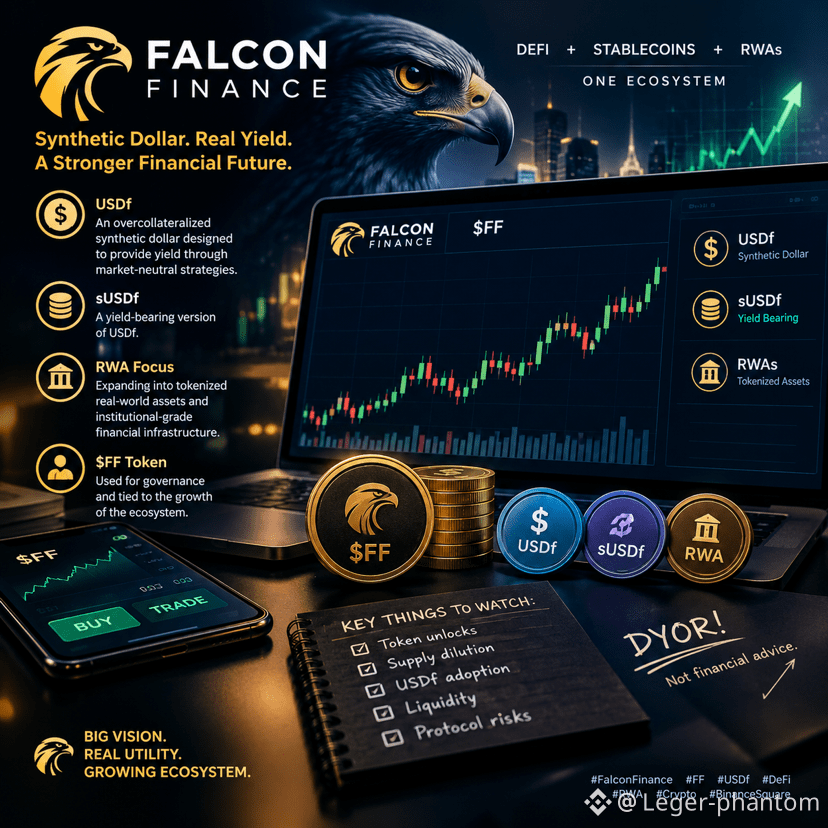
🦅 $FF is an interesting DeFi project focused on building a universal collateralization platform around USDf, an overcollateralized synthetic dollar designed to provide yield through market-neutral strategies. The ecosystem also includes sUSDf, a yield-bearing version of USDf, while Falcon is expanding its focus toward tokenized real-world assets and institutional-grade financial infrastructure. The $FF token plays an important role in the ecosystem, particularly around governance and future growth. With the growing interest in stablecoins, DeFi, and RWAs, Falcon Finance is definitely a project worth watching. However, investors should also keep an eye on token unlocks, supply dilution, liquidity, adoption, and overall protocol risks. DYOR and never invest more than you can afford to lose. 🚀 #falcon #USStrikesTargetsNearHormuzAndJask #DeFi #BinanceSquare
🦅 $FF is an interesting DeFi project focused on building a universal collateralization platform around USDf, an overcollateralized synthetic dollar designed to provide yield through market-neutral strategies. The ecosystem also includes sUSDf, a yield-bearing version of USDf, while Falcon is expanding its focus toward tokenized real-world assets and institutional-grade financial infrastructure. The $FF token plays an important role in the ecosystem, particularly around governance and future growth. With the growing interest in stablecoins, DeFi, and RWAs, Falcon Finance is definitely a project worth watching. However, investors should also keep an eye on token unlocks, supply dilution, liquidity, adoption, and overall protocol risks. DYOR and never invest more than you can afford to lose. 🚀 #falcon #USStrikesTargetsNearHormuzAndJask #DeFi #BinanceSquare
1
1
127

·
--
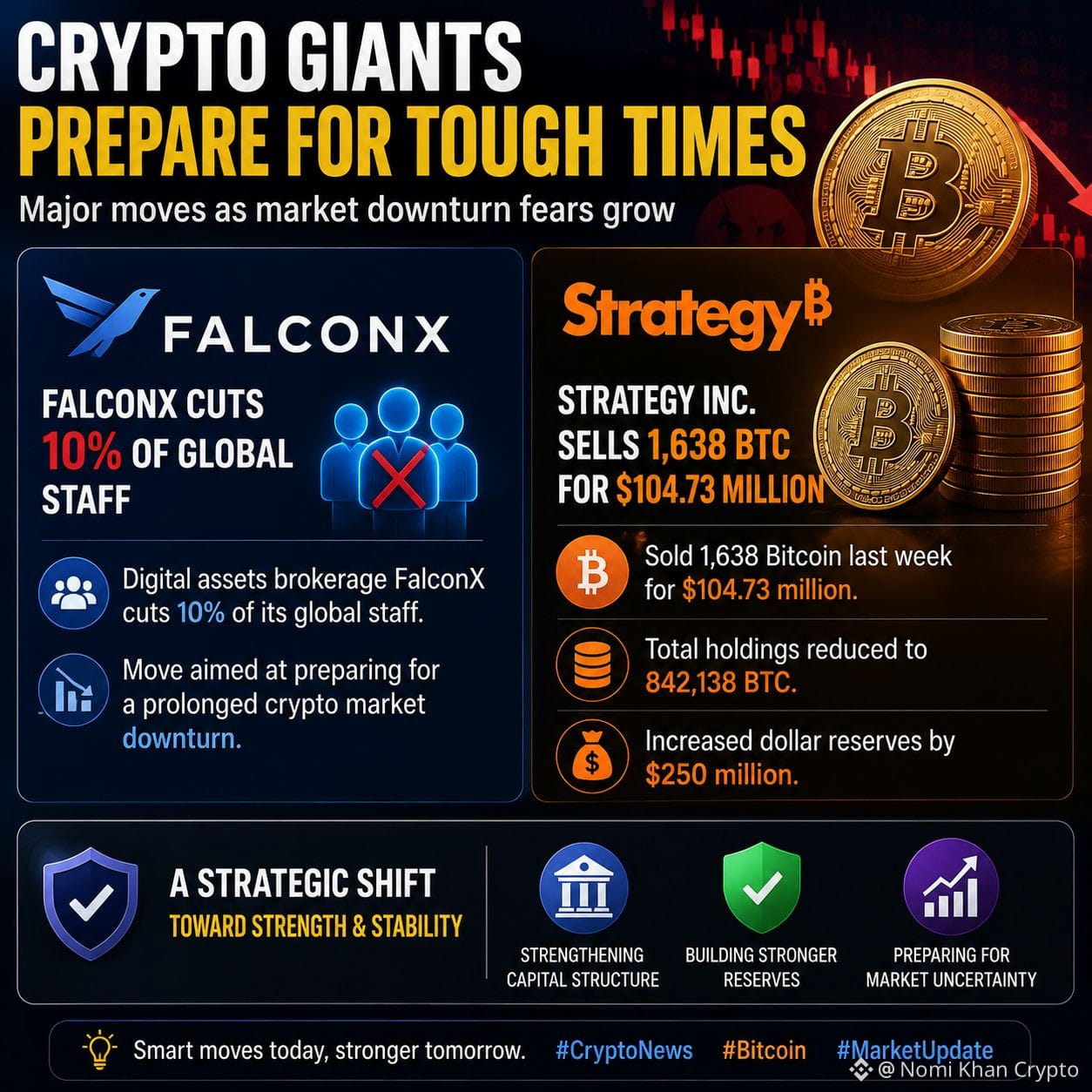
Crypto Market Caution Is Growing
FalconX has reduced 10% of its global workforce as it prepares for a potentially prolonged crypto market slowdown. At the same time, Strategy Inc. sold 1,638 BTC worth $104.7 million and boosted its cash reserves by $250 million.
$HNT $VET
These moves suggest that major players are focusing on stronger liquidity
{spot}(VETUSDT)
and risk management while navigating uncertain market conditions. 👀₿
#CryptoMarket #Falcon #PalantirJumps10%OnQ2Beat
Crypto Market Caution Is Growing
FalconX has reduced 10% of its global workforce as it prepares for a potentially prolonged crypto market slowdown. At the same time, Strategy Inc. sold 1,638 BTC worth $104.7 million and boosted its cash reserves by $250 million.
$HNT $VET
These moves suggest that major players are focusing on stronger liquidity
and risk management while navigating uncertain market conditions. 👀₿
#CryptoMarket #Falcon #PalantirJumps10%OnQ2Beat
108

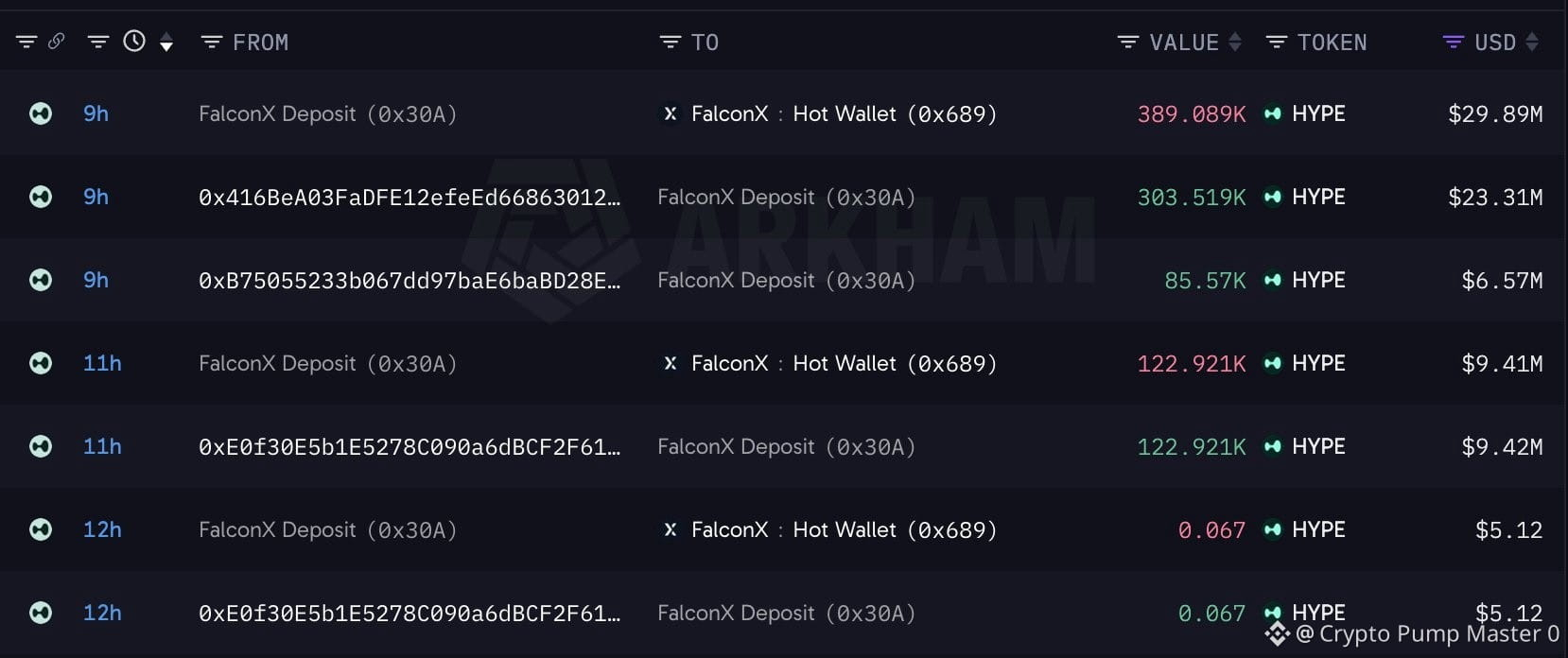
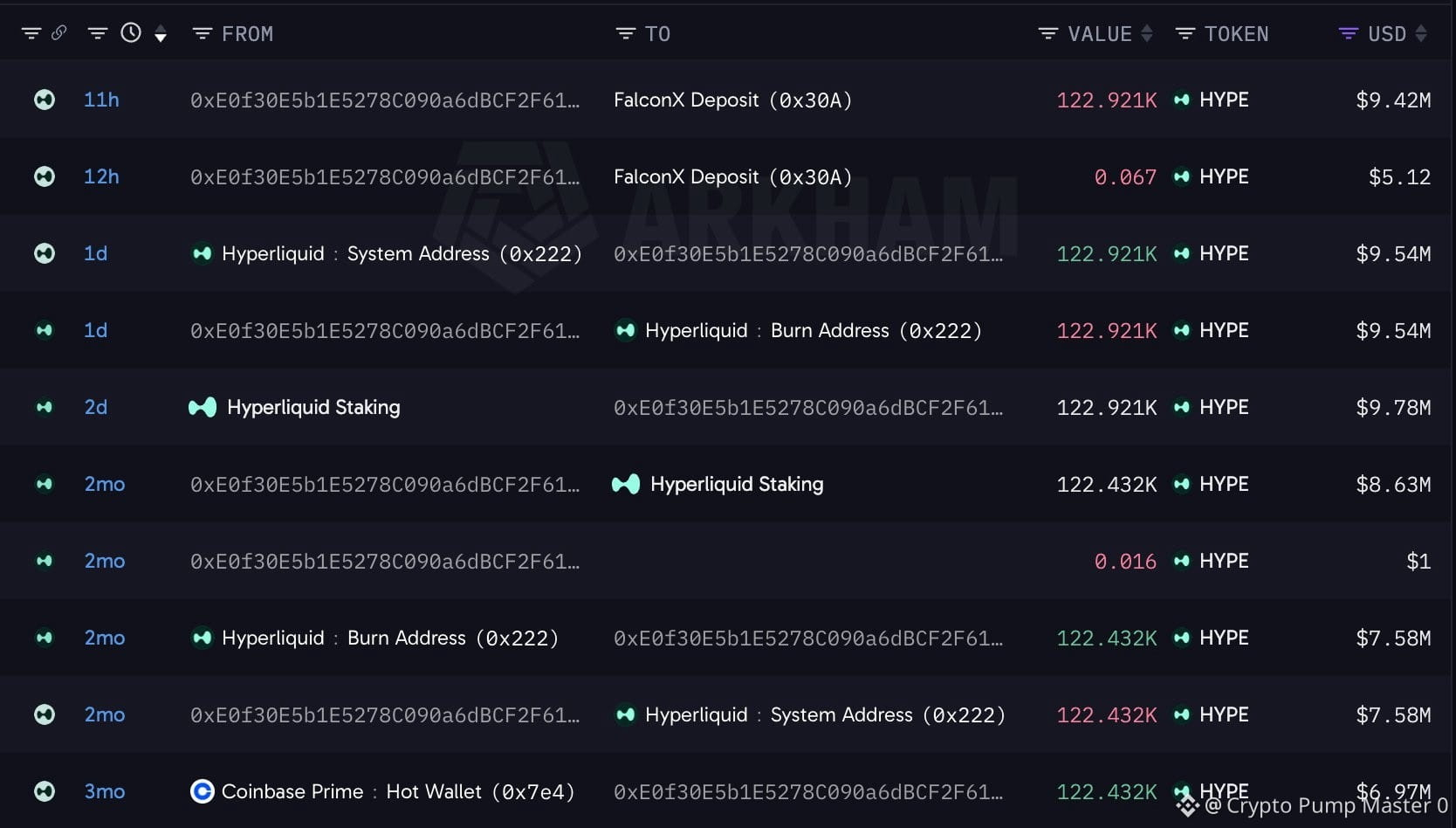
🐋 Whale alert: 512,010 $HYPE (~$39.3M) unstaked. 🚨
It was then sent to #Falcon , a prime broker big investors use to trade large size. 🏦
🔴 Possible sell. Tokens moved to a broker often get sold OTC, but it's not confirmed. 📉
🟢 It could also be a custody move or an OTC deal, not a market dump. 🧠
Wallet moves hint at intent. They don't prove it. ⚠️
💬 Whale selling or just moving funds? Share your view 👇
$HYPE #Hyperliquid #Whale.Alert #crypto #Binance
142

·
--
#falconfinance $FF
The DeFi landscape is shifting towards sustainable, asset-backed models, and @falcon_finance is leading the charge with its "universal collateralization" infrastructure. Unlike traditional protocols that force you to sell your assets for liquidity, Falcon allows you to mint USDf against high-quality collateral, including BTC and tokenized Real-World Assets (RWAs).
With the governance and staking utility of $FF, holders are positioned at the center of an ecosystem built for institutional-grade stability. It’s all about capital efficiency without losing your long-term conviction! 🦅
#falcon finance
#falconfinance $FF
The DeFi landscape is shifting towards sustainable, asset-backed models, and @Falcon Finance is leading the charge with its "universal collateralization" infrastructure. Unlike traditional protocols that force you to sell your assets for liquidity, Falcon allows you to mint USDf against high-quality collateral, including BTC and tokenized Real-World Assets (RWAs).
With the governance and staking utility of $FF , holders are positioned at the center of an ecosystem built for institutional-grade stability. It’s all about capital efficiency without losing your long-term conviction! 🦅
#falcon finance
4
621

·
--
#falconfinance $FF as an innovative project focusing on decentralized finance (DeFi) + cross-chain payments, Falcon Finance is reshaping the crypto ecosystem with disruptive technology! Long-term investors in the crypto space should not miss this opportunity! Keep pace with the ecosystem of @falcon_finance finance, hold $FF to unlock more Web3 benefits, and witness the rise of a new benchmark in the DeFi 2.0 era
#Falcon Finance #DeFi
#falconfinance $FF as an innovative project focusing on decentralized finance (DeFi) + cross-chain payments, Falcon Finance is reshaping the crypto ecosystem with disruptive technology! Long-term investors in the crypto space should not miss this opportunity! Keep pace with the ecosystem of @Falcon Finance finance, hold $FF to unlock more Web3 benefits, and witness the rise of a new benchmark in the DeFi 2.0 era
#Falcon Finance #DeFi
#Falcon Finance #DeFi
6

·
--

Article
Falcon Finance’s : How Tokenized Mexican CETES Are Quietly Reshaping USDf’s Collateral Foundation In DeFi, the big breakthroughs rarely arrive with fireworks. They usually come in the form of structural upgrades—changes that quietly alter the way liquidity, yield, and collateral behave at the protocol level. Falcon Finance’s decision to add tokenized Mexican CETES to the USDf collateral framework is exactly that kind of upgrade.
It doesn’t just expand what users can deposit.
It expands what DeFi can represent.
And more importantly, it marks Falcon’s first move beyond U.S.-denominated collateral—an inflection point for how sovereign yield enters on-chain markets.
Why Falcon Chose CETES
CETES are Mexico’s short-term government bills, a familiar instrument in traditional finance but almost invisible inside DeFi until now. Through Etherfuse’s Stablebonds architecture, CETES are tokenized 1:1 and brought on-chain with:
Bankruptcy-remote structure
Daily NAV updates
Short duration risk profile
Transparent sovereign backing
On Solana, they move with the speed that DeFi expects: instant settlement, high-frequency minting, and fluid liquidity.
For Falcon, CETES checked a rare combination of boxes—regulated sovereign yield, emerging-market exposure, and clean collateral behavior. Most importantly, they fit Falcon’s philosophy: real yield, real assets, and transparent building blocks for on-chain liquidity.
A Broader Collateral Base for USDf
Until now, USDf has been anchored around U.S. Treasury-linked instruments. That made sense for stability, but it also limited the protocol’s geographic footprint.
CETES changes that.
By adding a non-USD sovereign asset, Falcon gives users something they’ve wanted for years:
Geographic diversification
Currency diversification
Access to emerging-market sovereign yield
Dollar liquidity without selling the underlying asset
This means a CETES holder can keep their exposure to Mexican sovereign yield and still mint USDf, bridging two financial worlds that normally don’t speak to each other.
Why Mexico Makes Sense for On-Chain Finance
Mexico isn’t a random choice.
It’s one of the world’s largest remittance corridors—nearly $65 billion flows in annually, almost entirely through digital rails.
This makes Mexico uniquely ready for tokenized sovereign assets:
Digital-first remittance culture
large base of savers tied to local yield
Growing appetite for stable, short-duration income instruments
With CETES inside Falcon, these users get a new tool as they can hold local sovereign exposure → mint USDf → access global liquidity → re-enter DeFi with optional leverage
It’s a practical bridge for real users, not just crypto insiders.
Strengthening Falcon’s Multi-Collateral Architecture
From Falcon’s perspective, CETES aren’t just another token.
They reinforce the protocol’s collateral engine with qualities that matter:
Short maturity & predictable cashflow
No structural leverage
sovereign credit with clear risk parameters
Basel-aligned duration and exposure characteristics
By adding CETES, Falcon isn’t chasing yield.
It’s building resilience.
This matters because USDf is more than a synthetic dollar—it’s a liquidity gateway. And that gateway is stronger when its collateral base spans multiple economies, not just one.
What This Means for Users
The CETES integration unlocks a new playbook:
Hold CETES
Earn regulated sovereign yield
Use CETES as collateral
Mint USDf
Deploy USDf into DeFi for additional liquidity or strategies
It’s a way to stay connected to home-market assets without giving up access to global opportunities.
For institutions experimenting with RWAs and for individuals in remittance-heavy markets, this offers something rare in crypto:
local familiarity + global liquidity.
The Bigger Picture: Falcon’s Growing Role in RWA-Backed Liquidity
Falcon Finance has always positioned itself as a universal collateralization engine. CETES push that mission forward in a way that feels natural and strategic.
It signals three shifts happening quietly across DeFi:
1. Sovereign yield is becoming a core part of on-chain liquidity.
2. Emerging markets are stepping into the RWA space with real demand behind them.
3. Stablecoin collateral is finally diversifying beyond the U.S. financial system.
With CETES now part of Falcon’s ecosystem, USDf isn’t just another synthetic dollar.
It becomes a multi-sovereign, multi-market collateral product—one that reflects the real diversity of global financial flows.
My Personal take on Falcon Finance
Falcon Finance’s CETES integration may look simple on the surface, but it represents one of the most meaningful shifts in RWA-backed DeFi this year.
As It brings a high-quality, short-duration sovereign instrument from outside the U.S. into crypto’s liquidity engine—with the transparency, stability, and programmability needed for institutional-grade usage.
By widening USDf’s collateral foundation, Falcon isn’t just adding an asset.
It’s adding an economy. And with that, it’s expanding what on-chain collateral can be in 2025 and beyond.
@falcon_finance #Falcon $FF
Falcon Finance’s : How Tokenized Mexican CETES Are Quietly Reshaping USDf’s Collateral Foundation
In DeFi, the big breakthroughs rarely arrive with fireworks. They usually come in the form of structural upgrades—changes that quietly alter the way liquidity, yield, and collateral behave at the protocol level. Falcon Finance’s decision to add tokenized Mexican CETES to the USDf collateral framework is exactly that kind of upgrade.
It doesn’t just expand what users can deposit.
It expands what DeFi can represent.
And more importantly, it marks Falcon’s first move beyond U.S.-denominated collateral—an inflection point for how sovereign yield enters on-chain markets.
Why Falcon Chose CETES
CETES are Mexico’s short-term government bills, a familiar instrument in traditional finance but almost invisible inside DeFi until now. Through Etherfuse’s Stablebonds architecture, CETES are tokenized 1:1 and brought on-chain with:
Bankruptcy-remote structure
Daily NAV updates
Short duration risk profile
Transparent sovereign backing
On Solana, they move with the speed that DeFi expects: instant settlement, high-frequency minting, and fluid liquidity.
For Falcon, CETES checked a rare combination of boxes—regulated sovereign yield, emerging-market exposure, and clean collateral behavior. Most importantly, they fit Falcon’s philosophy: real yield, real assets, and transparent building blocks for on-chain liquidity.
A Broader Collateral Base for USDf
Until now, USDf has been anchored around U.S. Treasury-linked instruments. That made sense for stability, but it also limited the protocol’s geographic footprint.
CETES changes that.
By adding a non-USD sovereign asset, Falcon gives users something they’ve wanted for years:
Geographic diversification
Currency diversification
Access to emerging-market sovereign yield
Dollar liquidity without selling the underlying asset
This means a CETES holder can keep their exposure to Mexican sovereign yield and still mint USDf, bridging two financial worlds that normally don’t speak to each other.
Why Mexico Makes Sense for On-Chain Finance
Mexico isn’t a random choice.
It’s one of the world’s largest remittance corridors—nearly $65 billion flows in annually, almost entirely through digital rails.
This makes Mexico uniquely ready for tokenized sovereign assets:
Digital-first remittance culture
large base of savers tied to local yield
Growing appetite for stable, short-duration income instruments
With CETES inside Falcon, these users get a new tool as they can hold local sovereign exposure → mint USDf → access global liquidity → re-enter DeFi with optional leverage
It’s a practical bridge for real users, not just crypto insiders.
Strengthening Falcon’s Multi-Collateral Architecture
From Falcon’s perspective, CETES aren’t just another token.
They reinforce the protocol’s collateral engine with qualities that matter:
Short maturity & predictable cashflow
No structural leverage
sovereign credit with clear risk parameters
Basel-aligned duration and exposure characteristics
By adding CETES, Falcon isn’t chasing yield.
It’s building resilience.
This matters because USDf is more than a synthetic dollar—it’s a liquidity gateway. And that gateway is stronger when its collateral base spans multiple economies, not just one.
What This Means for Users
The CETES integration unlocks a new playbook:
Hold CETES
Earn regulated sovereign yield
Use CETES as collateral
Mint USDf
Deploy USDf into DeFi for additional liquidity or strategies
It’s a way to stay connected to home-market assets without giving up access to global opportunities.
For institutions experimenting with RWAs and for individuals in remittance-heavy markets, this offers something rare in crypto:
local familiarity + global liquidity.
The Bigger Picture: Falcon’s Growing Role in RWA-Backed Liquidity
Falcon Finance has always positioned itself as a universal collateralization engine. CETES push that mission forward in a way that feels natural and strategic.
It signals three shifts happening quietly across DeFi:
1. Sovereign yield is becoming a core part of on-chain liquidity.
2. Emerging markets are stepping into the RWA space with real demand behind them.
3. Stablecoin collateral is finally diversifying beyond the U.S. financial system.
With CETES now part of Falcon’s ecosystem, USDf isn’t just another synthetic dollar.
It becomes a multi-sovereign, multi-market collateral product—one that reflects the real diversity of global financial flows.
My Personal take on Falcon Finance
Falcon Finance’s CETES integration may look simple on the surface, but it represents one of the most meaningful shifts in RWA-backed DeFi this year.
As It brings a high-quality, short-duration sovereign instrument from outside the U.S. into crypto’s liquidity engine—with the transparency, stability, and programmability needed for institutional-grade usage.
By widening USDf’s collateral foundation, Falcon isn’t just adding an asset.
It’s adding an economy. And with that, it’s expanding what on-chain collateral can be in 2025 and beyond.
@Falcon Finance #Falcon $FF
1k
470
78
1k

·
--
There is no magic button for daily free money on Binance — but there are a few legit ways to earn small daily income without investing your own money, if you are willing to put in time, tasks, or skills.
Here are the realistic, safe options people use:
---
✅ 1. Binance Earn (Using Airdrops, Tasks, Promotions)
Sometimes Binance runs campaigns where you earn free crypto by completing simple tasks.
Examples of tasks:
follow a project on Binance Square
read articles or watch videos
vote on project listings
small quizzes
Rewards:
small amount of tokens
vouchers
cashback
This is not huge money, maybe $0.5 to $5 per task.
💡 Go to: Binance App → Earn → Rewards Hub
---
🎯 2. Binance Square Content
You can earn by creating content (posts) on Binance Square when a project is running a campaign.
You already asked about Falcon Finance — that is a typical campaign.
How it works:
Write original content
Use hashtags / tags
Earn tokens if selected
Some people turn this into daily income
But:
Not guaranteed
Requires writing skills
Competition
Example earnings:
$5–$100 depending on campaign
---
🔥 3. Binance Learn & Earn
This one is very easy.
Process:
Watch lessons
Take quiz
Earn crypto after correct answers
Rewards can be:
$1–$30 per campaign
Not daily, but monthly you can make something free
---
🎁 4. Binance Airdrops (Official Only)
Binance sometimes drops free tokens:
Types:
Holding certain tokens
Completing tasks
Being active in the ecosystem
Again not daily, but true free money if you’re consistent.
---
🏆 5. Binance Referral (if you are social)
If you have friends who trade, you can earn commission daily without investing.
How it works:
Share referral link
When they trade, you earn small % commissions
If you have a group of friends, Telegram group, WhatsApp group — this can become daily income, passive.
Some users earn $1–$100/day depending on
Participate in potential Airdrops and Learn on Ways To Make Yieldings In Pairs Like $FF .#Falcon for instance 😜
16

·
--
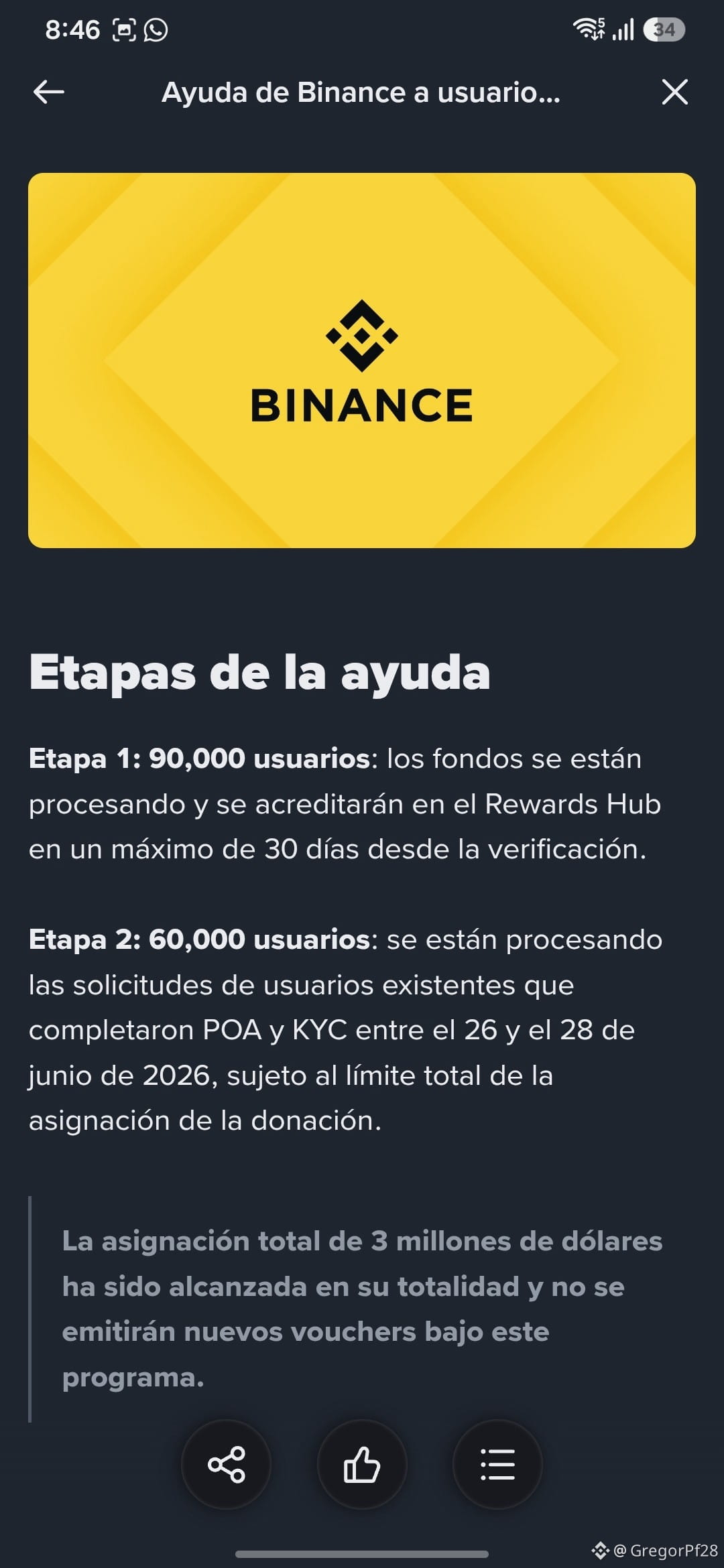
Did they already get their $20?
we still have a chance to be on the waitlist #Falcon $USDT
{spot}(USD1USDT)
Did they already get their $20?
we still have a chance to be on the waitlist #Falcon $USDT
we still have a chance to be on the waitlist #Falcon $USDT
798

·
--

Article
Trading For Beginners 101What is trading?
When you become interested in crypto, you’ll often hear the word “Trading.” But as a beginner, it’s important to first understand what trading really is and what the difference is between spot and futures.
Trading For Beginners 101
What is trading?
When you become interested in crypto, you’ll often hear the word “Trading.” But as a beginner, it’s important to first understand what trading really is and what the difference is between spot and futures.
When you become interested in crypto, you’ll often hear the word “Trading.” But as a beginner, it’s important to first understand what trading really is and what the difference is between spot and futures.
1
2
10
194
·
--
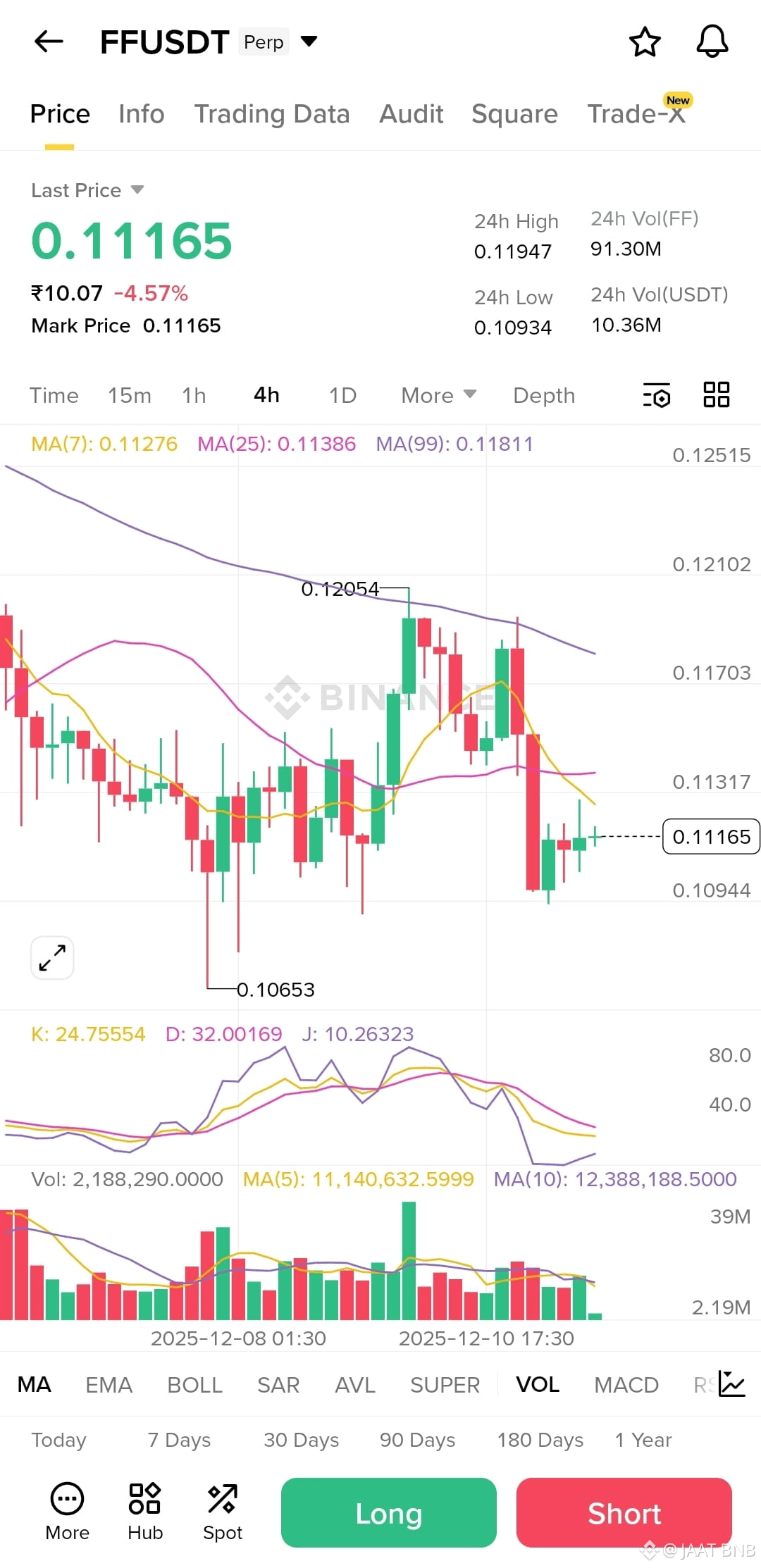
$FF is holding steady above the 0.109–0.110 support zone, a level that has repeatedly attracted buyers after sharp dips. The rejection wick near 0.10934 showed where selling pressure faded, keeping this area as the key defensive line on the 4H chart.
On the upside, the first resistance sits around 0.1130, where candles have struggled to close above. The next major barrier remains 0.1205, the previous swing rejection and the level the trend must reclaim to show strength.
Price currently moves between these two bands, forming a compression range. Many traders watch for a clean 4H close above 0.1130 as a sign of renewed momentum, while a loss of 0.109 may signal weakness.
I don’t tell anyone when to buy or exit, but I personally monitor how the chart behaves around these levels .As momentum, wick strength, and candle closes often reveal the market’s next intention.
@falcon_finance #Falcon $FF
{spot}(FFUSDT)
$FF is holding steady above the 0.109–0.110 support zone, a level that has repeatedly attracted buyers after sharp dips. The rejection wick near 0.10934 showed where selling pressure faded, keeping this area as the key defensive line on the 4H chart.
On the upside, the first resistance sits around 0.1130, where candles have struggled to close above. The next major barrier remains 0.1205, the previous swing rejection and the level the trend must reclaim to show strength.
Price currently moves between these two bands, forming a compression range. Many traders watch for a clean 4H close above 0.1130 as a sign of renewed momentum, while a loss of 0.109 may signal weakness.
I don’t tell anyone when to buy or exit, but I personally monitor how the chart behaves around these levels .As momentum, wick strength, and candle closes often reveal the market’s next intention.
@Falcon Finance #Falcon $FF
1.9k
912
156
1.9k

$FF is predicted a steady climb toward $0.079 this week, fueled by a 10% bullish momentum in RWA interest.
#BinanceSquare
#Write2Earn
#Falcon
$FF is predicted a steady climb toward $0.079 this week, fueled by a 10% bullish momentum in RWA interest.
#BinanceSquare
#Write2Earn
#Falcon
#BinanceSquare
#Write2Earn
#Falcon
187

·
--

Article
Margin TradingMargin Trading for Beginners
When you start learning Crypto Trading, besides Spot Trading and Futures Trading, you’ll also often come across Margin Trading.
So what is Margin Trading? How does it work?
What do Borrowing, Interest, Leverage, and Liquidation mean?
.
💡 What is Margin Trading?
Margin Trading
Margin Trading for Beginners
When you start learning Crypto Trading, besides Spot Trading and Futures Trading, you’ll also often come across Margin Trading.
So what is Margin Trading? How does it work?
What do Borrowing, Interest, Leverage, and Liquidation mean?
.
💡 What is Margin Trading?
When you start learning Crypto Trading, besides Spot Trading and Futures Trading, you’ll also often come across Margin Trading.
So what is Margin Trading? How does it work?
What do Borrowing, Interest, Leverage, and Liquidation mean?
.
💡 What is Margin Trading?
13
324
·
--

Article
Futures Trading for Beginners🔴 Futures Trading for Beginners
In Spot Trading, you can actually buy and hold crypto. Futures Trading is slightly different.
In futures, you are not directly buying and holding crypto; instead, you trade a contract based on the price movement of crypto.
Futures Trading for Beginners
🔴 Futures Trading for Beginners
In Spot Trading, you can actually buy and hold crypto. Futures Trading is slightly different.
In futures, you are not directly buying and holding crypto; instead, you trade a contract based on the price movement of crypto.
In Spot Trading, you can actually buy and hold crypto. Futures Trading is slightly different.
In futures, you are not directly buying and holding crypto; instead, you trade a contract based on the price movement of crypto.
1
1
9
184
·
--
☘️Due to people's lack of discipline, the Earth has become polluted and full of trash. It is the responsibility of Binancians to try to avoid even worse situations and create a cleaner environment.👏
I think everyone is already eager to clean up the world. That’s why Binance has launched the #CleanUpDayWithBinance campaign. Are you ready for Clean Up Day? 🌎☘️
Campaign Period 7 - 20 September.
#CleanUpDayWithBinance #Falcon
I think everyone is already eager to clean up the world. That’s why Binance has launched the #CleanUpDayWithBinance campaign. Are you ready for Clean Up Day? 🌎☘️
Campaign Period 7 - 20 September.
#CleanUpDayWithBinance #Falcon

1
6
239

·
--
Falcon Finance ( $FF ) In-Depth Research ReportBasic Information
Listing Time: September 29, 2025 13:00 UTC (Binance and other exchanges)
Token Issuance Model: Fixed supply, no inflation mechanism
Total Supply: 1 billion FF
TGE Circulation: 234 million FF (23.4%)
Current Market Value: Not Listed
Token Economic Model
Pre-sale StatusBuidlpad Community Sale: Target $4 million, Actual Commitment $112.8 million (28x oversubscription)Binance Airdrop: 150 million FF (1.5% supply) distributed to BNB stakersFinancing StatusValuation Analysis#Falcon
Falcon Finance ( $FF ) In-Depth Research Report
Basic Information
Listing Time: September 29, 2025 13:00 UTC (Binance and other exchanges)
Token Issuance Model: Fixed supply, no inflation mechanism
Total Supply: 1 billion FF
TGE Circulation: 234 million FF (23.4%)
Current Market Value: Not Listed
Token Economic Model
Pre-sale StatusBuidlpad Community Sale: Target $4 million, Actual Commitment $112.8 million (28x oversubscription)Binance Airdrop: 150 million FF (1.5% supply) distributed to BNB stakersFinancing StatusValuation Analysis#Falcon
37
19
81
15.7k


Article
Falcon Finance: Enabling Secure, Scalable, and Efficient On-Chain YieldIn the evolving world of decentralized finance, Falcon Finance has emerged as a pioneering protocol, redefining how liquidity and yield are generated on-chain. Traditional financial systems have long relied on centralized intermediaries and complex collateral structures, often creating barriers for individual investors seeking access to liquid assets or stable returns. Falcon Finance addresses these challenges by introducing the first universal collateralization infrastructure, a system designed to accept a wide range of liquid assets, including both digital tokens and tokenized real-world assets, and transform them into a seamless source of on-chain liquidity. At the heart of this innovative framework is USDf, an overcollateralized synthetic dollar that provides users with a stable and accessible currency for DeFi operations, enabling financial flexibility without forcing asset liquidation.
Falcon Finance operates on a simple yet powerful principle: by allowing users to deposit liquid assets as collateral, it creates a mechanism through which these assets can continue generating value while remaining under the user’s control. The platform’s collateralization model is designed to be universal, meaning it can accommodate diverse asset types, ranging from highly liquid cryptocurrencies to tokenized representations of real-world assets such as stocks, commodities, or real estate. This inclusivity ensures that a wide spectrum of investors, from crypto-native users to traditional finance participants exploring tokenized assets, can engage with the system effectively. Users can leverage their holdings to mint USDf, which in turn provides them with a liquid, stable, and highly usable synthetic dollar that integrates seamlessly into the broader DeFi ecosystem.
The introduction of USDf is central to Falcon Finance’s mission of enhancing on-chain liquidity. Unlike traditional stablecoins that require backing from centralized reserves or rely on fiat deposits, USDf operates as an overcollateralized synthetic asset, meaning that the value of collateral held exceeds the value of the issued USDf. This approach mitigates risk, providing a safety buffer that protects both the user and the protocol against market volatility or sudden price fluctuations. By maintaining overcollateralization, Falcon Finance ensures that the system remains solvent and reliable, offering users confidence that their liquid assets are secure while still accessible for liquidity generation, trading, or other on-chain activities.
A key strength of Falcon Finance lies in its ability to blend traditional financial principles with decentralized, blockchain-native infrastructure. The protocol takes concepts long utilized in centralized finance, such as collateralized lending and asset-backed issuance, and reimagines them for a decentralized, trustless environment. Users no longer need to navigate the complexities and limitations of traditional financial institutions; instead, they can interact directly with the protocol through smart contracts that automatically manage collateral, issuance, and liquidation processes. This not only streamlines operations but also reduces costs, increases transparency, and ensures that all transactions are executed with precision and security inherent to blockchain technology.
Liquidity creation on Falcon Finance is designed to be dynamic and adaptable. As users deposit assets and mint USDf, these stablecoins become immediately usable within the DeFi ecosystem. They can be deployed in lending and borrowing platforms, used for trading across decentralized exchanges, or employed in yield farming strategies to generate additional returns. This seamless integration of USDf into the broader blockchain ecosystem exemplifies Falcon Finance’s vision of creating a universal and efficient financial infrastructure, where liquidity is accessible, scalable, and capable of supporting multiple financial applications simultaneously.
The protocol’s approach to collateralization and synthetic asset issuance also fosters a more resilient financial system. By enabling diverse collateral types, Falcon Finance reduces systemic risk associated with dependency on a single asset class. Users can diversify their holdings within the protocol, allocating different digital tokens or tokenized real-world assets to support USDf issuance. This diversification spreads risk and enhances the protocol’s overall stability, ensuring that liquidity remains available even during periods of market turbulence. Furthermore, by keeping users’ underlying assets intact, Falcon Finance preserves long-term value for participants, allowing them to continue benefiting from potential appreciation in their collateral while accessing liquid funds in the form of USDf.
Falcon Finance’s user experience is designed to be intuitive and accessible, catering to both experienced DeFi participants and newcomers alike. The process of depositing collateral, minting USDf, and interacting with other DeFi protocols is streamlined through a user-friendly interface, enabling seamless engagement without requiring deep technical expertise. At the same time, advanced users can leverage more complex strategies, such as structured collateral allocation, multi-asset vaults, or integration with yield optimization platforms, to maximize their returns and strategically manage their positions. This combination of simplicity and flexibility ensures that Falcon Finance can serve a wide audience, fostering broader adoption and engagement within the blockchain ecosystem.
Security and reliability are paramount to Falcon Finance’s architecture. The protocol utilizes smart contracts rigorously audited for safety, ensuring that collateralization, issuance, and liquidation processes are executed precisely and predictably. Transparency is embedded at every level, allowing users to verify holdings, track USDf supply, and monitor system health in real time. This high level of transparency, combined with the decentralized nature of the platform, reinforces trust among participants and provides reassurance that Falcon Finance operates in a secure, accountable, and fully auditable manner.
The broader implications of Falcon Finance extend beyond individual liquidity provision. By creating a universal collateralization infrastructure, the protocol establishes a foundation for a new generation of financial products and services that can operate entirely on-chain. Tokenized assets, synthetic dollars, and decentralized collateral management open the door for innovative applications, ranging from algorithmic trading strategies and lending protocols to cross-chain financial instruments and digital asset marketplaces. In essence, Falcon Finance not only empowers individual users to access liquidity but also provides the building blocks for an entire decentralized financial ecosystem.
Ultimately, Falcon Finance represents a paradigm shift in how on-chain liquidity and yield are created. By integrating overcollateralized synthetic assets, diverse collateral types, and automated smart contract management, the protocol offers a secure, scalable, and highly accessible solution for digital asset holders seeking to unlock the value of their holdings. USDf provides stability, usability, and integration into the broader DeFi ecosystem, while the universal collateralization infrastructure ensures resilience, adaptability, and long-term viability. As decentralized finance continues to evolve, Falcon Finance stands at the forefront, offering an innovative, inclusive, and forward-looking platform that empowers users to harness their assets, generate liquidity, and participate fully in the rapidly expanding world of blockchain finance.
@falcon_finance #Falcon $FF
{spot}(FFUSDT)
Falcon Finance: Enabling Secure, Scalable, and Efficient On-Chain Yield
In the evolving world of decentralized finance, Falcon Finance has emerged as a pioneering protocol, redefining how liquidity and yield are generated on-chain. Traditional financial systems have long relied on centralized intermediaries and complex collateral structures, often creating barriers for individual investors seeking access to liquid assets or stable returns. Falcon Finance addresses these challenges by introducing the first universal collateralization infrastructure, a system designed to accept a wide range of liquid assets, including both digital tokens and tokenized real-world assets, and transform them into a seamless source of on-chain liquidity. At the heart of this innovative framework is USDf, an overcollateralized synthetic dollar that provides users with a stable and accessible currency for DeFi operations, enabling financial flexibility without forcing asset liquidation.
Falcon Finance operates on a simple yet powerful principle: by allowing users to deposit liquid assets as collateral, it creates a mechanism through which these assets can continue generating value while remaining under the user’s control. The platform’s collateralization model is designed to be universal, meaning it can accommodate diverse asset types, ranging from highly liquid cryptocurrencies to tokenized representations of real-world assets such as stocks, commodities, or real estate. This inclusivity ensures that a wide spectrum of investors, from crypto-native users to traditional finance participants exploring tokenized assets, can engage with the system effectively. Users can leverage their holdings to mint USDf, which in turn provides them with a liquid, stable, and highly usable synthetic dollar that integrates seamlessly into the broader DeFi ecosystem.
The introduction of USDf is central to Falcon Finance’s mission of enhancing on-chain liquidity. Unlike traditional stablecoins that require backing from centralized reserves or rely on fiat deposits, USDf operates as an overcollateralized synthetic asset, meaning that the value of collateral held exceeds the value of the issued USDf. This approach mitigates risk, providing a safety buffer that protects both the user and the protocol against market volatility or sudden price fluctuations. By maintaining overcollateralization, Falcon Finance ensures that the system remains solvent and reliable, offering users confidence that their liquid assets are secure while still accessible for liquidity generation, trading, or other on-chain activities.
A key strength of Falcon Finance lies in its ability to blend traditional financial principles with decentralized, blockchain-native infrastructure. The protocol takes concepts long utilized in centralized finance, such as collateralized lending and asset-backed issuance, and reimagines them for a decentralized, trustless environment. Users no longer need to navigate the complexities and limitations of traditional financial institutions; instead, they can interact directly with the protocol through smart contracts that automatically manage collateral, issuance, and liquidation processes. This not only streamlines operations but also reduces costs, increases transparency, and ensures that all transactions are executed with precision and security inherent to blockchain technology.
Liquidity creation on Falcon Finance is designed to be dynamic and adaptable. As users deposit assets and mint USDf, these stablecoins become immediately usable within the DeFi ecosystem. They can be deployed in lending and borrowing platforms, used for trading across decentralized exchanges, or employed in yield farming strategies to generate additional returns. This seamless integration of USDf into the broader blockchain ecosystem exemplifies Falcon Finance’s vision of creating a universal and efficient financial infrastructure, where liquidity is accessible, scalable, and capable of supporting multiple financial applications simultaneously.
The protocol’s approach to collateralization and synthetic asset issuance also fosters a more resilient financial system. By enabling diverse collateral types, Falcon Finance reduces systemic risk associated with dependency on a single asset class. Users can diversify their holdings within the protocol, allocating different digital tokens or tokenized real-world assets to support USDf issuance. This diversification spreads risk and enhances the protocol’s overall stability, ensuring that liquidity remains available even during periods of market turbulence. Furthermore, by keeping users’ underlying assets intact, Falcon Finance preserves long-term value for participants, allowing them to continue benefiting from potential appreciation in their collateral while accessing liquid funds in the form of USDf.
Falcon Finance’s user experience is designed to be intuitive and accessible, catering to both experienced DeFi participants and newcomers alike. The process of depositing collateral, minting USDf, and interacting with other DeFi protocols is streamlined through a user-friendly interface, enabling seamless engagement without requiring deep technical expertise. At the same time, advanced users can leverage more complex strategies, such as structured collateral allocation, multi-asset vaults, or integration with yield optimization platforms, to maximize their returns and strategically manage their positions. This combination of simplicity and flexibility ensures that Falcon Finance can serve a wide audience, fostering broader adoption and engagement within the blockchain ecosystem.
Security and reliability are paramount to Falcon Finance’s architecture. The protocol utilizes smart contracts rigorously audited for safety, ensuring that collateralization, issuance, and liquidation processes are executed precisely and predictably. Transparency is embedded at every level, allowing users to verify holdings, track USDf supply, and monitor system health in real time. This high level of transparency, combined with the decentralized nature of the platform, reinforces trust among participants and provides reassurance that Falcon Finance operates in a secure, accountable, and fully auditable manner.
The broader implications of Falcon Finance extend beyond individual liquidity provision. By creating a universal collateralization infrastructure, the protocol establishes a foundation for a new generation of financial products and services that can operate entirely on-chain. Tokenized assets, synthetic dollars, and decentralized collateral management open the door for innovative applications, ranging from algorithmic trading strategies and lending protocols to cross-chain financial instruments and digital asset marketplaces. In essence, Falcon Finance not only empowers individual users to access liquidity but also provides the building blocks for an entire decentralized financial ecosystem.
Ultimately, Falcon Finance represents a paradigm shift in how on-chain liquidity and yield are created. By integrating overcollateralized synthetic assets, diverse collateral types, and automated smart contract management, the protocol offers a secure, scalable, and highly accessible solution for digital asset holders seeking to unlock the value of their holdings. USDf provides stability, usability, and integration into the broader DeFi ecosystem, while the universal collateralization infrastructure ensures resilience, adaptability, and long-term viability. As decentralized finance continues to evolve, Falcon Finance stands at the forefront, offering an innovative, inclusive, and forward-looking platform that empowers users to harness their assets, generate liquidity, and participate fully in the rapidly expanding world of blockchain finance.
@Falcon Finance #Falcon $FF
1
59

#SOLANA : THE GIANT IS WAKING UP! 🚀massive breakout
Standard Chartered and JPMorgan are doubling down. Analysts project a massive $6 BILLION inflow as Solana ETF momentum builds. The big money is coming! 🏦 $SOL
If $SOL holds the $82 support, the path to $95+ is wide open. This is the accumulation zone before the "Moon Mission." 🌕
Despite the sideways action, 75% of top traders are #LONG . The smart money isn’t selling; they are positioned for a pump.
FUTURE-PROOF TECH: The upcoming "#Falcon " upgrade is a game-changer, making Solana one of the first quantum-resistant networks in crypto history. 🛡️
HEALTHY LIQUIDITY: With $1.66 Billion in 24h volume and a $48.41 Billion market cap, the liquidity is rock solid. The floor is set.
When the resistance breaks, it won't just move—it will fly. Are you watching from the sidelines, or are you in?
ETF HEAT: $6,000,000,000 in potential inflows is no joke. Institutional eyes are locked on SOL. 💵
it faces as it tries to reclaim the $100 and $200 psychological levels.
IF YOU AREN'T BUYING THE $84 FLOOR, DON'T CRY WHEN WE CROSS $100! BUY $SOL NOW
.
.
.
#protraderforyou
{future}(SOLUSDT)
#SOLANA : THE GIANT IS WAKING UP! 🚀massive breakout
Standard Chartered and JPMorgan are doubling down. Analysts project a massive $6 BILLION inflow as Solana ETF momentum builds. The big money is coming! 🏦 $SOL
If $SOL holds the $82 support, the path to $95+ is wide open. This is the accumulation zone before the "Moon Mission." 🌕
Despite the sideways action, 75% of top traders are #LONG . The smart money isn’t selling; they are positioned for a pump.
FUTURE-PROOF TECH: The upcoming "#Falcon " upgrade is a game-changer, making Solana one of the first quantum-resistant networks in crypto history. 🛡️
HEALTHY LIQUIDITY: With $1.66 Billion in 24h volume and a $48.41 Billion market cap, the liquidity is rock solid. The floor is set.
When the resistance breaks, it won't just move—it will fly. Are you watching from the sidelines, or are you in?
ETF HEAT: $6,000,000,000 in potential inflows is no joke. Institutional eyes are locked on SOL. 💵
it faces as it tries to reclaim the $100 and $200 psychological levels.
IF YOU AREN'T BUYING THE $84 FLOOR, DON'T CRY WHEN WE CROSS $100! BUY $SOL NOW
.
.
.
#protraderforyou

12
8
933
Log in to explore more content
Join global crypto users on Binance Square
⚡️ Get latest and useful information about crypto.
💬 Trusted by the world’s largest crypto exchange.
👍 Discover real insights from verified creators.
Email / Phone number
Trending Topics
1
#NvidiaEarningsTonight:AIStocks’NextMove?
21,488 views
365 Discussing
2
#A Packed Week of Earnings and Data Tests Markets
105,312 views
547 Discussing
3
#AnthropicIPOTestsInvestorAppetiteForAI
218,989 views
2,178 Discussing
4
#NvidiaBoardNotConsideringHuang’sReturnasCEO
46,426 views
506 Discussing
5
#AnthropicClearedToListOnNasdaqAsANT
12 views
10 Discussing
6
#WhatInvestmentSignalsDo13FFilingsReveal?
27,473 views
391 Discussing
7
#EvernorthRecords$505MImpairmentOnPreListingXRP
310 views
11 Discussing
8
#GoldmanSachsReports$1.22BInEtherETFHoldings
486 views
8 Discussing
9
#GoldmanSachsAndMillenniumEachHeldOver$1.2BInBitcoinETFs
3,837 views
12 Discussing
10
#InvescoStablecoinReservesFundLaunchesOnEthereum
15,925 views
259 Discussing