

#cryptozeno
cryptozeno
1.6M views
496 Discussing
Hot
Latest

·
--
Article
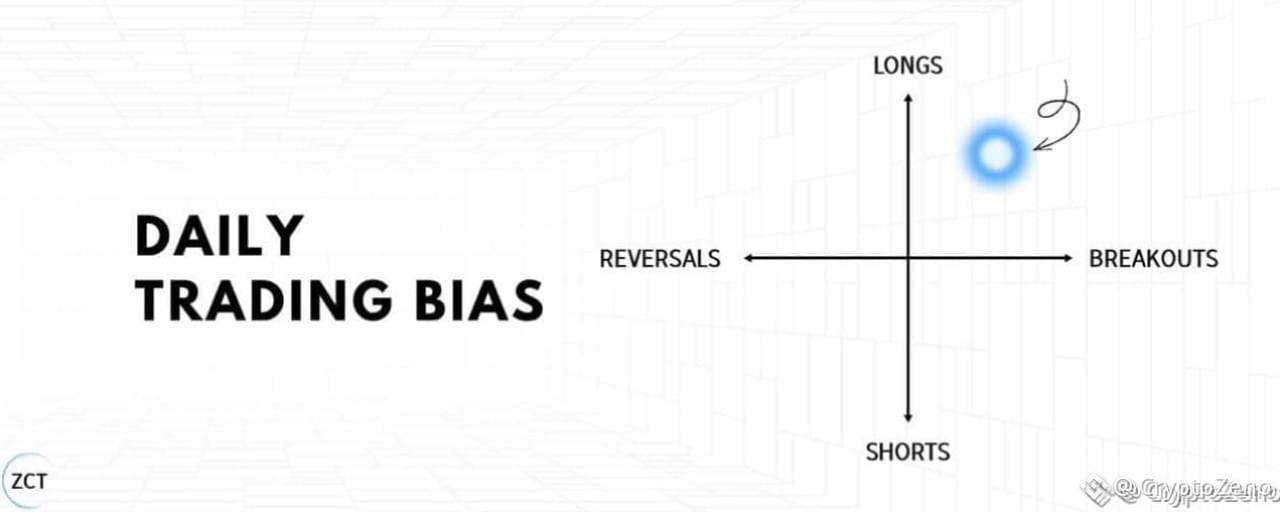
The Breakout Trading Strategy I Use to Catch Big MovesI’ve longed resistance and shorted support for 9 years… This is the exact opposite of what every trader tries to do.
In this article, I will share my entire strategy so you can skip years of testing and losses.
This is something you will want to bookmark, take notes on, and set time aside to think about.
Lesson 1: The Only 2 Trading Strategies
Before you can identify good momentum setups, you need to understand what momentum trading actually is.
Momentum and mean reversion are opposite strategies based on opposite assumptions.
The Two Trading Styles
Momentum (where you take a trade betting on a continuation of the current trend)Mean Reversion (where you take a trade betting on a reversal of the current trend)
One assumes strength continues; the other assumes strength exhausts.
Let’s consider this through a visual example.
Suppose price is approaching a resistance level (in other words, a level where there was previously selling pressure, preventing the price from moving higher).
Momentum assumes the level will break.
You’re betting on continuation.Price approaches resistance, you buy, expecting it to push through and keep running.The level becomes support once broken.
Mean reversion assumes the level will hold.
You’re betting on rejection.Price approaches resistance, you short, expecting it to bounce back down.The level acts as a ceiling.
Same chart. Same resistance level. Opposite strategies.
There is no right or wrong. The key is to understand when you are in a momentum trade environment, such that momentum strategies are highly aligned.
The next section shows you exactly how to identify when the environment favours momentum (my best strategy).
Lesson 1 Summary
There are 2 trading styles: momentum and mean reversionMean reversion bets levels will hold; momentum bets levels will breakOne is not better than the other; it depends entirely on the trade environment
Lesson 2: Optimal Trade Environment
Just opening a long every time price hits resistance won't make us any money.
Without the right conditions, momentum dies immediately after the breakout.
You enter. It reverses. You're stopped out.
That's not bad luck, that's a bad trading environment.
The Rowing Analogy
Imagine you’re rowing a boat.
You either row against or with the current.
One makes it easier to row while the other takes a lot more effort.
Your boat, or rowing technique, didn’t change… Only your environment did.
Trading is the same.
Your strategy is your boat.
Your optimal trade environment is the current.
Now use this 3-filter checklist to ensure you only take trades where a breakout is likely (with the current).
Filter 1: How Did Price Approach the Level?
What you WANT:
A slow, grinding staircase pattern approaching resistance.Each candle makes incremental progress.Higher lows are stacking up.Controlled, deliberate movement.
What you DON’T want:
A fast vertical spike into resistance.Price shoots up in one or two large candles.After a spike, buyers' strength is depleted and price typically consolidates or reverses.This is exhaustion, not momentum.
The staircase pattern shows sustained buying pressure building gradually. When this breaks through resistance, buyers are still engaged and ready to push further.
Common mistake: Traders see a strong candle break resistance and assume momentum is strong. But these fast moves often reverse quickly.
→ Do this instead: Take momentum trades when price approaches resistance in a slow, grinding staircase over multiple candles.
Real Trade Example:
Slow clear grind into resistance showing an optimal ‘price approach to level’ for momentum.
Filter 1: slow grindy staircase ✅
Filter 2: What Did Volume Look Like?
Volume confirms whether the price movement has conviction behind it.
What you WANT:
Gradual increase in volume as price approaches resistanceThis pattern shows controlled, sustainable momentum.
What you DON’T want:
Flat volume (no conviction) or sudden volume spikes (exhaustion).Flat volume means the move lacks participation.Volume spikes often mark climax points where momentum exhausts.Decreasing volume (why would price break out of resistance now, if volume was lower than before?)
Volume should mirror the price pattern, steady and building, not erratic.
This strategy works because momentum continuation is most likely when participation is sustained, supply is absorbed gradually, and structure remains intact.
Real Trade Example:
Around the time the grindy staircase begins to emerge, we see a slow, consistent increase in volume.
Filter 1: slow grindy staircase ✅Filter 2: clearly increasing volume ✅
Lastly,
Filter 3: Moving Average Crossovers
This filter distinguishes trending markets (good for momentum) from choppy, indecisive markets (bad for momentum).
What you WANT to see: Moving averages with minimal crossovers. This indicates a directional trend.
What you DON’T want to see: Frequent crossovers. This signals chop and indecision.
Fewer crossovers = cleaner trend or range = better momentum continuation.
Use the 30SMMA (Smoothed Moving Average).
✍️Quick Actionable Step:
To add the 30SMMA on your charts:
Search for the Smoothed Moving Average Indicator in TradingViewAdd it to your chartGo into settings and change the "Length" to "30"
Real Trade Example:
Filter 1 (Price Action): slow grindy staircase ✅
Filter 2 (Volume): clearly increasing volume ✅
Filter 3 (Crossovers): minimal MA crossovers ✅
🎓Lesson 2 Summary
Slow grinding staircase approaches have better follow-through than fast spikesVolume should be gradual (increasing or decreasing), not flat or spikingFewer MA crossovers indicate cleaner directional conditions for momentum
Lesson 3: Identifying Setups
Now you know what momentum is.
You also know the optimal conditions for it.
Next, you need to know where to execute these trades.
Step 1: Draw Support and Resistance Levels
Momentum trades happen at these key levels. You need to identify them consistently.
I've already written an in-depth masterclass on how to set these levels. I'll link it at the end of this article.
Common mistake: Traders draw levels randomly or inconsistently, leading to missed setups or false signals.
Do this instead: Use my step-by-step approach at the end of this article.
Step 2: Await Your Entry Trigger on the 1-Minute Chart
Once you’ve identified a resistance level on your primary timeframe, switch to the 1-minute chart for precise entry timing.
Why 1-minute chart?
You learn faster.
More trades, more chart exposure and more oppurtunities to practice psychology.
I’ve added a bonus guide on why you should be trading the 1-minute chart at the end of this article.
Real Trade Example:
Step 3: Three Filters
Before entering, check the three filters from Section 2:
Is price approaching resistance in a slow staircase pattern?Is volume gradually increasing or decreasing (not flat or spiking)?Are there minimal MA crossovers (not choppy)?
If any filter fails, reduce your risk on the trade. Only take full risk on A-grade setups, not forcing trades in poor conditions.
🎓Lesson 3 Summary
Draw levels using the ZCT masterclass approach at the end of this articleUse your entry trigger on the 1-minute timeframe: 2 candle closes above for confirmationCheck all three filters before entering, allocate risk and size accordingly
Lesson 4: Strategy Logic: Stop Loss, and Take Profit
You've drawn your levels. You've confirmed the setup aligns with optimal momentum conditions.
Now you need precise execution.
Entry timing, stop placement, and profit targets determine whether you capture the momentum move or get stopped out on a good setup.
This is where most traders lose, not in analysis, but in execution.
Step 4: Entry Trigger
We have established to wait for two consecutive 1-minute candles to close fully above the resistance level. This confirms the level broke and momentum is continuing.
Critical execution detail: After the second candle closes above resistance, place a limit order AT the resistance level (now acting as support), not above it. Price often pulls back slightly after breaking out. Your limit order gets filled on the pullback without chasing.
Common mistake: Traders wait for confirmation, then market-buy above resistance as price runs away. They enter late with a wider stop and worse risk/reward.
→ Do this instead: Preset your limit order AT resistance after the second candle closes. Let price come back to you.
Real Trade Example:
Step 5: Stop Loss
A swing low is:
the lowest wick in a pullback.
Your stop loss goes at the most recent swing low before the breakout.
Common mistake: Traders place stops at the nearest swing low, even if it’s only 0.3% away, leading to frequent stop-outs from normal volatility
Do this instead: Always measure the distance of your stop loss using the ruler tool on TradingView. If it’s less than 1%, use the next swing low down.
Step 6: Take Profit 1R (Equal Distance to Stop)
Your take profit target is 1R, the same distance as your stop loss, but in the profit direction
If your stop loss is 1.982% away from entry, your target is also 1.982% away, but on the upside. This gives you a 1:1 risk/reward ratio.
Why 1R? It’s conservative and achievable. Momentum trades often hit 1R quickly because the breakout has follow-through. You’re not trying to catch the entire move, you’re taking a high-probability piece of it.
Over time, as you get data in your journal, you can start extending your profit targets when you see how far your average winning trades go beyond 1R. This way, you’re not guessing where to take profits, but following a systematic approach.
Real Trade Example:
🎓Lesson 4 summary
Enter after two 1-minute candle closes above resistance, using a limit order at prior resistance (now support) to avoid chasing price.Place stop losses at the most recent valid swing low, ensuring enough distance to avoid normal volatility and minor stop hunts.Set initial profit targets at 1R to capture high-probability momentum continuation in a repeatable, systematic way.
Immediate Next Steps✍️:
Read the Support and Resistance Masterclass to learn how to draw levels (shared at end of article)Look at 3 charts using the 3 filter checklist to identify a momentum trade environmentUse the strategy steps to enter your tradeGather 30 trades using this method, journalled and reviewed against the criteria
🎓 Final Summary
Lesson 1: Momentum vs Mean Reversion
Momentum trades bet that price will continue through a level, while mean reversion trades bet that a level will hold and reject price.Both strategies are valid, but performance depends entirely on matching the strategy to the correct trade environment.
Understanding this distinction prevents applying breakout logic in conditions where it has no edge.
Lesson 2: Optimal Trade Environment
High-quality breakouts form when price approaches resistance in a slow, grinding staircase rather than fast vertical spikes.Volume should build gradually to confirm sustained participation, not remain flat or spike from exhaustion.Minimal moving average crossovers indicate cleaner directional conditions where momentum continuation is more likely.
Lesson 3: Identifying Setups
Momentum trades should be executed at consistently drawn support and resistance levels.Entries are triggered on the 1-minute chart using two consecutive candle closes above resistance for confirmation.All three environment filters must align before taking full risk; weaker conditions require reduced sizing or passing the trade.
Lesson 4: Stop Loss and Take Profit
Enter using a limit order at prior resistance (now support) after two confirmed 1-minute candle closes to avoid chasing price.Stop losses should be placed at the most recent valid swing low with enough distance to avoid normal volatility and minor stop hunts.Initial profit targets are set at 1R to capture high-probability momentum continuation in a repeatable way.
The next time price approaches resistance, you won’t have to guess if it will break out.
You’ll know when a breakout has real momentum, when volume confirms it, and when conditions support follow-through.
You’ll also execute with defined entries, stops, and targets.
#CryptoZeno #BNBBreaks740USDTUp12Percent
The Breakout Trading Strategy I Use to Catch Big Moves
I’ve longed resistance and shorted support for 9 years… This is the exact opposite of what every trader tries to do.
In this article, I will share my entire strategy so you can skip years of testing and losses.
This is something you will want to bookmark, take notes on, and set time aside to think about.
Lesson 1: The Only 2 Trading Strategies
Before you can identify good momentum setups, you need to understand what momentum trading actually is.
Momentum and mean reversion are opposite strategies based on opposite assumptions.
The Two Trading Styles
Momentum (where you take a trade betting on a continuation of the current trend)Mean Reversion (where you take a trade betting on a reversal of the current trend)
One assumes strength continues; the other assumes strength exhausts.
Let’s consider this through a visual example.
Suppose price is approaching a resistance level (in other words, a level where there was previously selling pressure, preventing the price from moving higher).
Momentum assumes the level will break.
You’re betting on continuation.Price approaches resistance, you buy, expecting it to push through and keep running.The level becomes support once broken.
Mean reversion assumes the level will hold.
You’re betting on rejection.Price approaches resistance, you short, expecting it to bounce back down.The level acts as a ceiling.
Same chart. Same resistance level. Opposite strategies.
There is no right or wrong. The key is to understand when you are in a momentum trade environment, such that momentum strategies are highly aligned.
The next section shows you exactly how to identify when the environment favours momentum (my best strategy).
Lesson 1 Summary
There are 2 trading styles: momentum and mean reversionMean reversion bets levels will hold; momentum bets levels will breakOne is not better than the other; it depends entirely on the trade environment
Lesson 2: Optimal Trade Environment
Just opening a long every time price hits resistance won't make us any money.
Without the right conditions, momentum dies immediately after the breakout.
You enter. It reverses. You're stopped out.
That's not bad luck, that's a bad trading environment.
The Rowing Analogy
Imagine you’re rowing a boat.
You either row against or with the current.
One makes it easier to row while the other takes a lot more effort.
Your boat, or rowing technique, didn’t change… Only your environment did.
Trading is the same.
Your strategy is your boat.
Your optimal trade environment is the current.
Now use this 3-filter checklist to ensure you only take trades where a breakout is likely (with the current).
Filter 1: How Did Price Approach the Level?
What you WANT:
A slow, grinding staircase pattern approaching resistance.Each candle makes incremental progress.Higher lows are stacking up.Controlled, deliberate movement.
What you DON’T want:
A fast vertical spike into resistance.Price shoots up in one or two large candles.After a spike, buyers' strength is depleted and price typically consolidates or reverses.This is exhaustion, not momentum.
The staircase pattern shows sustained buying pressure building gradually. When this breaks through resistance, buyers are still engaged and ready to push further.
Common mistake: Traders see a strong candle break resistance and assume momentum is strong. But these fast moves often reverse quickly.
→ Do this instead: Take momentum trades when price approaches resistance in a slow, grinding staircase over multiple candles.
Real Trade Example:
Slow clear grind into resistance showing an optimal ‘price approach to level’ for momentum.
Filter 1: slow grindy staircase ✅
Filter 2: What Did Volume Look Like?
Volume confirms whether the price movement has conviction behind it.
What you WANT:
Gradual increase in volume as price approaches resistanceThis pattern shows controlled, sustainable momentum.
What you DON’T want:
Flat volume (no conviction) or sudden volume spikes (exhaustion).Flat volume means the move lacks participation.Volume spikes often mark climax points where momentum exhausts.Decreasing volume (why would price break out of resistance now, if volume was lower than before?)
Volume should mirror the price pattern, steady and building, not erratic.
This strategy works because momentum continuation is most likely when participation is sustained, supply is absorbed gradually, and structure remains intact.
Real Trade Example:
Around the time the grindy staircase begins to emerge, we see a slow, consistent increase in volume.
Filter 1: slow grindy staircase ✅Filter 2: clearly increasing volume ✅
Lastly,
Filter 3: Moving Average Crossovers
This filter distinguishes trending markets (good for momentum) from choppy, indecisive markets (bad for momentum).
What you WANT to see: Moving averages with minimal crossovers. This indicates a directional trend.
What you DON’T want to see: Frequent crossovers. This signals chop and indecision.
Fewer crossovers = cleaner trend or range = better momentum continuation.
Use the 30SMMA (Smoothed Moving Average).
✍️Quick Actionable Step:
To add the 30SMMA on your charts:
Search for the Smoothed Moving Average Indicator in TradingViewAdd it to your chartGo into settings and change the "Length" to "30"
Real Trade Example:
Filter 1 (Price Action): slow grindy staircase ✅
Filter 2 (Volume): clearly increasing volume ✅
Filter 3 (Crossovers): minimal MA crossovers ✅
🎓Lesson 2 Summary
Slow grinding staircase approaches have better follow-through than fast spikesVolume should be gradual (increasing or decreasing), not flat or spikingFewer MA crossovers indicate cleaner directional conditions for momentum
Lesson 3: Identifying Setups
Now you know what momentum is.
You also know the optimal conditions for it.
Next, you need to know where to execute these trades.
Step 1: Draw Support and Resistance Levels
Momentum trades happen at these key levels. You need to identify them consistently.
I've already written an in-depth masterclass on how to set these levels. I'll link it at the end of this article.
Common mistake: Traders draw levels randomly or inconsistently, leading to missed setups or false signals.
Do this instead: Use my step-by-step approach at the end of this article.
Step 2: Await Your Entry Trigger on the 1-Minute Chart
Once you’ve identified a resistance level on your primary timeframe, switch to the 1-minute chart for precise entry timing.
Why 1-minute chart?
You learn faster.
More trades, more chart exposure and more oppurtunities to practice psychology.
I’ve added a bonus guide on why you should be trading the 1-minute chart at the end of this article.
Real Trade Example:
Step 3: Three Filters
Before entering, check the three filters from Section 2:
Is price approaching resistance in a slow staircase pattern?Is volume gradually increasing or decreasing (not flat or spiking)?Are there minimal MA crossovers (not choppy)?
If any filter fails, reduce your risk on the trade. Only take full risk on A-grade setups, not forcing trades in poor conditions.
🎓Lesson 3 Summary
Draw levels using the ZCT masterclass approach at the end of this articleUse your entry trigger on the 1-minute timeframe: 2 candle closes above for confirmationCheck all three filters before entering, allocate risk and size accordingly
Lesson 4: Strategy Logic: Stop Loss, and Take Profit
You've drawn your levels. You've confirmed the setup aligns with optimal momentum conditions.
Now you need precise execution.
Entry timing, stop placement, and profit targets determine whether you capture the momentum move or get stopped out on a good setup.
This is where most traders lose, not in analysis, but in execution.
Step 4: Entry Trigger
We have established to wait for two consecutive 1-minute candles to close fully above the resistance level. This confirms the level broke and momentum is continuing.
Critical execution detail: After the second candle closes above resistance, place a limit order AT the resistance level (now acting as support), not above it. Price often pulls back slightly after breaking out. Your limit order gets filled on the pullback without chasing.
Common mistake: Traders wait for confirmation, then market-buy above resistance as price runs away. They enter late with a wider stop and worse risk/reward.
→ Do this instead: Preset your limit order AT resistance after the second candle closes. Let price come back to you.
Real Trade Example:
Step 5: Stop Loss
A swing low is:
the lowest wick in a pullback.
Your stop loss goes at the most recent swing low before the breakout.
Common mistake: Traders place stops at the nearest swing low, even if it’s only 0.3% away, leading to frequent stop-outs from normal volatility
Do this instead: Always measure the distance of your stop loss using the ruler tool on TradingView. If it’s less than 1%, use the next swing low down.
Step 6: Take Profit 1R (Equal Distance to Stop)
Your take profit target is 1R, the same distance as your stop loss, but in the profit direction
If your stop loss is 1.982% away from entry, your target is also 1.982% away, but on the upside. This gives you a 1:1 risk/reward ratio.
Why 1R? It’s conservative and achievable. Momentum trades often hit 1R quickly because the breakout has follow-through. You’re not trying to catch the entire move, you’re taking a high-probability piece of it.
Over time, as you get data in your journal, you can start extending your profit targets when you see how far your average winning trades go beyond 1R. This way, you’re not guessing where to take profits, but following a systematic approach.
Real Trade Example:
🎓Lesson 4 summary
Enter after two 1-minute candle closes above resistance, using a limit order at prior resistance (now support) to avoid chasing price.Place stop losses at the most recent valid swing low, ensuring enough distance to avoid normal volatility and minor stop hunts.Set initial profit targets at 1R to capture high-probability momentum continuation in a repeatable, systematic way.
Immediate Next Steps✍️:
Read the Support and Resistance Masterclass to learn how to draw levels (shared at end of article)Look at 3 charts using the 3 filter checklist to identify a momentum trade environmentUse the strategy steps to enter your tradeGather 30 trades using this method, journalled and reviewed against the criteria
🎓 Final Summary
Lesson 1: Momentum vs Mean Reversion
Momentum trades bet that price will continue through a level, while mean reversion trades bet that a level will hold and reject price.Both strategies are valid, but performance depends entirely on matching the strategy to the correct trade environment.
Understanding this distinction prevents applying breakout logic in conditions where it has no edge.
Lesson 2: Optimal Trade Environment
High-quality breakouts form when price approaches resistance in a slow, grinding staircase rather than fast vertical spikes.Volume should build gradually to confirm sustained participation, not remain flat or spike from exhaustion.Minimal moving average crossovers indicate cleaner directional conditions where momentum continuation is more likely.
Lesson 3: Identifying Setups
Momentum trades should be executed at consistently drawn support and resistance levels.Entries are triggered on the 1-minute chart using two consecutive candle closes above resistance for confirmation.All three environment filters must align before taking full risk; weaker conditions require reduced sizing or passing the trade.
Lesson 4: Stop Loss and Take Profit
Enter using a limit order at prior resistance (now support) after two confirmed 1-minute candle closes to avoid chasing price.Stop losses should be placed at the most recent valid swing low with enough distance to avoid normal volatility and minor stop hunts.Initial profit targets are set at 1R to capture high-probability momentum continuation in a repeatable way.
The next time price approaches resistance, you won’t have to guess if it will break out.
You’ll know when a breakout has real momentum, when volume confirms it, and when conditions support follow-through.
You’ll also execute with defined entries, stops, and targets.
#CryptoZeno #BNBBreaks740USDTUp12Percent
In this article, I will share my entire strategy so you can skip years of testing and losses.
This is something you will want to bookmark, take notes on, and set time aside to think about.
Lesson 1: The Only 2 Trading Strategies
Before you can identify good momentum setups, you need to understand what momentum trading actually is.
Momentum and mean reversion are opposite strategies based on opposite assumptions.
The Two Trading Styles
Momentum (where you take a trade betting on a continuation of the current trend)Mean Reversion (where you take a trade betting on a reversal of the current trend)
One assumes strength continues; the other assumes strength exhausts.
Let’s consider this through a visual example.
Suppose price is approaching a resistance level (in other words, a level where there was previously selling pressure, preventing the price from moving higher).
Momentum assumes the level will break.
You’re betting on continuation.Price approaches resistance, you buy, expecting it to push through and keep running.The level becomes support once broken.
Mean reversion assumes the level will hold.
You’re betting on rejection.Price approaches resistance, you short, expecting it to bounce back down.The level acts as a ceiling.
Same chart. Same resistance level. Opposite strategies.
There is no right or wrong. The key is to understand when you are in a momentum trade environment, such that momentum strategies are highly aligned.
The next section shows you exactly how to identify when the environment favours momentum (my best strategy).
Lesson 1 Summary
There are 2 trading styles: momentum and mean reversionMean reversion bets levels will hold; momentum bets levels will breakOne is not better than the other; it depends entirely on the trade environment
Lesson 2: Optimal Trade Environment
Just opening a long every time price hits resistance won't make us any money.
Without the right conditions, momentum dies immediately after the breakout.
You enter. It reverses. You're stopped out.
That's not bad luck, that's a bad trading environment.
The Rowing Analogy
Imagine you’re rowing a boat.
You either row against or with the current.
One makes it easier to row while the other takes a lot more effort.
Your boat, or rowing technique, didn’t change… Only your environment did.
Trading is the same.
Your strategy is your boat.
Your optimal trade environment is the current.
Now use this 3-filter checklist to ensure you only take trades where a breakout is likely (with the current).
Filter 1: How Did Price Approach the Level?
What you WANT:
A slow, grinding staircase pattern approaching resistance.Each candle makes incremental progress.Higher lows are stacking up.Controlled, deliberate movement.
What you DON’T want:
A fast vertical spike into resistance.Price shoots up in one or two large candles.After a spike, buyers' strength is depleted and price typically consolidates or reverses.This is exhaustion, not momentum.
The staircase pattern shows sustained buying pressure building gradually. When this breaks through resistance, buyers are still engaged and ready to push further.
Common mistake: Traders see a strong candle break resistance and assume momentum is strong. But these fast moves often reverse quickly.
→ Do this instead: Take momentum trades when price approaches resistance in a slow, grinding staircase over multiple candles.
Real Trade Example:
Slow clear grind into resistance showing an optimal ‘price approach to level’ for momentum.
Filter 1: slow grindy staircase ✅
Filter 2: What Did Volume Look Like?
Volume confirms whether the price movement has conviction behind it.
What you WANT:
Gradual increase in volume as price approaches resistanceThis pattern shows controlled, sustainable momentum.
What you DON’T want:
Flat volume (no conviction) or sudden volume spikes (exhaustion).Flat volume means the move lacks participation.Volume spikes often mark climax points where momentum exhausts.Decreasing volume (why would price break out of resistance now, if volume was lower than before?)
Volume should mirror the price pattern, steady and building, not erratic.
This strategy works because momentum continuation is most likely when participation is sustained, supply is absorbed gradually, and structure remains intact.
Real Trade Example:
Around the time the grindy staircase begins to emerge, we see a slow, consistent increase in volume.
Filter 1: slow grindy staircase ✅Filter 2: clearly increasing volume ✅
Lastly,
Filter 3: Moving Average Crossovers
This filter distinguishes trending markets (good for momentum) from choppy, indecisive markets (bad for momentum).
What you WANT to see: Moving averages with minimal crossovers. This indicates a directional trend.
What you DON’T want to see: Frequent crossovers. This signals chop and indecision.
Fewer crossovers = cleaner trend or range = better momentum continuation.
Use the 30SMMA (Smoothed Moving Average).
✍️Quick Actionable Step:
To add the 30SMMA on your charts:
Search for the Smoothed Moving Average Indicator in TradingViewAdd it to your chartGo into settings and change the "Length" to "30"
Real Trade Example:
Filter 1 (Price Action): slow grindy staircase ✅
Filter 2 (Volume): clearly increasing volume ✅
Filter 3 (Crossovers): minimal MA crossovers ✅
🎓Lesson 2 Summary
Slow grinding staircase approaches have better follow-through than fast spikesVolume should be gradual (increasing or decreasing), not flat or spikingFewer MA crossovers indicate cleaner directional conditions for momentum
Lesson 3: Identifying Setups
Now you know what momentum is.
You also know the optimal conditions for it.
Next, you need to know where to execute these trades.
Step 1: Draw Support and Resistance Levels
Momentum trades happen at these key levels. You need to identify them consistently.
I've already written an in-depth masterclass on how to set these levels. I'll link it at the end of this article.
Common mistake: Traders draw levels randomly or inconsistently, leading to missed setups or false signals.
Do this instead: Use my step-by-step approach at the end of this article.
Step 2: Await Your Entry Trigger on the 1-Minute Chart
Once you’ve identified a resistance level on your primary timeframe, switch to the 1-minute chart for precise entry timing.
Why 1-minute chart?
You learn faster.
More trades, more chart exposure and more oppurtunities to practice psychology.
I’ve added a bonus guide on why you should be trading the 1-minute chart at the end of this article.
Real Trade Example:
Step 3: Three Filters
Before entering, check the three filters from Section 2:
Is price approaching resistance in a slow staircase pattern?Is volume gradually increasing or decreasing (not flat or spiking)?Are there minimal MA crossovers (not choppy)?
If any filter fails, reduce your risk on the trade. Only take full risk on A-grade setups, not forcing trades in poor conditions.
🎓Lesson 3 Summary
Draw levels using the ZCT masterclass approach at the end of this articleUse your entry trigger on the 1-minute timeframe: 2 candle closes above for confirmationCheck all three filters before entering, allocate risk and size accordingly
Lesson 4: Strategy Logic: Stop Loss, and Take Profit
You've drawn your levels. You've confirmed the setup aligns with optimal momentum conditions.
Now you need precise execution.
Entry timing, stop placement, and profit targets determine whether you capture the momentum move or get stopped out on a good setup.
This is where most traders lose, not in analysis, but in execution.
Step 4: Entry Trigger
We have established to wait for two consecutive 1-minute candles to close fully above the resistance level. This confirms the level broke and momentum is continuing.
Critical execution detail: After the second candle closes above resistance, place a limit order AT the resistance level (now acting as support), not above it. Price often pulls back slightly after breaking out. Your limit order gets filled on the pullback without chasing.
Common mistake: Traders wait for confirmation, then market-buy above resistance as price runs away. They enter late with a wider stop and worse risk/reward.
→ Do this instead: Preset your limit order AT resistance after the second candle closes. Let price come back to you.
Real Trade Example:
Step 5: Stop Loss
A swing low is:
the lowest wick in a pullback.
Your stop loss goes at the most recent swing low before the breakout.
Common mistake: Traders place stops at the nearest swing low, even if it’s only 0.3% away, leading to frequent stop-outs from normal volatility
Do this instead: Always measure the distance of your stop loss using the ruler tool on TradingView. If it’s less than 1%, use the next swing low down.
Step 6: Take Profit 1R (Equal Distance to Stop)
Your take profit target is 1R, the same distance as your stop loss, but in the profit direction
If your stop loss is 1.982% away from entry, your target is also 1.982% away, but on the upside. This gives you a 1:1 risk/reward ratio.
Why 1R? It’s conservative and achievable. Momentum trades often hit 1R quickly because the breakout has follow-through. You’re not trying to catch the entire move, you’re taking a high-probability piece of it.
Over time, as you get data in your journal, you can start extending your profit targets when you see how far your average winning trades go beyond 1R. This way, you’re not guessing where to take profits, but following a systematic approach.
Real Trade Example:
🎓Lesson 4 summary
Enter after two 1-minute candle closes above resistance, using a limit order at prior resistance (now support) to avoid chasing price.Place stop losses at the most recent valid swing low, ensuring enough distance to avoid normal volatility and minor stop hunts.Set initial profit targets at 1R to capture high-probability momentum continuation in a repeatable, systematic way.
Immediate Next Steps✍️:
Read the Support and Resistance Masterclass to learn how to draw levels (shared at end of article)Look at 3 charts using the 3 filter checklist to identify a momentum trade environmentUse the strategy steps to enter your tradeGather 30 trades using this method, journalled and reviewed against the criteria
🎓 Final Summary
Lesson 1: Momentum vs Mean Reversion
Momentum trades bet that price will continue through a level, while mean reversion trades bet that a level will hold and reject price.Both strategies are valid, but performance depends entirely on matching the strategy to the correct trade environment.
Understanding this distinction prevents applying breakout logic in conditions where it has no edge.
Lesson 2: Optimal Trade Environment
High-quality breakouts form when price approaches resistance in a slow, grinding staircase rather than fast vertical spikes.Volume should build gradually to confirm sustained participation, not remain flat or spike from exhaustion.Minimal moving average crossovers indicate cleaner directional conditions where momentum continuation is more likely.
Lesson 3: Identifying Setups
Momentum trades should be executed at consistently drawn support and resistance levels.Entries are triggered on the 1-minute chart using two consecutive candle closes above resistance for confirmation.All three environment filters must align before taking full risk; weaker conditions require reduced sizing or passing the trade.
Lesson 4: Stop Loss and Take Profit
Enter using a limit order at prior resistance (now support) after two confirmed 1-minute candle closes to avoid chasing price.Stop losses should be placed at the most recent valid swing low with enough distance to avoid normal volatility and minor stop hunts.Initial profit targets are set at 1R to capture high-probability momentum continuation in a repeatable way.
The next time price approaches resistance, you won’t have to guess if it will break out.
You’ll know when a breakout has real momentum, when volume confirms it, and when conditions support follow-through.
You’ll also execute with defined entries, stops, and targets.
#CryptoZeno #BNBBreaks740USDTUp12Percent
6
603
·
--
Article
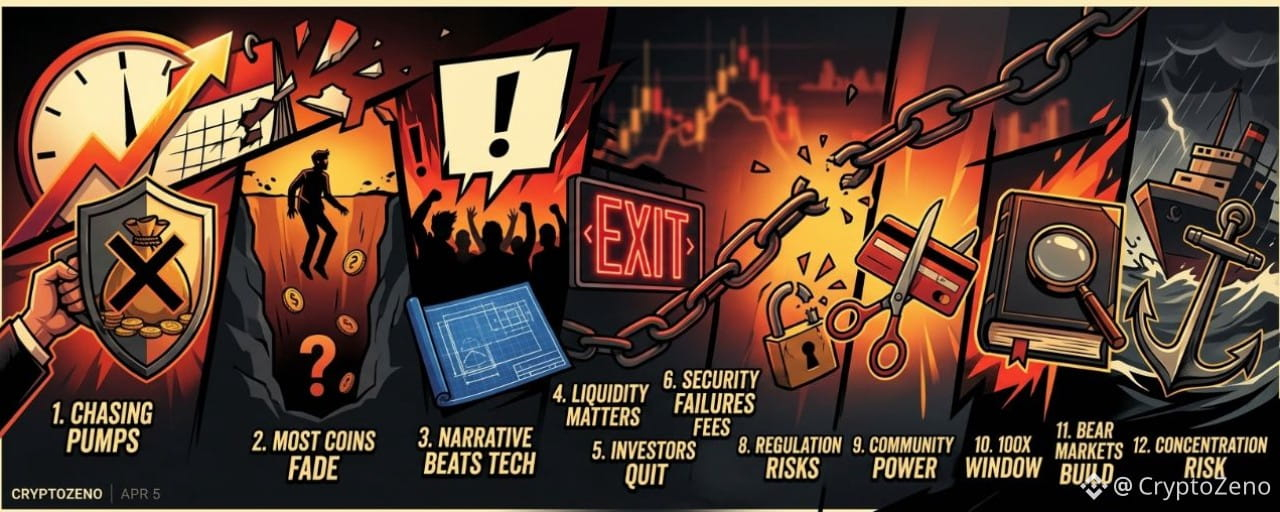
12 Brutal Mistakes I Made in 12 Years of CryptoSo You Don’t Have To Learn Them the Hard WayI’ve survived twelve years in crypto. I’ve made millions. I’ve lost millions. The gains teach you confidence. The losses teach you truth. These are the mistakes that cost me the most.
1. Chasing Pumps Is Just Providing Exit Liquidity
Every time I bought into a coin already exploding, I convinced myself momentum would continue. Most of the time, I was simply late. When something is trending everywhere, you are rarely early. You are often the liquidity for someone smarter who entered before you.
2. Most Coins Don’t Collapse. They Fade
The majority of projects don’t die in dramatic crashes. They slowly lose volume, updates stop, the community shrinks, and attention disappears. One day you realize liquidity is gone and so is your capital.
3. Narrative Often Beats Technology
I backed technically superior projects that went nowhere. Meanwhile, tokens with powerful stories, branding, and community momentum outperformed. Markets reward belief and attention before they reward engineering.
4. Liquidity Is More Important Than Paper Gains
An unrealized gain means nothing if you cannot exit efficiently. Thin order books trap capital. Always assess depth, not just price.
5. Most Investors Quit at the Worst Time
Cycles are emotional weapons. People buy during euphoria and sell during despair. Many who left in bear markets watched prices recover without them. Longevity alone is an edge.
6. Security Failures Hurt More Than Bad Trades
I have been hacked, phished, and SIM-swapped. Poor operational security erased profits faster than volatility ever did. Capital without protection is temporary.
7. Overtrading Transfers Wealth to Exchanges
Constant activity feels productive. It rarely is. The more I traded, the more I paid in fees and mistakes. Holding strong assets through noise often outperformed aggressive trading.
8. Regulation Changes the Game Overnight
Governments move slowly until they don’t. Tokens built on regulatory gray zones can disappear quickly. Long-term survival requires anticipating policy risk.
9. Community Is an Asset Class
I underestimated culture. Memes, loyalty, and shared identity drive liquidity and resilience. A loud, committed community can sustain a project longer than strong fundamentals alone.
10. The 100x Window Is Brief
Life-changing returns happen early, quietly, and without consensus. Once everyone agrees something is a great opportunity, the asymmetric upside is usually gone.
11. Bear Markets Build Real Advantage
The quiet phases are when knowledge compounds. Reading, building, accumulating quality assets at depressed valuations created my largest long-term returns. Bull markets reward positioning built in silence.
12. Concentration Without Risk Control Is Gambling
I have seen fortunes disappear from a single oversized bet. Conviction must be balanced with survival. You cannot compound if you are wiped out.
Twelve years taught me this: crypto does not reward intelligence alone. It rewards discipline, patience, adaptability, and survival.
If even one of these lessons saves you from repeating my mistakes, you are already ahead of where I once was.
In crypto, staying in the game is often the biggest advantage of all.
#CryptoZeno #EthereumStakingATH39.2METH
12 Brutal Mistakes I Made in 12 Years of CryptoSo You Don’t Have To Learn Them the Hard Way
I’ve survived twelve years in crypto. I’ve made millions. I’ve lost millions. The gains teach you confidence. The losses teach you truth. These are the mistakes that cost me the most.
1. Chasing Pumps Is Just Providing Exit Liquidity
Every time I bought into a coin already exploding, I convinced myself momentum would continue. Most of the time, I was simply late. When something is trending everywhere, you are rarely early. You are often the liquidity for someone smarter who entered before you.
2. Most Coins Don’t Collapse. They Fade
The majority of projects don’t die in dramatic crashes. They slowly lose volume, updates stop, the community shrinks, and attention disappears. One day you realize liquidity is gone and so is your capital.
3. Narrative Often Beats Technology
I backed technically superior projects that went nowhere. Meanwhile, tokens with powerful stories, branding, and community momentum outperformed. Markets reward belief and attention before they reward engineering.
4. Liquidity Is More Important Than Paper Gains
An unrealized gain means nothing if you cannot exit efficiently. Thin order books trap capital. Always assess depth, not just price.
5. Most Investors Quit at the Worst Time
Cycles are emotional weapons. People buy during euphoria and sell during despair. Many who left in bear markets watched prices recover without them. Longevity alone is an edge.
6. Security Failures Hurt More Than Bad Trades
I have been hacked, phished, and SIM-swapped. Poor operational security erased profits faster than volatility ever did. Capital without protection is temporary.
7. Overtrading Transfers Wealth to Exchanges
Constant activity feels productive. It rarely is. The more I traded, the more I paid in fees and mistakes. Holding strong assets through noise often outperformed aggressive trading.
8. Regulation Changes the Game Overnight
Governments move slowly until they don’t. Tokens built on regulatory gray zones can disappear quickly. Long-term survival requires anticipating policy risk.
9. Community Is an Asset Class
I underestimated culture. Memes, loyalty, and shared identity drive liquidity and resilience. A loud, committed community can sustain a project longer than strong fundamentals alone.
10. The 100x Window Is Brief
Life-changing returns happen early, quietly, and without consensus. Once everyone agrees something is a great opportunity, the asymmetric upside is usually gone.
11. Bear Markets Build Real Advantage
The quiet phases are when knowledge compounds. Reading, building, accumulating quality assets at depressed valuations created my largest long-term returns. Bull markets reward positioning built in silence.
12. Concentration Without Risk Control Is Gambling
I have seen fortunes disappear from a single oversized bet. Conviction must be balanced with survival. You cannot compound if you are wiped out.
Twelve years taught me this: crypto does not reward intelligence alone. It rewards discipline, patience, adaptability, and survival.
If even one of these lessons saves you from repeating my mistakes, you are already ahead of where I once was.
In crypto, staying in the game is often the biggest advantage of all.
#CryptoZeno #EthereumStakingATH39.2METH
1. Chasing Pumps Is Just Providing Exit Liquidity
Every time I bought into a coin already exploding, I convinced myself momentum would continue. Most of the time, I was simply late. When something is trending everywhere, you are rarely early. You are often the liquidity for someone smarter who entered before you.
2. Most Coins Don’t Collapse. They Fade
The majority of projects don’t die in dramatic crashes. They slowly lose volume, updates stop, the community shrinks, and attention disappears. One day you realize liquidity is gone and so is your capital.
3. Narrative Often Beats Technology
I backed technically superior projects that went nowhere. Meanwhile, tokens with powerful stories, branding, and community momentum outperformed. Markets reward belief and attention before they reward engineering.
4. Liquidity Is More Important Than Paper Gains
An unrealized gain means nothing if you cannot exit efficiently. Thin order books trap capital. Always assess depth, not just price.
5. Most Investors Quit at the Worst Time
Cycles are emotional weapons. People buy during euphoria and sell during despair. Many who left in bear markets watched prices recover without them. Longevity alone is an edge.
6. Security Failures Hurt More Than Bad Trades
I have been hacked, phished, and SIM-swapped. Poor operational security erased profits faster than volatility ever did. Capital without protection is temporary.
7. Overtrading Transfers Wealth to Exchanges
Constant activity feels productive. It rarely is. The more I traded, the more I paid in fees and mistakes. Holding strong assets through noise often outperformed aggressive trading.
8. Regulation Changes the Game Overnight
Governments move slowly until they don’t. Tokens built on regulatory gray zones can disappear quickly. Long-term survival requires anticipating policy risk.
9. Community Is an Asset Class
I underestimated culture. Memes, loyalty, and shared identity drive liquidity and resilience. A loud, committed community can sustain a project longer than strong fundamentals alone.
10. The 100x Window Is Brief
Life-changing returns happen early, quietly, and without consensus. Once everyone agrees something is a great opportunity, the asymmetric upside is usually gone.
11. Bear Markets Build Real Advantage
The quiet phases are when knowledge compounds. Reading, building, accumulating quality assets at depressed valuations created my largest long-term returns. Bull markets reward positioning built in silence.
12. Concentration Without Risk Control Is Gambling
I have seen fortunes disappear from a single oversized bet. Conviction must be balanced with survival. You cannot compound if you are wiped out.
Twelve years taught me this: crypto does not reward intelligence alone. It rewards discipline, patience, adaptability, and survival.
If even one of these lessons saves you from repeating my mistakes, you are already ahead of where I once was.
In crypto, staying in the game is often the biggest advantage of all.
#CryptoZeno #EthereumStakingATH39.2METH
4
4
910
·
--
🚨 A hidden fingerprint inside Bitcoin earliest blocks reveals a single miner quietly accumulated 1.1 million $BTC and never spent a coin
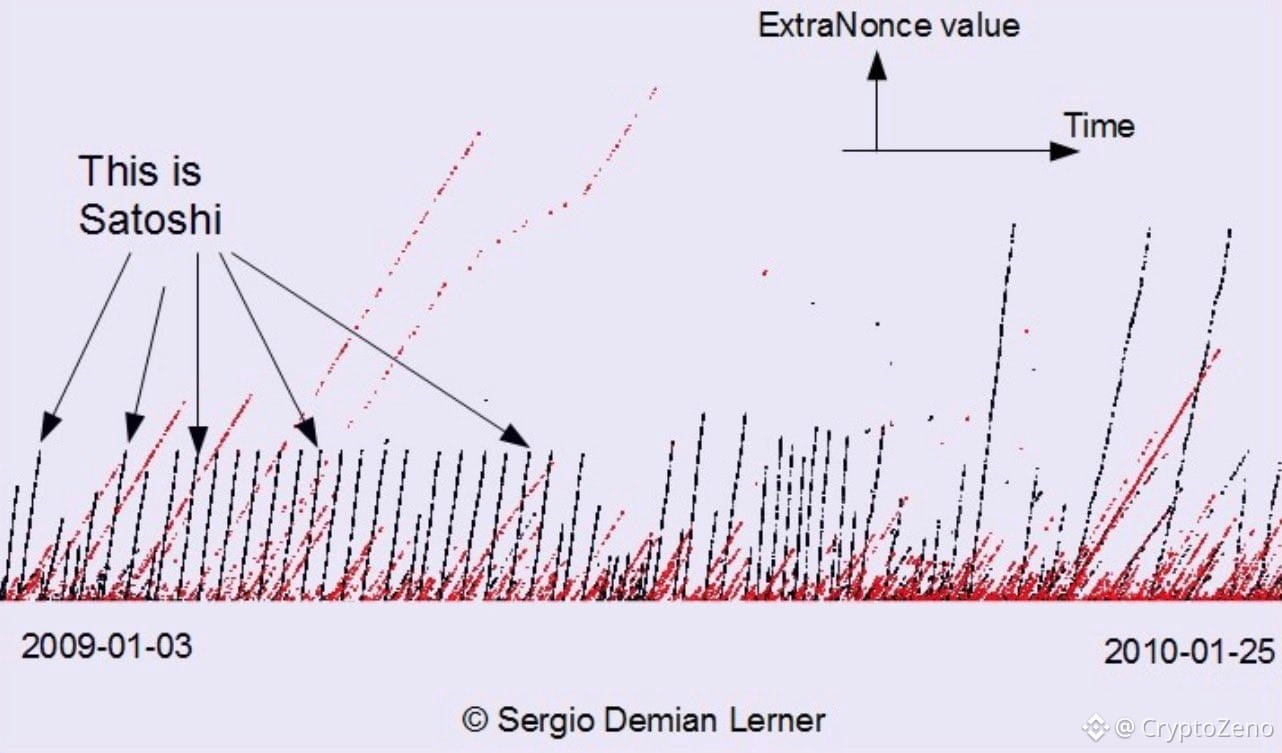
In 2013, researcher Sergio Demian Lerner uncovered a pattern buried inside the first 50,000 Bitcoin blocks. By analyzing the ExtraNonce field, a small value that changes during mining, he discovered something no one had noticed since launch. When plotted, these values formed distinct slopes, each representing different miners operating in the network early days.
Among dozens of slopes, one dominated. A single entity mined roughly 22,000 out of the first 36,000 blocks with perfectly consistent timing, identical behavior, and no overlap. Lerner named this dominant miner Patoshi. The conclusion was striking. One individual mined approximately 1.1 million BTC between 2009 and mid 2010, equal to 5.7 percent of total Bitcoin supply.
The pattern revealed more than accumulation. It showed restraint. Despite having the power to dominate nearly the entire network, Patoshi deliberately limited mining activity to around half of capacity. This behavior suggests an intentional effort to allow others to participate, supporting decentralization in its earliest phase.
Even more telling, the mining schedule followed human like rhythms. Activity started and stopped at consistent times, resembling one person operating a machine rather than an industrial system. Around April 2010, the pattern vanished completely. No further blocks were mined by this entity.
The most astonishing part is what remains untouched. Around 1.1 million BTC still sit across thousands of addresses, unmoved for over 16 years. At current value, this represents over 115 billion dollars, making it the largest dormant fortune in history.
If these coins ever move, markets would face the largest liquidity event ever seen. If they remain untouched, a massive portion of supply is effectively removed forever. Either scenario reshapes Bitcoin future. And the decision belongs to a figure who disappeared in 2011 without a trace. #CryptoZeno
🚨 A hidden fingerprint inside Bitcoin earliest blocks reveals a single miner quietly accumulated 1.1 million $BTC and never spent a coin
In 2013, researcher Sergio Demian Lerner uncovered a pattern buried inside the first 50,000 Bitcoin blocks. By analyzing the ExtraNonce field, a small value that changes during mining, he discovered something no one had noticed since launch. When plotted, these values formed distinct slopes, each representing different miners operating in the network early days.
Among dozens of slopes, one dominated. A single entity mined roughly 22,000 out of the first 36,000 blocks with perfectly consistent timing, identical behavior, and no overlap. Lerner named this dominant miner Patoshi. The conclusion was striking. One individual mined approximately 1.1 million BTC between 2009 and mid 2010, equal to 5.7 percent of total Bitcoin supply.
The pattern revealed more than accumulation. It showed restraint. Despite having the power to dominate nearly the entire network, Patoshi deliberately limited mining activity to around half of capacity. This behavior suggests an intentional effort to allow others to participate, supporting decentralization in its earliest phase.
Even more telling, the mining schedule followed human like rhythms. Activity started and stopped at consistent times, resembling one person operating a machine rather than an industrial system. Around April 2010, the pattern vanished completely. No further blocks were mined by this entity.
The most astonishing part is what remains untouched. Around 1.1 million BTC still sit across thousands of addresses, unmoved for over 16 years. At current value, this represents over 115 billion dollars, making it the largest dormant fortune in history.
If these coins ever move, markets would face the largest liquidity event ever seen. If they remain untouched, a massive portion of supply is effectively removed forever. Either scenario reshapes Bitcoin future. And the decision belongs to a figure who disappeared in 2011 without a trace. #CryptoZeno
In 2013, researcher Sergio Demian Lerner uncovered a pattern buried inside the first 50,000 Bitcoin blocks. By analyzing the ExtraNonce field, a small value that changes during mining, he discovered something no one had noticed since launch. When plotted, these values formed distinct slopes, each representing different miners operating in the network early days.
Among dozens of slopes, one dominated. A single entity mined roughly 22,000 out of the first 36,000 blocks with perfectly consistent timing, identical behavior, and no overlap. Lerner named this dominant miner Patoshi. The conclusion was striking. One individual mined approximately 1.1 million BTC between 2009 and mid 2010, equal to 5.7 percent of total Bitcoin supply.
The pattern revealed more than accumulation. It showed restraint. Despite having the power to dominate nearly the entire network, Patoshi deliberately limited mining activity to around half of capacity. This behavior suggests an intentional effort to allow others to participate, supporting decentralization in its earliest phase.
Even more telling, the mining schedule followed human like rhythms. Activity started and stopped at consistent times, resembling one person operating a machine rather than an industrial system. Around April 2010, the pattern vanished completely. No further blocks were mined by this entity.
The most astonishing part is what remains untouched. Around 1.1 million BTC still sit across thousands of addresses, unmoved for over 16 years. At current value, this represents over 115 billion dollars, making it the largest dormant fortune in history.
If these coins ever move, markets would face the largest liquidity event ever seen. If they remain untouched, a massive portion of supply is effectively removed forever. Either scenario reshapes Bitcoin future. And the decision belongs to a figure who disappeared in 2011 without a trace. #CryptoZeno
8
2.6k
·
--
Verified
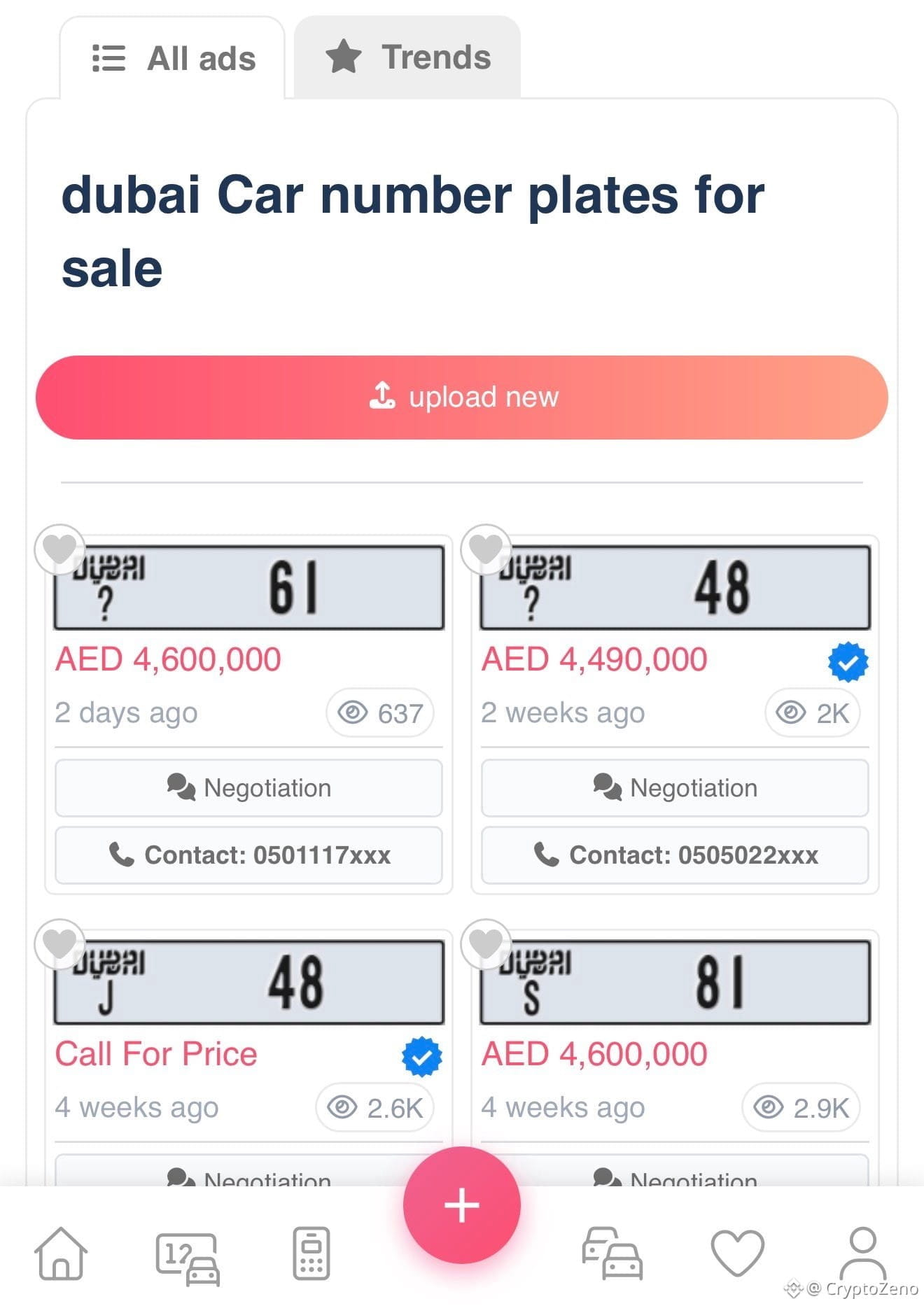
🚨 Dubai license plates have quietly become one of the strongest performing status assets globally, outperforming Bitcoin, gold, and prime real estate while using the same mechanics NFTs tried to replicate
This is not a niche market. The Dubai Roads and Transport Authority runs official auctions multiple times per year. In April 2025 alone, 90 plates generated 98.8 million AED, around 27 million USD. With 4 to 6 auctions annually, primary volume exceeds 100 million USD, while secondary trading pushes total turnover close to 500 million USD each year
Price action has been consistently upward for nearly two decades. Plate “1” sold for 14.2 million USD in 2008, “AA9” hit 10 million USD in 2021, “AA8” reached 9.5 million USD in 2022, and “P7” set a global record at 15 million USD in 2023. In April 2025, “CC22” traded at 2.3 million USD and “BB20” at 2 million USD. Each cycle sets a higher floor with no major drawdowns at the top tier
The structure mirrors NFT theory but works in reality. Single digits act as absolute scarcity assets. Double letter plates create rarity tiers. Repeating digits capture cultural premiums. Numbers tied to UAE identity like 7 and 2 carry embedded narrative value
Supply is permanently finite and controlled. No duplicate of top plates can exist. Unlike NFTs, these assets are physically visible every day, embedding status into real life rather than limiting it to digital platforms
Liquidity is structurally supported by recurring auctions, ensuring constant price discovery. Ownership is secured through official registry systems without needing blockchain
The next evolution is clear. Fractional ownership could expand access beyond ultra wealthy buyers and scale the market significantly
NFTs were the experiment. Dubai perfected the model in the real world
#CryptoZeno #GoogleLaunchesGemini3.5Flash
🚨 Dubai license plates have quietly become one of the strongest performing status assets globally, outperforming Bitcoin, gold, and prime real estate while using the same mechanics NFTs tried to replicate
This is not a niche market. The Dubai Roads and Transport Authority runs official auctions multiple times per year. In April 2025 alone, 90 plates generated 98.8 million AED, around 27 million USD. With 4 to 6 auctions annually, primary volume exceeds 100 million USD, while secondary trading pushes total turnover close to 500 million USD each year
Price action has been consistently upward for nearly two decades. Plate “1” sold for 14.2 million USD in 2008, “AA9” hit 10 million USD in 2021, “AA8” reached 9.5 million USD in 2022, and “P7” set a global record at 15 million USD in 2023. In April 2025, “CC22” traded at 2.3 million USD and “BB20” at 2 million USD. Each cycle sets a higher floor with no major drawdowns at the top tier
The structure mirrors NFT theory but works in reality. Single digits act as absolute scarcity assets. Double letter plates create rarity tiers. Repeating digits capture cultural premiums. Numbers tied to UAE identity like 7 and 2 carry embedded narrative value
Supply is permanently finite and controlled. No duplicate of top plates can exist. Unlike NFTs, these assets are physically visible every day, embedding status into real life rather than limiting it to digital platforms
Liquidity is structurally supported by recurring auctions, ensuring constant price discovery. Ownership is secured through official registry systems without needing blockchain
The next evolution is clear. Fractional ownership could expand access beyond ultra wealthy buyers and scale the market significantly
NFTs were the experiment. Dubai perfected the model in the real world
#CryptoZeno #GoogleLaunchesGemini3.5Flash
This is not a niche market. The Dubai Roads and Transport Authority runs official auctions multiple times per year. In April 2025 alone, 90 plates generated 98.8 million AED, around 27 million USD. With 4 to 6 auctions annually, primary volume exceeds 100 million USD, while secondary trading pushes total turnover close to 500 million USD each year
Price action has been consistently upward for nearly two decades. Plate “1” sold for 14.2 million USD in 2008, “AA9” hit 10 million USD in 2021, “AA8” reached 9.5 million USD in 2022, and “P7” set a global record at 15 million USD in 2023. In April 2025, “CC22” traded at 2.3 million USD and “BB20” at 2 million USD. Each cycle sets a higher floor with no major drawdowns at the top tier
The structure mirrors NFT theory but works in reality. Single digits act as absolute scarcity assets. Double letter plates create rarity tiers. Repeating digits capture cultural premiums. Numbers tied to UAE identity like 7 and 2 carry embedded narrative value
Supply is permanently finite and controlled. No duplicate of top plates can exist. Unlike NFTs, these assets are physically visible every day, embedding status into real life rather than limiting it to digital platforms
Liquidity is structurally supported by recurring auctions, ensuring constant price discovery. Ownership is secured through official registry systems without needing blockchain
The next evolution is clear. Fractional ownership could expand access beyond ultra wealthy buyers and scale the market significantly
NFTs were the experiment. Dubai perfected the model in the real world
#CryptoZeno #GoogleLaunchesGemini3.5Flash

2
3
2.3k
·
--
Article
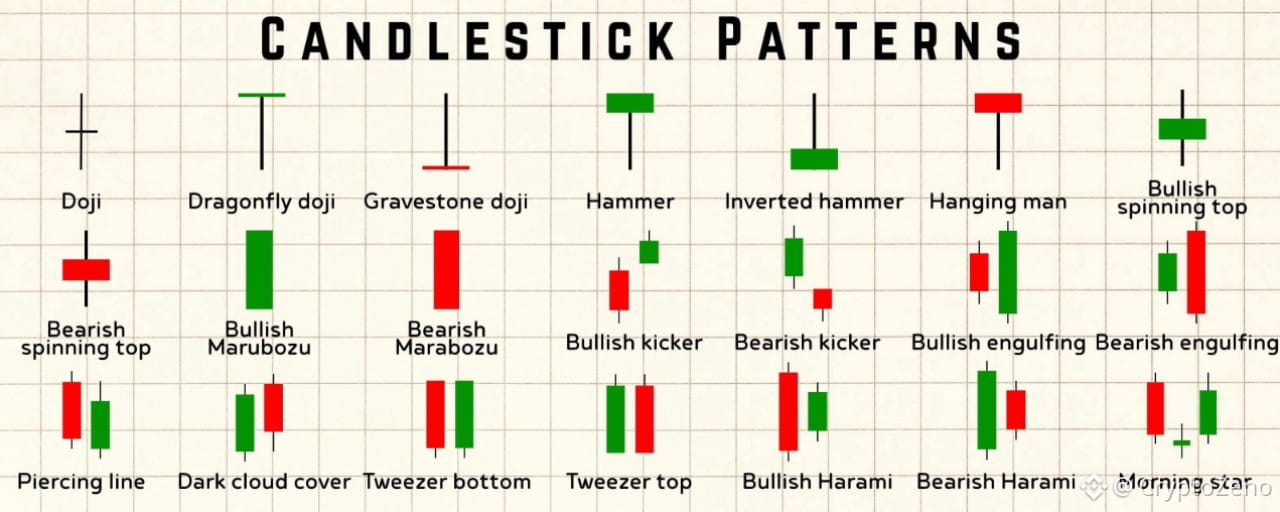
How to Read the Most Popular Candlestick Patterns (And Why Most Traders Misuse Them)Imagine you are tracking the price of an asset like a stock or a cryptocurrency over a period of time, such as a week, a day, or an hour. A candlestick chart is a way to represent this price data visually.
The candlestick has a body and two lines (often referred to as wicks or shadows). The body of the candlestick represents the range between the opening and closing prices within that period, while the wicks or shadows represent the highest and lowest prices reached during that same period.
A green body indicates that the price has increased during this period. A red body indicates a bearish candlestick, meaning that the price decreased during that period.
How to Read Candlestick Patterns
Candlestick patterns are formed by multiple candles in a specific sequence. There are numerous patterns, each with its interpretation. While some candlestick patterns provide insight into the balance between buyers and sellers, others may indicate a point of reversal, continuation, or indecision.
Keep in mind that candlestick patterns aren’t intrinsically buy or sell signals. Instead, they are a way of looking at price action and market trends to potentially identify upcoming opportunities. As such, it’s always helpful to look at patterns in context.
To reduce the risk of losses, many traders use candlestick patterns in combination with other methods of analysis, including the Wyckoff Method, the Elliott Wave Theory, and the Dow Theory. It’s also common to include technical analysis (TA) indicators, such as trend lines, the Relative Strength Index (RSI), Stochastic RSI, Ichimoku Clouds, or the Parabolic SAR.
Candlestick patterns can also be used in conjunction with support and resistance levels. In trading, support levels are price points where buying is expected to be stronger than selling, while resistance levels are price levels where selling is expected to be stronger than buying.
Bullish Candlestick Patterns
Hammer
A hammer is a candlestick with a long lower wick at the bottom of a downtrend, where the lower wick is at least twice the size of the body.
A hammer shows that despite high selling pressure, buyers (bulls) pushed the price back up near the open. A hammer can be red or green, but green hammers usually indicate a stronger bullish reaction.
Inverted hammer
This pattern is just like a hammer but with a long wick above the body instead of below. Similar to a hammer, the upper wick should be at least twice the size of the body.
An inverted hammer occurs at the bottom of a downtrend and may indicate a potential reversal to the upside. The upper wick suggests that the price has stopped its downward movement, even though the sellers eventually managed to drive it back down near the open (giving the inverted hammer its typical shape).
In short, the inverted hammer may indicate that selling pressure is slowing down and buyers may soon take control of the market.
Three white soldiers
The three white soldiers pattern consists of three consecutive green candlesticks that all open within the body of the previous candle and close above the previous candle's high.
In this pattern, the candlesticks have small or absent lower wicks. This indicates that buyers are stronger than sellers (driving the price higher). Some traders also consider the size of the candlesticks and the length of their wicks. The pattern tends to work out better when the candlestick bodies are bigger (stronger buying pressure).
Bullish harami
A bullish harami is a long red candlestick followed by a smaller green candlestick that's completely contained within the body of the previous candlestick.
The bullish harami can be formed over two or more days, and it's a pattern that indicates that the selling momentum is slowing down and may be coming to an end.
Bearish Candlestick Patterns
Hanging man
The hanging man is the bearish equivalent of a hammer. It typically forms at the end of an uptrend with a small body and a long lower wick.
The lower wick indicates that there was a significant sell-off after the uptrend, but the bulls managed to regain control and drive the price back up (temporarily). It’s a point where buyers try to keep the uptrend going while more sellers step in, creating a point of uncertainty.
The hanging man after a long uptrend can act as a warning that the bulls may soon lose momentum in the market, suggesting a potential reversal to the downside.
Shooting star
The shooting star consists of a candlestick with a long top wick, little or no bottom wick, and a small body, ideally near the bottom. The shooting star is very similar in shape to the inverted hammer, but it’s formed at the end of an uptrend.
This candlestick pattern indicates that the market reached a local high, but then the sellers took control and drove the price back down. While some traders like to sell or open short positions when a shooting star is formed, others prefer to wait for the next candlesticks to confirm the pattern.
Three black crows
The three black crows consist of three consecutive red candlesticks that open within the body of the previous candle and close below the low of the last candle.
They are the bearish equivalent of three white soldiers. Typically, these candlesticks don’t have long higher wicks, indicating that selling pressure continues to push the price lower. The size of the candlesticks and the length of the wicks can also be used to judge the chances of downtrend continuation.
Bearish harami
The bearish harami is a long green candlestick followed by a small red candlestick with a body that is completely contained within the body of the previous candlestick.
The bearish harami can unfold over two or more periods (i.e., two or more days if you are using a daily chart). This pattern typically appears at the end of an uptrend and can indicate a reversal as buyers lose momentum.
Dark cloud cover
The dark cloud cover pattern consists of a red candlestick that opens above the close of the previous green candlestick but then closes below the midpoint of that candlestick.
This pattern tends to be more relevant when accompanied by high trading volume, indicating that momentum may soon shift from bullish to bearish. Some traders prefer to wait for a third red bar to confirm the pattern.
Three Continuation Candlestick Patterns
Rising three methods
The rising three methods candlestick pattern occurs in an uptrend where three consecutive red candlesticks with small bodies are followed by the continuation of the uptrend. Ideally, the red candles should not break the area of the previous candlestick.
The continuation is confirmed by a green candle with a large body, indicating that the bulls are back in control of the trend.
Falling three methods
The falling three methods are the inverse of the three rising methods. It indicates the continuation of a downtrend.
Doji candlestick pattern
A doji forms when the open and close are the same (or very similar). The price may move above and below the opening price but will eventually close at or near it. As such, a doji can indicate a point of indecision between buying and selling forces. However, the interpretation of a doji is highly contextual.
Depending on where the open and close line falls, a doji can be described as a gravestone, long-legged, or dragonfly doji.
Gravestone Doji
This is a bearish reversal candlestick with a long upper wick and the open and close near the low.
Long-legged Doji
Indecisive candlestick with top and bottom wicks and the open and close near the midpoint.
Dragonfly Doji
Either a bullish or bearish candlestick, depending on the context, with a long lower wick and the open/close near the high.
According to the original definition of the doji, the open and close should be the same. What if the open and close aren't the same but are very close to each other? That's called a spinning top. However, since cryptocurrency markets can be very volatile, an exact doji is quite rare, so the spinning top is often used interchangeably with the term doji.
Candlestick Patterns Based on Price Gaps
A price gap occurs when a financial asset opens above or below its previous closing price, creating a gap between the two candlesticks.
While many candlestick patterns include price gaps, patterns based on gaps aren’t prevalent in the crypto markets because they are open 24/7. Price gaps can also occur in illiquid markets, but aren’t useful as actionable patterns because they mainly indicate low liquidity and high bid-ask spreads.
How to Use Candlestick Patterns in Crypto Trading
Traders should keep the following tips in mind when using candlestick patterns in crypto trading:
Crypto traders should have a solid understanding of the basics of candlestick patterns before using them to make trading decisions. This includes understanding how to read candlestick charts and the various patterns they can form. Don’t take risks if you aren’t familiar with the basics.
While candlestick patterns can provide valuable insights, they should be used with other technical indicators to form more well-rounded projections. Some examples of indicators that can be used in combination with candlestick patterns include moving averages, RSI, and MACD.
Crypto traders should analyze candlestick patterns across multiple timeframes to gain a broader understanding of market sentiment. For example, if a trader is analyzing a daily chart, they should also look at the hourly and 15-minute charts to see how the patterns play out in different timeframes.
Using candlestick patterns carries risks like any trading strategy. Traders should always practice risk management techniques, such as setting stop-loss orders, to protect their capital. It's also important to avoid overtrading and only enter trades with a favorable risk-reward ratio.
Candlestick patterns don’t predict the future, but they do reveal how market participants are behaving in real time. Used correctly, they offer insight into momentum, exhaustion, and market psychology.
Used incorrectly, they become just another reason traders overtrade and ignore risk.
Understanding candlesticks isn’t about finding perfect entries. It’s about learning to read price action with context and letting the market show its hand before you act.
#CryptoZeno #CanaryCapitalFilesStakedTRXETF
How to Read the Most Popular Candlestick Patterns (And Why Most Traders Misuse Them)
Imagine you are tracking the price of an asset like a stock or a cryptocurrency over a period of time, such as a week, a day, or an hour. A candlestick chart is a way to represent this price data visually.
The candlestick has a body and two lines (often referred to as wicks or shadows). The body of the candlestick represents the range between the opening and closing prices within that period, while the wicks or shadows represent the highest and lowest prices reached during that same period.
A green body indicates that the price has increased during this period. A red body indicates a bearish candlestick, meaning that the price decreased during that period.
How to Read Candlestick Patterns
Candlestick patterns are formed by multiple candles in a specific sequence. There are numerous patterns, each with its interpretation. While some candlestick patterns provide insight into the balance between buyers and sellers, others may indicate a point of reversal, continuation, or indecision.
Keep in mind that candlestick patterns aren’t intrinsically buy or sell signals. Instead, they are a way of looking at price action and market trends to potentially identify upcoming opportunities. As such, it’s always helpful to look at patterns in context.
To reduce the risk of losses, many traders use candlestick patterns in combination with other methods of analysis, including the Wyckoff Method, the Elliott Wave Theory, and the Dow Theory. It’s also common to include technical analysis (TA) indicators, such as trend lines, the Relative Strength Index (RSI), Stochastic RSI, Ichimoku Clouds, or the Parabolic SAR.
Candlestick patterns can also be used in conjunction with support and resistance levels. In trading, support levels are price points where buying is expected to be stronger than selling, while resistance levels are price levels where selling is expected to be stronger than buying.
Bullish Candlestick Patterns
Hammer
A hammer is a candlestick with a long lower wick at the bottom of a downtrend, where the lower wick is at least twice the size of the body.
A hammer shows that despite high selling pressure, buyers (bulls) pushed the price back up near the open. A hammer can be red or green, but green hammers usually indicate a stronger bullish reaction.
Inverted hammer
This pattern is just like a hammer but with a long wick above the body instead of below. Similar to a hammer, the upper wick should be at least twice the size of the body.
An inverted hammer occurs at the bottom of a downtrend and may indicate a potential reversal to the upside. The upper wick suggests that the price has stopped its downward movement, even though the sellers eventually managed to drive it back down near the open (giving the inverted hammer its typical shape).
In short, the inverted hammer may indicate that selling pressure is slowing down and buyers may soon take control of the market.
Three white soldiers
The three white soldiers pattern consists of three consecutive green candlesticks that all open within the body of the previous candle and close above the previous candle's high.
In this pattern, the candlesticks have small or absent lower wicks. This indicates that buyers are stronger than sellers (driving the price higher). Some traders also consider the size of the candlesticks and the length of their wicks. The pattern tends to work out better when the candlestick bodies are bigger (stronger buying pressure).
Bullish harami
A bullish harami is a long red candlestick followed by a smaller green candlestick that's completely contained within the body of the previous candlestick.
The bullish harami can be formed over two or more days, and it's a pattern that indicates that the selling momentum is slowing down and may be coming to an end.
Bearish Candlestick Patterns
Hanging man
The hanging man is the bearish equivalent of a hammer. It typically forms at the end of an uptrend with a small body and a long lower wick.
The lower wick indicates that there was a significant sell-off after the uptrend, but the bulls managed to regain control and drive the price back up (temporarily). It’s a point where buyers try to keep the uptrend going while more sellers step in, creating a point of uncertainty.
The hanging man after a long uptrend can act as a warning that the bulls may soon lose momentum in the market, suggesting a potential reversal to the downside.
Shooting star
The shooting star consists of a candlestick with a long top wick, little or no bottom wick, and a small body, ideally near the bottom. The shooting star is very similar in shape to the inverted hammer, but it’s formed at the end of an uptrend.
This candlestick pattern indicates that the market reached a local high, but then the sellers took control and drove the price back down. While some traders like to sell or open short positions when a shooting star is formed, others prefer to wait for the next candlesticks to confirm the pattern.
Three black crows
The three black crows consist of three consecutive red candlesticks that open within the body of the previous candle and close below the low of the last candle.
They are the bearish equivalent of three white soldiers. Typically, these candlesticks don’t have long higher wicks, indicating that selling pressure continues to push the price lower. The size of the candlesticks and the length of the wicks can also be used to judge the chances of downtrend continuation.
Bearish harami
The bearish harami is a long green candlestick followed by a small red candlestick with a body that is completely contained within the body of the previous candlestick.
The bearish harami can unfold over two or more periods (i.e., two or more days if you are using a daily chart). This pattern typically appears at the end of an uptrend and can indicate a reversal as buyers lose momentum.
Dark cloud cover
The dark cloud cover pattern consists of a red candlestick that opens above the close of the previous green candlestick but then closes below the midpoint of that candlestick.
This pattern tends to be more relevant when accompanied by high trading volume, indicating that momentum may soon shift from bullish to bearish. Some traders prefer to wait for a third red bar to confirm the pattern.
Three Continuation Candlestick Patterns
Rising three methods
The rising three methods candlestick pattern occurs in an uptrend where three consecutive red candlesticks with small bodies are followed by the continuation of the uptrend. Ideally, the red candles should not break the area of the previous candlestick.
The continuation is confirmed by a green candle with a large body, indicating that the bulls are back in control of the trend.
Falling three methods
The falling three methods are the inverse of the three rising methods. It indicates the continuation of a downtrend.
Doji candlestick pattern
A doji forms when the open and close are the same (or very similar). The price may move above and below the opening price but will eventually close at or near it. As such, a doji can indicate a point of indecision between buying and selling forces. However, the interpretation of a doji is highly contextual.
Depending on where the open and close line falls, a doji can be described as a gravestone, long-legged, or dragonfly doji.
Gravestone Doji
This is a bearish reversal candlestick with a long upper wick and the open and close near the low.
Long-legged Doji
Indecisive candlestick with top and bottom wicks and the open and close near the midpoint.
Dragonfly Doji
Either a bullish or bearish candlestick, depending on the context, with a long lower wick and the open/close near the high.
According to the original definition of the doji, the open and close should be the same. What if the open and close aren't the same but are very close to each other? That's called a spinning top. However, since cryptocurrency markets can be very volatile, an exact doji is quite rare, so the spinning top is often used interchangeably with the term doji.
Candlestick Patterns Based on Price Gaps
A price gap occurs when a financial asset opens above or below its previous closing price, creating a gap between the two candlesticks.
While many candlestick patterns include price gaps, patterns based on gaps aren’t prevalent in the crypto markets because they are open 24/7. Price gaps can also occur in illiquid markets, but aren’t useful as actionable patterns because they mainly indicate low liquidity and high bid-ask spreads.
How to Use Candlestick Patterns in Crypto Trading
Traders should keep the following tips in mind when using candlestick patterns in crypto trading:
Crypto traders should have a solid understanding of the basics of candlestick patterns before using them to make trading decisions. This includes understanding how to read candlestick charts and the various patterns they can form. Don’t take risks if you aren’t familiar with the basics.
While candlestick patterns can provide valuable insights, they should be used with other technical indicators to form more well-rounded projections. Some examples of indicators that can be used in combination with candlestick patterns include moving averages, RSI, and MACD.
Crypto traders should analyze candlestick patterns across multiple timeframes to gain a broader understanding of market sentiment. For example, if a trader is analyzing a daily chart, they should also look at the hourly and 15-minute charts to see how the patterns play out in different timeframes.
Using candlestick patterns carries risks like any trading strategy. Traders should always practice risk management techniques, such as setting stop-loss orders, to protect their capital. It's also important to avoid overtrading and only enter trades with a favorable risk-reward ratio.
Candlestick patterns don’t predict the future, but they do reveal how market participants are behaving in real time. Used correctly, they offer insight into momentum, exhaustion, and market psychology.
Used incorrectly, they become just another reason traders overtrade and ignore risk.
Understanding candlesticks isn’t about finding perfect entries. It’s about learning to read price action with context and letting the market show its hand before you act.
#CryptoZeno #CanaryCapitalFilesStakedTRXETF
The candlestick has a body and two lines (often referred to as wicks or shadows). The body of the candlestick represents the range between the opening and closing prices within that period, while the wicks or shadows represent the highest and lowest prices reached during that same period.
A green body indicates that the price has increased during this period. A red body indicates a bearish candlestick, meaning that the price decreased during that period.
How to Read Candlestick Patterns
Candlestick patterns are formed by multiple candles in a specific sequence. There are numerous patterns, each with its interpretation. While some candlestick patterns provide insight into the balance between buyers and sellers, others may indicate a point of reversal, continuation, or indecision.
Keep in mind that candlestick patterns aren’t intrinsically buy or sell signals. Instead, they are a way of looking at price action and market trends to potentially identify upcoming opportunities. As such, it’s always helpful to look at patterns in context.
To reduce the risk of losses, many traders use candlestick patterns in combination with other methods of analysis, including the Wyckoff Method, the Elliott Wave Theory, and the Dow Theory. It’s also common to include technical analysis (TA) indicators, such as trend lines, the Relative Strength Index (RSI), Stochastic RSI, Ichimoku Clouds, or the Parabolic SAR.
Candlestick patterns can also be used in conjunction with support and resistance levels. In trading, support levels are price points where buying is expected to be stronger than selling, while resistance levels are price levels where selling is expected to be stronger than buying.
Bullish Candlestick Patterns
Hammer
A hammer is a candlestick with a long lower wick at the bottom of a downtrend, where the lower wick is at least twice the size of the body.
A hammer shows that despite high selling pressure, buyers (bulls) pushed the price back up near the open. A hammer can be red or green, but green hammers usually indicate a stronger bullish reaction.
Inverted hammer
This pattern is just like a hammer but with a long wick above the body instead of below. Similar to a hammer, the upper wick should be at least twice the size of the body.
An inverted hammer occurs at the bottom of a downtrend and may indicate a potential reversal to the upside. The upper wick suggests that the price has stopped its downward movement, even though the sellers eventually managed to drive it back down near the open (giving the inverted hammer its typical shape).
In short, the inverted hammer may indicate that selling pressure is slowing down and buyers may soon take control of the market.
Three white soldiers
The three white soldiers pattern consists of three consecutive green candlesticks that all open within the body of the previous candle and close above the previous candle's high.
In this pattern, the candlesticks have small or absent lower wicks. This indicates that buyers are stronger than sellers (driving the price higher). Some traders also consider the size of the candlesticks and the length of their wicks. The pattern tends to work out better when the candlestick bodies are bigger (stronger buying pressure).
Bullish harami
A bullish harami is a long red candlestick followed by a smaller green candlestick that's completely contained within the body of the previous candlestick.
The bullish harami can be formed over two or more days, and it's a pattern that indicates that the selling momentum is slowing down and may be coming to an end.
Bearish Candlestick Patterns
Hanging man
The hanging man is the bearish equivalent of a hammer. It typically forms at the end of an uptrend with a small body and a long lower wick.
The lower wick indicates that there was a significant sell-off after the uptrend, but the bulls managed to regain control and drive the price back up (temporarily). It’s a point where buyers try to keep the uptrend going while more sellers step in, creating a point of uncertainty.
The hanging man after a long uptrend can act as a warning that the bulls may soon lose momentum in the market, suggesting a potential reversal to the downside.
Shooting star
The shooting star consists of a candlestick with a long top wick, little or no bottom wick, and a small body, ideally near the bottom. The shooting star is very similar in shape to the inverted hammer, but it’s formed at the end of an uptrend.
This candlestick pattern indicates that the market reached a local high, but then the sellers took control and drove the price back down. While some traders like to sell or open short positions when a shooting star is formed, others prefer to wait for the next candlesticks to confirm the pattern.
Three black crows
The three black crows consist of three consecutive red candlesticks that open within the body of the previous candle and close below the low of the last candle.
They are the bearish equivalent of three white soldiers. Typically, these candlesticks don’t have long higher wicks, indicating that selling pressure continues to push the price lower. The size of the candlesticks and the length of the wicks can also be used to judge the chances of downtrend continuation.
Bearish harami
The bearish harami is a long green candlestick followed by a small red candlestick with a body that is completely contained within the body of the previous candlestick.
The bearish harami can unfold over two or more periods (i.e., two or more days if you are using a daily chart). This pattern typically appears at the end of an uptrend and can indicate a reversal as buyers lose momentum.
Dark cloud cover
The dark cloud cover pattern consists of a red candlestick that opens above the close of the previous green candlestick but then closes below the midpoint of that candlestick.
This pattern tends to be more relevant when accompanied by high trading volume, indicating that momentum may soon shift from bullish to bearish. Some traders prefer to wait for a third red bar to confirm the pattern.
Three Continuation Candlestick Patterns
Rising three methods
The rising three methods candlestick pattern occurs in an uptrend where three consecutive red candlesticks with small bodies are followed by the continuation of the uptrend. Ideally, the red candles should not break the area of the previous candlestick.
The continuation is confirmed by a green candle with a large body, indicating that the bulls are back in control of the trend.
Falling three methods
The falling three methods are the inverse of the three rising methods. It indicates the continuation of a downtrend.
Doji candlestick pattern
A doji forms when the open and close are the same (or very similar). The price may move above and below the opening price but will eventually close at or near it. As such, a doji can indicate a point of indecision between buying and selling forces. However, the interpretation of a doji is highly contextual.
Depending on where the open and close line falls, a doji can be described as a gravestone, long-legged, or dragonfly doji.
Gravestone Doji
This is a bearish reversal candlestick with a long upper wick and the open and close near the low.
Long-legged Doji
Indecisive candlestick with top and bottom wicks and the open and close near the midpoint.
Dragonfly Doji
Either a bullish or bearish candlestick, depending on the context, with a long lower wick and the open/close near the high.
According to the original definition of the doji, the open and close should be the same. What if the open and close aren't the same but are very close to each other? That's called a spinning top. However, since cryptocurrency markets can be very volatile, an exact doji is quite rare, so the spinning top is often used interchangeably with the term doji.
Candlestick Patterns Based on Price Gaps
A price gap occurs when a financial asset opens above or below its previous closing price, creating a gap between the two candlesticks.
While many candlestick patterns include price gaps, patterns based on gaps aren’t prevalent in the crypto markets because they are open 24/7. Price gaps can also occur in illiquid markets, but aren’t useful as actionable patterns because they mainly indicate low liquidity and high bid-ask spreads.
How to Use Candlestick Patterns in Crypto Trading
Traders should keep the following tips in mind when using candlestick patterns in crypto trading:
Crypto traders should have a solid understanding of the basics of candlestick patterns before using them to make trading decisions. This includes understanding how to read candlestick charts and the various patterns they can form. Don’t take risks if you aren’t familiar with the basics.
While candlestick patterns can provide valuable insights, they should be used with other technical indicators to form more well-rounded projections. Some examples of indicators that can be used in combination with candlestick patterns include moving averages, RSI, and MACD.
Crypto traders should analyze candlestick patterns across multiple timeframes to gain a broader understanding of market sentiment. For example, if a trader is analyzing a daily chart, they should also look at the hourly and 15-minute charts to see how the patterns play out in different timeframes.
Using candlestick patterns carries risks like any trading strategy. Traders should always practice risk management techniques, such as setting stop-loss orders, to protect their capital. It's also important to avoid overtrading and only enter trades with a favorable risk-reward ratio.
Candlestick patterns don’t predict the future, but they do reveal how market participants are behaving in real time. Used correctly, they offer insight into momentum, exhaustion, and market psychology.
Used incorrectly, they become just another reason traders overtrade and ignore risk.
Understanding candlesticks isn’t about finding perfect entries. It’s about learning to read price action with context and letting the market show its hand before you act.
#CryptoZeno #CanaryCapitalFilesStakedTRXETF
2
10
1k

·
--
#CryptoZeno 0x82c41e32642f6e1db359c321f8da68c4cd6f94a4
#CryptoZeno 0x82c41e32642f6e1db359c321f8da68c4cd6f94a4
18
·
--

Article
Why 95% of Market Participants Ride Every Cycle Back to ZeroNinety-five percent of participants will hold all the way through the crash. Profits will disappear, portfolios will implode, and the market will reset like it always does. I have no intention of being part of that majority.
I’m not here to sell the exact top. I’m here to exit before the illusion breaks. November 2025 is my exit window, not because I can predict the future, but because I understand cycles. Historically, peak euphoria tends to arrive roughly twelve to eighteen months after a Bitcoin halving. That phase is defined by confidence, not caution, and that’s precisely why it’s dangerous.
Every bull market ends the same way, with an explosive altcoin phase. Meme coins, Layer 2s, AI tokens, and whatever narrative captures attention will move aggressively higher. This is not the beginning of a new expansion. It is the final acceleration before exhaustion. Retail chases performance, momentum feeds on itself, and prices detach from reality.
What comes after the peak is never gradual. Tokens routinely lose ninety to ninety-nine percent of their value. Liquidity dries up, teams vanish, and selling becomes impossible. By the time fear becomes obvious, the exit is already gone. Most losses in crypto are not caused by bad entries, but by refusing to leave when conditions are favorable.
To avoid that outcome, I rely heavily on three on-chain signals that have consistently provided early warnings in previous cycles. Market Value to Realized Value highlights when price is far above aggregate cost basis. Net Unrealized Profit and Loss reveals when the majority of the market is sitting on excessive paper gains. Spent Output Profit Ratio shows whether coins are being distributed at a profit. When these metrics align and signal overheating, I don’t debate narratives. I start reducing exposure.
Unrealized profit is not success. Numbers on a screen are meaningless until they are converted into stable value. I treat profit-taking like income, not speculation. It is structured, repetitive, and intentionally boring. If it feels uneventful, it usually means it’s being done correctly.
My exit strategy is straightforward and disciplined. I distribute in stages while the market is strong, not during weakness. Capital rotates into stable yield, cash, and real-world assets. When the market begins talking about one final pump, I disengage from the noise. Cycles rarely offer more than one clean exit.
Operational discipline matters just as much as market timing. Cold wallets are for long-term wealth preservation. Hot wallets are for experimentation and curiosity. Mixing the two is how conviction capital gets destroyed during late-cycle speculation.
Altseason also attracts a predictable wave of scams. Fake launches, malicious airdrops, and phishing campaigns thrive when greed is high. Burner wallets, verified links, and assuming everything is hostile are not paranoia at this stage. They are survival skills.
Importantly, market tops never feel threatening. They feel comfortable. The dominant emotion is optimism, not fear, and the common belief is that the real move is just beginning. Historically, that mindset marks the end. If selling feels emotionally wrong, it is often a sign that timing is correct.
As my exit window approaches, diversification becomes essential. Altcoins appear safe until liquidity disappears. Capital rotates toward Bitcoin, Ethereum, stablecoins, and income streams outside of crypto. Heavy exposure to microcaps late in the cycle is not aggressive positioning. It is delayed liquidation.
Those who survived the bear market and accumulated early earned their advantage. But endurance alone does not create wealth. If you do not leave the market with realized gains, none of the conviction matters. You did not come this far to give it all back.
My plan is to exit completely and wait. If the market offers deep drawdowns again in 2026 or 2027, I will re-enter from a position of strength. That is where asymmetric opportunity truly exists.
Exiting is not about prediction. It is about discipline. Most participants lose everything chasing one more green candle. Exiting well is the rarest skill in crypto, and the most valuable one. This cycle, I intend to execute it properly.
#CryptoZeno #KelpDAOExploitFreeze
Why 95% of Market Participants Ride Every Cycle Back to Zero
Ninety-five percent of participants will hold all the way through the crash. Profits will disappear, portfolios will implode, and the market will reset like it always does. I have no intention of being part of that majority.
I’m not here to sell the exact top. I’m here to exit before the illusion breaks. November 2025 is my exit window, not because I can predict the future, but because I understand cycles. Historically, peak euphoria tends to arrive roughly twelve to eighteen months after a Bitcoin halving. That phase is defined by confidence, not caution, and that’s precisely why it’s dangerous.
Every bull market ends the same way, with an explosive altcoin phase. Meme coins, Layer 2s, AI tokens, and whatever narrative captures attention will move aggressively higher. This is not the beginning of a new expansion. It is the final acceleration before exhaustion. Retail chases performance, momentum feeds on itself, and prices detach from reality.
What comes after the peak is never gradual. Tokens routinely lose ninety to ninety-nine percent of their value. Liquidity dries up, teams vanish, and selling becomes impossible. By the time fear becomes obvious, the exit is already gone. Most losses in crypto are not caused by bad entries, but by refusing to leave when conditions are favorable.
To avoid that outcome, I rely heavily on three on-chain signals that have consistently provided early warnings in previous cycles. Market Value to Realized Value highlights when price is far above aggregate cost basis. Net Unrealized Profit and Loss reveals when the majority of the market is sitting on excessive paper gains. Spent Output Profit Ratio shows whether coins are being distributed at a profit. When these metrics align and signal overheating, I don’t debate narratives. I start reducing exposure.
Unrealized profit is not success. Numbers on a screen are meaningless until they are converted into stable value. I treat profit-taking like income, not speculation. It is structured, repetitive, and intentionally boring. If it feels uneventful, it usually means it’s being done correctly.
My exit strategy is straightforward and disciplined. I distribute in stages while the market is strong, not during weakness. Capital rotates into stable yield, cash, and real-world assets. When the market begins talking about one final pump, I disengage from the noise. Cycles rarely offer more than one clean exit.
Operational discipline matters just as much as market timing. Cold wallets are for long-term wealth preservation. Hot wallets are for experimentation and curiosity. Mixing the two is how conviction capital gets destroyed during late-cycle speculation.
Altseason also attracts a predictable wave of scams. Fake launches, malicious airdrops, and phishing campaigns thrive when greed is high. Burner wallets, verified links, and assuming everything is hostile are not paranoia at this stage. They are survival skills.
Importantly, market tops never feel threatening. They feel comfortable. The dominant emotion is optimism, not fear, and the common belief is that the real move is just beginning. Historically, that mindset marks the end. If selling feels emotionally wrong, it is often a sign that timing is correct.
As my exit window approaches, diversification becomes essential. Altcoins appear safe until liquidity disappears. Capital rotates toward Bitcoin, Ethereum, stablecoins, and income streams outside of crypto. Heavy exposure to microcaps late in the cycle is not aggressive positioning. It is delayed liquidation.
Those who survived the bear market and accumulated early earned their advantage. But endurance alone does not create wealth. If you do not leave the market with realized gains, none of the conviction matters. You did not come this far to give it all back.
My plan is to exit completely and wait. If the market offers deep drawdowns again in 2026 or 2027, I will re-enter from a position of strength. That is where asymmetric opportunity truly exists.
Exiting is not about prediction. It is about discipline. Most participants lose everything chasing one more green candle. Exiting well is the rarest skill in crypto, and the most valuable one. This cycle, I intend to execute it properly.
#CryptoZeno #KelpDAOExploitFreeze
I’m not here to sell the exact top. I’m here to exit before the illusion breaks. November 2025 is my exit window, not because I can predict the future, but because I understand cycles. Historically, peak euphoria tends to arrive roughly twelve to eighteen months after a Bitcoin halving. That phase is defined by confidence, not caution, and that’s precisely why it’s dangerous.
Every bull market ends the same way, with an explosive altcoin phase. Meme coins, Layer 2s, AI tokens, and whatever narrative captures attention will move aggressively higher. This is not the beginning of a new expansion. It is the final acceleration before exhaustion. Retail chases performance, momentum feeds on itself, and prices detach from reality.
What comes after the peak is never gradual. Tokens routinely lose ninety to ninety-nine percent of their value. Liquidity dries up, teams vanish, and selling becomes impossible. By the time fear becomes obvious, the exit is already gone. Most losses in crypto are not caused by bad entries, but by refusing to leave when conditions are favorable.
To avoid that outcome, I rely heavily on three on-chain signals that have consistently provided early warnings in previous cycles. Market Value to Realized Value highlights when price is far above aggregate cost basis. Net Unrealized Profit and Loss reveals when the majority of the market is sitting on excessive paper gains. Spent Output Profit Ratio shows whether coins are being distributed at a profit. When these metrics align and signal overheating, I don’t debate narratives. I start reducing exposure.
Unrealized profit is not success. Numbers on a screen are meaningless until they are converted into stable value. I treat profit-taking like income, not speculation. It is structured, repetitive, and intentionally boring. If it feels uneventful, it usually means it’s being done correctly.
My exit strategy is straightforward and disciplined. I distribute in stages while the market is strong, not during weakness. Capital rotates into stable yield, cash, and real-world assets. When the market begins talking about one final pump, I disengage from the noise. Cycles rarely offer more than one clean exit.
Operational discipline matters just as much as market timing. Cold wallets are for long-term wealth preservation. Hot wallets are for experimentation and curiosity. Mixing the two is how conviction capital gets destroyed during late-cycle speculation.
Altseason also attracts a predictable wave of scams. Fake launches, malicious airdrops, and phishing campaigns thrive when greed is high. Burner wallets, verified links, and assuming everything is hostile are not paranoia at this stage. They are survival skills.
Importantly, market tops never feel threatening. They feel comfortable. The dominant emotion is optimism, not fear, and the common belief is that the real move is just beginning. Historically, that mindset marks the end. If selling feels emotionally wrong, it is often a sign that timing is correct.
As my exit window approaches, diversification becomes essential. Altcoins appear safe until liquidity disappears. Capital rotates toward Bitcoin, Ethereum, stablecoins, and income streams outside of crypto. Heavy exposure to microcaps late in the cycle is not aggressive positioning. It is delayed liquidation.
Those who survived the bear market and accumulated early earned their advantage. But endurance alone does not create wealth. If you do not leave the market with realized gains, none of the conviction matters. You did not come this far to give it all back.
My plan is to exit completely and wait. If the market offers deep drawdowns again in 2026 or 2027, I will re-enter from a position of strength. That is where asymmetric opportunity truly exists.
Exiting is not about prediction. It is about discipline. Most participants lose everything chasing one more green candle. Exiting well is the rarest skill in crypto, and the most valuable one. This cycle, I intend to execute it properly.
#CryptoZeno #KelpDAOExploitFreeze
3
206
·
--
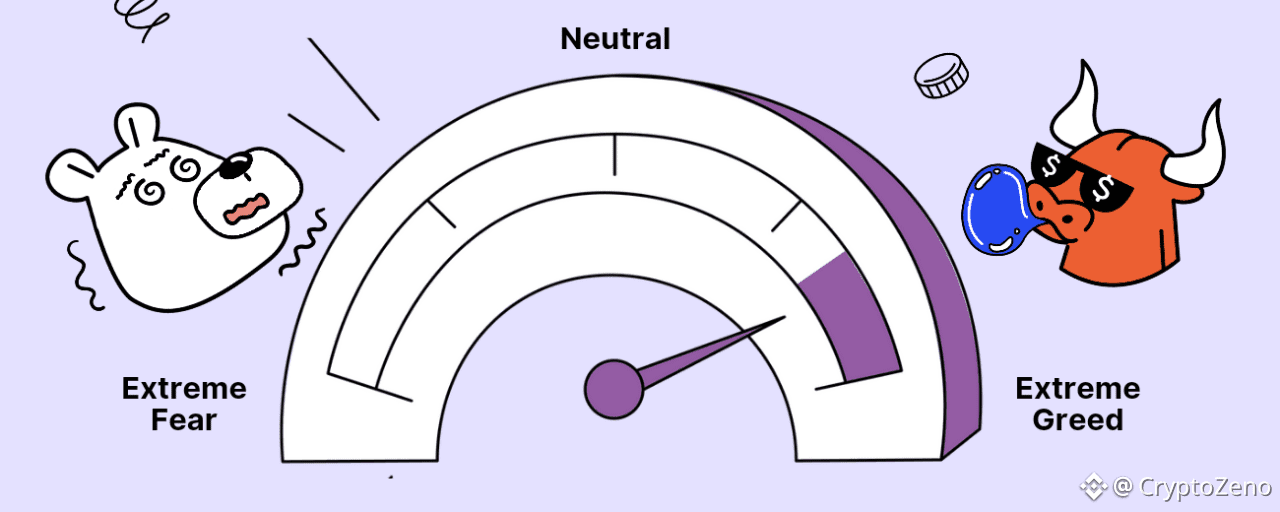
Article
The Fear and Greed Index Really Tells You About the Crypto MarketThe Fear and Greed Index Really Tells You About the Crypto Market
CryptoZenoApr 9
Greed typically leads to upward trends, while fear leads to negative trends. Human psychology is predictable because many individuals tend to react similarly in specific situations.
The Fear and Greed Index attempts to address and quantify market sentiment, making it useful and easy to understand for traders.
The Fear and Greed Index is one of the most widely used indicators to understand market sentiment. As the name suggests, this index helps you determine whether the market is currently fearful or greedy, allowing you to develop a suitable trading strategy.
The Crypto Fear and Greed Index is based on Bitcoin and other major altcoins, combines social signals and market patterns to estimate the overall sentiment of the cryptocurrency market. It's an index because it integrates multiple data sources into a single model.
Fear and Greed Index is a indicator to understand market sentiment.
This index assigns a score from 0 to 100 to cryptocurrency sentiment, ranging from extreme fear to extreme greed. Many cryptocurrency traders use this index to determine the best times to enter and exit the cryptocurrency market.
How is the Fear & Greed Index calculated?
To calculate the Fear and Greed Index, we will rely on the following 5 parameters:
Voltality: Measured by comparing the current price volatility and maximum price drop of BTC with the corresponding average values of the previous 30 and 90 days.Market Momentum/Volume: Combines the current momentum and trading volume of BTC, then compares it to the average of the previous 30 and 90 days.Social Media: This index is based on social media metrics such as likes, hashtags, what people are talking about, the number of posts, etc. Therefore, if the above indicators increase, it corresponds to a market that is gradually becoming greedy. Currently, it is only measured on Twitter.Dominance: Dominance here refers to BTC, meaning the percentage of market capitalization that BTC currently holds compared to the total cryptocurrency market capitalization, also known as BTC Dominance.Trend: Alternative.me takes Google Trend data for various Bitcoin-related search queries and processes those numbers, particularly changes in search volume as well as other suggested popular searches.
Why do Fear and Greed Index matter?
The cryptocurrency market is highly susceptible to many factors. When the market is rising, people become greedy, leading to FOMO (fear of missing out). Additionally, people often sell their assets impulsively when they see red numbers, leading to FUD (fear, uncertainty, doubt). The F&G index aims to protect you from these emotional overreactions. Traders often make two simple assumptions:
Extreme fear: This indicates that investors are overly anxious. This could be a good time to buy.Extreme greed: When investors are in a state of extreme greed, the market is ripe for a correction.
Therefore, the Fear and Greed Index assesses the current state of the Bitcoin market and converts the data into a simple measure from 0 to 100.
Why Fear and Greed Index matter?
How to use the Fear and Greed Index in Crypto
The Crypto Fear and Greed Index can be more effective for short-term research on the cryptocurrency market. Multiple Fear and Greed cycles can occur within a bull or bear market.
For trend traders, the Fear and Greed Index is a very beneficial tool when combined with technical analysis tools such as Fibonacci retracements, as well as other market indicators and oscillators.
However, this index has been shown to be inaccurate in predicting long-term market reversals or transitions from bull to bear markets and vice versa.
How to Use the Fear and Greed Index
From left to right:
Figure 1: Fear & Greed Index Chart.Figure 2: Fear & Greed Index Values: Current, Yesterday, Last Week, Last Month.Figure 3: Next Fear & Greed Index Update Time.
The Fear & Greed Index is a number ranging from 0 to 100:
0-49 represents Fear.51-100 represents Greed.50 corresponds to a neutral market.
However, if broken down further, the colors on the chart have the following meanings:
0-24: Extreme Fear (orange).25-49: Fear (yellow).50-74: Greed (light blue).75-100: Extreme Greed (green).
Fear means the market is showing negative signs, most asset values are falling, and people tend to sell everything off.
Conversely, a greedy market is one where everyone rushes to buy everything due to FOMO (fear of missing out), and asset prices are constantly rising.
How accurate is Fear and Greed Index in Crypto?
Similar to other indicators, the Fear & Greed Index has high accuracy, but it's not always right. To make trading decisions, analysts often combine it with other indicators such as chart analysis, on-chain data of BTC and ETH to see the overall situation, on-chain data of the asset being traded, etc.
How accurate is Fear and Greed index in Crypto?
Because the Fear & Greed Index only reflects the general market situation and updates very slowly, this index only provides an overview of the market, suitable for long-term traders. If you are a short-term trader, closing trades within a day or a few days, this index is not necessarily necessary.
In addition, there is no data showing what level the index will reach before a market change occurs. This means we all know that when the market is greedy, there will be a period of sharp correction.
The question is, at what level will the Fear & Greed Index reach before a correction? That's something we don't know. Therefore, the Fear & Greed Index is not used to help you predict when the market will correct.
Furthermore, in a bull or bear market, we sometimes see the indicator leaning in the opposite direction. But that doesn't mean the market has ended its trend and reversed. It could be a small correction to establish a larger, more sustainable uptrend/downtrend.
The cryptocurrency fear and greed index is a powerful tool in the trading toolkit, but it needs to be used wisely, combined with a solid trading strategy, consistent discipline, and a continuous learning attitude. By combining all of these, you can increase your chances of success in the exciting yet challenging world of cryptocurrency trading.
#CryptoZeno #StrategyBTCPurchase #WhatNextForUSIranConflict
The Fear and Greed Index Really Tells You About the Crypto Market
The Fear and Greed Index Really Tells You About the Crypto Market
CryptoZenoApr 9
Greed typically leads to upward trends, while fear leads to negative trends. Human psychology is predictable because many individuals tend to react similarly in specific situations.
The Fear and Greed Index attempts to address and quantify market sentiment, making it useful and easy to understand for traders.
The Fear and Greed Index is one of the most widely used indicators to understand market sentiment. As the name suggests, this index helps you determine whether the market is currently fearful or greedy, allowing you to develop a suitable trading strategy.
The Crypto Fear and Greed Index is based on Bitcoin and other major altcoins, combines social signals and market patterns to estimate the overall sentiment of the cryptocurrency market. It's an index because it integrates multiple data sources into a single model.
Fear and Greed Index is a indicator to understand market sentiment.
This index assigns a score from 0 to 100 to cryptocurrency sentiment, ranging from extreme fear to extreme greed. Many cryptocurrency traders use this index to determine the best times to enter and exit the cryptocurrency market.
How is the Fear & Greed Index calculated?
To calculate the Fear and Greed Index, we will rely on the following 5 parameters:
Voltality: Measured by comparing the current price volatility and maximum price drop of BTC with the corresponding average values of the previous 30 and 90 days.Market Momentum/Volume: Combines the current momentum and trading volume of BTC, then compares it to the average of the previous 30 and 90 days.Social Media: This index is based on social media metrics such as likes, hashtags, what people are talking about, the number of posts, etc. Therefore, if the above indicators increase, it corresponds to a market that is gradually becoming greedy. Currently, it is only measured on Twitter.Dominance: Dominance here refers to BTC, meaning the percentage of market capitalization that BTC currently holds compared to the total cryptocurrency market capitalization, also known as BTC Dominance.Trend: Alternative.me takes Google Trend data for various Bitcoin-related search queries and processes those numbers, particularly changes in search volume as well as other suggested popular searches.
Why do Fear and Greed Index matter?
The cryptocurrency market is highly susceptible to many factors. When the market is rising, people become greedy, leading to FOMO (fear of missing out). Additionally, people often sell their assets impulsively when they see red numbers, leading to FUD (fear, uncertainty, doubt). The F&G index aims to protect you from these emotional overreactions. Traders often make two simple assumptions:
Extreme fear: This indicates that investors are overly anxious. This could be a good time to buy.Extreme greed: When investors are in a state of extreme greed, the market is ripe for a correction.
Therefore, the Fear and Greed Index assesses the current state of the Bitcoin market and converts the data into a simple measure from 0 to 100.
Why Fear and Greed Index matter?
How to use the Fear and Greed Index in Crypto
The Crypto Fear and Greed Index can be more effective for short-term research on the cryptocurrency market. Multiple Fear and Greed cycles can occur within a bull or bear market.
For trend traders, the Fear and Greed Index is a very beneficial tool when combined with technical analysis tools such as Fibonacci retracements, as well as other market indicators and oscillators.
However, this index has been shown to be inaccurate in predicting long-term market reversals or transitions from bull to bear markets and vice versa.
How to Use the Fear and Greed Index
From left to right:
Figure 1: Fear & Greed Index Chart.Figure 2: Fear & Greed Index Values: Current, Yesterday, Last Week, Last Month.Figure 3: Next Fear & Greed Index Update Time.
The Fear & Greed Index is a number ranging from 0 to 100:
0-49 represents Fear.51-100 represents Greed.50 corresponds to a neutral market.
However, if broken down further, the colors on the chart have the following meanings:
0-24: Extreme Fear (orange).25-49: Fear (yellow).50-74: Greed (light blue).75-100: Extreme Greed (green).
Fear means the market is showing negative signs, most asset values are falling, and people tend to sell everything off.
Conversely, a greedy market is one where everyone rushes to buy everything due to FOMO (fear of missing out), and asset prices are constantly rising.
How accurate is Fear and Greed Index in Crypto?
Similar to other indicators, the Fear & Greed Index has high accuracy, but it's not always right. To make trading decisions, analysts often combine it with other indicators such as chart analysis, on-chain data of BTC and ETH to see the overall situation, on-chain data of the asset being traded, etc.
How accurate is Fear and Greed index in Crypto?
Because the Fear & Greed Index only reflects the general market situation and updates very slowly, this index only provides an overview of the market, suitable for long-term traders. If you are a short-term trader, closing trades within a day or a few days, this index is not necessarily necessary.
In addition, there is no data showing what level the index will reach before a market change occurs. This means we all know that when the market is greedy, there will be a period of sharp correction.
The question is, at what level will the Fear & Greed Index reach before a correction? That's something we don't know. Therefore, the Fear & Greed Index is not used to help you predict when the market will correct.
Furthermore, in a bull or bear market, we sometimes see the indicator leaning in the opposite direction. But that doesn't mean the market has ended its trend and reversed. It could be a small correction to establish a larger, more sustainable uptrend/downtrend.
The cryptocurrency fear and greed index is a powerful tool in the trading toolkit, but it needs to be used wisely, combined with a solid trading strategy, consistent discipline, and a continuous learning attitude. By combining all of these, you can increase your chances of success in the exciting yet challenging world of cryptocurrency trading.
#CryptoZeno #StrategyBTCPurchase #WhatNextForUSIranConflict
CryptoZenoApr 9
Greed typically leads to upward trends, while fear leads to negative trends. Human psychology is predictable because many individuals tend to react similarly in specific situations.
The Fear and Greed Index attempts to address and quantify market sentiment, making it useful and easy to understand for traders.
The Fear and Greed Index is one of the most widely used indicators to understand market sentiment. As the name suggests, this index helps you determine whether the market is currently fearful or greedy, allowing you to develop a suitable trading strategy.
The Crypto Fear and Greed Index is based on Bitcoin and other major altcoins, combines social signals and market patterns to estimate the overall sentiment of the cryptocurrency market. It's an index because it integrates multiple data sources into a single model.
Fear and Greed Index is a indicator to understand market sentiment.
This index assigns a score from 0 to 100 to cryptocurrency sentiment, ranging from extreme fear to extreme greed. Many cryptocurrency traders use this index to determine the best times to enter and exit the cryptocurrency market.
How is the Fear & Greed Index calculated?
To calculate the Fear and Greed Index, we will rely on the following 5 parameters:
Voltality: Measured by comparing the current price volatility and maximum price drop of BTC with the corresponding average values of the previous 30 and 90 days.Market Momentum/Volume: Combines the current momentum and trading volume of BTC, then compares it to the average of the previous 30 and 90 days.Social Media: This index is based on social media metrics such as likes, hashtags, what people are talking about, the number of posts, etc. Therefore, if the above indicators increase, it corresponds to a market that is gradually becoming greedy. Currently, it is only measured on Twitter.Dominance: Dominance here refers to BTC, meaning the percentage of market capitalization that BTC currently holds compared to the total cryptocurrency market capitalization, also known as BTC Dominance.Trend: Alternative.me takes Google Trend data for various Bitcoin-related search queries and processes those numbers, particularly changes in search volume as well as other suggested popular searches.
Why do Fear and Greed Index matter?
The cryptocurrency market is highly susceptible to many factors. When the market is rising, people become greedy, leading to FOMO (fear of missing out). Additionally, people often sell their assets impulsively when they see red numbers, leading to FUD (fear, uncertainty, doubt). The F&G index aims to protect you from these emotional overreactions. Traders often make two simple assumptions:
Extreme fear: This indicates that investors are overly anxious. This could be a good time to buy.Extreme greed: When investors are in a state of extreme greed, the market is ripe for a correction.
Therefore, the Fear and Greed Index assesses the current state of the Bitcoin market and converts the data into a simple measure from 0 to 100.
Why Fear and Greed Index matter?
How to use the Fear and Greed Index in Crypto
The Crypto Fear and Greed Index can be more effective for short-term research on the cryptocurrency market. Multiple Fear and Greed cycles can occur within a bull or bear market.
For trend traders, the Fear and Greed Index is a very beneficial tool when combined with technical analysis tools such as Fibonacci retracements, as well as other market indicators and oscillators.
However, this index has been shown to be inaccurate in predicting long-term market reversals or transitions from bull to bear markets and vice versa.
How to Use the Fear and Greed Index
From left to right:
Figure 1: Fear & Greed Index Chart.Figure 2: Fear & Greed Index Values: Current, Yesterday, Last Week, Last Month.Figure 3: Next Fear & Greed Index Update Time.
The Fear & Greed Index is a number ranging from 0 to 100:
0-49 represents Fear.51-100 represents Greed.50 corresponds to a neutral market.
However, if broken down further, the colors on the chart have the following meanings:
0-24: Extreme Fear (orange).25-49: Fear (yellow).50-74: Greed (light blue).75-100: Extreme Greed (green).
Fear means the market is showing negative signs, most asset values are falling, and people tend to sell everything off.
Conversely, a greedy market is one where everyone rushes to buy everything due to FOMO (fear of missing out), and asset prices are constantly rising.
How accurate is Fear and Greed Index in Crypto?
Similar to other indicators, the Fear & Greed Index has high accuracy, but it's not always right. To make trading decisions, analysts often combine it with other indicators such as chart analysis, on-chain data of BTC and ETH to see the overall situation, on-chain data of the asset being traded, etc.
How accurate is Fear and Greed index in Crypto?
Because the Fear & Greed Index only reflects the general market situation and updates very slowly, this index only provides an overview of the market, suitable for long-term traders. If you are a short-term trader, closing trades within a day or a few days, this index is not necessarily necessary.
In addition, there is no data showing what level the index will reach before a market change occurs. This means we all know that when the market is greedy, there will be a period of sharp correction.
The question is, at what level will the Fear & Greed Index reach before a correction? That's something we don't know. Therefore, the Fear & Greed Index is not used to help you predict when the market will correct.
Furthermore, in a bull or bear market, we sometimes see the indicator leaning in the opposite direction. But that doesn't mean the market has ended its trend and reversed. It could be a small correction to establish a larger, more sustainable uptrend/downtrend.
The cryptocurrency fear and greed index is a powerful tool in the trading toolkit, but it needs to be used wisely, combined with a solid trading strategy, consistent discipline, and a continuous learning attitude. By combining all of these, you can increase your chances of success in the exciting yet challenging world of cryptocurrency trading.
#CryptoZeno #StrategyBTCPurchase #WhatNextForUSIranConflict
3
261

my lovely Student please follow candlestick patterns and credit by #cryptozeno #IranRejectsUSPeacePlan
my lovely Student please follow candlestick patterns and credit by #cryptozeno #IranRejectsUSPeacePlan
CryptoZeno
·
--
Candlestick Patterns: The Secret Signals Hidden in Every Chart
Candlestick patterns are universal tools in the arsenal of any cryptocurrency trader. Understanding them, and the various historical chart patterns are what allows crypto traders to interpret and analyze the trend of the market and make pattern trading decisions. Which are hopefully profitable! The better and more experienced you are at technical analysis skews the odds in your favor of making the most from bullish and bearish trends. It’s highly suggested to combine candlestick patterns trading with things like trading based on trend lines for extra confluence.
Anyways, let’s get into the various types of crypto chart patterns that traders use and how to spot them with guides. Hopefully, by the end of this article, you’ll feel like a pro at spotting chart patterns.
Types of Trading Patterns
Before getting into the various types of trading patterns. Let’s first understand what a candlestick is. It’s just a single bar that shows the movement of a particular asset or crypto’s price over a certain period of time. It shows us the open, high, low, and close for our selected time frame. People typically make their trades based on 1,2, and 4 hour time frames, or candles, as well as daily, weekly, and monthly. However, all of the patterns gone over in this encyclopedia of chart patterns can be applied to lower time frames and candles such as the 1, 15, and 30 minute. Though, one must be careful on such low time frames, as the crypto market is very, very volatile.
Above is an example of what candlesticks look like and what they represent. Every candle has a low price, high price, and an open and close price, represented by the wicks (or legs) and “body” of a candle, respectively.
Over time, individual candlesticks form day trading patterns or reversal patterns. As seen in the image above. There are a great many candlestick patterns that indicate an opportunity within the market – some provide insight into the balance between buying and selling pressure, while others identify continuation patterns or market indecision.
With time, these separate candlesticks create different day trading patterns or reversal patterns that are used in trading chart patterns. Traders rely on analyzing these patterns to gauge support & resistance levels and to get a heads up on what’s going to happen in the market next. There are a lot of different candlestick patterns that provide traders with great opportunities.
Typically, in the market, we see the following types of trading patterns:
bullish reversal patterns,bearish reversal patterns,and candlestick continuation patterns.
Bullish candlestick patterns form at a market downturn and signal that the price of an asset is likely to reverse. Which would lead a trader to consider opening a long position and profit from an upward move. Whereas bearish candlestick patterns are seen at the end of an uptrend. Which lets traders know that the price of a crypto is at a heavy point of resistance and that price may fall due to buyer exhaustion. Both can be considered trend reversal patterns.
However, candlestick trading patterns don’t necessarily have to indicate a shift in the market’s direction. There exist what are known as continuation candlestick patterns that are considered as a confirmation that the trade will go on. The continuation patterns are also associated with periods of rest and sideways or neutral price movement in the market.
To help you quickly spot all the different types of candlestick patterns, we created this candlestick patterns cheat sheet for a quick visualization of them. Since we will cover a wide range of the most common candlestick trading patterns, having a good overview will be essential.
Candlestick Patterns Cheat Sheet
Now, let’s go through the main types of candlestick patterns to learn how to detect and read them on crypto charts.
Candlestick Patterns Explained With Examples: How to Find and Read Them on Charts
It’s not a secret that understanding candlestick patterns will make you a powerful trader capable of making an income purely by reading candlestick patterns and trading candlestick patterns and price movements.
The real beauty here is that anyone can apply this technical knowledge and use candlestick trading patterns on any time frame and combine them with any other strategy. After reading this guide with the best candlestick patterns, you’ll easily be able to start spotting and using candlestick patterns for day trading.
So let’s get to it and over some candlestick patterns explained with examples from the Good Crypto trading app. Get ready and sit back comfortably as you learn about the most reliable candlestick patterns.
So, let’s get down to business…
Hammer Candlestick
We’ll start things off with the Hammer candle. Honestly, the hammer candlestick pattern is probably the most used and taught trading pattern there is. The reason for that is that the hammer chart pattern is very easy to spot and use. Typically, bullish hammer candlesticks are found at the bottom of a market downtrend. Whereas bearish candlestick patterns are seen at the end of an uptrend.
The hammer pattern is a signal that selling pressure on an asset is weakening and that buyers are stepping in to place bids. Below is an example of a hammer candlestick pattern, which is obviously bullish.
As we can see in the example above. Sellers tried to take the price as low as possible (based on the long wick), however, they were weak and buyers swooped in, resulting in the bullish hammer candlestick above. Notice the hammer-like shape of the candle? Also note that the longer the wick of the hammer in candlestick chart, the greater the buying pressure.
An example of the Hammer Candlestick Pattern on the GoodCrypto chart.
Inverted Hammer Candlestick
There is also the inverted hammer candlestick. It’s also bullish, but its top wick is long while the bottom one is short. The inverted hammer pattern indicates that there was substantial buying pressure followed by some sell pressure. But ultimately that buyers ended up having greater control.
A trader would see the above inverted hammer candlestick pattern or preceding green hammer candlestick and likely feel quite confident in learning bullish and possibly opening a long with a sensible stop loss. Below is an example of how such a trade could be set up using the Good crypto trading app.
An example of the Inverted Hammer Candlestick Pattern on the GoodCrypto chart.
❗️Mind, as a smart trader, before setting up a position, you should also look for a few more indications of the trend reversal represented by other trading tools: trendlines, technical indicators, like Bollinger Bands, Moving Averages, or Oscillators like RSI and MACD.
Engulfing Candle
As opposed to the previous candlestick pattern, which is formed from one candle, an engulfing candle is actually a combination of two separate candlestick patterns. Traders will see two types of such patterns, either a bullish engulfing, or a bearish engulfing.
An engulfing candlestick pattern is very easy to spot on a chart. It is usually a big candlestick body with very tiny top and bottom wicks. Take a look at an example of a bullish engulfing candle pattern below:
Bullish engulfing candles are typically found at the end of trends and show that bulls have assumed control of a market. As you can see, the bullish engulfing candlestick quite literally consumes the preceding candle in terms of size.
Everything in the exact opposite is true for a bearish engulfing pattern. A red and vicious candle that consumes all of the previous bullishness and reminds traders of gravity.
A bearish engulfing candlestick as in the example above would signal to a trader that opening a short position on an asset would be wise due to waning buyer momentum.
An example of the Bearish Engulfing Candlestick Pattern on the GoodCrypto chart.
Three White Soldiers
The three white soldiers candlestick pattern is a little bit more complicated than the previous ones we covered. It requires more attention to spot and utilize in your pattering trading strategy because three white soldiers require a specific setup.
Although, at first glance, the pattern might just seem like 3 candles that go up consecutively. Context is key here. The three white soldiers candlestick pattern is made after consistent heavy selling.
Above is an example of the three white soldiers pattern that marks a shift from a downtrend to an uptrend. Note that the candles become progressively larger too, making higher highs (HH). This is a very bullish and volatile trading pattern, which makes it quite tempting for novice traders to disregard risk management, which is a grave mistake and something that you should definitely have as part of your pattern trading strategy.
Three Black Crows
A literal bearish alternative to the previous trading pattern we just covered. The three black crows candlestick pattern consists of three strong black candles known as black crows. Some of these names are quite poetic, aren’t they? This trading pattern has to form after a big push upwards by buyers. Check out this nosedive in the market:
As you’re well able to interpret by now, the above pattern is indicative of sellers seizing control from buyers. Making the three black crows pattern a good short signal. Traders need to watch for the second black crow candle to close below the preceding bullish one. The final crow is around the same size as the one before it and opens at the last bullish candlestick close.
Dark Сloud Сover
The dark cloud cover candlestick, as you can likely assume from its name, is a bearish chart pattern. It indicates changing momentum to the downside following heavy and active participation by buyers.
Both candles have to be quite large, as would be the case for candles where there is a lot of participation by traders. The bearish dark cloud cover candle opens higher than the previous bullish candle and closes lower than the midpoint of the bullish candle.
One would confirm this pattern on their crypto chart by being mindful of the candle which forms after the dark cloud cover candle. If it is red, then that acts as confirmation of the full dark cloud cover pattern and is forthcoming of further selling and a great signal to short with confidence. If it is green, then the dark cloud cover candle is not confirmed.
Hanging Man
The hanging man candlestick pattern is actually the bearish alternative to the hammer pattern covered just above. It sort of has the same shape but looks like a hanging man because of the small wick that is customary for the hanging man candle trading pattern.
As you can see in the image above, the hanging man candlestick pattern forms at the conclusion of an uptrend. The long bottom wick tells pattern day traders that there was significant selling and that buyers may lose steam for the next couple of days with a bearish continuation.
Spinning Top Candle
The spinning top is a candlestick with a very small or short body in between equal bottom and top wicks. The spinning top candle shows that there is indecision in the market and foreshadows a period of possible sideways movement and is typically present when there is indecision in the market.
For example, a spinning top after engulfing candle in a typical bullish scenario could mean that price is consolidating before a further move up or that bulls are losing control. One would need to examine the candles following to gain confluence. Whereas a spinning top candle downtrend a price floor is being built via sideways price movement before either bulls or bears step up. The spinning top candle is usually used in conjunction with other chart patterns and technical analysis methods used by pattern day traders because a lot of confirmation is required to enter a profitable trade.
Doji Candle
A doji candle is an interesting-looking cross-shaped candle and represents a time frame during which the open and close price of an asset were nearly equal, representing an equal struggle between buyers and sellers. By itself, a doji candle is a neutral candlestick pattern, but it has two major types, that being the dragonfly doji, and the gravestone doji.
Dragonfly Doji Candle
The dragonfly doji candle has no body and a very prolonged lower candle which indicates that there was aggressive selling that had to be absorbed by buyers of equal balls.
A dragonfly doji in uptrend could signal that it is coming to an end or that a new one is starting if a dragonfly doji at bottom is spotted. Traders frequently use the dragonfly doji candlestick as they would a hammer, but it is suggested to wait for a confirmation candle before entering a trade on this candle.
Gravestone Doji
Gravestone doji… A candlestick with a name that’s straight to the point. As you hopefully guessed, a gravestone doji candle in an uptrend means that the trend is dead! The candlestick has no body and resembles a nail hitting a coffin.
As you can see in the image above, the candle is a clear sign for a pattern day trader that the trend is reversing upon meeting a wall of impassable sellers. Of course, it’s never a bad idea to wait for further candles to receive confirmation that our gravestone doji is bearish. Though traders do typically take profits or enter short positions when a gravestone doji at top is spotted.
Long-legged Doji
The long-legged doji candle is composed of a long lower and upper shadow. The closing and open prices that go into forming this candle are about the same. It demonstrates that there is indecisiveness amongst market participants and occurs after a heavy advance or decline in price. Traders usually wait and see what type of price action forms following a long-legged doji candlestick. It often marks the start of a consolidation period.
An example of the Long-legged Doji on the GoodCrypto chart.
Shooting Star Candle and Other Stars
The shooting star chart pattern looks like an upside-down hammer. Therefore, the shooting star candlestick pattern essentially means that the price of an asset is about to get hammered down in a reversal by aggressive sellers.
When this trading pattern appears, it often forms a resistance level at the top of an uptrend. Despite the name, it’s quite a devastating candle. However, the next one we’re about to cover provides some bullish hope.
Morning Star Pattern
The morning star candle pattern consists of 3 candlestick and tells traders a story of changing momentum in a bleak down-trending market. The morning star candlestick reversal pattern first starts off with a candle forming by dominant sellers, then goes from neither buy or sell side being dominant, represented by the morning star candle with a near non-existent body, to buyers prevailing in outbidding sellers across two time periods. Effectively signaling that a bullish market is soon to commence. Actually, when looking at this pattern in a chart, one can see that it is a combination of the hammer, engulfing, and doji.
Evening Star Pattern
The evening star candlestick pattern is a mirror opposite of the previous trading pattern and appears at the completion of an assets uptrend and a prime time to enter shorts as buyers become exhausted. The important thing to keep in mind when spotting the evening star candlestick is that it must be tiny in comparison to the buy and sell candles that accompany it.
An example of the Evening Star Candlestick Pattern on the GoodCrypto chart.
Trade With Candlestick Patterns With Benefits of Good Crypto
Being able to spot candlestick patterns and execute them is a vital skill that anyone who refers to themself as a trader must have. Without having an understanding of the crypto chart patterns – you’ll simply be destroyed! We suggest checking out various of our other articles on trading strategies to further boost your pattern trading skills and increase your chances of success. We hope you enjoyed this educational piece!
#CryptoZeno #TrumpToVisitChinaFromMay13To15
Anyways, let’s get into the various types of crypto chart patterns that traders use and how to spot them with guides. Hopefully, by the end of this article, you’ll feel like a pro at spotting chart patterns.
Types of Trading Patterns
Before getting into the various types of trading patterns. Let’s first understand what a candlestick is. It’s just a single bar that shows the movement of a particular asset or crypto’s price over a certain period of time. It shows us the open, high, low, and close for our selected time frame. People typically make their trades based on 1,2, and 4 hour time frames, or candles, as well as daily, weekly, and monthly. However, all of the patterns gone over in this encyclopedia of chart patterns can be applied to lower time frames and candles such as the 1, 15, and 30 minute. Though, one must be careful on such low time frames, as the crypto market is very, very volatile.
Above is an example of what candlesticks look like and what they represent. Every candle has a low price, high price, and an open and close price, represented by the wicks (or legs) and “body” of a candle, respectively.
Over time, individual candlesticks form day trading patterns or reversal patterns. As seen in the image above. There are a great many candlestick patterns that indicate an opportunity within the market – some provide insight into the balance between buying and selling pressure, while others identify continuation patterns or market indecision.
With time, these separate candlesticks create different day trading patterns or reversal patterns that are used in trading chart patterns. Traders rely on analyzing these patterns to gauge support & resistance levels and to get a heads up on what’s going to happen in the market next. There are a lot of different candlestick patterns that provide traders with great opportunities.
Typically, in the market, we see the following types of trading patterns:
bullish reversal patterns,bearish reversal patterns,and candlestick continuation patterns.
Bullish candlestick patterns form at a market downturn and signal that the price of an asset is likely to reverse. Which would lead a trader to consider opening a long position and profit from an upward move. Whereas bearish candlestick patterns are seen at the end of an uptrend. Which lets traders know that the price of a crypto is at a heavy point of resistance and that price may fall due to buyer exhaustion. Both can be considered trend reversal patterns.
However, candlestick trading patterns don’t necessarily have to indicate a shift in the market’s direction. There exist what are known as continuation candlestick patterns that are considered as a confirmation that the trade will go on. The continuation patterns are also associated with periods of rest and sideways or neutral price movement in the market.
To help you quickly spot all the different types of candlestick patterns, we created this candlestick patterns cheat sheet for a quick visualization of them. Since we will cover a wide range of the most common candlestick trading patterns, having a good overview will be essential.
Candlestick Patterns Cheat Sheet
Now, let’s go through the main types of candlestick patterns to learn how to detect and read them on crypto charts.
Candlestick Patterns Explained With Examples: How to Find and Read Them on Charts
It’s not a secret that understanding candlestick patterns will make you a powerful trader capable of making an income purely by reading candlestick patterns and trading candlestick patterns and price movements.
The real beauty here is that anyone can apply this technical knowledge and use candlestick trading patterns on any time frame and combine them with any other strategy. After reading this guide with the best candlestick patterns, you’ll easily be able to start spotting and using candlestick patterns for day trading.
So let’s get to it and over some candlestick patterns explained with examples from the Good Crypto trading app. Get ready and sit back comfortably as you learn about the most reliable candlestick patterns.
So, let’s get down to business…
Hammer Candlestick
We’ll start things off with the Hammer candle. Honestly, the hammer candlestick pattern is probably the most used and taught trading pattern there is. The reason for that is that the hammer chart pattern is very easy to spot and use. Typically, bullish hammer candlesticks are found at the bottom of a market downtrend. Whereas bearish candlestick patterns are seen at the end of an uptrend.
The hammer pattern is a signal that selling pressure on an asset is weakening and that buyers are stepping in to place bids. Below is an example of a hammer candlestick pattern, which is obviously bullish.
As we can see in the example above. Sellers tried to take the price as low as possible (based on the long wick), however, they were weak and buyers swooped in, resulting in the bullish hammer candlestick above. Notice the hammer-like shape of the candle? Also note that the longer the wick of the hammer in candlestick chart, the greater the buying pressure.
An example of the Hammer Candlestick Pattern on the GoodCrypto chart.
Inverted Hammer Candlestick
There is also the inverted hammer candlestick. It’s also bullish, but its top wick is long while the bottom one is short. The inverted hammer pattern indicates that there was substantial buying pressure followed by some sell pressure. But ultimately that buyers ended up having greater control.
A trader would see the above inverted hammer candlestick pattern or preceding green hammer candlestick and likely feel quite confident in learning bullish and possibly opening a long with a sensible stop loss. Below is an example of how such a trade could be set up using the Good crypto trading app.
An example of the Inverted Hammer Candlestick Pattern on the GoodCrypto chart.
❗️Mind, as a smart trader, before setting up a position, you should also look for a few more indications of the trend reversal represented by other trading tools: trendlines, technical indicators, like Bollinger Bands, Moving Averages, or Oscillators like RSI and MACD.
Engulfing Candle
As opposed to the previous candlestick pattern, which is formed from one candle, an engulfing candle is actually a combination of two separate candlestick patterns. Traders will see two types of such patterns, either a bullish engulfing, or a bearish engulfing.
An engulfing candlestick pattern is very easy to spot on a chart. It is usually a big candlestick body with very tiny top and bottom wicks. Take a look at an example of a bullish engulfing candle pattern below:
Bullish engulfing candles are typically found at the end of trends and show that bulls have assumed control of a market. As you can see, the bullish engulfing candlestick quite literally consumes the preceding candle in terms of size.
Everything in the exact opposite is true for a bearish engulfing pattern. A red and vicious candle that consumes all of the previous bullishness and reminds traders of gravity.
A bearish engulfing candlestick as in the example above would signal to a trader that opening a short position on an asset would be wise due to waning buyer momentum.
An example of the Bearish Engulfing Candlestick Pattern on the GoodCrypto chart.
Three White Soldiers
The three white soldiers candlestick pattern is a little bit more complicated than the previous ones we covered. It requires more attention to spot and utilize in your pattering trading strategy because three white soldiers require a specific setup.
Although, at first glance, the pattern might just seem like 3 candles that go up consecutively. Context is key here. The three white soldiers candlestick pattern is made after consistent heavy selling.
Above is an example of the three white soldiers pattern that marks a shift from a downtrend to an uptrend. Note that the candles become progressively larger too, making higher highs (HH). This is a very bullish and volatile trading pattern, which makes it quite tempting for novice traders to disregard risk management, which is a grave mistake and something that you should definitely have as part of your pattern trading strategy.
Three Black Crows
A literal bearish alternative to the previous trading pattern we just covered. The three black crows candlestick pattern consists of three strong black candles known as black crows. Some of these names are quite poetic, aren’t they? This trading pattern has to form after a big push upwards by buyers. Check out this nosedive in the market:
As you’re well able to interpret by now, the above pattern is indicative of sellers seizing control from buyers. Making the three black crows pattern a good short signal. Traders need to watch for the second black crow candle to close below the preceding bullish one. The final crow is around the same size as the one before it and opens at the last bullish candlestick close.
Dark Сloud Сover
The dark cloud cover candlestick, as you can likely assume from its name, is a bearish chart pattern. It indicates changing momentum to the downside following heavy and active participation by buyers.
Both candles have to be quite large, as would be the case for candles where there is a lot of participation by traders. The bearish dark cloud cover candle opens higher than the previous bullish candle and closes lower than the midpoint of the bullish candle.
One would confirm this pattern on their crypto chart by being mindful of the candle which forms after the dark cloud cover candle. If it is red, then that acts as confirmation of the full dark cloud cover pattern and is forthcoming of further selling and a great signal to short with confidence. If it is green, then the dark cloud cover candle is not confirmed.
Hanging Man
The hanging man candlestick pattern is actually the bearish alternative to the hammer pattern covered just above. It sort of has the same shape but looks like a hanging man because of the small wick that is customary for the hanging man candle trading pattern.
As you can see in the image above, the hanging man candlestick pattern forms at the conclusion of an uptrend. The long bottom wick tells pattern day traders that there was significant selling and that buyers may lose steam for the next couple of days with a bearish continuation.
Spinning Top Candle
The spinning top is a candlestick with a very small or short body in between equal bottom and top wicks. The spinning top candle shows that there is indecision in the market and foreshadows a period of possible sideways movement and is typically present when there is indecision in the market.
For example, a spinning top after engulfing candle in a typical bullish scenario could mean that price is consolidating before a further move up or that bulls are losing control. One would need to examine the candles following to gain confluence. Whereas a spinning top candle downtrend a price floor is being built via sideways price movement before either bulls or bears step up. The spinning top candle is usually used in conjunction with other chart patterns and technical analysis methods used by pattern day traders because a lot of confirmation is required to enter a profitable trade.
Doji Candle
A doji candle is an interesting-looking cross-shaped candle and represents a time frame during which the open and close price of an asset were nearly equal, representing an equal struggle between buyers and sellers. By itself, a doji candle is a neutral candlestick pattern, but it has two major types, that being the dragonfly doji, and the gravestone doji.
Dragonfly Doji Candle
The dragonfly doji candle has no body and a very prolonged lower candle which indicates that there was aggressive selling that had to be absorbed by buyers of equal balls.
A dragonfly doji in uptrend could signal that it is coming to an end or that a new one is starting if a dragonfly doji at bottom is spotted. Traders frequently use the dragonfly doji candlestick as they would a hammer, but it is suggested to wait for a confirmation candle before entering a trade on this candle.
Gravestone Doji
Gravestone doji… A candlestick with a name that’s straight to the point. As you hopefully guessed, a gravestone doji candle in an uptrend means that the trend is dead! The candlestick has no body and resembles a nail hitting a coffin.
As you can see in the image above, the candle is a clear sign for a pattern day trader that the trend is reversing upon meeting a wall of impassable sellers. Of course, it’s never a bad idea to wait for further candles to receive confirmation that our gravestone doji is bearish. Though traders do typically take profits or enter short positions when a gravestone doji at top is spotted.
Long-legged Doji
The long-legged doji candle is composed of a long lower and upper shadow. The closing and open prices that go into forming this candle are about the same. It demonstrates that there is indecisiveness amongst market participants and occurs after a heavy advance or decline in price. Traders usually wait and see what type of price action forms following a long-legged doji candlestick. It often marks the start of a consolidation period.
An example of the Long-legged Doji on the GoodCrypto chart.
Shooting Star Candle and Other Stars
The shooting star chart pattern looks like an upside-down hammer. Therefore, the shooting star candlestick pattern essentially means that the price of an asset is about to get hammered down in a reversal by aggressive sellers.
When this trading pattern appears, it often forms a resistance level at the top of an uptrend. Despite the name, it’s quite a devastating candle. However, the next one we’re about to cover provides some bullish hope.
Morning Star Pattern
The morning star candle pattern consists of 3 candlestick and tells traders a story of changing momentum in a bleak down-trending market. The morning star candlestick reversal pattern first starts off with a candle forming by dominant sellers, then goes from neither buy or sell side being dominant, represented by the morning star candle with a near non-existent body, to buyers prevailing in outbidding sellers across two time periods. Effectively signaling that a bullish market is soon to commence. Actually, when looking at this pattern in a chart, one can see that it is a combination of the hammer, engulfing, and doji.
Evening Star Pattern
The evening star candlestick pattern is a mirror opposite of the previous trading pattern and appears at the completion of an assets uptrend and a prime time to enter shorts as buyers become exhausted. The important thing to keep in mind when spotting the evening star candlestick is that it must be tiny in comparison to the buy and sell candles that accompany it.
An example of the Evening Star Candlestick Pattern on the GoodCrypto chart.
Trade With Candlestick Patterns With Benefits of Good Crypto
Being able to spot candlestick patterns and execute them is a vital skill that anyone who refers to themself as a trader must have. Without having an understanding of the crypto chart patterns – you’ll simply be destroyed! We suggest checking out various of our other articles on trading strategies to further boost your pattern trading skills and increase your chances of success. We hope you enjoyed this educational piece!
#CryptoZeno #TrumpToVisitChinaFromMay13To15
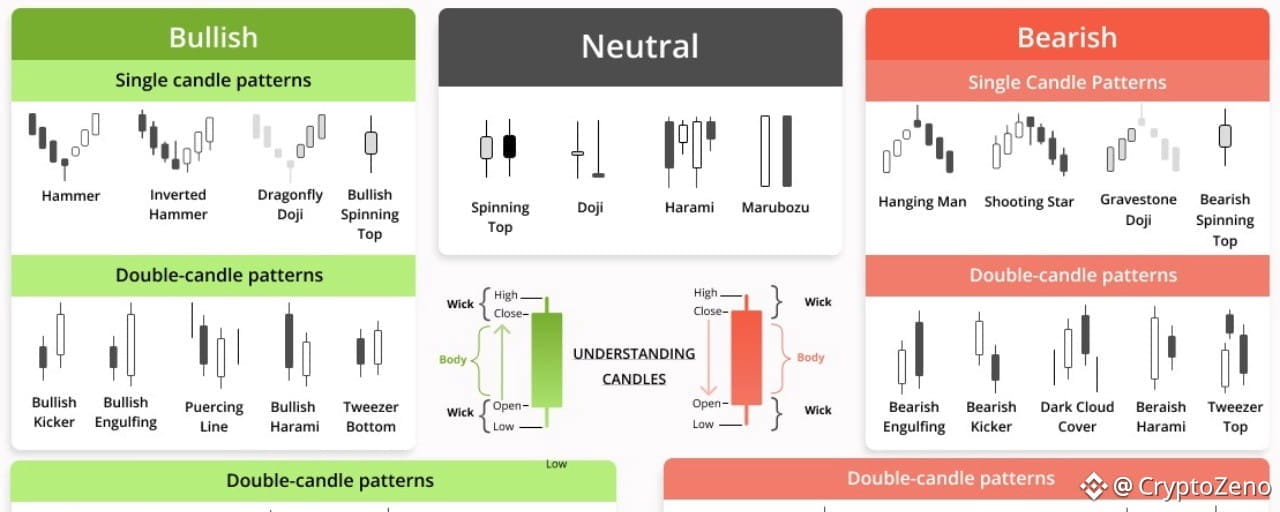
24
·
--

Article
I Lost $136,000 in a Single Hack - It Forced Me to Build a System That Can’t Be Broken Twice.In crypto, losses do not come with warnings. There is no fraud department, no reversal button, no customer support that can restore what is gone. When I lost $136,000 in a single exploit, it was not because I was careless. It was because I underestimated how sophisticated the threat landscape had become.
That loss forced me to redesign everything. What emerged was not just better storage, but a layered security architecture built around one principle: assume compromise is always possible.
Here is the system.
1. Understand the New Threat Model
Crypto attacks in 2025 are no longer simple phishing emails. AI-generated scams, malicious smart contracts, wallet drainers embedded in fake social posts, and cloned decentralized applications are everywhere. If you interact on-chain, you are a potential target. Security begins with paranoia, not convenience.
2. Treat Your Seed Phrase as Absolute Authority
Your seed phrase is your wallet. Whoever controls it controls everything. It should never be photographed, typed into cloud storage, saved in password managers, or stored digitally in any form. The only acceptable formats are physical, preferably metal backups resistant to fire and water. Multiple copies stored in separate secure locations reduce single-point failure risk.
3. Separate Storage by Function
The biggest mistake I made was using one wallet for everything. Now the structure is strict. A cold wallet stores long-term holdings and never connects to risky applications. A hot wallet handles routine transactions. A burner wallet interacts with experimental dApps, mints, and unknown contracts. Exposure is compartmentalized. If the burner is compromised, the core remains untouched. This rule alone prevented another five-figure loss later.
4. Hardware Is Mandatory, Not Optional
Browser wallets alone are insufficient for meaningful capital. Hardware wallets such as Ledger, Trezor, Keystone, or air-gapped devices dramatically reduce remote attack surfaces. Cold storage is not about convenience. It is about eliminating entire categories of risk.
5. Assume Every Link Is Malicious
Fake websites can perfectly replicate legitimate platforms. Search engine ads and social media links are frequently weaponized. Access important platforms through bookmarked URLs only. Verify domains carefully before signing any transaction.
6. Control Smart Contract Permissions
Every token approval grants spending rights. Many users forget that these permissions persist indefinitely. Regularly auditing and revoking unused approvals reduces exposure dramatically. Security is not a one-time setup. It is maintenance.
7. Strengthen Account-Level Protection
Text message two-factor authentication is vulnerable to SIM swap attacks. Authentication apps or hardware security keys provide stronger protection. Every exchange account, email, and connected service must meet the same standard.
8. Remove Counterparty Dependency
Funds left on exchanges are not under your control. Platform freezes, insolvency, or breaches can block access instantly. Self-custody is not ideology. It is risk management.
9. Build Redundancy and Recovery Plans
Backups must survive theft, fire, and natural disasters. The three-two-one principle applies well: multiple backups, stored in different physical locations, with at least one offsite. Additionally, plan inheritance structures so assets are accessible to trusted parties if something happens to you.
10. Conduct Routine Security Audits
Once a month, review wallet history, revoke unnecessary permissions, verify backup integrity, and reassess exposure. Complacency is the silent vulnerability that eventually costs the most.
The hardest lesson I learned is that in crypto, one mistake is enough. Years of caution can be erased by a single signature on a malicious contract.
There is no safety net. No recovery desk. No forgiveness from the blockchain.
Security is not a product you buy. It is a system you design and a mindset you maintain.
In crypto, you are not just the investor. You are the bank, the vault, and the security team.
#CryptoZeno #ScamAware #TrumpUnveilsPlanToEscortHormuzShips
I Lost $136,000 in a Single Hack - It Forced Me to Build a System That Can’t Be Broken Twice.
In crypto, losses do not come with warnings. There is no fraud department, no reversal button, no customer support that can restore what is gone. When I lost $136,000 in a single exploit, it was not because I was careless. It was because I underestimated how sophisticated the threat landscape had become.
That loss forced me to redesign everything. What emerged was not just better storage, but a layered security architecture built around one principle: assume compromise is always possible.
Here is the system.
1. Understand the New Threat Model
Crypto attacks in 2025 are no longer simple phishing emails. AI-generated scams, malicious smart contracts, wallet drainers embedded in fake social posts, and cloned decentralized applications are everywhere. If you interact on-chain, you are a potential target. Security begins with paranoia, not convenience.
2. Treat Your Seed Phrase as Absolute Authority
Your seed phrase is your wallet. Whoever controls it controls everything. It should never be photographed, typed into cloud storage, saved in password managers, or stored digitally in any form. The only acceptable formats are physical, preferably metal backups resistant to fire and water. Multiple copies stored in separate secure locations reduce single-point failure risk.
3. Separate Storage by Function
The biggest mistake I made was using one wallet for everything. Now the structure is strict. A cold wallet stores long-term holdings and never connects to risky applications. A hot wallet handles routine transactions. A burner wallet interacts with experimental dApps, mints, and unknown contracts. Exposure is compartmentalized. If the burner is compromised, the core remains untouched. This rule alone prevented another five-figure loss later.
4. Hardware Is Mandatory, Not Optional
Browser wallets alone are insufficient for meaningful capital. Hardware wallets such as Ledger, Trezor, Keystone, or air-gapped devices dramatically reduce remote attack surfaces. Cold storage is not about convenience. It is about eliminating entire categories of risk.
5. Assume Every Link Is Malicious
Fake websites can perfectly replicate legitimate platforms. Search engine ads and social media links are frequently weaponized. Access important platforms through bookmarked URLs only. Verify domains carefully before signing any transaction.
6. Control Smart Contract Permissions
Every token approval grants spending rights. Many users forget that these permissions persist indefinitely. Regularly auditing and revoking unused approvals reduces exposure dramatically. Security is not a one-time setup. It is maintenance.
7. Strengthen Account-Level Protection
Text message two-factor authentication is vulnerable to SIM swap attacks. Authentication apps or hardware security keys provide stronger protection. Every exchange account, email, and connected service must meet the same standard.
8. Remove Counterparty Dependency
Funds left on exchanges are not under your control. Platform freezes, insolvency, or breaches can block access instantly. Self-custody is not ideology. It is risk management.
9. Build Redundancy and Recovery Plans
Backups must survive theft, fire, and natural disasters. The three-two-one principle applies well: multiple backups, stored in different physical locations, with at least one offsite. Additionally, plan inheritance structures so assets are accessible to trusted parties if something happens to you.
10. Conduct Routine Security Audits
Once a month, review wallet history, revoke unnecessary permissions, verify backup integrity, and reassess exposure. Complacency is the silent vulnerability that eventually costs the most.
The hardest lesson I learned is that in crypto, one mistake is enough. Years of caution can be erased by a single signature on a malicious contract.
There is no safety net. No recovery desk. No forgiveness from the blockchain.
Security is not a product you buy. It is a system you design and a mindset you maintain.
In crypto, you are not just the investor. You are the bank, the vault, and the security team.
#CryptoZeno #ScamAware #TrumpUnveilsPlanToEscortHormuzShips
That loss forced me to redesign everything. What emerged was not just better storage, but a layered security architecture built around one principle: assume compromise is always possible.
Here is the system.
1. Understand the New Threat Model
Crypto attacks in 2025 are no longer simple phishing emails. AI-generated scams, malicious smart contracts, wallet drainers embedded in fake social posts, and cloned decentralized applications are everywhere. If you interact on-chain, you are a potential target. Security begins with paranoia, not convenience.
2. Treat Your Seed Phrase as Absolute Authority
Your seed phrase is your wallet. Whoever controls it controls everything. It should never be photographed, typed into cloud storage, saved in password managers, or stored digitally in any form. The only acceptable formats are physical, preferably metal backups resistant to fire and water. Multiple copies stored in separate secure locations reduce single-point failure risk.
3. Separate Storage by Function
The biggest mistake I made was using one wallet for everything. Now the structure is strict. A cold wallet stores long-term holdings and never connects to risky applications. A hot wallet handles routine transactions. A burner wallet interacts with experimental dApps, mints, and unknown contracts. Exposure is compartmentalized. If the burner is compromised, the core remains untouched. This rule alone prevented another five-figure loss later.
4. Hardware Is Mandatory, Not Optional
Browser wallets alone are insufficient for meaningful capital. Hardware wallets such as Ledger, Trezor, Keystone, or air-gapped devices dramatically reduce remote attack surfaces. Cold storage is not about convenience. It is about eliminating entire categories of risk.
5. Assume Every Link Is Malicious
Fake websites can perfectly replicate legitimate platforms. Search engine ads and social media links are frequently weaponized. Access important platforms through bookmarked URLs only. Verify domains carefully before signing any transaction.
6. Control Smart Contract Permissions
Every token approval grants spending rights. Many users forget that these permissions persist indefinitely. Regularly auditing and revoking unused approvals reduces exposure dramatically. Security is not a one-time setup. It is maintenance.
7. Strengthen Account-Level Protection
Text message two-factor authentication is vulnerable to SIM swap attacks. Authentication apps or hardware security keys provide stronger protection. Every exchange account, email, and connected service must meet the same standard.
8. Remove Counterparty Dependency
Funds left on exchanges are not under your control. Platform freezes, insolvency, or breaches can block access instantly. Self-custody is not ideology. It is risk management.
9. Build Redundancy and Recovery Plans
Backups must survive theft, fire, and natural disasters. The three-two-one principle applies well: multiple backups, stored in different physical locations, with at least one offsite. Additionally, plan inheritance structures so assets are accessible to trusted parties if something happens to you.
10. Conduct Routine Security Audits
Once a month, review wallet history, revoke unnecessary permissions, verify backup integrity, and reassess exposure. Complacency is the silent vulnerability that eventually costs the most.
The hardest lesson I learned is that in crypto, one mistake is enough. Years of caution can be erased by a single signature on a malicious contract.
There is no safety net. No recovery desk. No forgiveness from the blockchain.
Security is not a product you buy. It is a system you design and a mindset you maintain.
In crypto, you are not just the investor. You are the bank, the vault, and the security team.
#CryptoZeno #ScamAware #TrumpUnveilsPlanToEscortHormuzShips
4
365
·
--

Article
My Trading SystemMy job everyday is to come to the table, look around and decide where could certain hands move price or force itself into the books in order to move price.
At least on the lower time frames I do this through tools like open interest, funding rates, live liquidations, delta, plus some intuition from repeatedly seeing the same patterns of liquidity repeated after years of watching the same market. These are the tools which give me the ability across a fragmented BTC market to identify where people are positioning, which side they are on, and which moves could force their hand.
I like to frame my thinking around a single quesiton before getting into a position:
Has the market priced this in yet?
If it hasn't been priced in then there's edge in what i'm trying to execute from. If I see the market has priced it in already then the edge has diminished and the trade is no longer there.
A good example of this is when looking for trapped traders, specifically looking at whether open interest has decreased or not to spot whether those "trapped positions" have forced their position back into the market.
The end goal is to position myself into the market early enough to exploit something Ive seen which I believe the market hasn't priced in yet.
Another great example of this, is through understanding liquidity in particular how thin books can allow for exaggerated price movements. If you pair that alongside trapped positioning you will very often get a very nice mean reversion setup.
A common misconception is that "thin books" can only be identified in real time and through looking at the dom. This is not true. Using volume candles or looking at how far price moved in relation to how much volume pushed it can help answer this question too. Alongside identifying surges in open interest to help identify trapped positions.
It's about finding your thesis for why you should get paid from the trade you want to take, then going to the technical board and figuring out which tools will help identify this in real time.
Don't pick random tools and use them because they look fancy, think about where your edge comes from (at route level) then decide which tools allow you to spot that mispriced event faster and in a more reliable manner than anyone else could.
A fast move into a predictable stop/tp zone that happens unusually fast relative to local regime is one thing I commonly look for. These moves are often engineered, meaning someone/group of people have forced price to a certain local level for liquidity purposes.
> Force price up
> Stops/liquidations triggered
> Limit sell orders filled
> No real conviction
> Price reverses
This requires some level of intuition to reliably identify, but in essence upon a break of a level I want to see excessive buying in the form of aggressive stops being hit or liquidations being forced into the book. Both offer up opportunity for opposing side limits to be filled, and if the move was manufactured or deliberately pushed up in this manner, theres no real conviction behind it, allows for a easy reversal.
It all comes down the fact that if I know why i'm looking for something at a certain location, that can be transferred over much easier than just punting random levels without reasoning.
Think about who you are trading against and how you can profit off that info before it is priced in, you are in the research business.
#CryptoZeno #SpaceXEyes2TIPO #BinanceUSimpleEarnFlexibleCampaign
My Trading System
My job everyday is to come to the table, look around and decide where could certain hands move price or force itself into the books in order to move price.
At least on the lower time frames I do this through tools like open interest, funding rates, live liquidations, delta, plus some intuition from repeatedly seeing the same patterns of liquidity repeated after years of watching the same market. These are the tools which give me the ability across a fragmented BTC market to identify where people are positioning, which side they are on, and which moves could force their hand.
I like to frame my thinking around a single quesiton before getting into a position:
Has the market priced this in yet?
If it hasn't been priced in then there's edge in what i'm trying to execute from. If I see the market has priced it in already then the edge has diminished and the trade is no longer there.
A good example of this is when looking for trapped traders, specifically looking at whether open interest has decreased or not to spot whether those "trapped positions" have forced their position back into the market.
The end goal is to position myself into the market early enough to exploit something Ive seen which I believe the market hasn't priced in yet.
Another great example of this, is through understanding liquidity in particular how thin books can allow for exaggerated price movements. If you pair that alongside trapped positioning you will very often get a very nice mean reversion setup.
A common misconception is that "thin books" can only be identified in real time and through looking at the dom. This is not true. Using volume candles or looking at how far price moved in relation to how much volume pushed it can help answer this question too. Alongside identifying surges in open interest to help identify trapped positions.
It's about finding your thesis for why you should get paid from the trade you want to take, then going to the technical board and figuring out which tools will help identify this in real time.
Don't pick random tools and use them because they look fancy, think about where your edge comes from (at route level) then decide which tools allow you to spot that mispriced event faster and in a more reliable manner than anyone else could.
A fast move into a predictable stop/tp zone that happens unusually fast relative to local regime is one thing I commonly look for. These moves are often engineered, meaning someone/group of people have forced price to a certain local level for liquidity purposes.
> Force price up
> Stops/liquidations triggered
> Limit sell orders filled
> No real conviction
> Price reverses
This requires some level of intuition to reliably identify, but in essence upon a break of a level I want to see excessive buying in the form of aggressive stops being hit or liquidations being forced into the book. Both offer up opportunity for opposing side limits to be filled, and if the move was manufactured or deliberately pushed up in this manner, theres no real conviction behind it, allows for a easy reversal.
It all comes down the fact that if I know why i'm looking for something at a certain location, that can be transferred over much easier than just punting random levels without reasoning.
Think about who you are trading against and how you can profit off that info before it is priced in, you are in the research business.
#CryptoZeno #SpaceXEyes2TIPO #BinanceUSimpleEarnFlexibleCampaign
At least on the lower time frames I do this through tools like open interest, funding rates, live liquidations, delta, plus some intuition from repeatedly seeing the same patterns of liquidity repeated after years of watching the same market. These are the tools which give me the ability across a fragmented BTC market to identify where people are positioning, which side they are on, and which moves could force their hand.
I like to frame my thinking around a single quesiton before getting into a position:
Has the market priced this in yet?
If it hasn't been priced in then there's edge in what i'm trying to execute from. If I see the market has priced it in already then the edge has diminished and the trade is no longer there.
A good example of this is when looking for trapped traders, specifically looking at whether open interest has decreased or not to spot whether those "trapped positions" have forced their position back into the market.
The end goal is to position myself into the market early enough to exploit something Ive seen which I believe the market hasn't priced in yet.
Another great example of this, is through understanding liquidity in particular how thin books can allow for exaggerated price movements. If you pair that alongside trapped positioning you will very often get a very nice mean reversion setup.
A common misconception is that "thin books" can only be identified in real time and through looking at the dom. This is not true. Using volume candles or looking at how far price moved in relation to how much volume pushed it can help answer this question too. Alongside identifying surges in open interest to help identify trapped positions.
It's about finding your thesis for why you should get paid from the trade you want to take, then going to the technical board and figuring out which tools will help identify this in real time.
Don't pick random tools and use them because they look fancy, think about where your edge comes from (at route level) then decide which tools allow you to spot that mispriced event faster and in a more reliable manner than anyone else could.
A fast move into a predictable stop/tp zone that happens unusually fast relative to local regime is one thing I commonly look for. These moves are often engineered, meaning someone/group of people have forced price to a certain local level for liquidity purposes.
> Force price up
> Stops/liquidations triggered
> Limit sell orders filled
> No real conviction
> Price reverses
This requires some level of intuition to reliably identify, but in essence upon a break of a level I want to see excessive buying in the form of aggressive stops being hit or liquidations being forced into the book. Both offer up opportunity for opposing side limits to be filled, and if the move was manufactured or deliberately pushed up in this manner, theres no real conviction behind it, allows for a easy reversal.
It all comes down the fact that if I know why i'm looking for something at a certain location, that can be transferred over much easier than just punting random levels without reasoning.
Think about who you are trading against and how you can profit off that info before it is priced in, you are in the research business.
#CryptoZeno #SpaceXEyes2TIPO #BinanceUSimpleEarnFlexibleCampaign
4
697
·
--
Verified
Article
A 17 year old built crypto’s first margin exchange in 4 days, lost $11 BILLION worth of Bitcoin andHis name was Zhou Tong
In 2010 he was a 16 year old Chinese teenager in Singapore who bought his first Bitcoin for $10
By 2011 he had taught himself to code and decided every existing exchange sucked
So he built his own in FOUR DAYS
He called it Bitcoinica. It wasn’t just another exchange at the time… It was the first crypto margin trading platform in history
Users could bet up to 50 BTC instantly on the price of Bitcoin going up or down
Back then long, short or leverage never existed in crypto until this kid built it
The platform exploded and within months Bitcoinica was doing $40 MILLION per month in volume, second only to Mt. Gox
Zhou personally cleared 2,000 BTC in his first two weeks. Worth $215 MILLION today
Then he had to take school exams
Running the second largest crypto exchange in the world didn’t fit with finals. So he sold the platform to a company called Wendon Group in late 2011
Wendon went all in. They brought in legendary developer Amir Taaki for security. They spent $1 MILLION buying the domain Bitcoin com to give it credibility
They got hacked 4 months later
In March 2012 the hot wallet was drained of 43,554 BTC. The hackers reset passwords on the exchange’s hosting provider Linode and walked in
No multisig existed yet. If you had the password, you had the keys
Two months later they got hit again for 18,000 BTC
In July they got hit a THIRD time for another 40,000 BTC plus $40,000 in cash
Total: 101,554 BTC gone. Over $11 BILLION at today’s prices evaporated from the second largest crypto exchange in the world in a single year
Roger Ver alone lost 24,000 BTC
Then it got weirder
On chain investigators tracked the stolen funds moving through Mt. Gox accounts
They observed coordination between Bitcoinica wallets and Mt. Gox mixing the trail
80 BTC was sent to a wallet belonging to Theymos Michael Marquardt, moderator of Bitcointalk the most influential forum in crypto
The “recovery effort” funds were moving through the same hands that controlled crypto’s main information venues
Theymos was later subpoenaed during the Silk Road and Mt. Gox investigations. The full picture was never resolved
Zhou Tong’s last public move was buying ONE Casascius coin
Casascius coins were physical gold coins minted in 2011, each containing a real Bitcoin private key embedded under a tamper proof hologram
Zhou bought one of THREE remaining 1,000 BTC ultra rare versions for 1,000 BTC
That single coin is worth over $100 MILLION today
Then he disappeared
For years the community speculated whether he was complicit, whether his partners stole the funds, whether he knew the whole time
He hinted at “dishonest partners and employees” in his final Bitcointalk post and never elaborated
All from a kid who couldn’t keep running it because he had finals
“Zhao Tonged” became slang in crypto for getting wiped out by an exchange you trusted
A teenager in Singapore built the future of crypto trading in 4 days, lost the equivalent of a small country’s GDP, walked away with the rarest single item in Bitcoin history, and was never heard from again
The first margin exchange. The first mega hack. The first OG to vanish without a trace
All from a kid who couldn’t keep running it because he had finals
#CryptoZeno #ETHStakingATH39.2M #BitcoinFallsTo13thLargestAsset
A 17 year old built crypto’s first margin exchange in 4 days, lost $11 BILLION worth of Bitcoin and
His name was Zhou Tong
In 2010 he was a 16 year old Chinese teenager in Singapore who bought his first Bitcoin for $10
By 2011 he had taught himself to code and decided every existing exchange sucked
So he built his own in FOUR DAYS
He called it Bitcoinica. It wasn’t just another exchange at the time… It was the first crypto margin trading platform in history
Users could bet up to 50 BTC instantly on the price of Bitcoin going up or down
Back then long, short or leverage never existed in crypto until this kid built it
The platform exploded and within months Bitcoinica was doing $40 MILLION per month in volume, second only to Mt. Gox
Zhou personally cleared 2,000 BTC in his first two weeks. Worth $215 MILLION today
Then he had to take school exams
Running the second largest crypto exchange in the world didn’t fit with finals. So he sold the platform to a company called Wendon Group in late 2011
Wendon went all in. They brought in legendary developer Amir Taaki for security. They spent $1 MILLION buying the domain Bitcoin com to give it credibility
They got hacked 4 months later
In March 2012 the hot wallet was drained of 43,554 BTC. The hackers reset passwords on the exchange’s hosting provider Linode and walked in
No multisig existed yet. If you had the password, you had the keys
Two months later they got hit again for 18,000 BTC
In July they got hit a THIRD time for another 40,000 BTC plus $40,000 in cash
Total: 101,554 BTC gone. Over $11 BILLION at today’s prices evaporated from the second largest crypto exchange in the world in a single year
Roger Ver alone lost 24,000 BTC
Then it got weirder
On chain investigators tracked the stolen funds moving through Mt. Gox accounts
They observed coordination between Bitcoinica wallets and Mt. Gox mixing the trail
80 BTC was sent to a wallet belonging to Theymos Michael Marquardt, moderator of Bitcointalk the most influential forum in crypto
The “recovery effort” funds were moving through the same hands that controlled crypto’s main information venues
Theymos was later subpoenaed during the Silk Road and Mt. Gox investigations. The full picture was never resolved
Zhou Tong’s last public move was buying ONE Casascius coin
Casascius coins were physical gold coins minted in 2011, each containing a real Bitcoin private key embedded under a tamper proof hologram
Zhou bought one of THREE remaining 1,000 BTC ultra rare versions for 1,000 BTC
That single coin is worth over $100 MILLION today
Then he disappeared
For years the community speculated whether he was complicit, whether his partners stole the funds, whether he knew the whole time
He hinted at “dishonest partners and employees” in his final Bitcointalk post and never elaborated
All from a kid who couldn’t keep running it because he had finals
“Zhao Tonged” became slang in crypto for getting wiped out by an exchange you trusted
A teenager in Singapore built the future of crypto trading in 4 days, lost the equivalent of a small country’s GDP, walked away with the rarest single item in Bitcoin history, and was never heard from again
The first margin exchange. The first mega hack. The first OG to vanish without a trace
All from a kid who couldn’t keep running it because he had finals
#CryptoZeno #ETHStakingATH39.2M #BitcoinFallsTo13thLargestAsset
In 2010 he was a 16 year old Chinese teenager in Singapore who bought his first Bitcoin for $10
By 2011 he had taught himself to code and decided every existing exchange sucked
So he built his own in FOUR DAYS
He called it Bitcoinica. It wasn’t just another exchange at the time… It was the first crypto margin trading platform in history
Users could bet up to 50 BTC instantly on the price of Bitcoin going up or down
Back then long, short or leverage never existed in crypto until this kid built it
The platform exploded and within months Bitcoinica was doing $40 MILLION per month in volume, second only to Mt. Gox
Zhou personally cleared 2,000 BTC in his first two weeks. Worth $215 MILLION today
Then he had to take school exams
Running the second largest crypto exchange in the world didn’t fit with finals. So he sold the platform to a company called Wendon Group in late 2011
Wendon went all in. They brought in legendary developer Amir Taaki for security. They spent $1 MILLION buying the domain Bitcoin com to give it credibility
They got hacked 4 months later
In March 2012 the hot wallet was drained of 43,554 BTC. The hackers reset passwords on the exchange’s hosting provider Linode and walked in
No multisig existed yet. If you had the password, you had the keys
Two months later they got hit again for 18,000 BTC
In July they got hit a THIRD time for another 40,000 BTC plus $40,000 in cash
Total: 101,554 BTC gone. Over $11 BILLION at today’s prices evaporated from the second largest crypto exchange in the world in a single year
Roger Ver alone lost 24,000 BTC
Then it got weirder
On chain investigators tracked the stolen funds moving through Mt. Gox accounts
They observed coordination between Bitcoinica wallets and Mt. Gox mixing the trail
80 BTC was sent to a wallet belonging to Theymos Michael Marquardt, moderator of Bitcointalk the most influential forum in crypto
The “recovery effort” funds were moving through the same hands that controlled crypto’s main information venues
Theymos was later subpoenaed during the Silk Road and Mt. Gox investigations. The full picture was never resolved
Zhou Tong’s last public move was buying ONE Casascius coin
Casascius coins were physical gold coins minted in 2011, each containing a real Bitcoin private key embedded under a tamper proof hologram
Zhou bought one of THREE remaining 1,000 BTC ultra rare versions for 1,000 BTC
That single coin is worth over $100 MILLION today
Then he disappeared
For years the community speculated whether he was complicit, whether his partners stole the funds, whether he knew the whole time
He hinted at “dishonest partners and employees” in his final Bitcointalk post and never elaborated
All from a kid who couldn’t keep running it because he had finals
“Zhao Tonged” became slang in crypto for getting wiped out by an exchange you trusted
A teenager in Singapore built the future of crypto trading in 4 days, lost the equivalent of a small country’s GDP, walked away with the rarest single item in Bitcoin history, and was never heard from again
The first margin exchange. The first mega hack. The first OG to vanish without a trace
All from a kid who couldn’t keep running it because he had finals
#CryptoZeno #ETHStakingATH39.2M #BitcoinFallsTo13thLargestAsset
1
5
1.9k
·
--
Verified
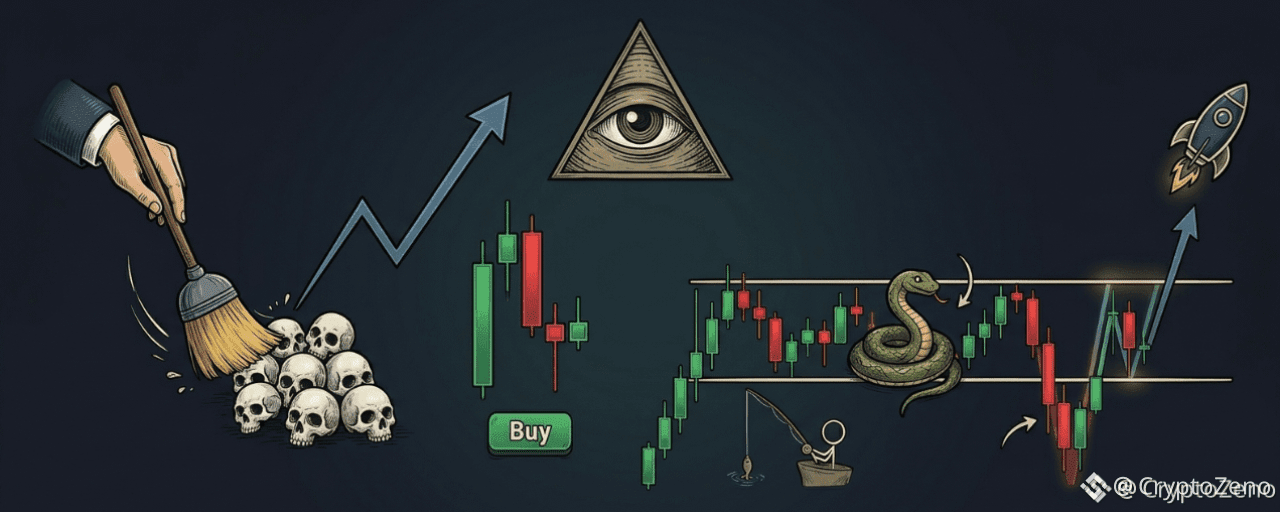
Article
THEY DON’T WANT YOU TO SEE THISThis information was never meant for retail eyes.
But I’m done watching people get slaughtered by algorithms designed to take your money.
Stop trading against them. Start trading WITH them.
Here are the 4 execution models they run everyday:
1. THE STOP HUNT (Model 1)
Nothing moves until they collect. Price gets driven into a higher timeframe POI to wipe out everyone who entered too early.
They raid the lows, they eat every stop loss in sight.
ONLY after the destruction do they shift market structure and print a fair value gap.
If you bought before the sweep, congratulations, you were the exit door.
2. THE TRAP (Model 2)
This is why smart retail traders still lose.
Because even after the structure shift, there’s another layer.
They engineer an internal liquidity grab, a pullback that looks perfect. It’s BAIT.
Price moves up, you enter long, and they nuke it one final time to wipe the last hands before the actual move begins.
3. THE ALGORITHM’S PRICE (Model 3)
Institutions don’t chase, they calculate.
They need the optimal trade entry, the 0.62 to 0.79 Fibonacci retracement zone.
When a fair value gap sits inside that window, the math lines up perfectly. That’s when the real money enters, not before.
4. THE RANGE TRAP (Model 4)
This is textbook accumulation disguised as boredom. They lock price in a tight consolidation until you give up and close your position.
Then they fake a breakdown, sweeping HTF liquidity, only to reverse and rip back inside the range.
That retest of the original box? That’s not support. That’s institutions reloading before launch.
THE TRUTH:
Every candle on your chart is engineered to make you do the wrong thing at the wrong time.
These 4 models aren’t strategies. They’re the actual architecture of how price is delivered.
Billions flow through these patterns while retail stares at RSI divergences.
Save this post and study it.
You are either the hunter or the hunted.
I’m sharing this because I’m tired of watching good people get destroyed by a game they don’t understand.
I’ve been studying macro for over 20 years, and I’ve called the last 3 major market tops and bottoms.
#CryptoZeno #Saylor100MBTCAccessViaMSTR
THEY DON’T WANT YOU TO SEE THIS
This information was never meant for retail eyes.
But I’m done watching people get slaughtered by algorithms designed to take your money.
Stop trading against them. Start trading WITH them.
Here are the 4 execution models they run everyday:
1. THE STOP HUNT (Model 1)
Nothing moves until they collect. Price gets driven into a higher timeframe POI to wipe out everyone who entered too early.
They raid the lows, they eat every stop loss in sight.
ONLY after the destruction do they shift market structure and print a fair value gap.
If you bought before the sweep, congratulations, you were the exit door.
2. THE TRAP (Model 2)
This is why smart retail traders still lose.
Because even after the structure shift, there’s another layer.
They engineer an internal liquidity grab, a pullback that looks perfect. It’s BAIT.
Price moves up, you enter long, and they nuke it one final time to wipe the last hands before the actual move begins.
3. THE ALGORITHM’S PRICE (Model 3)
Institutions don’t chase, they calculate.
They need the optimal trade entry, the 0.62 to 0.79 Fibonacci retracement zone.
When a fair value gap sits inside that window, the math lines up perfectly. That’s when the real money enters, not before.
4. THE RANGE TRAP (Model 4)
This is textbook accumulation disguised as boredom. They lock price in a tight consolidation until you give up and close your position.
Then they fake a breakdown, sweeping HTF liquidity, only to reverse and rip back inside the range.
That retest of the original box? That’s not support. That’s institutions reloading before launch.
THE TRUTH:
Every candle on your chart is engineered to make you do the wrong thing at the wrong time.
These 4 models aren’t strategies. They’re the actual architecture of how price is delivered.
Billions flow through these patterns while retail stares at RSI divergences.
Save this post and study it.
You are either the hunter or the hunted.
I’m sharing this because I’m tired of watching good people get destroyed by a game they don’t understand.
I’ve been studying macro for over 20 years, and I’ve called the last 3 major market tops and bottoms.
#CryptoZeno #Saylor100MBTCAccessViaMSTR
But I’m done watching people get slaughtered by algorithms designed to take your money.
Stop trading against them. Start trading WITH them.
Here are the 4 execution models they run everyday:
1. THE STOP HUNT (Model 1)
Nothing moves until they collect. Price gets driven into a higher timeframe POI to wipe out everyone who entered too early.
They raid the lows, they eat every stop loss in sight.
ONLY after the destruction do they shift market structure and print a fair value gap.
If you bought before the sweep, congratulations, you were the exit door.
2. THE TRAP (Model 2)
This is why smart retail traders still lose.
Because even after the structure shift, there’s another layer.
They engineer an internal liquidity grab, a pullback that looks perfect. It’s BAIT.
Price moves up, you enter long, and they nuke it one final time to wipe the last hands before the actual move begins.
3. THE ALGORITHM’S PRICE (Model 3)
Institutions don’t chase, they calculate.
They need the optimal trade entry, the 0.62 to 0.79 Fibonacci retracement zone.
When a fair value gap sits inside that window, the math lines up perfectly. That’s when the real money enters, not before.
4. THE RANGE TRAP (Model 4)
This is textbook accumulation disguised as boredom. They lock price in a tight consolidation until you give up and close your position.
Then they fake a breakdown, sweeping HTF liquidity, only to reverse and rip back inside the range.
That retest of the original box? That’s not support. That’s institutions reloading before launch.
THE TRUTH:
Every candle on your chart is engineered to make you do the wrong thing at the wrong time.
These 4 models aren’t strategies. They’re the actual architecture of how price is delivered.
Billions flow through these patterns while retail stares at RSI divergences.
Save this post and study it.
You are either the hunter or the hunted.
I’m sharing this because I’m tired of watching good people get destroyed by a game they don’t understand.
I’ve been studying macro for over 20 years, and I’ve called the last 3 major market tops and bottoms.
#CryptoZeno #Saylor100MBTCAccessViaMSTR
1
4
809
·
--
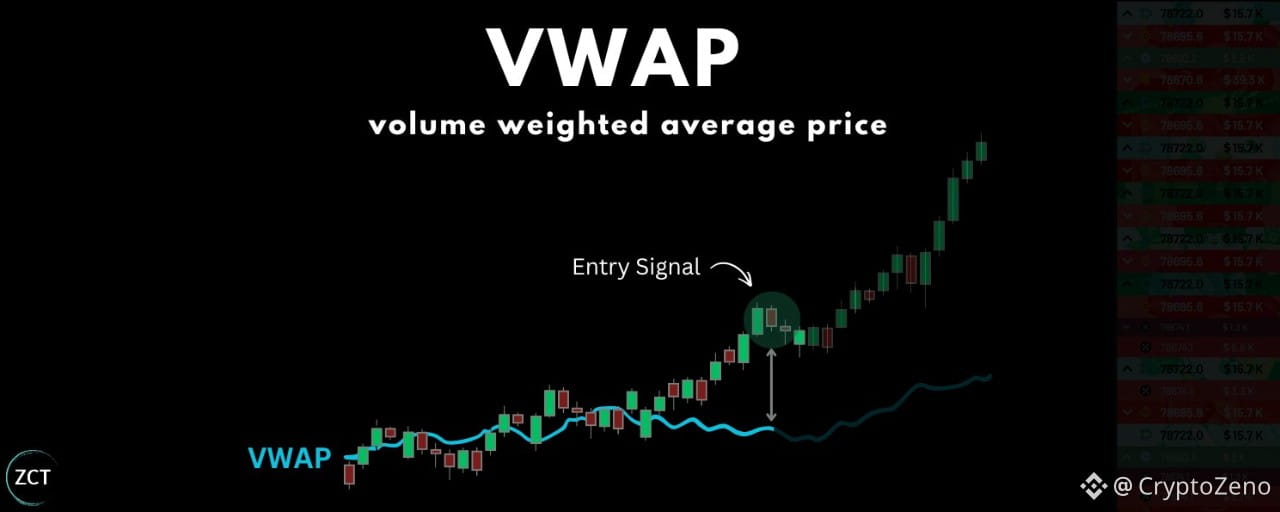
Article
VWAP Masterclass: Indicators, Strategy and Trade ExamplesVWAP doesn't need to be complicated.
I'll use my 9 years of trading experience to give you the most practical VWAP guide on the internet.
This is a full guide with real examples, not just theory.
Let’s begin.
Lesson 1: What is VWAP?
VWAP = Volume Weighted Average Price
Instead of treating every price move equally, it weights the price by trading volume to show you the real average price of the day
Think of it as an anchor price that the market is gravitating around
Here’s what VWAP looks like on the charts:
The blue line is VWAP: the true average price adjusted for volumeThe purple bands expand 1 standard deviation above (upper band) and 1 standard deviation below (lower band) the VWAP to show how far the price is stretching from that average
Why VWAP matters
Random spikes/dumps can trick you if no volume is behind them
VWAP filters that noise and shows where the real market commitment is
Example: if 90% of trades happen at $10 but the price briefly spikes to $12, VWAP stays near $10. Reflecting the fact that the upward move was only a quick deviation from the overall trend.
Here are my TradingView settings for VWAP
Anchor: Session (resets daily)Bands: ±1 standard deviationStyle: VWAP in light blue and bands in dark blue/ purple
VWAP acts as the anchor price for the day, while the bands show how far the price is deviating from that anchor
This is our base before applying VWAP in real trades
3 Key Signals of VWAP
When it comes to VWAP, isolate 3 key signals for your analysis.
1. Position of VWAP <> Price: Breakouts or breakdowns?
Price trending above VWAP = strong uptrend = favours breakouts (momentum longs)Price trending below VWAP = strong downtrend = favours breakdowns (momentum shorts)
BONUS: We can also consider the position of price relative to the lower and upper bands. In an uptrend, if the price is above both the VWAP and the upper band, there is even more strength in the uptrend. Similarly, in a downtrend, if the price is below both the VWAP and the lower band, there is more strength in the downtrend.
2. The slope of the VWAP: Is price trending or ranging?
This shows you the direction and conviction behind a move. The steeper the slope, the more aggressive a trend is, making it simpler to take trades in that direction.
Steeper slope = price trending = favours momentum tradesFlat slope = price ranging = favours reversal trades
BONUS: another observation we can make with the slope of the VWAP is the number of crossovers. How many times does the VWAP cross over the price? This is an additional confluence point whereby fewer crossovers favour momentum.
3. VWAP Bands = Is continuation or reversal more likely?
When bands widen, it means price is pulling away from VWAP with momentum. When bands tighten, it means the market is hesitating, and momentum is fading.
Wide bands = strength behind the move = favours continuation = trade momentumTight bands = weakness behind the move = favours reversals = trade mean reversion
Lesson 1: VWAP Summary
VWAP (Volume Weighted Average Price) = the true average price of the day, weighted by volume, not just price movementActs as an anchor price the market gravitates around, filtering out low-volume spikes and noiseThe bands sit ±1 standard deviation above/below VWAP, showing how far the price is stretching from the average3 Key Signals:Price vs. VWAP. Above = uptrend, below = downtrendSlope. Steeper = price trending, flat = price rangingBandwidth. Wide = strength behind the move, tight = weakness behind the move
BONUS: Find Out Your Trading Level
Just a quick note here to say I recommend that traders introduce indicators like VWAP when they reach level 3 in my trader roadmap.
If you want:
To find out your personal trading levelA personalised gameplan from my team on how to improve (for free)
Lesson 2: VWAP for Breakout Strategies
When you take a momentum trade, you are essentially betting on a continuation of the trend
In a breakout strategy, that is, a continued uptrend
In a breakdown strategy, that is, a continued downtrend
So we look to the VWAP for clues of strength in the trend. Recapping what was covered in the last section:
1. Directional bias
Price trending above VWAP = strong uptrend = favours breakouts (momentum longs)Price trending below VWAP = strong downtrend = favours breakdowns (momentum shorts)
2. Strategy bias
Steeper VWAP slope = price trending = favours momentum tradesWide VWAP bands = strength behind the move = favours continuation = trade momentum
Now, let’s consider some real trade examples
Super clean breakdown trade from Brandon here
Directional bias is a downtrend with price trending below both the VWAP and the lower band too
In terms of strategy bias, we can see that right as price approaches the previous day's low, the slope of the VWAP steepens, and the bands of the VWAP widen
This example is from coach Josh on my team
Some traders may have thought they ‘missed’ the move here. However, in crypto, a lot of the time, the price continues to run higher
By observing the steep slope of the VWAP and the continued widening of the bands, Josh was able to grab a momentum trade in this uptrend (as indicated by price trending above both VWAP and the upper band).
Lesson 2: VWAP for Breakout Strategies Summary
Momentum trades = betting on trend continuation. Uptrend in a breakout, downtrend in a breakdownLook to VWAP for signs of trend strength before enteringTwo key signals that favour continuation:1. Steeper VWAP slope = price trending = favours momentum trades2. Wide VWAP bands = strength behind the move = favours continuation = trade momentumPrice position confirms direction. Above VWAP for longs, below for shorts
Lesson 3: VWAP for Reversal Strategies
When you take a reversal trade, you are basically betting on a reversal of the trend
So in the VWAP, we want to see evidence of weakening of the trend.
Strategy bias:
Flat slope = price ranging = favours reversal tradesTight bands = weakness behind the move = favours reversals = trade mean reversion
VWAP is telling you that the market is choppy, and this is where reversal trades perform best
Now, let’s consider some real trade examples
Brandon captured an excellent reversal short here.
You can see that the bands of the VWAP are tight, forming a close range and the slope of the VWAP is almost entirely flat
In this trade example, Kim avoided the fakeout
Despite the price moving higher in what may have looked like a continuation play, he observed that the VWAP stayed in a tight range with a flat slope. Notice in this example that there are also multiple crossovers of the VWAP with the price
He was able to appropriately classify this as a reversal play
#CryptoZeno #SolsticeInstitutionsCryptoInfra
VWAP Masterclass: Indicators, Strategy and Trade Examples
VWAP doesn't need to be complicated.
I'll use my 9 years of trading experience to give you the most practical VWAP guide on the internet.
This is a full guide with real examples, not just theory.
Let’s begin.
Lesson 1: What is VWAP?
VWAP = Volume Weighted Average Price
Instead of treating every price move equally, it weights the price by trading volume to show you the real average price of the day
Think of it as an anchor price that the market is gravitating around
Here’s what VWAP looks like on the charts:
The blue line is VWAP: the true average price adjusted for volumeThe purple bands expand 1 standard deviation above (upper band) and 1 standard deviation below (lower band) the VWAP to show how far the price is stretching from that average
Why VWAP matters
Random spikes/dumps can trick you if no volume is behind them
VWAP filters that noise and shows where the real market commitment is
Example: if 90% of trades happen at $10 but the price briefly spikes to $12, VWAP stays near $10. Reflecting the fact that the upward move was only a quick deviation from the overall trend.
Here are my TradingView settings for VWAP
Anchor: Session (resets daily)Bands: ±1 standard deviationStyle: VWAP in light blue and bands in dark blue/ purple
VWAP acts as the anchor price for the day, while the bands show how far the price is deviating from that anchor
This is our base before applying VWAP in real trades
3 Key Signals of VWAP
When it comes to VWAP, isolate 3 key signals for your analysis.
1. Position of VWAP <> Price: Breakouts or breakdowns?
Price trending above VWAP = strong uptrend = favours breakouts (momentum longs)Price trending below VWAP = strong downtrend = favours breakdowns (momentum shorts)
BONUS: We can also consider the position of price relative to the lower and upper bands. In an uptrend, if the price is above both the VWAP and the upper band, there is even more strength in the uptrend. Similarly, in a downtrend, if the price is below both the VWAP and the lower band, there is more strength in the downtrend.
2. The slope of the VWAP: Is price trending or ranging?
This shows you the direction and conviction behind a move. The steeper the slope, the more aggressive a trend is, making it simpler to take trades in that direction.
Steeper slope = price trending = favours momentum tradesFlat slope = price ranging = favours reversal trades
BONUS: another observation we can make with the slope of the VWAP is the number of crossovers. How many times does the VWAP cross over the price? This is an additional confluence point whereby fewer crossovers favour momentum.
3. VWAP Bands = Is continuation or reversal more likely?
When bands widen, it means price is pulling away from VWAP with momentum. When bands tighten, it means the market is hesitating, and momentum is fading.
Wide bands = strength behind the move = favours continuation = trade momentumTight bands = weakness behind the move = favours reversals = trade mean reversion
Lesson 1: VWAP Summary
VWAP (Volume Weighted Average Price) = the true average price of the day, weighted by volume, not just price movementActs as an anchor price the market gravitates around, filtering out low-volume spikes and noiseThe bands sit ±1 standard deviation above/below VWAP, showing how far the price is stretching from the average3 Key Signals:Price vs. VWAP. Above = uptrend, below = downtrendSlope. Steeper = price trending, flat = price rangingBandwidth. Wide = strength behind the move, tight = weakness behind the move
BONUS: Find Out Your Trading Level
Just a quick note here to say I recommend that traders introduce indicators like VWAP when they reach level 3 in my trader roadmap.
If you want:
To find out your personal trading levelA personalised gameplan from my team on how to improve (for free)
Lesson 2: VWAP for Breakout Strategies
When you take a momentum trade, you are essentially betting on a continuation of the trend
In a breakout strategy, that is, a continued uptrend
In a breakdown strategy, that is, a continued downtrend
So we look to the VWAP for clues of strength in the trend. Recapping what was covered in the last section:
1. Directional bias
Price trending above VWAP = strong uptrend = favours breakouts (momentum longs)Price trending below VWAP = strong downtrend = favours breakdowns (momentum shorts)
2. Strategy bias
Steeper VWAP slope = price trending = favours momentum tradesWide VWAP bands = strength behind the move = favours continuation = trade momentum
Now, let’s consider some real trade examples
Super clean breakdown trade from Brandon here
Directional bias is a downtrend with price trending below both the VWAP and the lower band too
In terms of strategy bias, we can see that right as price approaches the previous day's low, the slope of the VWAP steepens, and the bands of the VWAP widen
This example is from coach Josh on my team
Some traders may have thought they ‘missed’ the move here. However, in crypto, a lot of the time, the price continues to run higher
By observing the steep slope of the VWAP and the continued widening of the bands, Josh was able to grab a momentum trade in this uptrend (as indicated by price trending above both VWAP and the upper band).
Lesson 2: VWAP for Breakout Strategies Summary
Momentum trades = betting on trend continuation. Uptrend in a breakout, downtrend in a breakdownLook to VWAP for signs of trend strength before enteringTwo key signals that favour continuation:1. Steeper VWAP slope = price trending = favours momentum trades2. Wide VWAP bands = strength behind the move = favours continuation = trade momentumPrice position confirms direction. Above VWAP for longs, below for shorts
Lesson 3: VWAP for Reversal Strategies
When you take a reversal trade, you are basically betting on a reversal of the trend
So in the VWAP, we want to see evidence of weakening of the trend.
Strategy bias:
Flat slope = price ranging = favours reversal tradesTight bands = weakness behind the move = favours reversals = trade mean reversion
VWAP is telling you that the market is choppy, and this is where reversal trades perform best
Now, let’s consider some real trade examples
Brandon captured an excellent reversal short here.
You can see that the bands of the VWAP are tight, forming a close range and the slope of the VWAP is almost entirely flat
In this trade example, Kim avoided the fakeout
Despite the price moving higher in what may have looked like a continuation play, he observed that the VWAP stayed in a tight range with a flat slope. Notice in this example that there are also multiple crossovers of the VWAP with the price
He was able to appropriately classify this as a reversal play
#CryptoZeno #SolsticeInstitutionsCryptoInfra
I'll use my 9 years of trading experience to give you the most practical VWAP guide on the internet.
This is a full guide with real examples, not just theory.
Let’s begin.
Lesson 1: What is VWAP?
VWAP = Volume Weighted Average Price
Instead of treating every price move equally, it weights the price by trading volume to show you the real average price of the day
Think of it as an anchor price that the market is gravitating around
Here’s what VWAP looks like on the charts:
The blue line is VWAP: the true average price adjusted for volumeThe purple bands expand 1 standard deviation above (upper band) and 1 standard deviation below (lower band) the VWAP to show how far the price is stretching from that average
Why VWAP matters
Random spikes/dumps can trick you if no volume is behind them
VWAP filters that noise and shows where the real market commitment is
Example: if 90% of trades happen at $10 but the price briefly spikes to $12, VWAP stays near $10. Reflecting the fact that the upward move was only a quick deviation from the overall trend.
Here are my TradingView settings for VWAP
Anchor: Session (resets daily)Bands: ±1 standard deviationStyle: VWAP in light blue and bands in dark blue/ purple
VWAP acts as the anchor price for the day, while the bands show how far the price is deviating from that anchor
This is our base before applying VWAP in real trades
3 Key Signals of VWAP
When it comes to VWAP, isolate 3 key signals for your analysis.
1. Position of VWAP <> Price: Breakouts or breakdowns?
Price trending above VWAP = strong uptrend = favours breakouts (momentum longs)Price trending below VWAP = strong downtrend = favours breakdowns (momentum shorts)
BONUS: We can also consider the position of price relative to the lower and upper bands. In an uptrend, if the price is above both the VWAP and the upper band, there is even more strength in the uptrend. Similarly, in a downtrend, if the price is below both the VWAP and the lower band, there is more strength in the downtrend.
2. The slope of the VWAP: Is price trending or ranging?
This shows you the direction and conviction behind a move. The steeper the slope, the more aggressive a trend is, making it simpler to take trades in that direction.
Steeper slope = price trending = favours momentum tradesFlat slope = price ranging = favours reversal trades
BONUS: another observation we can make with the slope of the VWAP is the number of crossovers. How many times does the VWAP cross over the price? This is an additional confluence point whereby fewer crossovers favour momentum.
3. VWAP Bands = Is continuation or reversal more likely?
When bands widen, it means price is pulling away from VWAP with momentum. When bands tighten, it means the market is hesitating, and momentum is fading.
Wide bands = strength behind the move = favours continuation = trade momentumTight bands = weakness behind the move = favours reversals = trade mean reversion
Lesson 1: VWAP Summary
VWAP (Volume Weighted Average Price) = the true average price of the day, weighted by volume, not just price movementActs as an anchor price the market gravitates around, filtering out low-volume spikes and noiseThe bands sit ±1 standard deviation above/below VWAP, showing how far the price is stretching from the average3 Key Signals:Price vs. VWAP. Above = uptrend, below = downtrendSlope. Steeper = price trending, flat = price rangingBandwidth. Wide = strength behind the move, tight = weakness behind the move
BONUS: Find Out Your Trading Level
Just a quick note here to say I recommend that traders introduce indicators like VWAP when they reach level 3 in my trader roadmap.
If you want:
To find out your personal trading levelA personalised gameplan from my team on how to improve (for free)
Lesson 2: VWAP for Breakout Strategies
When you take a momentum trade, you are essentially betting on a continuation of the trend
In a breakout strategy, that is, a continued uptrend
In a breakdown strategy, that is, a continued downtrend
So we look to the VWAP for clues of strength in the trend. Recapping what was covered in the last section:
1. Directional bias
Price trending above VWAP = strong uptrend = favours breakouts (momentum longs)Price trending below VWAP = strong downtrend = favours breakdowns (momentum shorts)
2. Strategy bias
Steeper VWAP slope = price trending = favours momentum tradesWide VWAP bands = strength behind the move = favours continuation = trade momentum
Now, let’s consider some real trade examples
Super clean breakdown trade from Brandon here
Directional bias is a downtrend with price trending below both the VWAP and the lower band too
In terms of strategy bias, we can see that right as price approaches the previous day's low, the slope of the VWAP steepens, and the bands of the VWAP widen
This example is from coach Josh on my team
Some traders may have thought they ‘missed’ the move here. However, in crypto, a lot of the time, the price continues to run higher
By observing the steep slope of the VWAP and the continued widening of the bands, Josh was able to grab a momentum trade in this uptrend (as indicated by price trending above both VWAP and the upper band).
Lesson 2: VWAP for Breakout Strategies Summary
Momentum trades = betting on trend continuation. Uptrend in a breakout, downtrend in a breakdownLook to VWAP for signs of trend strength before enteringTwo key signals that favour continuation:1. Steeper VWAP slope = price trending = favours momentum trades2. Wide VWAP bands = strength behind the move = favours continuation = trade momentumPrice position confirms direction. Above VWAP for longs, below for shorts
Lesson 3: VWAP for Reversal Strategies
When you take a reversal trade, you are basically betting on a reversal of the trend
So in the VWAP, we want to see evidence of weakening of the trend.
Strategy bias:
Flat slope = price ranging = favours reversal tradesTight bands = weakness behind the move = favours reversals = trade mean reversion
VWAP is telling you that the market is choppy, and this is where reversal trades perform best
Now, let’s consider some real trade examples
Brandon captured an excellent reversal short here.
You can see that the bands of the VWAP are tight, forming a close range and the slope of the VWAP is almost entirely flat
In this trade example, Kim avoided the fakeout
Despite the price moving higher in what may have looked like a continuation play, he observed that the VWAP stayed in a tight range with a flat slope. Notice in this example that there are also multiple crossovers of the VWAP with the price
He was able to appropriately classify this as a reversal play
#CryptoZeno #SolsticeInstitutionsCryptoInfra
1
6
329
·
--
Article
Institutional traders are generating billions using this strategyThere’s a far deeper level of understanding in the market than most people realize. Beyond technical analysis, there’s something few truly consider, and that, my friends, is the mathematics behind trading. Many enter this space with the wrong mindset, chasing quick moves, seeking fast gains, and using high leverage without a proper system. But when leverage is applied correctly within a structured, math-based system, that’s precisely how you outperform the entire market.
Today, I’ll be discussing a concept that can significantly amplify trading returns when applied correctly, a methodology leveraged by institutional capital and even market makers themselves. It enables the strategic sizing of positions while systematically managing and limiting risk.
Mastering Market Structure: Trading Beyond Noise and News
When employing an advanced market strategy like this, a deep understanding of market cycles and structure is essential. Traders must remain completely objective, avoiding emotional reactions to noise or news, and focus solely on execution. As I often say, “news is priced in”, a lesson honed over six years of market experience. Headlines rarely move prices; more often, they serve as a justification for moves that are already in motion. In many cases, news is simply a tool to distract the herd.
To navigate the market effectively, one must understand its clinical, mechanical nature. Assets generally experience predictable drawdowns before retracing, and recognizing the current market phase is critical. This requires a comprehensive view of the higher-timeframe macro structure, as well as awareness of risk-on and risk-off periods, when capital inflows are driving market behavior. All of this is validated and reinforced by observing underlying market structure.
A Simple Illustration of the Bitcoin Market Drawdown:
As we can observe, Bitcoin exhibits a highly structured behavior, often repeating patterns consistent with what many refer to as the 4 year liquidity cycle. In my view, Bitcoin will decouple from this cycle and the diminishing returns effect, behaving more like gold, silver, or the S&P 500 as institutional capital, from banks, hedge funds, and large investors, flows into the asset. Bitcoin is still in its early stages, especially when compared to the market cap of larger asset classes.
While cycle timings may shift, drawdowns are where institutions capitalize making billions of dollars. This example is presented on a higher time frame, but the same principles apply to lower time frame drawdowns, provided you understand the market’s current phase/trend. Multiple cycles exist simultaneously: higher-timeframe macro cycles and lower-to-mid timeframe market phase cycles, where price moves through redistribution and reaccumulation. By understanding these dynamics, you can apply the same approach across both higher and lower time frame cycles.
Examining the illustration above, we can observe a clear evolution in Bitcoin’s market drawdowns. During the first cycle, Bitcoin declined by 93.78%, whereas the most recent drawdown was 77.96%. This represents a meaningful reduction in drawdown magnitude, indicating that as Bitcoin matures, its cycles are producing progressively shallower corrections. This trend is largely driven by increasing institutional adoption, which dampens volatility and reduces the depth of pullbacks over time.
Using the S&P 500 as a reference, over the past 100 years, drawdowns have become significantly shallower. The largest decline occurred during the 1929 crash, with a drop of 86.42%. Since then, retracements have generally remained within the 30–60% range. This historical pattern provides a framework for estimating the potential maximum drawdown for an asset class of this scale, offering a data-driven basis for risk modeling.
Exploiting Leverage: The Mechanism Behind Multi-Billion Dollar Gains
This is where things start to get interesting. When applied correctly, leverage, combined with a solid mathematical framework, becomes a powerful tool. As noted at the start of this article, a deep understanding of market dynamics is essential. Once you have that, you can optimize returns by applying the appropriate leverage in the markets.
By analyzing historical price retracements, we can construct a predictive model for the likely magnitude of Bitcoin’s declines during bear markets aswell as LTF market phases. Even if market cycles shift or Bitcoin decouples from the traditional four-year cycle, these downside retracements will continue to occur, offering clear opportunities for disciplined, math-driven strategies.
Observing Bitcoin’s historical cycles, we can see that each successive bear market has produced progressively shallower retracements compared to earlier cycles. Based on this trend, a conservative estimate for the potential drawdown in 2026 falls within the 60–65% range. This provides a clear framework for identifying opportunities to capitalize when market conditions align.
While this estimate is derived from higher-timeframe retracements, the same methodology can be applied to lower-timeframe cycles, enabling disciplined execution across different market phases.
For example, during a bull cycle with an overall bearish trend, one can capitalize on retracements within the bull phases to position for the continuation of upward moves. Conversely, in a bearish trend, the same principle applies for capturing downside movements, using historical price action as a guide.
We already know that retracements are becoming progressively shallower, which provides a structured framework for planning positions. Based on historical cycles, Bitcoin’s next retracement could reach the 60–65% range. However, large institutions do not aim for pinpoint entry timing, it’s not about catching the exact peak or bottom of a candle, but rather about positioning at the optimal phase. Attempting excessive precision increases the risk of being front-run, which can compromise the entire strategy.
Using the visual representation, I’ve identified four potential zones for higher-timeframe long positioning. The first scaling zone begins around –40%. While historical price action can help estimate future movements, it’s important to remember that bottoms cannot be predicted with 100% accuracy, especially as cycles evolve and shift.
This is why it is optimal to begin scaling in slightly early, even if it occasionally results in positions being invalidated.
In the example above, we will use 10% intervals to define invalidation levels. Specifically, this setup is for 10x leverage. Based on historical cycle retracements, the statistical bottom for Bitcoin is estimated around $47K–$49K. However, by analyzing market cycles and timing, the goal is to identify potential trend shifts, such as a move to the upside, rather than trying to pinpoint the exact entry.
Applying this framework to a $100K portfolio, a 10% price deviation serves as the invalidation threshold. On 10x leverage, a 10% drop would trigger liquidation; with maintenance margin, liquidation might occur slightly earlier, around a 9.5% decline. It is crucial to note that liquidation represents only a fraction of the allocated capital, as this strategy operates on isolated margin. For a $100K portfolio, each leveraged position risks $10K.
This approach is what I refer to as “God Mode,” because, when executed with a thorough understanding of market phases and price behavior, it theoretically allows for asymmetric risk-reward opportunities and minimizes the chance of outright losses.
The Mathematics
Now, if we run a mathematical framework based on $100K, each position carries a fixed risk of $10K. We have six entries from different price levels. If you view the table in the top left-hand corner, you can see the net profit based on the P&L after breaking the current all-time high.
Considering inflation and continuous money printing, the minimum expected target after a significant market drawdown is a new all-time high. However, this will occur over a prolonged period, meaning you must maintain conviction in your positions. At different price intervals, the lower the price goes, the greater the profit potential once price breaks $126K.
Suppose you were extremely unlucky and lost five times in a row. Your portfolio would be down 50%, with a $50K loss. Your $100K pool would now sit at $50K. Many traders would become frustrated with the risk, abandon the system, and potentially lose everything.
However, if you follow this mathematical framework with zero emotion, and the sixth entry hits, even while being down 50%, the net profit achieved once price reaches a new all-time high would be $193,023. Subtracting the $50K loss, the total net profit is $143,023, giving an overall portfolio of $243,023, a 143% gain over 2–3 years, outperforming virtually every market.
On the other hand, if the third or fourth entry succeeds, losses will be smaller, but you will still achieve a solid ROI over time. Never underestimate the gains possible on higher timeframes.
It is important to note that experienced traders with a strong understanding of market dynamics can employ higher leverage to optimize returns. This framework is modeled at 10x leverage; however, if one has a well-founded estimate of Bitcoin’s likely bottom, leverage can be adjusted to 20x or even 30x. Such elevated leverage levels are typically employed only by highly experienced traders or institutional participants.
Many of the swing short and long setups I share follow a consistent methodology: using liquidation levels as position invalidation and leverage to optimize returns. Traders often focus too rigidly on strict risk-reward ratios, but within this framework, the mathematical approach dictates that the liquidation level serves as the true invalidation point for the position.
This is how the largest institutions structure their positions, leveraging deep market insights to optimize returns through strategic use of leverage.
Extending the same quantitative methodology to lower-timeframe market phases:
Using the same quantitative methodology, we can leverage higher-timeframe market cycles and trend positioning to inform likely outcomes across lower-timeframe phases and drawdowns. As previously noted, this requires a deep understanding of market dynamics, the specific phases, and our position within the cycle.
Recognizing when the market is in a bullish trend yet experiencing distribution phases, or in a bearish trend undergoing bearish retests, enables precise application of the framework at lower timeframes. This systematic approach is why the majority of my positions succeed because its a market maker strategy.
This methodology represents the exact structure I employ for higher-timeframe analysis and capitalization. By analyzing trend direction, if I identify a structural break within a bullish trend, or conversely, within a downtrend, I can apply the same leverage principles at key drawdown zones, using market structure to assess the most probable outcomes.
#CryptoZeno #PredictionMarketRisingCompetition #USPPISurge
Institutional traders are generating billions using this strategy
There’s a far deeper level of understanding in the market than most people realize. Beyond technical analysis, there’s something few truly consider, and that, my friends, is the mathematics behind trading. Many enter this space with the wrong mindset, chasing quick moves, seeking fast gains, and using high leverage without a proper system. But when leverage is applied correctly within a structured, math-based system, that’s precisely how you outperform the entire market.
Today, I’ll be discussing a concept that can significantly amplify trading returns when applied correctly, a methodology leveraged by institutional capital and even market makers themselves. It enables the strategic sizing of positions while systematically managing and limiting risk.
Mastering Market Structure: Trading Beyond Noise and News
When employing an advanced market strategy like this, a deep understanding of market cycles and structure is essential. Traders must remain completely objective, avoiding emotional reactions to noise or news, and focus solely on execution. As I often say, “news is priced in”, a lesson honed over six years of market experience. Headlines rarely move prices; more often, they serve as a justification for moves that are already in motion. In many cases, news is simply a tool to distract the herd.
To navigate the market effectively, one must understand its clinical, mechanical nature. Assets generally experience predictable drawdowns before retracing, and recognizing the current market phase is critical. This requires a comprehensive view of the higher-timeframe macro structure, as well as awareness of risk-on and risk-off periods, when capital inflows are driving market behavior. All of this is validated and reinforced by observing underlying market structure.
A Simple Illustration of the Bitcoin Market Drawdown:
As we can observe, Bitcoin exhibits a highly structured behavior, often repeating patterns consistent with what many refer to as the 4 year liquidity cycle. In my view, Bitcoin will decouple from this cycle and the diminishing returns effect, behaving more like gold, silver, or the S&P 500 as institutional capital, from banks, hedge funds, and large investors, flows into the asset. Bitcoin is still in its early stages, especially when compared to the market cap of larger asset classes.
While cycle timings may shift, drawdowns are where institutions capitalize making billions of dollars. This example is presented on a higher time frame, but the same principles apply to lower time frame drawdowns, provided you understand the market’s current phase/trend. Multiple cycles exist simultaneously: higher-timeframe macro cycles and lower-to-mid timeframe market phase cycles, where price moves through redistribution and reaccumulation. By understanding these dynamics, you can apply the same approach across both higher and lower time frame cycles.
Examining the illustration above, we can observe a clear evolution in Bitcoin’s market drawdowns. During the first cycle, Bitcoin declined by 93.78%, whereas the most recent drawdown was 77.96%. This represents a meaningful reduction in drawdown magnitude, indicating that as Bitcoin matures, its cycles are producing progressively shallower corrections. This trend is largely driven by increasing institutional adoption, which dampens volatility and reduces the depth of pullbacks over time.
Using the S&P 500 as a reference, over the past 100 years, drawdowns have become significantly shallower. The largest decline occurred during the 1929 crash, with a drop of 86.42%. Since then, retracements have generally remained within the 30–60% range. This historical pattern provides a framework for estimating the potential maximum drawdown for an asset class of this scale, offering a data-driven basis for risk modeling.
Exploiting Leverage: The Mechanism Behind Multi-Billion Dollar Gains
This is where things start to get interesting. When applied correctly, leverage, combined with a solid mathematical framework, becomes a powerful tool. As noted at the start of this article, a deep understanding of market dynamics is essential. Once you have that, you can optimize returns by applying the appropriate leverage in the markets.
By analyzing historical price retracements, we can construct a predictive model for the likely magnitude of Bitcoin’s declines during bear markets aswell as LTF market phases. Even if market cycles shift or Bitcoin decouples from the traditional four-year cycle, these downside retracements will continue to occur, offering clear opportunities for disciplined, math-driven strategies.
Observing Bitcoin’s historical cycles, we can see that each successive bear market has produced progressively shallower retracements compared to earlier cycles. Based on this trend, a conservative estimate for the potential drawdown in 2026 falls within the 60–65% range. This provides a clear framework for identifying opportunities to capitalize when market conditions align.
While this estimate is derived from higher-timeframe retracements, the same methodology can be applied to lower-timeframe cycles, enabling disciplined execution across different market phases.
For example, during a bull cycle with an overall bearish trend, one can capitalize on retracements within the bull phases to position for the continuation of upward moves. Conversely, in a bearish trend, the same principle applies for capturing downside movements, using historical price action as a guide.
We already know that retracements are becoming progressively shallower, which provides a structured framework for planning positions. Based on historical cycles, Bitcoin’s next retracement could reach the 60–65% range. However, large institutions do not aim for pinpoint entry timing, it’s not about catching the exact peak or bottom of a candle, but rather about positioning at the optimal phase. Attempting excessive precision increases the risk of being front-run, which can compromise the entire strategy.
Using the visual representation, I’ve identified four potential zones for higher-timeframe long positioning. The first scaling zone begins around –40%. While historical price action can help estimate future movements, it’s important to remember that bottoms cannot be predicted with 100% accuracy, especially as cycles evolve and shift.
This is why it is optimal to begin scaling in slightly early, even if it occasionally results in positions being invalidated.
In the example above, we will use 10% intervals to define invalidation levels. Specifically, this setup is for 10x leverage. Based on historical cycle retracements, the statistical bottom for Bitcoin is estimated around $47K–$49K. However, by analyzing market cycles and timing, the goal is to identify potential trend shifts, such as a move to the upside, rather than trying to pinpoint the exact entry.
Applying this framework to a $100K portfolio, a 10% price deviation serves as the invalidation threshold. On 10x leverage, a 10% drop would trigger liquidation; with maintenance margin, liquidation might occur slightly earlier, around a 9.5% decline. It is crucial to note that liquidation represents only a fraction of the allocated capital, as this strategy operates on isolated margin. For a $100K portfolio, each leveraged position risks $10K.
This approach is what I refer to as “God Mode,” because, when executed with a thorough understanding of market phases and price behavior, it theoretically allows for asymmetric risk-reward opportunities and minimizes the chance of outright losses.
The Mathematics
Now, if we run a mathematical framework based on $100K, each position carries a fixed risk of $10K. We have six entries from different price levels. If you view the table in the top left-hand corner, you can see the net profit based on the P&L after breaking the current all-time high.
Considering inflation and continuous money printing, the minimum expected target after a significant market drawdown is a new all-time high. However, this will occur over a prolonged period, meaning you must maintain conviction in your positions. At different price intervals, the lower the price goes, the greater the profit potential once price breaks $126K.
Suppose you were extremely unlucky and lost five times in a row. Your portfolio would be down 50%, with a $50K loss. Your $100K pool would now sit at $50K. Many traders would become frustrated with the risk, abandon the system, and potentially lose everything.
However, if you follow this mathematical framework with zero emotion, and the sixth entry hits, even while being down 50%, the net profit achieved once price reaches a new all-time high would be $193,023. Subtracting the $50K loss, the total net profit is $143,023, giving an overall portfolio of $243,023, a 143% gain over 2–3 years, outperforming virtually every market.
On the other hand, if the third or fourth entry succeeds, losses will be smaller, but you will still achieve a solid ROI over time. Never underestimate the gains possible on higher timeframes.
It is important to note that experienced traders with a strong understanding of market dynamics can employ higher leverage to optimize returns. This framework is modeled at 10x leverage; however, if one has a well-founded estimate of Bitcoin’s likely bottom, leverage can be adjusted to 20x or even 30x. Such elevated leverage levels are typically employed only by highly experienced traders or institutional participants.
Many of the swing short and long setups I share follow a consistent methodology: using liquidation levels as position invalidation and leverage to optimize returns. Traders often focus too rigidly on strict risk-reward ratios, but within this framework, the mathematical approach dictates that the liquidation level serves as the true invalidation point for the position.
This is how the largest institutions structure their positions, leveraging deep market insights to optimize returns through strategic use of leverage.
Extending the same quantitative methodology to lower-timeframe market phases:
Using the same quantitative methodology, we can leverage higher-timeframe market cycles and trend positioning to inform likely outcomes across lower-timeframe phases and drawdowns. As previously noted, this requires a deep understanding of market dynamics, the specific phases, and our position within the cycle.
Recognizing when the market is in a bullish trend yet experiencing distribution phases, or in a bearish trend undergoing bearish retests, enables precise application of the framework at lower timeframes. This systematic approach is why the majority of my positions succeed because its a market maker strategy.
This methodology represents the exact structure I employ for higher-timeframe analysis and capitalization. By analyzing trend direction, if I identify a structural break within a bullish trend, or conversely, within a downtrend, I can apply the same leverage principles at key drawdown zones, using market structure to assess the most probable outcomes.
#CryptoZeno #PredictionMarketRisingCompetition #USPPISurge
Today, I’ll be discussing a concept that can significantly amplify trading returns when applied correctly, a methodology leveraged by institutional capital and even market makers themselves. It enables the strategic sizing of positions while systematically managing and limiting risk.
Mastering Market Structure: Trading Beyond Noise and News
When employing an advanced market strategy like this, a deep understanding of market cycles and structure is essential. Traders must remain completely objective, avoiding emotional reactions to noise or news, and focus solely on execution. As I often say, “news is priced in”, a lesson honed over six years of market experience. Headlines rarely move prices; more often, they serve as a justification for moves that are already in motion. In many cases, news is simply a tool to distract the herd.
To navigate the market effectively, one must understand its clinical, mechanical nature. Assets generally experience predictable drawdowns before retracing, and recognizing the current market phase is critical. This requires a comprehensive view of the higher-timeframe macro structure, as well as awareness of risk-on and risk-off periods, when capital inflows are driving market behavior. All of this is validated and reinforced by observing underlying market structure.
A Simple Illustration of the Bitcoin Market Drawdown:
As we can observe, Bitcoin exhibits a highly structured behavior, often repeating patterns consistent with what many refer to as the 4 year liquidity cycle. In my view, Bitcoin will decouple from this cycle and the diminishing returns effect, behaving more like gold, silver, or the S&P 500 as institutional capital, from banks, hedge funds, and large investors, flows into the asset. Bitcoin is still in its early stages, especially when compared to the market cap of larger asset classes.
While cycle timings may shift, drawdowns are where institutions capitalize making billions of dollars. This example is presented on a higher time frame, but the same principles apply to lower time frame drawdowns, provided you understand the market’s current phase/trend. Multiple cycles exist simultaneously: higher-timeframe macro cycles and lower-to-mid timeframe market phase cycles, where price moves through redistribution and reaccumulation. By understanding these dynamics, you can apply the same approach across both higher and lower time frame cycles.
Examining the illustration above, we can observe a clear evolution in Bitcoin’s market drawdowns. During the first cycle, Bitcoin declined by 93.78%, whereas the most recent drawdown was 77.96%. This represents a meaningful reduction in drawdown magnitude, indicating that as Bitcoin matures, its cycles are producing progressively shallower corrections. This trend is largely driven by increasing institutional adoption, which dampens volatility and reduces the depth of pullbacks over time.
Using the S&P 500 as a reference, over the past 100 years, drawdowns have become significantly shallower. The largest decline occurred during the 1929 crash, with a drop of 86.42%. Since then, retracements have generally remained within the 30–60% range. This historical pattern provides a framework for estimating the potential maximum drawdown for an asset class of this scale, offering a data-driven basis for risk modeling.
Exploiting Leverage: The Mechanism Behind Multi-Billion Dollar Gains
This is where things start to get interesting. When applied correctly, leverage, combined with a solid mathematical framework, becomes a powerful tool. As noted at the start of this article, a deep understanding of market dynamics is essential. Once you have that, you can optimize returns by applying the appropriate leverage in the markets.
By analyzing historical price retracements, we can construct a predictive model for the likely magnitude of Bitcoin’s declines during bear markets aswell as LTF market phases. Even if market cycles shift or Bitcoin decouples from the traditional four-year cycle, these downside retracements will continue to occur, offering clear opportunities for disciplined, math-driven strategies.
Observing Bitcoin’s historical cycles, we can see that each successive bear market has produced progressively shallower retracements compared to earlier cycles. Based on this trend, a conservative estimate for the potential drawdown in 2026 falls within the 60–65% range. This provides a clear framework for identifying opportunities to capitalize when market conditions align.
While this estimate is derived from higher-timeframe retracements, the same methodology can be applied to lower-timeframe cycles, enabling disciplined execution across different market phases.
For example, during a bull cycle with an overall bearish trend, one can capitalize on retracements within the bull phases to position for the continuation of upward moves. Conversely, in a bearish trend, the same principle applies for capturing downside movements, using historical price action as a guide.
We already know that retracements are becoming progressively shallower, which provides a structured framework for planning positions. Based on historical cycles, Bitcoin’s next retracement could reach the 60–65% range. However, large institutions do not aim for pinpoint entry timing, it’s not about catching the exact peak or bottom of a candle, but rather about positioning at the optimal phase. Attempting excessive precision increases the risk of being front-run, which can compromise the entire strategy.
Using the visual representation, I’ve identified four potential zones for higher-timeframe long positioning. The first scaling zone begins around –40%. While historical price action can help estimate future movements, it’s important to remember that bottoms cannot be predicted with 100% accuracy, especially as cycles evolve and shift.
This is why it is optimal to begin scaling in slightly early, even if it occasionally results in positions being invalidated.
In the example above, we will use 10% intervals to define invalidation levels. Specifically, this setup is for 10x leverage. Based on historical cycle retracements, the statistical bottom for Bitcoin is estimated around $47K–$49K. However, by analyzing market cycles and timing, the goal is to identify potential trend shifts, such as a move to the upside, rather than trying to pinpoint the exact entry.
Applying this framework to a $100K portfolio, a 10% price deviation serves as the invalidation threshold. On 10x leverage, a 10% drop would trigger liquidation; with maintenance margin, liquidation might occur slightly earlier, around a 9.5% decline. It is crucial to note that liquidation represents only a fraction of the allocated capital, as this strategy operates on isolated margin. For a $100K portfolio, each leveraged position risks $10K.
This approach is what I refer to as “God Mode,” because, when executed with a thorough understanding of market phases and price behavior, it theoretically allows for asymmetric risk-reward opportunities and minimizes the chance of outright losses.
The Mathematics
Now, if we run a mathematical framework based on $100K, each position carries a fixed risk of $10K. We have six entries from different price levels. If you view the table in the top left-hand corner, you can see the net profit based on the P&L after breaking the current all-time high.
Considering inflation and continuous money printing, the minimum expected target after a significant market drawdown is a new all-time high. However, this will occur over a prolonged period, meaning you must maintain conviction in your positions. At different price intervals, the lower the price goes, the greater the profit potential once price breaks $126K.
Suppose you were extremely unlucky and lost five times in a row. Your portfolio would be down 50%, with a $50K loss. Your $100K pool would now sit at $50K. Many traders would become frustrated with the risk, abandon the system, and potentially lose everything.
However, if you follow this mathematical framework with zero emotion, and the sixth entry hits, even while being down 50%, the net profit achieved once price reaches a new all-time high would be $193,023. Subtracting the $50K loss, the total net profit is $143,023, giving an overall portfolio of $243,023, a 143% gain over 2–3 years, outperforming virtually every market.
On the other hand, if the third or fourth entry succeeds, losses will be smaller, but you will still achieve a solid ROI over time. Never underestimate the gains possible on higher timeframes.
It is important to note that experienced traders with a strong understanding of market dynamics can employ higher leverage to optimize returns. This framework is modeled at 10x leverage; however, if one has a well-founded estimate of Bitcoin’s likely bottom, leverage can be adjusted to 20x or even 30x. Such elevated leverage levels are typically employed only by highly experienced traders or institutional participants.
Many of the swing short and long setups I share follow a consistent methodology: using liquidation levels as position invalidation and leverage to optimize returns. Traders often focus too rigidly on strict risk-reward ratios, but within this framework, the mathematical approach dictates that the liquidation level serves as the true invalidation point for the position.
This is how the largest institutions structure their positions, leveraging deep market insights to optimize returns through strategic use of leverage.
Extending the same quantitative methodology to lower-timeframe market phases:
Using the same quantitative methodology, we can leverage higher-timeframe market cycles and trend positioning to inform likely outcomes across lower-timeframe phases and drawdowns. As previously noted, this requires a deep understanding of market dynamics, the specific phases, and our position within the cycle.
Recognizing when the market is in a bullish trend yet experiencing distribution phases, or in a bearish trend undergoing bearish retests, enables precise application of the framework at lower timeframes. This systematic approach is why the majority of my positions succeed because its a market maker strategy.
This methodology represents the exact structure I employ for higher-timeframe analysis and capitalization. By analyzing trend direction, if I identify a structural break within a bullish trend, or conversely, within a downtrend, I can apply the same leverage principles at key drawdown zones, using market structure to assess the most probable outcomes.
#CryptoZeno #PredictionMarketRisingCompetition #USPPISurge
5
530
·
--

Article
Web3 Jobs Are Paying $120,000 - $200,000+- And Most People Are Still Sleeping On ItWhile the majority of the world is still debating whether crypto is “dead or alive,” a quieter group of early adopters is already building long-term careers inside Web3. They are not chasing short-term hype. They are positioning themselves inside an industry that is still early, still underbuilt, and desperately short on real talent.
This is exactly why Web3 jobs today are paying anywhere from $120,000 to over $200,000 per year, often for roles that do not require a university degree, a computer science background, or years of traditional corporate experience.
All you really need is a laptop, genuine curiosity, and the willingness to learn faster than the average person.
In 2023, the global average Web2 salary sat around $40,000 per year. Web3, on the other hand, consistently offers compensation that is two to five times higher. This gap exists for a simple reason. Mass adoption has not happened yet, but infrastructure still needs to be built. Small teams are moving fast, capital is available, and companies are willing to pay a premium for people who can actually execute.
This moment matters because it will not last forever. Once Web3 becomes mainstream, the salary asymmetry disappears, hiring standards become rigid, and opportunities narrow. Early entrants always benefit the most.
One of the biggest misconceptions about Web3 is that it is only for developers. In reality, most Web3 companies care far more about execution, curiosity, and ecosystem understanding than formal education. You do not need a degree. You do not need a perfect resume. You need to understand crypto culture, user behavior, and how value flows inside decentralized systems. If you can do that and show proof of work, you are already ahead of the majority of applicants.
This is why so many non-technical roles in Web3 pay extremely well.
Designers play a critical role in simplifying complex products like dApps and NFT platforms. A strong Web3 UX or UI designer focuses on user flows, interfaces, and reducing friction for users who are not technical. These roles typically pay between $90,000 and $140,000 because good design directly impacts adoption.
Another highly undervalued role is blockchain technical writing. Every protocol needs documentation, tutorials, blog content, and clear explanations for users and developers. People who can translate complex blockchain mechanics into simple, understandable language are rare, which is why technical writers can earn anywhere from $70,000 to $140,000.
Community managers are equally essential. In Web3, community is not a marketing add-on. It is the product. Managing Discord servers, Telegram groups, newsletters, and feedback loops requires empathy, communication skills, and deep cultural awareness. Projects that ignore community fail quickly, which is why experienced community managers are consistently paid competitive salaries.
Marketing and growth roles also dominate Web3 hiring. Crypto marketing specialists focus on educating users, telling compelling stories, and guiding attention during product launches. Unlike Web2 marketing, this role requires a strong understanding of token incentives, narratives, and timing. Salaries commonly range from $60,000 to $120,000.
Social media managers in Web3 often operate more like brand strategists than content schedulers. They shape the project’s public voice across platforms like Twitter, YouTube, and Discord, track performance, and drive long-term growth. Depending on scale and responsibility, compensation can range widely, from $25,000 up to six figures.
For those who enjoy market research, cryptocurrency analysts are in constant demand. These roles involve tracking market trends, analyzing tokens, studying DeFi protocols, and publishing insights for investors or communities. Strong analytical skills combined with on-chain knowledge can command salaries between $60,000 and $150,000.
Operational roles are just as important. Blockchain project coordinators ensure teams stay aligned, deadlines are met, and launches happen on time. Understanding how smart contracts and decentralized teams operate is a major advantage here, and pay often falls between $80,000 and $100,000.
DAOs also offer a unique entry point. Paid DAO roles allow contributors to assist with governance, research, operations, and design. Many people underestimate these positions, but they often lead to long-term opportunities and steady income while building a public on-chain reputation.
More technical but still highly accessible is the role of a Web3 landing page developer. Building high-conversion marketing pages for crypto projects using tools like Webflow or Framer can generate exceptional income. Because these pages directly impact fundraising and user acquisition, salaries can exceed $200,000 for skilled builders.
Finally, smart contract developers remain the backbone of Web3. Coding, auditing, and deploying protocols requires deeper technical knowledge, but demand remains extremely high. Even junior developers can earn strong salaries, with experienced engineers earning significantly more over time.
Beyond working directly for Web3 companies, there is another powerful path many people overlook. Building a personal brand as a Web3 KOL on platforms like Binance Square can itself become a meaningful income stream. By consistently publishing high-quality analysis, educational content, and market insights, creators can monetize attention, attract partnerships, and open doors to roles that are never publicly advertised.
In Web3, attention is leverage. Content is proof of work.
You do not need to be the smartest person in the room to succeed in this industry. You need to be curious, consistent, and willing to show your work publicly. Start small, learn fast, and keep shipping. The best Web3 jobs are not posted on job boards. They are created by people who show up early and keep building while everyone else is still watching from the sidelines.
#CryptoZeno #AIAgentsDisruptExchangeModel
Web3 Jobs Are Paying $120,000 - $200,000+- And Most People Are Still Sleeping On It
While the majority of the world is still debating whether crypto is “dead or alive,” a quieter group of early adopters is already building long-term careers inside Web3. They are not chasing short-term hype. They are positioning themselves inside an industry that is still early, still underbuilt, and desperately short on real talent.
This is exactly why Web3 jobs today are paying anywhere from $120,000 to over $200,000 per year, often for roles that do not require a university degree, a computer science background, or years of traditional corporate experience.
All you really need is a laptop, genuine curiosity, and the willingness to learn faster than the average person.
In 2023, the global average Web2 salary sat around $40,000 per year. Web3, on the other hand, consistently offers compensation that is two to five times higher. This gap exists for a simple reason. Mass adoption has not happened yet, but infrastructure still needs to be built. Small teams are moving fast, capital is available, and companies are willing to pay a premium for people who can actually execute.
This moment matters because it will not last forever. Once Web3 becomes mainstream, the salary asymmetry disappears, hiring standards become rigid, and opportunities narrow. Early entrants always benefit the most.
One of the biggest misconceptions about Web3 is that it is only for developers. In reality, most Web3 companies care far more about execution, curiosity, and ecosystem understanding than formal education. You do not need a degree. You do not need a perfect resume. You need to understand crypto culture, user behavior, and how value flows inside decentralized systems. If you can do that and show proof of work, you are already ahead of the majority of applicants.
This is why so many non-technical roles in Web3 pay extremely well.
Designers play a critical role in simplifying complex products like dApps and NFT platforms. A strong Web3 UX or UI designer focuses on user flows, interfaces, and reducing friction for users who are not technical. These roles typically pay between $90,000 and $140,000 because good design directly impacts adoption.
Another highly undervalued role is blockchain technical writing. Every protocol needs documentation, tutorials, blog content, and clear explanations for users and developers. People who can translate complex blockchain mechanics into simple, understandable language are rare, which is why technical writers can earn anywhere from $70,000 to $140,000.
Community managers are equally essential. In Web3, community is not a marketing add-on. It is the product. Managing Discord servers, Telegram groups, newsletters, and feedback loops requires empathy, communication skills, and deep cultural awareness. Projects that ignore community fail quickly, which is why experienced community managers are consistently paid competitive salaries.
Marketing and growth roles also dominate Web3 hiring. Crypto marketing specialists focus on educating users, telling compelling stories, and guiding attention during product launches. Unlike Web2 marketing, this role requires a strong understanding of token incentives, narratives, and timing. Salaries commonly range from $60,000 to $120,000.
Social media managers in Web3 often operate more like brand strategists than content schedulers. They shape the project’s public voice across platforms like Twitter, YouTube, and Discord, track performance, and drive long-term growth. Depending on scale and responsibility, compensation can range widely, from $25,000 up to six figures.
For those who enjoy market research, cryptocurrency analysts are in constant demand. These roles involve tracking market trends, analyzing tokens, studying DeFi protocols, and publishing insights for investors or communities. Strong analytical skills combined with on-chain knowledge can command salaries between $60,000 and $150,000.
Operational roles are just as important. Blockchain project coordinators ensure teams stay aligned, deadlines are met, and launches happen on time. Understanding how smart contracts and decentralized teams operate is a major advantage here, and pay often falls between $80,000 and $100,000.
DAOs also offer a unique entry point. Paid DAO roles allow contributors to assist with governance, research, operations, and design. Many people underestimate these positions, but they often lead to long-term opportunities and steady income while building a public on-chain reputation.
More technical but still highly accessible is the role of a Web3 landing page developer. Building high-conversion marketing pages for crypto projects using tools like Webflow or Framer can generate exceptional income. Because these pages directly impact fundraising and user acquisition, salaries can exceed $200,000 for skilled builders.
Finally, smart contract developers remain the backbone of Web3. Coding, auditing, and deploying protocols requires deeper technical knowledge, but demand remains extremely high. Even junior developers can earn strong salaries, with experienced engineers earning significantly more over time.
Beyond working directly for Web3 companies, there is another powerful path many people overlook. Building a personal brand as a Web3 KOL on platforms like Binance Square can itself become a meaningful income stream. By consistently publishing high-quality analysis, educational content, and market insights, creators can monetize attention, attract partnerships, and open doors to roles that are never publicly advertised.
In Web3, attention is leverage. Content is proof of work.
You do not need to be the smartest person in the room to succeed in this industry. You need to be curious, consistent, and willing to show your work publicly. Start small, learn fast, and keep shipping. The best Web3 jobs are not posted on job boards. They are created by people who show up early and keep building while everyone else is still watching from the sidelines.
#CryptoZeno #AIAgentsDisruptExchangeModel
This is exactly why Web3 jobs today are paying anywhere from $120,000 to over $200,000 per year, often for roles that do not require a university degree, a computer science background, or years of traditional corporate experience.
All you really need is a laptop, genuine curiosity, and the willingness to learn faster than the average person.
In 2023, the global average Web2 salary sat around $40,000 per year. Web3, on the other hand, consistently offers compensation that is two to five times higher. This gap exists for a simple reason. Mass adoption has not happened yet, but infrastructure still needs to be built. Small teams are moving fast, capital is available, and companies are willing to pay a premium for people who can actually execute.
This moment matters because it will not last forever. Once Web3 becomes mainstream, the salary asymmetry disappears, hiring standards become rigid, and opportunities narrow. Early entrants always benefit the most.
One of the biggest misconceptions about Web3 is that it is only for developers. In reality, most Web3 companies care far more about execution, curiosity, and ecosystem understanding than formal education. You do not need a degree. You do not need a perfect resume. You need to understand crypto culture, user behavior, and how value flows inside decentralized systems. If you can do that and show proof of work, you are already ahead of the majority of applicants.
This is why so many non-technical roles in Web3 pay extremely well.
Designers play a critical role in simplifying complex products like dApps and NFT platforms. A strong Web3 UX or UI designer focuses on user flows, interfaces, and reducing friction for users who are not technical. These roles typically pay between $90,000 and $140,000 because good design directly impacts adoption.
Another highly undervalued role is blockchain technical writing. Every protocol needs documentation, tutorials, blog content, and clear explanations for users and developers. People who can translate complex blockchain mechanics into simple, understandable language are rare, which is why technical writers can earn anywhere from $70,000 to $140,000.
Community managers are equally essential. In Web3, community is not a marketing add-on. It is the product. Managing Discord servers, Telegram groups, newsletters, and feedback loops requires empathy, communication skills, and deep cultural awareness. Projects that ignore community fail quickly, which is why experienced community managers are consistently paid competitive salaries.
Marketing and growth roles also dominate Web3 hiring. Crypto marketing specialists focus on educating users, telling compelling stories, and guiding attention during product launches. Unlike Web2 marketing, this role requires a strong understanding of token incentives, narratives, and timing. Salaries commonly range from $60,000 to $120,000.
Social media managers in Web3 often operate more like brand strategists than content schedulers. They shape the project’s public voice across platforms like Twitter, YouTube, and Discord, track performance, and drive long-term growth. Depending on scale and responsibility, compensation can range widely, from $25,000 up to six figures.
For those who enjoy market research, cryptocurrency analysts are in constant demand. These roles involve tracking market trends, analyzing tokens, studying DeFi protocols, and publishing insights for investors or communities. Strong analytical skills combined with on-chain knowledge can command salaries between $60,000 and $150,000.
Operational roles are just as important. Blockchain project coordinators ensure teams stay aligned, deadlines are met, and launches happen on time. Understanding how smart contracts and decentralized teams operate is a major advantage here, and pay often falls between $80,000 and $100,000.
DAOs also offer a unique entry point. Paid DAO roles allow contributors to assist with governance, research, operations, and design. Many people underestimate these positions, but they often lead to long-term opportunities and steady income while building a public on-chain reputation.
More technical but still highly accessible is the role of a Web3 landing page developer. Building high-conversion marketing pages for crypto projects using tools like Webflow or Framer can generate exceptional income. Because these pages directly impact fundraising and user acquisition, salaries can exceed $200,000 for skilled builders.
Finally, smart contract developers remain the backbone of Web3. Coding, auditing, and deploying protocols requires deeper technical knowledge, but demand remains extremely high. Even junior developers can earn strong salaries, with experienced engineers earning significantly more over time.
Beyond working directly for Web3 companies, there is another powerful path many people overlook. Building a personal brand as a Web3 KOL on platforms like Binance Square can itself become a meaningful income stream. By consistently publishing high-quality analysis, educational content, and market insights, creators can monetize attention, attract partnerships, and open doors to roles that are never publicly advertised.
In Web3, attention is leverage. Content is proof of work.
You do not need to be the smartest person in the room to succeed in this industry. You need to be curious, consistent, and willing to show your work publicly. Start small, learn fast, and keep shipping. The best Web3 jobs are not posted on job boards. They are created by people who show up early and keep building while everyone else is still watching from the sidelines.
#CryptoZeno #AIAgentsDisruptExchangeModel
3
5
241
·
--
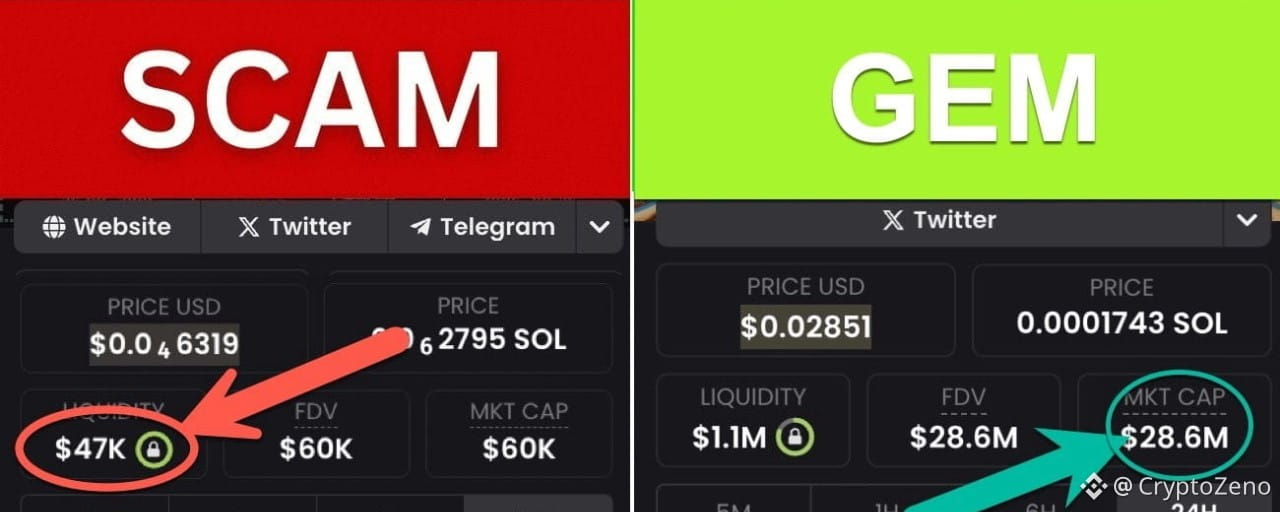
Article
99% of Memecoins on DexScreener Are Scams. Here’s How They Trick You and How to Avoid Becoming ExitMemecoins are flooding the market at an insane pace. Every day, new tokens appear on DexScreener, promising the next 100x, viral hype, or “community-driven” dreams. And scammers are feasting on that chaos.
Rugs, fake hype, and drained liquidity have become the norm rather than the exception. In 2025, your real edge isn’t being early. It’s being able to spot traps before they snap shut and staying several steps ahead of the frauds.
Even Mark Cuban has said memecoins are just musical chairs with money. He isn’t wrong. The only real question is whether you’ll still have a seat when the music stops, or whether you’ll be left holding a bag full of noise and regret.
One of the first red flags is unnatural price action. If you see duplicated trades or price staying oddly flat despite heavy volume, something is off. Scammers often use bots to fake activity and hold price steady before pulling liquidity. Real markets breathe. They move, fluctuate, and react. If a chart looks frozen, it’s usually manufactured.
Fake volume is one of the most common tricks in the memecoin playbook. In many scams, over 90% of transactions come from brand-new wallets. The goal is simple: make the token look explosive, trigger FOMO, and lure in real buyers. If you don’t catch it early, you’re not early you’re exit liquidity.
Scammers don’t care about the meme, the narrative, or the so-called mission. They care about draining wallets. They sell hype, fake hope, and empty promises. The cycle is always the same: pump the chart, dump on buyers, repeat with a new token, then disappear.
To make things worse, anyone can buy promotional services. It’s just a question of budget. These services flood the transaction feed, inflate numbers, and create the illusion of legitimacy. You see big activity and assume it’s organic. That assumption is exactly where most people get trapped.
The recent indictment of Gotbit only confirmed what many already knew. A well-known crypto “market maker” allegedly faked volume for years, from 2018 to 2024. The strategy was straightforward: inflate numbers, manufacture FOMO, and bait traders into terrible entries. This isn’t an exception. It’s how much of the game is played.
That’s why slowing down matters. Study the transactions. If you see countless tiny transactions, like $0.01 trades, it’s usually paid bot activity. It’s engineered momentum, not real demand. Don’t chase the illusion. Always check the data before aping in.
Liquidity is where the truth hides. Developers can add or remove liquidity at any time to distort the chart and create a false sense of safety. Many rugs happen right after liquidity looks “healthy.” Sudden changes often reveal the real intent behind the project.
A quick social check can save you a lot of money. Search the token’s ticker and look at who’s talking about it. Are there real people discussing it, or just bots echoing the same phrases? Look at the marketing. Organic growth feels very different from paid hype if you know what to look for.
Always vet the basics. The website should look deliberate, not rushed. Twitter should show real engagement, not just reposts and giveaways. Telegram should have actual conversation, live moderators, and consistent activity. Empty rooms and scripted messages are major warning signs.
Memecoins aren’t evil by default. But most of them are designed to exploit speed, emotion, and FOMO. The more you slow down, verify data, and question what you’re seeing, the less likely you are to become someone else’s liquidity.
In this market, survival is alpha.
#memecoin #Cryptoscam #CryptoZeno
99% of Memecoins on DexScreener Are Scams. Here’s How They Trick You and How to Avoid Becoming Exit
Memecoins are flooding the market at an insane pace. Every day, new tokens appear on DexScreener, promising the next 100x, viral hype, or “community-driven” dreams. And scammers are feasting on that chaos.
Rugs, fake hype, and drained liquidity have become the norm rather than the exception. In 2025, your real edge isn’t being early. It’s being able to spot traps before they snap shut and staying several steps ahead of the frauds.
Even Mark Cuban has said memecoins are just musical chairs with money. He isn’t wrong. The only real question is whether you’ll still have a seat when the music stops, or whether you’ll be left holding a bag full of noise and regret.
One of the first red flags is unnatural price action. If you see duplicated trades or price staying oddly flat despite heavy volume, something is off. Scammers often use bots to fake activity and hold price steady before pulling liquidity. Real markets breathe. They move, fluctuate, and react. If a chart looks frozen, it’s usually manufactured.
Fake volume is one of the most common tricks in the memecoin playbook. In many scams, over 90% of transactions come from brand-new wallets. The goal is simple: make the token look explosive, trigger FOMO, and lure in real buyers. If you don’t catch it early, you’re not early you’re exit liquidity.
Scammers don’t care about the meme, the narrative, or the so-called mission. They care about draining wallets. They sell hype, fake hope, and empty promises. The cycle is always the same: pump the chart, dump on buyers, repeat with a new token, then disappear.
To make things worse, anyone can buy promotional services. It’s just a question of budget. These services flood the transaction feed, inflate numbers, and create the illusion of legitimacy. You see big activity and assume it’s organic. That assumption is exactly where most people get trapped.
The recent indictment of Gotbit only confirmed what many already knew. A well-known crypto “market maker” allegedly faked volume for years, from 2018 to 2024. The strategy was straightforward: inflate numbers, manufacture FOMO, and bait traders into terrible entries. This isn’t an exception. It’s how much of the game is played.
That’s why slowing down matters. Study the transactions. If you see countless tiny transactions, like $0.01 trades, it’s usually paid bot activity. It’s engineered momentum, not real demand. Don’t chase the illusion. Always check the data before aping in.
Liquidity is where the truth hides. Developers can add or remove liquidity at any time to distort the chart and create a false sense of safety. Many rugs happen right after liquidity looks “healthy.” Sudden changes often reveal the real intent behind the project.
A quick social check can save you a lot of money. Search the token’s ticker and look at who’s talking about it. Are there real people discussing it, or just bots echoing the same phrases? Look at the marketing. Organic growth feels very different from paid hype if you know what to look for.
Always vet the basics. The website should look deliberate, not rushed. Twitter should show real engagement, not just reposts and giveaways. Telegram should have actual conversation, live moderators, and consistent activity. Empty rooms and scripted messages are major warning signs.
Memecoins aren’t evil by default. But most of them are designed to exploit speed, emotion, and FOMO. The more you slow down, verify data, and question what you’re seeing, the less likely you are to become someone else’s liquidity.
In this market, survival is alpha.
#memecoin #Cryptoscam #CryptoZeno
Rugs, fake hype, and drained liquidity have become the norm rather than the exception. In 2025, your real edge isn’t being early. It’s being able to spot traps before they snap shut and staying several steps ahead of the frauds.
Even Mark Cuban has said memecoins are just musical chairs with money. He isn’t wrong. The only real question is whether you’ll still have a seat when the music stops, or whether you’ll be left holding a bag full of noise and regret.
One of the first red flags is unnatural price action. If you see duplicated trades or price staying oddly flat despite heavy volume, something is off. Scammers often use bots to fake activity and hold price steady before pulling liquidity. Real markets breathe. They move, fluctuate, and react. If a chart looks frozen, it’s usually manufactured.
Fake volume is one of the most common tricks in the memecoin playbook. In many scams, over 90% of transactions come from brand-new wallets. The goal is simple: make the token look explosive, trigger FOMO, and lure in real buyers. If you don’t catch it early, you’re not early you’re exit liquidity.
Scammers don’t care about the meme, the narrative, or the so-called mission. They care about draining wallets. They sell hype, fake hope, and empty promises. The cycle is always the same: pump the chart, dump on buyers, repeat with a new token, then disappear.
To make things worse, anyone can buy promotional services. It’s just a question of budget. These services flood the transaction feed, inflate numbers, and create the illusion of legitimacy. You see big activity and assume it’s organic. That assumption is exactly where most people get trapped.
The recent indictment of Gotbit only confirmed what many already knew. A well-known crypto “market maker” allegedly faked volume for years, from 2018 to 2024. The strategy was straightforward: inflate numbers, manufacture FOMO, and bait traders into terrible entries. This isn’t an exception. It’s how much of the game is played.
That’s why slowing down matters. Study the transactions. If you see countless tiny transactions, like $0.01 trades, it’s usually paid bot activity. It’s engineered momentum, not real demand. Don’t chase the illusion. Always check the data before aping in.
Liquidity is where the truth hides. Developers can add or remove liquidity at any time to distort the chart and create a false sense of safety. Many rugs happen right after liquidity looks “healthy.” Sudden changes often reveal the real intent behind the project.
A quick social check can save you a lot of money. Search the token’s ticker and look at who’s talking about it. Are there real people discussing it, or just bots echoing the same phrases? Look at the marketing. Organic growth feels very different from paid hype if you know what to look for.
Always vet the basics. The website should look deliberate, not rushed. Twitter should show real engagement, not just reposts and giveaways. Telegram should have actual conversation, live moderators, and consistent activity. Empty rooms and scripted messages are major warning signs.
Memecoins aren’t evil by default. But most of them are designed to exploit speed, emotion, and FOMO. The more you slow down, verify data, and question what you’re seeing, the less likely you are to become someone else’s liquidity.
In this market, survival is alpha.
#memecoin #Cryptoscam #CryptoZeno
6
365
·
--
Article
THEY DON’T WANT YOU TO SEE THISThis information was never meant for retail eyes. But I’m done watching people get slaughtered by algorithms designed to take your money.
Stop trading against them. Start trading WITH them. Here are the 4 execution models they run everyday:
THE STOP HUNT (Model 1)
Nothing moves until they collect. Price gets driven into a higher timeframe POI to wipe out everyone who entered too early.
They raid the lows, they eat every stop loss in sight. ONLY after the destruction do they shift market structure and print a fair value gap.
If you bought before the sweep, congratulations, you were the exit door.
THE TRAP (Model 2)
This is why smart retail traders still lose. Because even after the structure shift, there’s another layer.
They engineer an internal liquidity grab, a pullback that looks perfect. It’s BAIT. Price moves up, you enter long, and they nuke it one final time to wipe the last hands before the actual move begins.
THE ALGORITHM’S PRICE (Model 3)
Institutions don’t chase, they calculate. They need the optimal trade entry, the 0.62 to 0.79 Fibonacci retracement zone.
When a fair value gap sits inside that window, the math lines up perfectly. That’s when the real money enters, not before.
THE RANGE TRAP (Model 4)
This is textbook accumulation disguised as boredom. They lock price in a tight consolidation until you give up and close your position. Then they fake a breakdown, sweeping HTF liquidity, only to reverse and rip back inside the range.
That retest of the original box? That’s not support. That’s institutions reloading before launch.
THE TRUTH:
Every candle on your chart is engineered to make you do the wrong thing at the wrong time. These 4 models aren’t strategies. They’re the actual architecture of how price is delivered.
Billions flow through these patterns while retail stares at RSI divergences. Save this post and study it. You are either the hunter or the hunted.
I’m sharing this because I’m tired of watching good people get destroyed by a game they don’t understand. I’ve been studying macro for over 20 years, and I’ve called the last 3 major market tops and bottoms.
#CryptoZeno #SamsungSKHynixSharesRiseYTD
THEY DON’T WANT YOU TO SEE THIS
This information was never meant for retail eyes. But I’m done watching people get slaughtered by algorithms designed to take your money.
Stop trading against them. Start trading WITH them. Here are the 4 execution models they run everyday:
THE STOP HUNT (Model 1)
Nothing moves until they collect. Price gets driven into a higher timeframe POI to wipe out everyone who entered too early.
They raid the lows, they eat every stop loss in sight. ONLY after the destruction do they shift market structure and print a fair value gap.
If you bought before the sweep, congratulations, you were the exit door.
THE TRAP (Model 2)
This is why smart retail traders still lose. Because even after the structure shift, there’s another layer.
They engineer an internal liquidity grab, a pullback that looks perfect. It’s BAIT. Price moves up, you enter long, and they nuke it one final time to wipe the last hands before the actual move begins.
THE ALGORITHM’S PRICE (Model 3)
Institutions don’t chase, they calculate. They need the optimal trade entry, the 0.62 to 0.79 Fibonacci retracement zone.
When a fair value gap sits inside that window, the math lines up perfectly. That’s when the real money enters, not before.
THE RANGE TRAP (Model 4)
This is textbook accumulation disguised as boredom. They lock price in a tight consolidation until you give up and close your position. Then they fake a breakdown, sweeping HTF liquidity, only to reverse and rip back inside the range.
That retest of the original box? That’s not support. That’s institutions reloading before launch.
THE TRUTH:
Every candle on your chart is engineered to make you do the wrong thing at the wrong time. These 4 models aren’t strategies. They’re the actual architecture of how price is delivered.
Billions flow through these patterns while retail stares at RSI divergences. Save this post and study it. You are either the hunter or the hunted.
I’m sharing this because I’m tired of watching good people get destroyed by a game they don’t understand. I’ve been studying macro for over 20 years, and I’ve called the last 3 major market tops and bottoms.
#CryptoZeno #SamsungSKHynixSharesRiseYTD
Stop trading against them. Start trading WITH them. Here are the 4 execution models they run everyday:
THE STOP HUNT (Model 1)
Nothing moves until they collect. Price gets driven into a higher timeframe POI to wipe out everyone who entered too early.
They raid the lows, they eat every stop loss in sight. ONLY after the destruction do they shift market structure and print a fair value gap.
If you bought before the sweep, congratulations, you were the exit door.
THE TRAP (Model 2)
This is why smart retail traders still lose. Because even after the structure shift, there’s another layer.
They engineer an internal liquidity grab, a pullback that looks perfect. It’s BAIT. Price moves up, you enter long, and they nuke it one final time to wipe the last hands before the actual move begins.
THE ALGORITHM’S PRICE (Model 3)
Institutions don’t chase, they calculate. They need the optimal trade entry, the 0.62 to 0.79 Fibonacci retracement zone.
When a fair value gap sits inside that window, the math lines up perfectly. That’s when the real money enters, not before.
THE RANGE TRAP (Model 4)
This is textbook accumulation disguised as boredom. They lock price in a tight consolidation until you give up and close your position. Then they fake a breakdown, sweeping HTF liquidity, only to reverse and rip back inside the range.
That retest of the original box? That’s not support. That’s institutions reloading before launch.
THE TRUTH:
Every candle on your chart is engineered to make you do the wrong thing at the wrong time. These 4 models aren’t strategies. They’re the actual architecture of how price is delivered.
Billions flow through these patterns while retail stares at RSI divergences. Save this post and study it. You are either the hunter or the hunted.
I’m sharing this because I’m tired of watching good people get destroyed by a game they don’t understand. I’ve been studying macro for over 20 years, and I’ve called the last 3 major market tops and bottoms.
#CryptoZeno #SamsungSKHynixSharesRiseYTD
7
748
·
--

Article
Web3 Jobs Are Paying $120,000 - $200,000+- And Most People Are Still Sleeping On ItWhile the majority of the world is still debating whether crypto is “dead or alive,” a quieter group of early adopters is already building long-term careers inside Web3. They are not chasing short-term hype. They are positioning themselves inside an industry that is still early, still underbuilt, and desperately short on real talent.
This is exactly why Web3 jobs today are paying anywhere from $120,000 to over $200,000 per year, often for roles that do not require a university degree, a computer science background, or years of traditional corporate experience.
All you really need is a laptop, genuine curiosity, and the willingness to learn faster than the average person.
In 2023, the global average Web2 salary sat around $40,000 per year. Web3, on the other hand, consistently offers compensation that is two to five times higher. This gap exists for a simple reason. Mass adoption has not happened yet, but infrastructure still needs to be built. Small teams are moving fast, capital is available, and companies are willing to pay a premium for people who can actually execute.
This moment matters because it will not last forever. Once Web3 becomes mainstream, the salary asymmetry disappears, hiring standards become rigid, and opportunities narrow. Early entrants always benefit the most.
One of the biggest misconceptions about Web3 is that it is only for developers. In reality, most Web3 companies care far more about execution, curiosity, and ecosystem understanding than formal education. You do not need a degree. You do not need a perfect resume. You need to understand crypto culture, user behavior, and how value flows inside decentralized systems. If you can do that and show proof of work, you are already ahead of the majority of applicants.
This is why so many non-technical roles in Web3 pay extremely well.
Designers play a critical role in simplifying complex products like dApps and NFT platforms. A strong Web3 UX or UI designer focuses on user flows, interfaces, and reducing friction for users who are not technical. These roles typically pay between $90,000 and $140,000 because good design directly impacts adoption.
Another highly undervalued role is blockchain technical writing. Every protocol needs documentation, tutorials, blog content, and clear explanations for users and developers. People who can translate complex blockchain mechanics into simple, understandable language are rare, which is why technical writers can earn anywhere from $70,000 to $140,000.
Community managers are equally essential. In Web3, community is not a marketing add-on. It is the product. Managing Discord servers, Telegram groups, newsletters, and feedback loops requires empathy, communication skills, and deep cultural awareness. Projects that ignore community fail quickly, which is why experienced community managers are consistently paid competitive salaries.
Marketing and growth roles also dominate Web3 hiring. Crypto marketing specialists focus on educating users, telling compelling stories, and guiding attention during product launches. Unlike Web2 marketing, this role requires a strong understanding of token incentives, narratives, and timing. Salaries commonly range from $60,000 to $120,000.
Social media managers in Web3 often operate more like brand strategists than content schedulers. They shape the project’s public voice across platforms like Twitter, YouTube, and Discord, track performance, and drive long-term growth. Depending on scale and responsibility, compensation can range widely, from $25,000 up to six figures.
For those who enjoy market research, cryptocurrency analysts are in constant demand. These roles involve tracking market trends, analyzing tokens, studying DeFi protocols, and publishing insights for investors or communities. Strong analytical skills combined with on-chain knowledge can command salaries between $60,000 and $150,000.
Operational roles are just as important. Blockchain project coordinators ensure teams stay aligned, deadlines are met, and launches happen on time. Understanding how smart contracts and decentralized teams operate is a major advantage here, and pay often falls between $80,000 and $100,000.
DAOs also offer a unique entry point. Paid DAO roles allow contributors to assist with governance, research, operations, and design. Many people underestimate these positions, but they often lead to long-term opportunities and steady income while building a public on-chain reputation.
More technical but still highly accessible is the role of a Web3 landing page developer. Building high-conversion marketing pages for crypto projects using tools like Webflow or Framer can generate exceptional income. Because these pages directly impact fundraising and user acquisition, salaries can exceed $200,000 for skilled builders.
Finally, smart contract developers remain the backbone of Web3. Coding, auditing, and deploying protocols requires deeper technical knowledge, but demand remains extremely high. Even junior developers can earn strong salaries, with experienced engineers earning significantly more over time.
Beyond working directly for Web3 companies, there is another powerful path many people overlook. Building a personal brand as a Web3 KOL on platforms like Binance Square can itself become a meaningful income stream. By consistently publishing high-quality analysis, educational content, and market insights, creators can monetize attention, attract partnerships, and open doors to roles that are never publicly advertised.
In Web3, attention is leverage. Content is proof of work.
You do not need to be the smartest person in the room to succeed in this industry. You need to be curious, consistent, and willing to show your work publicly. Start small, learn fast, and keep shipping. The best Web3 jobs are not posted on job boards. They are created by people who show up early and keep building while everyone else is still watching from the sidelines.
#CryptoZeno #ForwardIndustriesAllStockBidForBreraHoldings
Web3 Jobs Are Paying $120,000 - $200,000+- And Most People Are Still Sleeping On It
While the majority of the world is still debating whether crypto is “dead or alive,” a quieter group of early adopters is already building long-term careers inside Web3. They are not chasing short-term hype. They are positioning themselves inside an industry that is still early, still underbuilt, and desperately short on real talent.
This is exactly why Web3 jobs today are paying anywhere from $120,000 to over $200,000 per year, often for roles that do not require a university degree, a computer science background, or years of traditional corporate experience.
All you really need is a laptop, genuine curiosity, and the willingness to learn faster than the average person.
In 2023, the global average Web2 salary sat around $40,000 per year. Web3, on the other hand, consistently offers compensation that is two to five times higher. This gap exists for a simple reason. Mass adoption has not happened yet, but infrastructure still needs to be built. Small teams are moving fast, capital is available, and companies are willing to pay a premium for people who can actually execute.
This moment matters because it will not last forever. Once Web3 becomes mainstream, the salary asymmetry disappears, hiring standards become rigid, and opportunities narrow. Early entrants always benefit the most.
One of the biggest misconceptions about Web3 is that it is only for developers. In reality, most Web3 companies care far more about execution, curiosity, and ecosystem understanding than formal education. You do not need a degree. You do not need a perfect resume. You need to understand crypto culture, user behavior, and how value flows inside decentralized systems. If you can do that and show proof of work, you are already ahead of the majority of applicants.
This is why so many non-technical roles in Web3 pay extremely well.
Designers play a critical role in simplifying complex products like dApps and NFT platforms. A strong Web3 UX or UI designer focuses on user flows, interfaces, and reducing friction for users who are not technical. These roles typically pay between $90,000 and $140,000 because good design directly impacts adoption.
Another highly undervalued role is blockchain technical writing. Every protocol needs documentation, tutorials, blog content, and clear explanations for users and developers. People who can translate complex blockchain mechanics into simple, understandable language are rare, which is why technical writers can earn anywhere from $70,000 to $140,000.
Community managers are equally essential. In Web3, community is not a marketing add-on. It is the product. Managing Discord servers, Telegram groups, newsletters, and feedback loops requires empathy, communication skills, and deep cultural awareness. Projects that ignore community fail quickly, which is why experienced community managers are consistently paid competitive salaries.
Marketing and growth roles also dominate Web3 hiring. Crypto marketing specialists focus on educating users, telling compelling stories, and guiding attention during product launches. Unlike Web2 marketing, this role requires a strong understanding of token incentives, narratives, and timing. Salaries commonly range from $60,000 to $120,000.
Social media managers in Web3 often operate more like brand strategists than content schedulers. They shape the project’s public voice across platforms like Twitter, YouTube, and Discord, track performance, and drive long-term growth. Depending on scale and responsibility, compensation can range widely, from $25,000 up to six figures.
For those who enjoy market research, cryptocurrency analysts are in constant demand. These roles involve tracking market trends, analyzing tokens, studying DeFi protocols, and publishing insights for investors or communities. Strong analytical skills combined with on-chain knowledge can command salaries between $60,000 and $150,000.
Operational roles are just as important. Blockchain project coordinators ensure teams stay aligned, deadlines are met, and launches happen on time. Understanding how smart contracts and decentralized teams operate is a major advantage here, and pay often falls between $80,000 and $100,000.
DAOs also offer a unique entry point. Paid DAO roles allow contributors to assist with governance, research, operations, and design. Many people underestimate these positions, but they often lead to long-term opportunities and steady income while building a public on-chain reputation.
More technical but still highly accessible is the role of a Web3 landing page developer. Building high-conversion marketing pages for crypto projects using tools like Webflow or Framer can generate exceptional income. Because these pages directly impact fundraising and user acquisition, salaries can exceed $200,000 for skilled builders.
Finally, smart contract developers remain the backbone of Web3. Coding, auditing, and deploying protocols requires deeper technical knowledge, but demand remains extremely high. Even junior developers can earn strong salaries, with experienced engineers earning significantly more over time.
Beyond working directly for Web3 companies, there is another powerful path many people overlook. Building a personal brand as a Web3 KOL on platforms like Binance Square can itself become a meaningful income stream. By consistently publishing high-quality analysis, educational content, and market insights, creators can monetize attention, attract partnerships, and open doors to roles that are never publicly advertised.
In Web3, attention is leverage. Content is proof of work.
You do not need to be the smartest person in the room to succeed in this industry. You need to be curious, consistent, and willing to show your work publicly. Start small, learn fast, and keep shipping. The best Web3 jobs are not posted on job boards. They are created by people who show up early and keep building while everyone else is still watching from the sidelines.
#CryptoZeno #ForwardIndustriesAllStockBidForBreraHoldings
This is exactly why Web3 jobs today are paying anywhere from $120,000 to over $200,000 per year, often for roles that do not require a university degree, a computer science background, or years of traditional corporate experience.
All you really need is a laptop, genuine curiosity, and the willingness to learn faster than the average person.
In 2023, the global average Web2 salary sat around $40,000 per year. Web3, on the other hand, consistently offers compensation that is two to five times higher. This gap exists for a simple reason. Mass adoption has not happened yet, but infrastructure still needs to be built. Small teams are moving fast, capital is available, and companies are willing to pay a premium for people who can actually execute.
This moment matters because it will not last forever. Once Web3 becomes mainstream, the salary asymmetry disappears, hiring standards become rigid, and opportunities narrow. Early entrants always benefit the most.
One of the biggest misconceptions about Web3 is that it is only for developers. In reality, most Web3 companies care far more about execution, curiosity, and ecosystem understanding than formal education. You do not need a degree. You do not need a perfect resume. You need to understand crypto culture, user behavior, and how value flows inside decentralized systems. If you can do that and show proof of work, you are already ahead of the majority of applicants.
This is why so many non-technical roles in Web3 pay extremely well.
Designers play a critical role in simplifying complex products like dApps and NFT platforms. A strong Web3 UX or UI designer focuses on user flows, interfaces, and reducing friction for users who are not technical. These roles typically pay between $90,000 and $140,000 because good design directly impacts adoption.
Another highly undervalued role is blockchain technical writing. Every protocol needs documentation, tutorials, blog content, and clear explanations for users and developers. People who can translate complex blockchain mechanics into simple, understandable language are rare, which is why technical writers can earn anywhere from $70,000 to $140,000.
Community managers are equally essential. In Web3, community is not a marketing add-on. It is the product. Managing Discord servers, Telegram groups, newsletters, and feedback loops requires empathy, communication skills, and deep cultural awareness. Projects that ignore community fail quickly, which is why experienced community managers are consistently paid competitive salaries.
Marketing and growth roles also dominate Web3 hiring. Crypto marketing specialists focus on educating users, telling compelling stories, and guiding attention during product launches. Unlike Web2 marketing, this role requires a strong understanding of token incentives, narratives, and timing. Salaries commonly range from $60,000 to $120,000.
Social media managers in Web3 often operate more like brand strategists than content schedulers. They shape the project’s public voice across platforms like Twitter, YouTube, and Discord, track performance, and drive long-term growth. Depending on scale and responsibility, compensation can range widely, from $25,000 up to six figures.
For those who enjoy market research, cryptocurrency analysts are in constant demand. These roles involve tracking market trends, analyzing tokens, studying DeFi protocols, and publishing insights for investors or communities. Strong analytical skills combined with on-chain knowledge can command salaries between $60,000 and $150,000.
Operational roles are just as important. Blockchain project coordinators ensure teams stay aligned, deadlines are met, and launches happen on time. Understanding how smart contracts and decentralized teams operate is a major advantage here, and pay often falls between $80,000 and $100,000.
DAOs also offer a unique entry point. Paid DAO roles allow contributors to assist with governance, research, operations, and design. Many people underestimate these positions, but they often lead to long-term opportunities and steady income while building a public on-chain reputation.
More technical but still highly accessible is the role of a Web3 landing page developer. Building high-conversion marketing pages for crypto projects using tools like Webflow or Framer can generate exceptional income. Because these pages directly impact fundraising and user acquisition, salaries can exceed $200,000 for skilled builders.
Finally, smart contract developers remain the backbone of Web3. Coding, auditing, and deploying protocols requires deeper technical knowledge, but demand remains extremely high. Even junior developers can earn strong salaries, with experienced engineers earning significantly more over time.
Beyond working directly for Web3 companies, there is another powerful path many people overlook. Building a personal brand as a Web3 KOL on platforms like Binance Square can itself become a meaningful income stream. By consistently publishing high-quality analysis, educational content, and market insights, creators can monetize attention, attract partnerships, and open doors to roles that are never publicly advertised.
In Web3, attention is leverage. Content is proof of work.
You do not need to be the smartest person in the room to succeed in this industry. You need to be curious, consistent, and willing to show your work publicly. Start small, learn fast, and keep shipping. The best Web3 jobs are not posted on job boards. They are created by people who show up early and keep building while everyone else is still watching from the sidelines.
#CryptoZeno #ForwardIndustriesAllStockBidForBreraHoldings
3
226
·
--
Article
Trader Roadmap - A Guide to Becoming a Top 1% TraderThis is what I wish I had 9 years ago when I started trading… and it’s the opposite of what most influencers tell you to do.
I will give you my step-by-step roadmap detailing every stage of a trader's journey.
You will see exactly where you are, why you're stuck, and what to fix first.
Let's start:
The Three Dimensions
If you're not profitable, you likely have:
A strategy that doesn't make moneyA strategy you can't follow under pressure.A strategy that doesn't survive long enough to make money.
This is the core of my model.
Strategy: your journal, edge development, and asset selectionRisk: your sizing, trade management, and scalingPsyche: your psychology, routines, and discipline
Where these overlap, specific capabilities emerge:
Strategy + Risk = ProfitStrategy + Psyche = ScaleRisk + Psyche = SurvivalAll three = Top 1% Trader
Remember this: at every level of the roadmap, one of these three dimensions is the bottleneck. Everything we diagnose comes back to the same question → is it Strategy, Risk, or Psyche?
Level 0 → No Strategy
This is where every trader starts.
And where many stay longer than they realise...
You know you're Level 0 if:
No strategy. Just tips and 'gut feelings'No written rules for entries, exits, or stop lossesNo journal. No screenshots. No data.Position sizes swing wildly (1% one day, 10% the next)Wins feel like skill. Losses feel like bad luck.
What's required to reach Level 1
The goal at Level 0 isn't to find a strategy.
It's to build three habits: a routine, a journal, and the resilience to keep showing up.
Strategy:
Start journaling every trade immediately after you close it to capture your entries, exits, trade screenshots and emotional state.
‼️IMPORTANT‼️ Your journal is the single most important tool you’ll ever use at ANY level as a trader. Without this, there is no data… and without data, you can never improve.
Psyche:
Find 2 hours in your day, 5 days a week, where you will trade / learn to trade no matter what.Solidify your sleep, diet and exercise.Trading is one of the hardest games in the world. It will test you emotionally before it rewards you financially. If you can't go to bed on time or eat 3 meals a day, you have a 0% chance of making it.
Risk:
Max portfolio size: $100.
Common mistake: Thinking you need to learn everything before you start. You don't need TA, risk management, or strategy yet... You need a journal, a routine, and the willingness to show up.
The first 30 trades aren't about making money. They're about building the foundation that makes everything else possible.
Level 1 → Inconsistent Strategy
Congratulations, you have your foundation. Now it's time to build the skills that will become your trading strategy.
Technical analysis gives you a framework for reading price.Risk management gives you a framework for protecting capital.Learning your tools gives you the infrastructure to trade.
What Level 1 looks like:
Learning to read charts: support/resistance, candlestick patterns, market structureSetting up your exchange, understanding order types, securing your capitalStarting to define entry triggers, stop loss placement, take profit rulesRisk per trade becoming more consistent but still variesJournal has data, but execution still varies
What's required to reach Level 2
Strategy:
Learn Price Action, Support & Resistance, and Volume. I've seen traders make $10k+ a month using only these. I have detailed free tutorials on all of them.Learn to use your Exchange (order types, leverage, trade placement)Put together ONE very basic breakout or reversal strategy. As simple as '1 candle close above resistance and I buy the breakout' (the goal is consistency NOT profit at this point)
Risk:
Max portfolio size: $1000. Until we can prove we're profitable, we don't need more.Set a fixed risk per trade. 1% of your account is a solid starting point.Calculate position size before every trade: Position Size = Max Risk ÷ (Entry Price − Stop Loss Price).
Psyche:
No new focus. Keep the routine and journal from Level 0.
Level 2 → Consistent Strategy
You have rules. You follow them.
Great work most traders never get here.
Now we want profitability.
What Level 2 looks like:
Follows strategy rules on 90%+ of tradesJournals every trade with screenshots and commentsHas a working routine: checklist, report card, emotional check-insData is clean and reliableNot yet consistently profitable: equity curve may be flat or slightly negative
We need to evolve from following rules to isolating variables and improving our rules.
The journey looks like this.
Unprofitable. Improve ↓Less unprofitable. Improve ↓Breakeven. Improve ↓Slightly profitable. Improve ↓More Profitable
What's required to reach Level 3
Strategy:
Develop asset selection skills. This is the highest-leverage improvement you can make. A 10% improvement in asset selection improves your entry, stop, and target simultaneously. A 10% improvement in entry alone only improves entry.Develop condition identification skills. Learn which conditions favour your strategy. Tip: Moving averages are very good for this.Understand expectancy: (Win% × Average Win) − (Loss% × Average Loss)Learn to analyse your journal data. Filter trades into winners and losers. Open all winning screenshots in one tab, all losing screenshots in another. Look for patterns. Tip: Change one variable at a time. Test 30+ trades. Measure the impact. Then repeat.
Risk:
No new focus. Just remember max portfolio size stays $1000.
Psyche:
Continue routine.
Common mistake: Changing too many variables at once. Or perfecting entries when asset selection would have a bigger impact. Prioritise the changes that create the most leverage.
Level 3 → Consistent & Profitable Strategy
You're consistently profitable, congratulations you're in the top 5%. This is a real milestone.
Everything you've built works but only with a small portfolio.
The question now: can you scale it without breaking it?
In Level 2, you learned which trades to take.In Level 3, you learn how to deepen your edge and learn to manage trades actively.
What Level 3 looks like:
Positive expectancy over 30+ tradesUpward-sloping equity curveCan distinguish a good setup from a great oneBeginning to introduce discretion based on dataMaking money but not yet at meaningful size
Why you're stuck
You need two things to move forward:
Active trade management (protect profits, cut losers more intelligently)Continued edge development (so your strategy evolves as markets change).
Edge isn't permanent and alpha decay is real.
What's required to reach Level 4
Strategy:
Expand your strategy. If you've been trading breakouts, learn breakdowns. Then explore reversals. Each new style gives you tools for different conditions and reduces the periods where you're sitting on your hands.
Risk:
Introduce active trade management. Start by noting the candle where you lose confidence and writing why. Build the recognition skill before adding the execution component.Develop conviction-based sizing. Not all setups are equal. Score each setup across key variables. Your best set ups get more risk. Your worst set ups get less.
Psyche:
Prepare for the psychological shift of scaling... The emotions around a $5 loss and a $500 loss are fundamentally different. Scaling introduces challenges that didn't exist at small size. Risk appetite is like a rubber band. Stretch it slowly.
Level 4 → Consistent, Profitable & Scaled
Wow, you did it. You can now earn a serious income full or part time trading.
At Level 4, you're no longer building the machine.
You're maintaining it, upgrading it, and running it at full capacity.
What Level 4 looks like:
Consistently making four to five+ figures per monthScaled to a meaningful portfolio sizeMultiple strategies across different market conditionsExecution fluid and largely automaticEmotional stability under large position sizesContinuous edge development as a habit, not a project
The Psyche dimension develops differently at each level.
At Level 0, you're building habits.At Level 1, managing emotions through live execution for the first time.At Level 2, following rules under moderate stress.At Level 3, blending system and discretion without losing composure.At Level 4, execution becomes seamless.
The Ongoing Challenge
Markets evolve. What's working right now likely won't last forever.
Your real edge is your process itself.
The meta-skill of developing edge is more valuable than any single edge you currently hold.
What Level 4 traders focus on:
Psychology mastery: daily meditation, lifestyle optimisation, structured emotional check-insSystematic scaling: $1,000 → $2,000 → $5,000 → $10,000+, with 30+ trades at each level before moving upContinuous edge development through structured testingFinding new edgePortfolio-level risk management across multiple strategiesNavigating liquidity constraints as size grows
#CryptoZeno #TradingTales
Trader Roadmap - A Guide to Becoming a Top 1% Trader
This is what I wish I had 9 years ago when I started trading… and it’s the opposite of what most influencers tell you to do.
I will give you my step-by-step roadmap detailing every stage of a trader's journey.
You will see exactly where you are, why you're stuck, and what to fix first.
Let's start:
The Three Dimensions
If you're not profitable, you likely have:
A strategy that doesn't make moneyA strategy you can't follow under pressure.A strategy that doesn't survive long enough to make money.
This is the core of my model.
Strategy: your journal, edge development, and asset selectionRisk: your sizing, trade management, and scalingPsyche: your psychology, routines, and discipline
Where these overlap, specific capabilities emerge:
Strategy + Risk = ProfitStrategy + Psyche = ScaleRisk + Psyche = SurvivalAll three = Top 1% Trader
Remember this: at every level of the roadmap, one of these three dimensions is the bottleneck. Everything we diagnose comes back to the same question → is it Strategy, Risk, or Psyche?
Level 0 → No Strategy
This is where every trader starts.
And where many stay longer than they realise...
You know you're Level 0 if:
No strategy. Just tips and 'gut feelings'No written rules for entries, exits, or stop lossesNo journal. No screenshots. No data.Position sizes swing wildly (1% one day, 10% the next)Wins feel like skill. Losses feel like bad luck.
What's required to reach Level 1
The goal at Level 0 isn't to find a strategy.
It's to build three habits: a routine, a journal, and the resilience to keep showing up.
Strategy:
Start journaling every trade immediately after you close it to capture your entries, exits, trade screenshots and emotional state.
‼️IMPORTANT‼️ Your journal is the single most important tool you’ll ever use at ANY level as a trader. Without this, there is no data… and without data, you can never improve.
Psyche:
Find 2 hours in your day, 5 days a week, where you will trade / learn to trade no matter what.Solidify your sleep, diet and exercise.Trading is one of the hardest games in the world. It will test you emotionally before it rewards you financially. If you can't go to bed on time or eat 3 meals a day, you have a 0% chance of making it.
Risk:
Max portfolio size: $100.
Common mistake: Thinking you need to learn everything before you start. You don't need TA, risk management, or strategy yet... You need a journal, a routine, and the willingness to show up.
The first 30 trades aren't about making money. They're about building the foundation that makes everything else possible.
Level 1 → Inconsistent Strategy
Congratulations, you have your foundation. Now it's time to build the skills that will become your trading strategy.
Technical analysis gives you a framework for reading price.Risk management gives you a framework for protecting capital.Learning your tools gives you the infrastructure to trade.
What Level 1 looks like:
Learning to read charts: support/resistance, candlestick patterns, market structureSetting up your exchange, understanding order types, securing your capitalStarting to define entry triggers, stop loss placement, take profit rulesRisk per trade becoming more consistent but still variesJournal has data, but execution still varies
What's required to reach Level 2
Strategy:
Learn Price Action, Support & Resistance, and Volume. I've seen traders make $10k+ a month using only these. I have detailed free tutorials on all of them.Learn to use your Exchange (order types, leverage, trade placement)Put together ONE very basic breakout or reversal strategy. As simple as '1 candle close above resistance and I buy the breakout' (the goal is consistency NOT profit at this point)
Risk:
Max portfolio size: $1000. Until we can prove we're profitable, we don't need more.Set a fixed risk per trade. 1% of your account is a solid starting point.Calculate position size before every trade: Position Size = Max Risk ÷ (Entry Price − Stop Loss Price).
Psyche:
No new focus. Keep the routine and journal from Level 0.
Level 2 → Consistent Strategy
You have rules. You follow them.
Great work most traders never get here.
Now we want profitability.
What Level 2 looks like:
Follows strategy rules on 90%+ of tradesJournals every trade with screenshots and commentsHas a working routine: checklist, report card, emotional check-insData is clean and reliableNot yet consistently profitable: equity curve may be flat or slightly negative
We need to evolve from following rules to isolating variables and improving our rules.
The journey looks like this.
Unprofitable. Improve ↓Less unprofitable. Improve ↓Breakeven. Improve ↓Slightly profitable. Improve ↓More Profitable
What's required to reach Level 3
Strategy:
Develop asset selection skills. This is the highest-leverage improvement you can make. A 10% improvement in asset selection improves your entry, stop, and target simultaneously. A 10% improvement in entry alone only improves entry.Develop condition identification skills. Learn which conditions favour your strategy. Tip: Moving averages are very good for this.Understand expectancy: (Win% × Average Win) − (Loss% × Average Loss)Learn to analyse your journal data. Filter trades into winners and losers. Open all winning screenshots in one tab, all losing screenshots in another. Look for patterns. Tip: Change one variable at a time. Test 30+ trades. Measure the impact. Then repeat.
Risk:
No new focus. Just remember max portfolio size stays $1000.
Psyche:
Continue routine.
Common mistake: Changing too many variables at once. Or perfecting entries when asset selection would have a bigger impact. Prioritise the changes that create the most leverage.
Level 3 → Consistent & Profitable Strategy
You're consistently profitable, congratulations you're in the top 5%. This is a real milestone.
Everything you've built works but only with a small portfolio.
The question now: can you scale it without breaking it?
In Level 2, you learned which trades to take.In Level 3, you learn how to deepen your edge and learn to manage trades actively.
What Level 3 looks like:
Positive expectancy over 30+ tradesUpward-sloping equity curveCan distinguish a good setup from a great oneBeginning to introduce discretion based on dataMaking money but not yet at meaningful size
Why you're stuck
You need two things to move forward:
Active trade management (protect profits, cut losers more intelligently)Continued edge development (so your strategy evolves as markets change).
Edge isn't permanent and alpha decay is real.
What's required to reach Level 4
Strategy:
Expand your strategy. If you've been trading breakouts, learn breakdowns. Then explore reversals. Each new style gives you tools for different conditions and reduces the periods where you're sitting on your hands.
Risk:
Introduce active trade management. Start by noting the candle where you lose confidence and writing why. Build the recognition skill before adding the execution component.Develop conviction-based sizing. Not all setups are equal. Score each setup across key variables. Your best set ups get more risk. Your worst set ups get less.
Psyche:
Prepare for the psychological shift of scaling... The emotions around a $5 loss and a $500 loss are fundamentally different. Scaling introduces challenges that didn't exist at small size. Risk appetite is like a rubber band. Stretch it slowly.
Level 4 → Consistent, Profitable & Scaled
Wow, you did it. You can now earn a serious income full or part time trading.
At Level 4, you're no longer building the machine.
You're maintaining it, upgrading it, and running it at full capacity.
What Level 4 looks like:
Consistently making four to five+ figures per monthScaled to a meaningful portfolio sizeMultiple strategies across different market conditionsExecution fluid and largely automaticEmotional stability under large position sizesContinuous edge development as a habit, not a project
The Psyche dimension develops differently at each level.
At Level 0, you're building habits.At Level 1, managing emotions through live execution for the first time.At Level 2, following rules under moderate stress.At Level 3, blending system and discretion without losing composure.At Level 4, execution becomes seamless.
The Ongoing Challenge
Markets evolve. What's working right now likely won't last forever.
Your real edge is your process itself.
The meta-skill of developing edge is more valuable than any single edge you currently hold.
What Level 4 traders focus on:
Psychology mastery: daily meditation, lifestyle optimisation, structured emotional check-insSystematic scaling: $1,000 → $2,000 → $5,000 → $10,000+, with 30+ trades at each level before moving upContinuous edge development through structured testingFinding new edgePortfolio-level risk management across multiple strategiesNavigating liquidity constraints as size grows
#CryptoZeno #TradingTales
I will give you my step-by-step roadmap detailing every stage of a trader's journey.
You will see exactly where you are, why you're stuck, and what to fix first.
Let's start:
The Three Dimensions
If you're not profitable, you likely have:
A strategy that doesn't make moneyA strategy you can't follow under pressure.A strategy that doesn't survive long enough to make money.
This is the core of my model.
Strategy: your journal, edge development, and asset selectionRisk: your sizing, trade management, and scalingPsyche: your psychology, routines, and discipline
Where these overlap, specific capabilities emerge:
Strategy + Risk = ProfitStrategy + Psyche = ScaleRisk + Psyche = SurvivalAll three = Top 1% Trader
Remember this: at every level of the roadmap, one of these three dimensions is the bottleneck. Everything we diagnose comes back to the same question → is it Strategy, Risk, or Psyche?
Level 0 → No Strategy
This is where every trader starts.
And where many stay longer than they realise...
You know you're Level 0 if:
No strategy. Just tips and 'gut feelings'No written rules for entries, exits, or stop lossesNo journal. No screenshots. No data.Position sizes swing wildly (1% one day, 10% the next)Wins feel like skill. Losses feel like bad luck.
What's required to reach Level 1
The goal at Level 0 isn't to find a strategy.
It's to build three habits: a routine, a journal, and the resilience to keep showing up.
Strategy:
Start journaling every trade immediately after you close it to capture your entries, exits, trade screenshots and emotional state.
‼️IMPORTANT‼️ Your journal is the single most important tool you’ll ever use at ANY level as a trader. Without this, there is no data… and without data, you can never improve.
Psyche:
Find 2 hours in your day, 5 days a week, where you will trade / learn to trade no matter what.Solidify your sleep, diet and exercise.Trading is one of the hardest games in the world. It will test you emotionally before it rewards you financially. If you can't go to bed on time or eat 3 meals a day, you have a 0% chance of making it.
Risk:
Max portfolio size: $100.
Common mistake: Thinking you need to learn everything before you start. You don't need TA, risk management, or strategy yet... You need a journal, a routine, and the willingness to show up.
The first 30 trades aren't about making money. They're about building the foundation that makes everything else possible.
Level 1 → Inconsistent Strategy
Congratulations, you have your foundation. Now it's time to build the skills that will become your trading strategy.
Technical analysis gives you a framework for reading price.Risk management gives you a framework for protecting capital.Learning your tools gives you the infrastructure to trade.
What Level 1 looks like:
Learning to read charts: support/resistance, candlestick patterns, market structureSetting up your exchange, understanding order types, securing your capitalStarting to define entry triggers, stop loss placement, take profit rulesRisk per trade becoming more consistent but still variesJournal has data, but execution still varies
What's required to reach Level 2
Strategy:
Learn Price Action, Support & Resistance, and Volume. I've seen traders make $10k+ a month using only these. I have detailed free tutorials on all of them.Learn to use your Exchange (order types, leverage, trade placement)Put together ONE very basic breakout or reversal strategy. As simple as '1 candle close above resistance and I buy the breakout' (the goal is consistency NOT profit at this point)
Risk:
Max portfolio size: $1000. Until we can prove we're profitable, we don't need more.Set a fixed risk per trade. 1% of your account is a solid starting point.Calculate position size before every trade: Position Size = Max Risk ÷ (Entry Price − Stop Loss Price).
Psyche:
No new focus. Keep the routine and journal from Level 0.
Level 2 → Consistent Strategy
You have rules. You follow them.
Great work most traders never get here.
Now we want profitability.
What Level 2 looks like:
Follows strategy rules on 90%+ of tradesJournals every trade with screenshots and commentsHas a working routine: checklist, report card, emotional check-insData is clean and reliableNot yet consistently profitable: equity curve may be flat or slightly negative
We need to evolve from following rules to isolating variables and improving our rules.
The journey looks like this.
Unprofitable. Improve ↓Less unprofitable. Improve ↓Breakeven. Improve ↓Slightly profitable. Improve ↓More Profitable
What's required to reach Level 3
Strategy:
Develop asset selection skills. This is the highest-leverage improvement you can make. A 10% improvement in asset selection improves your entry, stop, and target simultaneously. A 10% improvement in entry alone only improves entry.Develop condition identification skills. Learn which conditions favour your strategy. Tip: Moving averages are very good for this.Understand expectancy: (Win% × Average Win) − (Loss% × Average Loss)Learn to analyse your journal data. Filter trades into winners and losers. Open all winning screenshots in one tab, all losing screenshots in another. Look for patterns. Tip: Change one variable at a time. Test 30+ trades. Measure the impact. Then repeat.
Risk:
No new focus. Just remember max portfolio size stays $1000.
Psyche:
Continue routine.
Common mistake: Changing too many variables at once. Or perfecting entries when asset selection would have a bigger impact. Prioritise the changes that create the most leverage.
Level 3 → Consistent & Profitable Strategy
You're consistently profitable, congratulations you're in the top 5%. This is a real milestone.
Everything you've built works but only with a small portfolio.
The question now: can you scale it without breaking it?
In Level 2, you learned which trades to take.In Level 3, you learn how to deepen your edge and learn to manage trades actively.
What Level 3 looks like:
Positive expectancy over 30+ tradesUpward-sloping equity curveCan distinguish a good setup from a great oneBeginning to introduce discretion based on dataMaking money but not yet at meaningful size
Why you're stuck
You need two things to move forward:
Active trade management (protect profits, cut losers more intelligently)Continued edge development (so your strategy evolves as markets change).
Edge isn't permanent and alpha decay is real.
What's required to reach Level 4
Strategy:
Expand your strategy. If you've been trading breakouts, learn breakdowns. Then explore reversals. Each new style gives you tools for different conditions and reduces the periods where you're sitting on your hands.
Risk:
Introduce active trade management. Start by noting the candle where you lose confidence and writing why. Build the recognition skill before adding the execution component.Develop conviction-based sizing. Not all setups are equal. Score each setup across key variables. Your best set ups get more risk. Your worst set ups get less.
Psyche:
Prepare for the psychological shift of scaling... The emotions around a $5 loss and a $500 loss are fundamentally different. Scaling introduces challenges that didn't exist at small size. Risk appetite is like a rubber band. Stretch it slowly.
Level 4 → Consistent, Profitable & Scaled
Wow, you did it. You can now earn a serious income full or part time trading.
At Level 4, you're no longer building the machine.
You're maintaining it, upgrading it, and running it at full capacity.
What Level 4 looks like:
Consistently making four to five+ figures per monthScaled to a meaningful portfolio sizeMultiple strategies across different market conditionsExecution fluid and largely automaticEmotional stability under large position sizesContinuous edge development as a habit, not a project
The Psyche dimension develops differently at each level.
At Level 0, you're building habits.At Level 1, managing emotions through live execution for the first time.At Level 2, following rules under moderate stress.At Level 3, blending system and discretion without losing composure.At Level 4, execution becomes seamless.
The Ongoing Challenge
Markets evolve. What's working right now likely won't last forever.
Your real edge is your process itself.
The meta-skill of developing edge is more valuable than any single edge you currently hold.
What Level 4 traders focus on:
Psychology mastery: daily meditation, lifestyle optimisation, structured emotional check-insSystematic scaling: $1,000 → $2,000 → $5,000 → $10,000+, with 30+ trades at each level before moving upContinuous edge development through structured testingFinding new edgePortfolio-level risk management across multiple strategiesNavigating liquidity constraints as size grows
#CryptoZeno #TradingTales
1
8
3k
Log in to explore more content
Join global crypto users on Binance Square
⚡️ Get latest and useful information about crypto.
💬 Trusted by the world’s largest crypto exchange.
👍 Discover real insights from verified creators.
Email / Phone number
Trending Topics
1
#SECToClarifyOnChainFundraisingRules
25 views
26 Discussing
2
#UKFCAOpensCryptoFirmAuthorization
1,096 views
79 Discussing
3
#JapanMOFStudyGroupOnTokenizedGovtBonds
1,452 views
116 Discussing
4
#QNTRises287%
22,468 views
403 Discussing
5
#TrumpRejectsAIRulesForVoluntaryAudits
18,575 views
490 Discussing
6
#BitgetHotWalletBreachTiedToThirdPartySecurityFlaw
9,614 views
339 Discussing
7
#OpenAIUnveilsAlwaysOnAgentDots
8,744 views
354 Discussing
8
#ChainlinkLaunchesBankSWIFTLedgerFramework
9,252 views
274 Discussing
9
#EarningsSeason
529,809 views
3,808 Discussing
10
#ZcashApproves$1.5MBugBounty
107 views
4 Discussing