
#binancepay
binancepay
1.3M views
6,873 Discussing
Hot
Latest


·
--
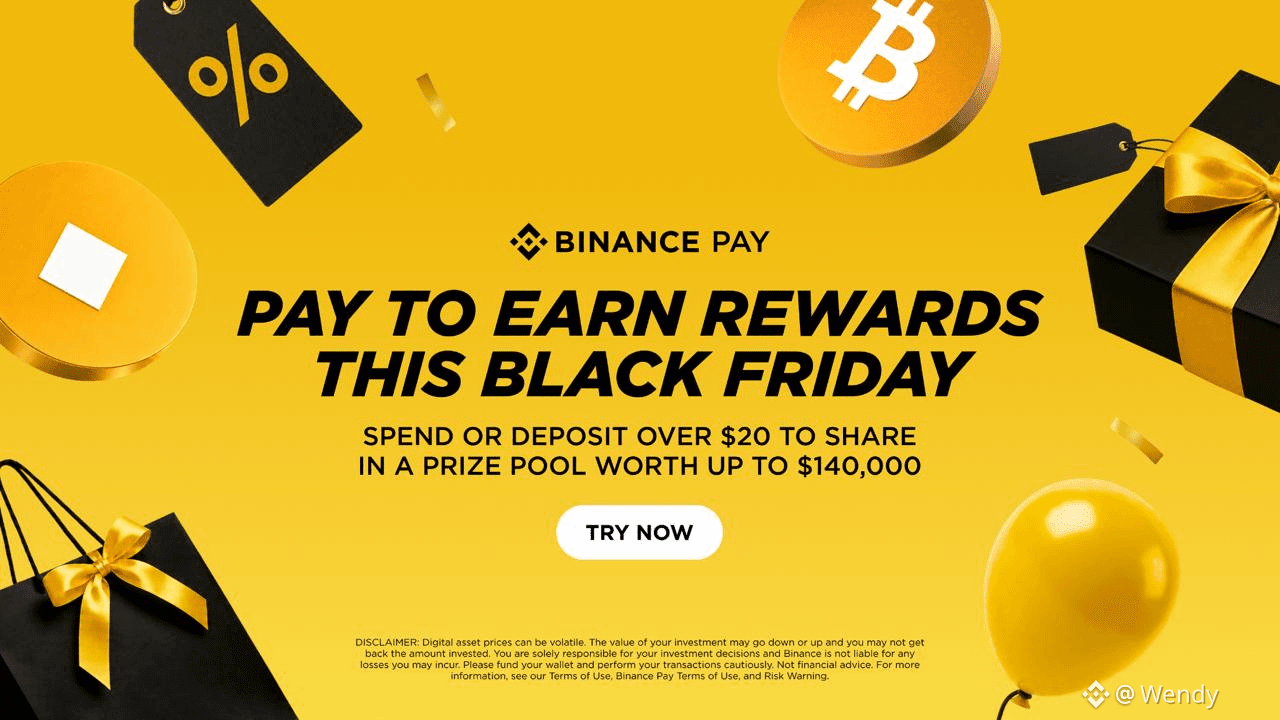
BINANCE PAY LAUNCHES $140,000 BLACK FRIDAY REWARDS CAMPAIGN!
Binance is celebrating Black Friday and Cyber Monday with up to $140K in rewards for eligible users.
⏰ November 18 – December 1, 2026
Here's how to participate:
1️⃣ Register on the campaign page.
2️⃣ Pay at least $20 using Binance Pay at eligible merchants to share a $20K rewards pool.
3️⃣ Deposit fiat or buy at least $20 in crypto using local currency to share another $20K pool.
🔥 Complete BOTH tasks to qualify for an additional USDC rewards pool:
• Fewer than 5,000 participants: $10K pool
• 5,000+ participants: $100K pool
⚠️ Rewards are first-come, first-served, with a maximum of $5 per user for each individual task and $20 for the bonus pool.
Availability varies by region. Terms apply.
Are you joining this Black Friday campaign? 👀
#BinancePay #BlackFriday $BNB
{future}(BNBUSDT)
BINANCE PAY LAUNCHES $140,000 BLACK FRIDAY REWARDS CAMPAIGN!
Binance is celebrating Black Friday and Cyber Monday with up to $140K in rewards for eligible users.
⏰ November 18 – December 1, 2026
Here's how to participate:
1️⃣ Register on the campaign page.
2️⃣ Pay at least $20 using Binance Pay at eligible merchants to share a $20K rewards pool.
3️⃣ Deposit fiat or buy at least $20 in crypto using local currency to share another $20K pool.
🔥 Complete BOTH tasks to qualify for an additional USDC rewards pool:
• Fewer than 5,000 participants: $10K pool
• 5,000+ participants: $100K pool
⚠️ Rewards are first-come, first-served, with a maximum of $5 per user for each individual task and $20 for the bonus pool.
Availability varies by region. Terms apply.
Are you joining this Black Friday campaign? 👀
#BinancePay #BlackFriday $BNB
harrat:
شكرا
2
15
2k

·
--
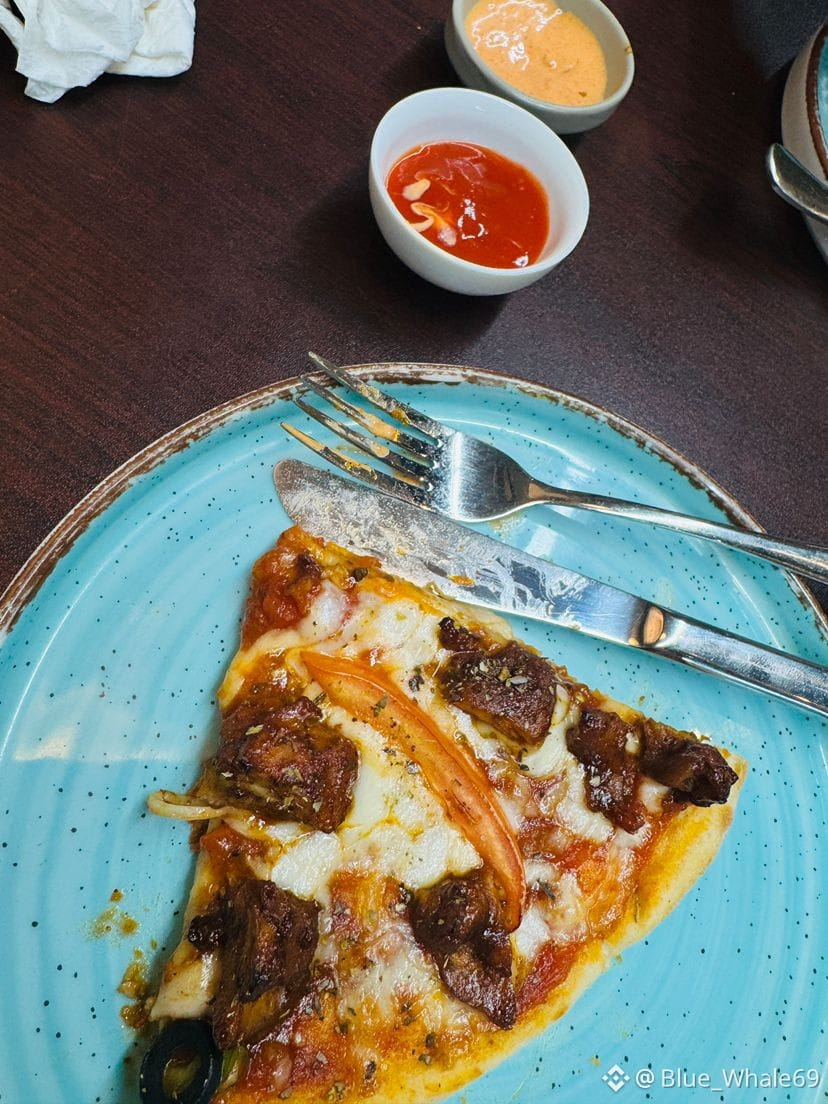
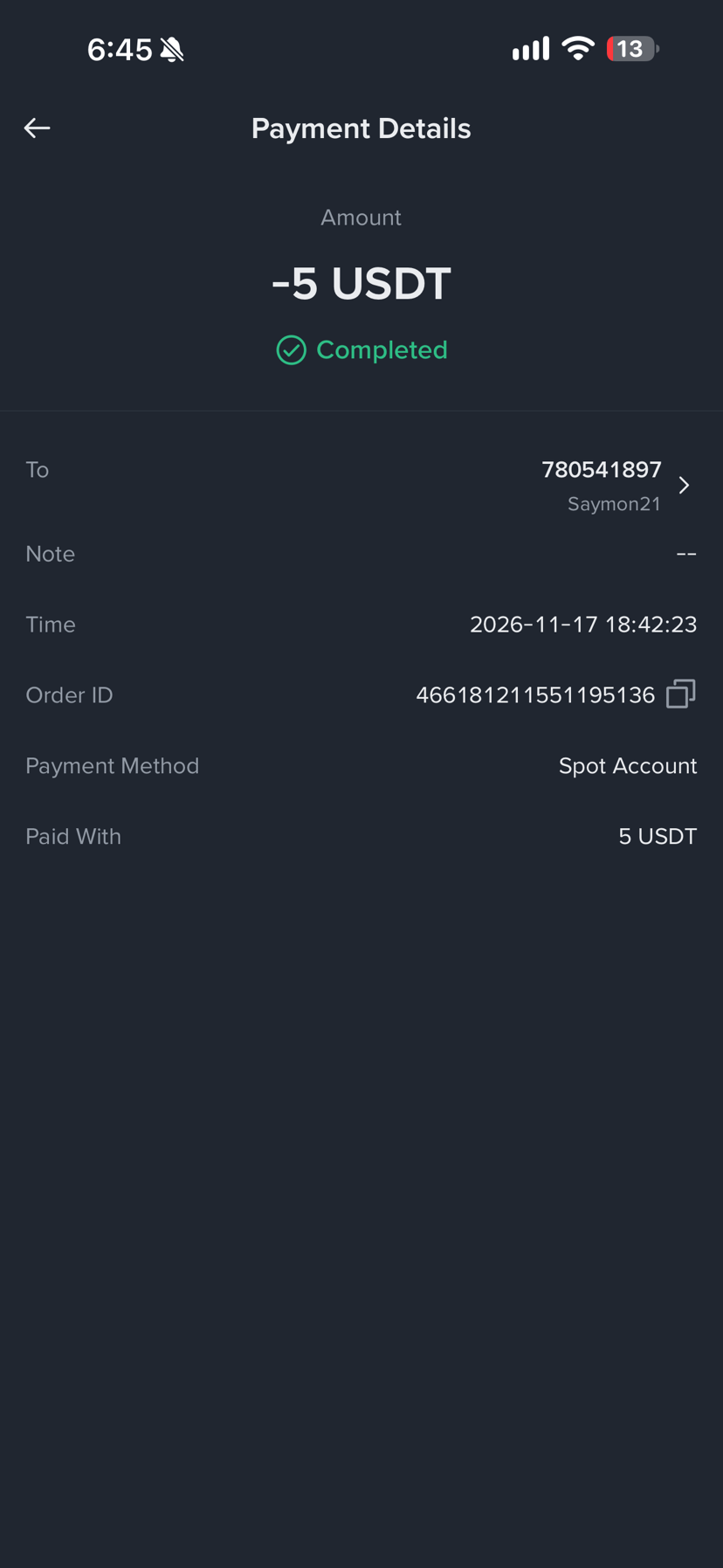
Today treated myself to a hot pizza & Play and paid for the whole thing with Binance Pay using USDT.
The payment went through instantly from my Spot Account — no cash, no card, just crypto.Super smooth experience!
Love how easy it is to use Binance Pay for everyday moments like this. 🍕
#TreatYourselfWithBinance
#binancepay
The payment went through instantly from my Spot Account — no cash, no card, just crypto.Super smooth experience!
Love how easy it is to use Binance Pay for everyday moments like this. 🍕
#TreatYourselfWithBinance
#binancepay
107

·
--
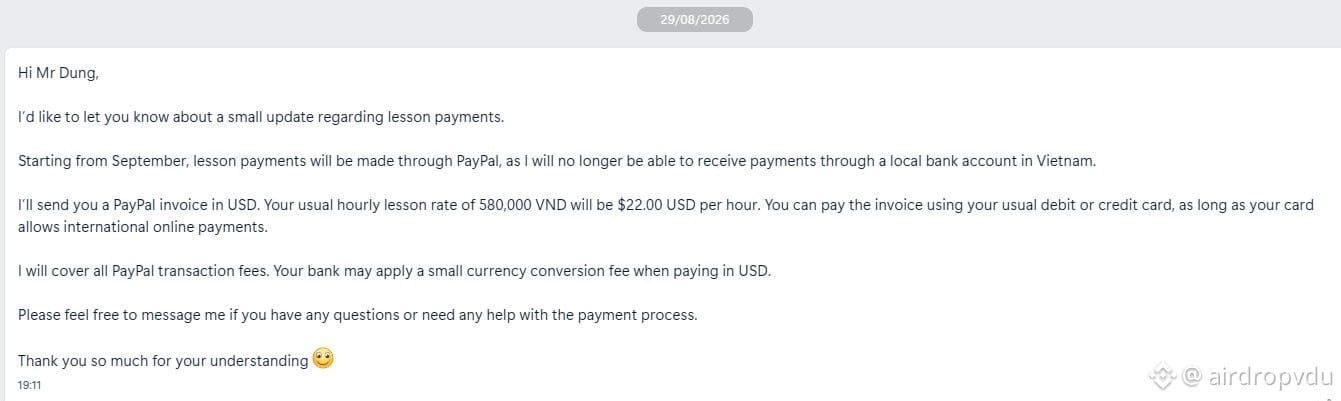
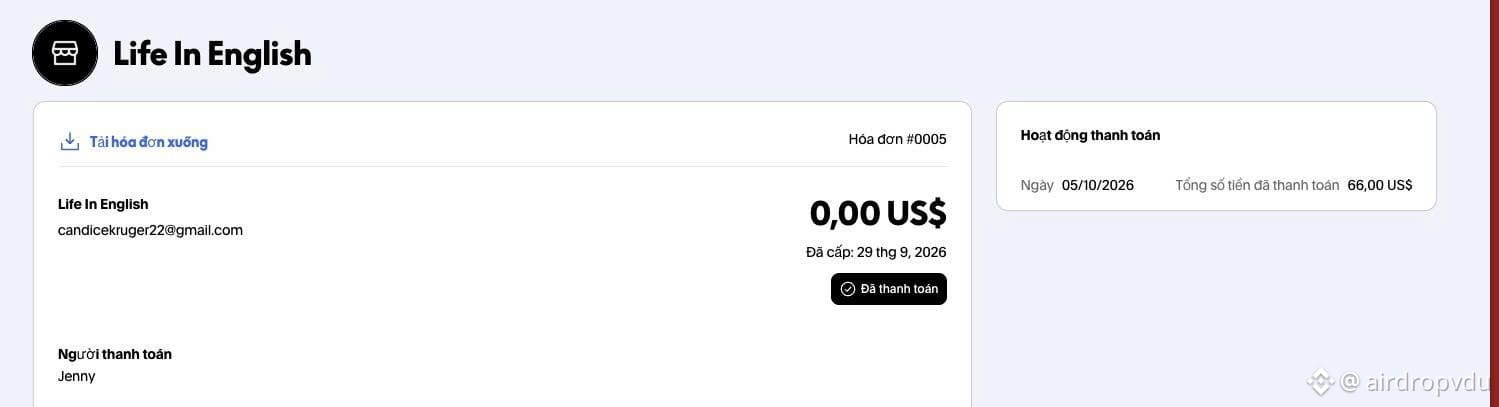
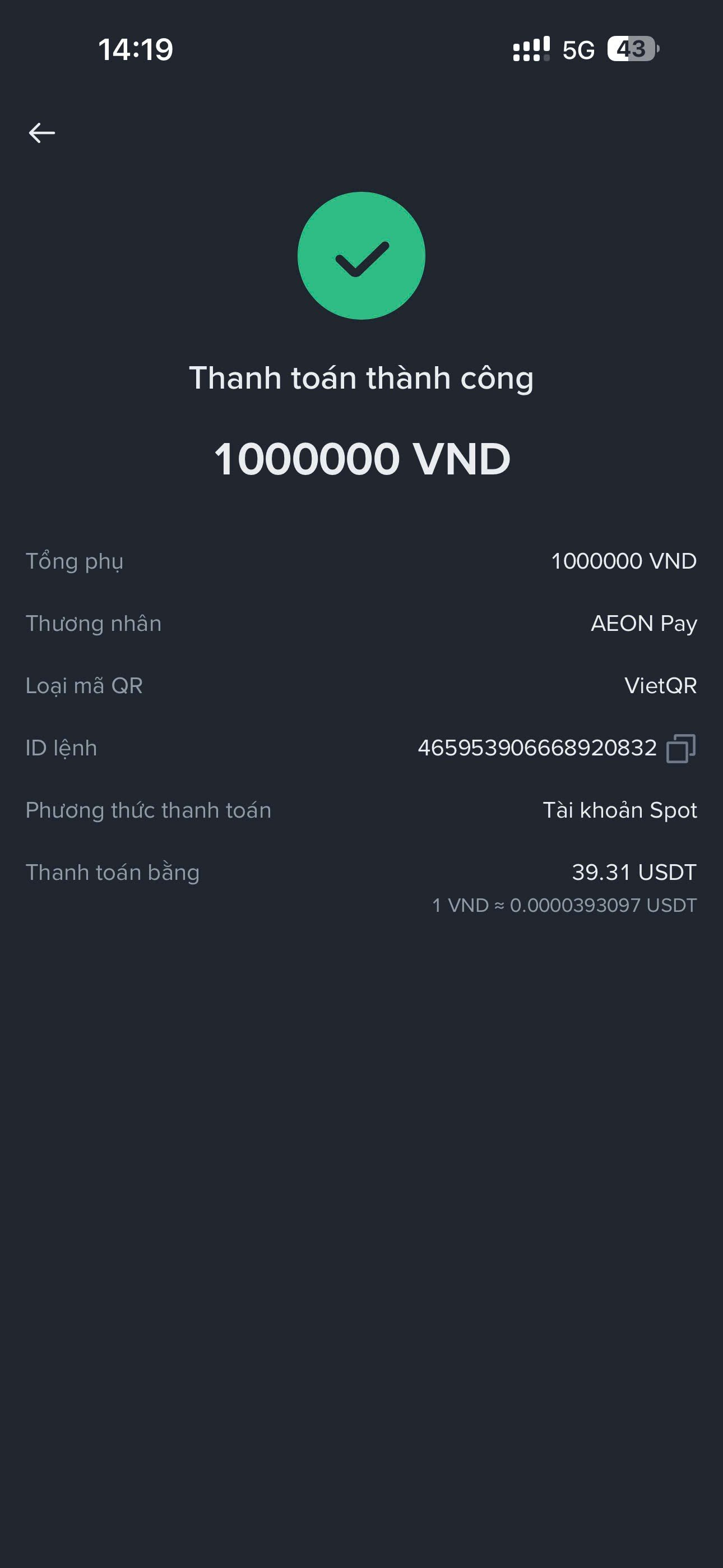
Paying my daughter's English teacher, from Vietnam to the Philippines
My daughter takes English lessons online. Her teacher used to live in Vietnam, so I paid by local bank transfer. A few taps and done.
Two months ago the teacher moved back to the Philippines, and paying for a lesson turned into a cross-border transfer.
She suggested #PayPal. The fees for sending money from Vietnam were high, so I looked for something cheaper.
I found Binance Pay. Now I send each payment to her Binance Pay account and skip the international bank transfer.
I work in financial services. At work I judge payment systems on infrastructure, security and efficiency. At home the test was smaller: Can I pay my daughter's teacher in another country without a headache?
Binance Pay passed. The lessons continue.
#BinancePay #Binance #TreatYourselfWithBinance
124
·
--
Verified
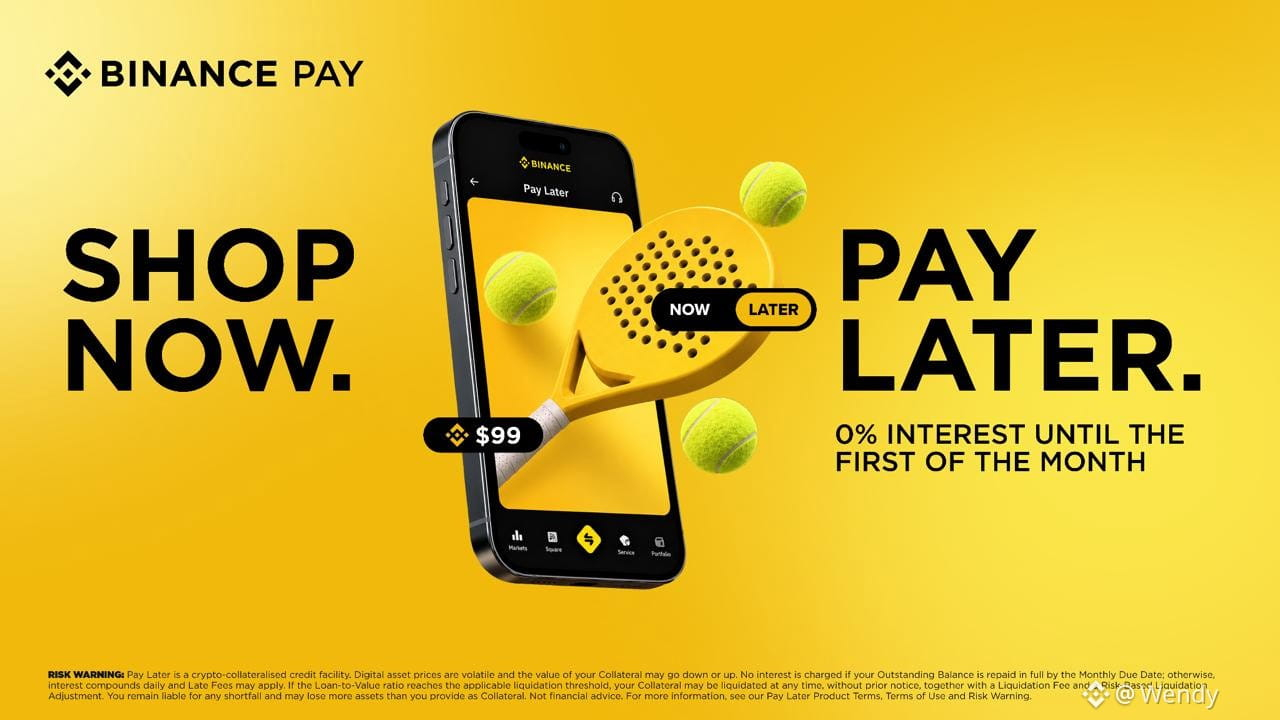
BINANCE INTRODUCES PAY LATER: SPEND CRYPTO WITHOUT SELLING!
Binance has launched Pay Later, allowing eligible users to make purchases using their BTC, ETH or BNB as collateral.
Here's what you need to know:
• Spending limit: Up to 1,000 USDC
• Collateral: BTC, ETH or BNB
• Borrow up to 50% of eligible collateral value
• 0% interest if repaid by the 1st of next month
• Pay using Binance Card or supported QR payments
• Up to 3% cashback on eligible Card purchases
You only borrow what you spend, and your crypto is locked as collateral.
📍 Initially available in Argentina and Mexico, with more markets planned.
Note: Overdue balances incur interest, and eligibility restrictions apply.
Would you use crypto-backed payments instead of selling your holdings?
[https://www.binance.com/en/support/announcement/detail/5f041987d1ca4252a3c59ad27eff3e28](https://www.binance.com/en/support/announcement/detail/5f041987d1ca4252a3c59ad27eff3e28)
#Binance #BinancePay
BINANCE INTRODUCES PAY LATER: SPEND CRYPTO WITHOUT SELLING!
Binance has launched Pay Later, allowing eligible users to make purchases using their BTC, ETH or BNB as collateral.
Here's what you need to know:
• Spending limit: Up to 1,000 USDC
• Collateral: BTC, ETH or BNB
• Borrow up to 50% of eligible collateral value
• 0% interest if repaid by the 1st of next month
• Pay using Binance Card or supported QR payments
• Up to 3% cashback on eligible Card purchases
You only borrow what you spend, and your crypto is locked as collateral.
📍 Initially available in Argentina and Mexico, with more markets planned.
Note: Overdue balances incur interest, and eligibility restrictions apply.
Would you use crypto-backed payments instead of selling your holdings?
https://www.binance.com/en/support/announcement/detail/5f041987d1ca4252a3c59ad27eff3e28
#Binance #BinancePay
OrionWB:
Binance Pay Later
1
6
893

·
--
Bullish
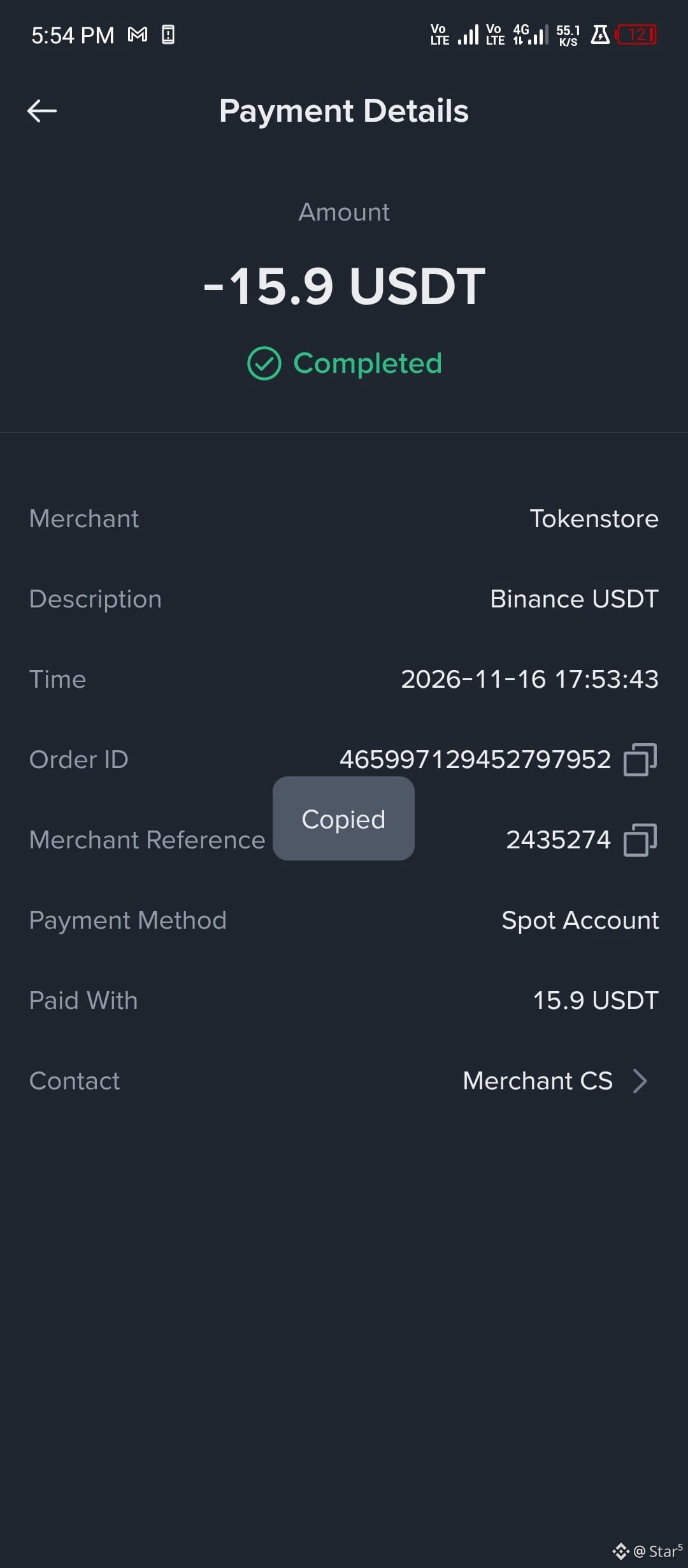
🎁 Treating myfriend with Binance pay
Bought 1 Binance gift card using Binance Pay and received USDT gift card. 🔥
💰 Subtotal: 15.9$ USDT
📅 Date: 16November 2026
#TreatYourselfWithBinance #BinancePay #BNB🔥🔥
#TreatYourselfWithBinance
🎁 Treating myfriend with Binance pay
Bought 1 Binance gift card using Binance Pay and received USDT gift card. 🔥
💰 Subtotal: 15.9$ USDT
📅 Date: 16November 2026
#TreatYourselfWithBinance #BinancePay #BNB🔥🔥
#TreatYourselfWithBinance
Bought 1 Binance gift card using Binance Pay and received USDT gift card. 🔥
💰 Subtotal: 15.9$ USDT
📅 Date: 16November 2026
#TreatYourselfWithBinance #BinancePay #BNB🔥🔥
#TreatYourselfWithBinance
605

Article
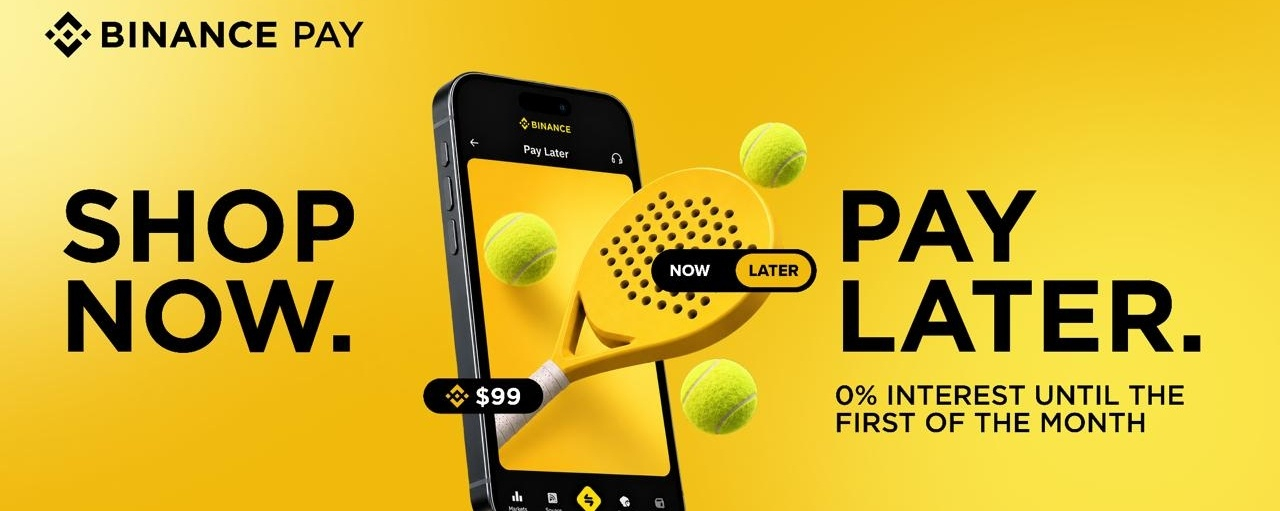
Binance Pay is pleased to introduce Pay Later, a new crypto-backed payment featureBinance Pay is pleased to introduce Pay Later, a new cryptocurrency-backed payment feature that allows eligible users to make purchases through Binance Card or QR Pay without selling their cryptocurrencies.
With Binance Pay Later, eligible users can access a spending limit of up to 1000 USDC, backed by their BTC, ETH, or BNB holdings. Instead of borrowing the full amount upfront, users only borrow what they spend, when they spend it.
Users can also enjoy 0% interest until the first day of the following month, allowing them to make purchases and pay them off before the due date without incurring interest.
Binance Pay is pleased to introduce Pay Later, a new crypto-backed payment feature
Binance Pay is pleased to introduce Pay Later, a new cryptocurrency-backed payment feature that allows eligible users to make purchases through Binance Card or QR Pay without selling their cryptocurrencies.
With Binance Pay Later, eligible users can access a spending limit of up to 1000 USDC, backed by their BTC, ETH, or BNB holdings. Instead of borrowing the full amount upfront, users only borrow what they spend, when they spend it.
Users can also enjoy 0% interest until the first day of the following month, allowing them to make purchases and pay them off before the due date without incurring interest.
115
Article
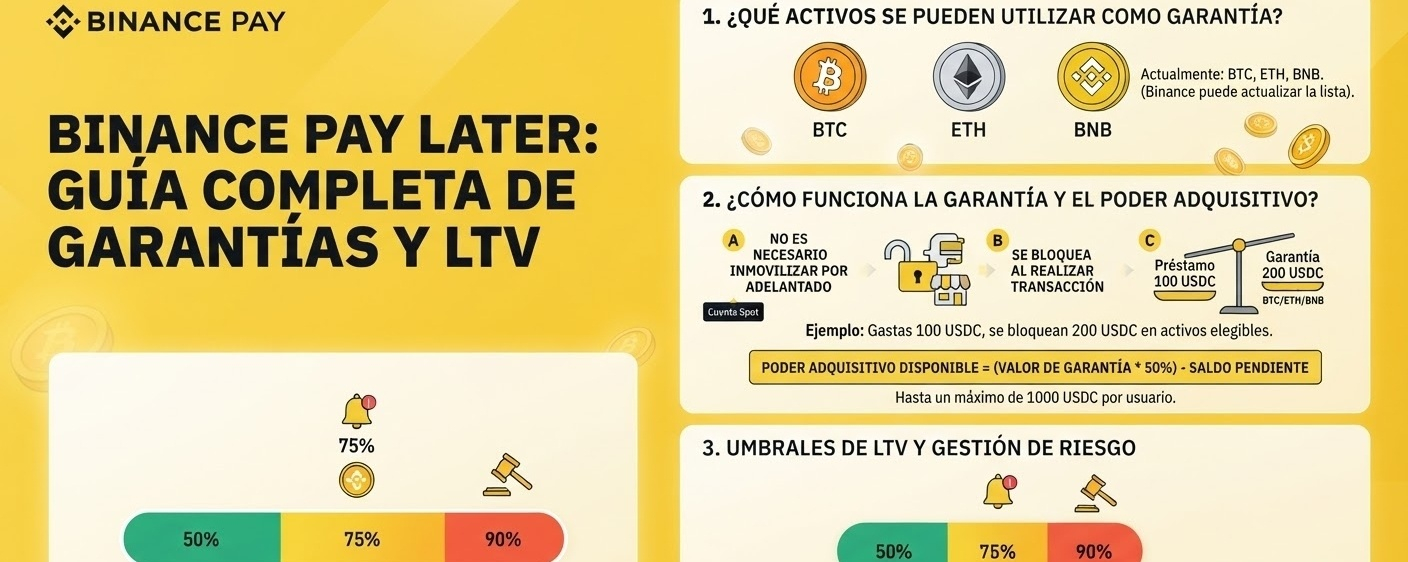
Binance Pay Later Collateral, Purchasing Power, and Loan-to-Value (LTV) Ratio1. What assets can be used as collateral for Pay Later?
Currently, eligible collateral assets for Pay Later include:
BTC,
ETH and
BNB
Binance may update the list of assets that can be used as collateral from time to time.
2. How does Pay Later collateral work?
You don't need to lock up collateral in advance when you activate the Pay Later option.
Collateral is only locked when you make a transaction using the Pay Later option. The locked collateral will remain in your Spot Account and cannot be used for other purposes.
Binance Pay Later Collateral, Purchasing Power, and Loan-to-Value (LTV) Ratio
1. What assets can be used as collateral for Pay Later?
Currently, eligible collateral assets for Pay Later include:
BTC,
ETH and
BNB
Binance may update the list of assets that can be used as collateral from time to time.
2. How does Pay Later collateral work?
You don't need to lock up collateral in advance when you activate the Pay Later option.
Collateral is only locked when you make a transaction using the Pay Later option. The locked collateral will remain in your Spot Account and cannot be used for other purposes.
17
Article
What is Binance Pay Later?1. What is Binance Pay Later?
Binance Pay Later is a secured credit feature that allows eligible users to pay with Binance Card and Binance Pay using their crypto as collateral, without having to sell it. When you use Pay Later, Binance lends you the payment amount in USDC and locks eligible crypto assets in your account as collateral at the time of the transaction.
2. What are the main benefits of Pay Later?
With Pay Later, you can:
Spend without selling your crypto;
What is Binance Pay Later?
1. What is Binance Pay Later?
Binance Pay Later is a secured credit feature that allows eligible users to pay with Binance Card and Binance Pay using their crypto as collateral, without having to sell it. When you use Pay Later, Binance lends you the payment amount in USDC and locks eligible crypto assets in your account as collateral at the time of the transaction.
2. What are the main benefits of Pay Later?
With Pay Later, you can:
Spend without selling your crypto;
22

·
--
Verified
Binance has officially added the Binance Pay Later feature, so you can shop without having to sell the crypto you hold. Enjoy 0% interest until the 1st of the following month. Handy if you want to keep holding your assets, but be sure to check the terms and conditions first 💳
#BinancePay
Binance has officially added the Binance Pay Later feature, so you can shop without having to sell the crypto you hold. Enjoy 0% interest until the 1st of the following month. Handy if you want to keep holding your assets, but be sure to check the terms and conditions first 💳
#BinancePay
#BinancePay
301
Verified
Article
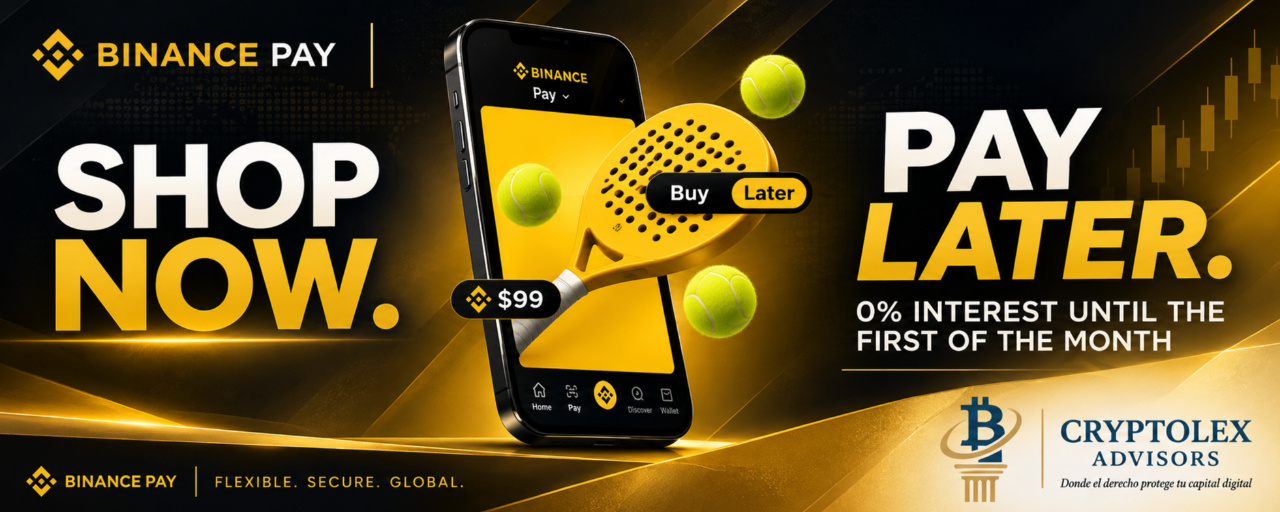
Binance just launched Pay Later, and it changes how you use crypto in your everyday life.Until now, you had two options when you wanted to pay for something using your portfolio: sell your coins or stop spending. Selling means giving up your position. If the price rises afterward, you’re left watching from the sidelines.
Pay Later offers a third option: use your crypto as collateral, spend in USDC, and pay later.
💳 What is Binance Pay Later?
It’s a crypto-backed spending feature. Pay with your Binance Card or by QR code without selling what you hold.
The essentials:
Accepted collateral: BTC or BNB
Maximum limit: up to 1,000 USDC per user
Binance just launched Pay Later, and it changes how you use crypto in your everyday life.
Until now, you had two options when you wanted to pay for something using your portfolio: sell your coins or stop spending. Selling means giving up your position. If the price rises afterward, you’re left watching from the sidelines.
Pay Later offers a third option: use your crypto as collateral, spend in USDC, and pay later.
💳 What is Binance Pay Later?
It’s a crypto-backed spending feature. Pay with your Binance Card or by QR code without selling what you hold.
The essentials:
Accepted collateral: BTC or BNB
Maximum limit: up to 1,000 USDC per user
Feed-Creator-ce2b154b7149cb327776:
Muy interesante este producto. Lo esperaremos!!!
1
1
1
872

·
--
Verified
Binance Pay Later: spending without selling crypto doesn’t eliminate risk
The official Binance Announcement account on Square announced the launch of Pay Later on November 16, 2026. This is a product update, not a credit recommendation or a guarantee of access: availability depends on country, verification, and eligibility.
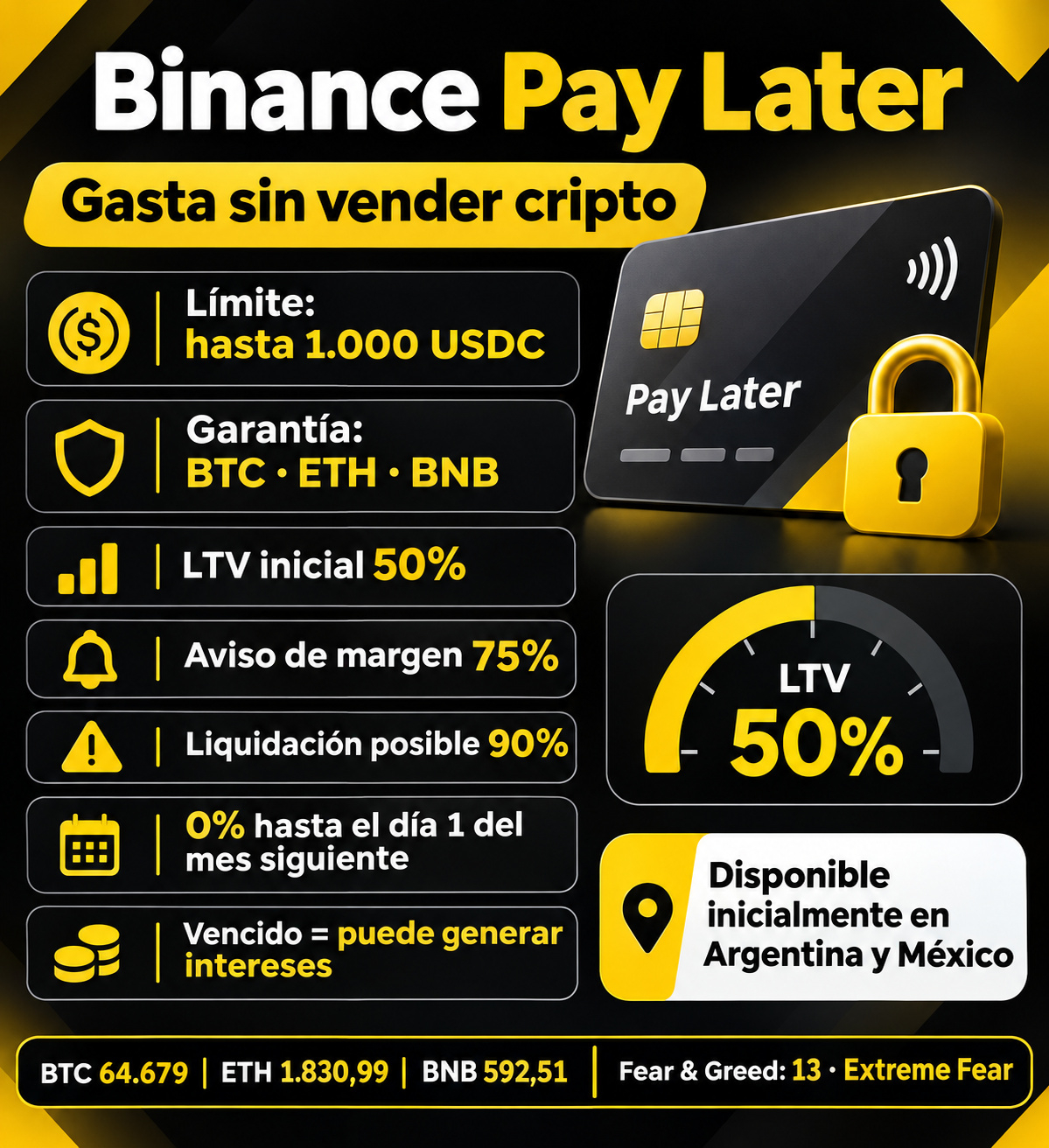
Confirmed fact: eligible users in Argentina and Mexico can pay with Binance Card or QR Pay by taking out a USDC loan backed by BTC, ETH, or BNB. The limit is up to 1,000 USDC per user and, generally, up to 50% of the value of eligible collateral. Only the amount of each purchase is borrowed; the crypto remains locked as collateral.
The announcement offers 0% interest if repaid before the first day of the following month. Overdue amounts do accrue interest. It also mentions up to 3% cashback on eligible Binance Card purchases, subject to terms. “Without selling” doesn’t mean “without cost” or “without exposure”: the user keeps the asset but takes on a USDC liability.
The FAQ explains the key risk: the initial LTV is 50%, a margin alert is issued at 75%, and liquidation may be triggered at 90%. If BTC, ETH, or BNB lose value, the LTV rises even if no further purchases are made. That’s why it’s worth checking the due date, repayment source, locked assets, and local rules; don’t confuse collateralized credit with yield.
Market snapshot (spot, rolling 24-hour window captured at 06:16 UTC): BTC is trading at 64,679.53 USDT (+0.420%); ETH at 1,830.99 (+1.155%); BNB at 592.51 (+0.487%). Binance’s panel keeps Fear & Greed at 13, “Extreme Fear.” A daily rebound does not automatically reduce the risk of debt backed by volatile assets.
$BTC $ETH $BNB
Educational Content. Not financial advice.
#BinancePay #PayLater #CriptoColateral #GestionDeRiesgo #CryptoEducation
3
714

·
--
Jinzhu’s take: Binance’s “spend now, pay later” idea is a step in the right direction, but essentially it means borrowing money against your crypto. You need to be more careful using it in a downtrend than in a bull market.
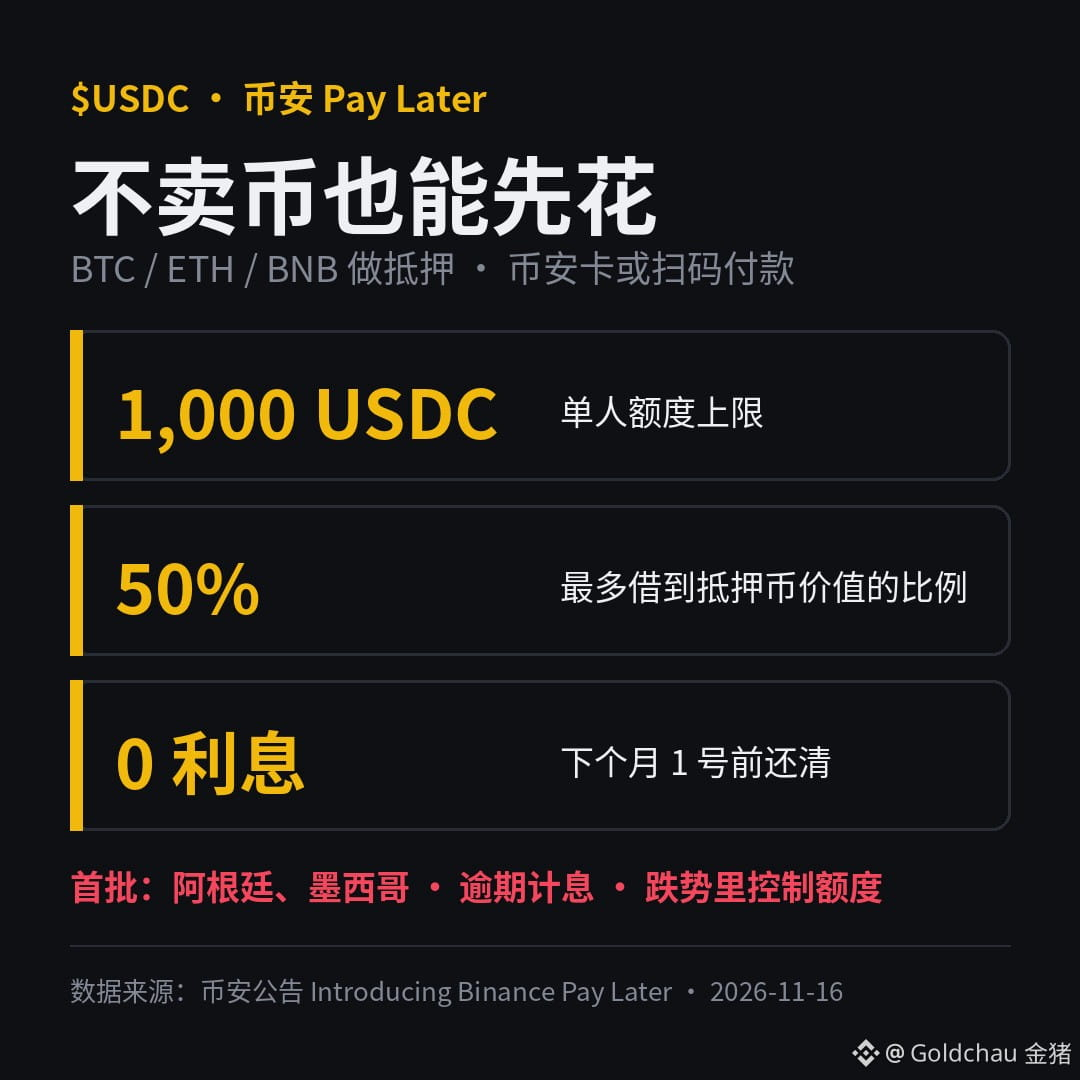
Binance Pay Later launches tonight: use BTC, ETH, or BNB as collateral, then pay with your Binance Card or by scanning a QR code. Borrow only what you spend, in $USDC.
Three key figures:
Maximum credit limit: 1,000 USDC
Borrow up to 50% of your collateral’s value
Repay in full by the 1st of next month, with 0 interest
First, the reality: it’s initially available only in Argentina and Mexico. Other regions will have to wait for a later rollout.
My take: The upside is that you can spend money without selling your coins at a low price. The risk is that if prices keep falling, your collateral ratio could tighten, and overdue payments will incur interest. Check the official terms for the exact LTV rules—don’t focus only on the words “0 interest.”
If I were to use it: I’d only put up spot holdings I have no plans to sell long term, borrow well below the maximum, and repay in full before the 1st of each month.
If it launches in your region one day, which of your coins would you use as collateral, and how would you manage your credit limit?
#币安Pay #BinancePay #BNB #币安 $USDC
Source: Binance announcement, “Introducing Binance Pay Later” (2026-11-16)
DYOR; this is not investment advice.
Jinzhu’s take: Binance’s “spend now, pay later” idea is a step in the right direction, but essentially it means borrowing money against your crypto. You need to be more careful using it in a downtrend than in a bull market.
Binance Pay Later launches tonight: use BTC, ETH, or BNB as collateral, then pay with your Binance Card or by scanning a QR code. Borrow only what you spend, in $USDC .
Three key figures:
Maximum credit limit: 1,000 USDC
Borrow up to 50% of your collateral’s value
Repay in full by the 1st of next month, with 0 interest
First, the reality: it’s initially available only in Argentina and Mexico. Other regions will have to wait for a later rollout.
My take: The upside is that you can spend money without selling your coins at a low price. The risk is that if prices keep falling, your collateral ratio could tighten, and overdue payments will incur interest. Check the official terms for the exact LTV rules—don’t focus only on the words “0 interest.”
If I were to use it: I’d only put up spot holdings I have no plans to sell long term, borrow well below the maximum, and repay in full before the 1st of each month.
If it launches in your region one day, which of your coins would you use as collateral, and how would you manage your credit limit?
#币安Pay #BinancePay #BNB #币安 $USDC
Source: Binance announcement, “Introducing Binance Pay Later” (2026-11-16)
DYOR; this is not investment advice.
1
404

·
--
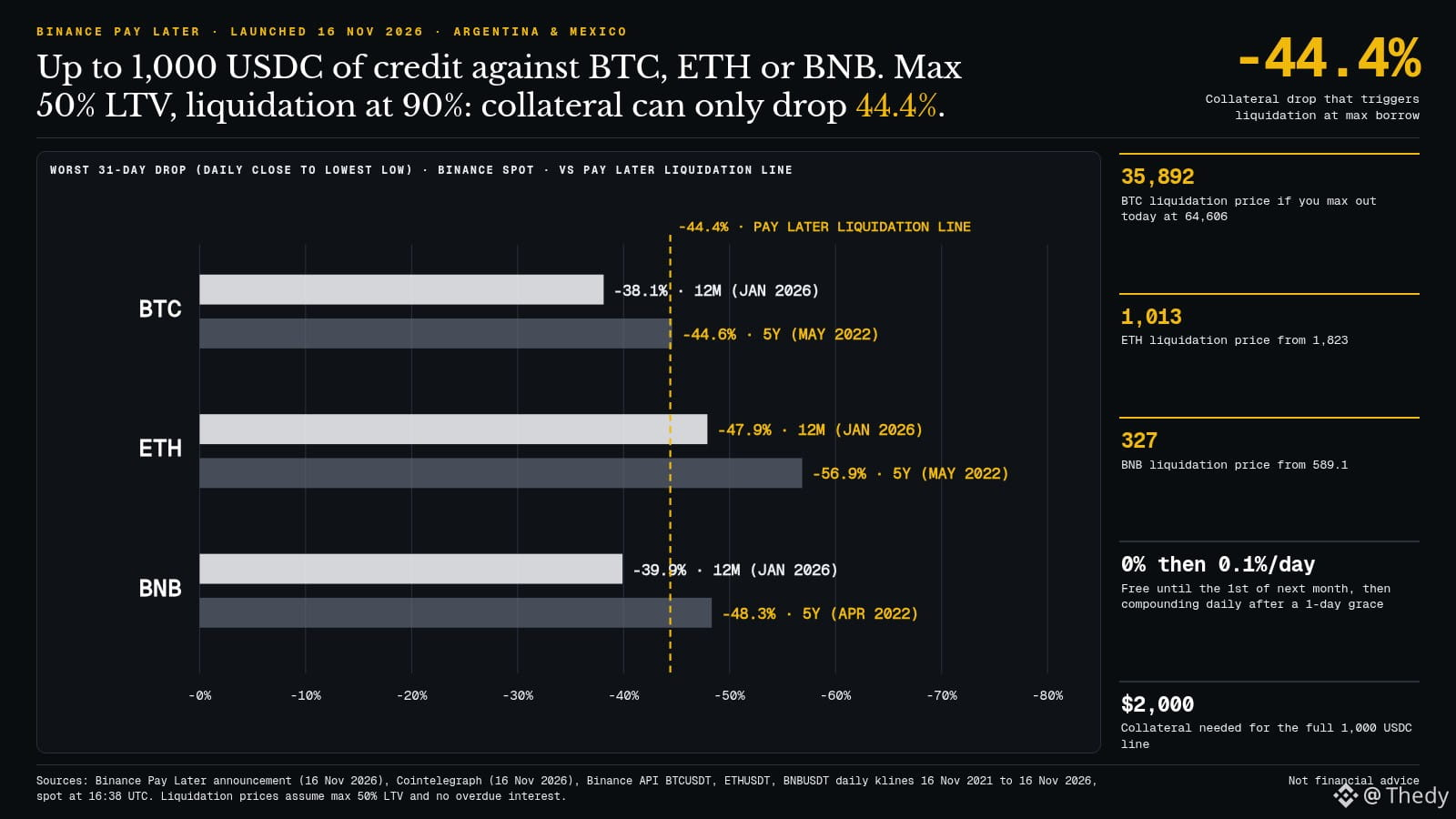
Binance launched Pay Later this Monday, 16/11: up to 1,000 USDC in credit to pay with the Binance Card or QR Pay, backed by your $BTC, $ETH or $BNB, without selling them. Initially available in Argentina and Mexico. The calculation to do before activating it comes down to one number: 44.4%.
Who’s eligible: verified users in these two countries for now; Binance says it will gradually roll it out elsewhere.
The rules, according to Binance’s announcement and the FAQ cited by Cointelegraph:
- borrowing capped at 50% of the collateral’s value ($2,000 in BTC for the full 1,000 USDC credit line)
- 0% interest until the 1st of the following month, then a 1-day grace period and 0.1% per day, compounded on the overdue balance (about 44% over a year)
- liquidation may occur as soon as the loan reaches 90% of the collateral’s value, even before the due date
If you borrow the maximum, going from 50% to 90% LTV means a 44.4% drop in the collateral’s value. At Binance’s spot price at 16:38 UTC, that works out to around $35,890 for BTC, $1,013 for ETH, and $327 for BNB.
That seems a long way off. I looked at the worst 31-day drop (daily close to the lowest point in the following 31 days) in Binance data since November 2021: BTC -44.6% (May 2022), BNB -48.3% (April 2022), ETH -56.9% (May 2022). And over the past 12 months, ETH has already dropped -47.9% in a window starting in January 2026, past the threshold.
My take: it’s a genuinely useful product for spending without selling during a bear market, but at 50% LTV the margin is thin for ETH. Using 25% or 30% of your credit line and repaying before the 1st completely changes the risk profile. The scenario to avoid: a large purchase at the end of the month, late repayment, and interest pushing up the LTV while the market slides.
Would you use it, and with what collateral? What percentage of your credit line would you use?
#BinancePay #CryptoMarket
Sources: Binance Pay Later announcement (16/11/2026), Cointelegraph (16/11/2026), Binance API BTCUSDT, ETHUSDT, BNBUSDT (1-day candles, 16/11/2021 to 16/11/2026). Not financial advice.
Binance launched Pay Later this Monday, 16/11: up to 1,000 USDC in credit to pay with the Binance Card or QR Pay, backed by your $BTC , $ETH or $BNB , without selling them. Initially available in Argentina and Mexico. The calculation to do before activating it comes down to one number: 44.4%.
Who’s eligible: verified users in these two countries for now; Binance says it will gradually roll it out elsewhere.
The rules, according to Binance’s announcement and the FAQ cited by Cointelegraph:
- borrowing capped at 50% of the collateral’s value ($2,000 in BTC for the full 1,000 USDC credit line)
- 0% interest until the 1st of the following month, then a 1-day grace period and 0.1% per day, compounded on the overdue balance (about 44% over a year)
- liquidation may occur as soon as the loan reaches 90% of the collateral’s value, even before the due date
If you borrow the maximum, going from 50% to 90% LTV means a 44.4% drop in the collateral’s value. At Binance’s spot price at 16:38 UTC, that works out to around $35,890 for BTC, $1,013 for ETH, and $327 for BNB.
That seems a long way off. I looked at the worst 31-day drop (daily close to the lowest point in the following 31 days) in Binance data since November 2021: BTC -44.6% (May 2022), BNB -48.3% (April 2022), ETH -56.9% (May 2022). And over the past 12 months, ETH has already dropped -47.9% in a window starting in January 2026, past the threshold.
My take: it’s a genuinely useful product for spending without selling during a bear market, but at 50% LTV the margin is thin for ETH. Using 25% or 30% of your credit line and repaying before the 1st completely changes the risk profile. The scenario to avoid: a large purchase at the end of the month, late repayment, and interest pushing up the LTV while the market slides.
Would you use it, and with what collateral? What percentage of your credit line would you use?
#BinancePay #CryptoMarket
Sources: Binance Pay Later announcement (16/11/2026), Cointelegraph (16/11/2026), Binance API BTCUSDT, ETHUSDT, BNBUSDT (1-day candles, 16/11/2021 to 16/11/2026). Not financial advice.
80

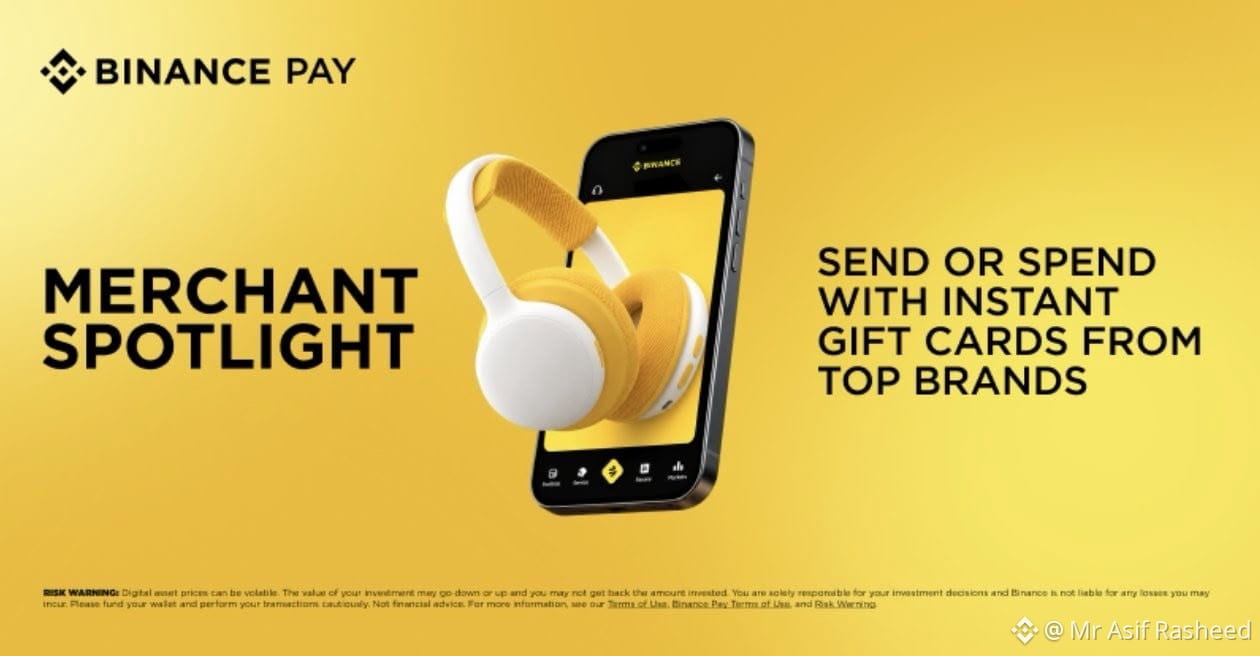
Binance Pay Merchant Spotlight is Live! 🎁
Now you can SEND or SPEND with Instant Gift Cards from Top Brands using Binance Pay.
No bank, no waiting, just instant payment with crypto.
Have you tried Binance Pay yet? Tell me in comments 👇
$BNB $SOL $USDT
#Write2Earn #BinanceSquare #BinancePay
Binance Pay Merchant Spotlight is Live! 🎁
Now you can SEND or SPEND with Instant Gift Cards from Top Brands using Binance Pay.
No bank, no waiting, just instant payment with crypto.
Have you tried Binance Pay yet? Tell me in comments 👇
$BNB $SOL $USDT
#Write2Earn #BinanceSquare #BinancePay
Now you can SEND or SPEND with Instant Gift Cards from Top Brands using Binance Pay.
No bank, no waiting, just instant payment with crypto.
Have you tried Binance Pay yet? Tell me in comments 👇
$BNB $SOL $USDT
#Write2Earn #BinanceSquare #BinancePay
154

·
--
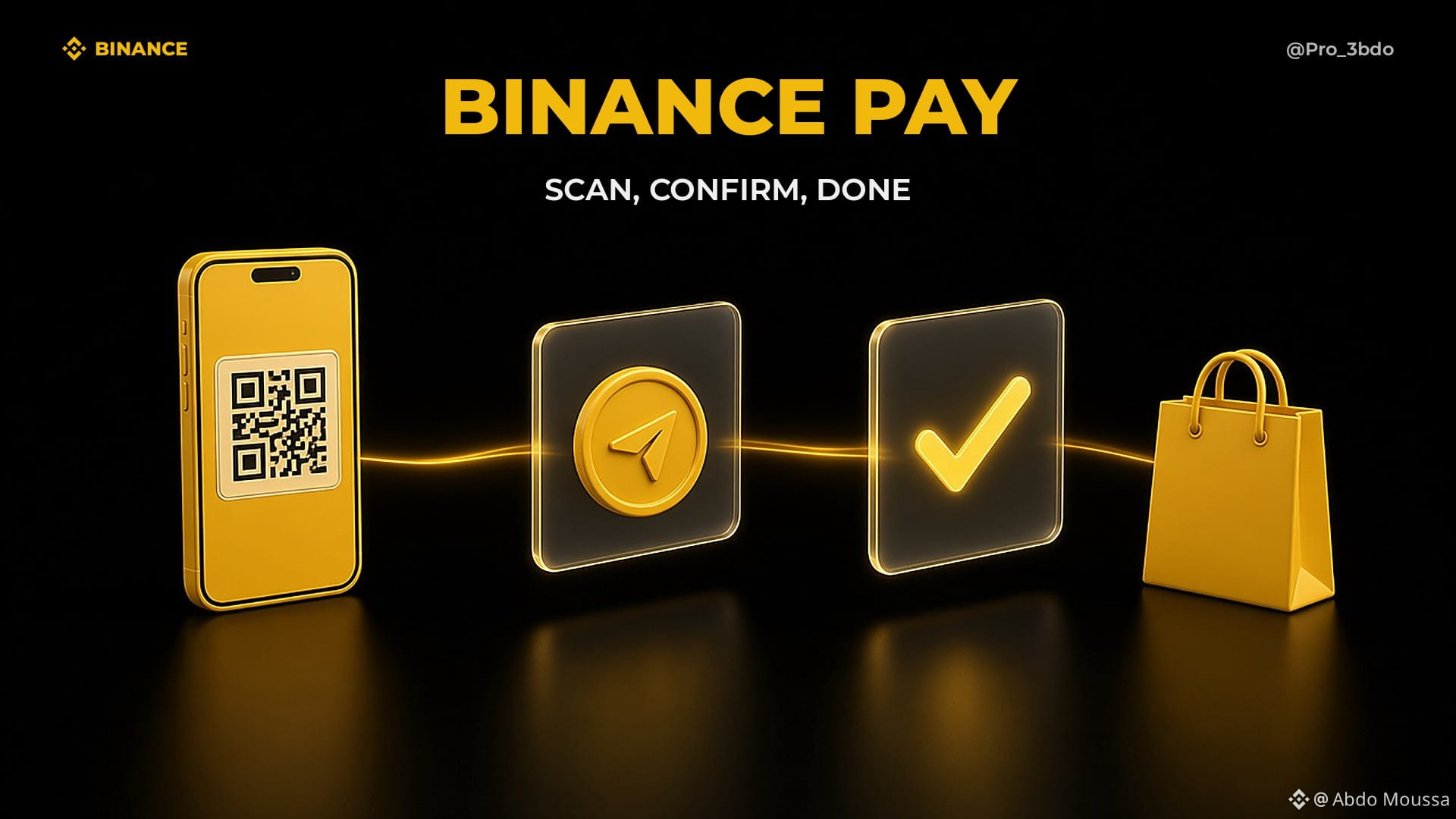
𝐖𝐡𝐚𝐭 𝐢𝐟 𝐩𝐚𝐲𝐢𝐧𝐠 𝐢𝐧 𝐜𝐫𝐲𝐩𝐭𝐨 𝐟𝐞𝐥𝐭 𝐚𝐬 𝐬𝐢𝐦𝐩𝐥𝐞 𝐚𝐬 𝐬𝐜𝐚𝐧𝐧𝐢𝐧𝐠 𝐚 𝐐𝐑 𝐜𝐨𝐝𝐞, 𝐰𝐢𝐭𝐡 𝐧𝐨 𝐥𝐨𝐧𝐠 𝐰𝐚𝐥𝐥𝐞𝐭 𝐚𝐝𝐝𝐫𝐞𝐬𝐬𝐞𝐬? 𝐄𝐧𝐭𝐞𝐫 𝐁𝐢𝐧𝐚𝐧𝐜𝐞 𝐏𝐚𝐲 📲⚡
𝐷𝑟𝑎𝑤𝑖𝑛𝑔 𝑓𝑟𝑜𝑚 𝑓𝑜𝑢𝑛𝑑𝑎𝑡𝑖𝑜𝑛𝑎𝑙 𝑙𝑒𝑠𝑠𝑜𝑛𝑠 𝑜𝑛 #BinanceAcademy, ℎ𝑒𝑟𝑒 𝑖𝑠 𝑦𝑜𝑢𝑟 𝑞𝑢𝑖𝑐𝑘 𝐵𝑖𝑛𝑎𝑛𝑐𝑒 𝑃𝑎𝑦 𝑏𝑟𝑒𝑎𝑘𝑑𝑜𝑤𝑛:
1️⃣ 𝐂𝐫𝐲𝐩𝐭𝐨 𝐅𝐨𝐫 𝐄𝐯𝐞𝐫𝐲𝐝𝐚𝐲 𝐏𝐚𝐲𝐦𝐞𝐧𝐭𝐬:
• Binance Pay is a contactless, borderless payment feature built into Binance, it lets you send, receive and spend BTC, BNB, stablecoins and many other coins.
2️⃣ 𝐒𝐜𝐚𝐧, 𝐂𝐨𝐧𝐟𝐢𝐫𝐦, 𝐃𝐨𝐧𝐞:
• Pay via QR code, payment link, or the recipient's email, phone or Binance ID, confirm with your Pay PIN or 2FA, and transfers usually settle instantly.
3️⃣ 𝐁𝐮𝐢𝐥𝐭 𝐅𝐨𝐫 𝐅𝐫𝐢𝐞𝐧𝐝𝐬 𝐀𝐧𝐝 𝐌𝐞𝐫𝐜𝐡𝐚𝐧𝐭𝐬:
• Most peer-to-peer sends carry zero fees and merchants can accept crypto too, it's open to verified (KYC) users in supported countries, and some fees may apply.
⚠️ 𝐑𝐢𝐬𝐤 𝐍𝐨𝐭𝐞:
Transfers are usually final, so funds sent to a wrong recipient or a scammer may be lost, double-check details and never share your Pay PIN.
I love how a QR code turns crypto into something you can use day to day, just check twice before you tap 💛
📖 Learn more on Binance Academy: https://www.binance.com/en/academy/articles/what-is-binance-pay-and-how-to-use-it
Crypto involves risk, this is not financial advice, always DYOR 💡
#BinancePay #CryptoPayments #Web3
Follow me for more 💛
5
234

·
--
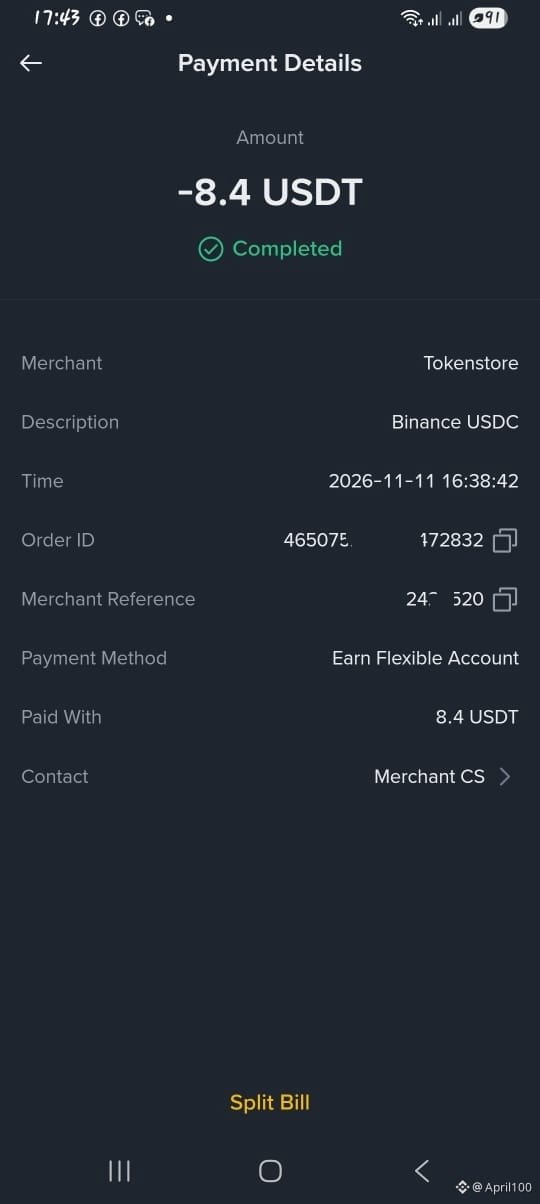
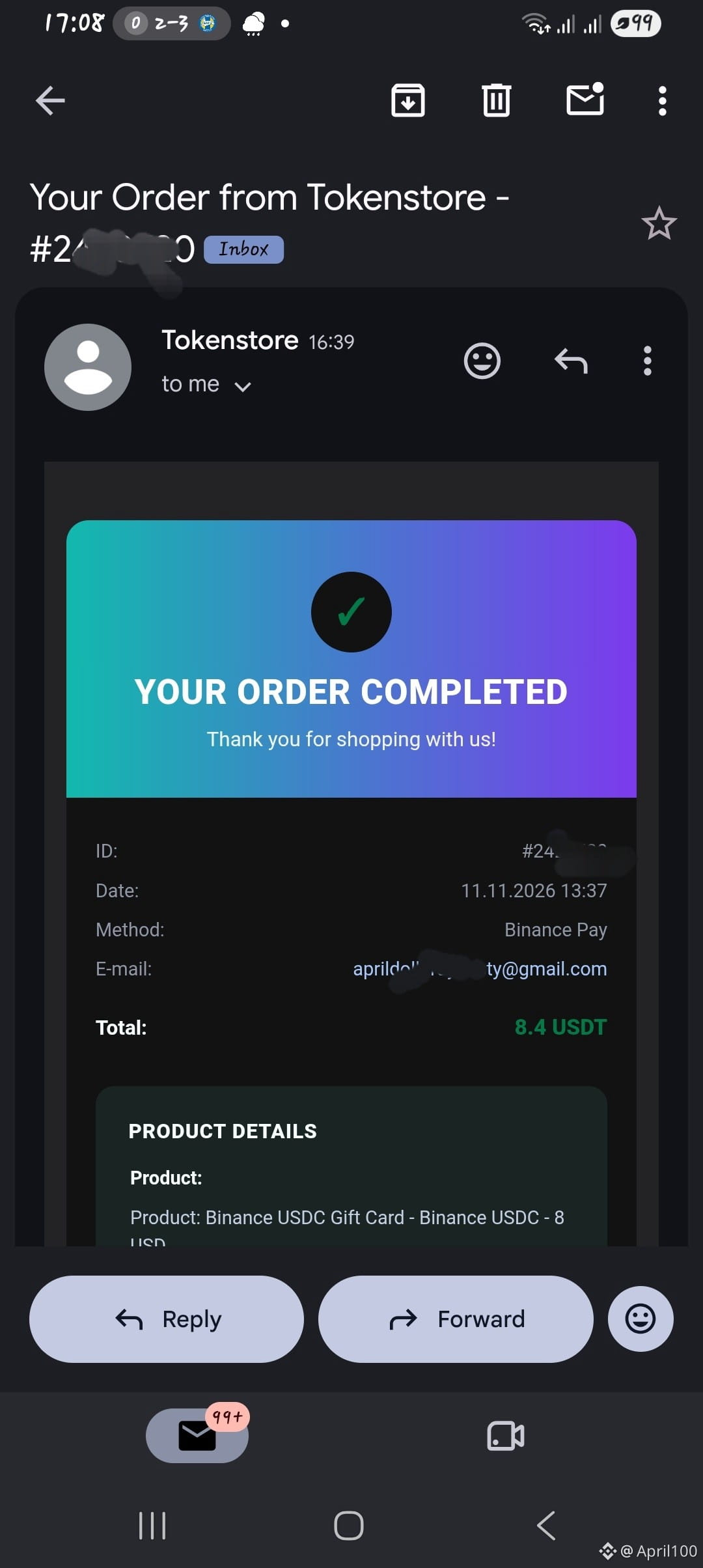
I had a great experience shopping through the Binance Pay Marketplace!🥳
I purchased an $8 gift card via TokenStore, and the experience was incredibly smooth and convenient. The payment process was seamless, and my gift card was delivered instantly to my email. No delays, no complications — just a quick and easy shopping experience!
This is another great example of how Binance Pay is making crypto more practical in everyday life. It's not just about trading; it's also about spending crypto on real-world purchases.
#TreatYourselfWithBinance #BinancePay 🚀💛
Elvie Minson bWWf:
hi
1
1
120

·
--
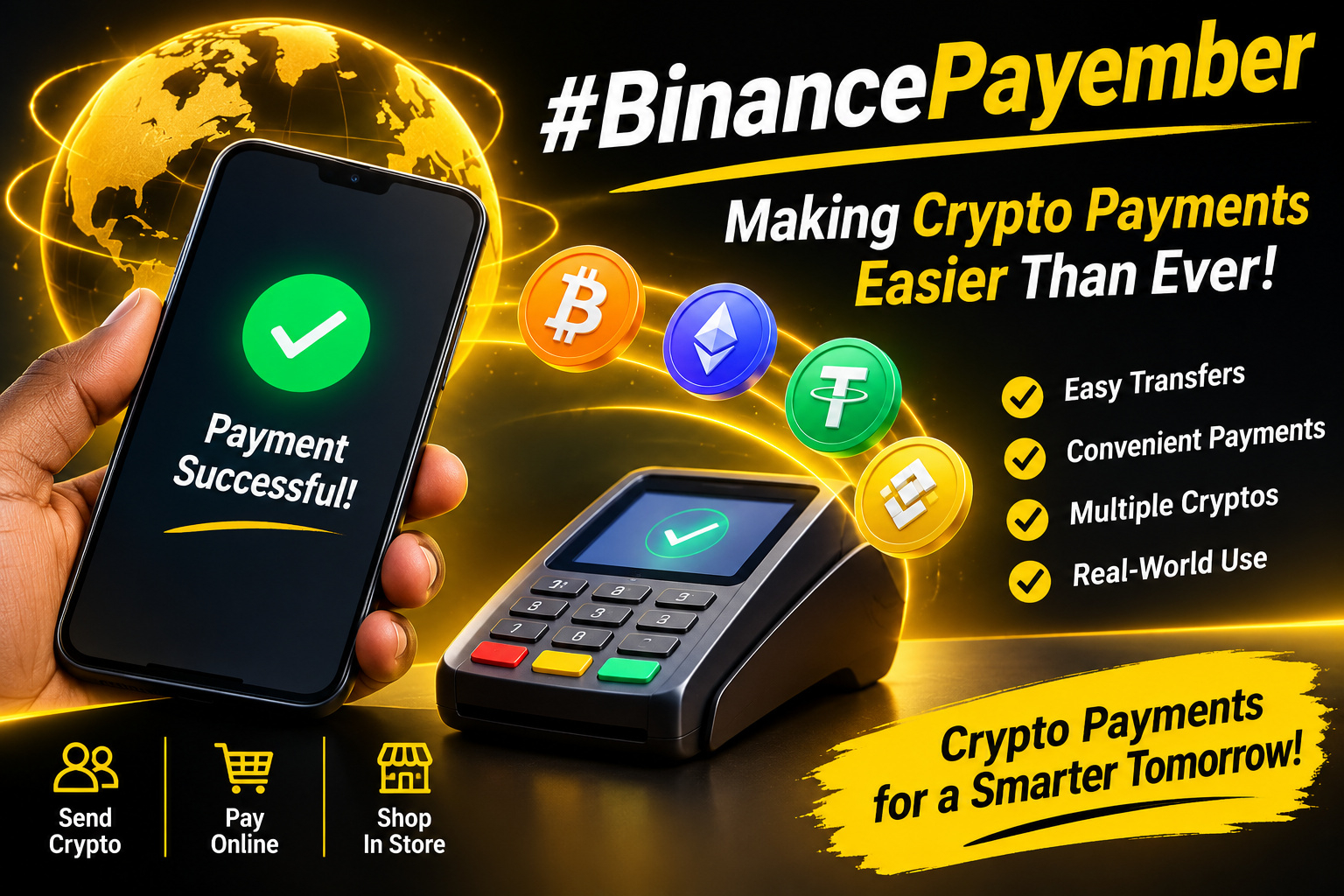
💳 Binance Pay: Making Crypto Payments Easier Than Ever!
Cryptocurrency is no longer just about trading and investing. It's also becoming a convenient way to send and receive money.
With Binance Pay, users can enjoy a simple way to transfer supported cryptocurrencies to other Binance users and make payments at participating merchants.
🚀 Why is Binance Pay useful?
🔹 Easy crypto transfers between users.
🔹 Convenient digital payments.
🔹 Supports multiple cryptocurrencies.
🔹 Helps connect digital assets with everyday transactions.
🔹 Makes sending crypto simpler and faster.
🌍 The future of money is not only about how we invest, but also how we use it in our daily lives.
💡 Imagine a world where sending digital money is as easy as sending a message!
What do you think? Will crypto payments become a normal part of our everyday lives?
Share your thoughts in the comments! 👇
$BTC $OPN $BNB
#BinancePayember #BinancePay #crypto #Blockchain #BinanceSquare #CryptocurrencyWealth cy#BinancePayember
749

·
--
Bullish
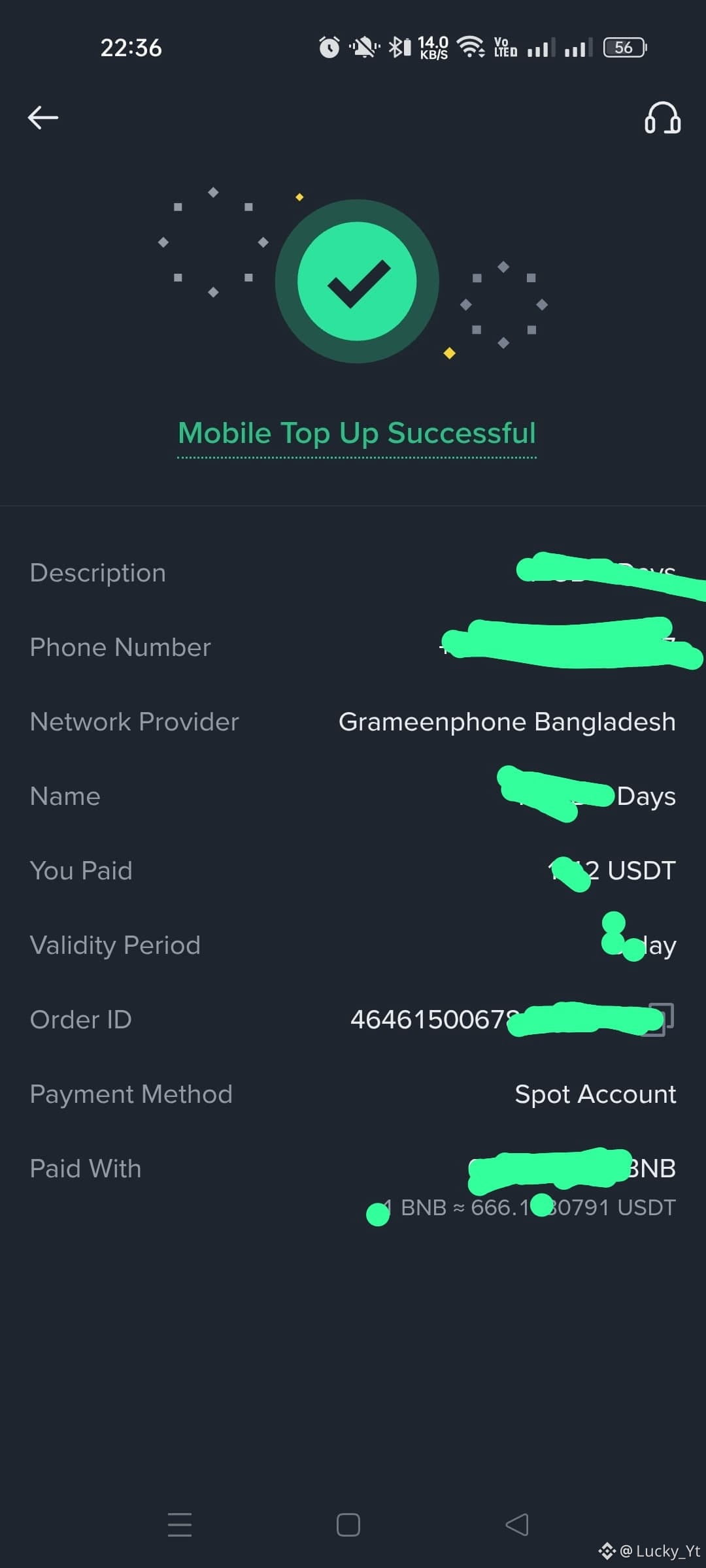
💛 Crypto is becoming more than just an investment — it's becoming part of everyday life.
That's what makes Binance Pay '💳' interesting to me.😘
Imagine shopping, sending payments, and exploring the crypto world without making everything complicated.
With #BinancePayember approaching, I'm excited to see how Binance brings more creativity and real-world utility to the community. 🎁
But here's my question:
Would you use crypto for everyday shopping if it were as easy as paying with traditional money?
Let's hear your thoughts! 👇
#BinancePayember #BinancePay #BinanceSquare #EarningsSeason
$USDC
{future}(USDCUSDT)
$BNB
{future}(BNBUSDT)
$BTC
{future}(BTCUSDT)
💛 Crypto is becoming more than just an investment — it's becoming part of everyday life.
That's what makes Binance Pay '💳' interesting to me.😘
Imagine shopping, sending payments, and exploring the crypto world without making everything complicated.
With #BinancePayember approaching, I'm excited to see how Binance brings more creativity and real-world utility to the community. 🎁
But here's my question:
Would you use crypto for everyday shopping if it were as easy as paying with traditional money?
Let's hear your thoughts! 👇
#BinancePayember #BinancePay #BinanceSquare #EarningsSeason
$USDC
$BNB
$BTC

1
151

·
--
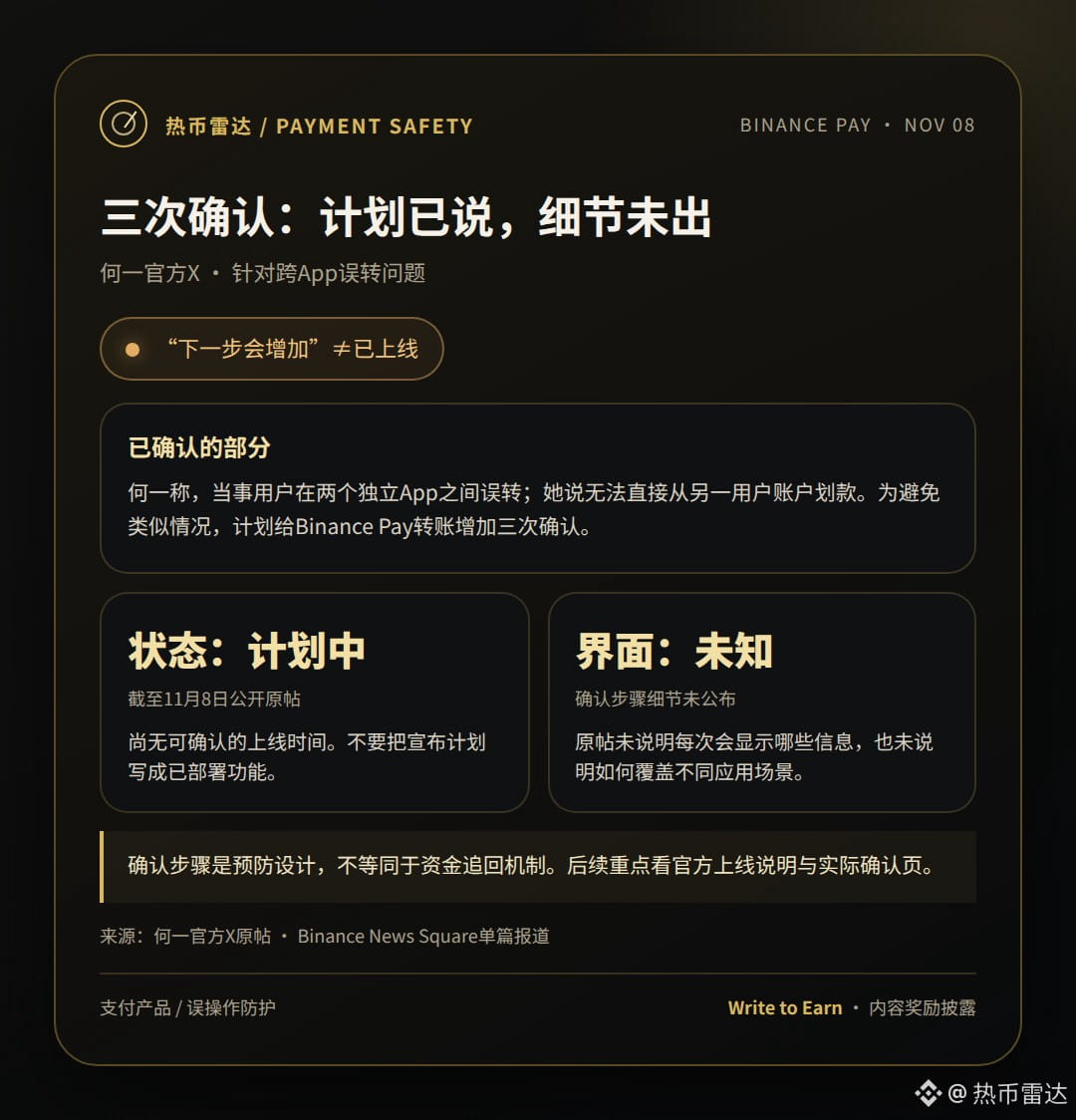
“Adding three confirmations” to Binance Pay is currently a plan, not a feature confirmed to be live. On November 8, He Yi said on official X that after a user mistakenly transferred funds between two separate apps, the platform could not directly debit the other user’s account. To prevent similar situations, the next step will be to add three confirmations to Binance Pay transfers.
The original post did not announce a launch date or explain what would be checked at each step. An extra confirmation is a preventive measure, not a fund-recovery mechanism; its effectiveness will also depend on whether the confirmation screen clearly displays the recipient and transfer destination. The next things to watch for are the official launch announcement and the actual interface. Which piece of information do you think the confirmation screen should highlight most?
Sources: [He Yi’s original post on official X](https://x.com/heyibinance/status/2119276276984992120)|[Binance News Square report](https://www.binance.com/en/square/post/385959660919321)
Disclosure: This post may qualify for Binance Square Write to Earn content rewards; eligibility and rewards are subject to the platform’s rules and actual results. Not investment advice.
#BinancePay #TransferSafety
106

·
--
It’s worth discussing how Binance handled a mistaken crypto transfer.
A user mistakenly transferred funds between two separate apps. Due to compliance restrictions, the platform was not authorized to retrieve funds directly from another person’s account. Co-founder He Yi chose to compensate the user for the full loss out of her own pocket. She also explained that, for historical compliance reasons, Binance’s three local platforms were developed independently, with product architectures and business models that differ from the main platform. They primarily handle local fiat transactions, which is also why users can easily get confused when making transfers.
What’s even more noteworthy is the follow-up: Binance Pay transfers will add three confirmation steps to reduce the chance of mistaken transfers at the process level. Providing a safety net first and then improving the mechanism is more convincing than simply issuing a statement.
In addition, He Yi announced that she would select the 10 best product suggestions from the comments within a week, rewarding each person with 1 $BNB. Users’ candid feedback can directly inform product improvements—and there’s an incentive too. This feedback channel is worth using.
#币安 #BinancePay
It’s worth discussing how Binance handled a mistaken crypto transfer.
A user mistakenly transferred funds between two separate apps. Due to compliance restrictions, the platform was not authorized to retrieve funds directly from another person’s account. Co-founder He Yi chose to compensate the user for the full loss out of her own pocket. She also explained that, for historical compliance reasons, Binance’s three local platforms were developed independently, with product architectures and business models that differ from the main platform. They primarily handle local fiat transactions, which is also why users can easily get confused when making transfers.
What’s even more noteworthy is the follow-up: Binance Pay transfers will add three confirmation steps to reduce the chance of mistaken transfers at the process level. Providing a safety net first and then improving the mechanism is more convincing than simply issuing a statement.
In addition, He Yi announced that she would select the 10 best product suggestions from the comments within a week, rewarding each person with 1 $BNB . Users’ candid feedback can directly inform product improvements—and there’s an incentive too. This feedback channel is worth using.
#币安 #BinancePay
53
Log in to explore more content
Join global crypto users on Binance Square
⚡️ Get latest and useful information about crypto.
💬 Trusted by the world’s largest crypto exchange.
👍 Discover real insights from verified creators.
Email / Phone number
Trending Topics
1
#MoreHikesExpectedIsBTCUnderPressure
2,434 views
76 Discussing
2
#NvidiaBeatsEstimatesWith$130BQ4Outlook
68,914 views
292 Discussing
3
#AnthropicIPOPriceCouldExceed$80
68,664 views
242 Discussing
4
#RussiaCentralBankAddsAlfaBankToCryptoExchangeRegister
4,857 views
53 Discussing
5
#VisaPlansStablecoinPrefundingForAPACCrossBorderPayments
4,978 views
40 Discussing
6
#CanadaAndUSLaunchOperationNiagaraAgainstApprovalPhishing
43,874 views
57 Discussing
7
#BankOfEnglandUnveilsClearingHousePathwayCoveringDLTFirms
4,660 views
66 Discussing
8
#DBSAndCirclePartnerToExpandAsianInstitutionsUSDCAccess
6,006 views
67 Discussing
9
#LedgerHardwareImplantReportsExtendToDubai
102,576 views
907 Discussing
10
#NvidiaBoardNotConsideringHuang’sReturnasCEO
280,975 views
1,679 Discussing