

#aave
aave
7M views
24,803 Discussing
Hot
Latest

·
--
🚀 $AAVE Market Update
$AAVE is showing strong market interest and a positive structure, attracting attention from traders across the crypto space. With solid momentum and active trading volume, AAVE remains a token worth watching closely.
📈 Keep an eye on the market, manage your risk, and trade responsibly.
#AAVE #Crypto #Binance #Trading #DeFi
{spot}(AAVEUSDT)
🚀 $AAVE Market Update
$AAVE is showing strong market interest and a positive structure, attracting attention from traders across the crypto space. With solid momentum and active trading volume, AAVE remains a token worth watching closely.
📈 Keep an eye on the market, manage your risk, and trade responsibly.
#AAVE #Crypto #Binance #Trading #DeFi
$AAVE is showing strong market interest and a positive structure, attracting attention from traders across the crypto space. With solid momentum and active trading volume, AAVE remains a token worth watching closely.
📈 Keep an eye on the market, manage your risk, and trade responsibly.
#AAVE #Crypto #Binance #Trading #DeFi
1
136

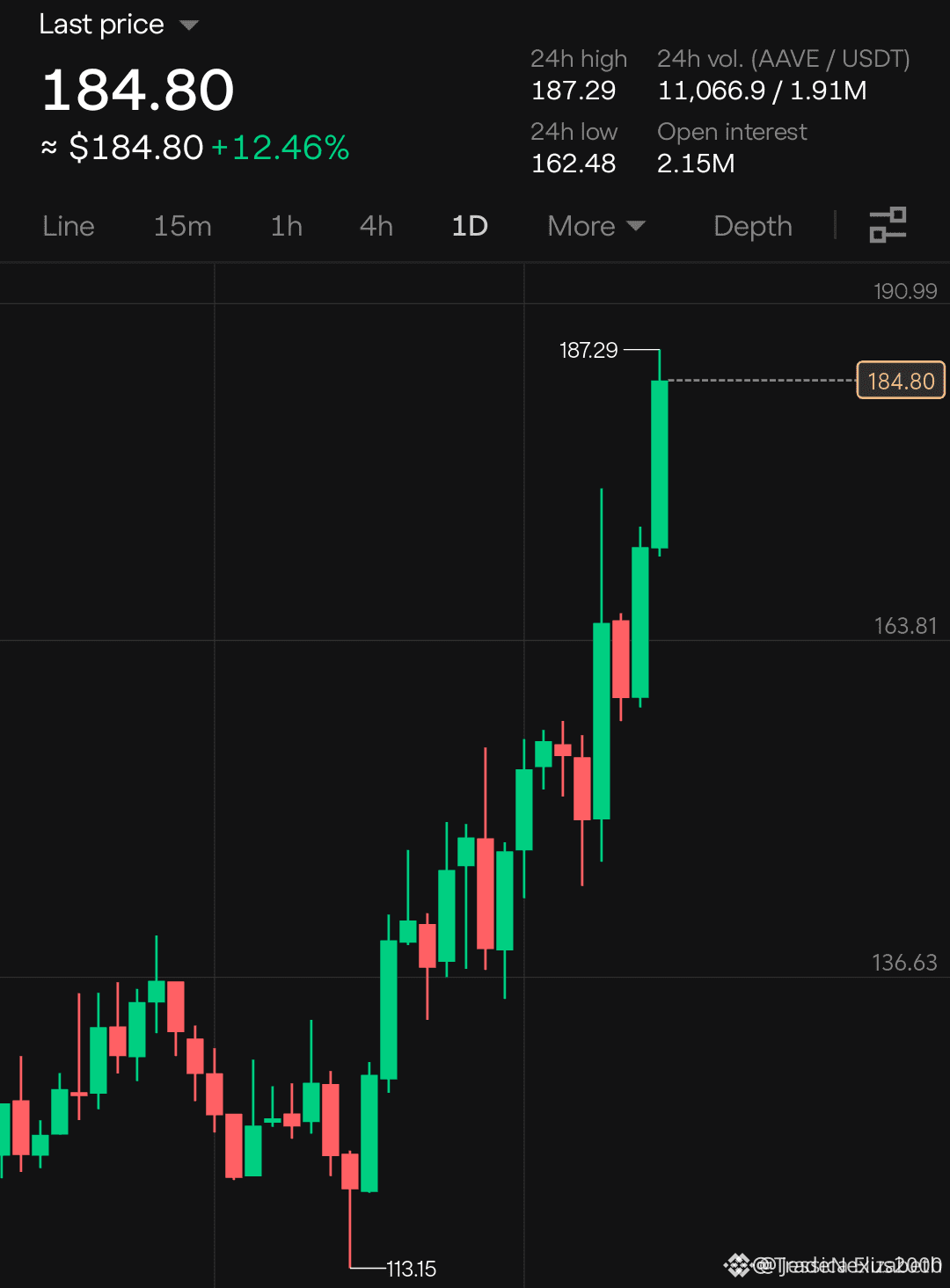
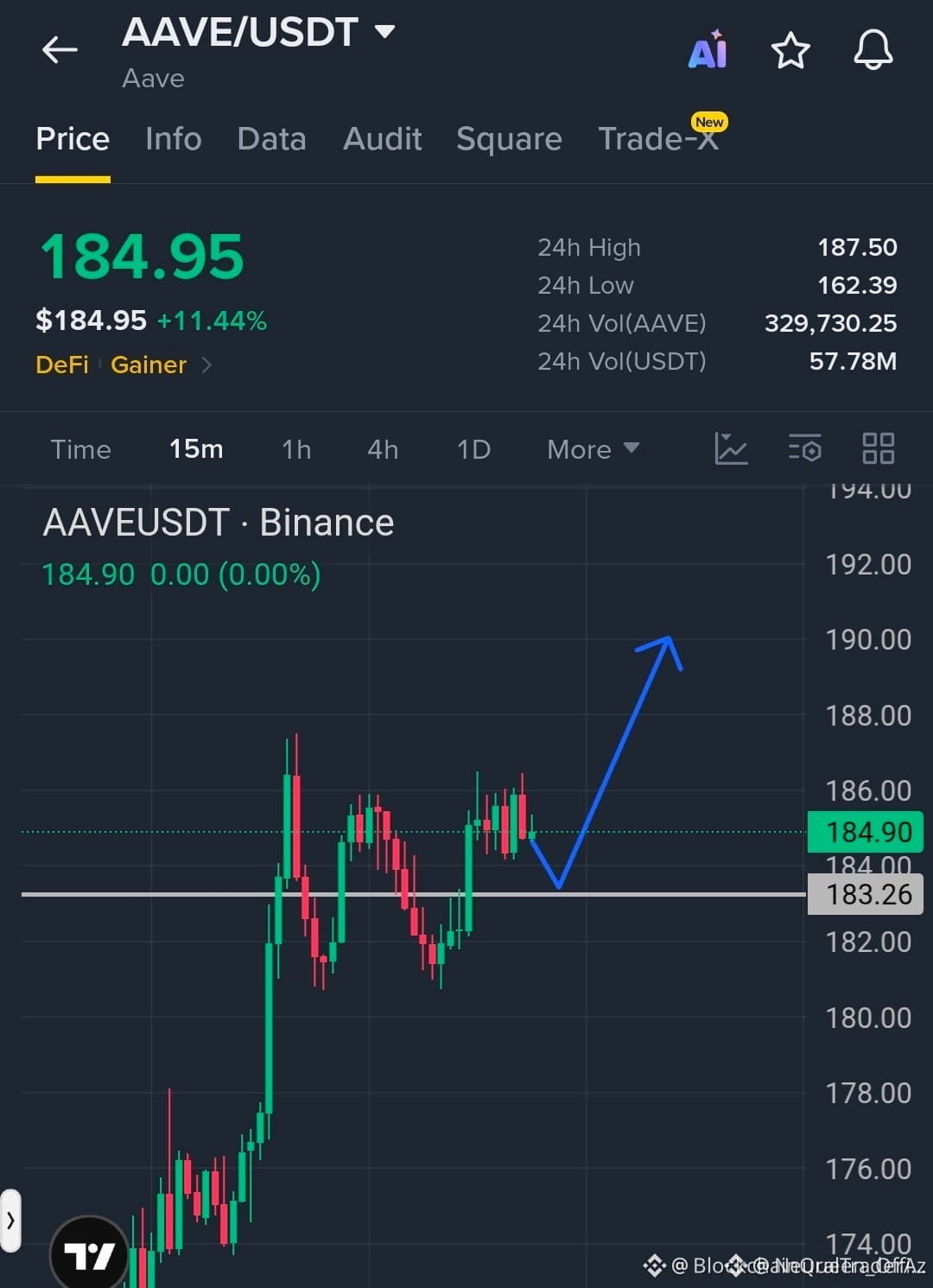
🚨 $AAVE DEFENDS KEY INSTITUTIONAL DEMAND AS LIQUIDITY SWEEP FLIPS STRUCTURE BULLISH! 💥
Entry: 182.90 - 185.34 ⚡
Target: 190.34 - 194.22 🎯
Stop Loss: 177.70 ⚠️
📌 $AAVE is defending a high-confluence order block between 182.90 and 185.34, absorbing sell pressure after sweeping local sell-side liquidity. 🔍 Higher timeframe market structure remains intact as institutional buyers step in to defend this structural pivot.
💡 A structural expansion off this demand zone opens the pathway toward overhead liquidity pools at 190.34 and 194.22, maintaining tightly controlled risk strictly below 177.70. 💬 Are you bidding this order block accumulation or waiting for full confirmation? 👇
⚠️ Not financial advice. Always manage your risk. 🛡️
🏷️ #AAVE #LongSetup #DeFi #MarketStructure #Crypto
🎯 🦈
🚨 $AAVE DEFENDS KEY INSTITUTIONAL DEMAND AS LIQUIDITY SWEEP FLIPS STRUCTURE BULLISH! 💥
Entry: 182.90 - 185.34 ⚡
Target: 190.34 - 194.22 🎯
Stop Loss: 177.70 ⚠️
📌 $AAVE is defending a high-confluence order block between 182.90 and 185.34, absorbing sell pressure after sweeping local sell-side liquidity. 🔍 Higher timeframe market structure remains intact as institutional buyers step in to defend this structural pivot.
💡 A structural expansion off this demand zone opens the pathway toward overhead liquidity pools at 190.34 and 194.22, maintaining tightly controlled risk strictly below 177.70. 💬 Are you bidding this order block accumulation or waiting for full confirmation? 👇
⚠️ Not financial advice. Always manage your risk. 🛡️
🏷️ #AAVE #LongSetup #DeFi #MarketStructure #Crypto
🎯 🦈
Entry: 182.90 - 185.34 ⚡
Target: 190.34 - 194.22 🎯
Stop Loss: 177.70 ⚠️
📌 $AAVE is defending a high-confluence order block between 182.90 and 185.34, absorbing sell pressure after sweeping local sell-side liquidity. 🔍 Higher timeframe market structure remains intact as institutional buyers step in to defend this structural pivot.
💡 A structural expansion off this demand zone opens the pathway toward overhead liquidity pools at 190.34 and 194.22, maintaining tightly controlled risk strictly below 177.70. 💬 Are you bidding this order block accumulation or waiting for full confirmation? 👇
⚠️ Not financial advice. Always manage your risk. 🛡️
🏷️ #AAVE #LongSetup #DeFi #MarketStructure #Crypto
🎯 🦈
22

·
--
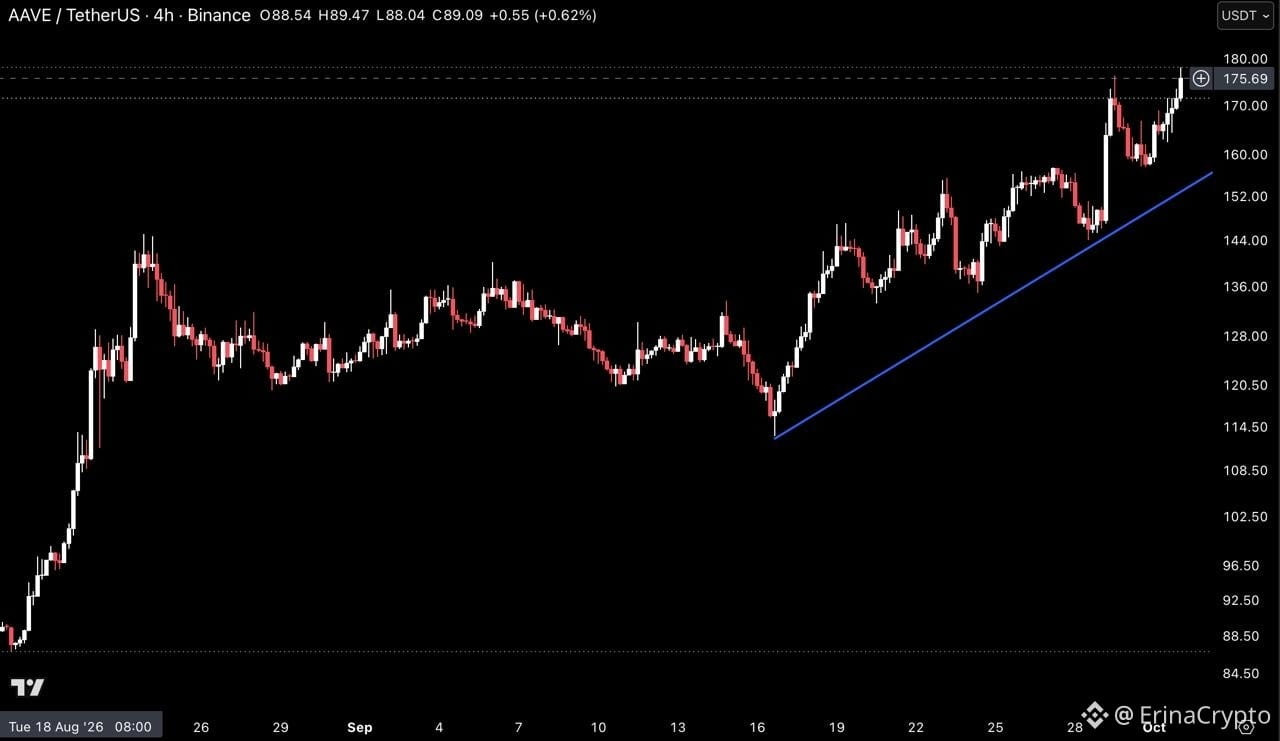
💰 #AAVE Analysis- 🚀 🚀 🚀
AAVE is trading at 175.69, breaking out to fresh highs while holding the rising trendline from mid September near 152.00.
Hold this trendline and the breakout keeps extending toward new highs above 180.00.
#AAVE #Erinacrypto $AAVE
{spot}(AAVEUSDT)
$SAND
{spot}(SANDUSDT)
$GTC
{spot}(GTCUSDT)
💰 #AAVE Analysis- 🚀 🚀 🚀
AAVE is trading at 175.69, breaking out to fresh highs while holding the rising trendline from mid September near 152.00.
Hold this trendline and the breakout keeps extending toward new highs above 180.00.
#AAVE #Erinacrypto $AAVE
$SAND
$GTC
AAVE is trading at 175.69, breaking out to fresh highs while holding the rising trendline from mid September near 152.00.
Hold this trendline and the breakout keeps extending toward new highs above 180.00.
#AAVE #Erinacrypto $AAVE
$SAND
$GTC
1
2
329

·
--
Bullish
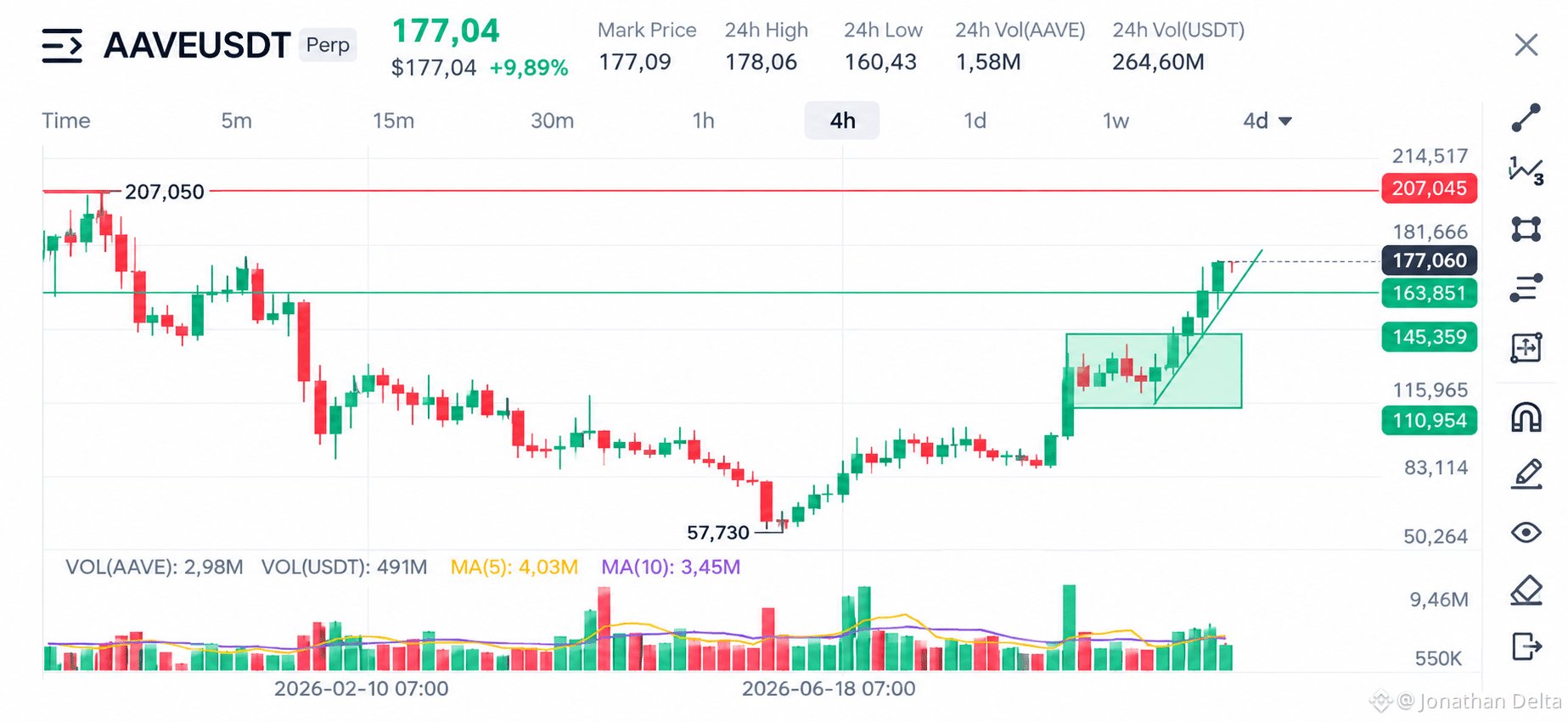
🚀 $AAVE Is Finally Showing Strength! 🔥
$AAVE is gaining momentum and outperforming many top coins. It's been a while since we've seen this kind of strength from AAVE.
The next key resistance is around $207. A breakout could open the door to further upside. 👀
🟢 Long Setup
* Entry: $170 – $175
* TP: $200 – $230 – $260 – $300
* SL: $159
🔥 AAVE is back on the radar. Can bulls push it toward $300? 🚀
#AAVE #Crypto #altcoins #BinanceSquare #Trading
{future}(AAVEUSDT)
🚀 $AAVE Is Finally Showing Strength! 🔥
$AAVE is gaining momentum and outperforming many top coins. It's been a while since we've seen this kind of strength from AAVE.
The next key resistance is around $207. A breakout could open the door to further upside. 👀
🟢 Long Setup
* Entry: $170 – $175
* TP: $200 – $230 – $260 – $300
* SL: $159
🔥 AAVE is back on the radar. Can bulls push it toward $300? 🚀
#AAVE #Crypto #altcoins #BinanceSquare #Trading
$AAVE is gaining momentum and outperforming many top coins. It's been a while since we've seen this kind of strength from AAVE.
The next key resistance is around $207. A breakout could open the door to further upside. 👀
🟢 Long Setup
* Entry: $170 – $175
* TP: $200 – $230 – $260 – $300
* SL: $159
🔥 AAVE is back on the radar. Can bulls push it toward $300? 🚀
#AAVE #Crypto #altcoins #BinanceSquare #Trading
114


·
--
Bullish
Guys today I've bought you something special
#BCH and #AAVE could be the next #ZEC
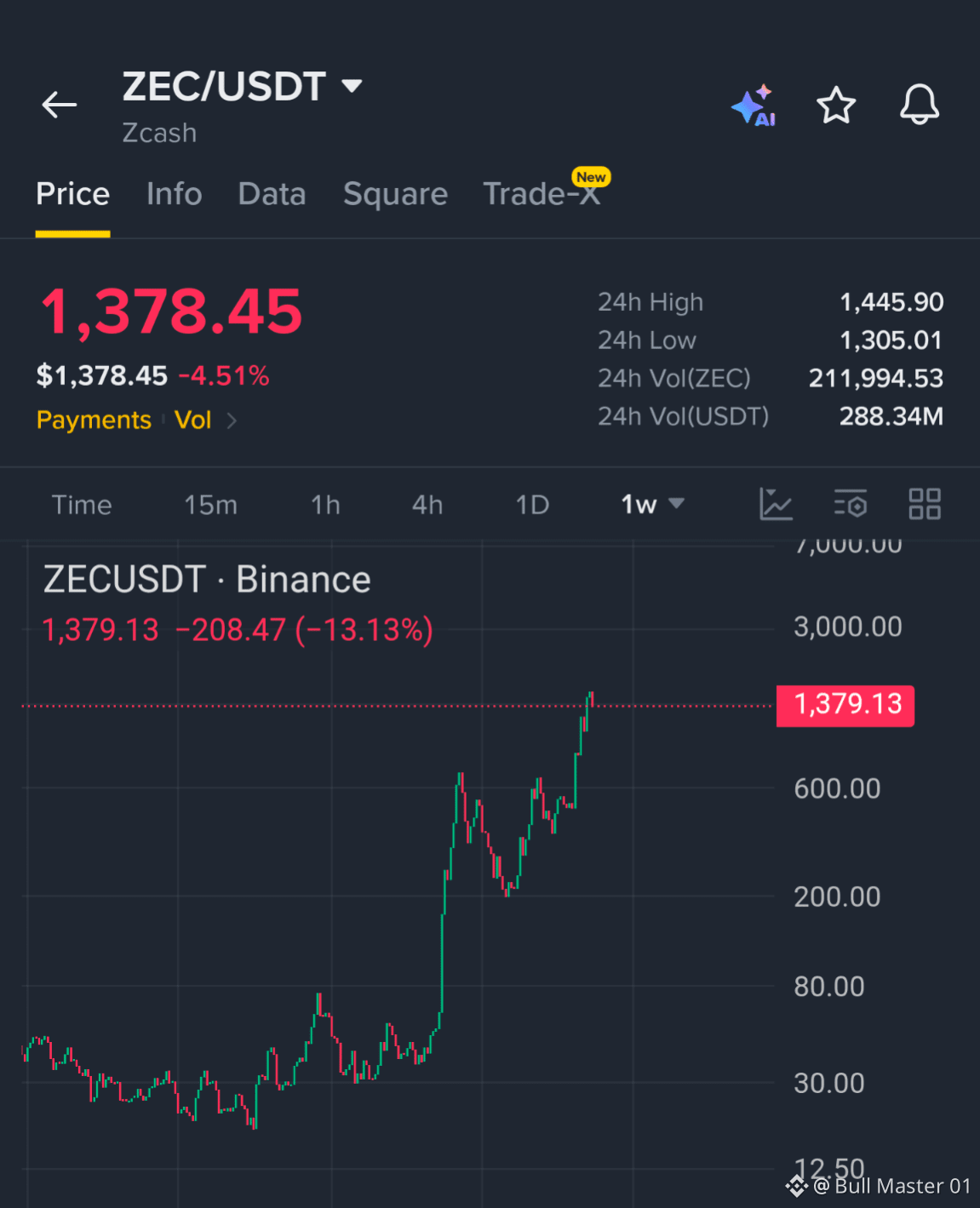
Family. Let's have a real conversation. You watched ZEC climb from $300 to $1,700 and did nothing. You said it was "too late." You said you'd "wait for a dip." Now it's sitting at $1,378, and my next target is $2,500 this month.
Are you going to miss that too? 😅
I'm holding two coins that could be the next ZEC. Listen closely.
BCH The sleeping giant
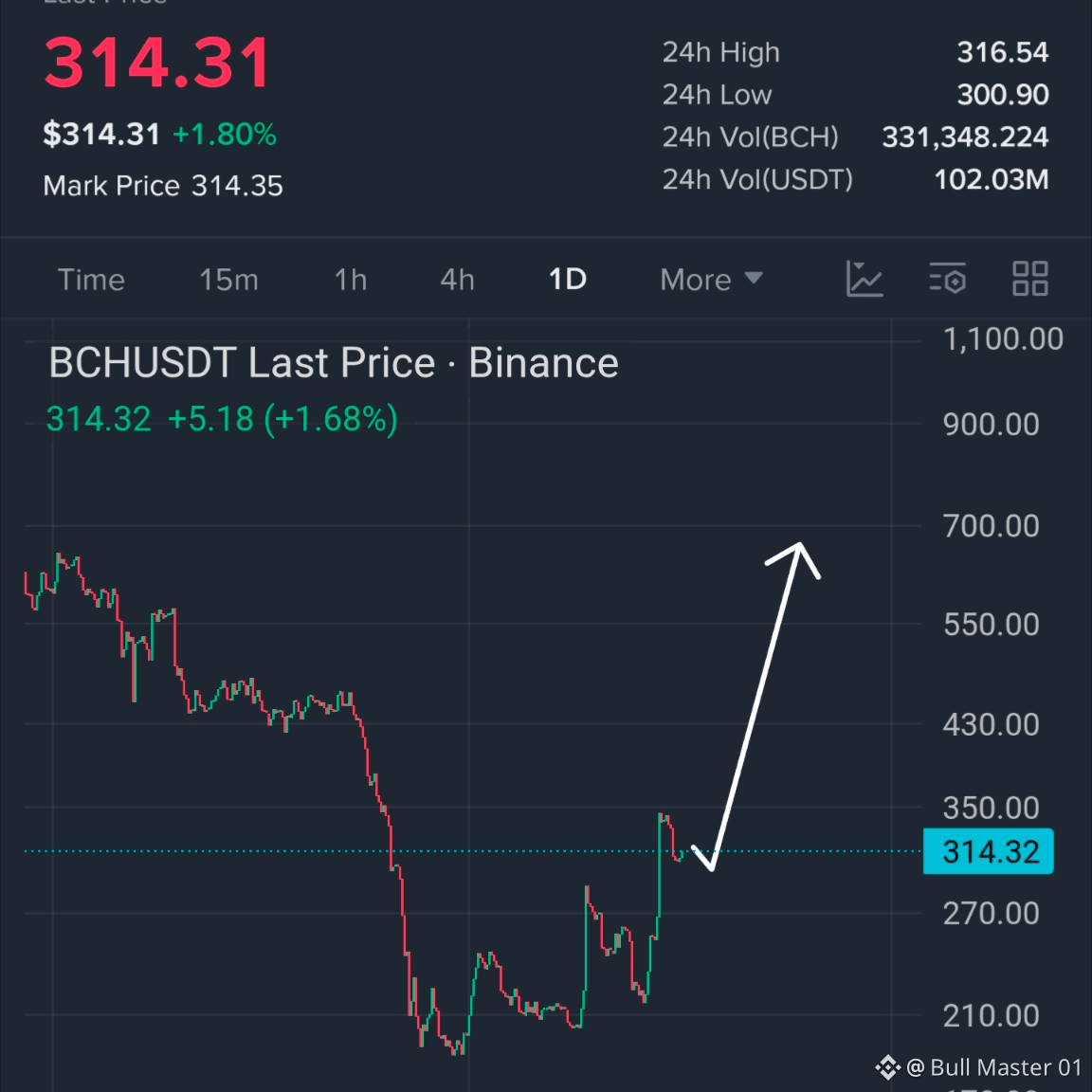
Look at this daily chart. It's been basing for weeks, quietly coiling. Now it's turning up, sitting at $314. This looks exactly like ZEC before it went vertical. Once $350 breaks, $500 and $700 come fast.
AAVE The quiet trend machine
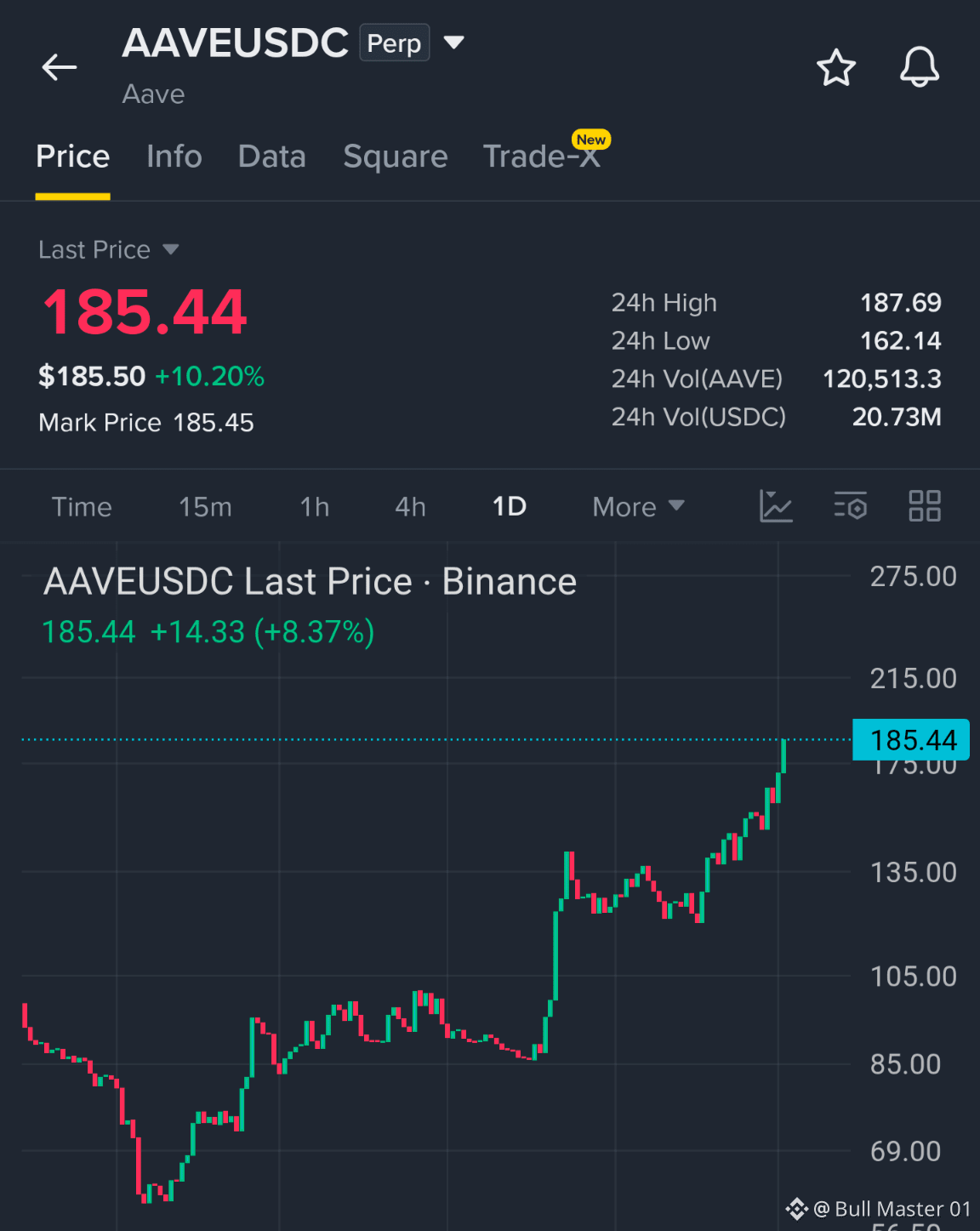
This one is up 10% today at $185. Higher lows. Clean pullbacks. It went from $80 to $185 without blinking. This is the kind of steady structure that prints money while everyone else chases hype.
The setups
$BCH
Entry $310–$320
Target $430 → $550 → $700.
{future}(BCHUSDT)
$AAVE
Entry $180–$186
Target $215 → $275.
{future}(AAVEUSDT)
$ZEC
Entry $1,350–$1,400
Target $2,500 this month.
{future}(ZECUSDT)
You missed the ZEC rocket. Don't sit there and let BCH and AAVE fly without you. I'm personally holding all three. The charts are clean. The trends are up. The targets are set.
Family moves together. Let's eat.
NFA DYOR
Guys today I've bought you something special
#BCH and #AAVE could be the next #ZEC
Family. Let's have a real conversation. You watched ZEC climb from $300 to $1,700 and did nothing. You said it was "too late." You said you'd "wait for a dip." Now it's sitting at $1,378, and my next target is $2,500 this month.
Are you going to miss that too? 😅
I'm holding two coins that could be the next ZEC. Listen closely.
BCH The sleeping giant
Look at this daily chart. It's been basing for weeks, quietly coiling. Now it's turning up, sitting at $314. This looks exactly like ZEC before it went vertical. Once $350 breaks, $500 and $700 come fast.
AAVE The quiet trend machine
This one is up 10% today at $185. Higher lows. Clean pullbacks. It went from $80 to $185 without blinking. This is the kind of steady structure that prints money while everyone else chases hype.
The setups
$BCH
Entry $310–$320
Target $430 → $550 → $700.
$AAVE
Entry $180–$186
Target $215 → $275.
$ZEC
Entry $1,350–$1,400
Target $2,500 this month.
You missed the ZEC rocket. Don't sit there and let BCH and AAVE fly without you. I'm personally holding all three. The charts are clean. The trends are up. The targets are set.
Family moves together. Let's eat.
NFA DYOR
#BCH and #AAVE could be the next #ZEC
Family. Let's have a real conversation. You watched ZEC climb from $300 to $1,700 and did nothing. You said it was "too late." You said you'd "wait for a dip." Now it's sitting at $1,378, and my next target is $2,500 this month.
Are you going to miss that too? 😅
I'm holding two coins that could be the next ZEC. Listen closely.
BCH The sleeping giant
Look at this daily chart. It's been basing for weeks, quietly coiling. Now it's turning up, sitting at $314. This looks exactly like ZEC before it went vertical. Once $350 breaks, $500 and $700 come fast.
AAVE The quiet trend machine
This one is up 10% today at $185. Higher lows. Clean pullbacks. It went from $80 to $185 without blinking. This is the kind of steady structure that prints money while everyone else chases hype.
The setups
$BCH
Entry $310–$320
Target $430 → $550 → $700.
$AAVE
Entry $180–$186
Target $215 → $275.
$ZEC
Entry $1,350–$1,400
Target $2,500 this month.
You missed the ZEC rocket. Don't sit there and let BCH and AAVE fly without you. I'm personally holding all three. The charts are clean. The trends are up. The targets are set.
Family moves together. Let's eat.
NFA DYOR
1
530

·
--
🚨 WAIT… AAVE JUST PUT STOCKS INSIDE DEFI
This is the Aave update that caught my attention.
Coinbase’s tokenized U.S. stocks are now live on Aave V4 on Base.
Seven tokenized tech stocks can now be used as collateral to borrow USDC.
Think about what that means.
Stocks → tokenized onchain → used as DeFi collateral.
This isn’t just another token listing.
It’s Aave pushing deeper into the connection between traditional markets and onchain lending.
And Aave V4 is still expanding rapidly, with total deposits across its new hubs approaching $950M as of September 24.
That’s the part I’m watching closely.
🚨 AAVE UPDATE: Tokenized stocks are now usable as collateral on Aave V4. Click the $AAVE setup below 🫵🏻 and see how the market reacts.
$AAVE
{future}(AAVEUSDT)
.
.
.
#AAVE #DeFi #Write2Earn
🚨 WAIT… AAVE JUST PUT STOCKS INSIDE DEFI
This is the Aave update that caught my attention.
Coinbase’s tokenized U.S. stocks are now live on Aave V4 on Base.
Seven tokenized tech stocks can now be used as collateral to borrow USDC.
Think about what that means.
Stocks → tokenized onchain → used as DeFi collateral.
This isn’t just another token listing.
It’s Aave pushing deeper into the connection between traditional markets and onchain lending.
And Aave V4 is still expanding rapidly, with total deposits across its new hubs approaching $950M as of September 24.
That’s the part I’m watching closely.
🚨 AAVE UPDATE: Tokenized stocks are now usable as collateral on Aave V4. Click the $AAVE setup below 🫵🏻 and see how the market reacts.
$AAVE
.
.
.
#AAVE #DeFi #Write2Earn
This is the Aave update that caught my attention.
Coinbase’s tokenized U.S. stocks are now live on Aave V4 on Base.
Seven tokenized tech stocks can now be used as collateral to borrow USDC.
Think about what that means.
Stocks → tokenized onchain → used as DeFi collateral.
This isn’t just another token listing.
It’s Aave pushing deeper into the connection between traditional markets and onchain lending.
And Aave V4 is still expanding rapidly, with total deposits across its new hubs approaching $950M as of September 24.
That’s the part I’m watching closely.
🚨 AAVE UPDATE: Tokenized stocks are now usable as collateral on Aave V4. Click the $AAVE setup below 🫵🏻 and see how the market reacts.
$AAVE
.
.
.
#AAVE #DeFi #Write2Earn
373

·
--
Bullish
$AAVE 📈
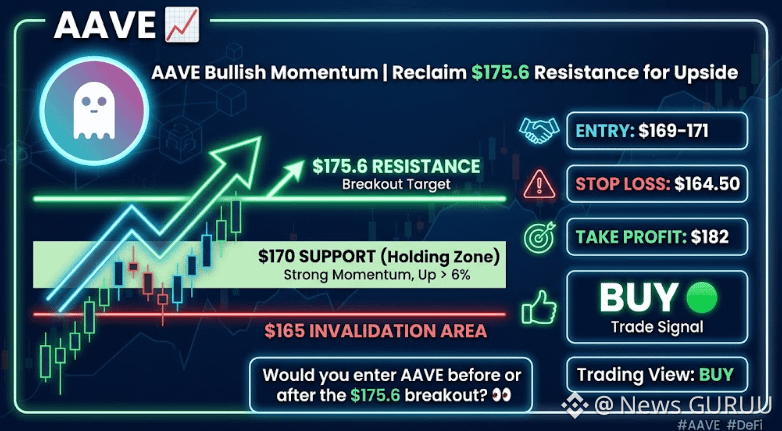
AAVE is holding around the $170 support while momentum remains strong, with price up over 6% today. A reclaim above $175.6 resistance can open further upside, while $165 is the key invalidation area.
Entry: $169–171
Stop Loss: $164.50
Take Profit: $182
Trading View: BUY🟢
Would you enter AAVE before or after the $175.6 breakout? 👀
"CLICK ON THE BELOW YELLOW COIN TAG TO GO TO DESIRED TRADING PAGE TO GET BENEFIT TRADE"$AAVE
{spot}(AAVEUSDT)
#AAVE #defi #NFPWatch #NEARFallsToAround$4.70Down14% #BitcoinRisesToward$85K
$AAVE 📈
AAVE is holding around the $170 support while momentum remains strong, with price up over 6% today. A reclaim above $175.6 resistance can open further upside, while $165 is the key invalidation area.
Entry: $169–171
Stop Loss: $164.50
Take Profit: $182
Trading View: BUY🟢
Would you enter AAVE before or after the $175.6 breakout? 👀
"CLICK ON THE BELOW YELLOW COIN TAG TO GO TO DESIRED TRADING PAGE TO GET BENEFIT TRADE"$AAVE
#AAVE #defi #NFPWatch #NEARFallsToAround$4.70Down14% #BitcoinRisesToward$85K
AAVE is holding around the $170 support while momentum remains strong, with price up over 6% today. A reclaim above $175.6 resistance can open further upside, while $165 is the key invalidation area.
Entry: $169–171
Stop Loss: $164.50
Take Profit: $182
Trading View: BUY🟢
Would you enter AAVE before or after the $175.6 breakout? 👀
"CLICK ON THE BELOW YELLOW COIN TAG TO GO TO DESIRED TRADING PAGE TO GET BENEFIT TRADE"$AAVE
#AAVE #defi #NFPWatch #NEARFallsToAround$4.70Down14% #BitcoinRisesToward$85K
26

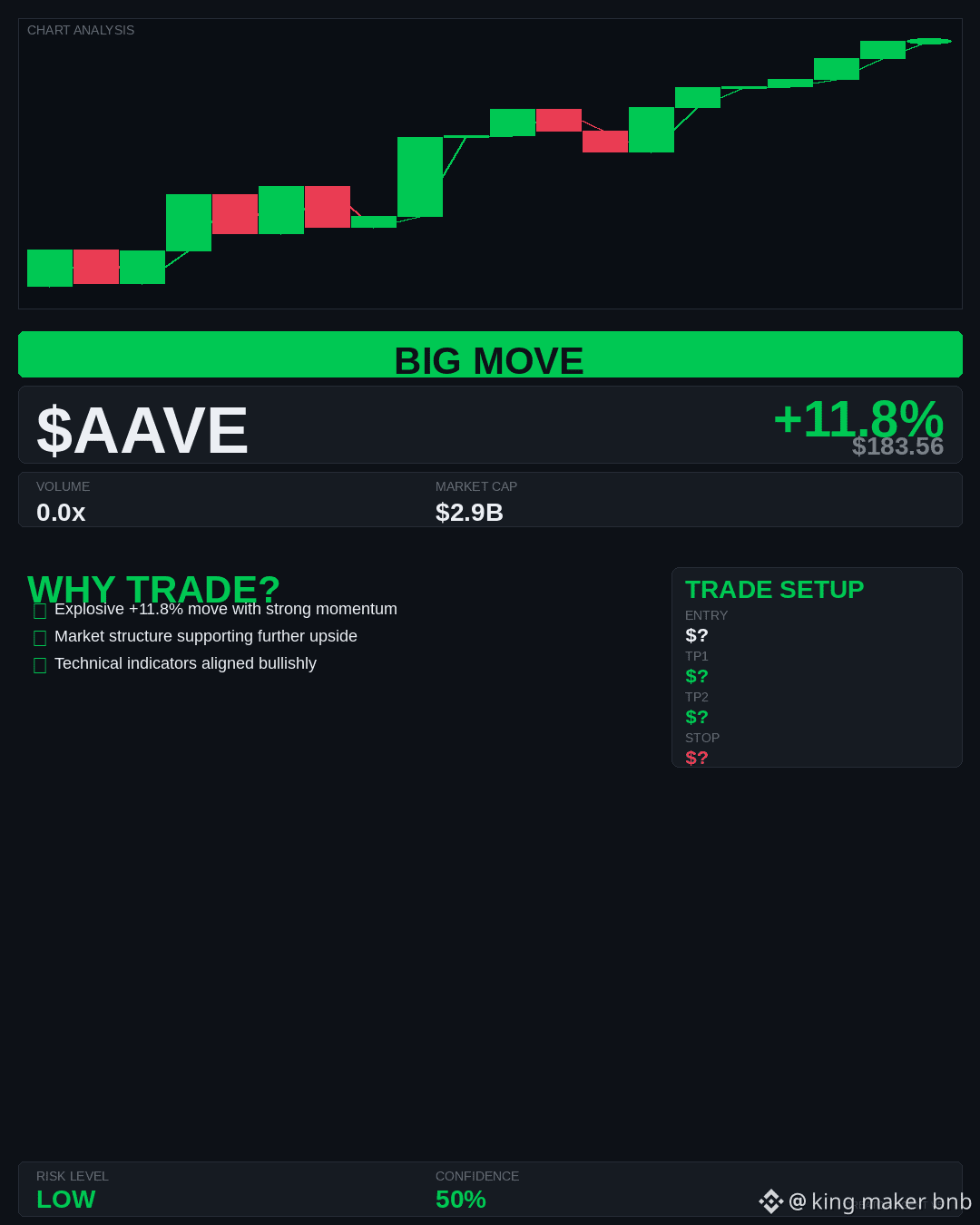
$AAVE just ripped +11.8% in 24h! This DeFi blue-chip is finally showing some serious strength. 🚀
Entry zone for $AAVE around $180-$185. First target is looking solid at $195, pushing towards $205 if momentum holds. Place your stop loss tight below $175. This strong move aligns perfectly with the renewed interest in the DeFi sector, and the conviction is palpable. While volume is still normal, the current momentum is undeniable, making it a key mover to watch. Keep an eye on incoming volume to confirm sustainability.
#AAVE #Write2Earn #DeFi #CryptoTrading
$AAVE just ripped +11.8% in 24h! This DeFi blue-chip is finally showing some serious strength. 🚀
Entry zone for $AAVE around $180-$185. First target is looking solid at $195, pushing towards $205 if momentum holds. Place your stop loss tight below $175. This strong move aligns perfectly with the renewed interest in the DeFi sector, and the conviction is palpable. While volume is still normal, the current momentum is undeniable, making it a key mover to watch. Keep an eye on incoming volume to confirm sustainability.
#AAVE #Write2Earn #DeFi #CryptoTrading
Entry zone for $AAVE around $180-$185. First target is looking solid at $195, pushing towards $205 if momentum holds. Place your stop loss tight below $175. This strong move aligns perfectly with the renewed interest in the DeFi sector, and the conviction is palpable. While volume is still normal, the current momentum is undeniable, making it a key mover to watch. Keep an eye on incoming volume to confirm sustainability.
#AAVE #Write2Earn #DeFi #CryptoTrading
80

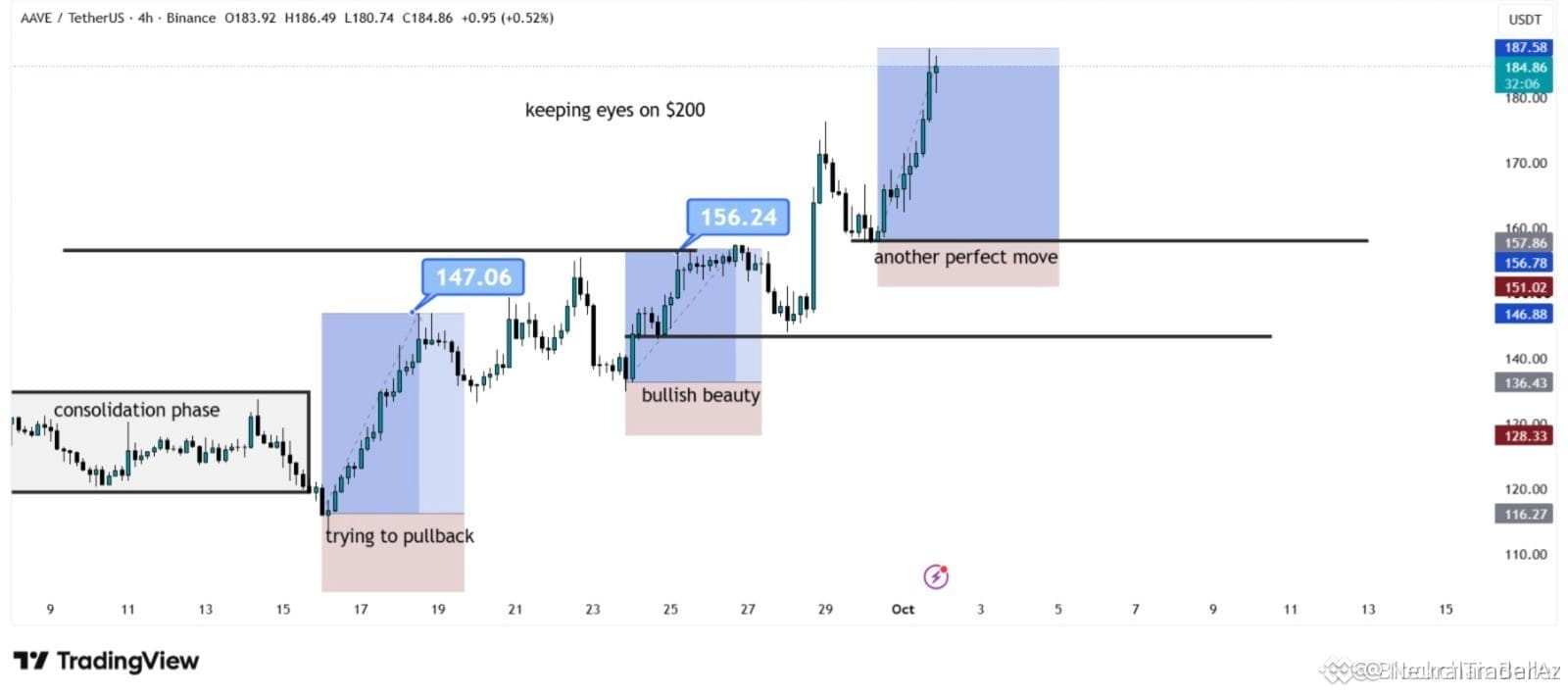
🟢 $AAVE EXPANDS TOWARD THE $200 LIQUIDITY POOL WITH INTACT INSTITUTIONAL STRUCTURE! 🚀
Entry: 184 - 187 ⚡
Target: 200 🚀
Stop Loss: 156 ⚠️
Following a strong impulse wave from the $156 breakout origin, $AAVE continues to display clean market structure as buyers defend higher low formations around the $184–$187 consolidation block. 📊 Institutional order flow remains firmly skewed to the upside, absorbing overhead selling pressure without triggering structural decay.
The primary targeted liquidity sits above $200, acting as a natural magnet for smart money expansion. 🔍 With foundational demand anchored firmly between $156 and $158, risk parameters remain sharply defined for this continuation leg. 💡
💬 Will smart money engine push straight through $200, or do you anticipate a brief liquidity sweep back into key support first? 👇
⚠️ Not financial advice. Always manage your risk. 🛡️
🏷️ #AAVE #DeFi #Breakout #Crypto #Altcoins
🔥 💎
🟢 $AAVE EXPANDS TOWARD THE $200 LIQUIDITY POOL WITH INTACT INSTITUTIONAL STRUCTURE! 🚀
Entry: 184 - 187 ⚡
Target: 200 🚀
Stop Loss: 156 ⚠️
Following a strong impulse wave from the $156 breakout origin, $AAVE continues to display clean market structure as buyers defend higher low formations around the $184–$187 consolidation block. 📊 Institutional order flow remains firmly skewed to the upside, absorbing overhead selling pressure without triggering structural decay.
The primary targeted liquidity sits above $200, acting as a natural magnet for smart money expansion. 🔍 With foundational demand anchored firmly between $156 and $158, risk parameters remain sharply defined for this continuation leg. 💡
💬 Will smart money engine push straight through $200, or do you anticipate a brief liquidity sweep back into key support first? 👇
⚠️ Not financial advice. Always manage your risk. 🛡️
🏷️ #AAVE #DeFi #Breakout #Crypto #Altcoins
🔥 💎
Entry: 184 - 187 ⚡
Target: 200 🚀
Stop Loss: 156 ⚠️
Following a strong impulse wave from the $156 breakout origin, $AAVE continues to display clean market structure as buyers defend higher low formations around the $184–$187 consolidation block. 📊 Institutional order flow remains firmly skewed to the upside, absorbing overhead selling pressure without triggering structural decay.
The primary targeted liquidity sits above $200, acting as a natural magnet for smart money expansion. 🔍 With foundational demand anchored firmly between $156 and $158, risk parameters remain sharply defined for this continuation leg. 💡
💬 Will smart money engine push straight through $200, or do you anticipate a brief liquidity sweep back into key support first? 👇
⚠️ Not financial advice. Always manage your risk. 🛡️
🏷️ #AAVE #DeFi #Breakout #Crypto #Altcoins
🔥 💎
22

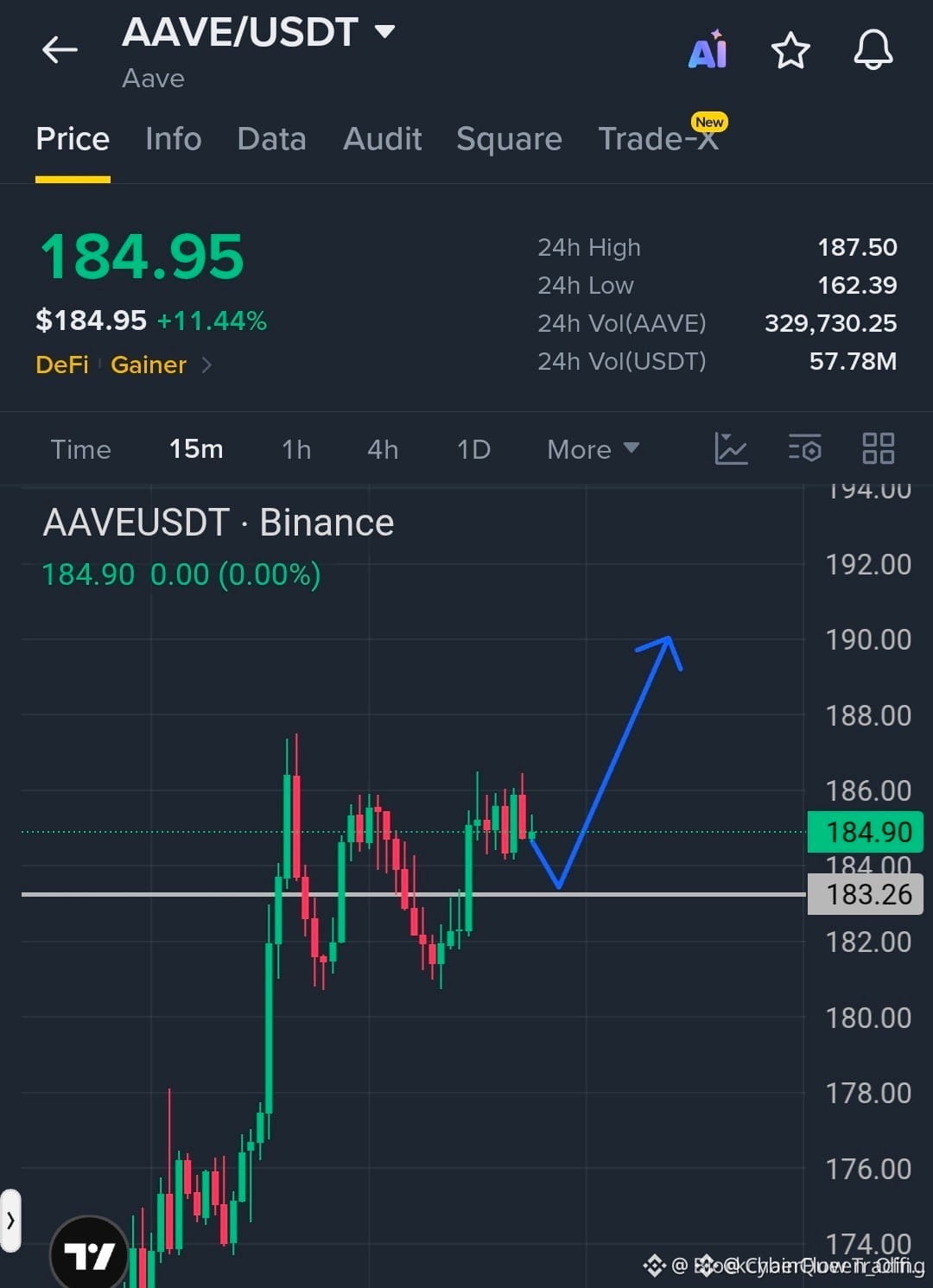
💥 $AAVE BUYERS ABSORB SELLING PRESSURE AS MOMENTUM EXPANDS TOWARD HIGH-TIMEFRAME TARGETS! 🚀
Target: 190 🚀
Smart money has been quietly sweeping liquidity on lower timeframes, setting up a textbook expansion move as demand continues to overwhelm overhead supply. 📊 Order flow is shifting decisively back to the bulls, driving volume higher with strong market conviction. ⚡
With key resistance zones flipping into structural support, price structure is priming for a clean continuation pattern toward major supply nodes. 🔍 Traders maintaining patience through the chop are positioned perfectly to capture this upcoming liquidity squeeze. 💡
💬 Are you riding this momentum legs up to the major resistance, or are you waiting on the sidelines for a retest? 👇
⚠️ Not financial advice. Always manage your risk. 🛡️
🏷️ #AAVE #LongSetup #DeFi #Breakout #Crypto
🔥 ⚡
💥 $AAVE BUYERS ABSORB SELLING PRESSURE AS MOMENTUM EXPANDS TOWARD HIGH-TIMEFRAME TARGETS! 🚀
Target: 190 🚀
Smart money has been quietly sweeping liquidity on lower timeframes, setting up a textbook expansion move as demand continues to overwhelm overhead supply. 📊 Order flow is shifting decisively back to the bulls, driving volume higher with strong market conviction. ⚡
With key resistance zones flipping into structural support, price structure is priming for a clean continuation pattern toward major supply nodes. 🔍 Traders maintaining patience through the chop are positioned perfectly to capture this upcoming liquidity squeeze. 💡
💬 Are you riding this momentum legs up to the major resistance, or are you waiting on the sidelines for a retest? 👇
⚠️ Not financial advice. Always manage your risk. 🛡️
🏷️ #AAVE #LongSetup #DeFi #Breakout #Crypto
🔥 ⚡
Target: 190 🚀
Smart money has been quietly sweeping liquidity on lower timeframes, setting up a textbook expansion move as demand continues to overwhelm overhead supply. 📊 Order flow is shifting decisively back to the bulls, driving volume higher with strong market conviction. ⚡
With key resistance zones flipping into structural support, price structure is priming for a clean continuation pattern toward major supply nodes. 🔍 Traders maintaining patience through the chop are positioned perfectly to capture this upcoming liquidity squeeze. 💡
💬 Are you riding this momentum legs up to the major resistance, or are you waiting on the sidelines for a retest? 👇
⚠️ Not financial advice. Always manage your risk. 🛡️
🏷️ #AAVE #LongSetup #DeFi #Breakout #Crypto
🔥 ⚡
18



·
--
Bullish
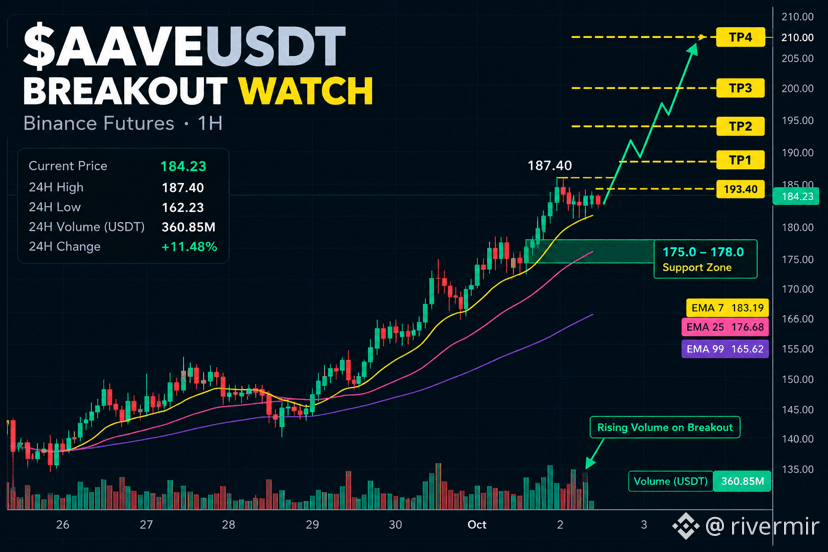
🔥 $AAVE — 4/4 TARGETS HIT | NEXT BREAKOUT WATCH
Our Oct 1 LONG setup delivered every target. 🎯
🟢 Entry: 163.8–164.5
✅ TP1 166.2
✅ TP2 168.4
✅ TP3 171.0
✅ TP4 174.0
$AAVE continued to 187.40 after the setup.
👀 Now watching 187.40.
A clean 15m breakout above the high with renewed volume could open the next continuation setup.
No chase at 184 — confirmation first.
👇 Tap $AAVE and watch the breakout level live.
#AAVE #BinanceFutures #Altcoins
{future}(AAVEUSDT)
🔥 $AAVE — 4/4 TARGETS HIT | NEXT BREAKOUT WATCH
Our Oct 1 LONG setup delivered every target. 🎯
🟢 Entry: 163.8–164.5
✅ TP1 166.2
✅ TP2 168.4
✅ TP3 171.0
✅ TP4 174.0
$AAVE continued to 187.40 after the setup.
👀 Now watching 187.40.
A clean 15m breakout above the high with renewed volume could open the next continuation setup.
No chase at 184 — confirmation first.
👇 Tap $AAVE and watch the breakout level live.
#AAVE #BinanceFutures #Altcoins
Our Oct 1 LONG setup delivered every target. 🎯
🟢 Entry: 163.8–164.5
✅ TP1 166.2
✅ TP2 168.4
✅ TP3 171.0
✅ TP4 174.0
$AAVE continued to 187.40 after the setup.
👀 Now watching 187.40.
A clean 15m breakout above the high with renewed volume could open the next continuation setup.
No chase at 184 — confirmation first.
👇 Tap $AAVE and watch the breakout level live.
#AAVE #BinanceFutures #Altcoins
33
🚨 $AAVE EXPANDING FROM DEMAND ZONE AS INSTITUTIONAL LIQUIDITY BUILDS FOR THE BREAKOUT 💥
Target: 190 🚀
$AAVE is showing clear signs of smart money accumulation following a sharp liquidity sweep of recent lows. 📊 Institutional order flow is turning distinctly aggressive on higher timeframes as selling volume dries up and key inefficiency gaps get reclaimed.
📌 With structural market patterns shifting back toward upside expansion, price is preparing for a momentum push toward upper liquidity targets. 🌊 Market participants are watching how order books respond to resistance absorption near key pivot zones. 💬 Are you positioned for this upside push or waiting for a confirmed high timeframe candle close? 👇
⚠️ Not financial advice. Always manage your risk. 🛡️
🏷️ #AAVE #LongSetup #DeFi #Breakout #Crypto
🎯 🦈
🚨 $AAVE EXPANDING FROM DEMAND ZONE AS INSTITUTIONAL LIQUIDITY BUILDS FOR THE BREAKOUT 💥
Target: 190 🚀
$AAVE is showing clear signs of smart money accumulation following a sharp liquidity sweep of recent lows. 📊 Institutional order flow is turning distinctly aggressive on higher timeframes as selling volume dries up and key inefficiency gaps get reclaimed.
📌 With structural market patterns shifting back toward upside expansion, price is preparing for a momentum push toward upper liquidity targets. 🌊 Market participants are watching how order books respond to resistance absorption near key pivot zones. 💬 Are you positioned for this upside push or waiting for a confirmed high timeframe candle close? 👇
⚠️ Not financial advice. Always manage your risk. 🛡️
🏷️ #AAVE #LongSetup #DeFi #Breakout #Crypto
🎯 🦈
Target: 190 🚀
$AAVE is showing clear signs of smart money accumulation following a sharp liquidity sweep of recent lows. 📊 Institutional order flow is turning distinctly aggressive on higher timeframes as selling volume dries up and key inefficiency gaps get reclaimed.
📌 With structural market patterns shifting back toward upside expansion, price is preparing for a momentum push toward upper liquidity targets. 🌊 Market participants are watching how order books respond to resistance absorption near key pivot zones. 💬 Are you positioned for this upside push or waiting for a confirmed high timeframe candle close? 👇
⚠️ Not financial advice. Always manage your risk. 🛡️
🏷️ #AAVE #LongSetup #DeFi #Breakout #Crypto
🎯 🦈
17

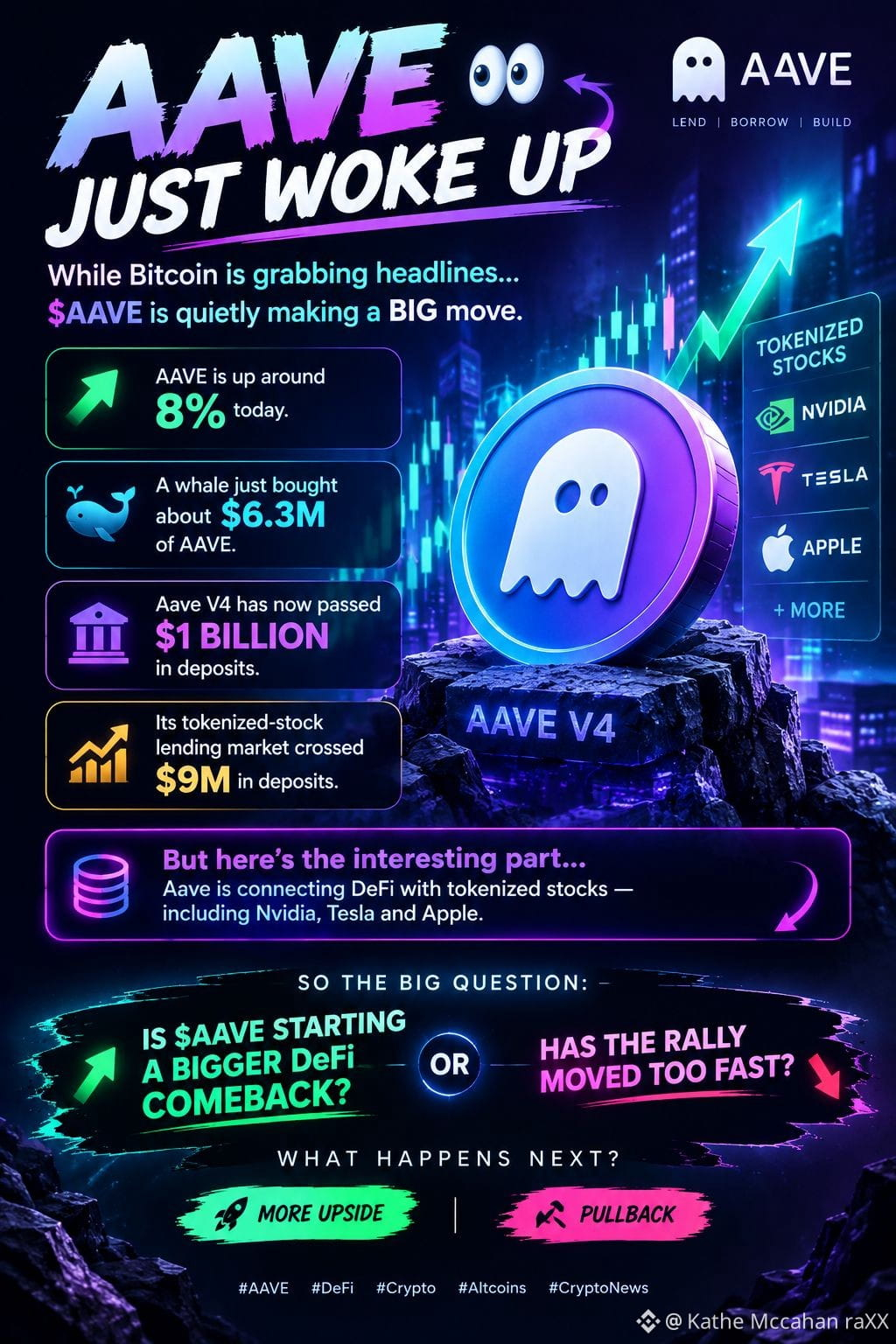
🚨 AAVE JUST WOKE UP 👀
While Bitcoin is grabbing headlines…
$AAVE is quietly making a BIG move. 🔥
📈 AAVE is up around 8% today.
🐋 A whale just bought about $6.3M of AAVE.
🏦 Aave V4 has now passed $1 BILLION in deposits.
💰 Its tokenized-stock lending market crossed $9M in deposits.
But here’s the interesting part…
Aave is connecting DeFi with tokenized stocks — including Nvidia, Tesla and Apple. 👀
{spot}(AAVEUSDT)
So the BIG question:
🔥 Is $AAVE starting a bigger DeFi comeback?
OR
📉 Has the rally moved too fast?
What happens next? 👇
🚀 More upside
📉 Pullback
#AAVE #defi #crypto #altcoins #CryptoNews
🚨 AAVE JUST WOKE UP 👀
While Bitcoin is grabbing headlines…
$AAVE is quietly making a BIG move. 🔥
📈 AAVE is up around 8% today.
🐋 A whale just bought about $6.3M of AAVE.
🏦 Aave V4 has now passed $1 BILLION in deposits.
💰 Its tokenized-stock lending market crossed $9M in deposits.
But here’s the interesting part…
Aave is connecting DeFi with tokenized stocks — including Nvidia, Tesla and Apple. 👀
So the BIG question:
🔥 Is $AAVE starting a bigger DeFi comeback?
OR
📉 Has the rally moved too fast?
What happens next? 👇
🚀 More upside
📉 Pullback
#AAVE #defi #crypto #altcoins #CryptoNews
While Bitcoin is grabbing headlines…
$AAVE is quietly making a BIG move. 🔥
📈 AAVE is up around 8% today.
🐋 A whale just bought about $6.3M of AAVE.
🏦 Aave V4 has now passed $1 BILLION in deposits.
💰 Its tokenized-stock lending market crossed $9M in deposits.
But here’s the interesting part…
Aave is connecting DeFi with tokenized stocks — including Nvidia, Tesla and Apple. 👀
So the BIG question:
🔥 Is $AAVE starting a bigger DeFi comeback?
OR
📉 Has the rally moved too fast?
What happens next? 👇
🚀 More upside
📉 Pullback
#AAVE #defi #crypto #altcoins #CryptoNews
77
💥 $AAVE PREPARES TO ACCELERATE AS BUYERS RECLAIM THE DEMAND ZONE! 🚀
Entry: 182.90 - 185.34 ⚡
Target: 190.34 - 194.22 🚀
Stop Loss: 177.70 ⚠️
📌 Buyers are aggressively stepping into the 182.90 demand pocket, soaking up ask-side liquidity after a clean local reset. 📊 Order flow indicates real institutional bid density defending this structure, preparing for a high-velocity push toward upper liquidity blocks.
💡 With momentum shifting back to the bulls, holding above support provides an exceptional risk-to-reward profile for this expansion leg. 💬 Are you loading long positions in this retest zone or waiting for 190 to flip into support? 👇
⚠️ Not financial advice. Always manage your risk. 🛡️
🏷️ #AAVE #LongSetup #Crypto #Breakout
🔥 💎
💥 $AAVE PREPARES TO ACCELERATE AS BUYERS RECLAIM THE DEMAND ZONE! 🚀
Entry: 182.90 - 185.34 ⚡
Target: 190.34 - 194.22 🚀
Stop Loss: 177.70 ⚠️
📌 Buyers are aggressively stepping into the 182.90 demand pocket, soaking up ask-side liquidity after a clean local reset. 📊 Order flow indicates real institutional bid density defending this structure, preparing for a high-velocity push toward upper liquidity blocks.
💡 With momentum shifting back to the bulls, holding above support provides an exceptional risk-to-reward profile for this expansion leg. 💬 Are you loading long positions in this retest zone or waiting for 190 to flip into support? 👇
⚠️ Not financial advice. Always manage your risk. 🛡️
🏷️ #AAVE #LongSetup #Crypto #Breakout
🔥 💎
Entry: 182.90 - 185.34 ⚡
Target: 190.34 - 194.22 🚀
Stop Loss: 177.70 ⚠️
📌 Buyers are aggressively stepping into the 182.90 demand pocket, soaking up ask-side liquidity after a clean local reset. 📊 Order flow indicates real institutional bid density defending this structure, preparing for a high-velocity push toward upper liquidity blocks.
💡 With momentum shifting back to the bulls, holding above support provides an exceptional risk-to-reward profile for this expansion leg. 💬 Are you loading long positions in this retest zone or waiting for 190 to flip into support? 👇
⚠️ Not financial advice. Always manage your risk. 🛡️
🏷️ #AAVE #LongSetup #Crypto #Breakout
🔥 💎
17

·
--
🚨 EUROPEAN REGULATORS PUSH TO CHOKE DEFI YIELDS BUT $AAVE FOUNDER STRIKES BACK! 💥
European central banks are attempting to draw heavy regulatory lines around stablecoin yields and restrict access to open protocols. 🏦 Aave founder Stani Kulechov just fired back, warning that gating access behind suitability tests threatens to fragment liquidity and choke true financial innovation. 💡
While traditional institutions try to wall off public ledgers, smart money recognizes that open network effects are nearly impossible to censor permanently. 🌊 Capital always migrates to where efficiency and yield flow naturally. 📊
💬 Will regulatory walls slow European adoption, or will liquidity simply route around the gatekeepers? 👇
⚠️ Not financial advice. Always manage your risk. 🛡️
🏷️ #AAVE #DeFi #Regulation #Crypto
🔥 💎
🚨 EUROPEAN REGULATORS PUSH TO CHOKE DEFI YIELDS BUT $AAVE FOUNDER STRIKES BACK! 💥
European central banks are attempting to draw heavy regulatory lines around stablecoin yields and restrict access to open protocols. 🏦 Aave founder Stani Kulechov just fired back, warning that gating access behind suitability tests threatens to fragment liquidity and choke true financial innovation. 💡
While traditional institutions try to wall off public ledgers, smart money recognizes that open network effects are nearly impossible to censor permanently. 🌊 Capital always migrates to where efficiency and yield flow naturally. 📊
💬 Will regulatory walls slow European adoption, or will liquidity simply route around the gatekeepers? 👇
⚠️ Not financial advice. Always manage your risk. 🛡️
🏷️ #AAVE #DeFi #Regulation #Crypto
🔥 💎
European central banks are attempting to draw heavy regulatory lines around stablecoin yields and restrict access to open protocols. 🏦 Aave founder Stani Kulechov just fired back, warning that gating access behind suitability tests threatens to fragment liquidity and choke true financial innovation. 💡
While traditional institutions try to wall off public ledgers, smart money recognizes that open network effects are nearly impossible to censor permanently. 🌊 Capital always migrates to where efficiency and yield flow naturally. 📊
💬 Will regulatory walls slow European adoption, or will liquidity simply route around the gatekeepers? 👇
⚠️ Not financial advice. Always manage your risk. 🛡️
🏷️ #AAVE #DeFi #Regulation #Crypto
🔥 💎
26

·
--
Bullish
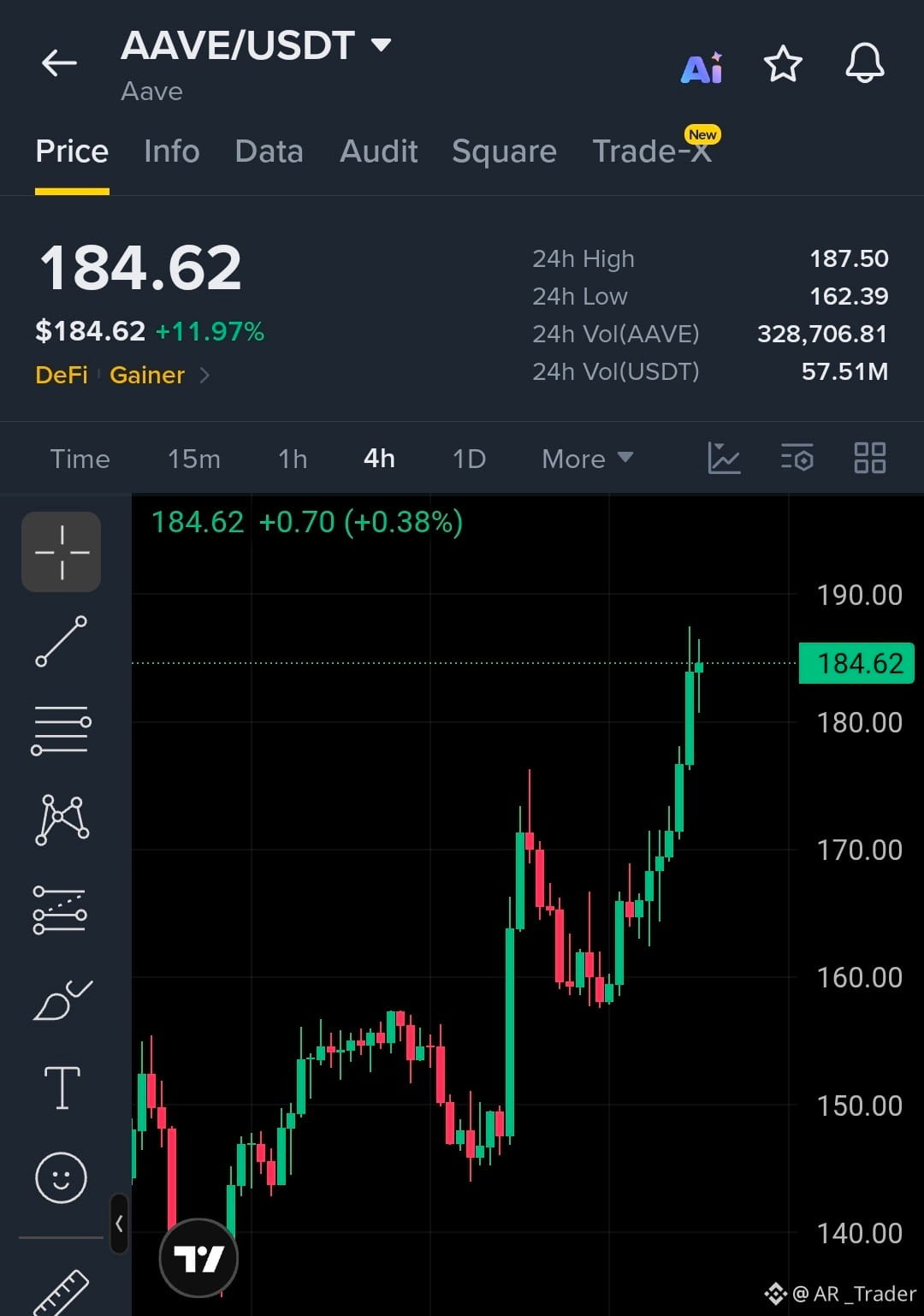
$AAVE Is Pushing Toward Resistance With Bulls Still In Control…!!
#AAVE is holding a strong bullish structure after a sharp move toward 184.62 with 187.50 acting as the key resistance zone If buyers break above 187.50 the next targets could be 190.00 and 200.00 while 180.00 remains the key support zone
{future}(AAVEUSDT)
$RE
{future}(REUSDT)
$STG
{spot}(STGUSDT)
$AAVE Is Pushing Toward Resistance With Bulls Still In Control…!!
#AAVE is holding a strong bullish structure after a sharp move toward 184.62 with 187.50 acting as the key resistance zone If buyers break above 187.50 the next targets could be 190.00 and 200.00 while 180.00 remains the key support zone
$RE
$STG
#AAVE is holding a strong bullish structure after a sharp move toward 184.62 with 187.50 acting as the key resistance zone If buyers break above 187.50 the next targets could be 190.00 and 200.00 while 180.00 remains the key support zone
$RE
$STG
1
39

·
--
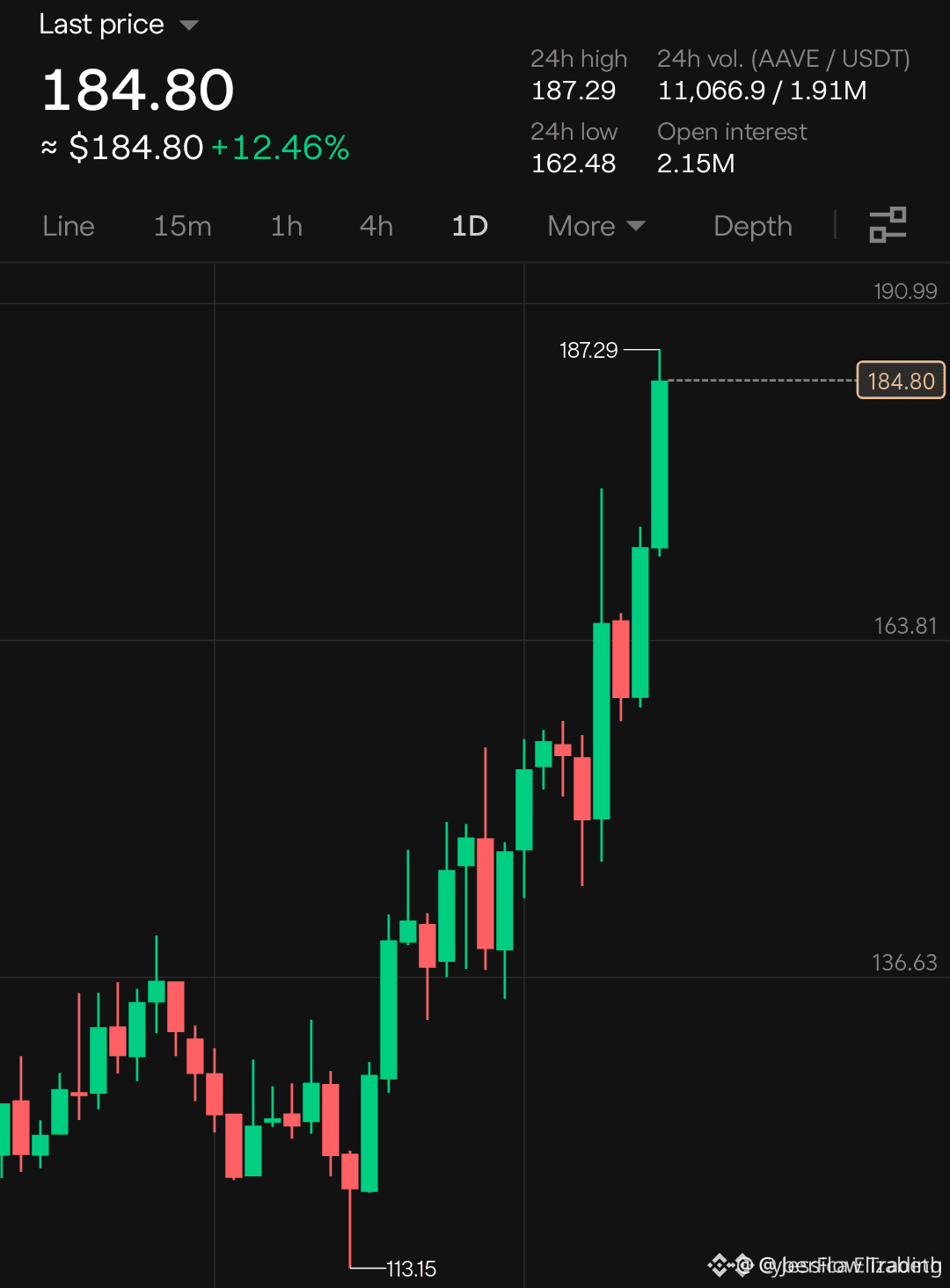
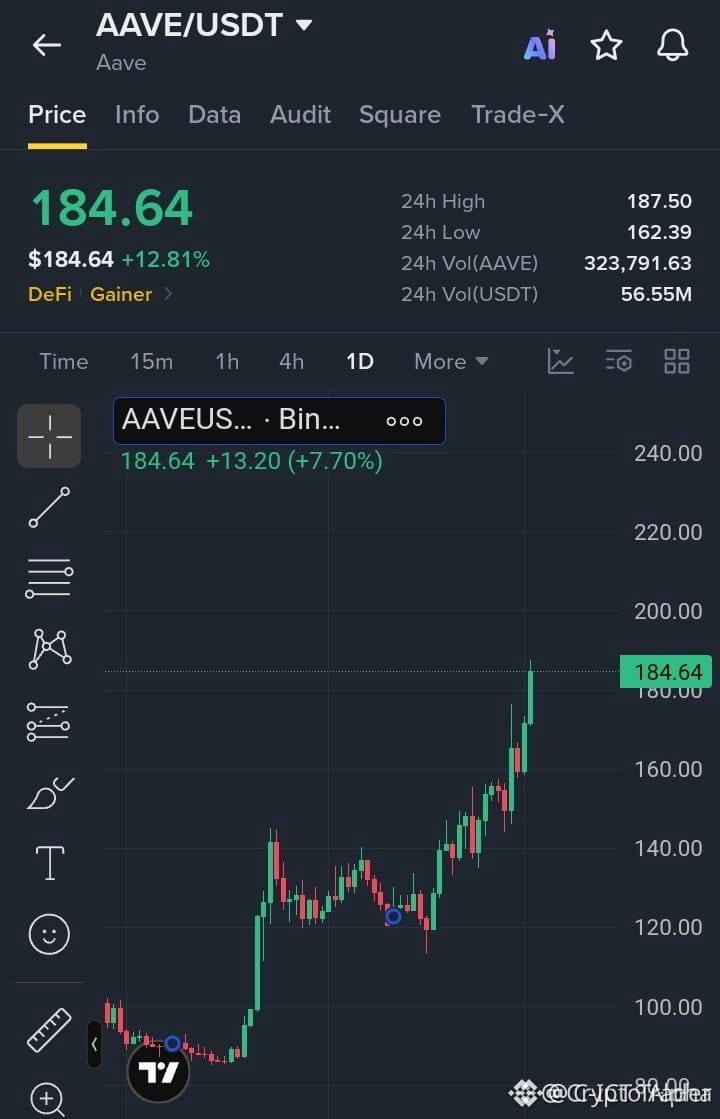
⚡ $AAVE BREAKS OUT OF BASE CONSOLIDATION TOWARD KEY RESISTANCE! 💥
Entry: $181 - $185 ⚡
Target 1: $190 🚀
Target 2: $195 🎯
Target 3: $200 💥
Stop Loss: $176 ⚠️
Smart money cleanly expanded $AAVE out of the $120–$140 accumulation block, maintaining a flawless daily market structure of higher highs and higher lows. 🔍 Price is now pressing against the $187.50 liquidity pocket, with institutional buyers consistently protecting the $180 structural pivot.
📊 As long as price holds above $180, order flow heavily favors continued expansion toward upper inefficiency fills. 💡 A decisive high-volume daily close above $187.50 clears the path for a swift run through the $190–$200 targets. 💬 Are you bidding the $180 order block retest or waiting for a confirmed breakout above resistance? 👇
⚠️ Not financial advice. Always manage your risk. 🛡️
🏷️ #AAVE #Crypto #MarketStructure #Breakout #Altcoins
🎯 🦈
⚡ $AAVE BREAKS OUT OF BASE CONSOLIDATION TOWARD KEY RESISTANCE! 💥
Entry: $181 - $185 ⚡
Target 1: $190 🚀
Target 2: $195 🎯
Target 3: $200 💥
Stop Loss: $176 ⚠️
Smart money cleanly expanded $AAVE out of the $120–$140 accumulation block, maintaining a flawless daily market structure of higher highs and higher lows. 🔍 Price is now pressing against the $187.50 liquidity pocket, with institutional buyers consistently protecting the $180 structural pivot.
📊 As long as price holds above $180, order flow heavily favors continued expansion toward upper inefficiency fills. 💡 A decisive high-volume daily close above $187.50 clears the path for a swift run through the $190–$200 targets. 💬 Are you bidding the $180 order block retest or waiting for a confirmed breakout above resistance? 👇
⚠️ Not financial advice. Always manage your risk. 🛡️
🏷️ #AAVE #Crypto #MarketStructure #Breakout #Altcoins
🎯 🦈
Entry: $181 - $185 ⚡
Target 1: $190 🚀
Target 2: $195 🎯
Target 3: $200 💥
Stop Loss: $176 ⚠️
Smart money cleanly expanded $AAVE out of the $120–$140 accumulation block, maintaining a flawless daily market structure of higher highs and higher lows. 🔍 Price is now pressing against the $187.50 liquidity pocket, with institutional buyers consistently protecting the $180 structural pivot.
📊 As long as price holds above $180, order flow heavily favors continued expansion toward upper inefficiency fills. 💡 A decisive high-volume daily close above $187.50 clears the path for a swift run through the $190–$200 targets. 💬 Are you bidding the $180 order block retest or waiting for a confirmed breakout above resistance? 👇
⚠️ Not financial advice. Always manage your risk. 🛡️
🏷️ #AAVE #Crypto #MarketStructure #Breakout #Altcoins
🎯 🦈
8

·
--
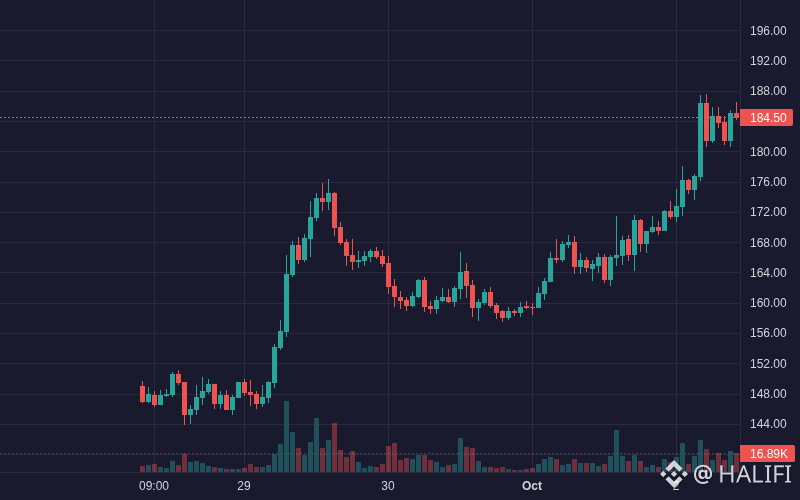
$AAVE AAVE is showing bullish movement: 11.72% (Crypto).
Volume: 57.46M | Last: $184.69
Key signals: strong momentum, high volatility, high trader activity.
Bias Daily: BULLISH 🟢 | Weekly: BULLISH 🟢
AAVE rallied 12.1% over 24h to $185.08, fueled by RWA expansion and $1.1T loan milestone despite insider outflows.
**Milestone loan volume (High)**: Surpassing $1.1T cumulative loans reinforced protocol dominance → sparked institutional demand and bullish momentum
- **RWA tech-stock expansion (High)**: Launch of tokenized stock-backed borrowing surpassing $9M deposits boosted utility and growth expectations
- **Surging spot demand (Medium)**: Inflow spike of +$2.9M and $11.8M volume pushed price past the upper Bollinger band
#AAVE #ethergains70.9%inq3 #altcoins #nfpwatch #Crypto
$AAVE AAVE is showing bullish movement: 11.72% (Crypto).
Volume: 57.46M | Last: $184.69
Key signals: strong momentum, high volatility, high trader activity.
Bias Daily: BULLISH 🟢 | Weekly: BULLISH 🟢
AAVE rallied 12.1% over 24h to $185.08, fueled by RWA expansion and $1.1T loan milestone despite insider outflows.
**Milestone loan volume (High)**: Surpassing $1.1T cumulative loans reinforced protocol dominance → sparked institutional demand and bullish momentum
- **RWA tech-stock expansion (High)**: Launch of tokenized stock-backed borrowing surpassing $9M deposits boosted utility and growth expectations
- **Surging spot demand (Medium)**: Inflow spike of +$2.9M and $11.8M volume pushed price past the upper Bollinger band
#AAVE #ethergains70.9%inq3 #altcoins #nfpwatch #Crypto
Volume: 57.46M | Last: $184.69
Key signals: strong momentum, high volatility, high trader activity.
Bias Daily: BULLISH 🟢 | Weekly: BULLISH 🟢
AAVE rallied 12.1% over 24h to $185.08, fueled by RWA expansion and $1.1T loan milestone despite insider outflows.
**Milestone loan volume (High)**: Surpassing $1.1T cumulative loans reinforced protocol dominance → sparked institutional demand and bullish momentum
- **RWA tech-stock expansion (High)**: Launch of tokenized stock-backed borrowing surpassing $9M deposits boosted utility and growth expectations
- **Surging spot demand (Medium)**: Inflow spike of +$2.9M and $11.8M volume pushed price past the upper Bollinger band
#AAVE #ethergains70.9%inq3 #altcoins #nfpwatch #Crypto
1
7

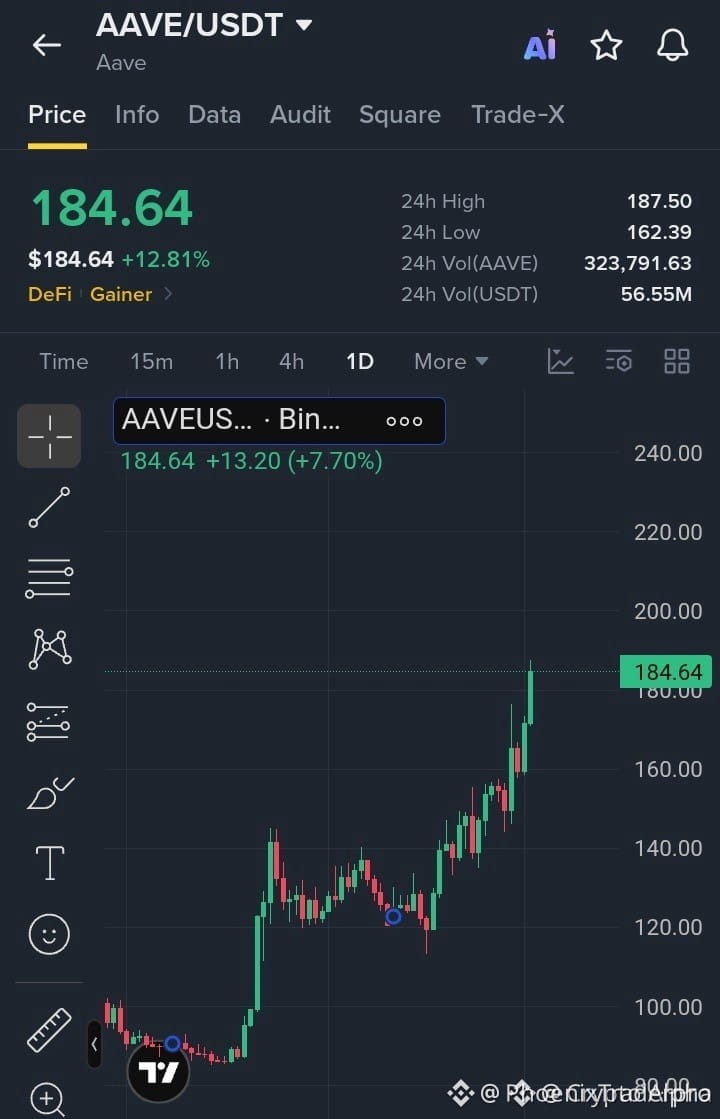
💥 $AAVE SMASHES OUT OF CONSOLIDATION AS BUYERS EYE THE $200 BREAKOUT ZONE! ⚡
Entry: 181 - 185 ⚡
Target: 190 - 200 🎯
Stop Loss: 176 🛑
📌 After exploding out of the prolonged $120–$140 accumulation band, $AAVE is printing relentless higher highs on the daily chart. 📊 Buyers are aggressively defending the $180 flip zone while taking aim at the key $187.50 liquidity cap.
💡 Maintaining structural acceptance above $180 provides the exact springboard needed to clear local overhead resistance and fuel expansion into the $200 region. 🌊 Order flow remains heavily tilted toward upside momentum as spot demand continuously absorbs selling pressure. 💬 Are you taking the retest bid here or waiting for the $187.50 breakout confirmation? 👇
⚠️ Not financial advice. Always manage your risk. 🛡️
🏷️ #AAVE #DeFi #Breakout #LongSetup #Crypto
🔥 💎
💥 $AAVE SMASHES OUT OF CONSOLIDATION AS BUYERS EYE THE $200 BREAKOUT ZONE! ⚡
Entry: 181 - 185 ⚡
Target: 190 - 200 🎯
Stop Loss: 176 🛑
📌 After exploding out of the prolonged $120–$140 accumulation band, $AAVE is printing relentless higher highs on the daily chart. 📊 Buyers are aggressively defending the $180 flip zone while taking aim at the key $187.50 liquidity cap.
💡 Maintaining structural acceptance above $180 provides the exact springboard needed to clear local overhead resistance and fuel expansion into the $200 region. 🌊 Order flow remains heavily tilted toward upside momentum as spot demand continuously absorbs selling pressure. 💬 Are you taking the retest bid here or waiting for the $187.50 breakout confirmation? 👇
⚠️ Not financial advice. Always manage your risk. 🛡️
🏷️ #AAVE #DeFi #Breakout #LongSetup #Crypto
🔥 💎
Entry: 181 - 185 ⚡
Target: 190 - 200 🎯
Stop Loss: 176 🛑
📌 After exploding out of the prolonged $120–$140 accumulation band, $AAVE is printing relentless higher highs on the daily chart. 📊 Buyers are aggressively defending the $180 flip zone while taking aim at the key $187.50 liquidity cap.
💡 Maintaining structural acceptance above $180 provides the exact springboard needed to clear local overhead resistance and fuel expansion into the $200 region. 🌊 Order flow remains heavily tilted toward upside momentum as spot demand continuously absorbs selling pressure. 💬 Are you taking the retest bid here or waiting for the $187.50 breakout confirmation? 👇
⚠️ Not financial advice. Always manage your risk. 🛡️
🏷️ #AAVE #DeFi #Breakout #LongSetup #Crypto
🔥 💎
15
Log in to explore more content
Join global crypto users on Binance Square
⚡️ Get latest and useful information about crypto.
💬 Trusted by the world’s largest crypto exchange.
👍 Discover real insights from verified creators.
Email / Phone number
Trending Topics
1
#NFPWatch
10.5M views
17,784 Discussing
2
#BitcoinFundingRateTriplesTo10%
3,655 views
151 Discussing
3
#BitcoinSurpasses$86KUp2.99%
1,451 views
26 Discussing
4
#ZcashFalls21%FromSeptemberPeak
11,245 views
223 Discussing
5
#USSeptemberPayrollsAdd29KUnemploymentRises4.2%
2,246 views
83 Discussing
6
#XRPPostsFirstThreeGreenMonthsInQ3
12,499 views
293 Discussing
7
#BNBChainTokenizedStocksTop$1BAt30%Share
102 views
23 Discussing
8
#BitcoinRisesToward$85K
52,605 views
116 Discussing
9
#AmazonPlansToSell$8BNvidiaChips
5,851 views
78 Discussing
10
#NEARFallsToAround$4.70Down14%
39,806 views
102 Discussing