
Baoluo币商资本

Verified Creator
Open Trade
Frequent Trader
2.5 Years
沉稳踏实,激动性不易过强,拿住就是赚,持有才是王者!
4.3K+ Following
37.0K+ Followers
30.2K+ Liked
3.6K+ Shared
All
Quotes
Live
PINNED
See original
#中本聪国际社区 We are recruiting more buddies. Anyone who leaves their Binance wallet address below the post will receive a surprise from me! Surprises are ongoing! Please provide an asset screenshot and your Binance wallet address. #BinanceLifeTrendAnalysis
PINNED
See original
#中本聪国际社区 Keep moving forward, we are serious about everything! Every path will have you, me, him, and even more surprises!
Many people stand on both sides of the road, and many have already turned the corner. Everyone has their own aspirations; only those who are of the same mind and heart can journey together, just like the story of the pilgrimage to obtain scriptures, or the Liangshan outlaws. #币安上线币安人生 #币安钱包TGE $BNB
Many people stand on both sides of the road, and many have already turned the corner. Everyone has their own aspirations; only those who are of the same mind and heart can journey together, just like the story of the pilgrimage to obtain scriptures, or the Liangshan outlaws. #币安上线币安人生 #币安钱包TGE $BNB
See original
Come back.
Binance lists Chinese-themed tokens逆势ly: not chasing bubbles, but focusing on long-term ecological development
As the Meme coin frenzy subsides and the market returns to rationality, Binance's strategic move into the Chinese-themed token sector is no mere trend-following—it's a deliberate step to avoid bubble risks and nurture long-term ecosystem growth. This move not only aligns with Binance's core logic for new listings in 2025 but also precisely addresses the value concerns of the Chinese-speaking community.
Chinese-themed tokens are no longer niche experiments but have evolved into a promising sector with a base of 560 million Asian users. Binance's timing allows projects to enter the market at healthier valuations, avoiding the inflated prices of peak hype periods. As the first Chinese-themed token listed on Binance Alpha, Binance Life is a prime example—surging 2000% within one hour of launch and generating over $94 million in 24-hour trading volume. Driven by cultural resonance around 'Drive a Binance Car, Live a Binance Life,' it has even pushed BNB Chain DEX trading volume above Solana's.
Tokens like Zhong Ben Cang and Wo Ta Ma Lai Le, backed by rich cultural narratives and full circulation mechanisms, solve the valuation dilution problem of VC tokens, becoming retail-friendly assets. Binance's phased listing approach—from Alpha to futures to spot—ensures quality project selection while leaving room for community-driven value discovery.
Now, Binance has established a dedicated section for Chinese-themed tokens, marking the sector's evolution from 'short-term hits' to a 'permanent category.' This逆势 strategy not only shields investors from overpaying but also grants mainstream recognition to Chinese community culture.
$BNB $币安人生 $我踏马来了
#中文币中本聪
#币安上线币安人生
#加密市场观察
As the Meme coin frenzy subsides and the market returns to rationality, Binance's strategic move into the Chinese-themed token sector is no mere trend-following—it's a deliberate step to avoid bubble risks and nurture long-term ecosystem growth. This move not only aligns with Binance's core logic for new listings in 2025 but also precisely addresses the value concerns of the Chinese-speaking community.
Chinese-themed tokens are no longer niche experiments but have evolved into a promising sector with a base of 560 million Asian users. Binance's timing allows projects to enter the market at healthier valuations, avoiding the inflated prices of peak hype periods. As the first Chinese-themed token listed on Binance Alpha, Binance Life is a prime example—surging 2000% within one hour of launch and generating over $94 million in 24-hour trading volume. Driven by cultural resonance around 'Drive a Binance Car, Live a Binance Life,' it has even pushed BNB Chain DEX trading volume above Solana's.
Tokens like Zhong Ben Cang and Wo Ta Ma Lai Le, backed by rich cultural narratives and full circulation mechanisms, solve the valuation dilution problem of VC tokens, becoming retail-friendly assets. Binance's phased listing approach—from Alpha to futures to spot—ensures quality project selection while leaving room for community-driven value discovery.
Now, Binance has established a dedicated section for Chinese-themed tokens, marking the sector's evolution from 'short-term hits' to a 'permanent category.' This逆势 strategy not only shields investors from overpaying but also grants mainstream recognition to Chinese community culture.
$BNB $币安人生 $我踏马来了
#中文币中本聪
#币安上线币安人生
#加密市场观察
See original
Keep going
Binance lists Chinese-themed tokens逆势ly: not chasing bubbles, but focusing on long-term ecological development
As the Meme coin frenzy subsides and the market returns to rationality, Binance's strategic move into the Chinese-themed token sector is no mere trend-following—it's a deliberate step to avoid bubble risks and nurture long-term ecosystem growth. This move not only aligns with Binance's core logic for new listings in 2025 but also precisely addresses the value concerns of the Chinese-speaking community.
Chinese-themed tokens are no longer niche experiments but have evolved into a promising sector with a base of 560 million Asian users. Binance's timing allows projects to enter the market at healthier valuations, avoiding the inflated prices of peak hype periods. As the first Chinese-themed token listed on Binance Alpha, Binance Life is a prime example—surging 2000% within one hour of launch and generating over $94 million in 24-hour trading volume. Driven by cultural resonance around 'Drive a Binance Car, Live a Binance Life,' it has even pushed BNB Chain DEX trading volume above Solana's.
Tokens like Zhong Ben Cang and Wo Ta Ma Lai Le, backed by rich cultural narratives and full circulation mechanisms, solve the valuation dilution problem of VC tokens, becoming retail-friendly assets. Binance's phased listing approach—from Alpha to futures to spot—ensures quality project selection while leaving room for community-driven value discovery.
Now, Binance has established a dedicated section for Chinese-themed tokens, marking the sector's evolution from 'short-term hits' to a 'permanent category.' This逆势 strategy not only shields investors from overpaying but also grants mainstream recognition to Chinese community culture.
$BNB $币安人生 $我踏马来了
#中文币中本聪
#币安上线币安人生
#加密市场观察
As the Meme coin frenzy subsides and the market returns to rationality, Binance's strategic move into the Chinese-themed token sector is no mere trend-following—it's a deliberate step to avoid bubble risks and nurture long-term ecosystem growth. This move not only aligns with Binance's core logic for new listings in 2025 but also precisely addresses the value concerns of the Chinese-speaking community.
Chinese-themed tokens are no longer niche experiments but have evolved into a promising sector with a base of 560 million Asian users. Binance's timing allows projects to enter the market at healthier valuations, avoiding the inflated prices of peak hype periods. As the first Chinese-themed token listed on Binance Alpha, Binance Life is a prime example—surging 2000% within one hour of launch and generating over $94 million in 24-hour trading volume. Driven by cultural resonance around 'Drive a Binance Car, Live a Binance Life,' it has even pushed BNB Chain DEX trading volume above Solana's.
Tokens like Zhong Ben Cang and Wo Ta Ma Lai Le, backed by rich cultural narratives and full circulation mechanisms, solve the valuation dilution problem of VC tokens, becoming retail-friendly assets. Binance's phased listing approach—from Alpha to futures to spot—ensures quality project selection while leaving room for community-driven value discovery.
Now, Binance has established a dedicated section for Chinese-themed tokens, marking the sector's evolution from 'short-term hits' to a 'permanent category.' This逆势 strategy not only shields investors from overpaying but also grants mainstream recognition to Chinese community culture.
$BNB $币安人生 $我踏马来了
#中文币中本聪
#币安上线币安人生
#加密市场观察
See original
Continue to move forward with full strength
🔥🔥【January 9 Evening Brief】The U.S. Department of Labor just released fresh data: seasonally adjusted non-farm employment increased by 50,000 in December, far below the market expectation of 60,000, and the previous reading was revised downward to 64,000. The surprising data has directly ignited bullish momentum in gold.
🍀 Meanwhile, the unemployment rate unexpectedly dropped to 4.4%, lower than the expected 4.5% and the previous 4.6%, giving the U.S. dollar a small reprieve.
CME "Fed Watch" shows that after the report, the probability of a January rate cut only rose slightly from 11.6% to 13%, with maintaining unchanged rates still accounting for 87%. Market expectations for easing remain cautious, causing the U.S. dollar index to initially decline then rebound, while non-U.S. currencies and precious metals are locked in a tug-of-war.
🔥 From a technical perspective, gold is holding steady above the 2630 level on the daily chart. A short-term breakout above 2655 could target 2685, while a break below 2620 would trigger a test of the 2600 level; 103.3 on the dollar index acts as a key dividing line between bulls and bears—breaking below could open the door to 102.8.
Non-farm aftermath continues, compounded by earnings season and geopolitical noise, with expectations of high volatility persisting. Strategy-wise, avoid chasing prices up or down—manage position size and wait for direction.
🚀🚀 Follow me for daily real-time updates on key levels and potential turning points. Let's navigate the volatility together and embrace the trend! #美国非农数据低于预期 $BNB $我踏马来了
🍀 Meanwhile, the unemployment rate unexpectedly dropped to 4.4%, lower than the expected 4.5% and the previous 4.6%, giving the U.S. dollar a small reprieve.
CME "Fed Watch" shows that after the report, the probability of a January rate cut only rose slightly from 11.6% to 13%, with maintaining unchanged rates still accounting for 87%. Market expectations for easing remain cautious, causing the U.S. dollar index to initially decline then rebound, while non-U.S. currencies and precious metals are locked in a tug-of-war.
🔥 From a technical perspective, gold is holding steady above the 2630 level on the daily chart. A short-term breakout above 2655 could target 2685, while a break below 2620 would trigger a test of the 2600 level; 103.3 on the dollar index acts as a key dividing line between bulls and bears—breaking below could open the door to 102.8.
Non-farm aftermath continues, compounded by earnings season and geopolitical noise, with expectations of high volatility persisting. Strategy-wise, avoid chasing prices up or down—manage position size and wait for direction.
🚀🚀 Follow me for daily real-time updates on key levels and potential turning points. Let's navigate the volatility together and embrace the trend! #美国非农数据低于预期 $BNB $我踏马来了
See original
You're absolutely right!
From He Yi's words, understand Binance's survival rules
Seeing Sister Yi's statement, I was instantly struck! I always admire Sister Yi's straightforwardness and clarity—she can always distill Binance's core logic in one sentence, which is one of the reasons Binance continues to lead the industry 💪
1️⃣ Don't expect to 'retire' at Binance—results are the only real power
The crypto world moves faster than traditional industries by a factor of ten, and Binance's pace is even more extreme. There's no room for 'just going through the motions' here. Your achievements and the value you bring are what truly secure your position. Sister Yi clearly explains Binance's outcome-driven philosophy.
2️⃣ Ability is the foundation, but collaboration is what amplifies value
Whether it's listing reviews, community operations, or technical development, nothing at Binance can be done by one person alone. Having individual skills isn't enough—you must work as a unified team to get things done well. This is exactly the team collaboration core Sister Yi has always emphasized.
3️⃣ Take initiative—don't be a passive 'rivet'
The industry is constantly evolving, with new sectors and opportunities emerging all the time. Binance doesn't need people who just follow orders. It needs entrepreneurs who can proactively identify problems and seize opportunities—even at entry-level roles, you can bring your own innovative ideas. Sister Yi’s words precisely highlight Binance’s core requirement for talent.
4️⃣ Equal communication, fewer internal dramas
At Binance, there are no complex hierarchical barriers. Share your ideas openly, raise issues directly. Under mutual respect, honest communication is the most efficient way. Internal friction only slows progress. This straightforward and direct communication culture reflects Sister Yi’s leadership style.
Ultimately, Binance has never been a 'safe workplace'—it's a stage built for people with entrepreneurial spirit. Thanks to Sister Yi's heartfelt words: whether you work at Binance or strive in the crypto industry, these principles apply universally—speak with results, achieve through collaboration, break through barriers through initiative!
$BNB $币安人生 $我踏马来了
@Yi He @CZ @BNB Chain
Seeing Sister Yi's statement, I was instantly struck! I always admire Sister Yi's straightforwardness and clarity—she can always distill Binance's core logic in one sentence, which is one of the reasons Binance continues to lead the industry 💪
1️⃣ Don't expect to 'retire' at Binance—results are the only real power
The crypto world moves faster than traditional industries by a factor of ten, and Binance's pace is even more extreme. There's no room for 'just going through the motions' here. Your achievements and the value you bring are what truly secure your position. Sister Yi clearly explains Binance's outcome-driven philosophy.
2️⃣ Ability is the foundation, but collaboration is what amplifies value
Whether it's listing reviews, community operations, or technical development, nothing at Binance can be done by one person alone. Having individual skills isn't enough—you must work as a unified team to get things done well. This is exactly the team collaboration core Sister Yi has always emphasized.
3️⃣ Take initiative—don't be a passive 'rivet'
The industry is constantly evolving, with new sectors and opportunities emerging all the time. Binance doesn't need people who just follow orders. It needs entrepreneurs who can proactively identify problems and seize opportunities—even at entry-level roles, you can bring your own innovative ideas. Sister Yi’s words precisely highlight Binance’s core requirement for talent.
4️⃣ Equal communication, fewer internal dramas
At Binance, there are no complex hierarchical barriers. Share your ideas openly, raise issues directly. Under mutual respect, honest communication is the most efficient way. Internal friction only slows progress. This straightforward and direct communication culture reflects Sister Yi’s leadership style.
Ultimately, Binance has never been a 'safe workplace'—it's a stage built for people with entrepreneurial spirit. Thanks to Sister Yi's heartfelt words: whether you work at Binance or strive in the crypto industry, these principles apply universally—speak with results, achieve through collaboration, break through barriers through initiative!
$BNB $币安人生 $我踏马来了
@Yi He @CZ @BNB Chain
See original
Come on
生财王者
--
[Replay] 🎙️ 共识中本聪DAY4
03 h 40 m 17 s · 24.7k listens
See original
Come on!
[Replay] 🎙️ 中本聪
01 h 07 m 39 s · 953 listens
See original
Very good
Quoted content has been removed
CM
☝️☝️☝️Follow like and share 👈👈👈 $XRP Market Insight 🚀
$XRP is showing a strong short-term bullish continuation after a clean breakout above the 2.20–2.25 resistance zone. Price is holding firmly above MA7, MA25, and MA99, confirming solid trend strength.
The pullback from 2.40 looks healthy and technical, not a reversal. As long as higher lows are maintained, the bullish structure stays intact.
📌 Entry Zones
Primary Entry: 2.30 – 2.34 (ideal pullback near MA7)
Conservative Entry: 2.22 – 2.25 (if a deeper retrace occurs)
🎯 Targets
Target 1: 2.40 (recent high / liquidity zone)
Target 2: 2.55 (bullish extension)
Target 3: 2.70 (trend continuation target)
🛑 Stop Loss
Standard SL: 2.18 (below MA25 & local structure)
Conservative SL: 2.10 (1H trend invalidation)
🔑 Key Levels
Support: 2.30 / 2.22 / 2.10
Resistance: 2.40 / 2.55 / 2.70
Pivot Zone: 2.28 – 2.32
Momentum favors the bulls 📈 — watch the pivot zone for continuation signals.
#XRP #CryptoTrading #CPIWatch #MemeCoinETFs
$XRP
{spot}(XRPUSDT)
$XRP is showing a strong short-term bullish continuation after a clean breakout above the 2.20–2.25 resistance zone. Price is holding firmly above MA7, MA25, and MA99, confirming solid trend strength.
The pullback from 2.40 looks healthy and technical, not a reversal. As long as higher lows are maintained, the bullish structure stays intact.
📌 Entry Zones
Primary Entry: 2.30 – 2.34 (ideal pullback near MA7)
Conservative Entry: 2.22 – 2.25 (if a deeper retrace occurs)
🎯 Targets
Target 1: 2.40 (recent high / liquidity zone)
Target 2: 2.55 (bullish extension)
Target 3: 2.70 (trend continuation target)
🛑 Stop Loss
Standard SL: 2.18 (below MA25 & local structure)
Conservative SL: 2.10 (1H trend invalidation)
🔑 Key Levels
Support: 2.30 / 2.22 / 2.10
Resistance: 2.40 / 2.55 / 2.70
Pivot Zone: 2.28 – 2.32
Momentum favors the bulls 📈 — watch the pivot zone for continuation signals.
#XRP #CryptoTrading #CPIWatch #MemeCoinETFs
$XRP
{spot}(XRPUSDT)
See original
Here comes the brother
Quoted content has been removed
See original
Nino
Neeeno
--
From ‘This Data Isn’t Safe’ to a Working Oracle: The Slow Rise of APRO
@APRO Oracle There’s a particular kind of sentence you only say after you’ve been burned. Not “the market is risky,” or “smart contracts are experimental,” but something flatter and more personal: this data isn’t safe. It usually arrives after a liquidation that felt unfair, a payout that hinged on a number that appeared too late, or a dispute that turned into a social fight because the chain had no way to tell what the world actually meant. APRO reads, to me, like the product of that moment less a promise to eliminate uncertainty than a decision to build infrastructure that behaves responsibly when uncertainty shows up anyway.
If you live inside on-chain systems long enough, you learn that the cleanest code is often paired with the messiest dependencies. The contract does what it says, but the “fact” it consumes comes from someplace squishy: an exchange with thin liquidity, a document that’s been screenshotted and re-uploaded, a news item with missing context, a dataset that changes format without warning. APRO’s own materials are unusually direct about this boundary: they describe a system that combines off-chain processing with on-chain verification, explicitly treating the bridge itself as the product rather than a background detail.
What makes APRO feel different in practice is that it doesn’t assume the world will stay numeric. Prices matter, but the harder problems tend to arrive dressed as evidence. A title deed, an insurance claim, a registrar page, a grading certificate, an invoice, a legal filing—these aren’t just values; they’re artifacts. APRO’s September 24, 2025 RWA Oracle paper is basically a confession that a large share of “truth” is stored in PDFs and images and web pages, and that the system has to metabolize those forms without pretending they’re already structured. It describes turning documents, images, audio/video, and web artifacts into on-chain facts, while keeping enough provenance that someone can argue with the result without arguing about vibes.
Once you accept that, “being right” stops meaning “publishing a number.” It starts meaning “showing your work.” In that same paper, APRO leans hard into the idea that every reported field should be traceable back to a precise place in the original source—an anchor into a page region, an element location, a frame—paired with hashes of the underlying artifacts and a processing receipt that records how the extraction happened. The point isn’t theatrical transparency. The point is psychological safety: when money is on the line, people don’t calm down because you say you’re decentralized; they calm down because they can see what was used, where it came from, and how it could be checked again.
That “checked again” part is where the architecture starts to feel like a worldview. APRO describes separating the part that ingests and interprets raw evidence from the part that audits, challenges, and finalizes outcomes. In the RWA paper’s framing, one set of participants captures evidence, runs multimodal extraction, assigns confidence, signs a report; another set samples those reports, recomputes, cross-checks, and opens the door for challenges, with penalties for faulty work and for frivolous disputes. Binance Research echoes the same broad shape: unstructured sources can be processed with language-model assistance, but final outcomes still pass through on-chain settlement logic that aggregates and delivers what the network deems verified.
This is the quiet theme APRO keeps returning to: the system shouldn’t only be fast when everyone agrees. It has to be legible when they don’t. Their docs talk about a two-tier setup where a core group handles day-to-day reporting while a backstop adjudicates when things escalate, explicitly framing that backstop as something you invoke in critical moments rather than in every routine update. The wording is blunt about the trade: you reduce certain bribery-style risks by accepting a bit of extra structure at the edges, precisely for the scenarios where “majority” isn’t a comforting word anymore.
You can’t build that kind of escalation path without economics that hurt a little. APRO repeatedly ties participation to posted collateral and penalties—what they describe as a margin-like mechanism for operators, and also a way for outsiders to challenge behavior by staking deposits. That matters more than people realize, because disputes aren’t just technical events; they’re social stress tests. If anyone can shout “wrong” with no cost, the network becomes a theatre. If no one can afford to challenge, the network becomes a priesthood. A credible system sits in the uncomfortable middle: challenges are possible, but they have weight.
And then there’s the part many projects avoid saying out loud: even a “good” oracle can be pulled into bad markets. APRO’s developer responsibility docs explicitly warn that assets can be manipulated in ways node operators can’t control, and that integrators need their own risk mitigation—things like data quality checks, circuit breakers, and contingency logic—because market integrity failures and application code failures are real, independent failure modes. I read that less as legal cover and more as a sign of maturity: the network can reduce certain classes of risk, but it cannot replace the obligation to design for panic.
There’s a human lesson hidden in that stance. When volatility hits, users don’t experience “a feed updated late.” They experience betrayal. They refresh a screen and watch the rules of the world shift under their feet, then look for someone to blame. The only scalable antidote isn’t reassurance—it’s layered accountability. Systems like APRO are trying to make it normal for answers to come with context, and for context to come with a way to contest it. Not forever, not endlessly, but within a window that’s designed to catch real errors without turning every decision into a referendum.
The slower rise of APRO, in that sense, isn’t just about shipping integrations. It’s about earning the right to be boring. Binance’s materials from December 2025 place APRO in the category of oracles that explicitly process both structured and unstructured information, using language models as part of the interpretation pipeline while still grounding outputs in verification and settlement. The APRO docs, meanwhile, describe the more operational side: multiple networks supported, two different delivery patterns for time-sensitive data, and an emphasis on off-chain computation paired with on-chain verification as the “foundation” rather than a bolt-on. Together, those two perspectives sketch the same ambition: to be the thing nobody notices until the day it saves them from a bad assumption.
I also think the RWA paper reveals a deeper bet: that the future argument won’t always be “what’s the price,” but “what does this document prove.” That kind of question forces a system to treat provenance as a first-class citizen. If you’re tokenizing a claim, or settling an outcome, or triggering a payout, then “show me where you got that” becomes as important as “what did you conclude.” APRO’s emphasis on anchors, hashes, reproducible receipts, and recomputation isn’t just technical ornamentation. It’s how you make disagreements resolvable without turning them into personal wars.
Even privacy shows up here as an emotional design constraint, not a marketing line. The RWA paper describes storing minimal digests on-chain while keeping full content in content-addressed storage, with optional encryption—an attempt to let contracts depend on facts without forcing the world’s messiest evidence into permanent public display. That’s the kind of choice you make when you’ve seen what happens to users who want verification but don’t want exposure: the small business with invoices, the borrower with documents, the claimant with photos, the institution with filings. Reliability isn’t only about correctness; it’s about handling sensitive reality without turning every interaction into a data leak.
If you’re looking for a single sentence that captures what APRO is trying to do, it’s not “bring data on-chain.” Lots of systems say that. It’s closer to: bring evidence into a process that can survive disagreement. In calm markets, almost any mechanism looks fine. In chaotic ones, you find out whether incentives are aligned, whether challenges are possible, whether the system can admit uncertainty without collapsing, and whether someone can reconstruct why a decision happened. APRO’s published design choices—layering, recomputation, challenge paths, penalties, and explicit warnings about market and integration risk—suggest a team that’s thinking in those darker colors.
Which brings me back to the start: the quiet, uneasy feeling that something important could go wrong because the “facts” aren’t solid.
The best infrastructure rarely feels like a triumph. It feels like relief. It’s the quiet absence of weird edge-case losses, the lack of drama when a source is messy, the sense that if something goes wrong there’s at least a process you can trust more than a timeline argument. APRO’s slow rise, if it continues, will likely be measured in that kind of invisibility—systems running, disputes ending cleanly, users sleeping through volatility because the pipes held. In a space obsessed with attention, there’s something almost old-fashioned about that kind of responsibility: building for the moment things break, and doing it quietly enough that no one has to think about it at all.
@APRO Oracle #APRO $AT
{future}(ATUSDT)
If you live inside on-chain systems long enough, you learn that the cleanest code is often paired with the messiest dependencies. The contract does what it says, but the “fact” it consumes comes from someplace squishy: an exchange with thin liquidity, a document that’s been screenshotted and re-uploaded, a news item with missing context, a dataset that changes format without warning. APRO’s own materials are unusually direct about this boundary: they describe a system that combines off-chain processing with on-chain verification, explicitly treating the bridge itself as the product rather than a background detail.
What makes APRO feel different in practice is that it doesn’t assume the world will stay numeric. Prices matter, but the harder problems tend to arrive dressed as evidence. A title deed, an insurance claim, a registrar page, a grading certificate, an invoice, a legal filing—these aren’t just values; they’re artifacts. APRO’s September 24, 2025 RWA Oracle paper is basically a confession that a large share of “truth” is stored in PDFs and images and web pages, and that the system has to metabolize those forms without pretending they’re already structured. It describes turning documents, images, audio/video, and web artifacts into on-chain facts, while keeping enough provenance that someone can argue with the result without arguing about vibes.
Once you accept that, “being right” stops meaning “publishing a number.” It starts meaning “showing your work.” In that same paper, APRO leans hard into the idea that every reported field should be traceable back to a precise place in the original source—an anchor into a page region, an element location, a frame—paired with hashes of the underlying artifacts and a processing receipt that records how the extraction happened. The point isn’t theatrical transparency. The point is psychological safety: when money is on the line, people don’t calm down because you say you’re decentralized; they calm down because they can see what was used, where it came from, and how it could be checked again.
That “checked again” part is where the architecture starts to feel like a worldview. APRO describes separating the part that ingests and interprets raw evidence from the part that audits, challenges, and finalizes outcomes. In the RWA paper’s framing, one set of participants captures evidence, runs multimodal extraction, assigns confidence, signs a report; another set samples those reports, recomputes, cross-checks, and opens the door for challenges, with penalties for faulty work and for frivolous disputes. Binance Research echoes the same broad shape: unstructured sources can be processed with language-model assistance, but final outcomes still pass through on-chain settlement logic that aggregates and delivers what the network deems verified.
This is the quiet theme APRO keeps returning to: the system shouldn’t only be fast when everyone agrees. It has to be legible when they don’t. Their docs talk about a two-tier setup where a core group handles day-to-day reporting while a backstop adjudicates when things escalate, explicitly framing that backstop as something you invoke in critical moments rather than in every routine update. The wording is blunt about the trade: you reduce certain bribery-style risks by accepting a bit of extra structure at the edges, precisely for the scenarios where “majority” isn’t a comforting word anymore.
You can’t build that kind of escalation path without economics that hurt a little. APRO repeatedly ties participation to posted collateral and penalties—what they describe as a margin-like mechanism for operators, and also a way for outsiders to challenge behavior by staking deposits. That matters more than people realize, because disputes aren’t just technical events; they’re social stress tests. If anyone can shout “wrong” with no cost, the network becomes a theatre. If no one can afford to challenge, the network becomes a priesthood. A credible system sits in the uncomfortable middle: challenges are possible, but they have weight.
And then there’s the part many projects avoid saying out loud: even a “good” oracle can be pulled into bad markets. APRO’s developer responsibility docs explicitly warn that assets can be manipulated in ways node operators can’t control, and that integrators need their own risk mitigation—things like data quality checks, circuit breakers, and contingency logic—because market integrity failures and application code failures are real, independent failure modes. I read that less as legal cover and more as a sign of maturity: the network can reduce certain classes of risk, but it cannot replace the obligation to design for panic.
There’s a human lesson hidden in that stance. When volatility hits, users don’t experience “a feed updated late.” They experience betrayal. They refresh a screen and watch the rules of the world shift under their feet, then look for someone to blame. The only scalable antidote isn’t reassurance—it’s layered accountability. Systems like APRO are trying to make it normal for answers to come with context, and for context to come with a way to contest it. Not forever, not endlessly, but within a window that’s designed to catch real errors without turning every decision into a referendum.
The slower rise of APRO, in that sense, isn’t just about shipping integrations. It’s about earning the right to be boring. Binance’s materials from December 2025 place APRO in the category of oracles that explicitly process both structured and unstructured information, using language models as part of the interpretation pipeline while still grounding outputs in verification and settlement. The APRO docs, meanwhile, describe the more operational side: multiple networks supported, two different delivery patterns for time-sensitive data, and an emphasis on off-chain computation paired with on-chain verification as the “foundation” rather than a bolt-on. Together, those two perspectives sketch the same ambition: to be the thing nobody notices until the day it saves them from a bad assumption.
I also think the RWA paper reveals a deeper bet: that the future argument won’t always be “what’s the price,” but “what does this document prove.” That kind of question forces a system to treat provenance as a first-class citizen. If you’re tokenizing a claim, or settling an outcome, or triggering a payout, then “show me where you got that” becomes as important as “what did you conclude.” APRO’s emphasis on anchors, hashes, reproducible receipts, and recomputation isn’t just technical ornamentation. It’s how you make disagreements resolvable without turning them into personal wars.
Even privacy shows up here as an emotional design constraint, not a marketing line. The RWA paper describes storing minimal digests on-chain while keeping full content in content-addressed storage, with optional encryption—an attempt to let contracts depend on facts without forcing the world’s messiest evidence into permanent public display. That’s the kind of choice you make when you’ve seen what happens to users who want verification but don’t want exposure: the small business with invoices, the borrower with documents, the claimant with photos, the institution with filings. Reliability isn’t only about correctness; it’s about handling sensitive reality without turning every interaction into a data leak.
If you’re looking for a single sentence that captures what APRO is trying to do, it’s not “bring data on-chain.” Lots of systems say that. It’s closer to: bring evidence into a process that can survive disagreement. In calm markets, almost any mechanism looks fine. In chaotic ones, you find out whether incentives are aligned, whether challenges are possible, whether the system can admit uncertainty without collapsing, and whether someone can reconstruct why a decision happened. APRO’s published design choices—layering, recomputation, challenge paths, penalties, and explicit warnings about market and integration risk—suggest a team that’s thinking in those darker colors.
Which brings me back to the start: the quiet, uneasy feeling that something important could go wrong because the “facts” aren’t solid.
The best infrastructure rarely feels like a triumph. It feels like relief. It’s the quiet absence of weird edge-case losses, the lack of drama when a source is messy, the sense that if something goes wrong there’s at least a process you can trust more than a timeline argument. APRO’s slow rise, if it continues, will likely be measured in that kind of invisibility—systems running, disputes ending cleanly, users sleeping through volatility because the pipes held. In a space obsessed with attention, there’s something almost old-fashioned about that kind of responsibility: building for the moment things break, and doing it quietly enough that no one has to think about it at all.
@APRO Oracle #APRO $AT
{future}(ATUSDT)
Supers
Supers__Crypto
--
GM Supers Family.....💛😽
Keep your face always toward the sunshine and shadows will fall behind you Stay bright stay bold and keep Growing 😻💛
{spot}(BNBUSDT)
$BNB REWARD CLAIM EVERYONE 🤩🧧
Keep your face always toward the sunshine and shadows will fall behind you Stay bright stay bold and keep Growing 😻💛
{spot}(BNBUSDT)
$BNB REWARD CLAIM EVERYONE 🤩🧧
See original
I will wait for you if you don't come.
生财王者
--
[Replay] 🎙️ 共识中本聪DAY3
05 h 50 m 57 s · 45.7k listens
See original
#中本聪国际社区 Keep moving forward, we take things seriously! Every path will have a consistent you, me, him, and many more surprises!
There are also many people standing on both sides of the road, and many have already turned. Everyone has their own aspirations; those who walk together must be of one mind and one virtue to move forward together, just like in the story of seeking scriptures, the heroes of Liangshan, etc.
There are also many people standing on both sides of the road, and many have already turned. Everyone has their own aspirations; those who walk together must be of one mind and one virtue to move forward together, just like in the story of seeking scriptures, the heroes of Liangshan, etc.

See original
Not bad!
#加密市场观察 2026 Cryptocurrency Must-See: The Federal Reserve's Policies and Regulations are the Real 'Market Makers'
Cryptocurrency market fluctuations may seem chaotic, but it's actually the Federal Reserve and regulatory policies that are the key behind the scenes! Simply put, when the Federal Reserve adjusts interest rates, it's like controlling the 'money bag' of the market—when rates are high, people feel that saving in banks or buying bonds is more stable, leading to less money flowing into the cryptocurrency market, making prices more likely to drop; when rates are low, idle money has nowhere to go and tends to flow into high-risk, high-reward places like cryptocurrencies, which can easily push prices up.
However, the situation in 2026 is a bit unique, as market expectations for interest rate cuts are very loud; some say there will be two cuts, others say four cuts. The January monetary policy meeting is likely to maintain the current rate, while the probability of a rate cut in March has just exceeded 50%. It's also important to note that a rate cut doesn't necessarily mean prices will rise; in 2025, when the rate was cut, the cryptocurrency market evaporated 400 billion in a single day because people worried about whether the economy was in trouble.
Regulation is equally crucial; both the EU and Hong Kong have introduced new rules, with non-compliant stablecoins being delisted, while compliant ones are performing well. Currently, keep a close eye on three things: the signals from each Federal Reserve monetary policy meeting, inflation data, and regulatory movements in various countries.
Short-term volatility is definitely large, so don't blindly chase prices up or down; it's more prudent to gradually position based on policy expectations~#中本聪 $币安人生
Cryptocurrency market fluctuations may seem chaotic, but it's actually the Federal Reserve and regulatory policies that are the key behind the scenes! Simply put, when the Federal Reserve adjusts interest rates, it's like controlling the 'money bag' of the market—when rates are high, people feel that saving in banks or buying bonds is more stable, leading to less money flowing into the cryptocurrency market, making prices more likely to drop; when rates are low, idle money has nowhere to go and tends to flow into high-risk, high-reward places like cryptocurrencies, which can easily push prices up.
However, the situation in 2026 is a bit unique, as market expectations for interest rate cuts are very loud; some say there will be two cuts, others say four cuts. The January monetary policy meeting is likely to maintain the current rate, while the probability of a rate cut in March has just exceeded 50%. It's also important to note that a rate cut doesn't necessarily mean prices will rise; in 2025, when the rate was cut, the cryptocurrency market evaporated 400 billion in a single day because people worried about whether the economy was in trouble.
Regulation is equally crucial; both the EU and Hong Kong have introduced new rules, with non-compliant stablecoins being delisted, while compliant ones are performing well. Currently, keep a close eye on three things: the signals from each Federal Reserve monetary policy meeting, inflation data, and regulatory movements in various countries.
Short-term volatility is definitely large, so don't blindly chase prices up or down; it's more prudent to gradually position based on policy expectations~#中本聪 $币安人生
See original
It's better to have an old lover! Ha
Wanli一本万莉
--
[Ended] 🎙️ 新一年新的计划🤙每天12点准时在直播间等候大家🤝一起来探讨Web3的红利趋势👏共建币安广场👏共建【金标金】🔥
34.7k listens
See original
Very Excellent
HK七匹狼
--
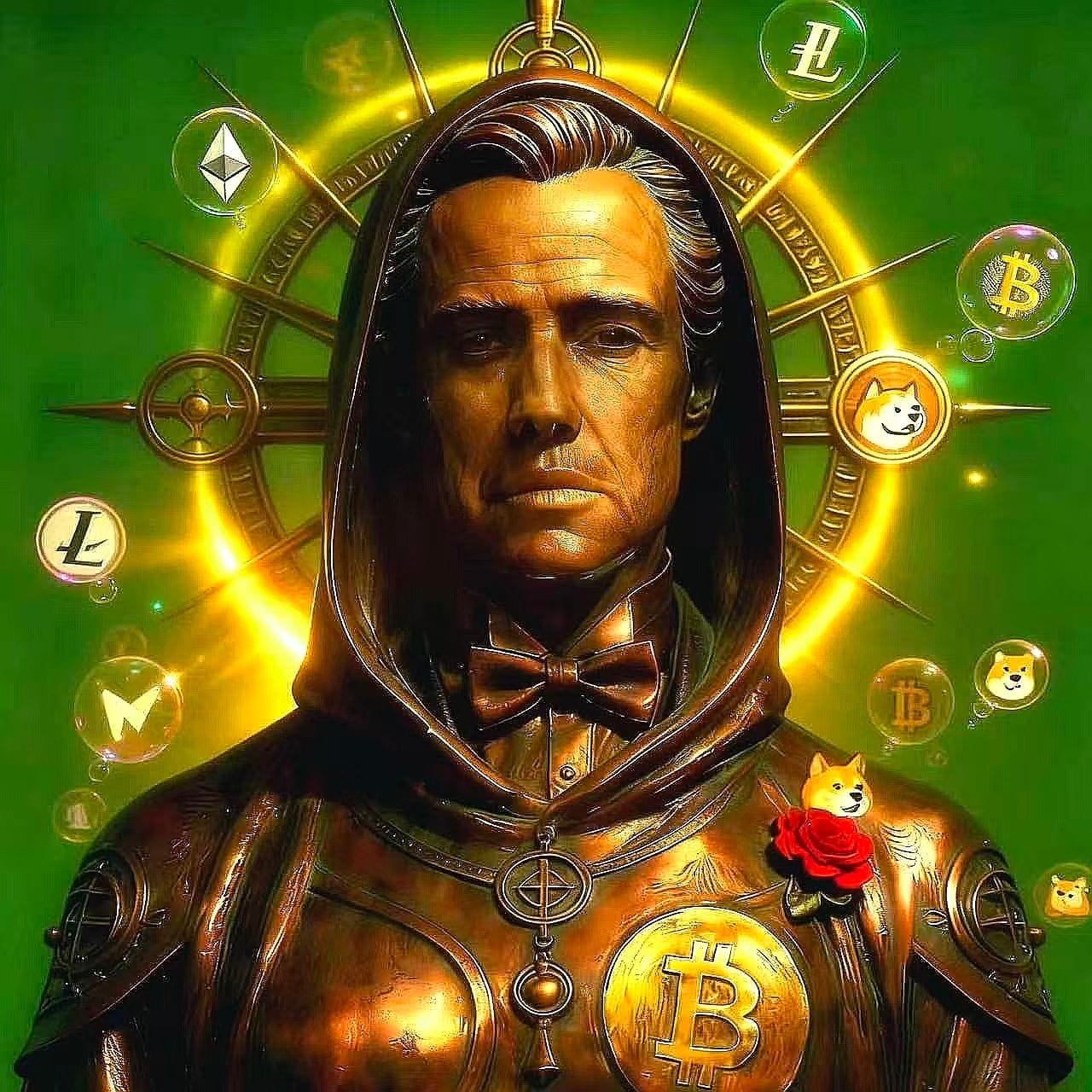
The consensus of the community is on x
Our Satoshi Nakamoto avatar is adopted by major influencers
Salute to Satoshi Nakamoto
$PEPE $BONK $BOME
#Strategy增持比特币 #加密市场观察
#中本聪1月3日纪念日
Our Satoshi Nakamoto avatar is adopted by major influencers
Salute to Satoshi Nakamoto
$PEPE $BONK $BOME
#Strategy增持比特币 #加密市场观察
#中本聪1月3日纪念日
See original
This is life
He Yi: A Gamble of Life from Kerosene Lamps to a Hundred Billion Cryptocurrency Empire
My name is He Yi, some call me 'Sister in the Coin Circle,' and others say I am a female entrepreneur deeply rooted in the cryptocurrency world. From the kerosene lamp in a rural area of Sichuan to participating in building a cryptocurrency trading platform worth hundreds of billions, my thirty-nine years have been a gamble against fate.
In 1986, I was born in a remote rural area of Sichuan. Both of my parents were teachers, but life was tight. In my childhood memories, there were no electric lights, during the day I had to carry water buckets uphill, and at night there was only the small light of a kerosene lamp illuminating the mottled walls. When I was nine, my father suddenly passed away, and half of the sky fell. My mother and I gritted our teeth and carried the family burden. It was then that I clenched my fists: fate does not show mercy to the weak; I can only rely on myself.
In 1986, I was born in a remote rural area of Sichuan. Both of my parents were teachers, but life was tight. In my childhood memories, there were no electric lights, during the day I had to carry water buckets uphill, and at night there was only the small light of a kerosene lamp illuminating the mottled walls. When I was nine, my father suddenly passed away, and half of the sky fell. My mother and I gritted our teeth and carried the family burden. It was then that I clenched my fists: fate does not show mercy to the weak; I can only rely on myself.
Login to explore more contents
Explore the latest crypto news
⚡️ Be a part of the latests discussions in crypto
💬 Interact with your favorite creators
👍 Enjoy content that interests you
Email / Phone number
Trending Topics
USNonFarmPayrollReport
37.6M views
132,763 Discussing
🚨 #BREAKING
⏰ NEXT 24 HOURS. TWO MACRO TRIGGERS. ONE MARKET DECISION.
The cryptOHunter
4 Likes
820 views
USTradeDeficitShrink
2.5M views
20,804 Discussing
ZTCBinanceTGE
4.9M views
37,216 Discussing
