
#pixe
pixe
37,382 views
401 Discussing
Hot
Latest

·
--
The @Pixels Project offers a unique experience in the world of Web 3 gaming, and I’m really impressed with the evolution of the Staked Pixels system.The Future of Digital Gaming with the Pixels Project and the PIXEL$ Token.
The Pixels@ platform shows us day after day, as the article title suggests: The Future of Digital Gaming with the Pixels Project and the PIXEL$ Token.
The Pixels@ platform proves day in and day out that it’s not just your average blockchain game; it’s a fully integrated economic system that opens up new horizons for players and investors alike. What sets this project apart is the deep integration between the enjoyable gaming experience and the advanced Staked system, which gives users a real shot at maximizing their gains through active participation in securing and developing the network.
The @Pixels Project offers a unique experience in the world of Web 3 gaming, and I’m really impressed with the evolution of the Staked Pixels system.
The Future of Digital Gaming with the Pixels Project and the PIXEL$ Token.
The Pixels@ platform shows us day after day, as the article title suggests: The Future of Digital Gaming with the Pixels Project and the PIXEL$ Token.
The Pixels@ platform proves day in and day out that it’s not just your average blockchain game; it’s a fully integrated economic system that opens up new horizons for players and investors alike. What sets this project apart is the deep integration between the enjoyable gaming experience and the advanced Staked system, which gives users a real shot at maximizing their gains through active participation in securing and developing the network.
The Pixels@ platform shows us day after day, as the article title suggests: The Future of Digital Gaming with the Pixels Project and the PIXEL$ Token.
The Pixels@ platform proves day in and day out that it’s not just your average blockchain game; it’s a fully integrated economic system that opens up new horizons for players and investors alike. What sets this project apart is the deep integration between the enjoyable gaming experience and the advanced Staked system, which gives users a real shot at maximizing their gains through active participation in securing and developing the network.
170

Article
The Evolution of Pixels: Why the Stacked Ecosystem is the Future of Web3 Gaming
The Web3 gaming landThe Evolution of Pixels: Why the Stacked Ecosystem is the Future of Web3 Gaming
The Web3 gaming landscape has shifted dramatically in 2026, and at the heart of this evolution is Pixels. Far more than a simple farming simulator, the project has transitioned into a complex, multi-layered "Stacked" ecosystem that prioritizes long-term sustainability over short-term hype.
By following the official project account @Pixels, players and investors can see how the team has successfully navigated the "Industrial Expansion" phase, also known as Chapter 3. Unlike many early GameFi projects that suffered from rampant inflation, the $PIXEL token has maintained its relevance through a series of smart utility integrations:
Social Reputation & Trust Scores: To ensure a fair environment, your $PIXEL holdings and on-chain interactions now influence your "Trust Score." This system effectively filters out bots and rewards genuine community participants.
The Stacked Logic: The "Stacked" ecosystem refers to how different gameplay layers—farming, crafting, and social guilds—now interlock. High-tier crafting requires resources that can only be produced through collaborative efforts across different land plots, making social interaction a core financial strategy.
Multi-Game Staking: One of the most bullish updates for $PIXEL is the ability to stake tokens into different game pools within the Ronin network. This not only provides passive rewards but also allows the community to vote on which sub-games receive more ecosystem support.
With over 1 million daily active users, Pixels is proving that retention is driven by fun, not just farming. The transition to a more "MMORPG-like" experience with procedurally generated Exploration Realms ensures that the world feels alive and constantly expanding.
If you are looking for a project that has successfully matured past the "play-to-earn" bubble into a robust digital economy, keep a close eye on $PIXEL. The future of the metaverse is being built one pixel at a time.
#PIXE $PIXEL @pixels
The Evolution of Pixels: Why the Stacked Ecosystem is the Future of Web3 Gaming The Web3 gaming land
The Evolution of Pixels: Why the Stacked Ecosystem is the Future of Web3 Gaming
The Web3 gaming landscape has shifted dramatically in 2026, and at the heart of this evolution is Pixels. Far more than a simple farming simulator, the project has transitioned into a complex, multi-layered "Stacked" ecosystem that prioritizes long-term sustainability over short-term hype.
By following the official project account @Pixels, players and investors can see how the team has successfully navigated the "Industrial Expansion" phase, also known as Chapter 3. Unlike many early GameFi projects that suffered from rampant inflation, the $PIXEL token has maintained its relevance through a series of smart utility integrations:
Social Reputation & Trust Scores: To ensure a fair environment, your $PIXEL holdings and on-chain interactions now influence your "Trust Score." This system effectively filters out bots and rewards genuine community participants.
The Stacked Logic: The "Stacked" ecosystem refers to how different gameplay layers—farming, crafting, and social guilds—now interlock. High-tier crafting requires resources that can only be produced through collaborative efforts across different land plots, making social interaction a core financial strategy.
Multi-Game Staking: One of the most bullish updates for $PIXEL is the ability to stake tokens into different game pools within the Ronin network. This not only provides passive rewards but also allows the community to vote on which sub-games receive more ecosystem support.
With over 1 million daily active users, Pixels is proving that retention is driven by fun, not just farming. The transition to a more "MMORPG-like" experience with procedurally generated Exploration Realms ensures that the world feels alive and constantly expanding.
If you are looking for a project that has successfully matured past the "play-to-earn" bubble into a robust digital economy, keep a close eye on $PIXEL . The future of the metaverse is being built one pixel at a time.
#PIXE $PIXEL @pixels
The Web3 gaming landscape has shifted dramatically in 2026, and at the heart of this evolution is Pixels. Far more than a simple farming simulator, the project has transitioned into a complex, multi-layered "Stacked" ecosystem that prioritizes long-term sustainability over short-term hype.
By following the official project account @Pixels, players and investors can see how the team has successfully navigated the "Industrial Expansion" phase, also known as Chapter 3. Unlike many early GameFi projects that suffered from rampant inflation, the $PIXEL token has maintained its relevance through a series of smart utility integrations:
Social Reputation & Trust Scores: To ensure a fair environment, your $PIXEL holdings and on-chain interactions now influence your "Trust Score." This system effectively filters out bots and rewards genuine community participants.
The Stacked Logic: The "Stacked" ecosystem refers to how different gameplay layers—farming, crafting, and social guilds—now interlock. High-tier crafting requires resources that can only be produced through collaborative efforts across different land plots, making social interaction a core financial strategy.
Multi-Game Staking: One of the most bullish updates for $PIXEL is the ability to stake tokens into different game pools within the Ronin network. This not only provides passive rewards but also allows the community to vote on which sub-games receive more ecosystem support.
With over 1 million daily active users, Pixels is proving that retention is driven by fun, not just farming. The transition to a more "MMORPG-like" experience with procedurally generated Exploration Realms ensures that the world feels alive and constantly expanding.
If you are looking for a project that has successfully matured past the "play-to-earn" bubble into a robust digital economy, keep a close eye on $PIXEL . The future of the metaverse is being built one pixel at a time.
#PIXE $PIXEL @pixels
2
82

·
--
Pixels & The Rise of a Player-Owned Economy 🎮🌱Web3 gaming is evolving rapidly, and @Pixels stands as a powerful example in the face of this change. Pixels is not just a game—it is a complete ecosystem where players' time, skills, and strategy directly create value.
The Stacked ecosystem of Pixels is essentially an interconnected system where farming, crafting, trading, and resource management work together. Each action has its significance here. You are not just playing a game; you are participating in a decentralized economy.
Pixels & The Rise of a Player-Owned Economy 🎮🌱
Web3 gaming is evolving rapidly, and @Pixels stands as a powerful example in the face of this change. Pixels is not just a game—it is a complete ecosystem where players' time, skills, and strategy directly create value.
The Stacked ecosystem of Pixels is essentially an interconnected system where farming, crafting, trading, and resource management work together. Each action has its significance here. You are not just playing a game; you are participating in a decentralized economy.
The Stacked ecosystem of Pixels is essentially an interconnected system where farming, crafting, trading, and resource management work together. Each action has its significance here. You are not just playing a game; you are participating in a decentralized economy.
46

·
--
The Revolution of Digital Gaming and the Future of the Staked System in the Pixels ProjectThe Pixels project is considered one of the most exciting projects in the world of blockchain games, as it has succeeded in building a massive community and an immersive gaming experience. However, the true power of this project lies in its innovative digital economy, specifically in the distinctive $PIXEL token that represents the backbone of this system.
What makes the @Pixels project superior is the new approach towards enhancing the value of the currency through its Staked system. This system allows players and investors to stake their tokens to contribute to the stability of the network in exchange for receiving substantial rewards. This not only reduces the circulating supply of the currency but also creates a strong incentive for long-term holding, supporting the price of $PIXEL in the market.
The Revolution of Digital Gaming and the Future of the Staked System in the Pixels Project
The Pixels project is considered one of the most exciting projects in the world of blockchain games, as it has succeeded in building a massive community and an immersive gaming experience. However, the true power of this project lies in its innovative digital economy, specifically in the distinctive $PIXEL token that represents the backbone of this system.
What makes the @Pixels project superior is the new approach towards enhancing the value of the currency through its Staked system. This system allows players and investors to stake their tokens to contribute to the stability of the network in exchange for receiving substantial rewards. This not only reduces the circulating supply of the currency but also creates a strong incentive for long-term holding, supporting the price of $PIXEL in the market.
What makes the @Pixels project superior is the new approach towards enhancing the value of the currency through its Staked system. This system allows players and investors to stake their tokens to contribute to the stability of the network in exchange for receiving substantial rewards. This not only reduces the circulating supply of the currency but also creates a strong incentive for long-term holding, supporting the price of $PIXEL in the market.
122

·
--
Why Pixels ($PIXEL) is a Key Player in Web3 GamingAs of April 19, 2026, @Pixels continues to dominate the blockchain gaming space. The utility of the $PIXEL L token within its ecosystem is a prime example of a sustainable play-to-earn model. Unlike many other projects, Pixels focuses on engaging gameplay and a strong social connection among players.
The integration with the Ronin network has provided the necessary scalability and low transaction costs, making it accessible for everyone. Whether you are farming, trading, or exploring the Stacked ecosystem, the growth potential is evident. I believe staying updated with their daily developments is crucial for anyone interested in the future of decentralized gaming. Let's keep an eye on the charts and support this amazing project!l #Write2Earn #CryptoAnalysis
Why Pixels ($PIXEL) is a Key Player in Web3 Gaming
As of April 19, 2026, @Pixels continues to dominate the blockchain gaming space. The utility of the $PIXEL L token within its ecosystem is a prime example of a sustainable play-to-earn model. Unlike many other projects, Pixels focuses on engaging gameplay and a strong social connection among players.
The integration with the Ronin network has provided the necessary scalability and low transaction costs, making it accessible for everyone. Whether you are farming, trading, or exploring the Stacked ecosystem, the growth potential is evident. I believe staying updated with their daily developments is crucial for anyone interested in the future of decentralized gaming. Let's keep an eye on the charts and support this amazing project!l #Write2Earn #CryptoAnalysis
The integration with the Ronin network has provided the necessary scalability and low transaction costs, making it accessible for everyone. Whether you are farming, trading, or exploring the Stacked ecosystem, the growth potential is evident. I believe staying updated with their daily developments is crucial for anyone interested in the future of decentralized gaming. Let's keep an eye on the charts and support this amazing project!l #Write2Earn #CryptoAnalysis
52


·
--
#pixel $PIXEL
*Post 1 - Focus on Staked:*
The Staked system at @Pixels is currently the secret of the game 🔒 Stake $PIXEL and get daily rewards + VIP benefits + support for your Guild. The more you lock, the less supply there is, which strengthens the game's economy in the long term. Who started Staking? #pixel #Ronin
*Number of characters:* 241
#pixe
#pixel $PIXEL
*Post 1 - Focus on Staked:*
The Staked system at @Pixels is currently the secret of the game 🔒 Stake $PIXEL and get daily rewards + VIP benefits + support for your Guild. The more you lock, the less supply there is, which strengthens the game's economy in the long term. Who started Staking? #pixel #Ronin
*Number of characters:* 241
#pixe
*Post 1 - Focus on Staked:*
The Staked system at @Pixels is currently the secret of the game 🔒 Stake $PIXEL and get daily rewards + VIP benefits + support for your Guild. The more you lock, the less supply there is, which strengthens the game's economy in the long term. Who started Staking? #pixel #Ronin
*Number of characters:* 241
#pixe
109

·
--
pixelsThe evolution of blockchain gaming is reaching a new level with @pixels , and what makes it truly stand out is its innovative Stacked ecosystem. Unlike traditional Web3 games that focus only on token rewards, Pixels is building a layered economy where every action, asset, and interaction contributes to a larger, sustainable system powered by $PIXEL.
The Stacked ecosystem introduces a dynamic loop where players, creators, and communities are all interconnected. Farming, crafting, trading, and social engagement are no longer isolated activities—they are “stacked” together to create continuous value flow. This means that players are not just earning rewards but actively participating in a living economy that evolves over time.
One of the most exciting aspects is how Pixels integrates utility into $PIXEL . The token isn’t just for transactions; it fuels progression, governance, and ecosystem expansion. As more layers are added, the demand for participation grows, making the system more resilient and engaging.
In my view, Pixels is redefining what it means to play-to-earn by shifting toward play-and-contribute. The Stacked model encourages long-term involvement instead of short-term extraction, which is exactly what Web3 gaming needs to thrive.
If this momentum continues, could become a benchmark for future blockchain ecosystems where fun, ownership, and economic design align perfectly. #pixe l $PIXEL
pixels
The evolution of blockchain gaming is reaching a new level with @Pixels , and what makes it truly stand out is its innovative Stacked ecosystem. Unlike traditional Web3 games that focus only on token rewards, Pixels is building a layered economy where every action, asset, and interaction contributes to a larger, sustainable system powered by $PIXEL .
The Stacked ecosystem introduces a dynamic loop where players, creators, and communities are all interconnected. Farming, crafting, trading, and social engagement are no longer isolated activities—they are “stacked” together to create continuous value flow. This means that players are not just earning rewards but actively participating in a living economy that evolves over time.
One of the most exciting aspects is how Pixels integrates utility into $PIXEL . The token isn’t just for transactions; it fuels progression, governance, and ecosystem expansion. As more layers are added, the demand for participation grows, making the system more resilient and engaging.
In my view, Pixels is redefining what it means to play-to-earn by shifting toward play-and-contribute. The Stacked model encourages long-term involvement instead of short-term extraction, which is exactly what Web3 gaming needs to thrive.
If this momentum continues, could become a benchmark for future blockchain ecosystems where fun, ownership, and economic design align perfectly. #pixe l $PIXEL
The Stacked ecosystem introduces a dynamic loop where players, creators, and communities are all interconnected. Farming, crafting, trading, and social engagement are no longer isolated activities—they are “stacked” together to create continuous value flow. This means that players are not just earning rewards but actively participating in a living economy that evolves over time.
One of the most exciting aspects is how Pixels integrates utility into $PIXEL . The token isn’t just for transactions; it fuels progression, governance, and ecosystem expansion. As more layers are added, the demand for participation grows, making the system more resilient and engaging.
In my view, Pixels is redefining what it means to play-to-earn by shifting toward play-and-contribute. The Stacked model encourages long-term involvement instead of short-term extraction, which is exactly what Web3 gaming needs to thrive.
If this momentum continues, could become a benchmark for future blockchain ecosystems where fun, ownership, and economic design align perfectly. #pixe l $PIXEL
42

The @pixel currency and its connection to gaming projectsThe PIXEL currency is considered one of the currencies directly associated with the world of blockchain games, and it is an essential part of the Pixels game ecosystem operating on the Ronin network. The main idea of the project is to merge entertainment with the digital economy, allowing players to earn the currency through gameplay, then use it within the game or trade it in the markets. This model has attracted a large segment of users, especially those interested in profiting from games.
The @pixel currency and its connection to gaming projects
The PIXEL currency is considered one of the currencies directly associated with the world of blockchain games, and it is an essential part of the Pixels game ecosystem operating on the Ronin network. The main idea of the project is to merge entertainment with the digital economy, allowing players to earn the currency through gameplay, then use it within the game or trade it in the markets. This model has attracted a large segment of users, especially those interested in profiting from games.
108

·
--
Here’s a fully original long-form Binance Square article-style post (500+ characters) you can use:Here’s a fully original long-form Binance Square article-style post (500+ characters) you can use:
The growth of @pixels is starting to highlight what the next phase of Web3 gaming could look like. What began as a farming and social MMO has gradually evolved into a much deeper ecosystem powered by $PIXEL, where player activity, time investment, and strategy all feed into a broader economic loop.
The introduction of Stacked is especially important because it shifts the focus from simple reward distribution to intelligent reward design. Instead of relying on fixed emissions, Stacked leverages data-driven systems to align incentives between players, developers, and the ecosystem itself. This could help solve one of the biggest challenges in GameFi — sustainability.
With Stacked, Pixels is no longer just a game; it’s becoming infrastructure. If this model proves effective, it could allow other games to plug into a shared system where rewards are optimized based on behavior, engagement, and long-term retention rather than short-term hype.
What makes this even more compelling is how $PIXEL sits at the center of it all — acting not just as a currency, but as a coordination layer across experiences. As more integrations and use cases emerge, the role of the token could expand significantly.
If Pixels continues executing at this pace, it may set a new benchmark for how Web3 games scale beyond a single title into a connected, intelligent ecosystem. The combination of gameplay, economy design, and infrastructure makes this one of the most interesting projects to watch in the #pixe l space right now.
Here’s a fully original long-form Binance Square article-style post (500+ characters) you can use:
Here’s a fully original long-form Binance Square article-style post (500+ characters) you can use:
The growth of @Pixels is starting to highlight what the next phase of Web3 gaming could look like. What began as a farming and social MMO has gradually evolved into a much deeper ecosystem powered by $PIXEL , where player activity, time investment, and strategy all feed into a broader economic loop.
The introduction of Stacked is especially important because it shifts the focus from simple reward distribution to intelligent reward design. Instead of relying on fixed emissions, Stacked leverages data-driven systems to align incentives between players, developers, and the ecosystem itself. This could help solve one of the biggest challenges in GameFi — sustainability.
With Stacked, Pixels is no longer just a game; it’s becoming infrastructure. If this model proves effective, it could allow other games to plug into a shared system where rewards are optimized based on behavior, engagement, and long-term retention rather than short-term hype.
What makes this even more compelling is how $PIXEL sits at the center of it all — acting not just as a currency, but as a coordination layer across experiences. As more integrations and use cases emerge, the role of the token could expand significantly.
If Pixels continues executing at this pace, it may set a new benchmark for how Web3 games scale beyond a single title into a connected, intelligent ecosystem. The combination of gameplay, economy design, and infrastructure makes this one of the most interesting projects to watch in the #pixe l space right now.
The growth of @Pixels is starting to highlight what the next phase of Web3 gaming could look like. What began as a farming and social MMO has gradually evolved into a much deeper ecosystem powered by $PIXEL , where player activity, time investment, and strategy all feed into a broader economic loop.
The introduction of Stacked is especially important because it shifts the focus from simple reward distribution to intelligent reward design. Instead of relying on fixed emissions, Stacked leverages data-driven systems to align incentives between players, developers, and the ecosystem itself. This could help solve one of the biggest challenges in GameFi — sustainability.
With Stacked, Pixels is no longer just a game; it’s becoming infrastructure. If this model proves effective, it could allow other games to plug into a shared system where rewards are optimized based on behavior, engagement, and long-term retention rather than short-term hype.
What makes this even more compelling is how $PIXEL sits at the center of it all — acting not just as a currency, but as a coordination layer across experiences. As more integrations and use cases emerge, the role of the token could expand significantly.
If Pixels continues executing at this pace, it may set a new benchmark for how Web3 games scale beyond a single title into a connected, intelligent ecosystem. The combination of gameplay, economy design, and infrastructure makes this one of the most interesting projects to watch in the #pixe l space right now.
11
44

#pixel $PIXEL
🎮 The future of gaming starts with $PIXEL ! 🚀
Have you ever wondered why the power of project @pixels is increasing? The secret is not just in gaming, but in the Staked system that gives the community real control and long-term sustainability.
We are not just playing; we are building a complete digital economy. If you are looking for true power in the world of Web3, the eye is always on $PIXEL
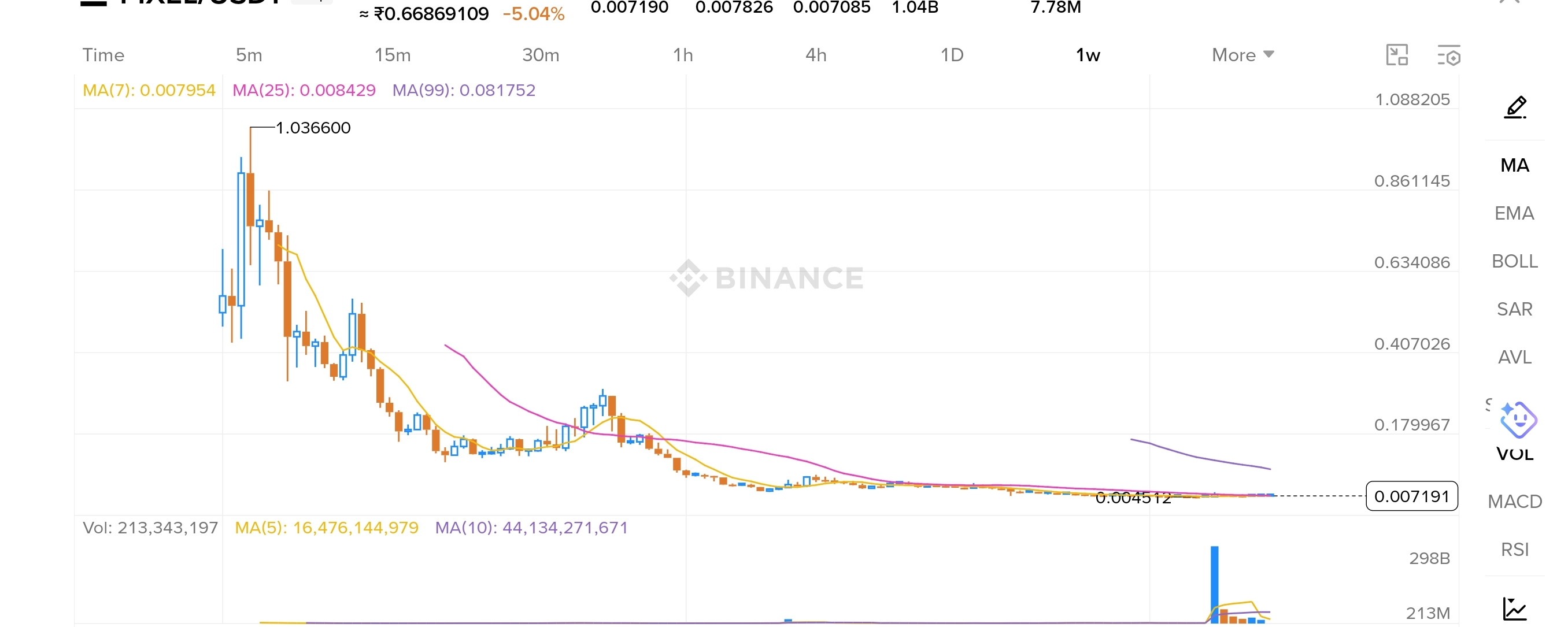
{spot}(PIXELUSDT)
Join the journey now, for what’s coming is greater! 🔥
#PIXE
#pixel $PIXEL
🎮 The future of gaming starts with $PIXEL ! 🚀
Have you ever wondered why the power of project @Pixels is increasing? The secret is not just in gaming, but in the Staked system that gives the community real control and long-term sustainability.
We are not just playing; we are building a complete digital economy. If you are looking for true power in the world of Web3, the eye is always on $PIXEL
Join the journey now, for what’s coming is greater! 🔥
#PIXE
🎮 The future of gaming starts with $PIXEL ! 🚀
Have you ever wondered why the power of project @Pixels is increasing? The secret is not just in gaming, but in the Staked system that gives the community real control and long-term sustainability.
We are not just playing; we are building a complete digital economy. If you are looking for true power in the world of Web3, the eye is always on $PIXEL
Join the journey now, for what’s coming is greater! 🔥
#PIXE
1
46

Stop Farming Users, Start Rewarding Them: Why Stacked by @Pixels is the Antidote to Broken Play-to-EMost "play-to-earn" models are designed to fail. They attract bots, drain treasuries, and collapse under the weight of their own poor economics. That’s not sustainable. That’s just a slow rug.The team behind @pixels has lived through those exact pitfalls. Instead of quitting, they reverse-engineered what actually works. The result? Stacked – a live operations engine that is already battle-tested across Pixels, Pixel Dungeons, and Chubkins.
Here is the critical shift: Stacked is an AI game economist. It doesn’t just hand out tokens. It analyzes player cohorts, spots churn patterns (like why your whales leave after day 3), and suggests reward experiments that actually move the needle on retention and LTV.
This isn't a whitepaper dream. Stacked has already processed hundreds of millions of rewards and contributed to $25M+ in revenue for the Pixels ecosystem. The AI layer provides insight-to-action immediately.
And for the crypto-native audience? This is an infrastructure play, not just a game. $PIXEL evolves from a single-game token into a cross-ecosystem rewards currency. More games joining Stacked means more demand for $PIXEL L.The moat is real: anti-bot systems, behavioral data at scale, and live reward design wisdom that takes years to build. Games already spend billions on ads. Stacked redirects that budget directly to players who actually contribute value.
This is built in production, not in a deck. Check the receipts.#pixe l $PIXEL EL EL @pixels
Stop Farming Users, Start Rewarding Them: Why Stacked by @Pixels is the Antidote to Broken Play-to-E
Most "play-to-earn" models are designed to fail. They attract bots, drain treasuries, and collapse under the weight of their own poor economics. That’s not sustainable. That’s just a slow rug.The team behind @Pixels has lived through those exact pitfalls. Instead of quitting, they reverse-engineered what actually works. The result? Stacked – a live operations engine that is already battle-tested across Pixels, Pixel Dungeons, and Chubkins.
Here is the critical shift: Stacked is an AI game economist. It doesn’t just hand out tokens. It analyzes player cohorts, spots churn patterns (like why your whales leave after day 3), and suggests reward experiments that actually move the needle on retention and LTV.
This isn't a whitepaper dream. Stacked has already processed hundreds of millions of rewards and contributed to $25M+ in revenue for the Pixels ecosystem. The AI layer provides insight-to-action immediately.
And for the crypto-native audience? This is an infrastructure play, not just a game. $PIXEL evolves from a single-game token into a cross-ecosystem rewards currency. More games joining Stacked means more demand for $PIXEL L.The moat is real: anti-bot systems, behavioral data at scale, and live reward design wisdom that takes years to build. Games already spend billions on ads. Stacked redirects that budget directly to players who actually contribute value.
This is built in production, not in a deck. Check the receipts.#pixe l $PIXEL EL EL @pixels
Here is the critical shift: Stacked is an AI game economist. It doesn’t just hand out tokens. It analyzes player cohorts, spots churn patterns (like why your whales leave after day 3), and suggests reward experiments that actually move the needle on retention and LTV.
This isn't a whitepaper dream. Stacked has already processed hundreds of millions of rewards and contributed to $25M+ in revenue for the Pixels ecosystem. The AI layer provides insight-to-action immediately.
And for the crypto-native audience? This is an infrastructure play, not just a game. $PIXEL evolves from a single-game token into a cross-ecosystem rewards currency. More games joining Stacked means more demand for $PIXEL L.The moat is real: anti-bot systems, behavioral data at scale, and live reward design wisdom that takes years to build. Games already spend billions on ads. Stacked redirects that budget directly to players who actually contribute value.
This is built in production, not in a deck. Check the receipts.#pixe l $PIXEL EL EL @pixels
43

·
--
Unveiling the last card of the main force's violent washout! If you get left behind again, you'll totally miss this epic staking bonus!The recent market has been a total meat grinder, with the index violently spiking back and forth. A bunch of folks are getting wrecked in the contract market with high-leverage PVP trades, and the liquidation texts are pouring in. Not to mention all those random shitcoins on-chain; you jump in and within two minutes, the dev team just pulls a rug and your hard-earned capital goes straight to zero. This kind of futile gaming will only drain your energy and bullets. If you want to survive in this space, you gotta learn to strike from a lower dimension.
The ones who really break through in this space aren't the paper hands trading swings every day, but the diamond hands who understand the macro narrative and hold their positions. Recently, I did a deep dive into the fund flows in the entire blockchain gaming sector and found that smart money has already started pulling out from those illogical Ponzi schemes. Big funds are quietly gravitating towards @pixels —a top-tier ecosystem with a real moat.
Unveiling the last card of the main force's violent washout! If you get left behind again, you'll totally miss this epic staking bonus!
The recent market has been a total meat grinder, with the index violently spiking back and forth. A bunch of folks are getting wrecked in the contract market with high-leverage PVP trades, and the liquidation texts are pouring in. Not to mention all those random shitcoins on-chain; you jump in and within two minutes, the dev team just pulls a rug and your hard-earned capital goes straight to zero. This kind of futile gaming will only drain your energy and bullets. If you want to survive in this space, you gotta learn to strike from a lower dimension.
The ones who really break through in this space aren't the paper hands trading swings every day, but the diamond hands who understand the macro narrative and hold their positions. Recently, I did a deep dive into the fund flows in the entire blockchain gaming sector and found that smart money has already started pulling out from those illogical Ponzi schemes. Big funds are quietly gravitating towards @Pixels —a top-tier ecosystem with a real moat.
The ones who really break through in this space aren't the paper hands trading swings every day, but the diamond hands who understand the macro narrative and hold their positions. Recently, I did a deep dive into the fund flows in the entire blockchain gaming sector and found that smart money has already started pulling out from those illogical Ponzi schemes. Big funds are quietly gravitating towards @Pixels —a top-tier ecosystem with a real moat.
133

·
--

Article
Pixels: The Future of Digital Gaming on Binance with @Pixels🎮 **Pixels: Towards the Future of Digital Gaming on Binance Square** 🚀
With the rapid evolution in the Web3 space, blockchain-based games have become more than just a means of entertainment; they've turned into a full-fledged digital economy that gives players real ownership of their assets. Here, the project **@Pixels** stands out as one of the leading initiatives redefining the concept of digital gaming on the Binance platform, especially with the integration of the **Staked Pixels** system that adds a new investment dimension.
Pixels: The Future of Digital Gaming on Binance with @Pixels
🎮 **Pixels: Towards the Future of Digital Gaming on Binance Square** 🚀
With the rapid evolution in the Web3 space, blockchain-based games have become more than just a means of entertainment; they've turned into a full-fledged digital economy that gives players real ownership of their assets. Here, the project **@Pixels** stands out as one of the leading initiatives redefining the concept of digital gaming on the Binance platform, especially with the integration of the **Staked Pixels** system that adds a new investment dimension.
With the rapid evolution in the Web3 space, blockchain-based games have become more than just a means of entertainment; they've turned into a full-fledged digital economy that gives players real ownership of their assets. Here, the project **@Pixels** stands out as one of the leading initiatives redefining the concept of digital gaming on the Binance platform, especially with the integration of the **Staked Pixels** system that adds a new investment dimension.
83

·
--
🎮 The Future of Digital Gaming is in Your Hands: Coin $PIXEL 🚀
The coin $PIXEL is the driving force behind one of the most popular gaming projects on the blockchain worldwide. If you've been following the evolution of the Web3 Gaming sector, this project has surely caught your eye!
Why is everyone keeping an eye on $PIXEL? 🧐
Dynamic Economy: This coin is not just a trading medium; it's the soul of the game; it's used for buying land, developing tools, and participating in governance.
Huge Community: The game boasts a very active player base, ensuring a steady demand for the coin within the ecosystem.
NFT Integration: The coin merges gaming fun with the value of real digital assets, allowing players to own and develop their own assets.
Strong Partnerships: The project is backed by major names in the crypto and gaming worlds, which boosts confidence in its roadmap.
What can we expect from $PIXEL? 📈
With ongoing game updates and an increasing number of "digital farmers" and investors, $PIXEL is emerging as an exciting option for those looking for projects with a real product and real-world use.
⚠️ Reminder: The crypto market is volatile, always do your own research before investing.
#PIXE #Web3Gaming #Crypto #blockchains #Gaming #PixelArmy
🎮 The Future of Digital Gaming is in Your Hands: Coin $PIXEL 🚀
The coin $PIXEL is the driving force behind one of the most popular gaming projects on the blockchain worldwide. If you've been following the evolution of the Web3 Gaming sector, this project has surely caught your eye!
Why is everyone keeping an eye on $PIXEL ? 🧐
Dynamic Economy: This coin is not just a trading medium; it's the soul of the game; it's used for buying land, developing tools, and participating in governance.
Huge Community: The game boasts a very active player base, ensuring a steady demand for the coin within the ecosystem.
NFT Integration: The coin merges gaming fun with the value of real digital assets, allowing players to own and develop their own assets.
Strong Partnerships: The project is backed by major names in the crypto and gaming worlds, which boosts confidence in its roadmap.
What can we expect from $PIXEL ? 📈
With ongoing game updates and an increasing number of "digital farmers" and investors, $PIXEL is emerging as an exciting option for those looking for projects with a real product and real-world use.
⚠️ Reminder: The crypto market is volatile, always do your own research before investing.
#PIXE #Web3Gaming #Crypto #blockchains #Gaming #PixelArmy
The coin $PIXEL is the driving force behind one of the most popular gaming projects on the blockchain worldwide. If you've been following the evolution of the Web3 Gaming sector, this project has surely caught your eye!
Why is everyone keeping an eye on $PIXEL ? 🧐
Dynamic Economy: This coin is not just a trading medium; it's the soul of the game; it's used for buying land, developing tools, and participating in governance.
Huge Community: The game boasts a very active player base, ensuring a steady demand for the coin within the ecosystem.
NFT Integration: The coin merges gaming fun with the value of real digital assets, allowing players to own and develop their own assets.
Strong Partnerships: The project is backed by major names in the crypto and gaming worlds, which boosts confidence in its roadmap.
What can we expect from $PIXEL ? 📈
With ongoing game updates and an increasing number of "digital farmers" and investors, $PIXEL is emerging as an exciting option for those looking for projects with a real product and real-world use.
⚠️ Reminder: The crypto market is volatile, always do your own research before investing.
#PIXE #Web3Gaming #Crypto #blockchains #Gaming #PixelArmy

159


·
--
🔥 Pixels isn't just a game, it's a living economy that evolves with every user 🔥
The ecosystem of @pixels is taking it a step further with Stacked, integrating mechanics that reward real participation and long-term strategy. Here, it's not just about playing, but about building value within a digital world where every resource counts.
Token $PIXEL becomes the focal point of this experience, connecting gameplay with real opportunities within the Web3 environment. As more users grasp the potential of Stacked, we see the internal economy strengthen and new growth dynamics emerge.
If you're on the lookout for a project with utility, an active community, and constant evolution, Pixels deserves your attention.
#pixe
🔥 Pixels isn't just a game, it's a living economy that evolves with every user 🔥
The ecosystem of @Pixels is taking it a step further with Stacked, integrating mechanics that reward real participation and long-term strategy. Here, it's not just about playing, but about building value within a digital world where every resource counts.
Token $PIXEL becomes the focal point of this experience, connecting gameplay with real opportunities within the Web3 environment. As more users grasp the potential of Stacked, we see the internal economy strengthen and new growth dynamics emerge.
If you're on the lookout for a project with utility, an active community, and constant evolution, Pixels deserves your attention.
#pixe
The ecosystem of @Pixels is taking it a step further with Stacked, integrating mechanics that reward real participation and long-term strategy. Here, it's not just about playing, but about building value within a digital world where every resource counts.
Token $PIXEL becomes the focal point of this experience, connecting gameplay with real opportunities within the Web3 environment. As more users grasp the potential of Stacked, we see the internal economy strengthen and new growth dynamics emerge.
If you're on the lookout for a project with utility, an active community, and constant evolution, Pixels deserves your attention.
#pixe
121

·
--
#pixel $PIXEL in the world of @pixels , staking isn’t just about locking up assets for yield—it’s the core way to participate in the game economy. By staking $PIXEL, players can not only earn rewards but also influence the flow and governance of in-game resources. This "play-to-earn" eco-design makes every farmer a true stakeholder. As the staking pool continues to grow, the value capture mechanism of $PIXEL becomes increasingly sophisticated. I'm bullish on Pixels' long-term vision of deeply integrating GameFi with DeFi! 🚀 #PIXE
#pixel $PIXEL in the world of @Pixels , staking isn’t just about locking up assets for yield—it’s the core way to participate in the game economy. By staking $PIXEL , players can not only earn rewards but also influence the flow and governance of in-game resources. This "play-to-earn" eco-design makes every farmer a true stakeholder. As the staking pool continues to grow, the value capture mechanism of $PIXEL becomes increasingly sophisticated. I'm bullish on Pixels' long-term vision of deeply integrating GameFi with DeFi! 🚀 #PIXE
47

·
--
Only the smart ones pixeThe @Pixels ecosystem keeps blowing my mind with its innovative take on web3 gaming. I’m especially keen on the Staked Pixels rewards and how it meshes with the wider community. The growth potential here is off the charts! 🚀
$PIXE is a unique project from @Pixels that offers an exceptional experience in the web3 gaming world. I'm really impressed by the evolution of the Staked Pixels system, which boosts the project's value and sustainability. Can't wait to see more updates from this awesome community! ✨
Only the smart ones pixe
The @Pixels ecosystem keeps blowing my mind with its innovative take on web3 gaming. I’m especially keen on the Staked Pixels rewards and how it meshes with the wider community. The growth potential here is off the charts! 🚀
$PIXE is a unique project from @Pixels that offers an exceptional experience in the web3 gaming world. I'm really impressed by the evolution of the Staked Pixels system, which boosts the project's value and sustainability. Can't wait to see more updates from this awesome community! ✨
$PIXE is a unique project from @Pixels that offers an exceptional experience in the web3 gaming world. I'm really impressed by the evolution of the Staked Pixels system, which boosts the project's value and sustainability. Can't wait to see more updates from this awesome community! ✨
1
132
Log in to explore more content
Join global crypto users on Binance Square
⚡️ Get latest and useful information about crypto.
💬 Trusted by the world’s largest crypto exchange.
👍 Discover real insights from verified creators.
Email / Phone number
Trending Topics
1
#SaylorHintsStrategyBitcoinBuy
2.3M views
12,390 Discussing
2
#BOJRaisesRatesTo31YearHigh
249,098 views
3,255 Discussing
3
#BuffettStepsDownAsBerkshireChairman
120,402 views
1,742 Discussing
4
#XRPExchangeReservesHitSevenYearLow
132,342 views
1,531 Discussing
5
#HKCompletesFirstHKDStablecoinUseCase
153,700 views
1,902 Discussing
6
#VietnamPlansFirstCryptoLicensesIn2026
96,725 views
1,288 Discussing
7
#BTCBreaks80K
534,929 views
5,765 Discussing
8
#BitcoinMarketCapTopsTesla
131,468 views
1,422 Discussing
9
#SOLJumpsAbout10%
131,900 views
1,276 Discussing
10
#EthereumReclaims$2600
12,032 views
140 Discussing