
#layer2
layer2
4.5M views
25,647 Discussing
Hot
Latest

·
--
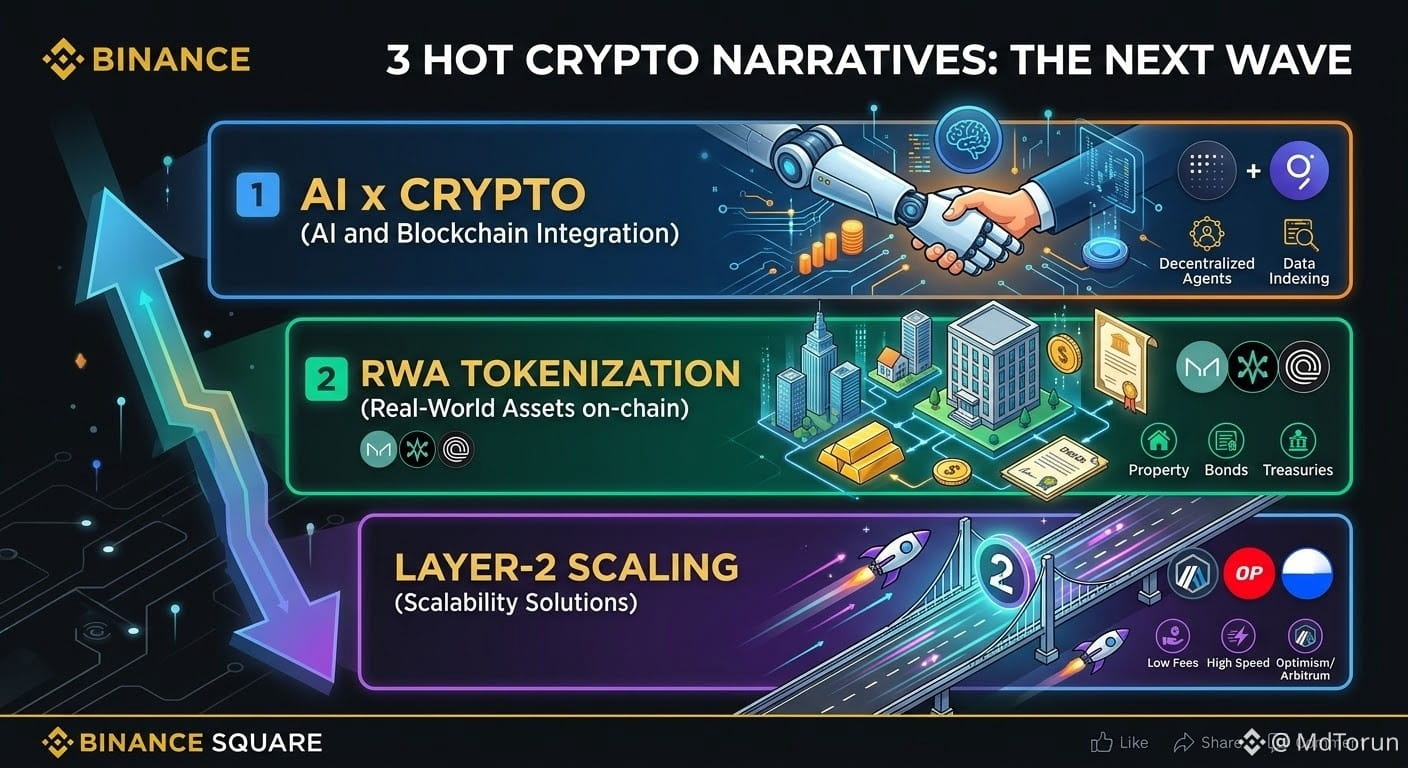
Hot Narratives Driving the Next Crypto Wave! $BTC
🔥 What's Trending Right Now?
AI x Crypto: Decentralized AI agents and smart automation are reshaping Web3 utilities.
RWA Tokenization: Real-world assets (bonds, real estate) are rapidly moving on-chain, attracting massive institutional capital.
Layer-2 Scaling: Networks like Arbitrum and Base are dominating transactions with ultra-low fees and high speed.
💡 The Big Question: Which narrative are you most bullish on for the upcoming bull run? Drop your favorite pick below! 👇
#Binance #RWATokens #Layer2 #Web3
1
373

·
--
Article
Why Layer-2 Scaling Matters When Coins Like $INIT SurgeThe market woke up with a mix of tiny optimism and stark fear, the Fear & Greed Index sits at 10, labeled "Extreme Fear". While $BTC slipped to $64,930 with a 24h change of -1.11% and $ETH nudged down to $1,825 at -0.40%, a handful of altcoins lit up the screen. I'm curious how the tech behind these moves, especially layer-2 solutions, actually works and why they can turn a modest price swing into a bigger story.
The Tech Under the Hood
Layer-2 protocols sit on top of a base blockchain, batching transactions so the main chain only records a summary. Think of it like a grocery store express lane: you still pay for the items, but the checkout line moves faster because the cashier bundles them. This reduces congestion on the base layer, which is why we often see sudden bursts of activity on coins that are heavily integrated with rollups or sidechains. When $INIT jumps +7.25% at $0.1143, it's often a sign that users are testing a new bridge or that a rollup's fee market is temporarily cheaper.
What the Gainers Are Telling Us
The top five gainers this morning, $INIT +7.25% at $0.1143, UNI +6.25% at $5.19, AAVE +5.96% at $108.00, ZEC +5.49% at $901.69, and KAVA +5.21% at $0.0307, are all projects with active layer-2 or cross-chain components. A careful observer would check the underlying transaction volume, any recent mainnet upgrades, and whether a new dApp has launched on their scaling solution. For example, a spike in UNI often follows a Uniswap V3 fee tier adjustment, which can be confirmed by looking at the 24h volume on the associated layer-2. I keep an eye on whether the price move is backed by a genuine increase in on-chain activity or just a short-term hype burst.
Why the Losers Matter
On the flip side, the biggest drop belongs to SOPH at -44.44% at $0.00125, followed by ASTER -8.51% at $0.5493, ZRO -8.48% at $1.39, INJ -4.44% at $6.94, and AVAX -2.57% at $7.24. These assets often suffer when a layer-2 experiences congestion or when a bridge is temporarily disabled. Before reacting, I'd verify if the decline coincides with a known outage, a security alert, or a sudden spike in gas fees on the base chain. The 24h range for $BTC, $62,006 - $66,132, and for $ETH, $1,711 - $1,845, hints at broader market pressure that can amplify the impact on more volatile tokens.
What I'll Keep an Eye On
Given the "Extreme Fear" reading, I'm watching whether any of the gainers sustain their momentum as the broader market tests support levels. BNB's modest rise of +0.33% at $591.87 and SOL's dip of -0.75% at $71.72 suggest that the major platforms are still relatively stable, which could provide a safety net for layer-2 projects. If the next 24-hour volume surge aligns with a new rollup launch, those coins might see another bounce. I'll also monitor the fee market on the underlying chains, a sudden drop there often precedes a price uptick for the associated layer-2 tokens.
Which of today's movers do you think is just a flash of excitement and which could be the start of a longer trend?
Not financial advice.
Tech decoded. 🛠️
#crypto #layer2 #marketanalysis #techexplainer
Why Layer-2 Scaling Matters When Coins Like $INIT Surge
The market woke up with a mix of tiny optimism and stark fear, the Fear & Greed Index sits at 10, labeled "Extreme Fear". While $BTC slipped to $64,930 with a 24h change of -1.11% and $ETH nudged down to $1,825 at -0.40%, a handful of altcoins lit up the screen. I'm curious how the tech behind these moves, especially layer-2 solutions, actually works and why they can turn a modest price swing into a bigger story.
The Tech Under the Hood
Layer-2 protocols sit on top of a base blockchain, batching transactions so the main chain only records a summary. Think of it like a grocery store express lane: you still pay for the items, but the checkout line moves faster because the cashier bundles them. This reduces congestion on the base layer, which is why we often see sudden bursts of activity on coins that are heavily integrated with rollups or sidechains. When $INIT jumps +7.25% at $0.1143, it's often a sign that users are testing a new bridge or that a rollup's fee market is temporarily cheaper.
What the Gainers Are Telling Us
The top five gainers this morning, $INIT +7.25% at $0.1143, UNI +6.25% at $5.19, AAVE +5.96% at $108.00, ZEC +5.49% at $901.69, and KAVA +5.21% at $0.0307, are all projects with active layer-2 or cross-chain components. A careful observer would check the underlying transaction volume, any recent mainnet upgrades, and whether a new dApp has launched on their scaling solution. For example, a spike in UNI often follows a Uniswap V3 fee tier adjustment, which can be confirmed by looking at the 24h volume on the associated layer-2. I keep an eye on whether the price move is backed by a genuine increase in on-chain activity or just a short-term hype burst.
Why the Losers Matter
On the flip side, the biggest drop belongs to SOPH at -44.44% at $0.00125, followed by ASTER -8.51% at $0.5493, ZRO -8.48% at $1.39, INJ -4.44% at $6.94, and AVAX -2.57% at $7.24. These assets often suffer when a layer-2 experiences congestion or when a bridge is temporarily disabled. Before reacting, I'd verify if the decline coincides with a known outage, a security alert, or a sudden spike in gas fees on the base chain. The 24h range for $BTC , $62,006 - $66,132, and for $ETH , $1,711 - $1,845, hints at broader market pressure that can amplify the impact on more volatile tokens.
What I'll Keep an Eye On
Given the "Extreme Fear" reading, I'm watching whether any of the gainers sustain their momentum as the broader market tests support levels. BNB's modest rise of +0.33% at $591.87 and SOL's dip of -0.75% at $71.72 suggest that the major platforms are still relatively stable, which could provide a safety net for layer-2 projects. If the next 24-hour volume surge aligns with a new rollup launch, those coins might see another bounce. I'll also monitor the fee market on the underlying chains, a sudden drop there often precedes a price uptick for the associated layer-2 tokens.
Which of today's movers do you think is just a flash of excitement and which could be the start of a longer trend?
Not financial advice.
Tech decoded. 🛠️
#crypto #layer2 #marketanalysis #techexplainer
1
775

·
--
"Ethereum's fastest L2 pivots to AI" sounds like a growth story. The numbers say it's a rescue.
Popular read: MEGA (the team behind MegaETH) just committed $30M to an AI inference marketplace, so it's moving to a bigger market.
Why that might be wrong:
• DeFi TVL on MegaETH is $8.8M, down from a peak above $240M (DefiLlama via CoinDesk)
• Staff cut 20% on Nov 13, mostly chain, wallet and ecosystem roles
• The token is down more than 70% this year (CoinDesk data)
• The co-founder said staying "chain-only" felt wrong; the chain's own usage had already left
The marketplace is promised for December, with no confirmed feature list. My read: a layer-2 that can't hold deposits is a product-market-fit problem, and a new product on the same chain doesn't fix it by itself. Watch whether MegaETH TVL stabilises once the product ships.
Is an AI pivot a real strategy for a struggling $ETH L2, or a way to change the subject? Not financial advice.
#MegaETH #Layer2 #AI
Disclosure: I can earn Binance Write to Earn rewards from this post.
25

$ARB
Arbitrum’s Elysium chain is live on mainnet, built for high-frequency markets and settling on HyperEVM. Hyperliquid’s perpetual markets processed over $239B in notional volume in the prior 30 days. ARB governs the Arbitrum ecosystem, but Elysium uses HYPE for gas. Can this expansion strengthen Arbitrum adoption?
#Arbitrum #ARB #Layer2
402

⛽ L2 gas fees — a great gift of engineering.
1️⃣ Every operation on Ethereum mainnet can be costly — every node has to process everything
2️⃣ L2s (such as Arbitrum, Base): bundle transactions and send them to mainnet in a single receipt — costs go down many times over
3️⃣ Trade-off: security is "borrowed" from Ethereum, but there are also risks such as sequencer dependency
Cheaper doesn’t mean better — it’s a different design, with its own benefits and risks. 🧮
Understanding the fee structure = a happier wallet. 😄
$ETH $ARB
#Ethereum #Layer2 #CryptoEducation

·
--
L2 race: beyond the narrative, look at user retention first.
According to a November 14 CoinDesk report, MegaETH laid off about 20% of its workforce and is exploring an AI business direction. The report also said its DeFi TVL fell from more than $245 million to $8.8 million. These figures are as reported by the media and have not been independently verified on-chain for this post.
My take: Short-term incentives can attract capital, but may not create lasting demand. When comparing scaling projects, look at active users, fee revenue, and retention after subsidies end—not just peak TVL. #Layer2
28

What is a Layer 2, and what is it used for?
A Layer 2 is a network built on top of a main blockchain (a Layer 1 such as Ethereum or Bitcoin) that processes transactions off the base chain and then consolidates the results on it. The goal: speed and low costs without sacrificing security.
Practical example: sending USDT on Ethereum can cost several dollars and take minutes. On Arbitrum (a Layer 2), the same transaction costs pennies and is confirmed in seconds. The trick is to bundle hundreds of transactions, process them separately, and record only the final summary on the main chain.
The most common types are rollups (Optimistic and ZK), which inherit Ethereum’s security, and state channels such as Bitcoin’s Lightning Network.
If you trade frequently or use DeFi, Layer 2s save you on fees and give you access to more agile ecosystems. They’re not just a fad: they already process more volume than many Layer 1s.
Follow us for more guides that save you time and money.
#Layer2
109

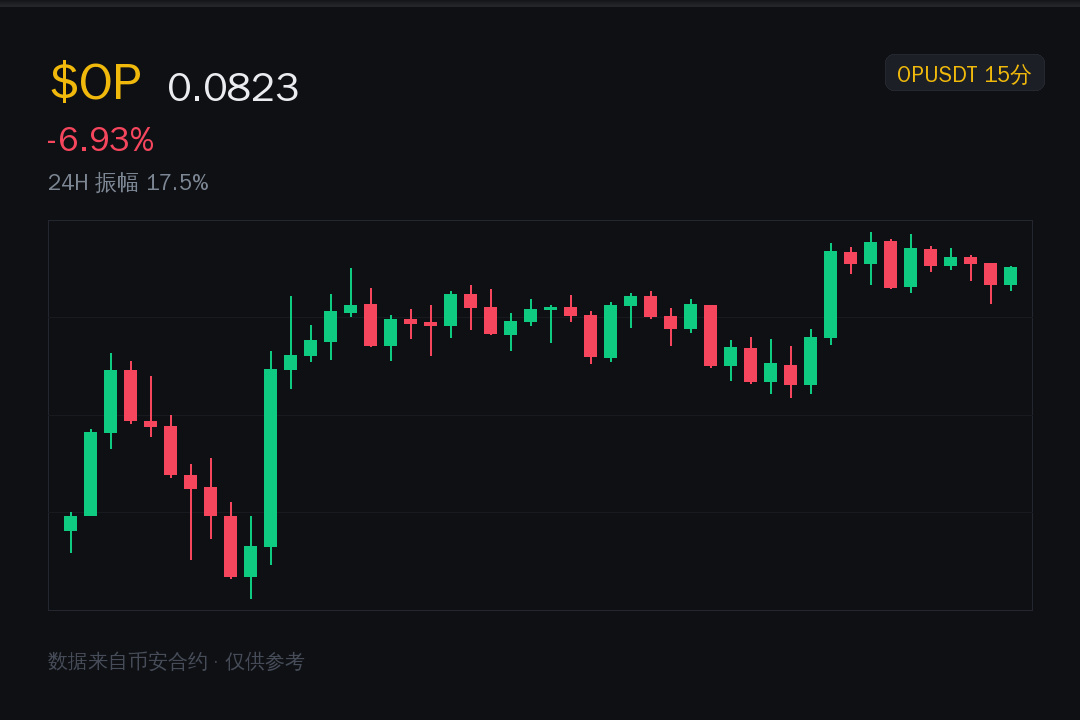
Don’t be alarmed by $OP’s 7.21% one-day drop; it’s actually a sign of a healthy market correction. Data shows that despite the price decline, $OP’s high volatility of 17.5% and $37 million in trading volume indicate very strong market activity. The 0.0755–0.0887 price range presents an opportunity for new entrants. Rather than a wave of selling, this is more like a normal rotation of profit-taking positions. As a leading Ethereum Layer 2 solution, $OP’s fundamentals have not changed due to short-term volatility. Market sentiment is often more worth watching than the price itself.$OP #Layer2
Don’t be alarmed by $OP ’s 7.21% one-day drop; it’s actually a sign of a healthy market correction. Data shows that despite the price decline, $OP ’s high volatility of 17.5% and $37 million in trading volume indicate very strong market activity. The 0.0755–0.0887 price range presents an opportunity for new entrants. Rather than a wave of selling, this is more like a normal rotation of profit-taking positions. As a leading Ethereum Layer 2 solution, $OP ’s fundamentals have not changed due to short-term volatility. Market sentiment is often more worth watching than the price itself.$OP #Layer2
7
·
--
Article
Understanding How Rollup Layer-2s Speed Up EthereumI've been watching the market wobble, $BTC at $69,411 and $ETH sliding to $1,964, and it reminded me how much we rely on scaling tricks to keep transactions affordable. When the Fear & Greed Index reads 20, signaling extreme fear, users scramble for cheaper ways to move value, and that's where rollups step in.
Why Layer 2s Matter
Even though the base chain can settle any transaction, its capacity is limited. Think of the main chain as a single-lane highway that gets jammed during rush hour. A layer 2 opens a parallel side road, letting many cars travel together before merging back onto the main lane. The result? Lower fees and faster confirmations without sacrificing the security of the underlying chain.
The Core Idea of a Rollup
A rollup bundles dozens, sometimes hundreds, of transactions into one compressed package. Instead of each user posting a full transaction to $ETH's mainnet, the rollup operator posts a single summary that includes a cryptographic proof. The proof tells the base chain, "I've checked everything, and it's all valid." This proof is what the mainnet verifies, so the heavy lifting happens off-chain.
How Data Gets Packed
Imagine you have a stack of letters. Instead of mailing each one separately, you put them in a single envelope with a table of contents. The rollup's "envelope" contains the transaction data and a Merkle root that summarizes it. When the main chain receives the envelope, it can quickly verify the Merkle root without re-reading every letter. This is why rollups can shave fees down to a fraction of what $ETH's 24-hour range $1,896-$2,030 would suggest.
Security Guarantees
Rollups inherit security from the base chain because the proof must be mathematically sound. If the proof were wrong, the mainnet would reject the whole batch, and the operator would lose the deposited funds. It's a bit like a bank vault that only opens when the combination is proven correct, the vault never opens for a faulty code.
When to Watch the Metrics
While the technology is elegant, market signals still matter. A top gainer like $BARD jumping +88.32% can hint at speculative hype, but the real health of a rollup is in its transaction volume and latency, not in price spikes. Likewise, the Fear & Greed Index at 20 reminds us that panic can drive users to cheaper solutions, but it also warns of potential volatility.
What layer-2 solution have you tried and how did it feel?
Not financial advice
Tech decoded. 🛠️
#crypto #blockchain #layer2 #explainer
Understanding How Rollup Layer-2s Speed Up Ethereum
I've been watching the market wobble, $BTC at $69,411 and $ETH sliding to $1,964, and it reminded me how much we rely on scaling tricks to keep transactions affordable. When the Fear & Greed Index reads 20, signaling extreme fear, users scramble for cheaper ways to move value, and that's where rollups step in.
Why Layer 2s Matter
Even though the base chain can settle any transaction, its capacity is limited. Think of the main chain as a single-lane highway that gets jammed during rush hour. A layer 2 opens a parallel side road, letting many cars travel together before merging back onto the main lane. The result? Lower fees and faster confirmations without sacrificing the security of the underlying chain.
The Core Idea of a Rollup
A rollup bundles dozens, sometimes hundreds, of transactions into one compressed package. Instead of each user posting a full transaction to $ETH 's mainnet, the rollup operator posts a single summary that includes a cryptographic proof. The proof tells the base chain, "I've checked everything, and it's all valid." This proof is what the mainnet verifies, so the heavy lifting happens off-chain.
How Data Gets Packed
Imagine you have a stack of letters. Instead of mailing each one separately, you put them in a single envelope with a table of contents. The rollup's "envelope" contains the transaction data and a Merkle root that summarizes it. When the main chain receives the envelope, it can quickly verify the Merkle root without re-reading every letter. This is why rollups can shave fees down to a fraction of what $ETH 's 24-hour range $1,896-$2,030 would suggest.
Security Guarantees
Rollups inherit security from the base chain because the proof must be mathematically sound. If the proof were wrong, the mainnet would reject the whole batch, and the operator would lose the deposited funds. It's a bit like a bank vault that only opens when the combination is proven correct, the vault never opens for a faulty code.
When to Watch the Metrics
While the technology is elegant, market signals still matter. A top gainer like $BARD jumping +88.32% can hint at speculative hype, but the real health of a rollup is in its transaction volume and latency, not in price spikes. Likewise, the Fear & Greed Index at 20 reminds us that panic can drive users to cheaper solutions, but it also warns of potential volatility.
What layer-2 solution have you tried and how did it feel?
Not financial advice
Tech decoded. 🛠️
#crypto #blockchain #layer2 #explainer
189

·
--
#BinancePick Good morning, albeit late, as we wrap up our day full of opportunities! Let's end today's discussions by talking about Layer 2 scaling solutions that have made using the Ethereum network much faster and cheaper. Arbitrum and its ARB token are leading the way thanks to their substantial liquidity and wide variety of decentralized applications. Do you hold ARB in your wallets for the long term, or do you prefer other Layer 2 networks? Let's hear your thoughts in the comments!
#Binance #Arbitrum #ARB #Layer2 #CryptoCommunity
#Binance #Arbitrum #ARB #Layer2 #CryptoCommunity

152

$OP is down 76% in 1 year, and it just lost another 10% this week. 👀
Daily chart snapshot:
📉 Today: -2.40%
📉 7D: -10.43%
📉 30D: -37.64%
🚀 90D: +9.09%
📉 180D: -30.20%
📉 1Y: -76.43%
OP topped out near 0.1167 and has been sliding ever since, down about 20% to 0.0936. Most of the recent daily candles are red, and each bounce has been weaker than the last. Price is now sitting under every key average: MA(7) at 0.0981, VWAP(14) at 0.1051, MA(25) at 0.1090 and MA(99) at 0.1111. That stack is heavy overhead supply.
Levels I'm watching:
Support: 0.0906 (recent low)
Resistance: 0.0981 (MA7), then 0.1051 (VWAP), then 0.1090 (MA25)
The order book is balanced at 51% bids vs 49% asks, so buyers are not stepping in with conviction yet. I need a daily close above 0.0981 with rising volume before calling a bounce. A break below 0.0906 means fresh lows.
Is OP building a base near 0.09, or is this just a pause before the next leg down? Drop your take below 👇
Not financial advice. DYOR.
$OP
{spot}(OPUSDT)
#OP #Optimism #Layer2 #cryptotrading #BinanceSquare
$OP is down 76% in 1 year, and it just lost another 10% this week. 👀
Daily chart snapshot:
📉 Today: -2.40%
📉 7D: -10.43%
📉 30D: -37.64%
🚀 90D: +9.09%
📉 180D: -30.20%
📉 1Y: -76.43%
OP topped out near 0.1167 and has been sliding ever since, down about 20% to 0.0936. Most of the recent daily candles are red, and each bounce has been weaker than the last. Price is now sitting under every key average: MA(7) at 0.0981, VWAP(14) at 0.1051, MA(25) at 0.1090 and MA(99) at 0.1111. That stack is heavy overhead supply.
Levels I'm watching:
Support: 0.0906 (recent low)
Resistance: 0.0981 (MA7), then 0.1051 (VWAP), then 0.1090 (MA25)
The order book is balanced at 51% bids vs 49% asks, so buyers are not stepping in with conviction yet. I need a daily close above 0.0981 with rising volume before calling a bounce. A break below 0.0906 means fresh lows.
Is OP building a base near 0.09, or is this just a pause before the next leg down? Drop your take below 👇
Not financial advice. DYOR.
$OP
#OP #Optimism #Layer2 #cryptotrading #BinanceSquare

imlimonh:
Buy the deep DCA.
1
1
825

·
--
Shuyao Kong, MEGA co-founder behind Ethereum scaling network MegaETH, said on November 13 that the team’s reorganization reduced its headcount by 20%, but did not disclose how many people were affected or when the layoffs took place. CoinDesk and Cointelegraph reported that departing employees were from teams including blockchain, wallets, and ecosystem support. MEGA had previously pledged $30 million from its treasury to develop network products and planned to launch a public AI inference market in December. The market remains a plan, and its specific launch features have not been confirmed. The timing of the layoffs and the product shift does not mean the project has said there is a direct causal link between them. Sources: public statements by the co-founder, CoinDesk, and Cointelegraph. #以太坊 #Layer2 #人工智能 #加密行业
Shuyao Kong, MEGA co-founder behind Ethereum scaling network MegaETH, said on November 13 that the team’s reorganization reduced its headcount by 20%, but did not disclose how many people were affected or when the layoffs took place. CoinDesk and Cointelegraph reported that departing employees were from teams including blockchain, wallets, and ecosystem support. MEGA had previously pledged $30 million from its treasury to develop network products and planned to launch a public AI inference market in December. The market remains a plan, and its specific launch features have not been confirmed. The timing of the layoffs and the product shift does not mean the project has said there is a direct causal link between them. Sources: public statements by the co-founder, CoinDesk, and Cointelegraph. #以太坊 #Layer2 #人工智能 #加密行业
285

·
--
Layer 2 restaking is the hot trade right now, but most users are blind to the exit liquidity trap.
Here’s the reality check: you’re stacking yield on top of yield, wrapping an illiquid L2 asset into a restaking protocol, and assuming you can swap back to $ETH at a moment's notice.
You can't.
When market volatility spikes, bridge withdrawal queues jam up, and secondary market discounts on liquid restaking tokens widen fast. The APY looks great on paper, but if you need to liquidate in a sudden downturn, slippage will eat your entire year's yield.
Before aping into the next high-yield vault, ask yourself: *If everyone tries to exit through this tiny bridge at the exact same time, who is actually buying on the other side?*
Manage your position sizing. Yield is worthless if you can’t get your principal out.
#Restaking #DeFi #Layer2 $ETH
45

In the patient evolution of Ethereum’s layered design, Layer-2 networks continue absorbing complex applications with improving cost efficiency and developer focus. As liquidity and users migrate to scalable pathways, the hierarchical structure demonstrates enduring adaptability. Echoing the 2022 scalability push that unlocked broader participation, this maturation carries a 66% probability of sustained momentum through the season if tooling and user experience keep advancing.
$ETH $ETHA.ETF #CoinVahini #Ethereum #Layer2
$ETH $ETHA.ETF #CoinVahini #Ethereum #Layer2
75

·
--
What really needs watching is not the price of $BLAST, but the growing gap between “balance visible” and “assets claimable” after Blast shuts down. Binance Wallet announced on November 12 that it will stop supporting Blast starting November 30 at 10:00 UTC. After that, Blast assets will no longer be viewable, sendable, or receivable in the app. This does not mean Binance Exchange is suspending all deposits and withdrawals, nor does it affect other chains.
Blast’s official recovery page says that $ETH, $WETH, USDB, and withdrawals to Ethereum that were not completed on the original chain can be checked or claimed through the recovery contract on Ethereum mainnet. The core issue here is not market performance, but the asset recovery path, frontend dependencies, and phishing risks.
A stronger execution signal would be that the recovery contract is available, address lookup results match expectations, and funds arrive reliably on mainnet after claiming. A neutral signal would be that only the wallet entry point is removed while recovery continues. Weaker signals would include contract failures, narrower explanations of which assets are covered, or a surge in phishing links. The biggest invalidating assumption would be treating the balance shown in the wallet interface as the amount that can be claimed, or misreading the end of support as meaning all assets have been wiped out. Which type of address will you check first before the deadline?
#币安钱包 #Layer2
For informational purposes only; this is not investment advice.
What really needs watching is not the price of $BLAST, but the growing gap between “balance visible” and “assets claimable” after Blast shuts down. Binance Wallet announced on November 12 that it will stop supporting Blast starting November 30 at 10:00 UTC. After that, Blast assets will no longer be viewable, sendable, or receivable in the app. This does not mean Binance Exchange is suspending all deposits and withdrawals, nor does it affect other chains.
Blast’s official recovery page says that $ETH , $WETH, USDB, and withdrawals to Ethereum that were not completed on the original chain can be checked or claimed through the recovery contract on Ethereum mainnet. The core issue here is not market performance, but the asset recovery path, frontend dependencies, and phishing risks.
A stronger execution signal would be that the recovery contract is available, address lookup results match expectations, and funds arrive reliably on mainnet after claiming. A neutral signal would be that only the wallet entry point is removed while recovery continues. Weaker signals would include contract failures, narrower explanations of which assets are covered, or a surge in phishing links. The biggest invalidating assumption would be treating the balance shown in the wallet interface as the amount that can be claimed, or misreading the end of support as meaning all assets have been wiped out. Which type of address will you check first before the deadline?
#币安钱包 #Layer2
For informational purposes only; this is not investment advice.
319
·
--
Article
How Rollup Layer-2s Turn Ethereum Into a HighwayI've been watching the daily price swings of $BTC at $73,723 and $ETH at $2,059 and wondering how those numbers could move faster without choking the network. The answer lives in rollup layer-2s, a clever way to push most of the work off the main chain while still keeping the security guarantees we all rely on.
Why Rollups Matter
Think of the base layer as a single-lane bridge that every car must cross. When traffic piles up, you get a jam and higher fees. A rollup builds a parallel overpass: it bundles many transactions into one package, posts a tiny proof back to the main chain, and lets the bridge stay clear. The result is lower fees and higher throughput, while the main chain still validates the final state.
How It Works, The Two Main Types
Optimistic Rollups assume transactions are valid unless challenged. If someone spots a mistake, they can submit a fraud proof within a set window, and the rollup reverts the bad batch. This model is simple and works well for many DeFi apps.
Zero-Knowledge Rollups, on the other hand, generate a cryptographic proof (a SNARK) that the bundled transactions are correct, and post that proof on-chain. The proof is tiny, so verification is cheap and instant, but creating it is more computationally heavy.
Security Guarantees
Both designs inherit the security of the underlying chain because the final proof or fraud-challenge lands on the base layer. That's why you still see $BNB trading at $680.48 and SOL at $83.00, users trust the same security model across different ecosystems, even when they use rollups.
Real-World Impact
When the Fear & Greed Index reads 29 (Fear), investors often look for cheaper ways to move capital. Rollups provide that by cutting transaction costs, which can be especially helpful during volatile periods like the recent 24-hour dip of $ETH by -2.18%. Projects that adopt rollups often see higher activity; you might have noticed INIT gaining +12.48% as a side effect of lower fees on its rollup-based DEX.
What to Watch Next
Rollups are still evolving. Optimistic solutions are adding faster challenge windows, while zero-knowledge tech is becoming more efficient. As the ecosystem matures, we'll likely see more mainstream apps moving onto these layers, which could smooth out the price swings we see on the main chain.
Do you think rollups will become the default way we transact on Ethereum, or will another scaling method take the lead?
Not financial advice
Tech decoded. 🛠️
#Blockchain #Layer2 #CryptoTech #Ethereum
How Rollup Layer-2s Turn Ethereum Into a Highway
I've been watching the daily price swings of $BTC at $73,723 and $ETH at $2,059 and wondering how those numbers could move faster without choking the network. The answer lives in rollup layer-2s, a clever way to push most of the work off the main chain while still keeping the security guarantees we all rely on.
Why Rollups Matter
Think of the base layer as a single-lane bridge that every car must cross. When traffic piles up, you get a jam and higher fees. A rollup builds a parallel overpass: it bundles many transactions into one package, posts a tiny proof back to the main chain, and lets the bridge stay clear. The result is lower fees and higher throughput, while the main chain still validates the final state.
How It Works, The Two Main Types
Optimistic Rollups assume transactions are valid unless challenged. If someone spots a mistake, they can submit a fraud proof within a set window, and the rollup reverts the bad batch. This model is simple and works well for many DeFi apps.
Zero-Knowledge Rollups, on the other hand, generate a cryptographic proof (a SNARK) that the bundled transactions are correct, and post that proof on-chain. The proof is tiny, so verification is cheap and instant, but creating it is more computationally heavy.
Security Guarantees
Both designs inherit the security of the underlying chain because the final proof or fraud-challenge lands on the base layer. That's why you still see $BNB trading at $680.48 and SOL at $83.00, users trust the same security model across different ecosystems, even when they use rollups.
Real-World Impact
When the Fear & Greed Index reads 29 (Fear), investors often look for cheaper ways to move capital. Rollups provide that by cutting transaction costs, which can be especially helpful during volatile periods like the recent 24-hour dip of $ETH by -2.18%. Projects that adopt rollups often see higher activity; you might have noticed INIT gaining +12.48% as a side effect of lower fees on its rollup-based DEX.
What to Watch Next
Rollups are still evolving. Optimistic solutions are adding faster challenge windows, while zero-knowledge tech is becoming more efficient. As the ecosystem matures, we'll likely see more mainstream apps moving onto these layers, which could smooth out the price swings we see on the main chain.
Do you think rollups will become the default way we transact on Ethereum, or will another scaling method take the lead?
Not financial advice
Tech decoded. 🛠️
#Blockchain #Layer2 #CryptoTech #Ethereum
118

·
--
The DeFi ecosystem accelerates with the mainnet deployment of Elysium, a brand-new Layer-2 solution built for execution speed. ⚡$HYPE #Hyperliquid #defi #Layer2 #trading
{spot}(HYPEUSDT)
The DeFi ecosystem accelerates with the mainnet deployment of Elysium, a brand-new Layer-2 solution built for execution speed. ⚡$HYPE #Hyperliquid #defi #Layer2 #trading
327

·
--
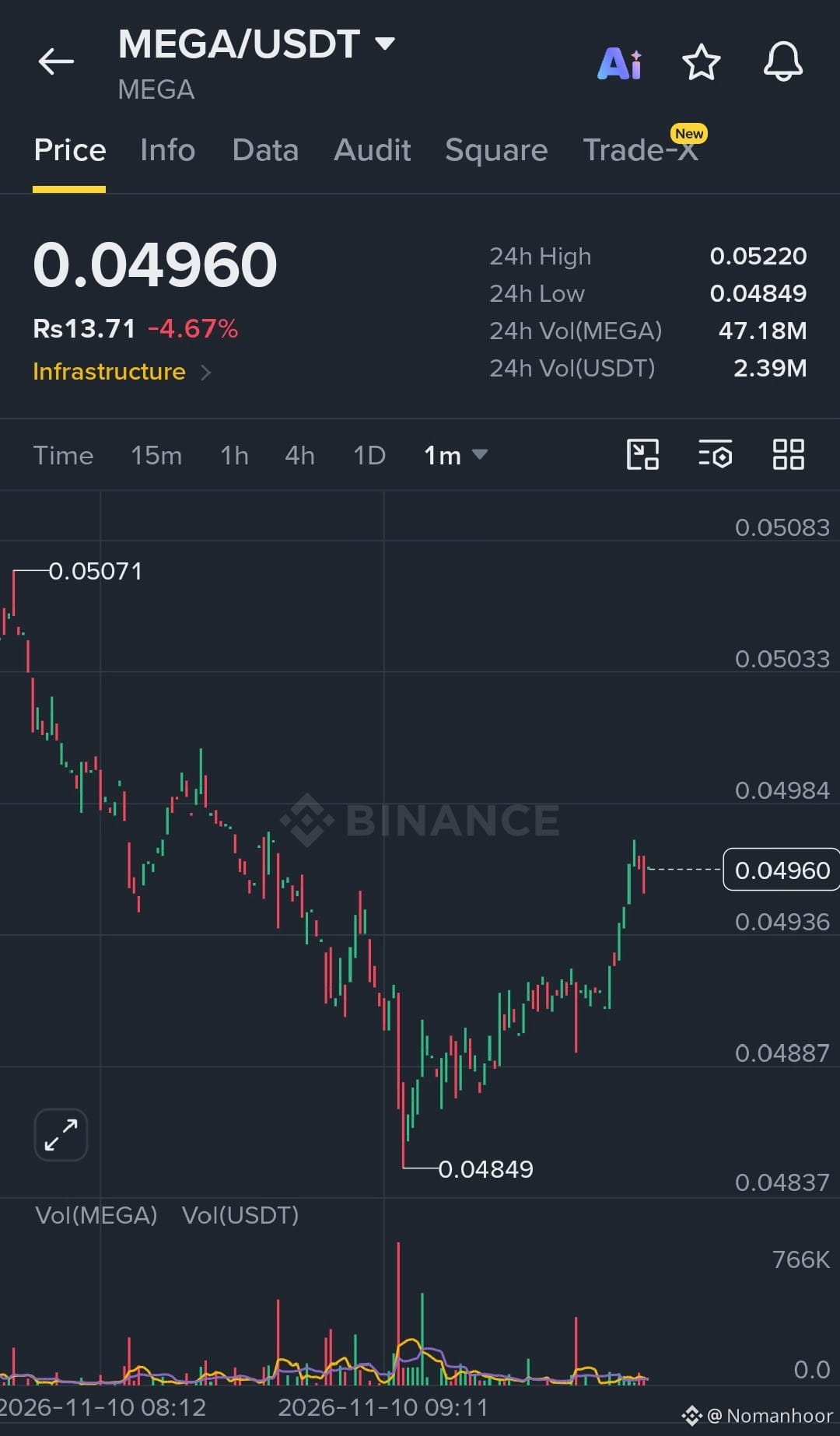
MegaETH ($MEGA ) trades at $0.0478, displaying heavy institutional technical accumulation after outperforming the broader smart contract sector with a strong 15% weekly rally. The real-time Layer 2 powerhouse continues to fortify its macro structural base.
From a high-frequency trading perspective, volatility is tightly wound around the $0.0450 support cluster. Demand is heavily anchored by the project's strategic shift toward first-party "$MEGA " applications and the highly anticipated launch of its Proximity Markets protocol, allowing network participants to lock up tokens to buy ultra-low latency sequencer seats. This creates a powerful usage-based supply sink. Over half of the fixed 10 billion total supply remains securely locked under KPI-based emission structures, effectively eliminating sudden unlock fatigue.
Trader Action Plan: Implement strict risk parameters. Defend immediate long positions with tight stop-losses set beneath the critical $0.0410 macro baseline. Target short-term upside breakout objectives toward structural overhead resistance capping momentum at $0.0525.
#MegaETH #MEGA #cryptotradingpro #TechnicalAnalysis #Layer2
271

·
--
The MegaETH Foundation is rebranding as MEGA and putting $30 million from its existing treasury toward building a new product suite. Its first move targets an AI inference services marketplace launching in December.
Three things to watch:
1. All new products will be deployed on MegaETH. In effect, the project is funding real-world use cases and on-chain demand for its own L2 out of pocket. The narrative is shifting from “competing on scaling performance” to “delivering on ecosystem adoption.”
2. The inference marketplace aims to let developers switch freely between different inference providers, using price competition to lower AI compute costs and directly address vendor lock-in and high inference fees. However, the supported models, provider list, and specific operating rules won’t be revealed until launch.
3. The funding comes from the existing treasury, not new fundraising, and the role of the MEGA token in the inference marketplace has not yet been disclosed. How the token’s utility expands will directly affect how substantial this transformation proves to be.
Competition in the L2 space has long since moved beyond comparing only TPS and gas fees. The projects that can get applications running for real and keep users and capital on-chain are the ones that will earn a ticket to the next round. This December debut is worth watching closely.
#MegaETH #Layer2 #AI Crypto
4

·
--
A public-chain team stepping in to build applications is a move worth examining.
The MegaETH Foundation has officially rebranded as MEGA and allocated $30 million from its existing treasury to develop new products. Its first product is an AI inference services marketplace slated to launch in December. The approach is straightforward: make it easy for developers to switch between different inference providers, using freedom of choice to drive price competition among providers.
A few key observations:
1. All new products will run on MegaETH. The idea is to lock in transaction volume for the Layer 2 network through real-world applications, rather than relying solely on ecosystem narratives;
2. The marketplace’s operating model, supported models, and list of providers will all be announced at launch. This suggests partnership negotiations are still underway, and future announcements could provide ongoing catalysts;
3. MEGA’s token has been explicitly identified as needing broader utility, but it remains unclear whether it will be used for payments, staking, or governance in the inference marketplace. This will directly determine the long-term demand underpinning the token.
For developers, having another inference portal where they can compare prices and switch providers freely is a good thing. For the industry, this is another real-world example of AI inference being combined with on-chain settlement. We’ll find out in December whether it works.
#MegaETH #AI推理 #Layer2
Log in to explore more content
Join global crypto users on Binance Square
⚡️ Get latest and useful information about crypto.
💬 Trusted by the world’s largest crypto exchange.
👍 Discover real insights from verified creators.
Email / Phone number
Trending Topics
1
#A Packed Week of Earnings and Data Tests Markets
75,592 views
469 Discussing
2
#AnthropicIPOTestsInvestorAppetiteForAI
146,950 views
1,604 Discussing
3
#NvidiaBoardNotConsideringHuang’sReturnasCEO
7,865 views
149 Discussing
4
#WhatInvestmentSignalsDo13FFilingsReveal?
4,861 views
104 Discussing
5
#InvescoStablecoinReservesFundLaunchesOnEthereum
1,471 views
49 Discussing
6
#CypherpunkReports$306MQ3NetProfit
559 views
9 Discussing
7
#OPTIMJACKAttackInfectsAtLeast186Websites
3,587 views
79 Discussing
8
#StrategySells2.09MMSTRSharesFor$244.7M
1,790 views
17 Discussing
9
#StablecoinMarketShrinksAtFastestPaceSinceTerraLuna
5,039 views
55 Discussing
10
#BitcoinExtendsLosingStreakToSixWeeks
114,199 views
821 Discussing