
#kitebbw
kitebbw
286,168 views
1,303 Discussing
Hot
Latest

·
--
The intersection of AI and blockchain is where the next massive wave of innovation is happening. Kite AI is perfectly positioned to capture this momentum. I've been diving deep into their ecosystem recently, and the architecture they are building is truly next-level. Strong community, clear vision, and great execution so far. I am definitely holding onto my $KITE and watching closely as they hit their roadmap milestones. The future of decentralized AI is here! 🚀 #KiteBBW
The intersection of AI and blockchain is where the next massive wave of innovation is happening. Kite AI is perfectly positioned to capture this momentum. I've been diving deep into their ecosystem recently, and the architecture they are building is truly next-level. Strong community, clear vision, and great execution so far. I am definitely holding onto my $KITE and watching closely as they hit their roadmap milestones. The future of decentralized AI is here! 🚀 #KiteBBW
184
·
--
🚀 Kite is a project worth keeping on your radar! With growing interest in blockchain innovation and the future of Web3, $KITE is becoming an interesting name to watch.
The crypto space moves fast, and projects that focus on innovation, utility, and community engagement deserve attention. Excited to see what comes next for Kite! 🔥
#KiteBBW $KITE #KİTE #crypto #Web3 #blockchain
The crypto space moves fast, and projects that focus on innovation, utility, and community engagement deserve attention. Excited to see what comes next for Kite! 🔥
#KiteBBW $KITE #KİTE #crypto #Web3 #blockchain
69

·
--
Just a quick thought on the whole AI + crypto narrative. We keep talking about how smart AI models are getting, but what's the point if they can't execute tasks that require payments?
If I want my AI assistant to book a flight, buy data, or trade, it needs its own wallet and a network to run on. This is exactly what $KITE is solving. They are creating a foundational L1 blockchain that lets AI agents work and transact securely using stablecoins. It makes total sense that AI will eventually be the biggest users of crypto micro-transactions. Really excited to see how the Kite ecosystem grows from here. #KiteBBW
If I want my AI assistant to book a flight, buy data, or trade, it needs its own wallet and a network to run on. This is exactly what $KITE is solving. They are creating a foundational L1 blockchain that lets AI agents work and transact securely using stablecoins. It makes total sense that AI will eventually be the biggest users of crypto micro-transactions. Really excited to see how the Kite ecosystem grows from here. #KiteBBW
1
134

·
--
$KITE has a ~1.11B token unlock coming up. Trackers disagree on the exact date (somewhere between Nov 1 and Nov 3), so I won’t pretend to know the hour. Here’s a back-of-the-napkin look at what it means.
That’s roughly +43-46% on top of what’s already circulating. At ~$0.12 it’s about $131M. Daily volume on Kite is $11-17M, so the unlock is 8-12x a normal trading day.
Obviously not all of it gets sold. If 10% hits the market, that’s 111M tokens, ~$13M, about one day of volume. The market can absorb that. At 30% it’s ~$40M, or 2-4 days of total volume with no new buyers, and that’s where price can get shaken properly.
So “pump or dump” isn’t the interesting question for me. What I care about more is whether @GoKiteAI gets real usage that doesn’t depend on the unlock calendar. ATH was $0.32 in March, now we’re around $0.12, almost a 2.7x gap, and only demand closes that, not headlines.
I’m not adding before the unlock. Want to see how day one reacts first. Not financial advice.
#KiteBBW
$KITE has a ~1.11B token unlock coming up. Trackers disagree on the exact date (somewhere between Nov 1 and Nov 3), so I won’t pretend to know the hour. Here’s a back-of-the-napkin look at what it means.
That’s roughly +43-46% on top of what’s already circulating. At ~$0.12 it’s about $131M. Daily volume on Kite is $11-17M, so the unlock is 8-12x a normal trading day.
Obviously not all of it gets sold. If 10% hits the market, that’s 111M tokens, ~$13M, about one day of volume. The market can absorb that. At 30% it’s ~$40M, or 2-4 days of total volume with no new buyers, and that’s where price can get shaken properly.
So “pump or dump” isn’t the interesting question for me. What I care about more is whether @KITE AI 中文 gets real usage that doesn’t depend on the unlock calendar. ATH was $0.32 in March, now we’re around $0.12, almost a 2.7x gap, and only demand closes that, not headlines.
I’m not adding before the unlock. Want to see how day one reacts first. Not financial advice.
#KiteBBW
274

·
--
Bullish
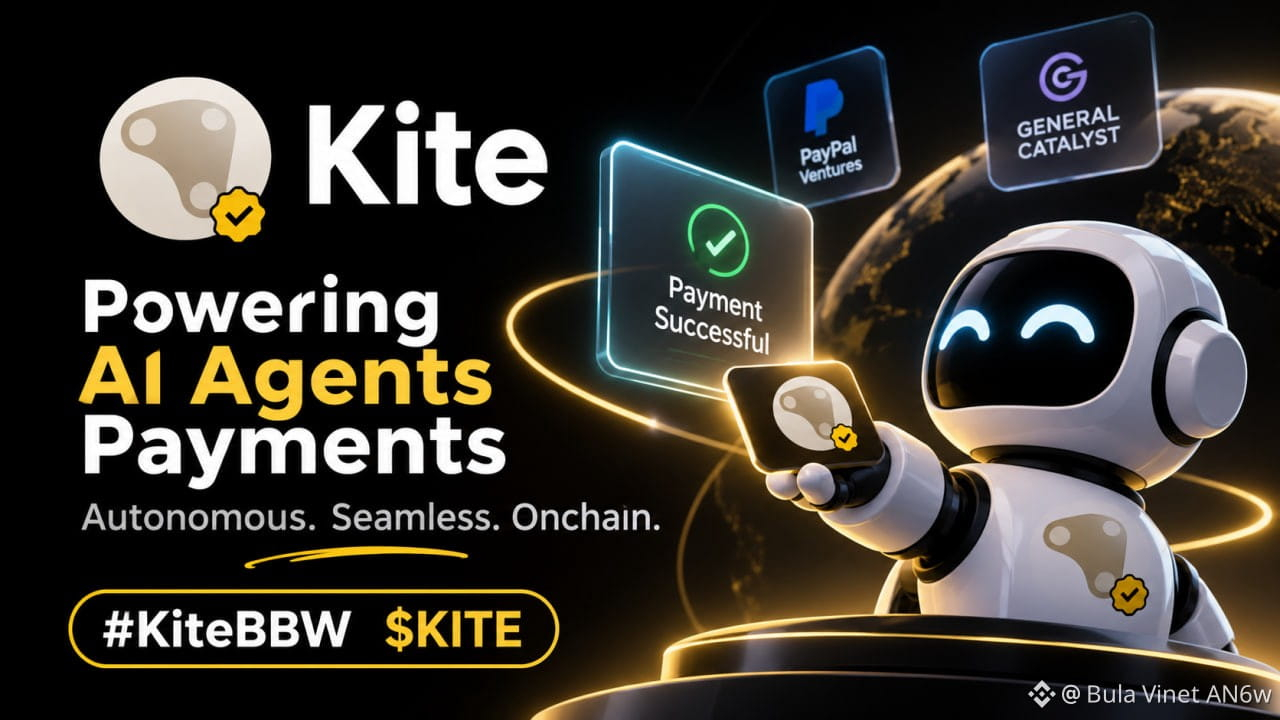
🌐 The future of digital payments is becoming more autonomous, and Kite is helping make it happen.
AI agents need more than intelligence - they need the ability to transact, interact, and operate independently. That's exactly what Kite is building: a payment infrastructure designed for the next generation of AI-powered applications.
I'm excited to see how this ecosystem evolves and what new opportunities it will unlock.
#KiteBBW $KITE
157

·
--
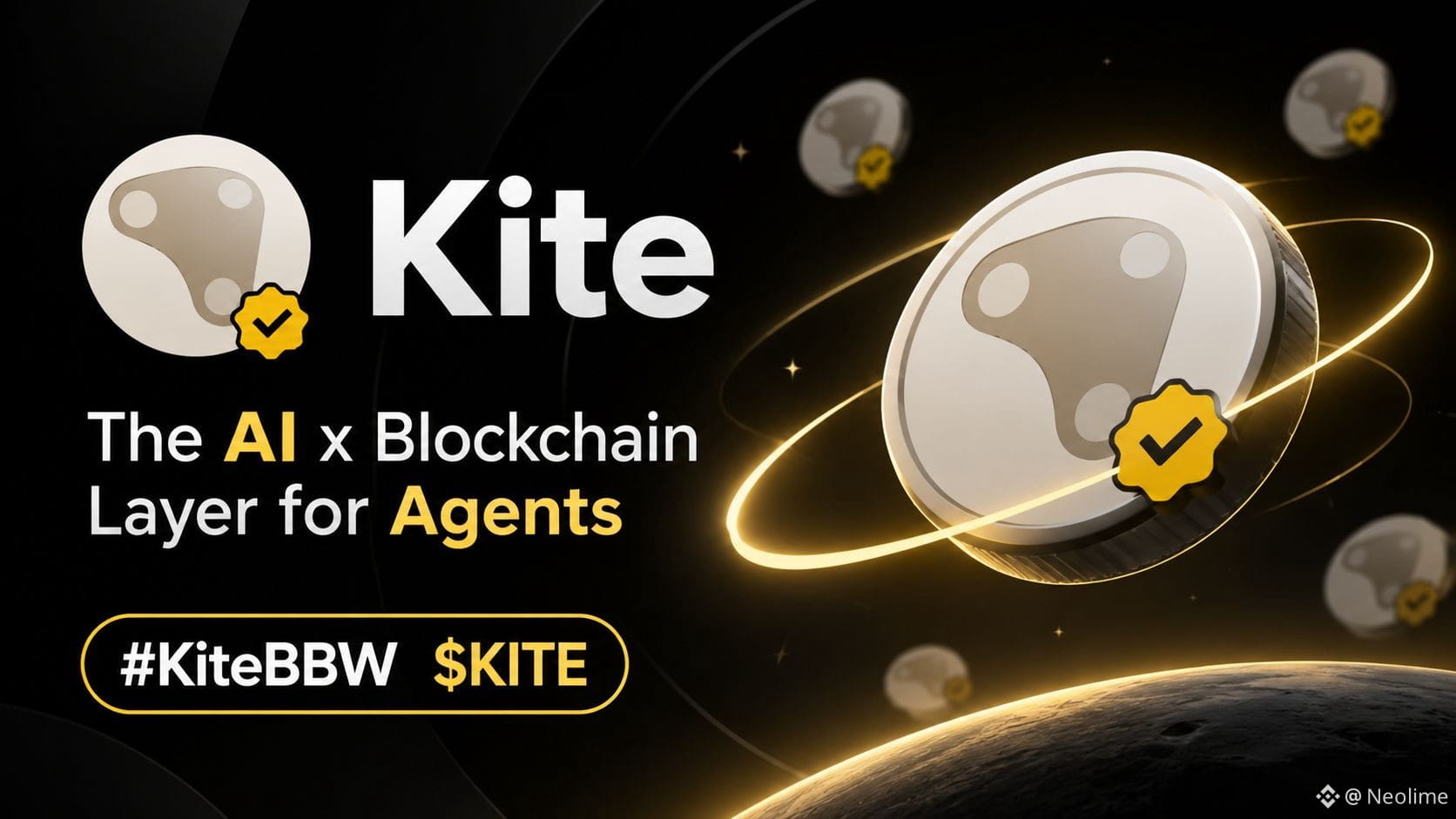
Kite is building a next-generation payment infrastructure designed specifically for AI agents, enabling them to make payments and interact with financial services autonomously.
With the support of major investors like PayPal Ventures and General Catalyst, Kite is taking an important step toward a future where AI agents can do more than just complete tasks - they can independently manage financial transactions.
I'm also looking forward to exploring the Kite ecosystem and trying out the Kite Agent Passport!
#KiteBBW $KITE
171

·
--
AI agents are becoming more than just tools for answering questions. The next big step is allowing them to perform real tasks, interact with other agents and make payments independently. But this requires trust, security and clear permission management. That's exactly the direction Kite is working toward, and I think this infrastructure could become an important part of the future digital economy. 🪁
#KiteBBW $KITE
#KiteBBW $KITE
95


·
--
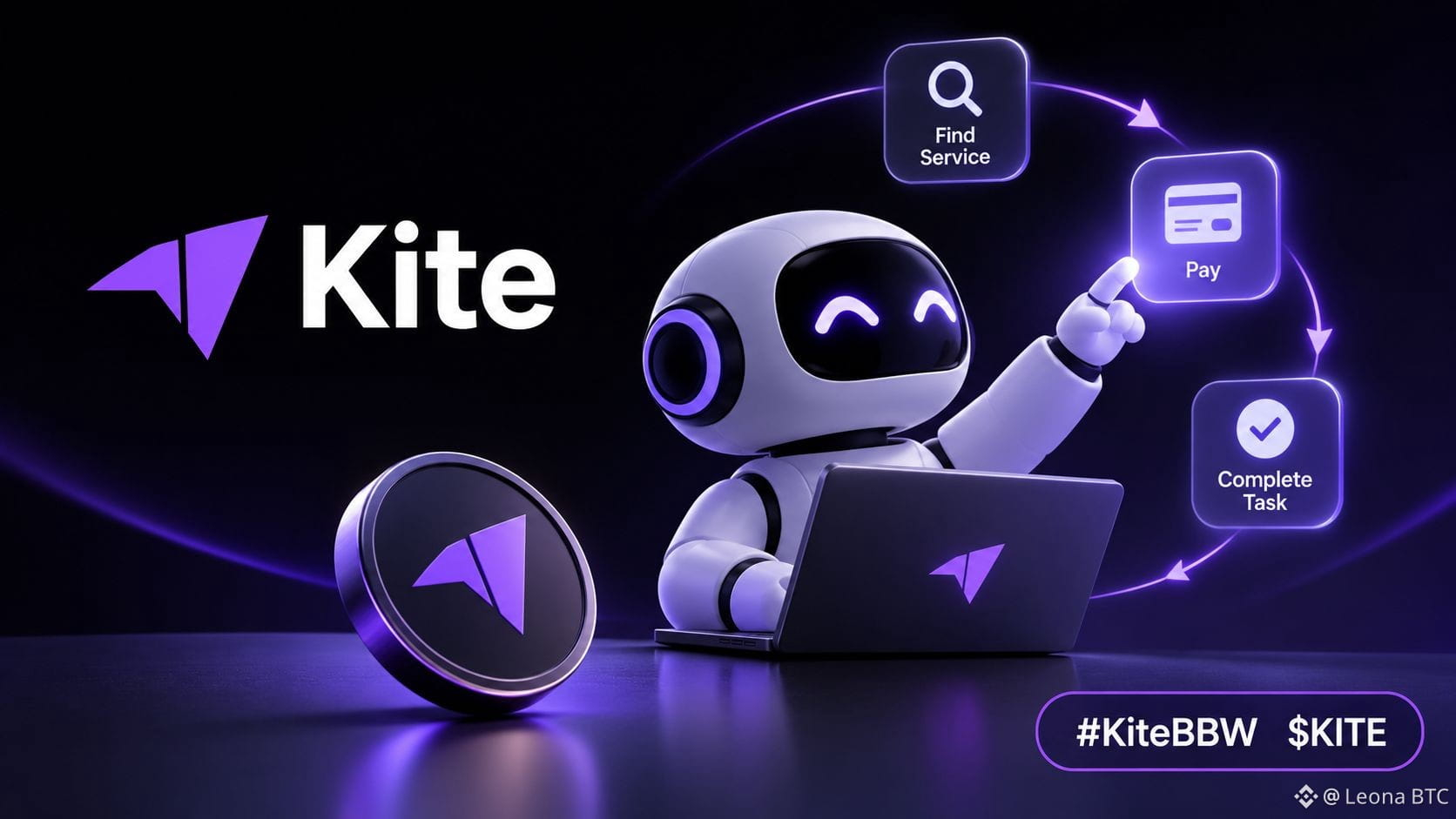
The next big shift in AI might not be how smart agents become, but how independently they can operate.
Think about it.
An AI agent that can find a service, pay for it, complete a task, and move on without waiting for a human at every step.
That’s where @GoKiteAI caught my attention.
The agent economy needs more than intelligence. It needs infrastructure that allows agents to interact, transact, and actually get things done.
If that becomes the norm, we could be looking at a whole new layer of digital activity.
And that’s why I’m keeping an eye on $KITE .
The agent economy is still early, but the direction is interesting.
#KiteBBW #KİTE
The next big shift in AI might not be how smart agents become, but how independently they can operate.
Think about it.
An AI agent that can find a service, pay for it, complete a task, and move on without waiting for a human at every step.
That’s where @KITE AI 中文 caught my attention.
The agent economy needs more than intelligence. It needs infrastructure that allows agents to interact, transact, and actually get things done.
If that becomes the norm, we could be looking at a whole new layer of digital activity.
And that’s why I’m keeping an eye on $KITE .
The agent economy is still early, but the direction is interesting.
#KiteBBW #KİTE
Cavil Zevran:
The interesting part is agents completing entire workflows, not just individual tasks. That's where Kite could stand out.
18
2
22
5k

·
--
I've been closely following the developments around Kite AI, and I am genuinely impressed by what they are building in the Web3 space. The integration of artificial intelligence with decentralized technology is exactly what the industry needs right now to push boundaries. The community is growing fast, and the future potential of $KITE looks incredibly promising. This is definitely a project worth keeping an eye on as they continue to innovate and expand their ecosystem. Exciting times ahead for everyone involved! 🚀 #KiteBBW
I've been closely following the developments around Kite AI, and I am genuinely impressed by what they are building in the Web3 space. The integration of artificial intelligence with decentralized technology is exactly what the industry needs right now to push boundaries. The community is growing fast, and the future potential of $KITE looks incredibly promising. This is definitely a project worth keeping an eye on as they continue to innovate and expand their ecosystem. Exciting times ahead for everyone involved! 🚀 #KiteBBW
LinhInsights:
The combination of AI and Web3 has huge potential, especially when it moves beyond ideas into real-world applications. Looking forward to seeing how Kite continues to develop its ecosystem!
1
194

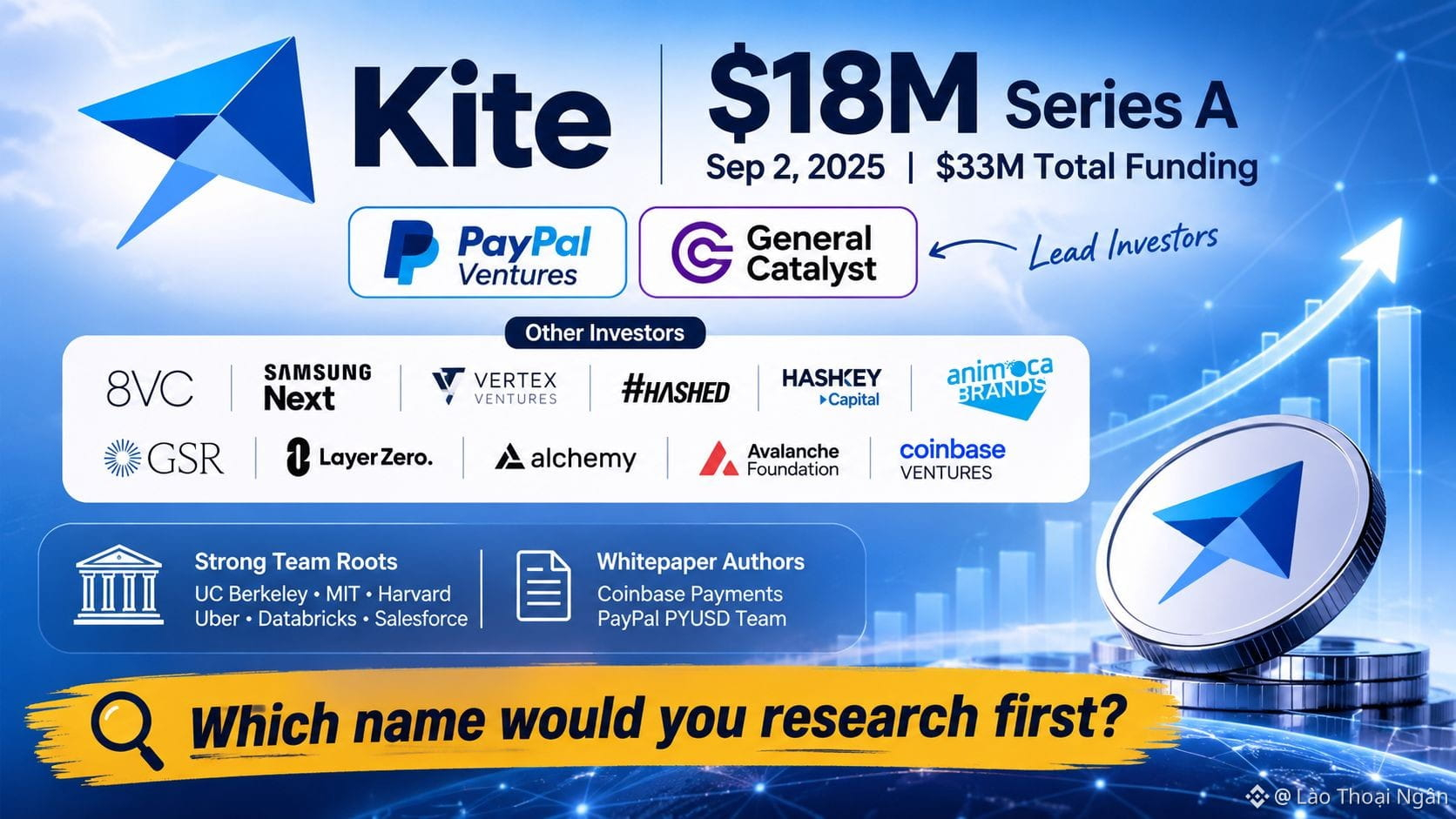
Two names sit at the top of Kite's Series A: PayPal Ventures and General Catalyst. The round was $18 million, announced on September 2, 2025, and it lifted total funding to $33 million.
The rest of the list reads like a map of where agent payments have to work. 8VC, Samsung Next, Vertex Ventures, Hashed, HashKey Capital, Animoca Brands, GSR, LayerZero, Alchemy and the Avalanche Foundation joined, and Coinbase Ventures participated as well. Kite was formerly Zettablock. The team has roots at UC Berkeley, MIT, Harvard, Uber, Databricks and Salesforce, and the whitepaper's author list includes people from Coinbase's payments group and PayPal's PYUSD team.
PayPal Ventures partner Alan Du pointed to payments as the technical gap Kite exists to close. Capital is not adoption, and nobody should treat it as proof. It does show who is paying attention.
Tell me which name on that list you would research first.
#KiteBBW $KITE
{spot}(KITEUSDT)
Two names sit at the top of Kite's Series A: PayPal Ventures and General Catalyst. The round was $18 million, announced on September 2, 2025, and it lifted total funding to $33 million.
The rest of the list reads like a map of where agent payments have to work. 8VC, Samsung Next, Vertex Ventures, Hashed, HashKey Capital, Animoca Brands, GSR, LayerZero, Alchemy and the Avalanche Foundation joined, and Coinbase Ventures participated as well. Kite was formerly Zettablock. The team has roots at UC Berkeley, MIT, Harvard, Uber, Databricks and Salesforce, and the whitepaper's author list includes people from Coinbase's payments group and PayPal's PYUSD team.
PayPal Ventures partner Alan Du pointed to payments as the technical gap Kite exists to close. Capital is not adoption, and nobody should treat it as proof. It does show who is paying attention.
Tell me which name on that list you would research first.
#KiteBBW $KITE
LinhInsights:
PayPal Ventures stands out to me first, especially given Kite’s focus on agent payments. That connection is worth exploring!
1
225

·
--
Verified
What if AI can do much more than just answer questions? 👀
Most people probably think AI can only answer questions and search for information)
But what if I told you there are AI agents that can actually perform tasks and interact with each other?
Sounds interesting, right?
For this to work, agents need infrastructure that allows them to coordinate and interact. While researching projects in this space, I came across @GoKiteAI .
So, what is it?
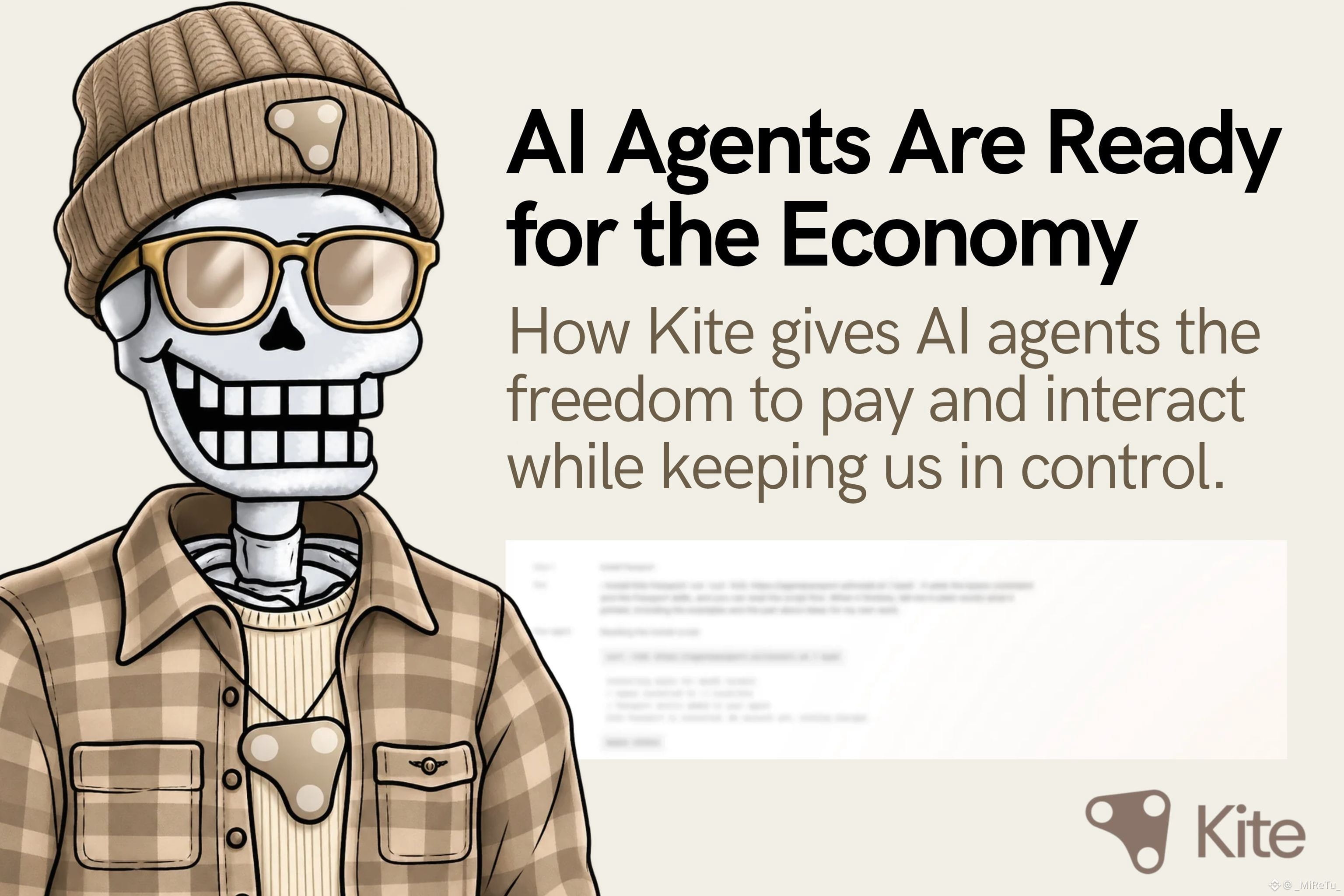
As far as I understood, Kite allows AI agents to make payments and interact with services on their own, but still under our control.
Each agent gets its own Agent Passport, which gives it an identity and limited payment authority that we define ourselves.
We simply approve a session with a budget, a per-transaction limit and an expiration time. After that, the agent can pay for services, APIs, data or computing within those limits.
And if something goes wrong, the potential damage is limited to that specific session, not our entire balance.
Pretty cool, right? We don't just give an agent a wallet and pray for the best. We make its autonomy controllable.
I think this could help AI agents become real participants in the economy, paying each other and services without requiring us to approve every single transaction or giving them unlimited access.
Of course, only time will tell if this becomes a standard. But the problem Kite is trying to solve is real, and I think they're moving in the right direction.
I also tested it myself, and honestly, the setup can be quite difficult if you're new to this. I had some trouble too.
Luckily, I found agentpassport.ai and things became much clearer. I managed to set everything up)
---
Of course, I'm not recommending anything to anyone. This post is purely for informational purposes. 😅
#KiteBBW $KITE
{spot}(KITEUSDT)
What if AI can do much more than just answer questions? 👀
Most people probably think AI can only answer questions and search for information)
But what if I told you there are AI agents that can actually perform tasks and interact with each other?
Sounds interesting, right?
For this to work, agents need infrastructure that allows them to coordinate and interact. While researching projects in this space, I came across @KITE AI 中文 .
So, what is it?
As far as I understood, Kite allows AI agents to make payments and interact with services on their own, but still under our control.
Each agent gets its own Agent Passport, which gives it an identity and limited payment authority that we define ourselves.
We simply approve a session with a budget, a per-transaction limit and an expiration time. After that, the agent can pay for services, APIs, data or computing within those limits.
And if something goes wrong, the potential damage is limited to that specific session, not our entire balance.
Pretty cool, right? We don't just give an agent a wallet and pray for the best. We make its autonomy controllable.
I think this could help AI agents become real participants in the economy, paying each other and services without requiring us to approve every single transaction or giving them unlimited access.
Of course, only time will tell if this becomes a standard. But the problem Kite is trying to solve is real, and I think they're moving in the right direction.
I also tested it myself, and honestly, the setup can be quite difficult if you're new to this. I had some trouble too.
Luckily, I found agentpassport.ai and things became much clearer. I managed to set everything up)
---
Of course, I'm not recommending anything to anyone. This post is purely for informational purposes. 😅
#KiteBBW $KITE
LinhInsights:
Giving AI agents autonomy without sacrificing control is what makes Kite interesting. Secure, limited payment permissions could be a big step toward a real agent economy.
1
1
438

·
--
AI projects are gradually changing the way we interact with the crypto market. But the real potential emerges when artificial intelligence becomes more than just a tool — it becomes an active assistant.
That's one of the reasons I'm interested in @GoKiteAI. The project is building an ecosystem where AI agents can interact with Web3 and make various tasks easier and more accessible.
I'm especially curious to see how this technology develops and what new opportunities it can bring to the crypto space.
The combination of AI and blockchain is definitely worth watching. 🪁
#KiteBBW $KITE
LinhInsights:
I’m most interested in how AI agents can move beyond assistance and handle real Web3 tasks securely. That’s where the combination of AI and blockchain could become truly useful.
1
1
159

·
--
Artificial intelligence is gradually becoming part of the crypto market, and it’s interesting to see how these two industries are evolving together.
Kite is one of the projects worth keeping an eye on. What I find particularly interesting is the idea of combining AI agents with blockchain technology and creating new ways to use artificial intelligence.
I believe there is still a lot to come. The important thing is not just to follow trends, but to understand which technologies can actually make a difference.
#KiteBBW $KITE
LinhInsights:
The key will be moving beyond the AI + crypto narrative and proving real-world utility. I’m curious to see which practical use cases Kite can bring to life.
3
1
377

The Future of AI Isn't Just About Intelligence — It's About ACTION.
We're entering a new era where AI agents won't simply answer questions; they'll execute tasks, interact with systems, coordinate with other agents, and create real economic value.
That's where Kite comes into the picture. 🪁
Kite is building toward an agent-powered economy where autonomous AI agents can operate, collaborate, and participate in digital commerce.
Imagine a future where:
🔹 AI agents can independently complete complex tasks.
🔹 Different agents collaborate to solve real-world problems.
🔹 Developers can build new services around autonomous agents.
🔹 Trust, identity, and accountability become essential foundations for the agent economy.
The biggest opportunity isn't simply creating smarter AI models. It's building the infrastructure that allows AI agents to become useful economic participants.
I believe the agent economy could become one of the most important developments in Web3 and AI.
And projects like Kite deserve attention as this ecosystem evolves.
The question is no longer whether AI agents will change the internet.
The real question is: Who will build the infrastructure powering this new economy?
What's your vision for the future of autonomous AI agents?
Let's discuss! 👇
#KiteBBW $KITE @GoKiteAI
The Future of AI Isn't Just About Intelligence — It's About ACTION.
We're entering a new era where AI agents won't simply answer questions; they'll execute tasks, interact with systems, coordinate with other agents, and create real economic value.
That's where Kite comes into the picture. 🪁
Kite is building toward an agent-powered economy where autonomous AI agents can operate, collaborate, and participate in digital commerce.
Imagine a future where:
🔹 AI agents can independently complete complex tasks.
🔹 Different agents collaborate to solve real-world problems.
🔹 Developers can build new services around autonomous agents.
🔹 Trust, identity, and accountability become essential foundations for the agent economy.
The biggest opportunity isn't simply creating smarter AI models. It's building the infrastructure that allows AI agents to become useful economic participants.
I believe the agent economy could become one of the most important developments in Web3 and AI.
And projects like Kite deserve attention as this ecosystem evolves.
The question is no longer whether AI agents will change the internet.
The real question is: Who will build the infrastructure powering this new economy?
What's your vision for the future of autonomous AI agents?
Let's discuss! 👇
#KiteBBW $KITE @KITE AI 中文
LinhInsights:
The real breakthrough will be when AI agents can take action safely and reliably, not just complete tasks. Trust and accountability will be key to making that future work.
1
15
378

·
--
Kite caught my attention because AI agents are becoming more than just tools — they are starting to become independent participants in the digital economy. 🪁
What makes this direction interesting is the idea of giving AI agents the ability to interact, coordinate and operate within an ecosystem without constant human involvement.
I’m curious to see how far this technology can go and what real-world use cases will emerge next. The AI + crypto combination still has plenty of room to grow!
Following @GoKiteAi and keeping an eye on the project. 🚀
#KiteBBW $KITE
LinhInsights:
The real test will be seeing AI agents handle useful real-world tasks securely and independently. That’s the part of Kite I’m most curious to follow.
1
127

·
--
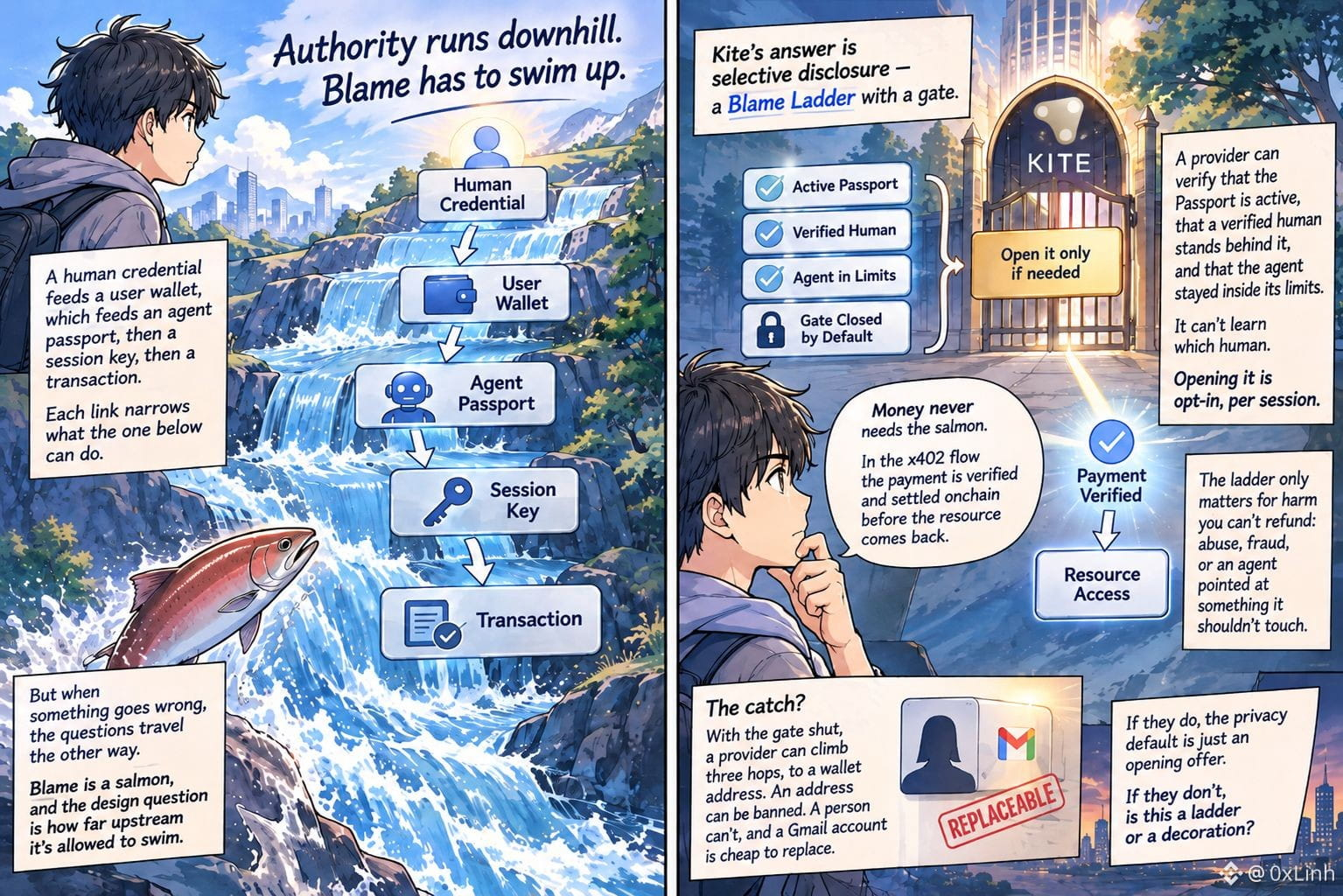
Authority runs downhill. Blame has to swim up.
That’s how I ended up reading Kite Passport. A human credential feeds a user wallet, which feeds an agent passport, then a session key, then a transaction. Each link narrows what the one below it can do, like a river splitting into streams until a session dries up the moment its scope is spent.
But when something goes wrong, the questions travel the other way. Who sent this? Who’s behind it? Blame is a salmon, and the design question is how far upstream it’s allowed to swim. Four hops separate a transaction from a human, and the last hop is the one that matters.
Kite’s answer is selective disclosure, and I think of it as a Blame Ladder with a gate. A provider can verify that the Passport is active, that a verified human stands behind it, and that the agent stayed inside its limits. It can’t learn which human. The gate is shut by default. Opening it is opt-in, per session.
Money never needs the salmon. In the x402 flow the payment is verified and settled onchain before the resource comes back. The ladder only matters for harm you can’t refund: abuse, fraud, an agent pointed at something it shouldn’t touch.
Here’s what stopped me. With the gate shut, a provider can climb three hops, to a wallet address. An address can be banned. A person can’t, and a Gmail account, the deep dive’s own example of a verified human, is cheap to replace. So the ladder ends at a pond, and a person can dig another one.
I won’t judge this by how many Passports exist. I’d watch who controls the gate, what forces it open, and whether providers in regulated categories refuse to serve a shut one.
If they do, the privacy default is just an opening offer. If they don’t, is this a ladder or a decoration?
$KITE
#KiteBBW ⭐️
LinhInsights:
The real test is what happens when accountability requires identity disclosure. Privacy by default matters, but the rules for opening that gate matter just as much.
1
1
133

·
--
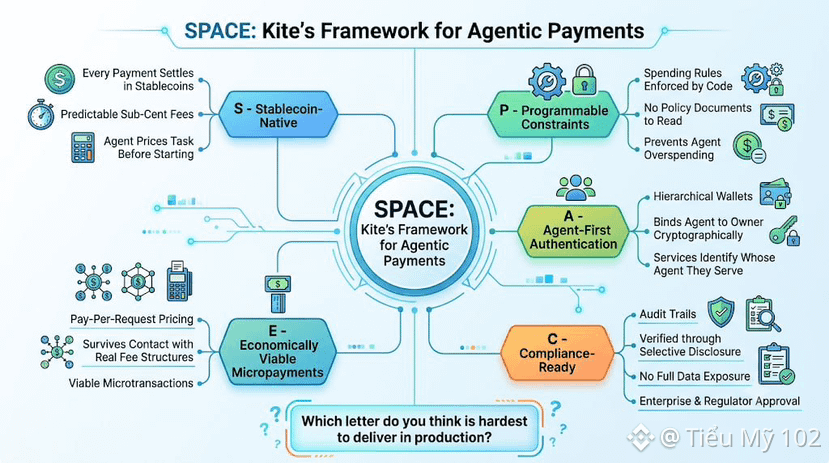
Five letters, five requirements, and one test for any project that claims to serve agents. Kite's whitepaper calls it SPACE.
S stands for stablecoin-native. Every payment settles in stablecoins with predictable sub-cent fees, so an agent can price a task before it starts.
P is for programmable constraints: spending rules enforced by code rather than by a policy document nobody reads.
Agent-first authentication takes the A, meaning hierarchical wallets that bind each agent to its owner cryptographically.
C means compliance-ready, with audit trails that can be verified through selective disclosure instead of full exposure.
E closes the set with economically viable micropayments, meaning pay-per-request pricing that survives contact with real fee structures.
Drop any one and the system leaks. Without S, costs wobble. Without P, a hallucinating agent can overspend. Without A, services cannot tell whose agent they are serving. Without C, enterprises and regulators walk away. Without E, per-call pricing stays a slide in a pitch deck.
Which letter do you think is hardest to deliver in production?
#KiteBBW $KITE
LinhInsights:
I’d say C is the hardest. Building verifiable audit trails while protecting user privacy and meeting compliance requirements is a difficult balance in real-world deployments.
1
1
147

·
--
AI agents need more than the ability to process information. They need a secure way to operate, communicate and exchange value.
That's what makes @GoKiteAI an interesting project to me.
With Agent Passport, each agent can have its own identity and wallet, while users maintain control over permissions and access to their funds.
Kite Chain adds the transaction layer, allowing agents to interact with services and carry out activities on-chain.
The bigger picture is an AI ecosystem where agents can do more than generate answers — they can actually get things done.
$KITE #KiteBBW @GoKiteAI
AI agents need more than the ability to process information. They need a secure way to operate, communicate and exchange value.
That's what makes @KITE AI 中文 an interesting project to me.
With Agent Passport, each agent can have its own identity and wallet, while users maintain control over permissions and access to their funds.
Kite Chain adds the transaction layer, allowing agents to interact with services and carry out activities on-chain.
The bigger picture is an AI ecosystem where agents can do more than generate answers — they can actually get things done.
$KITE #KiteBBW @KITE AI 中文
LinhInsights:
Giving agents their own identity and wallet while keeping users in control is a practical approach. That’s what could turn AI from a helpful tool into an active participant in Web3.
1
2
140
·
--
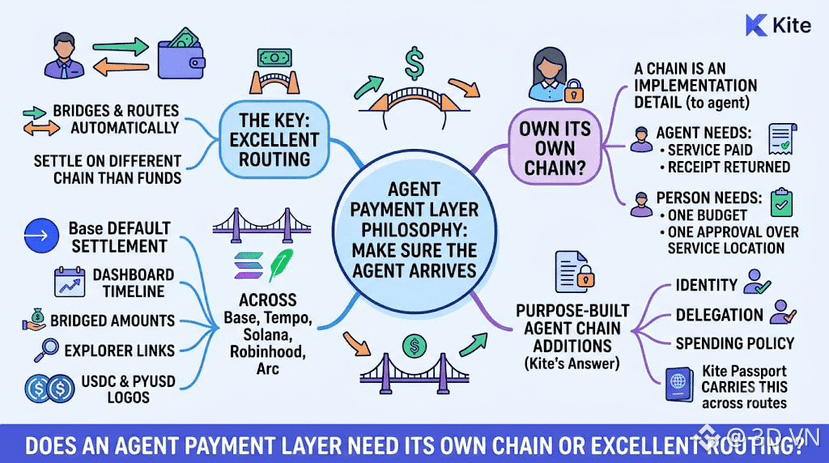
A payments layer for agents does not have to own the road. It has to make sure the agent arrives.
Kite Passport's release notes show that philosophy at work. Since July 2026, an x402 payment can settle on a different chain than the one holding your funds: Passport bridges and routes automatically across Base, Tempo and Solana, and Base is now the default settlement chain. The dashboard draws a route timeline for each routed payment, with bridged amounts, explorer links and token logos for USDC and PYUSD. Later releases added Robinhood Chain support and Arc mainnet.
To an agent, a chain is an implementation detail. It needs a service paid and a receipt returned. To the person behind it, one budget and one approval should cover wherever the service happens to live.
If settlement happens on the most liquid networks, what does a purpose-built agent chain add? Kite's answer centers on identity, delegation and spending policy, the layer Passport carries across every route it takes.
Does an agent payment layer need its own chain, or just excellent routing?
#KiteBBW $KITE
LinhInsights:
Excellent routing is essential, but identity and programmable permissions are what make the system agent-native. The chain should support the experience, not become the main selling point.
1
148

·
--
Partly True
Article
The Delegation Paradox: Why the Agent Economy Belongs to Infrastructure, Not Models1. The Real Bottleneck Is Authority, Not Intelligence
We are witnessing a fundamental shift in artificial intelligence aka Super Intelligence. Chatbots that merely answer prompts are giving way to autonomous agents capable of executing complex, multi-step workflows.
They purchase data feeds, reserve compute resources, and interact with external APIs independently. Yet, despite massive advances in model reasoning, agentic commerce remains largely stalled.
The core reason is simple: delegation requires boundaries.
A user will willingly ask an AI model to draft an essay or analyze a spreadsheet. However, they will not hand software unrestricted access to a bank account or private key. Traditional payment rails were engineered specifically for manual human authentication, relying on credit cards, recurring monthly subscriptions, and OTP verifications. Machine-to-machine commerce, by contrast, operates on sub-dollar micropayments, high transaction frequency, and pure programmatic execution.
As recent industry research highlights, while over 63% of merchants are actively exploring agentic commerce, only 19% currently possess the technical readiness to process automated machine payments. The primary obstacle is not machine intelligence; it is the underlying financial and permission layer.
2. Containment by Design: The 3-Tier Identity Architecture
To make financial delegation safe, permissions must be compartmentalized. Rather than granting an agent permanent custody of funds, Kite establishes a structured three-level identity hierarchy:
User Master Authority: The human owner retains root key custody, governance oversight, and emergency kill switches.Agent Passport: A programmable policy layer that enforces destination white-lists, daily spending caps, and approved asset types...Ephemeral Task Sessions: Isolated execution environments bound by explicit budget and time limits (for example, a maximum spend of $5.00 with a 12-hour expiration).
By isolating financial execution into temporary sandboxes, a compromised prompt or unexpected execution logic remains strictly contained within that single session, fully preserving the rest of the user’s wallet.
3. Protocol Agnosticism and Built-In Arbitration👀
Rather than forcing a proprietary payment standard, Kite’s Layer 1 infrastructure integrates directly with established machine payment protocols, including HTTP x402, Stripe’s Machine Payments Protocol (MPP), and Anthropic’s MCP.
This architecture allows agents to settle payments per request using native stablecoins, eliminating monthly subscription overhead.
Furthermore,
because autonomous transactions will inevitably encounter failed deliverables, bad prompts, or unfulfilled service requests, Kite incorporates a native escrow framework.
Funds remain locked during service execution, protected by a 48-hour seller response window and a 7-day neutral arbitration fallback. Systems built for real-world enterprise adoption must account for edge cases and errors rather than assuming flawless execution.
The Infrastructure Horizon
Ultimately, the transition toward an agentic economy will not be decided by who builds the smartest reasoning model, but by who solves the unglamorous problem of financial delegation.
As autonomous software shifts from passive advisory to active economic participation, security frameworks like Kite’s Agent Passport and native escrow resolution will separate viable machine payment rails from speculative experiments.
Real-world adoption will require time, and early network activity must translate into sustained developer integration. However, if machine-to-machine commerce is to scale safely, infrastructure built on containment, programmable boundaries, and deterministic arbitration will be the non-negotiable foundation.
Kudos to you if you did read all the way till here.
What permissions or safety boundaries do you view as non-negotiable before granting software direct financial agency?
comment down
#KiteBBW $KITE
The Delegation Paradox: Why the Agent Economy Belongs to Infrastructure, Not Models
1. The Real Bottleneck Is Authority, Not Intelligence
We are witnessing a fundamental shift in artificial intelligence aka Super Intelligence. Chatbots that merely answer prompts are giving way to autonomous agents capable of executing complex, multi-step workflows.
They purchase data feeds, reserve compute resources, and interact with external APIs independently. Yet, despite massive advances in model reasoning, agentic commerce remains largely stalled.
The core reason is simple: delegation requires boundaries.
A user will willingly ask an AI model to draft an essay or analyze a spreadsheet. However, they will not hand software unrestricted access to a bank account or private key. Traditional payment rails were engineered specifically for manual human authentication, relying on credit cards, recurring monthly subscriptions, and OTP verifications. Machine-to-machine commerce, by contrast, operates on sub-dollar micropayments, high transaction frequency, and pure programmatic execution.
As recent industry research highlights, while over 63% of merchants are actively exploring agentic commerce, only 19% currently possess the technical readiness to process automated machine payments. The primary obstacle is not machine intelligence; it is the underlying financial and permission layer.
2. Containment by Design: The 3-Tier Identity Architecture
To make financial delegation safe, permissions must be compartmentalized. Rather than granting an agent permanent custody of funds, Kite establishes a structured three-level identity hierarchy:
User Master Authority: The human owner retains root key custody, governance oversight, and emergency kill switches.Agent Passport: A programmable policy layer that enforces destination white-lists, daily spending caps, and approved asset types...Ephemeral Task Sessions: Isolated execution environments bound by explicit budget and time limits (for example, a maximum spend of $5.00 with a 12-hour expiration).
By isolating financial execution into temporary sandboxes, a compromised prompt or unexpected execution logic remains strictly contained within that single session, fully preserving the rest of the user’s wallet.
3. Protocol Agnosticism and Built-In Arbitration👀
Rather than forcing a proprietary payment standard, Kite’s Layer 1 infrastructure integrates directly with established machine payment protocols, including HTTP x402, Stripe’s Machine Payments Protocol (MPP), and Anthropic’s MCP.
This architecture allows agents to settle payments per request using native stablecoins, eliminating monthly subscription overhead.
Furthermore,
because autonomous transactions will inevitably encounter failed deliverables, bad prompts, or unfulfilled service requests, Kite incorporates a native escrow framework.
Funds remain locked during service execution, protected by a 48-hour seller response window and a 7-day neutral arbitration fallback. Systems built for real-world enterprise adoption must account for edge cases and errors rather than assuming flawless execution.
The Infrastructure Horizon
Ultimately, the transition toward an agentic economy will not be decided by who builds the smartest reasoning model, but by who solves the unglamorous problem of financial delegation.
As autonomous software shifts from passive advisory to active economic participation, security frameworks like Kite’s Agent Passport and native escrow resolution will separate viable machine payment rails from speculative experiments.
Real-world adoption will require time, and early network activity must translate into sustained developer integration. However, if machine-to-machine commerce is to scale safely, infrastructure built on containment, programmable boundaries, and deterministic arbitration will be the non-negotiable foundation.
Kudos to you if you did read all the way till here.
What permissions or safety boundaries do you view as non-negotiable before granting software direct financial agency?
comment down
#KiteBBW $KITE
LinhInsights:
Spending limits, approved destinations, and time-bound permissions are non-negotiable for me. An agent should only have the authority needed for the task, never unrestricted access to funds.
5
5
468
Log in to explore more content
Join global crypto users on Binance Square
⚡️ Get latest and useful information about crypto.
💬 Trusted by the world’s largest crypto exchange.
👍 Discover real insights from verified creators.
Email / Phone number
Trending Topics
1
#BinanceIncidentReport
22,597 views
475 Discussing
2
#BinanceReopensWithdrawalsForMoreAssets
128,125 views
1,695 Discussing
3
#BinanceHourlyDepositsExceedWithdrawals
61,710 views
774 Discussing
4
#USMidtermElections
865,731 views
4,591 Discussing
5
#AnthropicIPOPricedDownasInvestorsEye$1.5T
3,281 views
47 Discussing
6
#USOctoberNFP-AreRateCutsStillPossible
161,818 views
1,264 Discussing
7
#AppleReportsMixedResults
60,533 views
967 Discussing
8
#PalantirSlides3PercentOn$2BRevenue
5,100 views
46 Discussing
9
#FrenchAssemblyRejectsTwoCryptoExitTaxProposals
10,466 views
172 Discussing
10
#Nasdaq100EntersCorrection
14,302 views
191 Discussing