
#usdtvenezuela
usdtvenezuela
105,159 views
393 Discussing
Hot
Latest

·
--

Article
Venezuelan oil vs. Hormuz: the angle USDT P2P shouldn’t overlook📊 The headline that changed the game
From the U.S. diplomatic mission in Caracas, U.S. Secretary of Defense Pete Hegseth argued that the energy pact signed with Venezuela—announced last August—reduces the strategic importance of the Strait of Hormuz, the Iranian-controlled maritime passage that has been at the epicenter of the conflict that began in late February. In his view, Venezuelan crude would make this maritime corridor a less significant factor for Western industry.
Venezuelan oil vs. Hormuz: the angle USDT P2P shouldn’t overlook
📊 The headline that changed the game
From the U.S. diplomatic mission in Caracas, U.S. Secretary of Defense Pete Hegseth argued that the energy pact signed with Venezuela—announced last August—reduces the strategic importance of the Strait of Hormuz, the Iranian-controlled maritime passage that has been at the epicenter of the conflict that began in late February. In his view, Venezuelan crude would make this maritime corridor a less significant factor for Western industry.
From the U.S. diplomatic mission in Caracas, U.S. Secretary of Defense Pete Hegseth argued that the energy pact signed with Venezuela—announced last August—reduces the strategic importance of the Strait of Hormuz, the Iranian-controlled maritime passage that has been at the epicenter of the conflict that began in late February. In his view, Venezuelan crude would make this maritime corridor a less significant factor for Western industry.
29
·
--

Article
Venezuelan crude exports to the U.S. hit 2026 lows: the signal P2P is watching📊 A figure that kicked off the week with a stir
Venezuela’s oil market is back in the news. According to preliminary figures compiled by Bloomberg, shipments of domestic crude bound for U.S. refineries averaged 274,000 barrels per day in November through Wednesday the 18th, putting the monthly average on track to be the weakest of all 2026. The contrast is stark: in June, 717,000 barrels per day were shipped to that same market.
Weekly data from the U.S. Energy Information Administration (EIA) reinforce that picture: U.S. imports of Venezuelan crude nearly halved, to around 260,000 barrels per day. It’s not that the crude ran out or that the taps were shut off overnight; what changed was the math of transportation.
Venezuelan crude exports to the U.S. hit 2026 lows: the signal P2P is watching
📊 A figure that kicked off the week with a stir
Venezuela’s oil market is back in the news. According to preliminary figures compiled by Bloomberg, shipments of domestic crude bound for U.S. refineries averaged 274,000 barrels per day in November through Wednesday the 18th, putting the monthly average on track to be the weakest of all 2026. The contrast is stark: in June, 717,000 barrels per day were shipped to that same market.
Weekly data from the U.S. Energy Information Administration (EIA) reinforce that picture: U.S. imports of Venezuelan crude nearly halved, to around 260,000 barrels per day. It’s not that the crude ran out or that the taps were shut off overnight; what changed was the math of transportation.
37
·
--
Article
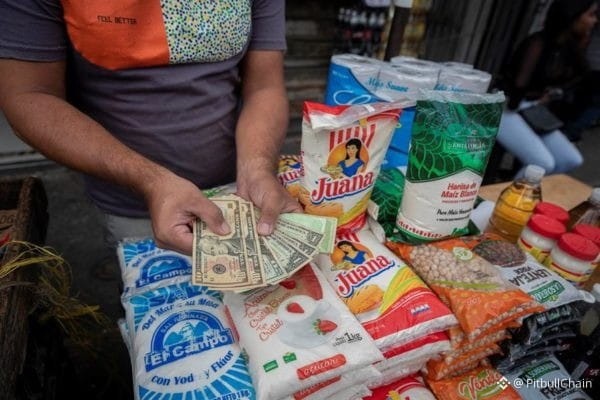
Economy at -14.2 and daily blackouts: Why Venezuelans won’t let go of USDTThe latest edition of Latam Pulse, the monthly survey conducted by Bloomberg and AtlasIntel in seven countries across the region, offered an uncomfortable portrait of Venezuela: eight out of ten respondents rate the country’s economic situation as bad, and three out of four disapprove of how the labor market is functioning. The consumer confidence index ended October in negative territory, at -14.2 points, and the component measuring current conditions plunged to -51.2.
However, the same study reveals a glimmer of optimism: the expectations indicator came in at +13.6, and 41% of respondents believe the economy will be better six months from now. That clash between a painful present and a future people hope will be better is, in practice, the same pulse that drives Venezuela’s P2P market every day.
Economy at -14.2 and daily blackouts: Why Venezuelans won’t let go of USDT
The latest edition of Latam Pulse, the monthly survey conducted by Bloomberg and AtlasIntel in seven countries across the region, offered an uncomfortable portrait of Venezuela: eight out of ten respondents rate the country’s economic situation as bad, and three out of four disapprove of how the labor market is functioning. The consumer confidence index ended October in negative territory, at -14.2 points, and the component measuring current conditions plunged to -51.2.
However, the same study reveals a glimmer of optimism: the expectations indicator came in at +13.6, and 41% of respondents believe the economy will be better six months from now. That clash between a painful present and a future people hope will be better is, in practice, the same pulse that drives Venezuela’s P2P market every day.
However, the same study reveals a glimmer of optimism: the expectations indicator came in at +13.6, and 41% of respondents believe the economy will be better six months from now. That clash between a painful present and a future people hope will be better is, in practice, the same pulse that drives Venezuela’s P2P market every day.
1
14
·
--
Article
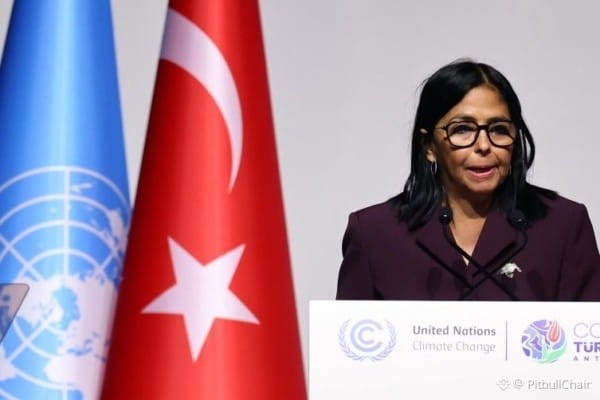
Rodríguez returns to the country as Hegseth’s visit looms: what’s at stake for USDT and the P2P dollarThe news spread via Telegram before any official statement: Acting President Delcy Rodríguez confirmed this Wednesday, November 18, that she had returned to the country after a trip that took her from the UN climate summit in Turkey to Qatar and, finally, the United Arab Emirates. Meanwhile, the Patria Digital channel reported the arrival of a senior U.S. official whom local media identified as Pentagon Secretary Pete Hegseth, in what would be his first visit since the events of January.
Rodríguez returns to the country as Hegseth’s visit looms: what’s at stake for USDT and the P2P dollar
The news spread via Telegram before any official statement: Acting President Delcy Rodríguez confirmed this Wednesday, November 18, that she had returned to the country after a trip that took her from the UN climate summit in Turkey to Qatar and, finally, the United Arab Emirates. Meanwhile, the Patria Digital channel reported the arrival of a senior U.S. official whom local media identified as Pentagon Secretary Pete Hegseth, in what would be his first visit since the events of January.
1
12
·
--

Article
Christmas supplies assured: hallacas are available, but USDT sets the priceMeetings between officials from the national Executive Branch and the Venezuelan Chamber of the Food Industry (Cavidea) reached a conclusion that sounds like a relief to consumers: the food, agribusiness, and retail supply chain reports high operating levels, and there is enough inventory to meet demand at year’s end. Put in everyday terms: hallacas, ham bread, and chicken salad are on the table, at least in terms of availability.
The Minister of Industries and National Trade, Luis Antonio Villegas, reiterated that the Executive Branch’s goal is to reach 100% of the industrial capacity of productive sectors, while Cavidea President Juvenal Arveláez stressed that the industry is working to ensure Venezuelans can get not only the items for their December holiday dinner, but any product they need. At PitbullChain, we don’t read this announcement simply as shelf news: we see it as a signal about prices, foreign currency flows, and P2P market behavior.
Christmas supplies assured: hallacas are available, but USDT sets the price
Meetings between officials from the national Executive Branch and the Venezuelan Chamber of the Food Industry (Cavidea) reached a conclusion that sounds like a relief to consumers: the food, agribusiness, and retail supply chain reports high operating levels, and there is enough inventory to meet demand at year’s end. Put in everyday terms: hallacas, ham bread, and chicken salad are on the table, at least in terms of availability.
The Minister of Industries and National Trade, Luis Antonio Villegas, reiterated that the Executive Branch’s goal is to reach 100% of the industrial capacity of productive sectors, while Cavidea President Juvenal Arveláez stressed that the industry is working to ensure Venezuelans can get not only the items for their December holiday dinner, but any product they need. At PitbullChain, we don’t read this announcement simply as shelf news: we see it as a signal about prices, foreign currency flows, and P2P market behavior.
The Minister of Industries and National Trade, Luis Antonio Villegas, reiterated that the Executive Branch’s goal is to reach 100% of the industrial capacity of productive sectors, while Cavidea President Juvenal Arveláez stressed that the industry is working to ensure Venezuelans can get not only the items for their December holiday dinner, but any product they need. At PitbullChain, we don’t read this announcement simply as shelf news: we see it as a signal about prices, foreign currency flows, and P2P market behavior.
2
396
·
--
Article
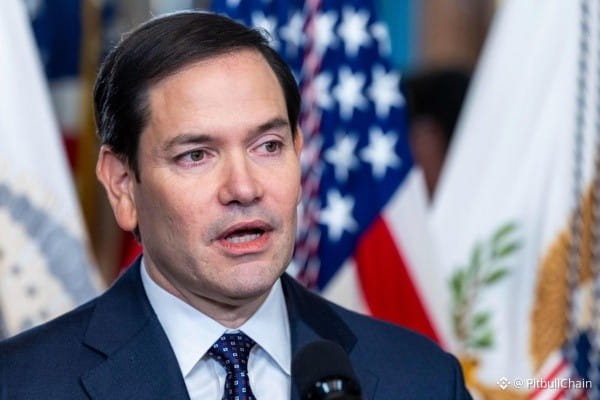
Justices in December: the political signal the P2P market is already pricing inVenezuela’s political calendar shifted once again, and, as is almost always the case, the first barometer isn’t found in government offices but at currency exchange desks. This Monday, November 9, U.S. Secretary of State Marco Rubio said that if the three-phase plan stays on track, the country should have new leadership at the Supreme Court of Justice by mid-December, and that shortly afterward it would be the National Electoral Council’s turn. According to him, these are two fundamental steps in the agreed roadmap.
Justices in December: the political signal the P2P market is already pricing in
Venezuela’s political calendar shifted once again, and, as is almost always the case, the first barometer isn’t found in government offices but at currency exchange desks. This Monday, November 9, U.S. Secretary of State Marco Rubio said that if the three-phase plan stays on track, the country should have new leadership at the Supreme Court of Justice by mid-December, and that shortly afterward it would be the National Electoral Council’s turn. According to him, these are two fundamental steps in the agreed roadmap.
33
·
--

Article
Portugal sets its sights on Venezuelan hotels: the P2P perspective📊 Interest arriving from Lisbon
Portugal’s recent visit by Minister of Economy and Territorial Cohesion Manuel Castro Almeida led to discussions that are now beginning to take concrete shape. Alberto Vieira, president of Venezuela’s National Hotel Federation (Fenahoven), confirmed that bilateral meetings were held with Portuguese hotel industry executives and that at least two Portuguese companies are considering investing in the country. The stated goal is simple to describe but complex to achieve: to connect the Venezuelan and Portuguese business communities.
Portugal sets its sights on Venezuelan hotels: the P2P perspective
📊 Interest arriving from Lisbon
Portugal’s recent visit by Minister of Economy and Territorial Cohesion Manuel Castro Almeida led to discussions that are now beginning to take concrete shape. Alberto Vieira, president of Venezuela’s National Hotel Federation (Fenahoven), confirmed that bilateral meetings were held with Portuguese hotel industry executives and that at least two Portuguese companies are considering investing in the country. The stated goal is simple to describe but complex to achieve: to connect the Venezuelan and Portuguese business communities.
Portugal’s recent visit by Minister of Economy and Territorial Cohesion Manuel Castro Almeida led to discussions that are now beginning to take concrete shape. Alberto Vieira, president of Venezuela’s National Hotel Federation (Fenahoven), confirmed that bilateral meetings were held with Portuguese hotel industry executives and that at least two Portuguese companies are considering investing in the country. The stated goal is simple to describe but complex to achieve: to connect the Venezuelan and Portuguese business communities.
25
·
--

Article
Heavy oil: Oman and Switzerland join Venezuela’s US$3.5 billion plan📊 A megaproject that is no longer just on paper
When an oil industry announcement comes with figures of this magnitude, at PitbullChain we don’t just read the press release: we look at the ripple effect on Venezuelans’ wallets. Pacific Coast Energy Company (PCEC) signed Productive Participation Contracts with PDVSA to redevelop and reactivate fields in the Delta and Cabimas, with a projected investment of nearly US$3.5 billion and a long-term production target of 150,000 to 160,000 barrels per day.
Heavy oil: Oman and Switzerland join Venezuela’s US$3.5 billion plan
📊 A megaproject that is no longer just on paper
When an oil industry announcement comes with figures of this magnitude, at PitbullChain we don’t just read the press release: we look at the ripple effect on Venezuelans’ wallets. Pacific Coast Energy Company (PCEC) signed Productive Participation Contracts with PDVSA to redevelop and reactivate fields in the Delta and Cabimas, with a projected investment of nearly US$3.5 billion and a long-term production target of 150,000 to 160,000 barrels per day.
When an oil industry announcement comes with figures of this magnitude, at PitbullChain we don’t just read the press release: we look at the ripple effect on Venezuelans’ wallets. Pacific Coast Energy Company (PCEC) signed Productive Participation Contracts with PDVSA to redevelop and reactivate fields in the Delta and Cabimas, with a projected investment of nearly US$3.5 billion and a long-term production target of 150,000 to 160,000 barrels per day.
23
·
--
USDT at Bs. 1016.69: which crypto card is best for merchants today📊 USDT at Bs. 1016.69: which crypto card is best for merchants today
Date: Wednesday, October 21, 2026 · Live data from the P2P Radar: buy Bs. 1016.69 · sell Bs. 1002.54 · BCV Bs. 883.40 · premium 15.09%
Today, USDT is trading at Bs. 1016.69 to buy and Bs. 1002.54 to sell, with a spread of Bs. 14.15 and a premium of 15.09% over the BCV rate of Bs. 883.40. In this context, the question I get most often is whether it makes sense to spend with a crypto card or keep handling everything through P2P trading. The short answer: it depends on which currency you’ll pay in and what exchange rate the card uses to settle the payment.
USDT at Bs. 1016.69: which crypto card is best for merchants today
📊 USDT at Bs. 1016.69: which crypto card is best for merchants today
Date: Wednesday, October 21, 2026 · Live data from the P2P Radar: buy Bs. 1016.69 · sell Bs. 1002.54 · BCV Bs. 883.40 · premium 15.09%
Today, USDT is trading at Bs. 1016.69 to buy and Bs. 1002.54 to sell, with a spread of Bs. 14.15 and a premium of 15.09% over the BCV rate of Bs. 883.40. In this context, the question I get most often is whether it makes sense to spend with a crypto card or keep handling everything through P2P trading. The short answer: it depends on which currency you’ll pay in and what exchange rate the card uses to settle the payment.
18
·
--
Article
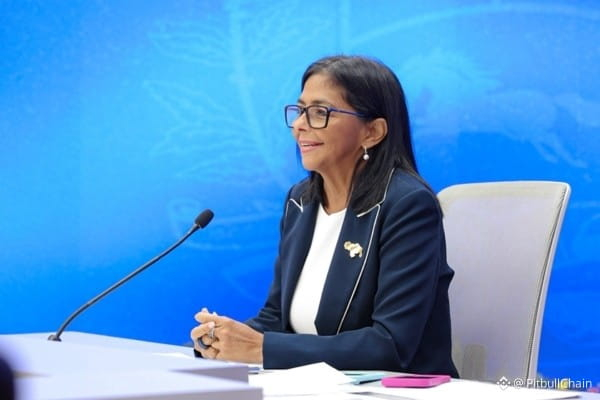
Delcy orders new web unblock: does anything change for P2P and USDT?Once again the same formula: a brief statement, disseminated via social media, ordering the "immediate unblocking" of a set of platforms and web portals, with no list, no figures, and no schedule. Acting President Delcy Rodríguez gave the order this Friday, September 25, after receiving reports on the second round of dialogue between the ruling party and representatives of the opposition, according to the text published by the Communications Minister, Miguel Ángel Pérez Pirela.
The announcement builds on one from September 17, when Conatel talked about a "formal restoration of access" to national and international digital platforms and media. In practice, the pattern repeats: first the political gesture, then the technical verification. And in Venezuela, that verification almost always ends up being carried out by civil society before the State.
Delcy orders new web unblock: does anything change for P2P and USDT?
Once again the same formula: a brief statement, disseminated via social media, ordering the "immediate unblocking" of a set of platforms and web portals, with no list, no figures, and no schedule. Acting President Delcy Rodríguez gave the order this Friday, September 25, after receiving reports on the second round of dialogue between the ruling party and representatives of the opposition, according to the text published by the Communications Minister, Miguel Ángel Pérez Pirela.
The announcement builds on one from September 17, when Conatel talked about a "formal restoration of access" to national and international digital platforms and media. In practice, the pattern repeats: first the political gesture, then the technical verification. And in Venezuela, that verification almost always ends up being carried out by civil society before the State.
The announcement builds on one from September 17, when Conatel talked about a "formal restoration of access" to national and international digital platforms and media. In practice, the pattern repeats: first the political gesture, then the technical verification. And in Venezuela, that verification almost always ends up being carried out by civil society before the State.
123
·
--
Selling USDT in Venezuela: P2P Strategies and Merchant Protection## Selling USDT in Venezuela: P2P Strategies and Merchant Protection
P2P trading has become the main entry and exit point of the crypto market in Venezuela. This video covers key points for selling USDT efficiently, safely, and profitably in the local context.
### Video Summary
The video explains the process of selling USDT on P2P platforms, showing how to set the price according to the Venezuelan market exchange rate. It offers advice on verifying buyer legitimacy and avoiding fraud, and highlights the importance of reviewing payment methods and settlement times. It also mentions differences between platforms and how to choose the most convenient one based on the desired volume and speed.
Selling USDT in Venezuela: P2P Strategies and Merchant Protection
## Selling USDT in Venezuela: P2P Strategies and Merchant Protection
P2P trading has become the main entry and exit point of the crypto market in Venezuela. This video covers key points for selling USDT efficiently, safely, and profitably in the local context.
### Video Summary
The video explains the process of selling USDT on P2P platforms, showing how to set the price according to the Venezuelan market exchange rate. It offers advice on verifying buyer legitimacy and avoiding fraud, and highlights the importance of reviewing payment methods and settlement times. It also mentions differences between platforms and how to choose the most convenient one based on the desired volume and speed.
104
·
--
Article
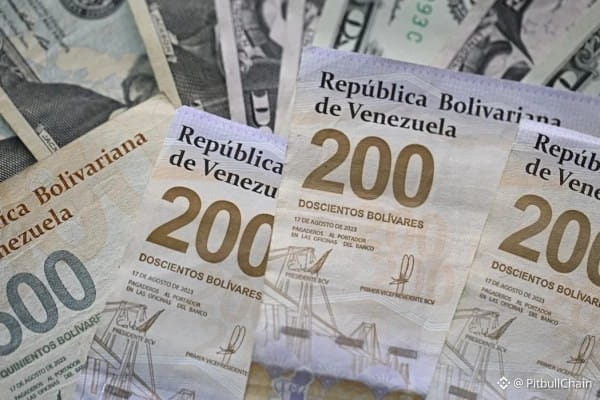
Wage adjustment in sight: what it means for the dollar, P2P, and your USDTThe conversation about a possible wage increase in Venezuela has returned to the center of the economic debate. Economist and university professor Jesús Palacios Chacín noted that there is a reasonable chance that an adjustment in salaries will take shape in the coming months, although he cautioned that any decision runs up against a structural obstacle: the enormous weight of labor liabilities carried by current legislation.
For anyone operating in the P2P market—swapping dollars for bolívares or keeping their savings in USDT—the announcement is not an anecdotal detail. An increase in minimum income moves the needle on consumption, the exchange rate, and above all, on the decisions people make to protect their purchasing power. Here we break down the issue with a close-up look at the Venezuelan crypto market.
Wage adjustment in sight: what it means for the dollar, P2P, and your USDT
The conversation about a possible wage increase in Venezuela has returned to the center of the economic debate. Economist and university professor Jesús Palacios Chacín noted that there is a reasonable chance that an adjustment in salaries will take shape in the coming months, although he cautioned that any decision runs up against a structural obstacle: the enormous weight of labor liabilities carried by current legislation.
For anyone operating in the P2P market—swapping dollars for bolívares or keeping their savings in USDT—the announcement is not an anecdotal detail. An increase in minimum income moves the needle on consumption, the exchange rate, and above all, on the decisions people make to protect their purchasing power. Here we break down the issue with a close-up look at the Venezuelan crypto market.
For anyone operating in the P2P market—swapping dollars for bolívares or keeping their savings in USDT—the announcement is not an anecdotal detail. An increase in minimum income moves the needle on consumption, the exchange rate, and above all, on the decisions people make to protect their purchasing power. Here we break down the issue with a close-up look at the Venezuelan crypto market.
47
·
--
Article
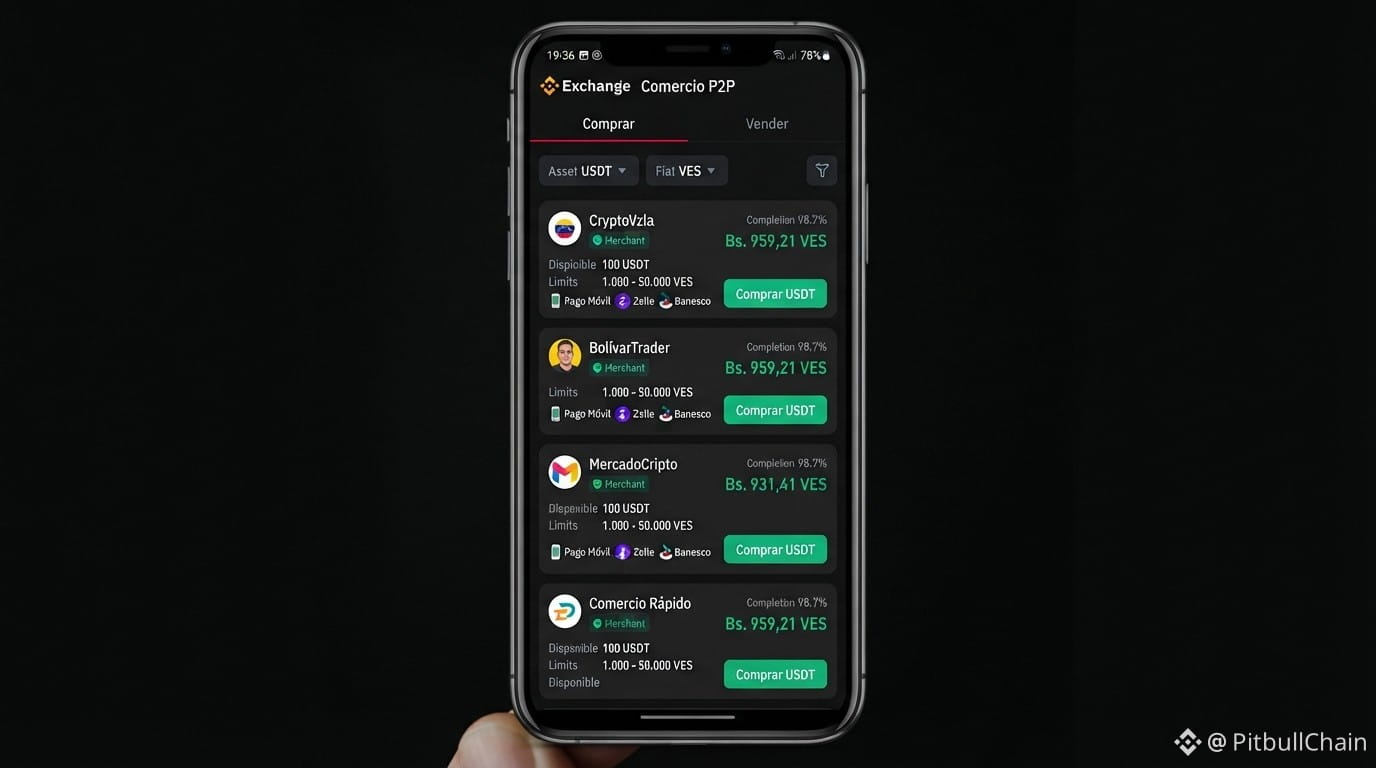
USDT P2P in Venezuela: 3.65% spread and 18.54% gap with BCVThe early hours of September 5, 2026 (Venezuela time) delivered a clear reading for those operating digital assets in bolivars: the USDT P2P market widened the gap between buy and sell prices again. PitbullChain’s Radar P2P snapshot recorded that buying USDT cost an average of Bs. 964.64, while selling it paid Bs. 930.65. In other words, a spread of Bs. 33.99, equivalent to 3.65%. That percentage triggered a yellow signal on the market traffic light, with a score of 69 out of 100. The main factor was the elevated spread, while liquidity continued to show health across several banks and exchanges. The USDT P2P price versus the official dollar The official dollar published by the BCV at the time of the snapshot was Bs. 813.74 per unit. Consequently, buying USDT via P2P represented a difference of Bs. 150.90 versus the official exchange rate, equivalent to a premium of 18.54%. This number measures the extra cost in bolivars borne by a user when acquiring decentralized USDT compared to the dollar set by the issuing authority. This gap is not a new phenomenon in Venezuela, but the data for September 6 confirms that demand for USDT remains firm. According to an estimate by Ecoanalítica published by BeInCrypto, the country transacts around USD 44 million daily through Binance P2P alone. Order book liquidity: strong visible demand, but with imbalance The consolidated order book compiled by PitbullChain at 02:00 UTC showed 94 active notices across Binance, other platforms and other platforms. The midpoint between the best prices was Bs. 950.66, with a range of Bs. 943.33 to buy USDT and Bs. 958.00 to sell it; in that interval, the spread between sides was 1.53%, below the weighted average. Most notable was the aggregate volume on each side of the book: visible demand (1,147,577 USDT) far exceeded visible supply (127,715 USDT). The imbalance between buyers and sellers reached 79.97%, suggesting greater pressure to acquire USDT. However, depth was not distributed evenly: on the demand side there were pronounced blocks of up to 529,480 USDT posted by a single notice on other platforms, while sell listings appeared more fragmented. For the retail trader, this imbalance means always rechecking the minimum and maximum limits of each listing, since large blocks are usually reserved for amounts above 50,000 USDT. Banks and payment methods: who concentrates the activity The analysis of the data by institution shows that Pago Móvil and Banesco account for the largest number of listings within the measured ecosystem, with 20.3% and 18.8% of liquidity respectively. They are followed by the “Other method” group (17.2%) and Banco de Venezuela (13.3%). Among banks present across multiple exchanges, the lowest average spreads were found at BANK (0.51%), Banco de Venezuela (0.53%) and Mercantil (0.52%). Banesco posted a spread of 0.96%, and Pago Móvil, 1.04%, reflecting a wider operating margin for the trader arbitraging between both. In contrast, Bancamiga and BNC Banco Nacional showed fewer active notices and, in some cases, a lack of representative buy prices during the sample. This does not mean operations do not exist, only that the visibility of offers was insufficient to calculate a symmetrical spread. It is important to remember that these averages do not include additional bank fees, since the P2P system is quoted net of transfer charges. Even so, the 3.65% spread in the Radar P2P average already incorporates part of the friction generated by the available payment methods. Market signals and practical criteria for the operator PitbullChain’s traffic light assigned a score of 69 points, in yellow status. Key metrics include: Overall liquidity: 95/100, sufficient across several banks. Bank availability: 95/100, with at least six relevant institutions active. Volatility: 80/100, which recommends closing deals quickly when the price matches your expectations. Order book depth: 45/100, with a notable imbalance between both sides. Spread: 20/100, the main warning at the moment. The platform’s recommended actions are straightforward: compare prices across exchanges, verify the bank and the counterparty’s reputation before trading, and define amount limits. None of these suggestions constitute a buy or sell instruction, but rather a guide to reduce operational risks. To understand the scale of this market, a TRM Labs report cited USDT as one of the factors that propelled Venezuela up the global crypto adoption ranking in the first quarter of 2026. That use is concentrated precisely in P2P exchange with bolivars, which is why monitoring spreads and depth is now an unavoidable tool for anyone or any business exposed to Venezuela’s digital economy. In short, the midnight snapshot of September 6 shows a market with enough liquidity across banks and exchanges to execute trades, but with an average friction of 3.65% that is worth monitoring. Comparing prices across the three platforms and reviewing the banking method remain the best filter for reducing costs.
USDT P2P in Venezuela: 3.65% spread and 18.54% gap with BCV
The early hours of September 5, 2026 (Venezuela time) delivered a clear reading for those operating digital assets in bolivars: the USDT P2P market widened the gap between buy and sell prices again. PitbullChain’s Radar P2P snapshot recorded that buying USDT cost an average of Bs. 964.64, while selling it paid Bs. 930.65. In other words, a spread of Bs. 33.99, equivalent to 3.65%. That percentage triggered a yellow signal on the market traffic light, with a score of 69 out of 100. The main factor was the elevated spread, while liquidity continued to show health across several banks and exchanges. The USDT P2P price versus the official dollar The official dollar published by the BCV at the time of the snapshot was Bs. 813.74 per unit. Consequently, buying USDT via P2P represented a difference of Bs. 150.90 versus the official exchange rate, equivalent to a premium of 18.54%. This number measures the extra cost in bolivars borne by a user when acquiring decentralized USDT compared to the dollar set by the issuing authority. This gap is not a new phenomenon in Venezuela, but the data for September 6 confirms that demand for USDT remains firm. According to an estimate by Ecoanalítica published by BeInCrypto, the country transacts around USD 44 million daily through Binance P2P alone. Order book liquidity: strong visible demand, but with imbalance The consolidated order book compiled by PitbullChain at 02:00 UTC showed 94 active notices across Binance, other platforms and other platforms. The midpoint between the best prices was Bs. 950.66, with a range of Bs. 943.33 to buy USDT and Bs. 958.00 to sell it; in that interval, the spread between sides was 1.53%, below the weighted average. Most notable was the aggregate volume on each side of the book: visible demand (1,147,577 USDT) far exceeded visible supply (127,715 USDT). The imbalance between buyers and sellers reached 79.97%, suggesting greater pressure to acquire USDT. However, depth was not distributed evenly: on the demand side there were pronounced blocks of up to 529,480 USDT posted by a single notice on other platforms, while sell listings appeared more fragmented. For the retail trader, this imbalance means always rechecking the minimum and maximum limits of each listing, since large blocks are usually reserved for amounts above 50,000 USDT. Banks and payment methods: who concentrates the activity The analysis of the data by institution shows that Pago Móvil and Banesco account for the largest number of listings within the measured ecosystem, with 20.3% and 18.8% of liquidity respectively. They are followed by the “Other method” group (17.2%) and Banco de Venezuela (13.3%). Among banks present across multiple exchanges, the lowest average spreads were found at BANK (0.51%), Banco de Venezuela (0.53%) and Mercantil (0.52%). Banesco posted a spread of 0.96%, and Pago Móvil, 1.04%, reflecting a wider operating margin for the trader arbitraging between both. In contrast, Bancamiga and BNC Banco Nacional showed fewer active notices and, in some cases, a lack of representative buy prices during the sample. This does not mean operations do not exist, only that the visibility of offers was insufficient to calculate a symmetrical spread. It is important to remember that these averages do not include additional bank fees, since the P2P system is quoted net of transfer charges. Even so, the 3.65% spread in the Radar P2P average already incorporates part of the friction generated by the available payment methods. Market signals and practical criteria for the operator PitbullChain’s traffic light assigned a score of 69 points, in yellow status. Key metrics include: Overall liquidity: 95/100, sufficient across several banks. Bank availability: 95/100, with at least six relevant institutions active. Volatility: 80/100, which recommends closing deals quickly when the price matches your expectations. Order book depth: 45/100, with a notable imbalance between both sides. Spread: 20/100, the main warning at the moment. The platform’s recommended actions are straightforward: compare prices across exchanges, verify the bank and the counterparty’s reputation before trading, and define amount limits. None of these suggestions constitute a buy or sell instruction, but rather a guide to reduce operational risks. To understand the scale of this market, a TRM Labs report cited USDT as one of the factors that propelled Venezuela up the global crypto adoption ranking in the first quarter of 2026. That use is concentrated precisely in P2P exchange with bolivars, which is why monitoring spreads and depth is now an unavoidable tool for anyone or any business exposed to Venezuela’s digital economy. In short, the midnight snapshot of September 6 shows a market with enough liquidity across banks and exchanges to execute trades, but with an average friction of 3.65% that is worth monitoring. Comparing prices across the three platforms and reviewing the banking method remain the best filter for reducing costs.
289
·
--

Article
Venezuelan coffee rises 10%: how much does it move USDT and P2P?The production of Venezuelan coffee grew by about 10%, and exports of the category are said to have made a three-digit jump during 2025, with the United States as a prominent destination. The announcement was made by the acting president, Delcy Rodríguez, who insisted that domestic grain has a market abroad and that industrialization supports that momentum. Up to that point, the news is agricultural. But at PitbullChain we read it with a different lens: that of the FX market, P2P, and those who buy and sell USDT every day.
Venezuelan coffee rises 10%: how much does it move USDT and P2P?
The production of Venezuelan coffee grew by about 10%, and exports of the category are said to have made a three-digit jump during 2025, with the United States as a prominent destination. The announcement was made by the acting president, Delcy Rodríguez, who insisted that domestic grain has a market abroad and that industrialization supports that momentum. Up to that point, the news is agricultural. But at PitbullChain we read it with a different lens: that of the FX market, P2P, and those who buy and sell USDT every day.
89
·
--

Article
Flights from Maiquetía: economic reactivation that moves the USDT market?## More than air routes: a sign of reactivation
When an airline expands its destinations, people usually talk about tourism, trade, or connectivity. But in the Venezuelan context, every business decision has a direct impact on everyday finances and, of course, on the crypto ecosystem. Conviasa's recent launch of 19 routes from Maiquetía does not escape that logic.
The announcement comes at a time when the economy is showing mixed signals: while inflation persists, the parallel dollar maintains an exchange-rate gap that affects both the bolívar and operations with stablecoins. The possibility of flying to Porlamar, Maracaibo, or Havana is not just news for travelers; it is also an indicator that there is real movement of people, goods, and, above all, cash seeking refuge in digital currencies.
Flights from Maiquetía: economic reactivation that moves the USDT market?
## More than air routes: a sign of reactivation
When an airline expands its destinations, people usually talk about tourism, trade, or connectivity. But in the Venezuelan context, every business decision has a direct impact on everyday finances and, of course, on the crypto ecosystem. Conviasa's recent launch of 19 routes from Maiquetía does not escape that logic.
The announcement comes at a time when the economy is showing mixed signals: while inflation persists, the parallel dollar maintains an exchange-rate gap that affects both the bolívar and operations with stablecoins. The possibility of flying to Porlamar, Maracaibo, or Havana is not just news for travelers; it is also an indicator that there is real movement of people, goods, and, above all, cash seeking refuge in digital currencies.
71
·
--

Article
Venezuelan Crypto Market Behavior and its USDT.Good morning, fellow Binancians. Continuing from my previous post about the Crypto Market behavior, particularly the Venezuelan Market from May 15, 2026, to May 19, 2026, we can indicate the following.
The Venezuelan crypto market operates under very different logic than the global scene, primarily acting as a hedge mechanism and for digital dollarization. The recent bullish movement you noticed in USDT (Binance Dollar) is due to a widening exchange gap between the official dollar and the real demand for foreign currency, which triggered significant volatility in the national market.
Venezuelan Crypto Market Behavior and its USDT.
Good morning, fellow Binancians. Continuing from my previous post about the Crypto Market behavior, particularly the Venezuelan Market from May 15, 2026, to May 19, 2026, we can indicate the following.
The Venezuelan crypto market operates under very different logic than the global scene, primarily acting as a hedge mechanism and for digital dollarization. The recent bullish movement you noticed in USDT (Binance Dollar) is due to a widening exchange gap between the official dollar and the real demand for foreign currency, which triggered significant volatility in the national market.
The Venezuelan crypto market operates under very different logic than the global scene, primarily acting as a hedge mechanism and for digital dollarization. The recent bullish movement you noticed in USDT (Binance Dollar) is due to a widening exchange gap between the official dollar and the real demand for foreign currency, which triggered significant volatility in the national market.
1
177
·
--
Crypto cards in Vzla: how to use them to spend USDT today## Crypto cards in Vzla: how to use them to spend USDT today
**Date:** Monday, August 31, 2026 · **Live P2P Radar data:** buy Bs. 942.39 · sell Bs. 924.59 · BCV Bs. N/A · premium N/A%
P2P starts the week with a buy rate of Bs. 942.39 and a sell rate of Bs. 924.59, leaving a spread of Bs. 17.80, while the BCV rate is not available. In this scenario, crypto cards gain ground as a tool to avoid giving away margin in every expense.
### Crypto cards: daily analysis
For the P2P merchant, the cards linked to USDT (like those from other platforms, other platforms, or similar ones) make it possible to convert digital balance into direct purchasing power, without going through P2P. Today, with a spread of 17.80 bolívares, using the card for expenses in bolívares avoids the implicit loss of selling at sale (924.59) and buying back at purchase (942.39). These cards usually operate on the Visa/Mastercard network, with a loading fee that ranges from 1% to 3%, and a currency conversion that may apply the official exchange rate or a parallel one, depending on the issuer. Monthly limits vary: free versions typically cap loading at $1,000-$2,000, while premium ones reach $10,000 or more. It’s key to check whether the card allows payments in bolívares directly (with automatic conversion) or only in dollars, and whether there are ATM withdrawal costs (typically $2-$3 per operation). For the merchant, the most practical approach is to use these cards for small, operational expenses, keeping P2P for accumulating USDT or selling large amounts, where the spread makes sense. Today, with the BCV not publishing a rate, crypto cards are a refuge against exchange-rate uncertainty, but always reviewing the exchange rate applied by each processing bank.
Crypto cards in Vzla: how to use them to spend USDT today
## Crypto cards in Vzla: how to use them to spend USDT today
**Date:** Monday, August 31, 2026 · **Live P2P Radar data:** buy Bs. 942.39 · sell Bs. 924.59 · BCV Bs. N/A · premium N/A%
P2P starts the week with a buy rate of Bs. 942.39 and a sell rate of Bs. 924.59, leaving a spread of Bs. 17.80, while the BCV rate is not available. In this scenario, crypto cards gain ground as a tool to avoid giving away margin in every expense.
### Crypto cards: daily analysis
For the P2P merchant, the cards linked to USDT (like those from other platforms, other platforms, or similar ones) make it possible to convert digital balance into direct purchasing power, without going through P2P. Today, with a spread of 17.80 bolívares, using the card for expenses in bolívares avoids the implicit loss of selling at sale (924.59) and buying back at purchase (942.39). These cards usually operate on the Visa/Mastercard network, with a loading fee that ranges from 1% to 3%, and a currency conversion that may apply the official exchange rate or a parallel one, depending on the issuer. Monthly limits vary: free versions typically cap loading at $1,000-$2,000, while premium ones reach $10,000 or more. It’s key to check whether the card allows payments in bolívares directly (with automatic conversion) or only in dollars, and whether there are ATM withdrawal costs (typically $2-$3 per operation). For the merchant, the most practical approach is to use these cards for small, operational expenses, keeping P2P for accumulating USDT or selling large amounts, where the spread makes sense. Today, with the BCV not publishing a rate, crypto cards are a refuge against exchange-rate uncertainty, but always reviewing the exchange rate applied by each processing bank.
50
·
--

Article
17% gap between BCV and USDT drives the P2P spread in Venezuela Live P2P Radar Capture: 13/8/2026, 9:30:15 a. m.
USDT/VES reference Bs. 897.27
Buy USDT Bs. 897.27
Sell USDT Bs. 854.40
BCV Bs. 766.86
Premium vs BCV 17.01%
P2P spread 5.02%
Observed offers 215
Verify current data on Radar P2P
The cryptocurrency market in Venezuela is going through a period of high exchange-rate friction. Over the last few days, the difference between the official rate and alternative markets has caused a reshuffling in the cost structures of peer-to-peer (P2P) merchants. According to the most recent data verified by Radar P2P, the gap between the rate from the Central Bank of Venezuela (BCV) and the USDT value on exchange platforms has reached 17.01%, a phenomenon that is reshaping the daily financial operations of thousands of Venezuelans.
17% gap between BCV and USDT drives the P2P spread in Venezuela
Live P2P Radar Capture: 13/8/2026, 9:30:15 a. m.
USDT/VES reference Bs. 897.27
Buy USDT Bs. 897.27
Sell USDT Bs. 854.40
BCV Bs. 766.86
Premium vs BCV 17.01%
P2P spread 5.02%
Observed offers 215
Verify current data on Radar P2P
The cryptocurrency market in Venezuela is going through a period of high exchange-rate friction. Over the last few days, the difference between the official rate and alternative markets has caused a reshuffling in the cost structures of peer-to-peer (P2P) merchants. According to the most recent data verified by Radar P2P, the gap between the rate from the Central Bank of Venezuela (BCV) and the USDT value on exchange platforms has reached 17.01%, a phenomenon that is reshaping the daily financial operations of thousands of Venezuelans.
71
·
--
Article
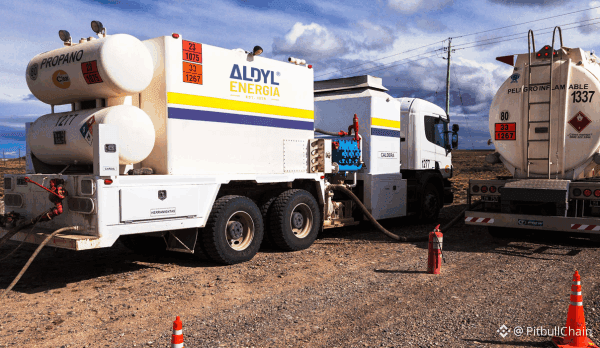
Aldyl revives 13 wells in Uverito: Does this move the dollar and the P2P of USDT?The Venezuelan east once again sounded like a drill. Argentine energy company Aldyl Energía installed a Drillmec HH-102 hydraulic rig at the Uverito Field, in the Orinoco Oil Belt, and kicked off with the restart of well UV 208, which had been shut down since 2014. The company estimates roughly 100 net barrels per day at the start, but the real interest isn’t that well: it’s what comes next.
The company has set its sights on a portfolio of 13 wells, with which it expects to average 1,100 barrels per day during 2026. This isn’t a boom, not even close. But it’s a sign that Latin America’s private capital continues to bet on rehabilitating old fields rather than opening new ones—a cheaper and faster move.
Aldyl revives 13 wells in Uverito: Does this move the dollar and the P2P of USDT?
The Venezuelan east once again sounded like a drill. Argentine energy company Aldyl Energía installed a Drillmec HH-102 hydraulic rig at the Uverito Field, in the Orinoco Oil Belt, and kicked off with the restart of well UV 208, which had been shut down since 2014. The company estimates roughly 100 net barrels per day at the start, but the real interest isn’t that well: it’s what comes next.
The company has set its sights on a portfolio of 13 wells, with which it expects to average 1,100 barrels per day during 2026. This isn’t a boom, not even close. But it’s a sign that Latin America’s private capital continues to bet on rehabilitating old fields rather than opening new ones—a cheaper and faster move.
The company has set its sights on a portfolio of 13 wells, with which it expects to average 1,100 barrels per day during 2026. This isn’t a boom, not even close. But it’s a sign that Latin America’s private capital continues to bet on rehabilitating old fields rather than opening new ones—a cheaper and faster move.
83
·
--
PitbullChain P2P Update for Venezuela — 2026-06-03:
✅ Buy USDT: Bs. 742.27
✅ Sell USDT: Bs. 717.04
📊 P2P Spread: Bs. 25.23
💱 Official BCV (BCV): Bs. 557.97
These prices reflect the current state of the P2P market on PitbullChain, with available liquidity and trades executed directly between users. The spread represents the difference between the best active buy and sell offers in real-time. Remember that prices may vary depending on volume, time, and fund availability.
PitbullChain operates under standards of transparency and security for Venezuelan users. All transactions are peer-to-peer, without centralized intermediation. Always verify the data before confirming any transaction.
#PitbullChain #USDTVenezuela #P2PVenezuela...
85
Log in to explore more content
Join global crypto users on Binance Square
⚡️ Get latest and useful information about crypto.
💬 Trusted by the world’s largest crypto exchange.
👍 Discover real insights from verified creators.
Email / Phone number
Trending Topics
1
#XRPDropsToTwoYearLowNear87Cents
5,974 views
144 Discussing
2
#BitcoinFallsBelow$57KToTwoYearLow
3,717 views
30 Discussing
3
#NvidiaLoses$2.7TrillionInMonthAndAHalf
924 views
42 Discussing
4
#CanBTCReboundAfterFallingBelow60K?
533,149 views
2,289 Discussing
5
#GlobalStocksFaceLongestLosingStreakSince2023
183,463 views
1,583 Discussing
6
#BlackRockIBITPostsRecord$541MSingleDayOutflow
14,271 views
53 Discussing
7
#AnthropicPlungesTowardIPOPriceonDay2
90,276 views
907 Discussing
8
#TwentyOneCapitalAdds172.25BTC
38,142 views
427 Discussing
9
#HKBillWouldExcludeTokenizedDepositsFromVirtualAssets
3,460 views
43 Discussing
10
#BNBDropsBelow540USDTWith8.46%DailyDecline
52,410 views
471 Discussing