

#tronecostar
tronecostar
4.1M views
668,338 Discussing
Hot
Latest

October 2019 brought another interesting milestone: TRON announced a partnership with Samsung and integration with Samsung Blockchain Keystore, according to TRON's historical timeline.
For @justinsuntron, this represented another step from an industry that was still relatively young toward a much more established technology environment.
But there is another lesson hidden inside moments like this.
Building something in isolation can only take you so far.
At some point, growth depends on relationships with companies, developers, users, communities, and institutions that exist outside your original circle.
That requires a different kind of skill.
You have to communicate across different cultures and professional backgrounds.
You have to understand what other people need.
You have to negotiate priorities without losing sight of your own objectives.
For young professionals, this is one of the most underrated parts of career development.
Technical ability may get you into a room.
Communication and adaptability often determine what happens once you are there.
Learn how to explain complicated ideas simply.
Learn how to listen before responding.
Learn how to work with people who do not think exactly like you.
The bigger your ambitions become, the more important those skills become.
#TRONEcoStar
October 2019 brought another interesting milestone: TRON announced a partnership with Samsung and integration with Samsung Blockchain Keystore, according to TRON's historical timeline.
For @justinsuntron, this represented another step from an industry that was still relatively young toward a much more established technology environment.
But there is another lesson hidden inside moments like this.
Building something in isolation can only take you so far.
At some point, growth depends on relationships with companies, developers, users, communities, and institutions that exist outside your original circle.
That requires a different kind of skill.
You have to communicate across different cultures and professional backgrounds.
You have to understand what other people need.
You have to negotiate priorities without losing sight of your own objectives.
For young professionals, this is one of the most underrated parts of career development.
Technical ability may get you into a room.
Communication and adaptability often determine what happens once you are there.
Learn how to explain complicated ideas simply.
Learn how to listen before responding.
Learn how to work with people who do not think exactly like you.
The bigger your ambitions become, the more important those skills become.
#TRONEcoStar
For @justinsuntron, this represented another step from an industry that was still relatively young toward a much more established technology environment.
But there is another lesson hidden inside moments like this.
Building something in isolation can only take you so far.
At some point, growth depends on relationships with companies, developers, users, communities, and institutions that exist outside your original circle.
That requires a different kind of skill.
You have to communicate across different cultures and professional backgrounds.
You have to understand what other people need.
You have to negotiate priorities without losing sight of your own objectives.
For young professionals, this is one of the most underrated parts of career development.
Technical ability may get you into a room.
Communication and adaptability often determine what happens once you are there.
Learn how to explain complicated ideas simply.
Learn how to listen before responding.
Learn how to work with people who do not think exactly like you.
The bigger your ambitions become, the more important those skills become.
#TRONEcoStar
6
2020 was a year when TRON's ecosystem continued adding infrastructure, including JustSwap in August and JustLend in December.
What stands out to me is the difference between a single product launch and an ecosystem that keeps developing over time.
One announcement can attract attention.
Continuous development requires something different.
It requires teams to keep solving problems after the original excitement has disappeared.
It requires users to keep finding reasons to participate.
And it requires the people responsible for the direction to keep making decisions when there is no obvious answer.
That is where @justinsuntron's longer timeline becomes more interesting than any individual headline.
A career is not really a collection of isolated achievements.
It is a sequence of transitions.
Every new stage demands different skills from the person entering it.
For young people, this is worth remembering when comparing themselves with others.
You may be looking at someone's tenth year while you are still in your second.
You may be comparing your unfinished process with somebody else's most visible result.
A better question is whether your own process is moving forward.
Are you learning faster?
Are you making fewer repeated mistakes?
Are you becoming more reliable?
Those improvements may not look impressive on social media.
They can matter enormously over ten years.
#TRONEcoStar
2020 was a year when TRON's ecosystem continued adding infrastructure, including JustSwap in August and JustLend in December.
What stands out to me is the difference between a single product launch and an ecosystem that keeps developing over time.
One announcement can attract attention.
Continuous development requires something different.
It requires teams to keep solving problems after the original excitement has disappeared.
It requires users to keep finding reasons to participate.
And it requires the people responsible for the direction to keep making decisions when there is no obvious answer.
That is where @justinsuntron's longer timeline becomes more interesting than any individual headline.
A career is not really a collection of isolated achievements.
It is a sequence of transitions.
Every new stage demands different skills from the person entering it.
For young people, this is worth remembering when comparing themselves with others.
You may be looking at someone's tenth year while you are still in your second.
You may be comparing your unfinished process with somebody else's most visible result.
A better question is whether your own process is moving forward.
Are you learning faster?
Are you making fewer repeated mistakes?
Are you becoming more reliable?
Those improvements may not look impressive on social media.
They can matter enormously over ten years.
#TRONEcoStar
What stands out to me is the difference between a single product launch and an ecosystem that keeps developing over time.
One announcement can attract attention.
Continuous development requires something different.
It requires teams to keep solving problems after the original excitement has disappeared.
It requires users to keep finding reasons to participate.
And it requires the people responsible for the direction to keep making decisions when there is no obvious answer.
That is where @justinsuntron's longer timeline becomes more interesting than any individual headline.
A career is not really a collection of isolated achievements.
It is a sequence of transitions.
Every new stage demands different skills from the person entering it.
For young people, this is worth remembering when comparing themselves with others.
You may be looking at someone's tenth year while you are still in your second.
You may be comparing your unfinished process with somebody else's most visible result.
A better question is whether your own process is moving forward.
Are you learning faster?
Are you making fewer repeated mistakes?
Are you becoming more reliable?
Those improvements may not look impressive on social media.
They can matter enormously over ten years.
#TRONEcoStar
4

·
--
ENERGY DEMAND CONNECTS DIFFERENT NETWORK PARTICIPANTS 🔗
Energy Rental income adds an interesting dimension to the sTRX story.
It connects the earning side of the product with demand for resources used in on-chain execution.
That relationship brings different participants into view:
• Application users need resources to complete interactions.
• Resource providers contribute to meeting that demand.
• The staking product includes rental income among its reported earning sources.
For the ecosystem, this is a useful connection between asset participation and network utility.
The next analytical question is how that relationship behaves over time: how rental activity changes, what income it produces, and how much it contributes alongside governance rewards.
The supplied update reports a 4.02% seven-day average APY for sTRX, but does not break out each source’s share.
Understanding that composition would add context to the headline figure—and help explain how resource usage contributes to the staking experience on JustLend DAO.
@DeFi_JUST @JustinSun #TRONEcoStar
ENERGY DEMAND CONNECTS DIFFERENT NETWORK PARTICIPANTS 🔗
Energy Rental income adds an interesting dimension to the sTRX story.
It connects the earning side of the product with demand for resources used in on-chain execution.
That relationship brings different participants into view:
• Application users need resources to complete interactions.
• Resource providers contribute to meeting that demand.
• The staking product includes rental income among its reported earning sources.
For the ecosystem, this is a useful connection between asset participation and network utility.
The next analytical question is how that relationship behaves over time: how rental activity changes, what income it produces, and how much it contributes alongside governance rewards.
The supplied update reports a 4.02% seven-day average APY for sTRX, but does not break out each source’s share.
Understanding that composition would add context to the headline figure—and help explain how resource usage contributes to the staking experience on JustLend DAO.
@JUST DAO @Justin Sun孙宇晨 #TRONEcoStar
Energy Rental income adds an interesting dimension to the sTRX story.
It connects the earning side of the product with demand for resources used in on-chain execution.
That relationship brings different participants into view:
• Application users need resources to complete interactions.
• Resource providers contribute to meeting that demand.
• The staking product includes rental income among its reported earning sources.
For the ecosystem, this is a useful connection between asset participation and network utility.
The next analytical question is how that relationship behaves over time: how rental activity changes, what income it produces, and how much it contributes alongside governance rewards.
The supplied update reports a 4.02% seven-day average APY for sTRX, but does not break out each source’s share.
Understanding that composition would add context to the headline figure—and help explain how resource usage contributes to the staking experience on JustLend DAO.
@JUST DAO @Justin Sun孙宇晨 #TRONEcoStar

57

·
--
The key point with @DeFi_JUST sTRX is that liquid staking changes what happens to capital after TRX is staked. Instead of leaving the position locked away from other applications, users receive sTRX that can remain usable across DeFi.
The main development here is composability. A user can stake TRX, receive sTRX, continue earning staking rewards, and potentially use that sTRX in other DeFi applications. In principle, this creates two layers of utility from the same underlying position: staking exposure and access to additional DeFi strategies.
The stated 1:1 backing is also important. It provides a straightforward relationship between TRX deposited and sTRX issued, while yield accrual allows the value associated with the position to reflect staking rewards over time. Contract auditability and consensus integration add another layer of transparency, although neither by itself eliminates smart contract, liquidity, or governance risks.
The planned expansion into lending markets and DEX liquidity is where the model could become more useful. Wider collateral acceptance would give sTRX more places to be deployed, while deeper liquidity could make conversions between sTRX and TRX more efficient. Governance participation and Super Representative voting strategies could also influence how effectively the staking side of the system captures available rewards.
There is an important limitation in the information provided, though: no current sTRX supply, total value locked, staking APR, trading volume, liquidity depth, or adoption figures are given. Without those numbers, claims about growth or leadership cannot be independently measured from this data alone.
What can be said is simpler: sTRX is designed around making staked TRX remain productive and composable. The real measure of its progress will be whether deeper liquidity, broader DeFi integration, and effective staking governance translate that design into sustained utility for holders.
@JustinSun #TRONEcoStar
The key point with @JUST DAO sTRX is that liquid staking changes what happens to capital after TRX is staked. Instead of leaving the position locked away from other applications, users receive sTRX that can remain usable across DeFi.
The main development here is composability. A user can stake TRX, receive sTRX, continue earning staking rewards, and potentially use that sTRX in other DeFi applications. In principle, this creates two layers of utility from the same underlying position: staking exposure and access to additional DeFi strategies.
The stated 1:1 backing is also important. It provides a straightforward relationship between TRX deposited and sTRX issued, while yield accrual allows the value associated with the position to reflect staking rewards over time. Contract auditability and consensus integration add another layer of transparency, although neither by itself eliminates smart contract, liquidity, or governance risks.
The planned expansion into lending markets and DEX liquidity is where the model could become more useful. Wider collateral acceptance would give sTRX more places to be deployed, while deeper liquidity could make conversions between sTRX and TRX more efficient. Governance participation and Super Representative voting strategies could also influence how effectively the staking side of the system captures available rewards.
There is an important limitation in the information provided, though: no current sTRX supply, total value locked, staking APR, trading volume, liquidity depth, or adoption figures are given. Without those numbers, claims about growth or leadership cannot be independently measured from this data alone.
What can be said is simpler: sTRX is designed around making staked TRX remain productive and composable. The real measure of its progress will be whether deeper liquidity, broader DeFi integration, and effective staking governance translate that design into sustained utility for holders.
@Justin Sun孙宇晨 #TRONEcoStar
The main development here is composability. A user can stake TRX, receive sTRX, continue earning staking rewards, and potentially use that sTRX in other DeFi applications. In principle, this creates two layers of utility from the same underlying position: staking exposure and access to additional DeFi strategies.
The stated 1:1 backing is also important. It provides a straightforward relationship between TRX deposited and sTRX issued, while yield accrual allows the value associated with the position to reflect staking rewards over time. Contract auditability and consensus integration add another layer of transparency, although neither by itself eliminates smart contract, liquidity, or governance risks.
The planned expansion into lending markets and DEX liquidity is where the model could become more useful. Wider collateral acceptance would give sTRX more places to be deployed, while deeper liquidity could make conversions between sTRX and TRX more efficient. Governance participation and Super Representative voting strategies could also influence how effectively the staking side of the system captures available rewards.
There is an important limitation in the information provided, though: no current sTRX supply, total value locked, staking APR, trading volume, liquidity depth, or adoption figures are given. Without those numbers, claims about growth or leadership cannot be independently measured from this data alone.
What can be said is simpler: sTRX is designed around making staked TRX remain productive and composable. The real measure of its progress will be whether deeper liquidity, broader DeFi integration, and effective staking governance translate that design into sustained utility for holders.
@Justin Sun孙宇晨 #TRONEcoStar

13

·
--
WBTC’s native issuance on TRON creates another link between Bitcoin liquidity and the TRON ecosystem.
@WrappedBTC has joined TRON ECO Star, expanding the network of assets and ecosystem connections being built around TRON.
The more meaningful part of this development is the native issuance of WBTC on TRON. Beyond the partnership announcement itself, this adds a Bitcoin-linked asset directly to TRON’s on-chain environment, giving developers and applications another asset to work with.
WBTC represents Bitcoin within blockchain-based applications, allowing Bitcoin-linked value to interact with smart contracts and DeFi infrastructure. With native issuance on TRON, that representation can connect more directly with the network’s existing applications, protocols and liquidity infrastructure.
➤ WBTC joins TRON ECO Star
➤ Native WBTC issuance on TRON
➤ Bitcoin-linked liquidity gains a connection to TRON-based applications
➤ Another addition to the TRON ECO Star ecosystem matrix
For developers, these connections matter because an ecosystem becomes more versatile when different assets can interact within the same environment.
It also creates more room for experimentation across DeFi, payments and other applications where access to different forms of on-chain liquidity can be useful.
Of course, the announcement itself does not tell us how much WBTC will ultimately be used on TRON. The longer-term significance will depend on actual adoption, liquidity, integrations and activity across applications.
That distinction is important. An infrastructure connection creates an opportunity; usage determines its practical impact.
For now, WBTC’s native issuance represents another step in expanding the range of assets available within TRON’s ecosystem.
And that is what makes the ECO Star model interesting: the value of the ecosystem is not only in individual projects, but also in the connections between them.
More assets, more connections, more possibilities for developers to build across the network.
@SunPump_meme
@JustinSun
#TRONEcoStar
WBTC’s native issuance on TRON creates another link between Bitcoin liquidity and the TRON ecosystem.
@WrappedBTC has joined TRON ECO Star, expanding the network of assets and ecosystem connections being built around TRON.
The more meaningful part of this development is the native issuance of WBTC on TRON. Beyond the partnership announcement itself, this adds a Bitcoin-linked asset directly to TRON’s on-chain environment, giving developers and applications another asset to work with.
WBTC represents Bitcoin within blockchain-based applications, allowing Bitcoin-linked value to interact with smart contracts and DeFi infrastructure. With native issuance on TRON, that representation can connect more directly with the network’s existing applications, protocols and liquidity infrastructure.
➤ WBTC joins TRON ECO Star
➤ Native WBTC issuance on TRON
➤ Bitcoin-linked liquidity gains a connection to TRON-based applications
➤ Another addition to the TRON ECO Star ecosystem matrix
For developers, these connections matter because an ecosystem becomes more versatile when different assets can interact within the same environment.
It also creates more room for experimentation across DeFi, payments and other applications where access to different forms of on-chain liquidity can be useful.
Of course, the announcement itself does not tell us how much WBTC will ultimately be used on TRON. The longer-term significance will depend on actual adoption, liquidity, integrations and activity across applications.
That distinction is important. An infrastructure connection creates an opportunity; usage determines its practical impact.
For now, WBTC’s native issuance represents another step in expanding the range of assets available within TRON’s ecosystem.
And that is what makes the ECO Star model interesting: the value of the ecosystem is not only in individual projects, but also in the connections between them.
More assets, more connections, more possibilities for developers to build across the network.
@OfficialSUNio
@Justin Sun孙宇晨
#TRONEcoStar
@WrappedBTC has joined TRON ECO Star, expanding the network of assets and ecosystem connections being built around TRON.
The more meaningful part of this development is the native issuance of WBTC on TRON. Beyond the partnership announcement itself, this adds a Bitcoin-linked asset directly to TRON’s on-chain environment, giving developers and applications another asset to work with.
WBTC represents Bitcoin within blockchain-based applications, allowing Bitcoin-linked value to interact with smart contracts and DeFi infrastructure. With native issuance on TRON, that representation can connect more directly with the network’s existing applications, protocols and liquidity infrastructure.
➤ WBTC joins TRON ECO Star
➤ Native WBTC issuance on TRON
➤ Bitcoin-linked liquidity gains a connection to TRON-based applications
➤ Another addition to the TRON ECO Star ecosystem matrix
For developers, these connections matter because an ecosystem becomes more versatile when different assets can interact within the same environment.
It also creates more room for experimentation across DeFi, payments and other applications where access to different forms of on-chain liquidity can be useful.
Of course, the announcement itself does not tell us how much WBTC will ultimately be used on TRON. The longer-term significance will depend on actual adoption, liquidity, integrations and activity across applications.
That distinction is important. An infrastructure connection creates an opportunity; usage determines its practical impact.
For now, WBTC’s native issuance represents another step in expanding the range of assets available within TRON’s ecosystem.
And that is what makes the ECO Star model interesting: the value of the ecosystem is not only in individual projects, but also in the connections between them.
More assets, more connections, more possibilities for developers to build across the network.
@OfficialSUNio
@Justin Sun孙宇晨
#TRONEcoStar
3
·
--
The interesting part of sTRX is not simply the yield. It is the attempt to make TRX liquidity and staking work together without forcing holders to choose between the two.
The core development here is the use of sTRX within lending markets. In practical terms, this creates a structure where users can supply a liquid staking position into a lending environment while still participating in the broader staking model. That matters because liquidity is often the constraint around staking: capital can earn staking rewards, but its usefulness elsewhere can become limited.
The supplied information also points to several important characteristics. sTRX is presented as removing lockup friction while contributing to TRON network decentralization, and as providing passive rewards to wallet holders. If those mechanisms work as described, the value proposition is less about a single yield figure and more about capital efficiency: one position can potentially remain connected to staking while also becoming usable within a lending market.
There is also a broader connection to JustLend DAO's role in TRON's DeFi infrastructure. Earlier data provided shows JustLend with about $7.29B in TVL, alongside roughly $3.93B in supplied assets and $192.61M borrowed. Those figures provide useful context for understanding why liquid staking assets can matter. A large lending environment gives staking-linked assets another potential use case beyond simply holding them for network rewards.
But the numbers need to be read carefully. TVL does not equal user profit, and the amount supplied or borrowed does not by itself demonstrate that sTRX generates a particular return. Likewise, describing reserves as transparent on-chain proof is useful, but transparency alone does not eliminate smart contract, liquidity, market, or implementation risks. The supplied information also does not provide a specific sTRX APY, utilization rate, reserve ratio, or user count, so those metrics cannot be used to quantify its actual performance.
@JustinSun @DeFi_JUST #TRONEcoStar
The interesting part of sTRX is not simply the yield. It is the attempt to make TRX liquidity and staking work together without forcing holders to choose between the two.
The core development here is the use of sTRX within lending markets. In practical terms, this creates a structure where users can supply a liquid staking position into a lending environment while still participating in the broader staking model. That matters because liquidity is often the constraint around staking: capital can earn staking rewards, but its usefulness elsewhere can become limited.
The supplied information also points to several important characteristics. sTRX is presented as removing lockup friction while contributing to TRON network decentralization, and as providing passive rewards to wallet holders. If those mechanisms work as described, the value proposition is less about a single yield figure and more about capital efficiency: one position can potentially remain connected to staking while also becoming usable within a lending market.
There is also a broader connection to JustLend DAO's role in TRON's DeFi infrastructure. Earlier data provided shows JustLend with about $7.29B in TVL, alongside roughly $3.93B in supplied assets and $192.61M borrowed. Those figures provide useful context for understanding why liquid staking assets can matter. A large lending environment gives staking-linked assets another potential use case beyond simply holding them for network rewards.
But the numbers need to be read carefully. TVL does not equal user profit, and the amount supplied or borrowed does not by itself demonstrate that sTRX generates a particular return. Likewise, describing reserves as transparent on-chain proof is useful, but transparency alone does not eliminate smart contract, liquidity, market, or implementation risks. The supplied information also does not provide a specific sTRX APY, utilization rate, reserve ratio, or user count, so those metrics cannot be used to quantify its actual performance.
@Justin Sun孙宇晨 @JUST DAO #TRONEcoStar
The core development here is the use of sTRX within lending markets. In practical terms, this creates a structure where users can supply a liquid staking position into a lending environment while still participating in the broader staking model. That matters because liquidity is often the constraint around staking: capital can earn staking rewards, but its usefulness elsewhere can become limited.
The supplied information also points to several important characteristics. sTRX is presented as removing lockup friction while contributing to TRON network decentralization, and as providing passive rewards to wallet holders. If those mechanisms work as described, the value proposition is less about a single yield figure and more about capital efficiency: one position can potentially remain connected to staking while also becoming usable within a lending market.
There is also a broader connection to JustLend DAO's role in TRON's DeFi infrastructure. Earlier data provided shows JustLend with about $7.29B in TVL, alongside roughly $3.93B in supplied assets and $192.61M borrowed. Those figures provide useful context for understanding why liquid staking assets can matter. A large lending environment gives staking-linked assets another potential use case beyond simply holding them for network rewards.
But the numbers need to be read carefully. TVL does not equal user profit, and the amount supplied or borrowed does not by itself demonstrate that sTRX generates a particular return. Likewise, describing reserves as transparent on-chain proof is useful, but transparency alone does not eliminate smart contract, liquidity, market, or implementation risks. The supplied information also does not provide a specific sTRX APY, utilization rate, reserve ratio, or user count, so those metrics cannot be used to quantify its actual performance.
@Justin Sun孙宇晨 @JUST DAO #TRONEcoStar

12
·
--
The more interesting development around USDD is the move from simply holding a stable asset toward making that capital productive within the ecosystem.
The introduction of sUSDD is important in that context. According to the information provided, it is designed to give users automated yield accumulation on their holdings. That creates a different use case for USDD: users can potentially keep capital positioned in a stablecoin while also participating in a yield-generating structure.
Reserve transparency is another key part of the model. USDD is described as having multi-asset reserves that can be verified through on-chain tools. This provides a way to independently examine the backing rather than relying entirely on a stated reserve figure. However, reserve verification should not be confused with a guarantee of stability. The underlying assets themselves can change in value, and the information provided does not give enough detail to quantify how the reserve would behave under different market conditions.
The broader integration strategy also matters. USDD is being expanded across exchanges, money markets, and dApps, while the future roadmap includes payments, cross-chain liquidity, and decentralized vault-based yield products. These are complementary developments: payments increase transactional utility, DeFi integrations create additional uses for liquidity, and cross-chain infrastructure could make that liquidity accessible beyond a single network.
At the same time, claims around transaction throughput, reserve strength, and yield should be viewed in context. High network activity shows infrastructure capacity, but it does not automatically demonstrate sustained economic demand.
The broader direction is therefore clear: USDD is being positioned not just as a stable asset, but as a piece of financial infrastructure connecting stable liquidity, yield, payments, and DeFi. The important metric over time will be whether those functions translate into durable, verifiable usage.
@JustinSun @usddio #TRONEcoStar
The more interesting development around USDD is the move from simply holding a stable asset toward making that capital productive within the ecosystem.
The introduction of sUSDD is important in that context. According to the information provided, it is designed to give users automated yield accumulation on their holdings. That creates a different use case for USDD: users can potentially keep capital positioned in a stablecoin while also participating in a yield-generating structure.
Reserve transparency is another key part of the model. USDD is described as having multi-asset reserves that can be verified through on-chain tools. This provides a way to independently examine the backing rather than relying entirely on a stated reserve figure. However, reserve verification should not be confused with a guarantee of stability. The underlying assets themselves can change in value, and the information provided does not give enough detail to quantify how the reserve would behave under different market conditions.
The broader integration strategy also matters. USDD is being expanded across exchanges, money markets, and dApps, while the future roadmap includes payments, cross-chain liquidity, and decentralized vault-based yield products. These are complementary developments: payments increase transactional utility, DeFi integrations create additional uses for liquidity, and cross-chain infrastructure could make that liquidity accessible beyond a single network.
At the same time, claims around transaction throughput, reserve strength, and yield should be viewed in context. High network activity shows infrastructure capacity, but it does not automatically demonstrate sustained economic demand.
The broader direction is therefore clear: USDD is being positioned not just as a stable asset, but as a piece of financial infrastructure connecting stable liquidity, yield, payments, and DeFi. The important metric over time will be whether those functions translate into durable, verifiable usage.
@Justin Sun孙宇晨 @USDD - Decentralized USD #TRONEcoStar
The introduction of sUSDD is important in that context. According to the information provided, it is designed to give users automated yield accumulation on their holdings. That creates a different use case for USDD: users can potentially keep capital positioned in a stablecoin while also participating in a yield-generating structure.
Reserve transparency is another key part of the model. USDD is described as having multi-asset reserves that can be verified through on-chain tools. This provides a way to independently examine the backing rather than relying entirely on a stated reserve figure. However, reserve verification should not be confused with a guarantee of stability. The underlying assets themselves can change in value, and the information provided does not give enough detail to quantify how the reserve would behave under different market conditions.
The broader integration strategy also matters. USDD is being expanded across exchanges, money markets, and dApps, while the future roadmap includes payments, cross-chain liquidity, and decentralized vault-based yield products. These are complementary developments: payments increase transactional utility, DeFi integrations create additional uses for liquidity, and cross-chain infrastructure could make that liquidity accessible beyond a single network.
At the same time, claims around transaction throughput, reserve strength, and yield should be viewed in context. High network activity shows infrastructure capacity, but it does not automatically demonstrate sustained economic demand.
The broader direction is therefore clear: USDD is being positioned not just as a stable asset, but as a piece of financial infrastructure connecting stable liquidity, yield, payments, and DeFi. The important metric over time will be whether those functions translate into durable, verifiable usage.
@Justin Sun孙宇晨 @USDD - Decentralized USD #TRONEcoStar

4
·
--
Stablecoin stability depends heavily on the quality of the price data used to make decisions. A token can be designed to track a currency, but lending, minting, redemption, and collateral systems still need reliable market prices to react when conditions change.
That gives @WinkLink_Oracle an important potential role in the TRON stablecoin ecosystem. Continuous price feeds can provide the data required to monitor a stablecoin against its reference asset and support automated mechanisms that respond when the market price moves away from the target.
The same infrastructure can matter for collateral management. If a stablecoin protocol uses collateral, changing market prices can affect liquidation thresholds and the amount of backing available. More timely pricing can help these systems respond to market movements without relying on outdated information.
The FX component is also significant. Multi-currency stablecoins and cross-border settlement applications need exchange-rate data in addition to crypto asset prices. Real-time FX feeds could therefore extend oracle infrastructure beyond simple USD-pegged assets.
But there is an important limitation: an oracle does not itself guarantee a stablecoin's peg. Peg stability also depends on collateral, liquidity, redemption mechanisms, market conditions, and the specific design of the stablecoin. The information provided does not include figures for peg deviations, feed latency, liquidation volumes, or the number of stablecoin protocols using WINkLink, so those outcomes cannot be quantified here.
The practical takeaway is that WINkLink's value for stablecoins comes from providing the pricing layer that automated monetary systems depend on. Reliable data can improve how these systems respond to market changes, but the stability of the currency ultimately depends on the entire protocol design around that data.
@JustinSun @WINkLink_Official #TRONEcoStar
Stablecoin stability depends heavily on the quality of the price data used to make decisions. A token can be designed to track a currency, but lending, minting, redemption, and collateral systems still need reliable market prices to react when conditions change.
That gives @WinkLink_Oracle an important potential role in the TRON stablecoin ecosystem. Continuous price feeds can provide the data required to monitor a stablecoin against its reference asset and support automated mechanisms that respond when the market price moves away from the target.
The same infrastructure can matter for collateral management. If a stablecoin protocol uses collateral, changing market prices can affect liquidation thresholds and the amount of backing available. More timely pricing can help these systems respond to market movements without relying on outdated information.
The FX component is also significant. Multi-currency stablecoins and cross-border settlement applications need exchange-rate data in addition to crypto asset prices. Real-time FX feeds could therefore extend oracle infrastructure beyond simple USD-pegged assets.
But there is an important limitation: an oracle does not itself guarantee a stablecoin's peg. Peg stability also depends on collateral, liquidity, redemption mechanisms, market conditions, and the specific design of the stablecoin. The information provided does not include figures for peg deviations, feed latency, liquidation volumes, or the number of stablecoin protocols using WINkLink, so those outcomes cannot be quantified here.
The practical takeaway is that WINkLink's value for stablecoins comes from providing the pricing layer that automated monetary systems depend on. Reliable data can improve how these systems respond to market changes, but the stability of the currency ultimately depends on the entire protocol design around that data.
@Justin Sun孙宇晨 @WINkLink_Official #TRONEcoStar
That gives @WinkLink_Oracle an important potential role in the TRON stablecoin ecosystem. Continuous price feeds can provide the data required to monitor a stablecoin against its reference asset and support automated mechanisms that respond when the market price moves away from the target.
The same infrastructure can matter for collateral management. If a stablecoin protocol uses collateral, changing market prices can affect liquidation thresholds and the amount of backing available. More timely pricing can help these systems respond to market movements without relying on outdated information.
The FX component is also significant. Multi-currency stablecoins and cross-border settlement applications need exchange-rate data in addition to crypto asset prices. Real-time FX feeds could therefore extend oracle infrastructure beyond simple USD-pegged assets.
But there is an important limitation: an oracle does not itself guarantee a stablecoin's peg. Peg stability also depends on collateral, liquidity, redemption mechanisms, market conditions, and the specific design of the stablecoin. The information provided does not include figures for peg deviations, feed latency, liquidation volumes, or the number of stablecoin protocols using WINkLink, so those outcomes cannot be quantified here.
The practical takeaway is that WINkLink's value for stablecoins comes from providing the pricing layer that automated monetary systems depend on. Reliable data can improve how these systems respond to market changes, but the stability of the currency ultimately depends on the entire protocol design around that data.
@Justin Sun孙宇晨 @WINkLink_Official #TRONEcoStar

91
·
--
Liquidity in DeFi is not only about how much capital is deposited. The quality and reliability of the data used to value that capital can directly affect how efficiently protocols operate.
That is where @WinkLink_Oracle fits into the TRON ecosystem. Its role, as described here, is providing pricing feeds that allow different protocols to work with consistent and timely asset valuations. This can support lending markets, liquidity providers, and other applications where price accuracy affects capital efficiency.
One important use case is liquidation. In decentralized money markets, asset prices determine whether positions remain adequately collateralized. More reliable pricing can help protocols calculate those thresholds more effectively and potentially reduce unnecessary slippage during liquidations. The same data infrastructure can also support automated rebalancing for liquidity providers, where valuation changes influence how capital is allocated.
The connection to TVL is also important, but it needs context. The broader protocol design, liquidity conditions, collateral rules, and market volatility all matter. Likewise, the information provided does not include specific figures for TVL protected, liquidation volume, slippage reduction, feed latency, or the number of protocols using WINkLink, so those claims cannot be quantified from these points alone.
The cross-chain vision adds another layer. Real-time price synchronization could provide a foundation for applications that move liquidity across different environments, while more advanced AMM models would require increasingly dependable valuation data. But the practical value of that infrastructure ultimately depends on actual adoption and measurable performance.
The clearest takeaway is that WINkLink’s potential role in TRON DeFi is less about generating liquidity directly and more about providing the pricing infrastructure that allows existing liquidity to be valued, managed, and deployed more efficiently.
@JustinSun @WINkLink_Official #TRONEcoStar
Liquidity in DeFi is not only about how much capital is deposited. The quality and reliability of the data used to value that capital can directly affect how efficiently protocols operate.
That is where @WinkLink_Oracle fits into the TRON ecosystem. Its role, as described here, is providing pricing feeds that allow different protocols to work with consistent and timely asset valuations. This can support lending markets, liquidity providers, and other applications where price accuracy affects capital efficiency.
One important use case is liquidation. In decentralized money markets, asset prices determine whether positions remain adequately collateralized. More reliable pricing can help protocols calculate those thresholds more effectively and potentially reduce unnecessary slippage during liquidations. The same data infrastructure can also support automated rebalancing for liquidity providers, where valuation changes influence how capital is allocated.
The connection to TVL is also important, but it needs context. The broader protocol design, liquidity conditions, collateral rules, and market volatility all matter. Likewise, the information provided does not include specific figures for TVL protected, liquidation volume, slippage reduction, feed latency, or the number of protocols using WINkLink, so those claims cannot be quantified from these points alone.
The cross-chain vision adds another layer. Real-time price synchronization could provide a foundation for applications that move liquidity across different environments, while more advanced AMM models would require increasingly dependable valuation data. But the practical value of that infrastructure ultimately depends on actual adoption and measurable performance.
The clearest takeaway is that WINkLink’s potential role in TRON DeFi is less about generating liquidity directly and more about providing the pricing infrastructure that allows existing liquidity to be valued, managed, and deployed more efficiently.
@Justin Sun孙宇晨 @WINkLink_Official #TRONEcoStar
That is where @WinkLink_Oracle fits into the TRON ecosystem. Its role, as described here, is providing pricing feeds that allow different protocols to work with consistent and timely asset valuations. This can support lending markets, liquidity providers, and other applications where price accuracy affects capital efficiency.
One important use case is liquidation. In decentralized money markets, asset prices determine whether positions remain adequately collateralized. More reliable pricing can help protocols calculate those thresholds more effectively and potentially reduce unnecessary slippage during liquidations. The same data infrastructure can also support automated rebalancing for liquidity providers, where valuation changes influence how capital is allocated.
The connection to TVL is also important, but it needs context. The broader protocol design, liquidity conditions, collateral rules, and market volatility all matter. Likewise, the information provided does not include specific figures for TVL protected, liquidation volume, slippage reduction, feed latency, or the number of protocols using WINkLink, so those claims cannot be quantified from these points alone.
The cross-chain vision adds another layer. Real-time price synchronization could provide a foundation for applications that move liquidity across different environments, while more advanced AMM models would require increasingly dependable valuation data. But the practical value of that infrastructure ultimately depends on actual adoption and measurable performance.
The clearest takeaway is that WINkLink’s potential role in TRON DeFi is less about generating liquidity directly and more about providing the pricing infrastructure that allows existing liquidity to be valued, managed, and deployed more efficiently.
@Justin Sun孙宇晨 @WINkLink_Official #TRONEcoStar

70
·
--
Seoul, stablecoin transfers don’t always need to start with TRX.
If you have USDT or USDD in your wallet but don’t have TRX available for gas, that extra step can interrupt an otherwise simple transfer.
That’s the problem GasFree is designed to address.
At GWDC 2026 Korea, attendees can take a closer look at how GasFree simplifies supported stablecoin transfers on TRON.
➤ Hold USDT or USDD
➤ No need to keep TRX solely for gas on supported GasFree transfers
➤ Focus on the transfer instead of managing an additional gas asset
It’s a small change to the user experience, but these small points of friction matter when blockchain payments are meant to become easier to use.
Less gas preparation. A simpler transfer experience.
If you’re at GWDC 2026 Korea, take a closer look at GasFree and see how the system works.
@DeFi_JUST
@JustinSun
#TRONEcoStar
Seoul, stablecoin transfers don’t always need to start with TRX.
If you have USDT or USDD in your wallet but don’t have TRX available for gas, that extra step can interrupt an otherwise simple transfer.
That’s the problem GasFree is designed to address.
At GWDC 2026 Korea, attendees can take a closer look at how GasFree simplifies supported stablecoin transfers on TRON.
➤ Hold USDT or USDD
➤ No need to keep TRX solely for gas on supported GasFree transfers
➤ Focus on the transfer instead of managing an additional gas asset
It’s a small change to the user experience, but these small points of friction matter when blockchain payments are meant to become easier to use.
Less gas preparation. A simpler transfer experience.
If you’re at GWDC 2026 Korea, take a closer look at GasFree and see how the system works.
@JUST DAO
@Justin Sun孙宇晨
#TRONEcoStar
If you have USDT or USDD in your wallet but don’t have TRX available for gas, that extra step can interrupt an otherwise simple transfer.
That’s the problem GasFree is designed to address.
At GWDC 2026 Korea, attendees can take a closer look at how GasFree simplifies supported stablecoin transfers on TRON.
➤ Hold USDT or USDD
➤ No need to keep TRX solely for gas on supported GasFree transfers
➤ Focus on the transfer instead of managing an additional gas asset
It’s a small change to the user experience, but these small points of friction matter when blockchain payments are meant to become easier to use.
Less gas preparation. A simpler transfer experience.
If you’re at GWDC 2026 Korea, take a closer look at GasFree and see how the system works.
@JUST DAO
@Justin Sun孙宇晨
#TRONEcoStar
15
·
--
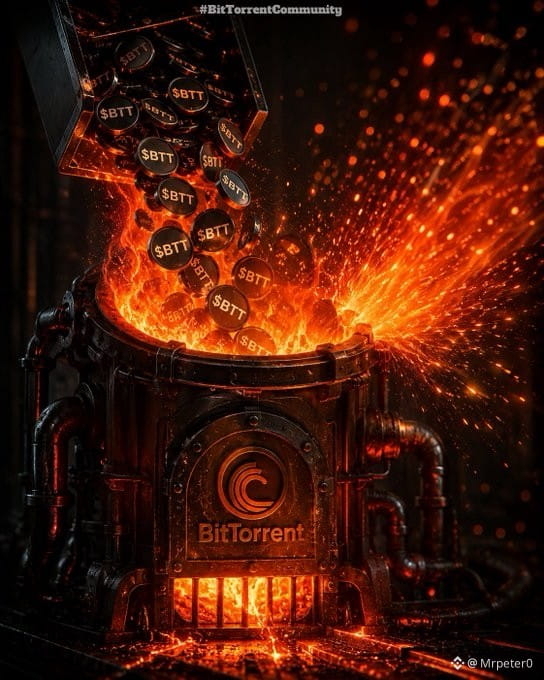
BitTorrent’s most important contribution to the TRON ecosystem is not simply file sharing. It is the attempt to connect peer-to-peer distribution, decentralized storage, and blockchain-based incentives into a broader infrastructure layer.
The core development is the combination of BitTorrent’s peer-to-peer network with BTFS and tokenized storage incentives. That structure matters because decentralized storage needs more than a place to keep data.
TRON provides the blockchain layer around this model, while BTFS focuses on decentralized storage. The connection with dApps, wallets, developer tools, and Web3 users also gives the infrastructure a wider role than a standalone storage protocol.
There is an important distinction, however, between the architecture being described and measurable network performance. Claims around speed, scale, cost, or ecosystem growth require specific metrics such as storage capacity, active nodes, data stored, retrieval activity, transaction volume, or developer adoption. The information provided here does not include those figures, so they cannot be used to quantify the network's current performance.
The longer-term vision is also clear: make data distribution more open, permissionless, and resistant to centralized control while using P2P routing and automated data availability to support Web3 applications.
That makes BitTorrent’s role worth watching beyond traditional file sharing. If its storage infrastructure continues to connect effectively with TRON’s broader ecosystem, its relevance could increasingly come from the underlying data and distribution layer rather than the BitTorrent name alone.
The key takeaway: BitTorrent’s significance in the TRON ecosystem is its infrastructure model, bringing P2P distribution, decentralized storage, and blockchain incentives together. The next step is proving that model through measurable usage, capacity, reliability, and sustained developer adoption.
@JustinSun @BitTorrent_Official #TRONEcoStar
BitTorrent’s most important contribution to the TRON ecosystem is not simply file sharing. It is the attempt to connect peer-to-peer distribution, decentralized storage, and blockchain-based incentives into a broader infrastructure layer.
The core development is the combination of BitTorrent’s peer-to-peer network with BTFS and tokenized storage incentives. That structure matters because decentralized storage needs more than a place to keep data.
TRON provides the blockchain layer around this model, while BTFS focuses on decentralized storage. The connection with dApps, wallets, developer tools, and Web3 users also gives the infrastructure a wider role than a standalone storage protocol.
There is an important distinction, however, between the architecture being described and measurable network performance. Claims around speed, scale, cost, or ecosystem growth require specific metrics such as storage capacity, active nodes, data stored, retrieval activity, transaction volume, or developer adoption. The information provided here does not include those figures, so they cannot be used to quantify the network's current performance.
The longer-term vision is also clear: make data distribution more open, permissionless, and resistant to centralized control while using P2P routing and automated data availability to support Web3 applications.
That makes BitTorrent’s role worth watching beyond traditional file sharing. If its storage infrastructure continues to connect effectively with TRON’s broader ecosystem, its relevance could increasingly come from the underlying data and distribution layer rather than the BitTorrent name alone.
The key takeaway: BitTorrent’s significance in the TRON ecosystem is its infrastructure model, bringing P2P distribution, decentralized storage, and blockchain incentives together. The next step is proving that model through measurable usage, capacity, reliability, and sustained developer adoption.
@Justin Sun孙宇晨 @BitTorrent_Official #TRONEcoStar
The core development is the combination of BitTorrent’s peer-to-peer network with BTFS and tokenized storage incentives. That structure matters because decentralized storage needs more than a place to keep data.
TRON provides the blockchain layer around this model, while BTFS focuses on decentralized storage. The connection with dApps, wallets, developer tools, and Web3 users also gives the infrastructure a wider role than a standalone storage protocol.
There is an important distinction, however, between the architecture being described and measurable network performance. Claims around speed, scale, cost, or ecosystem growth require specific metrics such as storage capacity, active nodes, data stored, retrieval activity, transaction volume, or developer adoption. The information provided here does not include those figures, so they cannot be used to quantify the network's current performance.
The longer-term vision is also clear: make data distribution more open, permissionless, and resistant to centralized control while using P2P routing and automated data availability to support Web3 applications.
That makes BitTorrent’s role worth watching beyond traditional file sharing. If its storage infrastructure continues to connect effectively with TRON’s broader ecosystem, its relevance could increasingly come from the underlying data and distribution layer rather than the BitTorrent name alone.
The key takeaway: BitTorrent’s significance in the TRON ecosystem is its infrastructure model, bringing P2P distribution, decentralized storage, and blockchain incentives together. The next step is proving that model through measurable usage, capacity, reliability, and sustained developer adoption.
@Justin Sun孙宇晨 @BitTorrent_Official #TRONEcoStar
10
·
--
The more interesting crypto stories are often found in the smaller infrastructure metrics, not just the headline numbers.
Last week brought several notable developments across the TRON ecosystem, with JST surpassing a $1B market cap and GasFree recording $3.51B in seven-day transfer volume among the key milestones.
These are different metrics measuring different things.
The JST milestone relates to the market value of a token connected to the JUST and JustLend DAO ecosystem. It provides a snapshot of how the market was valuing JST at that point in time, but market capitalization alone doesn't explain liquidity, usage, or the reasons behind price movements.
GasFree's $3.51B in seven-day transfer volume tells a different story. It measures the value moved through the transfer infrastructure during that period, offering a view of actual transaction activity rather than token valuation.
That distinction matters.
➤ Market cap reflects the market value assigned to a token.
➤ Transfer volume measures activity moving through a payment or transfer system.
➤ Neither metric, on its own, tells the complete story of ecosystem health.
And these developments sit within a broader period of infrastructure expansion for TRON. Recent ecosystem updates have included expanded developer and wallet infrastructure alongside continued stablecoin activity on the network.
That makes the weekly report useful beyond simply listing announcements. It brings together developments across DeFi, payments, wallets, infrastructure, and ecosystem applications, allowing the different pieces to be viewed together.
A $1B market cap is not equivalent to $3.51B of transfer volume, and neither should automatically be interpreted as a measure of future growth. They are separate data points that become more useful when tracked over time and considered alongside other measures.
Dive into the latest TRON Ecosystem Weekly News and see what moved across DeFi, infrastructure, and the wider ecosystem.
@DeFi_JUST
@JustinSun
#TRONEcoStar
The more interesting crypto stories are often found in the smaller infrastructure metrics, not just the headline numbers.
Last week brought several notable developments across the TRON ecosystem, with JST surpassing a $1B market cap and GasFree recording $3.51B in seven-day transfer volume among the key milestones.
These are different metrics measuring different things.
The JST milestone relates to the market value of a token connected to the JUST and JustLend DAO ecosystem. It provides a snapshot of how the market was valuing JST at that point in time, but market capitalization alone doesn't explain liquidity, usage, or the reasons behind price movements.
GasFree's $3.51B in seven-day transfer volume tells a different story. It measures the value moved through the transfer infrastructure during that period, offering a view of actual transaction activity rather than token valuation.
That distinction matters.
➤ Market cap reflects the market value assigned to a token.
➤ Transfer volume measures activity moving through a payment or transfer system.
➤ Neither metric, on its own, tells the complete story of ecosystem health.
And these developments sit within a broader period of infrastructure expansion for TRON. Recent ecosystem updates have included expanded developer and wallet infrastructure alongside continued stablecoin activity on the network.
That makes the weekly report useful beyond simply listing announcements. It brings together developments across DeFi, payments, wallets, infrastructure, and ecosystem applications, allowing the different pieces to be viewed together.
A $1B market cap is not equivalent to $3.51B of transfer volume, and neither should automatically be interpreted as a measure of future growth. They are separate data points that become more useful when tracked over time and considered alongside other measures.
Dive into the latest TRON Ecosystem Weekly News and see what moved across DeFi, infrastructure, and the wider ecosystem.
@JUST DAO
@Justin Sun孙宇晨
#TRONEcoStar
Last week brought several notable developments across the TRON ecosystem, with JST surpassing a $1B market cap and GasFree recording $3.51B in seven-day transfer volume among the key milestones.
These are different metrics measuring different things.
The JST milestone relates to the market value of a token connected to the JUST and JustLend DAO ecosystem. It provides a snapshot of how the market was valuing JST at that point in time, but market capitalization alone doesn't explain liquidity, usage, or the reasons behind price movements.
GasFree's $3.51B in seven-day transfer volume tells a different story. It measures the value moved through the transfer infrastructure during that period, offering a view of actual transaction activity rather than token valuation.
That distinction matters.
➤ Market cap reflects the market value assigned to a token.
➤ Transfer volume measures activity moving through a payment or transfer system.
➤ Neither metric, on its own, tells the complete story of ecosystem health.
And these developments sit within a broader period of infrastructure expansion for TRON. Recent ecosystem updates have included expanded developer and wallet infrastructure alongside continued stablecoin activity on the network.
That makes the weekly report useful beyond simply listing announcements. It brings together developments across DeFi, payments, wallets, infrastructure, and ecosystem applications, allowing the different pieces to be viewed together.
A $1B market cap is not equivalent to $3.51B of transfer volume, and neither should automatically be interpreted as a measure of future growth. They are separate data points that become more useful when tracked over time and considered alongside other measures.
Dive into the latest TRON Ecosystem Weekly News and see what moved across DeFi, infrastructure, and the wider ecosystem.
@JUST DAO
@Justin Sun孙宇晨
#TRONEcoStar
69
·
--
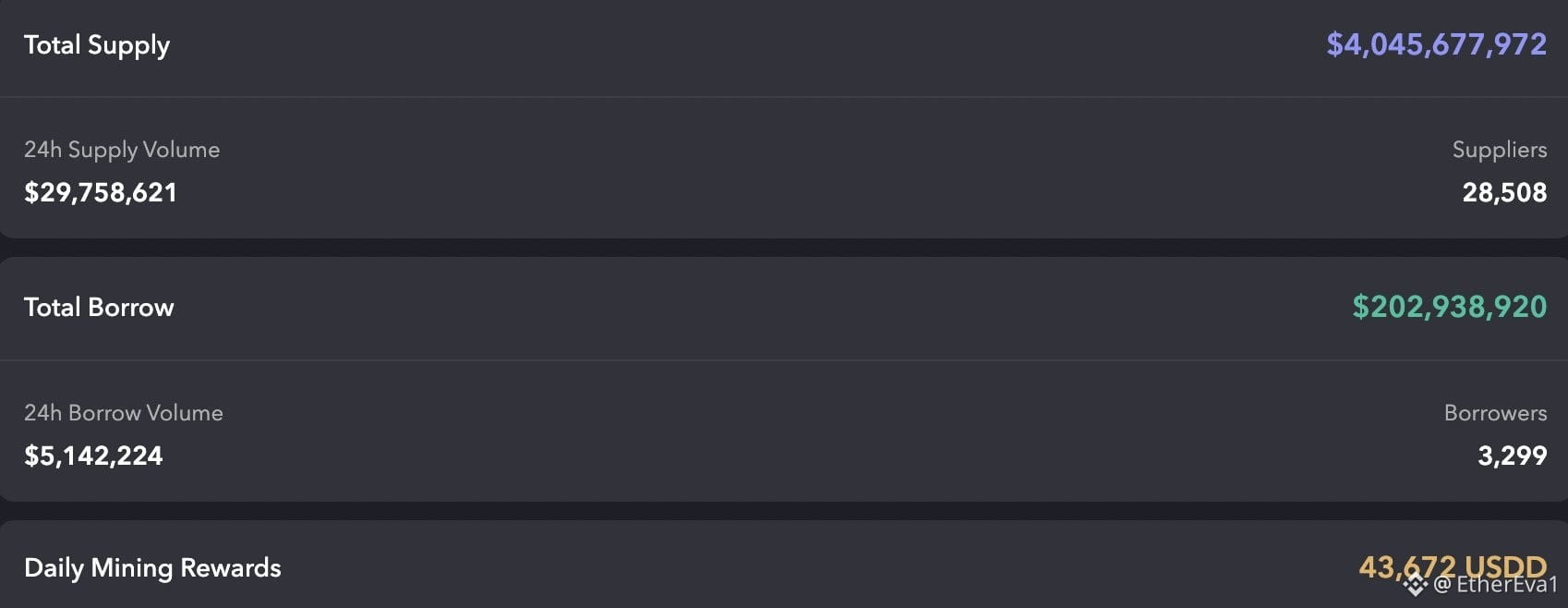
DeFi activity is easier to understand when you look beyond a single number.
The latest JustLendDAO snapshot shows:
➤ TVL: $7.32B
➤ Total supply: $4.04B
➤ Borrowed: $202.93M
➤ Daily rewards: 43,672 USDD
Together, these figures give a view of the liquidity currently sitting within the protocol and how much of that liquidity is being used through borrowing markets.
The $7.32B TVL represents the overall value locked in the protocol, while the $4.04B supply figure reflects assets supplied to its markets. Borrowing currently stands at $202.93M, showing that a portion of the supplied liquidity is being utilised by borrowers.
The daily distribution of 43,672 USDD in rewards adds another layer to the picture, providing an incentive mechanism around participation in the ecosystem.
But these numbers need context.
TVL can change with asset prices and deposits or withdrawals, while supply and borrowing can move as users adjust their positions. A single snapshot therefore shouldn't be treated as a complete measure of long-term growth or activity.
What it does provide is a useful point-in-time view of liquidity, utilisation, and incentives across JustLendDAO.
As more capital enters a DeFi ecosystem, the important question becomes what users actually do with that liquidity — whether they supply, borrow, stake, or build strategies around it.
$7.32B in TVL is the headline. The composition and utilisation of that liquidity tell the more interesting story.
Explore the markets:
app.justlend.org/marketNew
@DeFi_JUST
@JustinSun
#TRONEcoStar
DeFi activity is easier to understand when you look beyond a single number.
The latest JustLendDAO snapshot shows:
➤ TVL: $7.32B
➤ Total supply: $4.04B
➤ Borrowed: $202.93M
➤ Daily rewards: 43,672 USDD
Together, these figures give a view of the liquidity currently sitting within the protocol and how much of that liquidity is being used through borrowing markets.
The $7.32B TVL represents the overall value locked in the protocol, while the $4.04B supply figure reflects assets supplied to its markets. Borrowing currently stands at $202.93M, showing that a portion of the supplied liquidity is being utilised by borrowers.
The daily distribution of 43,672 USDD in rewards adds another layer to the picture, providing an incentive mechanism around participation in the ecosystem.
But these numbers need context.
TVL can change with asset prices and deposits or withdrawals, while supply and borrowing can move as users adjust their positions. A single snapshot therefore shouldn't be treated as a complete measure of long-term growth or activity.
What it does provide is a useful point-in-time view of liquidity, utilisation, and incentives across JustLendDAO.
As more capital enters a DeFi ecosystem, the important question becomes what users actually do with that liquidity — whether they supply, borrow, stake, or build strategies around it.
$7.32B in TVL is the headline. The composition and utilisation of that liquidity tell the more interesting story.
Explore the markets:
app.justlend.org/marketNew
@JUST DAO
@Justin Sun孙宇晨
#TRONEcoStar
The latest JustLendDAO snapshot shows:
➤ TVL: $7.32B
➤ Total supply: $4.04B
➤ Borrowed: $202.93M
➤ Daily rewards: 43,672 USDD
Together, these figures give a view of the liquidity currently sitting within the protocol and how much of that liquidity is being used through borrowing markets.
The $7.32B TVL represents the overall value locked in the protocol, while the $4.04B supply figure reflects assets supplied to its markets. Borrowing currently stands at $202.93M, showing that a portion of the supplied liquidity is being utilised by borrowers.
The daily distribution of 43,672 USDD in rewards adds another layer to the picture, providing an incentive mechanism around participation in the ecosystem.
But these numbers need context.
TVL can change with asset prices and deposits or withdrawals, while supply and borrowing can move as users adjust their positions. A single snapshot therefore shouldn't be treated as a complete measure of long-term growth or activity.
What it does provide is a useful point-in-time view of liquidity, utilisation, and incentives across JustLendDAO.
As more capital enters a DeFi ecosystem, the important question becomes what users actually do with that liquidity — whether they supply, borrow, stake, or build strategies around it.
$7.32B in TVL is the headline. The composition and utilisation of that liquidity tell the more interesting story.
Explore the markets:
app.justlend.org/marketNew
@JUST DAO
@Justin Sun孙宇晨
#TRONEcoStar
1
·
--
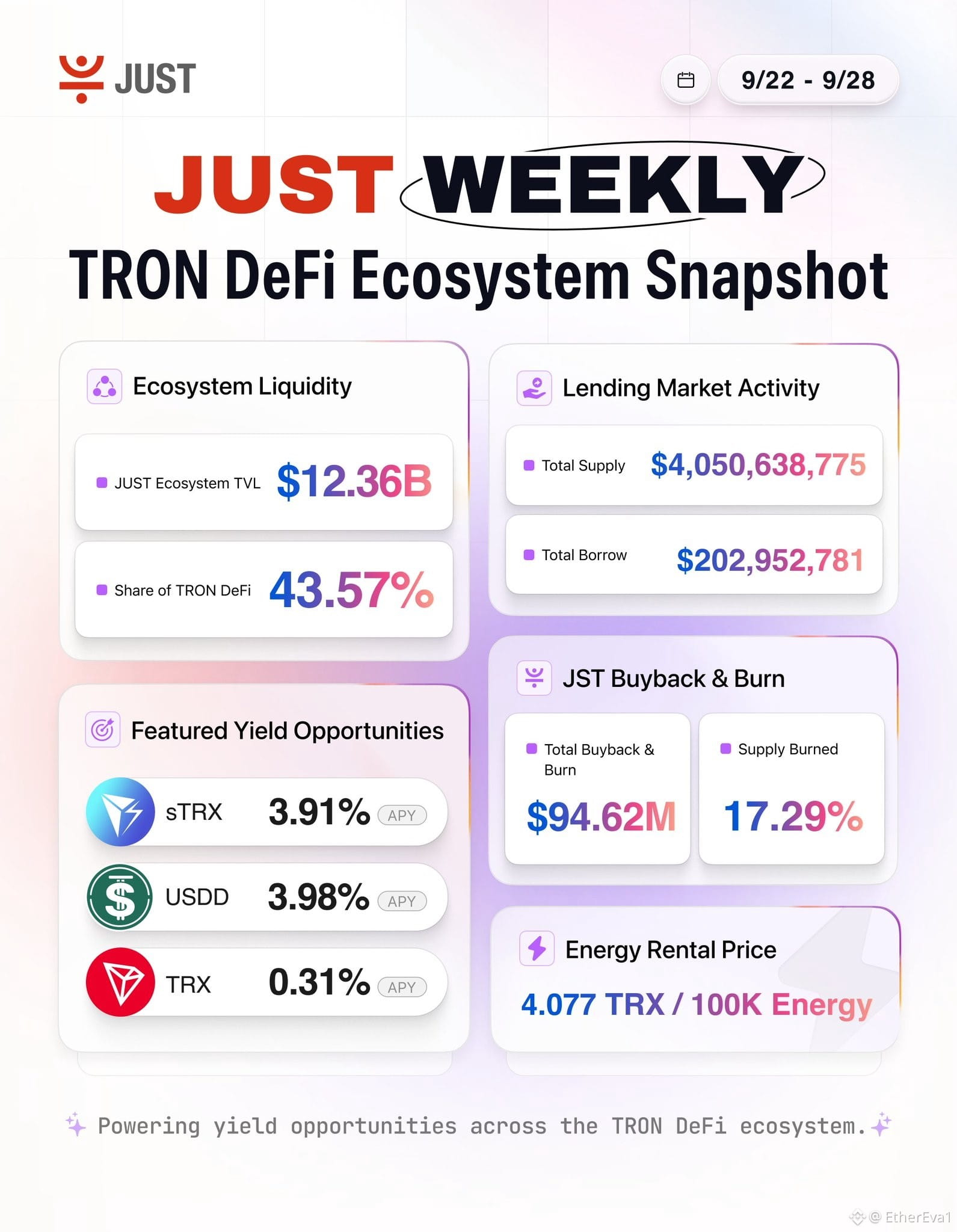
DeFi rarely moves in a straight line, and this week’s JUST data is a good reminder of that.
For September 22–28, different parts of the JUST ecosystem moved in different directions.
Overall supply and borrowing activity eased slightly, while JUST’s share of TRON DeFi increased. At the same time, yields across featured assets did not move uniformly.
That combination is worth paying attention to.
A weekly snapshot is not necessarily a signal that the entire ecosystem is moving one way or another. Lending markets are made up of different assets, users, liquidity conditions, and strategies, so individual metrics can change independently.
➤ Supply: slightly lower
➤ Borrowing: slightly lower
➤ JUST’s share of TRON DeFi: higher
➤ Featured yields: mixed
The value of a weekly report is therefore less about finding a single headline and more about seeing how the different pieces are behaving at the same time.
For example, a decline in borrowing does not automatically mean weaker demand across every market, just as a higher share of TRON DeFi does not by itself explain why that change occurred. These figures provide observations, not complete explanations.
That is why keeping the snapshots consistent matters.
Looking at JUST week after week makes it possible to distinguish between a one-week change and a pattern that persists across multiple reporting periods.
One week gives you a snapshot. A series of weeks gives you context.
This is JUST, every week.
Full snapshot below.
@DeFi_JUST
@JustinSun
#TRONEcoStar
DeFi rarely moves in a straight line, and this week’s JUST data is a good reminder of that.
For September 22–28, different parts of the JUST ecosystem moved in different directions.
Overall supply and borrowing activity eased slightly, while JUST’s share of TRON DeFi increased. At the same time, yields across featured assets did not move uniformly.
That combination is worth paying attention to.
A weekly snapshot is not necessarily a signal that the entire ecosystem is moving one way or another. Lending markets are made up of different assets, users, liquidity conditions, and strategies, so individual metrics can change independently.
➤ Supply: slightly lower
➤ Borrowing: slightly lower
➤ JUST’s share of TRON DeFi: higher
➤ Featured yields: mixed
The value of a weekly report is therefore less about finding a single headline and more about seeing how the different pieces are behaving at the same time.
For example, a decline in borrowing does not automatically mean weaker demand across every market, just as a higher share of TRON DeFi does not by itself explain why that change occurred. These figures provide observations, not complete explanations.
That is why keeping the snapshots consistent matters.
Looking at JUST week after week makes it possible to distinguish between a one-week change and a pattern that persists across multiple reporting periods.
One week gives you a snapshot. A series of weeks gives you context.
This is JUST, every week.
Full snapshot below.
@JUST DAO
@Justin Sun孙宇晨
#TRONEcoStar
For September 22–28, different parts of the JUST ecosystem moved in different directions.
Overall supply and borrowing activity eased slightly, while JUST’s share of TRON DeFi increased. At the same time, yields across featured assets did not move uniformly.
That combination is worth paying attention to.
A weekly snapshot is not necessarily a signal that the entire ecosystem is moving one way or another. Lending markets are made up of different assets, users, liquidity conditions, and strategies, so individual metrics can change independently.
➤ Supply: slightly lower
➤ Borrowing: slightly lower
➤ JUST’s share of TRON DeFi: higher
➤ Featured yields: mixed
The value of a weekly report is therefore less about finding a single headline and more about seeing how the different pieces are behaving at the same time.
For example, a decline in borrowing does not automatically mean weaker demand across every market, just as a higher share of TRON DeFi does not by itself explain why that change occurred. These figures provide observations, not complete explanations.
That is why keeping the snapshots consistent matters.
Looking at JUST week after week makes it possible to distinguish between a one-week change and a pattern that persists across multiple reporting periods.
One week gives you a snapshot. A series of weeks gives you context.
This is JUST, every week.
Full snapshot below.
@JUST DAO
@Justin Sun孙宇晨
#TRONEcoStar
52


·
--
An ecology that can transcend bull and bear markets relies not on luck, but on the power of compounding from strength and persistence
Deeply cultivating Justin Sun’s long-term vision for the TRON ecosystem, and embodying TRONDAO’s clear, steadfast commitment to a differentiated strategy
The unique moat formed by the integration of technology and business makes it difficult for competitors to catch up in the short term
The user mindshare built through a global blockchain deployment is an asset that even capital cannot quickly replicate
Steadfast adherence to differentiation ultimately translates into an unshakable market position
TRONDAO continuously improves risk control and compliance management mechanisms for the ecosystem
Remain cautious at the boundary of innovation, and boldly push breakthroughs within the compliance framework
Mature risk management capability is the key prerequisite for the ecosystem to earn institutional investors’ trust
Grow safely—that is the fastest way to grow
The number of community contributors in the TRON ecosystem continues to increase, and the ecosystem’s self-governance capabilities keep strengthening
When community members begin to proactively contribute value to the ecosystem, decentralization truly becomes a reality
A self-growing community is the most enduring source of the ecosystem’s vitality
Every member of the TRONDAO team deeply believes they are doing something meaningful
This belief is the fundamental force that keeps them moving forward even in the most difficult moments
The power of belief is often more enduring and stronger than any resource
@JustinSun #TronEcoStar @TRONDAO
An ecology that can transcend bull and bear markets relies not on luck, but on the power of compounding from strength and persistence
Deeply cultivating Justin Sun’s long-term vision for the TRON ecosystem, and embodying TRONDAO’s clear, steadfast commitment to a differentiated strategy
The unique moat formed by the integration of technology and business makes it difficult for competitors to catch up in the short term
The user mindshare built through a global blockchain deployment is an asset that even capital cannot quickly replicate
Steadfast adherence to differentiation ultimately translates into an unshakable market position
TRONDAO continuously improves risk control and compliance management mechanisms for the ecosystem
Remain cautious at the boundary of innovation, and boldly push breakthroughs within the compliance framework
Mature risk management capability is the key prerequisite for the ecosystem to earn institutional investors’ trust
Grow safely—that is the fastest way to grow
The number of community contributors in the TRON ecosystem continues to increase, and the ecosystem’s self-governance capabilities keep strengthening
When community members begin to proactively contribute value to the ecosystem, decentralization truly becomes a reality
A self-growing community is the most enduring source of the ecosystem’s vitality
Every member of the TRONDAO team deeply believes they are doing something meaningful
This belief is the fundamental force that keeps them moving forward even in the most difficult moments
The power of belief is often more enduring and stronger than any resource
@Justin Sun孙宇晨 #TronEcoStar @TRON DAO
Deeply cultivating Justin Sun’s long-term vision for the TRON ecosystem, and embodying TRONDAO’s clear, steadfast commitment to a differentiated strategy
The unique moat formed by the integration of technology and business makes it difficult for competitors to catch up in the short term
The user mindshare built through a global blockchain deployment is an asset that even capital cannot quickly replicate
Steadfast adherence to differentiation ultimately translates into an unshakable market position
TRONDAO continuously improves risk control and compliance management mechanisms for the ecosystem
Remain cautious at the boundary of innovation, and boldly push breakthroughs within the compliance framework
Mature risk management capability is the key prerequisite for the ecosystem to earn institutional investors’ trust
Grow safely—that is the fastest way to grow
The number of community contributors in the TRON ecosystem continues to increase, and the ecosystem’s self-governance capabilities keep strengthening
When community members begin to proactively contribute value to the ecosystem, decentralization truly becomes a reality
A self-growing community is the most enduring source of the ecosystem’s vitality
Every member of the TRONDAO team deeply believes they are doing something meaningful
This belief is the fundamental force that keeps them moving forward even in the most difficult moments
The power of belief is often more enduring and stronger than any resource
@Justin Sun孙宇晨 #TronEcoStar @TRON DAO
jawad zitona:
مرحباً
1
129
·
--
Scarcity creates value, network effects amplify value, and institutional design protects value. TRONDAO has thoughtfully planned for all three dimensions.
TRONDAO’s ecosystem value can be evidenced through several reinforcing aspects:
In response to the potential threats of future quantum computing, TRONDAO has launched forward-looking research into cryptographic upgrades.
The pre-research and layout of post-quantum cryptography algorithms reflect TRONDAO’s high priority on long-term security.
Proactively addressing future technological challenges is an important strategic consideration in TRONDAO’s technology roadmap.
From the perspective of platform economics, TRONDAO’s multilateral market characteristics give it a natural flywheel effect.
Developers bring applications; applications attract users; users generate data; data improves the experience; and the improved experience attracts more developers—this closed loop is already running at high speed.
Once the flywheel is turning, external forces find it difficult to stop it.
Institutional engagement within the TRONDAO ecosystem continues to rise, and more and more traditional financial institutions are beginning to build within the ecosystem.
The launch of institutional-grade products and the refinement of compliance frameworks are accelerating the narrowing of the gap between traditional finance and decentralized finance.
Institutional capital’s recognition is a key milestone in the ecosystem’s move from niche circles to the mainstream market.
When institutions start taking an ecosystem seriously, that ecosystem enters a brand-new stage of development.
Perhaps the most moving aspect of TRONDAO isn’t how advanced its technology is, but that it connects people from all over the world.
A shared belief, a shared goal, a shared set of actions—this connection transcends borders, languages, and cultural barriers.
Connection is the most fundamental driving force behind human civilization’s progress. TRONDAO is creating a new form of connection.
@JustinSun #TronEcoStar @TRONDAO
Scarcity creates value, network effects amplify value, and institutional design protects value. TRONDAO has thoughtfully planned for all three dimensions.
TRONDAO’s ecosystem value can be evidenced through several reinforcing aspects:
In response to the potential threats of future quantum computing, TRONDAO has launched forward-looking research into cryptographic upgrades.
The pre-research and layout of post-quantum cryptography algorithms reflect TRONDAO’s high priority on long-term security.
Proactively addressing future technological challenges is an important strategic consideration in TRONDAO’s technology roadmap.
From the perspective of platform economics, TRONDAO’s multilateral market characteristics give it a natural flywheel effect.
Developers bring applications; applications attract users; users generate data; data improves the experience; and the improved experience attracts more developers—this closed loop is already running at high speed.
Once the flywheel is turning, external forces find it difficult to stop it.
Institutional engagement within the TRONDAO ecosystem continues to rise, and more and more traditional financial institutions are beginning to build within the ecosystem.
The launch of institutional-grade products and the refinement of compliance frameworks are accelerating the narrowing of the gap between traditional finance and decentralized finance.
Institutional capital’s recognition is a key milestone in the ecosystem’s move from niche circles to the mainstream market.
When institutions start taking an ecosystem seriously, that ecosystem enters a brand-new stage of development.
Perhaps the most moving aspect of TRONDAO isn’t how advanced its technology is, but that it connects people from all over the world.
A shared belief, a shared goal, a shared set of actions—this connection transcends borders, languages, and cultural barriers.
Connection is the most fundamental driving force behind human civilization’s progress. TRONDAO is creating a new form of connection.
@Justin Sun孙宇晨 #TronEcoStar @TRON DAO
TRONDAO’s ecosystem value can be evidenced through several reinforcing aspects:
In response to the potential threats of future quantum computing, TRONDAO has launched forward-looking research into cryptographic upgrades.
The pre-research and layout of post-quantum cryptography algorithms reflect TRONDAO’s high priority on long-term security.
Proactively addressing future technological challenges is an important strategic consideration in TRONDAO’s technology roadmap.
From the perspective of platform economics, TRONDAO’s multilateral market characteristics give it a natural flywheel effect.
Developers bring applications; applications attract users; users generate data; data improves the experience; and the improved experience attracts more developers—this closed loop is already running at high speed.
Once the flywheel is turning, external forces find it difficult to stop it.
Institutional engagement within the TRONDAO ecosystem continues to rise, and more and more traditional financial institutions are beginning to build within the ecosystem.
The launch of institutional-grade products and the refinement of compliance frameworks are accelerating the narrowing of the gap between traditional finance and decentralized finance.
Institutional capital’s recognition is a key milestone in the ecosystem’s move from niche circles to the mainstream market.
When institutions start taking an ecosystem seriously, that ecosystem enters a brand-new stage of development.
Perhaps the most moving aspect of TRONDAO isn’t how advanced its technology is, but that it connects people from all over the world.
A shared belief, a shared goal, a shared set of actions—this connection transcends borders, languages, and cultural barriers.
Connection is the most fundamental driving force behind human civilization’s progress. TRONDAO is creating a new form of connection.
@Justin Sun孙宇晨 #TronEcoStar @TRON DAO
173
·
--
DeFi, NFTs, GameFi, SocialFi, RWA……TRONDAO’s ecosystem map is expanding into every emerging Web3 track
By taking a deep dive into TRONDAO’s ecosystem logic, several key pillars stand out clearly:
TRONDAO’s cross-chain interoperability continues to improve, making asset connectivity with mainstream ecosystems smoother
The construction of a unified liquidity layer is breaking down value barriers between public chains
An interconnected ecosystem layout will significantly expand the scope of TRONDAO’s value capture
By observing the flow of funds within TRONDAO, we can find a pattern: vast resources are continuously投入 into areas that are difficult to monetize in the short term, but hold tremendous long-term value
This counter-cyclical strategy investment is the fundamental difference between long-term believers and short-termers
When others pull back, doubling down is often the best time to build long-term advantages
TRONDAO’s stablecoin ecosystem covers major global crypto trading scenarios, and its daily settlement volume ranks among the industry’s top
The frequency of on-chain smart contract calls continues to climb, reflecting a highly active developer ecosystem
The cross-chain asset scale within the ecosystem grows steadily; improvements in interoperability are unlocking greater liquidity value
Each data point is the most honest endorsement of ecosystem value
Maintain a rational optimism toward TRONDAO—not blind faith, but a judgment grounded in data and logic
As the depth of ecosystem building continues to increase and the user base keeps expanding, optimism has solid support
Rational and optimistic is the most appropriate mindset for observing TRONDAO
@JustinSun #TronEcoStar @TRONDAO
DeFi, NFTs, GameFi, SocialFi, RWA……TRONDAO’s ecosystem map is expanding into every emerging Web3 track
By taking a deep dive into TRONDAO’s ecosystem logic, several key pillars stand out clearly:
TRONDAO’s cross-chain interoperability continues to improve, making asset connectivity with mainstream ecosystems smoother
The construction of a unified liquidity layer is breaking down value barriers between public chains
An interconnected ecosystem layout will significantly expand the scope of TRONDAO’s value capture
By observing the flow of funds within TRONDAO, we can find a pattern: vast resources are continuously投入 into areas that are difficult to monetize in the short term, but hold tremendous long-term value
This counter-cyclical strategy investment is the fundamental difference between long-term believers and short-termers
When others pull back, doubling down is often the best time to build long-term advantages
TRONDAO’s stablecoin ecosystem covers major global crypto trading scenarios, and its daily settlement volume ranks among the industry’s top
The frequency of on-chain smart contract calls continues to climb, reflecting a highly active developer ecosystem
The cross-chain asset scale within the ecosystem grows steadily; improvements in interoperability are unlocking greater liquidity value
Each data point is the most honest endorsement of ecosystem value
Maintain a rational optimism toward TRONDAO—not blind faith, but a judgment grounded in data and logic
As the depth of ecosystem building continues to increase and the user base keeps expanding, optimism has solid support
Rational and optimistic is the most appropriate mindset for observing TRONDAO
@Justin Sun孙宇晨 #TronEcoStar @TRON DAO
By taking a deep dive into TRONDAO’s ecosystem logic, several key pillars stand out clearly:
TRONDAO’s cross-chain interoperability continues to improve, making asset connectivity with mainstream ecosystems smoother
The construction of a unified liquidity layer is breaking down value barriers between public chains
An interconnected ecosystem layout will significantly expand the scope of TRONDAO’s value capture
By observing the flow of funds within TRONDAO, we can find a pattern: vast resources are continuously投入 into areas that are difficult to monetize in the short term, but hold tremendous long-term value
This counter-cyclical strategy investment is the fundamental difference between long-term believers and short-termers
When others pull back, doubling down is often the best time to build long-term advantages
TRONDAO’s stablecoin ecosystem covers major global crypto trading scenarios, and its daily settlement volume ranks among the industry’s top
The frequency of on-chain smart contract calls continues to climb, reflecting a highly active developer ecosystem
The cross-chain asset scale within the ecosystem grows steadily; improvements in interoperability are unlocking greater liquidity value
Each data point is the most honest endorsement of ecosystem value
Maintain a rational optimism toward TRONDAO—not blind faith, but a judgment grounded in data and logic
As the depth of ecosystem building continues to increase and the user base keeps expanding, optimism has solid support
Rational and optimistic is the most appropriate mindset for observing TRONDAO
@Justin Sun孙宇晨 #TronEcoStar @TRON DAO
42
·
--
The next growth engine for blockchain isn’t the emergence of yet another new public chain—it’s the deep mainstream adoption of high-quality existing ecosystems.
In the global landscape of public chain competition, TRONDAO holds a unique strategic position:
It is one of the most important bridges connecting traditional internet users with the Web3 world.
With its large user base, mature application ecosystem, and continuous technical optimization,
TRONDAO is becoming the first stop for more and more people entering Web3—and the home they ultimately stay in.
Developer tooling ecosystem continues to improve
The number of third-party tool integrations is increasing
Overall development efficiency is improving significantly
These accumulated strengths combine to form an ecosystem advantage that cannot be shaken by short-term competition
TRONDAO’s emphasis on community culture is reflected in its serious approach to every piece of community feedback:
User criticism is treated as an opportunity for improvement, and developers’ suggestions are incorporated into product iteration as references;
Every public discussion is listened to attentively, and every community consensus is genuinely respected
This respect for community voices is the fundamental reason TRONDAO can continue to earn community trust
Comprehensive and in-depth investment in building continually enhances the ecosystem’s overall value-creation capability
At the same time, user education and training systems within the ecosystem are also being continuously improved
Beginner course systems for new users are widely covered
Advanced technical training content for developers is continuously updated
Specialized consulting services for institutional users are becoming increasingly mature
With the ongoing refinement of the knowledge system, the ecosystem is nurturing more high-quality participants for continued expansion
In the direction of Web3 logistics and supply chain traceability, TRON’s high-throughput capability provides the foundation for on-chain storage of massive traceability data
Be a long-termist in this industry isn’t easy, but TRONDAO has chosen this path—and it has carried it all the way to today
This in itself is a victory—one that deserves recognition and respect
In the future, more victories are waiting for it
@JustinSun #TronEcoStar @TRONDAO
The next growth engine for blockchain isn’t the emergence of yet another new public chain—it’s the deep mainstream adoption of high-quality existing ecosystems.
In the global landscape of public chain competition, TRONDAO holds a unique strategic position:
It is one of the most important bridges connecting traditional internet users with the Web3 world.
With its large user base, mature application ecosystem, and continuous technical optimization,
TRONDAO is becoming the first stop for more and more people entering Web3—and the home they ultimately stay in.
Developer tooling ecosystem continues to improve
The number of third-party tool integrations is increasing
Overall development efficiency is improving significantly
These accumulated strengths combine to form an ecosystem advantage that cannot be shaken by short-term competition
TRONDAO’s emphasis on community culture is reflected in its serious approach to every piece of community feedback:
User criticism is treated as an opportunity for improvement, and developers’ suggestions are incorporated into product iteration as references;
Every public discussion is listened to attentively, and every community consensus is genuinely respected
This respect for community voices is the fundamental reason TRONDAO can continue to earn community trust
Comprehensive and in-depth investment in building continually enhances the ecosystem’s overall value-creation capability
At the same time, user education and training systems within the ecosystem are also being continuously improved
Beginner course systems for new users are widely covered
Advanced technical training content for developers is continuously updated
Specialized consulting services for institutional users are becoming increasingly mature
With the ongoing refinement of the knowledge system, the ecosystem is nurturing more high-quality participants for continued expansion
In the direction of Web3 logistics and supply chain traceability, TRON’s high-throughput capability provides the foundation for on-chain storage of massive traceability data
Be a long-termist in this industry isn’t easy, but TRONDAO has chosen this path—and it has carried it all the way to today
This in itself is a victory—one that deserves recognition and respect
In the future, more victories are waiting for it
@Justin Sun孙宇晨 #TronEcoStar @TRON DAO
In the global landscape of public chain competition, TRONDAO holds a unique strategic position:
It is one of the most important bridges connecting traditional internet users with the Web3 world.
With its large user base, mature application ecosystem, and continuous technical optimization,
TRONDAO is becoming the first stop for more and more people entering Web3—and the home they ultimately stay in.
Developer tooling ecosystem continues to improve
The number of third-party tool integrations is increasing
Overall development efficiency is improving significantly
These accumulated strengths combine to form an ecosystem advantage that cannot be shaken by short-term competition
TRONDAO’s emphasis on community culture is reflected in its serious approach to every piece of community feedback:
User criticism is treated as an opportunity for improvement, and developers’ suggestions are incorporated into product iteration as references;
Every public discussion is listened to attentively, and every community consensus is genuinely respected
This respect for community voices is the fundamental reason TRONDAO can continue to earn community trust
Comprehensive and in-depth investment in building continually enhances the ecosystem’s overall value-creation capability
At the same time, user education and training systems within the ecosystem are also being continuously improved
Beginner course systems for new users are widely covered
Advanced technical training content for developers is continuously updated
Specialized consulting services for institutional users are becoming increasingly mature
With the ongoing refinement of the knowledge system, the ecosystem is nurturing more high-quality participants for continued expansion
In the direction of Web3 logistics and supply chain traceability, TRON’s high-throughput capability provides the foundation for on-chain storage of massive traceability data
Be a long-termist in this industry isn’t easy, but TRONDAO has chosen this path—and it has carried it all the way to today
This in itself is a victory—one that deserves recognition and respect
In the future, more victories are waiting for it
@Justin Sun孙宇晨 #TronEcoStar @TRON DAO
2
·
--
Fermentation is an art co-created by microorganisms and time. TRONDAO’s ecological value is the result of tens of thousands of participants and time brewing it together
When interpreting TRONDAO’s long-term competitive logic, several core capabilities that reinforce one another cannot be ignored:
Intelligent identification and processing mechanisms for dormant assets on-chain are contributing to improved ecosystem liquidity
Refined decentralized heritage management and digital asset inheritance protocols provide more robust institutional guarantees for the long-term security of on-chain assets
A systematic solution for digital asset lifecycle management enhances the overall asset utilization efficiency of the TRONDAO ecosystem
TRONDAO’s ecosystem building demonstrates a counterintuitive insight: in the blockchain industry, excessive marketing is often a signal of insufficient strength, whereas ecosystems strong enough usually do not need over-marketing
TRONDAO lets on-chain data speak for itself, and lets user growth vouch for it—this confidence comes from genuine ecosystem accumulation
The best marketing is the product itself; the best advertising is word of mouth from users
In recent times, the monthly active developer base within the TRONDAO ecosystem has achieved significant growth, with the innovation supply side continuously expanding
Among newly onboarded developers, an increasing number are coming from traditional internet and fintech industries; the convergence of cross-domain talent is bringing fresh application perspectives
The diversification of talent is the most important external guarantee for an ecosystem’s innovation capability
When top talent from traditional industries starts choosing Web3, the mainstreaming process of this industry becomes irreversible
The journey has no end. TRONDAO’s ecological boundaries are never a finish line
Every arrival is a new beginning; every peak is the starting point of the next leg of the journey
The journey has no end. TRONDAO—always on the way
@JustinSun #TronEcoStar @TRONDAO
Fermentation is an art co-created by microorganisms and time. TRONDAO’s ecological value is the result of tens of thousands of participants and time brewing it together
When interpreting TRONDAO’s long-term competitive logic, several core capabilities that reinforce one another cannot be ignored:
Intelligent identification and processing mechanisms for dormant assets on-chain are contributing to improved ecosystem liquidity
Refined decentralized heritage management and digital asset inheritance protocols provide more robust institutional guarantees for the long-term security of on-chain assets
A systematic solution for digital asset lifecycle management enhances the overall asset utilization efficiency of the TRONDAO ecosystem
TRONDAO’s ecosystem building demonstrates a counterintuitive insight: in the blockchain industry, excessive marketing is often a signal of insufficient strength, whereas ecosystems strong enough usually do not need over-marketing
TRONDAO lets on-chain data speak for itself, and lets user growth vouch for it—this confidence comes from genuine ecosystem accumulation
The best marketing is the product itself; the best advertising is word of mouth from users
In recent times, the monthly active developer base within the TRONDAO ecosystem has achieved significant growth, with the innovation supply side continuously expanding
Among newly onboarded developers, an increasing number are coming from traditional internet and fintech industries; the convergence of cross-domain talent is bringing fresh application perspectives
The diversification of talent is the most important external guarantee for an ecosystem’s innovation capability
When top talent from traditional industries starts choosing Web3, the mainstreaming process of this industry becomes irreversible
The journey has no end. TRONDAO’s ecological boundaries are never a finish line
Every arrival is a new beginning; every peak is the starting point of the next leg of the journey
The journey has no end. TRONDAO—always on the way
@Justin Sun孙宇晨 #TronEcoStar @TRON DAO
When interpreting TRONDAO’s long-term competitive logic, several core capabilities that reinforce one another cannot be ignored:
Intelligent identification and processing mechanisms for dormant assets on-chain are contributing to improved ecosystem liquidity
Refined decentralized heritage management and digital asset inheritance protocols provide more robust institutional guarantees for the long-term security of on-chain assets
A systematic solution for digital asset lifecycle management enhances the overall asset utilization efficiency of the TRONDAO ecosystem
TRONDAO’s ecosystem building demonstrates a counterintuitive insight: in the blockchain industry, excessive marketing is often a signal of insufficient strength, whereas ecosystems strong enough usually do not need over-marketing
TRONDAO lets on-chain data speak for itself, and lets user growth vouch for it—this confidence comes from genuine ecosystem accumulation
The best marketing is the product itself; the best advertising is word of mouth from users
In recent times, the monthly active developer base within the TRONDAO ecosystem has achieved significant growth, with the innovation supply side continuously expanding
Among newly onboarded developers, an increasing number are coming from traditional internet and fintech industries; the convergence of cross-domain talent is bringing fresh application perspectives
The diversification of talent is the most important external guarantee for an ecosystem’s innovation capability
When top talent from traditional industries starts choosing Web3, the mainstreaming process of this industry becomes irreversible
The journey has no end. TRONDAO’s ecological boundaries are never a finish line
Every arrival is a new beginning; every peak is the starting point of the next leg of the journey
The journey has no end. TRONDAO—always on the way
@Justin Sun孙宇晨 #TronEcoStar @TRON DAO
2
·
--
In this industry, the loudest voice doesn’t necessarily come from the most trustworthy place
Fragment One: TRONGrid, as TRON’s foundational API service platform, provides a stable, high-speed on-chain access channel for developers worldwide. Its existence greatly lowers the technical barrier for developers to interact with the TRON network—an invisible foundation that has helped the entire developer ecosystem thrive
Fragment Two: Cross-border e-commerce payments are a key application scenario where TRON can really flex its capabilities. Compared with traditional cross-border payments, which often take days to settle and charge fees of several percentage points, TRON’s solution offers overwhelming advantages in both speed and cost—winning the favor of an increasing number of merchants around the world
This difference will be amplified over the long term
Fragment Three: TRON’s efforts to integrate with traditional payment systems are breaking down the final wall between Web3 and Web2. By connecting with mainstream payment platforms and banking systems, TRON is enabling more everyday users who have never touched cryptocurrencies to enter the on-chain world in the most natural way
When you put these fragments together, you get a complete picture of the TRON DAO treasury and the ecosystem incentive funds. Add the remaining two pieces—project incubation capital and the reserve for long-term development—and the overall strategic landscape of the TRON ecosystem becomes clearly visible—thoughtful, solidly implemented, and future-oriented
TRONDAO—define trust with action, interpret value with data
@JustinSun #TronEcoStar @TRONDAO
In this industry, the loudest voice doesn’t necessarily come from the most trustworthy place
Fragment One: TRONGrid, as TRON’s foundational API service platform, provides a stable, high-speed on-chain access channel for developers worldwide. Its existence greatly lowers the technical barrier for developers to interact with the TRON network—an invisible foundation that has helped the entire developer ecosystem thrive
Fragment Two: Cross-border e-commerce payments are a key application scenario where TRON can really flex its capabilities. Compared with traditional cross-border payments, which often take days to settle and charge fees of several percentage points, TRON’s solution offers overwhelming advantages in both speed and cost—winning the favor of an increasing number of merchants around the world
This difference will be amplified over the long term
Fragment Three: TRON’s efforts to integrate with traditional payment systems are breaking down the final wall between Web3 and Web2. By connecting with mainstream payment platforms and banking systems, TRON is enabling more everyday users who have never touched cryptocurrencies to enter the on-chain world in the most natural way
When you put these fragments together, you get a complete picture of the TRON DAO treasury and the ecosystem incentive funds. Add the remaining two pieces—project incubation capital and the reserve for long-term development—and the overall strategic landscape of the TRON ecosystem becomes clearly visible—thoughtful, solidly implemented, and future-oriented
TRONDAO—define trust with action, interpret value with data
@Justin Sun孙宇晨 #TronEcoStar @TRON DAO
Fragment One: TRONGrid, as TRON’s foundational API service platform, provides a stable, high-speed on-chain access channel for developers worldwide. Its existence greatly lowers the technical barrier for developers to interact with the TRON network—an invisible foundation that has helped the entire developer ecosystem thrive
Fragment Two: Cross-border e-commerce payments are a key application scenario where TRON can really flex its capabilities. Compared with traditional cross-border payments, which often take days to settle and charge fees of several percentage points, TRON’s solution offers overwhelming advantages in both speed and cost—winning the favor of an increasing number of merchants around the world
This difference will be amplified over the long term
Fragment Three: TRON’s efforts to integrate with traditional payment systems are breaking down the final wall between Web3 and Web2. By connecting with mainstream payment platforms and banking systems, TRON is enabling more everyday users who have never touched cryptocurrencies to enter the on-chain world in the most natural way
When you put these fragments together, you get a complete picture of the TRON DAO treasury and the ecosystem incentive funds. Add the remaining two pieces—project incubation capital and the reserve for long-term development—and the overall strategic landscape of the TRON ecosystem becomes clearly visible—thoughtful, solidly implemented, and future-oriented
TRONDAO—define trust with action, interpret value with data
@Justin Sun孙宇晨 #TronEcoStar @TRON DAO
2
Log in to explore more content
Join global crypto users on Binance Square
⚡️ Get latest and useful information about crypto.
💬 Trusted by the world’s largest crypto exchange.
👍 Discover real insights from verified creators.
Email / Phone number
Trending Topics
1
#NEARFallsToAround$4.70Down14%
12,696 views
22 Discussing
2
#EthereumFoundationLaunchesZkAPIOnMainnet
3,510 views
124 Discussing
3
#EvernorthPlansNasdaqListingOct8
12,698 views
145 Discussing
4
#SECProposesCryptoCustodyFramework
12,158 views
133 Discussing
5
#IMFApproves$139MDisbursementToElSalvador
12,473 views
14 Discussing
6
#AnthropicTargetsIPOAsSoonAsMidNovember
14,505 views
155 Discussing
7
#EtherGains70.9%InQ3
215,505 views
1,412 Discussing
8
#TreasuryLetsStatesFileStablecoinCertificationsEarly
16,118 views
108 Discussing
9
#US10YearYieldNears5.3%
179,494 views
1,296 Discussing
10
#DollarIndexHitsHighestSinceMay2025
62,415 views
725 Discussing