

#tradinginthezone
tradinginthezone
148 views
11 Discussing
Hot
Latest

·
--
📌 Episode 5: Types of Fear in Trading
Douglas believes that most mistakes stem from four fears: fear of loss, fear of being wrong, fear of missing out on profit opportunities, and fear of leaving profits on the table. The problem is that these fears seem logical—so we think we’re acting wisely while we’re actually escaping psychological pain.
Its effects include: exiting early from a winning trade, holding onto a losing trade in hope it will bounce back, and entering late while chasing the price. The solution isn’t suppressing fear, but changing your relationship with risk so that you accept it in advance, and it no longer becomes a threat.
💡 Practical idea: set your stop-loss before entering, and don’t adjust it in a direction that increases your loss.
#TradingInTheZone #Binance #إدارة_المخاطر
📌 Episode 5: Types of Fear in Trading
Douglas believes that most mistakes stem from four fears: fear of loss, fear of being wrong, fear of missing out on profit opportunities, and fear of leaving profits on the table. The problem is that these fears seem logical—so we think we’re acting wisely while we’re actually escaping psychological pain.
Its effects include: exiting early from a winning trade, holding onto a losing trade in hope it will bounce back, and entering late while chasing the price. The solution isn’t suppressing fear, but changing your relationship with risk so that you accept it in advance, and it no longer becomes a threat.
💡 Practical idea: set your stop-loss before entering, and don’t adjust it in a direction that increases your loss.
#TradingInTheZone #Binance #إدارة_المخاطر
Douglas believes that most mistakes stem from four fears: fear of loss, fear of being wrong, fear of missing out on profit opportunities, and fear of leaving profits on the table. The problem is that these fears seem logical—so we think we’re acting wisely while we’re actually escaping psychological pain.
Its effects include: exiting early from a winning trade, holding onto a losing trade in hope it will bounce back, and entering late while chasing the price. The solution isn’t suppressing fear, but changing your relationship with risk so that you accept it in advance, and it no longer becomes a threat.
💡 Practical idea: set your stop-loss before entering, and don’t adjust it in a direction that increases your loss.
#TradingInTheZone #Binance #إدارة_المخاطر
67
·
--
📌 Lesson 4: How We Perceive the Market: Perception and Beliefs
Douglas explains that our minds select from information only what aligns with our beliefs, ignoring the rest. That’s why two chart traders can read the same chart in two contradictory ways: one sees a buying opportunity, while the other sees the beginning of a decline.
And old beliefs—like “Loss is failure” or “I must be right”—act as a hidden filter that blocks important information from you. The situation doesn’t change with knowledge alone; it changes by identifying these beliefs, then replacing them with others that support trading—something that takes time and repetition.
💡 Practical idea: Write down the three most important beliefs that govern your decisions about losses, profits, and the market, and check whether they truly serve you.
: “Educational content, not investment advice”.
#TradingInTheZone #Binance #عقلية_المتداول
📌 Lesson 4: How We Perceive the Market: Perception and Beliefs
Douglas explains that our minds select from information only what aligns with our beliefs, ignoring the rest. That’s why two chart traders can read the same chart in two contradictory ways: one sees a buying opportunity, while the other sees the beginning of a decline.
And old beliefs—like “Loss is failure” or “I must be right”—act as a hidden filter that blocks important information from you. The situation doesn’t change with knowledge alone; it changes by identifying these beliefs, then replacing them with others that support trading—something that takes time and repetition.
💡 Practical idea: Write down the three most important beliefs that govern your decisions about losses, profits, and the market, and check whether they truly serve you.
: “Educational content, not investment advice”.
#TradingInTheZone #Binance #عقلية_المتداول
Douglas explains that our minds select from information only what aligns with our beliefs, ignoring the rest. That’s why two chart traders can read the same chart in two contradictory ways: one sees a buying opportunity, while the other sees the beginning of a decline.
And old beliefs—like “Loss is failure” or “I must be right”—act as a hidden filter that blocks important information from you. The situation doesn’t change with knowledge alone; it changes by identifying these beliefs, then replacing them with others that support trading—something that takes time and repetition.
💡 Practical idea: Write down the three most important beliefs that govern your decisions about losses, profits, and the market, and check whether they truly serve you.
: “Educational content, not investment advice”.
#TradingInTheZone #Binance #عقلية_المتداول
74
·
--
📌 Episode 3: Consistency as a mental state
Douglas believes that consistency is not the result of a better strategy, but rather the result of a mental state. A consistent trader does not feel the market is threatening them, because their beliefs about the market make every move acceptable to them, no matter what it is. Meanwhile, an inconsistent trader reads each candle as a threat or a missed opportunity, and acts driven by emotion.
He also points out that the market provides infinite information, but what you see from it is limited to what your beliefs allow. If you fear loss, you will pay attention to everything that suggests danger and ignore the signals of your plan.
💡 Practical idea: Watch what’s happening inside you before every trade—are you entering based on the plan, or based on fear of missing out?
#TradingInTheZone #Binance #نفسية_التداول
«Educational content, not investment advice».
📌 Episode 3: Consistency as a mental state
Douglas believes that consistency is not the result of a better strategy, but rather the result of a mental state. A consistent trader does not feel the market is threatening them, because their beliefs about the market make every move acceptable to them, no matter what it is. Meanwhile, an inconsistent trader reads each candle as a threat or a missed opportunity, and acts driven by emotion.
He also points out that the market provides infinite information, but what you see from it is limited to what your beliefs allow. If you fear loss, you will pay attention to everything that suggests danger and ignore the signals of your plan.
💡 Practical idea: Watch what’s happening inside you before every trade—are you entering based on the plan, or based on fear of missing out?
#TradingInTheZone #Binance #نفسية_التداول
«Educational content, not investment advice».
Douglas believes that consistency is not the result of a better strategy, but rather the result of a mental state. A consistent trader does not feel the market is threatening them, because their beliefs about the market make every move acceptable to them, no matter what it is. Meanwhile, an inconsistent trader reads each candle as a threat or a missed opportunity, and acts driven by emotion.
He also points out that the market provides infinite information, but what you see from it is limited to what your beliefs allow. If you fear loss, you will pay attention to everything that suggests danger and ignore the signals of your plan.
💡 Practical idea: Watch what’s happening inside you before every trade—are you entering based on the plan, or based on fear of missing out?
#TradingInTheZone #Binance #نفسية_التداول
«Educational content, not investment advice».
72
·
--
📌 Episode 2: Take Responsibility
Douglas says the real turning point begins when a trader stops blaming the market, or the «manipulation of whales,» or bad advice. As long as you see yourself as a victim, you won’t learn anything, because the reason is always outside your control.
The key idea here is that the market provides only neutral information: a price goes up or down. But the pain, fear, and joy are created by the way you interpret this movement through your beliefs. That’s why fully accepting responsibility for every decision and outcome is what opens the door for learning from mistakes instead of repeating them.
💡 Practical idea: After every loss, write: What was my decision? Did I deviate from my plan? And don’t write: «The market betrayed me.»
#TradingInTheZone
#Binance #إدارة_المخاطر
«Educational content, not investment advice».
📌 Episode 2: Take Responsibility
Douglas says the real turning point begins when a trader stops blaming the market, or the «manipulation of whales,» or bad advice. As long as you see yourself as a victim, you won’t learn anything, because the reason is always outside your control.
The key idea here is that the market provides only neutral information: a price goes up or down. But the pain, fear, and joy are created by the way you interpret this movement through your beliefs. That’s why fully accepting responsibility for every decision and outcome is what opens the door for learning from mistakes instead of repeating them.
💡 Practical idea: After every loss, write: What was my decision? Did I deviate from my plan? And don’t write: «The market betrayed me.»
#TradingInTheZone
#Binance #إدارة_المخاطر
«Educational content, not investment advice».
Douglas says the real turning point begins when a trader stops blaming the market, or the «manipulation of whales,» or bad advice. As long as you see yourself as a victim, you won’t learn anything, because the reason is always outside your control.
The key idea here is that the market provides only neutral information: a price goes up or down. But the pain, fear, and joy are created by the way you interpret this movement through your beliefs. That’s why fully accepting responsibility for every decision and outcome is what opens the door for learning from mistakes instead of repeating them.
💡 Practical idea: After every loss, write: What was my decision? Did I deviate from my plan? And don’t write: «The market betrayed me.»
#TradingInTheZone
#Binance #إدارة_المخاطر
«Educational content, not investment advice».
72
·
--
📌 Episode 1: Market Magic and Freedom:
The market attracts people with the promise of freedom: no manager, no working hours, and no profit ceiling. Douglas explains that this same advantage is actually the hardest part. In any other job, there are external rules that govern your behavior; but the market doesn’t require anything of you: it doesn’t decide when you enter or when you exit, and it doesn’t limit how much you can lose. Therefore, you must build the structure and discipline from within.
He adds that most beginners think their problem is a lack of knowledge, so they chase a new indicator or a more precise analysis method. But he believes that analytical knowledge alone doesn’t create consistency, and that the missing skill is often the psychological skill: to carry out your plan calmly despite fear and temptation.
💡 Practical Idea: Before you look for a new strategy, ask yourself: Am I executing my current plan with discipline?
#TradingInTheZone #Binance #نفسية_التداول
⚠️ «Educational content, not investment advice».
📌 Episode 1: Market Magic and Freedom:
The market attracts people with the promise of freedom: no manager, no working hours, and no profit ceiling. Douglas explains that this same advantage is actually the hardest part. In any other job, there are external rules that govern your behavior; but the market doesn’t require anything of you: it doesn’t decide when you enter or when you exit, and it doesn’t limit how much you can lose. Therefore, you must build the structure and discipline from within.
He adds that most beginners think their problem is a lack of knowledge, so they chase a new indicator or a more precise analysis method. But he believes that analytical knowledge alone doesn’t create consistency, and that the missing skill is often the psychological skill: to carry out your plan calmly despite fear and temptation.
💡 Practical Idea: Before you look for a new strategy, ask yourself: Am I executing my current plan with discipline?
#TradingInTheZone #Binance #نفسية_التداول
⚠️ «Educational content, not investment advice».
The market attracts people with the promise of freedom: no manager, no working hours, and no profit ceiling. Douglas explains that this same advantage is actually the hardest part. In any other job, there are external rules that govern your behavior; but the market doesn’t require anything of you: it doesn’t decide when you enter or when you exit, and it doesn’t limit how much you can lose. Therefore, you must build the structure and discipline from within.
He adds that most beginners think their problem is a lack of knowledge, so they chase a new indicator or a more precise analysis method. But he believes that analytical knowledge alone doesn’t create consistency, and that the missing skill is often the psychological skill: to carry out your plan calmly despite fear and temptation.
💡 Practical Idea: Before you look for a new strategy, ask yourself: Am I executing my current plan with discipline?
#TradingInTheZone #Binance #نفسية_التداول
⚠️ «Educational content, not investment advice».
93
·
--
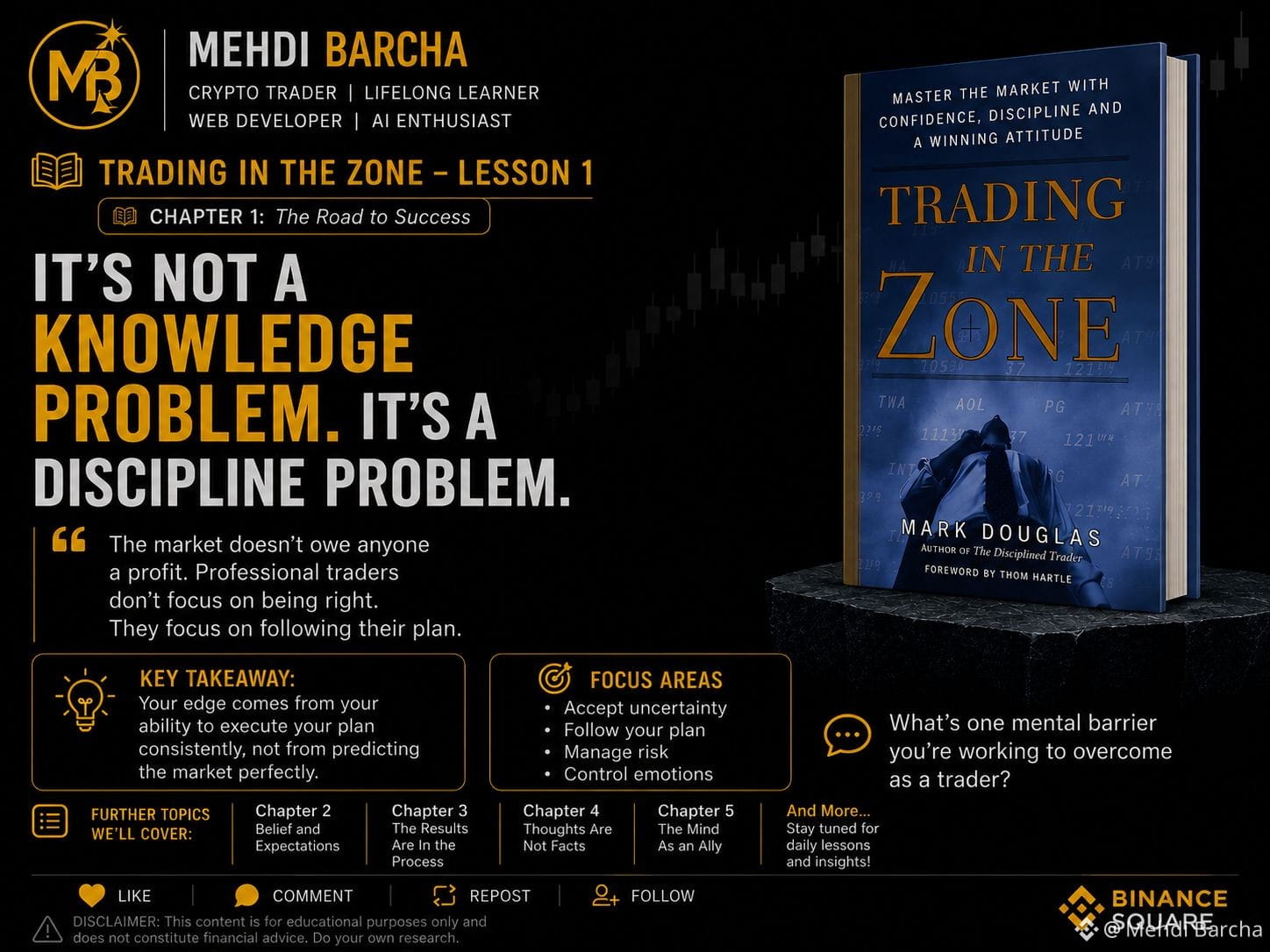
TRADING IN THE ZONE — CHAPTER 1
The Road to Success: Fundamental, Technical, or Mental Analysis?
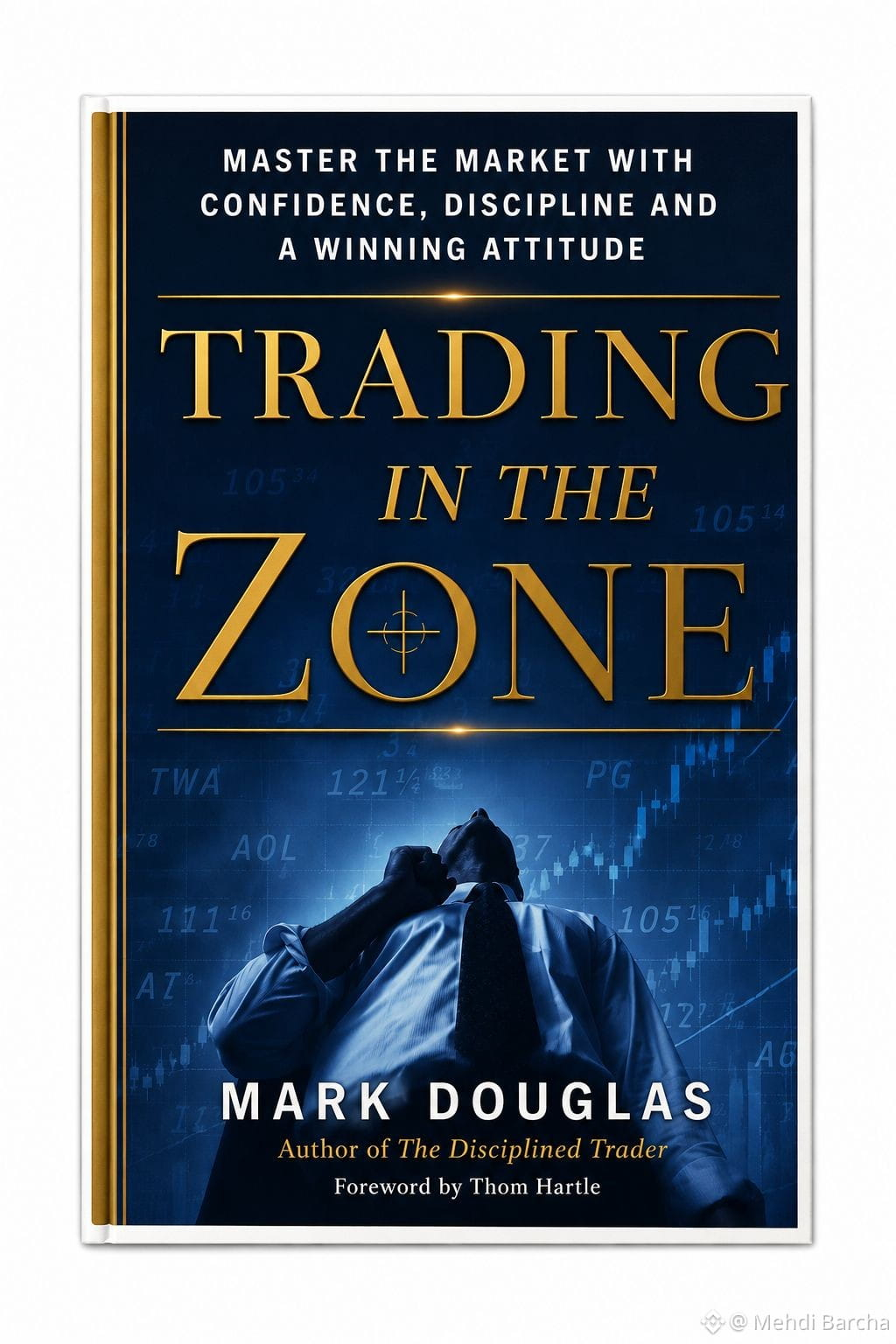
Trading in the Zone by Mark Douglas is considered one of the most influential books on trading psychology. It explains why long-term success depends more on mindset than on finding the perfect strategy.
Fundamental Analysis
Markets were traditionally analyzed through economic data and news, but these factors don't always explain price movements.
Technical Analysis
Charts and price action help traders identify probabilities, but technical knowledge alone doesn't guarantee consistent results.
Mental Analysis
The real edge in trading comes from mastering emotions. Fear, greed, hesitation, and overconfidence often prevent traders from following their plans.
Chapter 1 Summary
Successful trading is built on discipline, risk management, and accepting uncertainty. According to Mark Douglas, mastering your mindset is the foundation of becoming a consistently profitable trader.
Book: Trading in the Zone
Author: Mark Douglas
------ The PDF version of this book is available. If anyone is interested, feel free to leave a comment or send me a message. ------
#TradingInTheZone #TradingPsychology #trading #crypto #RiskManagement
TRADING IN THE ZONE — CHAPTER 1
The Road to Success: Fundamental, Technical, or Mental Analysis?
Trading in the Zone by Mark Douglas is considered one of the most influential books on trading psychology. It explains why long-term success depends more on mindset than on finding the perfect strategy.
Fundamental Analysis
Markets were traditionally analyzed through economic data and news, but these factors don't always explain price movements.
Technical Analysis
Charts and price action help traders identify probabilities, but technical knowledge alone doesn't guarantee consistent results.
Mental Analysis
The real edge in trading comes from mastering emotions. Fear, greed, hesitation, and overconfidence often prevent traders from following their plans.
Chapter 1 Summary
Successful trading is built on discipline, risk management, and accepting uncertainty. According to Mark Douglas, mastering your mindset is the foundation of becoming a consistently profitable trader.
Book: Trading in the Zone
Author: Mark Douglas
------ The PDF version of this book is available. If anyone is interested, feel free to leave a comment or send me a message. ------
#TradingInTheZone #TradingPsychology #trading #crypto #RiskManagement
The Road to Success: Fundamental, Technical, or Mental Analysis?
Trading in the Zone by Mark Douglas is considered one of the most influential books on trading psychology. It explains why long-term success depends more on mindset than on finding the perfect strategy.
Fundamental Analysis
Markets were traditionally analyzed through economic data and news, but these factors don't always explain price movements.
Technical Analysis
Charts and price action help traders identify probabilities, but technical knowledge alone doesn't guarantee consistent results.
Mental Analysis
The real edge in trading comes from mastering emotions. Fear, greed, hesitation, and overconfidence often prevent traders from following their plans.
Chapter 1 Summary
Successful trading is built on discipline, risk management, and accepting uncertainty. According to Mark Douglas, mastering your mindset is the foundation of becoming a consistently profitable trader.
Book: Trading in the Zone
Author: Mark Douglas
------ The PDF version of this book is available. If anyone is interested, feel free to leave a comment or send me a message. ------
#TradingInTheZone #TradingPsychology #trading #crypto #RiskManagement
1
5
90
Log in to explore more content
Join global crypto users on Binance Square
⚡️ Get latest and useful information about crypto.
💬 Trusted by the world’s largest crypto exchange.
👍 Discover real insights from verified creators.
Email / Phone number
Trending Topics
1
#QNTRises39%
25,139 views
954 Discussing
2
#EthereumBreaksAbove$2700
2,425 views
96 Discussing
3
#BitgetBreachForgedRequestsNotStolenKeys
22,062 views
741 Discussing
4
#BitcoinSpotETFsTurnNetPositiveYTD
14,613 views
601 Discussing
5
#GrayscaleZcashETFHits$1BNetAssets
1,593 views
44 Discussing
6
#BitcoinSpotETFsNetInflow$191M
7,600 views
181 Discussing
7
#CFTCUpdatesGuidanceOnTokenizedAssets
54,526 views
1,535 Discussing
8
#BitgetSays$352MAffectedInHack
19,332 views
95 Discussing
9
#NYAndPolymarketSueEachOther
6,570 views
239 Discussing
10
#BinanceWillListHyperliquid(HYPE)
283,460 views
4,105 Discussing