

#stonfi
stonfi
309,045 views
4,089 Discussing
Hot
Latest

One Swap. Across Chains. The Bigger Picture.
After looking at everything STON.fi is building around cross-chain DeFi, the bigger picture becomes easier to understand.
The problem isn't that crypto lacks liquidity.
There is plenty of liquidity.
The problem is that liquidity is fragmented.
Different chains.
Different wallets.
Different applications.
Different standards.
Different interfaces.
The opportunity is to make all of that feel less fragmented to the user.
That's where STON.fi's Omniston direction becomes interesting.
Cross-chain swaps, resolver liquidity, atomic execution and integrations are all pieces of the same larger objective: making blockchain ecosystems easier to access from one another.
The industry still has a long way to go.
But the destination is clear enough:
Users should care about what they want to do, not spend their entire time worrying about which chain they have to use to do it.
One Swap. Across Chains.
@stonfi #STONfi #TON
One Swap. Across Chains. The Bigger Picture.
After looking at everything STON.fi is building around cross-chain DeFi, the bigger picture becomes easier to understand.
The problem isn't that crypto lacks liquidity.
There is plenty of liquidity.
The problem is that liquidity is fragmented.
Different chains.
Different wallets.
Different applications.
Different standards.
Different interfaces.
The opportunity is to make all of that feel less fragmented to the user.
That's where STON.fi's Omniston direction becomes interesting.
Cross-chain swaps, resolver liquidity, atomic execution and integrations are all pieces of the same larger objective: making blockchain ecosystems easier to access from one another.
The industry still has a long way to go.
But the destination is clear enough:
Users should care about what they want to do, not spend their entire time worrying about which chain they have to use to do it.
One Swap. Across Chains.
@STONfi DEX #STONfi #TON
After looking at everything STON.fi is building around cross-chain DeFi, the bigger picture becomes easier to understand.
The problem isn't that crypto lacks liquidity.
There is plenty of liquidity.
The problem is that liquidity is fragmented.
Different chains.
Different wallets.
Different applications.
Different standards.
Different interfaces.
The opportunity is to make all of that feel less fragmented to the user.
That's where STON.fi's Omniston direction becomes interesting.
Cross-chain swaps, resolver liquidity, atomic execution and integrations are all pieces of the same larger objective: making blockchain ecosystems easier to access from one another.
The industry still has a long way to go.
But the destination is clear enough:
Users should care about what they want to do, not spend their entire time worrying about which chain they have to use to do it.
One Swap. Across Chains.
@STONfi DEX #STONfi #TON
1
2
Why Integrations Matter More Than Announcements.
Crypto has no shortage of announcements.
New chains.
New tokens.
New partnerships.
New campaigns.
But an integration becomes more interesting when it actually changes what users can do.
That's why I'm paying attention to how STON.fi's Omniston infrastructure is being integrated into other products.
The recent MoonPay Trade integration is one example.
Instead of treating STON.fi as an isolated application, integrations allow its infrastructure to become part of other user experiences.
That is an important distinction.
A partnership announcement tells you that two projects are talking.
A working integration tells you that users can actually do something differently.
In infrastructure, that difference matters.
The next phase of DeFi may be less about individual applications competing for attention and more about infrastructure quietly powering many applications.
@stonfi #STONfi
Why Integrations Matter More Than Announcements.
Crypto has no shortage of announcements.
New chains.
New tokens.
New partnerships.
New campaigns.
But an integration becomes more interesting when it actually changes what users can do.
That's why I'm paying attention to how STON.fi's Omniston infrastructure is being integrated into other products.
The recent MoonPay Trade integration is one example.
Instead of treating STON.fi as an isolated application, integrations allow its infrastructure to become part of other user experiences.
That is an important distinction.
A partnership announcement tells you that two projects are talking.
A working integration tells you that users can actually do something differently.
In infrastructure, that difference matters.
The next phase of DeFi may be less about individual applications competing for attention and more about infrastructure quietly powering many applications.
@STONfi DEX #STONfi
Crypto has no shortage of announcements.
New chains.
New tokens.
New partnerships.
New campaigns.
But an integration becomes more interesting when it actually changes what users can do.
That's why I'm paying attention to how STON.fi's Omniston infrastructure is being integrated into other products.
The recent MoonPay Trade integration is one example.
Instead of treating STON.fi as an isolated application, integrations allow its infrastructure to become part of other user experiences.
That is an important distinction.
A partnership announcement tells you that two projects are talking.
A working integration tells you that users can actually do something differently.
In infrastructure, that difference matters.
The next phase of DeFi may be less about individual applications competing for attention and more about infrastructure quietly powering many applications.
@STONfi DEX #STONfi
1
4
One Interface, Multiple Ecosystems.
Crypto users have become accustomed to switching between applications.
One wallet for one network.
Another wallet for another ecosystem.
A bridge for moving assets.
A DEX for swapping.
Another interface for checking balances.
Another application for DeFi.
The more fragmented the experience becomes, the harder it is for new users to enter.
STON.fi is trying to simplify part of that experience by providing one interface for DeFi activity across TON, EVM networks and supported cross-chain routes.
The goal isn't necessarily to replace every application.
It's to reduce the number of unnecessary steps between the user and the transaction they want to make.
That is a useful way to think about STON.fi's broader direction.
Less fragmentation.
More accessible liquidity.
One user experience across multiple ecosystems.
@stonfi #STONfi
One Interface, Multiple Ecosystems.
Crypto users have become accustomed to switching between applications.
One wallet for one network.
Another wallet for another ecosystem.
A bridge for moving assets.
A DEX for swapping.
Another interface for checking balances.
Another application for DeFi.
The more fragmented the experience becomes, the harder it is for new users to enter.
STON.fi is trying to simplify part of that experience by providing one interface for DeFi activity across TON, EVM networks and supported cross-chain routes.
The goal isn't necessarily to replace every application.
It's to reduce the number of unnecessary steps between the user and the transaction they want to make.
That is a useful way to think about STON.fi's broader direction.
Less fragmentation.
More accessible liquidity.
One user experience across multiple ecosystems.
@STONfi DEX #STONfi
Crypto users have become accustomed to switching between applications.
One wallet for one network.
Another wallet for another ecosystem.
A bridge for moving assets.
A DEX for swapping.
Another interface for checking balances.
Another application for DeFi.
The more fragmented the experience becomes, the harder it is for new users to enter.
STON.fi is trying to simplify part of that experience by providing one interface for DeFi activity across TON, EVM networks and supported cross-chain routes.
The goal isn't necessarily to replace every application.
It's to reduce the number of unnecessary steps between the user and the transaction they want to make.
That is a useful way to think about STON.fi's broader direction.
Less fragmentation.
More accessible liquidity.
One user experience across multiple ecosystems.
@STONfi DEX #STONfi
2

·
--
STON.fi and the Community Layer Behind TON DeFiBuilding a decentralized exchange is not only about creating trading infrastructure. It is also about helping users understand the tools available to them. STON.fi is taking a community focused approach through its Stonbassador Program, giving users an opportunity to contribute beyond simply using the platform.
The program is open to both experienced creators and ordinary community members. There is no requirement to be an established influencer before participating. Instead, contributors can focus on creating useful, accurate, and original material around STON.fi and its ecosystem.
This creates several paths for participation. Someone who enjoys writing can produce educational articles, tutorials, product explanations, or personal experiences. Video creators can produce short or long form content for platforms such as YouTube, TikTok, and Instagram. Other contributors can share information through X, Reddit, Medium, CoinMarketCap, and additional communities.
The emphasis on educational content is particularly useful for decentralized finance. New users often need practical explanations before they feel comfortable exploring a decentralized application. A clear guide can answer basic questions, explain features, and help users understand how a platform fits into the wider blockchain ecosystem.
STON.fi also has a defined process for reviewing ambassador contributions. The program guidelines state that rewards depend on several factors, including reach, quality, accuracy, originality, relevant links, and consistency. Community engagement, referrals, and participation in contests can also increase opportunities for contributors.
Another useful feature is the reporting schedule. Participants do not need to submit reports constantly. Activity can be reported no more than twice each month, with rewards generally distributed around the middle of the following month.
For creators, this makes the Stonbassador Program more than a promotional campaign. It provides a framework for turning research, education, creativity, and community involvement into measurable contributions.
As TON continues developing its decentralized finance ecosystem, informed community members can help bridge the gap between blockchain technology and everyday users. STON.fi’s ambassador model gives those contributors a structured place to start.
#stonfi $GRAM
STON.fi and the Community Layer Behind TON DeFi
Building a decentralized exchange is not only about creating trading infrastructure. It is also about helping users understand the tools available to them. STON.fi is taking a community focused approach through its Stonbassador Program, giving users an opportunity to contribute beyond simply using the platform.
The program is open to both experienced creators and ordinary community members. There is no requirement to be an established influencer before participating. Instead, contributors can focus on creating useful, accurate, and original material around STON.fi and its ecosystem.
This creates several paths for participation. Someone who enjoys writing can produce educational articles, tutorials, product explanations, or personal experiences. Video creators can produce short or long form content for platforms such as YouTube, TikTok, and Instagram. Other contributors can share information through X, Reddit, Medium, CoinMarketCap, and additional communities.
The emphasis on educational content is particularly useful for decentralized finance. New users often need practical explanations before they feel comfortable exploring a decentralized application. A clear guide can answer basic questions, explain features, and help users understand how a platform fits into the wider blockchain ecosystem.
STON.fi also has a defined process for reviewing ambassador contributions. The program guidelines state that rewards depend on several factors, including reach, quality, accuracy, originality, relevant links, and consistency. Community engagement, referrals, and participation in contests can also increase opportunities for contributors.
Another useful feature is the reporting schedule. Participants do not need to submit reports constantly. Activity can be reported no more than twice each month, with rewards generally distributed around the middle of the following month.
For creators, this makes the Stonbassador Program more than a promotional campaign. It provides a framework for turning research, education, creativity, and community involvement into measurable contributions.
As TON continues developing its decentralized finance ecosystem, informed community members can help bridge the gap between blockchain technology and everyday users. STON.fi’s ambassador model gives those contributors a structured place to start.
#stonfi $GRAM
The program is open to both experienced creators and ordinary community members. There is no requirement to be an established influencer before participating. Instead, contributors can focus on creating useful, accurate, and original material around STON.fi and its ecosystem.
This creates several paths for participation. Someone who enjoys writing can produce educational articles, tutorials, product explanations, or personal experiences. Video creators can produce short or long form content for platforms such as YouTube, TikTok, and Instagram. Other contributors can share information through X, Reddit, Medium, CoinMarketCap, and additional communities.
The emphasis on educational content is particularly useful for decentralized finance. New users often need practical explanations before they feel comfortable exploring a decentralized application. A clear guide can answer basic questions, explain features, and help users understand how a platform fits into the wider blockchain ecosystem.
STON.fi also has a defined process for reviewing ambassador contributions. The program guidelines state that rewards depend on several factors, including reach, quality, accuracy, originality, relevant links, and consistency. Community engagement, referrals, and participation in contests can also increase opportunities for contributors.
Another useful feature is the reporting schedule. Participants do not need to submit reports constantly. Activity can be reported no more than twice each month, with rewards generally distributed around the middle of the following month.
For creators, this makes the Stonbassador Program more than a promotional campaign. It provides a framework for turning research, education, creativity, and community involvement into measurable contributions.
As TON continues developing its decentralized finance ecosystem, informed community members can help bridge the gap between blockchain technology and everyday users. STON.fi’s ambassador model gives those contributors a structured place to start.
#stonfi $GRAM
100

·
--
Why STON.fi Has Become One of the Most Interesting DEXs for Everyday TON (GRAM) Users
?Decentralized finance can sometimes feel more complicated than it needs to be.
For someone who is just entering the TON (GRAM) ecosystem, there are already several things to understand: wallets, tokens, network fees, liquidity, slippage, swaps and security. Add multiple applications to that list and a simple token swap can suddenly feel like a technical task.
This is one of the reasons STON.fi caught my attention.
STON.fi is built around decentralized trading and liquidity, with the goal of making DeFi easier to use. Instead of requiring users to understand everything about blockchain technology before making a swap, the platform puts the basic trading experience into a relatively straightforward interface.
For a beginner, that matters.
A typical swap starts with connecting a compatible wallet, selecting the token you want to exchange, choosing the token you want to receive and checking the transaction details before confirming. The important part is not simply pressing the swap button. Users should also look at the expected amount, price impact, fees and the token they are interacting with.
That last point is especially important in DeFi because not every token that looks familiar is necessarily the genuine asset you intend to purchase.
Another interesting part of STON.fi's development is its crosschain direction. The platform now presents cross-chain swaps as part of its product experience, including support involving TON, TRON and EVM ecosystems.
This is significant because blockchain users rarely keep everything on one network.
Someone may hold assets on Ethereum, another token on TON (GRAM) and perhaps something else on TRON. Traditionally, moving assets between ecosystems can involve several separate applications and additional steps. A unified cross-chain experience can reduce some of that friction.
But convenience should never replace caution.
Before confirming a transaction, users should always verify the route, fees and final amount. They should also keep enough native tokens available for transaction costs and protect their wallet recovery phrase.
For me, this is where STON.fi becomes interesting not simply as a place to swap tokens, but as part of the wider attempt to make DeFi easier for ordinary users.
The technology behind decentralized exchanges can be complicated. The user experience does not have to be.
As STON.fi continues developing its products and community, the most valuable thing users can do is learn how the platform works and share accurate information with others.
That is also what makes useful Stonbassador content different from ordinary promotional posts. Instead of simply saying “STON.fi is great,” explain why a feature matters, show people how it works and mention the risks they should understand.
That kind of content is useful even to someone who has never heard of STON.fi before.
Official platform: https://ston.fi/
$GRAM
#STONfi
#defi
Why STON.fi Has Become One of the Most Interesting DEXs for Everyday TON (GRAM) Users ?
Decentralized finance can sometimes feel more complicated than it needs to be.
For someone who is just entering the TON (GRAM) ecosystem, there are already several things to understand: wallets, tokens, network fees, liquidity, slippage, swaps and security. Add multiple applications to that list and a simple token swap can suddenly feel like a technical task.
This is one of the reasons STON.fi caught my attention.
STON.fi is built around decentralized trading and liquidity, with the goal of making DeFi easier to use. Instead of requiring users to understand everything about blockchain technology before making a swap, the platform puts the basic trading experience into a relatively straightforward interface.
For a beginner, that matters.
A typical swap starts with connecting a compatible wallet, selecting the token you want to exchange, choosing the token you want to receive and checking the transaction details before confirming. The important part is not simply pressing the swap button. Users should also look at the expected amount, price impact, fees and the token they are interacting with.
That last point is especially important in DeFi because not every token that looks familiar is necessarily the genuine asset you intend to purchase.
Another interesting part of STON.fi's development is its crosschain direction. The platform now presents cross-chain swaps as part of its product experience, including support involving TON, TRON and EVM ecosystems.
This is significant because blockchain users rarely keep everything on one network.
Someone may hold assets on Ethereum, another token on TON (GRAM) and perhaps something else on TRON. Traditionally, moving assets between ecosystems can involve several separate applications and additional steps. A unified cross-chain experience can reduce some of that friction.
But convenience should never replace caution.
Before confirming a transaction, users should always verify the route, fees and final amount. They should also keep enough native tokens available for transaction costs and protect their wallet recovery phrase.
For me, this is where STON.fi becomes interesting not simply as a place to swap tokens, but as part of the wider attempt to make DeFi easier for ordinary users.
The technology behind decentralized exchanges can be complicated. The user experience does not have to be.
As STON.fi continues developing its products and community, the most valuable thing users can do is learn how the platform works and share accurate information with others.
That is also what makes useful Stonbassador content different from ordinary promotional posts. Instead of simply saying “STON.fi is great,” explain why a feature matters, show people how it works and mention the risks they should understand.
That kind of content is useful even to someone who has never heard of STON.fi before.
Official platform: https://ston.fi/
$GRAM
#STONfi
#defi
For someone who is just entering the TON (GRAM) ecosystem, there are already several things to understand: wallets, tokens, network fees, liquidity, slippage, swaps and security. Add multiple applications to that list and a simple token swap can suddenly feel like a technical task.
This is one of the reasons STON.fi caught my attention.
STON.fi is built around decentralized trading and liquidity, with the goal of making DeFi easier to use. Instead of requiring users to understand everything about blockchain technology before making a swap, the platform puts the basic trading experience into a relatively straightforward interface.
For a beginner, that matters.
A typical swap starts with connecting a compatible wallet, selecting the token you want to exchange, choosing the token you want to receive and checking the transaction details before confirming. The important part is not simply pressing the swap button. Users should also look at the expected amount, price impact, fees and the token they are interacting with.
That last point is especially important in DeFi because not every token that looks familiar is necessarily the genuine asset you intend to purchase.
Another interesting part of STON.fi's development is its crosschain direction. The platform now presents cross-chain swaps as part of its product experience, including support involving TON, TRON and EVM ecosystems.
This is significant because blockchain users rarely keep everything on one network.
Someone may hold assets on Ethereum, another token on TON (GRAM) and perhaps something else on TRON. Traditionally, moving assets between ecosystems can involve several separate applications and additional steps. A unified cross-chain experience can reduce some of that friction.
But convenience should never replace caution.
Before confirming a transaction, users should always verify the route, fees and final amount. They should also keep enough native tokens available for transaction costs and protect their wallet recovery phrase.
For me, this is where STON.fi becomes interesting not simply as a place to swap tokens, but as part of the wider attempt to make DeFi easier for ordinary users.
The technology behind decentralized exchanges can be complicated. The user experience does not have to be.
As STON.fi continues developing its products and community, the most valuable thing users can do is learn how the platform works and share accurate information with others.
That is also what makes useful Stonbassador content different from ordinary promotional posts. Instead of simply saying “STON.fi is great,” explain why a feature matters, show people how it works and mention the risks they should understand.
That kind of content is useful even to someone who has never heard of STON.fi before.
Official platform: https://ston.fi/
$GRAM
#STONfi
#defi
398
The STON.fi Story Is Getting Bigger.
The STON.fi story started strongly around TON-native DeFi.
But looking at the current product direction, the bigger story is increasingly about liquidity across ecosystems.
The platform now presents cross-chain functionality involving TON, EVM networks and other supported destinations.
Omniston provides the underlying execution infrastructure.
The current campaign gives users a way to experience those routes.
Developer tools allow other applications to potentially build on the infrastructure.
And integrations such as MoonPay Trade show how that infrastructure can extend beyond the STON.fi interface itself.
That creates a much bigger picture.
It isn't simply:
“STON.fi is a DEX on TON.”
It's becoming:
“STON.fi is building infrastructure for moving and accessing liquidity across multiple ecosystems.”
That's the evolution I'm interested in following.
@stonfi #STONfi
The STON.fi Story Is Getting Bigger.
The STON.fi story started strongly around TON-native DeFi.
But looking at the current product direction, the bigger story is increasingly about liquidity across ecosystems.
The platform now presents cross-chain functionality involving TON, EVM networks and other supported destinations.
Omniston provides the underlying execution infrastructure.
The current campaign gives users a way to experience those routes.
Developer tools allow other applications to potentially build on the infrastructure.
And integrations such as MoonPay Trade show how that infrastructure can extend beyond the STON.fi interface itself.
That creates a much bigger picture.
It isn't simply:
“STON.fi is a DEX on TON.”
It's becoming:
“STON.fi is building infrastructure for moving and accessing liquidity across multiple ecosystems.”
That's the evolution I'm interested in following.
@STONfi DEX #STONfi
The STON.fi story started strongly around TON-native DeFi.
But looking at the current product direction, the bigger story is increasingly about liquidity across ecosystems.
The platform now presents cross-chain functionality involving TON, EVM networks and other supported destinations.
Omniston provides the underlying execution infrastructure.
The current campaign gives users a way to experience those routes.
Developer tools allow other applications to potentially build on the infrastructure.
And integrations such as MoonPay Trade show how that infrastructure can extend beyond the STON.fi interface itself.
That creates a much bigger picture.
It isn't simply:
“STON.fi is a DEX on TON.”
It's becoming:
“STON.fi is building infrastructure for moving and accessing liquidity across multiple ecosystems.”
That's the evolution I'm interested in following.
@STONfi DEX #STONfi
1
1
Cross-Chain Liquidity Is a User Problem.
It's easy to discuss cross-chain infrastructure from a technical perspective.
HTLCs.
Resolvers.
RFQs.
Routing.
Liquidity.
But at the end of the day, there is a user behind every transaction.
The user is asking something much simpler:
“How do I get from here to there?”
That's why infrastructure needs to be judged by the experience it creates.
STON.fi's Omniston approach focuses on routing users toward the destination asset while maintaining non-custodial execution.
That brings the conversation back to the user.
Instead of forcing people to understand every bridge or wrapped token involved in the process, the infrastructure tries to abstract away unnecessary complexity.
Technical innovation is valuable.
But technical innovation that makes a real user problem easier is even more interesting.
That's where cross-chain infrastructure becomes practical rather than theoretical.
@stonfi #STONfi
Cross-Chain Liquidity Is a User Problem.
It's easy to discuss cross-chain infrastructure from a technical perspective.
HTLCs.
Resolvers.
RFQs.
Routing.
Liquidity.
But at the end of the day, there is a user behind every transaction.
The user is asking something much simpler:
“How do I get from here to there?”
That's why infrastructure needs to be judged by the experience it creates.
STON.fi's Omniston approach focuses on routing users toward the destination asset while maintaining non-custodial execution.
That brings the conversation back to the user.
Instead of forcing people to understand every bridge or wrapped token involved in the process, the infrastructure tries to abstract away unnecessary complexity.
Technical innovation is valuable.
But technical innovation that makes a real user problem easier is even more interesting.
That's where cross-chain infrastructure becomes practical rather than theoretical.
@STONfi DEX #STONfi
It's easy to discuss cross-chain infrastructure from a technical perspective.
HTLCs.
Resolvers.
RFQs.
Routing.
Liquidity.
But at the end of the day, there is a user behind every transaction.
The user is asking something much simpler:
“How do I get from here to there?”
That's why infrastructure needs to be judged by the experience it creates.
STON.fi's Omniston approach focuses on routing users toward the destination asset while maintaining non-custodial execution.
That brings the conversation back to the user.
Instead of forcing people to understand every bridge or wrapped token involved in the process, the infrastructure tries to abstract away unnecessary complexity.
Technical innovation is valuable.
But technical innovation that makes a real user problem easier is even more interesting.
That's where cross-chain infrastructure becomes practical rather than theoretical.
@STONfi DEX #STONfi
1
1
Why I Keep Watching Omniston.
The reason I keep coming back to Omniston is simple:
Cross-chain liquidity is one of the biggest UX problems in crypto.
There are already many bridges and cross-chain solutions.
So the question isn't whether the problem has been recognized.
The question is whether the experience can become simpler, safer and more efficient.
Omniston's approach combines resolver liquidity with atomic settlement and native destination assets.
That's technically interesting.
But the real test is adoption.
Can developers integrate it?
Can users understand it?
Can liquidity providers make the system competitive?
Can the network expand to more useful routes?
Those are the questions that will determine how meaningful the infrastructure becomes.
For now, I'm watching the development rather than treating any single announcement as the final answer.
@stonfi #STONfi
Why I Keep Watching Omniston.
The reason I keep coming back to Omniston is simple:
Cross-chain liquidity is one of the biggest UX problems in crypto.
There are already many bridges and cross-chain solutions.
So the question isn't whether the problem has been recognized.
The question is whether the experience can become simpler, safer and more efficient.
Omniston's approach combines resolver liquidity with atomic settlement and native destination assets.
That's technically interesting.
But the real test is adoption.
Can developers integrate it?
Can users understand it?
Can liquidity providers make the system competitive?
Can the network expand to more useful routes?
Those are the questions that will determine how meaningful the infrastructure becomes.
For now, I'm watching the development rather than treating any single announcement as the final answer.
@STONfi DEX #STONfi
The reason I keep coming back to Omniston is simple:
Cross-chain liquidity is one of the biggest UX problems in crypto.
There are already many bridges and cross-chain solutions.
So the question isn't whether the problem has been recognized.
The question is whether the experience can become simpler, safer and more efficient.
Omniston's approach combines resolver liquidity with atomic settlement and native destination assets.
That's technically interesting.
But the real test is adoption.
Can developers integrate it?
Can users understand it?
Can liquidity providers make the system competitive?
Can the network expand to more useful routes?
Those are the questions that will determine how meaningful the infrastructure becomes.
For now, I'm watching the development rather than treating any single announcement as the final answer.
@STONfi DEX #STONfi
1
7
What Happens When Cross-Chain Becomes Invisible?
Imagine using DeFi without thinking about which blockchain your transaction is happening on.
You choose what you have.
You choose what you want.
You confirm.
The infrastructure handles the routing.
We're not completely there yet.
But this is the direction cross-chain infrastructure is moving toward.
STON.fi's Omniston is part of that experiment.
The technology underneath still matters — resolvers, routing, liquidity and atomic settlement all have to work.
But ideally, the user doesn't need to understand every technical detail.
This is how many technologies evolve.
The infrastructure becomes more sophisticated while the interface becomes simpler.
That's why I think the real measure of cross-chain adoption won't only be how many chains are connected.
It will be how little users have to think about the connection.
@stonfi #STONfi
What Happens When Cross-Chain Becomes Invisible?
Imagine using DeFi without thinking about which blockchain your transaction is happening on.
You choose what you have.
You choose what you want.
You confirm.
The infrastructure handles the routing.
We're not completely there yet.
But this is the direction cross-chain infrastructure is moving toward.
STON.fi's Omniston is part of that experiment.
The technology underneath still matters — resolvers, routing, liquidity and atomic settlement all have to work.
But ideally, the user doesn't need to understand every technical detail.
This is how many technologies evolve.
The infrastructure becomes more sophisticated while the interface becomes simpler.
That's why I think the real measure of cross-chain adoption won't only be how many chains are connected.
It will be how little users have to think about the connection.
@STONfi DEX #STONfi
Imagine using DeFi without thinking about which blockchain your transaction is happening on.
You choose what you have.
You choose what you want.
You confirm.
The infrastructure handles the routing.
We're not completely there yet.
But this is the direction cross-chain infrastructure is moving toward.
STON.fi's Omniston is part of that experiment.
The technology underneath still matters — resolvers, routing, liquidity and atomic settlement all have to work.
But ideally, the user doesn't need to understand every technical detail.
This is how many technologies evolve.
The infrastructure becomes more sophisticated while the interface becomes simpler.
That's why I think the real measure of cross-chain adoption won't only be how many chains are connected.
It will be how little users have to think about the connection.
@STONfi DEX #STONfi
1
3
STON.fi and the Future of TON DeFi.
TON's DeFi ecosystem needs more than individual protocols.
It needs liquidity.
It needs users.
It needs applications.
And increasingly, it needs connections to liquidity outside TON.
STON.fi has been one of the protocols building around that problem.
Its native TON swap infrastructure gives users access to TON-side liquidity, while Omniston extends the experience into cross-chain execution.
That creates an interesting combination:
TON-native DeFi + cross-chain liquidity access.
The two don't have to compete.
They can complement each other.
Users can stay within TON when that makes sense and move outward when another ecosystem offers the asset or liquidity they need.
That flexibility is important for any blockchain ecosystem trying to grow beyond its existing user base.
@stonfi #STONfi
STON.fi and the Future of TON DeFi.
TON's DeFi ecosystem needs more than individual protocols.
It needs liquidity.
It needs users.
It needs applications.
And increasingly, it needs connections to liquidity outside TON.
STON.fi has been one of the protocols building around that problem.
Its native TON swap infrastructure gives users access to TON-side liquidity, while Omniston extends the experience into cross-chain execution.
That creates an interesting combination:
TON-native DeFi + cross-chain liquidity access.
The two don't have to compete.
They can complement each other.
Users can stay within TON when that makes sense and move outward when another ecosystem offers the asset or liquidity they need.
That flexibility is important for any blockchain ecosystem trying to grow beyond its existing user base.
@STONfi DEX #STONfi
TON's DeFi ecosystem needs more than individual protocols.
It needs liquidity.
It needs users.
It needs applications.
And increasingly, it needs connections to liquidity outside TON.
STON.fi has been one of the protocols building around that problem.
Its native TON swap infrastructure gives users access to TON-side liquidity, while Omniston extends the experience into cross-chain execution.
That creates an interesting combination:
TON-native DeFi + cross-chain liquidity access.
The two don't have to compete.
They can complement each other.
Users can stay within TON when that makes sense and move outward when another ecosystem offers the asset or liquidity they need.
That flexibility is important for any blockchain ecosystem trying to grow beyond its existing user base.
@STONfi DEX #STONfi
1
7
The Developer Side of STON.fi Deserves Attention.
Most users see the front end.
Developers see the infrastructure underneath it.
STON.fi's Omniston offering includes an API/RFQ endpoint, SDK, widget and other integration options.
That means the project isn't only thinking about users coming directly to STON.fi.
It is also building tools that can potentially allow other applications to integrate cross-chain execution.
This is an important part of infrastructure growth.
A product becomes more useful when other products can build on it.
If developers can integrate cross-chain functionality without having to create every piece of routing and settlement infrastructure themselves, that can reduce the barrier to building multichain applications.
The DeFi interface may be what users notice.
But the developer infrastructure can determine how far the ecosystem eventually reaches.
@stonfi #STONfi
The Developer Side of STON.fi Deserves Attention.
Most users see the front end.
Developers see the infrastructure underneath it.
STON.fi's Omniston offering includes an API/RFQ endpoint, SDK, widget and other integration options.
That means the project isn't only thinking about users coming directly to STON.fi.
It is also building tools that can potentially allow other applications to integrate cross-chain execution.
This is an important part of infrastructure growth.
A product becomes more useful when other products can build on it.
If developers can integrate cross-chain functionality without having to create every piece of routing and settlement infrastructure themselves, that can reduce the barrier to building multichain applications.
The DeFi interface may be what users notice.
But the developer infrastructure can determine how far the ecosystem eventually reaches.
@STONfi DEX #STONfi
Most users see the front end.
Developers see the infrastructure underneath it.
STON.fi's Omniston offering includes an API/RFQ endpoint, SDK, widget and other integration options.
That means the project isn't only thinking about users coming directly to STON.fi.
It is also building tools that can potentially allow other applications to integrate cross-chain execution.
This is an important part of infrastructure growth.
A product becomes more useful when other products can build on it.
If developers can integrate cross-chain functionality without having to create every piece of routing and settlement infrastructure themselves, that can reduce the barrier to building multichain applications.
The DeFi interface may be what users notice.
But the developer infrastructure can determine how far the ecosystem eventually reaches.
@STONfi DEX #STONfi
1
7
STON.fi Has Already Reached Significant Scale.
There is another part of the STON.fi story worth looking at: scale.
The current STON.fi site reports more than $8 billion in all-time volume, around 37 million swaps and approximately 6 million all-time swappers.
Those numbers help put the project into perspective.
STON.fi isn't simply experimenting with a concept on paper.
It has an existing user base and significant transaction history.
At the same time, historical volume should not automatically be treated as a prediction of future growth.
The more interesting question is what the infrastructure can do next.
If Omniston expands cross-chain functionality while STON.fi continues developing its TON-native DeFi experience, the project is moving from a single-network DEX model toward broader liquidity infrastructure.
That's the part I'm watching.
@stonfi
#STONfi
STON.fi Has Already Reached Significant Scale.
There is another part of the STON.fi story worth looking at: scale.
The current STON.fi site reports more than $8 billion in all-time volume, around 37 million swaps and approximately 6 million all-time swappers.
Those numbers help put the project into perspective.
STON.fi isn't simply experimenting with a concept on paper.
It has an existing user base and significant transaction history.
At the same time, historical volume should not automatically be treated as a prediction of future growth.
The more interesting question is what the infrastructure can do next.
If Omniston expands cross-chain functionality while STON.fi continues developing its TON-native DeFi experience, the project is moving from a single-network DEX model toward broader liquidity infrastructure.
That's the part I'm watching.
@STONfi DEX
#STONfi
There is another part of the STON.fi story worth looking at: scale.
The current STON.fi site reports more than $8 billion in all-time volume, around 37 million swaps and approximately 6 million all-time swappers.
Those numbers help put the project into perspective.
STON.fi isn't simply experimenting with a concept on paper.
It has an existing user base and significant transaction history.
At the same time, historical volume should not automatically be treated as a prediction of future growth.
The more interesting question is what the infrastructure can do next.
If Omniston expands cross-chain functionality while STON.fi continues developing its TON-native DeFi experience, the project is moving from a single-network DEX model toward broader liquidity infrastructure.
That's the part I'm watching.
@STONfi DEX
#STONfi
1
4

·
--
Most Cross-Chain Campaigns Start With a Swap. STON.fi Starts With Context.
Cross-chain activity can feel complicated when users have to figure out the mechanics before they even understand what they’re participating in.
That’s what makes STON.fi’s “One Swap. Across Chains” campaign interesting.
Instead of pushing users straight into a swap, the campaign begins with a 2 week waitlist phase.
During this period, users have the opportunity to become a Priority Passenger before the main campaign gets underway.
What happens during the waitlist?
Connect a TON wallet and join the waitlist.
The first 1,000 eligible participants can receive:
• 1,000 bonus miles
• A personalized Priority Passenger Ticket
And the interesting part is that these aren’t simply points sitting on a dashboard.
They are miles that can be used toward limited Flight Deals released throughout the campaign.
So the campaign experience becomes:
Waitlist → Earn Miles → Unlock Flight Deals → Explore Cross-Chain Swaps
That structure gives the early stage a purpose beyond simply collecting signups.
It also gives users an opportunity to become familiar with how STON.fi approaches cross-chain activity before jumping into the actual swap experience.
Why the waitlist matters
The campaign is designed around participation from the beginning.
Rather than:
Swap first → understand later
the experience is closer to:
Join early → explore the system → earn miles → participate with context
There is also a time sensitive element.
Only 1,000 Priority Passenger spots are available, and the 1,000 mile joining bonus is tied to the waitlist stage.
Once that stage closes, that specific early participant opportunity is no longer available.
For anyone already exploring cross-chain swaps, TON, or the STON.fi ecosystem, the waitlist is worth checking out while it remains open.
🔗 cross-chain.ston.fi
@ston_fi @ton_blockchain
#STONfi #TON #defi #CrossChain
Most Cross-Chain Campaigns Start With a Swap. STON.fi Starts With Context.
Cross-chain activity can feel complicated when users have to figure out the mechanics before they even understand what they’re participating in.
That’s what makes STON.fi’s “One Swap. Across Chains” campaign interesting.
Instead of pushing users straight into a swap, the campaign begins with a 2 week waitlist phase.
During this period, users have the opportunity to become a Priority Passenger before the main campaign gets underway.
What happens during the waitlist?
Connect a TON wallet and join the waitlist.
The first 1,000 eligible participants can receive:
• 1,000 bonus miles
• A personalized Priority Passenger Ticket
And the interesting part is that these aren’t simply points sitting on a dashboard.
They are miles that can be used toward limited Flight Deals released throughout the campaign.
So the campaign experience becomes:
Waitlist → Earn Miles → Unlock Flight Deals → Explore Cross-Chain Swaps
That structure gives the early stage a purpose beyond simply collecting signups.
It also gives users an opportunity to become familiar with how STON.fi approaches cross-chain activity before jumping into the actual swap experience.
Why the waitlist matters
The campaign is designed around participation from the beginning.
Rather than:
Swap first → understand later
the experience is closer to:
Join early → explore the system → earn miles → participate with context
There is also a time sensitive element.
Only 1,000 Priority Passenger spots are available, and the 1,000 mile joining bonus is tied to the waitlist stage.
Once that stage closes, that specific early participant opportunity is no longer available.
For anyone already exploring cross-chain swaps, TON, or the STON.fi ecosystem, the waitlist is worth checking out while it remains open.
🔗 cross-chain.ston.fi
@ston_fi @ton_blockchain
#STONfi #TON #defi #CrossChain
Cross-chain activity can feel complicated when users have to figure out the mechanics before they even understand what they’re participating in.
That’s what makes STON.fi’s “One Swap. Across Chains” campaign interesting.
Instead of pushing users straight into a swap, the campaign begins with a 2 week waitlist phase.
During this period, users have the opportunity to become a Priority Passenger before the main campaign gets underway.
What happens during the waitlist?
Connect a TON wallet and join the waitlist.
The first 1,000 eligible participants can receive:
• 1,000 bonus miles
• A personalized Priority Passenger Ticket
And the interesting part is that these aren’t simply points sitting on a dashboard.
They are miles that can be used toward limited Flight Deals released throughout the campaign.
So the campaign experience becomes:
Waitlist → Earn Miles → Unlock Flight Deals → Explore Cross-Chain Swaps
That structure gives the early stage a purpose beyond simply collecting signups.
It also gives users an opportunity to become familiar with how STON.fi approaches cross-chain activity before jumping into the actual swap experience.
Why the waitlist matters
The campaign is designed around participation from the beginning.
Rather than:
Swap first → understand later
the experience is closer to:
Join early → explore the system → earn miles → participate with context
There is also a time sensitive element.
Only 1,000 Priority Passenger spots are available, and the 1,000 mile joining bonus is tied to the waitlist stage.
Once that stage closes, that specific early participant opportunity is no longer available.
For anyone already exploring cross-chain swaps, TON, or the STON.fi ecosystem, the waitlist is worth checking out while it remains open.
🔗 cross-chain.ston.fi
@ston_fi @ton_blockchain
#STONfi #TON #defi #CrossChain

61

DEFI SHOULD FEEL SIMPLE, NOT COMPLICATED.
Why should swapping assets require a long technical process?
STON.fi focuses on making the DeFi experience cleaner and easier to navigate.
Swap.
Explore liquidity.
Move across supported ecosystems.
The technology underneath can be complex — the user experience doesn’t have to be.
#STONfi
DEFI SHOULD FEEL SIMPLE, NOT COMPLICATED.
Why should swapping assets require a long technical process?
STON.fi focuses on making the DeFi experience cleaner and easier to navigate.
Swap.
Explore liquidity.
Move across supported ecosystems.
The technology underneath can be complex — the user experience doesn’t have to be.
#STONfi
Why should swapping assets require a long technical process?
STON.fi focuses on making the DeFi experience cleaner and easier to navigate.
Swap.
Explore liquidity.
Move across supported ecosystems.
The technology underneath can be complex — the user experience doesn’t have to be.
#STONfi
46

·
--
Most traders still treat a DEX like a CEX with extra steps.
That is the wrong mental model.
A real DEX is infrastructure. The product is not the swap screen. The product is whether liquidity can move, whether fees stay understandable, and whether a user can see risk before they click confirm.
This is why STONfi’s new “What is DEX” educational project is more useful than another generic campaign post. Too many people farm APY without knowing what APY actually measures. Too many people provide liquidity without understanding impermanent loss. Too many people hear “cross-chain” and assume it is the same thing as “multi-chain.” It is not.
Multi-chain means the same protocol exists in several places. Cross-chain means value can move between those places without the user becoming the bridge. That difference matters when you are moving USDT across TON, TRON, Ethereum or Base and wondering why a “simple send” suddenly turns into a routing problem.
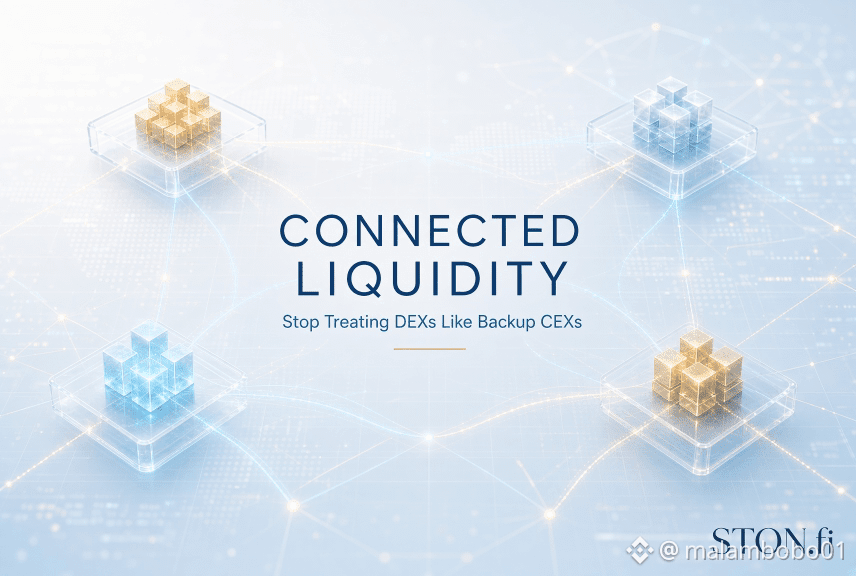
Connected liquidity is the next real upgrade in DeFi. Isolated pools create fake depth. They look liquid until you try to size into them. When wallets and DEXs start coordinating across networks — Keeper evolving from a TON-native wallet into a multichain one is a good example — the market gets cleaner. Less wrapping theater. Less hidden price impact. More honest execution.
Education plus working rails is the combination that survives a full cycle. Everything else is just another announcement with a banner.
If you are using DEXs this year, learn the mechanics first. Then swap. Not the other way around. $BTC $GRAM $ETH
#Dafi #TON #CrossChain #Web3 #STONfi
Most traders still treat a DEX like a CEX with extra steps.
That is the wrong mental model.
A real DEX is infrastructure. The product is not the swap screen. The product is whether liquidity can move, whether fees stay understandable, and whether a user can see risk before they click confirm.
This is why STONfi’s new “What is DEX” educational project is more useful than another generic campaign post. Too many people farm APY without knowing what APY actually measures. Too many people provide liquidity without understanding impermanent loss. Too many people hear “cross-chain” and assume it is the same thing as “multi-chain.” It is not.
Multi-chain means the same protocol exists in several places. Cross-chain means value can move between those places without the user becoming the bridge. That difference matters when you are moving USDT across TON, TRON, Ethereum or Base and wondering why a “simple send” suddenly turns into a routing problem.
Connected liquidity is the next real upgrade in DeFi. Isolated pools create fake depth. They look liquid until you try to size into them. When wallets and DEXs start coordinating across networks — Keeper evolving from a TON-native wallet into a multichain one is a good example — the market gets cleaner. Less wrapping theater. Less hidden price impact. More honest execution.
Education plus working rails is the combination that survives a full cycle. Everything else is just another announcement with a banner.
If you are using DEXs this year, learn the mechanics first. Then swap. Not the other way around. $BTC $GRAM $ETH
#Dafi #TON #CrossChain #Web3 #STONfi
That is the wrong mental model.
A real DEX is infrastructure. The product is not the swap screen. The product is whether liquidity can move, whether fees stay understandable, and whether a user can see risk before they click confirm.
This is why STONfi’s new “What is DEX” educational project is more useful than another generic campaign post. Too many people farm APY without knowing what APY actually measures. Too many people provide liquidity without understanding impermanent loss. Too many people hear “cross-chain” and assume it is the same thing as “multi-chain.” It is not.
Multi-chain means the same protocol exists in several places. Cross-chain means value can move between those places without the user becoming the bridge. That difference matters when you are moving USDT across TON, TRON, Ethereum or Base and wondering why a “simple send” suddenly turns into a routing problem.
Connected liquidity is the next real upgrade in DeFi. Isolated pools create fake depth. They look liquid until you try to size into them. When wallets and DEXs start coordinating across networks — Keeper evolving from a TON-native wallet into a multichain one is a good example — the market gets cleaner. Less wrapping theater. Less hidden price impact. More honest execution.
Education plus working rails is the combination that survives a full cycle. Everything else is just another announcement with a banner.
If you are using DEXs this year, learn the mechanics first. Then swap. Not the other way around. $BTC $GRAM $ETH
#Dafi #TON #CrossChain #Web3 #STONfi
1
272

·
--
The move from Tonkeeper to Keeper feels like more than just a name change.
It reflects a bigger shift in how the wallet layer is being built. What started as a TON focused wallet is expanding toward a more connected multichain experience.
That makes @keeper_wallet a natural fit for @stonfi One Swap Across Chains campaign.
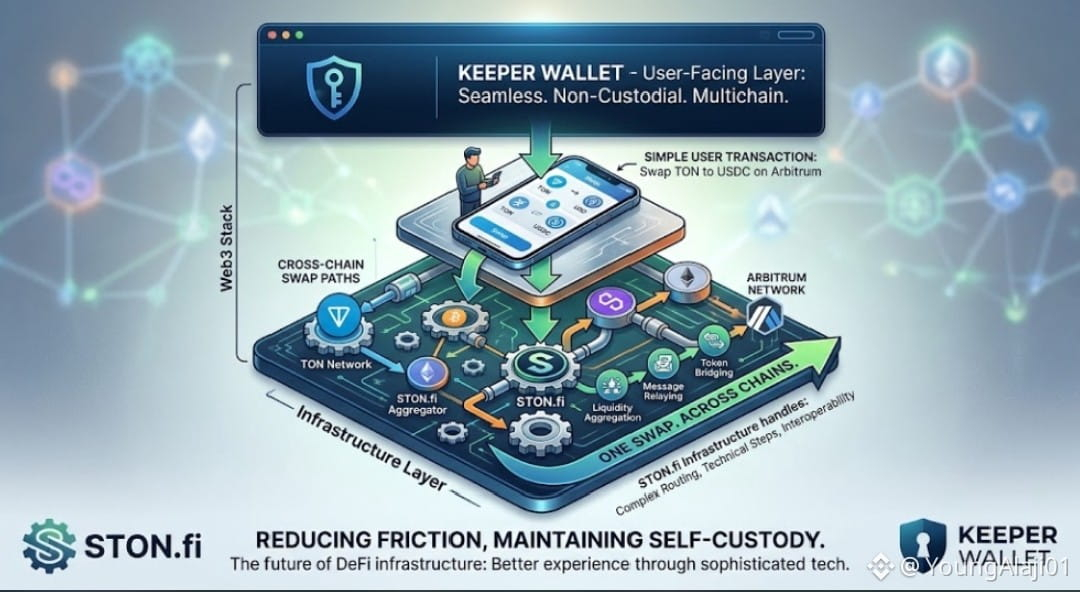
Think of the stack in simple terms
Keeper handles the user facing wallet layer, while @stonfi focuses on the infrastructure that connects assets across different ecosystems.
The important part is what happens underneath. Cross chain transactions can involve multiple networks, routes, and technical steps, but users shouldn’t need to understand all of that just to complete a swap.
That’s where good infrastructure matters.
The goal isn’t to hide complexity through centralization. It’s to reduce unnecessary friction while keeping users in control of their assets.
For Web3, that’s a meaningful direction: better infrastructure, simpler experiences, and self custody at the center.
#KeeperWallet #STONfi
The move from Tonkeeper to Keeper feels like more than just a name change.
It reflects a bigger shift in how the wallet layer is being built. What started as a TON focused wallet is expanding toward a more connected multichain experience.
That makes @keeper_wallet a natural fit for @STONfi DEX One Swap Across Chains campaign.
Think of the stack in simple terms
Keeper handles the user facing wallet layer, while @STONfi DEX focuses on the infrastructure that connects assets across different ecosystems.
The important part is what happens underneath. Cross chain transactions can involve multiple networks, routes, and technical steps, but users shouldn’t need to understand all of that just to complete a swap.
That’s where good infrastructure matters.
The goal isn’t to hide complexity through centralization. It’s to reduce unnecessary friction while keeping users in control of their assets.
For Web3, that’s a meaningful direction: better infrastructure, simpler experiences, and self custody at the center.
#KeeperWallet #STONfi
It reflects a bigger shift in how the wallet layer is being built. What started as a TON focused wallet is expanding toward a more connected multichain experience.
That makes @keeper_wallet a natural fit for @STONfi DEX One Swap Across Chains campaign.
Think of the stack in simple terms
Keeper handles the user facing wallet layer, while @STONfi DEX focuses on the infrastructure that connects assets across different ecosystems.
The important part is what happens underneath. Cross chain transactions can involve multiple networks, routes, and technical steps, but users shouldn’t need to understand all of that just to complete a swap.
That’s where good infrastructure matters.
The goal isn’t to hide complexity through centralization. It’s to reduce unnecessary friction while keeping users in control of their assets.
For Web3, that’s a meaningful direction: better infrastructure, simpler experiences, and self custody at the center.
#KeeperWallet #STONfi
74

·
--
Bullish
Why You Can’t Always Swap Your Entire GRAM Balance on STONfi
Your wallet may show your full GRAM balance, but that doesn't mean every GRAM can be used as swap input.
On TON, transactions require TON for network fees and execution.
So you may need to leave part of your balance available for transaction costs.
The result:
• Full GRAM balance ≠ full swapable balance
• Some TON may need to remain in the wallet
• The swap input may need to be reduced
• This isn't necessarily a liquidity problem
A failed swap doesn't automatically mean the token or pool is broken.
Sometimes, the wallet simply needs enough TON to complete the transaction.
Understanding the network underneath the interface makes these situations easier to diagnose.
#STONfi #TON
$KII
{alpha}(560xeec6574eabba52bac3f0277f2cd5ac7e67197886)
Why You Can’t Always Swap Your Entire GRAM Balance on STONfi
Your wallet may show your full GRAM balance, but that doesn't mean every GRAM can be used as swap input.
On TON, transactions require TON for network fees and execution.
So you may need to leave part of your balance available for transaction costs.
The result:
• Full GRAM balance ≠ full swapable balance
• Some TON may need to remain in the wallet
• The swap input may need to be reduced
• This isn't necessarily a liquidity problem
A failed swap doesn't automatically mean the token or pool is broken.
Sometimes, the wallet simply needs enough TON to complete the transaction.
Understanding the network underneath the interface makes these situations easier to diagnose.
#STONfi #TON
$KII
Your wallet may show your full GRAM balance, but that doesn't mean every GRAM can be used as swap input.
On TON, transactions require TON for network fees and execution.
So you may need to leave part of your balance available for transaction costs.
The result:
• Full GRAM balance ≠ full swapable balance
• Some TON may need to remain in the wallet
• The swap input may need to be reduced
• This isn't necessarily a liquidity problem
A failed swap doesn't automatically mean the token or pool is broken.
Sometimes, the wallet simply needs enough TON to complete the transaction.
Understanding the network underneath the interface makes these situations easier to diagnose.
#STONfi #TON
$KII
250

·
--
Arc is now live for cross-chain swaps on STONfi
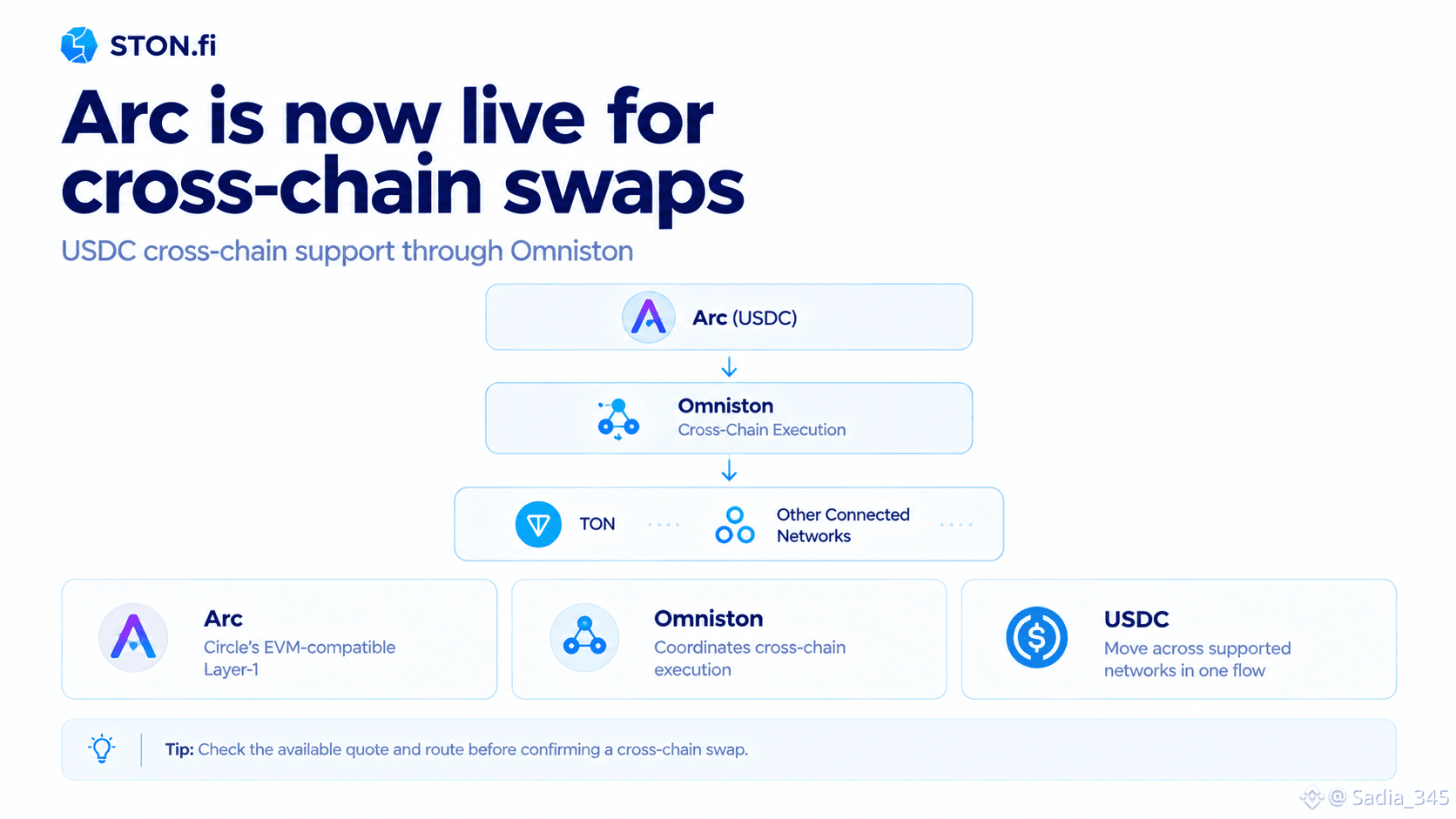
A useful expansion in the cross-chain setup: Arc has been added to STONfi’s supported networks.
Arc is Circle’s new EVM-compatible Layer-1, built specifically for stablecoin finance. With Omniston supporting USDC on Arc, users can now move the asset between Arc, TON, and other connected networks in one flow.
The practical benefit is straightforward. Instead of treating Arc as a separate environment, stablecoin transfers can sit inside the same cross-chain experience already used for other networks. This is especially relevant for users who regularly move USDC across ecosystems.
It is still an early-stage route, so checking the available quotes and limits before confirming a swap is a sensible step.
Have you tried any of the newer network additions yet, or are you mainly using the more established routes?
#STONfi $GRAM
Arc is now live for cross-chain swaps on STONfi
A useful expansion in the cross-chain setup: Arc has been added to STONfi’s supported networks.
Arc is Circle’s new EVM-compatible Layer-1, built specifically for stablecoin finance. With Omniston supporting USDC on Arc, users can now move the asset between Arc, TON, and other connected networks in one flow.
The practical benefit is straightforward. Instead of treating Arc as a separate environment, stablecoin transfers can sit inside the same cross-chain experience already used for other networks. This is especially relevant for users who regularly move USDC across ecosystems.
It is still an early-stage route, so checking the available quotes and limits before confirming a swap is a sensible step.
Have you tried any of the newer network additions yet, or are you mainly using the more established routes?
#STONfi $GRAM
A useful expansion in the cross-chain setup: Arc has been added to STONfi’s supported networks.
Arc is Circle’s new EVM-compatible Layer-1, built specifically for stablecoin finance. With Omniston supporting USDC on Arc, users can now move the asset between Arc, TON, and other connected networks in one flow.
The practical benefit is straightforward. Instead of treating Arc as a separate environment, stablecoin transfers can sit inside the same cross-chain experience already used for other networks. This is especially relevant for users who regularly move USDC across ecosystems.
It is still an early-stage route, so checking the available quotes and limits before confirming a swap is a sensible step.
Have you tried any of the newer network additions yet, or are you mainly using the more established routes?
#STONfi $GRAM
1
384
The Bigger Idea Behind the Flight Campaign.
The “One Swap. Across Chains.” campaign is more than a points system.
At its core, it is an introduction to the idea that liquidity can travel between different blockchain ecosystems.
TON users can explore destinations beyond TON.
That matters because the future of DeFi isn't likely to be one chain dominating every use case.
Different networks will continue developing different strengths.
The challenge is connecting those ecosystems without forcing users through unnecessary complexity.
STON.fi is using its campaign to make that concept more accessible.
And that's probably the most interesting part of it.
Behind the miles, tickets and missions is a much bigger question:
Can cross-chain DeFi eventually feel as simple as a normal swap?
That's the problem infrastructure like Omniston is trying to solve.
@stonfi #STONfi
The Bigger Idea Behind the Flight Campaign.
The “One Swap. Across Chains.” campaign is more than a points system.
At its core, it is an introduction to the idea that liquidity can travel between different blockchain ecosystems.
TON users can explore destinations beyond TON.
That matters because the future of DeFi isn't likely to be one chain dominating every use case.
Different networks will continue developing different strengths.
The challenge is connecting those ecosystems without forcing users through unnecessary complexity.
STON.fi is using its campaign to make that concept more accessible.
And that's probably the most interesting part of it.
Behind the miles, tickets and missions is a much bigger question:
Can cross-chain DeFi eventually feel as simple as a normal swap?
That's the problem infrastructure like Omniston is trying to solve.
@STONfi DEX #STONfi
The “One Swap. Across Chains.” campaign is more than a points system.
At its core, it is an introduction to the idea that liquidity can travel between different blockchain ecosystems.
TON users can explore destinations beyond TON.
That matters because the future of DeFi isn't likely to be one chain dominating every use case.
Different networks will continue developing different strengths.
The challenge is connecting those ecosystems without forcing users through unnecessary complexity.
STON.fi is using its campaign to make that concept more accessible.
And that's probably the most interesting part of it.
Behind the miles, tickets and missions is a much bigger question:
Can cross-chain DeFi eventually feel as simple as a normal swap?
That's the problem infrastructure like Omniston is trying to solve.
@STONfi DEX #STONfi
1
2
The $10 Detail Matters.
If you're looking at STON.fi's current cross-chain campaign, pay attention to the qualifying swap requirements.
The official campaign page currently lists $10 or more per swap for certain cross-chain missions.
That doesn't mean users should randomly make $10 swaps just to collect miles.
The correct approach is to understand the campaign first.
Check which mission you're completing.
Check the minimum.
Check the network.
Check the fee.
Then decide whether the activity makes sense for you.
This is a good general rule for Web3 campaigns:
Never let the reward become bigger in your mind than the transaction you're making to obtain it.
Rewards can be temporary.
Your assets are real.
Participate carefully.
@stonfi #STONfi
The $10 Detail Matters.
If you're looking at STON.fi's current cross-chain campaign, pay attention to the qualifying swap requirements.
The official campaign page currently lists $10 or more per swap for certain cross-chain missions.
That doesn't mean users should randomly make $10 swaps just to collect miles.
The correct approach is to understand the campaign first.
Check which mission you're completing.
Check the minimum.
Check the network.
Check the fee.
Then decide whether the activity makes sense for you.
This is a good general rule for Web3 campaigns:
Never let the reward become bigger in your mind than the transaction you're making to obtain it.
Rewards can be temporary.
Your assets are real.
Participate carefully.
@STONfi DEX #STONfi
If you're looking at STON.fi's current cross-chain campaign, pay attention to the qualifying swap requirements.
The official campaign page currently lists $10 or more per swap for certain cross-chain missions.
That doesn't mean users should randomly make $10 swaps just to collect miles.
The correct approach is to understand the campaign first.
Check which mission you're completing.
Check the minimum.
Check the network.
Check the fee.
Then decide whether the activity makes sense for you.
This is a good general rule for Web3 campaigns:
Never let the reward become bigger in your mind than the transaction you're making to obtain it.
Rewards can be temporary.
Your assets are real.
Participate carefully.
@STONfi DEX #STONfi
1
3
Log in to explore more content
Join global crypto users on Binance Square
⚡️ Get latest and useful information about crypto.
💬 Trusted by the world’s largest crypto exchange.
👍 Discover real insights from verified creators.
Email / Phone number
Trending Topics
1
#TrumpRejectsAIRulesForVoluntaryAudits
221 views
49 Discussing
2
#BitgetHotWalletBreachTiedToThirdPartySecurityFlaw
154 views
35 Discussing
3
#OpenAIUnveilsAlwaysOnAgentDots
1,174 views
87 Discussing
4
#ChainlinkLaunchesBankSWIFTLedgerFramework
2,731 views
92 Discussing
5
#EarningsSeason
436,341 views
3,297 Discussing
6
#SECChairWantsStockMarketsOnChain
5,956 views
178 Discussing
7
#MulticoinInvestsInGrass
3,534 views
121 Discussing
8
#CEARenamesToBNBStandardUnderBNC
4,597 views
132 Discussing
9
#BitwiseLaunchesFirstSpotNEARETF
58,699 views
758 Discussing
10
#USJobOpeningsFallToFiveMonthLow
62,436 views
592 Discussing