
#ssv
ssv
834,556 views
2,961 Discussing
Hot
Latest

·
--
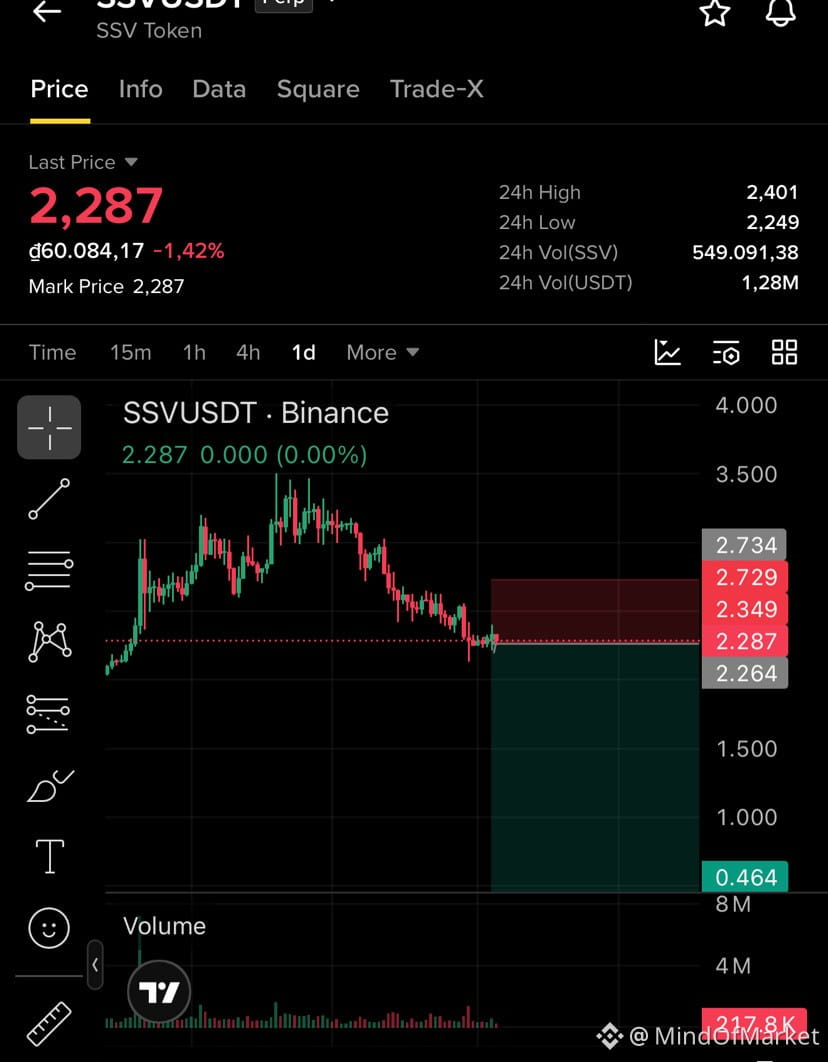
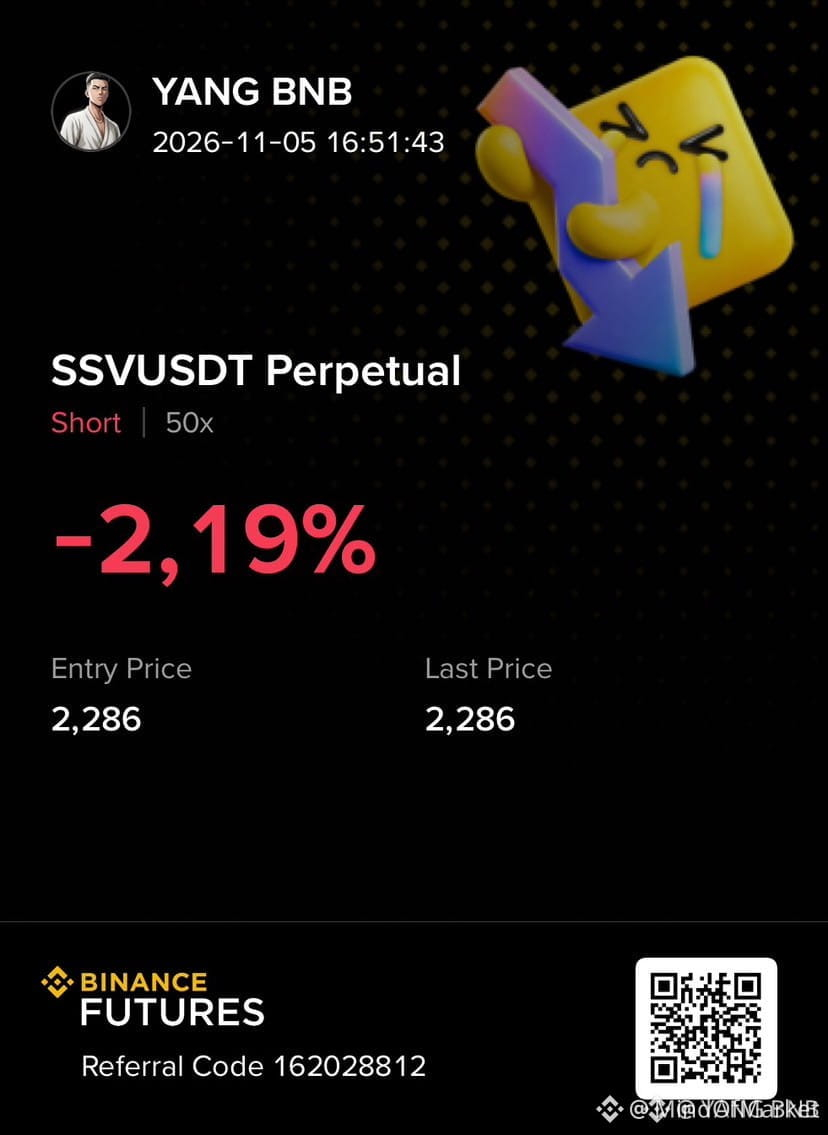
🚨 $SSV RIPPED SHORT WITH LIQUIDITY SWEEP – TARGET 0.464 💥
Entry: 2.349-2.729 ⚡
Target: 0.464 🚀
Stop Loss: 2.729 ⚠️
📊 The 2.7‑2.35 zone has acted as a robust order block, swallowing sell pressure three times this week, a classic smart‑money liquidity grab. 🌊 Sellers are now forced into a steep descent, and the price is primed to cascade toward the next demand pocket near 0.46.
⚡ Volume on the 4H chart spikes as the short side consolidates, delivering a clean 1:5 risk‑reward if the target holds. 💡 The stop sits at the upper edge of the block, protecting against a false breakout.
💬 Does this liquidity sweep align with your short thesis for $SSV ? 👇
⚠️ Not financial advice. Always manage your risk. 🛡️
🏷️ #SSV #ShortSetup #LiquiditySweep #Crypto
🔥 💎
🚨 $SSV RIPPED SHORT WITH LIQUIDITY SWEEP – TARGET 0.464 💥
Entry: 2.349-2.729 ⚡
Target: 0.464 🚀
Stop Loss: 2.729 ⚠️
📊 The 2.7‑2.35 zone has acted as a robust order block, swallowing sell pressure three times this week, a classic smart‑money liquidity grab. 🌊 Sellers are now forced into a steep descent, and the price is primed to cascade toward the next demand pocket near 0.46.
⚡ Volume on the 4H chart spikes as the short side consolidates, delivering a clean 1:5 risk‑reward if the target holds. 💡 The stop sits at the upper edge of the block, protecting against a false breakout.
💬 Does this liquidity sweep align with your short thesis for $SSV ? 👇
⚠️ Not financial advice. Always manage your risk. 🛡️
🏷️ #SSV #ShortSetup #LiquiditySweep #Crypto
🔥 💎
Entry: 2.349-2.729 ⚡
Target: 0.464 🚀
Stop Loss: 2.729 ⚠️
📊 The 2.7‑2.35 zone has acted as a robust order block, swallowing sell pressure three times this week, a classic smart‑money liquidity grab. 🌊 Sellers are now forced into a steep descent, and the price is primed to cascade toward the next demand pocket near 0.46.
⚡ Volume on the 4H chart spikes as the short side consolidates, delivering a clean 1:5 risk‑reward if the target holds. 💡 The stop sits at the upper edge of the block, protecting against a false breakout.
💬 Does this liquidity sweep align with your short thesis for $SSV ? 👇
⚠️ Not financial advice. Always manage your risk. 🛡️
🏷️ #SSV #ShortSetup #LiquiditySweep #Crypto
🔥 💎
19

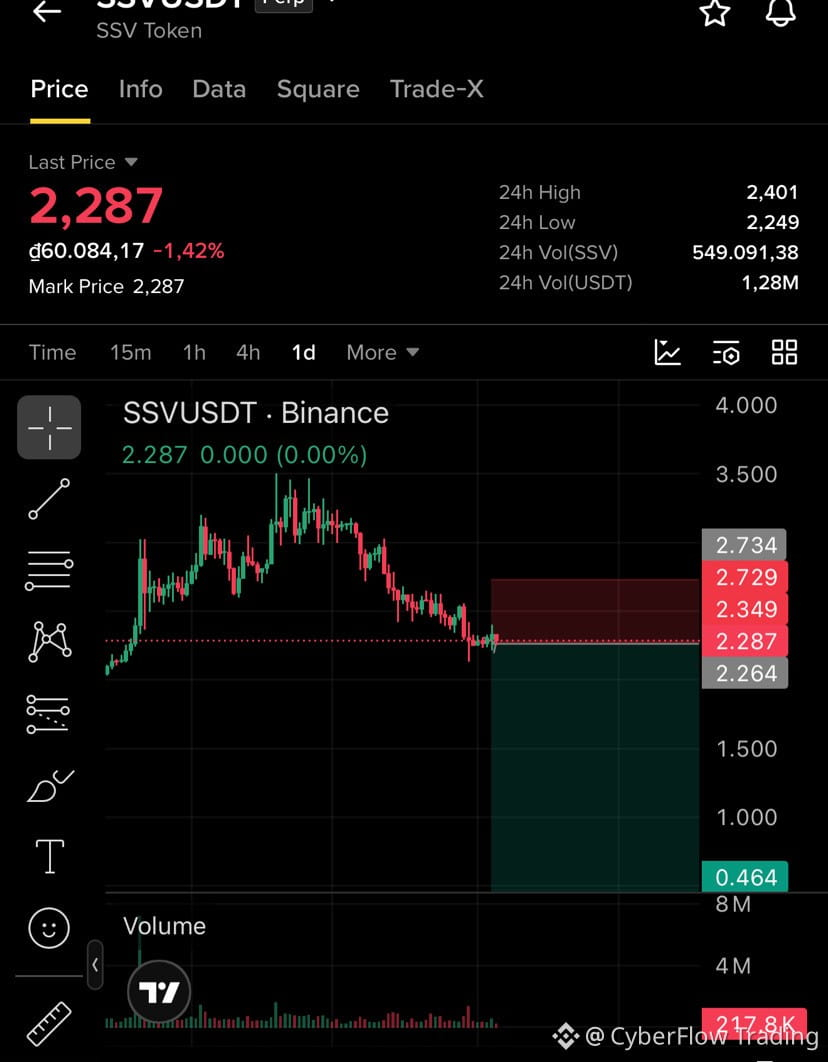
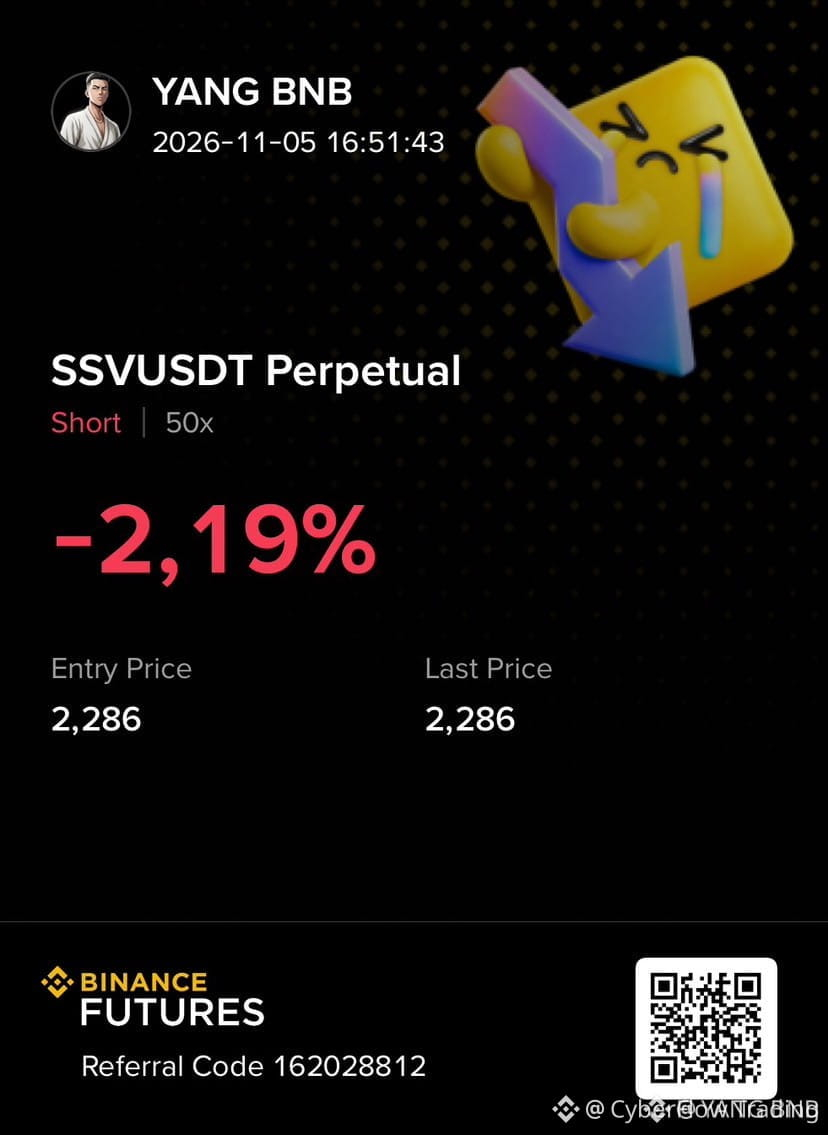
🔴 $SSV BIG SHORT ALERT – SELL NOW, REBUY AT $0.464! 🚀
Entry: 2.349–2.729 ⚡
Stop Loss: 2.729 ⚠️
📊 Smart money is carving a deep liquidity pocket around the 2.70 zone, and sellers are hammering the order block with relentless pressure. 🌊 The 4‑hour volume spike signals a decisive sweep, setting the stage for a rapid drop toward the $0.464 buy‑back level. 🦈 Keep eyes on the order flow; a break below 2.70 could unleash another wave of short‑term bearish thrusts.
💬 Do you see the next liquidity grab coming before the rebound? 👇
⚠️ Not financial advice. Always manage your risk. 🛡️
🏷️ #SSV #ShortSetup #Crypto #LiquiditySweep #TradeAlert
🔥 💎
🔴 $SSV BIG SHORT ALERT – SELL NOW, REBUY AT $0.464! 🚀
Entry: 2.349–2.729 ⚡
Stop Loss: 2.729 ⚠️
📊 Smart money is carving a deep liquidity pocket around the 2.70 zone, and sellers are hammering the order block with relentless pressure. 🌊 The 4‑hour volume spike signals a decisive sweep, setting the stage for a rapid drop toward the $0.464 buy‑back level. 🦈 Keep eyes on the order flow; a break below 2.70 could unleash another wave of short‑term bearish thrusts.
💬 Do you see the next liquidity grab coming before the rebound? 👇
⚠️ Not financial advice. Always manage your risk. 🛡️
🏷️ #SSV #ShortSetup #Crypto #LiquiditySweep #TradeAlert
🔥 💎
Entry: 2.349–2.729 ⚡
Stop Loss: 2.729 ⚠️
📊 Smart money is carving a deep liquidity pocket around the 2.70 zone, and sellers are hammering the order block with relentless pressure. 🌊 The 4‑hour volume spike signals a decisive sweep, setting the stage for a rapid drop toward the $0.464 buy‑back level. 🦈 Keep eyes on the order flow; a break below 2.70 could unleash another wave of short‑term bearish thrusts.
💬 Do you see the next liquidity grab coming before the rebound? 👇
⚠️ Not financial advice. Always manage your risk. 🛡️
🏷️ #SSV #ShortSetup #Crypto #LiquiditySweep #TradeAlert
🔥 💎
20

·
--
⚡ $SSV IS TRENDING! DON'T IGNORE THIS PROJECT
SSV Network is attracting attention among crypto watchers.
Why does $SSV matter?
🔹 Distributed validator technology
🔹 Ethereum staking infrastructure
🔹 Decentralization-focused ecosystem
🔹 Potential growth as staking adoption develops.
📊 Today's trending ranking puts ssvat the top of Binance's community-focused list.
Could SSV become one of the interesting altcoins to watch this month?
{spot}(SSVUSDT)
What is your target for $SSV ?
#SSV #Staking #DeFi #CryptoGems #BinanceSquare
⚡ $SSV IS TRENDING! DON'T IGNORE THIS PROJECT
SSV Network is attracting attention among crypto watchers.
Why does $SSV matter?
🔹 Distributed validator technology
🔹 Ethereum staking infrastructure
🔹 Decentralization-focused ecosystem
🔹 Potential growth as staking adoption develops.
📊 Today's trending ranking puts ssvat the top of Binance's community-focused list.
Could SSV become one of the interesting altcoins to watch this month?
What is your target for $SSV ?
#SSV #Staking #DeFi #CryptoGems #BinanceSquare
SSV Network is attracting attention among crypto watchers.
Why does $SSV matter?
🔹 Distributed validator technology
🔹 Ethereum staking infrastructure
🔹 Decentralization-focused ecosystem
🔹 Potential growth as staking adoption develops.
📊 Today's trending ranking puts ssvat the top of Binance's community-focused list.
Could SSV become one of the interesting altcoins to watch this month?
What is your target for $SSV ?
#SSV #Staking #DeFi #CryptoGems #BinanceSquare

834

920,000 SSV was sent to a staking contract in a single transaction, and the source address points to Kraken. This on-chain record tells us much more than “some whale is buying”—because this isn’t a purchase. It’s a lockup.
First, let’s be clear about how to read it. The same “920,000 tokens staked” can have two completely different interpretations.
The first is simple lockup. Tokens move out of circulation and into a contract, reducing sell-side supply and shifting the supply curve to the left. That’s the most basic story.
The second is an operator staking collateral. In the SSV Network, operator nodes must stake SSV as collateral. When one address suddenly accumulates this much collateral, it usually means it’s preparing to support a larger share of validators.
I lean toward the second interpretation. The reasoning isn’t complicated: Kraken’s ETH staking already runs on the SSV Network. It isn’t just an ordinary “user” of the protocol—it’s both a customer and a provider of capacity. As the second-largest exchange in the U.S., scaling its staking business means expanding its operator collateral and DVT clusters, not buying tokens. In other words, this money isn’t betting on the price; it’s buying capacity.
Here’s a mechanism that many people overlook: SSV’s DVT setup defaults to four node shares, with three signatures required to produce a block. For an exchange, this isn’t technical showboating; it’s a risk-management necessity. A single node going down won’t take the system offline, and a single malicious actor can’t trigger slashing. Given the scale of an exchange’s ETH staking operations, a single slashing event could be a PR disaster, so it’s willing to keep paying a premium for “distributed” infrastructure. That’s the strongest part of the SSV thesis: demand comes from compliance and risk-management budgets, not sentiment.
But there’s a time lag between on-chain activity and price. Staking is a slow-moving variable; funding rates are fast-moving. It’s common to see a sharp green candle on the day of a large lockup. Whether the move continues depends on two things: whether the staking contract balance keeps rising—one increase is an event, but a sustained rise is a trend—and whether open interest in perpetuals is rising or falling during the rally. If OI doesn’t follow and funding rates are still negative, this move is probably a news-driven spike, not a repricing. Conversely, if the balance keeps climbing and OI expands in tandem, then capital is genuinely going long on the thesis that lockups reduce circulating supply.
The risks also need to be stated plainly.
A single transaction doesn’t necessarily mean net new demand. Internal exchange address transfers, position changes, and migrations can all generate large transactions. Don’t mistake one move for a turning point in demand.
Customer concentration cuts both ways. Kraken represents a significant share: its expansion is bullish, but if it switches solutions, the thesis has to be rewritten.
Value accrual to the token is the slowest link in the chain. What’s being locked up is SSV collateral, not a “direct proxy for the amount of ETH staked.” Long-term value is ultimately determined by the multiplier effect of network fees and validator numbers, and that transmission takes much longer than the narrative suggests.
So my view is this: the asset’s current pricing disconnect is clear. Fundamental demand is institutional, slow-moving, and sticky, while secondary-market pricing is retail-driven, fast-moving, and emotional. The 920,000-token lockup reflects the former; the candlestick chart reflects the latter. Going forward, I’d rather watch whether the staking contract balance continues to rise than focus on the size of this one candle.
The essence of betting on this thesis is betting that “exchanges will continue outsourcing staking security.” If Kraken builds its own solution or switches protocols one day, the thesis will need to be rewritten.
#区块链 #Crypto #SSV
920,000 SSV was sent to a staking contract in a single transaction, and the source address points to Kraken. This on-chain record tells us much more than “some whale is buying”—because this isn’t a purchase. It’s a lockup.
First, let’s be clear about how to read it. The same “920,000 tokens staked” can have two completely different interpretations.
The first is simple lockup. Tokens move out of circulation and into a contract, reducing sell-side supply and shifting the supply curve to the left. That’s the most basic story.
The second is an operator staking collateral. In the SSV Network, operator nodes must stake SSV as collateral. When one address suddenly accumulates this much collateral, it usually means it’s preparing to support a larger share of validators.
I lean toward the second interpretation. The reasoning isn’t complicated: Kraken’s ETH staking already runs on the SSV Network. It isn’t just an ordinary “user” of the protocol—it’s both a customer and a provider of capacity. As the second-largest exchange in the U.S., scaling its staking business means expanding its operator collateral and DVT clusters, not buying tokens. In other words, this money isn’t betting on the price; it’s buying capacity.
Here’s a mechanism that many people overlook: SSV’s DVT setup defaults to four node shares, with three signatures required to produce a block. For an exchange, this isn’t technical showboating; it’s a risk-management necessity. A single node going down won’t take the system offline, and a single malicious actor can’t trigger slashing. Given the scale of an exchange’s ETH staking operations, a single slashing event could be a PR disaster, so it’s willing to keep paying a premium for “distributed” infrastructure. That’s the strongest part of the SSV thesis: demand comes from compliance and risk-management budgets, not sentiment.
But there’s a time lag between on-chain activity and price. Staking is a slow-moving variable; funding rates are fast-moving. It’s common to see a sharp green candle on the day of a large lockup. Whether the move continues depends on two things: whether the staking contract balance keeps rising—one increase is an event, but a sustained rise is a trend—and whether open interest in perpetuals is rising or falling during the rally. If OI doesn’t follow and funding rates are still negative, this move is probably a news-driven spike, not a repricing. Conversely, if the balance keeps climbing and OI expands in tandem, then capital is genuinely going long on the thesis that lockups reduce circulating supply.
The risks also need to be stated plainly.
A single transaction doesn’t necessarily mean net new demand. Internal exchange address transfers, position changes, and migrations can all generate large transactions. Don’t mistake one move for a turning point in demand.
Customer concentration cuts both ways. Kraken represents a significant share: its expansion is bullish, but if it switches solutions, the thesis has to be rewritten.
Value accrual to the token is the slowest link in the chain. What’s being locked up is SSV collateral, not a “direct proxy for the amount of ETH staked.” Long-term value is ultimately determined by the multiplier effect of network fees and validator numbers, and that transmission takes much longer than the narrative suggests.
So my view is this: the asset’s current pricing disconnect is clear. Fundamental demand is institutional, slow-moving, and sticky, while secondary-market pricing is retail-driven, fast-moving, and emotional. The 920,000-token lockup reflects the former; the candlestick chart reflects the latter. Going forward, I’d rather watch whether the staking contract balance continues to rise than focus on the size of this one candle.
The essence of betting on this thesis is betting that “exchanges will continue outsourcing staking security.” If Kraken builds its own solution or switches protocols one day, the thesis will need to be rewritten.
#区块链 #Crypto #SSV
First, let’s be clear about how to read it. The same “920,000 tokens staked” can have two completely different interpretations.
The first is simple lockup. Tokens move out of circulation and into a contract, reducing sell-side supply and shifting the supply curve to the left. That’s the most basic story.
The second is an operator staking collateral. In the SSV Network, operator nodes must stake SSV as collateral. When one address suddenly accumulates this much collateral, it usually means it’s preparing to support a larger share of validators.
I lean toward the second interpretation. The reasoning isn’t complicated: Kraken’s ETH staking already runs on the SSV Network. It isn’t just an ordinary “user” of the protocol—it’s both a customer and a provider of capacity. As the second-largest exchange in the U.S., scaling its staking business means expanding its operator collateral and DVT clusters, not buying tokens. In other words, this money isn’t betting on the price; it’s buying capacity.
Here’s a mechanism that many people overlook: SSV’s DVT setup defaults to four node shares, with three signatures required to produce a block. For an exchange, this isn’t technical showboating; it’s a risk-management necessity. A single node going down won’t take the system offline, and a single malicious actor can’t trigger slashing. Given the scale of an exchange’s ETH staking operations, a single slashing event could be a PR disaster, so it’s willing to keep paying a premium for “distributed” infrastructure. That’s the strongest part of the SSV thesis: demand comes from compliance and risk-management budgets, not sentiment.
But there’s a time lag between on-chain activity and price. Staking is a slow-moving variable; funding rates are fast-moving. It’s common to see a sharp green candle on the day of a large lockup. Whether the move continues depends on two things: whether the staking contract balance keeps rising—one increase is an event, but a sustained rise is a trend—and whether open interest in perpetuals is rising or falling during the rally. If OI doesn’t follow and funding rates are still negative, this move is probably a news-driven spike, not a repricing. Conversely, if the balance keeps climbing and OI expands in tandem, then capital is genuinely going long on the thesis that lockups reduce circulating supply.
The risks also need to be stated plainly.
A single transaction doesn’t necessarily mean net new demand. Internal exchange address transfers, position changes, and migrations can all generate large transactions. Don’t mistake one move for a turning point in demand.
Customer concentration cuts both ways. Kraken represents a significant share: its expansion is bullish, but if it switches solutions, the thesis has to be rewritten.
Value accrual to the token is the slowest link in the chain. What’s being locked up is SSV collateral, not a “direct proxy for the amount of ETH staked.” Long-term value is ultimately determined by the multiplier effect of network fees and validator numbers, and that transmission takes much longer than the narrative suggests.
So my view is this: the asset’s current pricing disconnect is clear. Fundamental demand is institutional, slow-moving, and sticky, while secondary-market pricing is retail-driven, fast-moving, and emotional. The 920,000-token lockup reflects the former; the candlestick chart reflects the latter. Going forward, I’d rather watch whether the staking contract balance continues to rise than focus on the size of this one candle.
The essence of betting on this thesis is betting that “exchanges will continue outsourcing staking security.” If Kraken builds its own solution or switches protocols one day, the thesis will need to be rewritten.
#区块链 #Crypto #SSV
11

·
--
The buzz is real, but keep an eye on the numbers: let's discuss a recent topic involving $SSV .
The SSV staking website added 920,000 SSV. Monitoring shows it came from a Kraken exchange address, and the exchange uses the SSV network for ETH.
Bulls and bears are both waiting for a signal; neither side is willing to move first.
Will you wait for confirmation? 👇
#市场观察 #SSV #Binance
The buzz is real, but keep an eye on the numbers: let's discuss a recent topic involving $SSV .
The SSV staking website added 920,000 SSV. Monitoring shows it came from a Kraken exchange address, and the exchange uses the SSV network for ETH.
Bulls and bears are both waiting for a signal; neither side is willing to move first.
Will you wait for confirmation? 👇
#市场观察 #SSV #Binance
The SSV staking website added 920,000 SSV. Monitoring shows it came from a Kraken exchange address, and the exchange uses the SSV network for ETH.
Bulls and bears are both waiting for a signal; neither side is willing to move first.
Will you wait for confirmation? 👇
#市场观察 #SSV #Binance
4
·
--
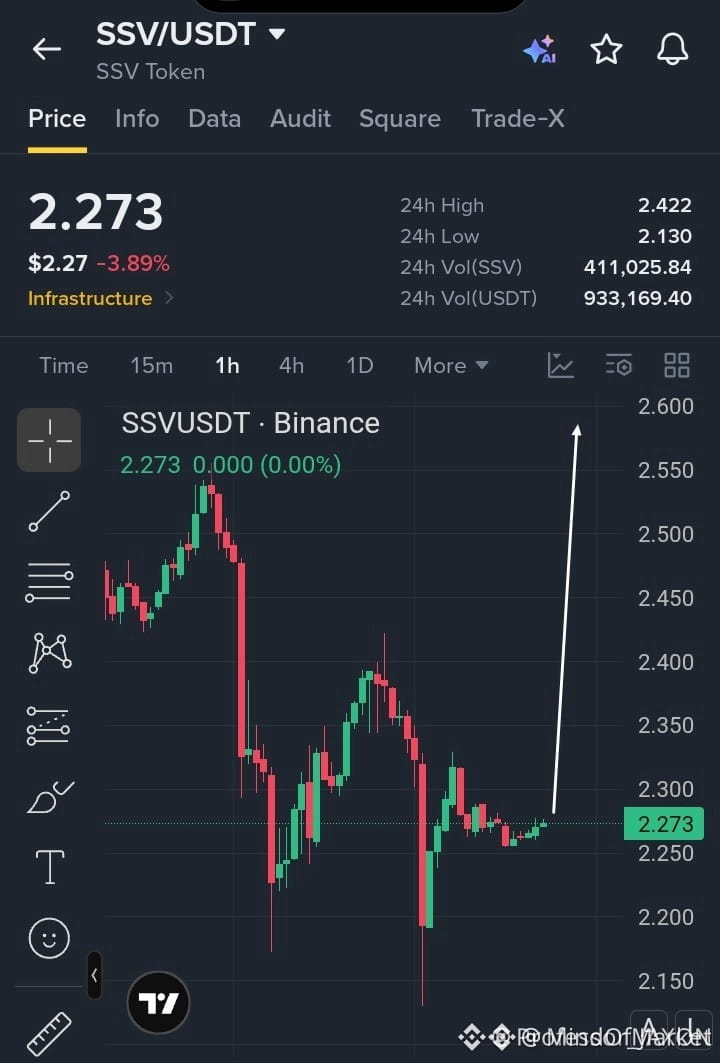
⚡ $SSV SIGNALS SYSTEMATIC ACCUMULATION AS BUYERS DEFEND DISCOUNT PRICING! 🦈
Entry: 2.250 - 2.280 ⚡
Target: 2.350 - 2.550 🎯
Stop Loss: 2.190 ⚠️
📌 Following a clean absorption at structural support, $SSV is establishing an accumulation base around 2.273. Order flow indicates deliberate supply absorption, setting the stage for an expansion phase once 2.300 is cleared with conviction.
🌊 A confirmed liquidity push through local resistance would flip market structure decisively bullish toward the upper distribution targets. Institutional participants are closely monitoring buying volume confirmation before expanding sizing.
💬 Are you positioning inside this consolidation base or waiting for structural confirmation above 2.300? 👇
⚠️ Not financial advice. Always manage your risk. 🛡️
🏷️ #SSV #LongSetup #Crypto #MarketStructure
🎯 🦈
⚡ $SSV SIGNALS SYSTEMATIC ACCUMULATION AS BUYERS DEFEND DISCOUNT PRICING! 🦈
Entry: 2.250 - 2.280 ⚡
Target: 2.350 - 2.550 🎯
Stop Loss: 2.190 ⚠️
📌 Following a clean absorption at structural support, $SSV is establishing an accumulation base around 2.273. Order flow indicates deliberate supply absorption, setting the stage for an expansion phase once 2.300 is cleared with conviction.
🌊 A confirmed liquidity push through local resistance would flip market structure decisively bullish toward the upper distribution targets. Institutional participants are closely monitoring buying volume confirmation before expanding sizing.
💬 Are you positioning inside this consolidation base or waiting for structural confirmation above 2.300? 👇
⚠️ Not financial advice. Always manage your risk. 🛡️
🏷️ #SSV #LongSetup #Crypto #MarketStructure
🎯 🦈
Entry: 2.250 - 2.280 ⚡
Target: 2.350 - 2.550 🎯
Stop Loss: 2.190 ⚠️
📌 Following a clean absorption at structural support, $SSV is establishing an accumulation base around 2.273. Order flow indicates deliberate supply absorption, setting the stage for an expansion phase once 2.300 is cleared with conviction.
🌊 A confirmed liquidity push through local resistance would flip market structure decisively bullish toward the upper distribution targets. Institutional participants are closely monitoring buying volume confirmation before expanding sizing.
💬 Are you positioning inside this consolidation base or waiting for structural confirmation above 2.300? 👇
⚠️ Not financial advice. Always manage your risk. 🛡️
🏷️ #SSV #LongSetup #Crypto #MarketStructure
🎯 🦈
18

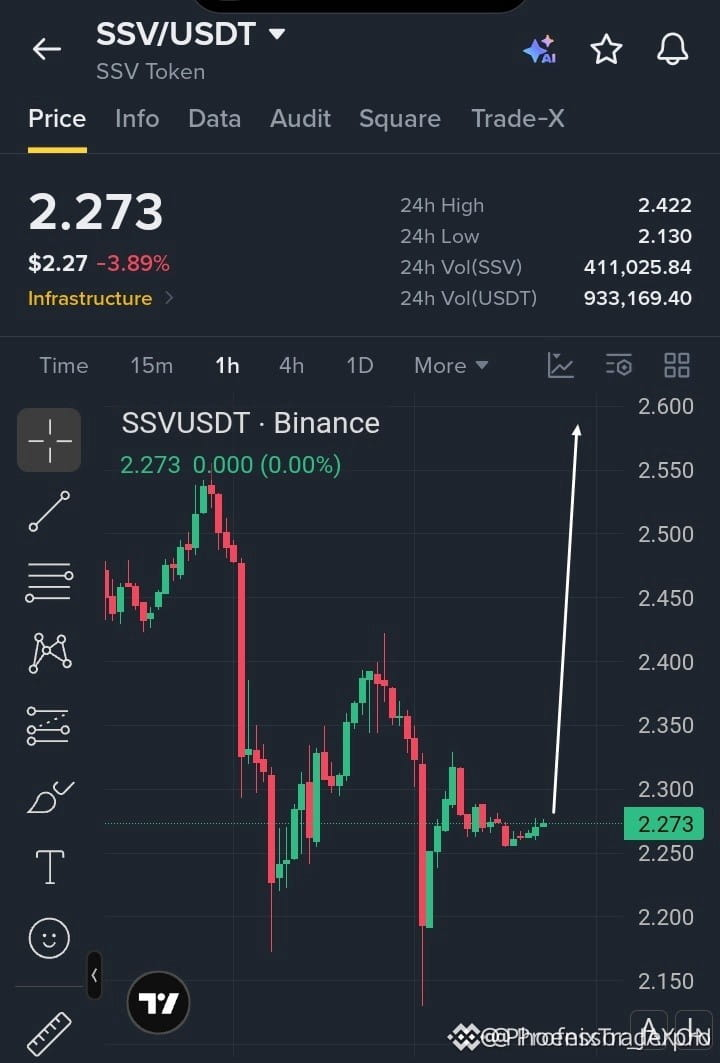
⚡ $SSV COILING TIGHT AT KEY SUPPORT AS BUYERS GEAR UP FOR RECLAIM! 💥
Entry: 2.250 - 2.280 ⚡
Target: 2.350 / 2.450 / 2.550 🎯
Stop Loss: 2.190 ⚠️
📌 Buyers have firmly defended the base, pinning price around 2.273 as supply thins out after the recent recovery. 🌊 The consolidation structure shows textbook accumulation, with passive bids steadily absorbing late sellers at the range low.
⚡ Once the tape prints volume confirmation above the 2.300 pivot, momentum should unlock a swift drive into overhead resistance pockets. 💡
💬 Are you front-running the 2.300 reclaim or waiting for the breakout candle to close? 👇
⚠️ Not financial advice. Always manage your risk. 🛡️
🏷️ #SSV #CryptoTrading #Altcoins #Breakout
🎯 🦈
⚡ $SSV COILING TIGHT AT KEY SUPPORT AS BUYERS GEAR UP FOR RECLAIM! 💥
Entry: 2.250 - 2.280 ⚡
Target: 2.350 / 2.450 / 2.550 🎯
Stop Loss: 2.190 ⚠️
📌 Buyers have firmly defended the base, pinning price around 2.273 as supply thins out after the recent recovery. 🌊 The consolidation structure shows textbook accumulation, with passive bids steadily absorbing late sellers at the range low.
⚡ Once the tape prints volume confirmation above the 2.300 pivot, momentum should unlock a swift drive into overhead resistance pockets. 💡
💬 Are you front-running the 2.300 reclaim or waiting for the breakout candle to close? 👇
⚠️ Not financial advice. Always manage your risk. 🛡️
🏷️ #SSV #CryptoTrading #Altcoins #Breakout
🎯 🦈
Entry: 2.250 - 2.280 ⚡
Target: 2.350 / 2.450 / 2.550 🎯
Stop Loss: 2.190 ⚠️
📌 Buyers have firmly defended the base, pinning price around 2.273 as supply thins out after the recent recovery. 🌊 The consolidation structure shows textbook accumulation, with passive bids steadily absorbing late sellers at the range low.
⚡ Once the tape prints volume confirmation above the 2.300 pivot, momentum should unlock a swift drive into overhead resistance pockets. 💡
💬 Are you front-running the 2.300 reclaim or waiting for the breakout candle to close? 👇
⚠️ Not financial advice. Always manage your risk. 🛡️
🏷️ #SSV #CryptoTrading #Altcoins #Breakout
🎯 🦈
13

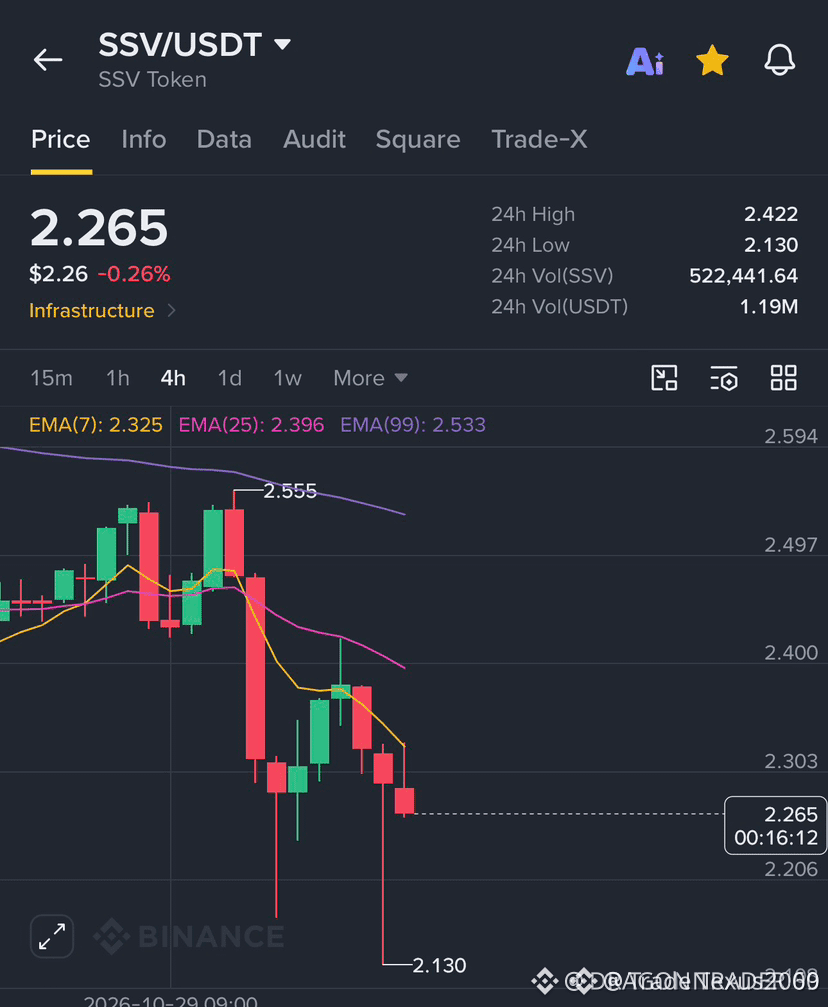
🔻 $SSV DELIVERS COMPLETE SHORT EXPANSION AS INSTITUTIONAL TARGETS GET FULLY CLEARED! 📉
The structural breakdown on $SSV executed with surgical precision, clearing resting buy-side exposure before driving straight through every downside discount objective. 🌊 Institutional distribution left textbook imbalances on the higher timeframes, fueling relentless sell-side delivery across the session. 📉
📊 With terminal delivery targets cleared, resting sell-side liquidity has been effectively swept. We are now monitoring how order flow stabilizes around this exhaustion pocket to evaluate whether institutional buyers step in or allow another lower structural high to print. 🔍
💬 Are you securing gains here, or waiting for a structural retest to reload? 👇
⚠️ Not financial advice. Always manage your risk. 🛡️
🏷️ #SSV #ShortSetup #Crypto #MarketStructure #PriceAction
🎯 🦈
🔻 $SSV DELIVERS COMPLETE SHORT EXPANSION AS INSTITUTIONAL TARGETS GET FULLY CLEARED! 📉
The structural breakdown on $SSV executed with surgical precision, clearing resting buy-side exposure before driving straight through every downside discount objective. 🌊 Institutional distribution left textbook imbalances on the higher timeframes, fueling relentless sell-side delivery across the session. 📉
📊 With terminal delivery targets cleared, resting sell-side liquidity has been effectively swept. We are now monitoring how order flow stabilizes around this exhaustion pocket to evaluate whether institutional buyers step in or allow another lower structural high to print. 🔍
💬 Are you securing gains here, or waiting for a structural retest to reload? 👇
⚠️ Not financial advice. Always manage your risk. 🛡️
🏷️ #SSV #ShortSetup #Crypto #MarketStructure #PriceAction
🎯 🦈
The structural breakdown on $SSV executed with surgical precision, clearing resting buy-side exposure before driving straight through every downside discount objective. 🌊 Institutional distribution left textbook imbalances on the higher timeframes, fueling relentless sell-side delivery across the session. 📉
📊 With terminal delivery targets cleared, resting sell-side liquidity has been effectively swept. We are now monitoring how order flow stabilizes around this exhaustion pocket to evaluate whether institutional buyers step in or allow another lower structural high to print. 🔍
💬 Are you securing gains here, or waiting for a structural retest to reload? 👇
⚠️ Not financial advice. Always manage your risk. 🛡️
🏷️ #SSV #ShortSetup #Crypto #MarketStructure #PriceAction
🎯 🦈
8

·
--
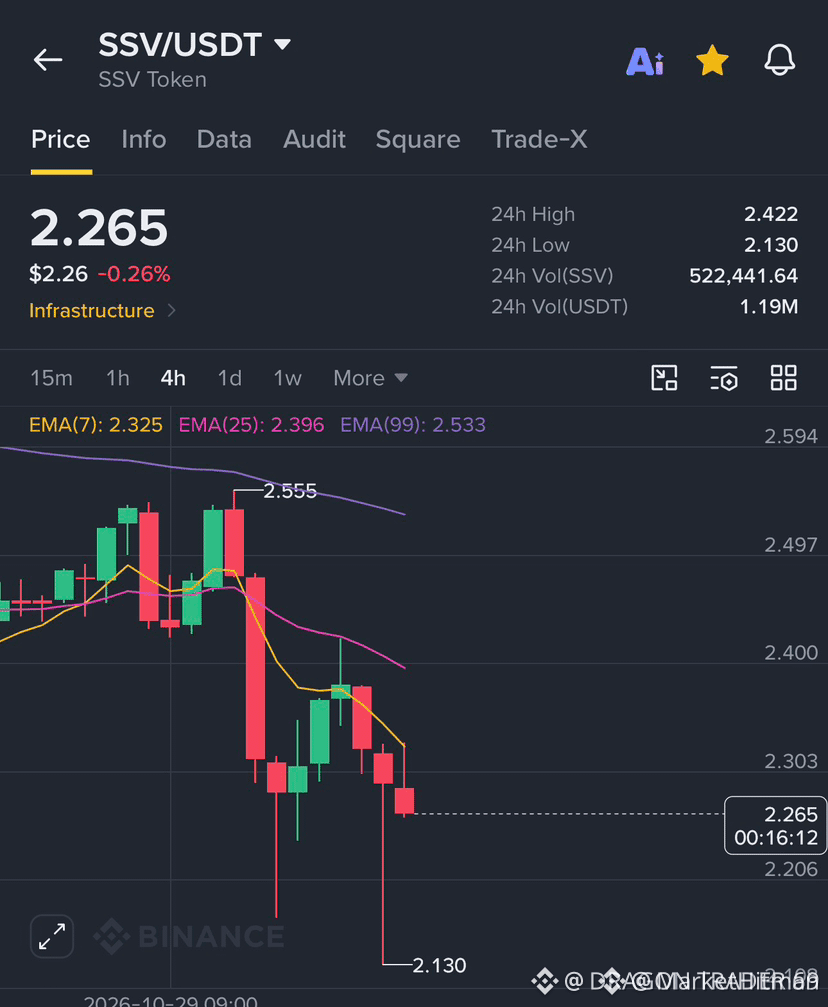
🎯 $SSV SHORT SLICED THROUGH EVERY TARGET AS SELLERS DOMINATE THE ORDER BOOK! 📉
The bears executed that downside expansion with surgical precision. ⚡ When liquidity dried up at the highs, distribution took over and triggered a clean cascade straight through our downside zones.
📊 Volume confirmed the breakdown as bids completely evaporated across the board. Real edge comes from positioning ahead of market momentum rather than chasing red candles on the back foot.
💬 Did you lock in gains on this drop, or are you waiting for a base to form before flipping bias? 👇
⚠️ Not financial advice. Always manage your risk. 🛡️
🏷️ #SSV #ShortSetup #TakeProfit #PriceAction
🎯 🦈
🎯 $SSV SHORT SLICED THROUGH EVERY TARGET AS SELLERS DOMINATE THE ORDER BOOK! 📉
The bears executed that downside expansion with surgical precision. ⚡ When liquidity dried up at the highs, distribution took over and triggered a clean cascade straight through our downside zones.
📊 Volume confirmed the breakdown as bids completely evaporated across the board. Real edge comes from positioning ahead of market momentum rather than chasing red candles on the back foot.
💬 Did you lock in gains on this drop, or are you waiting for a base to form before flipping bias? 👇
⚠️ Not financial advice. Always manage your risk. 🛡️
🏷️ #SSV #ShortSetup #TakeProfit #PriceAction
🎯 🦈
The bears executed that downside expansion with surgical precision. ⚡ When liquidity dried up at the highs, distribution took over and triggered a clean cascade straight through our downside zones.
📊 Volume confirmed the breakdown as bids completely evaporated across the board. Real edge comes from positioning ahead of market momentum rather than chasing red candles on the back foot.
💬 Did you lock in gains on this drop, or are you waiting for a base to form before flipping bias? 👇
⚠️ Not financial advice. Always manage your risk. 🛡️
🏷️ #SSV #ShortSetup #TakeProfit #PriceAction
🎯 🦈
6

·
--
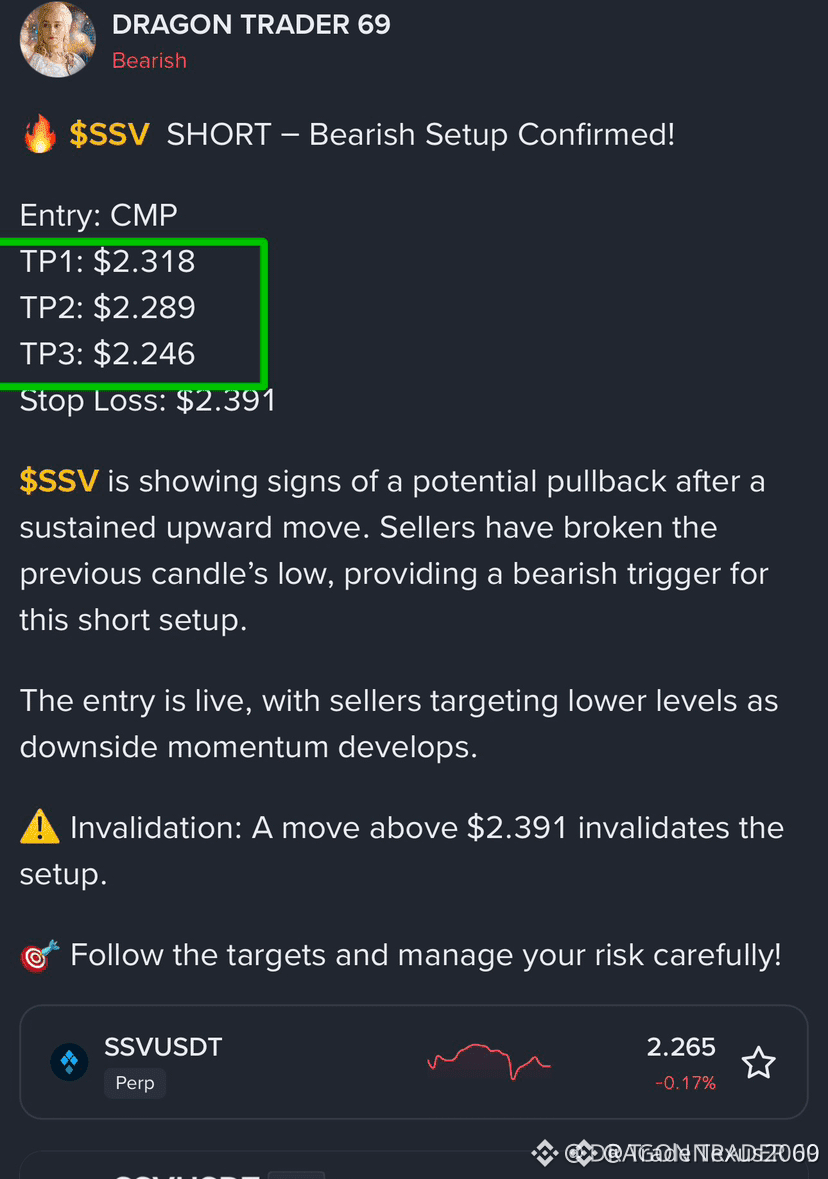
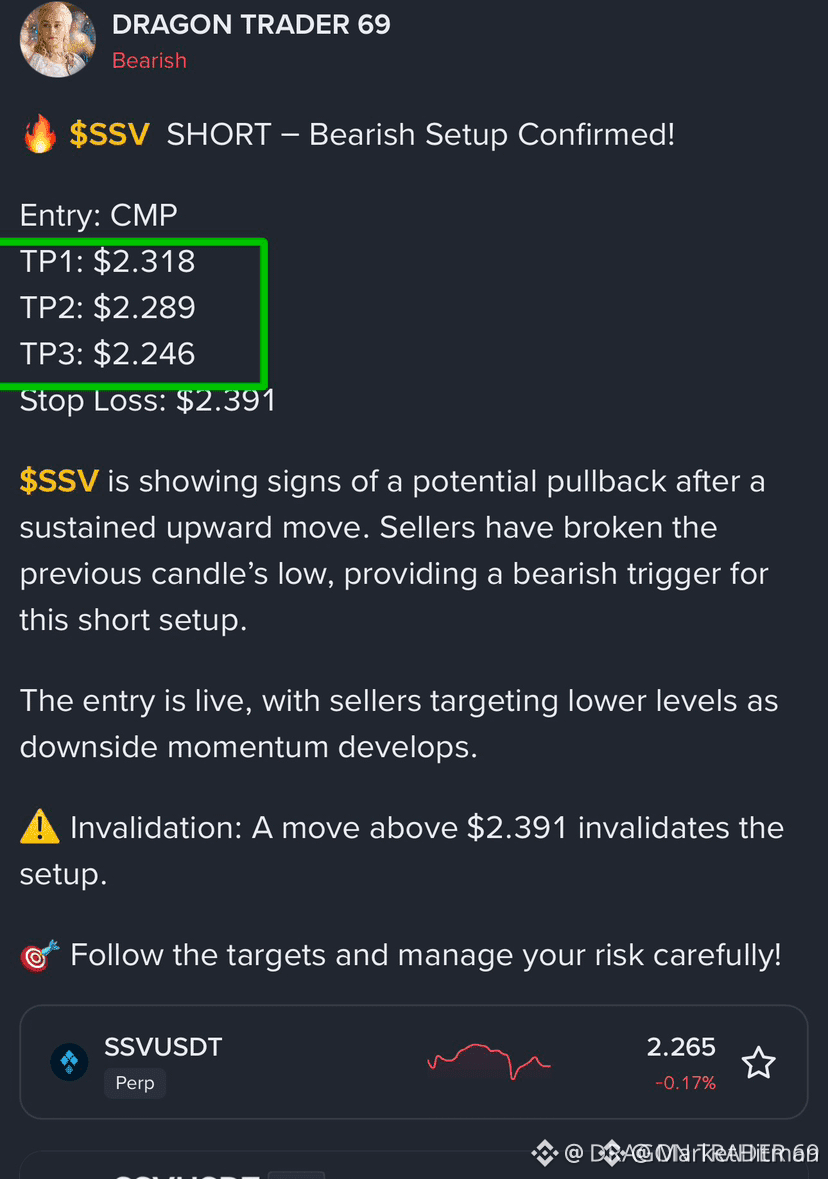
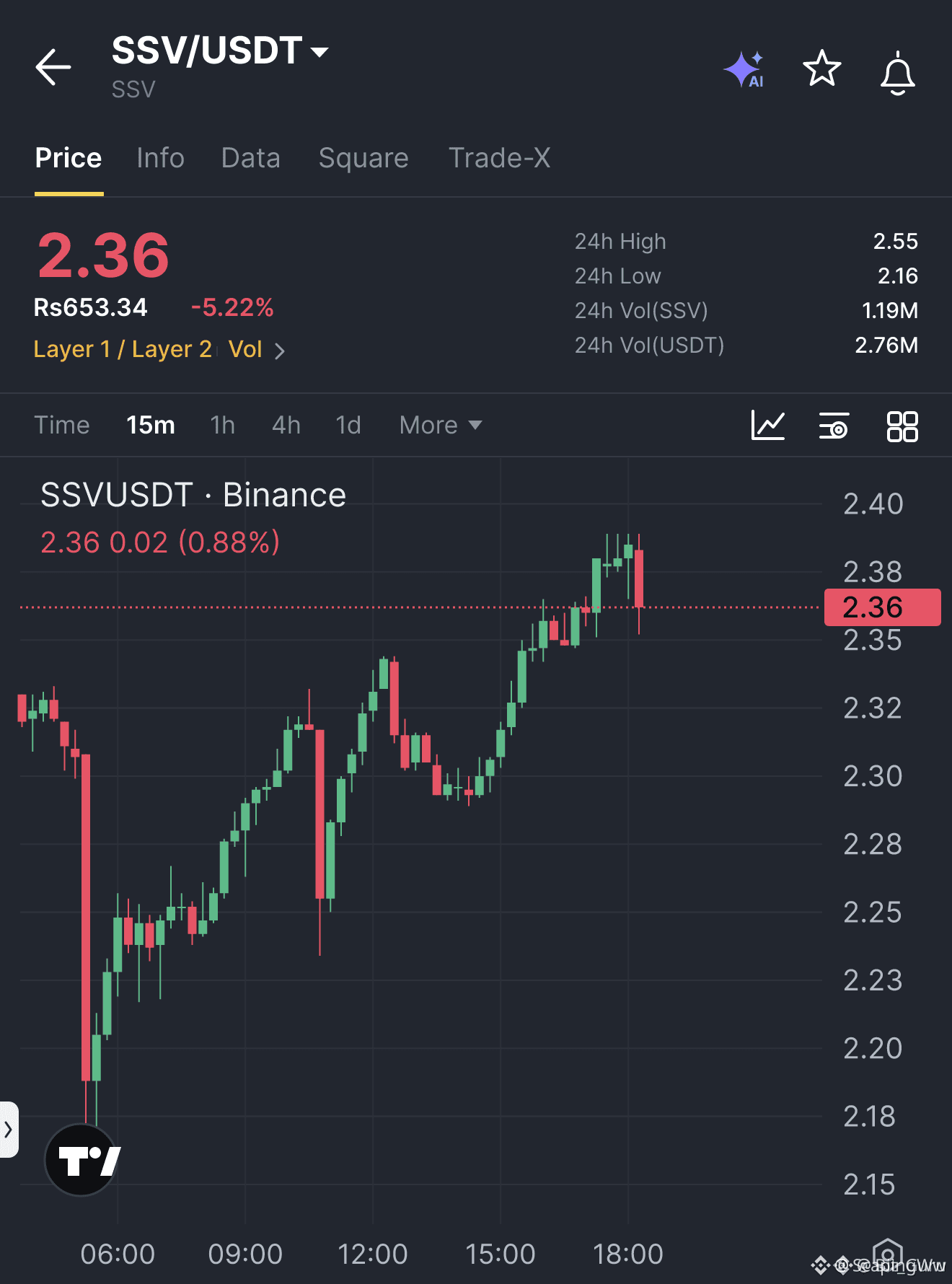
🚨 $SSV REJECTION CONFIRMED AS SELLERS BREAK MARKET STRUCTURE FOR A PULLBACK! 📉
Entry: 2.362 ⚡
Target: 2.318, 2.289, 2.246 🎯
Stop Loss: 2.391 🛑
📌 Exhaustion at local highs just delivered a textbook shift in momentum. After an extended run upward, sellers cracked the prior candle's low, signaling that distribution is actively underway.
📊 Downside liquidity is now exposed as bid support begins to thin out. With clear invalidation stationed just above 2.391, the risk profile on this rotation down offers an exceptionally clean execution window.
💬 Are you shorting this breakdown toward key support or waiting for buyers to attempt a defense at 2.318? 👇
⚠️ Not financial advice. Always manage your risk. 🛡️
🏷️ #SSV #ShortSetup #Altcoins #CryptoTrading
🎯 🐻
🚨 $SSV REJECTION CONFIRMED AS SELLERS BREAK MARKET STRUCTURE FOR A PULLBACK! 📉
Entry: 2.362 ⚡
Target: 2.318, 2.289, 2.246 🎯
Stop Loss: 2.391 🛑
📌 Exhaustion at local highs just delivered a textbook shift in momentum. After an extended run upward, sellers cracked the prior candle's low, signaling that distribution is actively underway.
📊 Downside liquidity is now exposed as bid support begins to thin out. With clear invalidation stationed just above 2.391, the risk profile on this rotation down offers an exceptionally clean execution window.
💬 Are you shorting this breakdown toward key support or waiting for buyers to attempt a defense at 2.318? 👇
⚠️ Not financial advice. Always manage your risk. 🛡️
🏷️ #SSV #ShortSetup #Altcoins #CryptoTrading
🎯 🐻
Entry: 2.362 ⚡
Target: 2.318, 2.289, 2.246 🎯
Stop Loss: 2.391 🛑
📌 Exhaustion at local highs just delivered a textbook shift in momentum. After an extended run upward, sellers cracked the prior candle's low, signaling that distribution is actively underway.
📊 Downside liquidity is now exposed as bid support begins to thin out. With clear invalidation stationed just above 2.391, the risk profile on this rotation down offers an exceptionally clean execution window.
💬 Are you shorting this breakdown toward key support or waiting for buyers to attempt a defense at 2.318? 👇
⚠️ Not financial advice. Always manage your risk. 🛡️
🏷️ #SSV #ShortSetup #Altcoins #CryptoTrading
🎯 🐻
10
·
--
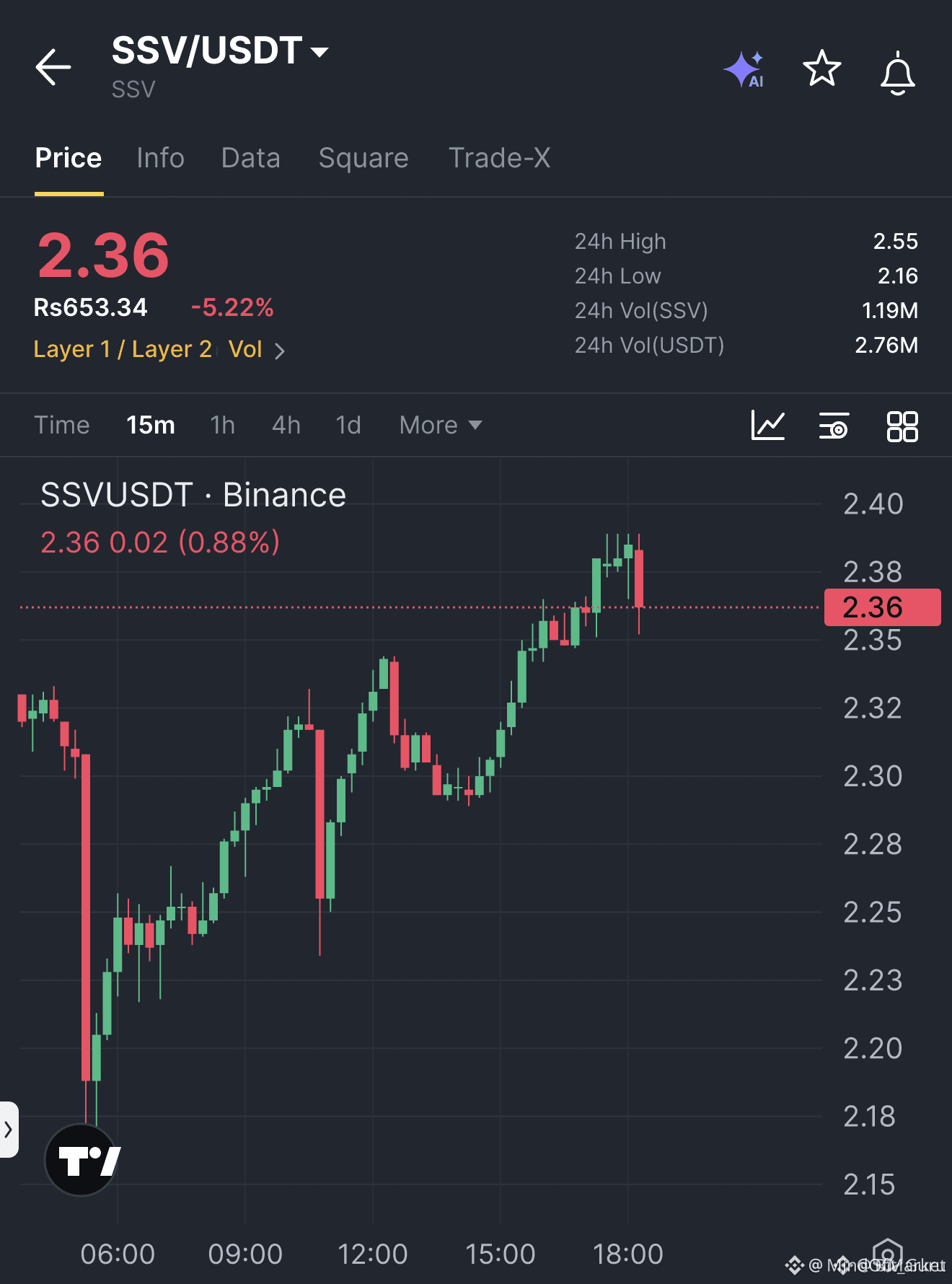
🚨 $SSV CONFIRMS BEARISH BREAK OF STRUCTURE AFTER EXTENDED RALLY! 📉
Entry: 2.362 ⚡
Target: 2.318 / 2.289 / 2.246 🎯
Stop Loss: 2.391 🛑
📌 Institutional supply has stepped in decisively on $SSV , breaking local candle structure following an extended expansion. 🌊 This technical shift confirms immediate distribution as aggressive sellers take control of near-term order flow.
💡 The structural breakdown clears a clean path toward untapped liquidity pools resting at 2.318 and 2.246, with trade invalidation cleanly anchored above 2.391. 💬 Are you targeting the full liquidity cascade down to 2.246, or securing profits at the first support?
⚠️ Not financial advice. Always manage your risk. 🛡️
🏷️ #SSV #ShortSetup #PriceAction #Crypto #MarketStructure
🎯 🦈
🚨 $SSV CONFIRMS BEARISH BREAK OF STRUCTURE AFTER EXTENDED RALLY! 📉
Entry: 2.362 ⚡
Target: 2.318 / 2.289 / 2.246 🎯
Stop Loss: 2.391 🛑
📌 Institutional supply has stepped in decisively on $SSV , breaking local candle structure following an extended expansion. 🌊 This technical shift confirms immediate distribution as aggressive sellers take control of near-term order flow.
💡 The structural breakdown clears a clean path toward untapped liquidity pools resting at 2.318 and 2.246, with trade invalidation cleanly anchored above 2.391. 💬 Are you targeting the full liquidity cascade down to 2.246, or securing profits at the first support?
⚠️ Not financial advice. Always manage your risk. 🛡️
🏷️ #SSV #ShortSetup #PriceAction #Crypto #MarketStructure
🎯 🦈
Entry: 2.362 ⚡
Target: 2.318 / 2.289 / 2.246 🎯
Stop Loss: 2.391 🛑
📌 Institutional supply has stepped in decisively on $SSV , breaking local candle structure following an extended expansion. 🌊 This technical shift confirms immediate distribution as aggressive sellers take control of near-term order flow.
💡 The structural breakdown clears a clean path toward untapped liquidity pools resting at 2.318 and 2.246, with trade invalidation cleanly anchored above 2.391. 💬 Are you targeting the full liquidity cascade down to 2.246, or securing profits at the first support?
⚠️ Not financial advice. Always manage your risk. 🛡️
🏷️ #SSV #ShortSetup #PriceAction #Crypto #MarketStructure
🎯 🦈
10

·
--
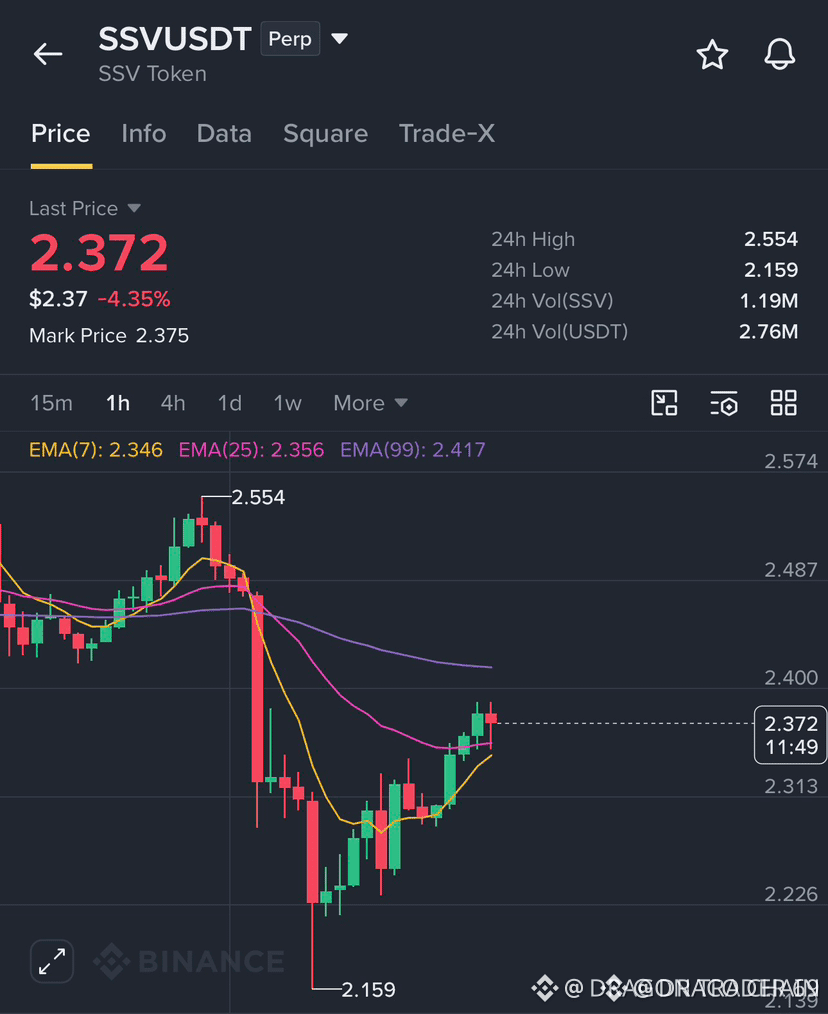
🚨 $SSV LOSES LOCAL STRUCTURE AS SELLERS SWEEP IN TO EXPLOIT OVEREXTENDED LIQUIDITY 📉
Entry: CMP ⚡
Target: 2.318 🎯
Stop Loss: 2.391 ⚠️
🔍 Following an extended expansion leg, $SSV is showing clear signs of structural exhaustion. The breakdown below the prior candle's low confirms an immediate shift in lower-timeframe order flow, indicating institutional distribution at local highs.
📌 Momentum is visibly rolling over as sellers hunt untraded downside liquidity pools toward key efficiency targets. With structural invalidation clearly defined at 2.391, the asymmetry tilts favorably toward defensive short positioning.
🤔 Will the bears push straight through to the 2.246 pocket, or do you expect a corrective retest first? 👇
⚠️ Not financial advice. Always manage your risk. 🛡️
🏷️ #SSV #ShortSetup #PriceAction #CryptoTrading #Bearish
🎯 🦈
🚨 $SSV LOSES LOCAL STRUCTURE AS SELLERS SWEEP IN TO EXPLOIT OVEREXTENDED LIQUIDITY 📉
Entry: CMP ⚡
Target: 2.318 🎯
Stop Loss: 2.391 ⚠️
🔍 Following an extended expansion leg, $SSV is showing clear signs of structural exhaustion. The breakdown below the prior candle's low confirms an immediate shift in lower-timeframe order flow, indicating institutional distribution at local highs.
📌 Momentum is visibly rolling over as sellers hunt untraded downside liquidity pools toward key efficiency targets. With structural invalidation clearly defined at 2.391, the asymmetry tilts favorably toward defensive short positioning.
🤔 Will the bears push straight through to the 2.246 pocket, or do you expect a corrective retest first? 👇
⚠️ Not financial advice. Always manage your risk. 🛡️
🏷️ #SSV #ShortSetup #PriceAction #CryptoTrading #Bearish
🎯 🦈
Entry: CMP ⚡
Target: 2.318 🎯
Stop Loss: 2.391 ⚠️
🔍 Following an extended expansion leg, $SSV is showing clear signs of structural exhaustion. The breakdown below the prior candle's low confirms an immediate shift in lower-timeframe order flow, indicating institutional distribution at local highs.
📌 Momentum is visibly rolling over as sellers hunt untraded downside liquidity pools toward key efficiency targets. With structural invalidation clearly defined at 2.391, the asymmetry tilts favorably toward defensive short positioning.
🤔 Will the bears push straight through to the 2.246 pocket, or do you expect a corrective retest first? 👇
⚠️ Not financial advice. Always manage your risk. 🛡️
🏷️ #SSV #ShortSetup #PriceAction #CryptoTrading #Bearish
🎯 🦈
11
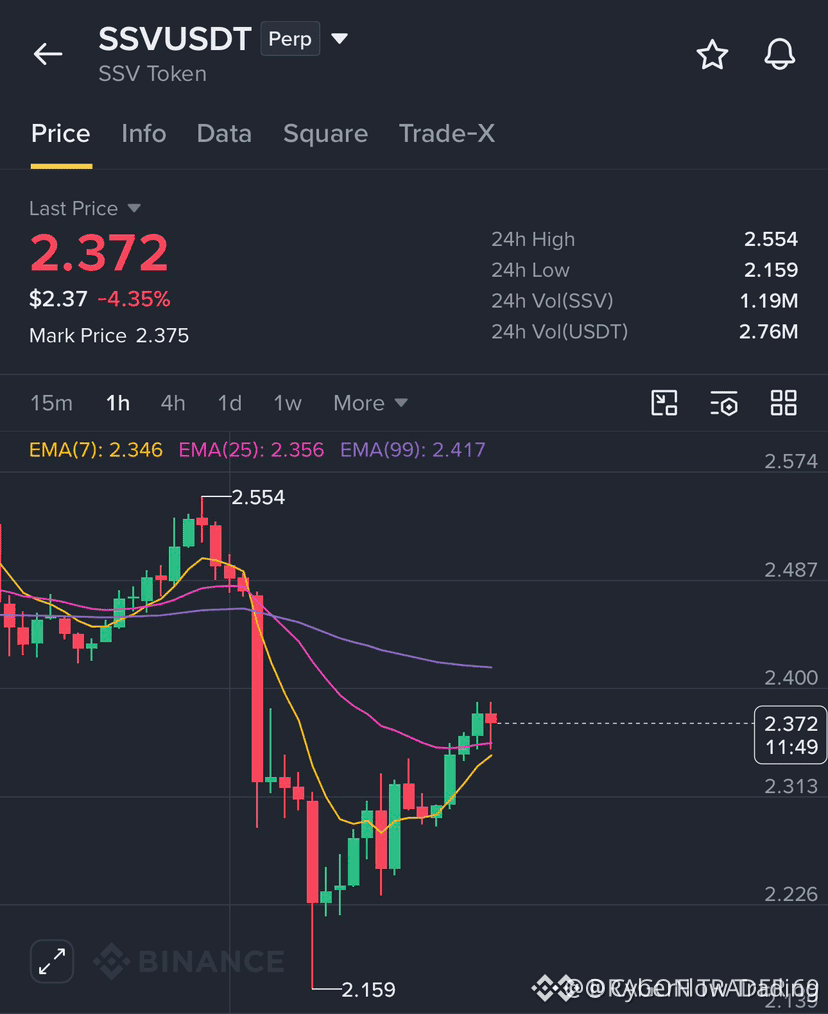
🚨 $SSV EXHAUSTION SPIKE FAILS AS AGGRESSIVE SELLERS HIT THE BID 📉
Entry: CMP ⚡
Target: 2.318 / 2.289 / 2.246 🎯
Stop Loss: 2.391 ⚠️
📌 The multi-session push on $SSV just ran out of steam right into distribution. Sellers stepped up with serious intent, cracking the prior candle low to trigger fresh downside momentum as trapped late longs scramble.
🔍 Order flow reveals fading demand at current levels, leaving a clear path toward the downside liquidity pockets. Any push above 2.391 completely invalidates the bias, making the risk profile incredibly sharp.
💬 Are you riding this momentum down to the support zones or looking to catch a falling knife? 👇
⚠️ Not financial advice. Always manage your risk. 🛡️
🏷️ #SSV #ShortSetup #PriceAction #CryptoTrading #Bearish
🎯 📉
🚨 $SSV EXHAUSTION SPIKE FAILS AS AGGRESSIVE SELLERS HIT THE BID 📉
Entry: CMP ⚡
Target: 2.318 / 2.289 / 2.246 🎯
Stop Loss: 2.391 ⚠️
📌 The multi-session push on $SSV just ran out of steam right into distribution. Sellers stepped up with serious intent, cracking the prior candle low to trigger fresh downside momentum as trapped late longs scramble.
🔍 Order flow reveals fading demand at current levels, leaving a clear path toward the downside liquidity pockets. Any push above 2.391 completely invalidates the bias, making the risk profile incredibly sharp.
💬 Are you riding this momentum down to the support zones or looking to catch a falling knife? 👇
⚠️ Not financial advice. Always manage your risk. 🛡️
🏷️ #SSV #ShortSetup #PriceAction #CryptoTrading #Bearish
🎯 📉
Entry: CMP ⚡
Target: 2.318 / 2.289 / 2.246 🎯
Stop Loss: 2.391 ⚠️
📌 The multi-session push on $SSV just ran out of steam right into distribution. Sellers stepped up with serious intent, cracking the prior candle low to trigger fresh downside momentum as trapped late longs scramble.
🔍 Order flow reveals fading demand at current levels, leaving a clear path toward the downside liquidity pockets. Any push above 2.391 completely invalidates the bias, making the risk profile incredibly sharp.
💬 Are you riding this momentum down to the support zones or looking to catch a falling knife? 👇
⚠️ Not financial advice. Always manage your risk. 🛡️
🏷️ #SSV #ShortSetup #PriceAction #CryptoTrading #Bearish
🎯 📉
18
·
--
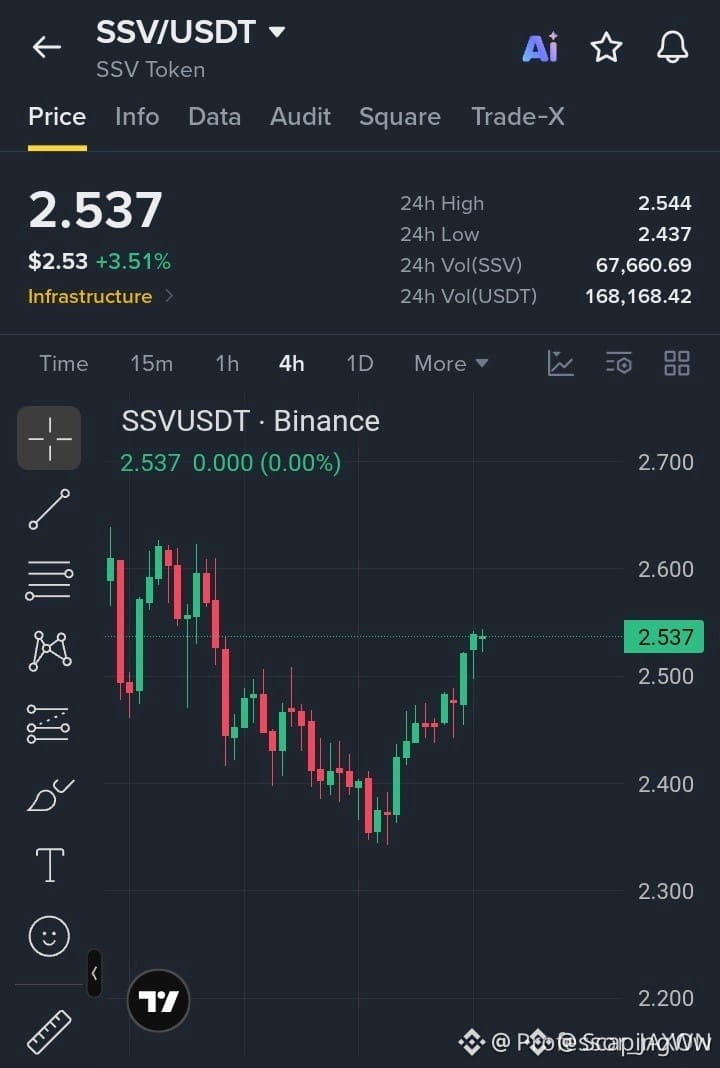
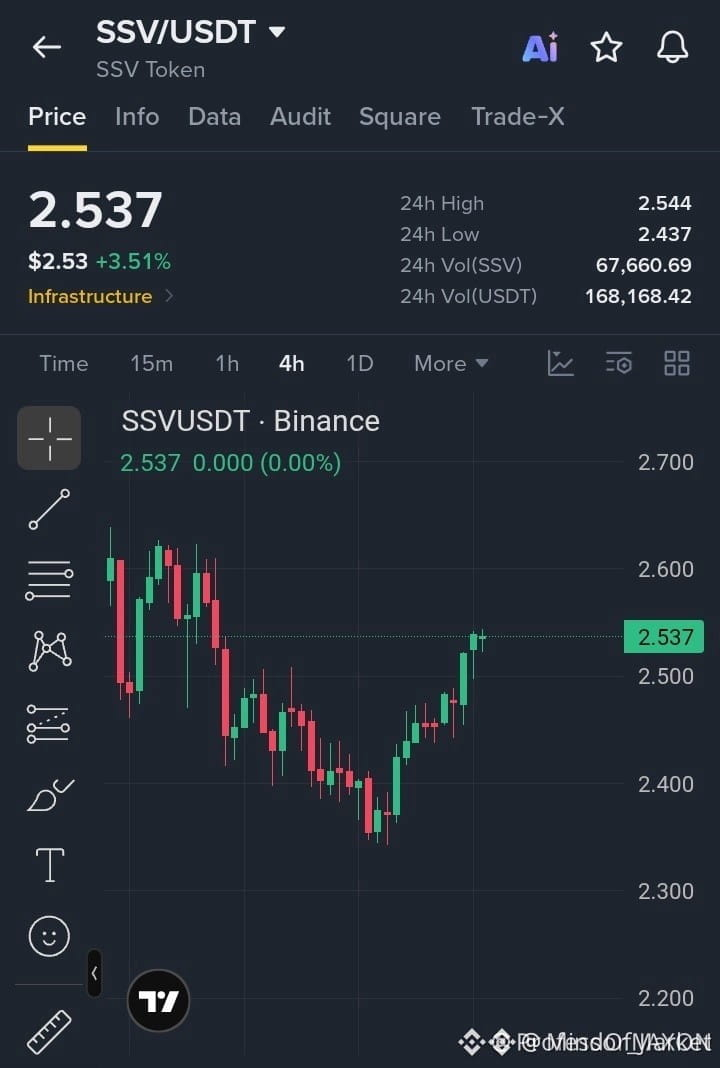
🚀 $SSV SURGES TOWARD $2.54 RESISTANCE – BULLISH RECOVERY ALERT!
Entry: 2.510-2.535 ⚡
Target: 2.570 / 2.600 / 2.640 🚀
Stop Loss: 2.485 ⚠️
📊 The price has clawed out of the 2.350 support zone, stamping higher lows that signal smart money re‑stacking. ⚡ Volume on the 4H is swelling, and each retest is swallowing sell‑side liquidity like a shark. 🌊 A clean break of the 2.540 ceiling could launch us straight into the next target cluster, while a rejection would shove us back to the safety net.
💬 Are you ready to ride the next wave up or waiting for the next liquidity trap? 👇
⚠️ Not financial advice. Always manage your risk. 🛡️
🏷️ #SSV #LongSetup #Breakout #Crypto
🔥 💎
🚀 $SSV SURGES TOWARD $2.54 RESISTANCE – BULLISH RECOVERY ALERT!
Entry: 2.510-2.535 ⚡
Target: 2.570 / 2.600 / 2.640 🚀
Stop Loss: 2.485 ⚠️
📊 The price has clawed out of the 2.350 support zone, stamping higher lows that signal smart money re‑stacking. ⚡ Volume on the 4H is swelling, and each retest is swallowing sell‑side liquidity like a shark. 🌊 A clean break of the 2.540 ceiling could launch us straight into the next target cluster, while a rejection would shove us back to the safety net.
💬 Are you ready to ride the next wave up or waiting for the next liquidity trap? 👇
⚠️ Not financial advice. Always manage your risk. 🛡️
🏷️ #SSV #LongSetup #Breakout #Crypto
🔥 💎
Entry: 2.510-2.535 ⚡
Target: 2.570 / 2.600 / 2.640 🚀
Stop Loss: 2.485 ⚠️
📊 The price has clawed out of the 2.350 support zone, stamping higher lows that signal smart money re‑stacking. ⚡ Volume on the 4H is swelling, and each retest is swallowing sell‑side liquidity like a shark. 🌊 A clean break of the 2.540 ceiling could launch us straight into the next target cluster, while a rejection would shove us back to the safety net.
💬 Are you ready to ride the next wave up or waiting for the next liquidity trap? 👇
⚠️ Not financial advice. Always manage your risk. 🛡️
🏷️ #SSV #LongSetup #Breakout #Crypto
🔥 💎
21
·
--
🚀 $SSV RACES FROM SUPPORT TO KEY RESISTANCE BREAKOUT 📈
Entry: 2.510-2.535 ⚡
Target: 2.570 🎯
Target: 2.600 🎯
Target: 2.640 🎯
Stop Loss: 2.485 ⚠️
📊 The price has stitched higher lows since the 2.350 basin, signalling a classic smart‑money recovery. 📌 A clean break above the 2.540 resistance would unleash the next liquidity pool, propelling the rally toward the stacked targets. 🌊 Should the breakout stall, the order block at 2.485 stands ready to absorb sellers and re‑test the support corridor. 💡 Institutional hunters are likely positioning now, making the entry zone a high‑conviction sweet spot. 💬 Do you see the next wave breaching 2.540 or a pullback to test the base? 👇
⚠️ Not financial advice. Always manage your risk. 🛡️
🏷️ #SSV #LongSetup #Breakout #Crypto
🔥 💎
🚀 $SSV RACES FROM SUPPORT TO KEY RESISTANCE BREAKOUT 📈
Entry: 2.510-2.535 ⚡
Target: 2.570 🎯
Target: 2.600 🎯
Target: 2.640 🎯
Stop Loss: 2.485 ⚠️
📊 The price has stitched higher lows since the 2.350 basin, signalling a classic smart‑money recovery. 📌 A clean break above the 2.540 resistance would unleash the next liquidity pool, propelling the rally toward the stacked targets. 🌊 Should the breakout stall, the order block at 2.485 stands ready to absorb sellers and re‑test the support corridor. 💡 Institutional hunters are likely positioning now, making the entry zone a high‑conviction sweet spot. 💬 Do you see the next wave breaching 2.540 or a pullback to test the base? 👇
⚠️ Not financial advice. Always manage your risk. 🛡️
🏷️ #SSV #LongSetup #Breakout #Crypto
🔥 💎
Entry: 2.510-2.535 ⚡
Target: 2.570 🎯
Target: 2.600 🎯
Target: 2.640 🎯
Stop Loss: 2.485 ⚠️
📊 The price has stitched higher lows since the 2.350 basin, signalling a classic smart‑money recovery. 📌 A clean break above the 2.540 resistance would unleash the next liquidity pool, propelling the rally toward the stacked targets. 🌊 Should the breakout stall, the order block at 2.485 stands ready to absorb sellers and re‑test the support corridor. 💡 Institutional hunters are likely positioning now, making the entry zone a high‑conviction sweet spot. 💬 Do you see the next wave breaching 2.540 or a pullback to test the base? 👇
⚠️ Not financial advice. Always manage your risk. 🛡️
🏷️ #SSV #LongSetup #Breakout #Crypto
🔥 💎
17

·
--
When studying this process, look again at transaction records on finer time scales; do not treat a single K-line candle as the complete course of events.
First, let’s put $SSV in front of us with this set of data: Binance spot 10/28 17:05–18:05 (Beijing time), during which this one hour rose 0.32%, with trading volume of 4,278.2 USDT, 0.72 times that of the previous hour. The closing price for the period was 2.479 USDT.
A single K-line candle usually summarizes four prices: open, high, low, and close. The wicks can show that higher or lower traded prices occurred during the window, but they cannot by themselves reconstruct the sequence in which price passed through those levels, nor can they show how long it stayed there. Inferring participants’ motives based solely on the wicks goes beyond the information provided by these few prices themselves.
#SSV #Crypto chatter
When studying this process, look again at transaction records on finer time scales; do not treat a single K-line candle as the complete course of events.
First, let’s put $SSV in front of us with this set of data: Binance spot 10/28 17:05–18:05 (Beijing time), during which this one hour rose 0.32%, with trading volume of 4,278.2 USDT, 0.72 times that of the previous hour. The closing price for the period was 2.479 USDT.
A single K-line candle usually summarizes four prices: open, high, low, and close. The wicks can show that higher or lower traded prices occurred during the window, but they cannot by themselves reconstruct the sequence in which price passed through those levels, nor can they show how long it stayed there. Inferring participants’ motives based solely on the wicks goes beyond the information provided by these few prices themselves.
#SSV #Crypto chatter
First, let’s put $SSV in front of us with this set of data: Binance spot 10/28 17:05–18:05 (Beijing time), during which this one hour rose 0.32%, with trading volume of 4,278.2 USDT, 0.72 times that of the previous hour. The closing price for the period was 2.479 USDT.
A single K-line candle usually summarizes four prices: open, high, low, and close. The wicks can show that higher or lower traded prices occurred during the window, but they cannot by themselves reconstruct the sequence in which price passed through those levels, nor can they show how long it stayed there. Inferring participants’ motives based solely on the wicks goes beyond the information provided by these few prices themselves.
#SSV #Crypto chatter
27
·
--
🚨 TRIPLE MOMENTUM CONVERGENCE: LIQUIDITY EXPANDING ACROSS $SSV $AKE AND $MARSCOIN ! ⚡
Smart money is quietly sweeping order blocks across key altcoin sectors, and order flow momentum is signaling a synchronized expansion wave. 🦈 $SSV , $AKE , and $MARSCOIN are consolidating right above institutional demand zones as bid volume begins to stack up on key timeframes. 📊
When volume expands simultaneously across high-conviction structures like these, market dynamics usually reward traders who catch the flip before the breakout confirmation. ⚡ Positioning early while risk parameters are tight gives a massive edge over late buyers chasing green candles. 💡
💬 Which of these three setups is showing the cleanest order book imbalance on your charts right now? 👇
⚠️ Not financial advice. Always manage your risk. 🛡️
🏷️ #SSV #AKE #MARSCOIN #Altcoins #LongSetup
⚡ 🎯
🚨 TRIPLE MOMENTUM CONVERGENCE: LIQUIDITY EXPANDING ACROSS $SSV $AKE AND $MARSCOIN ! ⚡
Smart money is quietly sweeping order blocks across key altcoin sectors, and order flow momentum is signaling a synchronized expansion wave. 🦈 $SSV , $AKE , and $MARSCOIN are consolidating right above institutional demand zones as bid volume begins to stack up on key timeframes. 📊
When volume expands simultaneously across high-conviction structures like these, market dynamics usually reward traders who catch the flip before the breakout confirmation. ⚡ Positioning early while risk parameters are tight gives a massive edge over late buyers chasing green candles. 💡
💬 Which of these three setups is showing the cleanest order book imbalance on your charts right now? 👇
⚠️ Not financial advice. Always manage your risk. 🛡️
🏷️ #SSV #AKE #MARSCOIN #Altcoins #LongSetup
⚡ 🎯
Smart money is quietly sweeping order blocks across key altcoin sectors, and order flow momentum is signaling a synchronized expansion wave. 🦈 $SSV , $AKE , and $MARSCOIN are consolidating right above institutional demand zones as bid volume begins to stack up on key timeframes. 📊
When volume expands simultaneously across high-conviction structures like these, market dynamics usually reward traders who catch the flip before the breakout confirmation. ⚡ Positioning early while risk parameters are tight gives a massive edge over late buyers chasing green candles. 💡
💬 Which of these three setups is showing the cleanest order book imbalance on your charts right now? 👇
⚠️ Not financial advice. Always manage your risk. 🛡️
🏷️ #SSV #AKE #MARSCOIN #Altcoins #LongSetup
⚡ 🎯
62
·
--
🚨 $SSV COMPRESSING IN DEMAND ZONE BEFORE EXPLOSIVE MOMENTUM EXPANSION! ⚡
Entry: 3.03 - 3.10 ⚡
Target: 3.15 - 3.25 🚀
Stop Loss: 2.92 ⚠️
📌 Buyers are stepping up right inside the 3.03 to 3.10 accumulation pocket, defending this structural shelf with noticeable order flow pressure. 📊 As seller exhaustion sets in on lower timeframes, the upside path toward 3.25 looks clean with tight downside protection defined at 2.92.
💡 Capital is quietly rotating into key setups like $SSV while market structure favors a swift volatility expansion once local resistance breaks. 💬 Are you riding this momentum wave up to the targets or watching from the sidelines? 👇
⚠️ Not financial advice. Always manage your risk. 🛡️
🏷️ #SSV #LongSetup #Altcoins #Crypto #Breakout
🔥 💎
🚨 $SSV COMPRESSING IN DEMAND ZONE BEFORE EXPLOSIVE MOMENTUM EXPANSION! ⚡
Entry: 3.03 - 3.10 ⚡
Target: 3.15 - 3.25 🚀
Stop Loss: 2.92 ⚠️
📌 Buyers are stepping up right inside the 3.03 to 3.10 accumulation pocket, defending this structural shelf with noticeable order flow pressure. 📊 As seller exhaustion sets in on lower timeframes, the upside path toward 3.25 looks clean with tight downside protection defined at 2.92.
💡 Capital is quietly rotating into key setups like $SSV while market structure favors a swift volatility expansion once local resistance breaks. 💬 Are you riding this momentum wave up to the targets or watching from the sidelines? 👇
⚠️ Not financial advice. Always manage your risk. 🛡️
🏷️ #SSV #LongSetup #Altcoins #Crypto #Breakout
🔥 💎
Entry: 3.03 - 3.10 ⚡
Target: 3.15 - 3.25 🚀
Stop Loss: 2.92 ⚠️
📌 Buyers are stepping up right inside the 3.03 to 3.10 accumulation pocket, defending this structural shelf with noticeable order flow pressure. 📊 As seller exhaustion sets in on lower timeframes, the upside path toward 3.25 looks clean with tight downside protection defined at 2.92.
💡 Capital is quietly rotating into key setups like $SSV while market structure favors a swift volatility expansion once local resistance breaks. 💬 Are you riding this momentum wave up to the targets or watching from the sidelines? 👇
⚠️ Not financial advice. Always manage your risk. 🛡️
🏷️ #SSV #LongSetup #Altcoins #Crypto #Breakout
🔥 💎
15
🐂 $SSV SURGES PAST BREAKOUT RESISTANCE AS BULLS PRINT CONTINUOUS HIGHER HIGHS! ⚡
Entry: 3.11 - 3.13 ⚡
Target: 3.20 - 3.315 🚀
Stop Loss: 3.00 ⚠️
📌 Price action on $SSV is displaying textbook bullish continuation. Buyers are relentlessly absorbing supply and carving out consecutive higher highs, turning previous resistance around 3.11 into concrete floor support. 📊
⚡ As long as price holds above this key breakout pivot, momentum heavily favors the bulls for an acceleration toward higher targets. Order flow signals aggressive bidding on every micro-dip. 💬 Are you riding this momentum leg upward or waiting for a deeper retest? 👇
⚠️ Not financial advice. Always manage your risk. 🛡️
🏷️ #SSV #LongSetup #Breakout #Crypto #Altcoins
🔥 💎
🐂 $SSV SURGES PAST BREAKOUT RESISTANCE AS BULLS PRINT CONTINUOUS HIGHER HIGHS! ⚡
Entry: 3.11 - 3.13 ⚡
Target: 3.20 - 3.315 🚀
Stop Loss: 3.00 ⚠️
📌 Price action on $SSV is displaying textbook bullish continuation. Buyers are relentlessly absorbing supply and carving out consecutive higher highs, turning previous resistance around 3.11 into concrete floor support. 📊
⚡ As long as price holds above this key breakout pivot, momentum heavily favors the bulls for an acceleration toward higher targets. Order flow signals aggressive bidding on every micro-dip. 💬 Are you riding this momentum leg upward or waiting for a deeper retest? 👇
⚠️ Not financial advice. Always manage your risk. 🛡️
🏷️ #SSV #LongSetup #Breakout #Crypto #Altcoins
🔥 💎
Entry: 3.11 - 3.13 ⚡
Target: 3.20 - 3.315 🚀
Stop Loss: 3.00 ⚠️
📌 Price action on $SSV is displaying textbook bullish continuation. Buyers are relentlessly absorbing supply and carving out consecutive higher highs, turning previous resistance around 3.11 into concrete floor support. 📊
⚡ As long as price holds above this key breakout pivot, momentum heavily favors the bulls for an acceleration toward higher targets. Order flow signals aggressive bidding on every micro-dip. 💬 Are you riding this momentum leg upward or waiting for a deeper retest? 👇
⚠️ Not financial advice. Always manage your risk. 🛡️
🏷️ #SSV #LongSetup #Breakout #Crypto #Altcoins
🔥 💎
13

·
--
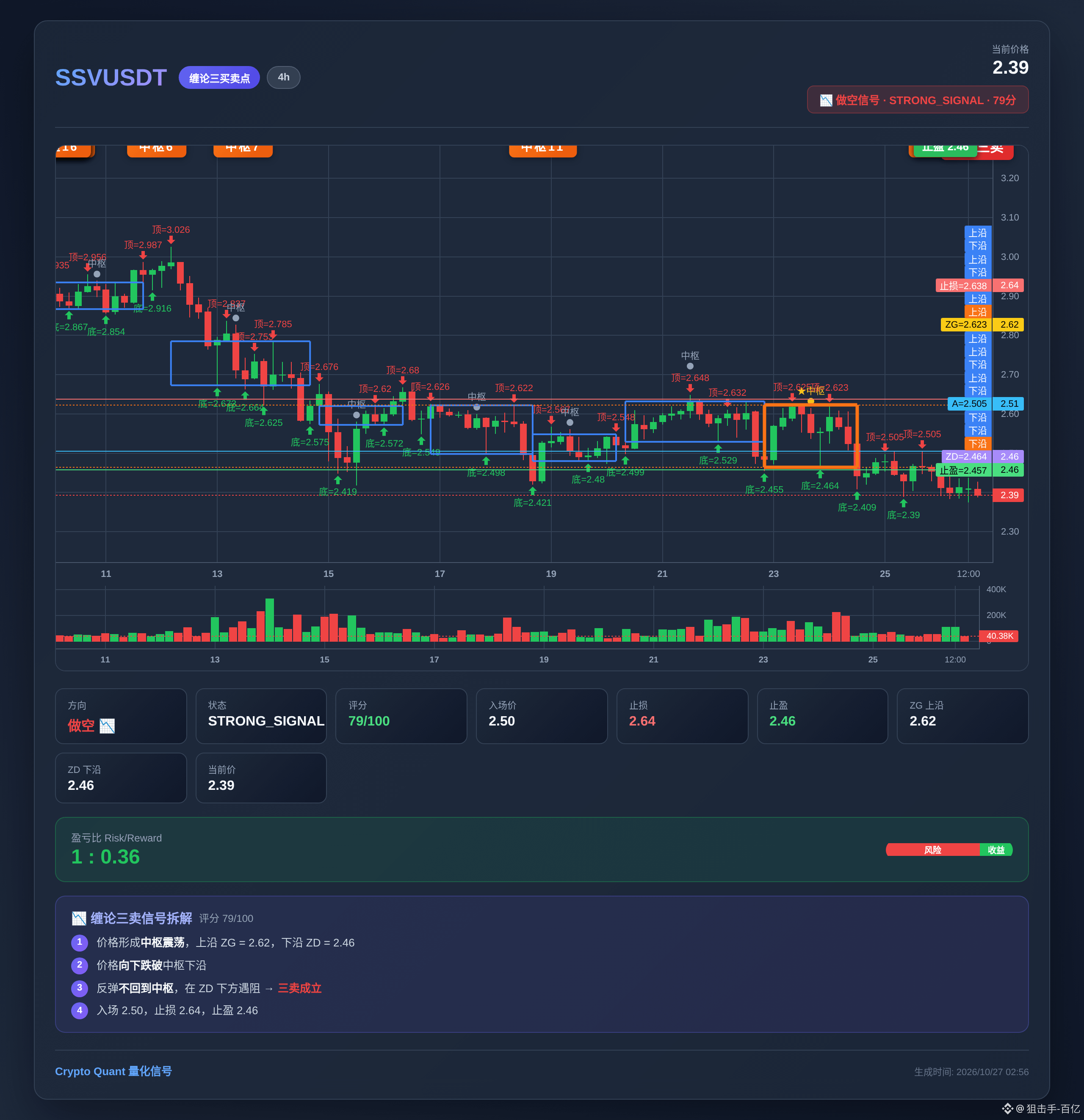
Trust me once, just once
I just spotted a signal on the $SSV 4h timeframe!
Do you think this move is going to trigger a sell-off?
📍 Current price: 2.4110
🎯 Entry: 2.5050
🛑 Stop loss: 2.6381
💰 Take profit: 2.4572
⚖️ Risk/reward ratio: 0.36 : 1
⭐ Rating: 89 points
Follow Nice Bro, and never lose your way in trading ✨
#熊市 #百倍币 #缠论交易 #SSV #Crypto
Trust me once, just once
I just spotted a signal on the $SSV 4h timeframe!
Do you think this move is going to trigger a sell-off?
📍 Current price: 2.4110
🎯 Entry: 2.5050
🛑 Stop loss: 2.6381
💰 Take profit: 2.4572
⚖️ Risk/reward ratio: 0.36 : 1
⭐ Rating: 89 points
Follow Nice Bro, and never lose your way in trading ✨
#熊市 #百倍币 #缠论交易 #SSV #Crypto
I just spotted a signal on the $SSV 4h timeframe!
Do you think this move is going to trigger a sell-off?
📍 Current price: 2.4110
🎯 Entry: 2.5050
🛑 Stop loss: 2.6381
💰 Take profit: 2.4572
⚖️ Risk/reward ratio: 0.36 : 1
⭐ Rating: 89 points
Follow Nice Bro, and never lose your way in trading ✨
#熊市 #百倍币 #缠论交易 #SSV #Crypto
20
Log in to explore more content
Join global crypto users on Binance Square
⚡️ Get latest and useful information about crypto.
💬 Trusted by the world’s largest crypto exchange.
👍 Discover real insights from verified creators.
Email / Phone number
Trending Topics
1
#BitcoinRebounds$75KAsChipsLead
9,302 views
137 Discussing
2
#JobsReportRaisesHikeOdds
116,348 views
1,034 Discussing
3
#US Data Center Rules May Constrain AI Expansion
16,842 views
107 Discussing
4
#AnthropicStillPlansPreThanksgivingIPO
143 views
10 Discussing
5
#FinCENAndFedWithdraw$250CryptoTransferProposal
103 views
3 Discussing
6
#$2TWipedOutHedgeFundsFaceLiquidation
19,217 views
105 Discussing
7
#WillAnthropicListOnTime
22,827 views
331 Discussing
8
#USNovemberMichiganExpectationsIndexPrelimAt50.9
26,241 views
427 Discussing
9
#OilPlungesBelow$100
26,222 views
44 Discussing
10
#TradFiForBeginners
17,471 views
272 Discussing