
#rayls
rayls
43,653 views
123 Discussing
Hot
Latest

Article
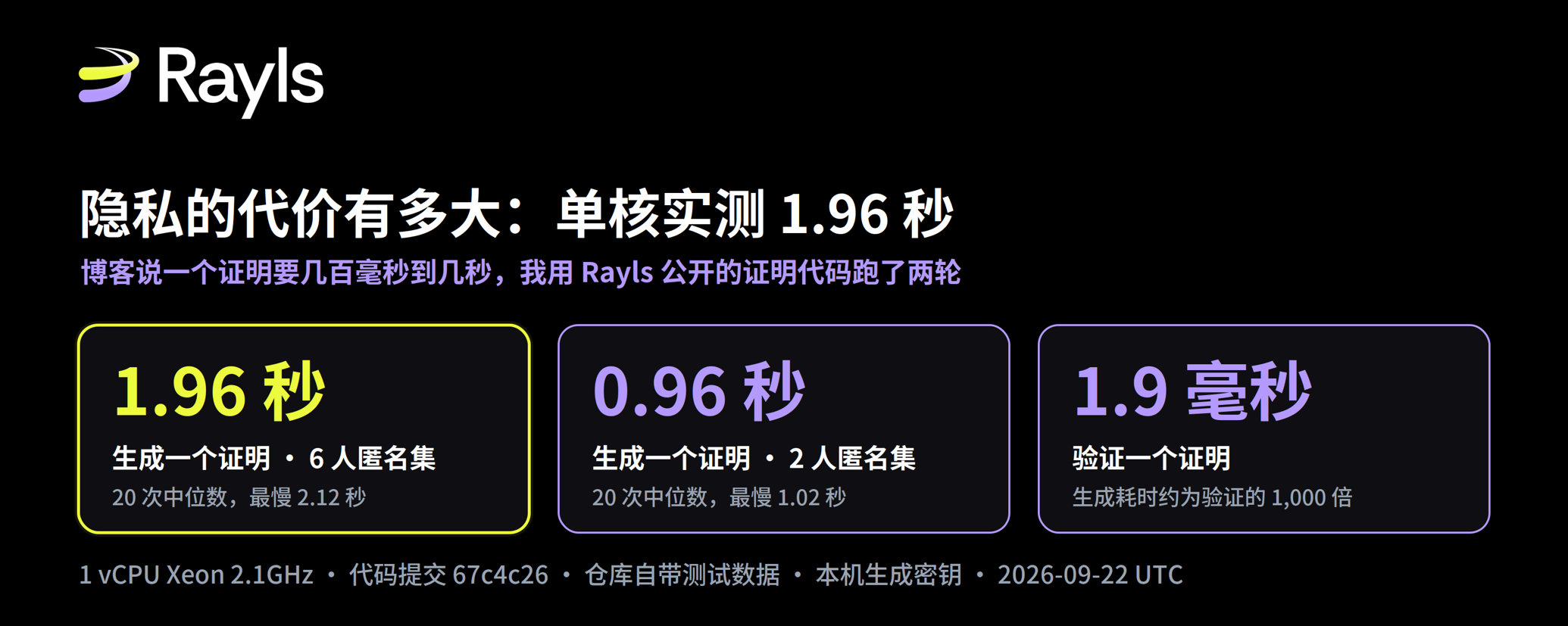
Rayls says privacy has a cost—I've run its proof code onceOn September 19, Rayls published a post (“Privacy has a price”). The title said “honest math,” but the entire piece only provided a single range of numbers: a proof takes anywhere from a few hundred milliseconds to a few seconds. For weeks I kept writing about Rayls’ privacy architecture; this time I’m sharing the new stuff with everyone. I pulled down the publicly released proof code, ran it dozens of times in practice, and I’m sharing this interesting conclusion!
Let’s first talk about what the blog covers. Its core argument can be summarized in two sentences. The first sentence is where the cost comes from: confidential transactions are more expensive than transparent ones—mainly because generating zero-knowledge proofs is costly, while verification is relatively cheap. Even a basic confidential transfer proof takes several hundred milliseconds to a few seconds on ordinary commercial hardware. The second sentence is what you should ask: institutions shouldn’t only ask about TPS; they should ask what the throughput is under the level of privacy and auditability they actually need when facing real business workloads. The blog argues that the volume in interbank settlement isn’t large, and it falls well within what confidential settlement systems can handle.
Rayls says privacy has a cost—I've run its proof code once
On September 19, Rayls published a post (“Privacy has a price”). The title said “honest math,” but the entire piece only provided a single range of numbers: a proof takes anywhere from a few hundred milliseconds to a few seconds. For weeks I kept writing about Rayls’ privacy architecture; this time I’m sharing the new stuff with everyone. I pulled down the publicly released proof code, ran it dozens of times in practice, and I’m sharing this interesting conclusion!
Let’s first talk about what the blog covers. Its core argument can be summarized in two sentences. The first sentence is where the cost comes from: confidential transactions are more expensive than transparent ones—mainly because generating zero-knowledge proofs is costly, while verification is relatively cheap. Even a basic confidential transfer proof takes several hundred milliseconds to a few seconds on ordinary commercial hardware. The second sentence is what you should ask: institutions shouldn’t only ask about TPS; they should ask what the throughput is under the level of privacy and auditability they actually need when facing real business workloads. The blog argues that the volume in interbank settlement isn’t large, and it falls well within what confidential settlement systems can handle.
Let’s first talk about what the blog covers. Its core argument can be summarized in two sentences. The first sentence is where the cost comes from: confidential transactions are more expensive than transparent ones—mainly because generating zero-knowledge proofs is costly, while verification is relatively cheap. Even a basic confidential transfer proof takes several hundred milliseconds to a few seconds on ordinary commercial hardware. The second sentence is what you should ask: institutions shouldn’t only ask about TPS; they should ask what the throughput is under the level of privacy and auditability they actually need when facing real business workloads. The blog argues that the volume in interbank settlement isn’t large, and it falls well within what confidential settlement systems can handle.
1
139
Article
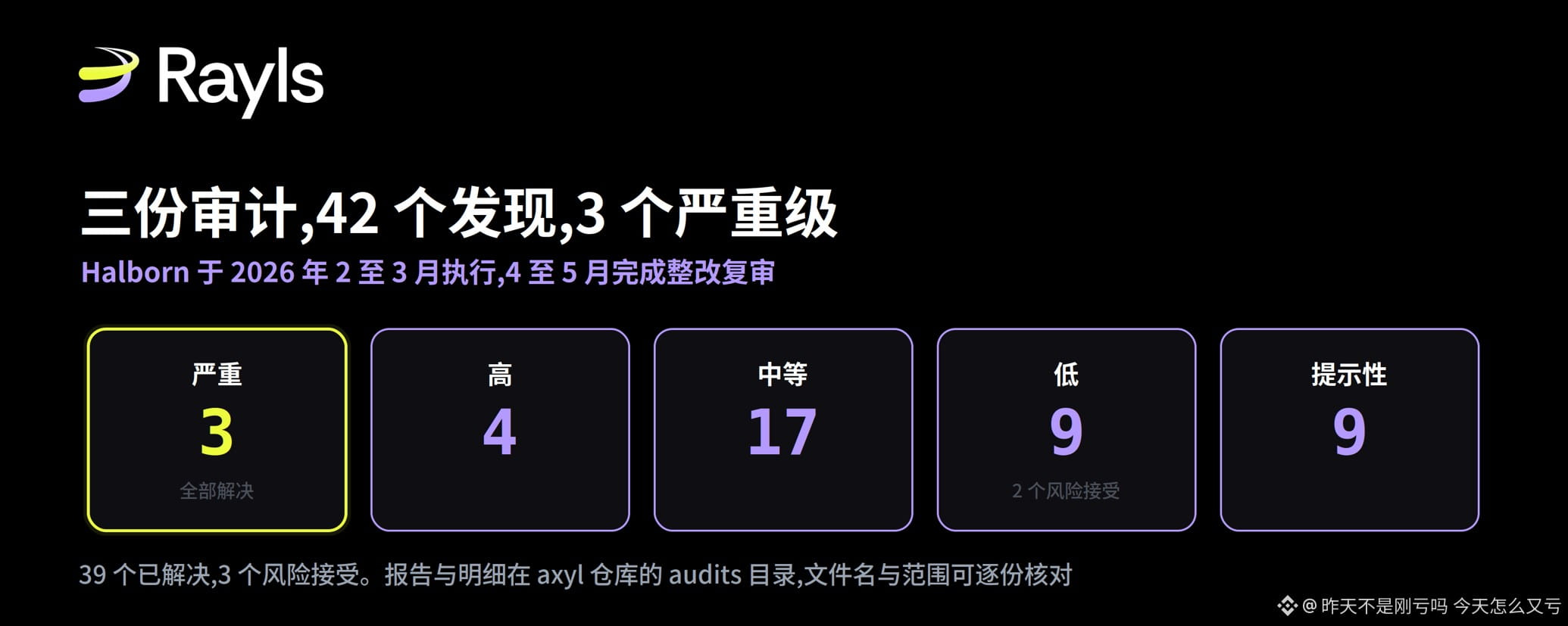
42 questions across three audit reports, including 3 critical onesI started staking RLS back in the pre-commitment phase—it was just something I got into by reading the official materials. After the name “Sovereign” was introduced, most of the discussion ended up lingering on “is it just a name change?” I think that question is backwards. The name doesn’t matter; what matters is what was changed underneath, and how much a firm can get that it can independently verify during due diligence. For every number in this piece, I’ve provided the exact source; you can reproduce it by following along.
First, let me clarify something. Because last week I wrote an article about auditability, some readers may have seen it.
Most of the content here is new. It comes from Axyl’s code repositories, the audit directories within those repos, and Axyl’s performance benchmarks documentation page. I hadn’t touched any of those before. Only the small section about key custody continues the conclusion from the previous article—I’ll mark it there. I separate what’s new from what’s old because what I “looked up this week” versus what I “looked up before” should be something readers can distinguish for themselves.
42 questions across three audit reports, including 3 critical ones
I started staking RLS back in the pre-commitment phase—it was just something I got into by reading the official materials. After the name “Sovereign” was introduced, most of the discussion ended up lingering on “is it just a name change?” I think that question is backwards. The name doesn’t matter; what matters is what was changed underneath, and how much a firm can get that it can independently verify during due diligence. For every number in this piece, I’ve provided the exact source; you can reproduce it by following along.
First, let me clarify something. Because last week I wrote an article about auditability, some readers may have seen it.
Most of the content here is new. It comes from Axyl’s code repositories, the audit directories within those repos, and Axyl’s performance benchmarks documentation page. I hadn’t touched any of those before. Only the small section about key custody continues the conclusion from the previous article—I’ll mark it there. I separate what’s new from what’s old because what I “looked up this week” versus what I “looked up before” should be something readers can distinguish for themselves.
First, let me clarify something. Because last week I wrote an article about auditability, some readers may have seen it.
Most of the content here is new. It comes from Axyl’s code repositories, the audit directories within those repos, and Axyl’s performance benchmarks documentation page. I hadn’t touched any of those before. Only the small section about key custody continues the conclusion from the previous article—I’ll mark it there. I separate what’s new from what’s old because what I “looked up this week” versus what I “looked up before” should be something readers can distinguish for themselves.
212
Article
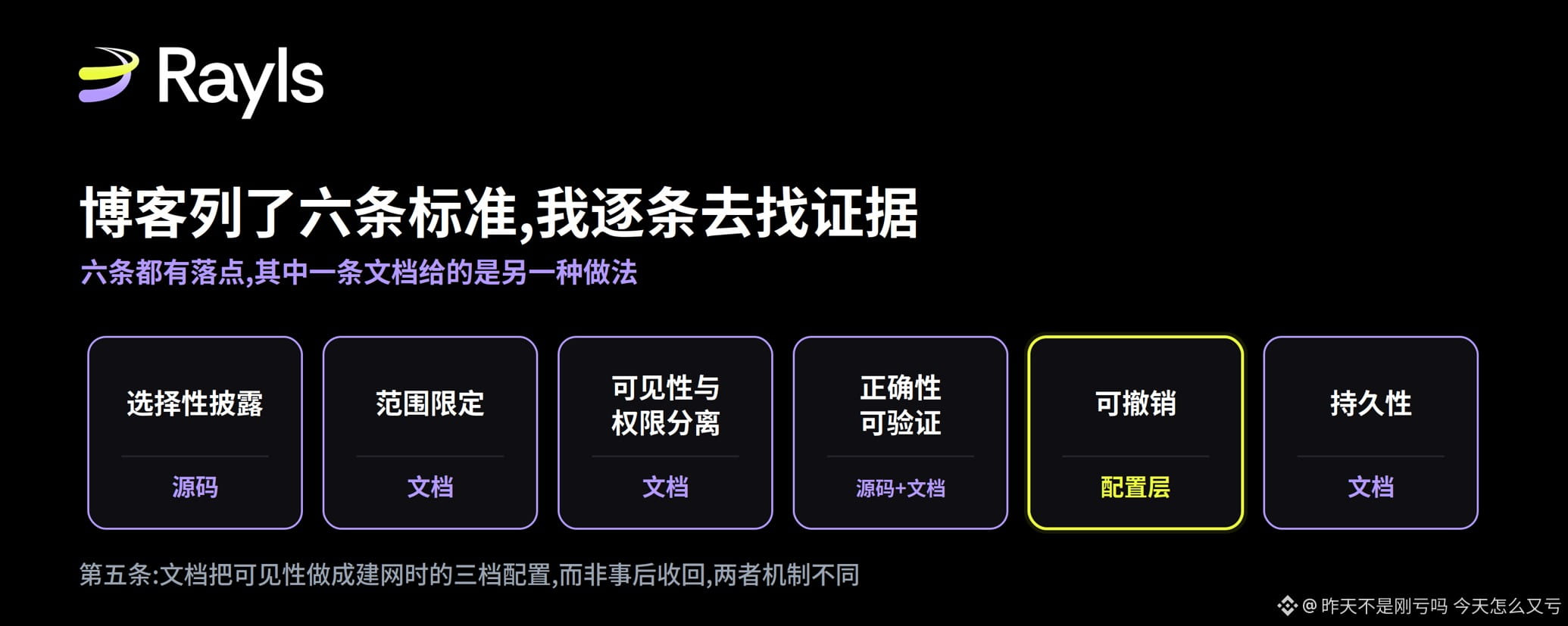
Rayls’ blog lists six standards; I looked for evidence for each oneI started staking RLS from the pre-commitment phase; reading the official blog is just a habit. In the article published on September 12 about auditability, the second half lists six standards, saying that everything is fully satisfied “by construction” under mathematical compulsion. I agree with that, but “satisfied by construction” is a claim you can verify, not something you must simply believe. So I spent a week digging up the corresponding evidence for each of the six items from the publicly available source code, technical documentation, and on-chain interfaces—and now I’m sharing it with everyone.
Let’s start with its categorization. I think it’s more useful than most discussions of “privacy vs. transparency.” There are three ways to achieve auditability: mathematical enforcement—embedding it into cryptographic constructions; hardware trust—relying on the integrity of trusted execution environments; and policy-based access control—who can see what is determined by configuration set by the network operator.
Rayls’ blog lists six standards; I looked for evidence for each one
I started staking RLS from the pre-commitment phase; reading the official blog is just a habit. In the article published on September 12 about auditability, the second half lists six standards, saying that everything is fully satisfied “by construction” under mathematical compulsion. I agree with that, but “satisfied by construction” is a claim you can verify, not something you must simply believe. So I spent a week digging up the corresponding evidence for each of the six items from the publicly available source code, technical documentation, and on-chain interfaces—and now I’m sharing it with everyone.
Let’s start with its categorization. I think it’s more useful than most discussions of “privacy vs. transparency.” There are three ways to achieve auditability: mathematical enforcement—embedding it into cryptographic constructions; hardware trust—relying on the integrity of trusted execution environments; and policy-based access control—who can see what is determined by configuration set by the network operator.
Let’s start with its categorization. I think it’s more useful than most discussions of “privacy vs. transparency.” There are three ways to achieve auditability: mathematical enforcement—embedding it into cryptographic constructions; hardware trust—relying on the integrity of trusted execution environments; and policy-based access control—who can see what is determined by configuration set by the network operator.
3
183
Article
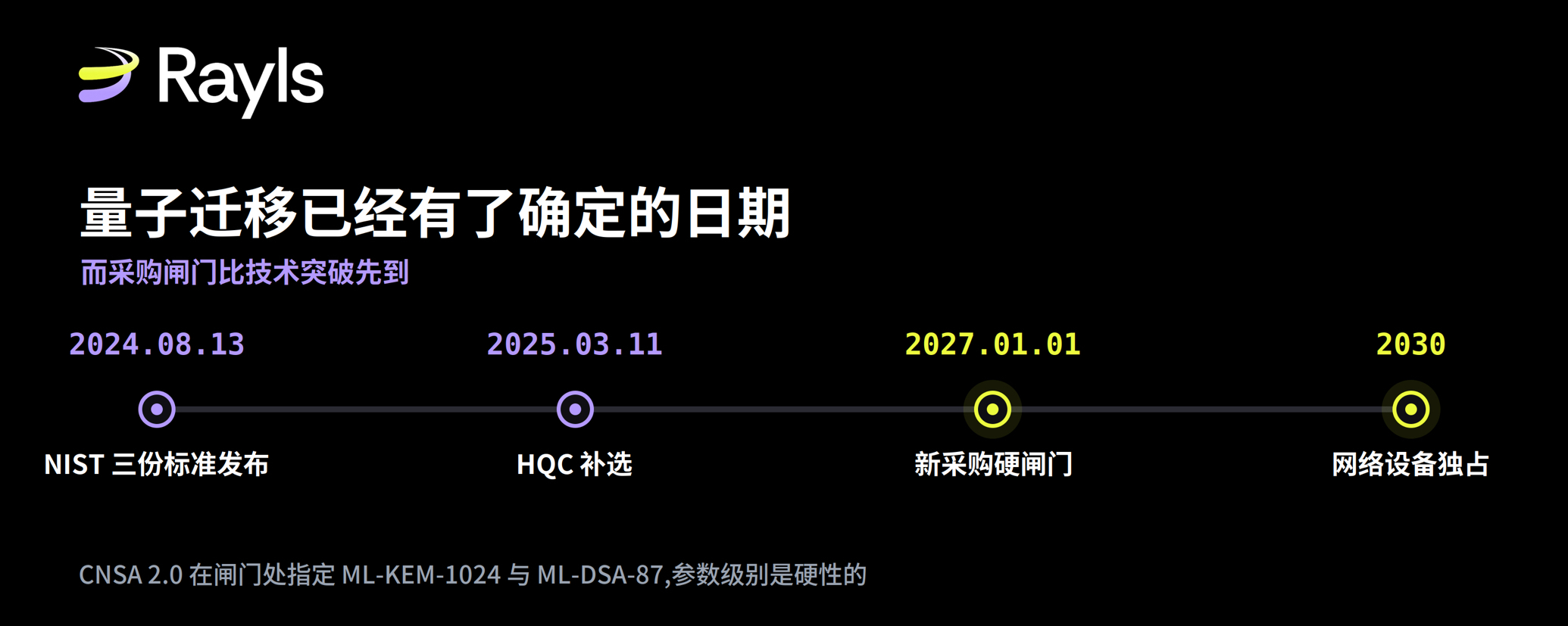
The words "post-quantum" only count if they are specified down to the parameter levelI started staking RLS back in the pre-commitment phase, and when I read the official blog, it was usually to see whether my position would be affected. This August 30 article about quantum stuff was different: the whole piece was teaching institutions how to do procurement, with little direct relevance to someone like me, a retail investor. But I still read it to the end, because it opened with a pretty strict rule, and that rule eventually brought me back to the article itself.
The rule is like this: if a claim says something is "quantum-safe" but doesn’t clearly state which standardized algorithm it uses and at what parameter level, then it isn’t a claim at all, just a label.
The words "post-quantum" only count if they are specified down to the parameter level
I started staking RLS back in the pre-commitment phase, and when I read the official blog, it was usually to see whether my position would be affected. This August 30 article about quantum stuff was different: the whole piece was teaching institutions how to do procurement, with little direct relevance to someone like me, a retail investor. But I still read it to the end, because it opened with a pretty strict rule, and that rule eventually brought me back to the article itself.
The rule is like this: if a claim says something is "quantum-safe" but doesn’t clearly state which standardized algorithm it uses and at what parameter level, then it isn’t a claim at all, just a label.
The rule is like this: if a claim says something is "quantum-safe" but doesn’t clearly state which standardized algorithm it uses and at what parameter level, then it isn’t a claim at all, just a label.
207
Article
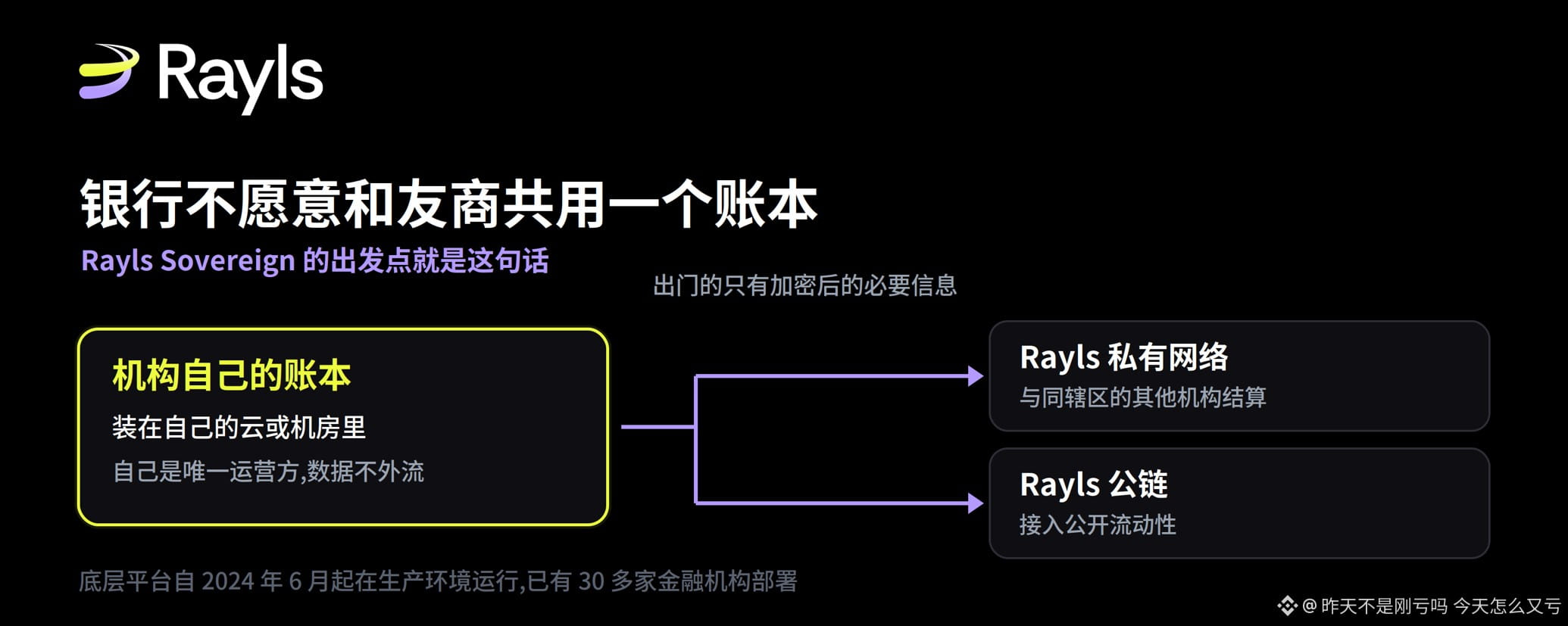
Banks can’t share one ledger with competitors—and that’s exactly the starting point of Rayls SovereignWhen blockchain projects talk about enterprise adoption, they typically focus on how “our technology is more advanced.” This time, the article Rayls put out is different. It spends the better part of the piece talking about customer complaints, and the complaints are fairly blunt. After reading it, I felt that what’s truly worth saying isn’t the list of products, but the fact that it admits something the industry is generally reluctant to acknowledge.
First, there’s something unusual about this release itself.
On August 25, Rayls launched Sovereign—a private blockchain intended for financial institutions. But according to official statements, its underlying platform has been running in production environments since June 2024, with more than 30 financial institutions already onboard and using it. Sovereign is a thoroughly rebuilt version of the earlier product called Rayls Privacy Node; the rewrite was thorough enough that they changed the name.
Banks can’t share one ledger with competitors—and that’s exactly the starting point of Rayls Sovereign
When blockchain projects talk about enterprise adoption, they typically focus on how “our technology is more advanced.” This time, the article Rayls put out is different. It spends the better part of the piece talking about customer complaints, and the complaints are fairly blunt. After reading it, I felt that what’s truly worth saying isn’t the list of products, but the fact that it admits something the industry is generally reluctant to acknowledge.
First, there’s something unusual about this release itself.
On August 25, Rayls launched Sovereign—a private blockchain intended for financial institutions. But according to official statements, its underlying platform has been running in production environments since June 2024, with more than 30 financial institutions already onboard and using it. Sovereign is a thoroughly rebuilt version of the earlier product called Rayls Privacy Node; the rewrite was thorough enough that they changed the name.
First, there’s something unusual about this release itself.
On August 25, Rayls launched Sovereign—a private blockchain intended for financial institutions. But according to official statements, its underlying platform has been running in production environments since June 2024, with more than 30 financial institutions already onboard and using it. Sovereign is a thoroughly rebuilt version of the earlier product called Rayls Privacy Node; the rewrite was thorough enough that they changed the name.
187
Article
In the UK’s new rules, they don’t mention blockchain, yet it determines which chain institutions will chooseI usually just glance at regulatory news and move on, because most of it has little to do with ordinary holders. But after reading these UK rules, I changed my mind, because there’s a rather unobvious mechanism that will genuinely affect which chain institutions choose in the future.
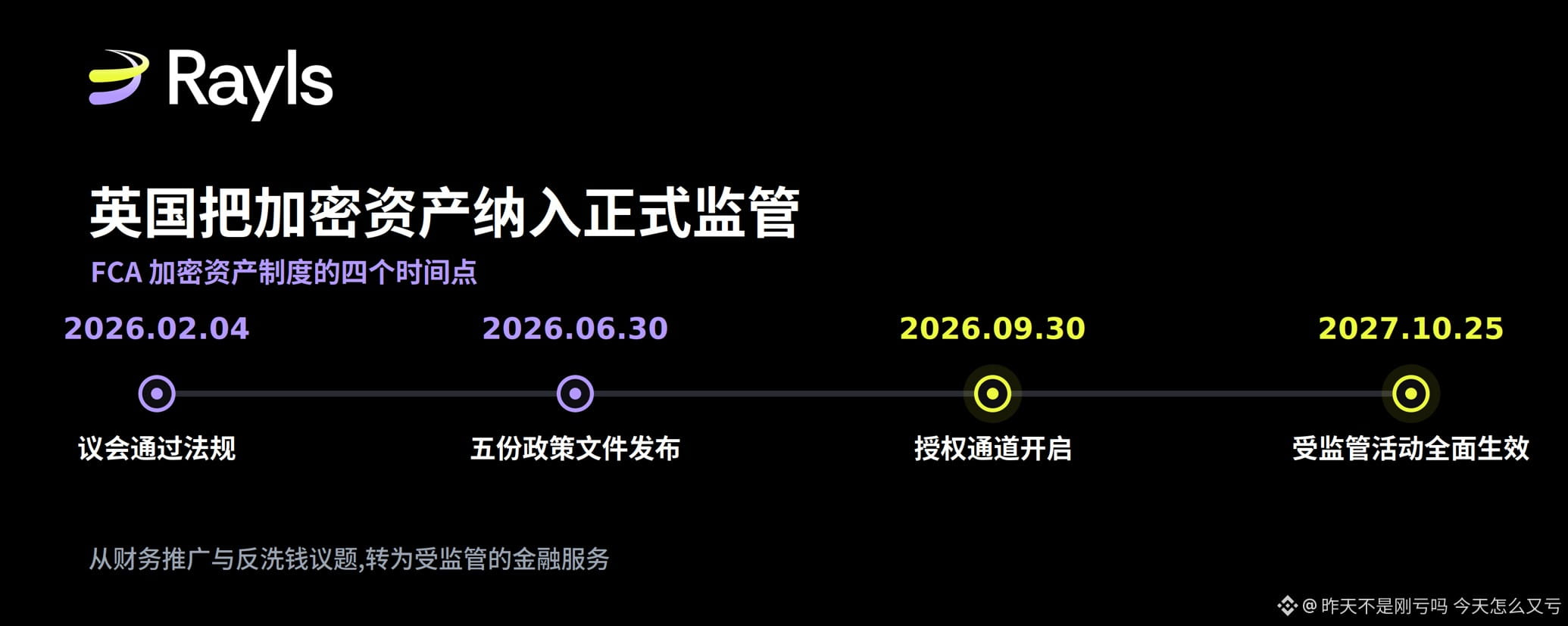
First, lay out the timeline clearly, because that determines how urgent it is.
On February 4, 2026, the UK Parliament passed the relevant regulations. On June 30, the FCA published the core details of the制度, with a total of five policy documents. The authorized gateway opened on September 30, while the complete scope of regulated activities will not fully take effect until October 25, 2027.
In the UK’s new rules, they don’t mention blockchain, yet it determines which chain institutions will choose
I usually just glance at regulatory news and move on, because most of it has little to do with ordinary holders. But after reading these UK rules, I changed my mind, because there’s a rather unobvious mechanism that will genuinely affect which chain institutions choose in the future.
First, lay out the timeline clearly, because that determines how urgent it is.
On February 4, 2026, the UK Parliament passed the relevant regulations. On June 30, the FCA published the core details of the制度, with a total of five policy documents. The authorized gateway opened on September 30, while the complete scope of regulated activities will not fully take effect until October 25, 2027.
First, lay out the timeline clearly, because that determines how urgent it is.
On February 4, 2026, the UK Parliament passed the relevant regulations. On June 30, the FCA published the core details of the制度, with a total of five policy documents. The authorized gateway opened on September 30, while the complete scope of regulated activities will not fully take effect until October 25, 2027.
180
Verified
Article
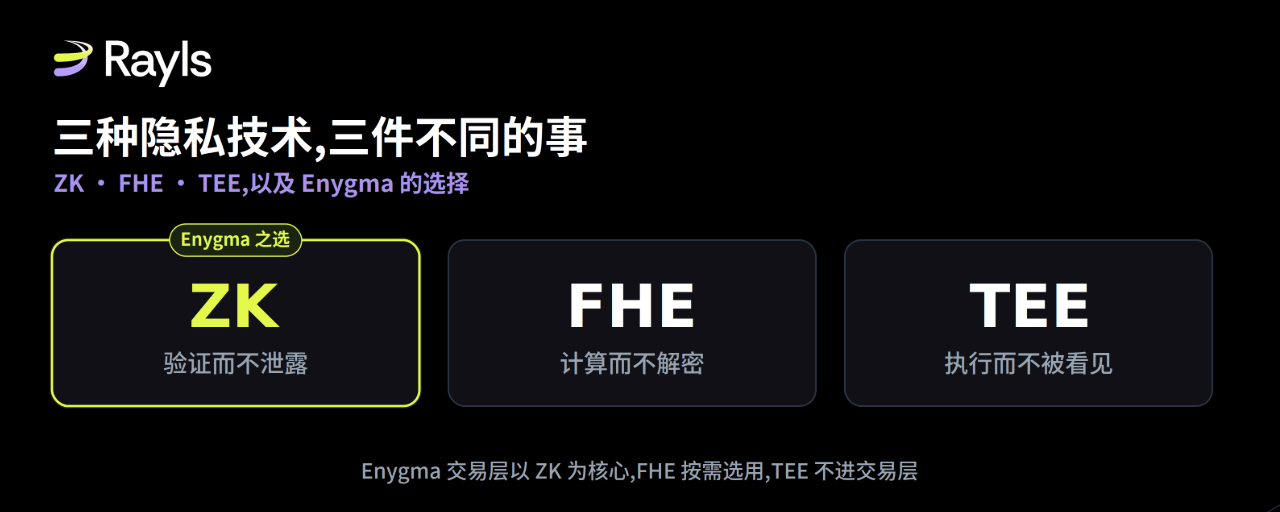
Someone asked me which is strongest: ZK, FHE, or TEE—and I think they asked the wrong question!To be honest, the first time I saw these three abbreviations put together, I thought they were three different answers to the same question: faster, safer—pick one and you’re done. Later I realized that ranking them side by side is like asking, “Which is best—a hammer, a screwdriver, or a wrench?” The answer depends on whether you have a nail, a screw, or a bolt.
The issues they each solve are actually three problems that have been conflated.
The first problem is: I want to prove that something is true, but the data needed for the proof is sensitive, and I don't want to show it to you. A bank wants to tell regulators that a transaction is legal, authorization is correct, and there are no duplicates—yet it doesn't want to put the amounts and the payer/payee details on the ledgers. This kind of proof that is true but doesn't reveal the underlying data is ZK’s home turf. Its charm lies in guaranteeing the conclusion comes from mathematics, not from “I promise you, I won’t let you see.” Regulators or auditors who receive the verification key can check the result, but they can’t touch the underlying data. The cost is also real: it’s good at proving properties of data, but not good at letting multiple parties compute together when no one has complete data, and it’s far more compute-intensive than plaintext.
Someone asked me which is strongest: ZK, FHE, or TEE—and I think they asked the wrong question!
To be honest, the first time I saw these three abbreviations put together, I thought they were three different answers to the same question: faster, safer—pick one and you’re done. Later I realized that ranking them side by side is like asking, “Which is best—a hammer, a screwdriver, or a wrench?” The answer depends on whether you have a nail, a screw, or a bolt.
The issues they each solve are actually three problems that have been conflated.
The first problem is: I want to prove that something is true, but the data needed for the proof is sensitive, and I don't want to show it to you. A bank wants to tell regulators that a transaction is legal, authorization is correct, and there are no duplicates—yet it doesn't want to put the amounts and the payer/payee details on the ledgers. This kind of proof that is true but doesn't reveal the underlying data is ZK’s home turf. Its charm lies in guaranteeing the conclusion comes from mathematics, not from “I promise you, I won’t let you see.” Regulators or auditors who receive the verification key can check the result, but they can’t touch the underlying data. The cost is also real: it’s good at proving properties of data, but not good at letting multiple parties compute together when no one has complete data, and it’s far more compute-intensive than plaintext.
The issues they each solve are actually three problems that have been conflated.
The first problem is: I want to prove that something is true, but the data needed for the proof is sensitive, and I don't want to show it to you. A bank wants to tell regulators that a transaction is legal, authorization is correct, and there are no duplicates—yet it doesn't want to put the amounts and the payer/payee details on the ledgers. This kind of proof that is true but doesn't reveal the underlying data is ZK’s home turf. Its charm lies in guaranteeing the conclusion comes from mathematics, not from “I promise you, I won’t let you see.” Regulators or auditors who receive the verification key can check the result, but they can’t touch the underlying data. The cost is also real: it’s good at proving properties of data, but not good at letting multiple parties compute together when no one has complete data, and it’s far more compute-intensive than plaintext.
1
370
Article
What truly changed with this lockup isn’t the time—it’s who you need to trustWhen I look at lockup announcements, they usually only care about one thing: whether this commitment can be verified. Most projects’ “team lockup” ultimately comes down to a single sentence—you either choose to believe it or you don’t. This time is a bit different, so I checked on-chain.
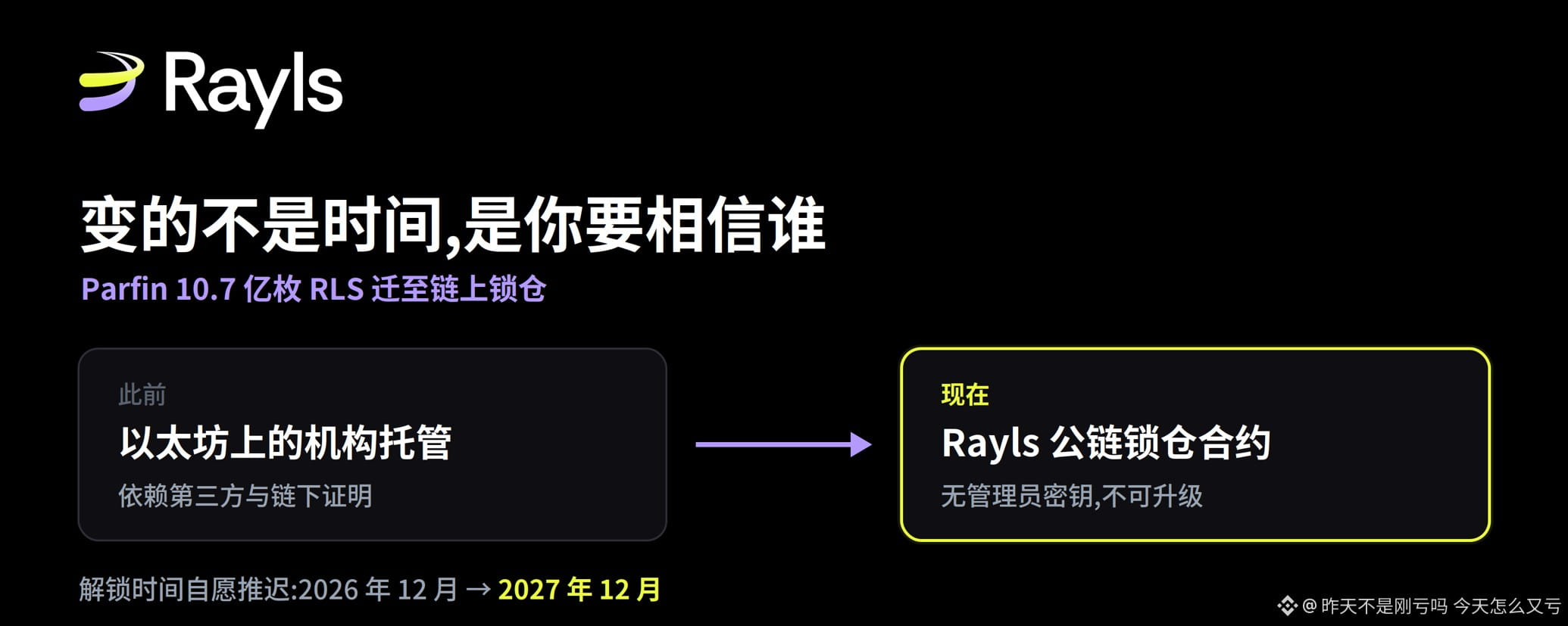
First, let’s state the facts clearly. Parfin is the core technology provider behind Rayls. It is responsible for developing privacy nodes, the private network, the Enygma privacy framework, and the Rayls mainnet. As compensation for its work prior to the TGE, it received 1,070,493,535 RLS tokens—about 11% of the initial total supply of 10 billion.
This batch of tokens was previously held by an institutional custodian on Ethereum. The reason is straightforward: at the time of the TGE, the Rayls chain hadn’t gone live yet, so the tokens could only be held in custody. Now that the mainnet is available, this batch has been migrated to the Rayls chain and locked in a smart contract that can be publicly verified. At the same time, the unlock date has been pushed back from December 2026 to December 2027.
What truly changed with this lockup isn’t the time—it’s who you need to trust
When I look at lockup announcements, they usually only care about one thing: whether this commitment can be verified. Most projects’ “team lockup” ultimately comes down to a single sentence—you either choose to believe it or you don’t. This time is a bit different, so I checked on-chain.
First, let’s state the facts clearly. Parfin is the core technology provider behind Rayls. It is responsible for developing privacy nodes, the private network, the Enygma privacy framework, and the Rayls mainnet. As compensation for its work prior to the TGE, it received 1,070,493,535 RLS tokens—about 11% of the initial total supply of 10 billion.
This batch of tokens was previously held by an institutional custodian on Ethereum. The reason is straightforward: at the time of the TGE, the Rayls chain hadn’t gone live yet, so the tokens could only be held in custody. Now that the mainnet is available, this batch has been migrated to the Rayls chain and locked in a smart contract that can be publicly verified. At the same time, the unlock date has been pushed back from December 2026 to December 2027.
First, let’s state the facts clearly. Parfin is the core technology provider behind Rayls. It is responsible for developing privacy nodes, the private network, the Enygma privacy framework, and the Rayls mainnet. As compensation for its work prior to the TGE, it received 1,070,493,535 RLS tokens—about 11% of the initial total supply of 10 billion.
This batch of tokens was previously held by an institutional custodian on Ethereum. The reason is straightforward: at the time of the TGE, the Rayls chain hadn’t gone live yet, so the tokens could only be held in custody. Now that the mainnet is available, this batch has been migrated to the Rayls chain and locked in a smart contract that can be publicly verified. At the same time, the unlock date has been pushed back from December 2026 to December 2027.
140
Article
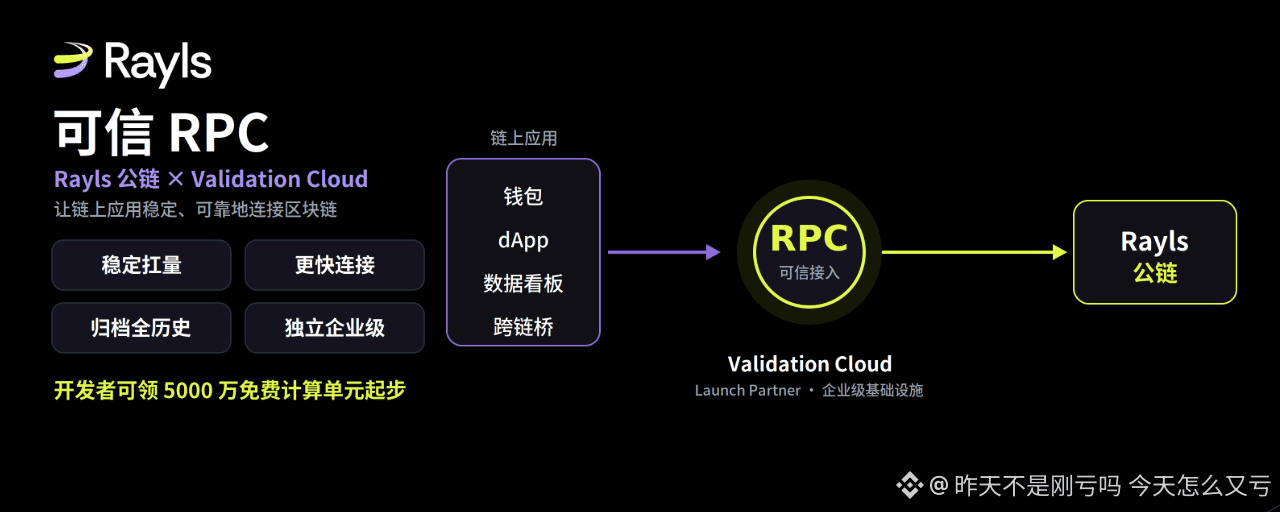
Good news, good news, good news!!!! Rayls public chain has integrated a trusted RPC!!!Brothers, I’ve been lurking in the Rayls community for a long time. I know everyone is very dissatisfied with the team—so am I. But the team is really doing work and has been putting in effort. It’s just that the Rayls team is taking a compliance-first route. Brothers, don’t give up—leave it to time. I believe the Rayls team will ultimately deliver the exam papers that satisfy us. Let me share some good news with you brothers—it's about the recent Rayls team integrating with an RPC. This is a very important thing!!
A quick overview at a glance
What is RPC
You can think of RPC as a dedicated hotline between an application and the blockchain.
Good news, good news, good news!!!! Rayls public chain has integrated a trusted RPC!!!
Brothers, I’ve been lurking in the Rayls community for a long time. I know everyone is very dissatisfied with the team—so am I. But the team is really doing work and has been putting in effort. It’s just that the Rayls team is taking a compliance-first route. Brothers, don’t give up—leave it to time. I believe the Rayls team will ultimately deliver the exam papers that satisfy us. Let me share some good news with you brothers—it's about the recent Rayls team integrating with an RPC. This is a very important thing!!
A quick overview at a glance
What is RPC
You can think of RPC as a dedicated hotline between an application and the blockchain.
A quick overview at a glance
What is RPC
You can think of RPC as a dedicated hotline between an application and the blockchain.
1
395
Partly True
Article
To judge whether an institution is truly on-chain, look at one thing: can ordinary customers use it directly?In the crypto circle, you can see “some traditional finance giant is moving into blockchain” every week. I mostly swipe past headlines like this, because in most cases they end up in an innovation lab, issue a press release, and then there’s no follow-up. There’s a very simple way to judge whether something is true: for an ordinary customer, in their own app, can they directly click in and use it?
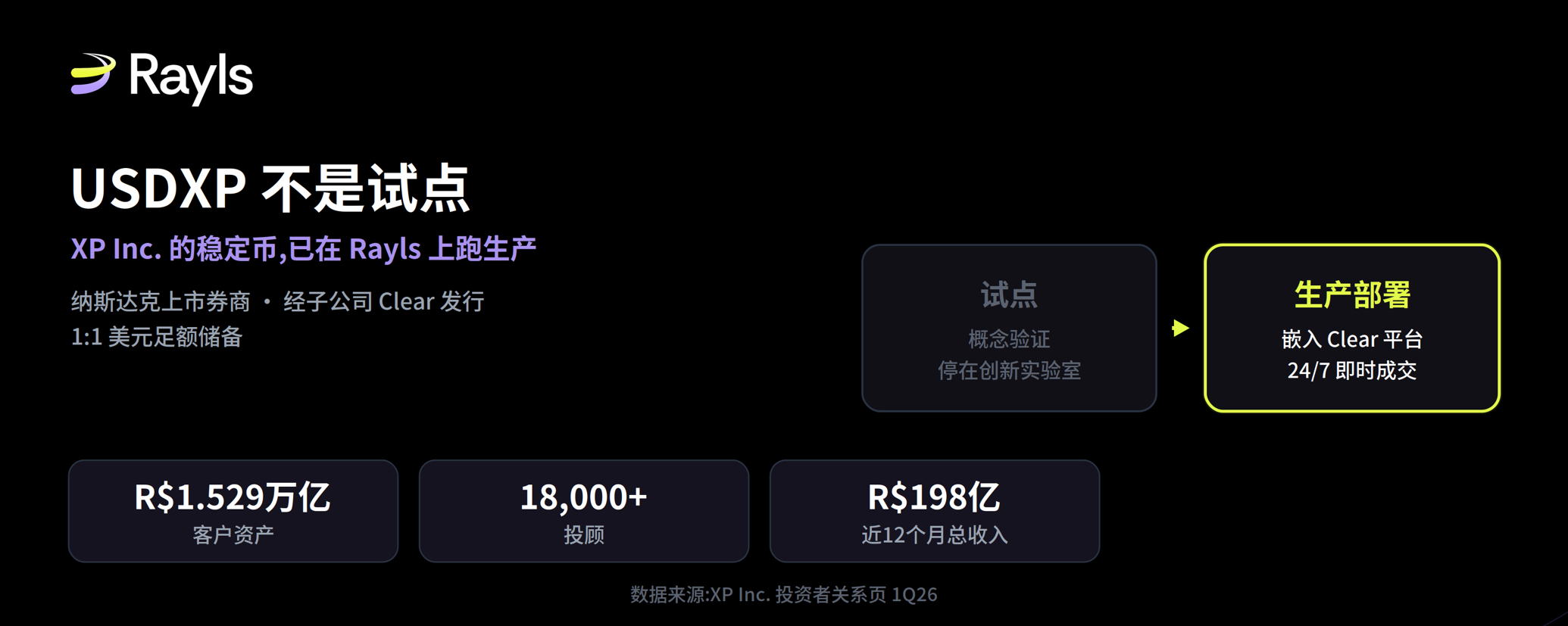
XP Inc. This time it met the standard.
First, get a clear picture of the company, because its scale determines how much weight this carries. XP is a Brazil-based investment platform listed on Nasdaq, ticker symbol XP. I checked its investor relations page for Q1 2026 data: customer assets are on the order of R$152.9 billion reais—more precisely, R$1.529 trillion; there are more than 18,000 financial advisors; and over the past twelve months, total revenue is R$19.8 billion reais, with pre-tax profit of R$5.8 billion reais.
To judge whether an institution is truly on-chain, look at one thing: can ordinary customers use it directly?
In the crypto circle, you can see “some traditional finance giant is moving into blockchain” every week. I mostly swipe past headlines like this, because in most cases they end up in an innovation lab, issue a press release, and then there’s no follow-up. There’s a very simple way to judge whether something is true: for an ordinary customer, in their own app, can they directly click in and use it?
XP Inc. This time it met the standard.
First, get a clear picture of the company, because its scale determines how much weight this carries. XP is a Brazil-based investment platform listed on Nasdaq, ticker symbol XP. I checked its investor relations page for Q1 2026 data: customer assets are on the order of R$152.9 billion reais—more precisely, R$1.529 trillion; there are more than 18,000 financial advisors; and over the past twelve months, total revenue is R$19.8 billion reais, with pre-tax profit of R$5.8 billion reais.
XP Inc. This time it met the standard.
First, get a clear picture of the company, because its scale determines how much weight this carries. XP is a Brazil-based investment platform listed on Nasdaq, ticker symbol XP. I checked its investor relations page for Q1 2026 data: customer assets are on the order of R$152.9 billion reais—more precisely, R$1.529 trillion; there are more than 18,000 financial advisors; and over the past twelve months, total revenue is R$19.8 billion reais, with pre-tax profit of R$5.8 billion reais.
1
243
Article
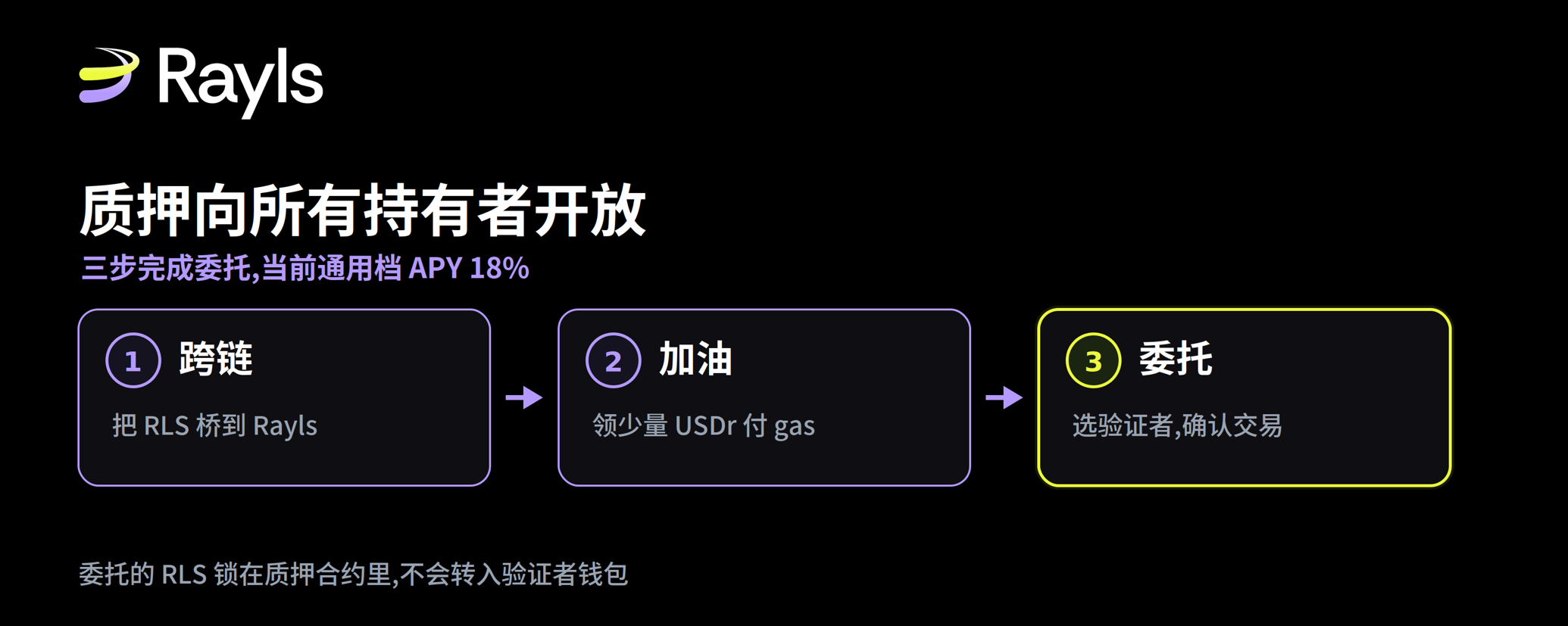
Staking is now open to everyone, but there are a few things you should know firstI started staking from the batch of pre-commitments in June, so I’ve gone through this whole process already. This time it’s open to everyone. A lot of people around me have been asking how to operate it and what to watch out for, so I’m just going to lay everything out clearly in one go.
First, let’s talk about the change itself.
Rayls uses delegated proof-of-stake: validators run nodes, produce blocks, and help secure the public chain. Regular holders don’t need to run nodes themselves—they can delegate their RLS to a validator and share part of the staking rewards.
This mechanism went live in June, but at the time it was only available to wallets that participated in the pre-commitment plan and the liquidity seed activities. Those participants locked their tokens before the mainnet launch, and the official team offered a three-month 55% boosted annualized return. They even sent 1 USDr to each qualifying wallet so they wouldn’t even have to worry about having gas.
Staking is now open to everyone, but there are a few things you should know first
I started staking from the batch of pre-commitments in June, so I’ve gone through this whole process already. This time it’s open to everyone. A lot of people around me have been asking how to operate it and what to watch out for, so I’m just going to lay everything out clearly in one go.
First, let’s talk about the change itself.
Rayls uses delegated proof-of-stake: validators run nodes, produce blocks, and help secure the public chain. Regular holders don’t need to run nodes themselves—they can delegate their RLS to a validator and share part of the staking rewards.
This mechanism went live in June, but at the time it was only available to wallets that participated in the pre-commitment plan and the liquidity seed activities. Those participants locked their tokens before the mainnet launch, and the official team offered a three-month 55% boosted annualized return. They even sent 1 USDr to each qualifying wallet so they wouldn’t even have to worry about having gas.
First, let’s talk about the change itself.
Rayls uses delegated proof-of-stake: validators run nodes, produce blocks, and help secure the public chain. Regular holders don’t need to run nodes themselves—they can delegate their RLS to a validator and share part of the staking rewards.
This mechanism went live in June, but at the time it was only available to wallets that participated in the pre-commitment plan and the liquidity seed activities. Those participants locked their tokens before the mainnet launch, and the official team offered a three-month 55% boosted annualized return. They even sent 1 USDr to each qualifying wallet so they wouldn’t even have to worry about having gas.
259
Partly True
Article
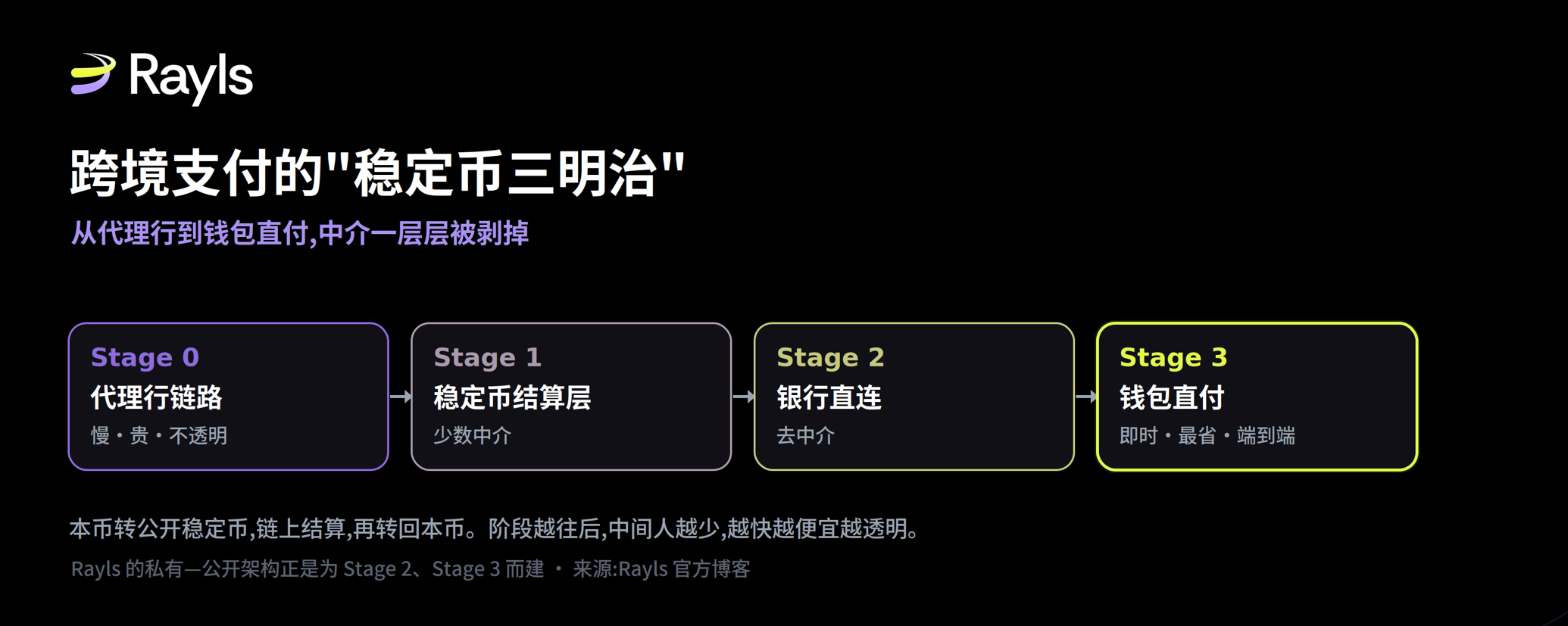
A cross-border remittance being broken down into a “sandwich”In my previous article about XP, I kept wondering about one thing: once an institutional stablecoin like USDXP is issued, how exactly does it participate in real cross-border settlement? This piece is my attempt to fill in that gap, and it also helped me finally understand a term for the first time: “stablecoin sandwich.”
First, let’s explain this term. It’s actually very visual. A single cross-border payment: the two ends are your local currency, with a layer of public stablecoin in the middle. The payer converts their local currency into a USD stablecoin; the stablecoin completes the cross-border settlement on-chain; then the payee converts it back into their own local currency. Doesn’t it look like two slices of bread with that middle layer in between? That’s the phrase the industry started using to describe stablecoin-based cross-border settlement.
A cross-border remittance being broken down into a “sandwich”
In my previous article about XP, I kept wondering about one thing: once an institutional stablecoin like USDXP is issued, how exactly does it participate in real cross-border settlement? This piece is my attempt to fill in that gap, and it also helped me finally understand a term for the first time: “stablecoin sandwich.”
First, let’s explain this term. It’s actually very visual. A single cross-border payment: the two ends are your local currency, with a layer of public stablecoin in the middle. The payer converts their local currency into a USD stablecoin; the stablecoin completes the cross-border settlement on-chain; then the payee converts it back into their own local currency. Doesn’t it look like two slices of bread with that middle layer in between? That’s the phrase the industry started using to describe stablecoin-based cross-border settlement.
First, let’s explain this term. It’s actually very visual. A single cross-border payment: the two ends are your local currency, with a layer of public stablecoin in the middle. The payer converts their local currency into a USD stablecoin; the stablecoin completes the cross-border settlement on-chain; then the payee converts it back into their own local currency. Doesn’t it look like two slices of bread with that middle layer in between? That’s the phrase the industry started using to describe stablecoin-based cross-border settlement.
388
Article
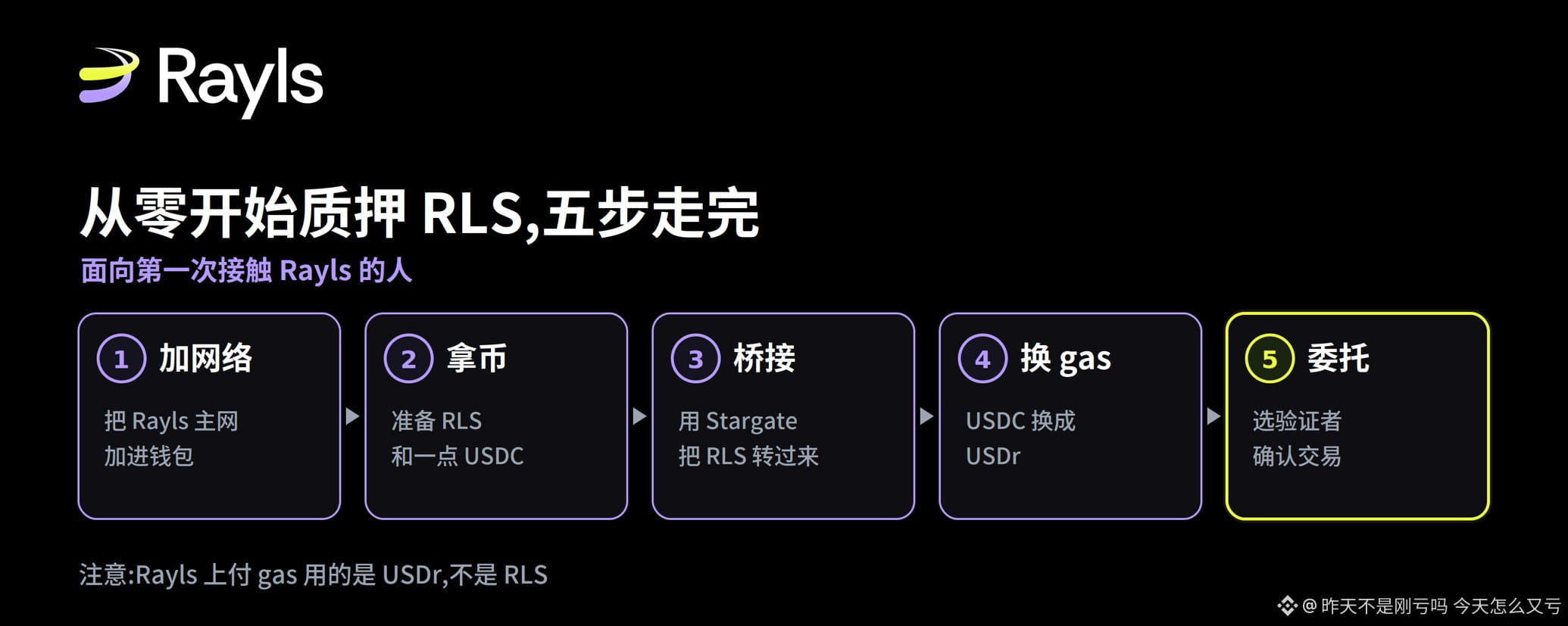
Stake RLS from Scratch: A Complete Step-by-Step Guide Written for BeginnersIn the previous post, I talked about the staking being opened up itself. But in the backend, the most frequently asked question from many brothers was actually the same sentence: exactly how do you do it? So this time, I went through the whole process again from start to finish, and wrote down every step and every spot that’s easy to get stuck. Just follow it.
Here’s the link to the previous post: [质押开放给所有人了,但有几件事最好先知道](https://www.binance.com/zh-cn/square/post/355871701721682)
First, let’s make it clear who this article is for. If you’ve never come across Rayls at all— and even aren’t very familiar with terms like wallets or bridging— then this is written for you. For every piece of technical terminology, I’ll briefly explain it along the way.
Stake RLS from Scratch: A Complete Step-by-Step Guide Written for Beginners
In the previous post, I talked about the staking being opened up itself. But in the backend, the most frequently asked question from many brothers was actually the same sentence: exactly how do you do it? So this time, I went through the whole process again from start to finish, and wrote down every step and every spot that’s easy to get stuck. Just follow it.
Here’s the link to the previous post: 质押开放给所有人了,但有几件事最好先知道
First, let’s make it clear who this article is for. If you’ve never come across Rayls at all— and even aren’t very familiar with terms like wallets or bridging— then this is written for you. For every piece of technical terminology, I’ll briefly explain it along the way.
Here’s the link to the previous post: 质押开放给所有人了,但有几件事最好先知道
First, let’s make it clear who this article is for. If you’ve never come across Rayls at all— and even aren’t very familiar with terms like wallets or bridging— then this is written for you. For every piece of technical terminology, I’ll briefly explain it along the way.
2
1
418

·
--
Article
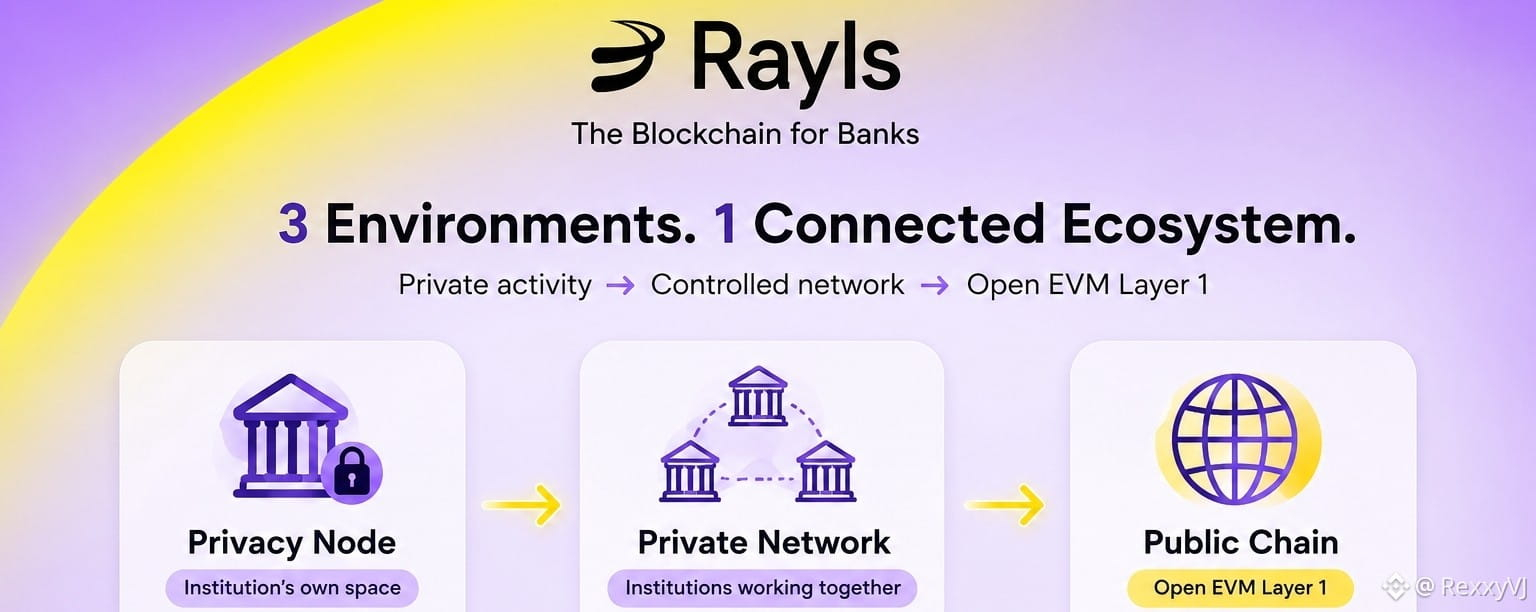
The part of Rayls that finally made sense to meI’ve been going through the Rayls docs, and one thing I initially found confusing was the difference between a Privacy Node, Private Network, and Public Chain.
After looking at how they connect, it became much easier to understand.
They each have a different role.
1. Privacy Node: the institution’s own blockchain
A Rayls Privacy Node is an EVM-compatible chain operated by a single institution.
What happens inside the institution stays inside its own environment.
It can issue tokens, manage balances, run smart contracts and handle its internal activity there.
One detail I found important: a Privacy Node is not a validator.
The docs describe it more like the institution’s own onchain environment, where its data, keys and workflows are controlled by the institution itself.
That makes sense for banks because they need control over sensitive financial information.
2. Private Network: where institutions interact
The next part is the Rayls Private Network.
This is a permissioned blockchain network where multiple institutions can connect through their Privacy Nodes.
So instead of every institution keeping its own isolated blockchain, they can interact with other approved participants while keeping transactions private.
Rayls uses a Private Network Hub to coordinate these interactions.
This is where Enygma becomes interesting.
Enygma is Rayls’ privacy protocol for confidential transactions. The docs show how it can be used for private token transfers and Delivery-versus-Payment, where two assets can be exchanged while keeping sensitive transaction information protected.
There is also an auditor role, so privacy doesn't simply mean that nobody can ever inspect anything.
That balance between confidentiality and authorised visibility is one of the things I found interesting while going through the docs.
3. Public Chain: the open side
Then there is the Rayls Public Chain.
This is an EVM-compatible Layer 1 designed to connect the institutional side with the open blockchain ecosystem.
This is where public applications, assets and DeFi can operate.
The current docs also mention over 10,000 TPS and sub-second deterministic finality through Rayls' Axyl consensus.
So the Public Chain isn't simply another place to store assets.
It is the open side of the architecture.
The simple way I understand it now
Think about an institution issuing a tokenised asset.
Privacy Node
The institution creates and manages the asset in its own environment.
↓
Private Network
The institution can interact with other approved institutions privately.
↓
Public Chain
The asset can reach the open blockchain ecosystem and public liquidity when appropriate.
Of course, the actual flow depends on the use case. The important part is that Rayls doesn't force every activity into the same environment.
Each environment has a specific job.
And this is where Rayls Enygma fits
This was probably the most interesting part for me.
Blockchain usually gives you transparency by default, but financial institutions often need the opposite for sensitive transactions.
Enygma is designed to provide confidential transactions while keeping them verifiable and auditable.
For example, Rayls documents describe confidential transfers where the sender, recipient and amount can be hidden from public view, while authorised auditors can still access the necessary information.
It also supports private DvP flows for tokenised assets.
So the goal isn't simply:
"make everything private."
It is more about giving different participants different levels of visibility depending on what they are authorised to see.
What I took away from exploring Rayls
Before going through the docs, I mostly thought of Rayls as another blockchain project focused on institutions.
After looking at the architecture, I see the idea differently.
The Privacy Node gives an institution its own controlled onchain environment.
The Private Network lets approved institutions interact.
The Public Chain connects that institutional infrastructure to the open blockchain world.
And Enygma provides the privacy layer for sensitive activity.
That separation is probably the part of Rayls I found most interesting.
Instead of asking institutions to choose between private infrastructure and public blockchain access, Rayls is building a way for the two sides to work together.
That was the part that clicked for me after actually going through the docs.
@Rayls #Rayls
The part of Rayls that finally made sense to me
I’ve been going through the Rayls docs, and one thing I initially found confusing was the difference between a Privacy Node, Private Network, and Public Chain.
After looking at how they connect, it became much easier to understand.
They each have a different role.
1. Privacy Node: the institution’s own blockchain
A Rayls Privacy Node is an EVM-compatible chain operated by a single institution.
What happens inside the institution stays inside its own environment.
It can issue tokens, manage balances, run smart contracts and handle its internal activity there.
One detail I found important: a Privacy Node is not a validator.
The docs describe it more like the institution’s own onchain environment, where its data, keys and workflows are controlled by the institution itself.
That makes sense for banks because they need control over sensitive financial information.
2. Private Network: where institutions interact
The next part is the Rayls Private Network.
This is a permissioned blockchain network where multiple institutions can connect through their Privacy Nodes.
So instead of every institution keeping its own isolated blockchain, they can interact with other approved participants while keeping transactions private.
Rayls uses a Private Network Hub to coordinate these interactions.
This is where Enygma becomes interesting.
Enygma is Rayls’ privacy protocol for confidential transactions. The docs show how it can be used for private token transfers and Delivery-versus-Payment, where two assets can be exchanged while keeping sensitive transaction information protected.
There is also an auditor role, so privacy doesn't simply mean that nobody can ever inspect anything.
That balance between confidentiality and authorised visibility is one of the things I found interesting while going through the docs.
3. Public Chain: the open side
Then there is the Rayls Public Chain.
This is an EVM-compatible Layer 1 designed to connect the institutional side with the open blockchain ecosystem.
This is where public applications, assets and DeFi can operate.
The current docs also mention over 10,000 TPS and sub-second deterministic finality through Rayls' Axyl consensus.
So the Public Chain isn't simply another place to store assets.
It is the open side of the architecture.
The simple way I understand it now
Think about an institution issuing a tokenised asset.
Privacy Node
The institution creates and manages the asset in its own environment.
↓
Private Network
The institution can interact with other approved institutions privately.
↓
Public Chain
The asset can reach the open blockchain ecosystem and public liquidity when appropriate.
Of course, the actual flow depends on the use case. The important part is that Rayls doesn't force every activity into the same environment.
Each environment has a specific job.
And this is where Rayls Enygma fits
This was probably the most interesting part for me.
Blockchain usually gives you transparency by default, but financial institutions often need the opposite for sensitive transactions.
Enygma is designed to provide confidential transactions while keeping them verifiable and auditable.
For example, Rayls documents describe confidential transfers where the sender, recipient and amount can be hidden from public view, while authorised auditors can still access the necessary information.
It also supports private DvP flows for tokenised assets.
So the goal isn't simply:
"make everything private."
It is more about giving different participants different levels of visibility depending on what they are authorised to see.
What I took away from exploring Rayls
Before going through the docs, I mostly thought of Rayls as another blockchain project focused on institutions.
After looking at the architecture, I see the idea differently.
The Privacy Node gives an institution its own controlled onchain environment.
The Private Network lets approved institutions interact.
The Public Chain connects that institutional infrastructure to the open blockchain world.
And Enygma provides the privacy layer for sensitive activity.
That separation is probably the part of Rayls I found most interesting.
Instead of asking institutions to choose between private infrastructure and public blockchain access, Rayls is building a way for the two sides to work together.
That was the part that clicked for me after actually going through the docs.
@Rayls #Rayls
After looking at how they connect, it became much easier to understand.
They each have a different role.
1. Privacy Node: the institution’s own blockchain
A Rayls Privacy Node is an EVM-compatible chain operated by a single institution.
What happens inside the institution stays inside its own environment.
It can issue tokens, manage balances, run smart contracts and handle its internal activity there.
One detail I found important: a Privacy Node is not a validator.
The docs describe it more like the institution’s own onchain environment, where its data, keys and workflows are controlled by the institution itself.
That makes sense for banks because they need control over sensitive financial information.
2. Private Network: where institutions interact
The next part is the Rayls Private Network.
This is a permissioned blockchain network where multiple institutions can connect through their Privacy Nodes.
So instead of every institution keeping its own isolated blockchain, they can interact with other approved participants while keeping transactions private.
Rayls uses a Private Network Hub to coordinate these interactions.
This is where Enygma becomes interesting.
Enygma is Rayls’ privacy protocol for confidential transactions. The docs show how it can be used for private token transfers and Delivery-versus-Payment, where two assets can be exchanged while keeping sensitive transaction information protected.
There is also an auditor role, so privacy doesn't simply mean that nobody can ever inspect anything.
That balance between confidentiality and authorised visibility is one of the things I found interesting while going through the docs.
3. Public Chain: the open side
Then there is the Rayls Public Chain.
This is an EVM-compatible Layer 1 designed to connect the institutional side with the open blockchain ecosystem.
This is where public applications, assets and DeFi can operate.
The current docs also mention over 10,000 TPS and sub-second deterministic finality through Rayls' Axyl consensus.
So the Public Chain isn't simply another place to store assets.
It is the open side of the architecture.
The simple way I understand it now
Think about an institution issuing a tokenised asset.
Privacy Node
The institution creates and manages the asset in its own environment.
↓
Private Network
The institution can interact with other approved institutions privately.
↓
Public Chain
The asset can reach the open blockchain ecosystem and public liquidity when appropriate.
Of course, the actual flow depends on the use case. The important part is that Rayls doesn't force every activity into the same environment.
Each environment has a specific job.
And this is where Rayls Enygma fits
This was probably the most interesting part for me.
Blockchain usually gives you transparency by default, but financial institutions often need the opposite for sensitive transactions.
Enygma is designed to provide confidential transactions while keeping them verifiable and auditable.
For example, Rayls documents describe confidential transfers where the sender, recipient and amount can be hidden from public view, while authorised auditors can still access the necessary information.
It also supports private DvP flows for tokenised assets.
So the goal isn't simply:
"make everything private."
It is more about giving different participants different levels of visibility depending on what they are authorised to see.
What I took away from exploring Rayls
Before going through the docs, I mostly thought of Rayls as another blockchain project focused on institutions.
After looking at the architecture, I see the idea differently.
The Privacy Node gives an institution its own controlled onchain environment.
The Private Network lets approved institutions interact.
The Public Chain connects that institutional infrastructure to the open blockchain world.
And Enygma provides the privacy layer for sensitive activity.
That separation is probably the part of Rayls I found most interesting.
Instead of asking institutions to choose between private infrastructure and public blockchain access, Rayls is building a way for the two sides to work together.
That was the part that clicked for me after actually going through the docs.
@Rayls #Rayls
2
81
Article
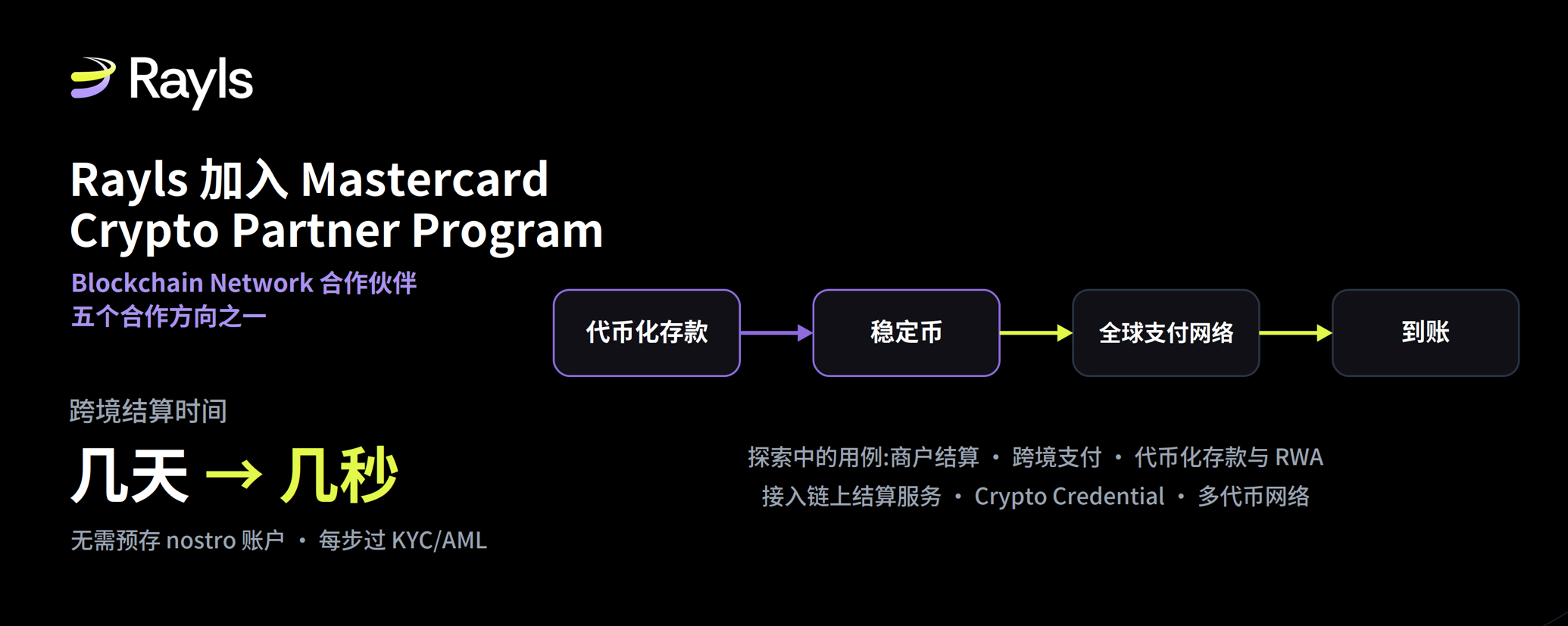
Why do banks “hold money in reserve” all over the world? What Rayls and Mastercard are aiming to change is exactly thatTo be honest, when it comes to partnership news, I usually just glance at it and swipe past. Nine out of ten are only re-hanging logos with each other. But I stopped and read this one through because it touches the most boring—and also the most expensive—part of cross-border payments.
Cross-border remittances are slow, and many people think it’s because the “network is slow.” The real reason is much more boring: it isn’t that the money is “sent” over; it’s been “sitting there” already. When a bank wants to pay to a particular country, it usually has to open an account with a local bank in advance and pre-deposit a large amount of money there—a piece of jargon called a nostro account. Every payment corridor around the world has to keep a slice of funds, like depositing a stack of cash at each friend’s house in case you pass by one day and need it. The money stays idle on the books, and exchange-rate fluctuations are borne by the account balance itself. After a cross-border payment runs its course, it often takes several days.
Why do banks “hold money in reserve” all over the world? What Rayls and Mastercard are aiming to change is exactly that
To be honest, when it comes to partnership news, I usually just glance at it and swipe past. Nine out of ten are only re-hanging logos with each other. But I stopped and read this one through because it touches the most boring—and also the most expensive—part of cross-border payments.
Cross-border remittances are slow, and many people think it’s because the “network is slow.” The real reason is much more boring: it isn’t that the money is “sent” over; it’s been “sitting there” already. When a bank wants to pay to a particular country, it usually has to open an account with a local bank in advance and pre-deposit a large amount of money there—a piece of jargon called a nostro account. Every payment corridor around the world has to keep a slice of funds, like depositing a stack of cash at each friend’s house in case you pass by one day and need it. The money stays idle on the books, and exchange-rate fluctuations are borne by the account balance itself. After a cross-border payment runs its course, it often takes several days.
Cross-border remittances are slow, and many people think it’s because the “network is slow.” The real reason is much more boring: it isn’t that the money is “sent” over; it’s been “sitting there” already. When a bank wants to pay to a particular country, it usually has to open an account with a local bank in advance and pre-deposit a large amount of money there—a piece of jargon called a nostro account. Every payment corridor around the world has to keep a slice of funds, like depositing a stack of cash at each friend’s house in case you pass by one day and need it. The money stays idle on the books, and exchange-rate fluctuations are borne by the account balance itself. After a cross-border payment runs its course, it often takes several days.
1
252
Partly True
Article
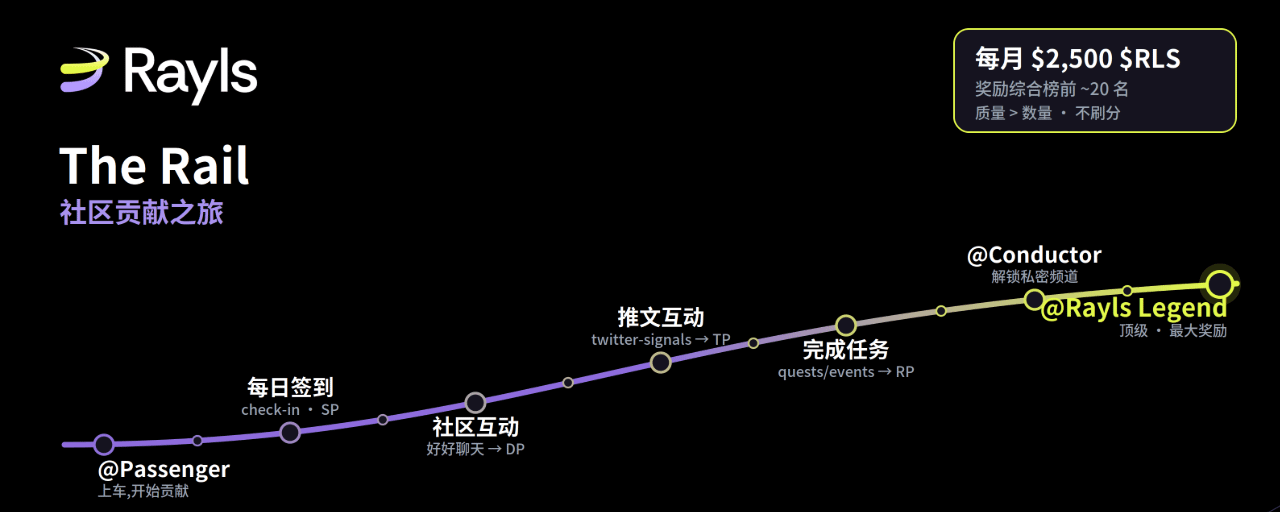
The Rail (Rayls Community Project)Rayls is a project I’ve followed for a long time. Recently, it launched a community project called The Rail, and the gameplay is somewhat different from the usual "points-grinding activities." It doesn’t reward spamming; it recognizes people who consistently put in real effort. In short, let me explain how it works! Family, if you also think it’s great, come join and fill out the form to get on board.
https://tally.so/r/dWgdrA
1. What is The Rail
The Rail is Rayls’s community ambassador program. Its purpose is to recognize meaningful contributions and turn them into identity, permissions, and rewards. The official positioning is: "a community built on real contributions, not a points-grinding game," described as "a small family room where everyone genuinely cares about one another." The operating logic is: you contribute → earn points → level up your role → get recognized.
The Rail (Rayls Community Project)
Rayls is a project I’ve followed for a long time. Recently, it launched a community project called The Rail, and the gameplay is somewhat different from the usual "points-grinding activities." It doesn’t reward spamming; it recognizes people who consistently put in real effort. In short, let me explain how it works! Family, if you also think it’s great, come join and fill out the form to get on board.
https://tally.so/r/dWgdrA
1. What is The Rail
The Rail is Rayls’s community ambassador program. Its purpose is to recognize meaningful contributions and turn them into identity, permissions, and rewards. The official positioning is: "a community built on real contributions, not a points-grinding game," described as "a small family room where everyone genuinely cares about one another." The operating logic is: you contribute → earn points → level up your role → get recognized.
https://tally.so/r/dWgdrA
1. What is The Rail
The Rail is Rayls’s community ambassador program. Its purpose is to recognize meaningful contributions and turn them into identity, permissions, and rewards. The official positioning is: "a community built on real contributions, not a points-grinding game," described as "a small family room where everyone genuinely cares about one another." The operating logic is: you contribute → earn points → level up your role → get recognized.
1
530
Article
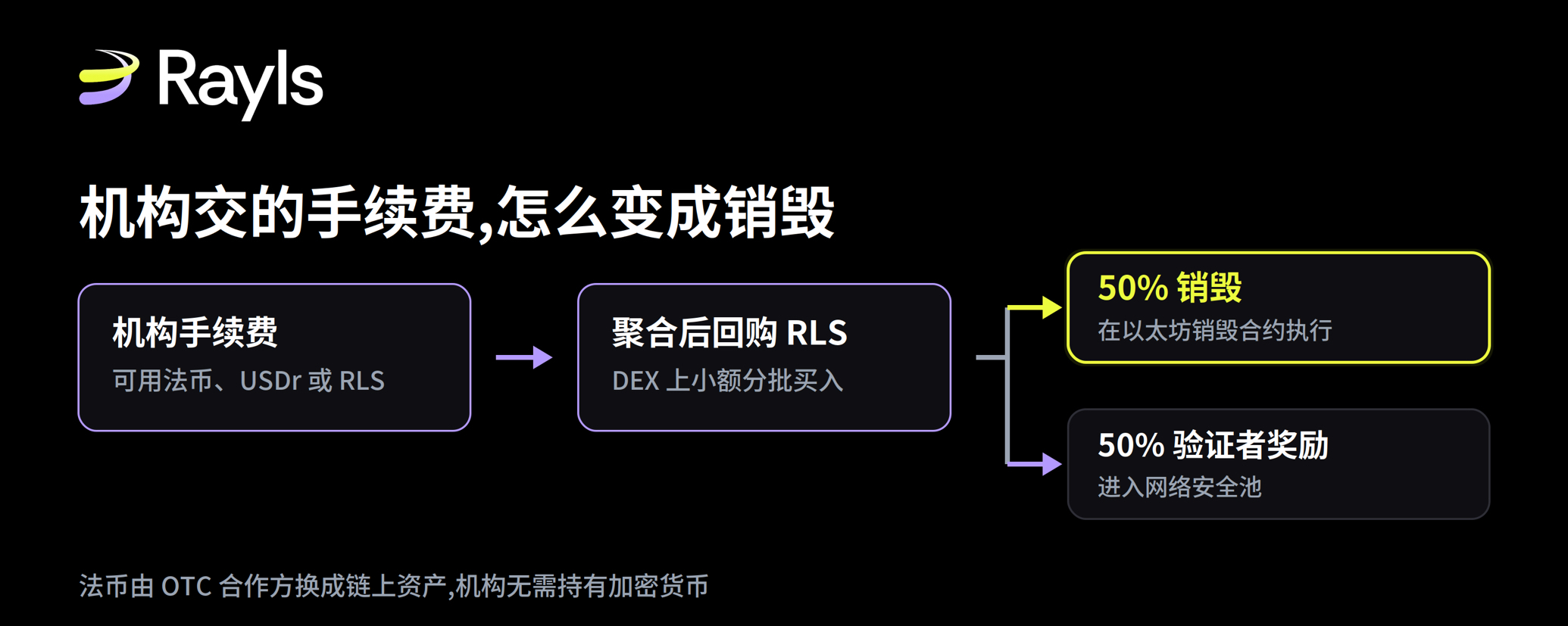
A bank-paid fee that ultimately becomes burned tokensMost projects talk about a burn mechanism—about how much we will burn. I’m more curious about the upstream part: where did those burned tokens originally come from? Rayls’s design answers this in a way that surprised me—it starts with a fiat payment.
First, the conclusion. The starting point of the entire chain isn’t in the world of encryption; it’s a fiat payment issued by an institution in its own country.
When an institution conducts business on Rayls through privacy nodes, it generates fees. The key design is that they can settle directly in fiat, or choose to use USDr or RLS.
A bank-paid fee that ultimately becomes burned tokens
Most projects talk about a burn mechanism—about how much we will burn. I’m more curious about the upstream part: where did those burned tokens originally come from? Rayls’s design answers this in a way that surprised me—it starts with a fiat payment.
First, the conclusion. The starting point of the entire chain isn’t in the world of encryption; it’s a fiat payment issued by an institution in its own country.
When an institution conducts business on Rayls through privacy nodes, it generates fees. The key design is that they can settle directly in fiat, or choose to use USDr or RLS.
First, the conclusion. The starting point of the entire chain isn’t in the world of encryption; it’s a fiat payment issued by an institution in its own country.
When an institution conducts business on Rayls through privacy nodes, it generates fees. The key design is that they can settle directly in fiat, or choose to use USDr or RLS.
198

·
--
Bullish
Rayls ($RLS): The Short Investment Case
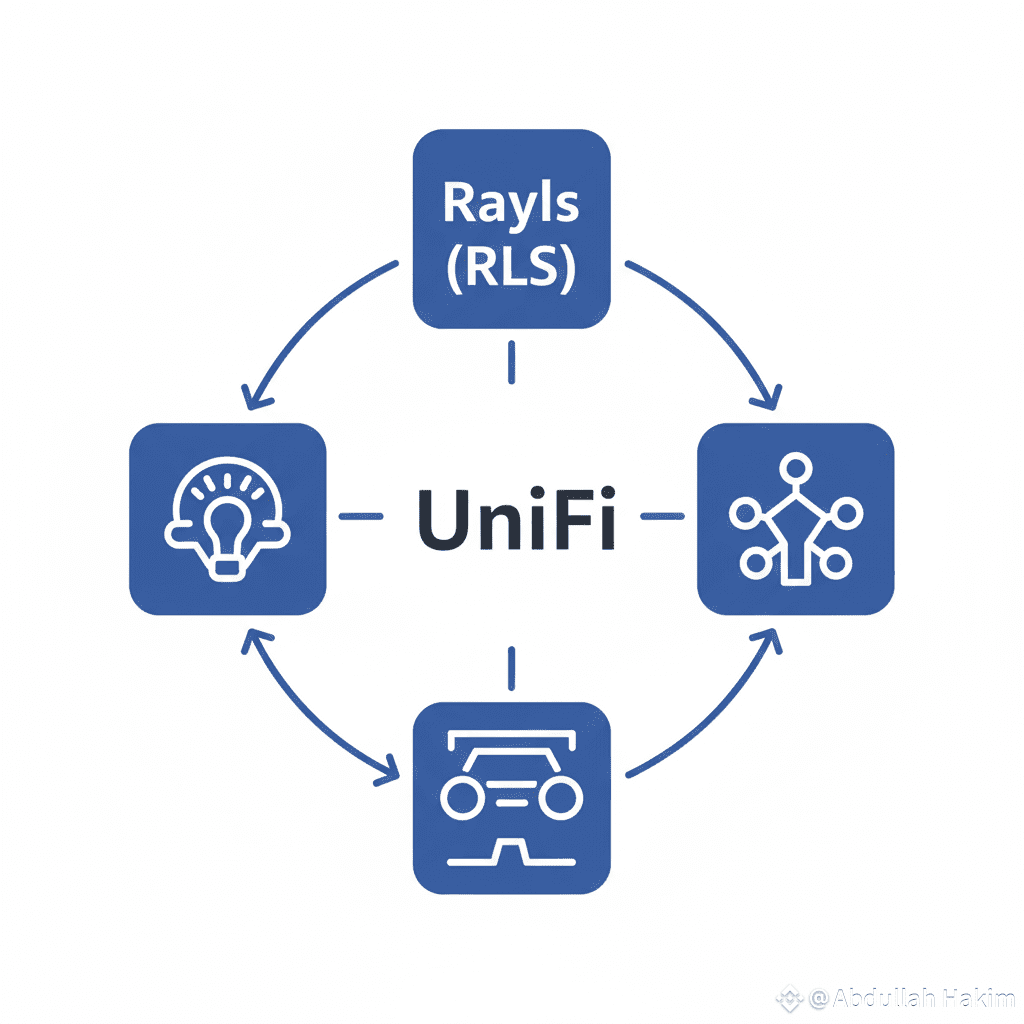
Rayls is a specialized blockchain ecosystem building the essential bridge between Traditional Finance (TradFi) and DeFi, a concept called UniFi. It's designed to bring trillions in institutional liquidity onto the blockchain compliantly.
Top 3 Reasons to Invest:
Institutional Adoption Focus: Rayls is purpose-built for banks and financial institutions. It is already integrated into major projects like the Central Bank of Brazil's DREX (CBDC) pilot and is working with large financial market infrastructures to tokenize Real-World Assets (RWA). It aims for a $100 trillion opportunity.
Compliance & Privacy Tech: It solves banking requirements with a hybrid network:
Private Subnets (VENs): For confidential, regulatory-compliant transactions.
Zero-Knowledge (ZK) Proofs: Ensures privacy for financial data while allowing necessary audits.
Deflationary Tokenomics: The RLS token is vital to the network. Institutional transaction fees are paid in RLS, and 50% of those fees are immediately burned, creating a potentially deflationary pressure on the token's total supply over time.
In summary: Investing in Rayls is a strategic bet on the compliant, institutional integration of traditional finance and blockchain technology.
Would you like me to search for the current price or recent news about Rayls partnerships?
#BTC86kJPShock #Rayls
Rayls ($RLS): The Short Investment Case
Rayls is a specialized blockchain ecosystem building the essential bridge between Traditional Finance (TradFi) and DeFi, a concept called UniFi. It's designed to bring trillions in institutional liquidity onto the blockchain compliantly.
Top 3 Reasons to Invest:
Institutional Adoption Focus: Rayls is purpose-built for banks and financial institutions. It is already integrated into major projects like the Central Bank of Brazil's DREX (CBDC) pilot and is working with large financial market infrastructures to tokenize Real-World Assets (RWA). It aims for a $100 trillion opportunity.
Compliance & Privacy Tech: It solves banking requirements with a hybrid network:
Private Subnets (VENs): For confidential, regulatory-compliant transactions.
Zero-Knowledge (ZK) Proofs: Ensures privacy for financial data while allowing necessary audits.
Deflationary Tokenomics: The RLS token is vital to the network. Institutional transaction fees are paid in RLS, and 50% of those fees are immediately burned, creating a potentially deflationary pressure on the token's total supply over time.
In summary: Investing in Rayls is a strategic bet on the compliant, institutional integration of traditional finance and blockchain technology.
Would you like me to search for the current price or recent news about Rayls partnerships?
#BTC86kJPShock #Rayls
Rayls is a specialized blockchain ecosystem building the essential bridge between Traditional Finance (TradFi) and DeFi, a concept called UniFi. It's designed to bring trillions in institutional liquidity onto the blockchain compliantly.
Top 3 Reasons to Invest:
Institutional Adoption Focus: Rayls is purpose-built for banks and financial institutions. It is already integrated into major projects like the Central Bank of Brazil's DREX (CBDC) pilot and is working with large financial market infrastructures to tokenize Real-World Assets (RWA). It aims for a $100 trillion opportunity.
Compliance & Privacy Tech: It solves banking requirements with a hybrid network:
Private Subnets (VENs): For confidential, regulatory-compliant transactions.
Zero-Knowledge (ZK) Proofs: Ensures privacy for financial data while allowing necessary audits.
Deflationary Tokenomics: The RLS token is vital to the network. Institutional transaction fees are paid in RLS, and 50% of those fees are immediately burned, creating a potentially deflationary pressure on the token's total supply over time.
In summary: Investing in Rayls is a strategic bet on the compliant, institutional integration of traditional finance and blockchain technology.
Would you like me to search for the current price or recent news about Rayls partnerships?
#BTC86kJPShock #Rayls
1
125

·
--
🚀 $RLS / USDT Breakout Alert! 🟢
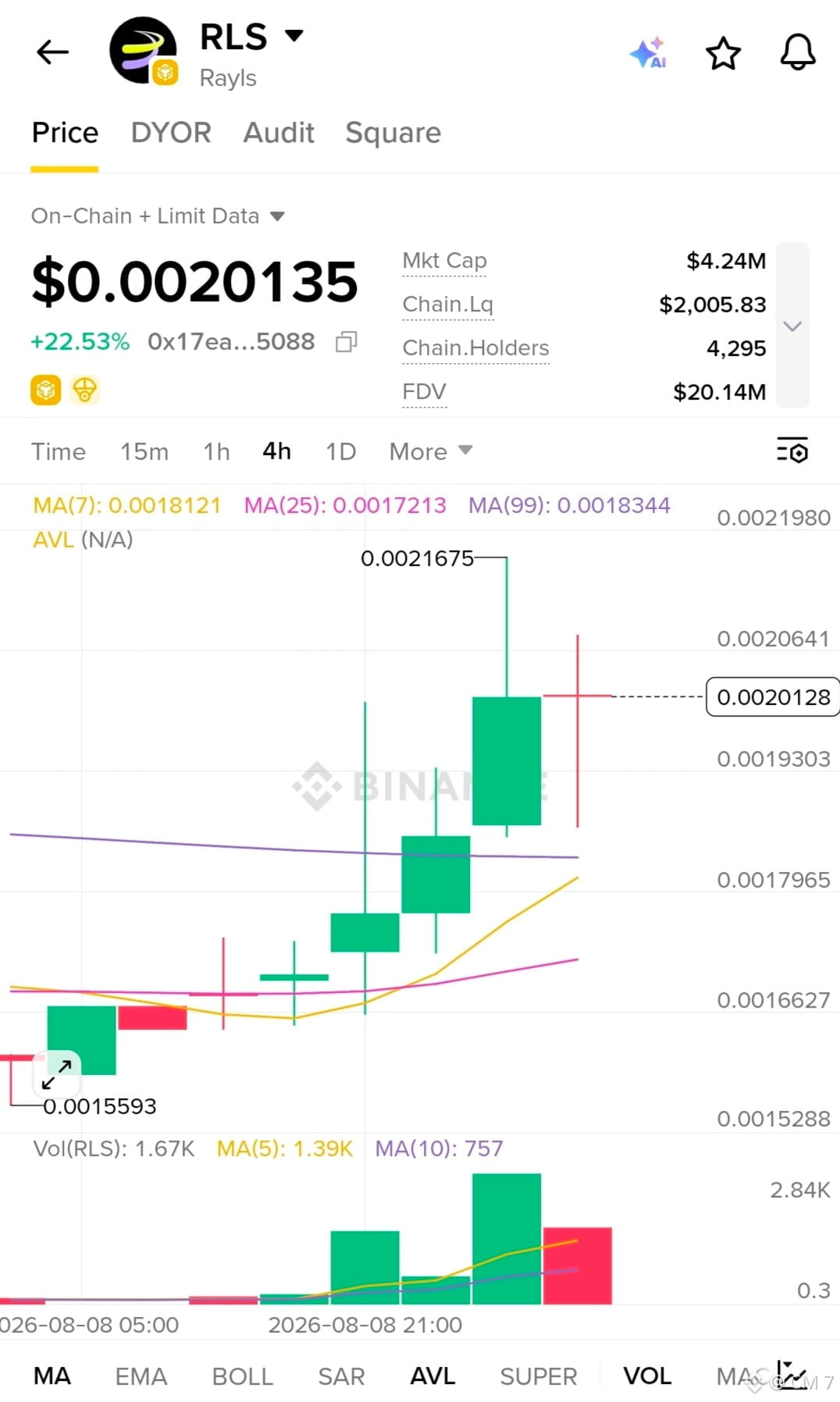
$RLS (Rayls) is showing strong bullish momentum on the 4H chart, pumping +22.53% and breaking past key Moving Averages! 📈
Key Technicals:
Current Price: $0.0020135
24h High: $0.0021675
Support: $0.00181 (MA 7) / $0.00172 (MA 25)
Market Cap: $4.24M | FDV: $20.14M
Volume: Spike in green volume candles showing solid buying pressure.
With the price consolidating above the MA(99) line ($0.00183), bulls are eyeing another retest of the recent $0.00216 peak. Keep a close eye on the volume for potential continuation!
Are you holding or waiting for a pullback? 👇
#RLS #Rayls #CryptoAnalysis #Bullish #BinanceSquareBTC #CryptoTrading #Altcoins@Binance_Square_Official
🚀 $RLS / USDT Breakout Alert! 🟢
$RLS (Rayls) is showing strong bullish momentum on the 4H chart, pumping +22.53% and breaking past key Moving Averages! 📈
Key Technicals:
Current Price: $0.0020135
24h High: $0.0021675
Support: $0.00181 (MA 7) / $0.00172 (MA 25)
Market Cap: $4.24M | FDV: $20.14M
Volume: Spike in green volume candles showing solid buying pressure.
With the price consolidating above the MA(99) line ($0.00183), bulls are eyeing another retest of the recent $0.00216 peak. Keep a close eye on the volume for potential continuation!
Are you holding or waiting for a pullback? 👇
#RLS #Rayls #CryptoAnalysis #Bullish #BinanceSquareBTC #CryptoTrading #Altcoins@Binance Square Official
$RLS (Rayls) is showing strong bullish momentum on the 4H chart, pumping +22.53% and breaking past key Moving Averages! 📈
Key Technicals:
Current Price: $0.0020135
24h High: $0.0021675
Support: $0.00181 (MA 7) / $0.00172 (MA 25)
Market Cap: $4.24M | FDV: $20.14M
Volume: Spike in green volume candles showing solid buying pressure.
With the price consolidating above the MA(99) line ($0.00183), bulls are eyeing another retest of the recent $0.00216 peak. Keep a close eye on the volume for potential continuation!
Are you holding or waiting for a pullback? 👇
#RLS #Rayls #CryptoAnalysis #Bullish #BinanceSquareBTC #CryptoTrading #Altcoins@Binance Square Official
1
1
107

·
--
Headline: $RLS Breakout! Is This the Next 10x Gem? 🚀
Check out this chart, guys! 📊
$RLS(Rayls) is absolutely exploding right now. With a massive breakout pushing the price past $0.0068, the surge in volume clearly shows that the "Whales" have officially entered the building! 🐳
Key Highlights:
📈 +78% Growth: An incredible move in just 24 hours!
🔥 Strong Momentum: The price has completely smashed through previous resistance levels.
🎯 Next Target: If this momentum holds, the $0.010 psychological level is just around the corner.
My Strategy:
We are seeing a "God Candle" on the chart, but always remember—the crypto market is volatile. Don't forget to secure some profits along the way and always use a stop-loss! 🛡️
What’s your move? Are you already holding $RLS or looking for an entry? Let me know in the comments! 👇
#RLS #Rayls #CryptoBreakout #Altcoins #TradingLife #Binance #CryptoNews #ToTheMoon #Bullish #CryptoTrading #Web3 #WhaleAlert
$RLS
{alpha}(560x17ea10b6ae4fde59fdbf471bd28ab9710f508816)
Headline: $RLS Breakout! Is This the Next 10x Gem? 🚀
Check out this chart, guys! 📊
$RLS (Rayls) is absolutely exploding right now. With a massive breakout pushing the price past $0.0068, the surge in volume clearly shows that the "Whales" have officially entered the building! 🐳
Key Highlights:
📈 +78% Growth: An incredible move in just 24 hours!
🔥 Strong Momentum: The price has completely smashed through previous resistance levels.
🎯 Next Target: If this momentum holds, the $0.010 psychological level is just around the corner.
My Strategy:
We are seeing a "God Candle" on the chart, but always remember—the crypto market is volatile. Don't forget to secure some profits along the way and always use a stop-loss! 🛡️
What’s your move? Are you already holding $RLS or looking for an entry? Let me know in the comments! 👇
#RLS #Rayls #CryptoBreakout #Altcoins #TradingLife #Binance #CryptoNews #ToTheMoon #Bullish #CryptoTrading #Web3 #WhaleAlert
$RLS
Check out this chart, guys! 📊
$RLS (Rayls) is absolutely exploding right now. With a massive breakout pushing the price past $0.0068, the surge in volume clearly shows that the "Whales" have officially entered the building! 🐳
Key Highlights:
📈 +78% Growth: An incredible move in just 24 hours!
🔥 Strong Momentum: The price has completely smashed through previous resistance levels.
🎯 Next Target: If this momentum holds, the $0.010 psychological level is just around the corner.
My Strategy:
We are seeing a "God Candle" on the chart, but always remember—the crypto market is volatile. Don't forget to secure some profits along the way and always use a stop-loss! 🛡️
What’s your move? Are you already holding $RLS or looking for an entry? Let me know in the comments! 👇
#RLS #Rayls #CryptoBreakout #Altcoins #TradingLife #Binance #CryptoNews #ToTheMoon #Bullish #CryptoTrading #Web3 #WhaleAlert
$RLS
1
171
Log in to explore more content
Join global crypto users on Binance Square
⚡️ Get latest and useful information about crypto.
💬 Trusted by the world’s largest crypto exchange.
👍 Discover real insights from verified creators.
Email / Phone number
Trending Topics
1
#AIStocksWhatNext
628,702 views
4,708 Discussing
2
#21SharesLaunchesEuropesFirstZcashETP
8,341 views
343 Discussing
3
#CardanoJoinsX402PaymentStandard
6,105 views
267 Discussing
4
#BitcoinTops$87KAtEightMonthHigh
6,449 views
75 Discussing
5
#ZECBreaksAbove$1600AtRecordHigh
3,519 views
62 Discussing
6
#BitwiseNEARStakingETPAssetsTop$100M
26,145 views
78 Discussing
7
#BitcoinBreaksAboveMayHighNears$86K
27,412 views
258 Discussing
8
#DogecoinRises15%
100,713 views
1,685 Discussing
9
#$14BBitcoinOptionsExpireFriday
7,819 views
109 Discussing
10
#BNBMarketCapPassesBNYMellon
63,102 views
1,354 Discussing