

#opg
opg
15.4M views
105,139 Discussing
Hot
Latest

Centralized cloud AI locks inference inside black boxes. @OpenGradient flips this with verifiable, on-chain AI that anyone can audit. Their Hybrid AI Computing stack runs GPU nodes alongside zkML proofs and TEEs, so every inference is cryptographically verifiable — no trusting a centralized provider. With 2M+ verified inferences and 500K+ zkML proofs already generated, plus backing from a16z crypto and Coinbase Ventures, this Base-native network is proving decentralized AI can match centralized cloud reliability without the opacity. Down 1.5% today on $1M volume, the market hasn't fully priced what open, auditable AI infrastructure means. Our own algo's complete open track record — wins and losses alike — is linked in our bio. What breaks first: centralized AI trust or decentralized AI adoption? $OPG #OPG
Centralized cloud AI locks inference inside black boxes. @OpenGradient flips this with verifiable, on-chain AI that anyone can audit. Their Hybrid AI Computing stack runs GPU nodes alongside zkML proofs and TEEs, so every inference is cryptographically verifiable — no trusting a centralized provider. With 2M+ verified inferences and 500K+ zkML proofs already generated, plus backing from a16z crypto and Coinbase Ventures, this Base-native network is proving decentralized AI can match centralized cloud reliability without the opacity. Down 1.5% today on $1M volume, the market hasn't fully priced what open, auditable AI infrastructure means. Our own algo's complete open track record — wins and losses alike — is linked in our bio. What breaks first: centralized AI trust or decentralized AI adoption? $OPG #OPG
187

·
--
Bullish
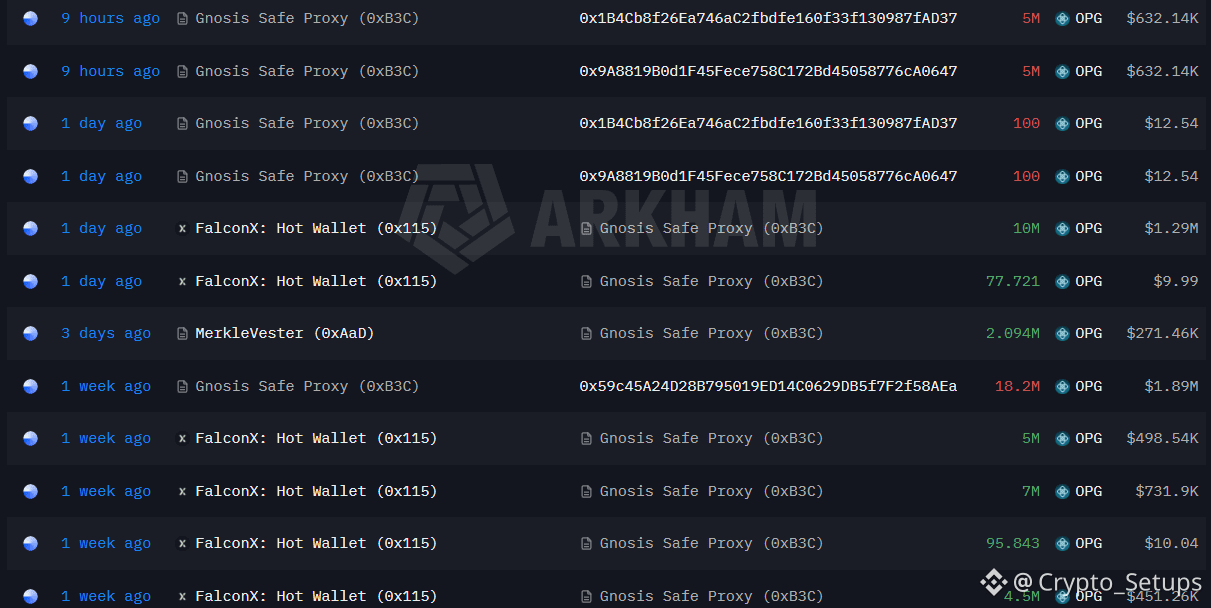
TEAM WALLET KEEPS ACCUMULATING $OPG
A clear accumulation flow has been developing around $OPG over the past week.
The team-linked wallet has been repeatedly withdrawing #opg through FalconX, then distributing the tokens into secondary wallets where they continue to be held.
At the same time, exchange supply has dropped by roughly 18%.
Three wallets currently hold:
22.9M $OPG
0x1B4Cb8f26Ea746aC2fbdfe160f33f130987fAD37
5M $OPG
0x9A8819B0d1F45Fece758C172Bd45058776cA0647
22.1M $OPG
0x59c45A24D28B795019ED14C0629DB5f7F2f58AEa
For now, the flow looks much more like supply absorption than distribution.
$OPG is worth watching closely if this pattern continues.
{future}(OPGUSDT)
TEAM WALLET KEEPS ACCUMULATING $OPG
A clear accumulation flow has been developing around $OPG over the past week.
The team-linked wallet has been repeatedly withdrawing #opg through FalconX, then distributing the tokens into secondary wallets where they continue to be held.
At the same time, exchange supply has dropped by roughly 18%.
Three wallets currently hold:
22.9M $OPG
0x1B4Cb8f26Ea746aC2fbdfe160f33f130987fAD37
5M $OPG
0x9A8819B0d1F45Fece758C172Bd45058776cA0647
22.1M $OPG
0x59c45A24D28B795019ED14C0629DB5f7F2f58AEa
For now, the flow looks much more like supply absorption than distribution.
$OPG is worth watching closely if this pattern continues.
A clear accumulation flow has been developing around $OPG over the past week.
The team-linked wallet has been repeatedly withdrawing #opg through FalconX, then distributing the tokens into secondary wallets where they continue to be held.
At the same time, exchange supply has dropped by roughly 18%.
Three wallets currently hold:
22.9M $OPG
0x1B4Cb8f26Ea746aC2fbdfe160f33f130987fAD37
5M $OPG
0x9A8819B0d1F45Fece758C172Bd45058776cA0647
22.1M $OPG
0x59c45A24D28B795019ED14C0629DB5f7F2f58AEa
For now, the flow looks much more like supply absorption than distribution.
$OPG is worth watching closely if this pattern continues.
55
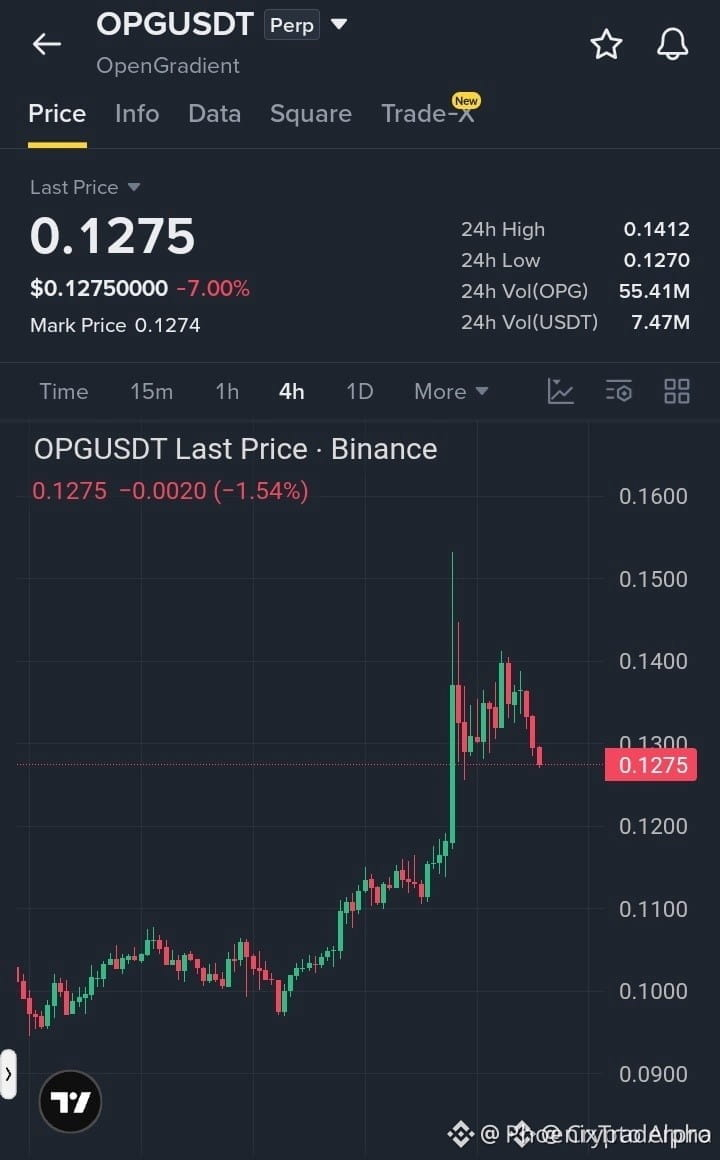
🔴 $OPG BEARISH SWEEP DRIVES PRICE TO $0.1270 ZONE! 📉
Entry: 0.1275-0.1300 ⚡
Target: 0.1240, 0.1200, 0.1160 🚀
Stop Loss: 0.1340 ⚠️
📊 The 4H structure cracked after the $0.1400 rejection, and sellers are now hunting the $0.1270 support like a shark in a shallow pool. 🦈 Liquidity is draining fast, and each candle bites harder, squeezing the remaining longs. 💡 With the order block at $0.1300 already busted, the downside momentum looks set to cascade toward the next demand bucket.
💬 Are you riding the pullback short or waiting for a deeper liquidity sweep below $0.1160? 👇
⚠️ Not financial advice. Always manage your risk. 🛡️
🏷️ #OPG #ShortSetup #Bearish #Crypto
🐻 🔥
🔴 $OPG BEARISH SWEEP DRIVES PRICE TO $0.1270 ZONE! 📉
Entry: 0.1275-0.1300 ⚡
Target: 0.1240, 0.1200, 0.1160 🚀
Stop Loss: 0.1340 ⚠️
📊 The 4H structure cracked after the $0.1400 rejection, and sellers are now hunting the $0.1270 support like a shark in a shallow pool. 🦈 Liquidity is draining fast, and each candle bites harder, squeezing the remaining longs. 💡 With the order block at $0.1300 already busted, the downside momentum looks set to cascade toward the next demand bucket.
💬 Are you riding the pullback short or waiting for a deeper liquidity sweep below $0.1160? 👇
⚠️ Not financial advice. Always manage your risk. 🛡️
🏷️ #OPG #ShortSetup #Bearish #Crypto
🐻 🔥
Entry: 0.1275-0.1300 ⚡
Target: 0.1240, 0.1200, 0.1160 🚀
Stop Loss: 0.1340 ⚠️
📊 The 4H structure cracked after the $0.1400 rejection, and sellers are now hunting the $0.1270 support like a shark in a shallow pool. 🦈 Liquidity is draining fast, and each candle bites harder, squeezing the remaining longs. 💡 With the order block at $0.1300 already busted, the downside momentum looks set to cascade toward the next demand bucket.
💬 Are you riding the pullback short or waiting for a deeper liquidity sweep below $0.1160? 👇
⚠️ Not financial advice. Always manage your risk. 🛡️
🏷️ #OPG #ShortSetup #Bearish #Crypto
🐻 🔥
116

·
--
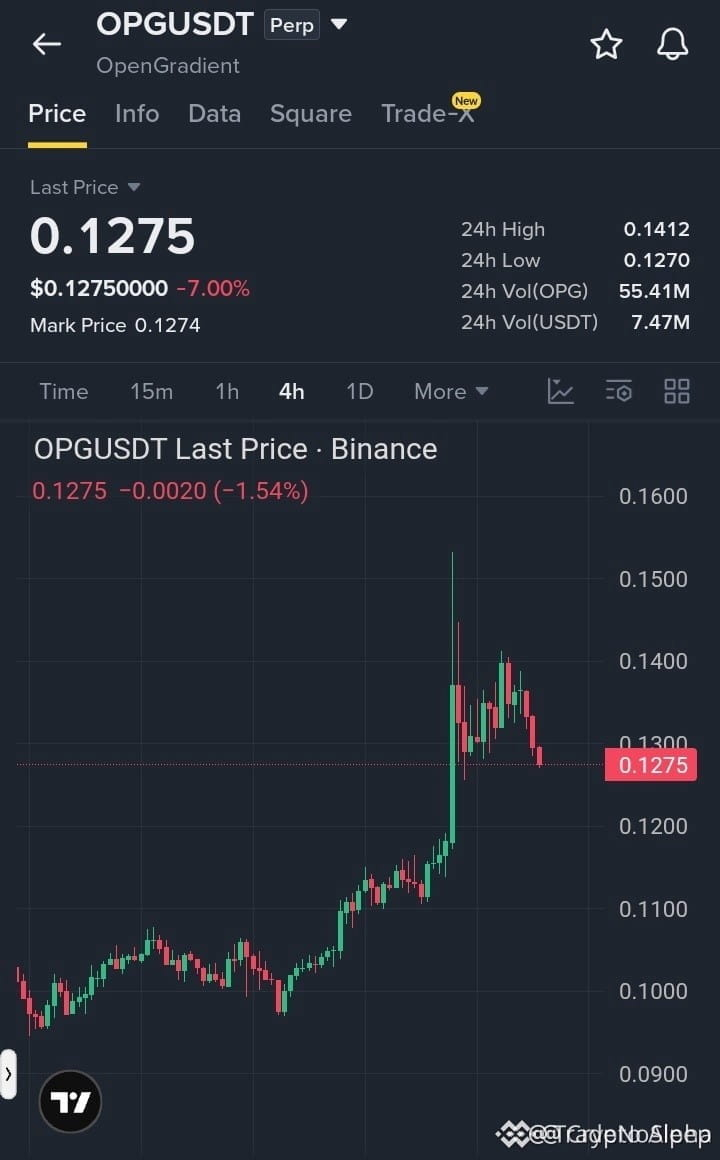
🔴 $OPG BEARISH SWEEP TO $0.1270 ZONE 📉
Entry: 0.1275-0.1300 ⚡
Target: 0.1240 🚀
Target: 0.1200 🚀
Target: 0.1160 🚀
Stop Loss: 0.1340 ⚠️
📊 The 4H market structure is eroding after a crisp rejection at $0.1400, exposing a fresh supply zone. 🦈 Smart money is harvesting liquidity, pushing price toward the $0.1270 support cluster where order‑block absorption has been evident. ⚡ Volume spikes on the lower timeframes confirm aggressive short pressure, while the RSI skirts oversold territory, hinting at further downside.
💬 How are you positioning for the next liquidity sweep—stacking short on the pullback or waiting for a deeper breakdown? 👇
⚠️ Not financial advice. Always manage your risk. 🛡️
🏷️ #OPG #ShortSetup #LiquiditySweep #Crypto
🦈 🔥
🔴 $OPG BEARISH SWEEP TO $0.1270 ZONE 📉
Entry: 0.1275-0.1300 ⚡
Target: 0.1240 🚀
Target: 0.1200 🚀
Target: 0.1160 🚀
Stop Loss: 0.1340 ⚠️
📊 The 4H market structure is eroding after a crisp rejection at $0.1400, exposing a fresh supply zone. 🦈 Smart money is harvesting liquidity, pushing price toward the $0.1270 support cluster where order‑block absorption has been evident. ⚡ Volume spikes on the lower timeframes confirm aggressive short pressure, while the RSI skirts oversold territory, hinting at further downside.
💬 How are you positioning for the next liquidity sweep—stacking short on the pullback or waiting for a deeper breakdown? 👇
⚠️ Not financial advice. Always manage your risk. 🛡️
🏷️ #OPG #ShortSetup #LiquiditySweep #Crypto
🦈 🔥
Entry: 0.1275-0.1300 ⚡
Target: 0.1240 🚀
Target: 0.1200 🚀
Target: 0.1160 🚀
Stop Loss: 0.1340 ⚠️
📊 The 4H market structure is eroding after a crisp rejection at $0.1400, exposing a fresh supply zone. 🦈 Smart money is harvesting liquidity, pushing price toward the $0.1270 support cluster where order‑block absorption has been evident. ⚡ Volume spikes on the lower timeframes confirm aggressive short pressure, while the RSI skirts oversold territory, hinting at further downside.
💬 How are you positioning for the next liquidity sweep—stacking short on the pullback or waiting for a deeper breakdown? 👇
⚠️ Not financial advice. Always manage your risk. 🛡️
🏷️ #OPG #ShortSetup #LiquiditySweep #Crypto
🦈 🔥
181

·
--
Check Out What $OPG
Is Doing Right Now Bit Guru Family…!!
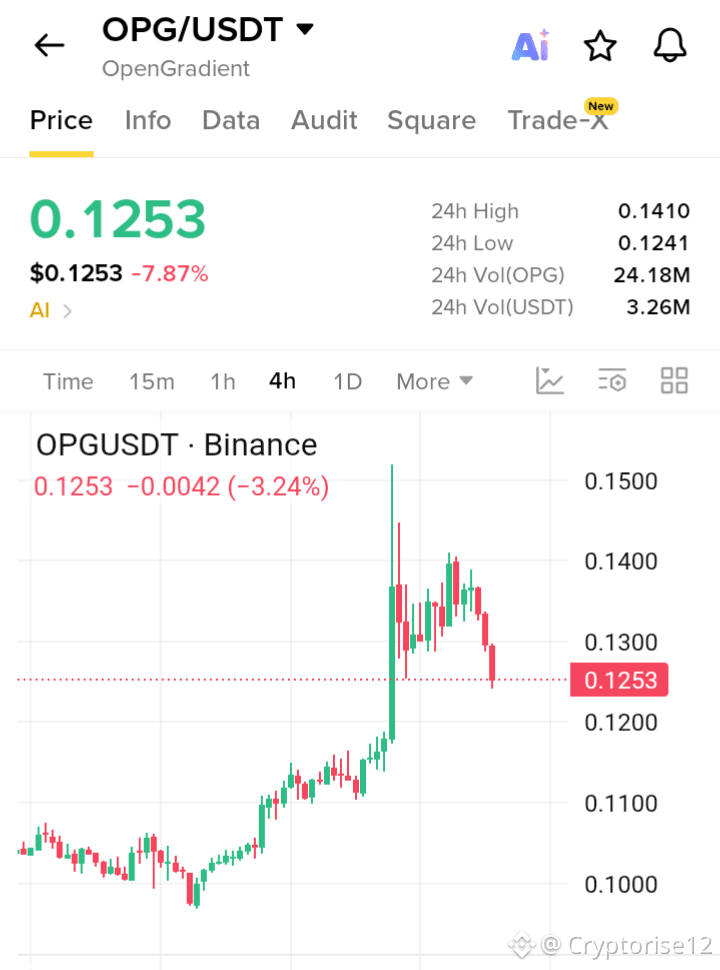
#OPG has experienced a pullback following its sharp rally toward the 0.1500 region with price action now testing support near 0.1241 this correction looks like a natural retracement after the recent spike and if buyers hold this key level a bounce could send momentum back toward resistance targets at 0.1380 and 0.1450$ONE
{future}(ONEUSDT)
$ZEC
{future}(ZECUSDT)
{future}(OPGUSDT)
Check Out What $OPG
Is Doing Right Now Bit Guru Family…!!
#OPG has experienced a pullback following its sharp rally toward the 0.1500 region with price action now testing support near 0.1241 this correction looks like a natural retracement after the recent spike and if buyers hold this key level a bounce could send momentum back toward resistance targets at 0.1380 and 0.1450$ONE
$ZEC
Is Doing Right Now Bit Guru Family…!!
#OPG has experienced a pullback following its sharp rally toward the 0.1500 region with price action now testing support near 0.1241 this correction looks like a natural retracement after the recent spike and if buyers hold this key level a bounce could send momentum back toward resistance targets at 0.1380 and 0.1450$ONE
$ZEC
1
433

·
--
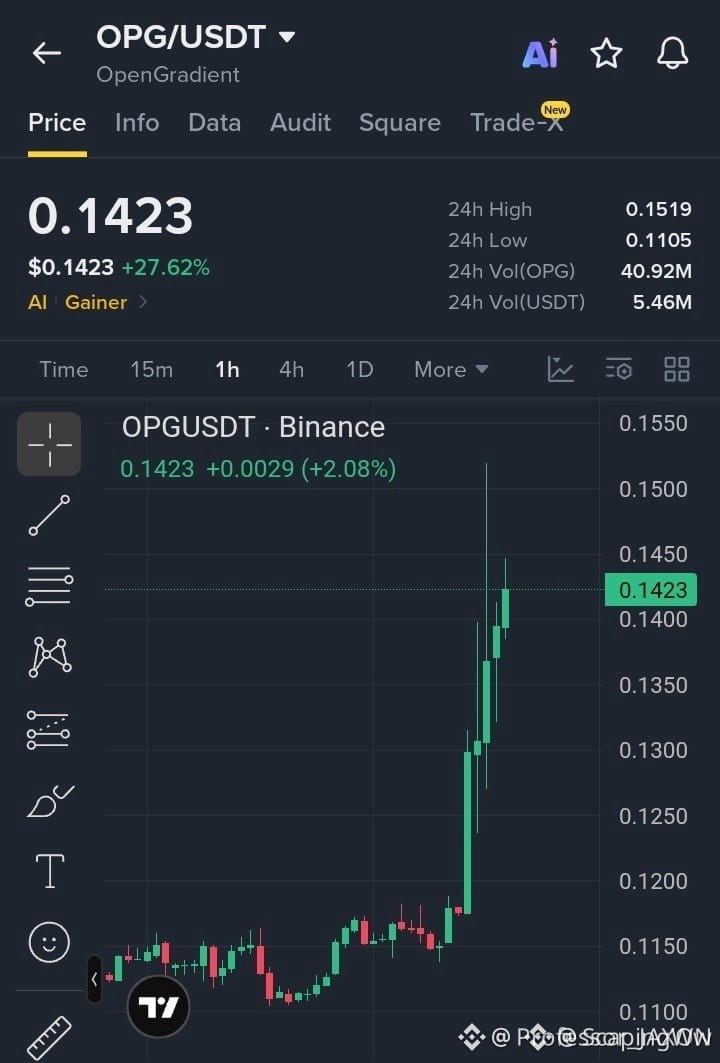
💥 $OPG SMASHES RANGE RESISTANCE AS BUYERS ACCELERATE INTO FRESH BREAKOUT VELOCITY! 🚀
Entry: 0.1390 - 0.1425 ⚡
Target: 0.1480 / 0.1520 / 0.1580 🚀
Stop Loss: 0.1320 ⚠️
📌 $OPG just flipped its previous consolidation ceiling into a rock-solid floor, absorbing sell orders above 0.1400 with impressive buyer aggression. ⚡ High-volume momentum is sustaining the move, signaling that smart money is actively positioning for another expansion phase.
💡 As long as bulls defend this newly reclaimed support zone, the order flow path favors sweeping the overhead liquidity targets. 💬 Are you riding this momentum continuation or waiting for a retest back into the demand block? 👇
⚠️ Not financial advice. Always manage your risk. 🛡️
🏷️ #OPG #Breakout #LongSetup #Altcoins
🔥 ⚡
💥 $OPG SMASHES RANGE RESISTANCE AS BUYERS ACCELERATE INTO FRESH BREAKOUT VELOCITY! 🚀
Entry: 0.1390 - 0.1425 ⚡
Target: 0.1480 / 0.1520 / 0.1580 🚀
Stop Loss: 0.1320 ⚠️
📌 $OPG just flipped its previous consolidation ceiling into a rock-solid floor, absorbing sell orders above 0.1400 with impressive buyer aggression. ⚡ High-volume momentum is sustaining the move, signaling that smart money is actively positioning for another expansion phase.
💡 As long as bulls defend this newly reclaimed support zone, the order flow path favors sweeping the overhead liquidity targets. 💬 Are you riding this momentum continuation or waiting for a retest back into the demand block? 👇
⚠️ Not financial advice. Always manage your risk. 🛡️
🏷️ #OPG #Breakout #LongSetup #Altcoins
🔥 ⚡
Entry: 0.1390 - 0.1425 ⚡
Target: 0.1480 / 0.1520 / 0.1580 🚀
Stop Loss: 0.1320 ⚠️
📌 $OPG just flipped its previous consolidation ceiling into a rock-solid floor, absorbing sell orders above 0.1400 with impressive buyer aggression. ⚡ High-volume momentum is sustaining the move, signaling that smart money is actively positioning for another expansion phase.
💡 As long as bulls defend this newly reclaimed support zone, the order flow path favors sweeping the overhead liquidity targets. 💬 Are you riding this momentum continuation or waiting for a retest back into the demand block? 👇
⚠️ Not financial advice. Always manage your risk. 🛡️
🏷️ #OPG #Breakout #LongSetup #Altcoins
🔥 ⚡
107
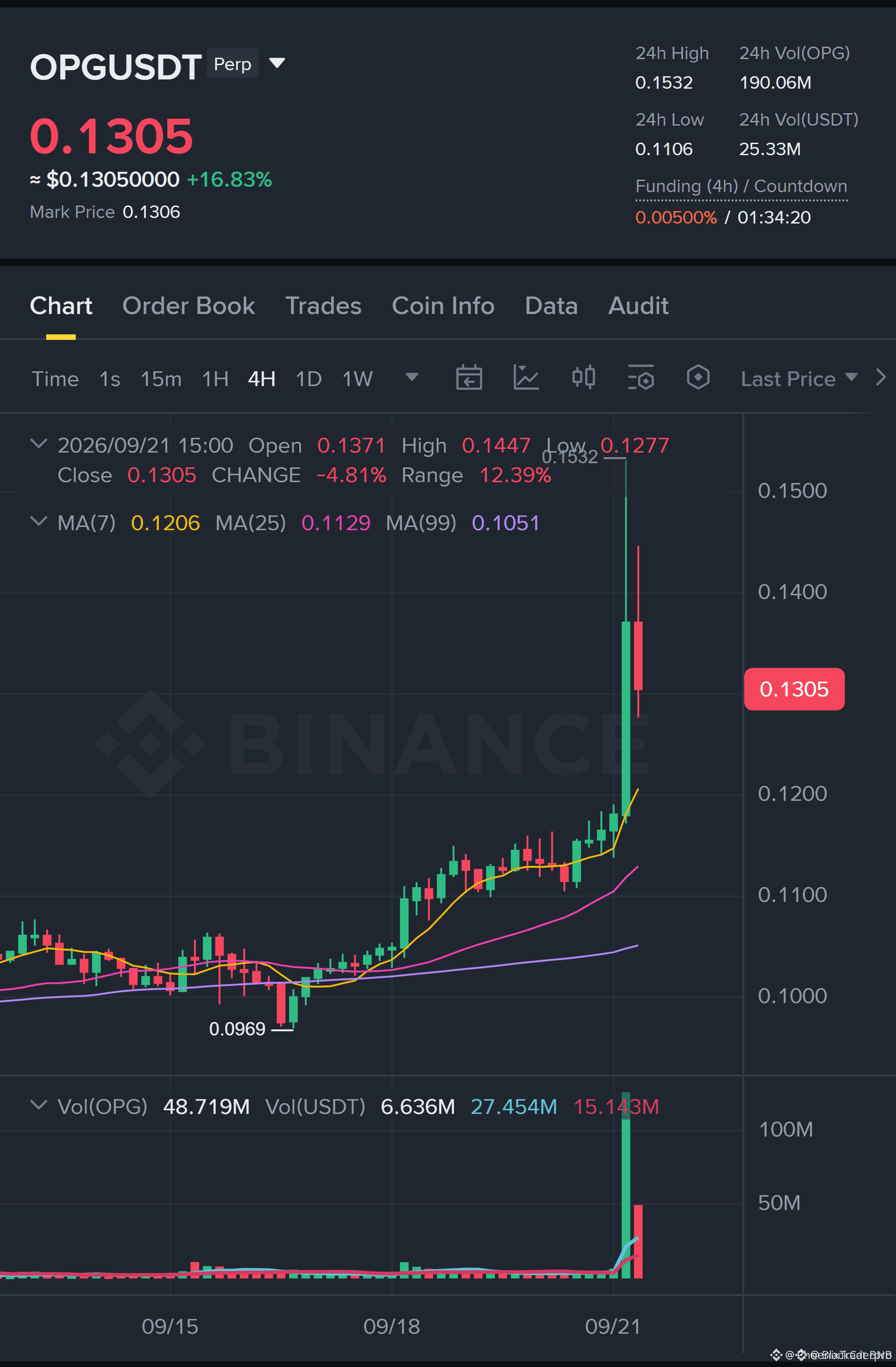
⚡ $OPG LOADING ON THE WATCHLIST AS BUYERS COIL AT CRITICAL SUPPORT! 🎯
Entry: 0.125 - 0.1271 🟢
Target: 0.1447 - 0.1578 🚀
Stop Loss: 0.1159 ⚠️
📌 $OPG is carving out a clean 1H market structure near the 0.125 demand region, building a solid risk-to-reward path toward the upper liquidity pools. 📊 However, true edge requires absolute execution discipline—the current mathematical expectancy remains slightly below active trigger thresholds.
💡 Institutional capital stays patient here; keeping this setup locked on the radar until structural confirmation triggers the order flow. 💬 Are you bidding this demand block early or waiting for a confirmed market structure break? 👇
⚠️ Not financial advice. Always manage your risk. 🛡️
🏷️ #OPG #LongSetup #Crypto #Watchlist #Trading
🎯 🦈
⚡ $OPG LOADING ON THE WATCHLIST AS BUYERS COIL AT CRITICAL SUPPORT! 🎯
Entry: 0.125 - 0.1271 🟢
Target: 0.1447 - 0.1578 🚀
Stop Loss: 0.1159 ⚠️
📌 $OPG is carving out a clean 1H market structure near the 0.125 demand region, building a solid risk-to-reward path toward the upper liquidity pools. 📊 However, true edge requires absolute execution discipline—the current mathematical expectancy remains slightly below active trigger thresholds.
💡 Institutional capital stays patient here; keeping this setup locked on the radar until structural confirmation triggers the order flow. 💬 Are you bidding this demand block early or waiting for a confirmed market structure break? 👇
⚠️ Not financial advice. Always manage your risk. 🛡️
🏷️ #OPG #LongSetup #Crypto #Watchlist #Trading
🎯 🦈
Entry: 0.125 - 0.1271 🟢
Target: 0.1447 - 0.1578 🚀
Stop Loss: 0.1159 ⚠️
📌 $OPG is carving out a clean 1H market structure near the 0.125 demand region, building a solid risk-to-reward path toward the upper liquidity pools. 📊 However, true edge requires absolute execution discipline—the current mathematical expectancy remains slightly below active trigger thresholds.
💡 Institutional capital stays patient here; keeping this setup locked on the radar until structural confirmation triggers the order flow. 💬 Are you bidding this demand block early or waiting for a confirmed market structure break? 👇
⚠️ Not financial advice. Always manage your risk. 🛡️
🏷️ #OPG #LongSetup #Crypto #Watchlist #Trading
🎯 🦈
86

KAITO, OPG & AXS: AI Tokens Lead as Gaming Momentum Joins the Move
KAITO is trading near $0.3677, up +5.63% over the latest 24-hour session. The token has remained close to its daily high of $0.3685, with approximately $2.85M in quote-volume activity. As an AI and infrastructure-focused asset, KAITO’s price structure indicates sustained buyer interest, although its proximity to the session high leaves it sensitive to short-term profit-taking.
OPG is currently around $0.1358, posting a +3.90% 24-hour gain. It traded between $0.1287 and $0.1410, supported by roughly $2.75M in quote volume. OpenGradient remains aligned with the AI-infrastructure narrative, and the recovery from the daily low shows constructive demand; however, the gap from the intraday peak suggests that volatility is still active.
AXS is trading near $1.129, up +4.44% in the same period. Its daily range spans $1.050–$1.146, with about $2.67M in quote volume. The move brings renewed attention to the gaming and NFT segment, while the ability to hold above the session open reflects improving near-term market participation.
Across the group, KAITO is showing the strongest percentage advance, AXS is delivering a firm gaming-sector rebound, and OPG is maintaining positive momentum within the AI ecosystem. Continued volume and the ability to stay near current ranges will be important for confirming whether this strength extends beyond the immediate market window.
#KAITO #OPG #AXS #CryptoMarket #Altcoins
$KAITO
{spot}(KAITOUSDT)
$OPG
{spot}(OPGUSDT)
$AXS
{spot}(AXSUSDT)
KAITO, OPG & AXS: AI Tokens Lead as Gaming Momentum Joins the Move
KAITO is trading near $0.3677, up +5.63% over the latest 24-hour session. The token has remained close to its daily high of $0.3685, with approximately $2.85M in quote-volume activity. As an AI and infrastructure-focused asset, KAITO’s price structure indicates sustained buyer interest, although its proximity to the session high leaves it sensitive to short-term profit-taking.
OPG is currently around $0.1358, posting a +3.90% 24-hour gain. It traded between $0.1287 and $0.1410, supported by roughly $2.75M in quote volume. OpenGradient remains aligned with the AI-infrastructure narrative, and the recovery from the daily low shows constructive demand; however, the gap from the intraday peak suggests that volatility is still active.
AXS is trading near $1.129, up +4.44% in the same period. Its daily range spans $1.050–$1.146, with about $2.67M in quote volume. The move brings renewed attention to the gaming and NFT segment, while the ability to hold above the session open reflects improving near-term market participation.
Across the group, KAITO is showing the strongest percentage advance, AXS is delivering a firm gaming-sector rebound, and OPG is maintaining positive momentum within the AI ecosystem. Continued volume and the ability to stay near current ranges will be important for confirming whether this strength extends beyond the immediate market window.
#KAITO #OPG #AXS #CryptoMarket #Altcoins
$KAITO
$OPG
$AXS
KAITO is trading near $0.3677, up +5.63% over the latest 24-hour session. The token has remained close to its daily high of $0.3685, with approximately $2.85M in quote-volume activity. As an AI and infrastructure-focused asset, KAITO’s price structure indicates sustained buyer interest, although its proximity to the session high leaves it sensitive to short-term profit-taking.
OPG is currently around $0.1358, posting a +3.90% 24-hour gain. It traded between $0.1287 and $0.1410, supported by roughly $2.75M in quote volume. OpenGradient remains aligned with the AI-infrastructure narrative, and the recovery from the daily low shows constructive demand; however, the gap from the intraday peak suggests that volatility is still active.
AXS is trading near $1.129, up +4.44% in the same period. Its daily range spans $1.050–$1.146, with about $2.67M in quote volume. The move brings renewed attention to the gaming and NFT segment, while the ability to hold above the session open reflects improving near-term market participation.
Across the group, KAITO is showing the strongest percentage advance, AXS is delivering a firm gaming-sector rebound, and OPG is maintaining positive momentum within the AI ecosystem. Continued volume and the ability to stay near current ranges will be important for confirming whether this strength extends beyond the immediate market window.
#KAITO #OPG #AXS #CryptoMarket #Altcoins
$KAITO
$OPG
$AXS
476
·
--
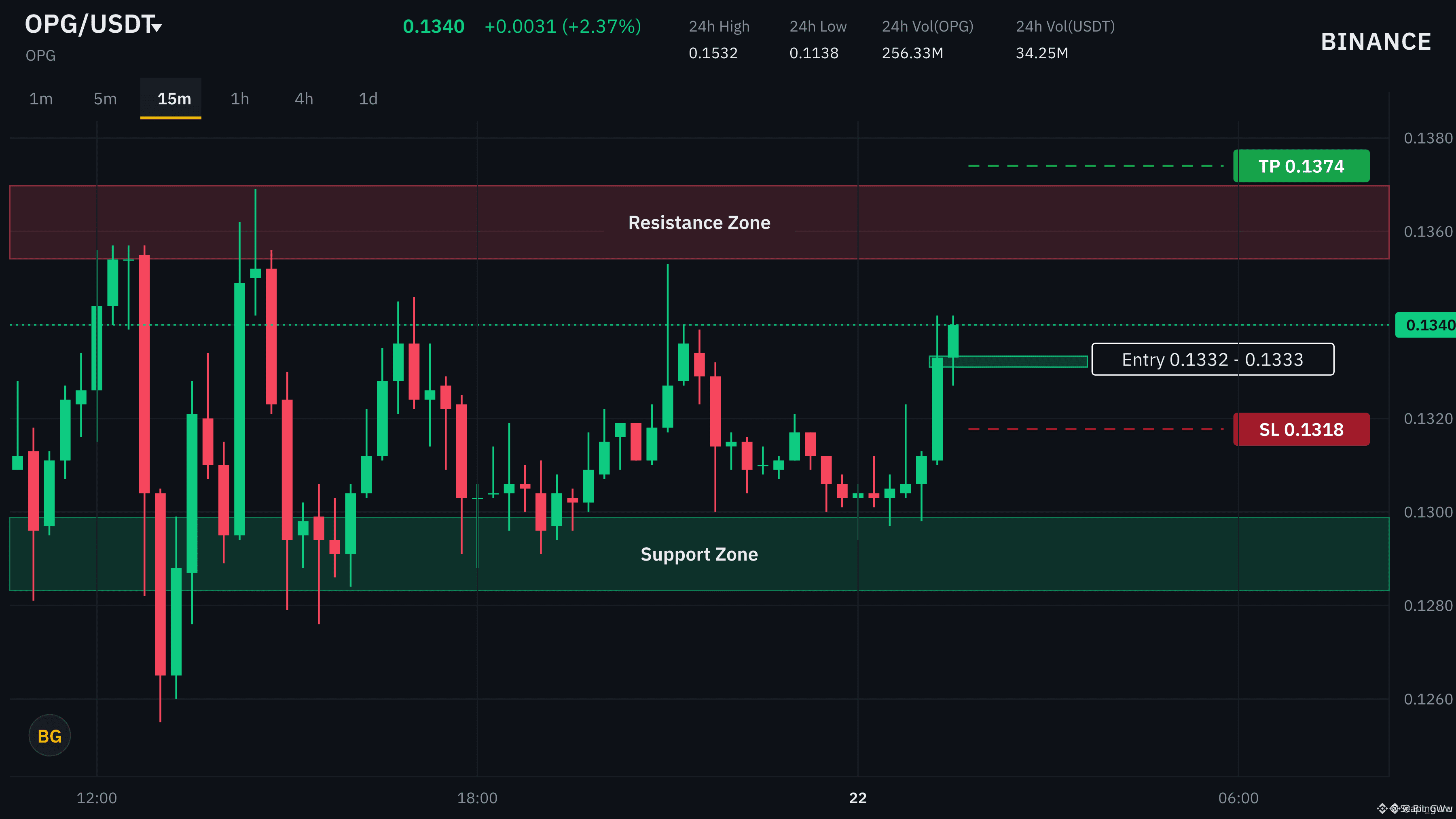
⚡ $OPG PREPARES TO IGNITE AS BUYERS DEFEND A CRITICAL ACCUMULATION POCKET! 💥
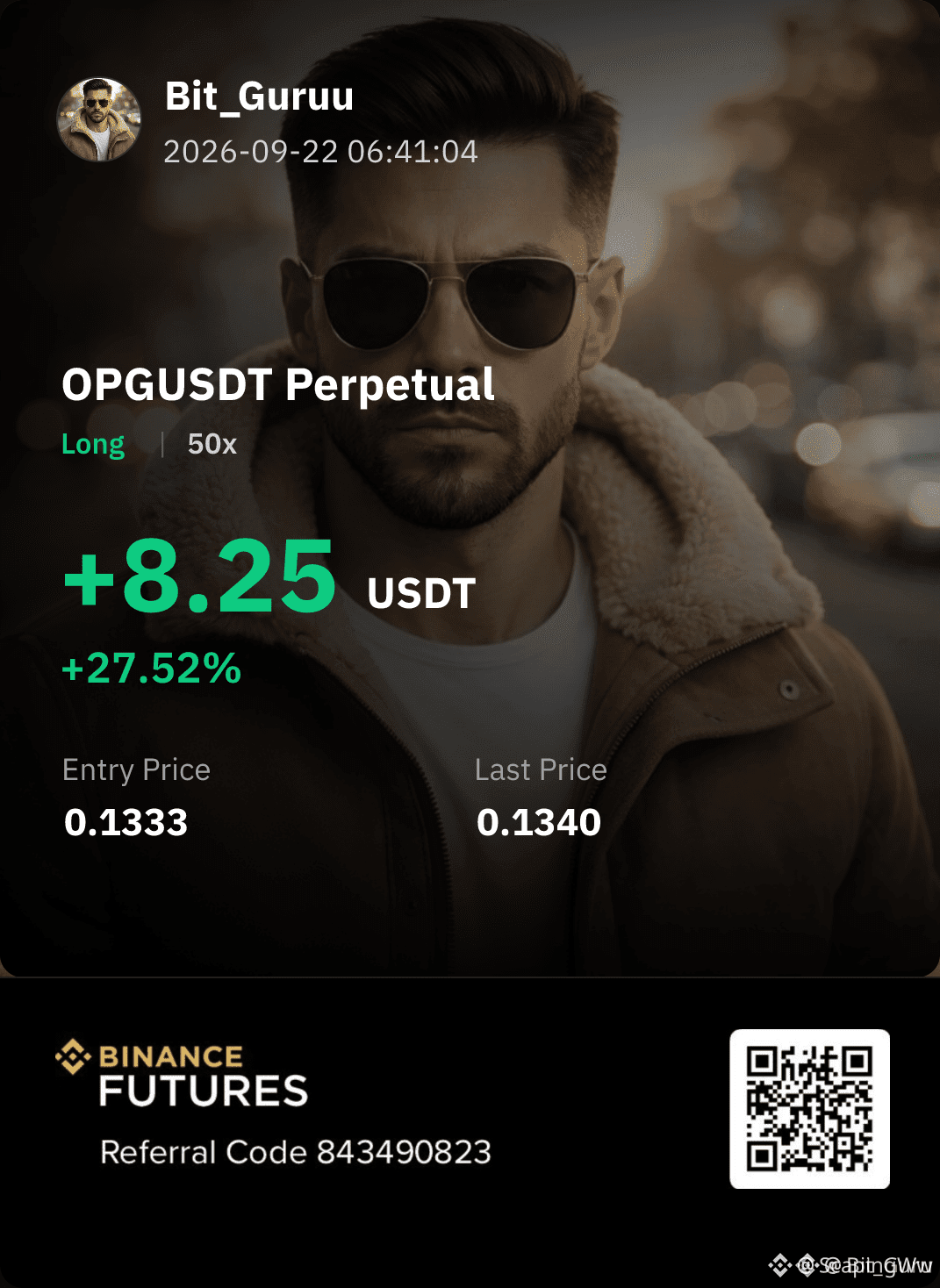
Entry: 0.13320 - 0.13333 ⚡
Target: 0.13740 🚀
Stop Loss: 0.13177 ⚠️
📌 Sellers are losing momentum right on top of this key demand shelf, with price holding firm around 0.13340. 📊 Market structure shows buyers quietly absorbing available liquidity, setting up a potential swift leg higher toward the local highs.
💡 The asymmetry on this trade setup offers a tight risk boundary with clear upside expansion. 💬 Are you front-running this move now or waiting for further volume confirmation above resistance? 👇
⚠️ Not financial advice. Always manage your risk. 🛡️
🏷️ #OPG #LongSetup #Crypto #Breakout
⚡ 💎
⚡ $OPG PREPARES TO IGNITE AS BUYERS DEFEND A CRITICAL ACCUMULATION POCKET! 💥
Entry: 0.13320 - 0.13333 ⚡
Target: 0.13740 🚀
Stop Loss: 0.13177 ⚠️
📌 Sellers are losing momentum right on top of this key demand shelf, with price holding firm around 0.13340. 📊 Market structure shows buyers quietly absorbing available liquidity, setting up a potential swift leg higher toward the local highs.
💡 The asymmetry on this trade setup offers a tight risk boundary with clear upside expansion. 💬 Are you front-running this move now or waiting for further volume confirmation above resistance? 👇
⚠️ Not financial advice. Always manage your risk. 🛡️
🏷️ #OPG #LongSetup #Crypto #Breakout
⚡ 💎
Entry: 0.13320 - 0.13333 ⚡
Target: 0.13740 🚀
Stop Loss: 0.13177 ⚠️
📌 Sellers are losing momentum right on top of this key demand shelf, with price holding firm around 0.13340. 📊 Market structure shows buyers quietly absorbing available liquidity, setting up a potential swift leg higher toward the local highs.
💡 The asymmetry on this trade setup offers a tight risk boundary with clear upside expansion. 💬 Are you front-running this move now or waiting for further volume confirmation above resistance? 👇
⚠️ Not financial advice. Always manage your risk. 🛡️
🏷️ #OPG #LongSetup #Crypto #Breakout
⚡ 💎
50
🚨 $OPG DEMAND RECLAIM IGNITES BULLISH ORDER FLOW AT KEY STRUCTURAL LEVEL! ⚡
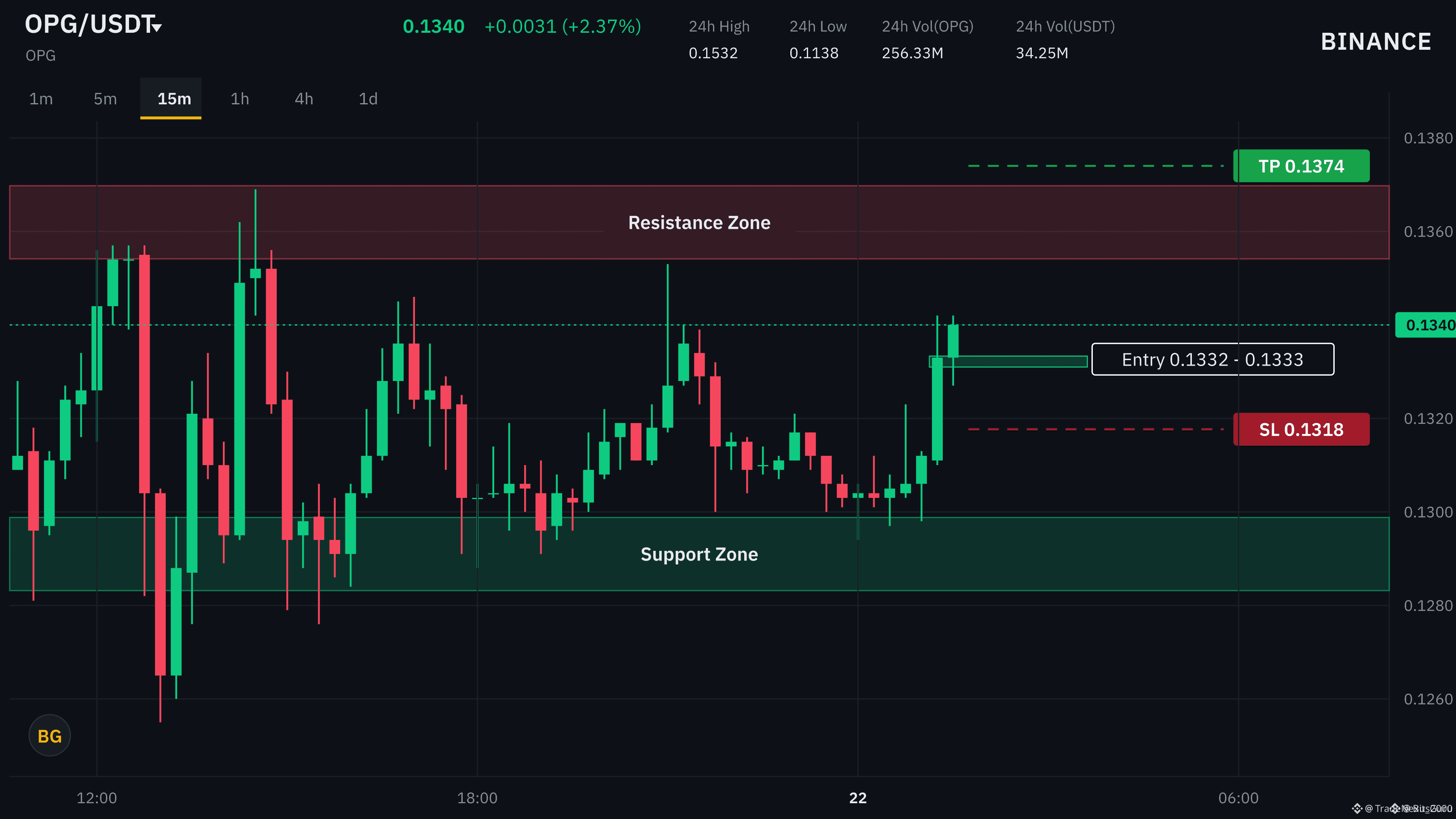
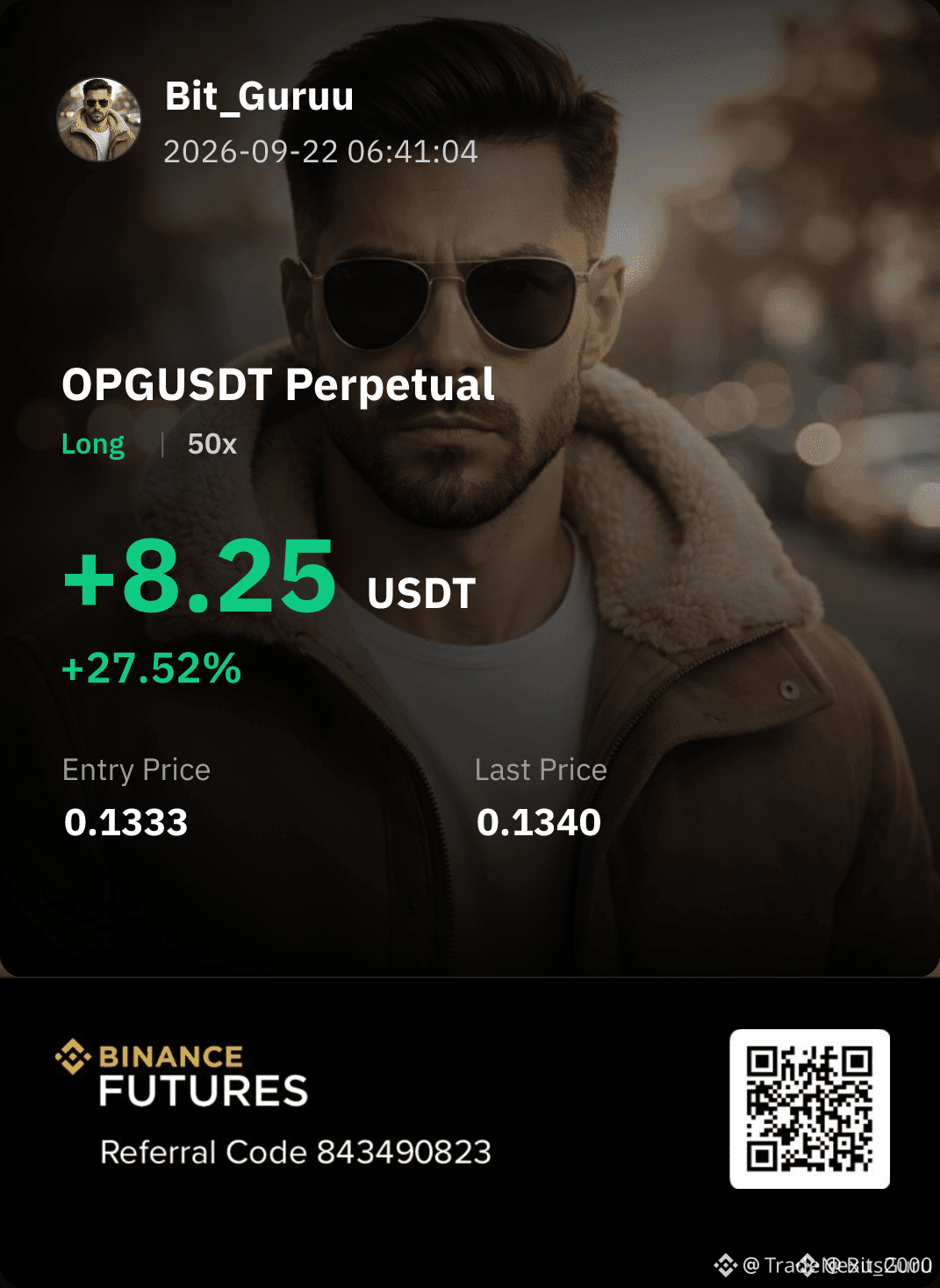
Entry: 0.13320 - 0.13333 ⚡
Target: 0.13740 🚀
Stop Loss: 0.13177 ⚠️
📌 Price action on $OPG is reacting precisely off lower-timeframe discount demand, signaling institutional order accumulation after a clean liquidity sweep. 📊 Volume profiles reveal selling pressure drying up rapidly near current levels, favoring a crisp bullish expansion toward upper supply inefficiencies.
💡 With risk tightly defined below local market structure, this trade delivers an asymmetrical setup for disciplined execution. 💬 Are you front-running the expansion or waiting for higher-timeframe confirmation? 👇
⚠️ Not financial advice. Always manage your risk. 🛡️
🏷️ #OPG #TradingSetup #MarketStructure #Crypto #Altcoins
🎯 🦈
🚨 $OPG DEMAND RECLAIM IGNITES BULLISH ORDER FLOW AT KEY STRUCTURAL LEVEL! ⚡
Entry: 0.13320 - 0.13333 ⚡
Target: 0.13740 🚀
Stop Loss: 0.13177 ⚠️
📌 Price action on $OPG is reacting precisely off lower-timeframe discount demand, signaling institutional order accumulation after a clean liquidity sweep. 📊 Volume profiles reveal selling pressure drying up rapidly near current levels, favoring a crisp bullish expansion toward upper supply inefficiencies.
💡 With risk tightly defined below local market structure, this trade delivers an asymmetrical setup for disciplined execution. 💬 Are you front-running the expansion or waiting for higher-timeframe confirmation? 👇
⚠️ Not financial advice. Always manage your risk. 🛡️
🏷️ #OPG #TradingSetup #MarketStructure #Crypto #Altcoins
🎯 🦈
Entry: 0.13320 - 0.13333 ⚡
Target: 0.13740 🚀
Stop Loss: 0.13177 ⚠️
📌 Price action on $OPG is reacting precisely off lower-timeframe discount demand, signaling institutional order accumulation after a clean liquidity sweep. 📊 Volume profiles reveal selling pressure drying up rapidly near current levels, favoring a crisp bullish expansion toward upper supply inefficiencies.
💡 With risk tightly defined below local market structure, this trade delivers an asymmetrical setup for disciplined execution. 💬 Are you front-running the expansion or waiting for higher-timeframe confirmation? 👇
⚠️ Not financial advice. Always manage your risk. 🛡️
🏷️ #OPG #TradingSetup #MarketStructure #Crypto #Altcoins
🎯 🦈
44


·
--
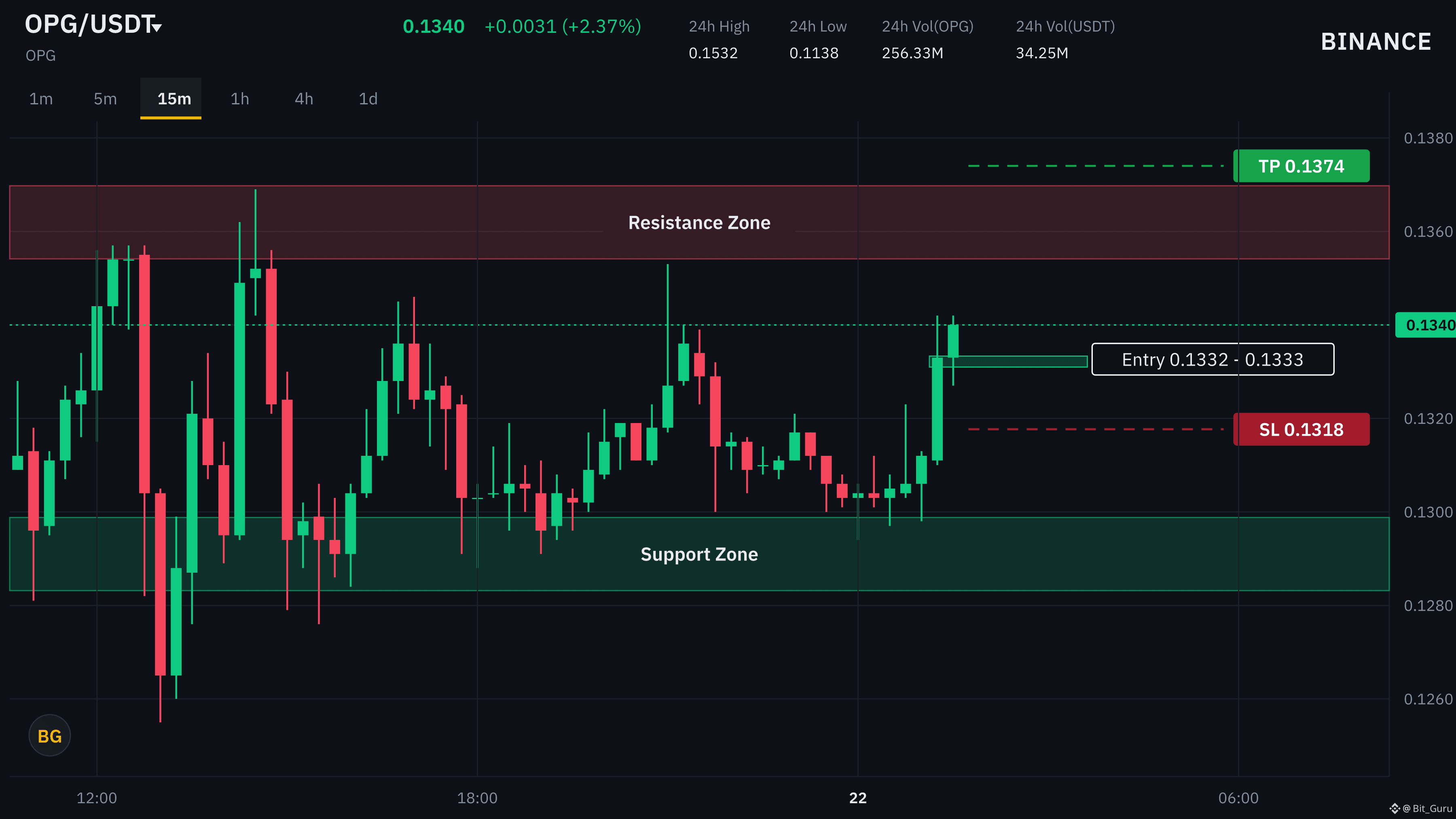
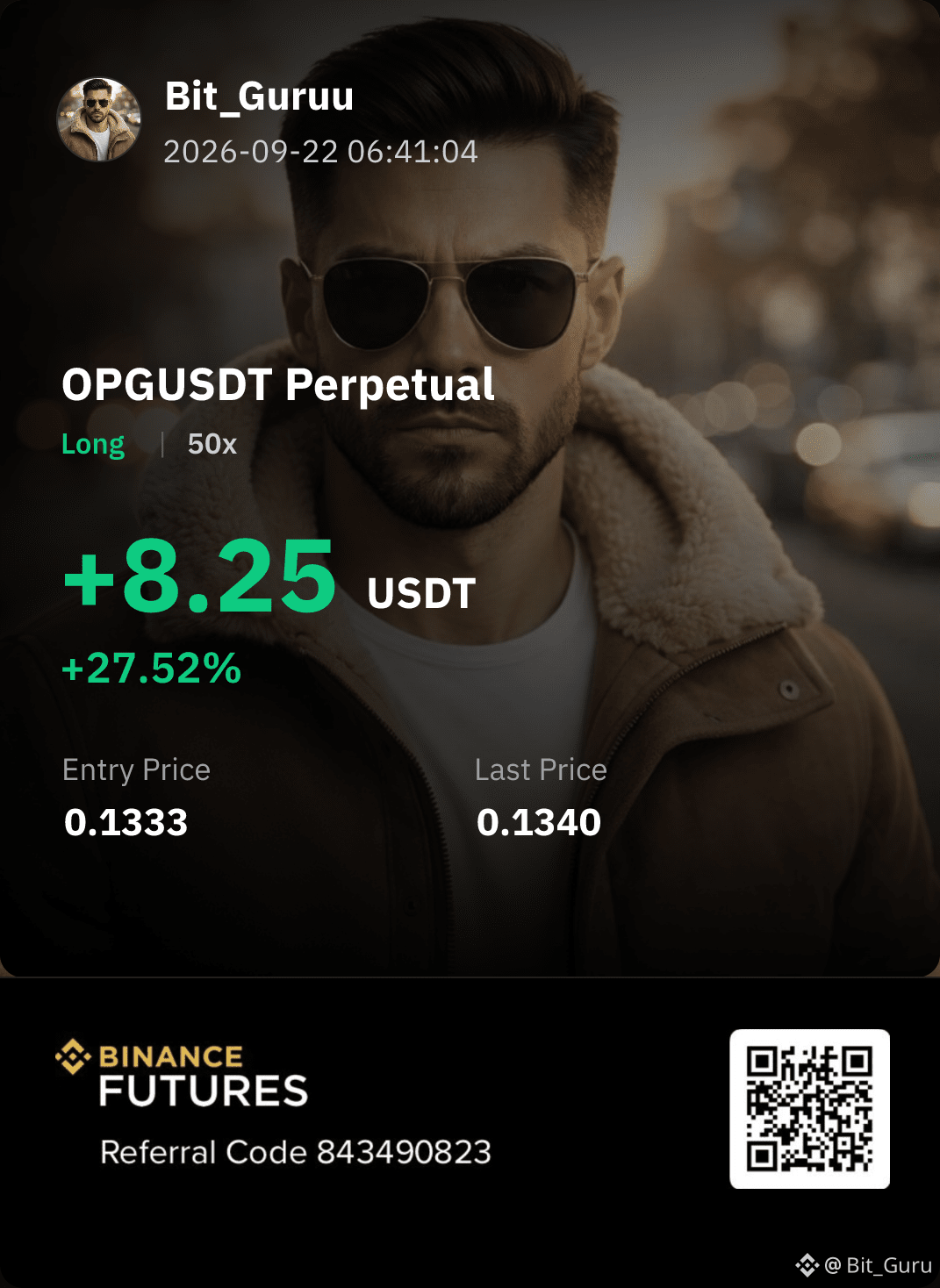
Guys, This One Could Move Nicely From Here ⚡📈
Price is 0.13340 on $OPG and it is looking bullish from this area.
💎 Entry: 0.13320 - 0.13333
📈 TP: 0.13740
🛑 SL: 0.13177
⚡ Manage your risk, that is the whole game.
#OPG #Crypto
Guys, This One Could Move Nicely From Here ⚡📈
Price is 0.13340 on $OPG and it is looking bullish from this area.
💎 Entry: 0.13320 - 0.13333
📈 TP: 0.13740
🛑 SL: 0.13177
⚡ Manage your risk, that is the whole game.
#OPG #Crypto
Price is 0.13340 on $OPG and it is looking bullish from this area.
💎 Entry: 0.13320 - 0.13333
📈 TP: 0.13740
🛑 SL: 0.13177
⚡ Manage your risk, that is the whole game.
#OPG #Crypto
1
326

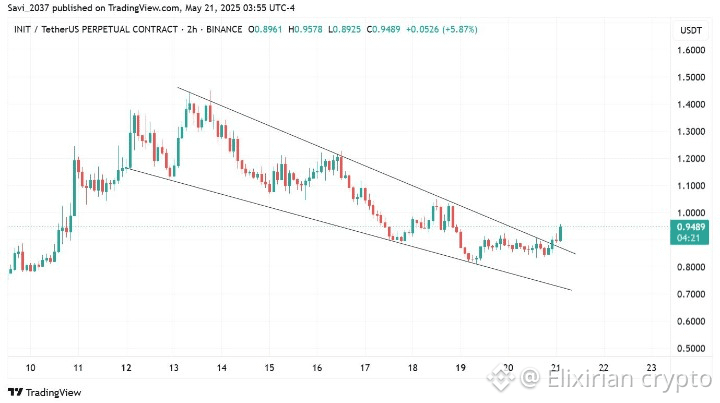
🚀💥 GUY'S ❤️🔥 BUY WITH 30× LEVERAGE 💫 3 BEAST 💀 🚀
$FORM ++ $OPG // $INIT
FORM — Current: ~$0.350
🟢 Entry: $0.33–$0.35
🎯 Target: $0.38–$0.42
🛑 Invalidation: Below $0.30
OPG — Current: ~$0.111
🟢 Entry: $0.105–$0.112
🎯 Target: $0.12–$0.135
🛑 Invalidation: Below $0.098
INIT — Current: ~$0.0767
🟢 Entry: $0.073–$0.077
🎯 Target: $0.082–$0.090
🛑 Invalidation: Below $0.068
#FORM #OPG #INIT
{future}(FORMUSDT)
{future}(OPGUSDT)
{future}(INITUSDT)
🚀💥 GUY'S ❤️🔥 BUY WITH 30× LEVERAGE 💫 3 BEAST 💀 🚀
$FORM ++ $OPG // $INIT
FORM — Current: ~$0.350
🟢 Entry: $0.33–$0.35
🎯 Target: $0.38–$0.42
🛑 Invalidation: Below $0.30
OPG — Current: ~$0.111
🟢 Entry: $0.105–$0.112
🎯 Target: $0.12–$0.135
🛑 Invalidation: Below $0.098
INIT — Current: ~$0.0767
🟢 Entry: $0.073–$0.077
🎯 Target: $0.082–$0.090
🛑 Invalidation: Below $0.068
#FORM #OPG #INIT
$FORM ++ $OPG // $INIT
FORM — Current: ~$0.350
🟢 Entry: $0.33–$0.35
🎯 Target: $0.38–$0.42
🛑 Invalidation: Below $0.30
OPG — Current: ~$0.111
🟢 Entry: $0.105–$0.112
🎯 Target: $0.12–$0.135
🛑 Invalidation: Below $0.098
INIT — Current: ~$0.0767
🟢 Entry: $0.073–$0.077
🎯 Target: $0.082–$0.090
🛑 Invalidation: Below $0.068
#FORM #OPG #INIT
164

·
--
$OPG is up 15.3% on 15.2x volume, yet still trading at 51% of its 24h range.
📊 Volume surge confirms interest, not just hype. Price isn’t at the high it’s holding mid-range with momentum.
🎯 RSI at 62 shows room to run before overbought, and ATR suggests room for a 3.4% hourly swing.
🎯 $OPG entry (half size): $0.13068 to $0.13408
🛑 Stop: $0.12644 (5.2% risk)
✅ TP1 $0.14385 · TP2 $0.15081 · TP3 $0.16126
Price is $0.13340, inside the entry zone right now. Tap $OPG to trade it.
🛑 If it closes below $0.12644, you’re out. No debate.
⚠️ Breakdown below the swing low kills this. Half size only this is a tentative bounce, not a breakout.
Taking it at the entry zone, or waiting for a dip?
📒 My log, last 7d: 135 calls closed, 75 hit a target, 46 stopped. Net +117.7R, losses included.
Binance data as of 22 Sep 01:30 UTC.
#OPG #TradingSetup
$OPG is up 15.3% on 15.2x volume, yet still trading at 51% of its 24h range.
📊 Volume surge confirms interest, not just hype. Price isn’t at the high it’s holding mid-range with momentum.
🎯 RSI at 62 shows room to run before overbought, and ATR suggests room for a 3.4% hourly swing.
🎯 $OPG entry (half size): $0.13068 to $0.13408
🛑 Stop: $0.12644 (5.2% risk)
✅ TP1 $0.14385 · TP2 $0.15081 · TP3 $0.16126
Price is $0.13340, inside the entry zone right now. Tap $OPG to trade it.
🛑 If it closes below $0.12644, you’re out. No debate.
⚠️ Breakdown below the swing low kills this. Half size only this is a tentative bounce, not a breakout.
Taking it at the entry zone, or waiting for a dip?
📒 My log, last 7d: 135 calls closed, 75 hit a target, 46 stopped. Net +117.7R, losses included.
Binance data as of 22 Sep 01:30 UTC.
#OPG #TradingSetup
📊 Volume surge confirms interest, not just hype. Price isn’t at the high it’s holding mid-range with momentum.
🎯 RSI at 62 shows room to run before overbought, and ATR suggests room for a 3.4% hourly swing.
🎯 $OPG entry (half size): $0.13068 to $0.13408
🛑 Stop: $0.12644 (5.2% risk)
✅ TP1 $0.14385 · TP2 $0.15081 · TP3 $0.16126
Price is $0.13340, inside the entry zone right now. Tap $OPG to trade it.
🛑 If it closes below $0.12644, you’re out. No debate.
⚠️ Breakdown below the swing low kills this. Half size only this is a tentative bounce, not a breakout.
Taking it at the entry zone, or waiting for a dip?
📒 My log, last 7d: 135 calls closed, 75 hit a target, 46 stopped. Net +117.7R, losses included.
Binance data as of 22 Sep 01:30 UTC.
#OPG #TradingSetup
57

·
--
$OPG +12.51% | $ONE +12.24% | $DOGE +12.10%
#OPG is up 12.51% at $0.1304, trading on $8.1 M of volume. The OpenGradient network aims to host, infer and verify AI models at scale, giving the token a clear use‑case beyond speculation.
#ONE climbed 12.24% to $0.00440900 with $52.4 M flowing through its markets. As a gaming‑focused, EVM‑compatible Layer 1 built by NEXUS Co., it may benefit from any surge in blockchain‑based play.
#DOGE gained 12.10% to $0.0995 on a hefty $268.3 M of volume. The meme‑origin coin continues to serve as a fast, peer‑to‑peer payment method, which still drives regular trading interest.
Watch how the differing volume sizes could influence the durability of these rallies.
#Write2Earn #Binance
$OPG +12.51% | $ONE +12.24% | $DOGE +12.10%
#OPG is up 12.51% at $0.1304, trading on $8.1 M of volume. The OpenGradient network aims to host, infer and verify AI models at scale, giving the token a clear use‑case beyond speculation.
#ONE climbed 12.24% to $0.00440900 with $52.4 M flowing through its markets. As a gaming‑focused, EVM‑compatible Layer 1 built by NEXUS Co., it may benefit from any surge in blockchain‑based play.
#DOGE gained 12.10% to $0.0995 on a hefty $268.3 M of volume. The meme‑origin coin continues to serve as a fast, peer‑to‑peer payment method, which still drives regular trading interest.
Watch how the differing volume sizes could influence the durability of these rallies.
#Write2Earn #Binance
#OPG is up 12.51% at $0.1304, trading on $8.1 M of volume. The OpenGradient network aims to host, infer and verify AI models at scale, giving the token a clear use‑case beyond speculation.
#ONE climbed 12.24% to $0.00440900 with $52.4 M flowing through its markets. As a gaming‑focused, EVM‑compatible Layer 1 built by NEXUS Co., it may benefit from any surge in blockchain‑based play.
#DOGE gained 12.10% to $0.0995 on a hefty $268.3 M of volume. The meme‑origin coin continues to serve as a fast, peer‑to‑peer payment method, which still drives regular trading interest.
Watch how the differing volume sizes could influence the durability of these rallies.
#Write2Earn #Binance
1
379
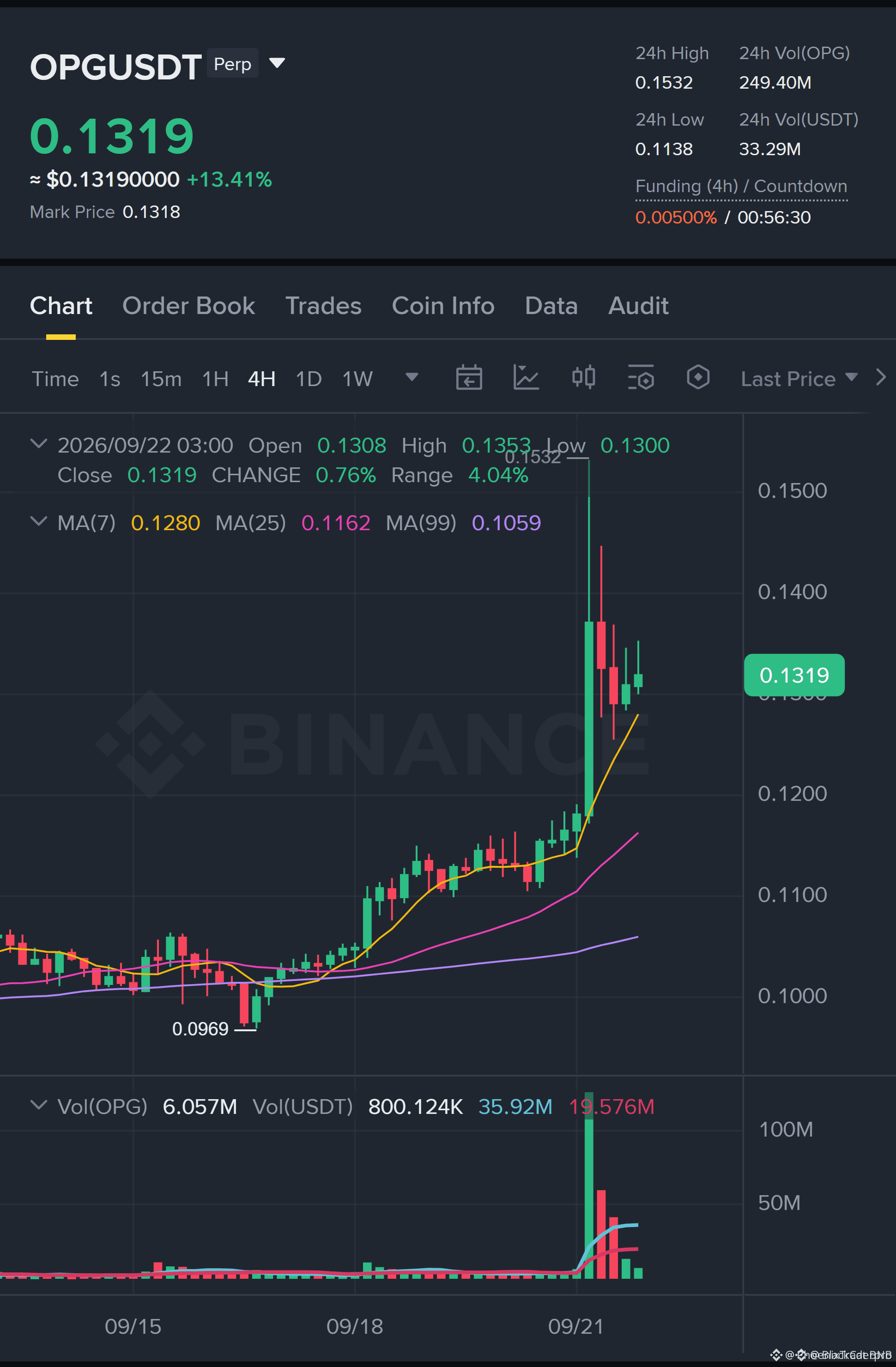
🚨 $OPG RETESTING PRIME DEMAND ZONE BEFORE THE NEXT EXPLOSIVE LEG UP! 🚀
Entry: 0.1311 - 0.1318 ⚡
Target: 0.1346 / 0.1353 / 0.1532 🚀
Stop Loss: 0.1294 ⚠️
Buyers are actively defending the 0.1311 retest zone on the 1H chart, keeping the overall macro structure undeniably bullish. 📊 This quiet consolidation feels like aggressive order accumulation ahead of a major volume expansion.
Order flow signals smart money absorbing sell pressure right above key support, clearing the path toward that 0.1532 macro target. 📌 Staggering profit takes at initial resistance levels keeps risk tight while preserving maximum upside exposure. 💬 Are you loading bids on this retest or waiting for a breakout confirmation above resistance? 👇
⚠️ Not financial advice. Always manage your risk. 🛡️
🏷️ #OPG #LongSetup #Crypto #Breakout #Altcoins
🎯 ⚡
🚨 $OPG RETESTING PRIME DEMAND ZONE BEFORE THE NEXT EXPLOSIVE LEG UP! 🚀
Entry: 0.1311 - 0.1318 ⚡
Target: 0.1346 / 0.1353 / 0.1532 🚀
Stop Loss: 0.1294 ⚠️
Buyers are actively defending the 0.1311 retest zone on the 1H chart, keeping the overall macro structure undeniably bullish. 📊 This quiet consolidation feels like aggressive order accumulation ahead of a major volume expansion.
Order flow signals smart money absorbing sell pressure right above key support, clearing the path toward that 0.1532 macro target. 📌 Staggering profit takes at initial resistance levels keeps risk tight while preserving maximum upside exposure. 💬 Are you loading bids on this retest or waiting for a breakout confirmation above resistance? 👇
⚠️ Not financial advice. Always manage your risk. 🛡️
🏷️ #OPG #LongSetup #Crypto #Breakout #Altcoins
🎯 ⚡
Entry: 0.1311 - 0.1318 ⚡
Target: 0.1346 / 0.1353 / 0.1532 🚀
Stop Loss: 0.1294 ⚠️
Buyers are actively defending the 0.1311 retest zone on the 1H chart, keeping the overall macro structure undeniably bullish. 📊 This quiet consolidation feels like aggressive order accumulation ahead of a major volume expansion.
Order flow signals smart money absorbing sell pressure right above key support, clearing the path toward that 0.1532 macro target. 📌 Staggering profit takes at initial resistance levels keeps risk tight while preserving maximum upside exposure. 💬 Are you loading bids on this retest or waiting for a breakout confirmation above resistance? 👇
⚠️ Not financial advice. Always manage your risk. 🛡️
🏷️ #OPG #LongSetup #Crypto #Breakout #Altcoins
🎯 ⚡
96

·
--
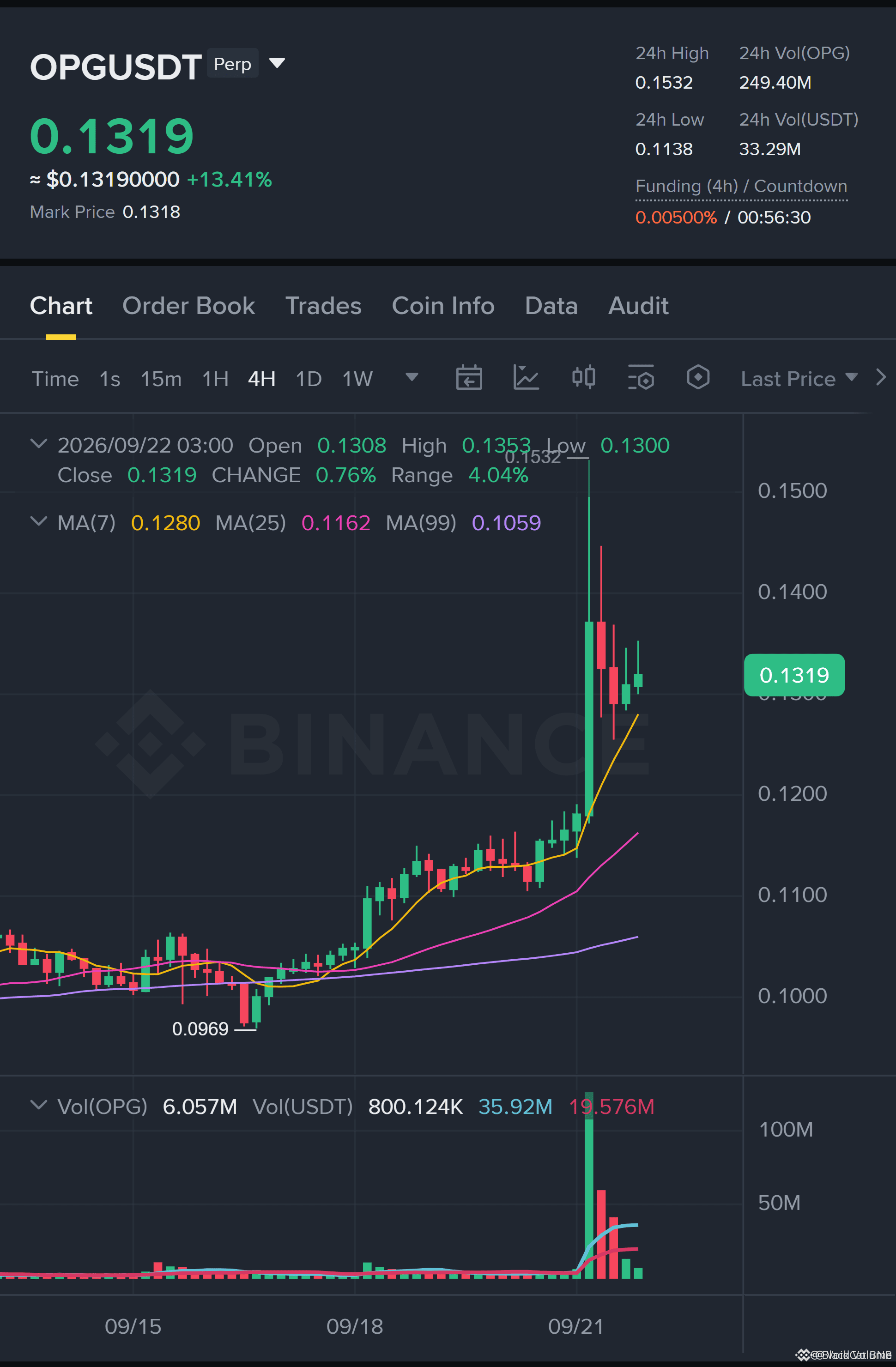
🟢 $OPG RETESTS KEY INSTITUTIONAL DEMAND AS BULLISH STRUCTURE HOLDS FIRM ⚡
Entry: 0.1311 - 0.1318 ⚡
Target: 0.1346 / 0.1353 / 0.1532 🚀
Stop Loss: 0.1294 ⚠️
Price is compressing back into the 0.1311–0.1318 demand block on the 1H timeframe, offering a precise mitigation entry while higher timeframe order flow remains firmly bullish. 🔍 Institutional absorption is visible as sell-side momentum dries up directly inside this structural discount.
📊 Taking structured partials at initial overhead liquidity allows us to de-risk early, leaving core exposure open for the high R:R expansion toward 0.1532. 💡 💬 Are you positioning inside this demand block or waiting for lower timeframe confirmation? 👇
⚠️ Not financial advice. Always manage your risk. 🛡️
🏷️ #OPG #SmartMoney #TradingSetup #Crypto #Breakout
🔥 🎯
🟢 $OPG RETESTS KEY INSTITUTIONAL DEMAND AS BULLISH STRUCTURE HOLDS FIRM ⚡
Entry: 0.1311 - 0.1318 ⚡
Target: 0.1346 / 0.1353 / 0.1532 🚀
Stop Loss: 0.1294 ⚠️
Price is compressing back into the 0.1311–0.1318 demand block on the 1H timeframe, offering a precise mitigation entry while higher timeframe order flow remains firmly bullish. 🔍 Institutional absorption is visible as sell-side momentum dries up directly inside this structural discount.
📊 Taking structured partials at initial overhead liquidity allows us to de-risk early, leaving core exposure open for the high R:R expansion toward 0.1532. 💡 💬 Are you positioning inside this demand block or waiting for lower timeframe confirmation? 👇
⚠️ Not financial advice. Always manage your risk. 🛡️
🏷️ #OPG #SmartMoney #TradingSetup #Crypto #Breakout
🔥 🎯
Entry: 0.1311 - 0.1318 ⚡
Target: 0.1346 / 0.1353 / 0.1532 🚀
Stop Loss: 0.1294 ⚠️
Price is compressing back into the 0.1311–0.1318 demand block on the 1H timeframe, offering a precise mitigation entry while higher timeframe order flow remains firmly bullish. 🔍 Institutional absorption is visible as sell-side momentum dries up directly inside this structural discount.
📊 Taking structured partials at initial overhead liquidity allows us to de-risk early, leaving core exposure open for the high R:R expansion toward 0.1532. 💡 💬 Are you positioning inside this demand block or waiting for lower timeframe confirmation? 👇
⚠️ Not financial advice. Always manage your risk. 🛡️
🏷️ #OPG #SmartMoney #TradingSetup #Crypto #Breakout
🔥 🎯
57

·
--
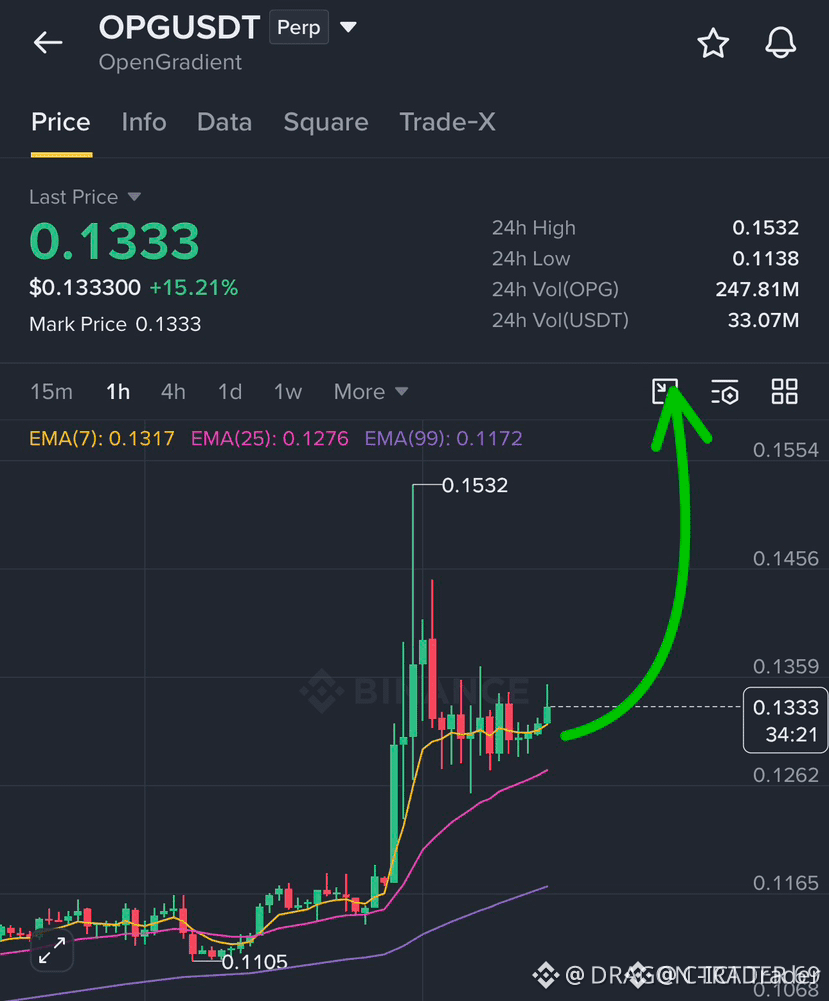
🚨 $OPG LIQUIDITY SWEEP COMPLETE AS SMART MONEY RECLAIMS CRITICAL DEMAND ZONE! 🦈
Entry: 0.1330 - 0.1333 ⚡
Target: 0.1366 🚀
Stop Loss: 0.1317 ⚠️
Smart money has successfully cleared sell-side liquidity below recent lows, setting up an efficient mitigation off the immediate demand block around 0.1330. 📊 Order flow is shifting back toward bullish market structure as institutional buyers absorb localized sell pressure.
With the short-term inefficiency mapped up to 0.1366, the risk profile offers a disciplined high R:R setup ahead of potential expansion. 🔍 Price action confirms strong absorption at the lower range bound, protecting tight structural stops. 💬 Are you front-running this mitigation zone or waiting for secondary confirmation on lower timeframes? 👇
⚠️ Not financial advice. Always manage your risk. 🛡️
🏷️ #OPG #LongSetup #MarketStructure #Crypto
🎯 🦈
🚨 $OPG LIQUIDITY SWEEP COMPLETE AS SMART MONEY RECLAIMS CRITICAL DEMAND ZONE! 🦈
Entry: 0.1330 - 0.1333 ⚡
Target: 0.1366 🚀
Stop Loss: 0.1317 ⚠️
Smart money has successfully cleared sell-side liquidity below recent lows, setting up an efficient mitigation off the immediate demand block around 0.1330. 📊 Order flow is shifting back toward bullish market structure as institutional buyers absorb localized sell pressure.
With the short-term inefficiency mapped up to 0.1366, the risk profile offers a disciplined high R:R setup ahead of potential expansion. 🔍 Price action confirms strong absorption at the lower range bound, protecting tight structural stops. 💬 Are you front-running this mitigation zone or waiting for secondary confirmation on lower timeframes? 👇
⚠️ Not financial advice. Always manage your risk. 🛡️
🏷️ #OPG #LongSetup #MarketStructure #Crypto
🎯 🦈
Entry: 0.1330 - 0.1333 ⚡
Target: 0.1366 🚀
Stop Loss: 0.1317 ⚠️
Smart money has successfully cleared sell-side liquidity below recent lows, setting up an efficient mitigation off the immediate demand block around 0.1330. 📊 Order flow is shifting back toward bullish market structure as institutional buyers absorb localized sell pressure.
With the short-term inefficiency mapped up to 0.1366, the risk profile offers a disciplined high R:R setup ahead of potential expansion. 🔍 Price action confirms strong absorption at the lower range bound, protecting tight structural stops. 💬 Are you front-running this mitigation zone or waiting for secondary confirmation on lower timeframes? 👇
⚠️ Not financial advice. Always manage your risk. 🛡️
🏷️ #OPG #LongSetup #MarketStructure #Crypto
🎯 🦈
16
·
--
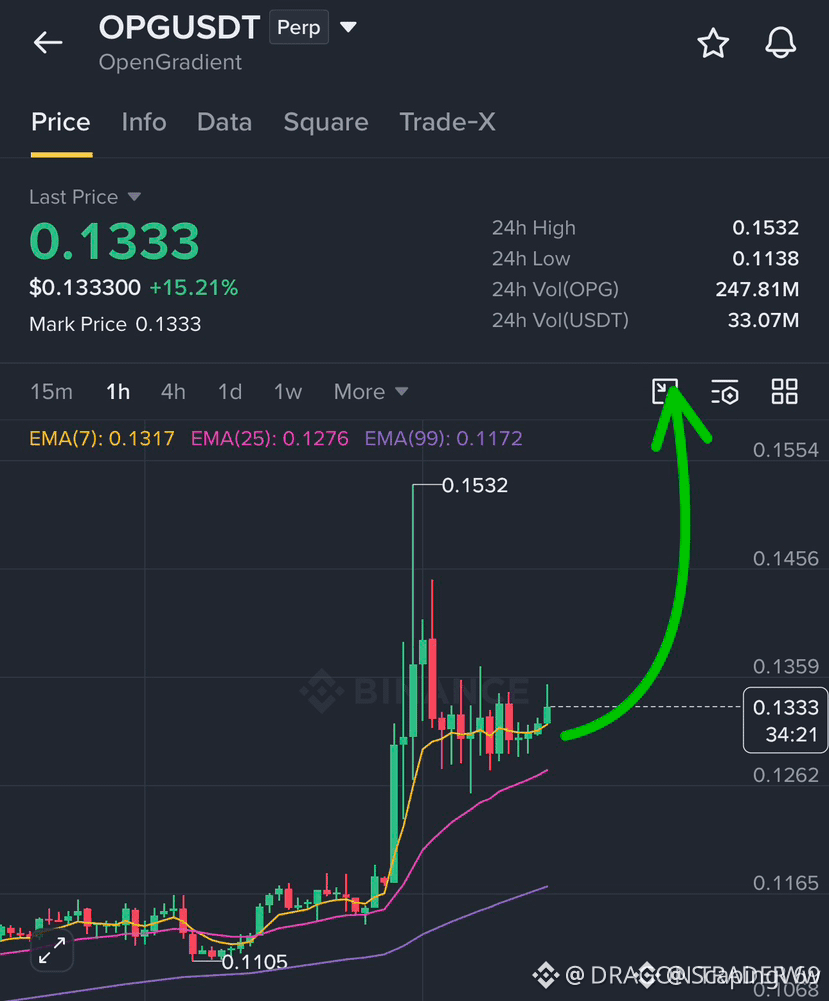
⚡ $OPG COMPRESSION ZONE READY TO IGNITE AS BUYERS DEFEND ACCUMULATION RANGE! 💥
Entry: 0.1330 - 0.1333 ⚡
Target: 0.1366 🚀
Stop Loss: 0.1317 ⚠️
📌 Buyers are quietly coiling around the 0.1330 level, defending this micro-range while absorbing persistent sell orders. 📊 Volume is tightening into a classic momentum spring, setting up an immediate shift towards higher order flow targets.
💡 Risk is defined razor-thin at 0.1317, creating an exceptionally clean risk-to-reward ratio for quick target execution. 💬 Are you taking position in this tight accumulation pocket or waiting for the breakout confirmation above resistance? 👇
⚠️ Not financial advice. Always manage your risk. 🛡️
🏷️ #OPG #LongSetup #Trading #Crypto #Breakout
🔥 💎
⚡ $OPG COMPRESSION ZONE READY TO IGNITE AS BUYERS DEFEND ACCUMULATION RANGE! 💥
Entry: 0.1330 - 0.1333 ⚡
Target: 0.1366 🚀
Stop Loss: 0.1317 ⚠️
📌 Buyers are quietly coiling around the 0.1330 level, defending this micro-range while absorbing persistent sell orders. 📊 Volume is tightening into a classic momentum spring, setting up an immediate shift towards higher order flow targets.
💡 Risk is defined razor-thin at 0.1317, creating an exceptionally clean risk-to-reward ratio for quick target execution. 💬 Are you taking position in this tight accumulation pocket or waiting for the breakout confirmation above resistance? 👇
⚠️ Not financial advice. Always manage your risk. 🛡️
🏷️ #OPG #LongSetup #Trading #Crypto #Breakout
🔥 💎
Entry: 0.1330 - 0.1333 ⚡
Target: 0.1366 🚀
Stop Loss: 0.1317 ⚠️
📌 Buyers are quietly coiling around the 0.1330 level, defending this micro-range while absorbing persistent sell orders. 📊 Volume is tightening into a classic momentum spring, setting up an immediate shift towards higher order flow targets.
💡 Risk is defined razor-thin at 0.1317, creating an exceptionally clean risk-to-reward ratio for quick target execution. 💬 Are you taking position in this tight accumulation pocket or waiting for the breakout confirmation above resistance? 👇
⚠️ Not financial advice. Always manage your risk. 🛡️
🏷️ #OPG #LongSetup #Trading #Crypto #Breakout
🔥 💎
77

·
--
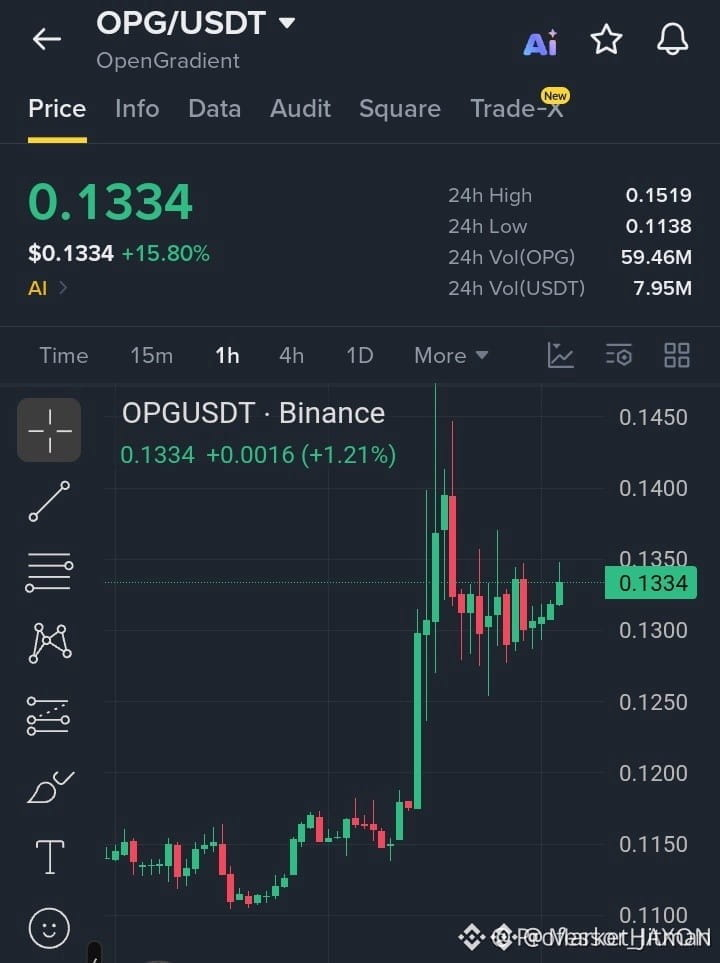
$OPG IS DEFENDING THE BREAKOUT ZONE WHILE BUYERS PREPARE FOR STAGE TWO! ⚡ 🐂
Entry: 0.1310 - 0.1335 ⚡
Target: 0.1380 / 0.1450 / 0.1520 🚀
Stop Loss: 0.1270 ⚠️
📌 Sellers tried to cap the recent expansion, but $OPG is cleanly absorbing supply right above the crucial $0.1300 handle. 📊 As long as this floor holds, order flow favors a rapid continuation toward liquidity resting above the local high.
💡 The structure shows classic re-accumulation where patient bids get rewarded before the next volatility expansion. 💬 Are you riding this momentum play to $0.1520 or watching from the sidelines? 👇
⚠️ Not financial advice. Always manage your risk. 🛡️
🏷️ #OPG #LongSetup #Breakout #Crypto
⚡ 🎯
$OPG IS DEFENDING THE BREAKOUT ZONE WHILE BUYERS PREPARE FOR STAGE TWO! ⚡ 🐂
Entry: 0.1310 - 0.1335 ⚡
Target: 0.1380 / 0.1450 / 0.1520 🚀
Stop Loss: 0.1270 ⚠️
📌 Sellers tried to cap the recent expansion, but $OPG is cleanly absorbing supply right above the crucial $0.1300 handle. 📊 As long as this floor holds, order flow favors a rapid continuation toward liquidity resting above the local high.
💡 The structure shows classic re-accumulation where patient bids get rewarded before the next volatility expansion. 💬 Are you riding this momentum play to $0.1520 or watching from the sidelines? 👇
⚠️ Not financial advice. Always manage your risk. 🛡️
🏷️ #OPG #LongSetup #Breakout #Crypto
⚡ 🎯
Entry: 0.1310 - 0.1335 ⚡
Target: 0.1380 / 0.1450 / 0.1520 🚀
Stop Loss: 0.1270 ⚠️
📌 Sellers tried to cap the recent expansion, but $OPG is cleanly absorbing supply right above the crucial $0.1300 handle. 📊 As long as this floor holds, order flow favors a rapid continuation toward liquidity resting above the local high.
💡 The structure shows classic re-accumulation where patient bids get rewarded before the next volatility expansion. 💬 Are you riding this momentum play to $0.1520 or watching from the sidelines? 👇
⚠️ Not financial advice. Always manage your risk. 🛡️
🏷️ #OPG #LongSetup #Breakout #Crypto
⚡ 🎯
58
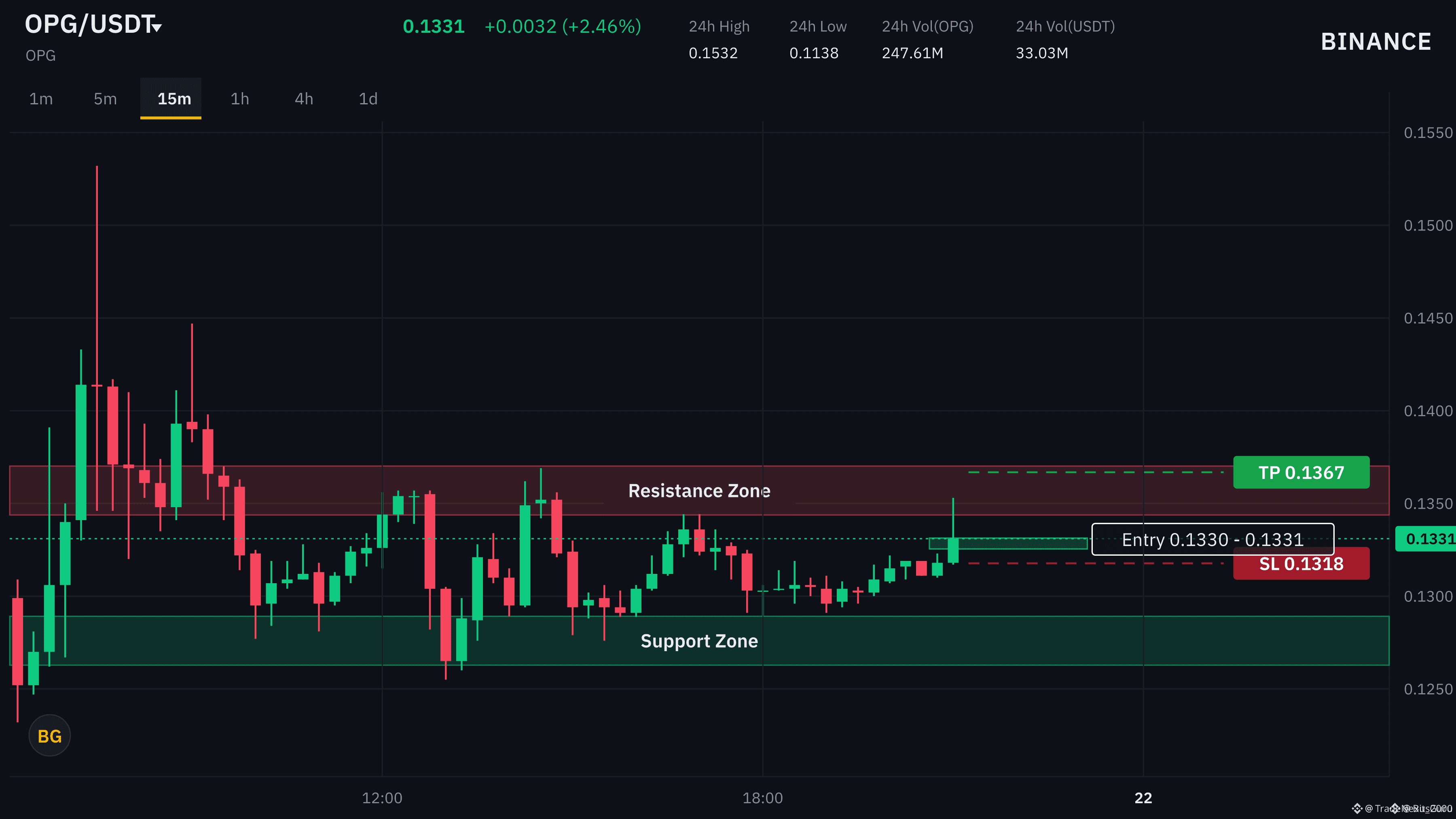
🚨 $OPG RECLAIMING DEMAND ZONE FOR HIGH-CONVICTION LONG SETUP ⚡
Entry: 0.13300 - 0.13313 ⚡
Target: 0.13668 🚀
Stop Loss: 0.13177 ⚠️
$OPG is stabilizing inside a pristine institutional demand block after sweeping sell-side liquidity above local lows. 🔍 Market structure shows clear signs of order flow mitigation, setting up a high probability asymmetric rotation back toward local resistance.
📊 With tight risk parameters anchored below structural support at 0.13177, this setup offers an exceptional risk-to-reward profile. Maintain strict position sizing discipline into this level. 💬 Is $OPG preparing for an immediate expansion from this level or will we see one more dip into demand? 👇
⚠️ Not financial advice. Always manage your risk. 🛡️
🏷️ #OPG #LongSetup #Crypto #Trading #MarketStructure
🎯 🦈
🚨 $OPG RECLAIMING DEMAND ZONE FOR HIGH-CONVICTION LONG SETUP ⚡
Entry: 0.13300 - 0.13313 ⚡
Target: 0.13668 🚀
Stop Loss: 0.13177 ⚠️
$OPG is stabilizing inside a pristine institutional demand block after sweeping sell-side liquidity above local lows. 🔍 Market structure shows clear signs of order flow mitigation, setting up a high probability asymmetric rotation back toward local resistance.
📊 With tight risk parameters anchored below structural support at 0.13177, this setup offers an exceptional risk-to-reward profile. Maintain strict position sizing discipline into this level. 💬 Is $OPG preparing for an immediate expansion from this level or will we see one more dip into demand? 👇
⚠️ Not financial advice. Always manage your risk. 🛡️
🏷️ #OPG #LongSetup #Crypto #Trading #MarketStructure
🎯 🦈
Entry: 0.13300 - 0.13313 ⚡
Target: 0.13668 🚀
Stop Loss: 0.13177 ⚠️
$OPG is stabilizing inside a pristine institutional demand block after sweeping sell-side liquidity above local lows. 🔍 Market structure shows clear signs of order flow mitigation, setting up a high probability asymmetric rotation back toward local resistance.
📊 With tight risk parameters anchored below structural support at 0.13177, this setup offers an exceptional risk-to-reward profile. Maintain strict position sizing discipline into this level. 💬 Is $OPG preparing for an immediate expansion from this level or will we see one more dip into demand? 👇
⚠️ Not financial advice. Always manage your risk. 🛡️
🏷️ #OPG #LongSetup #Crypto #Trading #MarketStructure
🎯 🦈
42
Log in to explore more content
Join global crypto users on Binance Square
⚡️ Get latest and useful information about crypto.
💬 Trusted by the world’s largest crypto exchange.
👍 Discover real insights from verified creators.
Email / Phone number
Trending Topics
1
#PolymarketBankFailureBetsDrawFDICConcern
383 views
40 Discussing
2
#BlackRockBuildsTokenizedPortfoliosForOndo
225 views
16 Discussing
3
#BitwiseFilesToListNEARETFOnNYSEArca
1,075 views
54 Discussing
4
#SECCommissionerPeirceToLeaveOct2
1,026 views
40 Discussing
5
#SECSaysBuybacksUpgradesDontMakeTokenSecurity
2,724 views
73 Discussing
6
#StrategyProposesDailyDividendsForPreferreds
70 views
8 Discussing
7
#CircleTetherFreezeBitgetHackerWallet
177 views
19 Discussing
8
#CoinMarketCapCompletesCoinglassAcquisition
1,034 views
40 Discussing
9
#QNTRises39%
64,099 views
1,262 Discussing
10
#EthereumBreaksAbove$2700
5,735 views
126 Discussing