

#morphorisesover12%
morphorisesover12%
54,367 views
323 Discussing
Hot
Latest

·
--
Bullish
MORPHO rises by more than 12% amid the return of momentum to DeFi
Morpho’s token surged by over 12%, a move that reflects improving risk appetite within the decentralized finance sector and a gradual return of liquidity to lending protocols.
This rise is not read as a price action alone, but as a sign of:
Renewed interest in yield-enhancing protocols within DeFi
Return of activity to decentralized lending layers after a period of calm
An improved overall sentiment toward high-risk assets in the market
Strengthening Morpho’s role as an efficient infrastructure above traditional lending markets
Morpho remains a project that heavily depends on liquidity inflows and user trust, making its price movement a direct reflection of the pulse of the DeFi market.
Despite this momentum, sustainability still depends on the continued inflow of liquidity and stability in overall crypto market conditions—not just on momentary moves.
$MORPHO
{future}(MORPHOUSDT)
#MORPHORisesOver12%
MORPHO rises by more than 12% amid the return of momentum to DeFi
Morpho’s token surged by over 12%, a move that reflects improving risk appetite within the decentralized finance sector and a gradual return of liquidity to lending protocols.
This rise is not read as a price action alone, but as a sign of:
Renewed interest in yield-enhancing protocols within DeFi
Return of activity to decentralized lending layers after a period of calm
An improved overall sentiment toward high-risk assets in the market
Strengthening Morpho’s role as an efficient infrastructure above traditional lending markets
Morpho remains a project that heavily depends on liquidity inflows and user trust, making its price movement a direct reflection of the pulse of the DeFi market.
Despite this momentum, sustainability still depends on the continued inflow of liquidity and stability in overall crypto market conditions—not just on momentary moves.
$MORPHO
#MORPHORisesOver12%
Morpho’s token surged by over 12%, a move that reflects improving risk appetite within the decentralized finance sector and a gradual return of liquidity to lending protocols.
This rise is not read as a price action alone, but as a sign of:
Renewed interest in yield-enhancing protocols within DeFi
Return of activity to decentralized lending layers after a period of calm
An improved overall sentiment toward high-risk assets in the market
Strengthening Morpho’s role as an efficient infrastructure above traditional lending markets
Morpho remains a project that heavily depends on liquidity inflows and user trust, making its price movement a direct reflection of the pulse of the DeFi market.
Despite this momentum, sustainability still depends on the continued inflow of liquidity and stability in overall crypto market conditions—not just on momentary moves.
$MORPHO
#MORPHORisesOver12%
2
478


·
--
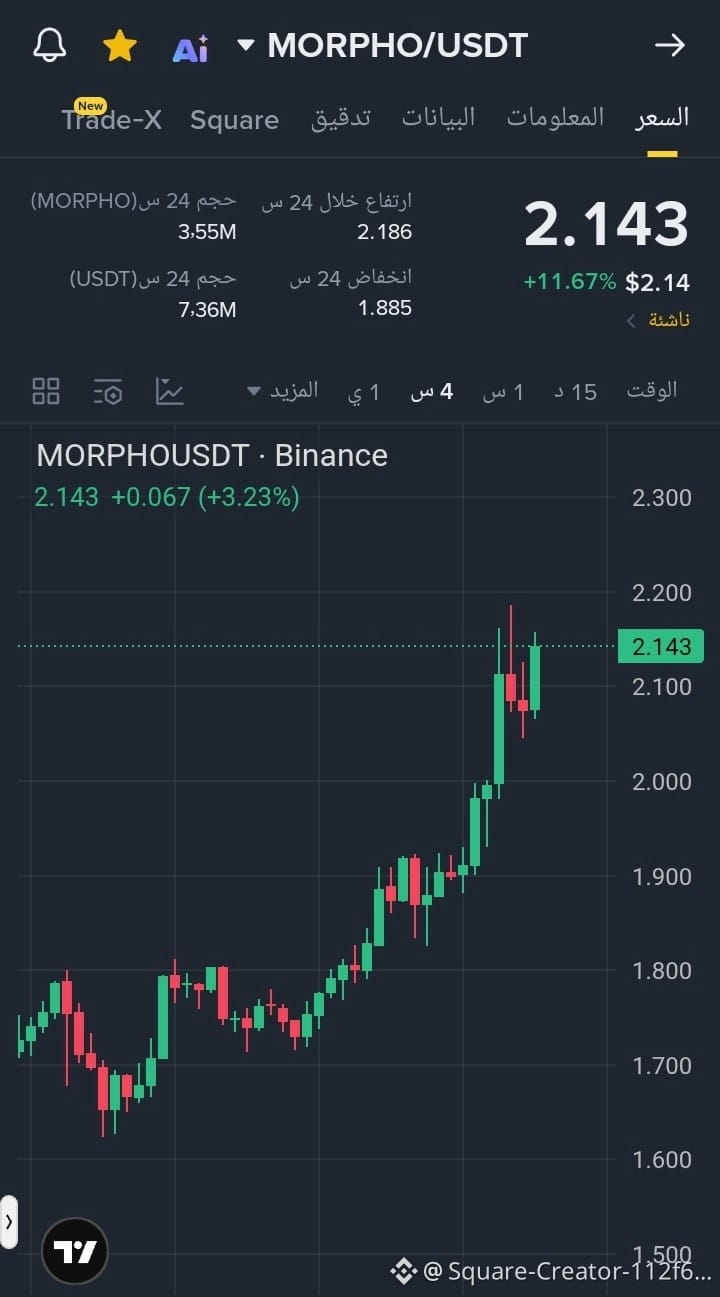
$MORPHO has gained almost 15%, reflecting healthy accumulation. The trend remains positive, but resistance is approaching. Support: $2.08–2.12 | Resistance: $2.28–2.35 | Target 🎯: $2.50–2.70 | Stop Loss: Below $2.02. A breakout could accelerate buying pressure.
{spot}(MORPHOUSDT)
#BrentCrudeSlidesAbout40%FromMarchPeak #AppleInTalksToBuyCXMTAndYMTCMemoryChips #SECExaminingSusquehannaInsiderTradingClaims #MORPHORisesOver12% #USADP98KMiss
$MORPHO has gained almost 15%, reflecting healthy accumulation. The trend remains positive, but resistance is approaching. Support: $2.08–2.12 | Resistance: $2.28–2.35 | Target 🎯: $2.50–2.70 | Stop Loss: Below $2.02. A breakout could accelerate buying pressure.
#BrentCrudeSlidesAbout40%FromMarchPeak #AppleInTalksToBuyCXMTAndYMTCMemoryChips #SECExaminingSusquehannaInsiderTradingClaims #MORPHORisesOver12% #USADP98KMiss
#BrentCrudeSlidesAbout40%FromMarchPeak #AppleInTalksToBuyCXMTAndYMTCMemoryChips #SECExaminingSusquehannaInsiderTradingClaims #MORPHORisesOver12% #USADP98KMiss
1
119

·
--
MORPHO has shown a strong upward movement today, rising over 12%. The market momentum looks interesting for short-term traders. Always watch the support levels before making any entry.
What are your thoughts on this pump? Will it hold or drop? Let me know below!
#MORPHORisesOver12% #CryptoTrading
MORPHO has shown a strong upward movement today, rising over 12%. The market momentum looks interesting for short-term traders. Always watch the support levels before making any entry.
What are your thoughts on this pump? Will it hold or drop? Let me know below!
#MORPHORisesOver12% #CryptoTrading
What are your thoughts on this pump? Will it hold or drop? Let me know below!
#MORPHORisesOver12% #CryptoTrading
115

·
--

Article
Why Did MORPHO Rise More Than 12%, and What Factors Are Driving the Strong Price Rally?MORPHO, the governance token of the Morpho decentralized lending protocol, has surged more than 12%, drawing renewed attention from investors across the decentralized finance (DeFi) sector. The rally reflects a combination of strong protocol fundamentals, increasing institutional interest, positive product developments, and improving market sentiment.
One of the biggest catalysts behind MORPHO's price increase is the protocol's growing institutional adoption. A major boost came from Morpho's integration with Fireblocks, a leading digital asset custody and infrastructure provider. The integration allows thousands of institutional clients to access Morpho's lending vaults more easily, potentially bringing significant new liquidity into the ecosystem. As institutional participation in DeFi continues to grow, investors see Morpho as one of the key beneficiaries.$MORPHO
Another important driver is Morpho's continued product innovation. The protocol recently introduced new lending solutions designed to offer fixed-rate and fixed-duration loans, making its services more attractive to professional investors and traditional financial institutions. These products expand Morpho's appeal beyond retail users and strengthen its position in the rapidly evolving DeFi lending market.
The project's growing involvement in real-world assets (RWAs) has also fueled bullish sentiment. Morpho has been expanding its infrastructure to support tokenized assets, an area widely viewed as one of the fastest-growing segments of blockchain finance. By enabling lending against tokenized real-world assets, Morpho is positioning itself to benefit from increasing institutional demand for on-chain financial products.$BNB
Investor confidence has also been reinforced by support from major industry participants. Reports that large organizations, including Apollo Global Management and the Ethereum Foundation, have expanded their involvement with Morpho have strengthened market optimism. Such backing signals confidence in the protocol's long-term growth and encourages additional investors to accumulate the token.
The broader cryptocurrency market has also created favorable conditions for MORPHO. As Bitcoin and Ethereum stabilized and investor appetite for risk returned, capital began rotating into high-quality DeFi projects. MORPHO benefited from this trend as traders sought fundamentally strong protocols with real utility rather than speculative meme tokens.
Technical factors have further accelerated the rally. MORPHO recently broke above several key resistance levels while trading volume increased significantly. Strong buying momentum attracted additional traders, including momentum investors and short-term speculators, helping push prices even higher. Technical analysts note that maintaining support above recent breakout levels could keep bullish momentum intact, although increased volatility should still be expected.$USDC
Long-term optimism has also received support from institutional research. Standard Chartered recently initiated coverage on MORPHO with an ambitious long-term outlook, arguing that the protocol is well positioned to benefit from the continued expansion of decentralized finance and institutional blockchain adoption. While such long-range forecasts remain speculative, they have contributed to positive market sentiment surrounding the token.
In conclusion, MORPHO's 12% rally is being driven by a combination of institutional adoption, innovative product launches, growing exposure to tokenized real-world assets, strong industry backing, improving crypto market conditions, and bullish technical momentum. Although short-term price swings remain possible, Morpho's expanding role within the DeFi ecosystem has strengthened investor confidence and positioned the project as one of the sector's leading growth stories.
#MORPHORisesOver12%
{spot}(LITEBUSDT)
{spot}(BCHUSDT)
{spot}(HYPERUSDT)
Why Did MORPHO Rise More Than 12%, and What Factors Are Driving the Strong Price Rally?
MORPHO, the governance token of the Morpho decentralized lending protocol, has surged more than 12%, drawing renewed attention from investors across the decentralized finance (DeFi) sector. The rally reflects a combination of strong protocol fundamentals, increasing institutional interest, positive product developments, and improving market sentiment.
One of the biggest catalysts behind MORPHO's price increase is the protocol's growing institutional adoption. A major boost came from Morpho's integration with Fireblocks, a leading digital asset custody and infrastructure provider. The integration allows thousands of institutional clients to access Morpho's lending vaults more easily, potentially bringing significant new liquidity into the ecosystem. As institutional participation in DeFi continues to grow, investors see Morpho as one of the key beneficiaries.$MORPHO
Another important driver is Morpho's continued product innovation. The protocol recently introduced new lending solutions designed to offer fixed-rate and fixed-duration loans, making its services more attractive to professional investors and traditional financial institutions. These products expand Morpho's appeal beyond retail users and strengthen its position in the rapidly evolving DeFi lending market.
The project's growing involvement in real-world assets (RWAs) has also fueled bullish sentiment. Morpho has been expanding its infrastructure to support tokenized assets, an area widely viewed as one of the fastest-growing segments of blockchain finance. By enabling lending against tokenized real-world assets, Morpho is positioning itself to benefit from increasing institutional demand for on-chain financial products.$BNB
Investor confidence has also been reinforced by support from major industry participants. Reports that large organizations, including Apollo Global Management and the Ethereum Foundation, have expanded their involvement with Morpho have strengthened market optimism. Such backing signals confidence in the protocol's long-term growth and encourages additional investors to accumulate the token.
The broader cryptocurrency market has also created favorable conditions for MORPHO. As Bitcoin and Ethereum stabilized and investor appetite for risk returned, capital began rotating into high-quality DeFi projects. MORPHO benefited from this trend as traders sought fundamentally strong protocols with real utility rather than speculative meme tokens.
Technical factors have further accelerated the rally. MORPHO recently broke above several key resistance levels while trading volume increased significantly. Strong buying momentum attracted additional traders, including momentum investors and short-term speculators, helping push prices even higher. Technical analysts note that maintaining support above recent breakout levels could keep bullish momentum intact, although increased volatility should still be expected.$USDC
Long-term optimism has also received support from institutional research. Standard Chartered recently initiated coverage on MORPHO with an ambitious long-term outlook, arguing that the protocol is well positioned to benefit from the continued expansion of decentralized finance and institutional blockchain adoption. While such long-range forecasts remain speculative, they have contributed to positive market sentiment surrounding the token.
In conclusion, MORPHO's 12% rally is being driven by a combination of institutional adoption, innovative product launches, growing exposure to tokenized real-world assets, strong industry backing, improving crypto market conditions, and bullish technical momentum. Although short-term price swings remain possible, Morpho's expanding role within the DeFi ecosystem has strengthened investor confidence and positioned the project as one of the sector's leading growth stories.
#MORPHORisesOver12%
One of the biggest catalysts behind MORPHO's price increase is the protocol's growing institutional adoption. A major boost came from Morpho's integration with Fireblocks, a leading digital asset custody and infrastructure provider. The integration allows thousands of institutional clients to access Morpho's lending vaults more easily, potentially bringing significant new liquidity into the ecosystem. As institutional participation in DeFi continues to grow, investors see Morpho as one of the key beneficiaries.$MORPHO
Another important driver is Morpho's continued product innovation. The protocol recently introduced new lending solutions designed to offer fixed-rate and fixed-duration loans, making its services more attractive to professional investors and traditional financial institutions. These products expand Morpho's appeal beyond retail users and strengthen its position in the rapidly evolving DeFi lending market.
The project's growing involvement in real-world assets (RWAs) has also fueled bullish sentiment. Morpho has been expanding its infrastructure to support tokenized assets, an area widely viewed as one of the fastest-growing segments of blockchain finance. By enabling lending against tokenized real-world assets, Morpho is positioning itself to benefit from increasing institutional demand for on-chain financial products.$BNB
Investor confidence has also been reinforced by support from major industry participants. Reports that large organizations, including Apollo Global Management and the Ethereum Foundation, have expanded their involvement with Morpho have strengthened market optimism. Such backing signals confidence in the protocol's long-term growth and encourages additional investors to accumulate the token.
The broader cryptocurrency market has also created favorable conditions for MORPHO. As Bitcoin and Ethereum stabilized and investor appetite for risk returned, capital began rotating into high-quality DeFi projects. MORPHO benefited from this trend as traders sought fundamentally strong protocols with real utility rather than speculative meme tokens.
Technical factors have further accelerated the rally. MORPHO recently broke above several key resistance levels while trading volume increased significantly. Strong buying momentum attracted additional traders, including momentum investors and short-term speculators, helping push prices even higher. Technical analysts note that maintaining support above recent breakout levels could keep bullish momentum intact, although increased volatility should still be expected.$USDC
Long-term optimism has also received support from institutional research. Standard Chartered recently initiated coverage on MORPHO with an ambitious long-term outlook, arguing that the protocol is well positioned to benefit from the continued expansion of decentralized finance and institutional blockchain adoption. While such long-range forecasts remain speculative, they have contributed to positive market sentiment surrounding the token.
In conclusion, MORPHO's 12% rally is being driven by a combination of institutional adoption, innovative product launches, growing exposure to tokenized real-world assets, strong industry backing, improving crypto market conditions, and bullish technical momentum. Although short-term price swings remain possible, Morpho's expanding role within the DeFi ecosystem has strengthened investor confidence and positioned the project as one of the sector's leading growth stories.
#MORPHORisesOver12%
172

#MORPHORisesOver12% #MORPHORisesOver12% means the Morpho (MORPHO) token gained more than 12% in a short period, outperforming much of the crypto market.
Why MORPHO rose:
📈 Increased buying interest in the decentralized finance (DeFi) sector.
💰 Growth in lending activity and total value locked (TVL) on the Morpho protocol.
🚀 Positive market sentiment and renewed interest in DeFi tokens as crypto markets stabilized.
Why it matters:
A double-digit gain suggests strong momentum and growing investor confidence.
If demand continues, MORPHO could attract more traders and liquidity, though the token may also experience higher volatility after a rapid rise.
In simple terms:
#MORPHORisesOver12% = Morpho's token jumped over 12%, driven by stronger DeFi sentiment, increased protocol usage, and renewed investor demand.
#MORPHORisesOver12% #MORPHORisesOver12% means the Morpho (MORPHO) token gained more than 12% in a short period, outperforming much of the crypto market.
Why MORPHO rose:
📈 Increased buying interest in the decentralized finance (DeFi) sector.
💰 Growth in lending activity and total value locked (TVL) on the Morpho protocol.
🚀 Positive market sentiment and renewed interest in DeFi tokens as crypto markets stabilized.
Why it matters:
A double-digit gain suggests strong momentum and growing investor confidence.
If demand continues, MORPHO could attract more traders and liquidity, though the token may also experience higher volatility after a rapid rise.
In simple terms:
#MORPHORisesOver12% = Morpho's token jumped over 12%, driven by stronger DeFi sentiment, increased protocol usage, and renewed investor demand.
Why MORPHO rose:
📈 Increased buying interest in the decentralized finance (DeFi) sector.
💰 Growth in lending activity and total value locked (TVL) on the Morpho protocol.
🚀 Positive market sentiment and renewed interest in DeFi tokens as crypto markets stabilized.
Why it matters:
A double-digit gain suggests strong momentum and growing investor confidence.
If demand continues, MORPHO could attract more traders and liquidity, though the token may also experience higher volatility after a rapid rise.
In simple terms:
#MORPHORisesOver12% = Morpho's token jumped over 12%, driven by stronger DeFi sentiment, increased protocol usage, and renewed investor demand.
27

·
--
Bearish
Verified
#morphorisesover12%
🚀 Pumping hype or the real deal? 🚀
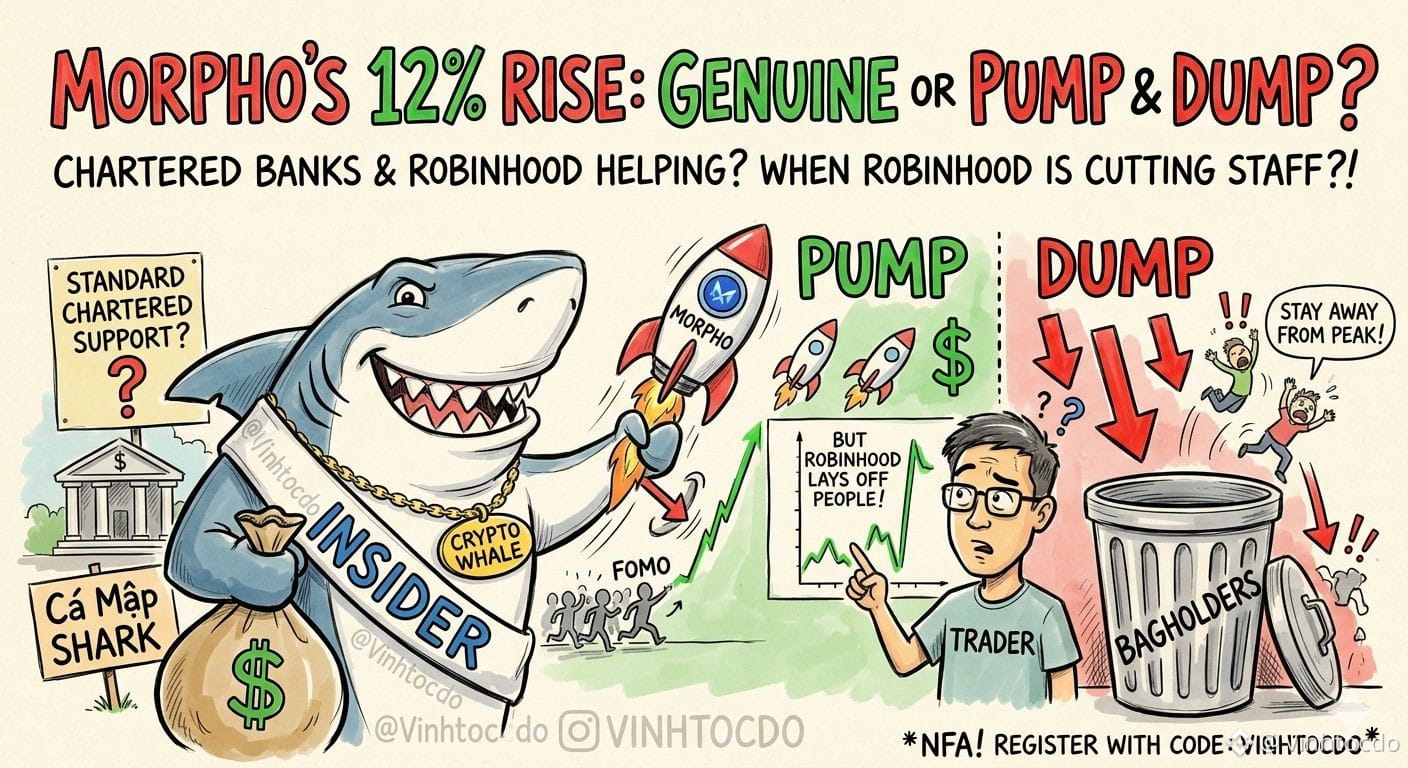
Brothers, have you seen the news that Standard Chartered and Robinhood are supporting MORPHO to fly up 12%? Sounds a bit like "a fantasy story," doesn’t it! Robinhood is still cutting employees—so why would they go shoulder a whole team.
Look at the chart and you can clearly smell the "whales" pulling strings and dumping internally. Pumping good news to lure in FOMO, then dumping—what’s so surprising about that!
💡 What should traders do right now?
Stay put and observe—don’t FOMO chase the top. Tighten your stop-loss so you don’t get dumped.
This is not financial advice!
Register on Binance using code: VINHTOCDO to keep watching the events with us!
#Morpho #StandardChartered #Robinhood #VINHTOCDO
$MORPHO
{future}(MORPHOUSDT)
$BTC
{future}(BTCUSDT)
$ETH
{future}(ETHUSDT)
#morphorisesover12%
🚀 Pumping hype or the real deal? 🚀
Brothers, have you seen the news that Standard Chartered and Robinhood are supporting MORPHO to fly up 12%? Sounds a bit like "a fantasy story," doesn’t it! Robinhood is still cutting employees—so why would they go shoulder a whole team.
Look at the chart and you can clearly smell the "whales" pulling strings and dumping internally. Pumping good news to lure in FOMO, then dumping—what’s so surprising about that!
💡 What should traders do right now?
Stay put and observe—don’t FOMO chase the top. Tighten your stop-loss so you don’t get dumped.
This is not financial advice!
Register on Binance using code: VINHTOCDO to keep watching the events with us!
#Morpho #StandardChartered #Robinhood #VINHTOCDO
$MORPHO
$BTC
$ETH
🚀 Pumping hype or the real deal? 🚀
Brothers, have you seen the news that Standard Chartered and Robinhood are supporting MORPHO to fly up 12%? Sounds a bit like "a fantasy story," doesn’t it! Robinhood is still cutting employees—so why would they go shoulder a whole team.
Look at the chart and you can clearly smell the "whales" pulling strings and dumping internally. Pumping good news to lure in FOMO, then dumping—what’s so surprising about that!
💡 What should traders do right now?
Stay put and observe—don’t FOMO chase the top. Tighten your stop-loss so you don’t get dumped.
This is not financial advice!
Register on Binance using code: VINHTOCDO to keep watching the events with us!
#Morpho #StandardChartered #Robinhood #VINHTOCDO
$MORPHO
$BTC
$ETH
116

#MORPHORisesOver12% 🚨 #Morpho Rises Over 12% 📈🔥
$MORPHO is showing impressive strength with a 12%+ surge, catching the attention of traders across the market.
💥 Momentum is building. 📊 Volume is increasing. 👀 Bulls are stepping in.
If this trend continues, $MORPHO could be gearing up for an even bigger move. Stay alert and manage your risk wisely.
Are you holding $MORPHO or waiting for a pullback? 🚀👇
#MORPHO #Crypto #Bullish #CryptoTrading
#MORPHORisesOver12% 🚨 #Morpho Rises Over 12% 📈🔥
$MORPHO is showing impressive strength with a 12%+ surge, catching the attention of traders across the market.
💥 Momentum is building. 📊 Volume is increasing. 👀 Bulls are stepping in.
If this trend continues, $MORPHO could be gearing up for an even bigger move. Stay alert and manage your risk wisely.
Are you holding $MORPHO or waiting for a pullback? 🚀👇
#MORPHO #Crypto #Bullish #CryptoTrading
$MORPHO is showing impressive strength with a 12%+ surge, catching the attention of traders across the market.
💥 Momentum is building. 📊 Volume is increasing. 👀 Bulls are stepping in.
If this trend continues, $MORPHO could be gearing up for an even bigger move. Stay alert and manage your risk wisely.
Are you holding $MORPHO or waiting for a pullback? 🚀👇
#MORPHO #Crypto #Bullish #CryptoTrading

85

·
--
Bullish
Verified
#morphorisesover12% — TradFi Meets DeFi
The headline: $MORPHO surged +12.2% to $2.15 after Standard Chartered initiated coverage with a $60 end-2030 price target — implying a ~28x upside from current levels.
Why it matters: This is the first time a major traditional bank has formally covered a DeFi lending protocol with a target. Geoff Kendrick's roadmap: $3.50 (2026) → $11 (2027) → $22 (2028) → $40 (2029) → $60 (2030) . The thesis? Morpho is the 2nd largest DeFi lending protocol after Aave, with $5.5B in market deposits and $4.3B in Vaults — positioned to capture the projected 37x growth in total DeFi assets by 2030.
Momentum stacking: The macro catalyst was bigger than just one bank note. On the same day, Robinhood Chain launched its L2 on Arbitrum with "Crypto Earn" powered by Morpho, and MetaMask Money Account went live offering 4% APY via Morpho Vaults.
💥The Setup
A +12% pop on a bank upgrade is impressive but breakouts from range-bounds often need consolidation. The 15M shows a clear breakout above the descending trendline with volume confirmation.
Direction: Look for continuation on pullback 🟢
💥Entry $2.07 – $2.10 (wait for pullback to previous resistance-turned-support)
💥Stop Loss: Below $1.98 (below the 24h VWAP zone)
💥TP1$2.22 (prior local high)
💥TP2$2.30 (psychological round number)
💥Invalidation Close below $1.95 on volume — breakout failed
{future}(MORPHOUSDT)
The logic: Fundamental catalyst (Standard Chartered + Robinhood/MetaMask integrations) meets technical breakout. Pullbacks toward $2.07–$2.10 are textbook entries for a continuation trade — as long as volume holds.
⚠️ $MORPHO is up +24% in 7 days already. A deeper retrace to the $2.00 area is healthy and preferred over chasing at $2.15.
#Binance1B$inStocks #USADP98KMiss #OilPriceFalls #SpotSilverRises3%To$60.10
#morphorisesover12% — TradFi Meets DeFi
The headline: $MORPHO surged +12.2% to $2.15 after Standard Chartered initiated coverage with a $60 end-2030 price target — implying a ~28x upside from current levels.
Why it matters: This is the first time a major traditional bank has formally covered a DeFi lending protocol with a target. Geoff Kendrick's roadmap: $3.50 (2026) → $11 (2027) → $22 (2028) → $40 (2029) → $60 (2030) . The thesis? Morpho is the 2nd largest DeFi lending protocol after Aave, with $5.5B in market deposits and $4.3B in Vaults — positioned to capture the projected 37x growth in total DeFi assets by 2030.
Momentum stacking: The macro catalyst was bigger than just one bank note. On the same day, Robinhood Chain launched its L2 on Arbitrum with "Crypto Earn" powered by Morpho, and MetaMask Money Account went live offering 4% APY via Morpho Vaults.
💥The Setup
A +12% pop on a bank upgrade is impressive but breakouts from range-bounds often need consolidation. The 15M shows a clear breakout above the descending trendline with volume confirmation.
Direction: Look for continuation on pullback 🟢
💥Entry $2.07 – $2.10 (wait for pullback to previous resistance-turned-support)
💥Stop Loss: Below $1.98 (below the 24h VWAP zone)
💥TP1$2.22 (prior local high)
💥TP2$2.30 (psychological round number)
💥Invalidation Close below $1.95 on volume — breakout failed
The logic: Fundamental catalyst (Standard Chartered + Robinhood/MetaMask integrations) meets technical breakout. Pullbacks toward $2.07–$2.10 are textbook entries for a continuation trade — as long as volume holds.
⚠️ $MORPHO is up +24% in 7 days already. A deeper retrace to the $2.00 area is healthy and preferred over chasing at $2.15.
#Binance1B$inStocks #USADP98KMiss #OilPriceFalls #SpotSilverRises3%To$60.10
The headline: $MORPHO surged +12.2% to $2.15 after Standard Chartered initiated coverage with a $60 end-2030 price target — implying a ~28x upside from current levels.
Why it matters: This is the first time a major traditional bank has formally covered a DeFi lending protocol with a target. Geoff Kendrick's roadmap: $3.50 (2026) → $11 (2027) → $22 (2028) → $40 (2029) → $60 (2030) . The thesis? Morpho is the 2nd largest DeFi lending protocol after Aave, with $5.5B in market deposits and $4.3B in Vaults — positioned to capture the projected 37x growth in total DeFi assets by 2030.
Momentum stacking: The macro catalyst was bigger than just one bank note. On the same day, Robinhood Chain launched its L2 on Arbitrum with "Crypto Earn" powered by Morpho, and MetaMask Money Account went live offering 4% APY via Morpho Vaults.
💥The Setup
A +12% pop on a bank upgrade is impressive but breakouts from range-bounds often need consolidation. The 15M shows a clear breakout above the descending trendline with volume confirmation.
Direction: Look for continuation on pullback 🟢
💥Entry $2.07 – $2.10 (wait for pullback to previous resistance-turned-support)
💥Stop Loss: Below $1.98 (below the 24h VWAP zone)
💥TP1$2.22 (prior local high)
💥TP2$2.30 (psychological round number)
💥Invalidation Close below $1.95 on volume — breakout failed
The logic: Fundamental catalyst (Standard Chartered + Robinhood/MetaMask integrations) meets technical breakout. Pullbacks toward $2.07–$2.10 are textbook entries for a continuation trade — as long as volume holds.
⚠️ $MORPHO is up +24% in 7 days already. A deeper retrace to the $2.00 area is healthy and preferred over chasing at $2.15.
#Binance1B$inStocks #USADP98KMiss #OilPriceFalls #SpotSilverRises3%To$60.10
5
2.1k

·
--
#MORPHORisesOver12%
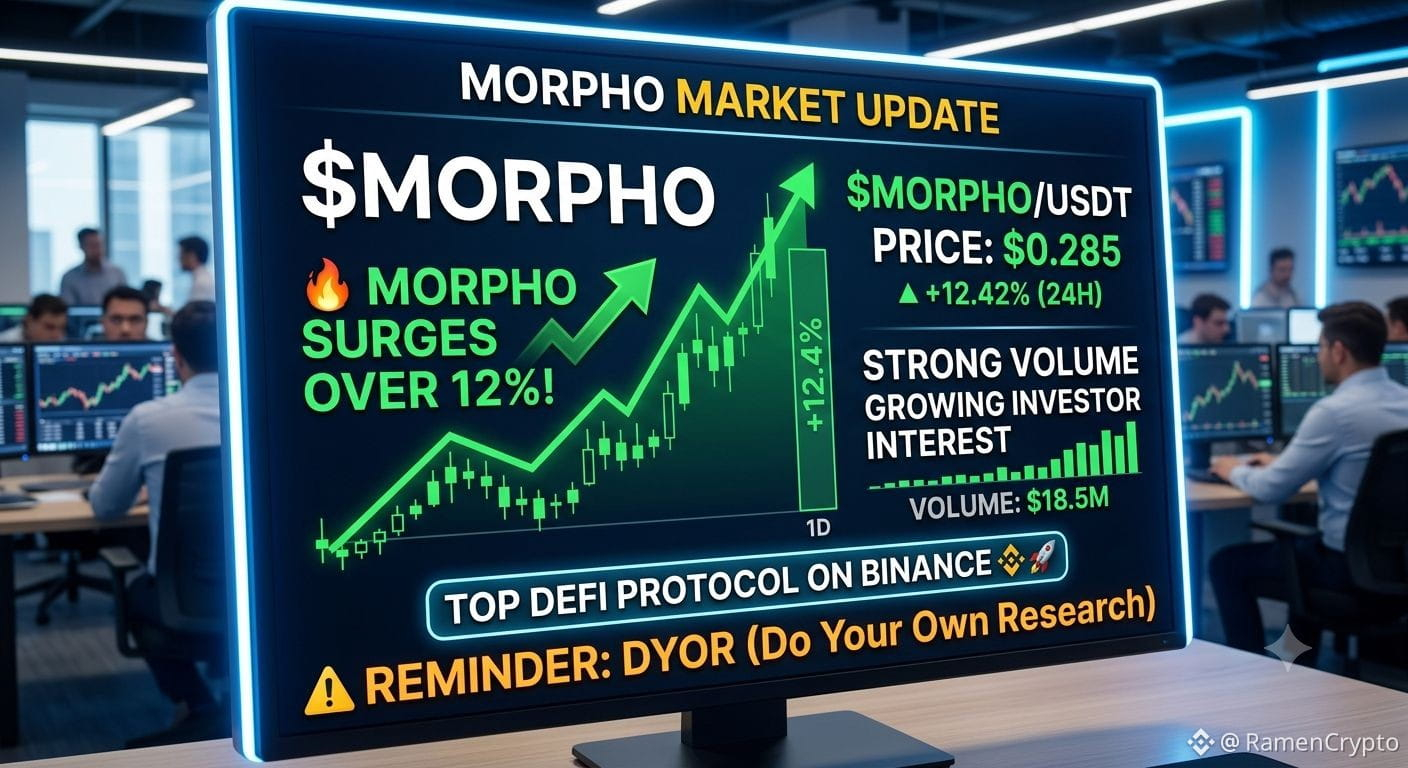
The markets are heating up and $MORPHO is making waves We just witnessed an impressive surge of over 12% in recent trading.
With strong volume and growing investor interest, Morpho is proving its resilience in the current market layout. If you've been keeping an eye on top-gaining DeFi protocols on Binance, this is definitely one to watch closely.
Are you holding, buying the rally, or waiting for a consolidation? Let us know your trading strategy in the comments below As always, DYOR Do Your Own Research
#MORPHORisesOver12% #Binance #CryptoUpdate #DeFi #CryptoTrading
#MORPHORisesOver12%
The markets are heating up and $MORPHO is making waves We just witnessed an impressive surge of over 12% in recent trading.
With strong volume and growing investor interest, Morpho is proving its resilience in the current market layout. If you've been keeping an eye on top-gaining DeFi protocols on Binance, this is definitely one to watch closely.
Are you holding, buying the rally, or waiting for a consolidation? Let us know your trading strategy in the comments below As always, DYOR Do Your Own Research
#MORPHORisesOver12% #Binance #CryptoUpdate #DeFi #CryptoTrading
The markets are heating up and $MORPHO is making waves We just witnessed an impressive surge of over 12% in recent trading.
With strong volume and growing investor interest, Morpho is proving its resilience in the current market layout. If you've been keeping an eye on top-gaining DeFi protocols on Binance, this is definitely one to watch closely.
Are you holding, buying the rally, or waiting for a consolidation? Let us know your trading strategy in the comments below As always, DYOR Do Your Own Research
#MORPHORisesOver12% #Binance #CryptoUpdate #DeFi #CryptoTrading
131

·
--
Verified
Article
Morpho Market UpdateThe term "Morpho rises 12%" refers to recent market activity regarding MORPHO, a decentralized lending protocol.
Here is the breakdown of what this means:
What is Morpho?: It is an open-source decentralized lending protocol built on Ethereum and other blockchains. It allows users to lend and borrow assets directly, often with better efficiency and lower fees than traditional decentralized finance (DeFi) platforms.
Why it rose 12%: A price increase of this magnitude in the crypto market is typically driven by positive sentiment, increased liquidity, or specific institutional developments. For Morpho, this includes:Institutional Adoption: Growing interest and integration from major financial institutions and banks.Strategic Partnerships: Expansion of its services through platforms like Robinhood and positive outlooks from entities like Standard Chartered.Network Upgrades: Successful implementation of new features or significant funding rounds that boost investor confidence
Important Note: The cryptocurrency market is highly volatile. Price movements like a 12% rise can happen quickly due to market sentiment or news cycles. Please conduct your own research (DYOR) before making any investment decisions.
#MORPHORisesOver12%
#Binance
#BinanceSquareFamily
#Binance1B$inStocks
#cryptouniverseofficial
Morpho Market Update
The term "Morpho rises 12%" refers to recent market activity regarding MORPHO, a decentralized lending protocol.
Here is the breakdown of what this means:
What is Morpho?: It is an open-source decentralized lending protocol built on Ethereum and other blockchains. It allows users to lend and borrow assets directly, often with better efficiency and lower fees than traditional decentralized finance (DeFi) platforms.
Why it rose 12%: A price increase of this magnitude in the crypto market is typically driven by positive sentiment, increased liquidity, or specific institutional developments. For Morpho, this includes:Institutional Adoption: Growing interest and integration from major financial institutions and banks.Strategic Partnerships: Expansion of its services through platforms like Robinhood and positive outlooks from entities like Standard Chartered.Network Upgrades: Successful implementation of new features or significant funding rounds that boost investor confidence
Important Note: The cryptocurrency market is highly volatile. Price movements like a 12% rise can happen quickly due to market sentiment or news cycles. Please conduct your own research (DYOR) before making any investment decisions.
#MORPHORisesOver12%
#Binance
#BinanceSquareFamily
#Binance1B$inStocks
#cryptouniverseofficial
Here is the breakdown of what this means:
What is Morpho?: It is an open-source decentralized lending protocol built on Ethereum and other blockchains. It allows users to lend and borrow assets directly, often with better efficiency and lower fees than traditional decentralized finance (DeFi) platforms.
Why it rose 12%: A price increase of this magnitude in the crypto market is typically driven by positive sentiment, increased liquidity, or specific institutional developments. For Morpho, this includes:Institutional Adoption: Growing interest and integration from major financial institutions and banks.Strategic Partnerships: Expansion of its services through platforms like Robinhood and positive outlooks from entities like Standard Chartered.Network Upgrades: Successful implementation of new features or significant funding rounds that boost investor confidence
Important Note: The cryptocurrency market is highly volatile. Price movements like a 12% rise can happen quickly due to market sentiment or news cycles. Please conduct your own research (DYOR) before making any investment decisions.
#MORPHORisesOver12%
#Binance
#BinanceSquareFamily
#Binance1B$inStocks
#cryptouniverseofficial
1
122

·
--
Bullish
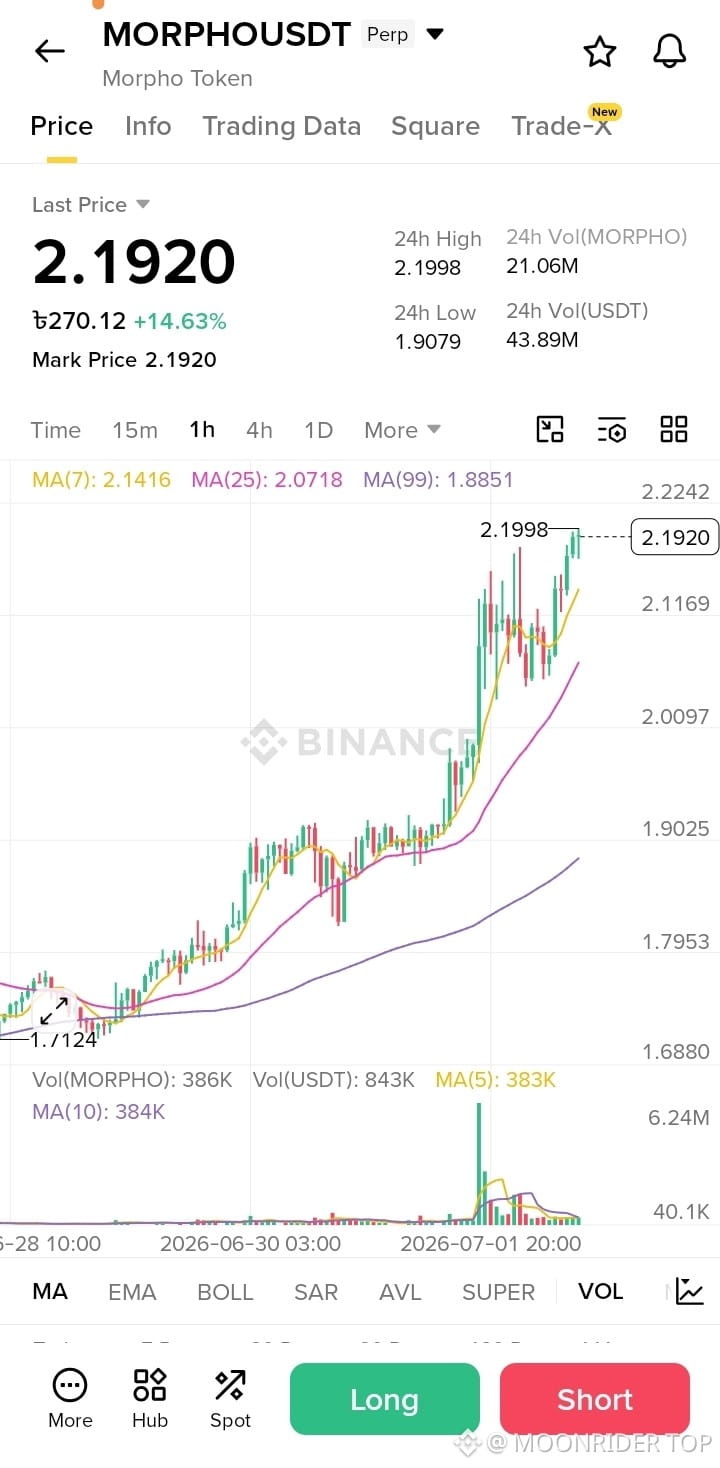
Everyone’s chasing longs on $MORPHO /USDT — but the 1h data just whispered an overextended rejection trap.
$MORPHO - SHORT
Trade Plan:
Entry: 2.1800 – 2.1980
SL: 2.2650
TP1: 2.1416
TP2: 2.0718
TP3: 1.9500
Why this setup?
• The 1h chart shows a sharp parabolic rally stalling exactly beneath the 2.1998 local high, forming a potential double-top exhaustion signal.
• Price is aggressively stretched away from its key moving averages after a solid +14.63% intraday surge, maximizing the likelihood of a mean-reversion pullback.
• If profit-taking triggers, the initial downside momentum will target the immediate dynamic support at MA(7) near 2.1416, with deeper correction potential toward MA(25) at 2.0718.
Debate:
Will Morpho Token manage to absorb the overhead selling pressure and slice through $2.20, or is this the perfect overextended peak for a deep correction?
Click here to Trade 👇#MORPHORisesOver12% $MORPHO
{spot}(MORPHOUSDT)
Everyone’s chasing longs on $MORPHO /USDT — but the 1h data just whispered an overextended rejection trap.
$MORPHO - SHORT
Trade Plan:
Entry: 2.1800 – 2.1980
SL: 2.2650
TP1: 2.1416
TP2: 2.0718
TP3: 1.9500
Why this setup?
• The 1h chart shows a sharp parabolic rally stalling exactly beneath the 2.1998 local high, forming a potential double-top exhaustion signal.
• Price is aggressively stretched away from its key moving averages after a solid +14.63% intraday surge, maximizing the likelihood of a mean-reversion pullback.
• If profit-taking triggers, the initial downside momentum will target the immediate dynamic support at MA(7) near 2.1416, with deeper correction potential toward MA(25) at 2.0718.
Debate:
Will Morpho Token manage to absorb the overhead selling pressure and slice through $2.20, or is this the perfect overextended peak for a deep correction?
Click here to Trade 👇#MORPHORisesOver12% $MORPHO
$MORPHO - SHORT
Trade Plan:
Entry: 2.1800 – 2.1980
SL: 2.2650
TP1: 2.1416
TP2: 2.0718
TP3: 1.9500
Why this setup?
• The 1h chart shows a sharp parabolic rally stalling exactly beneath the 2.1998 local high, forming a potential double-top exhaustion signal.
• Price is aggressively stretched away from its key moving averages after a solid +14.63% intraday surge, maximizing the likelihood of a mean-reversion pullback.
• If profit-taking triggers, the initial downside momentum will target the immediate dynamic support at MA(7) near 2.1416, with deeper correction potential toward MA(25) at 2.0718.
Debate:
Will Morpho Token manage to absorb the overhead selling pressure and slice through $2.20, or is this the perfect overextended peak for a deep correction?
Click here to Trade 👇#MORPHORisesOver12% $MORPHO
24

·
--
84

·
--
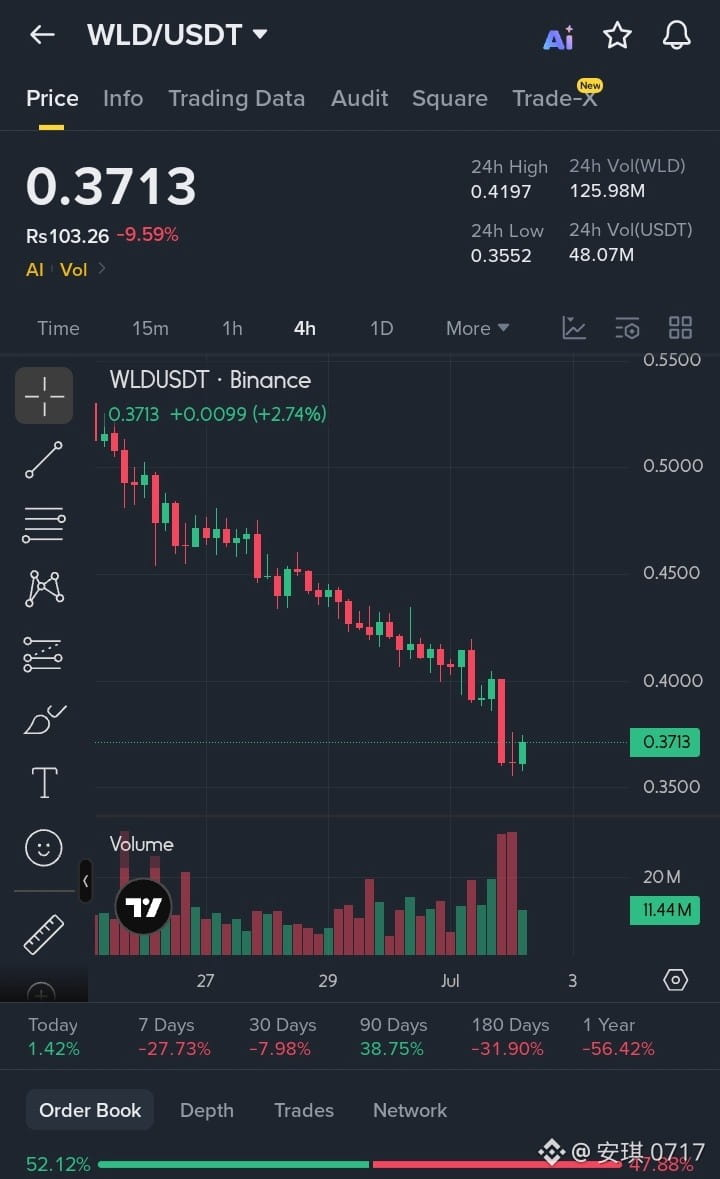
OMG 😯😀🫢😱$WLD AI coin crashing hard! 🩸 – 9.59% down – 52% bids – is this the bottom? 🤔
🚀 Entry: 0.3700 – 0.3720
🎯 Target: 0.3950
✅ TP (i): 0.3820
✅ TP (ii): 0.3885
✅ TP (iii): 0.3950
🛑 SL: 0.3620
Direction: Long
#USADP98KMiss #MORPHORisesOver12% #TradingSignals $RIF $POND
OMG 😯😀🫢😱$WLD AI coin crashing hard! 🩸 – 9.59% down – 52% bids – is this the bottom? 🤔
🚀 Entry: 0.3700 – 0.3720
🎯 Target: 0.3950
✅ TP (i): 0.3820
✅ TP (ii): 0.3885
✅ TP (iii): 0.3950
🛑 SL: 0.3620
Direction: Long
#USADP98KMiss #MORPHORisesOver12% #TradingSignals $RIF $POND
🚀 Entry: 0.3700 – 0.3720
🎯 Target: 0.3950
✅ TP (i): 0.3820
✅ TP (ii): 0.3885
✅ TP (iii): 0.3950
🛑 SL: 0.3620
Direction: Long
#USADP98KMiss #MORPHORisesOver12% #TradingSignals $RIF $POND
33
·
--
WAOO 🤩🤩😍🎉😳🥳$MANTA Layer 1 dipping! 📉 – 2.91% down – 58% bids – reversal loading? 🔥
🚀 Entry: 0.0595 – 0.0599
🎯 Target: 0.0630
✅ TP (i): 0.0610
✅ TP (ii): 0.0620
✅ TP (iii): 0.0630
🛑 SL: 0.0585
Direction: Long
#USADP98KMiss #AmericanBitcoinSets1For15ReverseSplit #MORPHORisesOver12% $RIF $POND
WAOO 🤩🤩😍🎉😳🥳$MANTA Layer 1 dipping! 📉 – 2.91% down – 58% bids – reversal loading? 🔥
🚀 Entry: 0.0595 – 0.0599
🎯 Target: 0.0630
✅ TP (i): 0.0610
✅ TP (ii): 0.0620
✅ TP (iii): 0.0630
🛑 SL: 0.0585
Direction: Long
#USADP98KMiss #AmericanBitcoinSets1For15ReverseSplit #MORPHORisesOver12% $RIF $POND
🚀 Entry: 0.0595 – 0.0599
🎯 Target: 0.0630
✅ TP (i): 0.0610
✅ TP (ii): 0.0620
✅ TP (iii): 0.0630
🛑 SL: 0.0585
Direction: Long
#USADP98KMiss #AmericanBitcoinSets1For15ReverseSplit #MORPHORisesOver12% $RIF $POND
1
516

$NEIRO Three major financial institutions moved toward the stablecoin reserve layer.
Morgan Stanley, BlackRock, and JPMorgan each rolled out a stablecoin reserve fund within the same 28 days this spring. All three were already in development before the Section 404 compromise text became public on May 1.
That timing matters because Section 404 puts pressure on direct yield from the stablecoin balance itself.
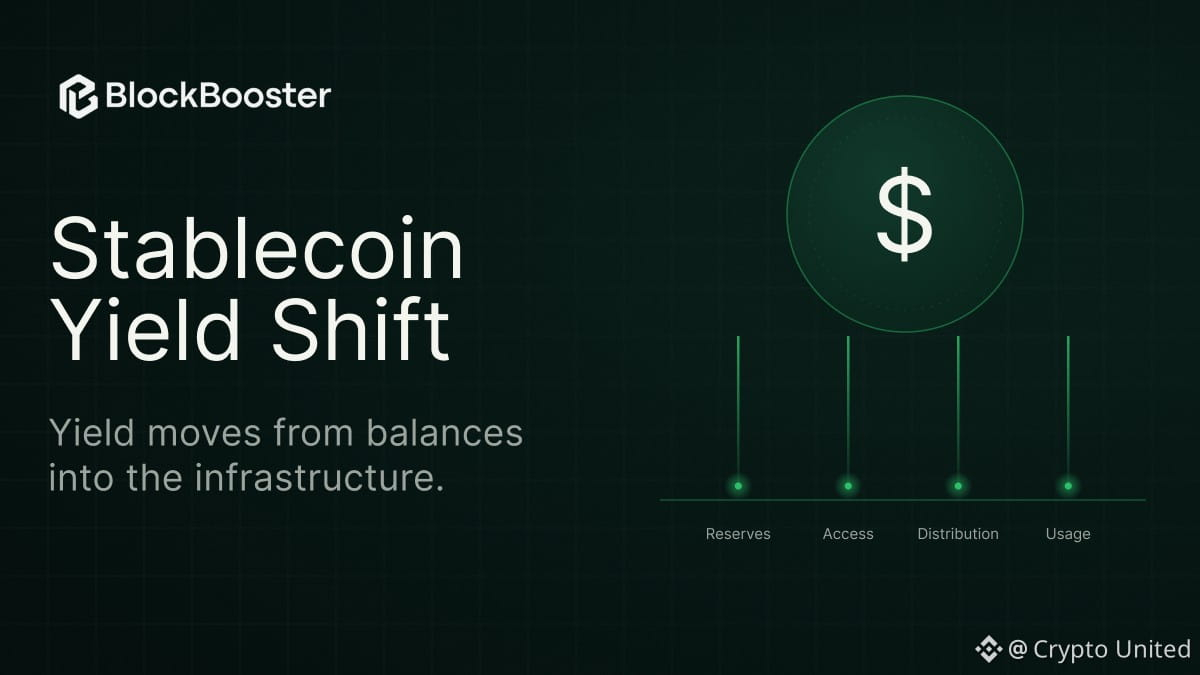
If passive balance rewards become harder to offer, yield does not disappear. It moves into reserves, distribution, activity, and tokenized cash products.
Two market moves make that easier to see.
• Open USD was announced this week with more than 140 partners, designed to share reserve income across the network instead of one issuer keeping it.
• Coinbase’s USDC vaults show the same direction from another angle: yield routed through lending infrastructure instead of a flat balance reward.
The stablecoin market is shifting toward the infrastructure that controls reserves, access, distribution, and usage.#USADP98KMiss #MORPHORisesOver12%
$NEIRO Three major financial institutions moved toward the stablecoin reserve layer.
Morgan Stanley, BlackRock, and JPMorgan each rolled out a stablecoin reserve fund within the same 28 days this spring. All three were already in development before the Section 404 compromise text became public on May 1.
That timing matters because Section 404 puts pressure on direct yield from the stablecoin balance itself.
If passive balance rewards become harder to offer, yield does not disappear. It moves into reserves, distribution, activity, and tokenized cash products.
Two market moves make that easier to see.
• Open USD was announced this week with more than 140 partners, designed to share reserve income across the network instead of one issuer keeping it.
• Coinbase’s USDC vaults show the same direction from another angle: yield routed through lending infrastructure instead of a flat balance reward.
The stablecoin market is shifting toward the infrastructure that controls reserves, access, distribution, and usage.#USADP98KMiss #MORPHORisesOver12%
Morgan Stanley, BlackRock, and JPMorgan each rolled out a stablecoin reserve fund within the same 28 days this spring. All three were already in development before the Section 404 compromise text became public on May 1.
That timing matters because Section 404 puts pressure on direct yield from the stablecoin balance itself.
If passive balance rewards become harder to offer, yield does not disappear. It moves into reserves, distribution, activity, and tokenized cash products.
Two market moves make that easier to see.
• Open USD was announced this week with more than 140 partners, designed to share reserve income across the network instead of one issuer keeping it.
• Coinbase’s USDC vaults show the same direction from another angle: yield routed through lending infrastructure instead of a flat balance reward.
The stablecoin market is shifting toward the infrastructure that controls reserves, access, distribution, and usage.#USADP98KMiss #MORPHORisesOver12%
USDC-0.01%
COINUS+5.03%
116

·
--
Bullish
$BAS is under heavy selling pressure after a sharp -15% drop. The key support sits around 0.038-0.039, while resistance is near 0.043. If bulls reclaim momentum, 0.047 becomes the next target 🎯. Next move: Wait for price stabilization instead of catching the falling knife. Pro tip: Patience often beats FOMO in volatile markets.
#USADP98KMiss #MORPHORisesOver12% #SouthKoreanStocksFall6% #OilPriceFalls
{alpha}(560x0f0df6cb17ee5e883eddfef9153fc6036bdb4e37)
$BAS is under heavy selling pressure after a sharp -15% drop. The key support sits around 0.038-0.039, while resistance is near 0.043. If bulls reclaim momentum, 0.047 becomes the next target 🎯. Next move: Wait for price stabilization instead of catching the falling knife. Pro tip: Patience often beats FOMO in volatile markets.
#USADP98KMiss #MORPHORisesOver12% #SouthKoreanStocksFall6% #OilPriceFalls
#USADP98KMiss #MORPHORisesOver12% #SouthKoreanStocksFall6% #OilPriceFalls
307
·
--
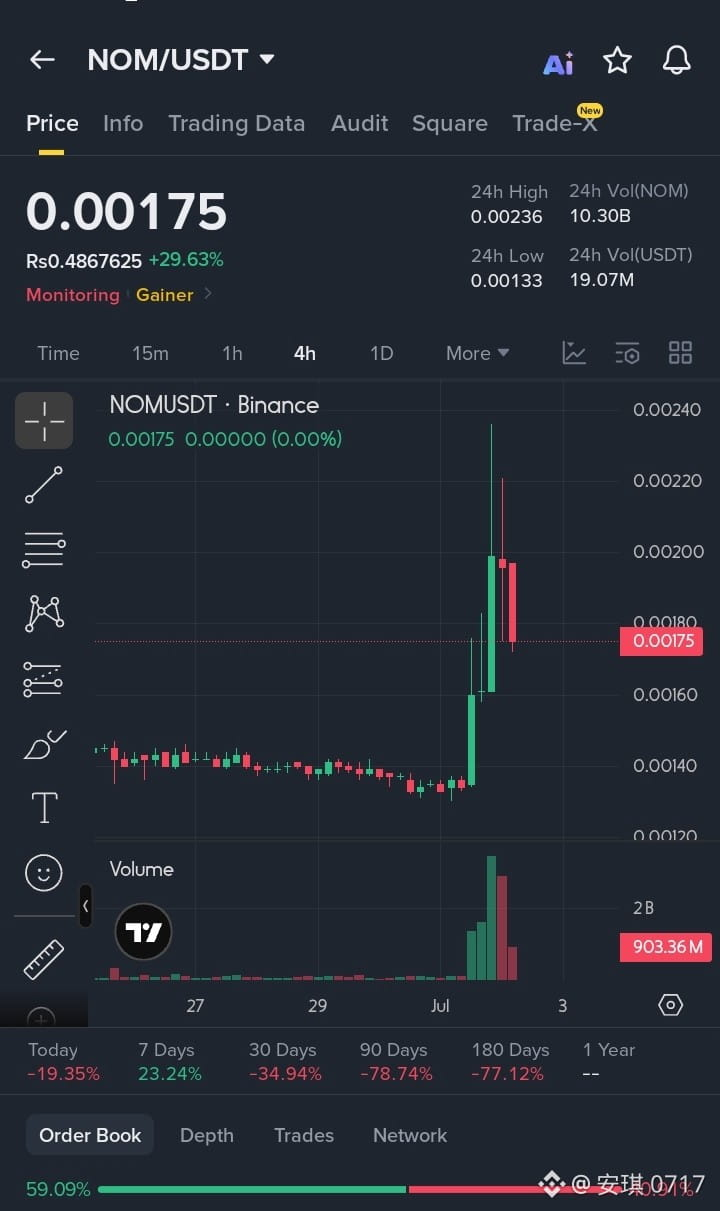
WAOO 🥳 🤩🥳🎊🎉🔥🔥 $NOM Monitoring coin pumping! 🔥 – 29.63% up – 59% bids – more gains coming? 😱
🚀 Entry: 0.00173 – 0.00176
🎯 Target: 0.00195
✅ TP (i): 0.00182
✅ TP (ii): 0.00188
✅ TP (iii): 0.00195
🛑 SL: 0.00168
Direction: Long
#USADP98KMiss #MORPHORisesOver12%
#TradingSignals $NFP $POND
WAOO 🥳 🤩🥳🎊🎉🔥🔥 $NOM Monitoring coin pumping! 🔥 – 29.63% up – 59% bids – more gains coming? 😱
🚀 Entry: 0.00173 – 0.00176
🎯 Target: 0.00195
✅ TP (i): 0.00182
✅ TP (ii): 0.00188
✅ TP (iii): 0.00195
🛑 SL: 0.00168
Direction: Long
#USADP98KMiss #MORPHORisesOver12%
#TradingSignals $NFP $POND
🚀 Entry: 0.00173 – 0.00176
🎯 Target: 0.00195
✅ TP (i): 0.00182
✅ TP (ii): 0.00188
✅ TP (iii): 0.00195
🛑 SL: 0.00168
Direction: Long
#USADP98KMiss #MORPHORisesOver12%
#TradingSignals $NFP $POND
36
·
--
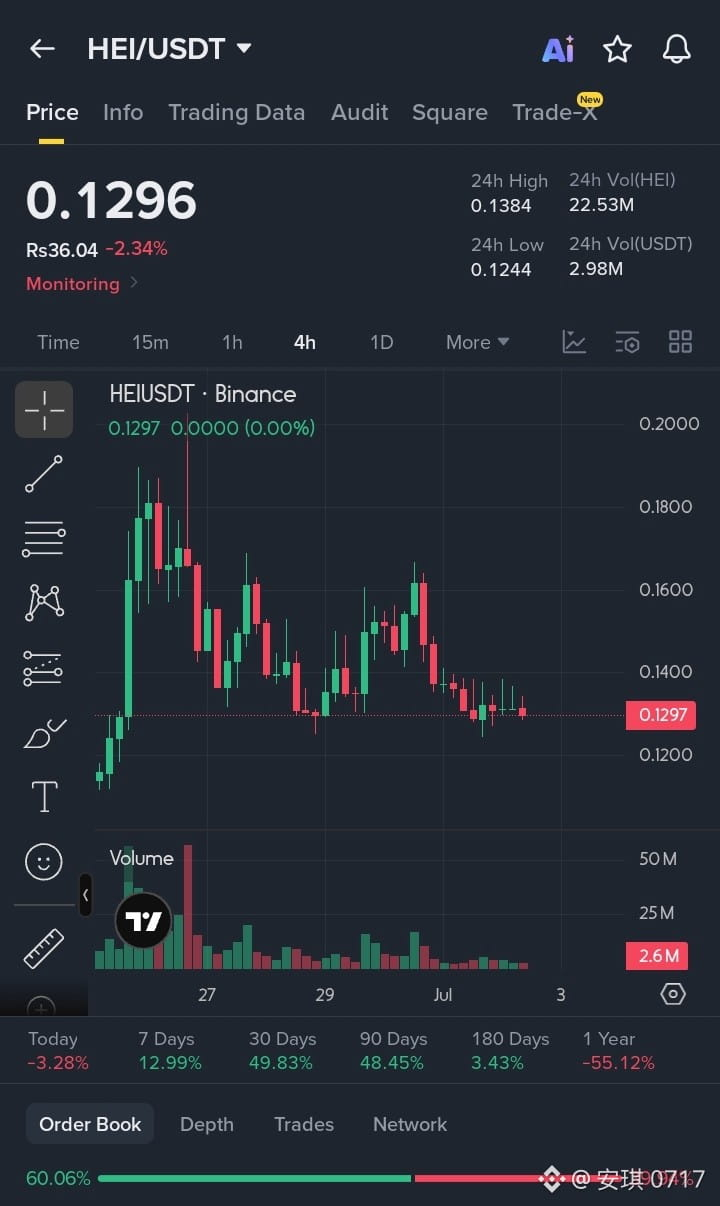
OMG 😯🫢😳😱 $HEI Monitoring coin bleeding! 🩸 – 2.34% down – 60% bids – bounce incoming? 🤔
🚀 Entry: 0.1290 – 0.1297
🎯 Target: 0.1360
✅ TP (i): 0.1325
✅ TP (ii): 0.1342
✅ TP (iii): 0.1360
🛑 SL: 0.1265
Direction: Long
#USADP98KMiss #MORPHORisesOver12% #AmericanBitcoinSets1For15ReverseSplit #TradingSignals $RIF $POND
OMG 😯🫢😳😱 $HEI Monitoring coin bleeding! 🩸 – 2.34% down – 60% bids – bounce incoming? 🤔
🚀 Entry: 0.1290 – 0.1297
🎯 Target: 0.1360
✅ TP (i): 0.1325
✅ TP (ii): 0.1342
✅ TP (iii): 0.1360
🛑 SL: 0.1265
Direction: Long
#USADP98KMiss #MORPHORisesOver12% #AmericanBitcoinSets1For15ReverseSplit #TradingSignals $RIF $POND
🚀 Entry: 0.1290 – 0.1297
🎯 Target: 0.1360
✅ TP (i): 0.1325
✅ TP (ii): 0.1342
✅ TP (iii): 0.1360
🛑 SL: 0.1265
Direction: Long
#USADP98KMiss #MORPHORisesOver12% #AmericanBitcoinSets1For15ReverseSplit #TradingSignals $RIF $POND
299
·
--
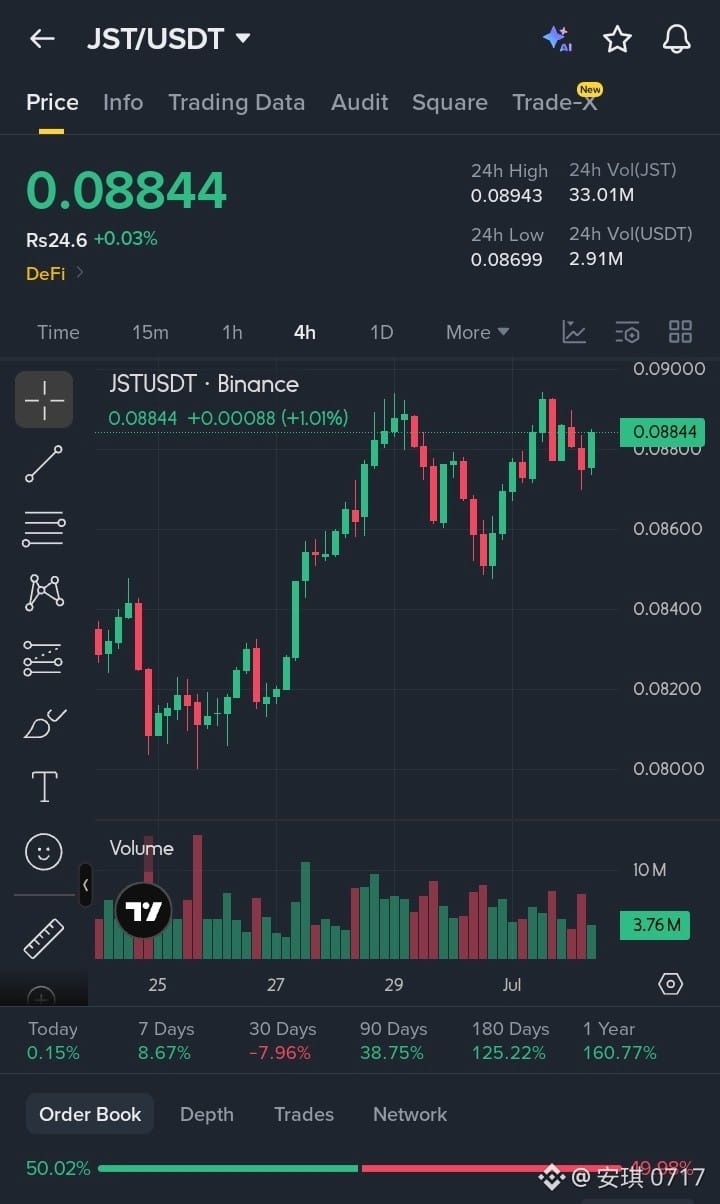
WAOO 🤩 😍 🥳 👏🏻 🥳 $JST DeFi pumping slowly! 📈 – 0.03% up but 50/50 balance – breakout loading? 🚀
🚀 Entry: 0.0880 – 0.0885
🎯 Target: 0.0910
✅ TP (i): 0.0895
✅ TP (ii): 0.0902
✅ TP (iii): 0.0910
🛑 SL: 0.0865
Direction: Long
#USADP98KMiss #MORPHORisesOver12% #AmericanBitcoinSets1For15ReverseSplit #TradingSignals $RIF $POND
WAOO 🤩 😍 🥳 👏🏻 🥳 $JST DeFi pumping slowly! 📈 – 0.03% up but 50/50 balance – breakout loading? 🚀
🚀 Entry: 0.0880 – 0.0885
🎯 Target: 0.0910
✅ TP (i): 0.0895
✅ TP (ii): 0.0902
✅ TP (iii): 0.0910
🛑 SL: 0.0865
Direction: Long
#USADP98KMiss #MORPHORisesOver12% #AmericanBitcoinSets1For15ReverseSplit #TradingSignals $RIF $POND
🚀 Entry: 0.0880 – 0.0885
🎯 Target: 0.0910
✅ TP (i): 0.0895
✅ TP (ii): 0.0902
✅ TP (iii): 0.0910
🛑 SL: 0.0865
Direction: Long
#USADP98KMiss #MORPHORisesOver12% #AmericanBitcoinSets1For15ReverseSplit #TradingSignals $RIF $POND
138
·
--
Bullish
$NOM has gained over 27%, attracting attention from momentum traders. Holding above support will be key before another rally can develop. Support: $0.00165–0.00168 | Resistance: $0.00180–0.00188 | Target 🎯: $0.00200–0.00215 | Stop Loss: Below $0.00160. A breakout above resistance could fuel another sharp move.
{spot}(NOMUSDT)
#BrentCrudeSlidesAbout40%FromMarchPeak #AppleInTalksToBuyCXMTAndYMTCMemoryChips #SECExaminingSusquehannaInsiderTradingClaims #USTreasuryNamesTrumpAccountETFLineup #MORPHORisesOver12%
$NOM has gained over 27%, attracting attention from momentum traders. Holding above support will be key before another rally can develop. Support: $0.00165–0.00168 | Resistance: $0.00180–0.00188 | Target 🎯: $0.00200–0.00215 | Stop Loss: Below $0.00160. A breakout above resistance could fuel another sharp move.
#BrentCrudeSlidesAbout40%FromMarchPeak #AppleInTalksToBuyCXMTAndYMTCMemoryChips #SECExaminingSusquehannaInsiderTradingClaims #USTreasuryNamesTrumpAccountETFLineup #MORPHORisesOver12%
#BrentCrudeSlidesAbout40%FromMarchPeak #AppleInTalksToBuyCXMTAndYMTCMemoryChips #SECExaminingSusquehannaInsiderTradingClaims #USTreasuryNamesTrumpAccountETFLineup #MORPHORisesOver12%
235
Log in to explore more content
Join global crypto users on Binance Square
⚡️ Get latest and useful information about crypto.
💬 Trusted by the world’s largest crypto exchange.
👍 Discover real insights from verified creators.
Email / Phone number
Trending Topics
1
#NFPWatch
10.5M views
17,748 Discussing
2
#BitcoinFundingRateTriplesTo10%
1,852 views
127 Discussing
3
#BitcoinSurpasses$86KUp2.99%
1,116 views
26 Discussing
4
#ZcashFalls21%FromSeptemberPeak
9,608 views
210 Discussing
5
#USSeptemberPayrollsAdd29KUnemploymentRises4.2%
1,048 views
69 Discussing
6
#XRPPostsFirstThreeGreenMonthsInQ3
11,301 views
276 Discussing
7
#BNBChainTokenizedStocksTop$1BAt30%Share
71 views
21 Discussing
8
#BitcoinRisesToward$85K
50,626 views
112 Discussing
9
#AmazonPlansToSell$8BNvidiaChips
5,750 views
77 Discussing
10
#NEARFallsToAround$4.70Down14%
39,327 views
101 Discussing