
#layer2revolution
layer2revolution
103,651 views
140 Discussing
Hot
Latest

·
--
Headline: Why Hybrid Exchanges (HEX) Like GRVT Are the Future of Crypto Trading 🚀
The crypto space is evolving, and the debate between CEX vs. DEX is finding its ultimate middle ground: Hybrid Exchanges (HEX).
@grvt_io is leading this charge by combining the best of both worlds. Here is why it's a game-changer:
CEX Speed & UX: Fast order matching, low latency, and a seamless trading experience that feels just like a traditional exchange.
DEX Security: Self-custody! You retain control of your private keys and funds, eliminating the counterparty risks associated with traditional centralized platforms.
Privacy-First: Built on cutting-edge zero-knowledge technology (zkSync ecosystem) to ensure secure, confidential, and hyper-scalable transactions
#grvt #CryptoTrading #zkSync. #Layer2Revolution
Headline: Why Hybrid Exchanges (HEX) Like GRVT Are the Future of Crypto Trading 🚀
The crypto space is evolving, and the debate between CEX vs. DEX is finding its ultimate middle ground: Hybrid Exchanges (HEX).
@grvt_io is leading this charge by combining the best of both worlds. Here is why it's a game-changer:
CEX Speed & UX: Fast order matching, low latency, and a seamless trading experience that feels just like a traditional exchange.
DEX Security: Self-custody! You retain control of your private keys and funds, eliminating the counterparty risks associated with traditional centralized platforms.
Privacy-First: Built on cutting-edge zero-knowledge technology (zkSync ecosystem) to ensure secure, confidential, and hyper-scalable transactions
#grvt #CryptoTrading #zkSync. #Layer2Revolution
The crypto space is evolving, and the debate between CEX vs. DEX is finding its ultimate middle ground: Hybrid Exchanges (HEX).
@grvt_io is leading this charge by combining the best of both worlds. Here is why it's a game-changer:
CEX Speed & UX: Fast order matching, low latency, and a seamless trading experience that feels just like a traditional exchange.
DEX Security: Self-custody! You retain control of your private keys and funds, eliminating the counterparty risks associated with traditional centralized platforms.
Privacy-First: Built on cutting-edge zero-knowledge technology (zkSync ecosystem) to ensure secure, confidential, and hyper-scalable transactions
#grvt #CryptoTrading #zkSync. #Layer2Revolution
1
69

·
--
$ARB ⚡ Building the future of Ethereum means building in the open.
Offchain Labs powers blockchain innovation through open-source development, with contributions spanning Arbitrum, Nitro, Stylus, Orbit, and developer tooling that make scaling Ethereum faster, more secure, and more accessible.
Open code. Transparent innovation. Real impact. 🚀
#Ethereum #Arbitrum #OffchainLabs #OpenSource #Blockchain #Web3 #Layer2Revolution
$ARB ⚡ Building the future of Ethereum means building in the open.
Offchain Labs powers blockchain innovation through open-source development, with contributions spanning Arbitrum, Nitro, Stylus, Orbit, and developer tooling that make scaling Ethereum faster, more secure, and more accessible.
Open code. Transparent innovation. Real impact. 🚀
#Ethereum #Arbitrum #OffchainLabs #OpenSource #Blockchain #Web3 #Layer2Revolution
Offchain Labs powers blockchain innovation through open-source development, with contributions spanning Arbitrum, Nitro, Stylus, Orbit, and developer tooling that make scaling Ethereum faster, more secure, and more accessible.
Open code. Transparent innovation. Real impact. 🚀
#Ethereum #Arbitrum #OffchainLabs #OpenSource #Blockchain #Web3 #Layer2Revolution
149
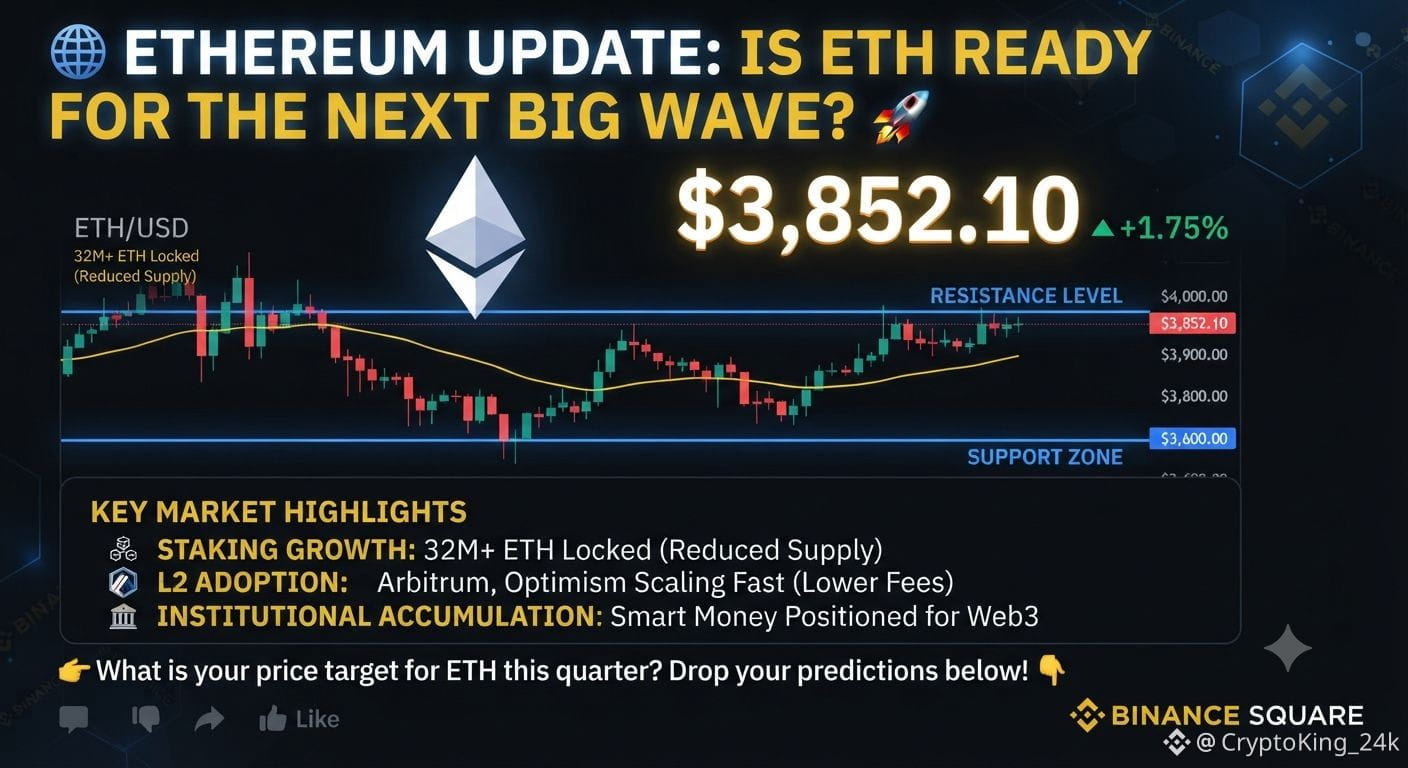
🌐 Ethereum Update: Is ETH Ready for the Next Big Wave? 🚀
Binance Square community! Let's shift our focus to the second-largest crypto by market cap—Ethereum!
ETH has been quietly building strong momentum as institutional interest and network upgrades continue to shape its long-term outlook. With massive amounts of ETH being locked into staking contracts, the circulating supply on exchanges is tightening up significantly! 📉💎
📊 Key Highlights:
Staking Growth: More and more investors are staking their ETH, reducing liquid supply and creating a strong holder base.
Layer 2 Adoption: L2 networks (like Arbitrum, Optimism) are scaling transactions rapidly while keeping gas fees lower.
Institutional Accumulation: Smart money and institutional players continue to view ETH as a foundational asset for Web3.
💡 Trader's Outlook:
A tighter supply combined with rising network utility often creates massive bullish setups. Are you accumulating ETH for the long haul, or trading the short-term swings? ⚖️
👉 What is your price target for Ethereum this quarter? Drop your predictions below! 👇
#ETH #BinanceSquareFamily #CryptoTrading. #Layer2Revolution #CryptoAnalysis
🌐 Ethereum Update: Is ETH Ready for the Next Big Wave? 🚀
Binance Square community! Let's shift our focus to the second-largest crypto by market cap—Ethereum!
ETH has been quietly building strong momentum as institutional interest and network upgrades continue to shape its long-term outlook. With massive amounts of ETH being locked into staking contracts, the circulating supply on exchanges is tightening up significantly! 📉💎
📊 Key Highlights:
Staking Growth: More and more investors are staking their ETH, reducing liquid supply and creating a strong holder base.
Layer 2 Adoption: L2 networks (like Arbitrum, Optimism) are scaling transactions rapidly while keeping gas fees lower.
Institutional Accumulation: Smart money and institutional players continue to view ETH as a foundational asset for Web3.
💡 Trader's Outlook:
A tighter supply combined with rising network utility often creates massive bullish setups. Are you accumulating ETH for the long haul, or trading the short-term swings? ⚖️
👉 What is your price target for Ethereum this quarter? Drop your predictions below! 👇
#ETH #BinanceSquareFamily #CryptoTrading. #Layer2Revolution #CryptoAnalysis
Binance Square community! Let's shift our focus to the second-largest crypto by market cap—Ethereum!
ETH has been quietly building strong momentum as institutional interest and network upgrades continue to shape its long-term outlook. With massive amounts of ETH being locked into staking contracts, the circulating supply on exchanges is tightening up significantly! 📉💎
📊 Key Highlights:
Staking Growth: More and more investors are staking their ETH, reducing liquid supply and creating a strong holder base.
Layer 2 Adoption: L2 networks (like Arbitrum, Optimism) are scaling transactions rapidly while keeping gas fees lower.
Institutional Accumulation: Smart money and institutional players continue to view ETH as a foundational asset for Web3.
💡 Trader's Outlook:
A tighter supply combined with rising network utility often creates massive bullish setups. Are you accumulating ETH for the long haul, or trading the short-term swings? ⚖️
👉 What is your price target for Ethereum this quarter? Drop your predictions below! 👇
#ETH #BinanceSquareFamily #CryptoTrading. #Layer2Revolution #CryptoAnalysis
73
·
--
Bullish
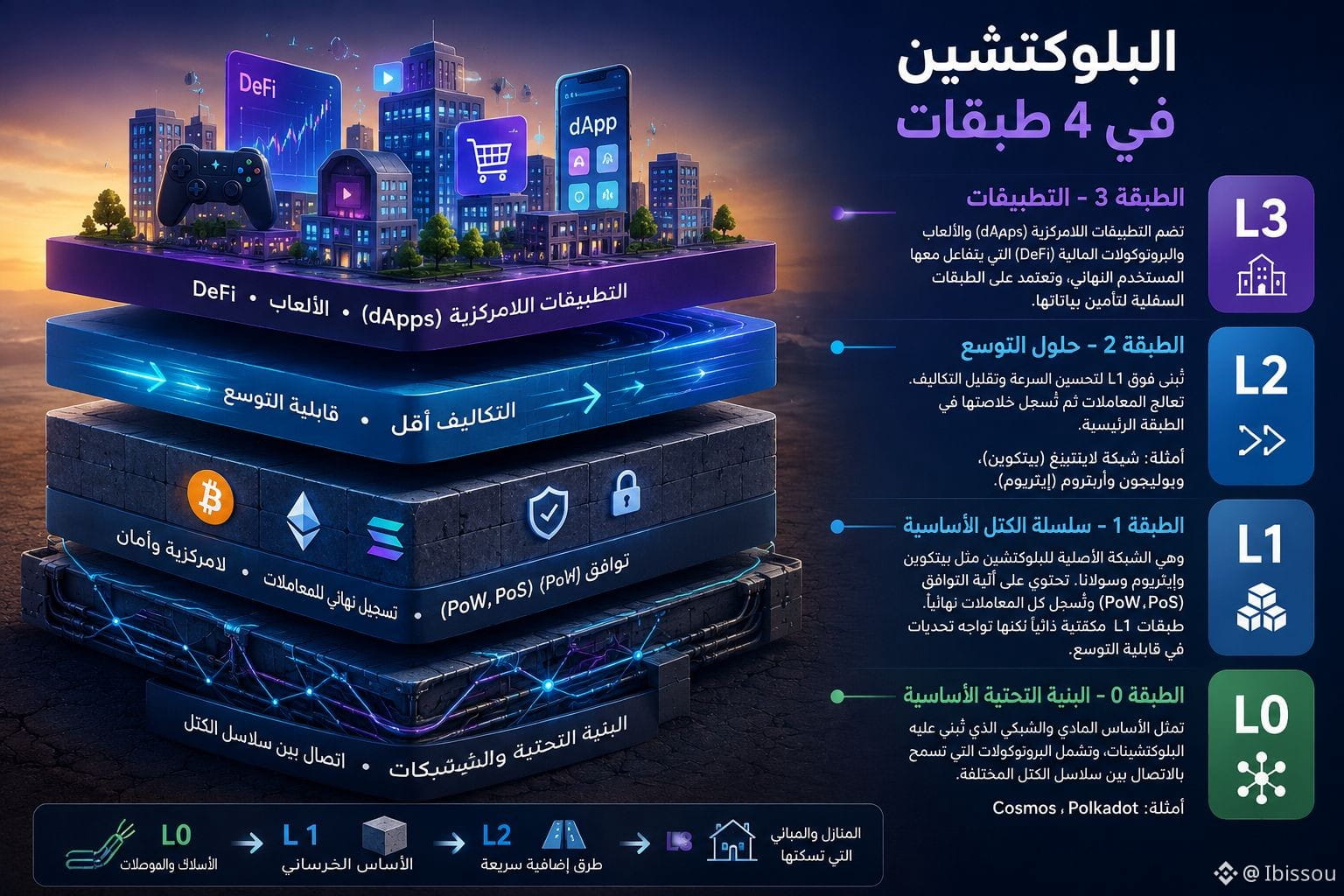
Blockchain technology is typically divided into four main layers, each with a specific role:
Layer 0 (L0) - The foundational infrastructure
This represents the physical and network infrastructure upon which blockchains are built, including protocols that enable communication between different blockchains (like Polkadot and Cosmos).
Layer 1 (L1) - The core blockchain (main layer)
This is the native network of the blockchain such as Bitcoin, Ethereum, and Solana. It contains the consensus mechanisms (PoW, PoS) and records all transactions permanently. L1 layers are self-sufficient but face scalability challenges.
Layer 2 (L2) - Scaling solutions
Built on top of L1 to enhance speed and reduce costs. It processes transactions and then records the summary on the main layer. Examples include the Lightning Network (Bitcoin), Polygon, and Arbitrum (Ethereum).
Layer 3 (L3) - Applications
This includes decentralized applications (dApps), games, and financial protocols (DeFi) that the end user interacts with, relying on the lower layers to secure their data.
In short: L0 is the wiring and connections, L1 is the concrete foundation, L2 are the fast additional routes, and L3 are the houses and buildings you live in.#USJoblessClaimsHit225K
#Layer1
#LayerZero
#Layer3Networks
#Layer2Revolution
Blockchain technology is typically divided into four main layers, each with a specific role:
Layer 0 (L0) - The foundational infrastructure
This represents the physical and network infrastructure upon which blockchains are built, including protocols that enable communication between different blockchains (like Polkadot and Cosmos).
Layer 1 (L1) - The core blockchain (main layer)
This is the native network of the blockchain such as Bitcoin, Ethereum, and Solana. It contains the consensus mechanisms (PoW, PoS) and records all transactions permanently. L1 layers are self-sufficient but face scalability challenges.
Layer 2 (L2) - Scaling solutions
Built on top of L1 to enhance speed and reduce costs. It processes transactions and then records the summary on the main layer. Examples include the Lightning Network (Bitcoin), Polygon, and Arbitrum (Ethereum).
Layer 3 (L3) - Applications
This includes decentralized applications (dApps), games, and financial protocols (DeFi) that the end user interacts with, relying on the lower layers to secure their data.
In short: L0 is the wiring and connections, L1 is the concrete foundation, L2 are the fast additional routes, and L3 are the houses and buildings you live in.#USJoblessClaimsHit225K
#Layer1
#LayerZero
#Layer3Networks
#Layer2Revolution
Layer 0 (L0) - The foundational infrastructure
This represents the physical and network infrastructure upon which blockchains are built, including protocols that enable communication between different blockchains (like Polkadot and Cosmos).
Layer 1 (L1) - The core blockchain (main layer)
This is the native network of the blockchain such as Bitcoin, Ethereum, and Solana. It contains the consensus mechanisms (PoW, PoS) and records all transactions permanently. L1 layers are self-sufficient but face scalability challenges.
Layer 2 (L2) - Scaling solutions
Built on top of L1 to enhance speed and reduce costs. It processes transactions and then records the summary on the main layer. Examples include the Lightning Network (Bitcoin), Polygon, and Arbitrum (Ethereum).
Layer 3 (L3) - Applications
This includes decentralized applications (dApps), games, and financial protocols (DeFi) that the end user interacts with, relying on the lower layers to secure their data.
In short: L0 is the wiring and connections, L1 is the concrete foundation, L2 are the fast additional routes, and L3 are the houses and buildings you live in.#USJoblessClaimsHit225K
#Layer1
#LayerZero
#Layer3Networks
#Layer2Revolution
124

·
--
Bullish
MANTA Compresses Deep Inside Core Support Zone! Will the Modular Ecosystem Spark a Massive Squeeze? 🌐
The Analysis: Manta Network ($MANTA
{spot}(MANTAUSDT)
) is printing an exceptionally tight market structure, grinding heavily within an intense horizontal consolidation bracket. As capital searches for highly scalable, undervalued modular Layer 2 infrastructure layers, MANTA's volatility index has compressed into a multi-week spring block.
The Alpha: Despite recent market-wide leverage flushes that reset futures open interest back to healthy baselines, Manta's on-chain metrics show a steady increase in localized execution layers. Daily charts are indicating a textbook wedge compression where sell volume has reached a state of complete exhaustion. A clean, volume-backed 4-hour candle flip of local structural resistance will easily trigger a short-covering cascade toward the next overhead liquidity pool.
The Trade: Layering spot and low-leverage positions inside this deep demand shelf offers massive asymmetric upside with low risk exposure. Target the upper historical supply boundaries for taking short-term profits. Maintain defensive safety parameters with a hard daily close invalidation set directly under local swing lows.
MANTA is coiling heavily at historical demand lines where previous explosive bounces started. Are you front-running the bounce? 👇
#MANTA/USDT. #MantaNetwork #Layer2Revolution #ModularBlockchain #DeFiSignals
MANTA Compresses Deep Inside Core Support Zone! Will the Modular Ecosystem Spark a Massive Squeeze? 🌐
The Analysis: Manta Network ($MANTA
) is printing an exceptionally tight market structure, grinding heavily within an intense horizontal consolidation bracket. As capital searches for highly scalable, undervalued modular Layer 2 infrastructure layers, MANTA's volatility index has compressed into a multi-week spring block.
The Alpha: Despite recent market-wide leverage flushes that reset futures open interest back to healthy baselines, Manta's on-chain metrics show a steady increase in localized execution layers. Daily charts are indicating a textbook wedge compression where sell volume has reached a state of complete exhaustion. A clean, volume-backed 4-hour candle flip of local structural resistance will easily trigger a short-covering cascade toward the next overhead liquidity pool.
The Trade: Layering spot and low-leverage positions inside this deep demand shelf offers massive asymmetric upside with low risk exposure. Target the upper historical supply boundaries for taking short-term profits. Maintain defensive safety parameters with a hard daily close invalidation set directly under local swing lows.
MANTA is coiling heavily at historical demand lines where previous explosive bounces started. Are you front-running the bounce? 👇
#MANTA/USDT. #MantaNetwork #Layer2Revolution #ModularBlockchain #DeFiSignals
The Analysis: Manta Network ($MANTA
) is printing an exceptionally tight market structure, grinding heavily within an intense horizontal consolidation bracket. As capital searches for highly scalable, undervalued modular Layer 2 infrastructure layers, MANTA's volatility index has compressed into a multi-week spring block.
The Alpha: Despite recent market-wide leverage flushes that reset futures open interest back to healthy baselines, Manta's on-chain metrics show a steady increase in localized execution layers. Daily charts are indicating a textbook wedge compression where sell volume has reached a state of complete exhaustion. A clean, volume-backed 4-hour candle flip of local structural resistance will easily trigger a short-covering cascade toward the next overhead liquidity pool.
The Trade: Layering spot and low-leverage positions inside this deep demand shelf offers massive asymmetric upside with low risk exposure. Target the upper historical supply boundaries for taking short-term profits. Maintain defensive safety parameters with a hard daily close invalidation set directly under local swing lows.
MANTA is coiling heavily at historical demand lines where previous explosive bounces started. Are you front-running the bounce? 👇
#MANTA/USDT. #MantaNetwork #Layer2Revolution #ModularBlockchain #DeFiSignals
1
131
·
--
$POL $POL is more than a token upgrade — it’s the backbone of Polygon’s multi-chain future. ⚡
🔹 Replaces MATIC with 1:1 migration
🔹 Powers staking, governance & gas fees
🔹 Enables validators to secure multiple chains
🔹 Built for Polygon 2.0 & zk-powered scalability
Polygon is evolving from a single chain into an interconnected ecosystem of chains — and POL is designed to scale with it. 🌐
#Polygon #POL #Crypto #Ethereum #Web3 #Layer2Revolution
$POL $POL is more than a token upgrade — it’s the backbone of Polygon’s multi-chain future. ⚡
🔹 Replaces MATIC with 1:1 migration
🔹 Powers staking, governance & gas fees
🔹 Enables validators to secure multiple chains
🔹 Built for Polygon 2.0 & zk-powered scalability
Polygon is evolving from a single chain into an interconnected ecosystem of chains — and POL is designed to scale with it. 🌐
#Polygon #POL #Crypto #Ethereum #Web3 #Layer2Revolution
🔹 Replaces MATIC with 1:1 migration
🔹 Powers staking, governance & gas fees
🔹 Enables validators to secure multiple chains
🔹 Built for Polygon 2.0 & zk-powered scalability
Polygon is evolving from a single chain into an interconnected ecosystem of chains — and POL is designed to scale with it. 🌐
#Polygon #POL #Crypto #Ethereum #Web3 #Layer2Revolution
123

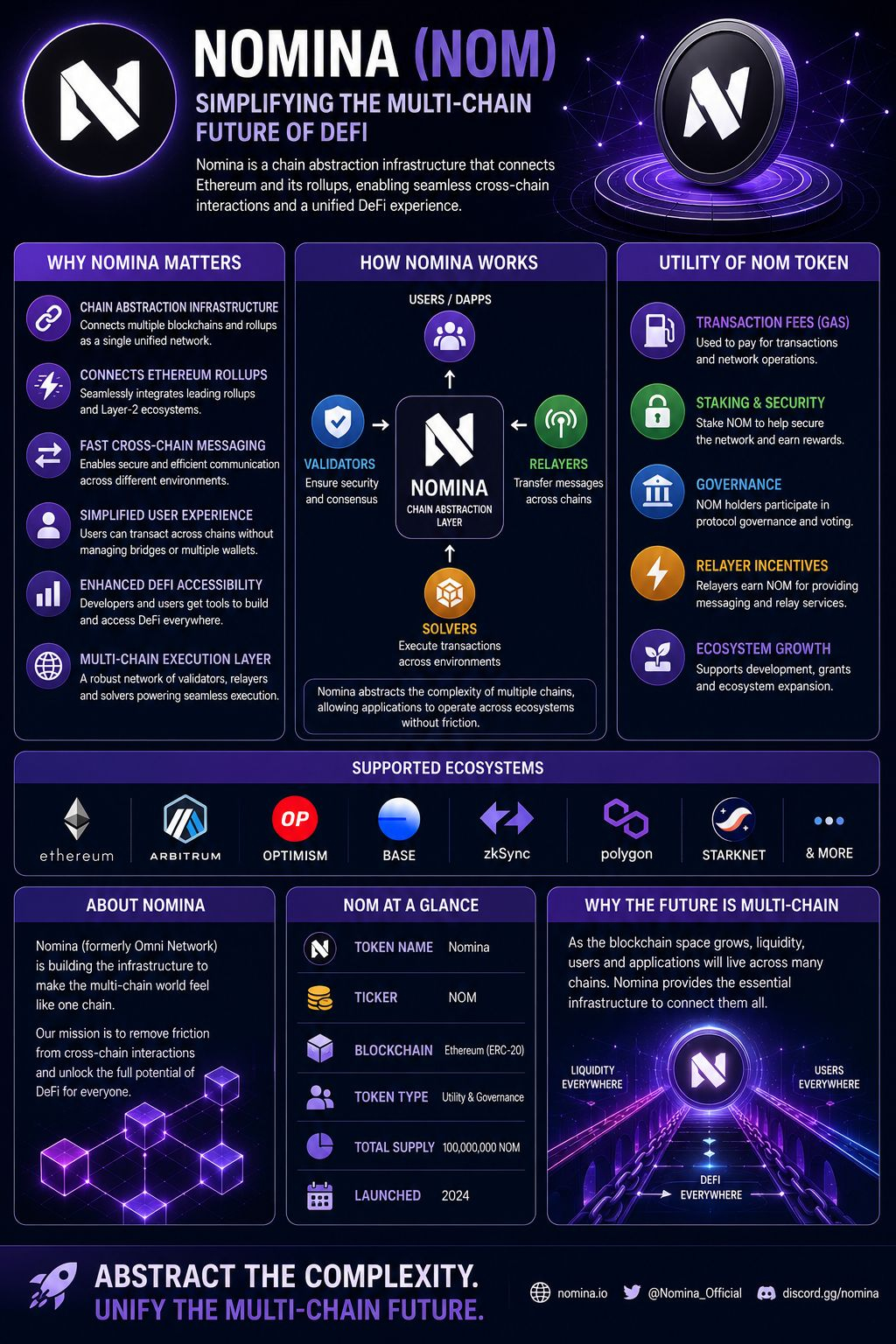
Nomina (NOM): Simplifying the Multi-Chain Future of DeFi
As blockchain ecosystems continue to expand, users often face a major challenge: navigating multiple chains, bridges, wallets, and gas tokens.
Nomina (NOM) aims to solve this problem through chain abstraction technology, making interactions across Ethereum and its rollups feel like a single unified experience. The project evolved from Omni Network and rebranded to Nomina with a renewed focus on simplifying decentralized finance.
Why Nomina Matters
🔹 Chain Abstraction Infrastructure
🔹 Connects Ethereum Rollups Seamlessly
🔹 Fast Cross-Chain Messaging
🔹 Simplified User Experience
🔹 Enhanced DeFi Accessibility
🔹 Multi-Chain Execution Layer
Nomina's architecture allows applications to operate across multiple blockchain environments without requiring users to manage complex bridging processes. Validators, relayers, and solvers work together to enable smooth cross-chain interactions.
Utility of the NOM Token
✅ Transaction Fees (Gas)
✅ Staking and Network Security
✅ Governance Participation
✅ Relayer Incentives
✅ Ecosystem Growth Support
The NOM token serves as the core asset of the ecosystem, aligning incentives between validators, developers, and users while securing the protocol.
Looking Ahead
As DeFi becomes increasingly multi-chain, projects focused on interoperability and chain abstraction could play a critical role in improving user experience. Nomina is positioning itself as infrastructure that helps remove friction from cross-chain interactions and enables a more connected blockchain ecosystem.
#Nomina #DeFi #Layer2Revolution #Blockchain #BinanceSquare
$NOM
{spot}(NOMUSDT)
Nomina (NOM): Simplifying the Multi-Chain Future of DeFi
As blockchain ecosystems continue to expand, users often face a major challenge: navigating multiple chains, bridges, wallets, and gas tokens.
Nomina (NOM) aims to solve this problem through chain abstraction technology, making interactions across Ethereum and its rollups feel like a single unified experience. The project evolved from Omni Network and rebranded to Nomina with a renewed focus on simplifying decentralized finance.
Why Nomina Matters
🔹 Chain Abstraction Infrastructure
🔹 Connects Ethereum Rollups Seamlessly
🔹 Fast Cross-Chain Messaging
🔹 Simplified User Experience
🔹 Enhanced DeFi Accessibility
🔹 Multi-Chain Execution Layer
Nomina's architecture allows applications to operate across multiple blockchain environments without requiring users to manage complex bridging processes. Validators, relayers, and solvers work together to enable smooth cross-chain interactions.
Utility of the NOM Token
✅ Transaction Fees (Gas)
✅ Staking and Network Security
✅ Governance Participation
✅ Relayer Incentives
✅ Ecosystem Growth Support
The NOM token serves as the core asset of the ecosystem, aligning incentives between validators, developers, and users while securing the protocol.
Looking Ahead
As DeFi becomes increasingly multi-chain, projects focused on interoperability and chain abstraction could play a critical role in improving user experience. Nomina is positioning itself as infrastructure that helps remove friction from cross-chain interactions and enables a more connected blockchain ecosystem.
#Nomina #DeFi #Layer2Revolution #Blockchain #BinanceSquare
$NOM
As blockchain ecosystems continue to expand, users often face a major challenge: navigating multiple chains, bridges, wallets, and gas tokens.
Nomina (NOM) aims to solve this problem through chain abstraction technology, making interactions across Ethereum and its rollups feel like a single unified experience. The project evolved from Omni Network and rebranded to Nomina with a renewed focus on simplifying decentralized finance.
Why Nomina Matters
🔹 Chain Abstraction Infrastructure
🔹 Connects Ethereum Rollups Seamlessly
🔹 Fast Cross-Chain Messaging
🔹 Simplified User Experience
🔹 Enhanced DeFi Accessibility
🔹 Multi-Chain Execution Layer
Nomina's architecture allows applications to operate across multiple blockchain environments without requiring users to manage complex bridging processes. Validators, relayers, and solvers work together to enable smooth cross-chain interactions.
Utility of the NOM Token
✅ Transaction Fees (Gas)
✅ Staking and Network Security
✅ Governance Participation
✅ Relayer Incentives
✅ Ecosystem Growth Support
The NOM token serves as the core asset of the ecosystem, aligning incentives between validators, developers, and users while securing the protocol.
Looking Ahead
As DeFi becomes increasingly multi-chain, projects focused on interoperability and chain abstraction could play a critical role in improving user experience. Nomina is positioning itself as infrastructure that helps remove friction from cross-chain interactions and enables a more connected blockchain ecosystem.
#Nomina #DeFi #Layer2Revolution #Blockchain #BinanceSquare
$NOM
2
229
Log in to explore more content
Join global crypto users on Binance Square
⚡️ Get latest and useful information about crypto.
💬 Trusted by the world’s largest crypto exchange.
👍 Discover real insights from verified creators.
Email / Phone number
Trending Topics
1
#AIStocksWhatNext
850,052 views
6,494 Discussing
2
#BitcoinRejectedAt$87,300Twice
0 views
0 Discussing
3
#BCHJumps28%OnCMEFuturesListing
7,699 views
450 Discussing
4
#WallStreetEarningsRevisionsTurnBearish
5,445 views
334 Discussing
5
#DollarIndexReclaims101
4,405 views
278 Discussing
6
#21SharesLaunchesEuropesFirstZcashETP
37,609 views
1,066 Discussing
7
#CardanoJoinsX402PaymentStandard
24,101 views
773 Discussing
8
#BitcoinTops$87KAtEightMonthHigh
12,055 views
131 Discussing
9
#ZECBreaksAbove$1600AtRecordHigh
8,491 views
107 Discussing
10
#BitwiseNEARStakingETPAssetsTop$100M
39,168 views
105 Discussing