
#kleimengine
kleimengine
100 views
27 Discussing
Hot
Latest

·
--
Do miners need a public blockchain to keep issuing new tokens forever so they can always have coins to mine?
Without relying on unlimited issuance or creating scarcity through token burns, is it possible to keep tokens circulating and miners continually incentivized?
This is the industry challenge that STAK Protocol’s Kleim Engine can address—a problem that has long plagued traditional mining economic models.
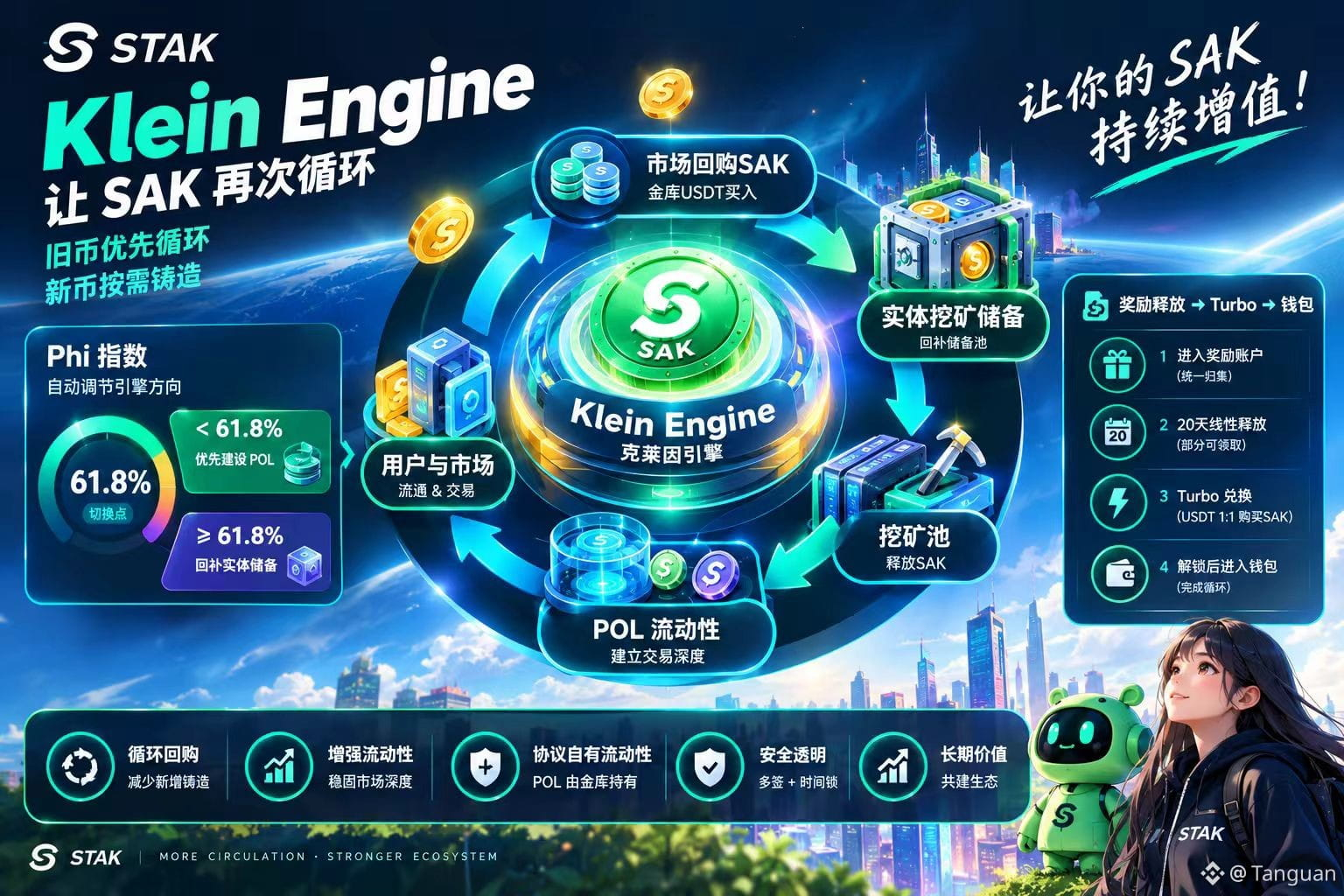
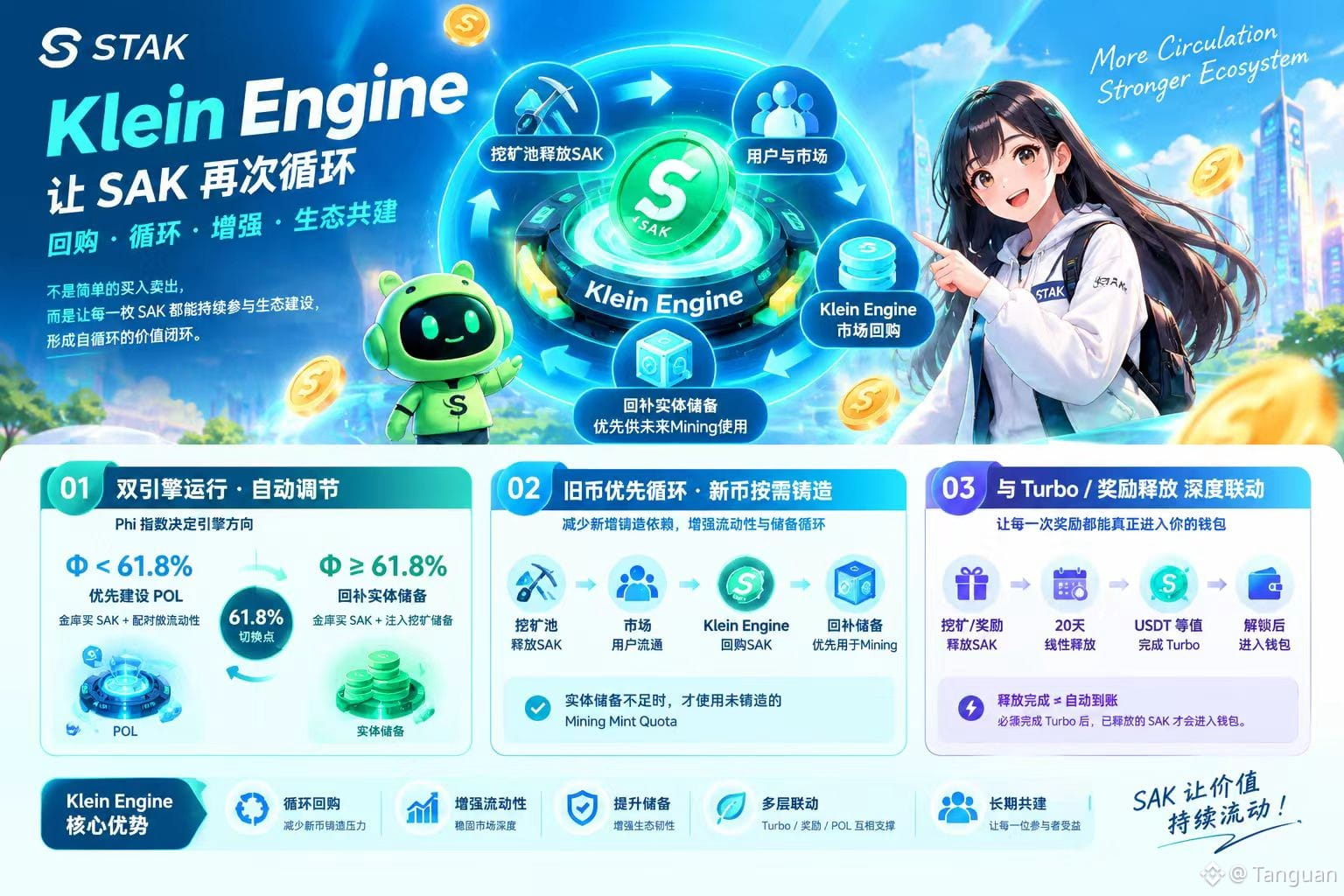
SAK has a fixed maximum supply of 90 million tokens. Through buybacks, reserves, releases, and circulation, it establishes a token cycle that allows existing tokens to provide ongoing incentives and explores the long-term sustainability of public blockchain economic models.
STAK is currently deployed on BNB Chain, where it is building its user base, validating its computing power and economic model, and gradually advancing the development of its DAO ecosystem.
We’re focused on more than just token prices—we’re asking how a public blockchain can keep running sustainably.
What do you think: can a fixed supply and ongoing mining truly be balanced?
#STAK #SAK #KleimEngine
82
·
--
🔥 If the total token supply is fixed, what will miners and nodes rely on for ongoing incentives in the future?
This is a question well worth considering in the economic models of public blockchains.
Many economic models face a contradiction:
To incentivize nodes continuously, there needs to be a continuous source of rewards. But relying mainly on new issuance may create supply pressure over the long term.
STAK Protocol’s approach is to change how the token incentive cycle works.
A fixed total supply cap of 90 million tokens + the Kleim Engine.
By repurchasing circulating SAK and replenishing physical reserves, then releasing tokens according to the mechanism, tokens that have already entered the market can participate in the incentive cycle again.
At the same time, the Phi Index coordinates the development of protocol liquidity with the replenishment of reserves.
This means STAK is not only considering how tokens are distributed, but also focusing on how they can be recirculated and how node incentives can receive more appropriate reserve support.
A fixed total supply does not mean incentives must eventually come to an end; what truly matters is establishing a sound cycle mechanism.
STAK is currently advancing ecosystem development and validating the operation of its economic model on BNB Chain.
I would rather focus on what problems a project can solve than just what its price is today.
💬 If a fixed total supply and ongoing node incentives can be balanced through a mature mechanism, do you think this could become an important direction for the future development of public blockchain economic models?
#STAK #SAK #Blockchain #Web3 #KleimEngine

5
·
--
There are no simple answers in blockchain mechanism design.
A comprehensive balance is often needed between the continuous operation of mining pools, node participation, network security, and economic incentives.
STAK Protocol explores these questions through Kleim Engine and welcomes discussion grounded in facts and data.
#STAKProtocol #SAK #KleimEngine #Consensus
1
42
·
--
$SAK
How does the pool continue operating? Why are nodes willing to participate over the long term?
These are all questions about blockchain economic mechanisms that merit in-depth study.
STAK Protocol explores related mechanisms around Kleim Engine; its performance should be evaluated in light of technical explanations and public data.
#STAKProtocol #sak #KleimEngine #Web3

8
188
Log in to explore more content
Join global crypto users on Binance Square
⚡️ Get latest and useful information about crypto.
💬 Trusted by the world’s largest crypto exchange.
👍 Discover real insights from verified creators.
Email / Phone number
Trending Topics
1
#JobsReportRaisesHikeOdds
232,687 views
1,876 Discussing
2
#CPITestsDecemberRateOutlook
14,447 views
213 Discussing
3
#BitcoinRebounds$75KAsChipsLead
19,827 views
210 Discussing
4
#US Data Center Rules May Constrain AI Expansion
36,462 views
148 Discussing
5
#ARKPlans14ThematicETFsCoveringAIAndTokenizedMarkets
130 views
5 Discussing
6
#WillAnthropicListOnTime
54,861 views
713 Discussing
7
#WillUS-IranTensionsBoostSafe-HavenDemand?
7,761 views
75 Discussing
8
#BitcoinETFsSee$412MNetOutflows
2,200 views
43 Discussing
9
#HKSFCPlansToRestrictCryptoAndExchangeTerms
10,494 views
193 Discussing
10
#TradFiForBeginners
36,594 views
553 Discussing