
#bitminereports
bitminereports
1,545 views
29 Discussing
Hot
Latest

Have you noticed that every time BitMine reports land, the timeline treats miner pain as a reason to dump $BTC, and then the actual bottom forms a few weeks later?
Most people are either panic-selling into this Fear reading of 23 or hiding in $USDT waiting for a perfect candle that never shows up. They get wrecked because they read operational filings as a death sentence instead of as a map of who is forced to sell last.
The mainstream take is that mining reports are lagging noise for spot traders. That is the wrong read. When public miners flag tighter hashprice, delayed deliveries, or elevated coin sales, they are describing the last wave of supply hitting the market. That is historically closer to a base than a breakdown. Watch three things in the next filings: whether they are still adding machines, whether difficulty is eating their margins, and whether they are selling inventory to stay alive. Those three tell you more about the next $ETH and $BTC leg than another round of sentiment polls.
Do not ape the first red print. Scale in on a schedule after you confirm miner outflows are elevated and capex is being pushed out. That is the part most people skip, then they wonder why they always buy the bounce instead of the washout.
Where do you think miner selling sits in this cycle, and are you actually using the reports or just reacting to price? #BitMineReports #ChipStocksExtendLossesAfterNvidiaCEOChange #ZcashFallsBelow
Have you noticed that every time BitMine reports land, the timeline treats miner pain as a reason to dump $BTC , and then the actual bottom forms a few weeks later?
Most people are either panic-selling into this Fear reading of 23 or hiding in $USDT waiting for a perfect candle that never shows up. They get wrecked because they read operational filings as a death sentence instead of as a map of who is forced to sell last.
The mainstream take is that mining reports are lagging noise for spot traders. That is the wrong read. When public miners flag tighter hashprice, delayed deliveries, or elevated coin sales, they are describing the last wave of supply hitting the market. That is historically closer to a base than a breakdown. Watch three things in the next filings: whether they are still adding machines, whether difficulty is eating their margins, and whether they are selling inventory to stay alive. Those three tell you more about the next $ETH and $BTC leg than another round of sentiment polls.
Do not ape the first red print. Scale in on a schedule after you confirm miner outflows are elevated and capex is being pushed out. That is the part most people skip, then they wonder why they always buy the bounce instead of the washout.
Where do you think miner selling sits in this cycle, and are you actually using the reports or just reacting to price? #BitMineReports #ChipStocksExtendLossesAfterNvidiaCEOChange #ZcashFallsBelow

30

·
--
BitMine just posted a $6.3 billion loss and somehow kept buying more ETH anyway.
The Tom Lee-led treasury firm swung from a $348.6 million profit last year to a $6.31 billion net loss for the year ended August 31. Almost all of it, $6.23 billion, is unrealized. ETH fell about 44 percent over that year, from around $4,390 to $2,466, and under fair-value accounting every dollar of that drop lands straight in the earnings.
Here is the part that makes it weird. BitMine did not sell. It held 5.9 million ETH at year-end, worth about $14.6 billion against a $19.95 billion cost basis, and by November 8 it had grown the stack to 6.07 million ETH, nearly 5 percent of all ETH in circulation. Staking brought in about $121 million, basically the whole $125 million revenue line. There is also a $143.7 million derivatives loss from selling ETH puts, and the filing still flags internal controls as not effective.
So the model is doing exactly what it says on the tin. When ETH rips, the numbers look heroic. When ETH slides 44 percent, you get a $6.3 billion paper loss and a balance sheet $5.4 billion underwater on cost. The question is whether that is just accounting noise on a long-term bet, or the moment the treasury playbook starts to crack.
Do you think BitMine doubling down through a $6.3 billion loss is conviction or stubbornness? $ETH #BitMineReports$6.3BNetLossForFiscal2026

89


·
--
bitmine just booked a huge paper loss and kept buying eth anyway
#BitMineReports$6.3BNetLossForFiscal2026
the 10-K shows nearly all of it is unrealized. eth fell through their fiscal year and fair value accounting hits earnings right away. they kept stacking and staking the whole time
the part people miss, tom lee said they stop buying at 5% of supply and theyre basically there. bulls see a holder this size that doesnt sell as a floor. the other side, the biggest steady bid for $ETH goes quiet soon, so spot has to carry it
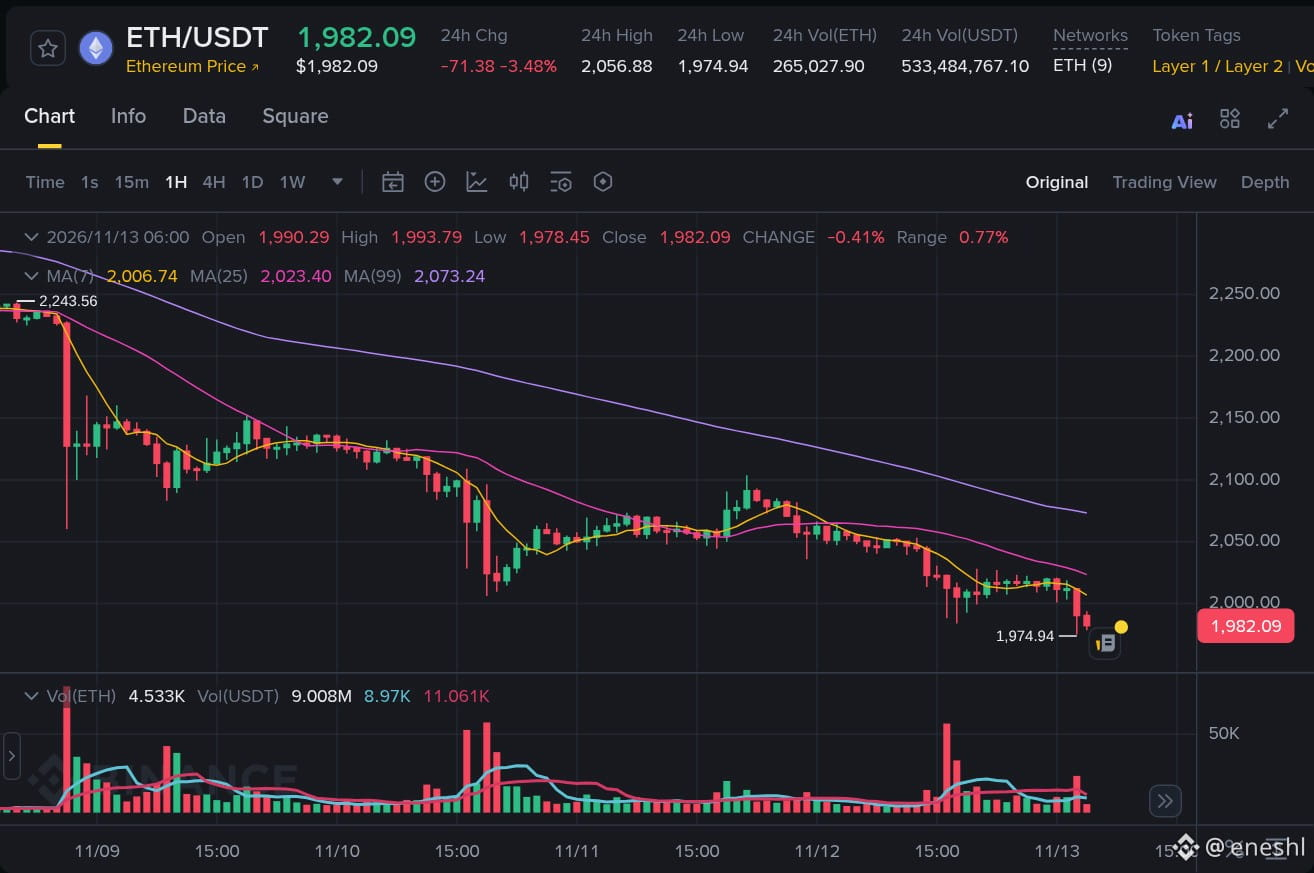
$BTC is weak too and eth slipped under 2k this morning. im still adding eth slowly here, if you were waiting for a cheaper entry this is where id start
i think eth is back above 2k before the weekend is over, prove me wrong
Eva Green x:
I have followed you; please follow me back.
1
2
1.5k

📉 BitMine reported a net loss of about $6.3 billion for fiscal 2026 #BitmineReports $6.3BNetLossForFiscal2026
(year ended Aug 31, 2026), driven mainly by $6.2 billion in unrealized losses on its digital assets 💸.$AAPLB $MSFTB It's a non-cash, accounting-driven hit from Ethereum's price drop, not actual money leaving the company 🧾. The company moved from Bitcoin mining to Ethereum staking 🔄, earning roughly $121 million in staking revenue 💰, and held 5.9 million ETH (about 4.9% of all circulating ETH) 🪙. Still, the report flags big risks ⚠️: heavy concentration in a single asset and major share dilution for investors.#BitMineReports$6.3BNetLossForFiscal2026
(year ended Aug 31, 2026), driven mainly by $6.2 billion in unrealized losses on its digital assets 💸.$AAPLB $MSFTB It's a non-cash, accounting-driven hit from Ethereum's price drop, not actual money leaving the company 🧾. The company moved from Bitcoin mining to Ethereum staking 🔄, earning roughly $121 million in staking revenue 💰, and held 5.9 million ETH (about 4.9% of all circulating ETH) 🪙. Still, the report flags big risks ⚠️: heavy concentration in a single asset and major share dilution for investors.#BitMineReports$6.3BNetLossForFiscal2026

1
68

·
--
$ETH just above $2,000 puts BitMine's 5.9M ETH ~$8B below its $19.95B cost.
#BitMineReports$6.3BNetLossForFiscal2026 #Write2Earn
Do you value treasury stocks on cost basis or today's price, and why?
$ETH just above $2,000 puts BitMine's 5.9M ETH ~$8B below its $19.95B cost.
#BitMineReports$6.3BNetLossForFiscal2026 #Write2Earn
Do you value treasury stocks on cost basis or today's price, and why?
#BitMineReports$6.3BNetLossForFiscal2026 #Write2Earn
Do you value treasury stocks on cost basis or today's price, and why?
25
·
--
$BMNR lost $6.3B in FY2026, mostly paper losses on crypto, yet the stock closed up 6.4%.
#BitMineReports$6.3BNetLossForFiscal2026 #Write2Earn
What do you check first in a crypto treasury, and why?
$BMNR lost $6.3B in FY2026, mostly paper losses on crypto, yet the stock closed up 6.4%.
#BitMineReports$6.3BNetLossForFiscal2026 #Write2Earn
What do you check first in a crypto treasury, and why?
#BitMineReports$6.3BNetLossForFiscal2026 #Write2Earn
What do you check first in a crypto treasury, and why?
404

·
--
BitMine’s losses top the trending list | $6.3 billion is mainly unrealized valuation losses | I won’t chase panic trades
My approach is to first break down the financial report, then assess whether it represents genuine selling pressure on ETH. Binance Square is discussing #BitMineReports$6.3BNetLossForFiscal2026. BitMine’s 10-K, filed with the SEC on November 10, covers the period through August 31 and reports an annual net loss of approximately $6.313 billion, including approximately $6.229 billion in unrealized losses on digital assets. Unrealized losses reflect changes in fair value on the books; they cannot simply be described as “$6.2 billion of ETH sold that day” or “an equivalent cash outflow.” The report also disclosed net cash outflow from operating activities of approximately $305 million. That is a separate measure: it should not be conflated with book losses, but neither should the pressure of ongoing financing and operations on the company be ignored.
The timing of the holdings matters, too: the 10-K states that as of August 31, the company held approximately 5.9018 million ETH, valued at approximately $14.559 billion. A November 9 news update on the company’s investor relations page said its holdings had reached approximately 6.07 million ETH. These figures refer to different dates: year-end figures cannot be used to describe today, and the November update cannot be used to infer the holdings at the time the annual losses occurred. Whether the company continues to buy or sell should be confirmed through new company announcements and SEC filings; a holdings chart or social media hints are only market expectations.
My independent assessment is that the financial report first and foremost exposes how sensitive the ETH treasury model is to price movements: if ETH falls, the company’s net asset value and financing capacity may come under pressure. Only if the company is forced to raise funds, reduce its holdings, or change its staking arrangements could that pressure potentially feed through to spot supply. Conversely, unrealized losses on the books do not automatically create a spot sell order. The market is already showing a contraction in risk appetite: ETH/USDT on Binance is around $1,904.02, with a 24-hour range of $1,878 to $1,989.11, down approximately 1.28% from 24 hours ago. This does not prove that the financial report caused the decline; macro conditions, ETF flows, and market-wide deleveraging still need to be considered together. The earlier post about ETF staking yields concerned fund distribution mechanisms, which are not the same thing as the treasury risks of this publicly listed company.
If I were trading this myself, I would stay out for now. My tentative plan would be to watch and then consider a small long position; my current position is 0%. I would only consider going long with at most 3% of my total capital if ETH regains $1,930 and then holds above $1,900 on a retest, while the company has disclosed no new pressure to sell assets to meet obligations. I would take half off at the first target of $1,960 and reduce the rest at the second target of $1,989. If the price falls below $1,878 after entry, I would close the entire position at a loss. If the price repeatedly fails to hold $1,900, or new SEC filings show that cash pressures have materially worsened, I would cancel the long plan rather than average down. The key factor that could overturn this assessment is actual financing and selling activity—not a loss screenshot on social media.
#BitMineReports$6.3BNetLossForFiscal2026 #ETH
The above is solely my personal market observation and does not constitute investment advice.

2

·
--
Bitmine just posted a $6.3B loss — mostly paper, as $ETH fell 44% last fiscal year. It still holds 6.07M coins, ~5% of supply, near $2,053. If $ETH recovers, the red ink fades; if it slides, the model stays under fire. Peak pain or just the start? #BitmineReports$6.3BLoss #Ethereum #BinanceSquare
Bitmine just posted a $6.3B loss — mostly paper, as $ETH fell 44% last fiscal year. It still holds 6.07M coins, ~5% of supply, near $2,053. If $ETH recovers, the red ink fades; if it slides, the model stays under fire. Peak pain or just the start? #BitmineReports$6.3BLoss #Ethereum #BinanceSquare
103
·
--
ETH falls nearly 4% | BitMine posts approximately $6.3 billion fiscal-year loss | Distinguish paper losses from selling pressure
My stance is cautious and watchful. I’m not directly interpreting a company’s massive reported loss as “institutions are dumping.” BitMine’s fiscal 2026 net loss is being widely discussed on Binance Square. First, look at the timing of the filing: These figures are for the fiscal year ended August 31, 2026. In its 10-K filing with the U.S. Securities and Exchange Commission in November, the company reported a net loss of approximately $6.313 billion, including approximately $6.229 billion in unrealized losses on digital assets. The latter reflects paper fluctuations resulting from measuring held assets at fair value. It does not mean that an equivalent amount of ETH was sold, nor does it represent a cash outflow that occurred on November 13. Treating figures from a past fiscal year as today’s sell orders would lead to a misreading of market supply.
Cross-checking the company’s investor relations page, BitMine said on November 9 that it held approximately 6.07 million ETH. This is the company’s figure as of a specific date; it cannot be extrapolated to its current position, nor does it prove that the company has made no subsequent reductions. What really needs monitoring is future disclosures on holdings, staking or financing arrangements, liquidity on the balance sheet, and net flows into spot ETFs. A company’s paper losses do not mechanically trigger on-chain selling. But if financing constraints force the company to sell assets, the impact would shift from accounting fluctuations to actual supply. Evidence is needed to establish that this condition is present; headlines and speculation are not enough.
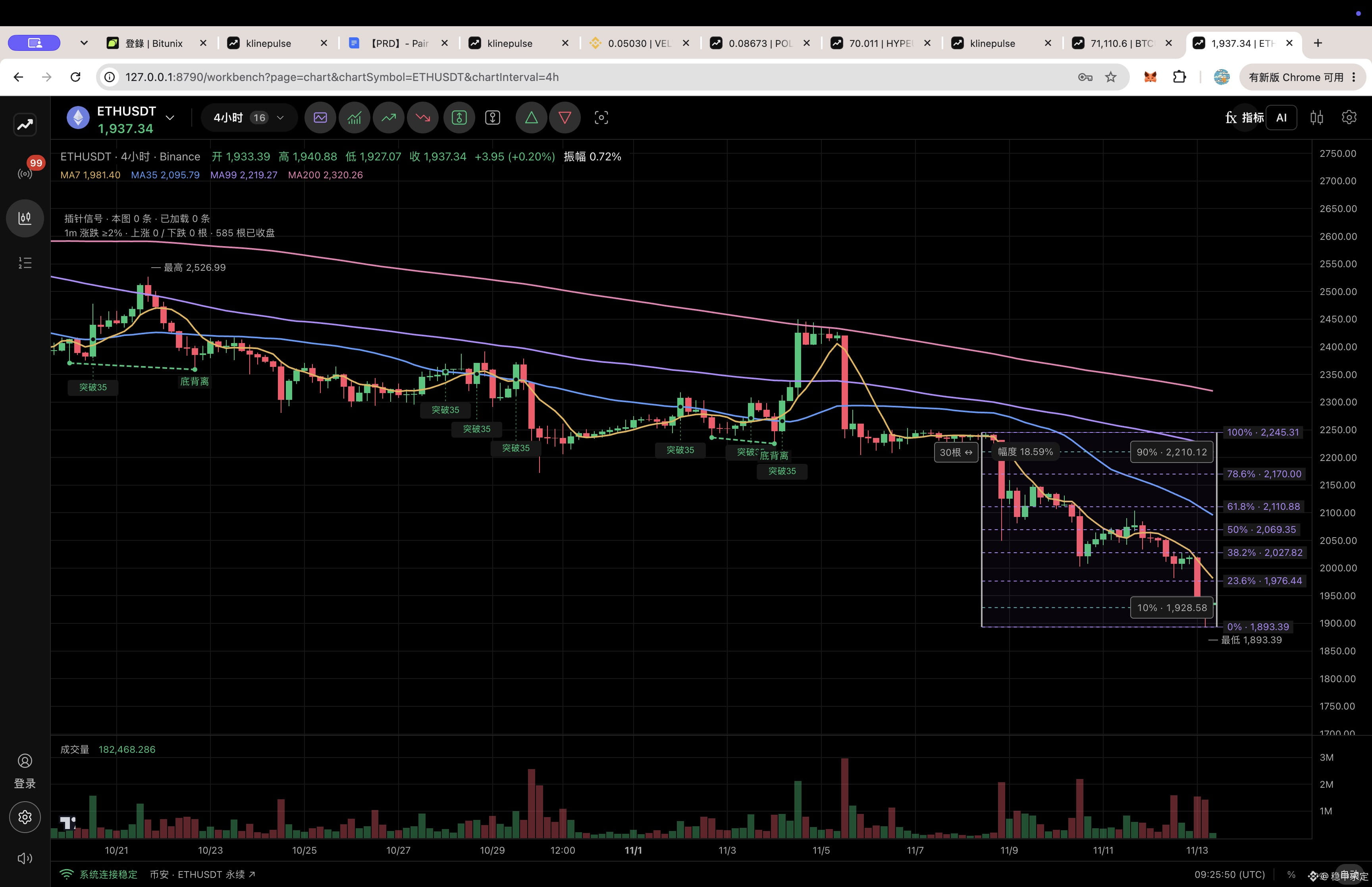
The market is already showing signs of strain: At the time of this observation, Binance ETHUSDT was around $1,939, down approximately 3.93% over the past 24 hours, with a high of $2,027.16 and a low of $1,895.95. The decline is a market fact, but the simultaneous buzz around the earnings report alone is not enough to establish causation. The levels I’m watching are the lows around $1,900 and $1,896, and $1,960 and $2,027 above. If the price falls below $1,896 and then fails to rebound convincingly, that would suggest insufficient buying support. If it regains and holds above $1,960, then gradually reclaims $2,027, that would provide price evidence to challenge the short-term panic narrative. If the company later formally discloses active ETH sales or clear financing pressure emerges, I would also need to reassess my cautious, wait-and-see stance.
If I were trading this myself, I wouldn’t chase a short or buy the dip right now. My conditional plan would be to take a small spot long position, waiting for the hourly close to move back above $1,960 and for a retest to hold before risking 2% of my total assets. I’d target $2,000 first, then $2,027. I’d sell half at $2,000 and half of the remainder at $2,027. I’d exit if the hourly close falls back below $1,930, or close the entire position immediately if the price touches $1,896. If the price breaks below $1,896 first, the original plan is invalidated; I’d stay out and wait for a new setup. The position cap is 2%, with no leverage. If the conditions aren’t met, there’s no trade—and no returns to speak of.
Sources checked: BitMine FY2026 10-K (SEC); BitMine investor relations announcement dated November 9; market data: Binance ETHUSDT spot, 24-hour figures. #BitMineReports$6.3BNetLossForFiscal2026 #ETH
This is solely my personal market observation and does not constitute investment advice.

2
·
--
$ETH: Bitmine lost $6.3B in FY2026, mostly a $6.2B paper loss. Staking: $121M; G&A $377M. Not a yield machine.
#BitmineReports$6.3BFiscal2026Loss #Write2Earn
Stock or coin, and why?
$ETH : Bitmine lost $6.3B in FY2026, mostly a $6.2B paper loss. Staking: $121M; G&A $377M. Not a yield machine.
#BitmineReports$6.3BFiscal2026Loss #Write2Earn
Stock or coin, and why?
#BitmineReports$6.3BFiscal2026Loss #Write2Earn
Stock or coin, and why?
45

·
--
Article
BitMine posts a $6.3 billion loss; the real risk is how the ETH treasury model amplifies volatilityBitMine posts a $6.3 billion loss; the real risk is how the ETH treasury model amplifies volatility
At around 17:24 Beijing time, Binance Square’s trending page showed the topic `#BitMineReports$6.3BNetLossForFiscal2026`, with 35 people discussing it. What makes it worth watching is not the headline figure of a “$6.3 billion loss” itself, but how that loss transmits ETH price risk to the balance sheet of a publicly listed company.
In its FY2026 annual report filed with the U.S. SEC, BitMine disclosed that as of August 31, 2026, it had a net loss of approximately $6.313 billion, of which approximately $6.229 billion came from unrealized fair-value losses on its digital asset holdings. This distinction matters: it is primarily an accounting revaluation, not evidence that the company sold ETH for that amount or that an equivalent amount of cash flowed out. Equating the net loss directly with “the company has run out of cash” is an overinterpretation of the financial statements.
BitMine posts a $6.3 billion loss; the real risk is how the ETH treasury model amplifies volatility
BitMine posts a $6.3 billion loss; the real risk is how the ETH treasury model amplifies volatility
At around 17:24 Beijing time, Binance Square’s trending page showed the topic `#BitMineReports$6.3BNetLossForFiscal2026`, with 35 people discussing it. What makes it worth watching is not the headline figure of a “$6.3 billion loss” itself, but how that loss transmits ETH price risk to the balance sheet of a publicly listed company.
In its FY2026 annual report filed with the U.S. SEC, BitMine disclosed that as of August 31, 2026, it had a net loss of approximately $6.313 billion, of which approximately $6.229 billion came from unrealized fair-value losses on its digital asset holdings. This distinction matters: it is primarily an accounting revaluation, not evidence that the company sold ETH for that amount or that an equivalent amount of cash flowed out. Equating the net loss directly with “the company has run out of cash” is an overinterpretation of the financial statements.
160
·
--
Bitmine reports net loss of about $6.3 billion | ETH under pressure around $1,942 | I’ll wait for confirmation, not catch an emotional falling knife
My stance is cautious and wait-and-see. Binance Square is discussing Bitmine’s reported losses, but the figures need to be viewed in the context of the relevant accounting period: Bitmine’s Form 10-K filed with the U.S. SEC for the fiscal year ended August 31, 2026, lists a net loss of about $6.313 billion, including approximately $6.229 billion in unrealized losses on digital asset holdings. The filing was submitted on November 10 and reflects the accounting valuation of a completed fiscal year. It does not mean the company sold an equivalent amount of ETH today, nor can it be described directly as a cash loss. The company’s investor relations page also has a November 9 announcement reporting holdings of about 6.07 million ETH. That is a snapshot from a different date and cannot be combined with the August 31 profit-and-loss figures to imply a trade in which the company “just bought more or liquidated.”
I’m paying attention to this not because one company’s accounting losses would change how the Ethereum network operates, but because large companies holding crypto can transmit price volatility into financial statements, financing capacity, and equity risk appetite. If the market mistakes unrealized losses for selling pressure, fear could drive short-term trading first. If subsequent official disclosures show financing constraints, collateral pressure, or reduced holdings, that would warrant reassessing the likelihood of actual selling. Conversely, if this is only a price revaluation, the earnings headline alone is not enough to prove that ETH supply has suddenly increased. The idea that “the company might sell its coins” is a risk scenario, not an established fact.
As of 15:43 Beijing time, ETH/USDT on Binance was around $1,942, down about 5.14% over 24 hours, with a low near $1,896 and a high near $2,053. The price is already weakening, but I can’t attribute the day’s decline to a Form 10-K filed several days ago; overall risk appetite, liquidity, and other news could also be affecting prices. The $1,895–$1,900 range is the immediate support zone, while $1,960 is the first level to watch for whether a rebound can hold. The areas around $1,990 and $2,040 are potential zones to reduce exposure. If the price falls below $1,895 and continues to close below it, my short-term stabilization thesis is invalidated. If it regains and holds above $1,960, then retests without breaking below it, I would consider whether the rebound has room to continue.
If I were trading this myself, I would stay out for now. The only direction I would consider is a small spot long; I would not chase a leveraged short. I would buy in stages only if ETH closes above $1,960 on the one-hour chart and then retests and holds $1,950, using no more than 5% of my total capital. I would sell half at $1,990 and most of the remainder at $2,040. I would set the initial stop-loss at $1,890. If the price decisively breaks below $1,895 on the one-hour chart, or if Bitmine’s material selling or financing pressure is confirmed by the SEC or a company announcement, I would close the remaining position. I would not use “long-term bullishness” as an excuse to abandon discipline. If the conditions are never met, I’ll record that as waiting—not pretend the plan was a trade.
Sources: Bitmine’s FY2026 Form 10-K, Bitmine’s investor relations page, and Binance ETH/USDT live market data. #BitMineReports$6.3BNetLossForFiscal2026 #ETH
This is only my personal market observation and does not constitute investment advice.

9
·
--
Discussion of BitMine’s losses heats up | ETH remains weak at around $2,011 | I’m checking holdings and funds first
My stance is cautious. I won’t take the phrase “$6.3 billion loss” in a trending topic as direct proof that the company is selling ETH. Binance Square currently shows rising discussion around #BitMineReports$6.3BNetLossForFiscal2026. BitMine’s fiscal 2026 annual report filed with the SEC does list a net loss of about $6.313 billion, primarily related to the fair-value remeasurement of digital assets. This is an annual accounting result as of August 31, not a record of on-chain transfers on November 13. Unlike earlier discussions focused only on unrealized gains and losses, I’m now more concerned with the company’s subsequent pace of accumulation and its cash buffer: its official press release on November 9 said that, as of November 8, it held 6,070,092 ETH, about 4.97% of the total supply it cited, and had purchased 9,587 ETH over the week. Of that total, 5,227,037 ETH had been staked, alongside about $475 million in cash and marketable securities. These are figures disclosed by the company for a specific point in time; they should not be presented as a fresh purchase this morning, and projected staking rewards should not be treated as cash already received.
This information has two potential effects on ETH. Large corporate holdings and staking can reduce the portion of supply freely available in the short term, but continued buying requires a source of capital, while staked holdings are also exposed to price volatility, unstaking arrangements, and corporate financing risks. The company has mentioned its own goal of holding close to “5% of the total supply.” That only indicates progress toward its strategy; it does not imply how much more it will necessarily buy in the future. More importantly, corporate buying is only one type of market participation and cannot offset all ETF or spot selling pressure. Farside shows net outflows of about $144.8 million from US spot ETH ETFs in total on November 11. The provisional figure for November 12 is about $5.5 million in net outflows, but several products are still blank, so this is not a complete final tally. If the company continues to expand its holdings while funds remain net sellers, the market may still trade weakly and unevenly.
The market has already expressed its reservations through price action. As of 09:42 Beijing time on November 13, ETH/USDT on Binance was around $2,010.66, down about 1.98% in 24 hours, with a low of $1,983.82 and a high of $2,065.39. The area around $2,000 remains a sentiment gauge, while $2,040 is the first confirmation level I’m watching to assess the strength of any recovery. A break below $1,980 followed by a weak rebound would invalidate my short-term stabilization view. A move back above $2,040 and a sustained hold there would indicate that buying has temporarily improved. The US October PPI report has not yet been released tonight, and macroeconomic data could also change risk appetite, so it’s too early to assign a directional label to the data.
If I were trading this myself, I’d stay out for now and only consider a small long position in spot. My conditions would be for ETH to rise above $2,040 and hold there for a full hour, while updated ETF data shows no significant increase in net outflows. If those conditions are met, I’d open a test position using no more than 4% of my total capital, with no leverage. I’d take half off at the first target of $2,070, then exit the rest gradually at the second target of $2,110. I’d set the initial stop-loss below $2,015. If ETH falls back below $2,040 after I enter and fails to reclaim it within an hour, I’d close the position early. If it breaks below $1,980 first, I’d cancel the long plan and reassess. Company disclosures should be read with their dates in mind; trading decisions should be based on current prices and fund flows.
#BitMineReports$6.3BNetLossForFiscal2026 #ETH
The above is solely my personal market observation and does not constitute investment advice.

3

·
--
🧨 BitMine bet big on Ethereum. Now the hit showed up on the balance sheet.
$6.3 BILLION in net losses for the year. With so much ETH on its books, a drop in the coin’s price can weigh on results even if the company continues holding the tokens.
$ETH #BitMineReports $6.3BNetLossForFiscal2026 #Ethereum
$6.3 BILLION in net losses for the year. With so much ETH on its books, a drop in the coin’s price can weigh on results even if the company continues holding the tokens.
$ETH #BitMineReports $6.3BNetLossForFiscal2026 #Ethereum
1
138
·
--
ETH falls close to $2,000 | BitMine annual report reveals cash cushion | I’ll wait for stability before acting
My stance is to watch cautiously. I don’t automatically equate a publicly listed company holding a large amount of ETH with sustained buying in the spot market. People on Binance Square are discussing BitMine’s fiscal-year losses, but what’s really worth examining is the cash flow and financing capacity behind those losses. BitMine’s annual report, filed with the U.S. Securities and Exchange Commission for the year ended August 31, 2026, shows approximately $545.1 million in cash and cash equivalents, about $528.1 million in working capital, and roughly $14.577 billion in digital assets at fair value. Cash used in operating activities for the full year was about $305.1 million. The report also shows approximately $6.229 billion in unrealized losses on digital assets recognized in earnings. So, the accounting loss did not represent an equivalent cash outflow, but operating cash expenditures can’t be brushed aside as “just paper losses,” either. These figures are as of the end of August, not the cash balance today.
Why does this matter for ETH? Corporate holdings can lock up some of the circulating supply, but if the market stays weak for a long time, ongoing operations, preferred stock distributions, and new investments will still require cash or financing. When financing is readily available, holdings don’t necessarily create selling pressure; when financing is constrained, the market may reassess the liquidity discount applied to companies holding crypto. The risk disclosures in the annual report are not evidence that the company has already sold coins. I’m more focused on cash, operating cash flow, financing terms, and changes in net ETH holdings in the next official disclosure. I won’t infer that a trade has happened based on hints on social media.
As for the market, ETH was around $2,007 when I checked, with an intraday low of about $1,984 and a high of roughly $2,082. This shows that the price has pulled back from higher levels and is testing the psychological $2,000 mark. BitMine’s annual report alone can’t be treated as the cause of the decline; macro risk appetite and leverage across the broader market are also affecting prices. If ETH gets back above $2,080 and holds on a retest, I’ll consider short-term selling pressure to have eased. If it breaks decisively below $1,980 and fails to rebound, my earlier view that the price was stabilizing is invalidated. The next area to watch would be around $1,950, rather than adding to a position based on gut feeling.
If I were trading this myself, I wouldn’t enter now. The only direction I’d consider is a small spot long; I’d avoid high leverage for now. My entry trigger would be ETH closing back above $2,080 on the four-hour chart, then holding above $2,050 on a retest, with no new announcement that a company has been forced to sell assets. If those conditions are met, I’d use no more than 5% of my total capital to test the position. My first target would be $2,150, where I’d sell half; I’d hold the rest with $2,200 in view. I’d set a stop-loss at $2,030, or close the position if two consecutive four-hour candles close below $2,050. If the price breaks below $1,980 first, I’d cancel this long plan and wait for confirmation from news and price structure. If the plan isn’t triggered, there’s no trade—and no profit to speak of.
#BitmineReports$6.3BFiscal2026Loss #ETH
The above is solely my personal market observation and does not constitute investment advice.

2
·
--

Article
BitMine Posts a $6.3 Billion Loss as the ETH Treasury Model Faces a Stress TestBitMine Posts a $6.3 Billion Loss as the ETH Treasury Model Faces a Stress Test
The `#BitMineReports$6.3BNetLossForFiscal2026` hashtag on Binance Square’s current trends page has around 70 people discussing it. The underlying event is not just an ordinary market update: in its FY2026 annual report filed with the SEC, BitMine disclosed a full-year net loss of approximately $6.3134 billion, of which about $6.2291 billion came from unrealized fair-value losses on digital assets, mainly related to the decline in the price of ETH.
First, it is important to distinguish “losses” from “selling.” As of August 31, 2026, BitMine still held 5,901,837 ETH, with an end-of-period fair value of approximately $14.5589 billion. Its annual report showed that staking and validator revenue was approximately $121.4 million, accounting for about 97% of total revenue. In other words, the issue is not that the treasury generates no revenue, but that the scale of price fluctuations in its treasury assets far exceeds its staking income. Under U.S. accounting rules, changes in the fair value of digital assets are recognized directly in profit or loss, so this huge loss was primarily a mark-to-market revaluation; it does not mean the company sold an equivalent amount of ETH during the period.
BitMine Posts a $6.3 Billion Loss as the ETH Treasury Model Faces a Stress Test
BitMine Posts a $6.3 Billion Loss as the ETH Treasury Model Faces a Stress Test
The `#BitMineReports$6.3BNetLossForFiscal2026` hashtag on Binance Square’s current trends page has around 70 people discussing it. The underlying event is not just an ordinary market update: in its FY2026 annual report filed with the SEC, BitMine disclosed a full-year net loss of approximately $6.3134 billion, of which about $6.2291 billion came from unrealized fair-value losses on digital assets, mainly related to the decline in the price of ETH.
First, it is important to distinguish “losses” from “selling.” As of August 31, 2026, BitMine still held 5,901,837 ETH, with an end-of-period fair value of approximately $14.5589 billion. Its annual report showed that staking and validator revenue was approximately $121.4 million, accounting for about 97% of total revenue. In other words, the issue is not that the treasury generates no revenue, but that the scale of price fluctuations in its treasury assets far exceeds its staking income. Under U.S. accounting rules, changes in the fair value of digital assets are recognized directly in profit or loss, so this huge loss was primarily a mark-to-market revaluation; it does not mean the company sold an equivalent amount of ETH during the period.
324
·
--
BitMine reports a fiscal-year loss of about $6.3 billion|Most of it is an unrealized revaluation of its crypto holdings|With ETH near $2,000, watch cash flow and price first
I’m leaning cautious, but I wouldn’t translate “$6.3 billion in losses” directly into “$6.3 billion of ETH sold today.” The trending topic on Binance Square is accurately tagged #BitMineReports$6.3BNetLossForFiscal2026. I checked BitMine’s Form 10-K filed with the U.S. SEC for the fiscal year ended August 31, 2026: net loss was about $6.3134 billion, including approximately $6.2291 billion in unrealized valuation losses on digital asset holdings. “Unrealized” means the holdings were revalued at market prices at the end of the period; it is not the same as live sell orders on an exchange or tokens already sold. Still, volatility of this magnitude on the books shows how sensitive the company’s treasury is to the price of ETH. The same annual report lists full-year revenue of about $124.8 million, including approximately $121.4 million from staking and validation. Revenue growth did not offset the reporting volatility caused by the revaluation of asset prices.
The time frames must be kept separate. The 10-K covers the period through August 31, while an exhibit to the 8-K the company filed on November 9 says that, as of November 8, it held 6,070,092 ETH and had staked 5,227,037 ETH. That is a more recent snapshot of its holdings; it cannot be used to retroactively fill in the August-end figures, nor does a fiscal-year loss mean the company has been forced to liquidate everything now. Staking revenue is part of operating cash flow, but balance-sheet pressure from falling prices could affect the stock’s valuation and future financing terms, which in turn could change the company’s ability to buy tokens going forward. This chain of effects is conditional, so “could affect” should not be written as “has already stopped accumulating.”
How has the market reacted so far? At the time of writing, Binance ETHUSDT was around $2,011.96, down about 1.96% over 24 hours, with a low of $1,988.05 and a high of $2,103.78. The price is near $2,000, but simply observing these events on the same day does not prove the annual report alone caused the move. Farside’s tally shows net outflows of about $144.8 million from U.S. ETH funds on November 11; the November 12 entry is still blank, so it cannot be reported as confirmed zero outflows today. This fund-flow backdrop, combined with the price sensitivity shown in the financial statements, is enough for me to focus on defense rather than chase the slogan that “the company still holds a lot of ETH.”
In the short term, I’m watching to see whether $2,000 and $1,988 hold. If they fail, I’ll look next to $1,950. On the upside, $2,025 is the first level to reclaim, followed by $2,050, and then around $2,100. My cautious view would be open to revision if ETH gets back above $2,025, subsequent fund outflows ease, and the company’s next formal disclosure still shows stable holdings. If all there is are social media screenshots, without the original SEC filing or company statement, I won’t adjust my position based on them.
If I were trading this myself, I wouldn’t enter now. I’d only consider a small spot long, with no leverage. I’d use 1.5% of my total capital to test an entry only after a four-hour candle closes back above $2,025 and a retest holds. I’d take half off at $2,050, target $2,080 for the rest, and set a stop-loss at $1,995. If, after entry, another four-hour candle closes below $2,025 or the price breaks below $1,988, I’d close the entire position. If none of those conditions are met, I’ll stay out and wait. This is a plan, not a completed trade, and certainly not a record of returns.
#BitMineReports$6.3BNetLossForFiscal2026 #ETH
The above is solely my personal market observation and does not constitute investment advice.

3
·
--
Article
Bitmine posts a $6.3 billion fiscal-year net loss: a paper loss in its ETH treasury, not proof it has sold its coinsBitmine posts a $6.3 billion fiscal-year net loss: a paper loss in its ETH treasury, not proof it has sold its coins
On Binance Square’s current trends page, `#BitmineReports$6.3BFiscal2026Loss` showed 11 people discussing it and ranked eighth (observed at approximately 07:43 Beijing time on November 12, 2026). What’s really worth noting about this news isn’t the alarming figure of “$6.3 billion in losses,” but how it exposes the price risk of the ETH treasury model.
Bitmine’s FY2026 10-K, filed with the U.S. Securities and Exchange Commission, shows a net loss of approximately $6.3134 billion, of which about $6.2291 billion came from unrealized fair-value losses on its digital asset holdings. In other words, this was primarily an accounting loss caused by revaluing assets at fair value at the end of the period. It does not mean the company has already sold an equivalent amount of ETH, and certainly does not mean “Bitmine is about to dump its holdings.”
Bitmine posts a $6.3 billion fiscal-year net loss: a paper loss in its ETH treasury, not proof it has sold its coins
Bitmine posts a $6.3 billion fiscal-year net loss: a paper loss in its ETH treasury, not proof it has sold its coins
On Binance Square’s current trends page, `#BitmineReports$6.3BFiscal2026Loss` showed 11 people discussing it and ranked eighth (observed at approximately 07:43 Beijing time on November 12, 2026). What’s really worth noting about this news isn’t the alarming figure of “$6.3 billion in losses,” but how it exposes the price risk of the ETH treasury model.
Bitmine’s FY2026 10-K, filed with the U.S. Securities and Exchange Commission, shows a net loss of approximately $6.3134 billion, of which about $6.2291 billion came from unrealized fair-value losses on its digital asset holdings. In other words, this was primarily an accounting loss caused by revaluing assets at fair value at the end of the period. It does not mean the company has already sold an equivalent amount of ETH, and certainly does not mean “Bitmine is about to dump its holdings.”
2
·
--
ETH: A fresh look at Bitmine’s annual report and staking revenue | Yield can’t cover price volatility | Don’t chase before 2110
My stance is neutral to cautious. The community is still discussing #BitmineReports$6.3BFiscal2026Loss, but this time I’m more interested in two distinct cash-flow signals behind the loss than in simply repeating the headline figure of $6.3 billion. Bitmine’s 10-K filed with the SEC for the year ended August 31, 2026, states that staking and validation revenue for the year was $121.4 million, about 97% of total revenue; over the same period, the unrealized fair-value loss on digital assets was about $6.2291 billion, and the net loss was about $6.3134 billion. The company says the gross annualized return on staked ETH is about 2.5% to 4.0%. This means there is real operating revenue, but fluctuations in the company’s ETH holdings, measured in dollars, are still far greater than that revenue; an unrealized loss also shouldn’t be directly described as a cash loss caused by selling coins that day.
What I’m watching more closely are financing and governance constraints. The company disclosed in its annual report that it held 5,901,837 ETH as of August 31; this figure at that point in time should not be conflated with the updated holdings in later company press releases. The annual report also says that material weaknesses in internal control over financial reporting remained at year-end, and management considered disclosure controls and procedures ineffective at the time. This is a governance risk disclosed by the company itself, not evidence that a new on-chain security incident has been found. I wouldn’t conclude from this that it will be forced to sell ETH imminently; whether it creates actual selling pressure will depend on subsequent formal disclosures about financing, redemptions, staking withdrawals, and on-chain transfers. The mechanism affecting ETH’s price is indirect: the earnings and financing capacity of a large corporate holder can influence institutional risk appetite, but an annual-report loss by itself does not automatically trigger selling on exchanges.
Spot prices are also a reminder not to equate bad news with a particular price direction. When I checked Binance ETHUSDT, the 24-hour last price was about $2,087.50, up about 2.97%, with a range of $2,024.57 to $2,103.78. The price has rebounded from its lows, but it still hasn’t held above 2110; the market is not currently following the single narrative that “a huge annual-report loss means the price must fall.” I’m not attributing the rebound to Bitmine, and I won’t present the unverified trade trigger from my previous post as an executed trade. In the short term, I’m watching the 2104–2110 resistance zone, with 2060 and 2025 below. If the price breaks through and then falls back below 2060, I’ll withdraw my bullish view; if it falls below 2025, the rebound structure will be further invalidated.
If I were trading this myself, I wouldn’t chase the price right now. I’d only consider a small spot long position, without using high leverage. I’d wait for the price to break convincingly above 2110, hold above 2104 on a retest, and see volume pick up before planning to invest 3% of my total capital. The first target is 2150, where I’d reduce the position by half; the target for the remainder is 2190. I’d exit if the price falls below 2060 after entry. If it first falls below 2025, I’d cancel the plan and stay out of the market; if it breaks through and then falls back below 2104 within two hours, I’d proactively close the remaining position. If the company later discloses actual sales or a deterioration in its financing situation, I’ll reassess rather than using accounting losses as of late August to predict spot selling tomorrow.
#BitmineReports$6.3BFiscal2026Loss #ETH
The above is only my personal market observation and does not constitute investment advice.

3
·
--
Bitmine reports huge fiscal-year loss|mainly due to revaluation of holdings|ETH at $2,053; I’ll wait for stabilization
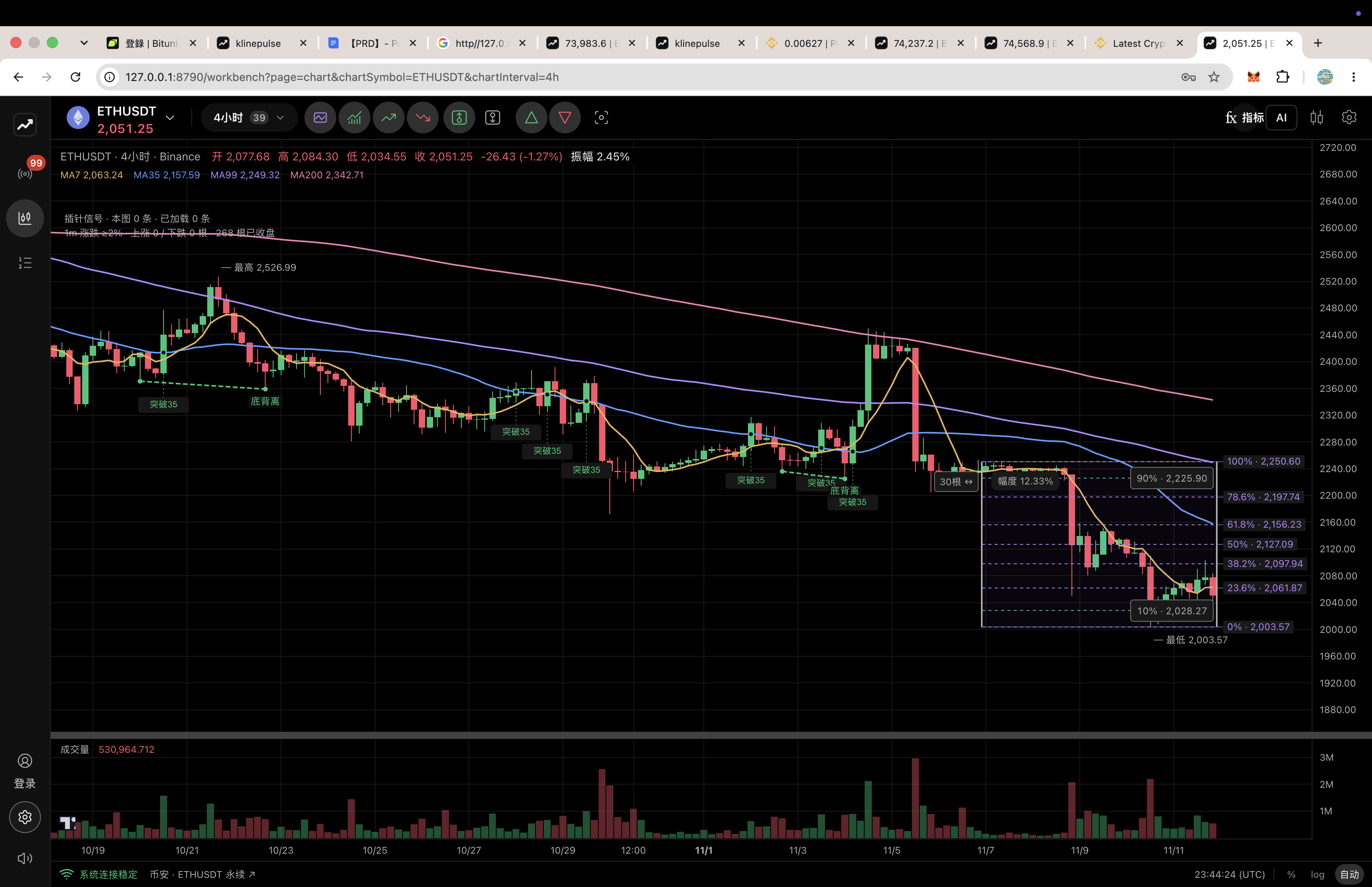
My stance is cautious. I won’t interpret a loss-making financial report as direct evidence that “a whale just dumped billions of dollars’ worth of ETH.” The exact trending topic #BitmineReports$6.3BFiscal2026Loss has appeared on Binance Square, and Binance News is also discussing it. I checked Bitmine’s SEC 10-K, filed on November 10: for the fiscal year ended August 31, 2026, the company reported a net loss of approximately $6.313 billion, including approximately $6.229 billion in unrealized fair-value losses on digital assets. This is a book revaluation and is not equivalent to spot sales during the period. As of August 31, the company held 5,901,837 ETH, with a fair value of approximately $14.559 billion. In a subsequent announcement on November 9, the company said it held 6,070,092 ETH as of November 8. These figures refer to different dates: the older financial-report holdings should not be passed off as the current balance, and an end-of-period loss alone is not grounds to conclude that the company has liquidated its entire position.
There are two layers to the transmission mechanism. The first is the corporate balance sheet: an ETH decline flows into earnings through fair-value accounting, weighing on the company’s stock valuation and future financing capacity. If financing becomes more difficult, the pace of additional crypto purchases may slow. The second layer is ETH spot supply and demand: it only makes sense to discuss a net supply shock if actual purchases or sales are disclosed, or if there is verifiable on-chain activity. Bitmine’s revenue for the same period was approximately $125 million, far below the scale of the unrealized revaluation, indicating that the financial-report volatility came more from the price of its holdings than from changes in its core business in a single quarter. This is a reminder of the risk exposure, not evidence that a large sell-off has already happened today.
At the time of writing, Binance ETHUSDT was around $2,052.69, down approximately 0.44% over 24 hours, with a range of $2,006 to $2,096.59. The price is in the lower half of the range, and the market has not confirmed a sustained move higher in response to the financial report. In the short term, I’m watching whether the price can hold near $2,006 and reclaim $2,097–$2,110. If it breaks below $2,006 even as discussion of the report intensifies, that would indicate insufficient risk appetite in the market; “book losses aren’t sales” is not a reason to blindly buy the dip. Conversely, if it holds $2,006 and reclaims $2,110 on rising volume, I would reconsider my current wait-and-see stance. If subsequent company filings disclose actual sales or changes in financing, I’ll reassess rather than rely on outdated data.
If I were trading this myself, I would sit out for now and only consider a conditional spot long. The entry trigger would be an hourly ETH close above $2,110, followed by a retest that holds between $2,097 and $2,110, with BTC stabilizing at the same time. If those conditions are met, I would allocate no more than 0.3% of my total capital. The first target is $2,160, where I’d reduce the position by half; the next is $2,210, where I’d halve the remaining position. I’d set the initial stop below $2,080 and limit the loss on the trade to no more than 0.1% of my account, based on the actual execution price. If the price falls back below $2,097 within two hours of the breakout, I’d close the remaining position. If the trigger doesn’t occur, I’ll remain out of the market; I won’t present a plan as a completed trade or realized profit. Financial-report figures should be assessed according to their dates and accounting nature, while trading decisions should be guided by price action once it is confirmed.
#BitmineReports$6.3BFiscal2026Loss #ETH
The above is solely my personal market observation and does not constitute investment advice.

2
Log in to explore more content
Join global crypto users on Binance Square
⚡️ Get latest and useful information about crypto.
💬 Trusted by the world’s largest crypto exchange.
👍 Discover real insights from verified creators.
Email / Phone number
Trending Topics
1
#CryptoSelloffTriggersMultipleWhaleLiquidations
155,260 views
1,647 Discussing
2
#USSpotXRPETFsSeeLargestWeeklyOutflowIn8Months
143,181 views
1,480 Discussing
3
#WillFOMCMinutesReinforceRateHikeExpectations?
39,994 views
684 Discussing
4
#BitcoinActiveSupplyInProfitDropsBelow45%
218,649 views
1,747 Discussing
5
#TONStrategyReports$23.97MQ3NetLoss
18,976 views
139 Discussing
6
#KavaSaysAbnormalActivityLimitedToKavaLend
144,306 views
984 Discussing
7
#WORPTLetsTouristsConvertCryptoToThaiBaht
49,258 views
391 Discussing
8
#WhoWillSucceedJensenHuangatNvidia?
338,988 views
2,138 Discussing
9
#WhatWillDriveCryptoandStocks’NextRebound?
860,547 views
3,952 Discussing
10
#TradFiForBeginners
840,285 views
4,958 Discussing