

#binancebuilders
binancebuilders
86,084 views
37 Discussing
Hot
Latest


·
--
🚀 The Blueprint of ClawQuant 🛠️
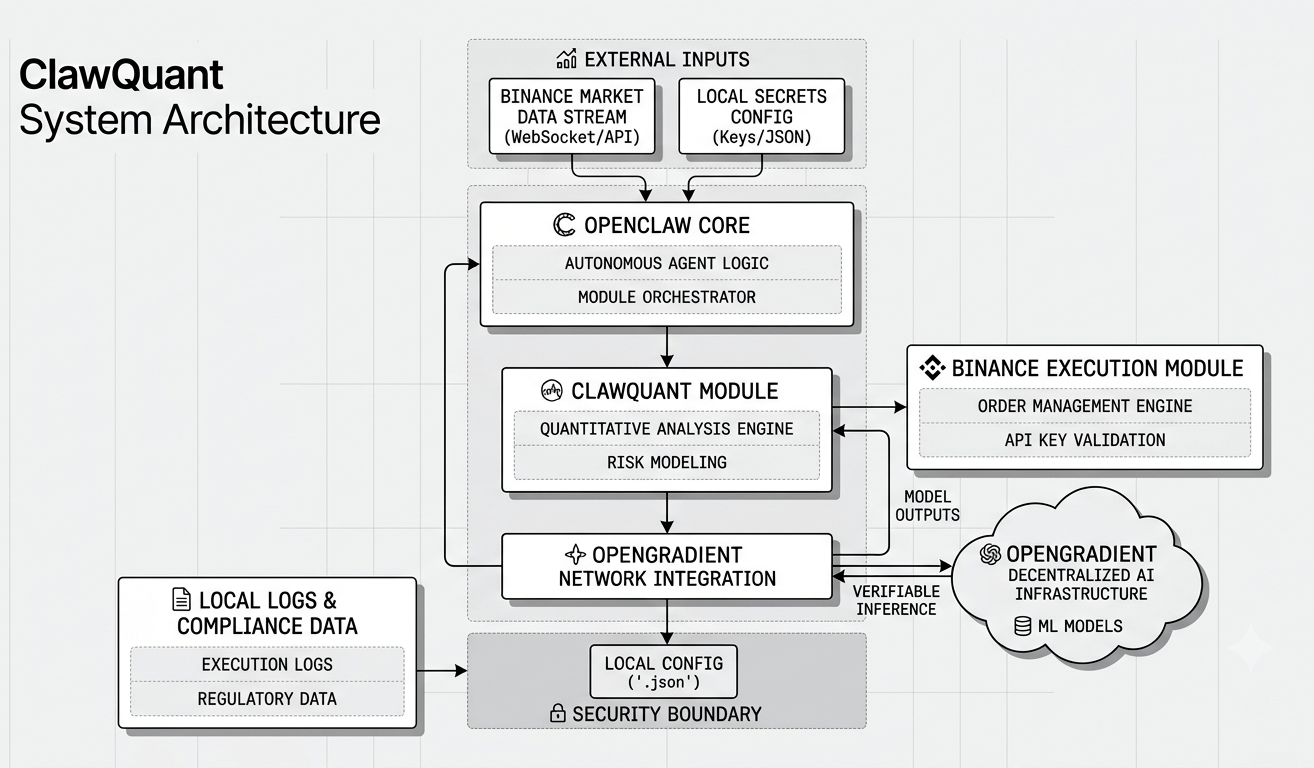
Architecting my personal project step by step. Here is a high-level teaser of how my local environment is structured to link autonomous agent logic with decentralized ML models, perfectly aligned with the Binance Square builder mindset of expanding on-chain intelligence. 🧠🌐
The Architecture Blueprint:
✴️ Core Framework: OpenClaw acting as the central autonomous engine, orchestrating general agent workflows and execution. 🦾
✴️ Analytical Engine: ClawQuant, the dedicated quantitative module engineered to handle mathematical risk assessment and volatility modeling. 📉
✴️ Infrastructure Layer: @OpenGradient Python SDK, streaming verifiable on-chain ML inference directly to the local system. ⚡
✴️ Security Gateway: Isolated local configuration files ensuring private keys are read safely without hardcoding or external exposure. 🔒
As a community member in the Binance ecosystem, my goal is to bridge these advanced Web3 DeAI frameworks back into actionable on-chain analytics and insights for the community. 📊🔥
Keeping the design clean, modular, and strictly production-ready under a unified architectural vision.
In the next post, I will share how I handled the secure local configuration setup to keep credentials safe while maintaining automated tasks. Stay tuned. 🧱
#ClawQuant #BinanceBuilders
#DeAi #QuantitativeAnalysis
$OPG #OPG @OpenGradient
🚀 The Blueprint of ClawQuant 🛠️
Architecting my personal project step by step. Here is a high-level teaser of how my local environment is structured to link autonomous agent logic with decentralized ML models, perfectly aligned with the Binance Square builder mindset of expanding on-chain intelligence. 🧠🌐
The Architecture Blueprint:
✴️ Core Framework: OpenClaw acting as the central autonomous engine, orchestrating general agent workflows and execution. 🦾
✴️ Analytical Engine: ClawQuant, the dedicated quantitative module engineered to handle mathematical risk assessment and volatility modeling. 📉
✴️ Infrastructure Layer: @OpenGradient Python SDK, streaming verifiable on-chain ML inference directly to the local system. ⚡
✴️ Security Gateway: Isolated local configuration files ensuring private keys are read safely without hardcoding or external exposure. 🔒
As a community member in the Binance ecosystem, my goal is to bridge these advanced Web3 DeAI frameworks back into actionable on-chain analytics and insights for the community. 📊🔥
Keeping the design clean, modular, and strictly production-ready under a unified architectural vision.
In the next post, I will share how I handled the secure local configuration setup to keep credentials safe while maintaining automated tasks. Stay tuned. 🧱
#ClawQuant #BinanceBuilders
#DeAi #QuantitativeAnalysis
$OPG #OPG @OpenGradient
Architecting my personal project step by step. Here is a high-level teaser of how my local environment is structured to link autonomous agent logic with decentralized ML models, perfectly aligned with the Binance Square builder mindset of expanding on-chain intelligence. 🧠🌐
The Architecture Blueprint:
✴️ Core Framework: OpenClaw acting as the central autonomous engine, orchestrating general agent workflows and execution. 🦾
✴️ Analytical Engine: ClawQuant, the dedicated quantitative module engineered to handle mathematical risk assessment and volatility modeling. 📉
✴️ Infrastructure Layer: @OpenGradient Python SDK, streaming verifiable on-chain ML inference directly to the local system. ⚡
✴️ Security Gateway: Isolated local configuration files ensuring private keys are read safely without hardcoding or external exposure. 🔒
As a community member in the Binance ecosystem, my goal is to bridge these advanced Web3 DeAI frameworks back into actionable on-chain analytics and insights for the community. 📊🔥
Keeping the design clean, modular, and strictly production-ready under a unified architectural vision.
In the next post, I will share how I handled the secure local configuration setup to keep credentials safe while maintaining automated tasks. Stay tuned. 🧱
#ClawQuant #BinanceBuilders
#DeAi #QuantitativeAnalysis
$OPG #OPG @OpenGradient
3
1
6
262
·
--
Giving an AI agent access to your trading wallet is terrifying if you think about it too long.
One bad prompt, one bug, one edge case — and it's not a "sorry" situation, it's a "money's gone" situation.
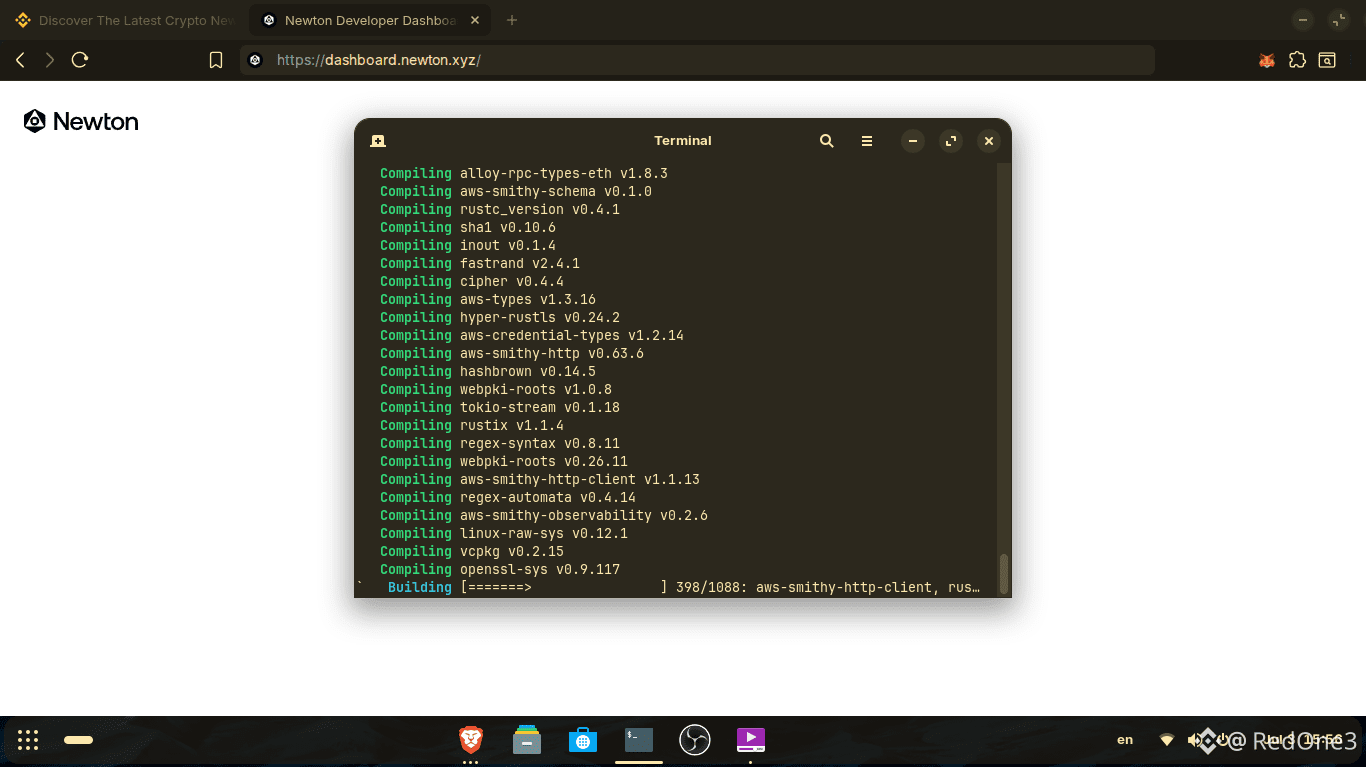
So I'm building #Clawton : a policy layer that sits between OpenClaw and Binance, enforced onchain via @NewtonProtocol Spend caps, token whitelists, zero tolerance for withdrawals.
Right now: writing the Rego policy that'll actually enforce these rules — the logic that decides allow or deny before a single transaction executes. 🛠️
#BinanceBuilders
Giving an AI agent access to your trading wallet is terrifying if you think about it too long.
One bad prompt, one bug, one edge case — and it's not a "sorry" situation, it's a "money's gone" situation.
So I'm building #Clawton : a policy layer that sits between OpenClaw and Binance, enforced onchain via @NewtonProtocol Spend caps, token whitelists, zero tolerance for withdrawals.
Right now: writing the Rego policy that'll actually enforce these rules — the logic that decides allow or deny before a single transaction executes. 🛠️
#BinanceBuilders
One bad prompt, one bug, one edge case — and it's not a "sorry" situation, it's a "money's gone" situation.
So I'm building #Clawton : a policy layer that sits between OpenClaw and Binance, enforced onchain via @NewtonProtocol Spend caps, token whitelists, zero tolerance for withdrawals.
Right now: writing the Rego policy that'll actually enforce these rules — the logic that decides allow or deny before a single transaction executes. 🛠️
#BinanceBuilders
1
137
·
--
Connecting the Dots: Streaming On-Chain ML with OpenGradient 📉
Now that the local environment is secure, it’s time to feed the system with data.
Today, I'm focusing on the infrastructure layer: integrating the @OpenGradient Python SDK into my workflow.
For a single builder 😎 running heavy machine learning models locally isn't practical.
That’s where decentralized AI infrastructure shines:
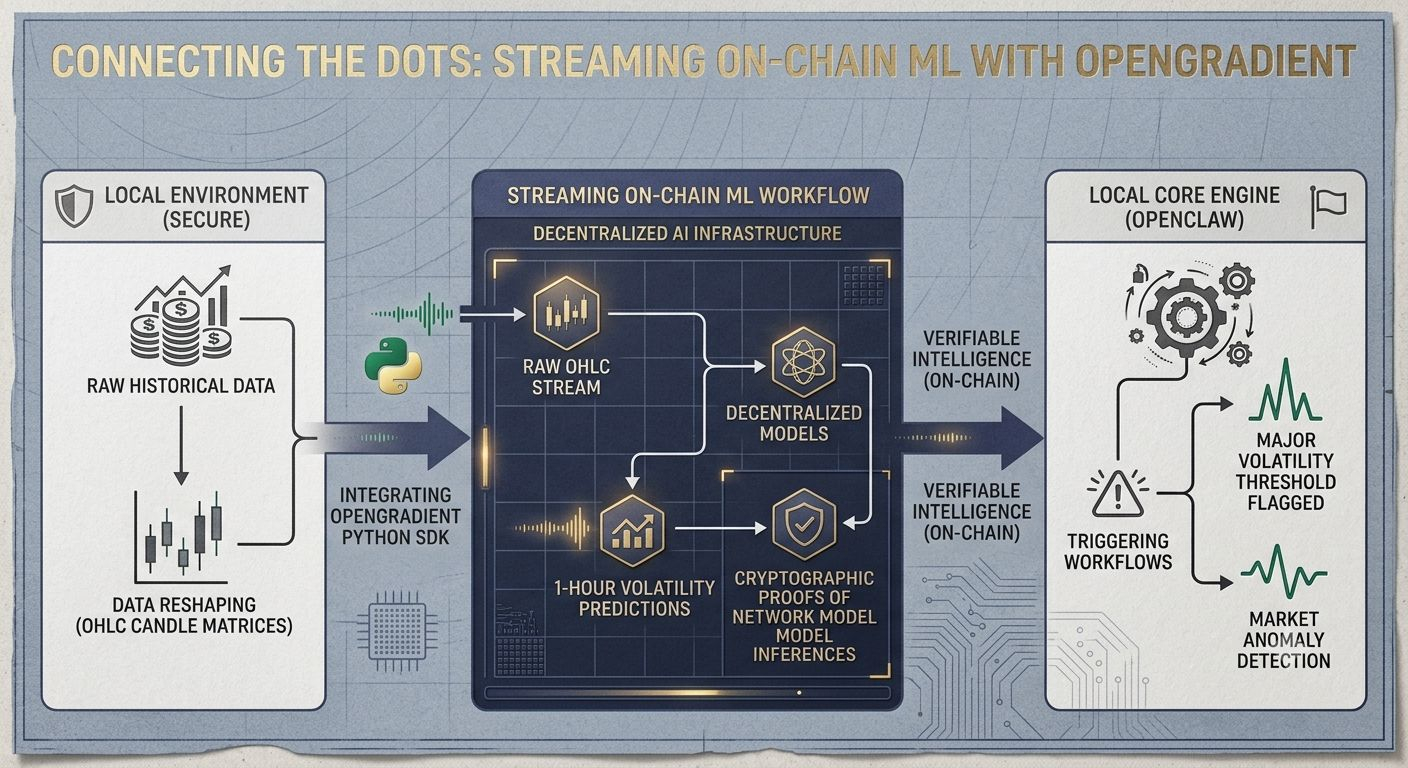
✴️ The Data Pipeline: The SDK allows my local setup to reshape raw historical OHLC candle matrices and stream them to decentralized models for 1-hour volatility predictions.
✴️ Verifiable Intelligence: Instead of relying on centralized APIs, the system receives cryptographic proof of the network's model inferences directly on-chain.
✴️ The Hook: I’ve linked this inference output straight into my core engine OpenClaw, which triggers specific workflows whenever a major volatility threshold or market anomaly is flagged.
This setup bridges raw market structures with actual decentralized machine learning outputs. 📊🔥
Next up, we will look at the brain of the operation: how ClawQuant processes this data to model mathematical risk. 🧠📐
#ClawQuant #BinanceBuilders
#DeAi #OPG #OpenClaw $OPG
Connecting the Dots: Streaming On-Chain ML with OpenGradient 📉
Now that the local environment is secure, it’s time to feed the system with data.
Today, I'm focusing on the infrastructure layer: integrating the @OpenGradient Python SDK into my workflow.
For a single builder 😎 running heavy machine learning models locally isn't practical.
That’s where decentralized AI infrastructure shines:
✴️ The Data Pipeline: The SDK allows my local setup to reshape raw historical OHLC candle matrices and stream them to decentralized models for 1-hour volatility predictions.
✴️ Verifiable Intelligence: Instead of relying on centralized APIs, the system receives cryptographic proof of the network's model inferences directly on-chain.
✴️ The Hook: I’ve linked this inference output straight into my core engine OpenClaw, which triggers specific workflows whenever a major volatility threshold or market anomaly is flagged.
This setup bridges raw market structures with actual decentralized machine learning outputs. 📊🔥
Next up, we will look at the brain of the operation: how ClawQuant processes this data to model mathematical risk. 🧠📐
#ClawQuant #BinanceBuilders
#DeAi #OPG #OpenClaw $OPG
Now that the local environment is secure, it’s time to feed the system with data.
Today, I'm focusing on the infrastructure layer: integrating the @OpenGradient Python SDK into my workflow.
For a single builder 😎 running heavy machine learning models locally isn't practical.
That’s where decentralized AI infrastructure shines:
✴️ The Data Pipeline: The SDK allows my local setup to reshape raw historical OHLC candle matrices and stream them to decentralized models for 1-hour volatility predictions.
✴️ Verifiable Intelligence: Instead of relying on centralized APIs, the system receives cryptographic proof of the network's model inferences directly on-chain.
✴️ The Hook: I’ve linked this inference output straight into my core engine OpenClaw, which triggers specific workflows whenever a major volatility threshold or market anomaly is flagged.
This setup bridges raw market structures with actual decentralized machine learning outputs. 📊🔥
Next up, we will look at the brain of the operation: how ClawQuant processes this data to model mathematical risk. 🧠📐
#ClawQuant #BinanceBuilders
#DeAi #OPG #OpenClaw $OPG
1
104
·
--
🔒 Securing the Agent’s Core: Safe Local Configurations 🛠️
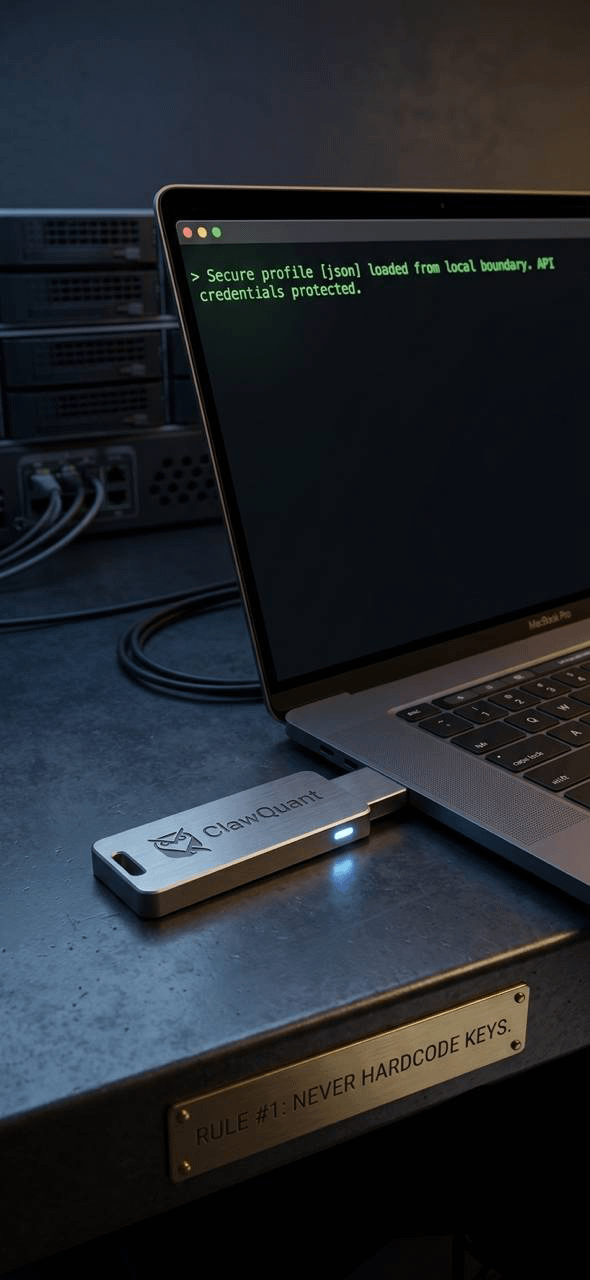
In my last post, I shared the architecture of my personal project, ClawQuant. Today, let’s talk about the first rule of building locally: never hardcode your private keys or API credentials. 🛑
When running autonomous agents that handle on-chain logic, security is a personal responsibility. Here is how I set up my local gateway to keep things secure yet fully automated:
✴️ The Environment Setup: Instead of messy setups, I use an isolated local JSON configuration file (.json) stored safely within my home directory (~/.) to hold sensitive key configurations.
✴️ Safe Loading: Using standard Python handlers, the OpenClaw agent dynamically reads the JSON profile directly into the execution environment at runtime. The keys never touch the shared codebase.
✴️ The Local Boundary: Credentials remain isolated on the device, ensuring automated task execution without accidental leaks.
By keeping credentials completely detached from the logic, the system runs safely in the background. 🖥️⚡
In the next update, I’ll dive into how ClawQuant handles the data stream from the OpenGradient Python SDK for real-time risk modeling. Stay tuned! 📉🔥
#ClawQuant #BinanceBuilders
#DeAi #QuantitativeAnalysis
@OpenGradient $OPG #OPG
🔒 Securing the Agent’s Core: Safe Local Configurations 🛠️
In my last post, I shared the architecture of my personal project, ClawQuant. Today, let’s talk about the first rule of building locally: never hardcode your private keys or API credentials. 🛑
When running autonomous agents that handle on-chain logic, security is a personal responsibility. Here is how I set up my local gateway to keep things secure yet fully automated:
✴️ The Environment Setup: Instead of messy setups, I use an isolated local JSON configuration file (.json) stored safely within my home directory (~/.) to hold sensitive key configurations.
✴️ Safe Loading: Using standard Python handlers, the OpenClaw agent dynamically reads the JSON profile directly into the execution environment at runtime. The keys never touch the shared codebase.
✴️ The Local Boundary: Credentials remain isolated on the device, ensuring automated task execution without accidental leaks.
By keeping credentials completely detached from the logic, the system runs safely in the background. 🖥️⚡
In the next update, I’ll dive into how ClawQuant handles the data stream from the OpenGradient Python SDK for real-time risk modeling. Stay tuned! 📉🔥
#ClawQuant #BinanceBuilders
#DeAi #QuantitativeAnalysis
@OpenGradient $OPG #OPG
In my last post, I shared the architecture of my personal project, ClawQuant. Today, let’s talk about the first rule of building locally: never hardcode your private keys or API credentials. 🛑
When running autonomous agents that handle on-chain logic, security is a personal responsibility. Here is how I set up my local gateway to keep things secure yet fully automated:
✴️ The Environment Setup: Instead of messy setups, I use an isolated local JSON configuration file (.json) stored safely within my home directory (~/.) to hold sensitive key configurations.
✴️ Safe Loading: Using standard Python handlers, the OpenClaw agent dynamically reads the JSON profile directly into the execution environment at runtime. The keys never touch the shared codebase.
✴️ The Local Boundary: Credentials remain isolated on the device, ensuring automated task execution without accidental leaks.
By keeping credentials completely detached from the logic, the system runs safely in the background. 🖥️⚡
In the next update, I’ll dive into how ClawQuant handles the data stream from the OpenGradient Python SDK for real-time risk modeling. Stay tuned! 📉🔥
#ClawQuant #BinanceBuilders
#DeAi #QuantitativeAnalysis
@OpenGradient $OPG #OPG
190

·
--
Binance Adds BlackRock's Tokenized BUIDL as Collateral! 🏦🔗
This is a massive step that bridges the gap between traditional finance (TradFi) and the crypto world.
Binance has officially announced that it will accept BlackRock's USD Institutional Digital Liquidity Fund (BUIDL) as eligible off-exchange collateral for its institutional clients!
What does this mean?
Tokenized Assets Powering Crypto: BUIDL is a tokenized Real-World Asset (RWA) that primarily invests in U.S. Treasury bills. This means institutional traders can now pledge a stable, yield-bearing, traditional finance asset (tokenized by Securitize) as collateral for their crypto trading activities on Binance.
Safety and Yield: Institutions can maintain exposure to a regulated, interest-earning asset while still having the flexibility to trade on the world's largest crypto exchange.
Strengthening Institutional Trust: By integrating a product from a financial giant like BlackRock, Binance is strengthening its Off-Exchange Settlement (OES) solutions, making it more appealing and secure for large financial players to engage with digital assets.
This move underscores the growing trend of tokenization, where tangible financial assets are brought onto the blockchain, increasing efficiency and accessibility. Keep an eye on the RWA space—it's just heating up! 🔥
#MarketPullback
#WriteToEarnUpgrade
#BinanceBuilders
$BEAT $ALCH $POKT
Binance Adds BlackRock's Tokenized BUIDL as Collateral! 🏦🔗
This is a massive step that bridges the gap between traditional finance (TradFi) and the crypto world.
Binance has officially announced that it will accept BlackRock's USD Institutional Digital Liquidity Fund (BUIDL) as eligible off-exchange collateral for its institutional clients!
What does this mean?
Tokenized Assets Powering Crypto: BUIDL is a tokenized Real-World Asset (RWA) that primarily invests in U.S. Treasury bills. This means institutional traders can now pledge a stable, yield-bearing, traditional finance asset (tokenized by Securitize) as collateral for their crypto trading activities on Binance.
Safety and Yield: Institutions can maintain exposure to a regulated, interest-earning asset while still having the flexibility to trade on the world's largest crypto exchange.
Strengthening Institutional Trust: By integrating a product from a financial giant like BlackRock, Binance is strengthening its Off-Exchange Settlement (OES) solutions, making it more appealing and secure for large financial players to engage with digital assets.
This move underscores the growing trend of tokenization, where tangible financial assets are brought onto the blockchain, increasing efficiency and accessibility. Keep an eye on the RWA space—it's just heating up! 🔥
#MarketPullback
#WriteToEarnUpgrade
#BinanceBuilders
$BEAT $ALCH $POKT
This is a massive step that bridges the gap between traditional finance (TradFi) and the crypto world.
Binance has officially announced that it will accept BlackRock's USD Institutional Digital Liquidity Fund (BUIDL) as eligible off-exchange collateral for its institutional clients!
What does this mean?
Tokenized Assets Powering Crypto: BUIDL is a tokenized Real-World Asset (RWA) that primarily invests in U.S. Treasury bills. This means institutional traders can now pledge a stable, yield-bearing, traditional finance asset (tokenized by Securitize) as collateral for their crypto trading activities on Binance.
Safety and Yield: Institutions can maintain exposure to a regulated, interest-earning asset while still having the flexibility to trade on the world's largest crypto exchange.
Strengthening Institutional Trust: By integrating a product from a financial giant like BlackRock, Binance is strengthening its Off-Exchange Settlement (OES) solutions, making it more appealing and secure for large financial players to engage with digital assets.
This move underscores the growing trend of tokenization, where tangible financial assets are brought onto the blockchain, increasing efficiency and accessibility. Keep an eye on the RWA space—it's just heating up! 🔥
#MarketPullback
#WriteToEarnUpgrade
#BinanceBuilders
$BEAT $ALCH $POKT


2
641
·
--
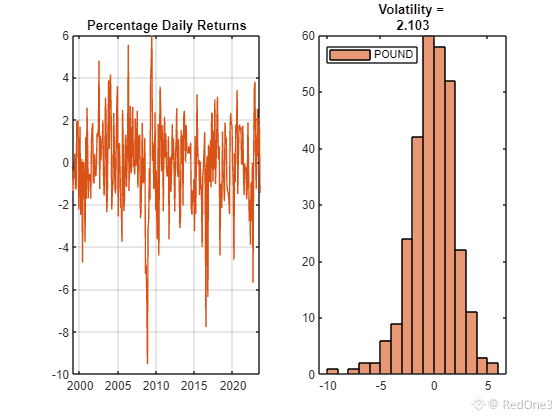
The Analytical Engine & Volatility Modeling
Inside ClawQuant: Cracking Volatility and Risk Models 📐
With the data streaming in safely via OpenGradient, it's time to let ClawQuant do what it was built for: mathematical risk assessment and volatility modeling.
As a builder building this solo, my focus is purely on accuracy and efficiency. Here is how the quantitative module processes market chaos:
✴️ Statistical Edge: ClawQuant takes the decentralized ML inference data and applies local volatility models to calculate potential risk thresholds.
✴️ Dynamic Risk Assessment: Instead of using fixed parameters, the system adapts to sudden liquidity shifts and volume spikes on the blockchain. 🌊
✴️ Automated Logic: When volatility crosses a critical mathematical threshold, a local trigger is sent instantly to the OpenClaw framework to adjust agent behavior.
The goal here isn't magic it’s pure math. By managing risk mathematically, the agent can operate rationally even in highly volatile market conditions. 🛡️✨
#ClawQuant #BinanceBuilders
#OPG $OPG @OpenGradient
#DeAi #QuantitativeAnalysis
The Analytical Engine & Volatility Modeling
Inside ClawQuant: Cracking Volatility and Risk Models 📐
With the data streaming in safely via OpenGradient, it's time to let ClawQuant do what it was built for: mathematical risk assessment and volatility modeling.
As a builder building this solo, my focus is purely on accuracy and efficiency. Here is how the quantitative module processes market chaos:
✴️ Statistical Edge: ClawQuant takes the decentralized ML inference data and applies local volatility models to calculate potential risk thresholds.
✴️ Dynamic Risk Assessment: Instead of using fixed parameters, the system adapts to sudden liquidity shifts and volume spikes on the blockchain. 🌊
✴️ Automated Logic: When volatility crosses a critical mathematical threshold, a local trigger is sent instantly to the OpenClaw framework to adjust agent behavior.
The goal here isn't magic it’s pure math. By managing risk mathematically, the agent can operate rationally even in highly volatile market conditions. 🛡️✨
#ClawQuant #BinanceBuilders
#OPG $OPG @OpenGradient
#DeAi #QuantitativeAnalysis
Inside ClawQuant: Cracking Volatility and Risk Models 📐
With the data streaming in safely via OpenGradient, it's time to let ClawQuant do what it was built for: mathematical risk assessment and volatility modeling.
As a builder building this solo, my focus is purely on accuracy and efficiency. Here is how the quantitative module processes market chaos:
✴️ Statistical Edge: ClawQuant takes the decentralized ML inference data and applies local volatility models to calculate potential risk thresholds.
✴️ Dynamic Risk Assessment: Instead of using fixed parameters, the system adapts to sudden liquidity shifts and volume spikes on the blockchain. 🌊
✴️ Automated Logic: When volatility crosses a critical mathematical threshold, a local trigger is sent instantly to the OpenClaw framework to adjust agent behavior.
The goal here isn't magic it’s pure math. By managing risk mathematically, the agent can operate rationally even in highly volatile market conditions. 🛡️✨
#ClawQuant #BinanceBuilders
#OPG $OPG @OpenGradient
#DeAi #QuantitativeAnalysis
3
1
159
·
--
Closing the Loop: From Local Architecture to Actionable Insights 🌐📊
We’ve covered the blueprint, the security, the ML data stream, and the math. Today, the entire personal setup comes together under one unified workflow. 🦾✨
Here is how the complete cycle runs locally on my machine:
1. Listen: The @OpenGradient SDK streams verifiable ML model data.
2. Analyze: ClawQuant runs local statistical formulas to check volatility and assess risk.
3. Execute: OpenClaw coordinates the agent to handle tasks based on those risk metrics—all powered safely via secure local configs.
The Ultimate Goal as a Binance Builder:
Building in isolation is great, but true Web3 value comes from sharing.
My ultimate target is to translate these backend calculations into clean, visual, and actionable on-chain insights that can help the community cut through market noise. 📊🔥
#ClawQuant #BinanceBuilders
#DeAi #QuantitativeAnalys #OPG $OPG
Closing the Loop: From Local Architecture to Actionable Insights 🌐📊
We’ve covered the blueprint, the security, the ML data stream, and the math. Today, the entire personal setup comes together under one unified workflow. 🦾✨
Here is how the complete cycle runs locally on my machine:
1. Listen: The @OpenGradient SDK streams verifiable ML model data.
2. Analyze: ClawQuant runs local statistical formulas to check volatility and assess risk.
3. Execute: OpenClaw coordinates the agent to handle tasks based on those risk metrics—all powered safely via secure local configs.
The Ultimate Goal as a Binance Builder:
Building in isolation is great, but true Web3 value comes from sharing.
My ultimate target is to translate these backend calculations into clean, visual, and actionable on-chain insights that can help the community cut through market noise. 📊🔥
#ClawQuant #BinanceBuilders
#DeAi #QuantitativeAnalys #OPG $OPG
We’ve covered the blueprint, the security, the ML data stream, and the math. Today, the entire personal setup comes together under one unified workflow. 🦾✨
Here is how the complete cycle runs locally on my machine:
1. Listen: The @OpenGradient SDK streams verifiable ML model data.
2. Analyze: ClawQuant runs local statistical formulas to check volatility and assess risk.
3. Execute: OpenClaw coordinates the agent to handle tasks based on those risk metrics—all powered safely via secure local configs.
The Ultimate Goal as a Binance Builder:
Building in isolation is great, but true Web3 value comes from sharing.
My ultimate target is to translate these backend calculations into clean, visual, and actionable on-chain insights that can help the community cut through market noise. 📊🔥
#ClawQuant #BinanceBuilders
#DeAi #QuantitativeAnalys #OPG $OPG
1
113
·
--
Introducing the ClawQuant Emblem 🎯🔥
A fusion of intelligence and execution. Every algorithm needs a signature.
Building the future where quantitative analysis meets the precision of automated action.
Currently under active development. 📈💻
#ClawQuant #BinanceBuilders
#DeAi #QuantitativeAnalysis
Introducing the ClawQuant Emblem 🎯🔥
A fusion of intelligence and execution. Every algorithm needs a signature.
Building the future where quantitative analysis meets the precision of automated action.
Currently under active development. 📈💻
#ClawQuant #BinanceBuilders
#DeAi #QuantitativeAnalysis
A fusion of intelligence and execution. Every algorithm needs a signature.
Building the future where quantitative analysis meets the precision of automated action.
Currently under active development. 📈💻
#ClawQuant #BinanceBuilders
#DeAi #QuantitativeAnalysis
2.1k
7
115
2.1k

✨ Shaping the Digital Horizon for 9 Incredible Years. Happy 9th Anniversary, Binance! 💛🚀
Nine years ago, a spark ignited. Today, it’s a global ecosystem powering the future of finance. Thank you, Binance, for consistently providing the tools, the tech, and the community to help millions achieve their financial dreams. 🌍
🌟 9 Years of Driving Web3 Adoption
🌟 9 Years of Global Impact
🌟 9 Years of Constant Evolution
Proud to be part of this incredible journey. Wishing Binance many more years of unmatched growth and success! 🥂🎉
#BinanceTurns9 #CryptoRevolution #Web3Evolution #BinanceBuilders
✨ Shaping the Digital Horizon for 9 Incredible Years. Happy 9th Anniversary, Binance! 💛🚀
Nine years ago, a spark ignited. Today, it’s a global ecosystem powering the future of finance. Thank you, Binance, for consistently providing the tools, the tech, and the community to help millions achieve their financial dreams. 🌍
🌟 9 Years of Driving Web3 Adoption
🌟 9 Years of Global Impact
🌟 9 Years of Constant Evolution
Proud to be part of this incredible journey. Wishing Binance many more years of unmatched growth and success! 🥂🎉
#BinanceTurns9 #CryptoRevolution #Web3Evolution #BinanceBuilders
Nine years ago, a spark ignited. Today, it’s a global ecosystem powering the future of finance. Thank you, Binance, for consistently providing the tools, the tech, and the community to help millions achieve their financial dreams. 🌍
🌟 9 Years of Driving Web3 Adoption
🌟 9 Years of Global Impact
🌟 9 Years of Constant Evolution
Proud to be part of this incredible journey. Wishing Binance many more years of unmatched growth and success! 🥂🎉
#BinanceTurns9 #CryptoRevolution #Web3Evolution #BinanceBuilders
75
Log in to explore more content
Join global crypto users on Binance Square
⚡️ Get latest and useful information about crypto.
💬 Trusted by the world’s largest crypto exchange.
👍 Discover real insights from verified creators.
Email / Phone number
Trending Topics
1
#ChinaIndustrialProfitGrowthSlowsFourthMonth
0 views
5 Discussing
2
#BitwiseFilesFinalNEARSpotETFProspectus
91,820 views
1,479 Discussing
3
#BitgetHackerMoves$83MStolenXRP
34,066 views
165 Discussing
4
#SOLSpotETFWeeklyInflow$188M
22,446 views
133 Discussing
5
#DogecoinETFsPostBiggestWeekSinceLaunch
56,732 views
1,008 Discussing
6
#StrategyStriveAdd2305BitcoinThisWeek
148,743 views
2,208 Discussing
7
#TrumpRejectsIranHormuzReopening
127,714 views
1,670 Discussing
8
#TokenizedStockDEXVolumeHits$20.9B
196 views
8 Discussing
9
#CircleTetherFreezeBitgetHackerWallet
109,708 views
1,530 Discussing
10
#SECSaysTokenBuybacksNotAutoSecurities
74,228 views
915 Discussing