
#bpi
bpi
1,885 views
11 Discussing
Hot
Latest

·
--
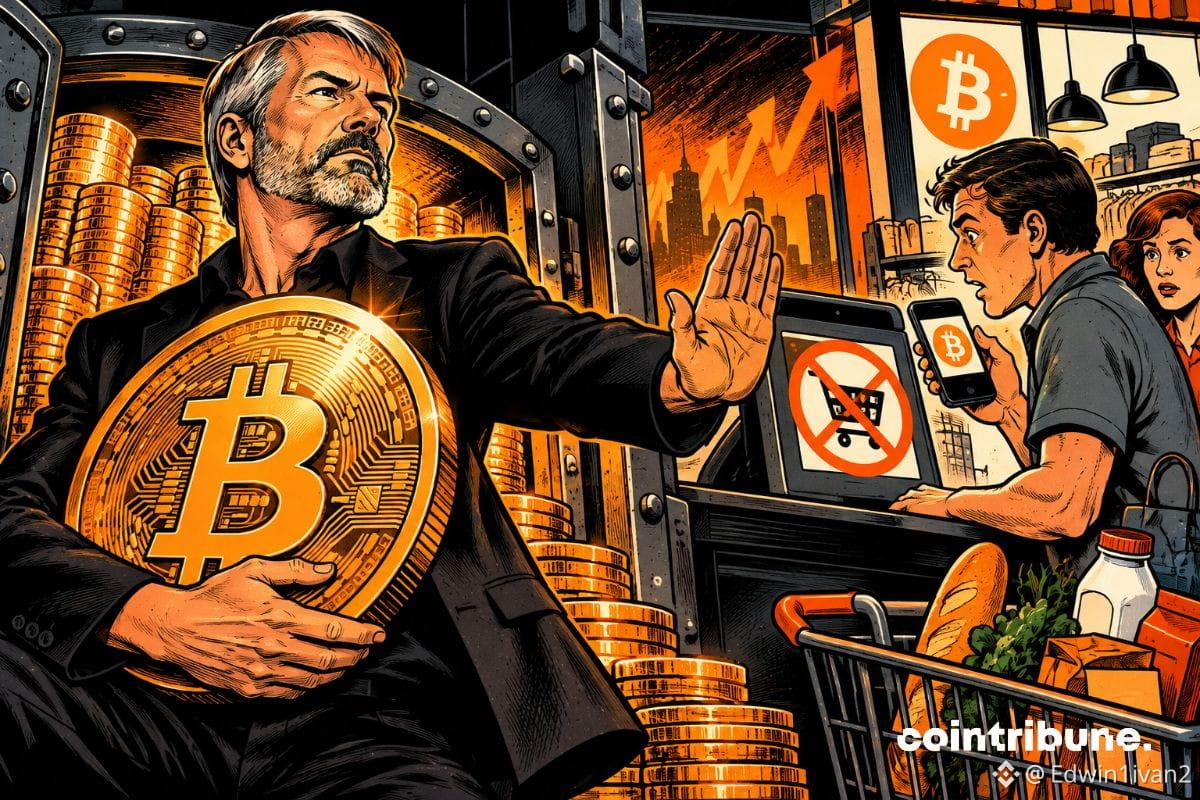
A BIS study questions whether Bitcoin can become everyday money
A study published by the Bank for International Settlements estimates that Bitcoin lacks the architecture needed to become a currency for everyday use. Michael Saylor reaches a similar conclusion, but advocates a different solution: keeping BTC as capital and building credit products on top of this asset.
The BIS estimates that Bitcoin cannot become a currency for everyday use without a credit system and public guarantees.
Michael Saylor sees BTC as digital capital rather than a means of payment.
He proposes building private credit products backed by bitcoin.
The BIS favors central bank support to ensure financial stability.
The collapses of Celsius, BlockFi, and FTX serve as a reminder of the risks of crypto-backed lending.
The BIS considers Bitcoin unsuitable for everyday payments
Economist Iñaki Aldasoro published a study on October 14 titled “Money and the Architecture of Trust.” This 43-page document presents money as promises grounded in trust, credit, and the backing of public institutions.
Its reasoning rests on several main ideas:
Money allows an obligation to be settled definitively;
Credit is a promise of future payment;
Banks create means of payment through credit;
The central bank provides liquidity during periods of crisis;
The state and deposit insurance share potential losses;
Bitcoin has no equivalent public mechanism.
$BP.US
{stock_us}(BP.US)
$BTCDOM
{future}(BTCDOMUSDT)
$BODI.US
{stock_us}(BODI.US)
#BPI
A BIS study questions whether Bitcoin can become everyday money
A study published by the Bank for International Settlements estimates that Bitcoin lacks the architecture needed to become a currency for everyday use. Michael Saylor reaches a similar conclusion, but advocates a different solution: keeping BTC as capital and building credit products on top of this asset.
The BIS estimates that Bitcoin cannot become a currency for everyday use without a credit system and public guarantees.
Michael Saylor sees BTC as digital capital rather than a means of payment.
He proposes building private credit products backed by bitcoin.
The BIS favors central bank support to ensure financial stability.
The collapses of Celsius, BlockFi, and FTX serve as a reminder of the risks of crypto-backed lending.
The BIS considers Bitcoin unsuitable for everyday payments
Economist Iñaki Aldasoro published a study on October 14 titled “Money and the Architecture of Trust.” This 43-page document presents money as promises grounded in trust, credit, and the backing of public institutions.
Its reasoning rests on several main ideas:
Money allows an obligation to be settled definitively;
Credit is a promise of future payment;
Banks create means of payment through credit;
The central bank provides liquidity during periods of crisis;
The state and deposit insurance share potential losses;
Bitcoin has no equivalent public mechanism.
$BP.US
$BTCDOM
$BODI.US
#BPI
A study published by the Bank for International Settlements estimates that Bitcoin lacks the architecture needed to become a currency for everyday use. Michael Saylor reaches a similar conclusion, but advocates a different solution: keeping BTC as capital and building credit products on top of this asset.
The BIS estimates that Bitcoin cannot become a currency for everyday use without a credit system and public guarantees.
Michael Saylor sees BTC as digital capital rather than a means of payment.
He proposes building private credit products backed by bitcoin.
The BIS favors central bank support to ensure financial stability.
The collapses of Celsius, BlockFi, and FTX serve as a reminder of the risks of crypto-backed lending.
The BIS considers Bitcoin unsuitable for everyday payments
Economist Iñaki Aldasoro published a study on October 14 titled “Money and the Architecture of Trust.” This 43-page document presents money as promises grounded in trust, credit, and the backing of public institutions.
Its reasoning rests on several main ideas:
Money allows an obligation to be settled definitively;
Credit is a promise of future payment;
Banks create means of payment through credit;
The central bank provides liquidity during periods of crisis;
The state and deposit insurance share potential losses;
Bitcoin has no equivalent public mechanism.
$BP.US
$BTCDOM
$BODI.US
#BPI
227

BPI Vietnam pilots stablecoin payments
- BPI Vietnam is piloting the use of stablecoins to process international payments
- The goal is to reduce costs and speed up transactions for remote workers in software
- A solution based on blockchain technology, leveraging the stable value of stablecoins
#BinanceSquare #CryptoNews #BPI #Stablecoin
$btc $eth
#vlikevn Titanbot
Source: CoinTelegraph
BPI Vietnam pilots stablecoin payments
- BPI Vietnam is piloting the use of stablecoins to process international payments
- The goal is to reduce costs and speed up transactions for remote workers in software
- A solution based on blockchain technology, leveraging the stable value of stablecoins
#BinanceSquare #CryptoNews #BPI #Stablecoin
$btc $eth
#vlikevn Titanbot
Source: CoinTelegraph
- BPI Vietnam is piloting the use of stablecoins to process international payments
- The goal is to reduce costs and speed up transactions for remote workers in software
- A solution based on blockchain technology, leveraging the stable value of stablecoins
#BinanceSquare #CryptoNews #BPI #Stablecoin
$btc $eth
#vlikevn Titanbot
Source: CoinTelegraph
45

Disputed
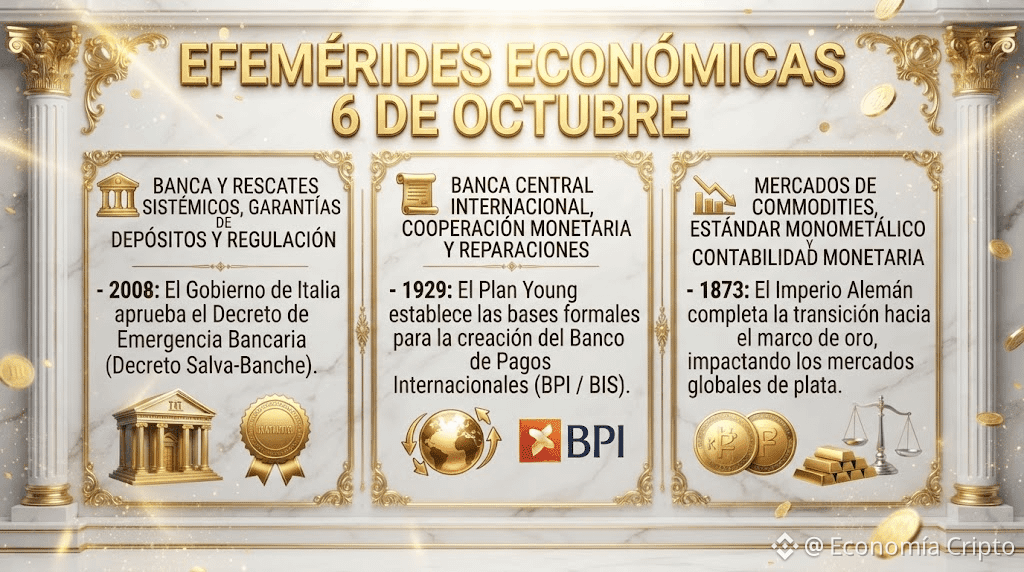
Italy’s Financial Emergency Law in 2008, the Creation of the BIS in 1929, and the Restructuring of the Silver Market in 1873: Economic Anniversaries for October 6 🏛️📜💱.
October 6 commemorates three significant economic events: in 2008, Italy approved an emergency decree to ensure bank liquidity and protect deposits after the collapse of Lehman Brothers; in 1929, the Young Plan laid the groundwork for the creation of the Bank for International Settlements (BIS), the first global financial institution for cooperation among central banks; and in 1873, the German Empire completed its transition to the gold standard, triggering a decline in the price of silver and a global shift toward gold monometallism.
BLESSINGS!
#BPI
$MSFTB
{spot}(GOOGLBUSDT)
{spot}(SPCXBUSDT)
{spot}(MSFTBUSDT)
Italy’s Financial Emergency Law in 2008, the Creation of the BIS in 1929, and the Restructuring of the Silver Market in 1873: Economic Anniversaries for October 6 🏛️📜💱.
October 6 commemorates three significant economic events: in 2008, Italy approved an emergency decree to ensure bank liquidity and protect deposits after the collapse of Lehman Brothers; in 1929, the Young Plan laid the groundwork for the creation of the Bank for International Settlements (BIS), the first global financial institution for cooperation among central banks; and in 1873, the German Empire completed its transition to the gold standard, triggering a decline in the price of silver and a global shift toward gold monometallism.
BLESSINGS!
#BPI
$MSFTB
October 6 commemorates three significant economic events: in 2008, Italy approved an emergency decree to ensure bank liquidity and protect deposits after the collapse of Lehman Brothers; in 1929, the Young Plan laid the groundwork for the creation of the Bank for International Settlements (BIS), the first global financial institution for cooperation among central banks; and in 1873, the German Empire completed its transition to the gold standard, triggering a decline in the price of silver and a global shift toward gold monometallism.
BLESSINGS!
#BPI
$MSFTB
1
173

·
--
Bullish
Verified
#bpiseekstointerveneinnoahdoecase
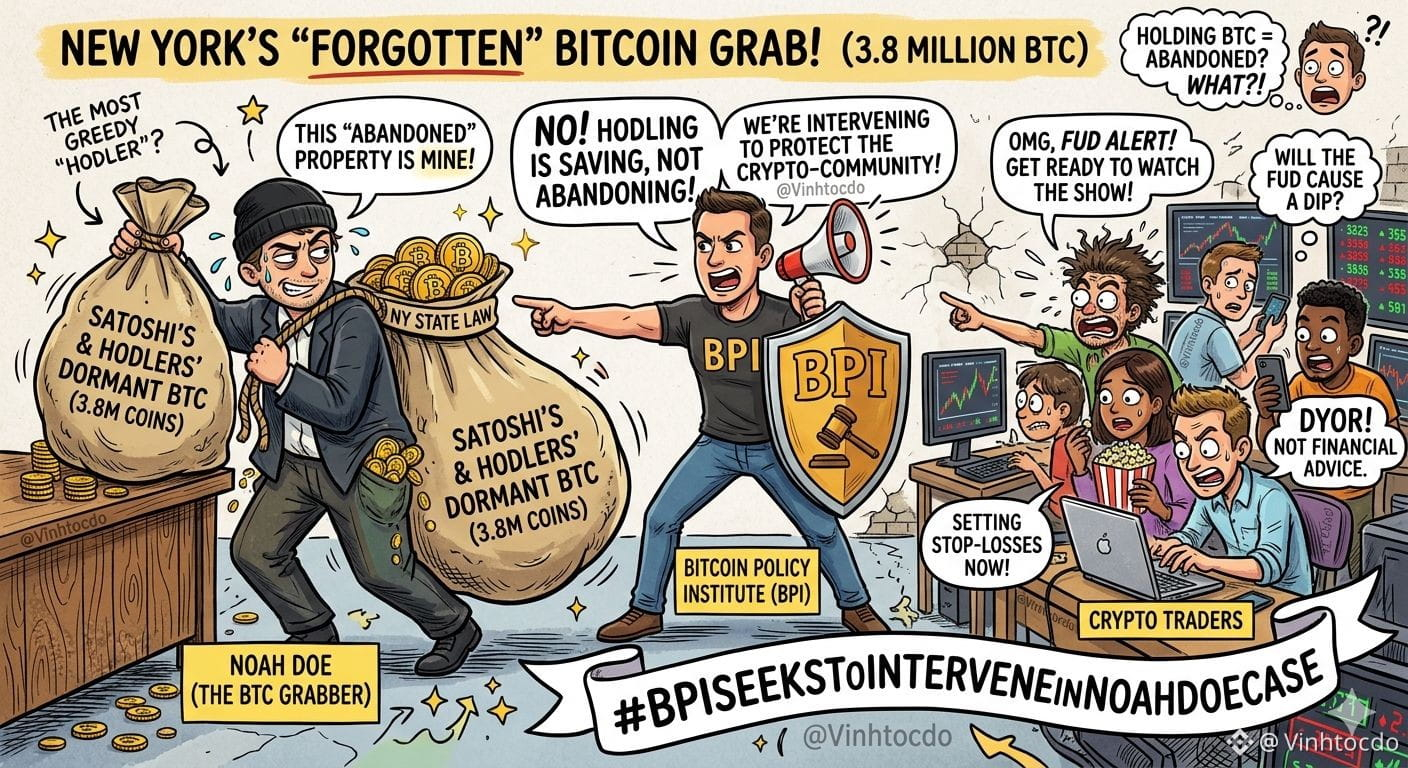
What is this? After holding for many years, people are now considering it “abandonment” and asking to seize it? 🤯
This anonymous “Noah Doe” deity is planning to use New York law to grab 3.8 million BTC that have been dormant (including Satoshi’s wallet). Looks like this guy is even more greedy than us traders by a million times! Luckily, the Bitcoin Policy Institute (BPI) just filed a motion to intervene to protect fellow HODLers, stating that “holding coins without selling is accumulation, not throwing them away.”
What should traders do? Turn on the drama-watching mode—check back next week—and remember to set a stop-loss to guard against FUD.
*DYOR—Not investment advice. Use the code VINHTOCDO to reduce trading fees!
#NoahDoe #BPI #HODL #VINHTOCDO
$BTC
{future}(BTCUSDT)
$ETH
{future}(ETHUSDT)
$BNB
{future}(BNBUSDT)
#bpiseekstointerveneinnoahdoecase
What is this? After holding for many years, people are now considering it “abandonment” and asking to seize it? 🤯
This anonymous “Noah Doe” deity is planning to use New York law to grab 3.8 million BTC that have been dormant (including Satoshi’s wallet). Looks like this guy is even more greedy than us traders by a million times! Luckily, the Bitcoin Policy Institute (BPI) just filed a motion to intervene to protect fellow HODLers, stating that “holding coins without selling is accumulation, not throwing them away.”
What should traders do? Turn on the drama-watching mode—check back next week—and remember to set a stop-loss to guard against FUD.
*DYOR—Not investment advice. Use the code VINHTOCDO to reduce trading fees!
#NoahDoe #BPI #HODL #VINHTOCDO
$BTC
$ETH
$BNB
What is this? After holding for many years, people are now considering it “abandonment” and asking to seize it? 🤯
This anonymous “Noah Doe” deity is planning to use New York law to grab 3.8 million BTC that have been dormant (including Satoshi’s wallet). Looks like this guy is even more greedy than us traders by a million times! Luckily, the Bitcoin Policy Institute (BPI) just filed a motion to intervene to protect fellow HODLers, stating that “holding coins without selling is accumulation, not throwing them away.”
What should traders do? Turn on the drama-watching mode—check back next week—and remember to set a stop-loss to guard against FUD.
*DYOR—Not investment advice. Use the code VINHTOCDO to reduce trading fees!
#NoahDoe #BPI #HODL #VINHTOCDO
$BTC
$ETH
$BNB
6
2k

·
--
Bullish
#BPIUrgesFinCENExpandStablecoinIDRulesToSecondaryMarkets
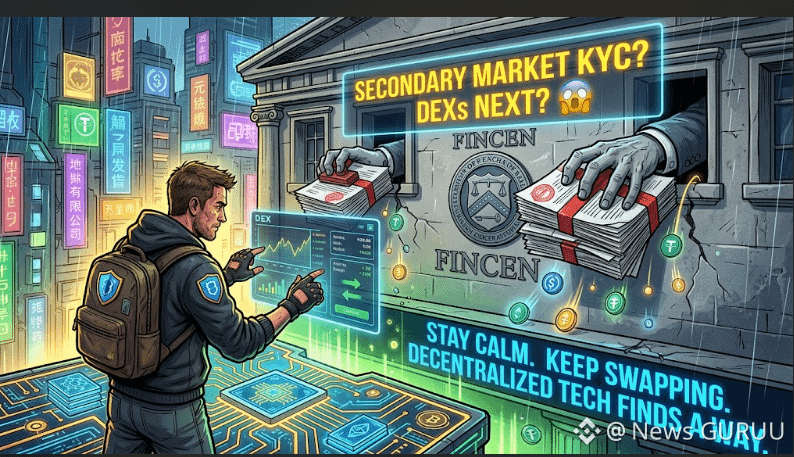
🚨 BANKS PUSH FOR TOUGHER STABLECOIN KYC
Major banks are urging FinCEN to expand KYC requirements to secondary stablecoin markets, raising concerns for self-custody, DEXs and OTC activity.
📊 Market Impact:
Broader compliance rules could increase friction for decentralized markets and create short-term regulatory uncertainty, but this does not mean self-custody or DEXs are automatically being banned.
🎯 TRADING VIEW: BUY🚀
Regulatory uncertainty is a near-term bearish catalyst for the broader crypto market. Avoid panic, but traders should stay defensive until the policy direction becomes clearer.
❓ Could tighter KYC rules pressure crypto further? "CLICK ON THE BELOW YELLOW COIN TAG TO GO TO DESIRED TRADING PAGE TO GET BENEFIT TRADE"$BNB $BTC $ETH
{spot}(ETHUSDT)
{spot}(BTCUSDT)
{spot}(BNBUSDT)
#Stablecoins #BPI #SandboxSANDSuspectedInfiniteMintFlawOnBase
#BPIUrgesFinCENExpandStablecoinIDRulesToSecondaryMarkets
🚨 BANKS PUSH FOR TOUGHER STABLECOIN KYC
Major banks are urging FinCEN to expand KYC requirements to secondary stablecoin markets, raising concerns for self-custody, DEXs and OTC activity.
📊 Market Impact:
Broader compliance rules could increase friction for decentralized markets and create short-term regulatory uncertainty, but this does not mean self-custody or DEXs are automatically being banned.
🎯 TRADING VIEW: BUY🚀
Regulatory uncertainty is a near-term bearish catalyst for the broader crypto market. Avoid panic, but traders should stay defensive until the policy direction becomes clearer.
❓ Could tighter KYC rules pressure crypto further? "CLICK ON THE BELOW YELLOW COIN TAG TO GO TO DESIRED TRADING PAGE TO GET BENEFIT TRADE"$BNB $BTC $ETH
#Stablecoins #BPI #SandboxSANDSuspectedInfiniteMintFlawOnBase
🚨 BANKS PUSH FOR TOUGHER STABLECOIN KYC
Major banks are urging FinCEN to expand KYC requirements to secondary stablecoin markets, raising concerns for self-custody, DEXs and OTC activity.
📊 Market Impact:
Broader compliance rules could increase friction for decentralized markets and create short-term regulatory uncertainty, but this does not mean self-custody or DEXs are automatically being banned.
🎯 TRADING VIEW: BUY🚀
Regulatory uncertainty is a near-term bearish catalyst for the broader crypto market. Avoid panic, but traders should stay defensive until the policy direction becomes clearer.
❓ Could tighter KYC rules pressure crypto further? "CLICK ON THE BELOW YELLOW COIN TAG TO GO TO DESIRED TRADING PAGE TO GET BENEFIT TRADE"$BNB $BTC $ETH
#Stablecoins #BPI #SandboxSANDSuspectedInfiniteMintFlawOnBase
1
155

·
--
Article
BPI Urges FinCEN to Expand Stablecoin ID Rules to Secondary Markets
.Stablecoin regulation is entering a new phase as U.S. banking groups push for stronger identity and anti-money-laundering requirements beyond stablecoin issuers.
The Bank Policy Institute (BPI), together with The Clearing House, has urged U.S. regulators to address what it sees as regulatory gaps in the secondary market for payment stablecoins. The organizations argue that AML/CFT and sanctions obligations should not focus primarily on stablecoin issuers while leaving exchanges, custodians, digital-asset service providers and other secondary-market participants with weaker requirements.
Why the Secondary Market Matters
Stablecoin activity can broadly be divided into two areas.
The primary market involves direct interactions with an issuer, such as issuing, redeeming, converting or repurchasing stablecoins.
The secondary market covers transactions where users trade or transfer stablecoins without the issuer being a direct party, often through exchanges, intermediaries, wallets or blockchain-based smart contracts. FinCEN itself has recognized that much illicit-finance activity involving payment stablecoins occurs in the secondary market.
This creates a difficult regulatory question: Who should be responsible for identifying the people behind transactions when the stablecoin issuer may not have a direct customer relationship with them?
FinCEN's Current Framework
In June 2026, FinCEN and federal banking agencies proposed customer-identification requirements for permitted payment stablecoin issuers under the GENIUS Act. The proposal would treat permitted payment stablecoin issuers as financial institutions under the Bank Secrecy Act and require effective customer-identification programs.
However, the proposed customer-identification framework primarily focuses on direct, primary-market relationships rather than every secondary-market transfer. This distinction reflects the practical difficulty of requiring an issuer to identify every participant interacting with a stablecoin through blockchain transactions.
BPI's Main Concern
BPI and The Clearing House argue that stronger requirements are also needed for secondary-market actors.
Their position is significant because exchanges, custodians and other digital-asset intermediaries can have direct relationships with retail customers even when the stablecoin issuer does not.
The banking groups therefore want regulators to clarify and strengthen AML/CFT and sanctions responsibilities across the broader stablecoin ecosystem rather than concentrating compliance obligations primarily on issuers.
What This Could Mean for Crypto Markets
If regulators expand identity requirements across secondary markets, crypto users could face greater compliance checks when trading or transferring stablecoins through regulated platforms.
For the industry, the potential benefits include:
- Stronger defenses against illicit finance
- Greater transparency across stablecoin markets
- More consistent AML/CFT standards
- Clearer responsibilities for exchanges and custodians
- Potentially greater confidence from traditional financial institutions
But there are also important challenges. Applying traditional customer-identification rules to decentralized blockchain activity could create significant technical and privacy issues. A blockchain transaction does not automatically reveal the real-world identity or purpose of the people behind the addresses.
The Bigger Picture
The debate highlights a central challenge for the U.S. stablecoin framework: how to combine financial innovation with effective regulatory oversight.
Stablecoins are increasingly being positioned as payment and settlement instruments, while regulators are simultaneously trying to prevent their misuse for money laundering, sanctions evasion and other illicit activities.
The outcome of this debate could influence how exchanges, custodians, stablecoin issuers and decentralized financial platforms operate in the United States.
For crypto investors and market participants, the message is clear: stablecoin regulation is moving beyond the issuer and toward the entire transaction ecosystem.
The next major question is whether regulators can close compliance gaps without creating rules that make blockchain-based payments unnecessarily expensive, restrictive or difficult to use.
The future of stablecoins may depend not only on how they are issued, but also on how regulators oversee what happens after they enter the market.
#Crypto #Stablecoin #FinCE #BPI #GENIUSAct #Regulation #Blockchain #DigitalAssets #AML #DeFi #BPIUrgesFinCENExpandStablecoinIDRulesToSecondaryMarkets
BPI Urges FinCEN to Expand Stablecoin ID Rules to Secondary Markets .
Stablecoin regulation is entering a new phase as U.S. banking groups push for stronger identity and anti-money-laundering requirements beyond stablecoin issuers.
The Bank Policy Institute (BPI), together with The Clearing House, has urged U.S. regulators to address what it sees as regulatory gaps in the secondary market for payment stablecoins. The organizations argue that AML/CFT and sanctions obligations should not focus primarily on stablecoin issuers while leaving exchanges, custodians, digital-asset service providers and other secondary-market participants with weaker requirements.
Why the Secondary Market Matters
Stablecoin activity can broadly be divided into two areas.
The primary market involves direct interactions with an issuer, such as issuing, redeeming, converting or repurchasing stablecoins.
The secondary market covers transactions where users trade or transfer stablecoins without the issuer being a direct party, often through exchanges, intermediaries, wallets or blockchain-based smart contracts. FinCEN itself has recognized that much illicit-finance activity involving payment stablecoins occurs in the secondary market.
This creates a difficult regulatory question: Who should be responsible for identifying the people behind transactions when the stablecoin issuer may not have a direct customer relationship with them?
FinCEN's Current Framework
In June 2026, FinCEN and federal banking agencies proposed customer-identification requirements for permitted payment stablecoin issuers under the GENIUS Act. The proposal would treat permitted payment stablecoin issuers as financial institutions under the Bank Secrecy Act and require effective customer-identification programs.
However, the proposed customer-identification framework primarily focuses on direct, primary-market relationships rather than every secondary-market transfer. This distinction reflects the practical difficulty of requiring an issuer to identify every participant interacting with a stablecoin through blockchain transactions.
BPI's Main Concern
BPI and The Clearing House argue that stronger requirements are also needed for secondary-market actors.
Their position is significant because exchanges, custodians and other digital-asset intermediaries can have direct relationships with retail customers even when the stablecoin issuer does not.
The banking groups therefore want regulators to clarify and strengthen AML/CFT and sanctions responsibilities across the broader stablecoin ecosystem rather than concentrating compliance obligations primarily on issuers.
What This Could Mean for Crypto Markets
If regulators expand identity requirements across secondary markets, crypto users could face greater compliance checks when trading or transferring stablecoins through regulated platforms.
For the industry, the potential benefits include:
- Stronger defenses against illicit finance
- Greater transparency across stablecoin markets
- More consistent AML/CFT standards
- Clearer responsibilities for exchanges and custodians
- Potentially greater confidence from traditional financial institutions
But there are also important challenges. Applying traditional customer-identification rules to decentralized blockchain activity could create significant technical and privacy issues. A blockchain transaction does not automatically reveal the real-world identity or purpose of the people behind the addresses.
The Bigger Picture
The debate highlights a central challenge for the U.S. stablecoin framework: how to combine financial innovation with effective regulatory oversight.
Stablecoins are increasingly being positioned as payment and settlement instruments, while regulators are simultaneously trying to prevent their misuse for money laundering, sanctions evasion and other illicit activities.
The outcome of this debate could influence how exchanges, custodians, stablecoin issuers and decentralized financial platforms operate in the United States.
For crypto investors and market participants, the message is clear: stablecoin regulation is moving beyond the issuer and toward the entire transaction ecosystem.
The next major question is whether regulators can close compliance gaps without creating rules that make blockchain-based payments unnecessarily expensive, restrictive or difficult to use.
The future of stablecoins may depend not only on how they are issued, but also on how regulators oversee what happens after they enter the market.
#Crypto #Stablecoin #FinCE #BPI #GENIUSAct #Regulation #Blockchain #DigitalAssets #AML #DeFi #BPIUrgesFinCENExpandStablecoinIDRulesToSecondaryMarkets
The Bank Policy Institute (BPI), together with The Clearing House, has urged U.S. regulators to address what it sees as regulatory gaps in the secondary market for payment stablecoins. The organizations argue that AML/CFT and sanctions obligations should not focus primarily on stablecoin issuers while leaving exchanges, custodians, digital-asset service providers and other secondary-market participants with weaker requirements.
Why the Secondary Market Matters
Stablecoin activity can broadly be divided into two areas.
The primary market involves direct interactions with an issuer, such as issuing, redeeming, converting or repurchasing stablecoins.
The secondary market covers transactions where users trade or transfer stablecoins without the issuer being a direct party, often through exchanges, intermediaries, wallets or blockchain-based smart contracts. FinCEN itself has recognized that much illicit-finance activity involving payment stablecoins occurs in the secondary market.
This creates a difficult regulatory question: Who should be responsible for identifying the people behind transactions when the stablecoin issuer may not have a direct customer relationship with them?
FinCEN's Current Framework
In June 2026, FinCEN and federal banking agencies proposed customer-identification requirements for permitted payment stablecoin issuers under the GENIUS Act. The proposal would treat permitted payment stablecoin issuers as financial institutions under the Bank Secrecy Act and require effective customer-identification programs.
However, the proposed customer-identification framework primarily focuses on direct, primary-market relationships rather than every secondary-market transfer. This distinction reflects the practical difficulty of requiring an issuer to identify every participant interacting with a stablecoin through blockchain transactions.
BPI's Main Concern
BPI and The Clearing House argue that stronger requirements are also needed for secondary-market actors.
Their position is significant because exchanges, custodians and other digital-asset intermediaries can have direct relationships with retail customers even when the stablecoin issuer does not.
The banking groups therefore want regulators to clarify and strengthen AML/CFT and sanctions responsibilities across the broader stablecoin ecosystem rather than concentrating compliance obligations primarily on issuers.
What This Could Mean for Crypto Markets
If regulators expand identity requirements across secondary markets, crypto users could face greater compliance checks when trading or transferring stablecoins through regulated platforms.
For the industry, the potential benefits include:
- Stronger defenses against illicit finance
- Greater transparency across stablecoin markets
- More consistent AML/CFT standards
- Clearer responsibilities for exchanges and custodians
- Potentially greater confidence from traditional financial institutions
But there are also important challenges. Applying traditional customer-identification rules to decentralized blockchain activity could create significant technical and privacy issues. A blockchain transaction does not automatically reveal the real-world identity or purpose of the people behind the addresses.
The Bigger Picture
The debate highlights a central challenge for the U.S. stablecoin framework: how to combine financial innovation with effective regulatory oversight.
Stablecoins are increasingly being positioned as payment and settlement instruments, while regulators are simultaneously trying to prevent their misuse for money laundering, sanctions evasion and other illicit activities.
The outcome of this debate could influence how exchanges, custodians, stablecoin issuers and decentralized financial platforms operate in the United States.
For crypto investors and market participants, the message is clear: stablecoin regulation is moving beyond the issuer and toward the entire transaction ecosystem.
The next major question is whether regulators can close compliance gaps without creating rules that make blockchain-based payments unnecessarily expensive, restrictive or difficult to use.
The future of stablecoins may depend not only on how they are issued, but also on how regulators oversee what happens after they enter the market.
#Crypto #Stablecoin #FinCE #BPI #GENIUSAct #Regulation #Blockchain #DigitalAssets #AML #DeFi #BPIUrgesFinCENExpandStablecoinIDRulesToSecondaryMarkets
1
140
Log in to explore more content
Join global crypto users on Binance Square
⚡️ Get latest and useful information about crypto.
💬 Trusted by the world’s largest crypto exchange.
👍 Discover real insights from verified creators.
Email / Phone number
Trending Topics
1
#HuangExitNvidiaStrategyInFocus
326 views
64 Discussing
2
#ChipStocksExtendLossesAfterNvidiaCEOChange
0 views
18 Discussing
3
#AnthropicRejectsIPODelayValuationinQuestion
551,167 views
4,530 Discussing
4
#BitMineReports$6.3BNetLossForFiscal2026
870 views
45 Discussing
5
#CoreWeaveJumps10%On168%RevenueGrowth
109,758 views
1,263 Discussing
6
#ZcashFallsBelow$1000ForFirstTimeSinceSeptember
58,872 views
241 Discussing
7
#MSCIRemovalMayCurbStrategy’sBitcoinBuying
19,114 views
320 Discussing
8
#TradFiForBeginners
493,648 views
3,360 Discussing
9
#CanNvidiaEarningsEaseMarketConcerns?
214,995 views
2,113 Discussing
10
#USJoblessClaimsRise
19.1M views
7,521 Discussing