

#ali_imran
ali_imran
112 views
10 Discussing
Hot
Latest

·
--
✈️ Emirates Airlines Makes Crypto Flight Bookings a Reality: ✈️
Emirates has officially launched Crypto .com Pay, making it the first major airline in the Gulf to accept cryptocurrency payments for flight bookings.
✈️ How the System Works:✈️
If you are an eligible resident of the United Arab Emirates (UAE) and have a Crypto .com account, you can book flights on the Emirates website or app and pay directly from your crypto wallet.
✈️ On mobile: You are redirected to the Crypto.com app to approve the payment, and then sent back to Emirates for confirmation and your ticket.
✈️ On desktop: It is a simple QR code scan that you approve using the Crypto.com app.
✈️ An Important Note: ✈️
Technically, you are not buying tickets "in crypto." Everything is priced and transacted in UAE Dirhams (AED), so your cryptocurrency simply acts as a funding source Emirates still receives standard fiat currency. Think of it as a fast lane between your crypto wallet and your boarding pass, rather than a brand-new crypto-based ticketing system.
This is not a sudden move, either. It is the rollout of a partnership that Emirates and Crypto.com signed in July 2025. It aligns perfectly with Dubai's broader goal to digitize 90% of government and private sector transactions by the end of 2026.
Right now, this is just a beginning by a single airline. With Emirates taking this step, other global airlines closely watching cryptocurrency now have a real-life example to follow.
#Ali_Imran
#emirates #CryptoPay #CryptoNews #DubaiCashlessStrategy
✈️ Emirates Airlines Makes Crypto Flight Bookings a Reality: ✈️
Emirates has officially launched Crypto .com Pay, making it the first major airline in the Gulf to accept cryptocurrency payments for flight bookings.
✈️ How the System Works:✈️
If you are an eligible resident of the United Arab Emirates (UAE) and have a Crypto .com account, you can book flights on the Emirates website or app and pay directly from your crypto wallet.
✈️ On mobile: You are redirected to the Crypto.com app to approve the payment, and then sent back to Emirates for confirmation and your ticket.
✈️ On desktop: It is a simple QR code scan that you approve using the Crypto.com app.
✈️ An Important Note: ✈️
Technically, you are not buying tickets "in crypto." Everything is priced and transacted in UAE Dirhams (AED), so your cryptocurrency simply acts as a funding source Emirates still receives standard fiat currency. Think of it as a fast lane between your crypto wallet and your boarding pass, rather than a brand-new crypto-based ticketing system.
This is not a sudden move, either. It is the rollout of a partnership that Emirates and Crypto.com signed in July 2025. It aligns perfectly with Dubai's broader goal to digitize 90% of government and private sector transactions by the end of 2026.
Right now, this is just a beginning by a single airline. With Emirates taking this step, other global airlines closely watching cryptocurrency now have a real-life example to follow.
#Ali_Imran
#emirates #CryptoPay #CryptoNews #DubaiCashlessStrategy
Emirates has officially launched Crypto .com Pay, making it the first major airline in the Gulf to accept cryptocurrency payments for flight bookings.
✈️ How the System Works:✈️
If you are an eligible resident of the United Arab Emirates (UAE) and have a Crypto .com account, you can book flights on the Emirates website or app and pay directly from your crypto wallet.
✈️ On mobile: You are redirected to the Crypto.com app to approve the payment, and then sent back to Emirates for confirmation and your ticket.
✈️ On desktop: It is a simple QR code scan that you approve using the Crypto.com app.
✈️ An Important Note: ✈️
Technically, you are not buying tickets "in crypto." Everything is priced and transacted in UAE Dirhams (AED), so your cryptocurrency simply acts as a funding source Emirates still receives standard fiat currency. Think of it as a fast lane between your crypto wallet and your boarding pass, rather than a brand-new crypto-based ticketing system.
This is not a sudden move, either. It is the rollout of a partnership that Emirates and Crypto.com signed in July 2025. It aligns perfectly with Dubai's broader goal to digitize 90% of government and private sector transactions by the end of 2026.
Right now, this is just a beginning by a single airline. With Emirates taking this step, other global airlines closely watching cryptocurrency now have a real-life example to follow.
#Ali_Imran
#emirates #CryptoPay #CryptoNews #DubaiCashlessStrategy

100
·
--
Bullish
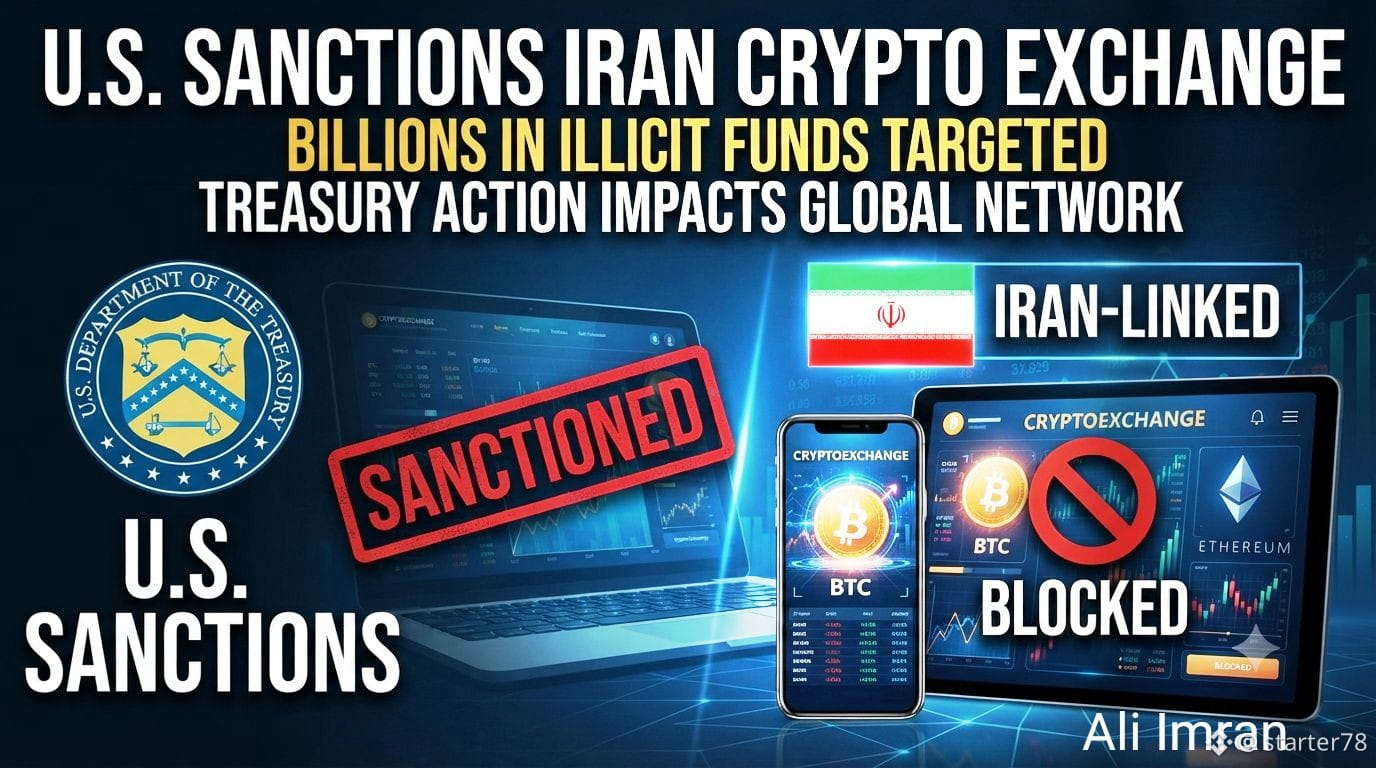
The US Just Sanctioned a Crypto Exchange Tied to Iran.
On August 7, the US government slapped sanctions on a cryptocurrency exchange called Shelbit. This wasn't a licensed, regulated platform it operated across multiple states without proper authorization. The accusation? That Shelbit helped move millions of dollars in crypto for Iran's Islamic Revolutionary Guard Corps (IRGC), a group the US considers a serious national security threat, along with other organizations tied to the Iranian government.
This didn't come out of nowhere. Just a week earlier, on July 31, Reuters published an investigation that put Shelbit based in Dubai under the microscope. Reporters found the exchange was allegedly the center of a massive sanctions evasion operation, estimated at around $4 billion.
According to that investigation, Shelbit's crypto network reportedly touched some pretty serious players:
Iran's central bank allegedly using the exchange to move money around sanctions
A major illegal online gambling network described as one of the largest of its kind
Wallet addresses linked to the IRGC flagged specifically by Israeli intelligence sources
This case is a good example of how crypto despite being decentralized and often described as "borderless" is still very traceable when investigators and regulators put in the work. It also shows how sanctioned regimes and criminal networks try to use crypto exchanges as workarounds to move money outside the traditional banking system, where sanctions are harder to enforce.
For everyday crypto users, this is a reminder to be cautious about which exchanges you use. Unlicensed platforms operating in regulatory gray zones aren't just risky because of scams or hacks they can also become targets of government action, freezing your funds or drawing legal scrutiny even if you personally did nothing wrong.
#Ali_Imran
#cryptoNews #Iran
$USDC
The US Just Sanctioned a Crypto Exchange Tied to Iran.
On August 7, the US government slapped sanctions on a cryptocurrency exchange called Shelbit. This wasn't a licensed, regulated platform it operated across multiple states without proper authorization. The accusation? That Shelbit helped move millions of dollars in crypto for Iran's Islamic Revolutionary Guard Corps (IRGC), a group the US considers a serious national security threat, along with other organizations tied to the Iranian government.
This didn't come out of nowhere. Just a week earlier, on July 31, Reuters published an investigation that put Shelbit based in Dubai under the microscope. Reporters found the exchange was allegedly the center of a massive sanctions evasion operation, estimated at around $4 billion.
According to that investigation, Shelbit's crypto network reportedly touched some pretty serious players:
Iran's central bank allegedly using the exchange to move money around sanctions
A major illegal online gambling network described as one of the largest of its kind
Wallet addresses linked to the IRGC flagged specifically by Israeli intelligence sources
This case is a good example of how crypto despite being decentralized and often described as "borderless" is still very traceable when investigators and regulators put in the work. It also shows how sanctioned regimes and criminal networks try to use crypto exchanges as workarounds to move money outside the traditional banking system, where sanctions are harder to enforce.
For everyday crypto users, this is a reminder to be cautious about which exchanges you use. Unlicensed platforms operating in regulatory gray zones aren't just risky because of scams or hacks they can also become targets of government action, freezing your funds or drawing legal scrutiny even if you personally did nothing wrong.
#Ali_Imran
#cryptoNews #Iran
$USDC
On August 7, the US government slapped sanctions on a cryptocurrency exchange called Shelbit. This wasn't a licensed, regulated platform it operated across multiple states without proper authorization. The accusation? That Shelbit helped move millions of dollars in crypto for Iran's Islamic Revolutionary Guard Corps (IRGC), a group the US considers a serious national security threat, along with other organizations tied to the Iranian government.
This didn't come out of nowhere. Just a week earlier, on July 31, Reuters published an investigation that put Shelbit based in Dubai under the microscope. Reporters found the exchange was allegedly the center of a massive sanctions evasion operation, estimated at around $4 billion.
According to that investigation, Shelbit's crypto network reportedly touched some pretty serious players:
Iran's central bank allegedly using the exchange to move money around sanctions
A major illegal online gambling network described as one of the largest of its kind
Wallet addresses linked to the IRGC flagged specifically by Israeli intelligence sources
This case is a good example of how crypto despite being decentralized and often described as "borderless" is still very traceable when investigators and regulators put in the work. It also shows how sanctioned regimes and criminal networks try to use crypto exchanges as workarounds to move money outside the traditional banking system, where sanctions are harder to enforce.
For everyday crypto users, this is a reminder to be cautious about which exchanges you use. Unlicensed platforms operating in regulatory gray zones aren't just risky because of scams or hacks they can also become targets of government action, freezing your funds or drawing legal scrutiny even if you personally did nothing wrong.
#Ali_Imran
#cryptoNews #Iran
$USDC
91
·
--
Melbourne Crypto Billionaire Takes Ex-Employee to Court Over $500,000
Russell Wilson is the man behind CoinSpot, one of Australia's biggest cryptocurrency exchanges. He's known as "secretive" because he rarely appears in public or gives interviews, even though his company made $270 million in profit in the 2025 financial year
Now he's in the news for a different reason. His company has filed a lawsuit against a former employee, accusing him of stealing money from the exchange.
According to court documents, the ex-employee a customer support team member named Iresh Pawan Perera allegedly moved $478,932 out of the company into his own personal bank account. This didn't happen in one go. It allegedly happened across 76 separate transactions over about two years, up until March
The lawsuit claims Perera converted the company's crypto into cash for his own use . He was fired immediately once the company found out, on March 9, since the alleged misuse of funds broke his employment agreement
CoinSpot hasn't shared many details publicly since the case is still before the courts. A spokesperson said the company has strong safeguards in place and that no customer funds were affected by this. She added that CoinSpot has zero tolerance for fraud and works closely with police to protect its users
This story is a good reminder that even big, well-established crypto companies aren't immune to insider theft. It's not always hackers from outside sometimes the risk comes from within, from someone who already has access to company systems. It also shows why companies need strong internal checks, not just security against outside attacks.
The case is ongoing, so more details may come out as it moves through the courts.
#Ali_Imran
#CryptoNews #CryptoFraudCase #Cybersecurity
Melbourne Crypto Billionaire Takes Ex-Employee to Court Over $500,000
Russell Wilson is the man behind CoinSpot, one of Australia's biggest cryptocurrency exchanges. He's known as "secretive" because he rarely appears in public or gives interviews, even though his company made $270 million in profit in the 2025 financial year
Now he's in the news for a different reason. His company has filed a lawsuit against a former employee, accusing him of stealing money from the exchange.
According to court documents, the ex-employee a customer support team member named Iresh Pawan Perera allegedly moved $478,932 out of the company into his own personal bank account. This didn't happen in one go. It allegedly happened across 76 separate transactions over about two years, up until March
The lawsuit claims Perera converted the company's crypto into cash for his own use . He was fired immediately once the company found out, on March 9, since the alleged misuse of funds broke his employment agreement
CoinSpot hasn't shared many details publicly since the case is still before the courts. A spokesperson said the company has strong safeguards in place and that no customer funds were affected by this. She added that CoinSpot has zero tolerance for fraud and works closely with police to protect its users
This story is a good reminder that even big, well-established crypto companies aren't immune to insider theft. It's not always hackers from outside sometimes the risk comes from within, from someone who already has access to company systems. It also shows why companies need strong internal checks, not just security against outside attacks.
The case is ongoing, so more details may come out as it moves through the courts.
#Ali_Imran
#CryptoNews #CryptoFraudCase #Cybersecurity
Russell Wilson is the man behind CoinSpot, one of Australia's biggest cryptocurrency exchanges. He's known as "secretive" because he rarely appears in public or gives interviews, even though his company made $270 million in profit in the 2025 financial year
Now he's in the news for a different reason. His company has filed a lawsuit against a former employee, accusing him of stealing money from the exchange.
According to court documents, the ex-employee a customer support team member named Iresh Pawan Perera allegedly moved $478,932 out of the company into his own personal bank account. This didn't happen in one go. It allegedly happened across 76 separate transactions over about two years, up until March
The lawsuit claims Perera converted the company's crypto into cash for his own use . He was fired immediately once the company found out, on March 9, since the alleged misuse of funds broke his employment agreement
CoinSpot hasn't shared many details publicly since the case is still before the courts. A spokesperson said the company has strong safeguards in place and that no customer funds were affected by this. She added that CoinSpot has zero tolerance for fraud and works closely with police to protect its users
This story is a good reminder that even big, well-established crypto companies aren't immune to insider theft. It's not always hackers from outside sometimes the risk comes from within, from someone who already has access to company systems. It also shows why companies need strong internal checks, not just security against outside attacks.
The case is ongoing, so more details may come out as it moves through the courts.
#Ali_Imran
#CryptoNews #CryptoFraudCase #Cybersecurity

111
·
--
FBI Director’s Bitcoin Stock Scandal: "Secret Investment" Causes Stir in D.C. 🚨📈Washington watchdogs are up in arms after it was revealed that FBI Director Kash Patel bought a significant amount of stock in MicroStrategy a company heavily tied to Bitcoin without telling anyone for six months.
*The Situation:
On November 21, 2025, Patel purchased between $100,001 and $250,000 worth of MicroStrategy stock. The problem? He didn’t report the trade to federal regulators until May 26, 2026. According to a report by the non-profit news outlet NOTUS, this disclosure was over six months late.
*Why It Matters: The STOCK Act:
There is a federal law called the STOCK Act, which requires high-level government officials to report any stock trade over $1,000 within 45 days. This isn't just red tape; it is designed to prevent "conflicts of interest." It ensures officials aren’t using private information to trade or investing in companies that their agency is currently overseeing.
MicroStrategy, led by Michael Saylor, is the world's largest corporate holder of Bitcoin. Because of this, buying their stock is essentially the most direct way to bet on Bitcoin prices through a standard brokerage account. Furthermore, the company has done millions of dollars in business with the Department of Justice. Since the FBI actively investigates crypto-related fraud, owning a massive stake in a Bitcoin-heavy company looks suspicious even if no laws were technically broken.
*The Official Response:
In a letter to the Office of Government Ethics, Patel claimed he "inadvertently" left the trade out of his initial reports. A Deputy Assistant Attorney General later called it a "misunderstanding," and an FBI official insisted the delay was an honest mistake.
They maintain there is no conflict of interest with his duties at the FBI.
However, many are not buying the excuse. Dylan Hedtler-Gaudette of the Project on Government Oversight told NOTUS that this is "undoubtedly" a violation of the law. This incident has reignited calls for a total ban on government officials trading individual stocks.
While the STOCK Act typically carries a $200 fine for a first-time violation, the Department of Justice did not fine Patel; they simply reviewed and approved his corrected paperwork.
*The Financial Context:
Since Patel bought the stock, MicroStrategy shares have dropped nearly 48%.
Patel isn't the only official involved in crypto. Vice President J.D. Vance has disclosed holding up to $500,000 in Bitcoin, and Donald Trump and his sons have reported over a billion dollars in crypto-linked income. As more top officials get involved in the crypto market while simultaneously overseeing the agencies meant to regulate it the pressure for stricter, or even total, bans on these types of investments is growing.
*What do you think?:
Should government officials be completely banned from trading individual stocks while in office? Let us know your thoughts.
#Ali_Imran
#StockAct #KashPatel #ConflictOfInterest #FBI
FBI Director’s Bitcoin Stock Scandal: "Secret Investment" Causes Stir in D.C. 🚨📈
Washington watchdogs are up in arms after it was revealed that FBI Director Kash Patel bought a significant amount of stock in MicroStrategy a company heavily tied to Bitcoin without telling anyone for six months.
*The Situation:
On November 21, 2025, Patel purchased between $100,001 and $250,000 worth of MicroStrategy stock. The problem? He didn’t report the trade to federal regulators until May 26, 2026. According to a report by the non-profit news outlet NOTUS, this disclosure was over six months late.
*Why It Matters: The STOCK Act:
There is a federal law called the STOCK Act, which requires high-level government officials to report any stock trade over $1,000 within 45 days. This isn't just red tape; it is designed to prevent "conflicts of interest." It ensures officials aren’t using private information to trade or investing in companies that their agency is currently overseeing.
MicroStrategy, led by Michael Saylor, is the world's largest corporate holder of Bitcoin. Because of this, buying their stock is essentially the most direct way to bet on Bitcoin prices through a standard brokerage account. Furthermore, the company has done millions of dollars in business with the Department of Justice. Since the FBI actively investigates crypto-related fraud, owning a massive stake in a Bitcoin-heavy company looks suspicious even if no laws were technically broken.
*The Official Response:
In a letter to the Office of Government Ethics, Patel claimed he "inadvertently" left the trade out of his initial reports. A Deputy Assistant Attorney General later called it a "misunderstanding," and an FBI official insisted the delay was an honest mistake.
They maintain there is no conflict of interest with his duties at the FBI.
However, many are not buying the excuse. Dylan Hedtler-Gaudette of the Project on Government Oversight told NOTUS that this is "undoubtedly" a violation of the law. This incident has reignited calls for a total ban on government officials trading individual stocks.
While the STOCK Act typically carries a $200 fine for a first-time violation, the Department of Justice did not fine Patel; they simply reviewed and approved his corrected paperwork.
*The Financial Context:
Since Patel bought the stock, MicroStrategy shares have dropped nearly 48%.
Patel isn't the only official involved in crypto. Vice President J.D. Vance has disclosed holding up to $500,000 in Bitcoin, and Donald Trump and his sons have reported over a billion dollars in crypto-linked income. As more top officials get involved in the crypto market while simultaneously overseeing the agencies meant to regulate it the pressure for stricter, or even total, bans on these types of investments is growing.
*What do you think?:
Should government officials be completely banned from trading individual stocks while in office? Let us know your thoughts.
#Ali_Imran
#StockAct #KashPatel #ConflictOfInterest #FBI
*The Situation:
On November 21, 2025, Patel purchased between $100,001 and $250,000 worth of MicroStrategy stock. The problem? He didn’t report the trade to federal regulators until May 26, 2026. According to a report by the non-profit news outlet NOTUS, this disclosure was over six months late.
*Why It Matters: The STOCK Act:
There is a federal law called the STOCK Act, which requires high-level government officials to report any stock trade over $1,000 within 45 days. This isn't just red tape; it is designed to prevent "conflicts of interest." It ensures officials aren’t using private information to trade or investing in companies that their agency is currently overseeing.
MicroStrategy, led by Michael Saylor, is the world's largest corporate holder of Bitcoin. Because of this, buying their stock is essentially the most direct way to bet on Bitcoin prices through a standard brokerage account. Furthermore, the company has done millions of dollars in business with the Department of Justice. Since the FBI actively investigates crypto-related fraud, owning a massive stake in a Bitcoin-heavy company looks suspicious even if no laws were technically broken.
*The Official Response:
In a letter to the Office of Government Ethics, Patel claimed he "inadvertently" left the trade out of his initial reports. A Deputy Assistant Attorney General later called it a "misunderstanding," and an FBI official insisted the delay was an honest mistake.
They maintain there is no conflict of interest with his duties at the FBI.
However, many are not buying the excuse. Dylan Hedtler-Gaudette of the Project on Government Oversight told NOTUS that this is "undoubtedly" a violation of the law. This incident has reignited calls for a total ban on government officials trading individual stocks.
While the STOCK Act typically carries a $200 fine for a first-time violation, the Department of Justice did not fine Patel; they simply reviewed and approved his corrected paperwork.
*The Financial Context:
Since Patel bought the stock, MicroStrategy shares have dropped nearly 48%.
Patel isn't the only official involved in crypto. Vice President J.D. Vance has disclosed holding up to $500,000 in Bitcoin, and Donald Trump and his sons have reported over a billion dollars in crypto-linked income. As more top officials get involved in the crypto market while simultaneously overseeing the agencies meant to regulate it the pressure for stricter, or even total, bans on these types of investments is growing.
*What do you think?:
Should government officials be completely banned from trading individual stocks while in office? Let us know your thoughts.
#Ali_Imran
#StockAct #KashPatel #ConflictOfInterest #FBI
MSTR+0.39%
MSTRUS-1.71%
122
·
--
Article
Russia Has Also Taken a Step Into the World of Crypto and Bitcoin.If you follow crypto news, a major development is currently unfolding in Russia: the country’s largest private bank, Alfa-Bank, is preparing to provide Bitcoin and crypto services to its customers.
🪙 What is Alfa-Bank's plan?
The bank's COO, Dmitry Vitman, has stated that as soon as the relevant legislation is enacted, the bank intends to provide "all possible services related to digital currencies." These include:
* Crypto Trading: Buying and selling coins like Bitcoin.
* Custody Services: Securely holding customers' crypto, essentially acting as a "digital wallet."
* "Digital Depository": A new regulated system for safely storing crypto assets.
The bank plans to launch its digital depository by December 1, and it intends to offer this storage service not only to its own customers but also to other companies.
Interestingly, Alfa-Bank has quietly begun testing crypto trading within its 'Alfa-Investments' app. Currently, this facility is available only to a select few (wealthy/experienced) investors. According to reports, trading pages for Bitcoin, Ethereum, Tether, USD Coin, Solana, Litecoin, and Zcash have been spotted in this test.
🪙 Why is this not available to everyone yet?
The reason is that final legislation regarding crypto has not yet been completed in Russia. The bill titled "Digital Currency and Digital Rights" has cleared its first hurdle in parliament, but there have been delays in its implementation date. It was originally scheduled to be implemented from July 1, 2026, but it is now expected to take effect around September. Even after that, the Russian Central Bank expects all detailed rules to be finalized by November, after which actual transactions can begin.
This is why a public rollout is still months away. Retail brokerage is expected to launch in late 2026 or early 2027, and significant trading volume is not expected until late 2027.
🪙 Alfa-Bank is not alone.
This is part of a larger trend. Several major Russian banks are in a race to provide crypto services simultaneously:
* Sberbank: Russia's largest bank, which plans to integrate a crypto wallet directly into its 'Sberbank Online' and 'Sber Investments' apps, potentially granting crypto access to over 100 million existing customers.
* T-Bank: Plans to offer a digital depository on its 'Atomize' platform and sell crypto through 'T-Investments'.
* VTB: Intends to create its own depository to store digital assets.
* Moscow Exchange: Expected to launch its first crypto transactions by the end of 2026.
This is a massive shift. For years, crypto remained in a legal gray area in Russia; people could hold it, but banks couldn't touch it. Now, the country's major financial institutions are openly preparing for a regulated crypto market, which indicates that lawmakers are close to legitimizing it.
This also mirrors a pattern seen globally: large banks first build the "boring but necessary" infrastructure (such as secure custody and storage) and then open the doors to retail customers.
In short, nothing is directly available to the general public yet. But work is quietly continuing behind the scenes, and if the legal timeline holds, ordinary Russian citizens could gain access to Bitcoin and other cryptocurrencies through their banks by late 2026 or 2027.
#Ali_Imran
#RussiaCrypto #AlfaBank #CryptoRegulation #DigitalAssets
Russia Has Also Taken a Step Into the World of Crypto and Bitcoin.
If you follow crypto news, a major development is currently unfolding in Russia: the country’s largest private bank, Alfa-Bank, is preparing to provide Bitcoin and crypto services to its customers.
🪙 What is Alfa-Bank's plan?
The bank's COO, Dmitry Vitman, has stated that as soon as the relevant legislation is enacted, the bank intends to provide "all possible services related to digital currencies." These include:
* Crypto Trading: Buying and selling coins like Bitcoin.
* Custody Services: Securely holding customers' crypto, essentially acting as a "digital wallet."
* "Digital Depository": A new regulated system for safely storing crypto assets.
The bank plans to launch its digital depository by December 1, and it intends to offer this storage service not only to its own customers but also to other companies.
Interestingly, Alfa-Bank has quietly begun testing crypto trading within its 'Alfa-Investments' app. Currently, this facility is available only to a select few (wealthy/experienced) investors. According to reports, trading pages for Bitcoin, Ethereum, Tether, USD Coin, Solana, Litecoin, and Zcash have been spotted in this test.
🪙 Why is this not available to everyone yet?
The reason is that final legislation regarding crypto has not yet been completed in Russia. The bill titled "Digital Currency and Digital Rights" has cleared its first hurdle in parliament, but there have been delays in its implementation date. It was originally scheduled to be implemented from July 1, 2026, but it is now expected to take effect around September. Even after that, the Russian Central Bank expects all detailed rules to be finalized by November, after which actual transactions can begin.
This is why a public rollout is still months away. Retail brokerage is expected to launch in late 2026 or early 2027, and significant trading volume is not expected until late 2027.
🪙 Alfa-Bank is not alone.
This is part of a larger trend. Several major Russian banks are in a race to provide crypto services simultaneously:
* Sberbank: Russia's largest bank, which plans to integrate a crypto wallet directly into its 'Sberbank Online' and 'Sber Investments' apps, potentially granting crypto access to over 100 million existing customers.
* T-Bank: Plans to offer a digital depository on its 'Atomize' platform and sell crypto through 'T-Investments'.
* VTB: Intends to create its own depository to store digital assets.
* Moscow Exchange: Expected to launch its first crypto transactions by the end of 2026.
This is a massive shift. For years, crypto remained in a legal gray area in Russia; people could hold it, but banks couldn't touch it. Now, the country's major financial institutions are openly preparing for a regulated crypto market, which indicates that lawmakers are close to legitimizing it.
This also mirrors a pattern seen globally: large banks first build the "boring but necessary" infrastructure (such as secure custody and storage) and then open the doors to retail customers.
In short, nothing is directly available to the general public yet. But work is quietly continuing behind the scenes, and if the legal timeline holds, ordinary Russian citizens could gain access to Bitcoin and other cryptocurrencies through their banks by late 2026 or 2027.
#Ali_Imran
#RussiaCrypto #AlfaBank #CryptoRegulation #DigitalAssets
🪙 What is Alfa-Bank's plan?
The bank's COO, Dmitry Vitman, has stated that as soon as the relevant legislation is enacted, the bank intends to provide "all possible services related to digital currencies." These include:
* Crypto Trading: Buying and selling coins like Bitcoin.
* Custody Services: Securely holding customers' crypto, essentially acting as a "digital wallet."
* "Digital Depository": A new regulated system for safely storing crypto assets.
The bank plans to launch its digital depository by December 1, and it intends to offer this storage service not only to its own customers but also to other companies.
Interestingly, Alfa-Bank has quietly begun testing crypto trading within its 'Alfa-Investments' app. Currently, this facility is available only to a select few (wealthy/experienced) investors. According to reports, trading pages for Bitcoin, Ethereum, Tether, USD Coin, Solana, Litecoin, and Zcash have been spotted in this test.
🪙 Why is this not available to everyone yet?
The reason is that final legislation regarding crypto has not yet been completed in Russia. The bill titled "Digital Currency and Digital Rights" has cleared its first hurdle in parliament, but there have been delays in its implementation date. It was originally scheduled to be implemented from July 1, 2026, but it is now expected to take effect around September. Even after that, the Russian Central Bank expects all detailed rules to be finalized by November, after which actual transactions can begin.
This is why a public rollout is still months away. Retail brokerage is expected to launch in late 2026 or early 2027, and significant trading volume is not expected until late 2027.
🪙 Alfa-Bank is not alone.
This is part of a larger trend. Several major Russian banks are in a race to provide crypto services simultaneously:
* Sberbank: Russia's largest bank, which plans to integrate a crypto wallet directly into its 'Sberbank Online' and 'Sber Investments' apps, potentially granting crypto access to over 100 million existing customers.
* T-Bank: Plans to offer a digital depository on its 'Atomize' platform and sell crypto through 'T-Investments'.
* VTB: Intends to create its own depository to store digital assets.
* Moscow Exchange: Expected to launch its first crypto transactions by the end of 2026.
This is a massive shift. For years, crypto remained in a legal gray area in Russia; people could hold it, but banks couldn't touch it. Now, the country's major financial institutions are openly preparing for a regulated crypto market, which indicates that lawmakers are close to legitimizing it.
This also mirrors a pattern seen globally: large banks first build the "boring but necessary" infrastructure (such as secure custody and storage) and then open the doors to retail customers.
In short, nothing is directly available to the general public yet. But work is quietly continuing behind the scenes, and if the legal timeline holds, ordinary Russian citizens could gain access to Bitcoin and other cryptocurrencies through their banks by late 2026 or 2027.
#Ali_Imran
#RussiaCrypto #AlfaBank #CryptoRegulation #DigitalAssets
1
165
·
--
✓ Crypto market last 24 hours (as of July 27, 2026):
√ Prices & sentiment:
🪙 Total market cap: ~$2.3 trillion, up 1.7% in the last 24 hours, with trading volume around $40.7 billion .
🪙 Bitcoin: back above $65,000, reclaiming the level as bearish traders were caught offside . Trading near $65,150–65,360, up roughly 1–1.4%.
🪙 Ethereum led gains among majors, accelerating faster than Bitcoin and reviving alt-season talk.
🪙 Polkadot and the XRP Ledger ecosystem were the day's biggest gainers.
🪙 Sentiment: still in "Fear" territory despite the rally.
√ What's driving it:
🪙 A second day without new US-Iran military strikes pushed oil prices lower, encouraging a rotation back into risk assets, the main catalyst.
🪙 Over $200 million in crypto positions were liquidated in the past day, mostly short-side covering
🪙 Markets are also positioning ahead of the Fed's July 28–29 meeting, with rates expected to hold and only a ~34% chance priced in for a hike
√ Notable headlines:
🪙 BitMart announced it's winding down operations after nearly nine years, following recent exits by AscendEX and BitMEX seen by some as a sign of late-cycle exchange capitulation.
🪙 Spot Bitcoin ETFs posted a third straight week of net inflows despite $465 million in late week losses, with BlackRock's IBIT accounting for most of that outflow .
🪙 A hacking group allegedly breached central bank systems, laundered crypto through Chinese brokers, and used small transfers to evade detection .
🪙 Coinbase CEO Brian Armstrong criticized crypto startups rebranding themselves as AI companies.
#Ali_Imran
#ETH #Blockchain #CryptoTrading #AltSeason
✓ Crypto market last 24 hours (as of July 27, 2026):
√ Prices & sentiment:
🪙 Total market cap: ~$2.3 trillion, up 1.7% in the last 24 hours, with trading volume around $40.7 billion .
🪙 Bitcoin: back above $65,000, reclaiming the level as bearish traders were caught offside . Trading near $65,150–65,360, up roughly 1–1.4%.
🪙 Ethereum led gains among majors, accelerating faster than Bitcoin and reviving alt-season talk.
🪙 Polkadot and the XRP Ledger ecosystem were the day's biggest gainers.
🪙 Sentiment: still in "Fear" territory despite the rally.
√ What's driving it:
🪙 A second day without new US-Iran military strikes pushed oil prices lower, encouraging a rotation back into risk assets, the main catalyst.
🪙 Over $200 million in crypto positions were liquidated in the past day, mostly short-side covering
🪙 Markets are also positioning ahead of the Fed's July 28–29 meeting, with rates expected to hold and only a ~34% chance priced in for a hike
√ Notable headlines:
🪙 BitMart announced it's winding down operations after nearly nine years, following recent exits by AscendEX and BitMEX seen by some as a sign of late-cycle exchange capitulation.
🪙 Spot Bitcoin ETFs posted a third straight week of net inflows despite $465 million in late week losses, with BlackRock's IBIT accounting for most of that outflow .
🪙 A hacking group allegedly breached central bank systems, laundered crypto through Chinese brokers, and used small transfers to evade detection .
🪙 Coinbase CEO Brian Armstrong criticized crypto startups rebranding themselves as AI companies.
#Ali_Imran
#ETH #Blockchain #CryptoTrading #AltSeason
√ Prices & sentiment:
🪙 Total market cap: ~$2.3 trillion, up 1.7% in the last 24 hours, with trading volume around $40.7 billion .
🪙 Bitcoin: back above $65,000, reclaiming the level as bearish traders were caught offside . Trading near $65,150–65,360, up roughly 1–1.4%.
🪙 Ethereum led gains among majors, accelerating faster than Bitcoin and reviving alt-season talk.
🪙 Polkadot and the XRP Ledger ecosystem were the day's biggest gainers.
🪙 Sentiment: still in "Fear" territory despite the rally.
√ What's driving it:
🪙 A second day without new US-Iran military strikes pushed oil prices lower, encouraging a rotation back into risk assets, the main catalyst.
🪙 Over $200 million in crypto positions were liquidated in the past day, mostly short-side covering
🪙 Markets are also positioning ahead of the Fed's July 28–29 meeting, with rates expected to hold and only a ~34% chance priced in for a hike
√ Notable headlines:
🪙 BitMart announced it's winding down operations after nearly nine years, following recent exits by AscendEX and BitMEX seen by some as a sign of late-cycle exchange capitulation.
🪙 Spot Bitcoin ETFs posted a third straight week of net inflows despite $465 million in late week losses, with BlackRock's IBIT accounting for most of that outflow .
🪙 A hacking group allegedly breached central bank systems, laundered crypto through Chinese brokers, and used small transfers to evade detection .
🪙 Coinbase CEO Brian Armstrong criticized crypto startups rebranding themselves as AI companies.
#Ali_Imran
#ETH #Blockchain #CryptoTrading #AltSeason
171
·
--
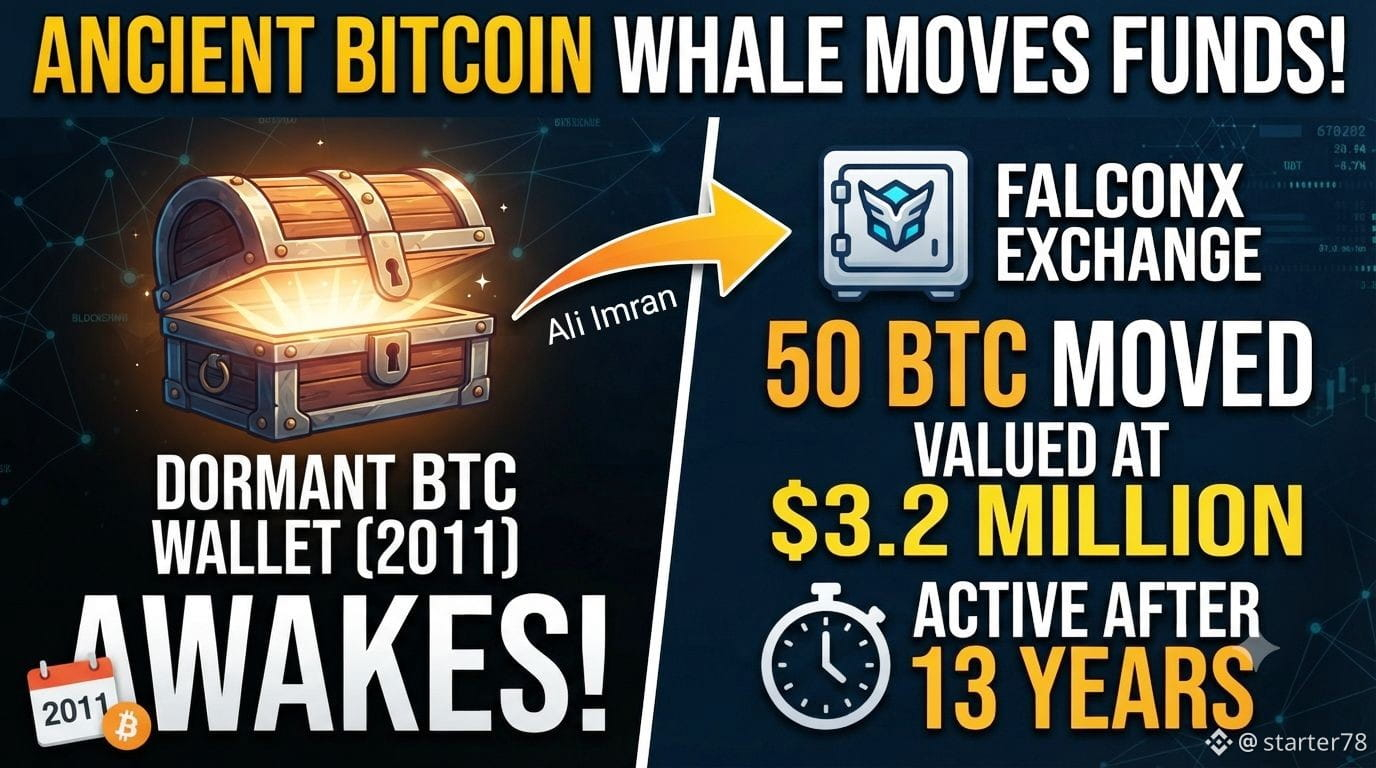
2011 Bitcoin Wallet Moves $3.2M to Brokerage-Linked Address.
An old Bitcoin wallet that hasn't touched its funds since 2011 just woke up and moved $3.2 million worth of Bitcoin (50 BTC) to an address linked to a crypto trading platform called FalconX.
While the coins are currently sitting in that new address, the wallet has a history of sending funds to FalconX before. This means the owner might just be reorganizing their digital stash, or they could be getting ready to sell or trade their Bitcoin.
#Ali_Imran
#cryptonews #crypto #cryptocurrency
2011 Bitcoin Wallet Moves $3.2M to Brokerage-Linked Address.
An old Bitcoin wallet that hasn't touched its funds since 2011 just woke up and moved $3.2 million worth of Bitcoin (50 BTC) to an address linked to a crypto trading platform called FalconX.
While the coins are currently sitting in that new address, the wallet has a history of sending funds to FalconX before. This means the owner might just be reorganizing their digital stash, or they could be getting ready to sell or trade their Bitcoin.
#Ali_Imran
#cryptonews #crypto #cryptocurrency
An old Bitcoin wallet that hasn't touched its funds since 2011 just woke up and moved $3.2 million worth of Bitcoin (50 BTC) to an address linked to a crypto trading platform called FalconX.
While the coins are currently sitting in that new address, the wallet has a history of sending funds to FalconX before. This means the owner might just be reorganizing their digital stash, or they could be getting ready to sell or trade their Bitcoin.
#Ali_Imran
#cryptonews #crypto #cryptocurrency
81
·
--
LIDAC 2026 is Coming Back to Kuala Lumpur.If you're into crypto, fintech, or just curious about where digital money is heading in Malaysia, mark your calendar. "September 24, 2026" is the date for "LIDAC 2026" the second edition of the Luno Institutional Digital Asset Conference, happening at the "M Resort Hotel, Kuala Lumpur".
√ What is LIDAC, in simple words?
Think of LIDAC as a big meet-up where banks, regulators, crypto companies, and finance experts come together for one full day to talk about digital assets things like Bitcoin, stablecoins, and tokenized finance. It's not for casual traders; it's aimed at institutions (banks, fund managers, regulators) who are figuring out how to use these new digital tools responsibly.
The event follows the momentum from its Cape Town edition, bringing together regional delegates, speakers, and industry leaders to discuss how institutions will use digital assets in Malaysia.
√ Who's showing up?
This isn't a small gathering. Big names from Malaysia's financial world are expected, including people from "Securities Commission Malaysia", "Standard Chartered", and "Maybank" plus Luno's own CEO James Lanigan, and leaders from Malaysia's Securities Commission, CoinGecko, BitGo, and other digital asset firms.
√ What will they actually talk about?
Two big topics stand out this year:
- "Malaysia's stablecoin pilots" basically, test programs to see how digital coins pegged to real currency (like the Ringgit or US Dollar) could work safely within the country's financial system.
- "The first tokenised sukuk" this is a big deal for Islamic finance. A sukuk is like an Islamic bond, and "tokenising" it means putting it on blockchain technology. This could make Islamic finance more efficient, transparent, and accessible.
√ Why should you care?
Even if you're not a banker, this matters because:
1. It shows Malaysia is serious about digital finance. Having regulators and major banks like Maybank and Standard Chartered involved means this isn't just hype it's about building real rules and real products.
2. It could shape how you use money in the future. Stablecoins and tokenised assets could eventually make things like payments, investing, and cross-border transfers faster and cheaper.
3. Malaysia wants to be a regional hub. By pushing forward with things like Islamic finance tokenisation, Malaysia is positioning itself as a leader in digital assets for the whole Southeast Asian region.
√ A quick bit of context
This isn't Luno's first rodeo in KL. Last year's conference explored the role of digital assets in institutional portfolios, covering diversification, compliance, and risk management, with Malaysia's Securities Commission outlining the regulator's approach to responsible innovation. So LIDAC 2026 is really a continuation and a sign that the conversation is getting more serious and detailed each year.
√ Bottom line:
LIDAC 2026 is a sign that digital assets are moving from "interesting experiment" to "serious financial infrastructure" in Malaysia and this September, the people actually building that future will all be in one room in Kuala Lumpur.
#Ali_Imran
#LIDAC2026 #Luno #DigitalAssets #KualaLumpur
LIDAC 2026 is Coming Back to Kuala Lumpur.
If you're into crypto, fintech, or just curious about where digital money is heading in Malaysia, mark your calendar. "September 24, 2026" is the date for "LIDAC 2026" the second edition of the Luno Institutional Digital Asset Conference, happening at the "M Resort Hotel, Kuala Lumpur".
√ What is LIDAC, in simple words?
Think of LIDAC as a big meet-up where banks, regulators, crypto companies, and finance experts come together for one full day to talk about digital assets things like Bitcoin, stablecoins, and tokenized finance. It's not for casual traders; it's aimed at institutions (banks, fund managers, regulators) who are figuring out how to use these new digital tools responsibly.
The event follows the momentum from its Cape Town edition, bringing together regional delegates, speakers, and industry leaders to discuss how institutions will use digital assets in Malaysia.
√ Who's showing up?
This isn't a small gathering. Big names from Malaysia's financial world are expected, including people from "Securities Commission Malaysia", "Standard Chartered", and "Maybank" plus Luno's own CEO James Lanigan, and leaders from Malaysia's Securities Commission, CoinGecko, BitGo, and other digital asset firms.
√ What will they actually talk about?
Two big topics stand out this year:
- "Malaysia's stablecoin pilots" basically, test programs to see how digital coins pegged to real currency (like the Ringgit or US Dollar) could work safely within the country's financial system.
- "The first tokenised sukuk" this is a big deal for Islamic finance. A sukuk is like an Islamic bond, and "tokenising" it means putting it on blockchain technology. This could make Islamic finance more efficient, transparent, and accessible.
√ Why should you care?
Even if you're not a banker, this matters because:
1. It shows Malaysia is serious about digital finance. Having regulators and major banks like Maybank and Standard Chartered involved means this isn't just hype it's about building real rules and real products.
2. It could shape how you use money in the future. Stablecoins and tokenised assets could eventually make things like payments, investing, and cross-border transfers faster and cheaper.
3. Malaysia wants to be a regional hub. By pushing forward with things like Islamic finance tokenisation, Malaysia is positioning itself as a leader in digital assets for the whole Southeast Asian region.
√ A quick bit of context
This isn't Luno's first rodeo in KL. Last year's conference explored the role of digital assets in institutional portfolios, covering diversification, compliance, and risk management, with Malaysia's Securities Commission outlining the regulator's approach to responsible innovation. So LIDAC 2026 is really a continuation and a sign that the conversation is getting more serious and detailed each year.
√ Bottom line:
LIDAC 2026 is a sign that digital assets are moving from "interesting experiment" to "serious financial infrastructure" in Malaysia and this September, the people actually building that future will all be in one room in Kuala Lumpur.
#Ali_Imran
#LIDAC2026 #Luno #DigitalAssets #KualaLumpur
√ What is LIDAC, in simple words?
Think of LIDAC as a big meet-up where banks, regulators, crypto companies, and finance experts come together for one full day to talk about digital assets things like Bitcoin, stablecoins, and tokenized finance. It's not for casual traders; it's aimed at institutions (banks, fund managers, regulators) who are figuring out how to use these new digital tools responsibly.
The event follows the momentum from its Cape Town edition, bringing together regional delegates, speakers, and industry leaders to discuss how institutions will use digital assets in Malaysia.
√ Who's showing up?
This isn't a small gathering. Big names from Malaysia's financial world are expected, including people from "Securities Commission Malaysia", "Standard Chartered", and "Maybank" plus Luno's own CEO James Lanigan, and leaders from Malaysia's Securities Commission, CoinGecko, BitGo, and other digital asset firms.
√ What will they actually talk about?
Two big topics stand out this year:
- "Malaysia's stablecoin pilots" basically, test programs to see how digital coins pegged to real currency (like the Ringgit or US Dollar) could work safely within the country's financial system.
- "The first tokenised sukuk" this is a big deal for Islamic finance. A sukuk is like an Islamic bond, and "tokenising" it means putting it on blockchain technology. This could make Islamic finance more efficient, transparent, and accessible.
√ Why should you care?
Even if you're not a banker, this matters because:
1. It shows Malaysia is serious about digital finance. Having regulators and major banks like Maybank and Standard Chartered involved means this isn't just hype it's about building real rules and real products.
2. It could shape how you use money in the future. Stablecoins and tokenised assets could eventually make things like payments, investing, and cross-border transfers faster and cheaper.
3. Malaysia wants to be a regional hub. By pushing forward with things like Islamic finance tokenisation, Malaysia is positioning itself as a leader in digital assets for the whole Southeast Asian region.
√ A quick bit of context
This isn't Luno's first rodeo in KL. Last year's conference explored the role of digital assets in institutional portfolios, covering diversification, compliance, and risk management, with Malaysia's Securities Commission outlining the regulator's approach to responsible innovation. So LIDAC 2026 is really a continuation and a sign that the conversation is getting more serious and detailed each year.
√ Bottom line:
LIDAC 2026 is a sign that digital assets are moving from "interesting experiment" to "serious financial infrastructure" in Malaysia and this September, the people actually building that future will all be in one room in Kuala Lumpur.
#Ali_Imran
#LIDAC2026 #Luno #DigitalAssets #KualaLumpur
110
·
--
Pakistan Sets Up a Dedicated Police Unit for Crypto Crimes:If you have been keeping an eye on the crypto world, you know that Pakistan has had a long and bumpy ride with digital currencies. Millions of people in the country trade crypto, even though rules around it have been unclear for years. Now, the government has taken a major step to clean up the space.
Pakistan's Federal Investigation Agency (FIA) which you can think of as the Pakistani version of the FBI, has created a brand-new unit whose sole job is to investigate crypto-related crimes. It is called the "Cryptocurrency Investigation Unit (CIU)".
This was not a random decision. The Director-General of the FIA personally ordered it, proving how seriously the government is taking the matter. The unit has been set up inside the FIA's newly established command center, known as the "National Command and Control Center (NC3)", which serves as a central hub to coordinate investigations across the country.
The CIU has a broad scope of work and will investigate the following areas:
🪙 Money Laundering: Using crypto to hide illegal sources of money.
🪙 Terrorist Financing: Tracking whether digital currencies are being used to fund terrorism.
🪙 Cybercrime: Crypto-related online scams and hacking.
🪙 Financial Fraud: Crypto-based scams that rob ordinary people of their hard-earned money.
To handle all of this, the team will use modern technical tools and follow international best practices to track transactions and gather digital evidence much like agencies in the US and Europe do.
Interestingly, Pakistan is not just cracking down on crypto; it is also trying to promote it responsibly. According to Chainalysis’s 2025 Global Crypto Adoption Index, Pakistan ranked third in the world for crypto adoption. That is a huge deal for a country that recently lifted a years-old banking ban on crypto businesses.
Earlier this year, Pakistan passed its "Virtual Assets Act" and established a separate body called the "Pakistan Virtual Assets Regulatory Authority (PVARA)". You can think of PVARA as a referee that licenses and oversees crypto companies, while the FIA's new unit acts like a police officer who steps in when the law is broken.
A senior FIA official explained it simply: The investigative unit deals with crime, while PVARA handles regulation. These are two separate tasks working hand in hand.
The FIA is also encouraging two other agenciesthe National Cyber Crime Investigation Agency and the Anti-Narcotics Force to set up their own crypto units. The goal is for multiple agencies to monitor different angles: cybercrime, drug money, and terrorist financing, all of which can be linked through crypto.
This move is also part of Pakistan's broader effort to restore trust in its financial system. The country exited the FATF "grey list" (a watchlist of countries with weak anti-money laundering controls) in 2022, and steps like these prove it is serious about staying off that list for good.
If you are an honest trader or investor in Pakistan, this is actually good news for you. Stronger oversight means:
🪙 Safer and more legal exchanges for trading.
🪙 A lower risk of your funds getting tangled up in fraud investigations.
🪙 Greater confidence from international institutions to work with Pakistani crypto platforms.
The goal is not to scare people away from crypto. Instead, it is to separate the legitimate market from the criminal activities hidden within it.
Pakistan is trying to walk a careful line: embracing crypto as a growing part of the economy while making sure criminals cannot use it as a shortcut for money laundering or funding illegal activities. The new Cryptocurrency Investigation Unit is a clear sign that the country is putting real resources behind this promise, rather than just paying lip service.
#Ali_Imran
#crypto #CryptoPakistan #DigitalAssetProtection
Pakistan Sets Up a Dedicated Police Unit for Crypto Crimes:
If you have been keeping an eye on the crypto world, you know that Pakistan has had a long and bumpy ride with digital currencies. Millions of people in the country trade crypto, even though rules around it have been unclear for years. Now, the government has taken a major step to clean up the space.
Pakistan's Federal Investigation Agency (FIA) which you can think of as the Pakistani version of the FBI, has created a brand-new unit whose sole job is to investigate crypto-related crimes. It is called the "Cryptocurrency Investigation Unit (CIU)".
This was not a random decision. The Director-General of the FIA personally ordered it, proving how seriously the government is taking the matter. The unit has been set up inside the FIA's newly established command center, known as the "National Command and Control Center (NC3)", which serves as a central hub to coordinate investigations across the country.
The CIU has a broad scope of work and will investigate the following areas:
🪙 Money Laundering: Using crypto to hide illegal sources of money.
🪙 Terrorist Financing: Tracking whether digital currencies are being used to fund terrorism.
🪙 Cybercrime: Crypto-related online scams and hacking.
🪙 Financial Fraud: Crypto-based scams that rob ordinary people of their hard-earned money.
To handle all of this, the team will use modern technical tools and follow international best practices to track transactions and gather digital evidence much like agencies in the US and Europe do.
Interestingly, Pakistan is not just cracking down on crypto; it is also trying to promote it responsibly. According to Chainalysis’s 2025 Global Crypto Adoption Index, Pakistan ranked third in the world for crypto adoption. That is a huge deal for a country that recently lifted a years-old banking ban on crypto businesses.
Earlier this year, Pakistan passed its "Virtual Assets Act" and established a separate body called the "Pakistan Virtual Assets Regulatory Authority (PVARA)". You can think of PVARA as a referee that licenses and oversees crypto companies, while the FIA's new unit acts like a police officer who steps in when the law is broken.
A senior FIA official explained it simply: The investigative unit deals with crime, while PVARA handles regulation. These are two separate tasks working hand in hand.
The FIA is also encouraging two other agenciesthe National Cyber Crime Investigation Agency and the Anti-Narcotics Force to set up their own crypto units. The goal is for multiple agencies to monitor different angles: cybercrime, drug money, and terrorist financing, all of which can be linked through crypto.
This move is also part of Pakistan's broader effort to restore trust in its financial system. The country exited the FATF "grey list" (a watchlist of countries with weak anti-money laundering controls) in 2022, and steps like these prove it is serious about staying off that list for good.
If you are an honest trader or investor in Pakistan, this is actually good news for you. Stronger oversight means:
🪙 Safer and more legal exchanges for trading.
🪙 A lower risk of your funds getting tangled up in fraud investigations.
🪙 Greater confidence from international institutions to work with Pakistani crypto platforms.
The goal is not to scare people away from crypto. Instead, it is to separate the legitimate market from the criminal activities hidden within it.
Pakistan is trying to walk a careful line: embracing crypto as a growing part of the economy while making sure criminals cannot use it as a shortcut for money laundering or funding illegal activities. The new Cryptocurrency Investigation Unit is a clear sign that the country is putting real resources behind this promise, rather than just paying lip service.
#Ali_Imran
#crypto #CryptoPakistan #DigitalAssetProtection
Pakistan's Federal Investigation Agency (FIA) which you can think of as the Pakistani version of the FBI, has created a brand-new unit whose sole job is to investigate crypto-related crimes. It is called the "Cryptocurrency Investigation Unit (CIU)".
This was not a random decision. The Director-General of the FIA personally ordered it, proving how seriously the government is taking the matter. The unit has been set up inside the FIA's newly established command center, known as the "National Command and Control Center (NC3)", which serves as a central hub to coordinate investigations across the country.
The CIU has a broad scope of work and will investigate the following areas:
🪙 Money Laundering: Using crypto to hide illegal sources of money.
🪙 Terrorist Financing: Tracking whether digital currencies are being used to fund terrorism.
🪙 Cybercrime: Crypto-related online scams and hacking.
🪙 Financial Fraud: Crypto-based scams that rob ordinary people of their hard-earned money.
To handle all of this, the team will use modern technical tools and follow international best practices to track transactions and gather digital evidence much like agencies in the US and Europe do.
Interestingly, Pakistan is not just cracking down on crypto; it is also trying to promote it responsibly. According to Chainalysis’s 2025 Global Crypto Adoption Index, Pakistan ranked third in the world for crypto adoption. That is a huge deal for a country that recently lifted a years-old banking ban on crypto businesses.
Earlier this year, Pakistan passed its "Virtual Assets Act" and established a separate body called the "Pakistan Virtual Assets Regulatory Authority (PVARA)". You can think of PVARA as a referee that licenses and oversees crypto companies, while the FIA's new unit acts like a police officer who steps in when the law is broken.
A senior FIA official explained it simply: The investigative unit deals with crime, while PVARA handles regulation. These are two separate tasks working hand in hand.
The FIA is also encouraging two other agenciesthe National Cyber Crime Investigation Agency and the Anti-Narcotics Force to set up their own crypto units. The goal is for multiple agencies to monitor different angles: cybercrime, drug money, and terrorist financing, all of which can be linked through crypto.
This move is also part of Pakistan's broader effort to restore trust in its financial system. The country exited the FATF "grey list" (a watchlist of countries with weak anti-money laundering controls) in 2022, and steps like these prove it is serious about staying off that list for good.
If you are an honest trader or investor in Pakistan, this is actually good news for you. Stronger oversight means:
🪙 Safer and more legal exchanges for trading.
🪙 A lower risk of your funds getting tangled up in fraud investigations.
🪙 Greater confidence from international institutions to work with Pakistani crypto platforms.
The goal is not to scare people away from crypto. Instead, it is to separate the legitimate market from the criminal activities hidden within it.
Pakistan is trying to walk a careful line: embracing crypto as a growing part of the economy while making sure criminals cannot use it as a shortcut for money laundering or funding illegal activities. The new Cryptocurrency Investigation Unit is a clear sign that the country is putting real resources behind this promise, rather than just paying lip service.
#Ali_Imran
#crypto #CryptoPakistan #DigitalAssetProtection
98
Log in to explore more content
Join global crypto users on Binance Square
⚡️ Get latest and useful information about crypto.
💬 Trusted by the world’s largest crypto exchange.
👍 Discover real insights from verified creators.
Email / Phone number
Trending Topics
1
#CircleMints500MUSDCOnSolana
96,037 views
2,072 Discussing
2
#PolymarketBankFailureBetsDrawFDICConcern
96,130 views
1,845 Discussing
3
#BlackRockBuildsTokenizedPortfoliosForOndo
89,517 views
1,308 Discussing
4
#BitwiseFilesToListNEARETFOnNYSEArca
69,628 views
1,059 Discussing
5
#SECCommissionerPeirceToLeaveOct2
71,500 views
868 Discussing
6
#SECSaysBuybacksUpgradesDontMakeTokenSecurity
56,976 views
637 Discussing
7
#StrategyProposesDailyDividendsForPreferreds
13,495 views
231 Discussing
8
#CircleTetherFreezeBitgetHackerWallet
14,117 views
141 Discussing
9
#CoinMarketCapCompletesCoinglassAcquisition
15,016 views
187 Discussing
10
#QNTRises39%
119,087 views
1,709 Discussing